Downloading and Printing from the Schoolio Digital Platform

Are you new to the Schoolio Digital Platform? Using the Schoolio digital platform might overwhelm you, and learning a new digital system can be confusing! That’s why we are here to help guide you through every step on the Schoolio Digital platform so that you and your student will be successful while bringing fun back into learning. Let’s learn about downloading and printing from the Schoolio Digital Platform. 

This blog will cover a basic concept about using the Schoolio digital platform; downloading and printing from the Schoolio Digital Platform is much easier than you’d think, so let’s dive in!

Downloading and Printing from the Schoolio Digital Platform.

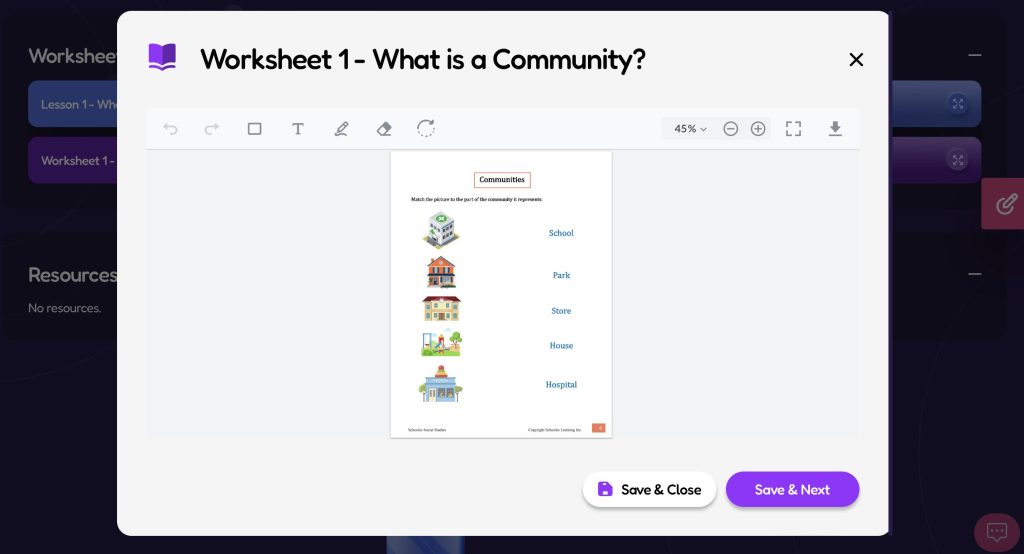
Now that you have successfully added a student to your portal added courses to your students portal, and added courses to your planner, you can take your next step: downloading and printing from the Schoolio Digital Platform. You don’t have to download and print the pdfs that come with your video lessons, as you can annotate directly on the platform; however, many people enjoy downloading and printing the worksheets so that their child can still get crucial hands-on writing skills.

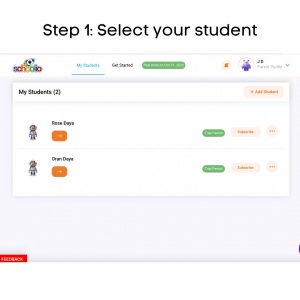
Step 1: Select your student

Step 1: Select Your Student.

If you have multiple children registered on your account, you will need to choose the student for which you are adding to the planner on the Schoolio Digital Platform. Click on the orange right-facing arrow of the student that you’d like to customize the planner for. 

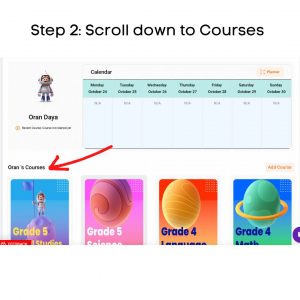
Step 4: Scroll Down

Step 2: Scroll Down to see Your Child’s Courses.

Once you have made it to your student’s portal, scroll down until you see your child’s courses.

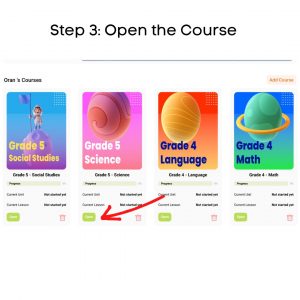
Step 3: Open the Course

Step 3: Select the Course You’d like to Download from.

Now that you have located your child’s courses, you can select the course you’d like to print from. Once you find the course you’d like to print from, click the green ‘open’ button underneath the course’s thumbnail.

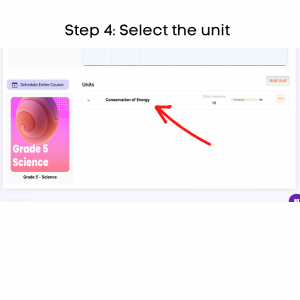
Step 4: Select the unit

Step 4: Select the Unit.

When you select the course you’d like to download and print lessons from; you will be taken directly to the course. Now, you can choose the unit you want to work with. Click on the unit that you’d like to work from. 

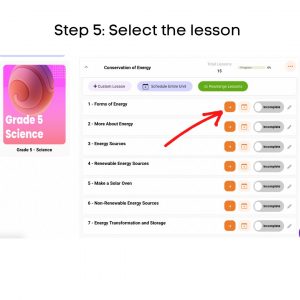
Step 5: Select the lesson

Step 5: Select the Lesson.

When you have selected the unit, you will be taken to that units page which will list all the lessons available in the unit; choose the lesson you want to download and print from by clicking the orange arrow. 

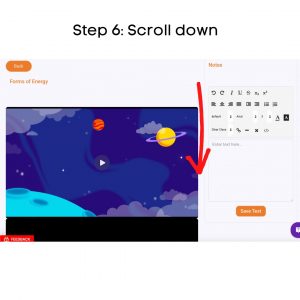
Step 6: Scroll down

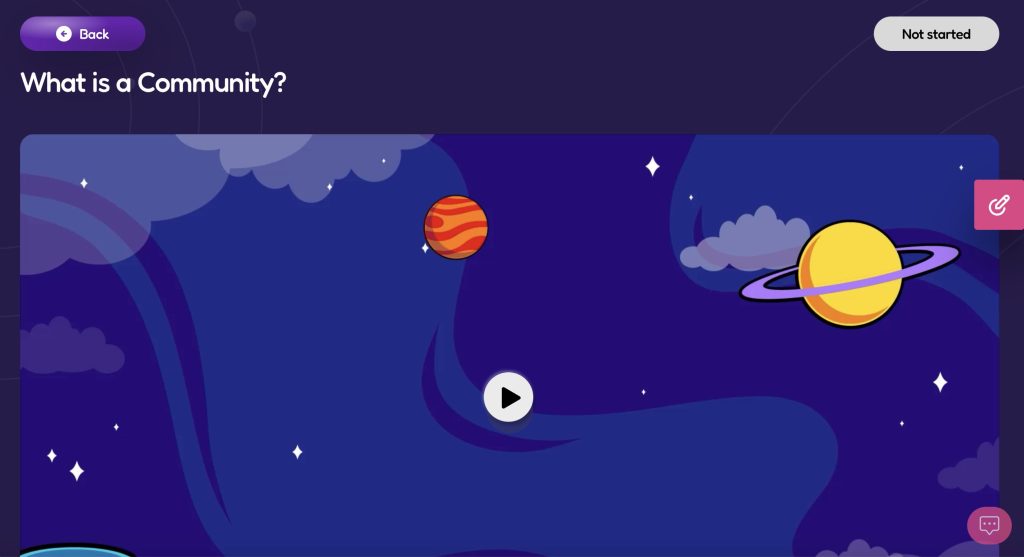
Step 6: Scroll to Below the Lesson Video.

Now that you are on the lesson page scroll down below the lesson’s video.

Step 7: Select PDF

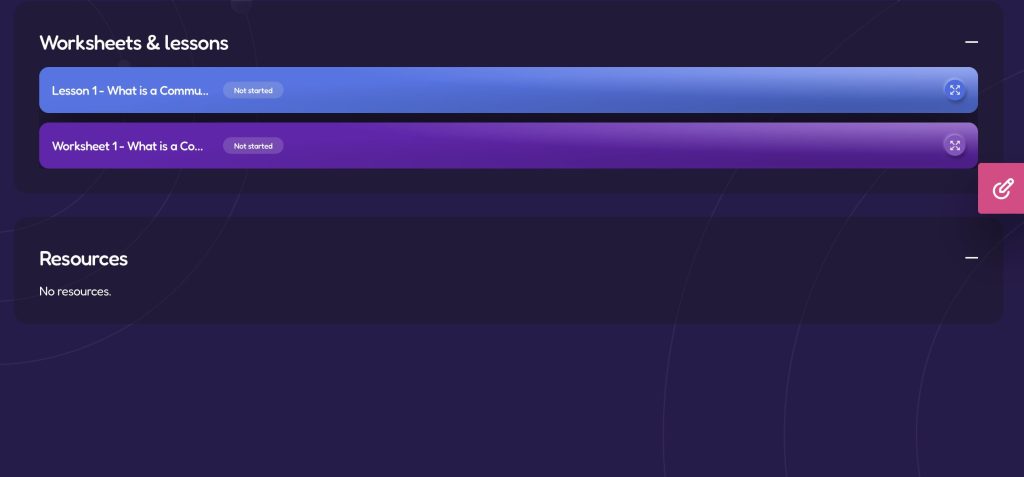
Step 7: Select the PDF 2 Worksheet.

You will see two options at the bottom of the lesson’s video. PDF1 Lesson and PDF2 Worksheet. The lesson is the hard copy of the lesson that your child watched the video of. You can download this for further lesson study or discussion. For the worksheet, click the white arrow beside PDF2. 

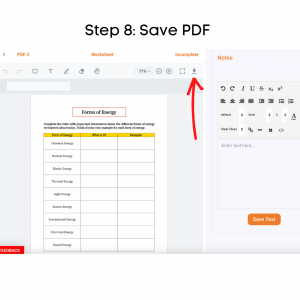
Step 8: Save PDF

Step 8: Download the PDF to Your Device.

Now that you have successfully opened the worksheet PDF, you can push the arrow at the top right-hand side of the worksheet that looks like an arrow pointing down towards a line.

Step 9: Select OK

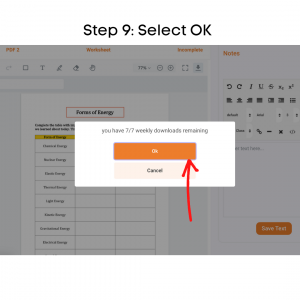
Step 9: Select OK.

Once you have pushed the arrow pointing down, it will tell you how many pdf downloads you have left for the week. Select the orange ‘OK’ button to continue. 

Step 10: Check your downloads

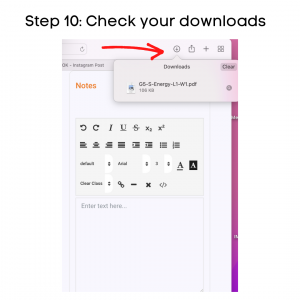
Step 10: Check Your Devices Downloads.

After downloading the pdf worksheet, check your computer’s downloads. Most downloads can be shown on the browser or the finder. Once you have located the download on your device, click on it. 

Step 11: Print your curriculum

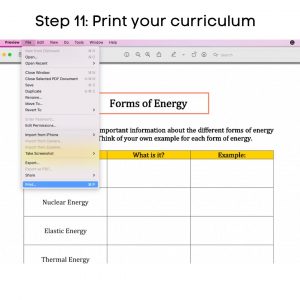
Step 11: Print your curriculum.

Now that the worksheet PDF is on your computer, you can open it and select print. This may vary by which brand of computer you have. But all computers do or should have a printing option.

Step 12: Get started!

Now that you’re a pro at downloading and printing from the Schoolio Digital Platform, you are ready to start learning! Enjoy and have fun!

If you are confused about how to schedule lessons for your child, we have got you covered. Click here to learn about scheduling on the Schoolio Digital Planner. 

We hope you and your student will enjoy The Schoolio Digital Platform with over 4,000+ videos, interactives, and pre-made or custom lessons to suit your student’s learning style. If you are confused about how to get started, we are happy to help.

Book a Concierge Call.

If you aren’t sure how to get started or what programs would best suit your child’s learning needs, then you can chat with one of our experts on a one-on-one Concierge Call, completely free!
Click here to book a Concierge Call. 


Do you need more help downloading and printing from the Schoolio Digital Platform?

Check out this thorough explanation video all about downloading and printing from the Schoolio Digital Platform.

Click here for the video. 

Meeting All Learners Where They Are

_____________________________________________________________________

Meeting All Learners Where They Are: 

Differentiation Made Easy

By Chelsea McLeod

Meeting Learners Where they are

So have you been assigned your first class, or are you changing grades for the first time in years? Keep reading to find out how to make your prep easier and focus your attention on the students in your classroom rather than the mountains of planning required to differentiate student learning.  This year, your Admin has told you that you will be teaching a 3rd-grade class and since you received this news, you have been diligently preparing all your 3rd-grade materials.

Since this is a single-grade class, all you’ll need is this single-stream curriculum approach to ensure your students are successful, right?! Wrong. This approach is a surefire way to set yourself and your students up to fail. But why? And how are we meeting all learners where they are?

All kids are different, so meeting all learners where they are is essential.

As babies, the professionals – doctors, nurses, child development experts, etc. – all tell us that the “milestones” to be reached are just guidelines and not set in stone. Each child learns to roll over, crawl, walk, and talk at their own pace, and the growth markers are estimates. Sometimes they are even arbitrary markers that will not affect long-term success. Your doctor will not hit the panic button if your baby is not rolling over at precisely four months or talking by the day of their 1st birthday. That would be silly.

Schoolio Learning

So why, then, are the growth stages in school treated differently? Why do we immediately hit the panic button when students are not at the level expected by a particular grade? Kids are different, it’s that simple, so while they are all in 3rd grade, they may not all be at the same level as 3rd grade. Learning is relative to each student, and we must treat them all as individuals to best support their learning by building them up from where they are rather than trying to make them attain a single “marker” by a certain age. This is where differentiation comes in, and Schoolio’s digital platform can make this easier. 


What is Differentiation? What does it mean for Teachers?


Differentiation or Differentiated Instruction “is a teaching approach that tailors instruction to all students learning needs. All the students have the same learning goal. But the instruction varies based on student’s interests, preferences, strengths, and struggles.” (https://understood.org).

This means that you can teach to different student needs, learning styles and even interests individually while still working towards the same goal for success, the goal being the Outcomes or Common Core that students are required to achieve in each grade as defined in the curriculum and meeting all learners where they are. 

teaching resources

What does this mean for Teachers? The plain answer is that straight-grade or single-graded classes are no longer as simple. A single-grade classroom nowadays is, in essence, the same as a multi-grade one. No student entering that classroom will learn or perform at the same level, and sometimes the predetermined “levels” they should be reaching seem arbitrary given the knowledge that all children are different. Our students all learn, grow and adapt on different timelines.

For example, some students will enter the 3rd grade struggling to read, maybe having trouble with sounds formation and not understanding some grammar concepts, while another student may be reading at a 5th, 6th grade or above level with no problem synthesizing the next grammar and spelling additions they learn in class.

So, while many schools do not have split grades, we are presented with split learners, and as a teacher, it is crucial to meet all students where they are. As previously discussed, babies and toddlers learn, grow and adapt at all times; so does every one of the students in each of our classrooms. So as teachers, we must be in tune with our students more as individuals and plan for individual student success.


differentiate learning

How Do We Plan for Individual Student Success?  

As a classroom teacher, you must consider all the pieces of the puzzle that make up each student in your classroom. When planning, it is essential to consider the student’s home life, family background, and parental time, as well as the achievements of the student. Each of these things and many other factors are all a part of student success. Therefore, we must have varied content available to create plans that help all learners at every level succeed. This is differentiation. Student interest is also a vital piece of the puzzle because ownership is essential to get full cooperation from the student.

For example, If you have a student obsessed with cars and spend all their free time reading and learning everything they can about cars, if you are trying to teach them math, you may have a difficult time. Sometimes, these students will see this math not as something vital for them to learn but as something that takes time and attention away from their passion.

So it’s not that they can’t understand something; it’s just that they don’t want to. I know we all have to do things we don’t want to do sometimes; however, it isn’t that simple, given the other factors involved. Sometimes parents will not force the issue, so as teachers, we need to get creative with how we approach learning.


Consequently, getting to know your students and what motivates/excites them is vital to being a classroom teacher. It’s okay to give students different lesson content if they are not engaging with the same materials as the rest of the class. The outcomes are required for the student to achieve, not the content. How you bring the student to achieve the result is essentially up to you.

So if you can find a way to make them feel successful, engage with their learning and take ownership of their achievements, you will have a much better classroom experience. To do this well, you will need to plan for differentiation. As the Teacher, you can differentiate the content, subject matter and sometimes even the length of the finished product to help cater to your learners’ success. 

Meeting all learners where they are

Now I know you’re thinking… But doesn’t that make so much more work for me? How on earth do I plan for 25 + different learners across all the core subject areas? One person cannot create that many lesson materials on top of all the other things teachers do! Therefore, the ability to teach grade-fluid content is a critical piece of this process and helps all teachers tremendously in meeting a student’s needs or catering to interest to spark participation and ownership of learning.  

With the Schoolio Digital Curriculum, You Can Do Exactly That!
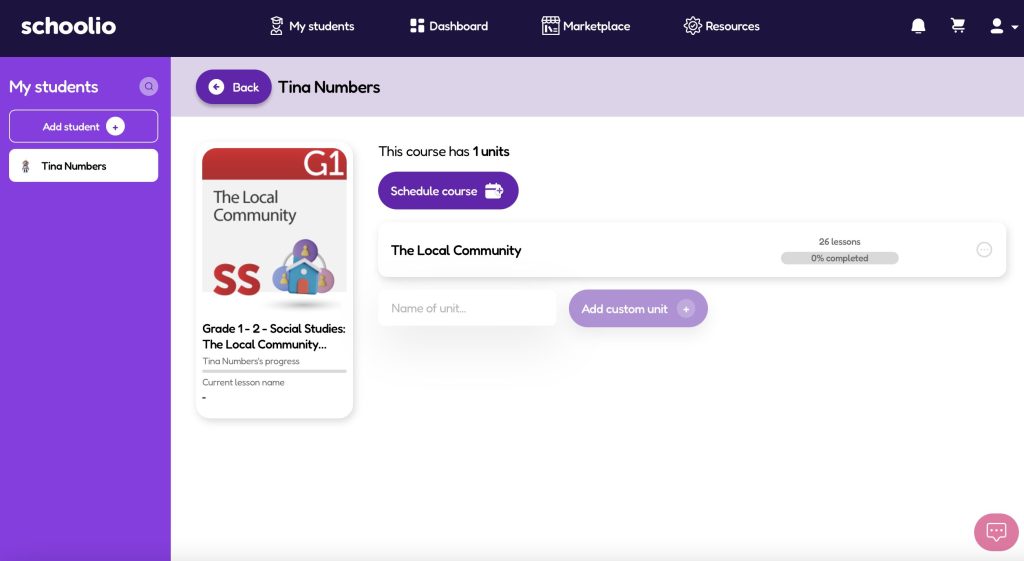
With Schoolio Digital, you can teach grade-fluid content and target your instruction to individual student success. Schoolio has lessons for the core subject areas for all grades created by teachers! If you are a member of the digital platform, you can mix and match exactly what your students need. This gives you flexibility and the opportunity to cater to individual student success while still maintaining your sanity and sleeping each night (not working round the clock to create materials).
So, don’t panic and spend hours “reinventing the wheel” to make all the content you need to support your in-class instruction when Schoolio has already done it. Now you can spend your precious classroom time getting to know your students, making lasting connections, and creating a safe place for students to learn and grow, all while using Schoolio’s Digital Platform to support all you are already doing. Sign up now and focus on what matters, the students in front of you, not the prep work while meeting all student’s where they are.


Homeschooling and Socialization

Homeschooling and Socialization is a topic that makes many homeschool families cringe. And it’s not because their children are inadequately socialized; it’s because so many people ask them about socialization and voice their concerns. From something as simple as walking through the grocery store during the day with their children, a homeschooling parent will likely get grilled about their choices, and random strangers will ask questions about homeschooling and socialization.

Homeschooling and Socialization go hand in hand.

This might surprise you, but homeschooling and socialization go hand in hand. In fact, many homeschooled children have better social lives than their traditionally schooled peers. How could this be possible? Well, first, let’s look at the facts. According to Think Impact Homeschooling Statistics, recent federal data shows that 3% to 4% of the school-going population in the United States is homeschooled. There are 73 million children in the U.S., which means over 2.9 million children are homeschooled in the U.S.

With that many children being homeschooled, do we still believe that they are all not adequately socialized? Of course not! Homeschooling has been growing in popularity for the last ten years, especially since the beginning of the COVID-19 pandemic in 2020, when over 300 million students worldwide became homeschooled briefly.

Pandemic learning didn’t help stop the myth that homeschooled children aren’t socialized.

Unfortunately, when most parents and children were forced into remote learning through school boards during the pandemic, it did nothing to diminish the myth that homeschooled children aren’t socialized. Because children were being isolated with a makeshift version of online learning, parents also attempted to work from home simultaneously. This caused tremendous stress for parents and students alike and caused many parents and friends of the family to assume that what they were doing was homeschooling. Which they were not.

Recently I had a concerned citizen ask me why I would choose to homeschool my children, knowing that they wouldn’t get socialized and wouldn’t have as many opportunities in life—a shocking claim. Especially since statistics show that homeschooled children have a 67% College graduation rate compared to their public schooled peers at 59%, not to mention that my children have better social lives and many more friends than I do.

This person’s concern stemmed from watching their grandchild struggle through online/pandemic learning. And the isolation they felt. I kindly explained that homeschooling is 100% different from pandemic learning. And that my children have many opportunities to get out and socialize. Still, the person seemed bewildered.

A conversation with a homeschooled child.

As stated above, if over 2.9 million children in the United States are homeschooled, how could they all be isolated and live unsocialized lives? Have you ever had a conversation with a homeschooled child? They are usually the ones the explain in detail the project that they are working on. They are the ones that have unique interests and see the world through a much different lens than those around them.

Recently we had a family move to our neighbourhood that homeschools. While I was out for a walk with my kids, we stopped to say hello to two children playing catch. I welcomed them to the neighbourhood, and the one boy introduced himself, shook my hand and wished us a wonderful day. Why did this child interact so politely instead of ignoring our passing? Because many homeschooled children have opportunities to participate in socialization that other children don’t have access to. Let’s talk about that.

Socialization opportunities for homeschooled children:

There are so many opportunities available for homeschooling families to participate. Here are some of our favourites!

  1. Homeschooling Groups.

    Since there are so many homeschooling families, many families get together to plan fun activities and sports-related opportunities for their children. Most cities have such a large amount of homeschooling families that they have registered homeschooling groups. These groups offer support for homeschooling families, co-op learning, field trips, sports, and lessons.

    Are you looking for virtual socialization opportunities for parents? Check this out. 

  2. Sports.

    Our local homeschooling group comes with some fantastic perks, like gymnastics lessons, at a local gymnastics club, swimming lessons at the pool, track and field during the warm months, and gym/indoor pool rentals during the cold months, sledding, skiing, horseback riding and more.

  3. Park dates.

    During the summer months, when homeschooling activities are mostly paused, many homeschooling groups offer weekly meet-ups at parks in your location so homeschooling friends can get together to play and have fun!

  4. Community Service.

    Many homeschooling families understand the importance of the community. That’s why so many homeschooling families will volunteer at community events. Or care homes. Some homeschooling groups organize carolling and visits with local care homes during the holiday season. Other homeschooling families like to get involved in community gardens or soup kitchens. All of this community involvement helps children have budding and diverse social lives. They aren’t just socializing with their peers; they are also mingling with the community of people around them.

  5. Basking in the Arts.

    Since homeschooled children have more time during the day than traditional learning students, they have more time to get involved in the arts. This means they have more time to attend music lessons or art classes. Being able to develop those additional skills that will benefit them throughout their lives. This also means they will have more opportunities to meet people in the art community, which diversifies their socialization and opens their world to a new level of learning.

  6. More time for imaginative play.

    You can have homeschooling and socialization while still encouraging imaginative play. One of the top benefits of imaginative play is social development. When children engage in imaginative play, they can begin to understand relationships which help to improve their social skills and become more confident, connected, and self-reliant. And this results in children building better relationships with their peers.

  7. Good old fashion play.

    Just because your child is homeschooled doesn’t mean they can’t or shouldn’t partake in friendships in their neighbourhood. Most homeschooled children have ‘homeschooled’ friends and ‘neighbourhood friends.’ Just like a traditionally schooled child will have ‘school friends’ and ‘neighbourhood friends.’ Evenings, weekends, and summer days are perfect for neighbourhood mingling and budding friendships with peers.

All this to say, that yes, homeschooling and socialization are partners. This terrible stereotype of homeschooled children is that they are always alone, awkward, rude, and don’t know how to take social cues. The opposite is true. Homeschooled children are brilliant and capable of having successful friendships and positive social lives. So, the next time someone doubts your children’s social lives, go ahead and point them to The Schoolio Blog!

Interest-based learning Schoolio
Click Here for More Learning Fun!

Prepare Your Pre-Teen for Grade 8

How can you prepare your pre-teen for grade 8? Make sure you still let them have that fun summer that they want but also aim to keep them on track, catch them up from pandemic learning loss, avoid summer learning loss and prepare them for grade eight? It’s a huge task, but it doesn’t have to be complicated.

Avoid summer learning loss and prepare your pre-teen for grade 8.

Let’s face it; many kids are struggling to catch up after enduring two years of pandemic learning. Researchers and educators are all stating their concerns for kids that have perhaps slipped through the cracks due to pandemic learning. A more significant problem is the added impact of summer learning loss. Knowing that over the summer, many children will lose 2.6 months of math skills, two months of reading skills and one month of overall learning.

Click here to learn more about Summer Learning Loss. 

Knowing those statistics, it can be hard not to stress about your pre-teen’s education. But, the most important thing you can do is avoid worrying about your pre-teen’s learning during the summer months. Of course, you want your child to learn, stay on track and have all the opportunities in life that they deserve. But constantly worrying about that won’t help you or your pre-teen.

So what can you do to help your pre-teen catch up on all the learning they have lost? While also aiming to stay on track and not lose even more learning skills during the summer?

Simplify learning when you prepare your pre-teen for grade eight.

Try to avoid overthinking your pre-teen’s summer learning because we all know that overthinking adds more stress than necessary. You don’t need elaborate plans to prepare your child for grade eight. This will only lead to you, and your child feeling stressed and exhausted while dealing with that dreaded feeling of not getting enough done.

When preparing your pre-teen for grade eight, what is the best and easiest way to simplify summer learning? Use the Summer Schoolio: Get Ready for Grade 8 book! Summer Schoolio: Get Ready for Grade 8 was created to help your child stay on track with their essential learning. What’s better is that this program will save you time and money as you won’t be searching and spending money on a homeschooling curriculum to try to fit your summer learning needs.

What’s inside the Summer Schoolio: Ready for Grade 8 workbook?

Prepare your pre-teen for grade 8

We want you and your pre-teen to have an enjoyable summer without the stress of trying to complete extra tasks. The Summer Schoolio books have been designed in a simple format, without the mountain of overwhelming tasks. This helps your pre-teen stay on track with their learning.

The Summer Schoolio: Ready for Grade 8 book combines the best homeschooling curriculum concepts to give you and your child a unique solution to help prepare your pre-teen for grade eight. We’ve combined the homeschooling writing curriculum, homeschooling language arts curriculum and homeschooling math curriculum to bring you and your child a workbook to help practice essential skills to stay on track.

Summer Schoolio: Ready for Grade 8 overview:

Prepare your pre-teen for grade 8

The Summer Schoolio: Ready for Grade 8 workbook is filled with learning materials that aren’t just educational; they’re fun too! This combination is an excellent resource to help prepare your pre-teen for grade 8. Created for six weeks of learning, your pre-teen will have the opportunity to learn and refresh different learning concepts each week.

Week one includes:

The Summer Schoolio week includes three days of simple learning that won’t be overwhelming or take too long to complete.

  • Day one, Weekly Writing – Friendly Letters – and Math – Number Sense.
  • Then day two has Weekly Writing and Math – Number Sense.
  • On day three, your pre-teen will work on Weekly Writing – Scrapbooking – and Math – Number Sense.

Week two includes:

The second week of Summer Schoolio: Ready for Grade 8 is similar to week one, just switching up learning concepts.

  • During week two, your pre-teen will have Weekly Writing – Writing Fiction – and Math – Number Sense on day one.
  • On Day Two, they will have Weekly Writing and Number Sense.
  • Then on day three, they will have Weekly Writing – Scrapbook and Math – Number Sense.

Week three includes:

During the third week of the Summer Schoolio: Ready for Grade 8 book, your pre-teen will be working on:

  • Weekly Writing – Reviewing a Book – and Math – Algebra on day one.
  • Then on day two, your child will work on Weekly Writing and Math – Algebra.
  • Followed by day three, which is Weekly Writing – Scrapbook and Math – Algebra.

Week four includes:

  • When your pre-teen is working on week four, day one, they will do Weekly Writing – Writing Non-Fiction – and Math – Geometry/Spatial Sense.
  • Then on day two, they will be working on Weekly Writing and Math – Geometry/Spatial Sense.
  • Finally, on day three, they will get to work on their scrapbook for Weekly Writing and the final day of Math – Geometry/Spatial Sense.

Week five includes:

  • Day one of week five is Weekly Writing – Poetry – and Math – Data Management.
  • Then on day two, they will work on Weekly Writing and Math – Data Management.
  • Followed by day three, which is Scrapbooking for Weekly Writing and Data Management for Math.

Week six includes:

  • The first day of week six focuses on Weekly Writing – Summarizing – and Math – Financial Literacy.
  • The second day is all about Weekly Writing and Financial Literacy for Math.
  • Then, your child can work on their scrapbook again for Weekly Writing and enjoy their final Financial Literacy assignment.

A daily repetitive learning cycle with refreshing concepts helps your pre-teen stay interested with a structured plan for summer learning. This technique will help your pre-teen master essential math, writing and reading concepts for grade eight.

Prepare your pre-teen for grade 8

The Summer Schoolio: Ready for Grade 8 workbook includes a sample schedule/calendar that looks like this:

Monday: Read a Book or Chapter.

Tuesday: Weekly Writing Day 1, Math Day 1, Read a Book or Chapter.

Wednesday: Weekly Writing Day 2, Math Day 2, Read a Book or Chapter.

Thursday: Weekly Writing Day 3, Math Day 3, Read a Book or Chapter.

Friday: Read a Book or Chapter.

Helping your pre-teen stay on track and up-to-date with their learning while avoiding summer learning loss and preparing for the next grade doesn’t need to be an overwhelming and stressful task. It also doesn’t need to take much daily time to succeed. The Summer Schoolio: Ready for Grade 8 book helps your child keep up with their learning needs, refresh, and not become overwhelmed by too much information crammed into one day.

Prepare your pre-teen for grade eight.


Click for Summer Schoolio

Prepare Your Child for Grade Four

Are you worried that your child isn’t prepared for grade four or that they might lose too much knowledge due to summer learning loss? What’s the best way to keep your child on track with their learning during the summer? Should you crowd their day with learning time and curriculum? Or allow them to have fun and easy-going summer? What’s the best way to prepare your child for grade four?

Avoid summer learning loss while trying to prepare your child for grade four.

First things first, don’t stress so much about it. We get it; as parents, we often feel the need to ensure our children do their very best and get all the best opportunities in life. We worry that we aren’t doing enough, causing our child to struggle more and more with summer learning loss and pandemic learning loss.

Trying to avoid summer learning loss when you’ve already been worried about pandemic learning loss can become an exhausting task. Especially when you see statistics about summer learning loss that 2.6 months of math skills, two months of reading skills and one more of overall learning are lost each summer for most children.

Learn more about Summer Learning Loss.

What can you do to help your child catch up on all the learning loss they’ve experienced, stay on track, and not lose every more learning skill during the summer?

Math, reading and writing are general learning skills that are essential for your child to continually practice to develop correctly; this is especially true during the summer.

What’s the best way to prepare your child for grade four? The first step is to simplify learning.

You must avoid overthinking their summer learning as that will only lead to chronic stress. Many of us assume that to prepare your child for grade four, you must have some elaborate plan. Which leads to you being exhausted and never feeling like you’ve done enough.

One of the easiest ways to simplify summer learning when you are aiming to prepare your child for grade three is to use the Summer Schoolio: Get Ready for Grade 4 book! The Summer Schoolio book was created to help your child excel in grade four. Summer Schoolio: Ready for Grade 4 book helps your child stay on track with essential learning. And this will also save you hundreds of dollars and time searching for a homeschool curriculum suitable for your goal of helping your child prepare for grade four.

What’s inside the Summer Schoolio: Ready for Grade 4 workbook?

Prepare your child for grade four

An enjoyable summer without the stress of trying to complete extra tasks is so important. And the Summer Schoolio books have been designed to be simple; without the mountain of overwhelming tasks, your child can stay on pace with their learning.

The Summer Schoolio: Ready for Grade 4 book combines the best homeschooling curriculum concepts to bring you and your child a unique solution to help you prepare your child for grade four. We’ve combined the homeschooling writing curriculum, homeschooling language arts curriculum and the homeschooling math curriculum to bring you and your child a book to help practice essential skills to stay on track.

Here’s an overview of Schoolio Ready for Grade 4:

Prepare Your Child for Grade four The Summer Schoolio: Ready for Grade 4 workbook is loaded with materials that aren’t just educational; they’re fun too! This combination is an excellent resource to help prepare your child for grade four. Created for six weeks of learning, your child will have the opportunity to learn and refresh different learning concepts each week.

Week one includes:

The Summer Schoolio week includes three days of simple learning that won’t be overwhelming or take too long to complete.

  • Day one, Weekly Writing – Persuasive Writing – and Math – Number Sense.
  • Then day two has Weekly Writing and Math – Number Sense.
  • On day three, your child will work on Weekly Writing – Scrapbooking – and Math – Number Sense.

Week two includes:

The second week of Summer Schoolio: Ready for Grade 4 is similar to week one, just switching up learning concepts.

  • Day one, Weekly Writing – Poetry – and Math – Number Sense.
  • On Day Two, they will have Weekly Writing and Number Sense.
  • Day three, they will have Weekly Writing – Scrapbook and Math – Number Sense.

Week three includes:

During the third week of the Summer Schoolio: Ready for Grade 4 book, your child will be working on:

  • Day one, Weekly Writing – Writing Non-Fiction – and Math – Algebra.
  • On day two, your child will work on Weekly Writing and Math – Algebra.
  • Followed by day three, which is Weekly Writing – Scrapbook and Math – Algebra.

Week four includes:

When your child is working on week four:

  • Day one, they will do Weekly Writing – Comic Book – and Math – Geometry/Spatial Sense.
  • On day two, they will be working on Weekly Writing and Math – Geometry/Spatial Sense.
  • Finally, on day three, they will get to work on their scrapbook for Weekly Writing and the final day of Math – Geometry/Spatial Sense.

Week five includes:

  • Day one of week five is Weekly Writing – Writing an Email – and Math – Data Management.
  • Then on day two, they will work on Weekly Writing and Math – Data Management.
  • Followed by day three, which is Scrapbooking for Weekly Writing and Data Management for Math.

Week six includes:

  • The first day of week six focuses on Weekly Writing – Box Review – and Math – Financial Literacy.
  • The second day is all about Weekly Writing and Financial Literacy for Math.
  • Then, your child can work on their scrapbook again for Weekly Writing and enjoy their final Financial Literacy assignment.

The daily work is repetitive but also ever-changing to help your child stay interested with a structured plan for summer learning. This technique helps your child master essential math, writing and reading concepts for grade four.

Prepare Your Child for Grade four

A sample schedule/calendar will be included with the Summer Schoolio: Ready for Grade 4 workbook. It sounds like this:

Monday: Read a Book or Chapter.

Tuesday: Weekly Writing Day 1, Math Day 1, Read a Book or Chapter.

Wednesday: Weekly Writing Day 2, Math Day 2, Read a Book or Chapter.

Thursday: Weekly Writing Day 3, Math Day 3, Read a Book or Chapter.

Friday: Read a Book or Chapter.

The process of trying to help your child stay on track and up-to-date with their learning while avoiding summer learning loss and preparing for the next grade doesn’t need to be an overwhelming and stressful task. It also doesn’t need to take a massive chunk of time every day in order for it to be successful. The Summer Schoolio: Ready for Grade 4 book helps your child keep up with their learning needs, refresh, and not become overwhelmed by too much information crammed into one day.

Prepare your child for grade four.


Pick up your summer schoolio book!

Prepare Your Child for Grade Three

Do you feel like your child is prepared for grade three? During the summer, are you planning to help your child stay on track with their learning or have a free-for-all summer with no sign of curriculum? Do you want to ensure your child stays on track but not overwhelm them with too much ‘work’? Let us help you with all your questions on how to prepare your child for grade three.

Preparing your child for grade three while aiming to avoid summer learning loss.

The first thing you need to do when aiming to prepare your child for grade three while avoiding summer learning loss? Don’t stress so much! As parents, we often worry about ensuring our children are on track with their learning. That worry can become more and more of a concern when we think about pandemic learning loss.
How to avoid summer learning loss on top of pandemic learning loss is another concern facing parents, especially when they hear that most children lose 2.6 months of math skills, two months of reading skills and the equivalent of one month of overall learning each summer.
You can learn more about Summer Learning Loss here. 
So, how can we help our children catch up on all the learning loss they’ve experienced, stay on track and not lose even more learning skills during the summer?
Reading, writing, math and learning, in general, are essential skills your child must continually practice to develop correctly, especially during the summer.

How to prepare your child for grade three? First, let’s simplify learning.

One thing you absolutely must avoid is overthinking their learning. We often assume that to prepare your child for grade three, you must have elaborate plans, and it has to be a huge, exhausting endeavour when the actual reality is that it can be a simple process.
One of the best ways to simplify their summer learning is to use the Summer Schoolio: Ready for Grade 3 book! This book was created specifically to help children about to move onto grade three. Using the Summer Schoolio: Ready for Grade 3 book, your child will stay refreshed and on track with their essential learning. This will also save you hundreds of dollars and time because you won’t be searching for a homeschool curriculum that will still be too much or too little when aiming to prepare your child for grade three.

Take a look inside the Summer Schoolio: Ready for Grade 3 workbook!

Prepare Your Child for Grade 3
Having an enjoyable summer without the stress of trying to complete extra tasks is essential! This is why our Summer Schoolio books have been designed to be simple. Without the overwhelm of having to complete a mountain of overwhelming tasks.
In the Summer Schoolio: Ready for Grade 3 book, we have combined the best of our secular homeschooling curriculum concepts to bring you and your child a unique summer learning solution that will prepare your child for grade three. In a fantastic combination of homeschooling writing curriculum, homeschooling language arts curriculum and homeschooling math curriculum, we aim to help your child practice those essential skills to stay on track.

Summer Schoolio: Ready for Grade 3 overview:

Prepare your child for grade three
The Summer Schoolio: Ready for Grade 3 workbook is loaded with materials that aren’t just educational; they’re fun too! This combination is an excellent resource to help prepare your child for grade three. Created for six weeks of learning, your child will have the opportunity to learn and refresh different learning concepts each week.

Week one includes:

The Summer Schoolio week includes three days of simple learning that won’t be overwhelming or take too long to complete.

  • Day one, Weekly Writing – Writing Fiction – and Math – Number Sense.
  • Day two has Weekly Writing and Math – Number Sense.
  • On day three, your child will work on Weekly Writing – Scrapbooking – and Math – Number Sense.

Week two includes:

The second week of Summer Schoolio: Ready for Grade 3 is similar to week one, just switching up learning concepts.

  • During week two, on day one, your child will have Weekly Writing – Autobiography – and Math – Number Sense.
  • On Day Two, they will have Weekly Writing and Number Sense.
  • On day three, they will have Weekly Writing – Scrapbook and Math – Number Sense.

Week three includes:

During the third week of the Summer Schoolio: Ready for Grade 3 book, your child will be working on:

  • Day one, Weekly Writing – Reviewing a Book – and Math – Algebra.
  • Then on day two, your child will work on Weekly Writing and Math – Algebra.
  • Followed by day three, which is Weekly Writing – Scrapbook and Math – Algebra.

Week four includes:

When your child is working on week four:

  • Day one, Weekly Writing – Writing Non-Fiction – and Math – Geometry/Spatial Sense.
  • Then on day two, they will be working on Weekly Writing and Math – Geometry/Spatial Sense.
  • On day three, they will get to work on their scrapbook for Weekly Writing and the final day of Math – Geometry/Spatial Sense.

Week five includes:

  • Day one of week five is Weekly Writing – Poetry – and Math – Data.
  • Then on day two, they will work on Weekly Writing and Math – Data.
  • Day three is Scrapbooking for Weekly Writing and Data for Math.

Week six includes:

  • The first day of week six focuses on Weekly Writing – Summarizing – and Math – Financial Literacy.
  • The second day is all about Weekly Writing and Financial Literacy for Math.
  • Then on day three, your child can work on their scrapbook again for Weekly Writing and enjoy their final Financial Literacy assignment.

The schedule and assignments are repetitive but changing to help your child stay structured and interested. This technique helps your child master all the essential math and reading/writing concepts for grade three.

What does a typical week look like using the Summer Schoolio: Ready for Grade 3 program?

Prepare your child for grade three
The Summer Schoolio: Ready for Grade 3 book includes a sample schedule/calendar you can follow daily. It translates to:
Monday: Read a Book or Chapter.
Tuesday: Weekly Writing Day 1, Math Day 1, Read a Book or Chapter.
Wednesday: Weekly writing Day 2, Math Day 2, Read a Book or Chapter.
Thursday: Weekly Writing Day 3, Math Day 3, Read a Book or Chapter.
Friday: Read a Book or Chapter.
Keeping your child on track and up-to-date with their learning doesn’t need to be an overwhelming and stressful process. And you don’t need to take a massive chunk of time each time to accomplish it. The Summer Schoolio: Ready for Grade 3 book helps your child keep up with their learning needs, refresh and not become overwhelmed by too much information crammed into one day.

Prepare your child for grade three.


Pick up your copy of Summer Schoolio

Avoid Summer Learning Loss

Summer break is easily one of the highlights for children everywhere! The excitement of making fun a priority for a couple of months is such an intriguing thought. How can we help our children embrace all the fun they can get this summer while also aiming to avoid summer learning loss?

Summer Learning Loss is a significant issue.

What is summer learning loss? Summer learning loss is the loss of knowledge and academic skills throughout summer vacation. This issue causes a significant problem for children, especially in the younger grades when reading and math practice are essential for maintaining skills.

The reality is that when the school year ends, many children will have very few opportunities to engage in reading and mathematical ways of thinking. This is why it’s so important to look at learning methods to avoid summer learning loss.

Children have already lost so much essential learning time from pandemic learning loss.

Harvard Professor Tom Kane says, “There’s no time to waste.” His latest research has demonstrated that many, if not most, school districts are seeing pandemic learning losses much more severe than they initially imagined.

Even when education experiences were average, and the pandemic hadn’t turned life and learning completely upside-down, children still faced significant learning losses during the summer.

Every summer, children lose 2.6 months of math skills, two months of reading skills, and the equivalent of one month of overall learning. When they get back to learning in the fall, it is estimated that they will spend up to six weeks trying to re-learn old material to make up for these losses.

Those statistics are pretty severe and, unfortunately, don’t even consider that children are already struggling and way behind where they should be due to pandemic learning.

How can you help your child avoid summer learning loss and perhaps even begin to catch up from pandemic learning loss?

1. Make learning time a priority.

Setting a learning time doesn’t mean your child needs to be doing school every day! Alternatively, you can make a schedule each day to include 30 minutes per day of ‘learning time.’ During that 30 minutes, they can work on their summer learning materials like the Summer Schoolio books. Dedicating just 30 minutes daily to focus on completing the daily activities can help boost your child’s learning while significantly helping your child avoid summer learning loss.

2. Schedule Outdoor Learning Experiences.

Your child likely loves to explore the outdoors during the summer months, especially after months of winter weather and being stuck inside. And conveniently, plenty of outdoor experiences are waiting to help your child learn while having fun. Outdoor adventures help your child apply what they’ve learned in the classroom while improving cognitive functioning and physical health.

Some fun outdoor activities include:

3. Focus on Specific Areas of Learning.

You’re likely able to pinpoint the subject(s) your child is experiencing the most difficulty with. Prioritize learning around this subject throughout the summer.

4. Encourage Your Child to Read Anywhere.

If you live in the Northern Hemisphere, it can be tough to stay inside when the weather is fantastic. Instead of telling your child that they can’t go outside until they’ve finished reading – encourage them to take the book out and read on the porch or in the backyard.

When you take story time to the outdoors, you are providing their young minds with the opportunity to indulge in the sights and sounds of the outdoors. The outdoors provides an excellent multi-sensory experience that can help your child better connect to their surroundings while developing phonemic awareness.

5. Include Reading Materials About Outdoor Activities.

Is your child interested in gardening? Swimming? Birds? Then head to the library and pick up some fun books about those subjects, allowing them to read and learn about something that greatly interests them while helping them develop their reading skills.

6. Utilize a Local Community Garden.

Community gardens offer many learning opportunities for children (and adults) of all ages. When you and your child become involved with a local community garden, they will have the chance to learn about important things like cultivation, seed preservation, essential bugs, landscaping and horticulture. All of which are so important for our children to learn!

7. Limit Screen Time and Encourage Imaginative Play.

It can be tempting to allow your child to stay on their device for hours as you can get a much-needed break. But we all know this can be very bad for their mental health and detrimental to their developing brains. Encourage them to use their imaginations to play and create. If your child is used to always being on a screen, this will likely be a bumpy start. Stay strong and be consistent.

8. Pick up a Summer Schoolio Book.

Help your child avoid summer learning loss and prepare for the coming school year using this unique Schoolio program. Summer Schoolio Books are specifically designed to be suitable for any student learner that has completed their grade level.

The Summer Schoolio Program focuses on reviewing and solidifying important mathematical and language concepts studied in the previous year of learning. Throughout the program, your child will review materials in Number Sense and Numeration, Algebra and Patterning, Data Management and probability, Geometry and Spatial Reasoning, and Financial Literacy while also engaging in weekly writing activities.

Check Out the Summer Schoolio Program


Never overstress your child.

We understand the desire to help your child completely catch up on everything while also aiming to avoid summer learning loss. But remember, there’s a fine line that you need to walk. Keep an eye on your child, especially during reading/learning times, if they’re getting agitated and want to be done for the day. Then let them be. Learning is even more challenging to accomplish when the brain is under stress. As parents, we often feel we must constantly work to help our children succeed. But remember, sometimes downtime is just as crucial as learning time.

Help Your Child Process What Happened in Uvalde Texas

On May 24, 2022, we all saw the horrifying news of another mass shooting. This time, most casualties were children—innocent, sweet children going about their typical school day at Robb Elementary in Uvalde, Texas. The Uvalde, Texas, shooting claimed the lives of 19 children and two teachers. And is the most deadly shooting in the United States since the Sandy Hook Elementary shooting that claimed the lives of 20 children and six adults in 2012. Many children have seen the news and are now afraid to step foot in their schools. So, what can you do to help your child process what happened in Uvalde Texas? 

Less than ten days ago, we posted a blog entitled ‘Help Your Child Cope With News About Gun Violence,’ following the mass shooting at a Buffalo grocery store. Sadly, we are again writing another blog about another tragedy connected to gun violence in the United States. It seems like nowhere is safe, and it is tragic for our children to see these acts of violence happening around them. What can you do to help your child process what happened in Uvalde, Texas? And how can we help our children feel comfortable even with all of these tragedies?

Help your child process what happened in Uvalde, Texas.

It’s terrifying for anyone to think they could be killed simply for being in the wrong place at the wrong time. But especially so for children. Children shouldn’t have to feel afraid when they attend school; they shouldn’t have to do active shooter drills in their schools. But unfortunately, with tragedies like these happening more and more, our minds must think about the ‘what ifs.’ And must take action.

While I’d love to say that your children can somehow avoid the news of what happened in Uvalde, Texas, there is a significant chance that through friends, media, social media, or even family, they will learn about the horrific events that took place on May 24, 2022. So, how can you help your child process what happened in Uvalde, Texas?

When trying to help your child process what happened in Uvalde Texas, be there for them. 

The most important way that you can help your child process what happened in Uvalde, Texas, is to be there for them. What is happening to the world’s youth isn’t fair, and many of us cannot understand this type of horrific violent act against young people. This is why it’s essential to be there for your child when trying to process these tragic events.

Listen to their concerns.

If your child is struggling to process the news and events, openly listen to their worries and concerns about it. You likely don’t have all the answers because none of us do. But when they can share their anxieties, it helps them process and work through the emotions and big thoughts they are struggling to deal with.

Don’t force them to go to school.

Sending your kids to school when they’re struggling with anxiety regarding what happened isn’t a great idea. Yes, you’ll want your child to get back to everyday life and routine again, but when the news of such an event is so fresh, it’s ok to let your child have some time to process it and feel comfortable. There is nothing wrong with taking a day or two off of school to work through their feelings. Just be sure that you are there to help them, or another trusted adult is there to guide them through those thoughts and feelings so that they don’t spiral into something even more significant.

Avoid brushing it off like it was no big deal.

I believe that many of us brush things off to comfort ourselves. Saying things like, “Well, that’s not even close to us.” “Don’t worry about that; it would never happen here.” “The news always reports the worst of everything.” “Stop worrying about it; it didn’t happen here.” While these might be comforting things to say to ourselves, these dismissive words will likely only alienate our children from sharing how they feel in future situations. What happened is a big deal; it’s horrifying, disturbing, and something that should make you feel uncomfortable, even though it wasn’t necessarily close to you in proximity.

Encourage them to journal their thoughts.

Writing, drawing, and doodling are unique ways to release worries and stress caught in your mind. Encourage your child to indulge in some art, writing, or music to help them process those big thoughts that they’re struggling with.

Remind them that they are safe.

As mentioned in the previous blog about helping our children cope with gun violence, really emphasize reminding your child that they are safe. Right now, they are safe. And you will never put them into any dangerous situation. While you know that sometimes dangerous things happen, you don’t need to share those thoughts with them right now.

Be honest, but don’t overshare.

When your child asks you questions regarding the event, find out what they know. Be honest in answering their questions, but avoid oversharing details. Always be mindful of your child’s age and what they should and shouldn’t know.

Remind yourself that you are processing everything too.

We are often hardest on ourselves, especially when we assume that we should have it all figured out as parents. There is no handbook on how to deal with such a horrific event. So, don’t rush or suffocate your feelings. It’s ok to feel sad, struggle with what happened, or have difficulty processing it. Be patient with yourself because your children will learn that it’s ok to take time to process their thoughts and feelings too, and it’s ok to work through these events at their own pace.

Up-to-date information on Uvalde, Texas.

Why Parents Are Turning To Homeschooling

Why Parents Are Turning to Homeschooling

The other day, I was at a dentist’s appointment with my kids. While we were there, the secretary asked my daughter if she enjoyed the morning off school to be at the dentist. My daughter responded with a “no” because she despises dentist’s appointments. I followed up the question with, “We will be doing school when we are home as we homeschool.” She looked at me with disbelief and said, “You homeschool? How could your children be socialized then? With online learning, children were struggling with isolation and lack of socialization.” I then went into a long explanation about how homeschooling is far from isolation learning. She still looked confused, as many people do when they wonder why parents are turning to homeschooling as their education choice. 

Here’s why parents are turning to homeschooling:

After two years of the pandemic and homeschooling becoming a norm in education, I shouldn’t still have to give explanations to strangers about my children’s social lives. Yet, that remains one of the most common questions I receive. The world needs to subscribe to the Schoolio Blog and read blogs like Socialization and Homeschooling. One thing that might interest you about homeschooling is that socialization is one of the main reasons why parents are turning to homeschooling as their preferred education method.

Homeschooling improves children’s social skills and interactions.

One of the most important reasons why parents are turning to homeschooling is because of healthy socialization. When homeschooled, children have much less exposure to peer pressure and bullying. Homeschooled children are also able to have more customized social interactions. Additionally, most children in the public school system spend hours in classrooms listening to teachers. In comparison, homeschooled children have many more opportunities for learning activities outside of the home.

A flexible homeschooling curriculum means homeschool families have more opportunities to participate in fun activities. Some of which include: museum trips, park playdates, community service activities, art classes, and track and field days.

Using a flexible homeschool curriculum and making homeschooling a lifestyle significantly improves emotional and psychological development in children. While also strengthening family connections and connections with other homeschooled children.

Homeschooling means having access to higher quality education.

Many parents believe that the quality of education is not what it once was. With a decline in the education budget, increased student enrolment, large class sizes, burnt-out teachers, and other factors. Parents feel that homeschooling gives them more control over their children’s learning. In 2015, long before the pandemic and the devastating effects on children’s education, a Career and College Readiness Survey showed shocking results. These results indicated that less than half of high school students feel academically ready for college.

Interrupted education, overcrowded classrooms, and fewer resources have made it extremely difficult for teachers to provide one-on-one instruction to students. When homeschooling, parents can use a curriculum that follows learning standards while also offering personalized education to their child, which is so often missing in today’s learning venues.

Homeschooling can support a child with diverse learning needs.

Unfortunately, children with learning disabilities or even physical disabilities have difficulty thriving in a traditional learning environment. Many schools don’t have adequate resources and time available to support children with diverse learning needs. Additionally, formal education is a one size fits all model when we all know that one size fits nobody. Having a customizable curriculum and a flexible learning environment is essential for children with diverse learning needs.

Homeschooling means educational stability.

Even before the pandemic began, there were teacher strikes, bad weather and many other reasons students were forced to miss class. Homeschooling means educational stability for many students as they have that flexible learning solution and learning lifestyle that keeps them learning even when schools are not in. Many homeschooling parents (who were homeschooling before the pandemic) were thankful that they had chosen that educational path for their children, as homeschooling offered much-needed stability to their days.

Homeschooling means better educational results.

It might shock you that homeschooled children often score better on federal standardized tests than their public school peers. Brian Ray of the National Home Education Research Institute showed that homeschooled children often achieve much higher results. Regardless of parents’ income or teaching experience.

Homeschooling offers student-athletes and musicians a flexible education option.

Many student-athletes have intense travel and practice schedules. Additionally, many students who participate in fine arts, theatre, or music need time to rehearse and perform. These students need a flexible education option that will work around their busy schedules.

Homeschooling offers a learning environment that children enjoy.

Unfortunately, many public school children feel stressed over the volume of homework and the lack of instruction. Many children don’t thrive in environments that are high stress, where they are required to memorize and keep up with their peers around them. This popular model of education doesn’t cater to the majority of students. Learning should be fun and engaging, not blank and stressful. Homeschooled parents report that they have much more time during their day to incorporate fun activities and hands-on lessons that encourage learning.

Should you homeschool?

Even though many think homeschooling is a terrible option, as the secretary at the dentist did, the reality is that homeschooling can be an excellent option for many families. But is it the right choice for your family? Ask yourself these questions:

  • Does my family need more flexibility?
  • Do I want to give my children and myself the freedom to choose?
  • Would I like to be more involved in my child’s education?
  • Is my child struggling academically?
  • Does my child need more positive social experiences?
  • Are there affordable homeschool curriculums available?
  • Does my work schedule permit this choice for my family?

If you answered yes to more than two of these questions, then homeschooling might be an excellent option for your family. Remember, there are many families and experts available to help guide you through the process of homeschooling, like the caring staff at Schoolio Learning, that wants you to excel on your homeschooling journey. If homeschooling seems like the best option for your family, but you aren’t sure where to start – please reach out to us, and we can help set you and your family up for success.

Can you travel and homeschooling? Check this out.

Check out our one-of-a-kind homeschooling curriculum.  

General Homeschool Questions Answered

Is an accredited homeschooling curriculum important? What’s the best way to homeschool? Is Schoolio an MLM? These questions, plus other general homeschool questions answered on episode six of Schoolio Live Q & A.

How important is the ability to choose your learning materials?

Being able to choose a curriculum for your child’s learning experience is vital to help them thrive on their homeschooling journey. That’s why we aim to structure our curriculum so that you, as the homeschooling parent, have the choice to follow government expectations for their grade level, or if you’d like to select your units, you are more than welcome to do that. The key is that meeting your child where they are at with their educational needs is essential. This is why it can be crucial to select a curriculum based on what they need to learn to catch up and thrive rather than following education expectations for their age.

When a homeschooling parent and child choose to mix and match the curriculum, it can benefit your child and your homeschool in general.

Is there such thing as a curriculum specific to a particular country? Like a Canadian curriculum?

A curriculum is a program of study, so any company or government can make a curriculum. It is Canadian or nation-specific when created with that country’s content in mind. In Canada, for example, the government doesn’t make the curriculum; they only make the expectations for children by age and grade. In school, there isn’t a pre-fabricated curriculum. Alternatively, teachers often write their lesson plans. There is no such thing as a government body that will certify a homeschooling curriculum for you.

Is an accredited curriculum important when it comes to homeschooling?

Many parents need their general homeschool questions answered, and this one is no different. Accreditation is only for schools, not for products. Essentially, when the government accredits a school, it must offer certain subjects and content; they must demonstrate that they are assessing.

In summary, every government concept could be covered in our curriculum, but it can’t be accredited as the government can’t control what of it you teach your child.

Is Schoolio Learning an MLM?

Unfortunately, there are a lot of rumours circulating throughout homeschool Facebook groups that Schoolio Learning is an MLM. The answer is, no, we are not a multi-level marketing company. And when you purchase a curriculum from us, you are not required to sell our curriculum.

Episode 6 of The Schoolio Live Q & A answers these questions and more with Lindsey Casselman and Sathish Bala.

CLICK HERE to Watch Episode 6!


Check out this epic read about debunking homeschool myths!


Find only the best homeschooling curriculum here. 

Lack of Support for Educators

There is a continued lack of support for educators, causing many educators to leave the profession altogether. Many educators report feeling exhausted and burnt out especially following two years of confusion related to online and pandemic learning. Sathish Bala, CEO and Co-Founder of Schoolio Learning, and Lindsey Casselman, co-founder and lead content writer, share their thoughts on this education crisis.

The lack of support for educators is causing an educational crisis.

“What do you think is happening? Is it all Covid related? Or was that the final push over the edge?” Asks Sathish during episode 5 of The Schoolio Live Q & A. “I think that teachers were already struggling and overworked, and Covid was the straw that broke the camels back in a lot of areas.” Shares Lindsey. The reality is, the more teachers that leave, the more pressure and stress is placed on the teachers that remain.

What can educators do to lessen that stress that is constantly being placed on them?

Lindsey shared in episode 5, that teachers don’t just teach during the day, and that’s it. They are working around the clock preparing materials for learning, lesson plans, and more. Everyone seems to be under the impression that teachers don’t have it so bad because they get to sign out at 4pm, have weekends off, and summers too. But the reality is that teachers are always working to ensure that their students are getting the most of their education. Then when they head to the classroom, they must find a way to teach 20+ children effectively. Most parents would agree from their time at home with virtual learning, that even just teaching one or two children can be challenging, now imagine teaching 20+ daily.

Tips for finding balance as an educator.

The lack of support for educators is truly causing a trickling-down effect that is now causing many students to slip through the cracks in the education system. If we help the teacher, we can help the students. So how can teachers find the balance and help that they need as educators?

1. Outsource your planning.

Many people don’t realize that teachers actually write and prepare most of their classroom content. Not only is that time-consuming, but it’s also draining. So why not utilize a curriculum that you can use again and again to help your students excel? Something like the Schoolio curriculum is perfect for teachers preparing lessons.

2. Assign simple tasks to your students.

When you have a large class size, it can become very overwhelming, pretty quick. So set up simple tasks for your students in the classroom, that way you aren’t doing it all.

3. Find some good mentors to help guide you.

Getting someone else’s opinion is important, especially when you have such an important job like teaching. Finding good mentors is very important to help guide you through the tough days and challenges that you will inevitably face.

Find out more on Episode 5 of The Schoolio Live Q & A with Sathish and Lindsey.

Click Here to Watch Episode 5! 


Are you looking for a curriculum to help your students excel? Then look no further than Schoolio Learning! 

We have a one-of-a-kind homeschooling curriculum for Kindergarten to Grade 8. 

Learn more about our curriculum and find out for yourself why it’s the best solution for all your learning needs. 

Click here to view our curriculum. 

The Burnout Remedy For Parents

Burnout isn’t exclusive to office workers. It’s widespread among parents too. While not as talked about, parents are struggling now more than ever before, which is something that we need to talk about. Unfortunately, many parents (with dads being at the top of that list) don’t seek the help they need when they’re feeling burnt out. Instead, they dismiss their feelings and continue trying to get through it independently. Which has us wondering, what is the burnout remedy for parents?

The burnout remedy for parents that we all need.

Dr. Ben and Dr. Ashley from The Burnout Blueprint have 14 years of combined experience helping parents with burnout. Their vast focus is on quality of life; how do you feel? How are you sleeping? They always found that burnout was gradual; it didn’t happen quickly. However, they have seen burnout in parents become much more prevalent over the past five years and now much worse since the pandemic.

Homeschooling parents are lacking that community which might be aiding in that burnout.

Lindsey Casselman, a co-founder of Schoolio, shares that since the beginning of the pandemic, she has seen a rise in homeschooling parents feeling immensely stressed. She believes that it is due to the lack of community that homeschooling parents are dealing with now. Before the pandemic, parents had access to homeschooling communities and a way to get a break. Now they are essentially cut off while trying to manage their mental health.

Zoey, CEO of Daddy’s Digest, shared that she once was a teacher and yet found it very difficult to try to homeschool her child during the pandemic and believes that parents are feeling very guilty for what their children are facing right now.

Immediately overnight our homes became our workplace.

Dr. Ben shared that immediately overnight, your home became your workplace. We often focus on burnout in the workplace, but we don’t usually look at the home environment, the working from home, and the homeschooling environment. To get well again, we must identify where on the burnout spectrum you are. Are you just starting to feel burnt out? Or are you deep in it? Recognizing this is the first step in the burnout blueprint to get the burnout remedy in full motion.

Pillars of good health are hugely important.

Good food, good sleep, exercise, and surprisingly doing less. These are all very important for parents to emphasize. Are you finding that you are working more and more hours but getting less and less done? Then it’s time to understand that your might be dealing with burnout, and it’s time to get help!

Learn more about The Burnout Blueprint by Daddy’s Digest on the Schoolio Live Q & A, Episode 4.

Click here to watch Episode 4! 

Looking for more helpful homeschooling and parental resources? We’ve got you covered! Be sure to subscribe to our blog so you never miss a helpful blog! 

Subscribe to The Schoolio Blog.