How to Add a Student to the Schoolio Digital Platform.

How to Add a Student to the Schoolio Digital Platform.

Are you new to the Schoolio Digital Platform? Using the Schoolio digital platform might overwhelm you, and learning a new digital system can be confusing! That’s why we are here to help guide you through every step on the Schoolio Digital platform so that you and your student will be successful while bringing fun back into learning. This blog will teach how to add a student to the Schoolio Digital Platform.

Let’s Learn How to Add a Student to the Schoolio Digital Platform.

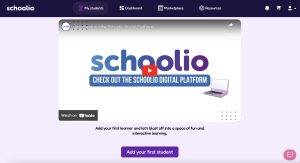
Adding a student to your account is much easier than you’d think. First, head to your account and sign in. Once you’ve signed in, you will be prompted to add your first student on the Schoolio Digital Platform.

Step 1: Add Your First Student 

How to Add a Student on the Schoolio Digital Platform

Add Student Details:

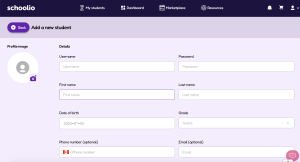
Once you have clicked the Add Your First Student Button, you will be taken to the student details page. You can go ahead and enter your student’s information here. Fill out the required fields: Student Username, Student’s Password, First Name, and Date of Birth. Then select your child’s school grade. (Don’t stress too much about this, as the courses are customizable. So, if your child is technically in grade 4 but needs a grade 3 level math, you can select that once you get to the courses.)

You can add the courses automatically or wait and add them later. Just to remind you, your student’s email and phone number are entirely optional. Now you can save your changes.

Step 2: Add Student Details

Student Details

Your Next Step is to Subscribe Your Student on the Schoolio Digital Platform.

You’re ready to go!

Now that you’ve completed all the steps for signing up, you can subscribe your student on the Schoolio Digital Platform to gain access to over 4,000+ videos and lessons.

Book a Concierge Call.

If you need help with how to get started or what programs would best suit your child’s learning needs, then you can chat with one of our experts on a one-on-one Concierge Call, completely free!
Click here to book a Concierge Call.

For more information on how to add a student on the Schoolio Digital Platform check out this video:

Now it’s time for your next step! Adding a course to your Digital Platform.

Click here for information to subscribe a student. 

Help Your Child Excel With These 7 Tips

The other day I heard someone say, “Parents work so hard and sacrifice so much so that at the end of the day, our kids will be a little further ahead and have more opportunities than we did.” This isn’t specific to our generation, as generations of parents before us have wanted better or the best for their children. We all stress that our children aren’t getting the opportunities they deserve or that they’ll fall behind somehow. Is there some magical remedy that you can tap into to help your child excel?

Let’s take a look at why we want our children to excel.

“I want them to have a better life than I did.” This is a common phrase that many parents share. And while many can offer the better life in the younger years, there comes a time when your child will leave the nest and rely on their abilities. This is why many parents feel the intense need to pressure their children to excel. Because if we can guarantee their success while they’re young, perhaps that will spill over into their adult years.

Another reason some parents wish for their children to excel is that they are competitive. Before you gasp and brush this off, let’s understand that many parents who have already been raised in or even work in a more competitive environment find that ‘pushing’ their children to do their best comes naturally.

You may assume that a competitive parent is the one screaming from the stands at the basketball game. But, competitive parents come in all different forms. While sports parents are the most relatable when we talk about competitive parents, we must remember that parents can also be competitive in the academic portion of life. For example: “My child has the best grades in the class.” “Well, my child was reading at the age of three.” “Did you know my child got an award for the best voice in her school?” 

They’re our kids; we like to brag about them! But we must be cautious that that pride doesn’t put pressure on our children to excel. You might be thinking, ‘hold on, I thought this blog was about getting my child to excel?’ And it is. So, let’s jump to the first tip to help your child excel.

Help your child excel with these 7 tips.

1. Don’t place too much pressure on your child.

This tip is number one because it is the most important. As you read above, you’ll see that we as parents love to praise our children and brag about them for all their successes. But, you must be careful not to allow that bragging to pressure them always to do the best possible. Your child is exceptional, but you need to let them succeed and fail. When you only allow them to ‘do their best all the time,’ they will become overwhelmed and resent the idea of the success that you want for them.

Did your child have the best grade in their class or homeschool class during 7th grade, but their grades have declined in their 8th-grade year? That’s ok. Avoid saying things like, “I don’t understand what happened? You were doing so good.” That is unnecessary pressure that won’t lead them to success. In many cases, it will just lead them to the opposite.

2. Don’t push them.

Is this another confusing concept? Can your child excel without you pushing them to do so? Absolutely, and more so. Forcing your child to ‘do better, and be better without care and understanding will lead to frustration and overwhelm. You should aim for your child to trust you and know that your love for them comes before your desire for them to excel. Your child needs to know that you know what they need, what they can handle, and who they are. They don’t need us constantly reminding them of what they ‘can’ or ‘should’ accomplish.

While gentle nudges of love are acceptable, you have to be sure to keep those nudges peaceful, caring and loving.

3. Be sensitive to their needs.

Every child is unique in their way. One child might excel in sports but struggle with academics; another might excel in academics but struggle with sports. Some children may do well at everything they try, while others may work a little harder to accomplish what they need. Your child has needs, wants, hopes and dreams. Be sensitive to their thoughts and feelings. If you aren’t sure what your child ‘wants,’ then ask them. Talk to them. Could you help them?

Forget forcing your child to answer questions like “What do you want to be when you grow up?” instead, ask them, “what do you want to do right now?” Does your child have unique interests that they’d like to explore? Do they want to spend more time with you? Would they like to learn to cook with you? While you, as the parent, do have a good sense of what your child wants and needs, there is probably something you’re missing. Do you want to help your child excel? Then start a conversation.

4. Stop stressing so much.

This tip is significant for all parents but especially for our homeschooling parents. Are you stressed out that your child isn’t meeting the learning standards that they should? Do you worry that they aren’t doing enough in a day, so you essentially force them to sit and finish four pages of math, five pages of Language, and practice an instrument for a half hour?

Are you stressed and slightly annoyed when they don’t do all the things on the academic list? When parents are stressed, we tend to be less affectionate and responsive to our children. Parental stress can inadvertently spill into our parenting style, which has many adverse outcomes for our children. One particular concern is the feelings of failure and rejection that some children may experience when they feel as if they are the reason their parent is stressed.

If you want to help your child excel in any area of their life, being stressed about their success isn’t the answer.

5. Support their interests.

The outdated education system of measuring success based on grades is flawed. You should aim to support their interests because when your child can explore their interests, they will maintain much more learning than if they were forced to meet the standards of a broken education system.

What does this look like? If you want to know what your child is interested in, then clearly, as stated above, the first step is to talk to them. And if you and your child are still not getting a clear understanding as to what their interests might be, dive into some interest-based learning materials to help them find those things that make learning fun. You could explore Special Interest Units like our Unique Electives for more variety for interest-based learning.

Add electives for fun learning

Find a wide variety of unique electives to help with interest-based learning. 

6. Model a healthy and balanced lifestyle.

It’s no secret that children mirror what they see. Are you living a healthy and balanced life? Do you make sure you are ambitious regarding your health, nutrition, exercise, and rest? Does your child see you enjoying healthy hobbies and interests? When your child sees you modelling a healthy and balanced life, they will aim for that also.

Does this mean you must eat kale salad in front of them and run marathons on the weekend? No! There are two extremes when it comes to a healthy and unhealthy lifestyle. Aim for balance for yourself, and model that beautiful balance for your child.

7. Emphasize the importance of character.

Greek philosopher, Aristotle, said, “We are what we repeatedly do. Excellence, then, is not an act but a habit.” Excellence is a habit. Your child’s success in life is based on healthy habits. What are some fundamental habits that can lead to success? Listening, organization, sharing, timeliness, attention, good conduct and respect for adults, peers, and oneself. Just like it is essential to model a healthy and balanced lifestyle, it is as important to model a good character and help your child develop these fundamental habits for success.


Why Parents Are Turning To Homeschooling

Why Parents Are Turning to Homeschooling

The other day, I was at a dentist’s appointment with my kids. While we were there, the secretary asked my daughter if she enjoyed the morning off school to be at the dentist. My daughter responded with a “no” because she despises dentist’s appointments. I followed up the question with, “We will be doing school when we are home as we homeschool.” She looked at me with disbelief and said, “You homeschool? How could your children be socialized then? With online learning, children were struggling with isolation and lack of socialization.” I then went into a long explanation about how homeschooling is far from isolation learning. She still looked confused, as many people do when they wonder why parents are turning to homeschooling as their education choice. 

Here’s why parents are turning to homeschooling:

After two years of the pandemic and homeschooling becoming a norm in education, I shouldn’t still have to give explanations to strangers about my children’s social lives. Yet, that remains one of the most common questions I receive. The world needs to subscribe to the Schoolio Blog and read blogs like Socialization and Homeschooling. One thing that might interest you about homeschooling is that socialization is one of the main reasons why parents are turning to homeschooling as their preferred education method.

Homeschooling improves children’s social skills and interactions.

One of the most important reasons why parents are turning to homeschooling is because of healthy socialization. When homeschooled, children have much less exposure to peer pressure and bullying. Homeschooled children are also able to have more customized social interactions. Additionally, most children in the public school system spend hours in classrooms listening to teachers. In comparison, homeschooled children have many more opportunities for learning activities outside of the home.

A flexible homeschooling curriculum means homeschool families have more opportunities to participate in fun activities. Some of which include: museum trips, park playdates, community service activities, art classes, and track and field days.

Using a flexible homeschool curriculum and making homeschooling a lifestyle significantly improves emotional and psychological development in children. While also strengthening family connections and connections with other homeschooled children.

Homeschooling means having access to higher quality education.

Many parents believe that the quality of education is not what it once was. With a decline in the education budget, increased student enrolment, large class sizes, burnt-out teachers, and other factors. Parents feel that homeschooling gives them more control over their children’s learning. In 2015, long before the pandemic and the devastating effects on children’s education, a Career and College Readiness Survey showed shocking results. These results indicated that less than half of high school students feel academically ready for college.

Interrupted education, overcrowded classrooms, and fewer resources have made it extremely difficult for teachers to provide one-on-one instruction to students. When homeschooling, parents can use a curriculum that follows learning standards while also offering personalized education to their child, which is so often missing in today’s learning venues.

Homeschooling can support a child with diverse learning needs.

Unfortunately, children with learning disabilities or even physical disabilities have difficulty thriving in a traditional learning environment. Many schools don’t have adequate resources and time available to support children with diverse learning needs. Additionally, formal education is a one size fits all model when we all know that one size fits nobody. Having a customizable curriculum and a flexible learning environment is essential for children with diverse learning needs.

Homeschooling means educational stability.

Even before the pandemic began, there were teacher strikes, bad weather and many other reasons students were forced to miss class. Homeschooling means educational stability for many students as they have that flexible learning solution and learning lifestyle that keeps them learning even when schools are not in. Many homeschooling parents (who were homeschooling before the pandemic) were thankful that they had chosen that educational path for their children, as homeschooling offered much-needed stability to their days.

Homeschooling means better educational results.

It might shock you that homeschooled children often score better on federal standardized tests than their public school peers. Brian Ray of the National Home Education Research Institute showed that homeschooled children often achieve much higher results. Regardless of parents’ income or teaching experience.

Homeschooling offers student-athletes and musicians a flexible education option.

Many student-athletes have intense travel and practice schedules. Additionally, many students who participate in fine arts, theatre, or music need time to rehearse and perform. These students need a flexible education option that will work around their busy schedules.

Homeschooling offers a learning environment that children enjoy.

Unfortunately, many public school children feel stressed over the volume of homework and the lack of instruction. Many children don’t thrive in environments that are high stress, where they are required to memorize and keep up with their peers around them. This popular model of education doesn’t cater to the majority of students. Learning should be fun and engaging, not blank and stressful. Homeschooled parents report that they have much more time during their day to incorporate fun activities and hands-on lessons that encourage learning.

Should you homeschool?

Even though many think homeschooling is a terrible option, as the secretary at the dentist did, the reality is that homeschooling can be an excellent option for many families. But is it the right choice for your family? Ask yourself these questions:

  • Does my family need more flexibility?
  • Do I want to give my children and myself the freedom to choose?
  • Would I like to be more involved in my child’s education?
  • Is my child struggling academically?
  • Does my child need more positive social experiences?
  • Are there affordable homeschool curriculums available?
  • Does my work schedule permit this choice for my family?

If you answered yes to more than two of these questions, then homeschooling might be an excellent option for your family. Remember, there are many families and experts available to help guide you through the process of homeschooling, like the caring staff at Schoolio Learning, that wants you to excel on your homeschooling journey. If homeschooling seems like the best option for your family, but you aren’t sure where to start – please reach out to us, and we can help set you and your family up for success.

Can you travel and homeschooling? Check this out.

Check out our one-of-a-kind homeschooling curriculum.  

Why You Should Teach Your Child About Honeybees

Did you know that honeybees are responsible for almost one in every three bites of food that you eat? Honeybees also play an essential role in every aspect of the ecosystem. By supporting the growth of flowers, trees, and many other plants, these then serve as food and shelter for all creatures. Are you wondering why you should teach your child about honeybees? Let’s take a look.

There are many reasons.

There are so many reasons why you should teach your child about honeybees; to narrow it down, here are the three most important reasons.

Learning about honeybees helps our children maintain a healthy respect for buzzing creatures.

It’s very typical for children to have a bit of fear related to bees, especially if they have been stung by a wasp, bumblebee or some other buzzing creature. Fear of bees has caused many misunderstandings from previous generations about their importance. That can all change, and fears can disappear when we educate this generation about what honeybees are like and how important they are to all of us. Honeybees are so much more than tiny, stinging insects, and when we educate our children, they can start to see them for what they are.

Honeybees are essential to human life and health.

You could help your child understand that honeybees are essential to human life and the environment. They work as pollinators and producers of almost every plant that you see. When honeybees thrive, crops thrive, the environment thrives, and we thrive, which is why it’s so important to teach our children that.

The future belongs to our children.

And that future needs honeybees in it to be a promising future. As our children get older, it will be up to them to help shape the world around them. That’s why teaching them to care for, and respect honeybees is so essential, as these honeybees are so crucial for plant life on Earth.

Now, you know why you should teach your child about honeybees, but how can you do it?

1. Create a honeybee garden in your yard.

The honeybees will be extremely grateful to have a garden full of plants to help them thrive. Planning and creating a garden will be fun and informative for your child. Are you curious about what types of plants the honeybees will enjoy the most? Check out this list!

2. Set up a visit with a beekeeper.

Many beekeepers are more than happy to give you a tour and share their knowledge of honeybees. Look up local beekeepers and find out if they do visits. Then enjoy an afternoon learning about honeybees!

3. Go outside!

Taking a walk in nature is an excellent way to get familiar with wildlife and honeybees at the same time.

4. Check out the Schoolio Science unit all about Bees & Honey!

Education really is the best tool for helping our children learn about the importance of honeybees. This is why the Schoolio Science: Bees & Honey Special Interest unit is a must-have.

What’s in the Schoolio Science: All About Honeybees Special Interest Unit?

This unique special interest unit is all the buzz for families aiming to teach their children about the importance of honeybees. Each lesson of this special interest unit is packed with fun and helpful information to bring a bounty of knowledge to your child.

Your child will learn all about Pollination and Pollinators while doing a fun ‘I Spy Pollinators’ game following the lesson. Then they can dive right into the importance of bees in lesson 2, and have fun working on the “What Do Bees Do?“, activity. They then can work on some fun experiments like the pollination experiment where they can use bee, butterfly and flower templates to experiment.

Additionally, your child will have the opportunity to learn important lessons and activities like “Life in the Hive: Who’s Why?”, “Life Cycle of a Honeybee”, “How Do Bees Make Honey?”, and more.

We are pleased to be able to offer such a unique learning unit to help your child learn all about the importance of honeybees for a super affordable price.

Science: All About Honeybees – Special Interest Unit

Pick up your copy of this unit today!


A Digital Learning Platform that will change the world.

We all want to give our children the best opportunities to excel in life. And a good education seems like one of the most significant ways to ensure they get those opportunities. Some parents choose traditional education, some opt for private learning methods, while others prefer to homeschool. Those who choose the latter can sometimes find themselves exhausted from trying to provide the ultimate learning experience for their children. That’s where a digital learning platform might be the game-changer they’ve been longing for.

A Digital Learning Platform, unique innovation by Schoolio.

If you’ve never heard of Schoolio, we are a curriculum company based in Canada. But that’s not all; we are working on some fantastic educational innovations to support parents, teachers and most importantly, students. Our team has been working around the clock on a digital learning platform that will change the world of education as we know it.

We do so by converting all digital pdf lessons into audio and visual lessons for students. There are around 4,000 pieces of content from Kindergarten to Grade 8 across all core subjects, Math, Science, Language Arts and Social Studies. The videos are created for children to have fun while also absorbing the essential learning materials.

Creating a Unique Learning Experience For Each Child.

How are we doing that? By creating content geared toward your child’s age group to avoid learning fatigue. Our mission is always to help children everywhere have access to the education they deserve. We are proud to offer this learning option to everyone soon!

Watch this video from the Schoolio Live Q & A, Episode 3 with Nirmala and Sathish to see a preview of this fantastic new program!

Click here to watch Episode 3! 


Learn even more about our Digital platform by visiting our website! 

Check it out! 

Guiding Your Own Growth

Guiding Your Own Growth – Guest Blog By Kaila Gilley.

You against the world. On the one hand, this sentiment frees. You choose an untraditional education route for your child, at least in part, because of its liberty—your kids, your family unit, your choice: your opportunity. On the other hand, however, it is a heavy opportunity. Guiding your own growth can sometimes be heavy.

It’s pressure like a drip, drip, drip, that’ll never stop,” sings Jessica Darrow in Disney’s Encanto. “Pressure that’ll tip, tip, ’til you just go pop.” It’s all on you. These tiny humans you birthed, and then you poured into each your every morsel of energy, love, patience, and humanity. Your heart is outside of your body.

Them, then you.

You (and your partner) shoulder responsibility for their academic education, emotional well-being, physical capacity, intellectual stimulation, character development, social health, etc. You wear all of the hats and play all of the roles.

“Who am I if I can’t carry it all?”

Our phenomenal project-based learning (PBL) charter school had a massive crush on professional development when I was in the classroom. In the morning, he brought her protein shakes, which they used to toast to life-long learning; they stayed up late discussing how best to keep teachers’ passions aflame.

We had professional development (PD) most mornings for an hour before school, meeting within teaching teams (the combination of Math, Science, English and Social Studies teachers), within departments (English Teachers), within grade levels (9th-grade teachers), with our mentos, with our leadership, with support for students with special needs, within groups we opted into, within whole school-wide discussions, with parents and community members.

We worked with layers of people to best understand and teach to the layers of our students.

Then, I moved.

My partner and I had babies and decided to educate our kids at home. With a very demanding career dragging away his focus, I hold most of the responsibility for our three precious children, our most important people, and I lack a previously layered professional support system.

I teach my children without mentors, without department heads, without leadership, without teams—just me—tip, tip, tipping.

So, I decided to reenter the space for professional educators, guiding my growth. And I told my friend about it. “A side hustle?” she responded. I cringed at her tone. Not exactly the slap on the back, good-job-kid, I was hoping for. It was not the interest that peaked, a tell-me-more curiosity that I craved. Nor was it plain, blunt indifference.

Her inflection verbalized, “Boo.” Voice equivalent of a thumbs down. I watched one of my Mom Star Rating flickers and then died. A transparent thought bubble floated over her head as if on a screen. A picture of my children projected within it like an old sepia film. Their big sad, reflecting eyes staring up with want, empty arms outstretched, and souls drained by sudden attention withdrawal as if the side hustle had morphed into a Harry Potter dementor and deflated the innocence from their lives one by one.

In a world with subjective interpretations of “good parenting,” her scene played out with a definitive F for failure on my motherhood report card.

Contrary to her projection, here is my actual, new reality in short conversation blurbs:

“Hi, Susie’s Mom! Do you remember our conversation the other day? The one where you said you were overwhelmed by choosing a curriculum? Turns out you’re not alone. Lemme share this great article I found about what some others moms did to make the decision more manageable.”

“Hey Junior, did you know Schoolio has a unit about Winter Holidays from Around the World? I thought you’d like those. Yes, we can get that for you. It’s only $10!”

“Coop Comrades, I just heard about some online tutoring available for families embracing untraditional education methods for their children. I just thought I’d share!”

“Hey sweetie, can I work next to your while you do your thing?”

Considering her interpretation in contrast to my present state, I stared at her thought bubble and gently popped it. I was not my reality; it was her fears: part-time side hustle, full-time betterment. I have reclaimed my personal and professional growth, full empowerment.

Now it isn’t all roses and fairytales when guiding your own growth.

It doesn’t evaporate dirty dishes or alleviate large families of the stomach flu. The transition bumps violently along some days and glides gracefully on others. But, at a minimum, this week, I comforted Susie’s mom, tossed Junior an idea, supported my coop comrades, and worked separately with my little girl. All thanks to my re-entry.

More exposure, more ideas, more connections, more sparks, more intrigue, more inspiration.

“One quality of leaders and high achievers in every area seems to be a commitment to ongoing personal and professional development,” says Brain Tracy, Canadian motivational speaker and self-development author.

As a group of people striving to nurture and guide the growth of our children, we too must embrace the G-word.

Growth maintains our current roles as leaders and high achievers and offers a path toward self-selected improvement. We get to grow professionally in our personal lives. Growth gives us a way towards better.

Without collaboration, our growth is limited to our own perspectives,” says Robert John Meehan, author and advocate for American teachers and learners.

If we come together through part-time hustles, we halt our single-perspective limitations and empower our community, families, and ourselves. We join in, learn and improve.

“I want to be in the arena. I want to be brave with my life. And when we choose to dare greatly, we sign up to get our asses kicked. We can choose courage, or we can choose comfort, but we can’t have both. Not at the same time,” says Brene Brown, an emotion researcher and motivational speaker.

We join the arena; then we dare greatly; we guide our greatness. Who and how will you empower today?

Guiding Your Own Growth was written by: Kaila Gilley


Subscribe to the Schoolio Blog for more amazing content like “Guiding Your Own Growth”.

Click Here to Subscribe.


Kids Are Struggling With School Now More Than Ever Before.

Kids are struggling with school now more than ever before. Where is the problem? Is it the education system? Could it be the teachers? Or is it the parents? It’s hard to pinpoint the exact problem, but it is clear that children need consistency, especially regarding their education. Due to the COVID-19 pandemic, children’s education has been anything but consistent. Between school closures, lockdowns, online, and in-person, children have had a massive lack of consistency, ultimately leading to them falling drastically behind in their learning.

Kids are struggling with school now more than ever before.

But did this issue start before the pandemic? Was the pandemic the catalyst that shone an ever-needed light on the fact that children have been slipping through the cracks of the education system on substantial levels since long before the pandemic began? The truth is that giant class sizes and budget cuts are a recipe for children’s education to be neglected. While it’s true that some children thrive in these situations, many others do not.

Sathish shares that his daughter struggled to understand certain concepts; she wanted to learn more about specific subjects. But there just wasn’t enough time in school for her to explore her education the way she wanted. Flexibility in education is another essential factor constantly neglected in the traditional schooling model. This is why many parents are turning to homeschooling.

Parents are concerned for their children; they don’t know where or how to start when it comes to homeschooling.

Firstly, if you aim to start homeschooling, you need to get into successful habits for your own family. The first and most important habit that successful homeschoolers get into is flexibility. Not to be confused with inconsistency. Your children can learn quickly when you’re flexible as a homeschool family. To dive into what interests them and to realize that learning is all around us. Embracing that learning happens all the time, that knowledge is and should be a lifestyle, not just something that happens from 9 am – 3 pm daily.

Let go of this fear that you are ruining your child’s education by homeschooling.

It can be a scary thought to take your children out of school and try to teach them to help them catch up when you feel unprepared. It would be best to stop telling yourself that you aren’t good enough to teach. And it would be best if you never aimed to fill your child’s day with bookwork. Take it one day at a time, make it simple, and be patient with yourself and your child.

Check out Episode 2 of Schoolio Q & A for more information on this topic.

Also, check out this blog about children slipping through the cracks of the education system.
Kids Are Slipping Through The Cracks Of A Broken Education System.

Book a Concierge Call.

If you aren’t sure how to get started or what programs would best suit your child’s learning needs, then you can chat with one of our experts on a one-on-one Concierge Call, completely free!
Click here to book a Concierge Call. 

Does Your Child Struggle to Learn From You?

Does your child struggle to learn from you? They appear to have no issue learning from anyone else, but they shut off the second you pick up a book and try to teach them. Why is that? In Episode One of The Schoolio Live Q & A, Sathish Bala, CEO of Schoolio Learning, shares that his daughter said, “I can’t learn from you.” When he attempted to teach her during the beginning of the pandemic.

He was being fired from teaching his child.

Sathish shared that he felt he was being fired from teaching his child. He then realized that so much of what he was trying to teach his daughter wasn’t his; it was his dad’s blueprint. Sathish wasn’t alone in feeling this way, as many parents felt the same way during the height of the pandemic. As a parent-teacher, you are faced with the unbearable weight of trying to ensure your child is learning what they are supposed to understand when they’re supposed to be learning it.

This can cause parents to feel terrible stress, making them short-tempered, frustrated and irritated. Unfortunately, this stress can also bring out the worst in them, as Sathish noted during the episode.

How a unit system can help.

Lindsey shares the importance of an excellent curriculum to balance parents’ worries about meeting all the requirements. A simplified, easy-to-teach curriculum is the best alternative for veteran and new homeschoolers. Aside from a simplified and easy-to-teach curriculum, Lindsey pointed out the importance of a unit learning system. Sharing that when you have access to a unit style of education, you can pick and choose what your child needs to be learning and when.

Suppose you notice your child falling behind in one area of math but not another; you can select the unit your child needs to work on. Rather than choosing a grade lower for their math, you can select the unit they need.

Leaving a community.

Lindsey also shared how the first few days, weeks and even months of homeschooling can be challenging, especially if you have removed your child from the public school system. She shared how it felt like she was leaving a community when she decided to homeschool her two children. This is why she urges the importance of finding a good homeschooling community.

Another way to add fun to your homeschool and help ease the tension and stress is to include Special Interest Units like those available on the Schoolio Shop. Adding a fun unit on Trees and Forests or Pirates could be what your homeschool needs. Does your child struggle to learn from you? Don’t worry; there are things you can do to help.

Need Help Getting Started? Book a Concierge Call.

If you aren’t sure how to get started or what programs would best suit your child’s learning needs, then you can chat with one of our experts on a one-on-one Concierge Call, completely free!
Click here to book a Concierge Call. 


Watch the full episode to learn more.

10 Science YouTube Channels for Kids

TL;DR – Quick Answer:
Turn screen time from mindless consumption into active learning. While most online programs use videos as a passive babysitter, over 10,000 Schoolio families use interactive media like Mark Rober and SciShow Kids as strategic learning tools. Schoolio weaves these high-quality resources directly into our micro-burst lessons to keep ADHD and neurodivergent learners engaged through multisensory input.

Are you looking for productive ways to entertain and occupy your children? YouTube can be a fantastic tool to fix those issues. There are so many YouTube Channels to check out; some content can wow you, while other channels may leave you questioning what it is you just allowed your child to watch. To simplify, we’ve compiled a list of 10 Science YouTube Channels for Kids that you should check out! If your child loves science and enjoys watching other children do experiments, this might excite them!

10 Science YouTube Channels for Kids

SciShow Kids

SciShow Kids – Can You Guess the Weather?

Scishow Kids is a fun science channel that uses unique animated videos to foster a love for science. Your child can join Jessi, Mister Brown, Squeaks the Robot Lab Rat, and their fun friends at their fort, where they will learn, research, answer questions, and conduct cool experiments. SciShow Kids was created in July 2014 with 793K subscribers, with 213,165,824 views! No wonder we had to add this to the list of 10 Science YouTube Channels for Kids!

Watch more SciShow Kids

Ryan’s World

Ryan’s World – What happens when you swallow gum?

The Ryan’s World YouTube channel was created in March 2015 as a toy review hub. However, the channel has evolved over the past seven years to include individual lessons, educational videos, and experiments. Although Ryan is the star of the show, adults are the ones who perform the experiments. Ryan’s World is trendy, with 50,996,862,935 views and 32.1million subscribers.

Watch more of Ryan’s World

Mystery Doug

Mystery Doug – How do Scientists Learn About Wild Animals?

Homeschoolers all around the world love Mystery Doug! And why? Because of the great content, he releases for the world for free! This YouTube Channel had to be included in the list of 10 science YouTube Channels for kids because of its great content! Each video provides an excellent Science lesson that your child will enjoy. The Mystery Doug YouTube channel was created in April 2017 and had 514,000 subscribers and 133,947,850 views! Curious why that is. Check it out for yourself!

Watch Mystery Doug

Lab 360

Lab 360 – The Saturn Rings are DISAPPEARING!

Are you looking for videos about outer space? How about experiments your kids can try? Then you should check out Lab360! Created in 2013, Lab360 has 491,000 subscribers and 104,970,063 views, with authentic science demonstrations that your kids will love. This channel is a gem with science experiments and learning for people of all ages.

Watch Lab360

MinuteEarth

MinuteEarth – Why Water Dissolves (almost) Everything

We love MinuteEarth because it provides unique Science lessons and fun stories about our incredible planet. The MinuteEarth YouTube Channel was created in October 2011 and had 2.68 million subscribers. With neat videos like ‘An Egg is Just One Cell,’ ‘Why Do Humans Vomit So Much?’ and ‘Why The Ocean Needs Salt,’ it’s easy to see why this is a favourite for learning.

Find a MinuteEarth video

Operation Ouch

Operation Ouch – Tricks to Play on Your Friends #April Fools Special

These unique creators have various episodes packed with incredible facts about the human body. Hosted by identical twins Dr. Chris and Dr. Xand VanTulleken, it’s a must-see as they experiment and explore their way through the fascinating world of medicine and biology. Their goal is to de-mystify hospitals for children while teaching them important lessons. Operation Ouch was created in November 2016 and had 299,000 subscribers and many amazing videos to choose from.

Watch Operation Ouch

NASA Video

NASA Video – NASA for Kids: Intro to Engineering

NASA has a mission to pioneer the future in space exploration, scientific discovery and aeronautics research, and they share it on their YouTube Channel. Look at the diverse work that NASA does, like proving flight technologies, creating capabilities for sustainable human and robotic exploration, earth, the solar system and more.

Watch NASA Video

Mark Rober

Mark Rober – World’s Tallest Elephant Toothpaste Volcano

Mark Rober isn’t just an extraordinary YouTube Artist; he’s also a former NASA and Apple Engineer and friend of science. He has highly crazy science experiments that kids love to watch. Additionally, this channel takes complex ideas and breaks them down into crazy hands-on lessons that your child will remember. The Mark Rober YouTube Channel was created in October 2011 and had 21.4 million subscribers.

Watch The Mark Rober Channel

The Backyard Scientist

The Backyard Scientist – 200 Watt Car Mounted Laser

This channel is loaded with tons of fun science videos for kids. You’ll find crazy videos that teach various science topics ‘Can a Motor run on beans?’ ‘Can Spiderman Climb the Sticky Wall?’ and more. Created in 2013, The Backyard Scientist now has 5.25 million subscribers and hundreds of fun videos.

Watch The Backyard Scientist

Minute Physics

Minute Physics – Is Anything on the Internet Real?

Like its sister channel, Minute Earth, Minute Physics has much to offer. The Minute Physics channel focuses on Space and Gravity with many unique videos and 5.44 million subscribers. You’ll quickly learn to love this channel with all its great content like ‘The Rocket & String Paradox,’ ‘Windmills Are NOT Like Dams,’ and ‘Why LESS Sensitive Tests Might Be Better.

Watch Minute Physics

Which of the 10 Science Youtube Channels for Kids was your favourite? Let us know in the comments!


Learn, plan and personalize all in one place with 4000+ interactive lessons for math, language, science and social studies. Only on the Schoolio Digital Platform! 

Explain the War in Ukraine to Your Child.

Over the past two years, children have struggled to understand the COVID-19 virus, shutdowns, school closures, and why they couldn’t see friends and families or do sports and everyday activities they love. Many parents became exhausted by trying to help their children feel normal while explaining the pandemic to their children. Now that the pandemic has begun to slow down, we are met with another crisis—the war in Ukraine. For many of us, this humanitarian crisis is in another continent. However, social media, the news, and the internet can make it feel very close to home. Which has likely caused you to question how to explain the war in Ukraine to your child?

What’s the best way to explain the war in Ukraine to your child?

Even though we’d all like to assume our kids are oblivious to what is happening, they aren’t. Many children are well aware of the Ukraine conflict, which is causing a significant amount of anxiety for many children. Many children have big feelings and questions about what is happening. So, how can you explain the war in Ukraine to your child without causing more anxiety or dismissing it like it’s nothing?

Don’t dismiss their feelings.

Many parents today watched the events of September 11 on the T.V. Trauma has stuck with us. To avoid the anxiety that comes with it, we often dismiss our feelings about such things and tell ourselves, “this isn’t happening here, so it’s fine.” While we may be quick to ignore our emotions, we must be careful not to do the same to our children. You should give your child the time and space to express their feelings. You must acknowledge their feelings and let them know that it’s ok to feel that way.

It’s normal to feel angry, worried, sad, and frustrated. Allowing your child the time and space to explain their feelings is beneficial. And also, your child needs to know that you have feelings about what is happening too. Please know that feeling sad, frustrated and mad about the events is healthy. When you acknowledge your feelings, your child will easily accept theirs. Suggest writing or creating art if your child struggles to explain their feelings.

Let them ask tough questions.

Your child has big feelings, thoughts and questions. They are individuals growing up in a challenging time. Your child needs to know that their concerns, ideas and questions are taken seriously. When your child brings a problem or question to you, it’s important to approach their questions sensitively and honestly. We all assume we must sugarcoat everything for our kids, avoiding topics and discussions about such events.

Many parents don’t realize that allowing their children to ask questions, have these sensitive conversations, and answer their questions honestly and to the best of their knowledge is essential. If you’re struggling to understand something or do not have the answers, you should explain to your child that this is a highly complex situation that not everyone understands. But many are working tirelessly to find solutions and end this war.

Utilize a map or globe when you explain the war in Ukraine to your child.

When explaining the war in Ukraine, take time to help your child understand the geography of the situation. Show your child where you are on the map, then Ukraine and Russia. Take the time to explain and emphasize the countries worldwide that are helping. While also showing them the countries that are not supporting Russia and are actively working to help end this crisis.

Help your child fact-check media.

This is especially important for older children who may have access to social media. It can be tough to figure out what is real and not regarding social media. Anyone could post something, and others can accept it as fact. Remind your child to check sources, and rely on safe domains and trusted people on social media.

Here’s a helpful resource to help your child fact-check.

Common Sense Education – Help Your Students Fact-Check the Web Like Professionals

Teach your children to look for helpers.

In the famous words of Mr. Rogers, “When I was a boy, and I would see scary things in the news, my mother would say to me, ‘look for the helpers. You will always find people who are helping.” While the war in Ukraine is filled with terrible things, we can help our children focus on helpers. Like those at the borders of Ukraine assisting refugees by providing them with food, shelter and clothes. There are always people willing to help.

For older children, help them learn the facts.

Some very reliable resources are available to help our older learners understand what is happening in the world right now. You can help your children learn about what is happening and why, along with reliable, updated information on the current situation.

Check out CBC Kids News for more information.

Don’t be afraid to ask for help.

If your child is struggling to understand, don’t be afraid to ask for help from professionals trained to listen, understand and help your child process their thoughts and feelings better. Additionally, you can utilize the Thoughts and Feelings: Learning how to Manage How I Think and Feel Special Interest Unit to help your child navigate the big feelings they are feeling. Remember that we are all navigating this crisis together; it’s difficult to explain something that we may not fully understand, so remember to be patient with yourself.

Together we can help children in Ukraine.

Explain the war in Ukraine to your child

For March, we donate a portion of all sales to the Save the Children Ukraine Crisis Fund.

Ten Ways to Help Your Child Eat Healthier.

Getting your picky eater to make healthy choices and eat healthy foods can be a significant challenge. This is why jumping on the Nutrition Month train is so essential! If you didn’t know, the month of March is Nutrition Month. The Academy of Nutrition and Dietetics sponsors a fantastic campaign each year. They aim to highlight the importance of healthy food choices while developing sound eating and physical activity habits. And we’d like to help by exploring ten ways to help your child eat healthier, along with four fantastic recipes and a free meal tracker.

Malnutrition and Obesity are genuine threats.

According to Global Nutrition Report, North America is experiencing two extremes: the population is either malnourished or overweight. Furthermore, North America is experiencing severe malnutrition among children under five. The other extreme is that 9.1% of the childhood population is overweight, much higher than the global average of 5.7%. In addition, it’s no surprise that the adult population also struggles with malnutrition and obesity. With 8.7% of men living with diabetes and 6.7% of women. Along with 39.4% of women and 38.3% of men living with obesity.

How can we break the trend?

We all want our children to live healthy and wholesome lives. We should also want that for ourselves. You may feel intimidated by uprooting your family’s go-to menu and switching things up to help your family avoid such things as malnutrition and obesity. And while you may feel overwhelmed, please know that it’s possible! Making small changes to your family’s eating habits will have lasting and impactful results on everyone’s well-being.

Ten ways to help your child eat healthier.

It can be tempting to stick to the meals you know they’ll eat when you have a child constantly saying no to foods, especially new ones. When you gain the courage to get your child to try something new, it can result in a very stressful and frustrating mealtime for the entire family. Let’s try these ten ways to help your child eat healthier first!

1. Remember that food is more than nourishment.

Food has been uniting people since the beginning of time. A family meal can bring us together at the table each day. Additionally, food is almost always the centre of most celebrations! Food is life; food can improve health, keep us well, and prevent disease. Good food is a gift in more ways than one. Helping our children understand the gift of food is an essential first step.

2. Eat together as a family.

We live in a fast-paced world. As a result, we often find ourselves exhausted by the end of the day, which can cause us to gravitate toward the TV for mealtime. While this is ok here and there, it’s essential to sit down together as a family to eat at least one meal a day. According to Stanford Children’s Health, sitting together to eat as a family helps your child handle the stresses of daily life.

3. Involve your children in food prep.

There are many simple tasks that your child can partake in regarding kitchen tasks. Giving your child age-appropriate tasks to help prepare a meal for the family is a good practice. Your child can wash the fruits and vegetables, push buttons on the microwave, get ingredients together, tear lettuce and more. When you involve your child in meal prep, it boosts their interest and curiosity around food. While also setting an example for a healthy lifestyle.

4. Plan meals together.

Give each of your children one day a week when they can help choose a healthy meal for the whole family. Doing this helps reinforce good eating habits while helping them understand the importance of preventing food waste.

5. Give them choices.

Kids are always looking for ways to establish their independence. This is especially true when it comes to food. Like you don’t enjoy being forced to do something, neither do they. Instead of giving them one thing, provide them with a couple of options. When your child chooses between pear slices or apple slices, they get the autonomy they desire. You’re still in control of your child’s nutrition, but they also get a choice. It’s a win-win!

6. Allow your child to make their plate.

Allowing your child to make their plate is another fantastic way to build their independence while keeping them interested in new healthy foods. The results might not be immediate. However, most kids will be much more willing to make healthy food choices when given a choice.

7. Offer healthier snack options.

Kids seem to gravitate to sodium, preservative-filled foods. There’s just something so satisfying about crunching on your favourite snacks. But many times, these traditional snacks that kids love are filled with sugars and ingredients you can’t pronounce. We get it; it’s so easy to hand your child a bag of their favourite goodies. As you can probably imagine, this isn’t the best option for them. Your child’s snacks should be rich in fibre and protein, as this will help keep your child full for longer. Try giving your child healthy snack options to choose from instead.

These can look like this:

  • Apple slices with peanut butter.
  • A cup of nuts and raisins.
  • Veggie sticks with hummus.
  • Lightly salted popcorn.
  • Hard-boiled eggs.
  • Grapes and Kiwi.
  • Whole-grain crackers with cheese.

8. Be a good role model.

Who has the most influence on your child’s eating habits? You as their parent. Your attitude towards food and healthy eating habits will affect your child. If you find yourself cringing when eating a particular vegetable, they will too. Additionally, if your go-to snacks aren’t healthy, how could their choices be better? If you choose a can of pop or juice instead of a glass of water. How could we expect them to choose differently? Always remember you are the most outstanding example for your child.

9. Always offer but don’t force it.

I understand that offering your child healthy snacks or meal options can feel pointless when you know they will still gravitate to less healthy options. Don’t give up! Keep offering. If you’re making your child’s plate for them, still add the vegetables they don’t like. Alternatively, if they’re making their plate, advise them to choose at least one protein and one vegetable for their dish. Always be sure to offer healthy options for your child. However, be cautious that you never force or battle over food. This can cause them to have a greater aversion, and the dislike becomes a more significant issue.

10. Don’t give up.

Getting your child to make healthy food choices can ultimately feel overwhelming, especially if you have a picky eater. Don’t become discouraged; you’re doing an excellent job helping your child make the best choices. The easy road would be to hand your child the snacks they want and avoid offering them the healthy snacks they dislike. But the easy road never leads to anything significant. Don’t give up! Keep offering, keep trying, and keep offering.

This free meal tracker is a bonus to the ten ways to help your child eat healthier!

Sometimes kids love to track what they are doing and eating; try out this FREE Meal Tracker downloadable pdf. To encourage healthy eating habits and adequate water intake throughout the week! Print and go!

Four fantastic recipes to get you started.

We hope that the ten ways to help your child eat healthier were helpful for you. You can get creative with mealtime by adding unique meal ideas to your meal plan to help your kids enjoy their food. Try out these four amazing recipes:

Photo by: She Likes Food

Lentil Meatloaf Cups

These delicious Lentil Meatloaf Cups by She Likes Food are perfectly paired with mashed or roasted potatoes.

Ingredients:

  • 1 1/2 cups brown lentils, dry
  • 3 cups vegetable broth or water
  • One teaspoon of olive oil
  • 1 cup small-diced carrot
  • 1 cup small-diced celery
  • 1/2 medium yellow onion, diced
  • One clove of garlic, minced
  • One teaspoon of chopped fresh thyme
  • 1/3 cup bread crumbs, gluten-free if necessary
  • One tablespoon of ketchup, plus more for the top
  • One flax egg (1 tbsp ground flax mixed with 2 1/2 tbsp water, let sit for 2–3 minutes)
  • Two tablespoons chopped fresh parsley
  • 1/2 teaspoon smoked paprika, optional
  • 1/2 teaspoon salt
  • 1/4 teaspoon black pepper
  • Cooking spray

She Likes Food Vegan Lentil Meatloaf Cups Instructions.

Charlie Gillette – Broccoli Cheesy Bread

Broccoli Cheesy Bread

This fantastic recipe boasts that even the pickiest eaters can’t resist it.

Ingredients:

  • 3 cups riced broccoli
  • One large egg
  • 1 1/2 cups shredded mozzarella
  • 1/4 cup freshly grated parmesan
  • Two cloves of minced garlic
  • 1/2 tsp. dried oregano
  • kosher salt
  • Freshly ground black pepper
  • Pinch crushed red pepper flakes (optional)
  • 2 tsp. freshly chopped parsley
  • Warmed marinara for serving.

View the full recipe by delish.

Taste of home – Gnocchi Chicken Skillet

Gnocchi Chicken Skillet

If you’re looking for an easy, wholesome dinner in a hurry, this is it! Just throw it together, prep a salad and go!

Ingredients:

  • One package (16 ounces) of potato gnocchi
  • 1 lb ground chicken
  • 1/2 chopped onion
  • Two tablespoons of olive oil
  • 1 jar (26oz) spaghetti sauce
  • 1/4 teaspoon salt
  • 1/4 to 1/2 teaspoon dried oregano
  • Shredded Parmesan Cheese

View the full recipe on Taste of Home.

Country Living – Tuna Noodle Casserole

This meal is simple, filling, quick and nutritious. And most of the ingredients can be found in your pantry!

Ingredients:

  • 6 oz. egg noodles
  • 2 (4oz) cans of tuna in water
  • One tablespoon of canola oil
  • One small onion, diced
  • Two stalks of celery, diced
  • Kosher salt and ground black pepper
  • 2 (10oz) cans of condensed cream of mushroom soup
  • 2 cups shredded sharp cheddar cheese
  • 1 cup frozen peas

View Tuna Noodle Casserole Directions here.


Random Acts of Kindness Ideas

Imagine what the world would be like if everyone prioritized being kind to others. Our society praises students for being innovative, getting good grades, and succeeding. But kindness goes widely unappreciated. Could you imagine if parents and educators emphasized the importance of being kind to others? Imagine how cool it would be if kindness were as valued as intelligence. You can start teaching your child about the benefits of being kind today! With 21 random acts of kindness ideas, plus you can download the ‘My Kindness Goal’ for your child!

5 benefits of being kind to others:

Being kind is beneficial for both the giver and the receiver. When you give kindness to someone, you usually receive kindness back. There are many excellent benefits of being kind to others; you should utilize them while teaching your children. Some seem somewhat predictable, while others are a little shocking! Nonetheless, Science continues to find more ways that our mental and physical health are impacted by each other. So, teaching your child about random acts of kindness and the benefits of bringing others joy is essential.

1. Kindness can boost your immune system.

Our brain’s feel-good hormone, Oxytocin, reduces inflammation. You are probably familiar with the fact that inflammation is linked to many diseases in the body. These are diabetes, chronic pain, obesity, cancer, and migraines. Being kind can boost your body’s oxytocin levels, which then helps to decrease inflammation. You don’t have to wait for someone else to promote your oxytocin; you can do it today! By spreading kindness like confetti!

2. Kindness creates a sense of belonging.

Being kind and helping others is considered a way to help people create, maintain and strengthen social connections. Face-to-face activities like volunteering to help someone can reduce isolation and loneliness.

3. Kindness helps you feel in control.

It’s easy to resent someone always trying to push our buttons. When this happens, we often feel like we don’t have control or stability around those people. You know that no one should be able to control your mood, yet you find it extremely difficult to stay calm when they push your buttons. When you choose to instead act with kindness, you will gain the self-respect of not letting other people push your buttons.

Remember, if someone never seems to change and is always aiming to make you upset, it’s best to avoid these people.

4. Kindness helps you find your people.

People are genuinely attracted to kind people. If you’re at the grocery store and someone kindly holds the door open for you, you will feel more attracted to that person—Vs. The person that slammed the door in your face. We were born with kindness in our hearts, so we tend to gravitate toward the people that demonstrate empathy. A kind mom at a playgroup or homeschool co-op is much easier to be around than someone constantly making you second-guess yourself.

5. Kindness can give you a mental break.

Stress doesn’t give your brain a break. Because when you’re feeling chronically stressed, all you can do is focus on the things you’re concerned about. When you focus on the joy you are bringing to someone else through the random acts of kindness you do, you also give your brain a much-needed break from figuring out all your problems.

The mental break is similar to the brain break you get from a cardio session, healthy sleep, or meditation. You are giving the analytical, thinking part of your brain a rest and, simultaneously, awakening the creative and feeling side of your brain! When you focus on someone else’s happiness, you forget your problems for a little while. That in itself is enough to give you a boost.

You should teach your kids about the power of random acts of kindness.

We all want our children to live their very best life. As you read through the five benefits of being kind, I’m sure you would also want each one of those benefits for your child. Being kind isn’t something you have to wait until your child is older to learn. You can start teaching your children about bringing others joy by spreading love with random acts of kindness. And, of course, the ultimate way to teach your children is to model it.

21 Random Acts of Kindness Ideas that your children can be involved in:

  1. Compliment others.
  2. Pick up litter at the park.
  3. Let someone take your spot in line.
  4. Insert money into someone’s parking meter.
  5. Buy flowers to hand to people on the street.
  6. Write and leave letters of encouragement on people’s cars.
  7. Pay for the person behind you in the drive-thru.
  8. Use allowance to donate to a charity of your child’s choice.
  9. Hold open the door for someone.
  10. Write letters to the elderly.
  11. Shovel snow from a neighbour’s driveway.
  12. Do someone a favour without expecting anything in return.
  13. Bake cookies for the neighbours.
  14. Encourage your child to show the ‘new kid’ around their school.
  15. In the summer, hand out water to people at a park.
  16. Send a letter to a loved one instead of a text.
  17. Tip your waitress generously.
  18. Make breakfast in bed for a family member.
  19. Write a kind letter to a parent.
  20. Leave kind comments on people’s social media posts.
  21. Be kind to yourself.

Random acts of kindness are what the world needs.

Every single person that you meet needs kindness. Your child needs kindness; your spouse needs kindness; your family members need kindness; the clerk at the bank needs kindness; the debt collector needs kindness, the customer service rep from the company you purchased a product from needs kindness. Every single person that you come in contact with needs kindness. Including the person that is looking back at you in the mirror.

All of us need extended grace for our shortcomings and thoughtfulness when needed. You have the power and ability to give kindness to others while also teaching your children how important it is to spread kindness to the world around us.

Download the Free My Kindness Goal Sheet

Download the ‘My Kindness Goal’ sheet for your child to complete. You can choose from either the colouring sheet or the written word sheet.

Learn more about Random Acts of Kindness Day:

Random Acts of Kindness Foundation


Check out this FREE, fun task list for kids by Schoolio.