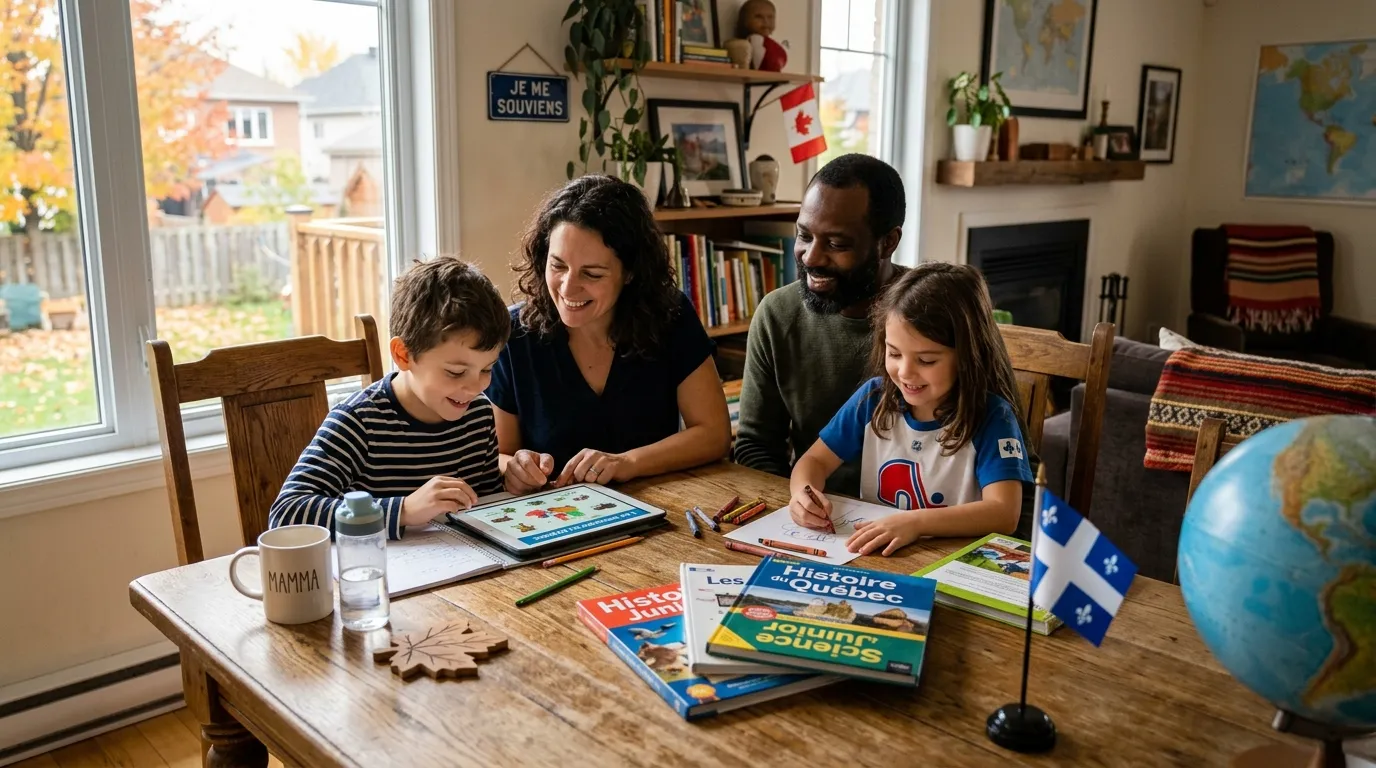
Homeschooling in Quebec: A Comprehensive Guide to Laws and Resources

Making the decision to homeschool your child is an incredibly empowering choice, but depending on where you live, it can also come with a maze of regulations. If you reside in Quebec, Canada, and are considering transitioning away from the traditional public school system, you likely have a flurry of questions. Is it legal? What are the reporting requirements? Do I need to teach the provincial curriculum? What happens if my child has an IEP that isn’t being supported?

Whether you are reacting to a mid-year crisis—such as an unsupported learning profile, severe school refusal, or burnout—or you are simply seeking a more personalized, flexible educational path for your family, this guide is designed to clarify the process. Quebec has some of the most highly regulated homeschooling laws in North America, but with the right tools and understanding, thousands of families successfully navigate the system every year. Here is everything you need to know about homeschooling in Quebec.

Is Homeschooling Legal in Quebec?

Yes, homeschooling is entirely legal in Quebec. However, unlike provinces with very relaxed regulations, Quebec requires a formal notification and ongoing evaluation process. The government body that oversees home education is the Direction de l’enseignement à la maison (DEM), which falls under the Ministère de l’Éducation.

If you decide to pull your child from a traditional school, you are legally required to send a written notice of your intent to homeschool to both the DEM and your local school board. This notice must be sent on or before July 1st for the upcoming school year, or within 10 days of withdrawing your child if you are making a mid-year transition.

The Learning Project (Projet d’apprentissage)

The cornerstone of homeschooling in Quebec is the ‘Learning Project’ (Projet d’apprentissage). By September 30th (or within 30 days of mid-year withdrawal), parents must submit a detailed Learning Project to the DEM. This document outlines your educational approach, the subjects you will cover, the resources and pedagogical materials you plan to use, and your methods for evaluating your child’s progress.

While you do not necessarily have to replicate the exact Quebec Education Program (QEP), the DEM expects your Learning Project to target the acquisition of basic skills, particularly in language (French or English) and mathematics. The project must be approved by your assigned resource person at the DEM, who will also conduct a midterm monitoring meeting (usually between January and March) to check on your child’s progress.

Annual Evaluations

In addition to the Learning Project and the midterm meeting, Quebec requires an annual evaluation of your child’s progress. Parents have a few options for this evaluation, including an evaluation by the school board, an evaluation by a private educational institution, a portfolio submitted to the DEM, or a written evaluation prepared by a certified Quebec teacher.

While this level of oversight can feel daunting to new homeschooling parents, it is completely manageable when you have a structured, comprehensive curriculum to lean on. Tracking progress natively within a digital platform makes gathering portfolio materials and demonstrating competency significantly easier.

Why Neurodivergent Families Are Leaving the System

A massive driver of the homeschooling movement in Quebec—and across the country—is the sheer lack of support for neurodivergent children in traditional classrooms. Parents of children with ADHD, Autism, or Pathological Demand Avoidance often find themselves trapped in endless meetings with school administrators, fighting for basic accommodations that rarely materialize.

According to clinical resources from organizations like Understood.org, forcing a neurodivergent child to conform to a sensory-overwhelming environment drastically increases anxiety and prevents true learning from occurring. The traditional, one-size-fits-all classroom simply cannot adapt to the child.

Homeschooling allows you to step off that battlefield entirely. You can provide 15-minute micro-bursts of learning, allow kinesthetic movement during math, and build a sensory-safe environment that respects your child’s neurology. If you are struggling with a neurodivergent child in the public system, read our guide on Why Traditional Curriculums Fail ADHD Kids to see how a low-demand environment can transform their love for learning.

Deschooling: The Crucial First Step

If you are pulling your child out of the Quebec public system because of extreme burnout or school refusal, do not rush into academics—even with the DEM’s reporting requirements looming. Your first step is deschooling. Deschooling is the adjustment period required to decompress from the rigid, institutional environment of a traditional classroom.

We highly recommend reading our guide on The Mid-Year Crisis Pull: Deschooling and Finding Peace to understand why this period of rest is absolutely mandatory before introducing any new curriculum. Your DEM resource person can often work with you to establish a gentle transition plan that prioritizes your child’s mental health first.

“When the system demands conformity at the expense of a child’s mental health, parents have no choice but to step away. Homeschooling in Quebec gives you the power to prioritize your child’s well-being and build a learning environment that actually works for them.”
— Lindsey Casselman, Co-Founder of Schoolio

Choosing the Right Curriculum for Quebec

Because the DEM requires detailed reporting and targeted skill acquisition, choosing the right curriculum is essential. Many parents spend hours trying to piece together a patchwork curriculum from free resources, only to burn out from the massive expenditure of personal time and energy.

Instead of spending your Sundays planning lessons to appease the DEM, you can use an open-and-go curriculum. Schoolio’s comprehensive Academics programs offer a structured approach to math, language, science, and social studies that is highly compatible with the expectations of the Learning Project. Because our platform is fully scripted and tracks progress, parents can easily generate the data needed for their annual evaluations without needing a teaching degree.

Taking the Leap in Quebec

Homeschooling in Quebec requires administrative diligence, but the reward is a journey of incredible freedom. It is the freedom to choose how your child learns, to preserve their mental health, and to foster their true passions outside the confines of an overwhelmed system.

If you are ready to reclaim your child’s education, you don’t have to navigate the DEM alone. Explore our flexible Pricing Plans and discover how an affordable, open-and-go digital curriculum can provide the structure and reporting ease you need to make your homeschooling journey a success in Quebec.
Homeschooling & Independence: Building Autonomous Learners

One of the most pervasive myths about homeschooling is that it creates overly dependent children who are sheltered from the real world. Critics often paint a picture of “helicopter parents” hovering over the kitchen table, dictating every pencil stroke. However, the reality is entirely the opposite. When executed correctly, homeschooling is the single most effective educational model for building deep, authentic independence, particularly in neurodivergent children.

In the traditional public school system, independence is often confused with compliance. A child is considered ‘independent’ if they can sit quietly, wait for instructions, follow a rigid bell schedule, and complete standardized assignments without asking too many questions. True independence—the ability to self-motivate, manage one’s own time, identify personal interests, and problem-solve autonomously—is rarely fostered in an environment where every minute of the day is micromanaged by an institution.

The Difference Between Compliance and Autonomy

To understand how homeschooling fosters independence, we first must distinguish it from compliance. Traditional schooling demands that a child subvert their own physical and intellectual needs for the sake of the classroom ecosystem. They must wait for permission to use the restroom, wait for the bell to eat, and wait for the teacher to tell them what to learn next. Over time, this intense conditioning trains the child’s brain to rely entirely on external authority figures to dictate their actions.

Homeschooling flips this dynamic. Instead of enforcing compliance, parents have the opportunity to foster autonomy. Autonomy means giving the child a voice in *what* they learn, *when* they learn it, and *how* they demonstrate that learning. According to experts at Understood.org, allowing neurodivergent children to exert control over their learning environment dramatically reduces task avoidance and anxiety. When a child feels they have agency, they stop fighting the process and start owning it.

Shifting from Manager to Facilitator

The secret to building an independent learner lies in the parent’s role. If you are exhausted by homeschooling, it is likely because you are acting as a micro-manager rather than a facilitator. A manager dictates tasks, oversees every detail, and corrects mistakes immediately. A facilitator provides the tools, sets the framework, and steps back, allowing the child to struggle productively and find their own solutions.

This shift is incredibly hard for parents who are accustomed to the traditional school model. It requires trusting your child. But when you step back, magic happens. You begin to see your child initiate projects, manage their own schedule, and dive deep into topics they genuinely care about without waiting for your instruction.

“We often confuse a child’s reliance on us with a lack of independence, but true independence isn’t about doing everything alone. It’s about knowing how to find the answers, when to ask for help, and having the confidence to pursue your own interests without waiting for permission.”
— Lindsey Casselman, Co-Founder of Schoolio

Building Scaffolding for Independence

Independence does not happen overnight, especially if you have recently pulled your child from public school. (If you are in this phase, we highly recommend reading our guide on The Mid-Year Crisis Pull: Deschooling and Finding Peace to help them decompress first). Independence must be scaffolded.

Start by giving them choices within a structured framework. For example, instead of saying, “Do your math worksheet now,” say, “We need to complete math and reading before lunch. Which one would you like to tackle first?” As they build confidence in making small decisions, you can slowly expand their autonomy.

Another critical step is letting them manage their own time. Provide them with a visual timer and a clear checklist of tasks. Let them decide how long they need to rest between subjects. When a child realizes that finishing their work efficiently earns them more free time to pursue their passions, their time-management skills will skyrocket.

The Role of Open-and-Go Curriculum

Fostering independence is incredibly difficult if your curriculum requires constant, heavy-handed adult supervision. If a child cannot understand the instructions without you reading the entire manual to them, they will remain dependent on you.

This is why choosing the right tools is paramount. An open-and-go digital curriculum is specifically designed to transfer the power of learning back to the student. With Schoolio’s Academics programs, students can log in, view their daily tasks, watch interactive lessons, and complete their work with minimal parental intervention. Because the platform tracks their progress natively, parents can shift back into the role of a supportive facilitator rather than a frustrated taskmaster.

Real-World Readiness

When a homeschooled child graduates, they don’t experience the “shock” of the real world because they have been living in it their entire lives. They already know how to budget their time. They know how to conduct independent research without a teacher handing them a syllabus. They know how to communicate with adults and peers alike.

Fostering independence is arguably the most valuable gift you can give your child. It prepares them not just for higher education or a career, but for a fulfilling, self-directed life. If you are ready to give your child the tools they need to become an autonomous learner, explore our Pricing Plans and discover how easy the transition to independent learning can be.

Banning Phones in Schools is Lazy Leadership: The Real Crisis in Education

Across North America, school boards and policymakers are rolling out a new silver bullet to fix the crumbling public education system: banning smartphones in the classroom. From state-wide mandates to individual district policies, the narrative is that removing devices will magically restore student focus, improve mental health, and elevate test scores. But this approach completely misses the point. Banning phones in schools is lazy leadership. It is a symptom of a much larger, systemic failure to adapt to the 21st century.

Smartphones are not the root cause of educational disengagement; they are the escape hatch. When a student is trapped in an archaic, one-size-fits-all classroom that forces them to sit passively for seven hours a day, listening to a lecture that has no relevance to their immediate world or future career, they check out. A device just happens to be the most convenient way to do so.

The Illusion of the “Good Old Days”

The push to ban phones is largely driven by a nostalgic desire to return to the “good old days” of education—a time when students allegedly stared raptly at the chalkboard and absorbed every word the teacher said. But those days never truly existed. Students have always found ways to check out of boring, uninspiring lessons. They passed notes, stared out windows, doodled in the margins of their notebooks, and daydreamed.

The difference today is that the alternative to the boring lecture is a supercomputer in their pocket that offers immediate access to the entire sum of human knowledge, connection to their peers, and highly engaging, algorithmically personalized content. When we ban the phone, we don’t suddenly make the outdated curriculum more interesting; we just remove the coping mechanism for the boredom.

Why Traditional Curriculum Fails the Modern Student

We are currently preparing Gen Z and Generation Alpha for a workforce that demands deep technological literacy, extreme adaptability, and autonomous problem-solving. Yet, we are doing so using an educational model designed during the Industrial Revolution to produce compliant factory workers. The traditional public school curriculum is heavily focused on rote memorization and standardized testing, ignoring the very real need for critical thinking, financial literacy, and technological fluency.

If a student can pull out their phone and find the answer to a teacher’s question in three seconds via Google or ChatGPT, the problem is not the phone. The problem is that we are still testing students on their ability to act as biological hard drives. As educational experts at Edutopia have pointed out, students—especially neurodivergent learners—require active, engaging, and relevant tasks to build true executive function.

“If your curriculum is so uninspiring that it cannot compete with a smartphone, the solution isn’t to ban the smartphone. The solution is to build a better, more engaging curriculum. Banning tools of the future to preserve methods of the past is educational malpractice.”
— Sathish Bala, CEO of Schoolio

Phones as Tools, Not Toys

In the real world—the world these students will enter the moment they graduate—smartphones and digital connectivity are absolute requirements. We do not ban phones in the modern workplace. Instead, we expect employees to learn how to manage their time, regulate their digital consumption, and use these devices as tools for productivity and collaboration.

By banning phones entirely, schools are missing a massive opportunity to teach digital citizenship and self-regulation. We are telling students, “You cannot be trusted to manage this technology,” rather than guiding them on how to use it responsibly. When we remove the scaffolding and the real-world application, we set them up for failure the moment they step off the graduation stage.

The Homeschooling and Microschool Alternative

This fundamental disconnect between what schools are teaching and what students actually need is a massive driver of the current homeschooling and microschooling boom. Parents are waking up to the fact that the traditional system is doubling down on obsolete methods.

In a modern homeschool or microschool environment, technology is embraced as a core pillar of learning. Students use devices to conduct independent research, code software, edit videos, and collaborate with peers globally. If you are curious about how this model works in practice, explore our Academics programs to see how a flexible, modern curriculum integrates with a child’s natural curiosity rather than fighting against it.

When a child’s education is personalized, engaging, and tied to their actual interests, the “phone problem” largely disappears. A highly engaged student who is actively building a robotics project or writing a novel doesn’t need to scroll social media to escape their reality because their reality is deeply fulfilling.

Real Leadership Requires Real Change

Real leadership in education requires looking critically at the system itself. It requires asking the hard questions: Why are our students so desperate to escape the classroom? Why are our teachers burning out? Why are we still using 19th-century methods to teach 21st-century children?

Banning phones is a political band-aid. It gives the illusion of action while preserving the broken status quo. If we want to truly engage our students, we must overhaul the curriculum, embrace technological tools, and respect the autonomy of the learner. For parents who are tired of waiting for the system to catch up, the power to change your child’s education is already in your hands. You can review our Pricing Plans and discover how affordable and transformative an open-and-go, modern education can be.

12 Principles for Raising and Homeschooling a Child with ADHD

TL;DR – Quick Answer:
Raising a child with ADHD requires a neurodiversity-affirming approach that prioritizes connection over correction. Key principles include using micro-burst learning, embracing movement as a neurological need, externalizing executive function with visual aids, and focusing on interest-led hyperfocus to drive engagement and academic success.

Raising a neurodivergent child is a journey filled with incredible highs and unique, daily challenges. For parents raising a child with ADHD (Attention-Deficit/Hyperactivity Disorder), the traditional approaches to parenting and education often fall completely flat. When those approaches are applied to schooling, the result is frequently frustration, burnout, and a strained parent-child relationship. If you have been searching for “12 principles for raising a child with adhd” because you feel overwhelmed by the daily struggles, you are not alone.

Homeschooling offers a powerful alternative to the rigid structures of the public school system, but it requires a fundamental shift in how we view learning and behavior. You cannot simply replicate a traditional classroom at home and expect a different result. Instead, you must build an environment that honors your child’s unique neurological wiring.

Understanding the ADHD Brain

Before diving into the principles of homeschooling, it is critical to understand that ADHD is not a deficit of attention, but rather a challenge in regulating it. Children with ADHD often suffer from executive dysfunction, which impacts their working memory, impulse control, and ability to start or transition between tasks. According to experts at Understood.org, recognizing that these behaviors are neurologically based—not willful defiance—is the first step in creating a supportive learning environment.

When a child’s environment demands extended periods of sitting still, listening to passive instruction, and suppressing their natural need for movement, their nervous system goes into overdrive. This is why the traditional 7-hour school day is profoundly incompatible with the ADHD brain.

Core Principles for Homeschooling ADHD

Transitioning to a homeschool model allows you to rewrite the rules. Here are the core principles to guide your journey in raising and educating a child with ADHD.

1. Connection Before Correction

The foundation of any successful educational experience is a strong, safe relationship. Children with ADHD receive disproportionately more negative feedback than their neurotypical peers. Prioritize building connection and trust. If your child is dysregulated, focus on calming their nervous system before attempting to correct academic mistakes.

2. Embrace Micro-Bursts of Learning

Do not expect your child to focus on a math worksheet for 45 minutes. Break lessons into 10-to-15-minute “micro-bursts” of high-intensity learning. Short, focused sessions followed by immediate movement breaks will yield far better retention and significantly less resistance.

3. Movement is a Need, Not a Privilege

Movement helps the ADHD brain focus. Do not force your child to sit perfectly still at a desk. Allow them to stand, use a wobble board, bounce on a yoga ball, or pace the room while reciting facts. Kinesthetic learning is incredibly effective for neurodivergent students.

4. Provide Immediate Feedback

The ADHD brain struggles with delayed gratification. Immediate, positive reinforcement is crucial for building momentum. Celebrate small wins instantly rather than waiting for the end of a long assignment or the end of the week.

5. Prioritize Deschooling

If you have recently pulled your child from the public school system due to burnout, do not rush into academics. We highly recommend reading our guide on The Mid-Year Crisis Pull: Deschooling and Finding Peace to understand why a period of rest and unlearning is mandatory for recovery.

6. Use an Open-and-Go Curriculum

Parents of ADHD children are already managing a heavy cognitive load. You do not have the energy to spend your weekends planning elaborate lesson structures. Use an open-and-go curriculum that provides clear, scripted lessons. Our comprehensive Academics programs are designed specifically to be flexible and easy to use without extensive prep.

7. Capitalize on Hyperfocus

When a child with ADHD finds a topic that sparks their interest, they can hyperfocus on it for hours. Use this to your advantage. If they love dinosaurs, weave reading, math, and science lessons around that theme. Interest-led learning is the ultimate hack for engagement.

8. Gamify the Mundane

Tasks that lack intrinsic motivation (like memorizing multiplication tables) are agonizing for the ADHD brain. Turn them into games, challenges, or races against the clock to manufacture the dopamine required to complete the task.

9. Externalize Executive Function

Because working memory is impaired, you must provide external supports. Use visual timers, color-coded schedules, checklists, and sticky notes. Do not rely on them to “just remember” what needs to be done.

10. Flexibility Over Rigidity

Some days, the ADHD brain simply cannot compute complex tasks. Be willing to pivot. If math is causing a meltdown, switch to a hands-on science experiment or an educational documentary. Adhering stubbornly to a schedule will only guarantee a ruined day.

11. Protect Their Self-Esteem

The constant struggle to meet neurotypical standards can deeply impact a child’s self-worth. Remind them daily of their strengths—their creativity, their out-of-the-box thinking, and their energy. They are not broken; they are just wired differently.

12. Choose Accessibility

Financial and logistical stress adds to parental burnout. Ensure that the educational tools you choose are sustainable for your family. You can explore our flexible Pricing Plans to find digital and print solutions that fit your budget and lifestyle.

“When we force an ADHD child into a rigid, seated, seven-hour school day, we aren’t testing their intelligence—we are testing their endurance. Homeschooling gives parents the radical freedom to stop fighting their child’s neurology and start working with it.”
— Sathish Bala, CEO of Schoolio

A Path Forward

Raising and educating a child with ADHD requires profound patience, empathy, and a willingness to discard conventional wisdom. By implementing these 12 principles, you can transform your home into a sanctuary where your child’s unique mind is not just accommodated, but celebrated.

Remember that you are not on this journey alone. Equip yourself with the right tools, lean into your child’s natural curiosity, and watch them thrive in an environment designed just for them.

Worldschooling: Turning the Globe into Your Child’s Classroom

Why confine learning to a desk when the world can be your curriculum? Worldschooling is a rapidly growing movement of families who travel and learn simultaneously, breaking free from the rigid 7-hour public school workday. Whether you are living in an RV traversing national parks, operating as digital nomads across Europe, or simply taking extended family trips during the traditional academic year, learning doesn’t have to stop when you leave your house. In fact, that’s precisely when the most impactful learning begins.

The concept of worldschooling is beautifully simple but profoundly transformative: the world itself is the classroom. Every museum, every hiking trail, every interaction at a local market becomes a tangible lesson in history, science, geography, or economics. If you have been feeling the burnout of standard education or seeking a way to merge family travel with academic excellence, the worldschooling lifestyle might be the perfect fit.

The Philosophy Behind Worldschooling

Traditional schooling requires strict adherence to a specific location, a standardized timetable, and an inflexible curriculum. Worldschooling flips this paradigm completely on its head. Instead of reading about the Colosseum in a dry textbook, a worldschooling child walks its ancient steps and touches the stone. Instead of memorizing biology facts from a whiteboard, they explore tide pools in Costa Rica, observe ecosystems firsthand, or track animal footprints in the Rocky Mountains. Education becomes a living, breathing experience.

This experiential learning cements knowledge far deeper than rote memorization ever could. According to resources on neurodevelopment and learning, such as the Child Mind Institute, hands-on, multisensory learning experiences significantly improve retention and engagement, particularly for neurodivergent children. When a child can see, touch, and experience the subject matter, the abstract becomes concrete.

Micro-Bursts and the End of the 7-Hour Grind

A common fear among prospective traveling families is how to fit “school” into a busy travel itinerary. “How will we have time to explore if we have to do school for 7 hours a day?” The secret lies in abandoning the 7-hour public school model altogether. When you remove classroom management, roll call, transitions, cafeteria time, and busywork, a child’s core academic needs—math, reading, and writing—can often be completed in about two hours.

By utilizing 15-minute micro-bursts of high-intensity learning, a child can complete their math lesson while waiting for a train, read their language arts passage at a café, or practice phonics on a long car ride. The rest of the day is spent immersed in the culture and environment around them. This approach prevents burnout and preserves the joy of exploration, ensuring that learning remains a seamless part of the day rather than a tedious chore.

Logistics: How to Manage Curriculum on the Road

Carrying heavy textbooks, workbooks, and binders across international borders or in a cramped RV is simply not feasible. Baggage limits and space constraints make physical curriculum a logistical nightmare. This is where a robust digital platform becomes the worldschooler’s best friend.

Schoolio’s digital platform is built exactly for this kind of extreme flexibility. Because our platform tracks progress automatically, parents don’t need to worry about losing paperwork, grading quizzes manually, or carrying heavy teacher guides. Your child logs in, completes their daily core subjects, and logs off. It’s truly open-and-go from anywhere with a Wi-Fi connection.

If you want to review what subjects are covered, you can explore Schoolio’s comprehensive Academics to see how our curriculum scales from Kindergarten through Grade 8, no matter where in the world you are located.

The Ultimate Form of Socialization

One of the most persistent questions any homeschooling family faces is, “But what about socialization?” Critics often assume that learning outside a traditional classroom leads to isolation. In reality, worldschooling provides the ultimate socialization.

Children learn to interact with people of all ages, cultures, and backgrounds. They aren’t limited to socializing only with peers born in the exact same twelve-month window. They learn to navigate language barriers, understand diverse cultural norms, and engage with the world confidently. They develop empathy, global awareness, and adaptability—critical soft skills that are essential for success in the modern world but are rarely taught in a traditional classroom setting.

Navigating Costs and Accessibility

Many families assume that worldschooling requires a massive trust fund or lottery win. While travel certainly involves costs, blending education and lifestyle often allows families to embrace geographic arbitrage—living in areas where the cost of living is significantly lower than their home country.

When it comes to the educational materials themselves, flexibility shouldn’t break the bank. You can check out Schoolio’s flexible Pricing Plans to see how an all-in-one digital solution can replace thousands of dollars worth of physical textbooks and supplementary tutors.

Ready to Pack Your Bags?

Worldschooling is more than an educational choice; it is a lifestyle commitment. It demands flexibility, curiosity, and a willingness to step outside the conventional boundaries of what “school” looks like. But for the families who embrace it, the rewards are immeasurable. A child raised as a global citizen possesses a breadth of knowledge and a depth of character that will serve them for a lifetime.

If you are ready to take the leap, equip yourself with the right tools. An open-and-go curriculum paired with a sense of adventure is all you really need to turn the entire globe into your child’s classroom.


“Education shouldn’t be confined to four walls and a rigid bell schedule. By abandoning the 7-hour grind and embracing micro-bursts of learning, worldschooling families are proving that the most profound education happens out in the real world.”
— Lindsey Casselman, Co-Founder of Schoolio

Related Reading: Homeschool Travel: A New Way to Learn Beyond the Classroom | Embracing the Nomadic Lifestyle: A Conversation with Megan

The Mid-Year Crisis Pull: Deschooling and Finding Peace

Every year, as the calendar flips to April and May, a distinct phenomenon sweeps through families with school-aged children. We call it the ‘Mid-Year Crisis Pull.’ It is the exact moment when the accumulated weight of failing IEPs, the daily cycle of after-school restraint collapse, the chronic school refusal, and the exhausted meetings with administrators finally become too much to bear. If you are reading this, you probably didn’t plan to homeschool this year. In fact, it might be the very last thing you ever thought you would do. But staying in the traditional public school system is simply no longer a viable option for your child’s mental health or your family’s overall peace.

Making the decision to pull your child out of school mid-year can feel terrifying. You might feel a mix of profound relief and overwhelming anxiety. “What do I do now?” “How do I catch them up?” “Am I going to ruin their education?” Take a deep breath. You are not going to ruin them. The most important thing you can do right now is not to panic-buy a curriculum and force them back into a rigid learning environment. The first step is healing.

The First Step: Deschooling is Mandatory

If you have just pulled your child out of school under crisis conditions, hear this loud and clear: your first step is not academics. Your first step is deschooling and nervous system regulation. Deschooling is the vital adjustment period required for both the parent and the child to decompress from the intense stresses of traditional school. It is a period of unlearning the rigid rules, the institutionalized expectations, and the anxiety associated with performance.

A general rule of thumb in the broader homeschool community is to allow one month of deschooling for every year the child was enrolled in traditional school. For a child who has been in school for five years, that means you might spend up to five months simply existing, healing, and rediscovering what it means to learn without pressure.

What Deschooling Looks Like in Practice

During the deschooling phase, do not try to replicate the classroom at home. Do not set an alarm for 7:30 AM. Do not purchase a rigid, 6-hour-a-day curriculum and force them to sit at the kitchen table. Instead, let them sleep. Sleep is when the brain heals and processes trauma. Let them play video games. Go for walks outside. Watch documentaries together. Your primary goal right now is to rebuild your relationship with your child, which has likely been severely strained by months or years of homework battles and morning rush anxiety.

According to research from the Child Mind Institute, children experiencing chronic stress or burnout require significant downtime to regulate their nervous systems. Their “fight or flight” response has been running on overdrive. You cannot teach a child who is in survival mode. The brain simply will not absorb new academic information until it feels physically and emotionally safe.

“When a child is burnt out from the system, our job isn’t to force them back into the mold that broke them in the first place. Homeschooling is healing, not fixing. You are not trying to ‘fix’ your neurodivergent child so they can fit back into a standardized box; you are changing their environment so they can thrive exactly as they are.” — Lindsey Casselman, Co-Founder of Schoolio

Transitioning to Academics: Slow and Steady

When you both feel the nervous system has reset—when the meltdowns have decreased, the sleep schedule has normalized, and a sense of calm has returned to your household—you can begin introducing academics. Start incredibly small. We recommend starting with just 10 minutes of math and 15 minutes of reading per day. Do not worry about what ‘grade’ they are supposed to be in.

Use gentle, low-pressure placement tests to find their actual operational level. It is incredibly common for a 5th grader experiencing extreme burnout to need 3rd-grade math to rebuild their foundational skills and confidence without triggering frustration intolerance. If you are struggling with the idea of “falling behind,” we highly recommend reading our post on When Grade-Level Tests Make Homeschool Parents Feel Like Failures to help reframe your perspective on academic timelines.

Choosing the Right Tools for Healing

You already have enough stress on your plate. Do not buy a complicated, multi-volume curriculum that requires you to read a massive teacher’s manual every Sunday night just to prepare for the week. You are in recovery mode too. Choose an open-and-go curriculum that allows you to sit down, open the lesson, and learn right alongside your child in a low-pressure way.

Schoolio’s Academics program is designed specifically to be open-and-go, allowing parents to facilitate learning without a teaching degree or hours of prep work. You can explore our Pricing Plans to find a digital or print option that fits your family’s immediate needs.

Remember, slow is not falling behind—especially for neurodivergent kids. Slow is how you build a lasting, stable foundation. Healing takes time, but the peace that comes when your child rediscovers their natural love of learning is worth every second of the journey. If you need more support during this transition, consider reading our guide on From Survival Mode to Success: How Homeschooling Helps Kids Recover from Public School Burnout.

Next Steps for Your Family

If you have just made the “Crisis Pull,” know that you are not alone. Thousands of families make this exact same choice every spring. Take a deep breath, close the laptops, and focus on peace.

The Hidden Costs of Public School (And Why Homeschooling is Actually Cheaper)

One of the biggest hesitations parents have about leaving the public school system is the cost. “Public school is free,” the saying goes. But when you start adding up the hidden expenses, the reality of public school vs homeschooling costs looks very different.

The True Cost of “Free” Education

Between mandatory school supply lists, uniform or clothing expectations, constant fundraisers, field trip fees, busing or gas for the commute, and the inevitable before-or-after school care, the costs of public school pile up quickly. Many families find they are spending thousands of dollars a year on a system that isn’t even working for their child.

How Homeschooling Saves Money

Homeschooling allows you to control your budget. You don’t need expensive designer clothes to learn at the kitchen table. You don’t have to pay for daily transportation. And with affordable, comprehensive curriculum options like Schoolio, your entire year of core subjects (Math, Language Arts, Science, and Social Studies) can cost less than what you’d spend on a month of after-school care.

Furthermore, many US states now offer ESA (Education Savings Account) programs that allow you to use public funds to purchase secular homeschool curriculums like Schoolio through platforms like ClassWallet.

Start Your Homeschool Journey Today

Starter Bundle

New Homeschooler Starter Bundle
A complete “open and go” curriculum bundle with 4 core subjects perfectly curated for families transitioning out of public school.

Social Emotional Learning

Social Emotional Learning Bundles
Help your child understand their feelings, build resilience, and navigate social situations with confidence.

Free Printable Samples

Try it For Free Today
Download full unit samples and worksheets from Grade 1 through 8 to experience the “open and go” difference before you buy.

Homeschooling an ADHD Child in Public School: Why the IEP Isn’t Enough

For parents of neurodivergent children, securing an Individualized Education Program (IEP) feels like a massive victory. But what happens when the IEP isn’t enough? Homeschooling an ADHD child in public school often becomes an endless cycle of meetings, missed accommodations, and daily frustration.

The Limits of Public School Accommodations

Public schools try their best, but a classroom of 30 students simply cannot bend to the unique sensory and pacing needs of a child with ADHD. Even with a 504 plan or an IEP, your child is still subjected to rigid bells, prolonged sitting, and standardized expectations that conflict with how their brain operates.

Why Homeschooling Changes the Game

By bringing education home, you don’t need to fight for accommodations—the entire day becomes the accommodation. You can incorporate frequent movement breaks, eliminate visual clutter, and let your child learn in the environment that suits them best. At Schoolio, our curriculum is designed specifically for neurodivergent learners. We remove grade-level markers from the pages to reduce anxiety and use short, bite-sized lessons that cater to shorter attention spans.

Start Your Homeschool Journey Today

Starter Bundle

New Homeschooler Starter Bundle
A complete “open and go” curriculum bundle with 4 core subjects perfectly curated for families transitioning out of public school.

Social Emotional Learning

Social Emotional Learning Bundles
Help your child understand their feelings, build resilience, and navigate social situations with confidence.

Free Printable Samples

Try it For Free Today
Download full unit samples and worksheets from Grade 1 through 8 to experience the “open and go” difference before you buy.

Signs Your Child Needs to Be Homeschooled: Recognizing Public School Burnout

As the school year pushes into the spring, many families hit a breaking point. What started as typical back-to-school jitters in September has morphed into deep, chronic exhaustion by April.

If your mornings are a battleground and your afternoons end in meltdowns, you aren’t alone. You are likely witnessing public school burnout.

Here are the three undeniable signs your child needs to be homeschooled, and how taking control of their education can restore peace to your household.

1. Severe After-School Restraint Collapse

Does your child hold it together perfectly all day for their teachers, only to completely fall apart the minute they get in the car or walk through the front door? This is called “after-school restraint collapse.” The sensory overload, social masking, and rigid demands of the public school system drain their nervous system. When they finally reach their safe space (you), the dam breaks. Homeschooling eliminates this exhaustion by allowing them to learn in an environment calibrated to their sensory needs.

2. The “Sunday Scaries” Have Become Daily Terror

It is normal for kids to groan about Monday morning. It is not normal for a child to experience severe anxiety, stomach aches, or panic attacks every single night before school. If your child’s mental health is rapidly deteriorating due to academic pressure or bullying, pulling them out isn’t “giving up”—it is rescuing them.

3. Their Spark for Learning is Gone

Every child is born curious. If the standardized testing, relentless quizzing, and strict pacing of the public school system have convinced your bright child that they “hate learning” or “aren’t smart,” the system is failing them. Homeschooling allows you to pivot to an interest-led, adaptive approach. If they love dinosaurs but hate reading, you can teach them reading through dinosaurs.

The Transition Doesn’t Have to Be Hard

Many parents recognize the signs but hesitate because they think they don’t have the time, patience, or qualifications to teach. The truth? You don’t need a teaching degree to rescue your child’s love of learning. With an open-and-go curriculum like Schoolio, the lesson planning is already done for you. You just open the book and learn alongside them.

Start Your Homeschool Journey Today

Starter Bundle

New Homeschooler Starter Bundle
A complete “open and go” curriculum bundle with 4 core subjects perfectly curated for families transitioning out of public school.

Social Emotional Learning

Social Emotional Learning Bundles
Help your child understand their feelings, build resilience, and navigate social situations with confidence.

Free Printable Samples

Try it For Free Today
Download full unit samples and worksheets from Grade 1 through 8 to experience the “open and go” difference before you buy.

World Autism Acceptance Day: Why Homeschooling is a Game-Changer for Autistic Children

April 2nd marks World Autism Acceptance Day—a day dedicated not just to awareness, but to true acceptance, inclusion, and celebrating the unique ways neurodivergent minds experience the world.

For many parents of autistic children, the traditional education system can feel like trying to fit a square peg into a round hole. Bright fluorescent lights, chaotic hallways, rigid schedules, and a one-size-fits-all curriculum often lead to sensory overload and burnout.

This is exactly why a growing number of families are turning to homeschooling. Here is how taking control of your child’s educational environment can change everything.

1. Complete Control Over the Sensory Environment

Traditional classrooms are sensory minefields. When you homeschool, you dictate the environment. Does your child need to learn in a dim room with noise-canceling headphones? Can they focus better while sitting on a yoga ball or swinging in a hammock? Homeschooling allows you to completely eliminate the sensory friction that prevents learning.

2. Learning at Their Own Pace

Autistic children often have “spiky” cognitive profiles—they might read at a 6th-grade level but need 2nd-grade math support. Traditional schools struggle to accommodate this. Homeschooling allows you to mix-and-match grade levels per subject so your child is perfectly challenged, never bored, and never left behind.

3. Leaning Into Special Interests

Autistic children often have deep, passionate interests. Homeschooling gives you the freedom to weave those interests directly into their education. If your child loves trains, you can learn about the history of locomotives for Social Studies, calculate the speed of trains for Math, and read stories about train conductors for Language Arts.

Real Parents, Real Results

We don’t just build curriculum; we listen to the families using it. The relief parents feel when they finally find a system that works for their neurodivergent child is exactly why we do what we do:

“I wish there was more material like this. I recently discovered Schoolio. I have been homeschooling 2 neuro diverse children for years and it has been such a struggle. I love this curriculum.”Liane Sabatino

“You’ve made homeschooling so much easier and stress free than I could have imagined. I’m doing grade 2 with my daughter who is a bit behind developmentally and has CP and she’s finally understanding things with the one on one and your lessons. I couldn’t be happier.”Holly

“My gr. 6er is dyslexic and is having an easy time with the instructions and able to follow along.”Leanne Smith

Schoolio’s Commitment to Neurodivergent Learners

At Schoolio, we believe that every child deserves to learn in a way that makes sense to their brain. That’s why our curriculum is built from the ground up to be neurodivergent-friendly:

  • No Grade Levels on the Pages: We remove the stigma. Kids just see the work, not a grade number telling them they are “behind.”
  • Clean, Uncluttered Design: We intentionally limit distracting graphics and busy pages to reduce visual overwhelm.
  • Bite-Sized Lessons: Short, focused lessons that are perfectly suited for shorter attention spans and frequent sensory breaks.

This World Autism Acceptance Day, let’s commit to building educational environments that don’t ask our children to change who they are, but instead change to support how they learn.

Tools Designed for Neurodivergent Minds

If you’re looking for a place to start your homeschooling journey, Schoolio offers several resources built specifically with neurodivergent learners in mind. These programs focus on emotional regulation, self-paced learning, and sensory-friendly design.

Neurodivergent Homeschool Program

The Schoolio Neurodivergent Program
A complete, flexible approach to K-8 education that strips away the pressure of “grade levels” and lets your child learn exactly how their brain works best.

Social Emotional Learning

Social Emotional Learning (SEL) Bundles
From Pre-K all the way to Grade 8, these dedicated units help children understand their feelings, build resilience, and navigate social situations with confidence.

Thoughts & Feelings

Thoughts & Feelings Unit
A specialized workbook designed to help kids identify, process, and manage complex emotions in a healthy, structured way.

Slow Is Not Falling Behind — Especially for Neurodivergent Kids

Slow Is Not Falling Behind — Especially for Neurodivergent Kids


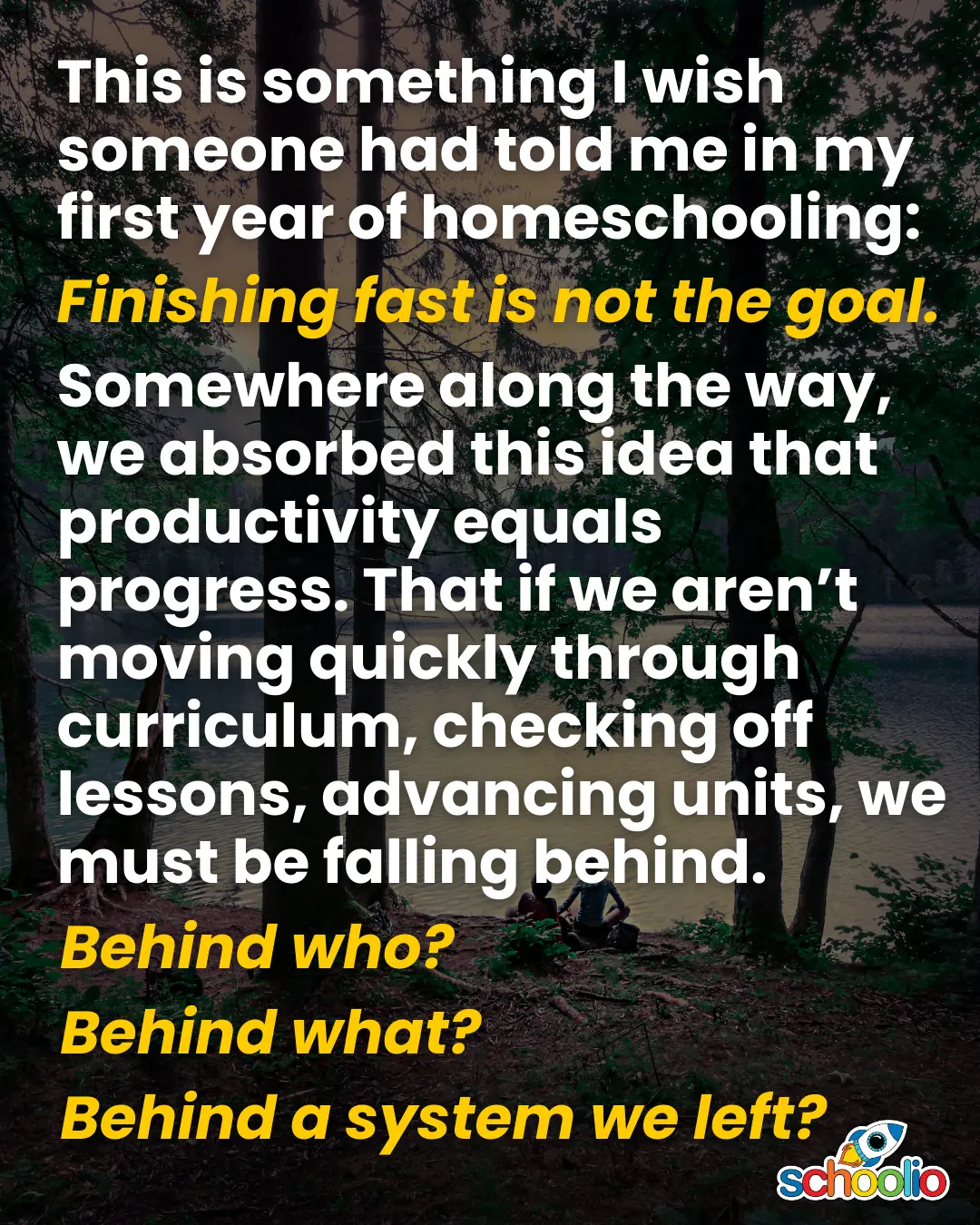
This is something I wish someone had told me in my first year of homeschooling:

Finishing fast is not the goal.

Especially not for neurodivergent kids.

Somewhere along the way, we absorbed this idea that productivity equals progress. That if we aren’t moving quickly through curriculum, checking off lessons, advancing units, we must be falling behind.

Behind who?

Behind what?

Behind a system we left?

When you’re homeschooling an autistic, ADHD, dyslexic, AuDHD, or otherwise neurodivergent child, pace is not a moral issue. It’s a nervous system issue.

And slow is not a flaw.


When “Four Lessons” Becomes Ten Days

Our writing courses, for example, are typically structured in four parts:

Lesson One: Brainstorming

Lesson Two: Writing day one

Lesson 3: Writing day two

Lesson 4: Editing

On paper, that’s four days.

In real life?

It might be ten.

And that’s okay.

If your child can only focus for fifteen solid minutes before their brain taps out, stretching one writing lesson across multiple days isn’t lowering the bar.

It’s protecting their capacity.

It’s teaching them that writing doesn’t have to feel like drowning.

I would rather see one writing assignment completed thoughtfully, with pride and confidence, than three rushed through with frustration and shutdown.

One done well is more valuable than three done miserably.

Every single time.


Productivity Culture Sneaks Into Homeschooling

Even when we leave traditional school, we bring its pace with us.

We feel pressure to “stay on track.”

We worry about being “behind.”

We compare how much we’ve covered.

But coverage is not comprehension.

Speed is not mastery.

And volume is not engagement.

Neurodivergent kids often need:

  • More repetition (or less redundancy!)
  • More breaks
  • More sensory regulation
  • More autonomy
  • More recovery time
  • More learning time dedicated to Social Skills and Emotional Intelligence

If we measure success by how much we completed, we miss the more important questions:

Did it stick?

Do they feel confident?

Are they emotionally regulated?


Engagement Beats Volume

When a child works at a sustainable pace, something powerful happens.

They stay willing.

They don’t start to hate the subject.

They don’t associate learning with shame or overwhelm.

They build confidence instead of resistance.

That’s not falling behind.

That’s building foundation.

And foundation matters more than speed.


Pace Is a Tool — Not a Rule

Curriculum pacing guides are suggestions.

Not contracts.

Not deadlines.

Not moral benchmarks.

If your child needs:

  • Three days for one math concept
  • Three weeks for a writing assignment
  • To read one chapter a day instead of three
  • A full pause during a hard life season

That is not failure.

That is responsive parenting.

That is adaptive education.

That is you paying attention to the human in front of you.


What Actually Matters

At the end of the year, I don’t ask:

“How many units did we finish?”

I ask:

Is my child still curious?

Do they feel capable?

Are they willing to try again tomorrow?

Because a happy, engaged child who trusts themselves as a learner will always outpace a burned-out child who learned to rush for approval.

Mastery beats completion.

Engagement beats volume.

Joy beats speed.

Slow is not behind.

Slow is intentional.

Slow is sustainable.

Slow is often exactly what neurodivergent kids need.


? Lindsey

certified special-ed educator, homeschool mom, & co-founder of Schoolio

Learning Area and Perimeter in Minecraft

Learning Area and Perimeter in Minecraft


Math can feel abstract sometimes. Numbers on a page. Formulas to memorize. Eyes glazing over.

That’s exactly where we were when we hit perimeter and area. My kids weren’t connecting with it — and honestly, I couldn’t blame them. Why does drawing rectangles on a worksheet feel so important when you’re seven?

So we switched it up.

We opened Minecraft.

Suddenly, it wasn’t about boxes on paper. It was about building.

  • Perimeter became the fence we needed around our animals. How much fencing did we need to keep the sheep in?
  • Area became the flooring for the rooms of a house. How many blocks would it take to fill in the kitchen or living room?

And just like that, the concept clicked.

Instead of “math problems,” it became their world. They cared about the outcome, because they had ownership in the project. They weren’t just solving for numbers — they were solving for sheep. For walls. For a house they were excited to design.

That’s the power of leaning into your child’s interests. When you connect learning to something they love, the barriers start to fall away.

It doesn’t mean every lesson becomes a video game (though sometimes that helps ?). It means you take the thing they’re already excited about and use it as a bridge into the learning.

Because here’s the truth: kids don’t resist learning. They resist learning that feels irrelevant.

And sometimes, all it takes is a fence for sheep to make the numbers finally make sense.


? Lindsey