One of the most pervasive myths about homeschooling is that it creates overly dependent children who are sheltered from the real world. Critics often paint a picture of “helicopter parents” hovering over the kitchen table, dictating every pencil stroke. However, the reality is entirely the opposite. When executed correctly, homeschooling is the single most effective educational model for building deep, authentic independence, particularly in neurodivergent children.
In the traditional public school system, independence is often confused with compliance. A child is considered ‘independent’ if they can sit quietly, wait for instructions, follow a rigid bell schedule, and complete standardized assignments without asking too many questions. True independence—the ability to self-motivate, manage one’s own time, identify personal interests, and problem-solve autonomously—is rarely fostered in an environment where every minute of the day is micromanaged by an institution.
The Difference Between Compliance and Autonomy
To understand how homeschooling fosters independence, we first must distinguish it from compliance. Traditional schooling demands that a child subvert their own physical and intellectual needs for the sake of the classroom ecosystem. They must wait for permission to use the restroom, wait for the bell to eat, and wait for the teacher to tell them what to learn next. Over time, this intense conditioning trains the child’s brain to rely entirely on external authority figures to dictate their actions.
Homeschooling flips this dynamic. Instead of enforcing compliance, parents have the opportunity to foster autonomy. Autonomy means giving the child a voice in *what* they learn, *when* they learn it, and *how* they demonstrate that learning. According to experts at Understood.org, allowing neurodivergent children to exert control over their learning environment dramatically reduces task avoidance and anxiety. When a child feels they have agency, they stop fighting the process and start owning it.
Shifting from Manager to Facilitator
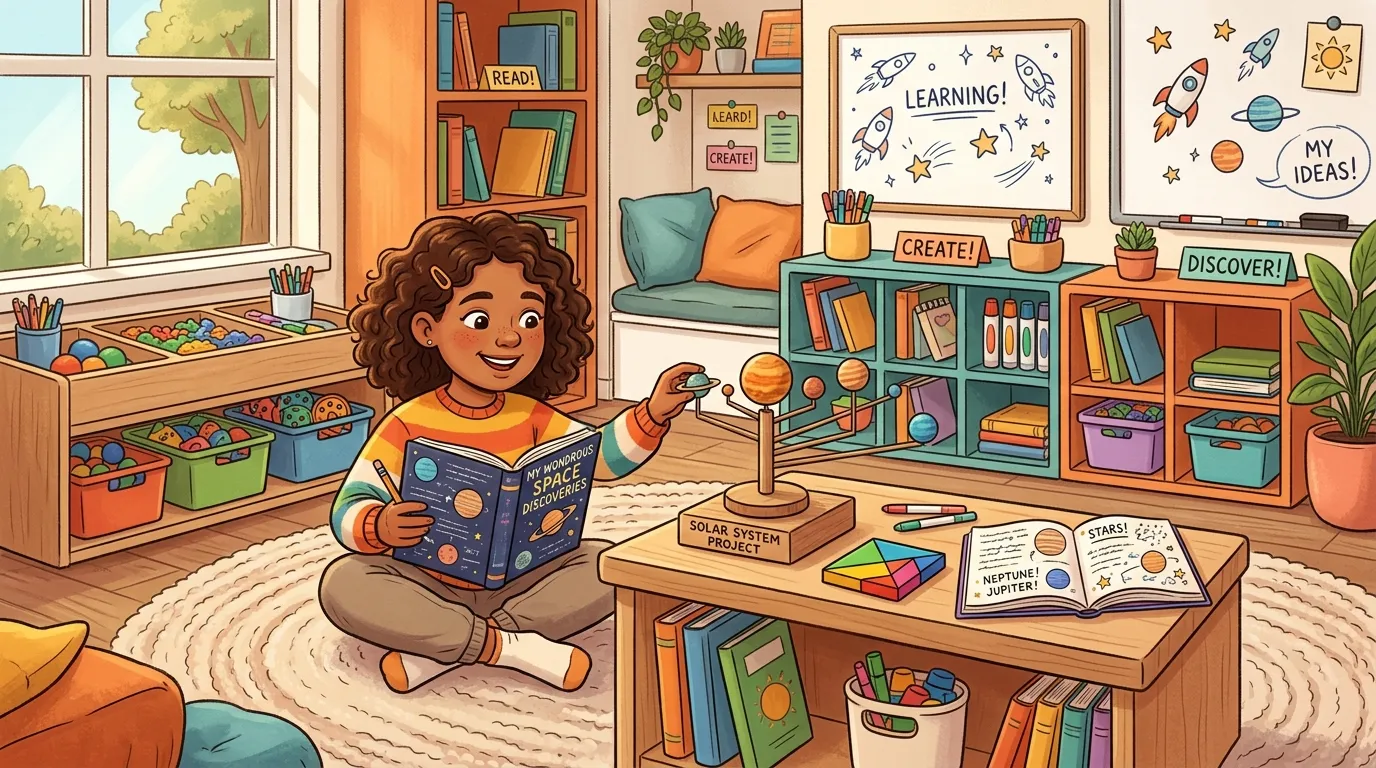
The secret to building an independent learner lies in the parent’s role. If you are exhausted by homeschooling, it is likely because you are acting as a micro-manager rather than a facilitator. A manager dictates tasks, oversees every detail, and corrects mistakes immediately. A facilitator provides the tools, sets the framework, and steps back, allowing the child to struggle productively and find their own solutions.
This shift is incredibly hard for parents who are accustomed to the traditional school model. It requires trusting your child. But when you step back, magic happens. You begin to see your child initiate projects, manage their own schedule, and dive deep into topics they genuinely care about without waiting for your instruction.
“We often confuse a child’s reliance on us with a lack of independence, but true independence isn’t about doing everything alone. It’s about knowing how to find the answers, when to ask for help, and having the confidence to pursue your own interests without waiting for permission.”
— Lindsey Casselman, Co-Founder of Schoolio
Building Scaffolding for Independence
Independence does not happen overnight, especially if you have recently pulled your child from public school. (If you are in this phase, we highly recommend reading our guide on The Mid-Year Crisis Pull: Deschooling and Finding Peace to help them decompress first). Independence must be scaffolded.
Start by giving them choices within a structured framework. For example, instead of saying, “Do your math worksheet now,” say, “We need to complete math and reading before lunch. Which one would you like to tackle first?” As they build confidence in making small decisions, you can slowly expand their autonomy.
Another critical step is letting them manage their own time. Provide them with a visual timer and a clear checklist of tasks. Let them decide how long they need to rest between subjects. When a child realizes that finishing their work efficiently earns them more free time to pursue their passions, their time-management skills will skyrocket.
The Role of Open-and-Go Curriculum
Fostering independence is incredibly difficult if your curriculum requires constant, heavy-handed adult supervision. If a child cannot understand the instructions without you reading the entire manual to them, they will remain dependent on you.
This is why choosing the right tools is paramount. An open-and-go digital curriculum is specifically designed to transfer the power of learning back to the student. With Schoolio’s Academics programs, students can log in, view their daily tasks, watch interactive lessons, and complete their work with minimal parental intervention. Because the platform tracks their progress natively, parents can shift back into the role of a supportive facilitator rather than a frustrated taskmaster.
Real-World Readiness
When a homeschooled child graduates, they don’t experience the “shock” of the real world because they have been living in it their entire lives. They already know how to budget their time. They know how to conduct independent research without a teacher handing them a syllabus. They know how to communicate with adults and peers alike.
Fostering independence is arguably the most valuable gift you can give your child. It prepares them not just for higher education or a career, but for a fulfilling, self-directed life. If you are ready to give your child the tools they need to become an autonomous learner, explore our Pricing Plans and discover how easy the transition to independent learning can be.