Choosing the Best Homeschool Math Curriculum for All Ages

Isn’t it awesome that you can turn your kitchen table into a versatile classroom where math is only one exciting subject tackled amidst snacks and stories?

Homeschooling offers the flexibility to tailor education to your child’s needs, but this freedom also comes with the responsibility! Yes, choosing the right materials and methodologies. Especially when it comes to a subject like math, developing a solid foundation early on can help kids gain a thorough understanding of basic math concepts.  

Also, it sets the stage for more complex topics in their future studies. Without a good understanding of basic math principles, more advanced concepts become difficult to grasp.

Now the question arises: why pay so much attention to Math?

Why is Math Important?

Math is not just a subject; it is a tool that impacts a number of skills and abilities we all use every day. Understanding math principles is not just about numbers. It’s about analytical thinking, problem-solving, decision-making, and more. It’s about learning to think outside the box, a skill that can benefit your child in countless ways. 

Math not only shapes your child’s academic career but also helps to bloom their personal and professional lives!

Choosing homeschooling math curriculum can feel like a big puzzle. But at the same time, it’s also a fantastic opportunity to choose what best fits your children’s unique needs.

Imagine a classroom where your child can explore math through games, stories, and hands-on activities that make difficult concepts come to life!

But what should you keep in mind while selecting the best homeschool math curriculum? Let’s take a look at the key factors.

Key Factors to Consider When Choosing a Homeschool Math Curriculum

  1. Child’s Learning Style

To choose the best homeschool math curriculum for your child, first it is important to understand their unique learning needs. Is your kid a visual learner? Or does your child thrive when using pictures, diagrams, or visual aids to understand new concepts? 

Or maybe your child is an auditory learner? And absorb information better when it’s explained verbally or through listening to stories and discussions?

Could your child be a kinesthetic learner, who learns best through hands-on activities and real-life experiences?

Identifying your child’s preferred learning style can help you make math both enjoyable and effective.

  1. Teaching Methods

Your teaching style and preferences are equally important. Whether you prefer a structured approach with detailed lesson plans or a more flexible, exploratory method, the curriculum should complement your teaching style. Some curricula are designed to be parent-led, requiring substantial involvement, while others are more self-paced, allowing children to work independently.

  1. Teacher Intensiveness

Consider how much time and effort you can dedicate to teaching. Some curricula are intensive, requiring significant parental involvement, while others are designed for independent learning. Evaluating the teacher intensiveness of a curriculum will help you manage your time effectively and ensure you can support your child’s learning.

  1. Reviews

Gathering opinions and recommendations from other homeschoolers can provide valuable insights. Reviews can highlight the strengths and weaknesses of different curricula, helping you understand how they perform in real-life homeschooling scenarios. Online forums, social media groups, and homeschooling communities are excellent resources for finding reviews and recommendations. Schoolio, an online homeschooling platform, loved by over 7,000 families offers all the features that make learning a fun experience for children. 

Now that you know all about how to choose the best for your children, let’s explore the perfect homeschool math curriculum for elementary to high school kids!

Best Homeschool Math Curriculum 

Are you ready to make math an exciting adventure for your homeschooler? Choosing the best homeschool math curriculum can transform math from a dreaded subject into a fascinating journey of discovery. Whether your child is just starting out or tackling more advanced concepts, the right curriculum can spark their interest and build a strong foundation for future success.

Let’s explore curriculum appropriate from pre-school to the higher grades, designed to meet your children’s needs and keep them well engaged!

Curriculum StageDescriptionKey Lessons/Areas Covered
Preschool Math CurriculumEngaging activities that build a solid foundation in math through themesCount With Me: Counting through songs, games, and interactive activities. My Shapes: Identifying and understanding shapes with hands-on activities.Measurement: Teaching basic measurement concepts using everyday objects.
Elementary Math CurriculumFun and deep understanding of math skills Kindergarten Math: Counting, number recognition, simple addition/subtraction, shapes.First Grade Math: Expanded number sense, basic time/money concepts, intro to geometry. Second Grade Math: Advanced addition/subtraction, fractions, measurement, data interpretation. Third Grade Math: Basics of multiplication/division, area/perimeter, complex shapes. Fourth Grade Math: Multi-digit operations, fractions/decimals, advanced geometry. Fifth Grade Math: Prep for middle school math with complex arithmetic, geometry, and introductory algebraic concepts.
Middle School Math CurriculumOnline curriculum allows independent study, building on elementary skills Sixth Grade Math: Ratios/proportions, basic statistics, intro to variables/expressions. Seventh Grade Math: Probability, advanced statistics, geometry involving angles/circles, linear equations. Eighth Grade Math: Functions, advanced geometry including transformations, systems of equations, intro to algebra.
High School Math CurriculumStandards-based online courses ensure college and career readiness, with a focus on real-life applications.Algebra I: Linear equations, inequalities, functions/graphs, polynomials. Geometry: Properties/applications of geometric figures, proofs, coordinate geometry. Algebra II: Complex numbers, advanced polynomials, rational expressions, logarithmic functions. Trigonometry: Trigonometric functions, identities, equations, real-world applications. Pre-Calculus: Preparation for calculus, advanced algebraic concepts, trigonometry, and introductory calculus concepts.

By covering these fundamental concepts across different educational stages, your homeschool math curriculum will ensure a comprehensive and engaging learning experience for children of all ages.

Schoolio also offers interactive math programs in a child-paced environment that motivates your kids to do their best. The customized homeschool math curriculum allows children to practice facts through fun, skill-focused activities. As a bonus, parents, too, love the flexibility and depth of this curriculum.

Speaking of flexibility and depth, let’s dive into some key educational terminologies that will help clarify your journey through homeschooling math.

Core Education Terminology

  1. Conceptual Math vs. Procedural Math

Conceptual math focuses on understanding the ‘why’ behind mathematical concepts, promoting deeper comprehension and critical thinking. Procedural math, on the other hand, emphasizes the ‘how’—the steps and methods to solve problems. 

A balanced curriculum that incorporates both approaches can provide a well-rounded mathematical education.

  1. Mastery vs. Spiral Approach

The mastery approach focuses on thoroughly understanding a concept before moving on to the next. This method ensures a strong grasp of each topic but can be time-consuming. 

The spiral approach revisits topics repeatedly, gradually increasing the difficulty levels. This method reinforces learning through repetition and is less likely to overwhelm your children.

  1. Scope & Sequence

The scope and sequence of a curriculum outline the topics covered and the order in which they are taught. A well-structured scope and sequence ensure that the young ones can build their knowledge systematically and thoroughly. 

Now that we understand the importance of different approaches, let’s explore some of the top homeschool math curricula available today.

Top Homeschool Math Curricula and Their Features

1. Schoolio (K – 8)

  • Teaching Method: Conceptual and procedural, Mastery Approach
  • Features: Interactive lessons, comprehensive guides
  • Cost: $29.99 per student per month

2. We Play Math (K – 3)

  • Teaching Method: Emphasis on conceptual learning before procedural
  • Features: Deep spiral, animated videos, online games
  • Cost: $20 /month – single membership, and $35 /month – family membership

3. Saxon Math (K – 12)

  • Teaching Method: Mix of procedural and conceptual with a short-spiraling approach
  • Features: Textbooks, workbooks, teacher’s manual, spiral approach
  • Cost: Varies by edition, starting from $383.98 

4. Teaching Textbooks (3 – Pre-Calculus)

  • Teaching Method: Spiral approach with interactive lessons
  • Features: Digital and print versions, enhanced online features
  • Cost: 2-Month Enrollment per student- US$  74.95

5. RightStart Math (K – 8)

  • Teaching Method: Hybrid of spiral and mastery, focus on conceptual learning
  • Features: Utilizes AL abacus, emphasizes mental math
  • Cost: Starting from $97.50 

6. Math-U-See (Primer – Calculus)

  • Teaching Method: Mastery-based approach with incremental learning
  • Features: Manipulatives, DVDs, workbooks
  • Cost: Staring from $13 and varies with different options

7. Art of Problem Solving (6 – 12)

  • Teaching Method: Mastery, dense and challenging materials
  • Features: Rigorous problem-solving exercises
  • Cost: Starting from $105 and varies depending on the option.

8. Beast Academy (2 – 5)

  • Teaching Method: Mastery through comic book-style guides
  • Features: Interactive practice materials
  • Cost: $15.99/month

9. Mr. D’s Math (Pre-Algebra – Pre-Calculus)

  • Teaching Method: Mastery with a focus on conceptual understanding
  • Features: Online classes, structured cost system
  • Cost: $217

10. Math Mammoth (1 – Pre-Algebra)

  • Teaching Method: Mastery-based with minimal manipulative use
  • Features: Worktext structure
  • Cost: Starting from $47

11. Singapore Math (1 – Algebra)

  • Teaching Method: Emphasis on mastery and mental math
  • Features: Textbook, workbook, instructor’s guide
  • Cost: Staring from $96

12. Life of Fred (K-Calculus)

  • Teaching Method: Conceptual and mastery approach using story-based learning
  • Features: Literature-based, engaging narrative methodology
  • Cost: $24

13. ALEKS Math (3 – 12)

  • Teaching Method: Mastery with procedural focus and adaptive learning
  • Features: Online platform, individualized learning paths
  • Cost: ALEKS Individual Subscriptions ; 1-Month. $19.95 ; 3-Months. $49.95 ; 6-Months. $99.95 ; 12-Months. $179.95.

14. CTC Math Online (K – 12)

  • Teaching Method: Mastery with procedural emphasis
  • Features: Online curriculum, video tutorials
  • Cost: $39.9 monthly 

15. Khan Academy Math (K – Calculus)

  • Teaching Method: Mastery with conceptual foundation
  • Features: Free online videos, problem-solving exercises
  • Cost: Free

16. Jacob’s Math (Elementary Algebra & Geometry ONLY)

  • Teaching Method: Mastery with strong conceptual explanations
  • Features: Focuses on algebra and geometry
  • Cost: Multiple options for subjects as per grade range Starting from $9

17. Horizons Math (K – 8)

  • Teaching Method: Spiral approach with visual emphasis
  • Features: Colorful, engaging lesson plans
  • Cost: Starting from $149.99

18. Chalk Dust Math (Algebra I – Calculus)

  • Teaching Method: Mastery with video instruction
  • Features: Comprehensive video lessons
  • Cost: $50 

19. Dr. Shormann Math (Algebra I – Calculus)

  • Teaching Method: Spiral, with a biblical perspective
  • Features: Online video instructions
  • Cost: Starting from $99

20. Derek Owens Math (Algebra 1 – Calculus)

  • Teaching Method: Mastery with integrated reviews
  • Features: Online video instruction, TA support
  • Cost: $74 per month for nine months

Every child is unique, and so are their educational needs. But you know your child best, so trust your instincts when choosing a math program. Just because a friend or a random stranger on the internet loves a certain program does not mean it will be a good fit for you and your children.

When possible, the best approach is to explore a homeschool math curriculum physically. Consider attending homeschool conventions or visiting local bookstores to flip through the pages and chat with the curriculum authors. This hands-on approach can provide valuable insights and help you make an informed decision. 

Additionally, don’t hesitate to take advantage of free online math trials whenever available! At Schoolio, you can explore their affordable homeschool math curriculum options for a 7-day free trial!

Let’s wrap up with some final thoughts on making the best choice for your child’s math education.

Conclusion

Choosing the best homeschool math curriculum involves understanding your child’s learning style, aligning it with your teaching preferences, and managing your budget. Each curriculum has unique strengths and potential challenges, making it essential to evaluate them based on your specific needs.

Ultimately, your dedication and the fit between the curriculum and the child’s learning style are equally important. With careful consideration and a focus on matching the right curriculum to your child’s needs, you can create a successful and enjoyable homeschooling experience in math.

Also Read- STEM Education at Home: Engaging Science and Math Activities
Is Homeschooling a Better Choice for a Child with Dyslexia?

Here’s something to ponder: Why fit in when your child was born to stand out?

A traditional classroom is unable to cater to the unique learning needs If your child has dyslexia. But worry not! There is another much more interesting way. 

Now, you can create a learning environment that is convenient and flexible. Not only this, it works with your child’s strengths rather than against their weaknesses. So, yes! Homeschooling a child with dyslexia is a better way to education.

Well, picture this: no more struggling to keep up with a rigid curriculum. Instead, you get to design a learning experience that is as unique as your child’s. It’s like trading in a one-size-fits-all t-shirt for a custom-tailored suit.

Homeschooling makes learning fun and engaging. Plus, your child can soar to new heights without the weight of traditional classroom constraints.

Buckle up because homeschooling might just be the adventure you’ve been looking for!

Opportunities and Considerations: Homeschooling A Child With Dyslexia

  1. Individualized Teaching

One of the greatest advantages of homeschooling a dyslexic child is the ability to tailor education. In a traditional classroom, teachers often have to balance the needs of many students. It makes it hard to provide the one-on-one attention that dyslexic students require.

On the other hand, homeschooling allows you to focus entirely on your child. Addressing their specific learning challenges and leveraging their strengths. Schoolio offers a custom-tailored suite of educational tools to fit your child’s specific learning needs.

  1. Flexible Curriculum

Homeschooling a child with dyslexia gives you the freedom to design a curriculum that suits their learning style. Whether your child learns best through visual aids, hands-on activities, or auditory instruction, you can choose.

Moreover, you have the power to create materials that work best as per your kiddo’s needs. This flexibility in homeschooling a child with dyslexia makes learning more fruitful and enjoyable.

  1. Enhancement of Skills 

With homeschooling, you can spend extra time on subjects or skills where your child needs more support. Homeschooling a child with dyslexia gives focused enhancement that significantly strengthens weak points.

Plus, it provides the flexibility to explore and develop unique gifts for your children. Whether they are in the arts, sciences, sports, or another area, individualized attention can help your child reach their full potential.

Additionally, homeschooling a child with dyslexia builds a solid foundation for future learning. 

  1. Meaningful Accommodations

In a homeschool setting, accommodations are easy to implement and adjust. Whether it’s providing extra time, using technology, or incorporating frequent breaks, you can ensure your child has the tools they need to grow.

Also, homeschooling a child with dyslexia provides a comfortable environment at their own pace. Taking the time they need to understand each concept fully.

  1. Time Efficiency

Homeschooling is like having a remote control for your child’s education. You can hit pause on the tough stuff and fast-forward through the easy parts. This efficient use of time can turn learning from a marathon into a fun adventure! Also, homeschooling a child with dyslexia comes with the perk of some extra time for you and your kid to bond.

  1. Interest-Led Learning

One of the joys of homeschooling is the ability to incorporate your child’s interests into their education. When learning is tied to something children love, it becomes more engaging. This interest-led approach can ignite a passion for learning and keep your child motivated.

  1. Enhanced Emotional Well-Being

Homeschooling a child with dyslexia works well on the emotional aspect as well. This way, your kids feel free from judgment or comparison. Your homeschool setting enhances their self-esteem and emotional well-being. Schoolio’s Neurodivergent program supports emotional well-being alongside their tailored education.

  1. Strengthening the Parent-Child Relationship

Homeschooling allows you to build a unique bond with your child, blending the roles of parent and teacher. This dynamic can lead to a deeper understanding and a more personalized approach to your child’s education.

For example, you can create special learning rituals, like starting each day with a favorite book. This personalized approach develops a supportive and nurturing environment.

  1. Expanding Your Knowledge and Skills

Homeschooling your child with dyslexia opens doors for you to learn and grow, too. Engaging in self-education can equip you with valuable skills and insights. It enriches both your and your child’s learning journey.

  1. Creating Meaningful Social Opportunities

Homeschooling encourages you to seek out and create social interactions for your child actively. By joining homeschool groups and participating in community activities, you can ensure your child develops strong social skills. For example, you could enroll your child in a local art class. These activities provide valuable social experiences and create a sense of community.

Also Read: Choosing The Right Homeschool Curriculum For A Child With ADHD

You’ve gathered all the essential information! Now that you’re all set, let’s dive in and get started!

Getting Started with Homeschooling a Child With Dyslexia

  1. Research on Homeschooling Regulations

First things first, let’s tackle the legal stuff. Like any good journey, you need a map! So, research your state’s homeschooling regulations to understand what’s required. Some states might ask for regular assessments, while others could be more relaxed. Knowing the rules ensures you’re on the right path from the start and avoids any unexpected detours.

  1. Planning Instruction

Now, let’s plan the journey. Picture yourself as a travel guide creating an itinerary for an epic trip. Planning instruction means setting educational goals and mapping out how to achieve them. Think about what subjects you’ll cover, the materials you’ll need, and the schedule that fits your child’s pace. It’s all about making the learning experience smooth and enjoyable.

  1. Consulting Educational Specialists

Feeling a bit like you need a co-pilot? Consulting educational specialists can provide valuable guidance. These experts can offer tips tailored to your child’s needs. They help you navigate any tricky terrain, whether it’s a speech therapist or language skills. These specialists are like having a teammate to help you stay on course.

  1. Choosing and Customizing Curriculum

Now, it’s time to customize the curriculum for homeschooling a child with dyslexia. It is similar to outfitting a toolbox with the right tools. You’ll carefully select the best resources that suit your child’s specific learning needs.

Look for programs that align with their learning style. You can customize them to keep things engaging. Also, ensure your child gets the best possible educational experience out of it.

  1. Utilizing Technology and Online Resources

Finally, let’s plug into the power of technology. Utilizing tech and online resources like Schoolio can save a lot of time and energy. It’s like equipping your journey with the latest gadgets and tools. It will only make learning more interactive and fun. These resources can bring a new level of excitement to your homeschooling adventure.

Ready to dive into some effective strategies? Let’s find out how to make learning feel like playtime.

Effective Homeschooling Strategies For Homeschooling a Child With Dyslexia

Still curious if homeschooling a child with dyslexia is a better choice? Here is a mix of innovative techniques to make your homeschooling journey enjoyable.

Also, check platforms like Schoolio that offer online courses and interactive videos that make learning more interactive and fun. To learn how you can make it more engaging, check out the table below!

StrategyDescription
Language Remediation TechniquesIncorporate techniques designed to improve language skills, such as phonics-based instruction and multisensory learning.
Daily Oral Reading PracticesEncourage your child to read aloud daily. This practice can help improve reading fluency and confidence.
Multisensory Learning ApproachesUse activities that engage multiple senses, such as using letter tiles for spelling or drawing in sand to practice writing. These approaches can make learning more effective.
Using Audiobooks and Dictation SoftwareAudiobooks can be a great way for your child to enjoy literature without the struggle of reading text. Dictation software can help them express their thoughts in writing.
Creative Assignments and Hands-On LearningIncorporate creative projects and hands-on activities into your lessons. These can make learning more engaging and help reinforce concepts.

However, tools and resources can also make or break your homeschooling experience. So, let’s explore some top-notch options!

Tools and Resources to Homeschool a Child With Dyslexia

Let’s find out what these resources are!

  1. Best Homeschool Curriculum Options

First up, let’s dive into finding the best homeschool curriculum options. Research and read reviews from other parents. Look for programs designed specifically for dyslexic learners, like those offered by Schoolio. It’s like hunting for treasure, and when you find a curriculum that fits, it feels like you’ve struck gold!

  1. Blended Learning Environments

How about mixing things up with blended learning environments? Combining traditional methods with digital tools can keep things dynamic and cater to different learning styles. This variety keeps learning fresh and engaging, making it less of a chore and more of an exciting journey.

  1. Support Networks and Homeschooling Groups

Finally, don’t forget the power of community! Connecting with other homeschooling families through support networks and groups can be incredibly enriching. Schoolio’s communities offer valuable resources, advice, and social opportunities.

Attending a local homeschooling meetup where your child makes new friends can never be a bad option. Plus, you get the chance to swap tips with other parents. It’s like joining a big, supportive family that’s all on the same adventure.

So, are you still in your thoughts or already determined to homeschool a child with dyslexia?

Conclusion

Homeschooling a child with dyslexia can be a fantastic option! Offering personalized education and a supportive environment. Weigh the pros and cons and seek help from experts and other families. By doing so, you can make an informed decision that best supports your child’s learning and well-being. Schoolio provides flexible learning options for homeschooling a child with dyslexia, which is worth checking out.  

Remember, you are not alone in this journey. Reach out, stay connected, and keep believing in your child’s potential. With the right approach, homeschooling can open up a world of possibilities for your dyslexic child. Happy Homeschooling!

Also Read: 10 Tips to Help Your Neurodivergent Child Complete Chores

Are There Free Homeschooling Options in Ontario?

Free Homeschooling Options in Ontario

Yes. There are many free homeschooling resources available in Ontario, including online courses, public library programs, and community group activities.

In Ontario, homeschooling families have access to a variety of free educational options and resources. Those are supporting their children’s learning outside of traditional school settings. Public libraries throughout the province offer extensive collections of educational materials. Those are including books, e-books, audiobooks, and online databases, all accessible at no cost. These resources cater to diverse subjects and interests, providing essential support for homeschooling curricula. Educational websites and apps, such as PBS LearningMedia and National Geographic Kids offer free educational videos, games, and activities. They enrich homeschooling experiences across different academic disciplines. Local community centres, museums, and cultural institutions also contribute by offering free or discounted educational programs and workshops. These are allowing homeschooling families to engage in hands-on learning experiences outside the home.

There are online educational platforms that offer free trials, click here to learn more about Schoolio’s FREE two-week trial! Schoolio provides families with a low cost educational platform for all your homeschooling needs. 

While homeschooling itself is not financially supported by the government in Ontario, these free or low cost resources empower families to provide quality education to their children effectively and economically, ensuring an enriching homeschooling experience.

Supervised VS Unsupervised Homeschooling in Alberta

Supervised & Unsupervised Homeschooling in Alberta: What’s the Difference?

In Alberta, homeschooling is regulated and can be categorized into two main types: supervised vs. unsupervised homeschooling. These categories differ significantly in terms of educational monitoring, support, and academic requirements.
Summary of Differences:

AspectSupervised HomeschoolingUnsupervised Homeschooling
RegistrationRegistration with a supervising school authorityNotify your supervising school authority with a Home Education Notification Form
SupportGuidance and support from the school authorityFind support yourself
Educational Plan/CurriculumMust be approved by the school authorityCreated independently by parents
EvaluationRegular evaluations by the school authorityNo formal evaluations
FundingFunding availableNo funding provided
RessourcesAccess to resources from the school authorityResources sourced by parents

Supervised homeschooling involves a formal relationship between homeschooling families and a school authority. Parents must register with this authority, which offers guidance and support throughout the homeschooling process. An important aspect of supervised homeschooling is submitting an educational plan that aligns with the Alberta Program of Studies or presents an alternative approach. The supervising authority must approve this plan. The authority evaluates student progress at least twice a year to ensure the student follows the educational plan and measures overall academic progress. Families in supervised homeschooling may receive funding for educational resources, up to $850 per child per year, depending on the authority’s policies. The school authority might also provide access to curriculum materials and other educational resources.

Unsupervised homeschooling, , or notification-only homeschooling, allows parents to educate their children independently without direct monitoring from a school authority. Parents must notify the Minister of Education of their intent to homeschool. This process is less formal than supervised homeschooling and does not involve a supervising authority. Parents create and implement their child’s educational plan without needing external approval. No formal evaluations are conducted by an authority. Families opting for unsupervised homeschooling handle all sourcing and financing of educational materials themselves, without receiving government funding.

In summary, the key differences between supervised and unsupervised homeschooling in Alberta are the following:
1. External student monitoring

2. academic support

3. legislative requirements.

Supervised homeschooling involves registration with a school authority. It requires submission and approval of an educational plan, regular evaluations, and funding for resources. Unsupervised homeschooling requires only a notification to the Minister of Education. Parents will independently managing their child’s educational plan and progress assessments, no financial support, and no formal evaluations. The choice between supervised homeschooling and unsupervised homeschooling depends on the family’s educational preferences and needs.

Deciding between supervised homeschooling and unsupervised homeschooling? There are some important factors to consider when making your decision.

Deciding between supervised VS unsupervised homeschooling in Alberta for your child involves several important considerations. They’re related to your child’s educational needs, your family’s preferences, and your readiness to manage the homeschooling process. Consider your child’s learning style and needs. A child who benefits from structured guidance might thrive with supervised homeschooling, which provides a formalized plan and regular evaluations. However, if your child is more self-directed, has neurodivergence, or has specific learning needs, the flexibility of unsupervised homeschooling, with its customized curriculum and schedule, might be advantageous.

Time commitment, educational philosophy, and financial aspects are also important in this decision. Supervised homeschooling requires regular interaction with the supervising authority and adherence to a structured plan, which can be time-consuming. Unsupervised homeschooling, on the other hand, allows greater freedom but requires you to independently develop and manage your child’s education. Consider the level of support and resources each option provides: supervised homeschooling offers funding and specific academic materials, while with unsupervised homeschooling you source and finance your own curriculum.

Regardless if you choose supervised or unsupervised homeschooling, Schoolio is here to help. Click here to learn more about Schoolio: The Homeschool Program for Alberta Families.

Explore Free Homeschooling Options in Alberta

TL;DR – Quick Answer:
Explore Free Homeschooling Options in Alberta provides essential benefits for homeschooling families by offering flexibility, community, and expert-led resources. Our 10,000+ strong Schoolio community proves that personalized learning is the future of education.

Explore Free Homeschooling Options in Alberta

Yes. There are many free homeschooling options available in Alberta, including online courses, public library programs, and community group activities.

In Alberta, homeschooling families have access to a variety of free educational options and resources that support their children’s learning outside of traditional school settings. Public libraries throughout the province offer extensive collections of educational materials, including books, e-books, audiobooks, and online databases, all accessible at no cost. These resources cater to diverse subjects and interests, providing essential support for homeschooling curricula. Educational websites and apps, such as PBS LearningMedia, National Geographic Kids, and BBC Bitesize, offer free educational videos, games, and activities that enrich homeschooling experiences across different academic disciplines. Local community centres, museums, and cultural institutions also contribute by offering free or discounted educational programs and workshops, allowing homeschooling families to engage in hands-on learning experiences outside the home.

Additionally, your supervising school authorities in Alberta may provide free academic materials to homeschooling families enrolled in their home education programs. These materials can include textbooks, workbooks, online resources, and other educational tools that align with the provincial curriculum.

There are also online educational platforms that offer free trials, click here to learn more about Schoolio’s FREE two-week trial! Schoolio provides families with a low cost educational platform for all your homeschooling needs. 

These free or low cost resources empower families to provide quality education to their children effectively and economically, ensuring an enriching homeschooling experience.

For further reading on evidence-based educational strategies, explore the research provided by the Child Mind Institute.

Is Unschooling Legal in Ontario?

Yes, unschooling is legal in Ontario. Parents choosing this approach must inform their local school board of their intent to homeschool. Unschooling is a recognized and lawful method of homeschooling in Ontario. It’s giving families the freedom to customize their children’s education according to their needs and interests.

Now that you can rest assured that you aren’t breaking any laws let me tell you what unschooling is all about! 

Unschooling empowers children to take charge of their education, learning through self-directed exploration driven by their interests and natural curiosity, instead of adhering to a rigid curriculum like traditional schools. This approach offers significant benefits for both children and families who embrace it. At its core, unschooling champions child-led learning, encouraging kids to autonomously pursue their passions. This method fosters intrinsic motivation and a genuine love for learning as children dive deeply into subjects that truly captivate them. The flexibility of unschooling allows learning to happen naturally. It also helps adapting to each child’s unique learning style and accommodating various schedules and environments. By customizing education to align with each child’s strengths and interests, unschooling delivers a highly personalized educational experience that often surpasses traditional methods. Schoolio recognizes that the most effective learning happens when students are deeply engaged with topics they love. This is why we’ve created interest-based electives designed to spark your child’s passion for learning!
Click here to check out Schoolio’s interest-based electives.

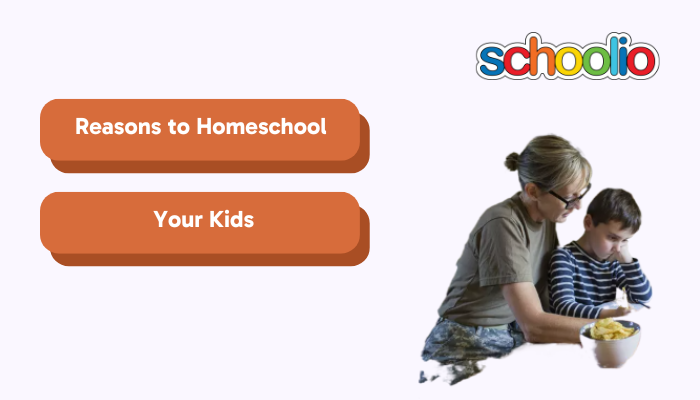
Reasons to Homeschool Your Kids

Introduction

Thinking about homeschooling your child?

Homeschooling is making a significant comeback, and it’s not just a fleeting trend—especially after the upheaval caused by COVID-19. When schools closed and remote learning became the norm, many parents got a firsthand look at the potential of homeschooling and discovered it worked really well for their family.

So, what’s fueling the buzz around homeschooling? For one, it provides parents with the flexibility to tailor education to their child’s unique needs and interests. But are these the only reasons to consider homeschooling, or is there more to it? Let’s explore the various motivations behind why parents are choosing to homeschool their children.

9 Reasons to Homeschool Your Child

Over the past decade, the US has seen a rise of 61% in the number of homeschooled children. But, what could be the reason for this? 

With its unique advantages, homeschooling allows you to tailor education to fit your child’s individual needs and interests. 

This section explores nine compelling reasons to homeschool your child. Let’s dive in:

  1. Tailored Support for Special Needs

Why should you homeschool your neurodivergent child? Why should you homeschool your child with special needs? 

Traditional schools fall short in delivering personalized support. Homeschooling, on the other hand, provides a tailored approach, allowing you to adapt lessons to fit your child’s unique learning needs. This customization ensures they receive the focused attention necessary to enhance their educational experience and overall well-being.

Also Read: The Hidden Struggles of Neurodivergent Learners in Traditional Classrooms

  1. Take Charge of Your Family’s Schedule

Overwhelmed by the constant flow of school events and activities? One of the top reasons to homeschool is the freedom to control your family’s schedule. 

Homeschooling removes the constraints of a rigid school timetable, allowing you to create a flexible routine that suits your lifestyle. This flexibility lets you enjoy family outings and creative projects without the stress of adhering to a traditional school calendar.

  1. Personal and Spiritual Growth for Parents

Think homeschooling only benefits children? One significant reason to homeschool is the personal and spiritual growth it offers parents. Guiding your child’s education encourages you to reflect on your values and beliefs, strengthens family bonds, and fosters personal development. 

This journey enhances your family’s spiritual life and deepens your relationship with your partner.

  1. Shield Your Child from Negative Influences

Concerned about external influences in a traditional school setting? You’re not alone—about 91% of parents have expressed worries about the negative impacts of the school environment. This concern is a significant factor driving many to choose homeschooling.

Homeschooling offers a way to shield your child from undesirable influences while aligning their education with your family’s values. This approach helps foster a strong sense of identity and confidence, ensuring a more supportive and personalized learning experience.

  1. Strengthen Family Bonds Through Shared Learning

Looking for ways to strengthen family relationships? Homeschooling provides an excellent opportunity for enhanced family bonding. 

Working together on educational projects and daily activities strengthens family ties, creates lasting memories, and deepens relationships. This makes your homeschooling experience a fulfilling family adventure.

  1. Flexible Learning That Accommodates Travel

Dreaming of traveling without disrupting your child’s education? Homeschooling offers the flexibility to integrate learning with travel. 

This allows you to explore new cultures and environments while supporting your child’s education along the way. Travelling enriches your child’s learning experience and ensures they can enjoy family adventures without academic concerns.

Also read: Simple Tips for Daily and Yearly Homeschool Planning

  1. Nurture Your Child’s Unique Talents

Is your child passionate about specific interests that traditional schools overlook? Homeschooling allows you to focus on and nurture their unique talents. 

Whether it’s the Art, science, or sports, tailoring the curriculum to their interests provides deeper learning opportunities and encourages skill development, boosting confidence and a lifelong love of learning.

  1. Personalized Learning Tailored to Your Child’s Needs

Do you know 74% of parents in the US are dissatisfied with the academic instruction at school? The solution: homeschooling. 

One of the benefits of homeschooling is the opportunity for personalized learning. Tailoring the curriculum to fit your child’s interests and strengths makes education more engaging and enriching. 

This approach not only boosts academic performance but also fosters a love for learning by making lessons relevant and enjoyable. 

  1. Reduced Stress and Anxiety

Is traditional schooling putting undue stress on your child? Homeschooling can provide a more relaxed and supportive learning environment. By creating a low-pressure space where your child can learn at their own pace, you promote better mental health and foster a more positive attitude toward education.

Homeschooling offers numerous benefits that can enhance both your child’s education and your family life. From personalized learning experiences to reduced stress, homeschooling is a valuable option for those seeking a flexible and enriching educational journey.

Ready to Start Homeschooling? Schoolio can help!

Image source: Schoolio

Excited about homeschooling but not sure where to start? Schoolio is here to help turn your homeschooling plans into reality. Let’s see why Schoolio is the best choice for getting your homeschooling journey underway.

  • Tailored Learning Experience: Ready to make learning exciting and personalized? Schoolio’s customizable curriculum adjusts to fit your child’s unique learning style and interests, turning education into a fun and engaging adventure.
  • User-Friendly Platform: Schoolio’s intuitive platform makes it easy to set up your lessons, track progress, and access resources, all without any tech headaches.
  • Comprehensive Resources: Why hunt for materials when you can have everything in one place? Schoolio provides a treasure trove of lesson plans, teaching guides, and interactive tools to make your homeschooling journey smooth and successful.
  • Community Support: Schoolio’s vibrant community of fellow homeschoolers is here to share tips, advice, and support. You’re never alone on this journey!
  • Affordable Flexibility: Think high-quality education has to be pricey? Think again. Schoolio offers budget-friendly plans that give you top-notch resources without breaking the bank.
  • Seamless Integration: Whether you’re transitioning from traditional schooling or starting fresh, Schoolio fits effortlessly into your family’s routine, making the switch to homeschooling a breeze.

Ready to transform your child’s education? Schoolio has got your back every step of the way. 

Grab Schoolio’s Homeschool Curriculum Kit today and for a streamlined, personalized learning experience with endless possibilities.

Conclusion

Homeschooling is more than just an alternative to traditional classrooms; it’s a transformative approach for families seeking a flexible, personalized, and supportive learning environment.

It’s not only about enhancing your child’s education but also about giving parents an active role in shaping their child’s learning experience. This hands-on involvement can turn education into a fun, family-centered adventure.

By working together, you not only enrich your child’s education but also strengthen family bonds and create lasting memories. If you’re ready for a more engaged and fulfilling educational journey, homeschooling could be the ideal choice for your family.

FAQs

Q. Can homeschooling really accommodate special needs? 

Absolutely! Homeschooling allows you to tailor educational content to meet your child’s specific needs. Schoolio’s flexible curriculum is designed to adjust to different learning styles, making it easier to provide the individualized support that children with special needs often require.

Q. How can homeschooling benefit my child’s mental health?

Homeschooling offers a low stress, supportive space where your child can learn at their own pace. With Schoolio’s curriculum, they’ll experience less pressure and develop a positive attitude toward learning, which can boost their mental well-being.

Q. How do I get started with homeschooling? 

Start by researching local homeschooling regulations and choosing a curriculum that fits your child’s learning style. Many parents find that starting with a flexible and adaptable curriculum helps ease the transition.

4th Grade Homeschool Curriculum Courses

Buckle up, parents! Just when you thought teaching long division was your biggest challenge, the hunt for the perfect homeschool curriculum for 4th graders begins!

Finding the right curriculum can be a thrilling adventure, and we’re here to simplify the process and make it enjoyable. With the right resources and guidance, you can create a learning environment that’s both enriching and engaging for your child.

In this blog, we’ll explore the best options to help you make an informed and confident decision. Whether you’re interested in a structured program or prefer more flexible choices, we’ve got you covered. From comprehensive starter sets to à la carte options, you’ll find everything you need to craft the perfect homeschool curriculum for your 4th grader.

Let’s dive in and explore how to make this educational journey both fulfilling and enjoyable for you and your child!

Core Concepts in Homeschool Curriculum for 4th Graders

Homeschooling your 4th grader can be an incredibly rewarding journey, filled with opportunities for growth and exploration. By prioritizing a comprehensive curriculum, you can ensure your child is engaged and excelling; preparing your child to tackle future academic challenges.

To enhance the learning experience, it’s important to balance core subjects with interactive and hands-on activities that align with your child’s interests and strengths. Let’s explore how to approach key subjects in a way that keeps your child engaged with and excited about learning.

Mathematics

Math can become an exciting adventure for your 4th grader. Building on their 3rd-grade foundations, they’ll explore a range of exciting new topics, including.

  • Addition and subtraction with regrouping: Sharpening skills with larger numbers, your child will become a pro at regrouping to solve more complex problems.
  • Understanding place value: Grasping the value of digits in numbers helps in tackling bigger math challenges.
  • Solving problems with decimal points: Your child will learn to navigate decimals, an important skill for real-life math.
  • Memorizing math facts with fact families: Fact families make learning math facts faster and more intuitive by showing the relationships between numbers in a more connected way.
  • Creating equations from word problems: Turning stories into math problems enhances both reading and math skills.
  • Finding perimeter and area by counting units: Practical exercises in measuring shapes makes geometry fun.
  • Understanding traditional and metric systems: Knowing both systems prepares your child for diverse applications in daily life.

Language Arts

In 4th grade, Language Arts is all about broadening horizons. Your child will enhance key skills while exploring new aspects of language and literature, including:

  • Reading comprehension: Exploring texts in depth enhances both understanding and enjoyment of reading.
  • Developing active listening: Developing strong listening skills boosts both communication and learning.
  • Critical thinking: Analyzing stories and information fosters independent thinking.
  • Vocabulary building: Building a richer vocabulary enhances both expression and comprehension.

Science

For 4th graders, science is a journey of discovery. They’ll delve into more complex concepts and actively engage in hands-on learning experiences:

  • Scientific inquiry and investigation: Encouraging curiosity through experiments and observations.
  • Changes in matter and energy: Understanding the fundamentals of physical science.
  • Engineering & Technology: Learning how things work and fostering problem-solving skills.
  • Solar system & universe: A fascinating look at the cosmos and our place in it.
  • Living things, life cycles, and food webs: Exploring biology and the interconnectedness of life.

Social Studies

In 4th grade, Social Studies expands your child’s view of the world. They’ll explore history, geography, and the fundamental elements of our society:

  • Geography of North America: Discovering the diverse landscapes and cultures of our continent.
  • European Exploration: Understanding the impacts of explorers on the world.
  • First Cultures of the Americas: Discovering the diverse histories and cultures of indigenous peoples.
  • U.S. Civics: Building an understanding of  how our government and society function.
  • Economics: An introduction to basic economic principles that affect daily life.

Before you embark on your homeschooling journey, ensure you have a well-rounded curriculum in place. This will keep your 4th grader engaged and excited about their learning. Remember, homeschooling is a collaborative journey that offers rich opportunities for growth and exploration together.

Making Your Homeschool Curriculum for 4th Graders More Engaging

How can you ensure your 4th grader loves learning at home? What creative methods can you use  to keep them excited about their studies? 

Here are some tips from our experts at Schoolio to make your homeschool curriculum more engaging for your 4th grader:

1. Explore and Customize the Curriculum

Begin by exploring various homeschool curriculum for 4th graders to find the best fit for your child. Personalizing the curriculum ensures it aligns with their interests and learning styles, making education more enjoyable.

2. Regular Assessments

How do you know if your child is progressing? Tracking their progress can  help you understand their strengths as well as the academic areas that require additional support and improvement. . 

3. Structured Schedule

Establishing a structured schedule is a key component to a successful 4th-grade homeschool program and curriculum. It’s important for both you and your child to follow this schedule throughout the year, while also allowing for flexibility where needed. A consistent routine supports engagement and structure, making learning an integrated and seamless part of daily life.

4. Budget Planning

With financial planning, homeschooling can be low cost. Be sure to consider educational materials, extracurricular activities, and other resources needed to provide a thorough and enriching education when creating your homeschooling budget.

5. Incorporate Arts and Physical Education

Make learning exciting by including The Arts, hands-on crafts, and Physical Education in your curriculum. These activities enhance creativity and well-being.

6. Breaks and Playtime

Schedule regular breaks. Encourage your child to play educational games or enjoy outdoor activities. This balance between study and play fosters a healthy learning environment and experience.

7. Leverage Technology

Use computers and iPads to make learning interactive and fun. Technology can provide a dynamic learning experience, helping your child gain tech skills while exploring new subjects.

8. Real-Life Learning

Take education beyond the books. How about grocery shopping to practice math or visiting museums for history lessons? Real-life applications and investigations  make learning tangible and memorable.

By incorporating these tips, you can create an engaging and enriching homeschool curriculum for your 4th grader. Remember, the goal is to make learning a positive experience that nurtures curiosity and a love for learning.

Also Read: 5 Things You Don’t Need to Start Homeschooling 

Schoolio Homeschool Curriculum for 4th Graders

Image source: Schoolio

Choosing the right homeschool curriculum for 4th graders is a game-changer. Schoolio makes learning customizable and engaging. Here’s why Schoolio should be your go-to for your child’s educational journey:

Comprehensive Core Subjects

Let’s start with the basics. Schoolio nails the essentials: Math, Language Arts, Science, and Social Studies. Each subject is designed to exceed traditional school standards. Your child gets a top-notch education with content that’s thorough and captivating. 

Personalized Learning

Schoolio tailors education to your child’s strengths and interests, making every day an exciting learning adventure. Picture your child eagerly diving into their studies because it’s designed just for them. That’s the magic of personalization.

Interactive Materials

Boredom? Not a chance. Schoolio offers over 8,000 multimedia lessons and 100,000 activities. Interactive lessons, hands-on activities, and real-world applications make complex concepts simple. Isn’t it amazing how fun learning can be?

Flexible Curriculum

Flexibility is key. You can mix and match different units to fit your child’s needs and your family’s lifestyle. Whether you’re a fan of structured plans or prefer a more adaptive approach, Schoolio lets you create the ideal homeschool curriculum for 4th graders.

Also Read: Simple Tips for Daily and Yearly Homeschool Planning

Ongoing Support

Feeling uncertain about homeschooling? No need to worry—Schoolio is here to help! Schoolio provides continuous support with a thorough resource library, weekly tips, and a vibrant community of homeschooling families. This network of support is pure gold, offering guidance and encouragement every step of the way!

Affordable and Accessible

Concerned about the cost? At just $29.99 per month per student, Schoolio makes high-quality education affordable. With unlimited access to core subjects and a wide range of electives, you get exceptional value for your money without stretching your budget.Take advantage of our 7-day free trial to explore everything we offer!

Proven Success

Join over 7,000 families across 11 countries who trust Schoolio with their homeschooling needs. Whether you’re new to homeschooling or seeking to elevate your existing program, Schoolio’s proven track record makes it an excellent choice for a 4th-grade homeschool curriculum.

Dive into the Schoolio experience and transform your child’s education into something truly magical. With our comprehensive 4th-grade homeschool curriculum, you’re not just choosing a program; you’re choosing to nurture your child’s potential, dreams, and future.

Conclusion

Homeschooling your 4th grader can be a deeply rewarding adventure, offering a chance to customize their education to suit their academic needs and unique interests. By choosing a comprehensive and engaging curriculum like Schoolio, you can ensure your child reaches their fullest potential.

Remember, the journey of homeschooling is all about flexibility, creativity, and support. Explore exciting resources, plan engaging activities, and join a community of like-minded parents to make this experience the best it can be!

Are you ready to begin this exciting educational journey? Grab Schoolio’s comprehensive 4th-grade homeschool curriculum today and help your child thrive! 

FAQs

1. What subjects should I include in my 4th grader’s homeschool curriculum?

Be sure to cover core subjects such as math, language arts, science, and social studies. With Schoolio, these subjects are crafted to not only meet but surpass traditional school standards, ensuring your child receives a high-quality education.

2. How can I ensure my 4th grader stays engaged while homeschooling?

Keeping your 4th grader engaged is about providing choice and maintaining interest.. Schoolio offers over 8,000 multimedia lessons and 100,000 activities, ensuring that learning is never boring. Interactive lessons and hands-on activities make learning fun and enriching.

3. How do I assess my child’s progress in a homeschool setting?

Regular assessments are key. With Schoolio, you can easily track your child’s progress through built-in tests and performance tracking. This helps you understand their strengths and areas that need additional support, keeping their learning on track.

Choosing 6th Grade Homeschool Curriculum and Lesson Plans

The journey of a thousand miles begins with a single step. Ready to take that step together?

Considering homeschooling for your sixth-grader is exciting! Selecting a 6th grade homeschool curriculum and daily lesson plans is a big undertaking. However, it is also a fun and rewarding journey. At this stage, children are transitioning from elementary school to middle school. This is a period of significant cognitive and emotional development for your little one.

Every child has a unique learning style, and homeschooling offers the flexibility to create a personalized educational experience. By thoughtfully selecting a curriculum that aligns with your child’s interests and learning needs, you can make learning both more enriching and engaging. Sixth grade is an important period for cultivating independent work habits; a well-chosen curriculum can foster responsibility and self-motivation.

Are you ready to create an exceptional 6th grade homeschool curriculum? Let’s dive in and discover how to create an amazing learning journey for your child!

Core Subjects for 6th Grade Homeschool Curriculum

When selecting a 6th grade homeschool curriculum, consider it as constructing a robust educational framework. Just as a well-built house relies on a strong foundation, focusing on core subjects like Math, Language Arts, Science, and Social Studies provides the essential support for your child’s academic development.

These subjects are fundamental because they encompass key skills and knowledge necessary for future academic success. By prioritizing these core areas, you are fostering critical thinking and problem-solving abilities, which are crucial for your child’s ongoing educational journey.

Furthermore, mastering these core subjects not only prepares your child for higher levels of learning but also cultivates skills that will benefit them throughout their lives. With engaging and thoughtfully designed materials, you can make the exploration of these subjects both enriching and enjoyable.

  1. Math Curriculum

Math can sometimes feel like a foreign language. But don’t worry, it’s not as scary as it sounds.

To make your 6th grade homeschool curriculum both effective and engaging, consider curriculums that offer self-paced and interactive programs. These resources can make learning math more engaging and less intimidating. Schoolio provides a free sample package for their 6th grade homeschool curriculum, which could be an excellent resource to explore.

They offer interactive lessons that keep students interested and help them understand complex concepts.

When selecting a 6th-grade homeschool curriculum, opt for interactive choices that incorporate games and virtual manipulatives. These tools make learning math both engaging and enjoyable, offering immediate feedback that helps your child understand and correct mistakes effectively.

Interactive math programs often incorporate real-world scenarios, making abstract concepts more relatable and easier to understand. Online programs such as Schoolio make learning accessible anytime, anywhere!

  1. Language Arts Curriculum

Language Arts focuses on developing writing skills, storytelling, and the ability to engage in different writing styles. Key components of a strong curriculum should include independent reading, assigned literature units, and grammar.

For your 6th grade homeschool curriculum, consider incorporating Schoolio’s Language Arts writing and vocabulary programs. These resources help kids build robust communication skills, practice various writing styles, and improve their grammar. Schoolio also integrates creative writing exercises throughout the program, providing a comprehensive literacy experience.

Additionally, encourage independent reading. Books are an excellent way to develop language skills and ignite imagination.

  1. Science Curriculum

Science can be one of the most exciting subjects for 6th graders. It’s a chance to explore the world and understand how things work. Look for the 6th-grade homeschool curriculum that offers instructional videos, virtual labs, and interactive lessons.

The goal is to foster curiosity and a love for learning. A 6th grade homeschool curriculum for science covers Earth Science, Life Science, and Physical Science. Choose a curriculum that includes hands-on experiments and activities to make learning interactive and engaging. 

Moreover, ensure your 6th grade homeschool curriculum promotes critical thinking and scientific inquiry. Encourage children to ask questions and explore concepts deeply. When selecting a 6th-grade homeschool curriculum for science, it’s important to consider your child’s learning pace and style. Providing flexibility in lesson planning allows you to tailor the curriculum to fit your child’s individual needs, making the learning experience more enriching and engaging.

  1. Social Studies Curriculum

Social Studies is about understanding the world and our place in it, so a diverse learning experience that integrates history, geography, and cultural studies is key. Look for curricula that offer a broad perspective and engage students in meaningful ways, such as through project-based learning and interactive activities.

To make Social Studies more dynamic and engaging, choose a curriculum that includes project-based learning, interactive activities, and multimedia resources. These elements help your child develop skills like source analysis, argument development, and problem-solving. This approach not only builds subject-specific knowledge, but also inspires a lifelong interest in the world and its diverse populations.

By focusing on these key aspects, you can provide your 6th grader with an enriching and engaging social studies education. Check out Schoolio’s free sample package.

  1. Electives

Electives enhance a homeschool curriculum by providing a well-rounded education and allowing your children to explore their interests. Options like Emerging Technologies, Entrepreneurship, Animal Science, and Outdoor Exploration classes add variety and keep learning both exciting and engaging.

And the best part? Many of these resources are affordable or even free. Schoolio offers a wide range of electives for your kids to make learning fun. Encourage your child to try new things and discover new passions. Who knows, you might have a budding environmentalist or a future entrepreneur on your hands!

Also Read: Getting Started with Homeschooling: How to Start the Homeschool Year Right

Planning and Tracking Your Kid’s 6th Grade Homeschool Curriculum

Have you established clear goals for your sixth-grader? Flexibility in the curriculum can make a huge difference. To stay organized, utilize planners and record-keeping apps—they can be invaluable. Keeping track of progress helps your child stay on track and provides you with a sense of accomplishment.

Plus, these tools make preparing quarterly reports a breeze. Here’s how you can effectively plan and monitor your child’s homeschooling journey:

  1. Setting Clear Goals

First things first, let’s set some clear, achievable goals for the school year. What do you want your sixth-grader to accomplish? Think about academic achievements, skill development, and personal growth. 

Now, break these goals down into short-term and long-term objectives. This creates a roadmap for the year, helping you maintain focus and provides you with a sense of direction. 

  1. Creating a Flexible Schedule

Now, let’s discuss scheduling. Have you thought about creating a flexible yet structured daily and weekly plan? This should include time for core subjects, electives, breaks, and extracurricular activities. 

Sounds like a lot? Don’t worry, you can adjust the schedule based on your child’s progress and interests. A well-planned schedule ensures a balanced approach to education, promoting both learning and wellbeing. 

  1. Using Curriculum Maps and Lesson Plans

Curriculum maps and lesson plans outline what you have planned to cover each week or month, ensuring that all required subjects are being explored and academic progress is being made. These tools help organize content, pace lessons, and keep you aligned with your educational goals.

  1. Keeping Detailed Records

Maintaining detailed records is important in homeschooling. Tracking daily activities, completed assignments, and test scores helps monitor progress, ensures compliance with legal requirements, and provides a clear view of your child’s academic journey.

  1. Regular Assessments and Feedback

Let’s make assessments fun! How about turning regular quizzes, tests, projects, and oral presentations into exciting challenges for your child? It’s a great way to evaluate their understanding in specific subject areas.

Plus, providing timely and constructive feedback helps highlight their strengths and identify areas for improvement.

  1. Using Technology and Educational Apps

Use technology to enhance planning and tracking. There are so many awesome apps and softwares designed specifically for homeschooling. These tools can help you stay organized, track progress, and even add a bit of fun to your daily routine. 

Which tech tools are you excited to try out? Schoolio offers features such as lesson planning, progress tracking, and assessment tools. These digital resources streamline the homeschooling process and provide interactive ways to engage your students in their learning!

Also Read: Free Homeschool Daily Planner Templates for Daily Organisation

  1. Involving Your Child in the Process

How about making your child a part of the planning and tracking process? Engage them by encouraging them to set their own goals. Teach them to track their achievements and reflect on their learning experiences. This fosters a sense of responsibility, self-motivation, and autonomy over their education. Imagine the pride they’ll feel in seeing their own progress!

  1. Regular Reviews and Adjustments

Periodically review your homeschooling plan and your child’s progress. How often do you think you’ll need to adjust the curriculum, schedule, and goals? 

Regular reviews help accommodate your child’s evolving needs and interests. It ensures that the homeschooling experience remains dynamic, supportive, and engaging. 

  1. Seeking Support and Resources

Don’t hesitate to seek support from homeschooling communities, online forums, and educational consultants. Sharing experiences and resources with other homeschooling families can provide valuable insights and encouragement. Additionally, professional guidance can help you tailor your approach to best support your child’s learning needs.

Parental Involvement and Flexibility in 6th Grade Homeschool Curriculum

Homeschooling is a collaborative effort, requiring an understanding of your child’s learning needs and the level of parental involvement required. While some children thrive with more independence, others may require additional guidance.

One of the greatest advantages of homeschooling is its flexibility. It allows you to tailor the educational experience to suit your child’s needs and your family’s schedule. As the saying goes, “Blessed are the flexible, for they shall not be bent out of shape.”

Parental involvement extends beyond teaching; it includes being a mentor, motivator, and sometimes even a fellow learner. Flexibility enables you to adapt to life’s unpredictable moments and design a 6th grade curriculum that aligns with your child’s interests.

This adaptability not only personalizes the learning experience but also makes it more engaging and relevant. 

Conclusion

Choosing a 6th grade homeschool curriculum is an exciting opportunity to shape your child’s educational journey. Remember to focus on core subjects, explore fun electives, and plan and track student progress. Also, stay flexible! Schoolio’s 6th grade homeschool curriculum is just what you need for crafting an engaging, enriching, and exciting academic school year!

Celebrate the small victories and approach challenges with patience. Reach out to the homeschooling community for support and make use of the abundant resources available. Always prioritize your child’s well-being and nurture their curiosity.

By embracing the freedom homeschooling provides, you’re not just teaching subjects—you’re nurturing a lifelong love of learning! Create an enriching experience for your sixth grader by bringing enthusiasm, creativity, and confidence to your educational approach. Adapt to your child’s unique needs and enjoy the journey. Homeschooling is all about crafting a learning experience that works best for YOUR family!

Simple Homeschool Writing Curriculum for Kindergarten and First Grade

Are you a homeschooling parent who is looking for a simple homeschool writing curriculum for your little one? Imagine your child’s face lighting up as they craft their first story, words flowing from their imagination to the page with ease. That’s the magic of a simple homeschool writing curriculum.

Young children have short attention spans. Engaging materials can capture their interest and make learning fun. Think about it—would you rather write about your favorite superhero or fill out worksheets? Moreover, in kindergarten and first grade, children are bursting with creativity and curiosity. It’s the perfect time to harness that energy and introduce them to the joys of writing.

But where do you start? How do you make writing both educational and fun? That is why choosing a homeschool writing curriculum is important. So, buckle up and let’s make writing an enjoyable ride.

How to Get Started: Choosing the Homeschool Writing Curriculum

First things first, let’s talk about the homeschool writing curriculum. Have you ever tried to bake a cake without checking the recipe first? It’s a mess, right? The same goes for selecting the homeschool writing curriculum for your child. Start by accessing some free preview materials. Schoolio offers a 7-day free trial for you to explore the perfect fit program for your child. This way, you get a sneak peek and know exactly what you’re diving into.

Check out reviews and testimonials from other homeschooling parents. They’ve walked this path before and can offer their wisdom. Think of them as your homeschooling guides. Even if your kid is not into writing, a focused homeschool writing curriculum can get them excited about literacy

Schoolio offers a wonderful language arts program that covers everything your child needs at the initial stage. Once you’ve chosen your curriculum, it’s time for the final setup. Gather your materials, organize your space, and set a schedule that works for you and your little one. A little preparation goes a long way!

Ready to dive into the specifics? Let’s talk about what you’ll need.

Structure and Materials for Homeschool Writing Curriculum

Imagine having a collection of lesson plans, mentor texts, and online resources at your fingertips. These are your go-to tools for creating a comprehensive writing curriculum. Ready to get started?

  1. Lesson Plans

These are your roadmaps, guiding you through each writing lesson step-by-step. Lesson plans ensure you never get lost. They provide the structure and clarity that make teaching a breeze and learning a joy for your child.

Isn’t it wonderful having all the objectives, activities, and materials you need laid out for you? No more scrambling for ideas or wondering if you’re covering enough. Lesson plans keep you organized and on track, making for a smooth homeschooling journey.

  1. Mentor Texts

Ever wondered how authors create such captivating stories? That’s where mentor texts come in! By exploring these titles, your child can discover different writing styles, genres, and structures.

By reading  a beautifully written story together and then asking your child, “What did you love about this story?” it helps your little one see what good writing looks like and sparks their imagination.

  1. Online Resources

Ever used a video to explain a tricky concept or a game to practice grammar? It turns your lessons into an adventure. Plus, if your child needs extra practice in certain areas, these tools offer the perfect support. They make your homeschool writing curriculum more impactful.

Want to add some sparkle to your homeschool writing curriculum? Use online resources from platforms like Schoolio. And dive in to find interactive writing tools, educational videos, printable worksheets, and fun writing prompts.

Each lesson comes with step-by-step instructions tailored to young learners. No jargon, just simple, clear guidance to help your child start their writing journey. How cool is it to see your child’s growth right before your eyes?

Read More: Getting Started with Homeschooling: How to Start the Homeschool Year Right

So, how can you adapt these lessons to fit your homeschool environment? 

Homeschool Writing Curriculum: Adapting to Your Homeschool Environment

Homeschooling means flexibility. It allows for a more personalized learning experience.

Tailor assignments to fit your child’s homeschool schedule and topics of interest. If your child is fascinated by dinosaurs, why not incorporate that into their writing assignments? Suddenly, writing becomes an adventure in the Jurassic period! 

This approach makes learning more interconnected and exciting. You can schedule writing sessions at times when your child is most engaged, making the most of their natural rhythms.

Furthermore, printing everything can be overwhelming, right? Go for selective printing to manage resources and keep things convenient. Only print what you need when you need it. For example, instead of printing an entire workbook, you can choose specific worksheets that align with your current lesson plan.

This allows you to keep physical clutter to a minimum and focus on high-quality, relevant content. Schoolio’s digital resources allow for selective printing to manage resources and keep planning easy.

It’s all about working smarter, not harder and making your homeschool life more enriching and sustainable. 

Let’s chat about making writing the best part of your child’s day.

How to Make Your Homeschool Writing Curriculum Engaging and Enjoyable

Keeping children engaged is the secret to successful homeschooling! Consider turning writing into a fun, exciting activity. Imagine using creative units like comics, graphic novels, and poetry to spark their interest. Suddenly, writing isn’t just another task.. Schoolio’s learning programs are overflowing with fun-filled homeschool writing activities.

Additionally, incorporate dictation into your lessons for a magical twist. Here’s how it works: your child speaks their story, and you write it down. They say, “Once upon a time,” and you become the scribe, capturing their imagination on paper. Soon enough, they’ll be itching to write their own tales.

Now, let’s shift your focus to how to assess the learning progress of your young writer.

Assessing Progress in Your Homeschool Writing Curriculum

How do you know if your child is improving? Use rubrics to evaluate their writing skills and track progress. It’s like having a report card, but way more fun. Schoolio’s interactive tools can also help you track and assess your child’s development.

Adjust the homeschool writing curriculum based on your child’s needs. Is there a tricky concept that’s causing them trouble? No problem! Spend more time on it, and turn it into a fun challenge. 

Celebrate their victories, no matter how small. Did they finally nail that tricky punctuation rule? Throw a mini party! Remember, every step forward is progress, and each small win adds up to big success. Track their improvements and adapt future lessons accordingly.

This way, you’re not just following a rigid curriculum—you’re creating a dynamic learning experience. It’s all about helping your child grow and succeed at their own pace.

Reflections and Future Plans for Your Homeschool Writing Curriculum

Take time to reflect on the positive outcomes and celebrate the areas where your child has shown improvement. What’s worked well?  Now, think about what could have been better. Every challenge is a chance to improve. Reflection helps you see the big picture and plan your next steps.

Consider adding some new tools to your teaching toolkit. How about grammar lessons? They can be super helpful. Grammar doesn’t have to be boring. Find fun, interactive resources. Maybe a game that teaches sentence structure or a song about punctuation. These extra resources can make learning more enjoyable.

Additionally, if something isn’t working, don’t be afraid to tweak it. Maybe add more creative writing or spend extra time on tricky parts. Flexibility is key. Your goal is to help your child love learning and keep growing. So, adjust as needed.

Remember, homeschooling is a journey, not a race. There’s always room for growth and improvement. 

If you’re considering a homeschool writing curriculum, Schoolio is an exceptional choice to explore. This platform offers a wealth of resources, from engaging lesson plans and mentor texts to interactive activities that make writing both fun and effective. With Schoolio, you’ll find everything you need to inspire your child’s creativity and develop their writing skills.

Imagine your child crafting stories with confidence and flair, guided by a curriculum designed to make learning enjoyable and impactful. Schoolio’s innovative approach not only supports your child’s writing journey but also provides you with the tools to make teaching effortless. Don’t miss out—give Schoolio a try and watch your child’s writing flourish!

Also Read: Why Does My Child Hate Reading?

Exploring Elementary U.S. Geography Curriculum Package

“Geography is a living, breathing subject, constantly adapting to change.” – Michael Palin.

Absolutely! Geography is far more than static maps and locations—it involves the vibrant interactions between people, places, and environments. If you’re seeking a fun and engaging method to teach geography to your young learners, you’re in the right place.

Imagine exploring vast landscapes without ever stepping outside your home! How is that possible? With a homeschool geography curriculum that intricately weaves together culture, history, and geography.

It’s effective because you can customize the lessons to align with your child’s interests, transforming learning into an adventure rather than a chore. Let’s turn your living room into a launchpad for your young explorer, discovering one captivating fact at a time!

Incorporating Homeschool Geography Curriculum Naturally

Ever considered how coloring could enhance your kids’ understanding of geography? If you think homeschooling geography is limited to just reading books, you’re in for a surprise! Let’s explore the exciting possibilities together!

  1. Coloring Maps

Grab some crayons and let your kids color maps related to U.S. history and landmarks. This not only makes learning fun but also helps them remember key locations and events. Imagine your kids becoming mini cartographers! Platforms like Schoolio can provide pre-made maps and coloring pages tailored for young learners.

  1. American Folk Tales

Who doesn’t love a good story? Listening to American folk tales and stories from different regions can spark interest and make geography relatable. Why not read a tale about the Appalachian Mountains or the Wild West before bedtime? You’ll be surprised how much kids remember when a coyote or a tricky rabbit is involved.

  1. Picture Books

Reading picture books about various states and notable U.S. locations can turn geography lessons into a colorful adventure! Imagine your child giggling at a story about a talking cactus in Arizona.

Picture books are perfect for younger kids who engage with vibrant visuals and playful tales. Plus, it’s a sneaky way to get them hooked on reading while they are having fun. Before you know it, your kid can name all 50 states and their capitals. They won’t even realize that they’re learning!

  1. Google Maps

Do your kids love technology? Use Google Maps to explore and visualize U.S. geography. Let them take a virtual tour of the Grand Canyon or walk the streets of New York City.

This interactive tool makes geography lessons come alive. Plus, you can travel coast to coast without ever having to hear, “Are we there yet?”

  1. Traditional Foods

How about cooking traditional foods from different regions?

Cooking together can be a delicious way to learn about different states and their cultures. And who knows? You might find a new family favorite dish! 

Also Read: 10 Creative Things To Do When It’s Cold Outside

Now let’s explore some structured curricula that can guide your geographic adventures.

Structured U.S. Homeschool Geography Curriculum

If you prefer a more structured approach, there are several comprehensive curricula designed to guide you and your child through homeschool geography. With a variety of options available, you might be wondering which one is best for your family. Here are some top recommendations:

  1. Schoolio

Image Source: Schoolio

Schoolio offers a holistically comprehensive homeschool geography curriculum that integrates lessons with other subjects. The cost varies based on the plan you choose, providing flexibility to fit different budgets. However, for elementary kids, it’s available just for $19. 

Schoolio engages kids with interactive and multimedia resources, turning learning into an exciting journey. This curriculum is designed for K-8, ensuring that children at different grade levels can benefit from its engaging content. Plus, its adaptability means it can grow with your child’s evolving interests and needs.

  1. Daily Geography (Evan-Moor)

Image Source: Daily Geography (Evan-Moor)

Daily Geography (Evan-Moor) is a cost-effective curriculum starting at $21.99. With its one-page-a-day workbook approach, it makes it easy to fit this program into  your daily homeschooling routine. This homeschool geography curriculum builds skills through repetition. It ensures that each day, your child gains new insights into U.S. geography. Consistent practice helps reinforce knowledge and makes learning stick.

  1. Legends & Leagues (Veritas Press)

Image Source: Legends & Leagues (Veritas Press)

Legends & Leagues (Veritas Press) offers a homeschool geography curriculum that starts at $6.95.. It offers a story-based curriculum, which is ideal for children who enjoy narratives and engaging tales. This homeschool geography curriculum includes U.S. mapping activities, projects, cooking ideas, and traditional worksheets. It’s a comprehensive package that combines learning with fun activities, making geography come alive through stories and hands-on experiences.

  1. Mapping the World with Art (Ellen McHenry)

Image Source: Mapping the World with Art (Ellen McHenry)

Mapping the World with Art (Ellen McHenry) costs $18.95 and up. It combines U.S. history readings with video art projects, providing a unique blend of history and art. Suitable for ages 10-16, this homeschool geography curriculum focuses on  engaging kids through art. It’s perfect for integrating artistic skills with geographical knowledge.

  1. Let’s Go Geography

Image Source: Let’s Go Geography

Let’s Go Geography is available for $35. This homeschool geography curriculum offers a weekly focus on a new U.S. state or region through multimedia resources. The engaging multimedia lessons and hands-on activities make geography an exciting subject to explore.

  1. U.S. Geography through Literature (Beautiful Feet)

Image Source: U.S. Geography through Literature (Beautiful Feet)

U.S. Geography through Literature (Beautiful Feet) is just $5. It teaches geography through American novels, making it an ideal choice for children who love to read. This homeschool geography curriculum is perfect for kids who enjoy learning through stories, offering a literary journey through U.S. geography.

  1. Geography & Cultures (Guest Hollow)

Image Source: Jr. Geography & Cultures (Guest Hollow)

Jr. Geography & Cultures (Guest Hollow) costs $37. It incorporates literature, non-fiction books, and various projects focusing on U.S. regions. This flexible homeschool geography curriculum is suitable for younger children. It offers a versatile approach to learning geography, combining reading and practical activities.

These homeschool geography curricula make learning engaging and fun. They offer a mix of hands-on activities, stories, and interactive tools. Whether your child loves to read, draw, or explore, there’s a homeschool geography curriculum that fits their learning style.

Homeschool Geography Curriculum: A Family Affair

Why not turn geography into a family adventure? Plan a road trip to a nearby state, exploring its landmarks and sampling its cuisine. Use the curriculum as a guide to prepare for your journey. This hands-on approach not only makes learning more memorable and enjoyable for everyone but also provides a fantastic opportunity to bond as a family and create lasting memories.

With Schoolio’s customizable resources, planning and learning about your destination can become a seamless part of your family adventure. Teaching geography at home can be an enriching experience for both you and your children. 

By integrating a variety of activities and resources, you can transform your geography lessons into exciting adventures. The homeschool geography curriculum offers numerous ways to explore. Whether it’s with hands-on projects and storytelling, or virtual tours and culinary experiences.

Conclusion

This multi-faceted approach not only makes learning enjoyable but also fosters a deeper understanding of the world. By incorporating hands-on activities, storytelling, and virtual tours, you can transform each lesson into an exhilarating adventure. So why wait?

Explore these comprehensive geography programs and watch your children’s curiosity and knowledge flourish. They’ll become eager explorers, ready to discover new places and cultures, while developing important life skills that will serve them for a lifetime.

Schoolio’s engaging homeschool geography curriculum makes learning a memorable and engaging experience by turning each lesson into an exploration of diverse landscapes and cultures. Happy homeschooling!

Turn each lesson into an exploration of diverse landscapes and cultures. Happy homeschooling!

Also Read: Personalized Education: The Key to Engaging Homeschooling

Tips for Homeschooling and Working Full-Time Simultaneously

Juggling homeschooling and a full-time job feels like something straight out of a sitcom. Picture an episode called “Parenthood: The Ultimate Juggling Act.” Spoiler alert: It’s tough but doable. It’s a bit like trying to pat your head and rub your stomach simultaneously—challenging, but with some practice, you can pull it off!

So, when you’re wondering how to manage homeschooling while working full-time, the key is flexibility and creativity. With a bit of both, you can absolutely master this balancing act!

Flexibility lets you adapt your schedule and expectations to suit your family’s unique needs. This might involve homeschooling during unconventional hours like early mornings, evenings, or weekends. Creativity, meanwhile, helps you discover inventive solutions, such as incorporating learning into daily activities or using online resources and community support.

Now, let’s explore some practical tips to help you navigate this balancing act and make homeschooling while working full-time a manageable reality.

Adjust Your Work Schedule

“You’ll learn as you go.” To help you navigate the challenge of homeschooling while working full-time, here are a few practical tips:

  1. Consider Working from Home

If possible, consider requesting to work remotely. Working from home can simplify your routine by eliminating the daily commute, freeing up valuable time that can be redirected towards homeschooling.

Moreover, align your work and homeschooling schedules to complement each other. For instance, tackle tasks that require deep concentration during your child’s independent study periods. This strategy can enhance productivity in both areas, making it easier to balance your responsibilities.

  1. Adopt a More Flexible Work Schedule

Discuss flexible hours with your employer to better accommodate homeschooling. For example, you might start your workday early in the morning, take a break in the afternoon for homeschooling, and then resume work later in the evening.

This strategy allows you to address your child’s educational needs while still fulfilling your professional responsibilities.

  1. Leverage Online Homeschooling Classes

Online classes can be a real game-changer, offering structured learning that fits seamlessly with your homeschooling and full-time work schedule. Many online programs are interactive and engaging, keeping your kids motivated and aligned with their learning goals.

Integrating online classes into your homeschooling routine helps ensure your children receive a high-quality education. Platforms like Schoolio provide a variety of courses tailored to different learning styles and needs, offering a comprehensive and flexible solution for busy parents.

  1. Enlist Help from Family Members or Other Homeschooling Parents

If you have a helpful grandparent or a fellow homeschool parent nearby, consider reaching out for their support. This can build a sense of community and provide your child with exposure to different teaching styles and approaches.

Whenever you’re feeling overwhelmed by the challenge of balancing homeschooling and a full-time job, remember that homeschooling doesn’t have to be a solo endeavor. Lean on your support network to make the experience more enriching and manageable.

Additionally, maintaining a consistent homeschooling schedule is essential for effective time management. Establish a routine and stick to it to keep both your work and homeschooling on track.

Create the Right Homeschool Schedule

Homeschooling doesn’t need to abide by traditional school hours. Here are some tips for crafting a schedule that suits your family’s needs:

  1. Non-Traditional Hours

Consider homeschooling during non-traditional hours—early mornings, evenings, or weekends. This approach allows you to align educational activities with your work commitments, such as holding lessons before or after work.

Weekends can be perfect for hands-on projects and field trips, providing additional flexibility. This adaptable schedule helps you manage your time effectively and allows your child to learn at a pace that suits them best. Embrace the freedom that homeschooling offers and create a routine that fits your family’s unique needs.

     2. Plan Around Your Work Hours

By aligning your child’s learning times with your work schedule, you can ensure that both responsibilities receive the attention they need. Use quieter or more flexible periods at work to engage in hands-on activities with your child.

This synchronized approach not only helps maintain a balanced routine, but also creates a structured environment where both you and your child can thrive.

     3. Ensure Compliance with State Homeschooling Laws

Each state has its own laws and regulations for homeschooling, it’s important to be informed and comply with them.

Once you have your schedule in place, teaching your kids to learn independently can provide you with the time and space to complete work tasks.

Teach Independent Learning

Encouraging independent learning can be truly transformative. It not only boosts your child’s confidence but also fosters critical thinking and self-reliance. Here’s how you can integrate it into your child’s learning process:

  1. Encourage Children to Learn Independently

Start by setting small tasks that they can do on their own. Gradually increase their independent responsibilities as they get more comfortable. This approach not only builds their confidence but also fosters a sense of independence.

  1. Use Online Classes and Educational Resources

A wealth of online resources can make learning both fun and engaging. From educational games to interactive lessons, these tools can keep your kids entertained and productive, enriching their educational experience.

Schoolio offers interactive lessons in a variety of subject areas.

  1. Gradually Increase Their Responsibility in Learning

Gradually letting your children take more control over their studies fosters independence and lightens your teaching load. When you’re grappling with balancing homeschooling and a full-time job, encourage your kids to set their own study schedules or select the subjects they want to focus on each day. This not only promotes self-motivation but also helps them take ownership of their learning.

When independent learning isn’t quite enough, here are some effective ways to get the extra help you need:

Outsource When Necessary

Still wondering how to balance homeschooling and a full-time job? You don’t have to handle it all on your own!

Outsourcing can be a smart solution. There are various ways to share the load, making your homeschooling experience smoother and more efficient. Whether it’s enlisting expert help or joining supportive communities, using these resources can offer invaluable support.

Let’s explore some helpful strategies for making outsourcing work for you:

  1. Consider Hiring Tutors for Subjects Where Extra Help is Needed

If there’s a subject that’s out of your expertise, a tutor can be a great help. Tutors provide specialized instruction that can help your child understand complex topics.

This targeted support not only enhances your child’s learning experience but also lightens your teaching responsibilities.

  1. Engage in Local Homeschool Co-ops for Shared Learning Experiences

Homeschool co-ops can provide valuable group learning experiences and social interaction for your kids. These co-ops bring together homeschooling families to share educational responsibilities, creating a collaborative learning environment.

Parents can contribute by teaching subjects they are passionate about, enriching the educational experience with diverse perspectives. Additionally, co-ops offer a chance for parents to exchange resources and support one another, enhancing the overall homeschooling journey.

  1. Use Trusted Childcare Providers to Fill Gaps

On days when you have crucial work commitments, a trusted babysitter can help keep things running smoothly. Reliable childcare providers ensure that your child is well cared for and engaged in their academic activities, allowing you to concentrate fully on your work.

This way, you can be more effective in your professional tasks, knowing your child is in good hands. Remember, learning doesn’t have to be confined to textbooks and desks—incorporate educational activities into your daily routine to make the most of your time together.

Now that we’ve covered integration, let’s discuss how to choose the right programs for your homeschooling needs.

How to Choose Suitable Educational Programs

If you’re trying to balance homeschooling with a full-time job, choosing the right educational program is a crucial first step. The right program can greatly enhance your homeschooling experience and make it easier to manage alongside your work responsibilities. Here are some tips to help you select the best programs for your child:

  1. Opt for Curriculums That Support Independent Study

Seek out curriculums specifically designed to promote self-directed learning. Independent study programs often feature clear instructions and engaging materials that allow children to learn at their own pace. This not only fosters greater responsibility in your young learner but also provides you with time to dedicate to your professional workload.

     2. Use Pre-Planned Lesson Plans and Online Platforms

Utilizing pre-planned lesson plans and online platforms can save you a lot of preparation time. They provide a structured learning path for your children and come with detailed daily or weekly plans. This helps you to manage your time effectively. Online platforms also offer interactive content and assessments that can enhance your child’s learning experience and keep them engaged.

    3. Discover More with Schoolio

Image Source: Schoolio

To streamline your homeschooling efforts and ensure your child receives a high-quality education, consider exploring the comprehensive resources offered by Schoolio. This platform provides flexible and customizable curriculums designed to support independent learning.

With pre-planned lessons and a structured, engaging learning path, Schoolio tailors its programs to meet your child’s unique needs. Their innovative approach can significantly enhance your homeschooling journey and help your child thrive.

Let’s not forget about another important aspect: social-emotional learning!

Prioritize Social-Emotional Learning

Balancing academic learning with social-emotional skill development is important for your child’s overall development.

  1. Teach Your Children To Stay Mindful

Helping your children develop coping skills and mindfulness techniques is essential for navigating life’s ups and downs. Teach them strategies like deep breathing exercises, journaling, and mindfulness meditation. These practices can enhance their ability to stay calm, focused, and resilient in challenging situations.

     2. Integrate Social-Emotional Learning into Daily Routines

Incorporate social-emotional learning into your daily routine to help your children understand and manage their emotions. Engaging in simple practices, like discussing their feelings and role-playing various social scenarios, can make a significant impact.

By integrating these lessons, you equip your children to navigate their social and emotional worlds more effectively. Schoolio offers an exceptional social-emotional program that can support your child’s development.

With these skills in hand, being part of a supportive community can further enrich your homeschooling journey.

Join a Supportive Community

Having a supportive community can make your homeschooling journey more enriching and more enjoyable. Here’s how to connect with and benefit from these networks:

  1. Connect with Various Homeschool Communities

Engaging with both local and online homeschooling communities provides access to valuable resources. It offers advice and moral support from fellow parents who understand your challenges. These communities often share tips, educational materials, and encouragement, helping you feel more connected.

    2. Participate in Co-ops, Forums, and Support Groups

Joining co-ops, forums, and support groups can offer additional resources and insights into homeschooling. These groups provide collaborative learning opportunities, share experiences, and offer advice. These interactions can enhance your homeschooling approach. It also provides a network of support for both you and your child.

Lastly, let’s talk about setting realistic expectations.

Maintain Realistic Expectations and Self-Care

  1. Avoid Making Comparisons with Other Homeschooling Families

It’s easy to fall into the trap of comparing your homeschooling journey to others. However, every family is unique, and what works for one may not work for another. Concentrate on what aligns with your family’s needs and strengths, and trust that your approach is the best fit for you and your kids.

    2.  Practice Self-Care and Allow Grace for Yourself and Your Children

Taking care of yourself is crucial for sustaining a positive and productive homeschooling environment. Prioritize self-care and remember that perfection isn’t necessary. Grant yourself and your children grace—this approach fosters a relaxed and happy atmosphere that benefits everyone involved.

Bonus Tips

  • Keep your homeschool plan simple, especially with multiple children
  • Be adaptable and find what works best for your family’s unique needs
  • Accept that there will be challenging days and adapt as needed

Conclusion

Balancing homeschooling and a full-time job can feel like walking a tightrope, but with a well-thought-out plan and a flexible mindset, it can be a rewarding journey for both you and your children.

Adjust your work schedule to craft a homeschooling plan that suits your family’s unique needs. Make the most of online resources and consider outsourcing when necessary. Integrate learning into daily activities. 

If you’re wondering, “How can I homeschool and work full-time?” Schoolio offers a straightforward solution designed to simplify your journey.

Embrace the process, celebrate the small victories, and recognize that your efforts are creating a nurturing and enriching environment for your children’s education.

Happy homeschooling!