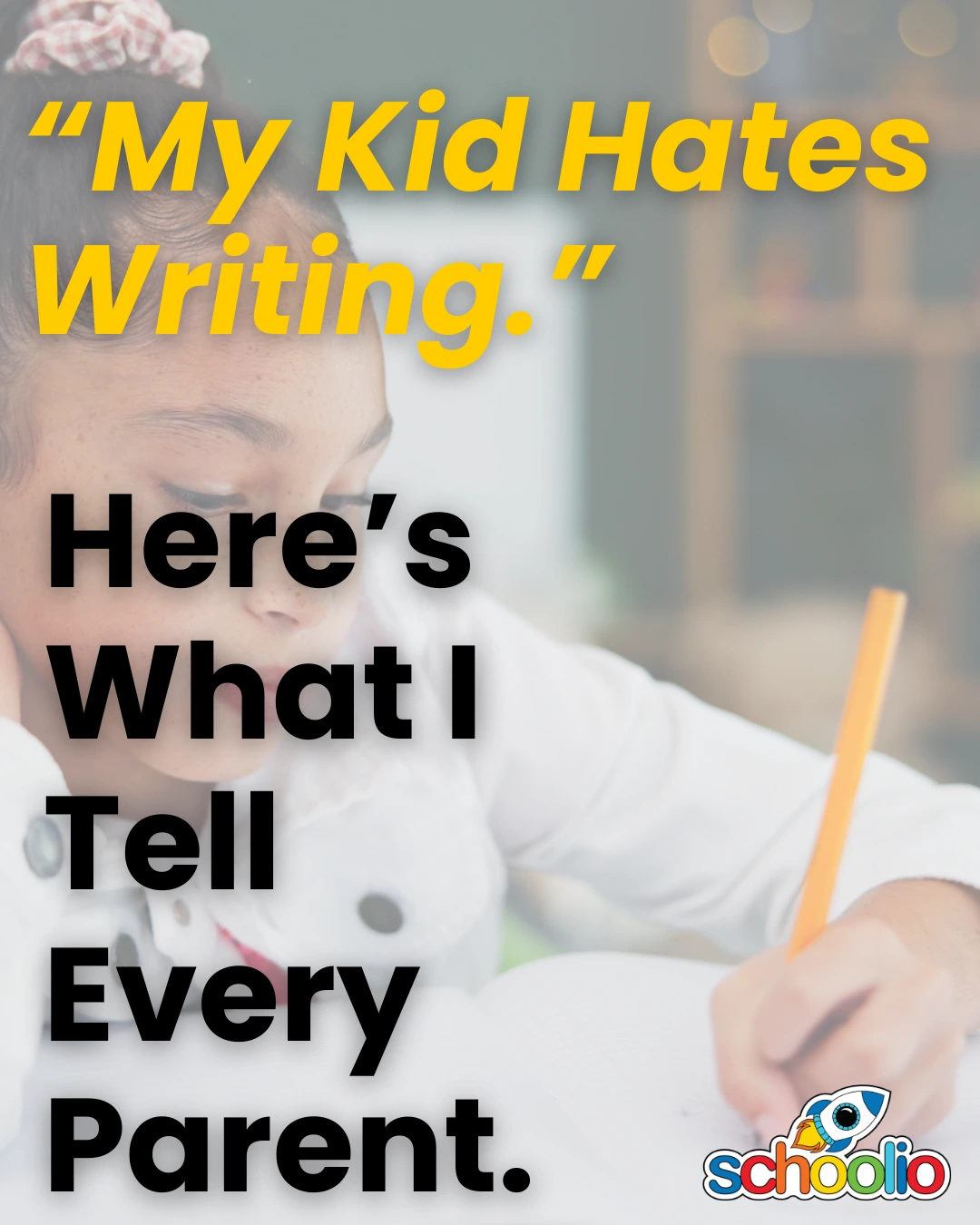
“My Kid Hates Writing.” Here’s What I Tell Every Parent.

“My Kid Hates Writing.” Here’s What I Tell Every Parent.


I see this in our community all the time:

“My child melts down when it’s time to write.”

“They say they hate writing.”

“It takes them an hour to write three sentences.”

“Writing is a battle every single day.”

And almost every time, the issue isn’t creativity.

It’s overload.

Here’s the shift that changes everything:

Separate creative thought from technical practice.


Why Writing Feels Like a Grind

When we ask a child to write a story, journal entry, or essay, we are actually asking them to do multiple complex tasks at once:

  • Generate ideas

• Organize thoughts

• Remember sentence structure

• Spell correctly

• Form letters

• Use punctuation

• Manage handwriting speed

• Regulate frustration

For neurodivergent kids — especially those with dyslexia, ADHD, dysgraphia, or motor challenges — that’s a traffic jam.

Their brain has a beautiful idea.

But their hand can’t keep up.

Or their spelling can’t keep up.

Or their working memory drops pieces of the sentence before it gets to the page.

And suddenly writing feels like:

GRIND.

Not because they hate stories.

Not because they aren’t smart.

Because their technical skills can’t keep pace with their thoughts.

That mismatch creates frustration.

And frustration turns into “I hate writing.”


Step One: Practice Technical Skills Separately

Technical writing skills are important.

But they don’t have to be practiced inside creative writing.

Grammar?

Worksheets or digital practice.

Spelling?

Targeted word lists.

Handwriting?

Copywork.

Copying quotes or passages from a favorite book is powerful because it removes the creative demand. The child can focus solely on:

  • Letter formation
  • Spacing
  • Neatness
  • Muscle memory

No thinking about what to say.

No worrying about ideas.

Just mechanics.

That’s much more manageable.


Step Two: Let Creative Flow Be Fast

When it’s time for your child to create something — let them use whatever tool allows their thoughts to move at the speed of their brain.

That might be:

  • Typing
  • Voice-to-text
  •  Speaking while you scribe
  • Recording themselves first

The goal is to let them experience:

The joy of storytelling.

The strategy of organizing ideas.

The power of expressing a thought fully.

Without getting stuck on spelling every third word.

If their brain is racing with ideas, don’t slow it down with letter formation practice.

Protect the flow.


You Can Combine — Without Overloading

For younger kids, you might:

  • Let them tell you a story while you scribe it in highlighter.
  • Later, have them trace over it for handwriting practice.
  • The creativity and the technical work happen — just not at the same time.
  • For older kids:
  • They might draft using voice-to-text.
  •  Then later go back to edit grammar and structure.

Still practicing technical skills.

Still building strong writing.

Just not forcing everything to happen simultaneously.


Why This Matters

When writing becomes a constant grind, kids start to believe:

“I’m bad at writing.”

“I’m not creative.”

“I hate school.”

But often, they don’t hate writing.

They hate bottlenecks.

They hate the feeling of their ideas being trapped behind slow mechanics.

When you separate the two, something beautiful happens:

They start enjoying thinking again.

They start taking creative risks.

They start seeing themselves as capable.

And once confidence builds?

Technical skill gets easier to practice.


If your child says they hate writing, try this shift:

Practice the mechanics separately.

Protect the creative flow.

Let their ideas move freely.

You’ll be amazed at how quickly the resistance softens when the traffic jam clears.


?

Lindsey

certified special-ed educator & co-founder, Schoolio

Exploring Schoolio’s Diverse Curriculum Options

Exploring Schoolio’s Diverse Curriculum Options

Exploring Schoolio’s Diverse Curriculum Options

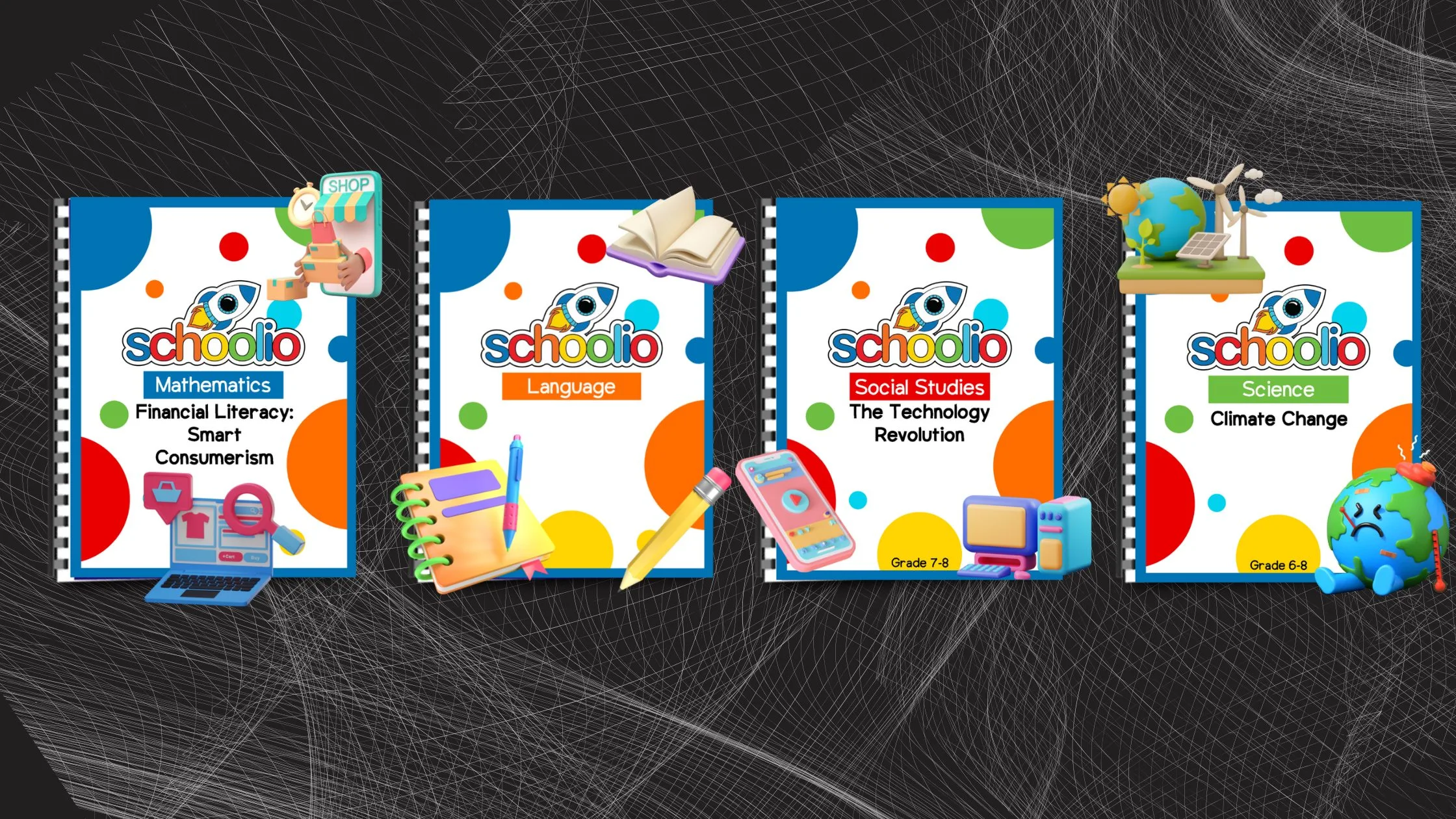
At Schoolio, we believe that education should be as diverse as the students it serves. Our commitment to providing a comprehensive learning experience is reflected in the wide array of curriculum options we offer, catering to students from kindergarten to eighth grade. Let’s start exploring Schoolio’s diverse curriculum options by delving into the three main categories that define Schoolio’s robust curriculum: Core Curriculum, Electives, and Social Emotional Learning (SEL).

Core Curriculum: Building Foundations for Success

Math

Schoolio’s core math curriculum is designed to build a strong foundation in mathematical concepts. From basic arithmetic to more advanced topics, our curriculum adapts to each student’s learning pace and style.

Science

In the realm of science, Schoolio excels in providing engaging lessons that cover a spectrum of subjects. Whether exploring the mysteries of the universe, conducting hands-on experiments, or understanding the delicate balance of ecosystems, our science curriculum sparks curiosity and critical thinking.

Social Studies

Our social studies curriculum takes students on a journey through history, geography, and cultures. From ancient civilizations to contemporary global issues, Schoolio fosters an appreciation for the world’s diversity and helps students develop a well-rounded worldview.

Language Arts

Language arts form the cornerstone of effective communication and critical thinking. Schoolio’s language arts curriculum encompasses reading, writing, grammar, and more, empowering students to express themselves eloquently and comprehend complex texts.

Electives: Unleashing Creativity and Passion

For students seeking to explore beyond the core curriculum, Schoolio boasts an extensive library of electives. These courses are designed to tap into students’ interests and passions, making learning an exciting adventure. Some of our standout electives include:

  • Candy Chemistry: Uncover the sweet science behind your favorite treats.
  • Earth’s Core: Journey to the center of the Earth and discover its mysteries.
  • All About Honeybees: Explore the fascinating world of these crucial pollinators.
  • Novel Studies: Dive into the pages of captivating stories and analyze literary elements.
  • Introduction to Art: Ignite creativity through hands-on artistic expression.
  • Introduction to Gymnastics: Foster physical fitness and coordination in a fun and supportive environment.

These electives provide a rich tapestry of knowledge that goes beyond traditional subjects, allowing students to pursue their passions and develop a well-rounded skill set.

Social Emotional Learning (SEL): Nurturing Holistic Growth

Recognizing the importance of emotional well-being, Schoolio integrates Social Emotional Learning (SEL) into our curriculum. The “Thoughts and Feelings” unit, tailored to different age groups, helps students navigate their emotions, build resilience, and foster positive relationships. Additionally, our SEL framework is designed to instill empathy. While also helping with self-awareness, and effective communication skills. Doing so to prepare students for success not only academically but also in the complexities of life.

Empowering Students to Thrive Academically and Emotionally

Schoolio’s commitment to a diverse and comprehensive curriculum ensures that every student finds a path to success that aligns with their unique strengths and interests. From the foundational core subjects to exciting electives and essential Social Emotional Learning, Schoolio empowers students to thrive academically and emotionally.

Join us on the Schoolio Learning Platform. Where education is not just about acquiring knowledge but also about fostering a lifelong love for learning.

Get Ready for Grade 9

Are you worried about the transition from grade 8 to grade 9? Do you want to spend the summer helping your teen get ready for grade 9 but still want them to have fun? There’s a lot of stress facing parents when it comes to their teen entering high school and even more so with the pandemic learning loss that they’ve likely experienced. So how can you help your teen get ready for grade 9 while avoiding summer learning loss and trying to catch up on pandemic learning loss?

Help your teen get ready for grade 9.

The unfortunate truth is that many children and teens struggle to catch up after enduring two years of pandemic learning. Researchers and educators share their concerns for kids who have slipped through the crack due to pandemic learning. A more significant problem is the added impact of summer learning loss. Knowing that over the summer, many teens will lose 2.6 months of math skills, two months of reading skills and one month of overall learning.

Click here to learn more about Summer Learning Loss. 

Knowing these statistics, it can be hard not to stress your teen’s education. Regardless, you must avoid worrying about your teens learning during the summer months. Of course, you want your teen to learn, stay on track and have all the opportunities in life that they deserve. But constantly worrying about that won’t help you or your teen.

So what can you do to help your teen catch up on all the learning they have likely lost? While also aiming to stay on track and not lose even more learning skills during the summer?

Get ready for grade 9 by simplifying the process.

Try to avoid overthinking your teen’s summer learning because we all know that overthinking adds more stress than necessary. You don’t need elaborate plans to prepare your teen for grade nine. This will only lead to you and your teen feeling stressed and exhausted while dealing with that dreaded feeling of not getting enough done.

When preparing your teen for grade nine, what is the best and easiest way to simplify summer learning? Use the Summer Schoolio: Get Ready for Grade 9 book! Summer Schoolio: Get Ready for Grade 9 was created to help your teen stay on track with their essential learning. What’s better is that this program will save you time and money as you won’t be searching and spending money on a homeschooling curriculum to try to fit your summer learning needs.

What’s inside the Summer Schooling: Ready for Grade 9 workbook?

Get Ready for Grade 9

We want you and your teen to have an enjoyable summer without the stress of trying to complete extra tasks. The Summer Schoolio books have been designed in a simple format, without the mountain of overwhelming tasks. This helps your teen stay on track with their learning.

The Summer Schoolio: Ready for Grade 9 book combines the best homeschooling curriculum concepts to give you and your teen a unique solution to help your teen get ready for grade 9. We’ve combined the homeschooling writing curriculum, homeschooling language arts curriculum and homeschooling math curriculum to bring you and your teen a workbook to help practice essential skills to stay on track.

Summer Schoolio: Ready for Grade 9 overview:

Get Ready for Grade 9

The Summer Schoolio: Ready for Grade 9 workbook is filled with learning materials that aren’t just educational; they’re fun too! This combination is an excellent resource to help your teen get ready for grade 9. Created for six weeks of learning, your teen will have the opportunity to learn and refresh different learning concepts each week.

Week one includes:

The Summer Schoolio week includes three days of simple learning that won’t be overwhelming or take too long to complete.

  • Day one, Weekly Writing – Paraphrase/Summarize – and Math – Number Sense.
  • Then day two has Weekly Writing and Math – Number Sense.
  • On day three, your teen will work on Weekly Writing – Scrapbooking – and Math – Number Sense.

Week two includes:

The second week of Summer Schoolio: Ready for Grade 9 is similar to week one, just switching up learning concepts.

  • During week two, your teen will have Weekly Writing – Persuasive Writing – and Math – Number Sense on day one.
  • On Day Two, they will have Weekly Writing and Number Sense.
  • Then on day three, they will have Weekly Writing – Scrapbook and Math – Number Sense.

Week three includes:

During the third week of the Summer Schoolio: Ready for Grade 9 book, your teen will be working on:

  • Weekly Writing-Expository/Argumentative – and Math – Algebra on day one.
  • Then on day two, your child will work on Weekly Writing and Math – Algebra.
  • Followed by day three, which is Weekly Writing – Scrapbook and Math – Algebra

Week four includes:

  • When your teen is working on week four, day one, they will do Weekly Writing – Literary Devices/Poetry – and Math – Geometry/Spatial Sense.
  • Then on day two, they will be working on Weekly Writing and Math – Geometry/Spatial Sense.
  • Finally, on day three, they will get to work on their scrapbook for Weekly Writing and the final day of Math – Geometry/Spatial Sense.

Week five includes:

  • Day one of week five is Weekly Writing – Formal Letter/Speech – and Math – Data Management.
  • Then on day two, they will work on Weekly Writing and Math – Data Management.
  • Followed by day three, which is Scrapbooking for Weekly Writing and Data Management for Math

Week six includes:

  • The first day of week six focuses on Weekly Writing – Essay Development/Descriptive – and Math – Financial Literacy.
  • The second day is all about Weekly Writing and Financial Literacy for Math.
  • Then on the third day, your teen can work on their scrapbook again for Weekly Writing and enjoy their final Financial Literacy assignment.

A daily repetitive learning cycle with refreshing concepts helps your teen stay interested with a structured plan for summer learning. This technique will help your teen master essential math, writing and reading concepts for grade nine.

Get ready for grade 9The Summer Schoolio: Ready for Grade 9 workbook includes a sample schedule/calendar that looks like this

Monday: Read a Book or Chapter.

Tuesday: Weekly Writing Day 1, Math Day 1, Read a Book or Chapter.

Wednesday: Weekly Writing Day 2, Math Day 2, Read a Book or Chapter.

Thursday: Weekly Writing Day 3, Math Day 3, Read a Book or Chapter.

Friday: Read a Book or Chapter.

Helping your teen stay on track and up-to-date with their learning while avoiding summer learning loss and preparing for the next grade doesn’t need to be an overwhelming and stressful task. It also doesn’t need to take much daily time to succeed. The Summer Schoolio: Ready for Grade 9 book helps your child keep up with their learning needs, refresh, and not become overwhelmed by too much information crammed into one day.

Get ready for grade 9!


Click for Summer Schoolio

Prepare Your Child for Grade Six

Are you wondering the best way to prepare your child for grade six? Doing so without causing them tremendous stress and frustration from doing too much work on fun summer days? What’s the easiest way to prevent summer learning loss, prepare your child for grade six and let them have a fun summer?

Avoid summer learning loss while you prepare your child for grade six.

The most important thing you can do is avoid getting stressed about your child’s learning during the summer months. As parents, we want our children to learn, stay on track and have all the opportunities in life that they deserve. But that constant worry can become distracting and consuming.

It can be tough to avoid worrying about their education when we think of all the learning they’ve lost due to pandemic learning. Heading into summer, we can become overwhelmed by the thought of summer learning loss on top of pandemic learning loss. Especially when we see statistics about summer learning loss, like that 2.6 months of math skills, two months of reading skills and one month of overall learning are lost due to summer learning loss.

Click here to learn more about Summer Learning Loss.

So what can you do to help your child catch up on all the learning they have lost? While also aiming to stay on track and not lose even more learning skills during the summer?

General learning skills like math, reading and writing are essential for your child to practice to develop correctly continually; this is especially true during the summer.

Prepare your child for grade six by simplifying learning.

Try to avoid overthinking your child’s summer learning because we all know that overthinking adds more stress than necessary. You don’t need elaborate plans to prepare your child for grade six. This will only lead to you, and your child feeling stressed and exhausted while dealing with that dreaded feeling of not getting enough done.

When preparing your child for grade six, is the best and easiest way to simplify summer learning? Use the Summer Schoolio: Get Ready for Grade 6 book! Summer Schoolio: Get Ready for Grade 6 was created to help your child stay on track with their essential learning. What’s better is that this program will save you time and money as you won’t be searching and spending money on a homeschooling curriculum to try to fit your summer learning needs.

What’s inside the Summer Schoolio: Ready for Grade 6 workbook?

Prepare your child for grade six

We want you to have an enjoyable summer without the stress of trying to complete extra tasks. The Summer Schoolio books have been designed in a simple format, without the mountain of overwhelming tasks. This helps your child stay on track with their learning.

The Summer Schoolio: Ready for Grade 6 book combines the best homeschooling curriculum concepts to bring you and your child a unique solution to help you prepare your child for grade six. We’ve combined the homeschooling writing curriculum, homeschooling language arts curriculum and homeschooling math curriculum to bring you and your child a workbook to help practice essential skills to stay on track.

Summer Schoolio: Ready for Grade 6 overview:

Prepare your child for grade six

The Summer Schoolio: Ready for Grade 6 workbook is filled with learning materials that aren’t just educational; they’re fun too! This combination is an excellent resource to help prepare your child for grade six. Created for six weeks of learning, your child will have the opportunity to learn and refresh different learning concepts each week.

Week one includes:

The Summer Schoolio week includes three days of simple learning that won’t be overwhelming or take too long to complete.

  • Day one, Weekly Writing – Writing Fiction – and Math – Number Sense.
  • Then day two has Weekly Writing and Math – Number Sense.
  • On day three, your child will work on Weekly Writing – Scrapbooking – and Math – Number Sense.

Week two includes:

The second week of Summer Schoolio: Ready for Grade 6 is similar to week one, just switching up learning concepts.

  • On day one, week two, your child will have Weekly Writing – Writing Letters – and Math – Number Sense.
  • On Day Two, they will have Weekly Writing and Number Sense.
  • Then on day three, they will have Weekly Writing – Scrapbook and Math – Number Sense.

Week three includes:

During the third week of the Summer Schoolio: Ready for Grade 6 book, your child will be working on:

  • Day one, Weekly Writing – Writing Poetry – and Math – Algebra.
  • Then on day two, your child will work on Weekly Writing and Math – Algebra.
  • Followed by day three, which is Weekly Writing – Scrapbook and Math – Algebra.

Week four includes:

  • When your child is working on week four, day one, they will do Weekly Writing – Descriptive Writing – and Math – Geometry/Spatial Sense.
  • Then on day two, they will be working on Weekly Writing and Math – Geometry/Spatial Sense.
  • Finally, on day three, they will get to work on their scrapbook for Weekly Writing and the final day of Math – Geometry/Spatial Sense.

Week five includes:

  • Day one of week five is Weekly Writing – Writing a Book Report – and Math – Data Management.
  • Then on day two, they will work on Weekly Writing and Math – Data Management.
  • Followed by day three, which is Scrapbooking for Weekly Writing and Data Management for Math.

Week six includes:

  • The first day of week six focuses on Weekly Writing – Writing Non-Fiction – and Math – Financial Literacy.
  • The second day is all about Weekly Writing and Financial Literacy for Math.
  • Then, your child can work on their scrapbook again for Weekly Writing and enjoy their final Financial Literacy assignment.

A daily repetitive learning cycle with refreshing learning concepts helps your child stay interested with a structured plan for summer learning. This technique will help your child master essential math, writing and reading concepts for grade six.

Prepare your child for grade six

The Summer Schoolio: Ready for Grade 6 workbook includes a sample schedule/calendar that looks like this:

Monday: Read a Book or Chapter.

Tuesday: Weekly Writing Day 1, Math Day 1, Read a Book or Chapter.

Wednesday: Weekly Writing Day 2, Math Day 2, Read a Book or Chapter.

Thursday: Weekly Writing Day 3, Math Day 3, Read a Book or Chapter.

Friday: Read a Book or Chapter.

Trying to help your child stay on track and up-to-date with their learning while avoiding summer learning loss and preparing for the next grade doesn’t need to be an overwhelming and stressful task. It also doesn’t need to take a massive chunk of daily time to succeed. The Summer Schoolio: Ready for Grade 6 book helps your child keep up with their learning needs, refresh, and not become overwhelmed by too much information crammed into one day.

Prepare your child for grade six.


Click here for your summer schoolio book

Prepare Your Child for Grade Three

Do you feel like your child is prepared for grade three? During the summer, are you planning to help your child stay on track with their learning or have a free-for-all summer with no sign of curriculum? Do you want to ensure your child stays on track but not overwhelm them with too much ‘work’? Let us help you with all your questions on how to prepare your child for grade three.

Preparing your child for grade three while aiming to avoid summer learning loss.

The first thing you need to do when aiming to prepare your child for grade three while avoiding summer learning loss? Don’t stress so much! As parents, we often worry about ensuring our children are on track with their learning. That worry can become more and more of a concern when we think about pandemic learning loss.
How to avoid summer learning loss on top of pandemic learning loss is another concern facing parents, especially when they hear that most children lose 2.6 months of math skills, two months of reading skills and the equivalent of one month of overall learning each summer.
You can learn more about Summer Learning Loss here. 
So, how can we help our children catch up on all the learning loss they’ve experienced, stay on track and not lose even more learning skills during the summer?
Reading, writing, math and learning, in general, are essential skills your child must continually practice to develop correctly, especially during the summer.

How to prepare your child for grade three? First, let’s simplify learning.

One thing you absolutely must avoid is overthinking their learning. We often assume that to prepare your child for grade three, you must have elaborate plans, and it has to be a huge, exhausting endeavour when the actual reality is that it can be a simple process.
One of the best ways to simplify their summer learning is to use the Summer Schoolio: Ready for Grade 3 book! This book was created specifically to help children about to move onto grade three. Using the Summer Schoolio: Ready for Grade 3 book, your child will stay refreshed and on track with their essential learning. This will also save you hundreds of dollars and time because you won’t be searching for a homeschool curriculum that will still be too much or too little when aiming to prepare your child for grade three.

Take a look inside the Summer Schoolio: Ready for Grade 3 workbook!

Prepare Your Child for Grade 3
Having an enjoyable summer without the stress of trying to complete extra tasks is essential! This is why our Summer Schoolio books have been designed to be simple. Without the overwhelm of having to complete a mountain of overwhelming tasks.
In the Summer Schoolio: Ready for Grade 3 book, we have combined the best of our secular homeschooling curriculum concepts to bring you and your child a unique summer learning solution that will prepare your child for grade three. In a fantastic combination of homeschooling writing curriculum, homeschooling language arts curriculum and homeschooling math curriculum, we aim to help your child practice those essential skills to stay on track.

Summer Schoolio: Ready for Grade 3 overview:

Prepare your child for grade three
The Summer Schoolio: Ready for Grade 3 workbook is loaded with materials that aren’t just educational; they’re fun too! This combination is an excellent resource to help prepare your child for grade three. Created for six weeks of learning, your child will have the opportunity to learn and refresh different learning concepts each week.

Week one includes:

The Summer Schoolio week includes three days of simple learning that won’t be overwhelming or take too long to complete.

  • Day one, Weekly Writing – Writing Fiction – and Math – Number Sense.
  • Day two has Weekly Writing and Math – Number Sense.
  • On day three, your child will work on Weekly Writing – Scrapbooking – and Math – Number Sense.

Week two includes:

The second week of Summer Schoolio: Ready for Grade 3 is similar to week one, just switching up learning concepts.

  • During week two, on day one, your child will have Weekly Writing – Autobiography – and Math – Number Sense.
  • On Day Two, they will have Weekly Writing and Number Sense.
  • On day three, they will have Weekly Writing – Scrapbook and Math – Number Sense.

Week three includes:

During the third week of the Summer Schoolio: Ready for Grade 3 book, your child will be working on:

  • Day one, Weekly Writing – Reviewing a Book – and Math – Algebra.
  • Then on day two, your child will work on Weekly Writing and Math – Algebra.
  • Followed by day three, which is Weekly Writing – Scrapbook and Math – Algebra.

Week four includes:

When your child is working on week four:

  • Day one, Weekly Writing – Writing Non-Fiction – and Math – Geometry/Spatial Sense.
  • Then on day two, they will be working on Weekly Writing and Math – Geometry/Spatial Sense.
  • On day three, they will get to work on their scrapbook for Weekly Writing and the final day of Math – Geometry/Spatial Sense.

Week five includes:

  • Day one of week five is Weekly Writing – Poetry – and Math – Data.
  • Then on day two, they will work on Weekly Writing and Math – Data.
  • Day three is Scrapbooking for Weekly Writing and Data for Math.

Week six includes:

  • The first day of week six focuses on Weekly Writing – Summarizing – and Math – Financial Literacy.
  • The second day is all about Weekly Writing and Financial Literacy for Math.
  • Then on day three, your child can work on their scrapbook again for Weekly Writing and enjoy their final Financial Literacy assignment.

The schedule and assignments are repetitive but changing to help your child stay structured and interested. This technique helps your child master all the essential math and reading/writing concepts for grade three.

What does a typical week look like using the Summer Schoolio: Ready for Grade 3 program?

Prepare your child for grade three
The Summer Schoolio: Ready for Grade 3 book includes a sample schedule/calendar you can follow daily. It translates to:
Monday: Read a Book or Chapter.
Tuesday: Weekly Writing Day 1, Math Day 1, Read a Book or Chapter.
Wednesday: Weekly writing Day 2, Math Day 2, Read a Book or Chapter.
Thursday: Weekly Writing Day 3, Math Day 3, Read a Book or Chapter.
Friday: Read a Book or Chapter.
Keeping your child on track and up-to-date with their learning doesn’t need to be an overwhelming and stressful process. And you don’t need to take a massive chunk of time each time to accomplish it. The Summer Schoolio: Ready for Grade 3 book helps your child keep up with their learning needs, refresh and not become overwhelmed by too much information crammed into one day.

Prepare your child for grade three.


Pick up your copy of Summer Schoolio