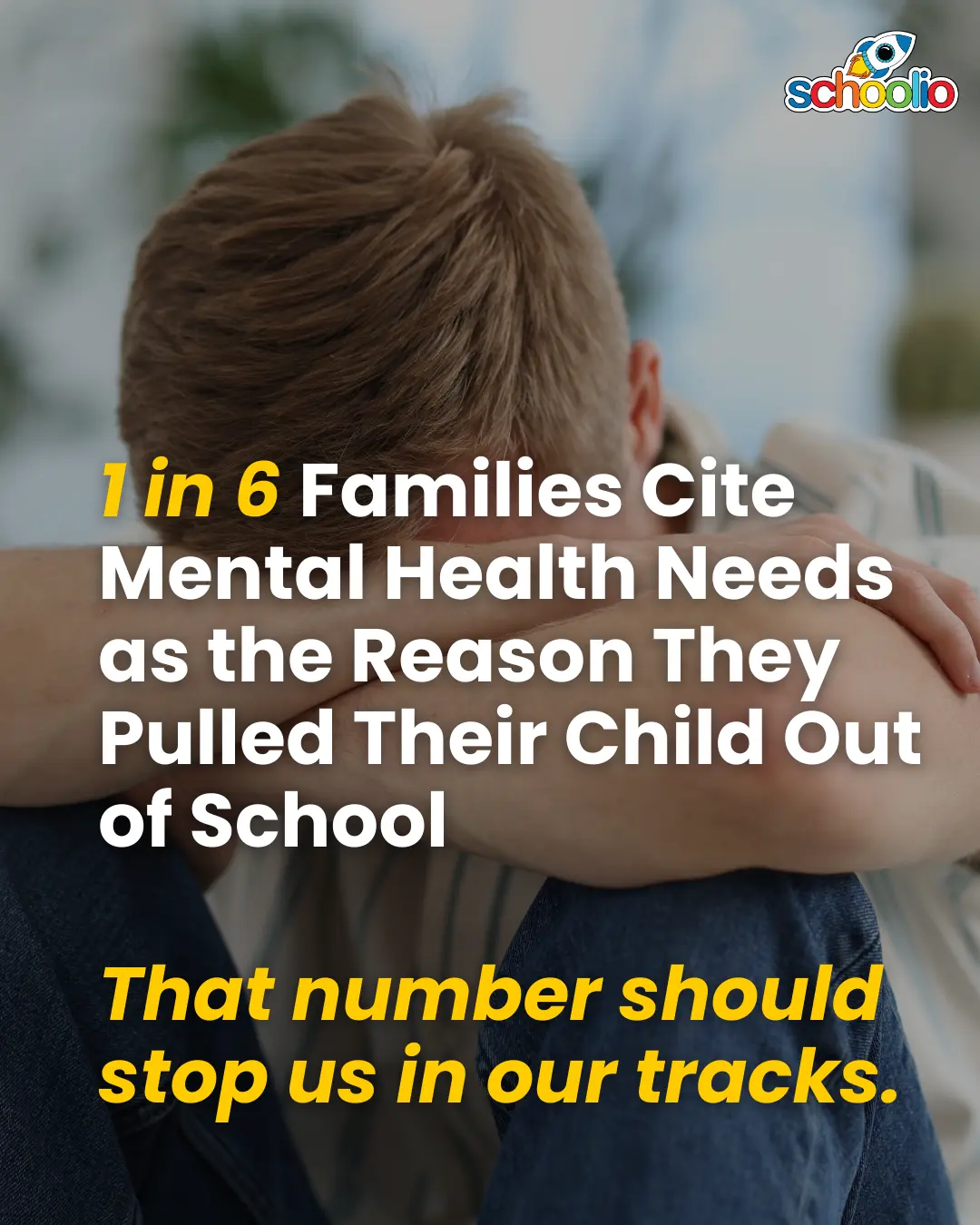
1 in 6 Families Cite Mental Health Needs as the Reason They Pulled Their Child Out of School

1 in 6 Families Cite Mental Health Needs as the Reason They Pulled Their Child Out of School


This has been on my mind today…

Mental health has quietly become the leading reason families are choosing homeschooling. Not ideology. Not religion. Not rebellion. Mental health.

According to new UK figures, more than 126,000 children were being taught at home last autumn, a 15 percent increase in a single year. One in six families cited psychological or mental health needs as the primary reason they pulled their child out of school.

That number should stop us in our tracks.

For years, homeschooling has been framed as a lifestyle choice. Something parents opt into because they want more flexibility or control. But this data tells a different story. For many families, homeschooling is a response.

A response to anxiety that does not fade.

A response to burnout in children who are barely ten.

A response to kids who once loved learning and now dread school mornings.

When parents say mental health, they are not talking about small discomforts. They are talking about panic before school. Emotional shutdown after class. Kids who are told they are fine because their grades look fine, even while they are struggling internally.

This is especially true for neurodivergent and highly sensitive kids. Children who feel the world more intensely. Noise. Pressure. Comparison. Speed. In systems designed for scale, these kids are often labeled difficult or behind. Over time, they internalize that message. The real loss is not academic. It is emotional.

One thing we see again and again is that children are rarely taught how to understand what is happening inside them. They are expected to manage big emotions without being given the language, tools, or space to do so. This is why emotional literacy matters just as much as reading or math.

When kids learn how to name their thoughts, understand their feelings, and recognize that emotions are information not failures, something shifts. Confidence starts to rebuild.

This is exactly why we created

Thoughts and Feelings

, a guided emotional learning book and curriculum at Schoolio. Not as therapy. Not as a fix. But as a way to help children slow down, reflect, and build self awareness in a world that keeps asking them to speed up. For many families, this kind of emotional groundwork becomes the bridge between surviving school and actually healing from it.

You can learn more about the Thoughts and Feelings program here:

https://schoolio.com/product/thoughtsfeelings/

Homeschooling, when done with care, is not hiding from the world. It is a pause. A reset. A chance to rebuild trust in learning and in oneself.

The rise in homeschooling should not be read as parents giving up on education. It should be read as parents stepping in when the system cannot meet their child where they are.

The real question is not why homeschooling is growing.

The real question is why so many children are struggling in silence.

Parent takeaway: If your child’s mental health is declining and you feel like you are constantly managing damage instead of supporting growth, you are not imagining it. Education should never come at the cost of emotional safety. Teaching kids how to understand their thoughts and feelings is not extra. It is foundational.

Source:
Sky News
https://news.sky.com/story/number-of-children-being-taught-at-home-increases-by-15-in-a-year-report-finds-13494608

Modulated Noise, Binaural Beats, and “Sensory Audio”: What Actually Helps Neurodivergent Kids (and What Doesn’t)

Modulated Noise, Binaural Beats, and “Sensory Audio”: What Actually Helps Neurodivergent Kids (and What Doesn’t)


If you’ve ever searched focus music for ADHD or “calming sounds for autistic kids,” you’ve probably fallen down a rabbit hole of options:

White noise.

Brown noise.

Binaural beats.

8D audio.

Spatial soundscapes.

“Roman café sounds.”

And if you’re anything like most neurodivergent parents, you’ve probably asked yourself:

Is this actually helping my kid… or is this just another thing I’m supposed to try?

Let’s slow this down and talk about what these sounds actually are, what the research does (and doesn’t) say, and how to use audio support in a way that’s regulating instead of overwhelming.


First: Why Sound Matters So Much for Neurodivergent Kids

For many ADHDers and autistic kids, sound isn’t just background — it directly impacts the nervous system.

Noise can:

  • help the brain stay regulated
  • reduce sensory overload
  • support focus and task initiation
  • or… do the exact opposite

There is no one “best” audio solution. What helps one child focus might send another into shutdown or agitation. And that’s not a failure — it’s information.


Modulated Noise (White, Pink, Brown Noise)

Let’s start with the most evidence-supported category.

Modulated noise refers to steady, non-intrusive sound that masks environmental distractions.

  • White noise: equal intensity across frequencies (static-like)
  • Pink noise: softer, more balanced (often better tolerated)
  • Brown noise: deeper, lower tones (frequently preferred by ADHDers)

Why this can help

For ADHD brains especially, background noise can actually increase focus by:

  • boosting dopamine slightly
  • reducing sudden auditory interruptions
  • giving the brain “just enough” stimulation

Many ADHD kids work better with noise than in silence — silence can feel loud.

Watch for:

  • irritation or headaches
  • increased agitation
  • sensory fatigue over long periods

If it helps, great. If it doesn’t, don’t force it.


Sensory & Ambient Audio (Rain, Cafés, “Roman Sounds”)

These are layered soundscapes meant to feel immersive or comforting.

Rain.

Fireplaces.

Cafés.

Nature.

Ancient city ambience.

Despite the fancy names, these are not therapeutic frequencies — they’re sensory environments.

Why they help some kids

  • provide predictable auditory input
  • mask unpredictable household noise
  • feel emotionally grounding or familiar

For autistic kids especially, this kind of audio can create a sense of place safety.

When they don’t help

  • too many layers can overload sensory processing
  • looping sounds can become irritating
  • immersive tracks may pull attention away from learning

These work best for:

  • calming
  • transitions
  • background regulation — not always active learning

Spatial Audio & “8D Sound”

Spatial or “8D” audio uses headphones to simulate sound moving around the head.

This is not a medical or therapeutic category, despite how it’s marketed.

Potential benefits

  • novelty-driven engagement (especially for ADHDers)
  • immersive listening for short periods

Potential issues

  • can be disorienting
  • may increase sensory overload
  • often distracting rather than regulating

This is very individual. Some kids love it. Many don’t.


Rhythm-Based Music (Often the Unsung Hero)

This is one of the most overlooked — and often most effective — tools.

Music with:

  • steady tempo
  • predictable rhythm
  • minimal variation

Think lo-fi beats, instrumental tracks, slow drumming.

Why this works

Rhythm helps regulate the nervous system by:

  • supporting pacing
  • aiding task initiation
  • providing structure without demand

For many autistic kids, this is far more tolerable than binaural or modulated sounds.


Binaural Beats (The Most Misunderstood)

Binaural beats use two different tones, one in each ear, to create a perceived frequency difference in the brain.

Yes — there is some research suggesting potential effects on brainwave states.

No — it is not consistent, not universal, and not a magic solution.

Important things parents should know

  • Headphones are required
  • Many autistic people find them uncomfortable or distressing
  • Effects vary wildly between individuals
  • Some kids report headaches or agitation

If they help your child regulate — that’s valid.

If they don’t — also valid.


Isochronic Tones (Often Labeled Incorrectly)

These are single tones that pulse rhythmically.

They do not require headphones and are sometimes better tolerated than binaural beats — or sometimes much worse.

Again: individual response matters more than theory.


What These Sounds Are Actually Doing

None of these sounds “fix” ADHD or autism.

What they can do is:

  • support nervous system regulation
  • reduce sensory stress
  • help the brain reach a more workable state

Think of them like external supports, not treatments.

Just like glasses don’t fix eyesight — they help the world feel manageable.


How to Use Audio Supports Without Overwhelm

Here’s the most important part.

Start with regulation, not productivity

Ask:

Does this help my child feel calmer, safer, or more settled?

Focus comes after regulation.


Offer choice whenever possible

Control matters — especially for neurodivergent kids.

Let them choose:

  • the sound
  • the volume
  • when it’s on or off

Choice = nervous system safety.


Keep volume lower than you think

If it’s too loud, the brain stays in alert mode.

Quiet, steady, predictable sounds work best.


Use audio as a tool, not a rule

No child needs to “get used to” a sound that dysregulates them.

If today it works and tomorrow it doesn’t — that’s okay.


A Gentle Reminder for Parents

If your child needs sound to focus, calm, or learn:

That’s not a bad habit.

That’s not avoidance.

That’s not dependence.

That’s self-regulation.

Neurodivergent kids aren’t broken for needing external supports — their nervous systems simply work differently.

And when we work with that difference instead of against it, learning gets easier… for everyone.

Interoception in Neurodivergent Kids: Why Your Child May Not Know What Their Body Is Telling Them

Interoception in Neurodivergent Kids: Why Your Child May Not Know What Their Body Is Telling Them


“Are you hungry?”

“I don’t know.”

“Do you need the bathroom?”

“No.” (…five minutes later: emergency.)

“Wow look at that bruise- didn’t that hurt?”

“No. I didn’t notice.”

If this sounds familiar, you’re not alone — and it’s not defiance, avoidance, or lack of self-awareness. For many neurodivergent kids, the issue lies in something called interoception.

Understanding interoception can completely change how you interpret your child’s behavior, emotional regulation, and even their resistance to basic self-care tasks.


What Is Interoception?

Interoception is the body’s ability to sense internal signals.

It includes things like:

  • Hunger and thirst
  • Heart rate and breathing
  • Body temperature
  • Pain or discomfort
  • Fatigue
  • Emotional signals (like anxiety, excitement, or overwhelm)

Interoception is how we know what’s happening inside our body — and what we need to do about it.

For most neurotypical people, this system works quietly and automatically. But for neurodivergent kids — especially ADHDers and autistic kids — interoception can work very differently.


Why Interoception Matters So Much

Interoception is foundational to:

  • Self-regulation (knowing when you’re calm vs. stressed)
  • Meeting basic needs (sleep, food, hydration, rest)
  • Emotional awareness (naming feelings based on body cues)
  • Self-advocacy (“I need a break,” “I’m overwhelmed”)

When interoception is unreliable or muted, kids aren’t ignoring their needs — they genuinely may not feel them clearly.


What Interoceptive Differences Look Like in Neurodivergent Kids

Many neurodivergent kids experience interoceptive differences, meaning the signals from their body are delayed, muted, overwhelming, or confusing.

This can look like:

  • Not realizing they’re hungry until they’re hangry
  • Missing early signs of needing the bathroom
  • Becoming exhausted without noticing fatigue building
  • Stimming or fidgeting until it causes injury that they don’t notice.

To parents, it can feel baffling. To the child, it can feel like body needs just happen to them instead of being something they can anticipate or manage.


Interoception and Emotional Regulation

We often expect kids to name their feelings:

“Use your words.”

“Tell me what you’re feeling.”

But emotional awareness depends on interoception.

If a child can’t recognize:

  • tightness in their chest
  • a racing heart
  • clenched muscles
  • stomach discomfort

then they may not realize they’re anxious, overwhelmed, or overstimulated until they’re already dysregulated.

This is why many neurodivergent kids struggle with emotional regulation — not because they don’t care, but because their body’s early warning system is unreliable.


Why This Isn’t a Failure — It’s a Difference

Interoceptive differences aren’t laziness, manipulation, or lack of responsibility.

They mean your child may need:

  • external reminders for basic needs
  • support identifying body cues
  • help connecting physical sensations to emotions

Expecting independent self-regulation without interoception is like expecting a child to read without learning letters first.


How Parents Can Support Interoception at Home

The goal isn’t to force independence — it’s to build awareness gently over time.

1. Externalize Body Needs

Instead of asking open-ended questions like “Are you hungry?”, try:

  • “It’s been two hours since you ate — let’s check in with your body.”
  • “Your body usually needs a snack around this time.”

This reduces pressure and builds pattern recognition.


2. Name Body Signals Out Loud

Help your child make connections:

  • “Your fists are tight — that can mean your body is feeling stressed.”
  • “Your voice got louder; sometimes that means you’re getting overwhelmed.”

This models interoceptive awareness without judgment.


3. Build Predictable Routines

Consistent meals, rest times, and movement reduce reliance on internal signals that may be unreliable.

Routine acts as an external interoceptive support.


4. Use Visual and Sensory Tools

  • Visual schedules for meals, breaks, and rest
  • Body check-in charts (“tired,” “hungry,” “wiggly,” “calm”)
  • Emotion charts tied to physical sensations

These tools make the invisible visible.


5. Teach Body-Based Emotional Language

Instead of focusing only on emotion words, try:

  • “Where do you feel that in your body?”
  • “Does your body feel fast or slow right now?”

This builds emotional literacy from the inside out.


Can Interoception Always Be Taught?

Here’s something that doesn’t get said often enough:

Not every child can “learn” interoception in the way we expect — and that’s okay.

Interoception isn’t a skill like reading or math. It’s a sensory system. And just like vision or hearing, some people will never have fully reliable internal signals — no matter how much practice or support they receive.

Some neurodivergent kids may learn to recognize patterns over time (“I usually get cranky when I forget to eat”), but they may never feel hunger, bathroom needs, fatigue, or emotional escalation early enough to act on it.

That doesn’t mean they’ve failed.

It means their brain works differently.


Awareness vs. Accuracy

It helps to separate interoception into two parts:

  • Interoceptive awareness – learning to understand body patterns after the fact
  • Interoceptive accuracy – the brain reliably sending early, usable signals

Some kids can build awareness with support.

Some kids will always struggle with accuracy.

And for those kids, the goal isn’t “listen to your body” — it’s manage your needs externally.


Management Is Not a Step Back — It’s an Accommodation

For children with consistently weak interoceptive signals, independence often looks like this:

  • Using timers to remember bathroom breaks
  • Eating on a schedule, not when hunger appears
  • Drinking water because the alarm says so
  • Taking breaks because it’s part of the routine
  • Checking charts or schedules instead of body cues

They don’t wait to feel the need.

They meet the need because the system supports them.

This is not dependence.

This is adaptive intelligence.

Just like glasses replace poor eyesight, external supports replace unreliable internal signals.


What Matters Most

The goal of interoception support is not to make a child “typical.”

The goal is:

  • needs being met
  • reduced distress
  • fewer meltdowns and emergencies
  • dignity and autonomy

If a child uses timers and checklists into adulthood, that’s not a failure — that’s success.

Many kids feel enormous relief when they learn:

“My body doesn’t always give me clear signals — so I use tools.”

That understanding replaces shame with self-trust.

Interoception isn’t about perfectly feeling your body.

For many neurodivergent kids, it’s about learning how to care for their body in different ways — and that is just as valid.


The Homeschooling Advantage

Homeschooling allows you to support interoception in ways traditional school often can’t.

You can:

  • Pause learning to meet body needs
  • Normalize movement, rest, and snacks
  • Teach emotional awareness without rushing
  • Respond to dysregulation with curiosity instead of consequences

When a child feels supported in understanding their body, self-regulation becomes possible — not forced.


The Big Takeaway

Interoception is the bridge between body, emotion, and behavior.

When neurodivergent kids struggle with self-care, emotional regulation, or recognizing their needs, it’s often not because they won’t — it’s because they can’t yet.

With patience, modeling, and external supports, interoceptive awareness can grow.

And when kids learn to understand what their body is telling them, they gain something powerful:

self-trust.

Anxiety in Neurodivergent Kids: When Behavior Is Really a Nervous System Response

Anxiety in Neurodivergent Kids: When Behavior Is Really a Nervous System Response


Anxiety in neurodivergent kids doesn’t always look like worry, tears, or saying “I’m anxious.”

More often, it looks like:

  • Arguing over small requests
  • Avoiding work until the very last minute
  • Staring off into space when asked a question
  • Melting down over something that seems minor
  • Saying “sorry” over and over again

And because it doesn’t look like anxiety, it’s often misunderstood as defiance, laziness, disinterest, or immaturity.

But for ADHDers and autistic kids, anxiety is frequently a body response, not a thought problem. Their nervous system is reacting to perceived threat — even when there’s no obvious danger.

To understand this, we need to talk about the four stress responses.

The Four “F” Responses: How Anxiety Shows Up in ND Kids

When the nervous system detects a threat, it doesn’t stop to ask whether the threat is logical. It reacts automatically. For neurodivergent kids — whose brains already process the world more intensely — everyday situations can trigger these responses more easily.

These aren’t signs of dysfunction.

They are adaptive survival responses.

1. Fight

What parents often see:

  • Verbal outbursts
  • Argumentative or oppositional behavior
  • Clenched jaw or fists
  • Explosive reactions to small requests

What’s actually happening:

The child’s body feels under attack — by pressure, overwhelm, sensory overload, or loss of control. The nervous system shifts into defense mode.

Fight isn’t about wanting conflict.

It’s about protecting oneself when escape doesn’t feel possible.

Common triggers for ND kids:

  • Being rushed
  • Feeling misunderstood
  • Too many demands at once
  • Sensory overload (noise, light, touch)

2. Flight

What parents often see:

  • Leaving the room
  • Avoiding tasks
  • Procrastination
  • Excessive bathroom breaks
  • Daydreaming or “checking out”

What’s actually happening:

The nervous system has decided, I need to get away from this.

Flight doesn’t always mean physically running. It often shows up as mental escape — zoning out, scrolling, disappearing into imagination, or putting tasks off indefinitely.

For ND kids, flight is common when:

  • A task feels too big or unclear
  • Failure feels likely
  • The environment feels overwhelming

Avoidance isn’t laziness.

It’s anxiety trying to reduce harm.


3. Freeze

What parents often see:

  • Blank stares
  • Non-responsiveness
  • “I don’t know” repeated over and over
  • Difficulty starting tasks
  • Seeming shut down or slow

What’s actually happening:

The nervous system is overloaded and hits pause.

Freeze happens when fight and flight both feel unsafe or unavailable. The brain goes offline to protect itself.

This is especially common in neurodivergent kids with:

  • Executive dysfunction
  • Auditory processing challenges
  • High emotional sensitivity

To a parent, it may look like refusal.

To the child, it feels like their brain just… stopped.


4. Fawn

What parents often see:

  • Over-accommodating behavior
  • Difficulty setting boundaries
  • Excessive apologizing
  • People-pleasing
  • Fear of disappointing others

What’s actually happening:

The nervous system believes safety comes from keeping others happy.

Fawn responses often develop in ND kids who have learned — consciously or unconsciously — that being “easy,” compliant, or agreeable reduces conflict or criticism.

This response is frequently seen in:

  • Girls and AFAB neurodivergent kids
  • Kids who mask heavily
  • Kids with rejection-sensitive dysphoria

It looks calm on the outside, but it’s often driven by deep anxiety.


Why Neurodivergent Kids Are More Vulnerable to Anxiety

Neurodivergent kids experience the world as louder, faster, brighter, and more demanding.

Their anxiety is often triggered by:

  • Sensory overload (noise, lighting, textures)
  • Social pressure (expectations to behave “normally”)
  • Environmental mismatch (settings not designed for their brain)
  • Constant correction or criticism
  • Unclear expectations or sudden changes

When a child’s nervous system is constantly bracing for overwhelm, anxiety becomes a baseline — not an occasional emotion.


Reframing Behavior Through a Nervous System Lens

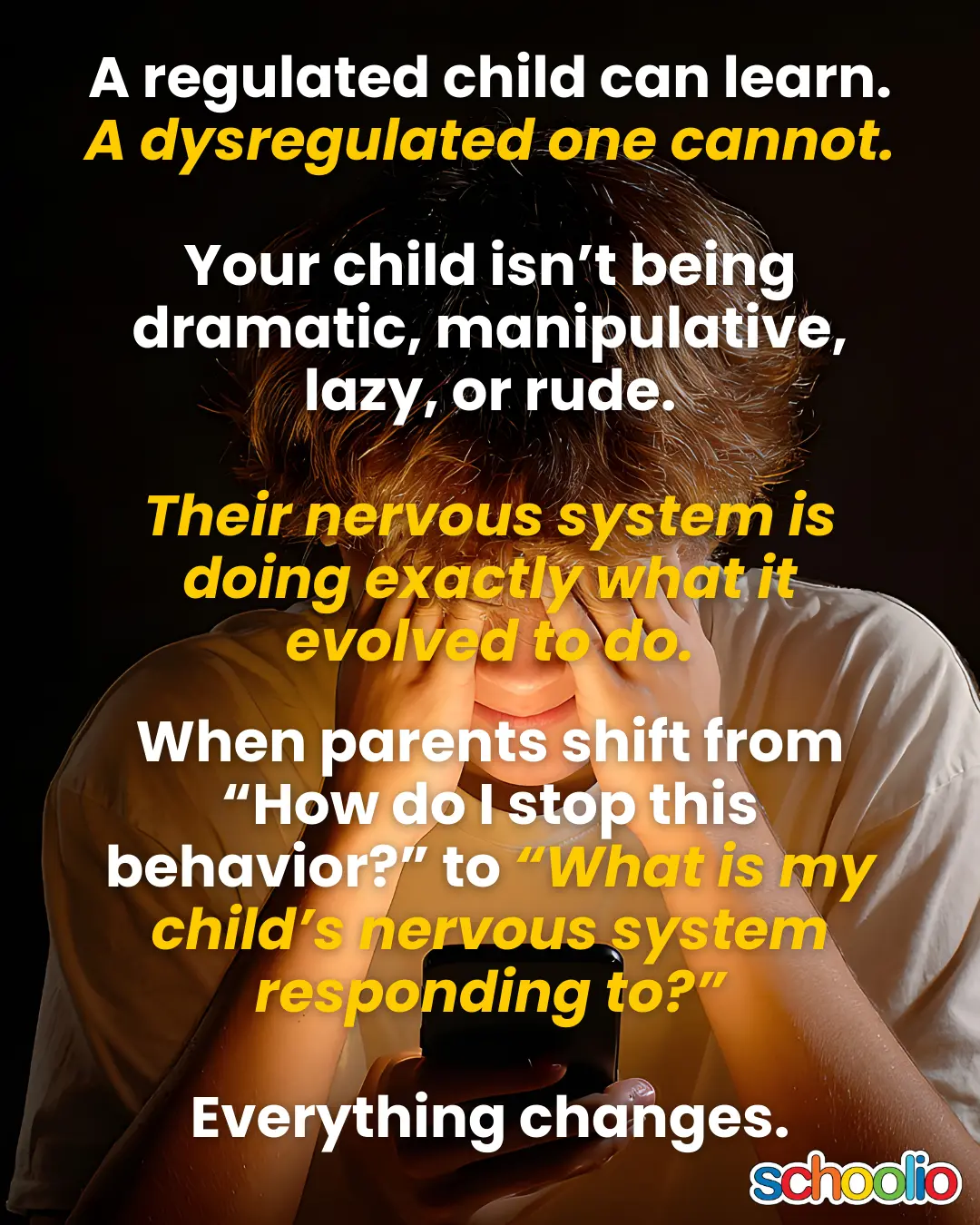
When parents shift from “How do I stop this behavior?” to “What is my child’s nervous system responding to?”

Everything changes.

Instead of punishment, we move toward regulation.

Instead of control, we build safety.

Instead of power struggles, we create connection.


How Parents Can Support Anxiety in ND Kids

1. Reduce Perceived Threat

Lower the emotional intensity around tasks.

  • Fewer words
  • Softer tone
  • More time

Pressure escalates anxiety. Safety reduces it.


2. Name What You See

“You’re not in trouble. I think your body feels overwhelmed right now.”

Naming the response helps kids feel understood instead of ashamed.


3. Offer Regulation Before Expectation

A regulated child can learn.

A dysregulated one cannot.

Movement, quiet time, deep pressure, or sensory breaks often need to come before problem-solving.


4. Build Predictability

Consistency lowers anxiety for ND kids.

  • Clear routines
  • Visual schedules
  • Advance warning for changes

Predictability tells the nervous system: you’re safe here.


5. Avoid Moralizing Anxiety Responses

These responses are not choices.

They are reflexes.

Your child isn’t being dramatic, manipulative, lazy, or rude.

Their nervous system is doing exactly what it evolved to do.


The Takeaway

Fight, flight, freeze, and fawn aren’t flaws.

They’re signals.

When we recognize anxiety behaviors in neurodivergent kids as adaptive responses to perceived threat, we stop trying to fix the child — and start fixing the environment.

And that’s where real healing begins.

Why Your ADHD or Autistic Child “Practices” Conversations (and Why That’s Not a Bad Thing)

Why Your ADHD or Autistic Child “Practices” Conversations (and Why That’s Not a Bad Thing)


Have you ever noticed your child repeating the same sentence over and over before a phone call?

Or whispering what they’re going to say before walking into a room?

Or replaying conversations long after they’re over, worrying they said the “wrong” thing?

If so, you’re likely seeing scripting — a very common and very human coping strategy for autistic and ADHD kids.

And no, it’s not something you need to stop or “fix.”


What Is Scripting, Really?

Scripting is when someone mentally rehearses words, phrases, or entire conversations ahead of time. For neurodivergent kids, especially autistic and ADHD kids, it’s a way to prepare for social situations that feel unpredictable, overwhelming, or high-stakes.

Think of it like this:

Most people can improvise socially without much effort. For neurodivergent kids, social interactions often require conscious processing. Tone, timing, facial expressions, word choice — it’s a lot to manage all at once.

Scripting helps reduce that load.


Why Neurodivergent Kids Script

Scripting isn’t about being robotic or inauthentic. It’s about safety.

Many ADHD and autistic kids have experienced:

  • Being misunderstood
  • Saying the “wrong” thing and being corrected or teased
  • Feeling embarrassed or rejected after social interactions

Over time, their brains learn: Preparation feels safer than guessing.

Scripting gives them:

  • A sense of control
  • Predictability in an unpredictable world
  • Time to organize thoughts before speaking
  • A way to reduce anxiety before social demands

For some kids, scripting is the difference between engaging socially and avoiding it altogether.


What Scripting Feels Like for Kids

From the inside, scripting often feels like:

  • “If I practice, I won’t mess this up.”
  • “If I know what to say, I won’t get in trouble.”
  • “If I’m prepared, I’ll be less embarrassed.”

It’s not about manipulation or performance — it’s about self-protection.

And for kids who already struggle with emotional regulation, rejection sensitivity, or social anxiety, that protection matters.


When Scripting Is Helpful

Scripting can be incredibly supportive when it:

  • Reduces anxiety before social interactions
  • Helps kids advocate for themselves
  • Allows them to participate when they otherwise might shut down
  • Builds confidence through successful interactions

Many kids use scripting to:

  • Practice greetings
  • Prepare for phone calls
  • Navigate classroom discussions
  • Rehearse how to ask for help

In these cases, scripting is a tool, not a problem.


When Scripting Can Become Stressful

Like any coping strategy, scripting can become overwhelming if it turns rigid.

Some kids may struggle when:

  • Conversations don’t follow the “planned” path
  • Someone responds unexpectedly
  • They feel pressure to say things exactly right

When that happens, you might see:

  • Increased anxiety or shutdowns
  • Frustration when plans change
  • Avoidance of social situations altogether

This doesn’t mean scripting caused the problem — it means the need for safety is still very high.


How Parents Can Support Scripting (Without Making It Worse)

The goal isn’t to eliminate scripting — it’s to support it gently while building flexibility over time.

1. Normalize It

Let your child know scripting is okay.

“You’re practicing because you want it to go well. That makes sense.”

Shame increases anxiety. Normalization reduces it.


2. Practice Together

Role-play conversations in a low-pressure way.

  • Practice asking questions
  • Practice different responses someone might give
  • Practice what to do if things don’t go as planned

This builds flexibility without removing safety.


3. Teach “Backup Plans,” Not Perfection

Instead of perfect scripts, help your child develop:

  • A few flexible phrases
  • Exit strategies (“I need a minute”)
  • Repair phrases (“Can I try saying that again?”)

These tools reduce panic when conversations shift.


4. Don’t Force Spontaneity

Pushing kids to “just go with the flow” often backfires. Spontaneity grows naturally when safety increases — not when pressure does.


5. Celebrate the Effort

Scripting takes mental energy. Acknowledge that.

“I know that took courage.”

“You worked really hard to prepare for that.”

Feeling seen matters.


The Big Picture

Scripting isn’t a sign that your child lacks social skills.

It’s a sign that they’re working very hard to connect.

When supported with empathy, scripting can:

  • Increase confidence
  • Reduce anxiety
  • Serve as a bridge toward more flexible communication

Your child isn’t broken for needing extra preparation. They’re adapting — and that’s something worth honoring.

The 5 Core Emotional Needs of ADHDers (and Why They Matter More Than You Think)

The 5 Core Emotional Needs of ADHDers (and Why They Matter More Than You Think)

If you love an ADHDer — whether it’s your child, your partner, or even yourself — you’ve probably noticed that emotions run deep.
Joy can feel electric. Frustration can feel explosive. Rejection can feel unbearable.

ADHD isn’t just about focus or attention; it’s about emotion. ADHD brains experience emotional intensity, sensitivity, and regulation challenges at a level that can be hard for others to fully grasp.

That’s why emotionally healthy environments matter so much. ADHDers don’t just need structure or strategies — they need safety. The kind that lets their nervous system exhale. The kind that helps them believe they’re not broken, just wired differently.

Let’s talk about what that really means — and the five core emotional needs every ADHDer deserves to have met.


1. Safety & Acceptance

Freedom from judgment and the pressure to mask

ADHDers spend much of their lives in environments where they feel like they’re “too much” or “not enough.” Too loud, too distracted, too emotional, too impulsive. From school rules to social cues, the world often demands they shrink themselves to fit in.

That constant self-monitoring — called masking — is exhausting. It’s like running a marathon every day while pretending you’re fine.

What ADHDers need most is the feeling that they can exist exactly as they are — fidgety, passionate, tangential, emotional — and still be safe and accepted.

At home, that looks like gentle curiosity instead of correction:
“I can see your brain’s really busy right now — want to take a break?” instead of “Stop fidgeting.”

When safety replaces shame, healing begins.


2. Validation

Having feelings and experiences recognized as real — and being given credit for achievements that come easily to others.

ADHDers often grow up hearing things like,
“You’re overreacting.”
“It’s not that big a deal.”
“Why can’t you just calm down?”

Or they hear criticism of what looks like “behavior,” when it’s really the visible struggle of an ADHD brain trying to function in a neurotypical world:
“Why are you always late?”
“Why can’t you just remember when I tell you something?”
“If you cared, you’d be able to…”

But to an ADHD brain, it is that big a deal. Emotional regulation isn’t about choosing how to feel — it’s about the brain’s ability to return to baseline.

When feelings are dismissed or minimized, they don’t disappear — they just get lonelier.

Validation doesn’t mean agreeing with every emotion or excusing every action. It means acknowledging that what they feel is real, and that what they manage to do — even if it seems small — took effort.

“I can see that felt really unfair.”
“That sounds frustrating.”
“You worked hard to finish that, even though it wasn’t easy.”
“You’re allowed to feel disappointed.”

That kind of recognition helps ADHDers feel seen instead of defective. It teaches them that their emotions and their efforts both matter — and that’s the foundation for emotional growth and self-worth.


3. Autonomy

Choice, control, and consideration in decisions and pacing

Control is oxygen for ADHD brains.

Because ADHD impacts executive function — the part of the brain responsible for planning, organizing, and self-regulation — losing control can feel terrifying. It’s not about being oppositional or defiant. It’s about needing to steer their own ship, even if they’re still learning how.

But autonomy isn’t just about having choices — it’s about being considered.

For many ADHDers, life can feel like one long series of adjustments to fit a neurotypical world. They bend, mask, minimize, and stretch themselves to meet expectations that weren’t built with their brains in mind. Over time, that can make them feel invisible — like decisions are made for them, not with them.

Being considered — being included in plans, asked for input, and treated like their needs and preferences matter — is a form of freedom. It tells them, you belong here, as you are.

In homeschool environments, autonomy and consideration might look like:

  • Letting your child choose the order of subjects for the day 
  • Including them in planning routines or schedules that affect them 
  • Allowing them to decide whether to write with pencil, keyboard, or voice-to-text 
  • Giving them time limits that feel achievable instead of arbitrary 

When ADHDers are given genuine choice and genuine consideration, resistance turns into collaboration — and confidence blooms where shame used to live.

**If the need for autonomy and control feels even bigger for your child, to the point where they’re hyper-defiant of demands, you might be dealing with PDA (Pathological Demand Avoidance).


4. Connection

Supportive, understanding relationships

Underneath all the intensity and impulsivity, most ADHDers carry a deep fear of disconnection.

By age 12, the average child with ADHD has heard around 20,000 more negative or corrective messages than their neurotypical peers. (That’s a lot of “stop that,” “focus,” and “why can’t you just…”). Each one chips away at their sense of being lovable as they are.

That’s why connection is the antidote.

Connection tells the ADHD brain, you are still safe, even when you make mistakes.
It looks like laughter during lessons, shared problem-solving, and hugs after meltdowns. It’s eye contact, patience, and the unspoken message: we’re on the same team.

When ADHDers feel securely connected, their nervous system relaxes — and their capacity for learning, empathy, and resilience expands.


5. Consistency

Predictable environments that reduce stress

ADHD brains crave novelty, but they need predictability.

Inconsistent feedback, unpredictable schedules, or sudden changes can feel like emotional whiplash. Without a sense of what’s coming next, anxiety spikes — and so does dysregulation.

Consistency doesn’t mean rigidity. It means creating reliable patterns they can count on.

  • Clear expectations that stay the same 
  • Gentle transitions between activities 
  • A stable emotional tone at home 

Consistency tells the ADHD brain, you’re safe here. And safety builds the foundation for focus, trust, and growth.


Building Emotionally Safe Spaces for ADHDers

When these five needs — safety, validation, autonomy, connection, and consistency — are met, ADHDers thrive.

They regulate more easily.
They recover faster from mistakes.
They begin to trust themselves again.

And for parents, meeting these needs doesn’t mean being perfect. It means leading with compassion and curiosity, remembering that the behaviors you see are often the language of unmet needs.

When you give your ADHDer the emotional environment their brain truly needs, you’re not just teaching academics.
 

You’re teaching self-worth.
You’re teaching safety.
You’re teaching love that heals.


Why Your ADHD Child Can’t Sit Still- What is Vestibular Input?

Why Your ADHD Child Can’t Sit Still- What is Vestibular Input?


If you have an ADHD child, you’ve probably said one of these phrases at least once (or, let’s be honest, many times):
“Sit properly, please.”
“Feet down.”
“Stop spinning that chair.”


“Why are you upside down right now?”

And yet, no matter how many times you say it… they just can’t seem to stop.

It’s easy to see this as misbehavior or lack of focus. But in reality, what you’re seeing might be something deeper — your child’s nervous system doing its best to get the vestibular input it needs to feel regulated, alert, and ready to learn.

vestibular input

What Is Vestibular Input?

The vestibular system lives in the inner ear, and it’s responsible for sensing movement, balance, and spatial awareness. It helps us know where our body is in space — like whether we’re sitting upright, moving fast, or tilting our head.

For neurotypical people, this system runs quietly in the background, keeping them centered. But for many ADHDers, it doesn’t process quite the same way.

Some ADHD kids are under-responsive to vestibular input — their brain isn’t getting enough “movement data,” so they subconsciously seek more through spinning, rocking, dangling upside down, or constant shifting. Others may be over-responsive, finding certain motions overwhelming or dizzying.

Both patterns are common — and both are the body’s way of saying, “I need help regulating.”

? Science Note: The Vestibular–Dopamine Connection

The vestibular system doesn’t work alone — it’s closely tied to the dopamine pathways in the brain that control motivation, focus, and emotional regulation.

When your child moves — spinning, jumping, rocking — those physical sensations activate parts of the brainstem and cerebellum that help regulate dopamine and norepinephrine, both of which are often low in ADHD brains.

That’s why movement helps ADHD kids “wake up” their brains:

  • It boosts alertness and attention.
  • It improves emotional regulation.
  • It supports executive function — planning, memory, and self-control.

So when your child is fidgeting or in constant motion, they’re not being disruptive — they’re literally helping their brain function better.


What “Dopamine Seeking” Looks Like in the Body

We often talk about ADHD as dopamine-driven, but the vestibular system plays a huge role, too. Movement actually helps stimulate dopamine release — which is why your ADHD child may suddenly start pacing, swinging their legs, or balancing on the edge of a chair right when you need them to concentrate.

These “weird” positions aren’t defiance. They’re your child’s nervous system self-medicating through movement.

They might:

  • Sit with one leg over the arm of a chair
  • Hang off the couch upside down
  • Constantly rock, bounce, or sway
  • Spin in circles for “fun” (and never seem dizzy)
  • Climb furniture or balance on unstable surfaces

It can look chaotic — but for them, it’s regulating.


What It Feels Like for ADHD Kids

For a child whose vestibular system isn’t getting enough input, sitting still can feel physically uncomfortable — like trying to focus with an itch you can’t scratch. Their brain is searching for balance signals, and until it gets them, it’s hard to settle down.

You might see:

  • Fidgeting during reading or lessons
  • Difficulty maintaining posture
  • Restlessness or frustration during quiet tasks
  • Frequent “breaks” to move or reposition

The movement isn’t the problem — it’s the coping mechanism for an unmet sensory need.

How This Impacts Learning

When a child’s body is unregulated, their brain can’t prioritize learning. The vestibular system connects directly to areas of the brain that control attention, emotion regulation, and executive function — meaning movement needs aren’t separate from learning needs.

So when your ADHD child spins in their chair, lies on the floor to do math, or wiggles constantly through read-alouds… that’s not distraction. It’s adaptation.

Supporting Your Child’s Vestibular Needs at Home

Instead of trying to eliminate movement, think about channeling it. Here are some strategies to support vestibular regulation in your homeschool:

1. Build Movement Into the Day

  • Use active learning breaks between subjects.
  • Try standing desks, wobble stools, or yoga balls.
  • Let your child read or write while pacing, swinging, or lying down.activity

2. Offer “Heavy Work”

Proprioceptive input (like pushing, pulling, or lifting) helps calm the vestibular system. Try:

  • Carrying laundry or groceries
  • Wall push-ups or wheelbarrow walks
  • Building with weighted materials like LEGO or clay

3. Use Safe Spinning or Swinging

If your child seeks spinning, consider safe options like:

  • Swivel chairs
  • Therapy swings
  • Hanging pods or hammocks

4. Respect Their Positions

If your child learns best while lying on the floor or sitting cross-legged on a chair, that’s okay. Focus on engagement, not posture.

5. Schedule Movement Intentionally

Start the day with movement-rich activities: walking the dog, dancing, yoga, or playground time. Meeting those vestibular needs early can make focused work easier later.

The Homeschooling Advantage

Traditional classrooms often punish movement — “sit still,” “stop rocking,” “stay in your seat.” But at home, you have the flexibility to do the opposite: to embrace movement as part of learning.

When you let your ADHD child learn in the way their body needs — rocking, fidgeting, or balancing — you’re not giving in to bad habits. You’re helping their nervous system regulate so their brain can focus, absorb, and thrive.

Movement isn’t a distraction. For ADHDers, movement is medicine.

“Effects of stochastic vestibular stimulation on cognitive functions in children with ADHD” — PMC article discussing vestibular stimulation and cognition for ADHD. https://pmc.ncbi.nlm.nih.gov/articles/PMC10635964


“Vestibular Rehabilitation for ADHD” — article from Neurologic Wellness Institute referencing the regulation of dopamine via vestibular input. https://neurologicwellnessinstitute.com/vestibular-rehabilitation-for-adhd/


“Vestibular therapy improved motor planning, attention, and balance in children with Attention-Deficit Hyperactivity Disorders – A RCT” — study showing improved attention and response control following vestibular intervention in children with ADHD. https://www.oatext.com/vestibular-therapy-improved-motor-planning-attention-and-balance-in-children-with-attention-deficit-hyperactivity-disorders-a-randomized-controlled-trial.php


When Schools Punish Curiosity, Families Choose Freedom

When Schools Punish Curiosity, Families Choose Freedom


This has been on my mind today…

I saw a post today from a school administrator frustrated that parents take kids out of school for vacations. “I can understand a death or family emergency,” he said, “but a cheaper vacation? Nope.”

That comment says everything about why so many families are leaving the system.

We’ve built schools that treat learning like a fixed location — a desk, a bell, a schedule. But learning doesn’t stop when you leave the classroom. It happens in airports, in museums, in street markets, and in quiet conversations between parent and child while exploring a new city.

When schools shame families for traveling, they’re not protecting education — they’re limiting it.

Learning on the road is world learning. It’s exposure, perspective, adaptability. It’s the kind of real-life curriculum no textbook can teach.

Families aren’t looking for rebellion. They’re looking for flexibility.

They want their kids to see the world and still stay connected to structured learning.That’s why platforms like Schoolio exist — to make learning portable, digital, and continuous. Whether you’re in a classroom or on the road, learning doesn’t have to pause.

If schools truly want to prepare kids for the world, they should start by letting them experience it.


Sathish
Still learning, still unlearning

Understanding ADHD Motivation in Kids: It’s Not Broken, Just Different

Understanding ADHD Motivation in Kids: It’s Not Broken, Just Different


“You just need to try harder.”
“If you’d only apply yourself.”
“You’d do it if you really wanted to.”

Sound familiar? If you’re raising or homeschooling an ADHD child, you’ve probably heard these words directed at them—or even caught yourself thinking them in moments of frustration. Unfortunately, our kids hear this kind of messaging a lot. In fact, research estimates that by age 12, ADHD children have heard around 20,000 more negative comments than their neurotypical peers.

That steady stream of criticism teaches ADHD kids that they’re lazy, unmotivated, or difficult. But here’s the truth: your child’s motivation isn’t broken. Their brain simply runs on a different operating system, and understanding how it works is the first step to helping them thrive.

How Motivation Works Differently in ADHD Brains

Neurotypical brains are generally motivated by rewards, consequences, and willpower. They can push through boring tasks because they know it will pay off in the end.

ADHD brains don’t respond to those motivators in the same way. Instead, their motivation is fueled by five unique drivers: urgency, novelty, interest, challenge, and purpose. When we try to push them with typical methods, it often backfires. But when we learn to work with their motivators, instead of against them, everything changes.

The 5 Key Motivators in ADHD Kids

1. Urgency

Ever notice your child suddenly works like a whirlwind right before a deadline—but can’t start two weeks earlier? That’s urgency at play. Their brain doesn’t register “later” as important—it needs “right now” to kick into gear.

How parents can help:

  • Break big tasks into smaller steps with shorter deadlines.

  • Use timers—turn chores into races.

  • Try body-doubling: sit beside them while you each work on something.

2. Novelty

ADHD kids thrive on newness. A new book, a new game, a new learning method? Instant focus. But once the shine wears off, their interest crashes. This isn’t stubbornness—it’s brain chemistry.

How parents can help:

  • Introduce small changes to routines (a new pen, studying in a new spot).

  • Rotate activities instead of relying on the same approach every day.

  • Lean into their love of trying new things—then build learning around it.

3. Interest

Have you ever been amazed at how your child can remember every detail of their favorite video game, but can’t recall what you just asked them to do? ADHD brains run on an interest-based nervous system. When they care, they can focus like a laser. When they don’t, it feels impossible to start.

How parents can help:

  • Connect “boring” tasks to your child’s passions.

    • Hate writing? Turn the essay into a comic strip or YouTube script.

    • Math struggles? Frame problems as Pokémon stats or Minecraft builds.

  • Let them dive deep into special interests—it strengthens focus muscles.

4. Challenge

Too easy = boring. Too hard = overwhelming. ADHD brains need the sweet spot in between, where a task feels like a puzzle to solve.

How parents can help:

  • Turn chores into challenges (“Can you beat yesterday’s cleanup time?”).

  • Use levels or point systems like a game.

  • Encourage self-competition, not competition with siblings or peers.

5. Purpose

Above all, ADHD kids need to know why they’re doing something. “Because I said so” rarely works. If a task feels meaningful, they can stick with it. If not, motivation evaporates.

How parents can help:

  • Reframe chores: cleaning a room = having a calmer, less stressful space.

  • Link schoolwork to goals they care about (Spanish = talking with new friends, watching shows without subtitles).

  • Talk about long-term benefits in a way that feels personal, not abstract.

Helping Your Child Feel Seen

When ADHD kids don’t respond to “normal” motivators, it’s not laziness—it’s wiring. And when they hear constant negative messages, it chips away at their confidence. But as a parent, you can flip the script.

By working with your child’s unique motivators—urgency, novelty, interest, challenge, and purpose—you’re not just helping them get through daily tasks. You’re teaching them how their brain works, building self-awareness, and showing them that their differences aren’t deficits.

Your child doesn’t need to “try harder.” They need to try differently—and they need adults who understand how to guide them there.

School Resistance and Refusal: Understanding Your Child’s Struggles

School Resistance and Refusal: Understanding Your Child’s Struggles


For many parents, the morning routine becomes an exhausting battle when their child simply refuses to go to school. While the occasional reluctance is common for most children, school resistance and refusal is a much deeper issue that impacts a significant number of families. When your child consistently resists going to school or experiences extreme anxiety at the idea of attending, it’s more than a phase; it’s a complex issue requiring careful consideration, understanding, and potential lifestyle changes.

In this blog, we’ll explore what school resistance and refusal is, why it’s more common in neurodivergent children, and why homeschooling could be a viable option for parents feeling the strain of daily school-related struggles.

What is School Resistance and Refusal?

School resistance and refusal occur when children avoid going to school due to intense feelings of fear, anxiety, or frustration. It’s not just a simple dislike of school or laziness. Children experiencing school refusal often feel an overwhelming sense of dread, and forcing them into school may exacerbate their emotional distress.

This behavior can manifest as physical symptoms like stomachaches, headaches, or even panic attacks on school days. It might also appear as sudden emotional meltdowns or refusal to leave the house. If your child resists going to school regularly, it’s crucial to recognize that something more significant is going on.

While this can happen with any child, it’s important to acknowledge that school resistance and refusal is more common in neurodivergent kids, including those with ADHD, autism, anxiety disorders, or sensory processing issues. The standard structure of traditional schools often conflicts with the needs of children who have different ways of processing information, interacting with their environment, or managing their emotions.

School Resistance and Neurodivergency

For neurodivergent kids, school environments can be overwhelming, uncomfortable, and even traumatic. Children with autism, ADHD, or anxiety often struggle with the rigidity of the school day, the social pressures of interacting with peers, and the sensory overload caused by noise, fluorescent lighting, and crowded spaces.

Neurodivergent children may have difficulties adhering to conventional behavior expectations, like sitting still, paying attention for long periods, or waiting their turn. This can lead to conflicts with teachers and peers, triggering feelings of inadequacy or shame. The school environment might feel like a place where they constantly fail, which, in turn, increases school resistance and refusal.

In some cases, the underlying issues may stem from sensory processing difficulties or executive dysfunction, both common in neurodivergent children. This could mean that certain aspects of the school environment feel unbearably intense for them, whether it’s the sound of the bell ringing, the texture of their clothes, or the constant demands for task initiation. Over time, these daily stressors add up and create an emotional block to attending school.

Trust Your Parental Instincts

When parents encounter school resistance and refusal, it’s easy to feel pressure to force their child to comply with school attendance. However, your parental instincts may be telling you something else. It’s important to listen to those instincts.

If your child is expressing extreme discomfort or distress about school, this is a signal that something is wrong. Forcing your child to attend school against their will might seem like the simplest solution in the short term, but it often worsens the underlying issues. Rather than pushing through, it’s vital to approach the situation with empathy, curiosity, and a desire to understand your child’s perspective.

Common Reasons for School Resistance in All Kids

While school resistance and refusal is more frequent among neurodivergent kids, it can happen with any child. Here are some common reasons children might resist school:

  1. Anxiety: School can be a source of significant stress for children, whether it’s due to academic pressure, social challenges, or fear of separation from their parents.
  2. Bullying: A common reason for children to refuse school is bullying or negative social interactions. This might be happening without the parent’s knowledge, so keeping an open line of communication with your child is essential.
  3. Learning Disabilities: Children who struggle academically due to undiagnosed learning disabilities may avoid school because they feel like they can’t keep up or fear being labeled as “stupid” by their peers or teachers.
  4. Separation Anxiety: For younger children, being away from their parents can cause overwhelming separation anxiety, leading to school resistance and refusal.
  5. Sensory Sensitivities: Even neurotypical children may struggle with sensory sensitivities, such as loud noises, bright lights, or certain textures, making the school environment a difficult place to spend extended periods.

Homeschooling: A Viable Option for School Resistance and Refusal

For parents dealing with school resistance and refusal, homeschooling can be a viable alternative to the traditional school environment. Homeschooling offers a flexible and personalized learning approach that can cater to your child’s unique needs, interests, and pace.

Here’s why homeschooling can be a great option for children who resist school:

  1. Individualized Learning Plans: In a homeschool setting, you can tailor the curriculum to your child’s specific strengths, needs, and interests. This allows for a more engaging and supportive educational experience.
  2. Reduced Pressure: Homeschooling removes the rigid time constraints and constant performance evaluations found in traditional schools. Without the pressure to meet arbitrary timelines, your child may feel less overwhelmed and more willing to engage in learning.
  3. A Sensory-Friendly Environment: You can modify the home learning environment to be more sensory-friendly, providing a comfortable space for your child to learn without the noise and distractions that come with a crowded classroom.
  4. Emotional Support: Homeschooling allows you to be there for your child during difficult emotional moments, offering immediate support and understanding that a teacher in a traditional setting might not have the time or capacity to provide.
  5. Flexible Scheduling: Homeschooling offers flexibility in scheduling, allowing you to plan learning around your child’s peak focus times and energy levels. If your child struggles to start their day early, you can adjust the schedule accordingly.

Addressing Concerns About Homeschooling

It’s normal for parents to feel unsure about homeschooling, especially if they’ve only experienced traditional schooling themselves. However, homeschooling has become increasingly mainstream, and there are vast resources available to support you in this journey.

Some common concerns parents have include socialization and academic progress. The reality is that homeschooling communities are thriving, with co-ops, group activities, and extracurriculars readily available to help your child socialize. Additionally, many parents find that homeschooled children often excel academically because they receive individualized attention and are able to learn in a way that suits their unique style.

Steps to Take if Your Child is Struggling

If your child is struggling with school resistance and refusal, here are some steps you can take:

  1. Open Communication: Talk to your child about their feelings toward school. Validate their emotions and try to understand the underlying reasons behind their resistance.
  2. Involve a Professional: If you suspect anxiety, depression, or neurodivergence is contributing to your child’s school refusal, consider seeking guidance from a mental health professional who specializes in working with children.
  3. Explore Educational Alternatives: Look into homeschooling or other alternative education options, such as online schooling or Montessori education, that may better suit your child’s needs.
  4. Create a Plan: Develop a collaborative plan with your child. Whether this involves gradually returning to school or transitioning to a new learning method, ensure your child feels heard and involved in the decision-making process.

Conclusion: Trusting Your Instincts

If your child is experiencing school resistance and refusal, it’s essential to trust your instincts and explore all available options. Forcing your child into a system that is clearly not working for them may do more harm than good. Instead, consider homeschooling as a way to provide the supportive, individualized learning environment your child needs to thrive. Remember, every child is different, and the goal is to help them learn in a way that makes them feel safe, capable, and understood.

By considering alternatives like homeschooling, you’re not only validating your child’s experience but also creating a path for their academic success and emotional well-being.

What Dopamine Deficiency Looks Like in ADHD Kids

What Dopamine Deficiency Looks Like in ADHD Kids


Because ADHD brains don’t release or regulate dopamine effectively, kids often live in a state of chronic “dopamine hunger.” Just like being low on food makes you hungry, being low on dopamine makes the brain crave stimulation.

For ADHD kids, that deficiency can show up as:

  • Inattention: Struggling to stay engaged with boring or repetitive tasks.
  • Restlessness: Constantly moving, fidgeting, or seeking stimulation.
  • Mood swings: Irritability, frustration, or feeling flat when dopamine is low.
  • Low motivation: Finding it nearly impossible to start tasks without external stimulation.
  • Emotional sensitivity: Stronger reactions to rejection, failure, or disappointment.

For your child, it may feel like a constant itch they can’t scratch—an internal restlessness that only eases when something exciting, novel, or rewarding captures their attention.


Dopamine-Seeking Behavior: It’s Not Their Fault

When your child bounces from one activity to another, gets “hooked” on video games, or melts down when asked to do something boring, it’s easy to feel like they’re being defiant or careless. But here’s the truth: their brain is driving them to seek dopamine in the same way hunger drives you to eat.

This is why ADHD kids often:

  • Hyperfocus on video games or special interests.
  • Struggle to stop stimulating activities.
  • Seek out novelty and excitement.
  • Resist boring or repetitive tasks, no matter how important.

It’s not a lack of discipline—it’s survival. Their brain is looking for the fuel it needs.


How Dopamine Affects Learning and Behavior

Dopamine deficiency in ADHD can impact every part of your child’s life:

  • Attention: Without dopamine, focusing feels nearly impossible.
  • Behavior: Kids may act impulsively, even dangerously sometimes, always chasing the next burst of stimulation. Dopamine-seeking risky behaviors can be especially problematic for teenagers.
  • Learning: Learning is always harder when your body is lacking a needed brain chemical, just like with anxiety, depression, or trauma. A dysregulated brain cannot learn, so focus on mental and emotional stability first.
  • Emotions: Dopamine imbalance can make moods more volatile and rejection harder to handle.

When we frame these struggles as brain chemistry—not willpower—it changes everything.


Strategies for Supporting Your Child’s Dopamine Needs

The good news: there are ways to help regulate your child’s dopamine levels and create a homeschooling environment that works with their brain instead of against it.

1. Build in Small Rewards

Break tasks into smaller steps, and celebrate progress often. Rewards don’t have to be big—a sticker, praise, or a short break can be enough to trigger dopamine.

2. Backward Rewarding

“Backward rewarding” is a practice that works well for ADHD kids because it gives them the dopamine they require upfront. We typically reward for work well done- at the end of the task- but without dopamine, no amount of desire, will-power, or motivation will make your child capable of performing the task. For example, 30 minutes of video games before you start school, along with a 30 minute reward at the end, might have math going much more smoothly then with the end-reward only. (Make sure you make the time limit clear before they start, and set timers to remind of the end coming multiple times to make the transition happen.)

3. Use Movement

Physical activity boosts dopamine. Try starting the school day with a walk, dance break, or jumping jacks. Build movement into lessons whenever you can.

4. Lean Into Interests

Remember, interest = dopamine. Whenever possible, tie schoolwork to your child’s passions. If they love animals, use animal examples in math problems or writing prompts. Don’t be afraid to go “off-book” when pulling their interests into your learning. Remember when I turned our geography into dragons? That’s what we’re going for!

5. Add Novelty

Switch up routines occasionally—study in a new spot, use a different color pen, or bring in hands-on projects. Small changes can spark big dopamine boosts.

6. Prioritize Sleep and Nutrition

Dopamine regulation depends on healthy sleep cycles and steady nutrition. Work toward consistent bedtimes and balanced meals with protein to support brain chemistry.

7. Use Tech Wisely

Screen time provides big dopamine hits, which is why it can be so hard for ADHD kids to stop. Instead of banning screens completely, use them strategically—incorporate educational apps, set clear boundaries, and use them as short, structured rewards. Always give multiple warnings for transitions off screens


A Homeschooling Lens

Homeschooling gives you the freedom to design a learning environment that supports your child’s dopamine needs instead of punishing them for them. That means:

  • Flexible schedules to account for energy highs and lows.
  • Interest-driven projects that keep motivation high.
  • Frequent breaks for movement and stimulation.
  • Celebrating effort, not just outcomes, to give consistent dopamine boosts.

Your child doesn’t need to be “fixed.” They need understanding. When you see their restlessness, hyperfocus, or boredom through the lens of dopamine deficiency, it stops looking like defiance and starts looking like what it truly is: a brain craving balance.

With patience, creativity, and neurodiversity-affirming strategies, you can help your child feel less hungry for dopamine—and more successful in learning and in life.

Why I Learned to Plan Our Homeschool in Pencil

Why I Learned to Plan Our Homeschool in Pencil

By Lindsey, certified special-ed educator & co-founder, Schoolio


This has been on my mind today…

When I first started homeschooling, I thought I needed a perfectly structured plan. Color-coded calendars. Long-term schedules. Daily checklists. If I could just organize everything, I told myself, then our homeschool would run smoothly.


And to be honest—I can make a banging plan. ADHD has given me that hyperfocus superpower. I can map out a schedule that looks incredible on paper. But sticking to it? Executing it with military precision day after day? That’s where things fall apart. My brain doesn’t thrive under that kind of rigidity. And neither do my kids.


I remember one day in particular. I had my agenda ready, subjects lined up, and a vision of us moving neatly through the day. Instead, I found myself still in pajamas, sipping my third cup of coffee, reading aloud from the couch while my kids snuggled beside me. That was “school” for the day. And honestly? It worked.


It took me about a year to unlearn the pressure of overplanning. Especially with neurodivergent kids, you never really know what a day will look like. I used to plan out weeks—sometimes months—at a time. But that just set me up for stress and disappointment when life inevitably didn’t go according to script.


Take field trips, for example. I’d schedule an outing with our homeschool friends, then expect the very next day to be a heavy academic “catch-up” day. But my autistic kiddos taught me something important: they needed two days for those big events. One day to go, explore, and engage. And another day to recharge quietly at home. Trying to push through the day after always ended in frustration for everyone.


So I learned to plan differently.


Now I plan in pencil. That’s both literal and metaphorical. I map out gentle rhythms, not rigid schedules. I leave space for flexibility, rest, and the unexpected. I don’t ask, “Are we keeping up?” anymore. I ask, “What do my kids need today?”


And that shift has changed everything.


The truth is, learning doesn’t only happen in neat blocks of time. It happens on the couch with a read-aloud, on a quiet day of rest, and yes—even in pajamas with a stack of coffee cups nearby. When I stopped treating our homeschool like something to control and started treating it like something to live, we all found more peace—and more learning, too.


So if you’re staring at your homeschool planner feeling like you’re always “behind,” I want to gently remind you: you don’t have to plan it all in ink. You don’t have to keep up with anyone else’s schedule. You can plan in pencil. And sometimes, those pajama days on the couch end up being the best days of all.