Anxiety in Neurodivergent Kids: When Behavior Is Really a Nervous System Response
Anxiety in neurodivergent kids doesn’t always look like worry, tears, or saying “I’m anxious.”
More often, it looks like:
- Arguing over small requests
- Avoiding work until the very last minute
- Staring off into space when asked a question
- Melting down over something that seems minor
- Saying “sorry” over and over again
And because it doesn’t look like anxiety, it’s often misunderstood as defiance, laziness, disinterest, or immaturity.
But for ADHDers and autistic kids, anxiety is frequently a body response, not a thought problem. Their nervous system is reacting to perceived threat — even when there’s no obvious danger.
To understand this, we need to talk about the four stress responses.
The Four “F” Responses: How Anxiety Shows Up in ND Kids
When the nervous system detects a threat, it doesn’t stop to ask whether the threat is logical. It reacts automatically. For neurodivergent kids — whose brains already process the world more intensely — everyday situations can trigger these responses more easily.
These aren’t signs of dysfunction.
They are adaptive survival responses.
1. Fight
What parents often see:
- Verbal outbursts
- Argumentative or oppositional behavior
- Clenched jaw or fists
- Explosive reactions to small requests
What’s actually happening:
The child’s body feels under attack — by pressure, overwhelm, sensory overload, or loss of control. The nervous system shifts into defense mode.
Fight isn’t about wanting conflict.
It’s about protecting oneself when escape doesn’t feel possible.
Common triggers for ND kids:
- Being rushed
- Feeling misunderstood
- Too many demands at once
- Sensory overload (noise, light, touch)
2. Flight
What parents often see:
- Leaving the room
- Avoiding tasks
- Procrastination
- Excessive bathroom breaks
- Daydreaming or “checking out”
What’s actually happening:
The nervous system has decided, I need to get away from this.
Flight doesn’t always mean physically running. It often shows up as mental escape — zoning out, scrolling, disappearing into imagination, or putting tasks off indefinitely.
For ND kids, flight is common when:
- A task feels too big or unclear
- Failure feels likely
- The environment feels overwhelming
Avoidance isn’t laziness.
It’s anxiety trying to reduce harm.
3. Freeze
What parents often see:
- Blank stares
- Non-responsiveness
- “I don’t know” repeated over and over
- Difficulty starting tasks
- Seeming shut down or slow
What’s actually happening:
The nervous system is overloaded and hits pause.
Freeze happens when fight and flight both feel unsafe or unavailable. The brain goes offline to protect itself.
This is especially common in neurodivergent kids with:
- Executive dysfunction
- Auditory processing challenges
- High emotional sensitivity
To a parent, it may look like refusal.
To the child, it feels like their brain just… stopped.
4. Fawn
What parents often see:
- Over-accommodating behavior
- Difficulty setting boundaries
- Excessive apologizing
- People-pleasing
- Fear of disappointing others
What’s actually happening:
The nervous system believes safety comes from keeping others happy.
Fawn responses often develop in ND kids who have learned — consciously or unconsciously — that being “easy,” compliant, or agreeable reduces conflict or criticism.
This response is frequently seen in:
- Girls and AFAB neurodivergent kids
- Kids who mask heavily
- Kids with rejection-sensitive dysphoria
It looks calm on the outside, but it’s often driven by deep anxiety.
Why Neurodivergent Kids Are More Vulnerable to Anxiety
Neurodivergent kids experience the world as louder, faster, brighter, and more demanding.
Their anxiety is often triggered by:
- Sensory overload (noise, lighting, textures)
- Social pressure (expectations to behave “normally”)
- Environmental mismatch (settings not designed for their brain)
- Constant correction or criticism
- Unclear expectations or sudden changes
When a child’s nervous system is constantly bracing for overwhelm, anxiety becomes a baseline — not an occasional emotion.
Reframing Behavior Through a Nervous System Lens
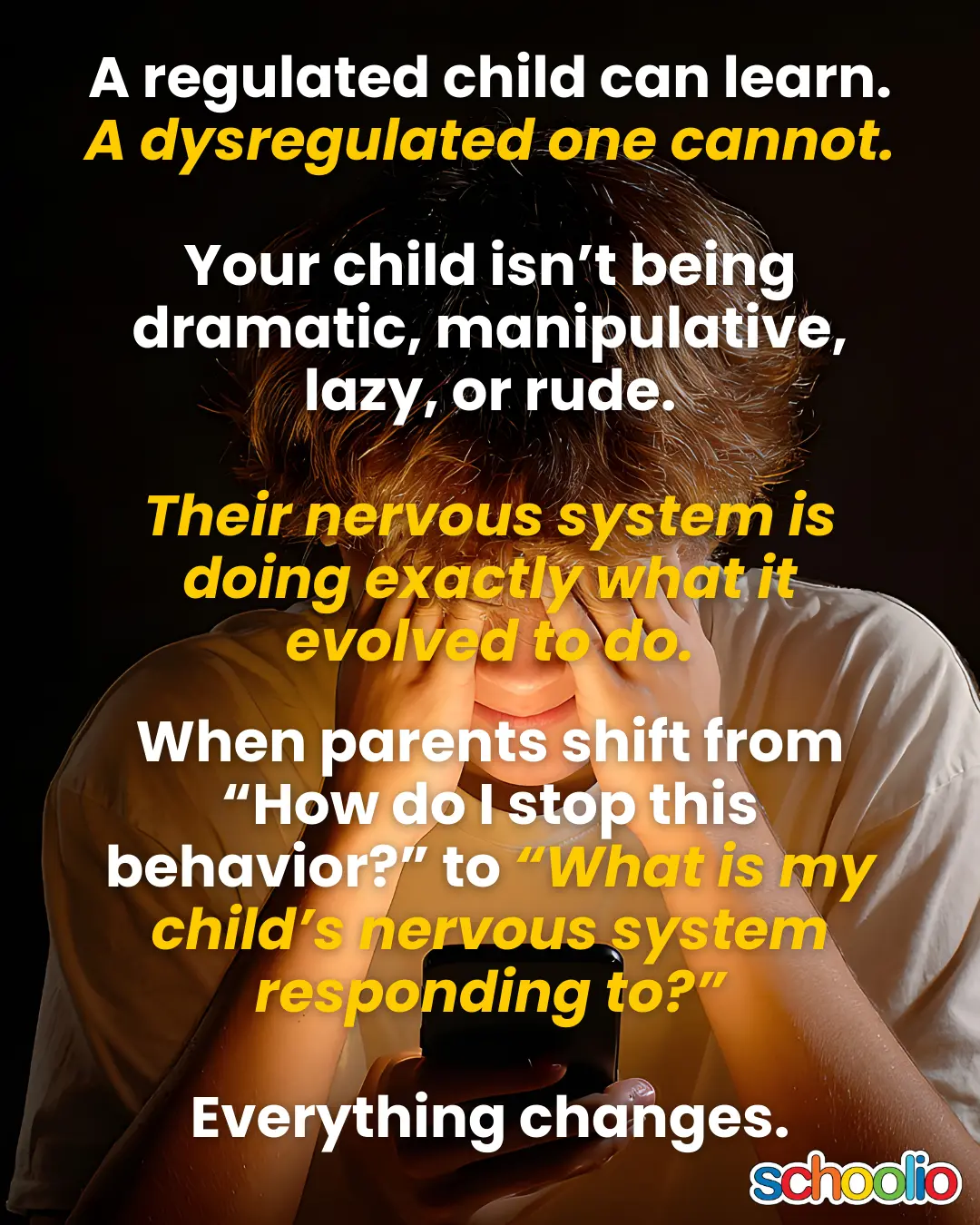
When parents shift from “How do I stop this behavior?” to “What is my child’s nervous system responding to?”
Everything changes.
Instead of punishment, we move toward regulation.
Instead of control, we build safety.
Instead of power struggles, we create connection.
How Parents Can Support Anxiety in ND Kids
1. Reduce Perceived Threat
Lower the emotional intensity around tasks.
- Fewer words
- Softer tone
- More time
Pressure escalates anxiety. Safety reduces it.
2. Name What You See
“You’re not in trouble. I think your body feels overwhelmed right now.”
Naming the response helps kids feel understood instead of ashamed.
3. Offer Regulation Before Expectation
A regulated child can learn.
A dysregulated one cannot.
Movement, quiet time, deep pressure, or sensory breaks often need to come before problem-solving.
4. Build Predictability
Consistency lowers anxiety for ND kids.
- Clear routines
- Visual schedules
- Advance warning for changes
Predictability tells the nervous system: you’re safe here.
5. Avoid Moralizing Anxiety Responses
These responses are not choices.
They are reflexes.
Your child isn’t being dramatic, manipulative, lazy, or rude.
Their nervous system is doing exactly what it evolved to do.
The Takeaway
Fight, flight, freeze, and fawn aren’t flaws.
They’re signals.
When we recognize anxiety behaviors in neurodivergent kids as adaptive responses to perceived threat, we stop trying to fix the child — and start fixing the environment.
And that’s where real healing begins.