Understanding ADHD Motivation in Kids: It’s Not Broken, Just Different
“You just need to try harder.”
“If you’d only apply yourself.”
“You’d do it if you really wanted to.”
Sound familiar? If you’re raising or homeschooling an ADHD child, you’ve probably heard these words directed at them—or even caught yourself thinking them in moments of frustration. Unfortunately, our kids hear this kind of messaging a lot. In fact, research estimates that by age 12, ADHD children have heard around 20,000 more negative comments than their neurotypical peers.
That steady stream of criticism teaches ADHD kids that they’re lazy, unmotivated, or difficult. But here’s the truth: your child’s motivation isn’t broken. Their brain simply runs on a different operating system, and understanding how it works is the first step to helping them thrive.
How Motivation Works Differently in ADHD Brains
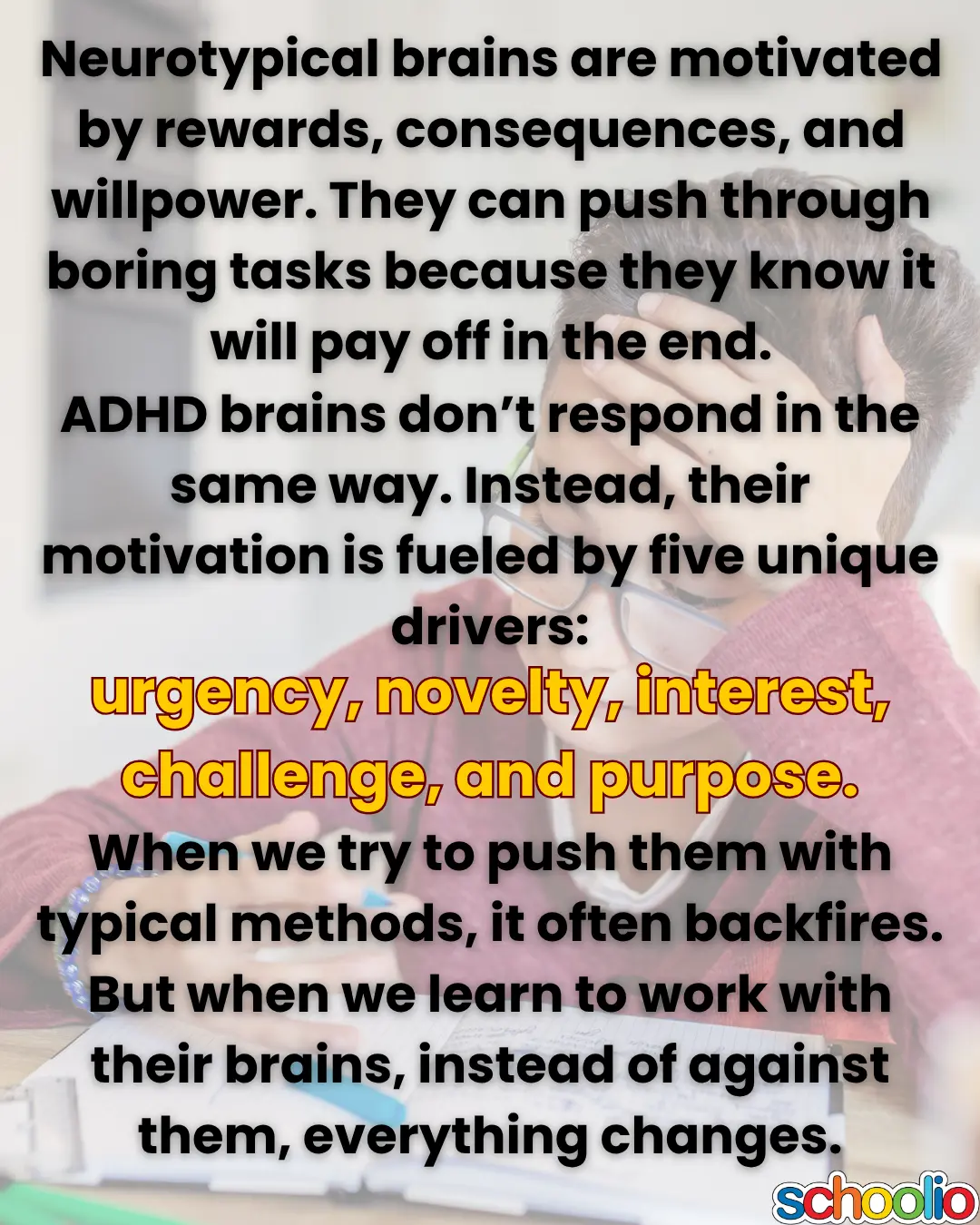
Neurotypical brains are generally motivated by rewards, consequences, and willpower. They can push through boring tasks because they know it will pay off in the end.
ADHD brains don’t respond to those motivators in the same way. Instead, their motivation is fueled by five unique drivers: urgency, novelty, interest, challenge, and purpose. When we try to push them with typical methods, it often backfires. But when we learn to work with their motivators, instead of against them, everything changes.
The 5 Key Motivators in ADHD Kids
1. Urgency
Ever notice your child suddenly works like a whirlwind right before a deadline—but can’t start two weeks earlier? That’s urgency at play. Their brain doesn’t register “later” as important—it needs “right now” to kick into gear.
How parents can help:
- Break big tasks into smaller steps with shorter deadlines.
- Use timers—turn chores into races.
- Try body-doubling: sit beside them while you each work on something.
2. Novelty
ADHD kids thrive on newness. A new book, a new game, a new learning method? Instant focus. But once the shine wears off, their interest crashes. This isn’t stubbornness—it’s brain chemistry.
How parents can help:
- Introduce small changes to routines (a new pen, studying in a new spot).
- Rotate activities instead of relying on the same approach every day.
- Lean into their love of trying new things—then build learning around it.
3. Interest
Have you ever been amazed at how your child can remember every detail of their favorite video game, but can’t recall what you just asked them to do? ADHD brains run on an interest-based nervous system. When they care, they can focus like a laser. When they don’t, it feels impossible to start.
How parents can help:
- Connect “boring” tasks to your child’s passions.
- Hate writing? Turn the essay into a comic strip or YouTube script.
- Math struggles? Frame problems as Pokémon stats or Minecraft builds.
- Let them dive deep into special interests—it strengthens focus muscles.
4. Challenge
Too easy = boring. Too hard = overwhelming. ADHD brains need the sweet spot in between, where a task feels like a puzzle to solve.
How parents can help:
- Turn chores into challenges (“Can you beat yesterday’s cleanup time?”).
- Use levels or point systems like a game.
- Encourage self-competition, not competition with siblings or peers.
5. Purpose
Above all, ADHD kids need to know why they’re doing something. “Because I said so” rarely works. If a task feels meaningful, they can stick with it. If not, motivation evaporates.
How parents can help:
- Reframe chores: cleaning a room = having a calmer, less stressful space.
- Link schoolwork to goals they care about (Spanish = talking with new friends, watching shows without subtitles).
- Talk about long-term benefits in a way that feels personal, not abstract.
Helping Your Child Feel Seen
When ADHD kids don’t respond to “normal” motivators, it’s not laziness—it’s wiring. And when they hear constant negative messages, it chips away at their confidence. But as a parent, you can flip the script.
By working with your child’s unique motivators—urgency, novelty, interest, challenge, and purpose—you’re not just helping them get through daily tasks. You’re teaching them how their brain works, building self-awareness, and showing them that their differences aren’t deficits.
Your child doesn’t need to “try harder.” They need to try differently—and they need adults who understand how to guide them there.