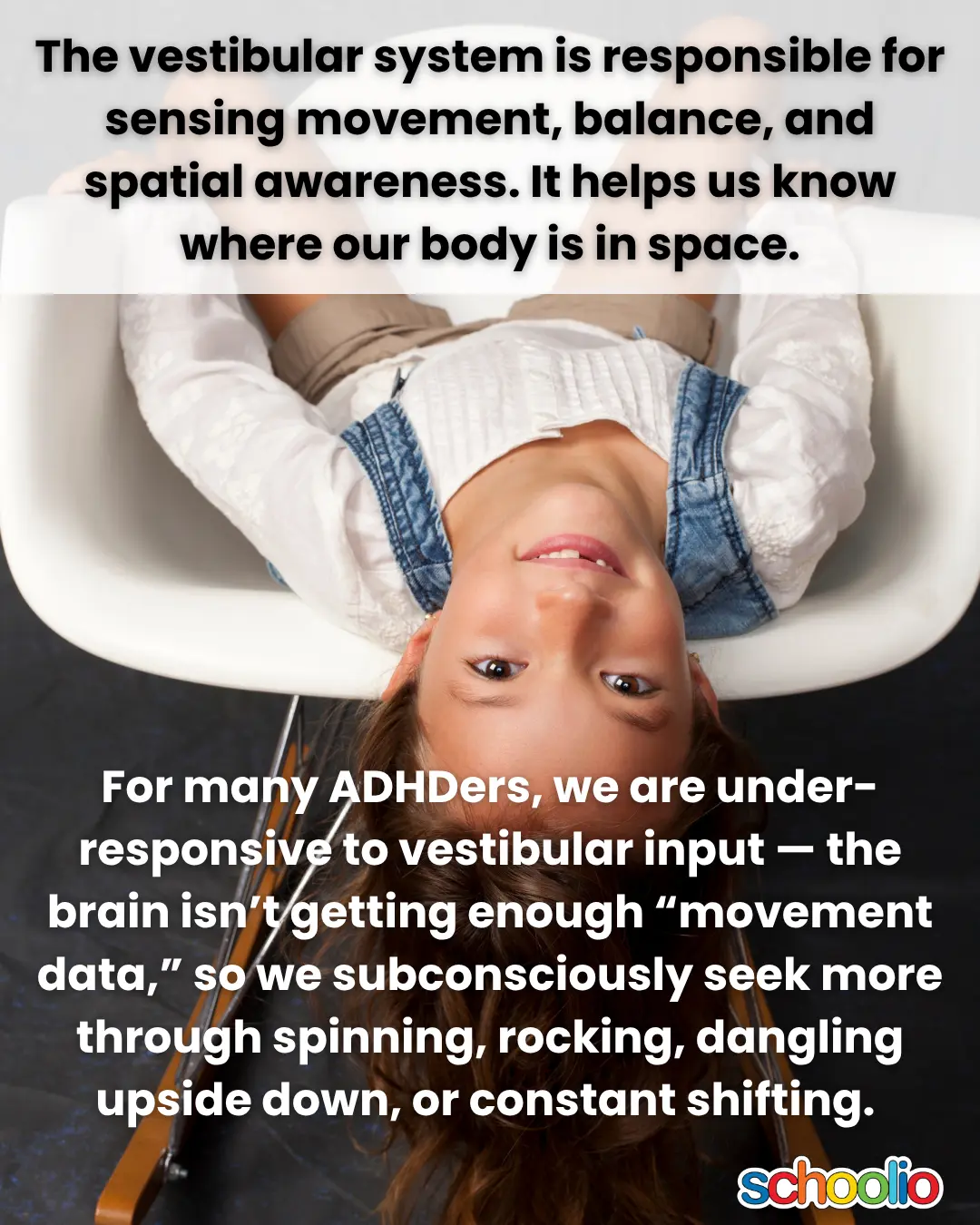
Why Your ADHD Child Can’t Sit Still- What is Vestibular Input?
If you have an ADHD child, you’ve probably said one of these phrases at least once (or, let’s be honest, many times):
“Sit properly, please.”
“Feet down.”
“Stop spinning that chair.”
“Why are you upside down right now?”
And yet, no matter how many times you say it… they just can’t seem to stop.
It’s easy to see this as misbehavior or lack of focus. But in reality, what you’re seeing might be something deeper — your child’s nervous system doing its best to get the vestibular input it needs to feel regulated, alert, and ready to learn.
What Is Vestibular Input?
The vestibular system lives in the inner ear, and it’s responsible for sensing movement, balance, and spatial awareness. It helps us know where our body is in space — like whether we’re sitting upright, moving fast, or tilting our head.
For neurotypical people, this system runs quietly in the background, keeping them centered. But for many ADHDers, it doesn’t process quite the same way.
Some ADHD kids are under-responsive to vestibular input — their brain isn’t getting enough “movement data,” so they subconsciously seek more through spinning, rocking, dangling upside down, or constant shifting. Others may be over-responsive, finding certain motions overwhelming or dizzying.
Both patterns are common — and both are the body’s way of saying, “I need help regulating.”
? Science Note: The Vestibular–Dopamine Connection
The vestibular system doesn’t work alone — it’s closely tied to the dopamine pathways in the brain that control motivation, focus, and emotional regulation.
When your child moves — spinning, jumping, rocking — those physical sensations activate parts of the brainstem and cerebellum that help regulate dopamine and norepinephrine, both of which are often low in ADHD brains.
That’s why movement helps ADHD kids “wake up” their brains:
- It boosts alertness and attention.
- It improves emotional regulation.
- It supports executive function — planning, memory, and self-control.
So when your child is fidgeting or in constant motion, they’re not being disruptive — they’re literally helping their brain function better.
What “Dopamine Seeking” Looks Like in the Body
We often talk about ADHD as dopamine-driven, but the vestibular system plays a huge role, too. Movement actually helps stimulate dopamine release — which is why your ADHD child may suddenly start pacing, swinging their legs, or balancing on the edge of a chair right when you need them to concentrate.
These “weird” positions aren’t defiance. They’re your child’s nervous system self-medicating through movement.
They might:
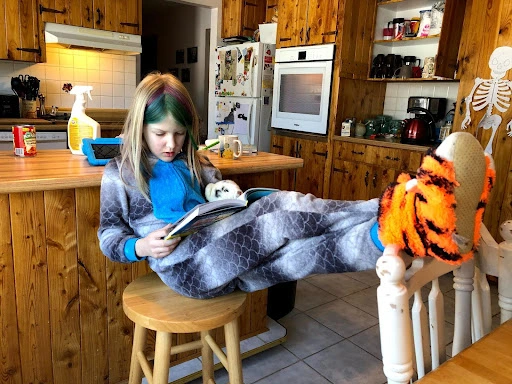
- Sit with one leg over the arm of a chair
- Hang off the couch upside down
- Constantly rock, bounce, or sway
- Spin in circles for “fun” (and never seem dizzy)
- Climb furniture or balance on unstable surfaces
It can look chaotic — but for them, it’s regulating.
What It Feels Like for ADHD Kids
For a child whose vestibular system isn’t getting enough input, sitting still can feel physically uncomfortable — like trying to focus with an itch you can’t scratch. Their brain is searching for balance signals, and until it gets them, it’s hard to settle down.
You might see:
- Fidgeting during reading or lessons
- Difficulty maintaining posture
- Restlessness or frustration during quiet tasks
- Frequent “breaks” to move or reposition
The movement isn’t the problem — it’s the coping mechanism for an unmet sensory need.
How This Impacts Learning
When a child’s body is unregulated, their brain can’t prioritize learning. The vestibular system connects directly to areas of the brain that control attention, emotion regulation, and executive function — meaning movement needs aren’t separate from learning needs.
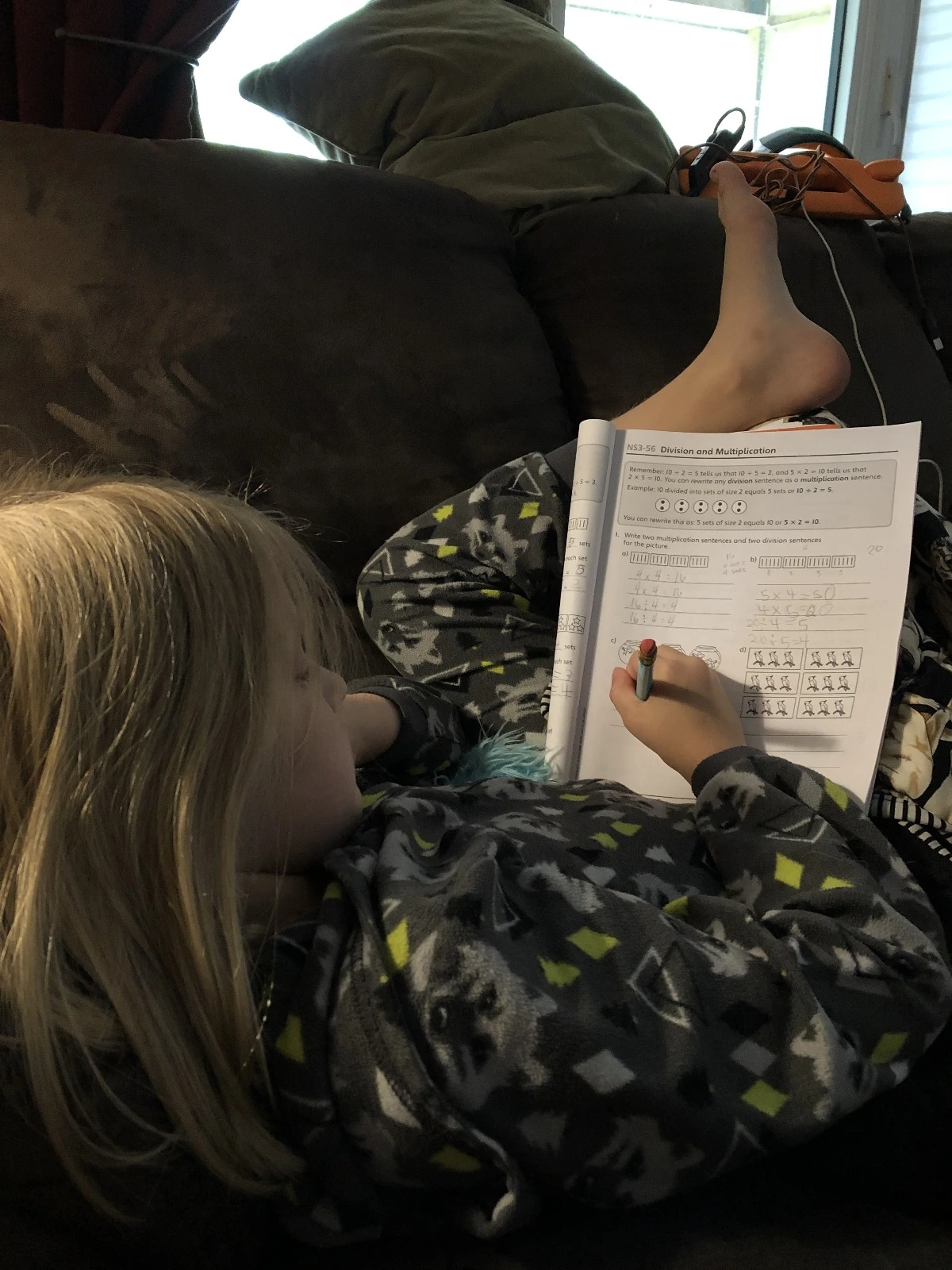
So when your ADHD child spins in their chair, lies on the floor to do math, or wiggles constantly through read-alouds… that’s not distraction. It’s adaptation.
Supporting Your Child’s Vestibular Needs at Home
Instead of trying to eliminate movement, think about channeling it. Here are some strategies to support vestibular regulation in your homeschool:
1. Build Movement Into the Day
- Use active learning breaks between subjects.
- Try standing desks, wobble stools, or yoga balls.
- Let your child read or write while pacing, swinging, or lying down.
2. Offer “Heavy Work”
Proprioceptive input (like pushing, pulling, or lifting) helps calm the vestibular system. Try:
- Carrying laundry or groceries
- Wall push-ups or wheelbarrow walks
- Building with weighted materials like LEGO or clay
3. Use Safe Spinning or Swinging
If your child seeks spinning, consider safe options like:
- Swivel chairs
- Therapy swings
- Hanging pods or hammocks
4. Respect Their Positions
If your child learns best while lying on the floor or sitting cross-legged on a chair, that’s okay. Focus on engagement, not posture.
5. Schedule Movement Intentionally
Start the day with movement-rich activities: walking the dog, dancing, yoga, or playground time. Meeting those vestibular needs early can make focused work easier later.
The Homeschooling Advantage
Traditional classrooms often punish movement — “sit still,” “stop rocking,” “stay in your seat.” But at home, you have the flexibility to do the opposite: to embrace movement as part of learning.
When you let your ADHD child learn in the way their body needs — rocking, fidgeting, or balancing — you’re not giving in to bad habits. You’re helping their nervous system regulate so their brain can focus, absorb, and thrive.
Movement isn’t a distraction. For ADHDers, movement is medicine.
“Effects of stochastic vestibular stimulation on cognitive functions in children with ADHD” — PMC article discussing vestibular stimulation and cognition for ADHD. https://pmc.ncbi.nlm.nih.gov/articles/PMC10635964
“Vestibular Rehabilitation for ADHD” — article from Neurologic Wellness Institute referencing the regulation of dopamine via vestibular input. https://neurologicwellnessinstitute.com/vestibular-rehabilitation-for-adhd/
“Vestibular therapy improved motor planning, attention, and balance in children with Attention-Deficit Hyperactivity Disorders – A RCT” — study showing improved attention and response control following vestibular intervention in children with ADHD. https://www.oatext.com/vestibular-therapy-improved-motor-planning-attention-and-balance-in-children-with-attention-deficit-hyperactivity-disorders-a-randomized-controlled-trial.php