The 5 Core Emotional Needs of ADHDers (and Why They Matter More Than You Think)

The 5 Core Emotional Needs of ADHDers (and Why They Matter More Than You Think)

If you love an ADHDer — whether it’s your child, your partner, or even yourself — you’ve probably noticed that emotions run deep.
Joy can feel electric. Frustration can feel explosive. Rejection can feel unbearable.

ADHD isn’t just about focus or attention; it’s about emotion. ADHD brains experience emotional intensity, sensitivity, and regulation challenges at a level that can be hard for others to fully grasp.

That’s why emotionally healthy environments matter so much. ADHDers don’t just need structure or strategies — they need safety. The kind that lets their nervous system exhale. The kind that helps them believe they’re not broken, just wired differently.

Let’s talk about what that really means — and the five core emotional needs every ADHDer deserves to have met.


1. Safety & Acceptance

Freedom from judgment and the pressure to mask

ADHDers spend much of their lives in environments where they feel like they’re “too much” or “not enough.” Too loud, too distracted, too emotional, too impulsive. From school rules to social cues, the world often demands they shrink themselves to fit in.

That constant self-monitoring — called masking — is exhausting. It’s like running a marathon every day while pretending you’re fine.

What ADHDers need most is the feeling that they can exist exactly as they are — fidgety, passionate, tangential, emotional — and still be safe and accepted.

At home, that looks like gentle curiosity instead of correction:
“I can see your brain’s really busy right now — want to take a break?” instead of “Stop fidgeting.”

When safety replaces shame, healing begins.


2. Validation

Having feelings and experiences recognized as real — and being given credit for achievements that come easily to others.

ADHDers often grow up hearing things like,
“You’re overreacting.”
“It’s not that big a deal.”
“Why can’t you just calm down?”

Or they hear criticism of what looks like “behavior,” when it’s really the visible struggle of an ADHD brain trying to function in a neurotypical world:
“Why are you always late?”
“Why can’t you just remember when I tell you something?”
“If you cared, you’d be able to…”

But to an ADHD brain, it is that big a deal. Emotional regulation isn’t about choosing how to feel — it’s about the brain’s ability to return to baseline.

When feelings are dismissed or minimized, they don’t disappear — they just get lonelier.

Validation doesn’t mean agreeing with every emotion or excusing every action. It means acknowledging that what they feel is real, and that what they manage to do — even if it seems small — took effort.

“I can see that felt really unfair.”
“That sounds frustrating.”
“You worked hard to finish that, even though it wasn’t easy.”
“You’re allowed to feel disappointed.”

That kind of recognition helps ADHDers feel seen instead of defective. It teaches them that their emotions and their efforts both matter — and that’s the foundation for emotional growth and self-worth.


3. Autonomy

Choice, control, and consideration in decisions and pacing

Control is oxygen for ADHD brains.

Because ADHD impacts executive function — the part of the brain responsible for planning, organizing, and self-regulation — losing control can feel terrifying. It’s not about being oppositional or defiant. It’s about needing to steer their own ship, even if they’re still learning how.

But autonomy isn’t just about having choices — it’s about being considered.

For many ADHDers, life can feel like one long series of adjustments to fit a neurotypical world. They bend, mask, minimize, and stretch themselves to meet expectations that weren’t built with their brains in mind. Over time, that can make them feel invisible — like decisions are made for them, not with them.

Being considered — being included in plans, asked for input, and treated like their needs and preferences matter — is a form of freedom. It tells them, you belong here, as you are.

In homeschool environments, autonomy and consideration might look like:

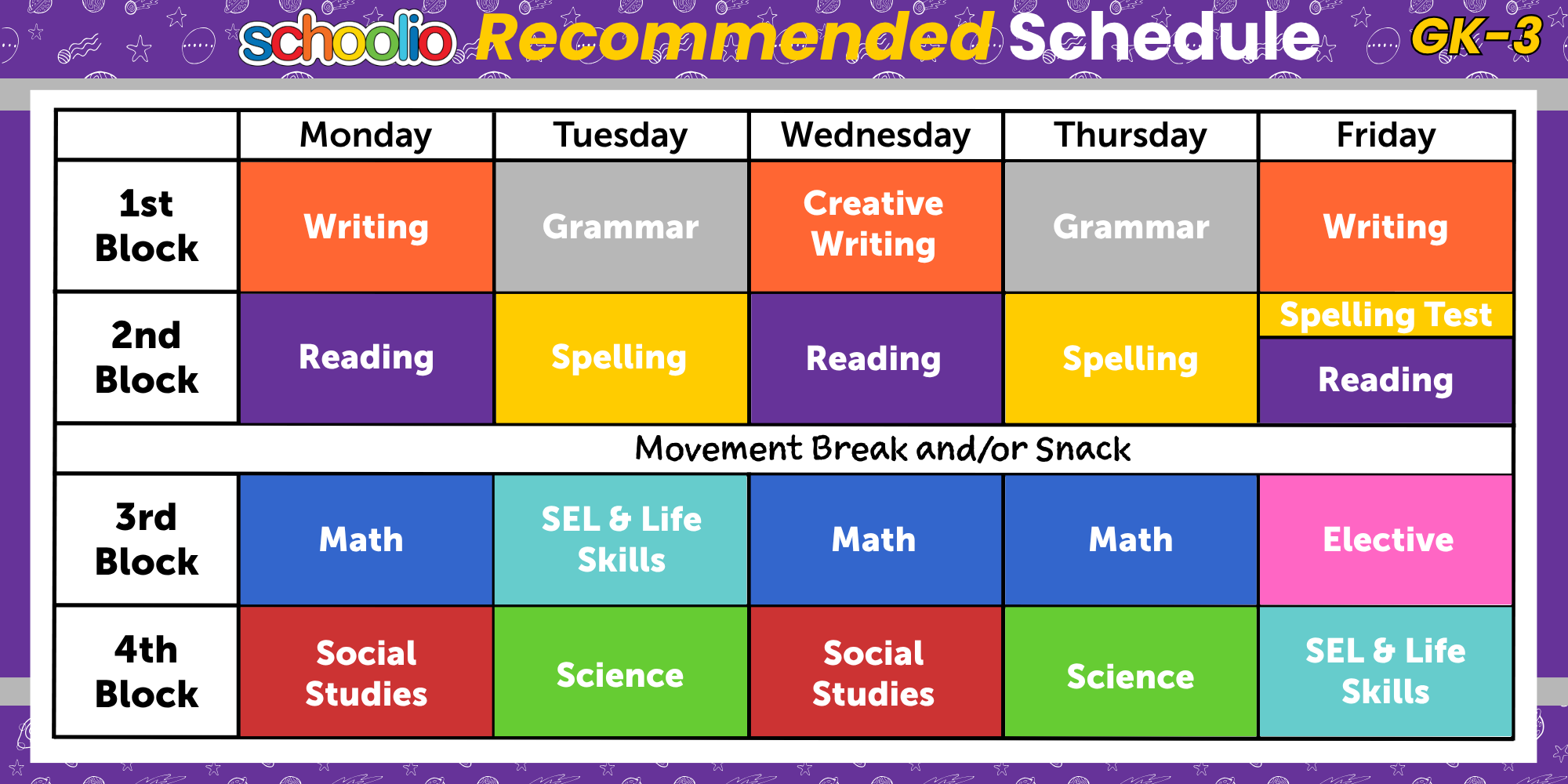
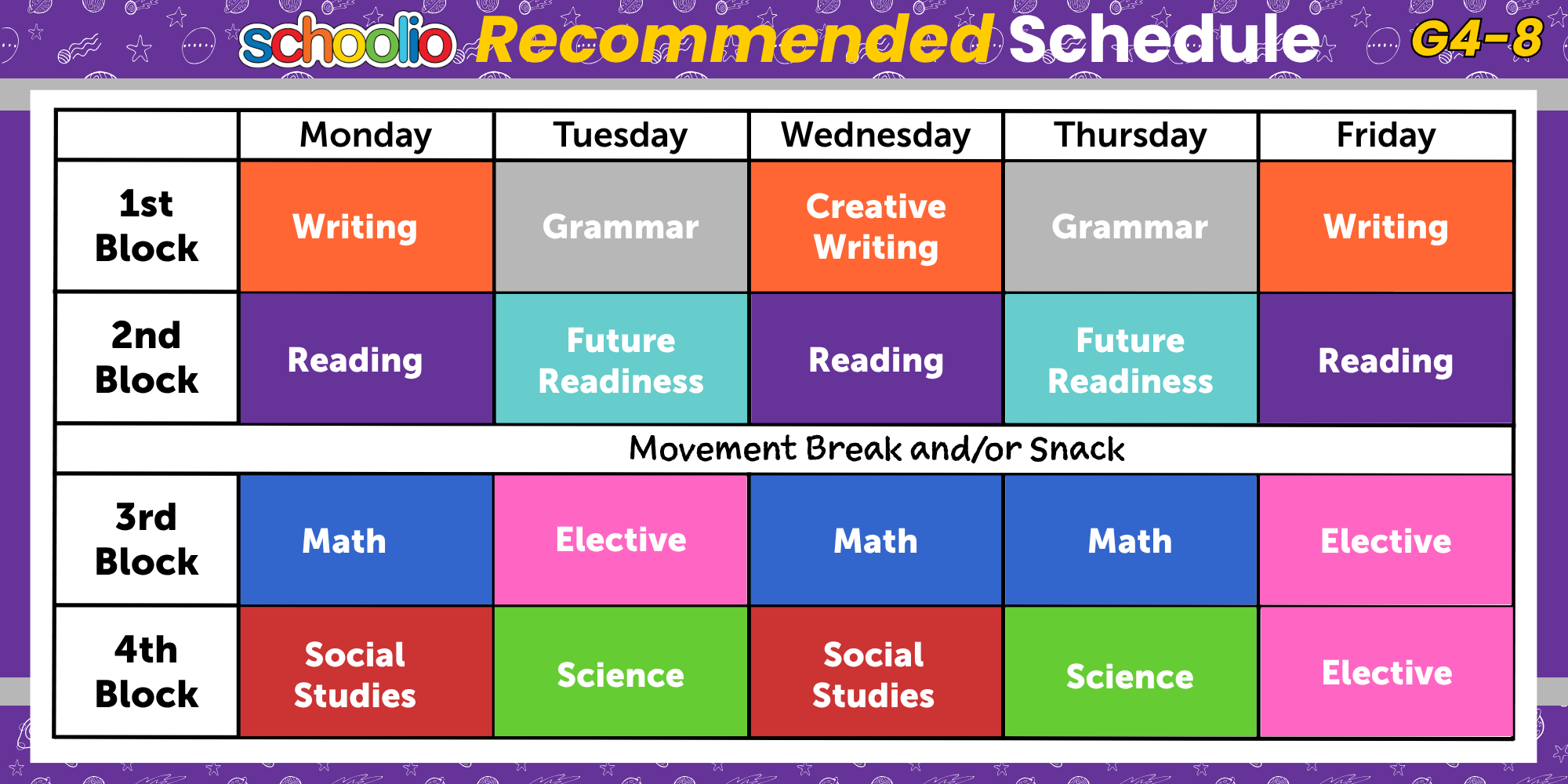
  • Letting your child choose the order of subjects for the day 
  • Including them in planning routines or schedules that affect them 
  • Allowing them to decide whether to write with pencil, keyboard, or voice-to-text 
  • Giving them time limits that feel achievable instead of arbitrary 

When ADHDers are given genuine choice and genuine consideration, resistance turns into collaboration — and confidence blooms where shame used to live.

**If the need for autonomy and control feels even bigger for your child, to the point where they’re hyper-defiant of demands, you might be dealing with PDA (Pathological Demand Avoidance).


4. Connection

Supportive, understanding relationships

Underneath all the intensity and impulsivity, most ADHDers carry a deep fear of disconnection.

By age 12, the average child with ADHD has heard around 20,000 more negative or corrective messages than their neurotypical peers. (That’s a lot of “stop that,” “focus,” and “why can’t you just…”). Each one chips away at their sense of being lovable as they are.

That’s why connection is the antidote.

Connection tells the ADHD brain, you are still safe, even when you make mistakes.
It looks like laughter during lessons, shared problem-solving, and hugs after meltdowns. It’s eye contact, patience, and the unspoken message: we’re on the same team.

When ADHDers feel securely connected, their nervous system relaxes — and their capacity for learning, empathy, and resilience expands.


5. Consistency

Predictable environments that reduce stress

ADHD brains crave novelty, but they need predictability.

Inconsistent feedback, unpredictable schedules, or sudden changes can feel like emotional whiplash. Without a sense of what’s coming next, anxiety spikes — and so does dysregulation.

Consistency doesn’t mean rigidity. It means creating reliable patterns they can count on.

  • Clear expectations that stay the same 
  • Gentle transitions between activities 
  • A stable emotional tone at home 

Consistency tells the ADHD brain, you’re safe here. And safety builds the foundation for focus, trust, and growth.


Building Emotionally Safe Spaces for ADHDers

When these five needs — safety, validation, autonomy, connection, and consistency — are met, ADHDers thrive.

They regulate more easily.
They recover faster from mistakes.
They begin to trust themselves again.

And for parents, meeting these needs doesn’t mean being perfect. It means leading with compassion and curiosity, remembering that the behaviors you see are often the language of unmet needs.

When you give your ADHDer the emotional environment their brain truly needs, you’re not just teaching academics.
 

You’re teaching self-worth.
You’re teaching safety.
You’re teaching love that heals.


To the Weak, Everything Feels Like a Threat

To the Weak, Everything Feels Like a Threat


This has been on my mind today…


Every time education shifts forward, fear gets louder.

Teachers are angry that families are exploring alternatives during the Alberta strike. Some are even calling parents “disloyal” for turning to online resources. But let’s be honest — what else are families supposed to do when the system stops working?

The truth is, teachers are afraid. And I get it. They’ve been handed an impossible job inside a system that hasn’t evolved in 150 years. A system built for industrial workers, not creative thinkers. For compliance, not curiosity.

AI. Homeschooling. Microschools. Digital curriculum.

All of it is growing — fast.

And instead of seeing these tools as extensions of learning, too many educators see them as enemies.

Here’s the reality:

Parents aren’t abandoning teachers. They’re abandoning a model that no longer serves their kids.

Innovation in education isn’t an attack. It’s an answer.

The families turning to homeschooling or digital learning aren’t doing it to undermine teachers — they’re doing it to survive a broken system.

We should be building bridges, not battle lines.

Technology and teachers can coexist. But that requires courage — the kind that looks at change and says, “Let’s learn from it.”

Because the future of education won’t be built by those defending the old ways. It’ll be built by the ones bold enough to imagine new ones.

Alberta


Sathish
Still learning, still unlearning

Worried Homeschooling Is Too Expensive? Here’s Your Defense Over the Costs

Worried Homeschooling Is Too Expensive? Here’s Your Defense Over the Costs


Yes, homeschooling has costs — but so does public school. The difference? You control what you spend and why.

I hear from parents considering homeschooling all the time…

“I want to start homeschooling… but what if I just can’t afford it?”

It’s a fair question. And while homeschooling does cost money — for curriculum, field trips, and supplies — I think it’s time we talk honestly about something people don’t always mention:

? Public school isn’t free.

The truth is, both paths have costs. But with homeschooling, you get to decide what you buy and how much you spend, based on your values and your child’s needs — not what’s written on a school form or fundraiser sheet.

Let’s break it down.


? How Much We Spend on Homeschooling

If you’ve met me, and a lot of you have, you probably know I’m an incurable Type-A planner. We also homeschooled our two kids on one income, as I know many of you are as well. For several years I tracked everything that was homeschool related, so I knew exactly how much we were spending on:

  • Curriculum
  • Field trips
  • Supplies
  • Anything we wouldn’t have spent otherwise if they were in school

But here’s the kicker…


vs. What We Spent in Public School (Hint: It Was More)

This spending tracking didn’t begin with homeschooling though- back when my kids were in public school, I also tracked our spending. Those years?

We spent almost $100 more per childfor free public school.

Here’s where that money went:

  • Back-to-school supplies (the specific ones required)
  • Indoor shoes, gym clothes, weather gear – and clothing replacements when they are lost and stolen
  • School events: BBQs, fairs, pizza day, candy cane day, milkshake day…
  • Valentines, classroom parties, book fairs, teacher gifts
  • Hot lunches and fundraiser purchases
  • Fad items and brand names your kids have to have in order to not be bullied

We weren’t even high-participation parents! We did just enough that our kids didn’t feel left out, but not every event or lunch or fundraiser.

And still? It added up.


? The Big Difference with Homeschooling: You’re in Control Now

Homeschooling gives you something public school doesn’t:

Control over what you spend — and what you get for it.

You decide:

  • Which curriculum to invest in (or whether to build your own)
  • How often you take field trips
  • Whether you spend more time or more money — whichever fits your family
  • What supplies, tools, or extras actually matter in your homeschool

You’re not just handing money over for a pizza party you didn’t ask for.

You’re choosing what best supports your child’s growth — and your family’s goals.


? Homeschooling Can Work on a Budget

You’ll spend either money or time — or some combination of both.

The beauty is: you get to choose what’s worth it.

Whether you’re middle-of-the-road spenders, doing things ultra-minimally with free resources and DIY everything, or have some room to buy back more time — there’s no one “right” budget for homeschooling.

But don’t let the myth of free public school fool you. The costs are real.

The difference is, with homeschooling, you’re investing with intention.

Lindsey

Certified Special Ed Educator & Co-Founder, Schoolio

Homeschooling Isn’t a Competition — It’s an Alignment

Homeschooling Isn’t a Competition — It’s an Alignment


I saw this passage today and it hit me hard.


Your life will change when you understand this


“You are only ever competing against one thing — your own self-doubt.”

When I think about homeschooling families, this couldn’t be more true.

So many parents start this journey filled with doubt. Am I enough? Am I doing it right? What if my child falls behind?
But the families who thrive — the ones I see at Schoolio every day — aren’t necessarily the most organized, experienced, or well-resourced.

They’re simply the ones who believe they can do this.

Who trust that learning at home, in their own rhythm, is enough.
They drop the competition mindset. They stop comparing their kids to traditional classrooms. They stop chasing grades and start building connection.

Homeschooling isn’t about outperforming anyone. It’s about aligning — with your child, your values, and the kind of life you want to build together.

When families stop trying to “fit in” and start trusting themselves, everything changes.
What you seek — confidence, peace, connection — is already seeking you.

Sathish
Still learning, still unlearning

You Don’t Have to “Be the Teacher”

You Don’t Have to “Be the Teacher”


One of the things I hear most often from new homeschooling parents is:

“I’m worried about how to be the teacher.”

“How do I switch between being Mom and being Teacher?”

And I get it — that’s the model we were raised in. School was one thing. Home was another. Learning happened in a classroom, not the kitchen, and teachers were “official” in a way parents weren’t.

But that separation? It’s something we were taught.

And it’s one of the first things to unlearn when you start homeschooling.

The truth is, you already are your child’s most impactful and most important teacher.

You taught them to talk. To walk. To be kind. To navigate big feelings. You’ve taught them hundreds of things — without ever standing at a whiteboard or grading a paper.

Homeschooling doesn’t mean you suddenly need to transform into a formal “teacher” figure with a desk, a whistle, and a lesson plan binder.

It means you continue what you’ve always done — guiding your child through learning experiences that help them grow into capable, curious, thoughtful humans.

Let go of the image of kids sitting in desks while you lecture at the front. That’s not homeschooling. That’s school-at-home — and that’s not what your kids need.

Kids aren’t empty vessels waiting to be filled with facts. They’re active participants in their own learning.

When you give your child autonomy and ownership, everything changes.

You stop being “the enforcer,” and start being their guide. Their mentor. Their teammate.

You’re not switching between roles — you’re expanding the one you’ve always had.

In real life, learning doesn’t have boundaries. It doesn’t only happen between 9 and 3, or only from someone with a degree. It happens everywhere, all the time, through curiosity and connection.

Your homeschool doesn’t need to mirror school.

It needs to mirror life.


? Lindsey

Certified Special Ed Educator & Co-Founder, Schoolio

Why Your ADHD Child Can’t Sit Still- What is Vestibular Input?

Why Your ADHD Child Can’t Sit Still- What is Vestibular Input?


If you have an ADHD child, you’ve probably said one of these phrases at least once (or, let’s be honest, many times):
“Sit properly, please.”
“Feet down.”
“Stop spinning that chair.”


“Why are you upside down right now?”

And yet, no matter how many times you say it… they just can’t seem to stop.

It’s easy to see this as misbehavior or lack of focus. But in reality, what you’re seeing might be something deeper — your child’s nervous system doing its best to get the vestibular input it needs to feel regulated, alert, and ready to learn.

vestibular input

What Is Vestibular Input?

The vestibular system lives in the inner ear, and it’s responsible for sensing movement, balance, and spatial awareness. It helps us know where our body is in space — like whether we’re sitting upright, moving fast, or tilting our head.

For neurotypical people, this system runs quietly in the background, keeping them centered. But for many ADHDers, it doesn’t process quite the same way.

Some ADHD kids are under-responsive to vestibular input — their brain isn’t getting enough “movement data,” so they subconsciously seek more through spinning, rocking, dangling upside down, or constant shifting. Others may be over-responsive, finding certain motions overwhelming or dizzying.

Both patterns are common — and both are the body’s way of saying, “I need help regulating.”

? Science Note: The Vestibular–Dopamine Connection

The vestibular system doesn’t work alone — it’s closely tied to the dopamine pathways in the brain that control motivation, focus, and emotional regulation.

When your child moves — spinning, jumping, rocking — those physical sensations activate parts of the brainstem and cerebellum that help regulate dopamine and norepinephrine, both of which are often low in ADHD brains.

That’s why movement helps ADHD kids “wake up” their brains:

  • It boosts alertness and attention.
  • It improves emotional regulation.
  • It supports executive function — planning, memory, and self-control.

So when your child is fidgeting or in constant motion, they’re not being disruptive — they’re literally helping their brain function better.


What “Dopamine Seeking” Looks Like in the Body

We often talk about ADHD as dopamine-driven, but the vestibular system plays a huge role, too. Movement actually helps stimulate dopamine release — which is why your ADHD child may suddenly start pacing, swinging their legs, or balancing on the edge of a chair right when you need them to concentrate.

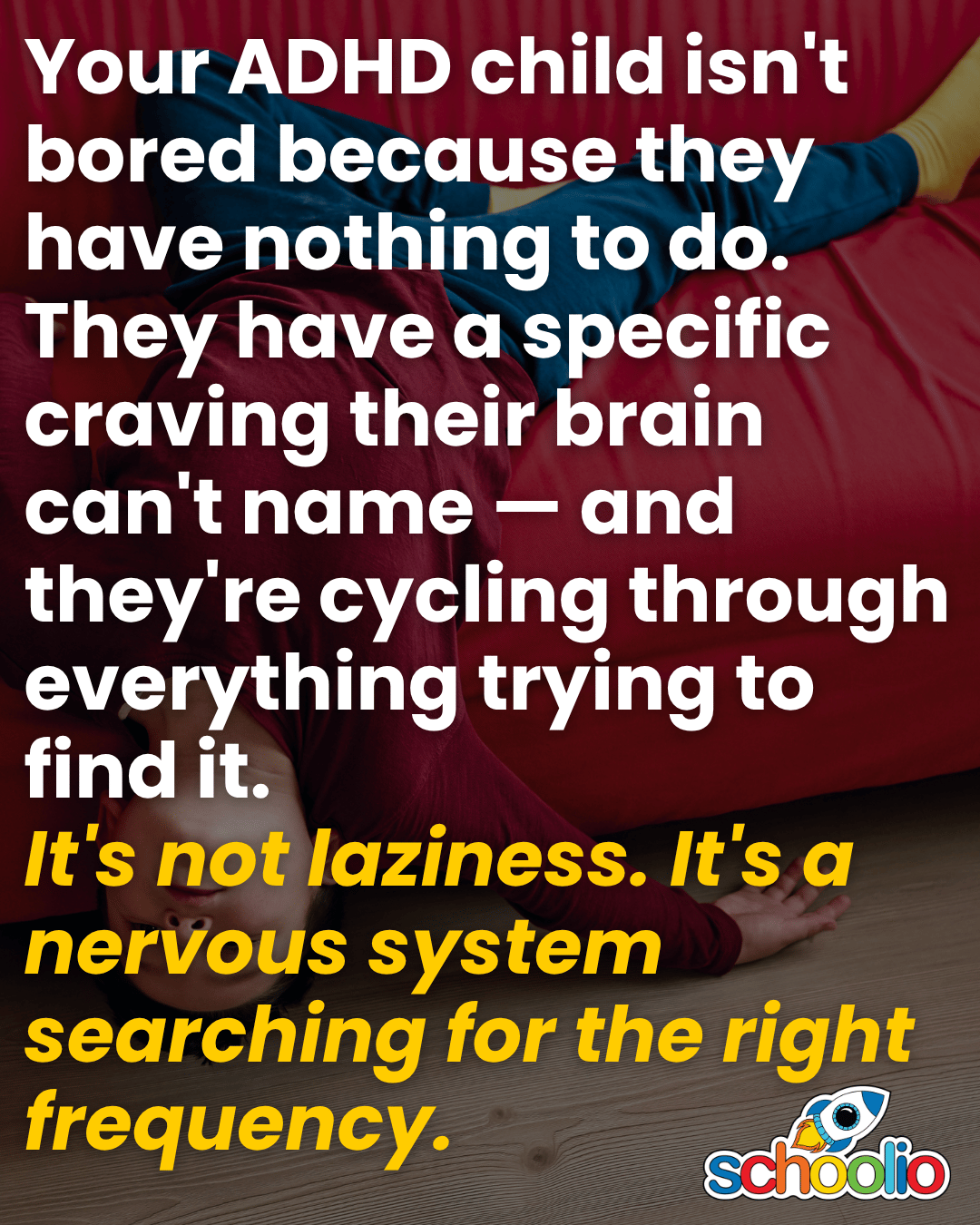
These “weird” positions aren’t defiance. They’re your child’s nervous system self-medicating through movement.

They might:

  • Sit with one leg over the arm of a chair
  • Hang off the couch upside down
  • Constantly rock, bounce, or sway
  • Spin in circles for “fun” (and never seem dizzy)
  • Climb furniture or balance on unstable surfaces

It can look chaotic — but for them, it’s regulating.


What It Feels Like for ADHD Kids

For a child whose vestibular system isn’t getting enough input, sitting still can feel physically uncomfortable — like trying to focus with an itch you can’t scratch. Their brain is searching for balance signals, and until it gets them, it’s hard to settle down.

You might see:

  • Fidgeting during reading or lessons
  • Difficulty maintaining posture
  • Restlessness or frustration during quiet tasks
  • Frequent “breaks” to move or reposition

The movement isn’t the problem — it’s the coping mechanism for an unmet sensory need.

How This Impacts Learning

When a child’s body is unregulated, their brain can’t prioritize learning. The vestibular system connects directly to areas of the brain that control attention, emotion regulation, and executive function — meaning movement needs aren’t separate from learning needs.

So when your ADHD child spins in their chair, lies on the floor to do math, or wiggles constantly through read-alouds… that’s not distraction. It’s adaptation.

Supporting Your Child’s Vestibular Needs at Home

Instead of trying to eliminate movement, think about channeling it. Here are some strategies to support vestibular regulation in your homeschool:

1. Build Movement Into the Day

  • Use active learning breaks between subjects.
  • Try standing desks, wobble stools, or yoga balls.
  • Let your child read or write while pacing, swinging, or lying down.activity

2. Offer “Heavy Work”

Proprioceptive input (like pushing, pulling, or lifting) helps calm the vestibular system. Try:

  • Carrying laundry or groceries
  • Wall push-ups or wheelbarrow walks
  • Building with weighted materials like LEGO or clay

3. Use Safe Spinning or Swinging

If your child seeks spinning, consider safe options like:

  • Swivel chairs
  • Therapy swings
  • Hanging pods or hammocks

4. Respect Their Positions

If your child learns best while lying on the floor or sitting cross-legged on a chair, that’s okay. Focus on engagement, not posture.

5. Schedule Movement Intentionally

Start the day with movement-rich activities: walking the dog, dancing, yoga, or playground time. Meeting those vestibular needs early can make focused work easier later.

The Homeschooling Advantage

Traditional classrooms often punish movement — “sit still,” “stop rocking,” “stay in your seat.” But at home, you have the flexibility to do the opposite: to embrace movement as part of learning.

When you let your ADHD child learn in the way their body needs — rocking, fidgeting, or balancing — you’re not giving in to bad habits. You’re helping their nervous system regulate so their brain can focus, absorb, and thrive.

Movement isn’t a distraction. For ADHDers, movement is medicine.

“Effects of stochastic vestibular stimulation on cognitive functions in children with ADHD” — PMC article discussing vestibular stimulation and cognition for ADHD. https://pmc.ncbi.nlm.nih.gov/articles/PMC10635964


“Vestibular Rehabilitation for ADHD” — article from Neurologic Wellness Institute referencing the regulation of dopamine via vestibular input. https://neurologicwellnessinstitute.com/vestibular-rehabilitation-for-adhd/


“Vestibular therapy improved motor planning, attention, and balance in children with Attention-Deficit Hyperactivity Disorders – A RCT” — study showing improved attention and response control following vestibular intervention in children with ADHD. https://www.oatext.com/vestibular-therapy-improved-motor-planning-attention-and-balance-in-children-with-attention-deficit-hyperactivity-disorders-a-randomized-controlled-trial.php


The Night-Time Spiral

The Night-Time Spiral


It’s always at night, isn’t it? The house is quiet. Everyone’s asleep.

Except you.

The worrying… it creeps in so easily when you’re homeschooling. You start wondering…

Are we doing enough?

Are we behind?

Are they really learning?

What if they’d be better off in school?

Before you know it, you’re spiraling.

I know those nights too well.

So many nights, I’d lie awake, scrolling through Pinterest activities and curriculum reviews at 1 a.m., wondering if maybe this one will be the fix we need to make me feel confident we were “on track”. Replaying the day in my head- the math lesson that ended in tears, the half-finished writing assignment, the forgotten science experiment-  and convincing myself I was failing.

We’d never catch up.

I’d ruined their lives by homeschooling them.

Why had I ever thought that I could do this?

The self-talk… it gets bad in the still of the night, doesn’t it?

But here’s something I’ve learned after years of homeschooling and many of my own late-night spirals:

Bad parents don’t worry about whether or not they’re bad parents.

Good parents worry.

We worry because we care — deeply, fiercely, endlessly.

That worry you feel? It’s not a sign that you’re doing something wrong. It’s proof that you love your kids enough to question yourself. It means you’re invested. You’re thinking. You’re trying.

And that’s what good homeschooling is made of — not perfect routines or Pinterest-worthy plans, but care.

Every good parent I know worries about whether they’re doing it right.

Every good homeschooler I know questions if they’re doing “enough”.

It’s part of the process.

But try to reframe that worry the next time it sneaks up on you in the quiet hours. Instead of letting it spiral into fear, remind yourself what it really means:

You care enough to notice.

You care enough to show up.

You care enough to want the best for your kids.

And caring that much — that’s the heart of everything that matters.

So take a breath.

You’re not failing. You’re loving.

And that’s exactly what they need most.

Lindsey
Certified Special Ed Educator & Co-Founder, Schoolio

When Schools Punish Curiosity, Families Choose Freedom

When Schools Punish Curiosity, Families Choose Freedom


This has been on my mind today…

I saw a post today from a school administrator frustrated that parents take kids out of school for vacations. “I can understand a death or family emergency,” he said, “but a cheaper vacation? Nope.”

That comment says everything about why so many families are leaving the system.

We’ve built schools that treat learning like a fixed location — a desk, a bell, a schedule. But learning doesn’t stop when you leave the classroom. It happens in airports, in museums, in street markets, and in quiet conversations between parent and child while exploring a new city.

When schools shame families for traveling, they’re not protecting education — they’re limiting it.

Learning on the road is world learning. It’s exposure, perspective, adaptability. It’s the kind of real-life curriculum no textbook can teach.

Families aren’t looking for rebellion. They’re looking for flexibility.

They want their kids to see the world and still stay connected to structured learning.That’s why platforms like Schoolio exist — to make learning portable, digital, and continuous. Whether you’re in a classroom or on the road, learning doesn’t have to pause.

If schools truly want to prepare kids for the world, they should start by letting them experience it.


Sathish
Still learning, still unlearning

Why I’m Not Worried About “Sheltering” My Homeschooled Kids

Why I’m Not Worried About “Sheltering” My Homeschooled Kids


This has been on my mind today…

I used to brace myself every time someone said it. You know the line.

“But aren’t you sheltering your kids from the real world?”

At first, I tried to explain. Then I tried to debate. Now? I just smile — because the truth is, yes, I am.

I’m sheltering them from the pressure to fit in before they even know who they are.

From being teased in the cafeteria because they don’t wear the right shoes or laugh at the same jokes.

From classrooms that push every child through the same mold, at the same speed, regardless of how they learn best.

But I’m also preparing them for the world. For the real one — not the one that pretends standardized tests and silent rows teach life skills.

In our home, we talk about kindness. We wrestle with questions. We fall apart and rebuild.

We learn how to fail and keep going. We learn how to speak up and when to listen. We learn that who we are as unique individuals is important… and awesome. We build resilience and confidence- so they’re really ready for the “real world.”

They learn how to handle conflict, talk to cashiers and librarians, make friends of all ages, and advocate for themselves. They practice empathy daily because it’s not just a word on a poster — it’s part of our lessons.

Is that sheltering? Maybe. But it’s also strengthening.

Because when my child walks out into the world, I want them to know who they are.

Not just what they’ve memorized. Not just what other kids or teachers have told them they are.

I want them to feel confident enough to speak, not just raise their hand for permission.

I want them to see difference and not fear it — to question and not crumble.

So yes, we’re doing school differently. That doesn’t mean we’re hiding.

It means we’re building something deeper.

Not a bubble — but a bridge. And we’ll cross it together when it’s time.


With love,

Lindsey

Certified Special Ed Educator & Co-Founder, Schoolio

Understanding ADHD Motivation in Kids: It’s Not Broken, Just Different

Understanding ADHD Motivation in Kids: It’s Not Broken, Just Different


“You just need to try harder.”
“If you’d only apply yourself.”
“You’d do it if you really wanted to.”

Sound familiar? If you’re raising or homeschooling an ADHD child, you’ve probably heard these words directed at them—or even caught yourself thinking them in moments of frustration. Unfortunately, our kids hear this kind of messaging a lot. In fact, research estimates that by age 12, ADHD children have heard around 20,000 more negative comments than their neurotypical peers.

That steady stream of criticism teaches ADHD kids that they’re lazy, unmotivated, or difficult. But here’s the truth: your child’s motivation isn’t broken. Their brain simply runs on a different operating system, and understanding how it works is the first step to helping them thrive.

How Motivation Works Differently in ADHD Brains

Neurotypical brains are generally motivated by rewards, consequences, and willpower. They can push through boring tasks because they know it will pay off in the end.

ADHD brains don’t respond to those motivators in the same way. Instead, their motivation is fueled by five unique drivers: urgency, novelty, interest, challenge, and purpose. When we try to push them with typical methods, it often backfires. But when we learn to work with their motivators, instead of against them, everything changes.

The 5 Key Motivators in ADHD Kids

1. Urgency

Ever notice your child suddenly works like a whirlwind right before a deadline—but can’t start two weeks earlier? That’s urgency at play. Their brain doesn’t register “later” as important—it needs “right now” to kick into gear.

How parents can help:

  • Break big tasks into smaller steps with shorter deadlines.

  • Use timers—turn chores into races.

  • Try body-doubling: sit beside them while you each work on something.

2. Novelty

ADHD kids thrive on newness. A new book, a new game, a new learning method? Instant focus. But once the shine wears off, their interest crashes. This isn’t stubbornness—it’s brain chemistry.

How parents can help:

  • Introduce small changes to routines (a new pen, studying in a new spot).

  • Rotate activities instead of relying on the same approach every day.

  • Lean into their love of trying new things—then build learning around it.

3. Interest

Have you ever been amazed at how your child can remember every detail of their favorite video game, but can’t recall what you just asked them to do? ADHD brains run on an interest-based nervous system. When they care, they can focus like a laser. When they don’t, it feels impossible to start.

How parents can help:

  • Connect “boring” tasks to your child’s passions.

    • Hate writing? Turn the essay into a comic strip or YouTube script.

    • Math struggles? Frame problems as Pokémon stats or Minecraft builds.

  • Let them dive deep into special interests—it strengthens focus muscles.

4. Challenge

Too easy = boring. Too hard = overwhelming. ADHD brains need the sweet spot in between, where a task feels like a puzzle to solve.

How parents can help:

  • Turn chores into challenges (“Can you beat yesterday’s cleanup time?”).

  • Use levels or point systems like a game.

  • Encourage self-competition, not competition with siblings or peers.

5. Purpose

Above all, ADHD kids need to know why they’re doing something. “Because I said so” rarely works. If a task feels meaningful, they can stick with it. If not, motivation evaporates.

How parents can help:

  • Reframe chores: cleaning a room = having a calmer, less stressful space.

  • Link schoolwork to goals they care about (Spanish = talking with new friends, watching shows without subtitles).

  • Talk about long-term benefits in a way that feels personal, not abstract.

Helping Your Child Feel Seen

When ADHD kids don’t respond to “normal” motivators, it’s not laziness—it’s wiring. And when they hear constant negative messages, it chips away at their confidence. But as a parent, you can flip the script.

By working with your child’s unique motivators—urgency, novelty, interest, challenge, and purpose—you’re not just helping them get through daily tasks. You’re teaching them how their brain works, building self-awareness, and showing them that their differences aren’t deficits.

Your child doesn’t need to “try harder.” They need to try differently—and they need adults who understand how to guide them there.

“Not Educable”? Or Just Not Understood?

“Not Educable”? Or Just Not Understood?


This has been on my mind today…


I was in a private “teachers only” Facebook group recently — don’t ask me how I got in ? — and one comment stopped me cold.

“Some of these kids just aren’t educable.”

It triggered me. Deeply.

Because I’ve been that kid.

Because I’ve raised a child labeled “lazy” for not learning the way others expected.

Because I’ve built a company, Schoolio, for the very kids traditional systems are too quick to write off.

When a teacher — someone trained to unlock potential — says a child can’t be educated, what they’re really saying is: “I don’t know how. And I’m not willing to try.” But no child is uneducable. Some are misunderstood.

Some are neurodivergent.

Some are traumatized.

Some are learning in a way you weren’t trained to see.

Education is a relationship, not a one-way delivery service. It’s not just about curriculum — it’s about care, creativity, and compassion.

What we can’t do is confuse a system’s failure with a child’s inability. The system was never designed to serve every child — especially those who learn differently.

And that’s why Schoolio exists.

We don’t believe in “bad kids.”

We believe in bad assumptions, outdated frameworks, and a desperate need for empathy in education. Because when you tell a child they’re uneducable, you’re not describing them — you’re indicting yourself.

So the next time a student struggles… pause.

Ask what’s missing.

Ask how you can adapt.

Ask what support might unlock their potential.

Because learning isn’t a light switch. It’s a spark. You just have to be willing to see it.


Sathish
Still learning, still unlearning


When Learning Becomes Theirs

When Learning Becomes Theirs


In traditional schooling, kids are taught to follow directions, do as they’re told, complete assignments as directed, and meet someone else’s expectations.

There’s no choice in what, when, or how they learn. They can’t even decide for themselves when to use the washroom.

And that’s a way of learning — but it’s not the same as learning how to:

  • Set personal goals
  • Reflect on growth
  • Ask great questions
  • Navigate challenges with persistence
  • Make choices about what (and how) they want to learn

That’s the difference between compliance and ownership.

When kids feel like school is something being done to them, resistance sets in.

When they feel like it’s something they’re actively building, everything changes.

I’ve seen this shift happen over and over in homeschooling. When you give kids a voice in their learning — whether it’s choosing which subject to start with, setting a goal for the week, or diving deep into something they’re curious about — they start to care differently.

They ask better questions. They push through challenges. They learn because they want to, not because they have to.

It’s not about giving up structure — it’s about sharing the steering wheel.

When we invite kids into the process of shaping their education, we’re not just teaching academics. We’re teaching self-awareness, confidence, and lifelong learning skills that reach far beyond any test score.

Because the ultimate goal isn’t to raise kids who can follow directions — it’s to raise humans who can direct their own lives.

? Lindsey

Certified Special-Ed Educator & Co-Founder, Schoolio