Behave or there are consequences. Perform or you’ll fall behind. Fit in or be left out.
Fear works. That’s the problem.
It produces short-term compliance.
But it leaves something behind.
A quiet voice that says: you are only okay if you are performing.
I see something different in the homeschool families I meet.
Not perfect families. Not families without struggle.
But families who made a decision — sometimes consciously, sometimes just by feel — to parent through trust instead.
Trust that their child wants to learn.
Trust that growth doesn’t have to be forced.
Trust that a child given space and guidance will find their way.
Why Cycle Breaking in Parenting Matters
Cycle breaking is hard work.
It is unlearning the parenting and teaching that was modeled to us.
It is finding your way without a roadmap.
No one hands you a guide for how to parent differently than you were parented.
You figure it out. You get it wrong sometimes. You keep going.
But it is one of the most important things we can do for our children.
And for their education.
Imagine a child who is encouraged to explore their interests. Maybe your child loves dinosaurs. Instead of forcing them to stick to a rigid curriculum, you can integrate their interest into various subjects. Reading about dinosaurs, calculating their sizes in math, or even creating art projects based on them can make learning exciting and relevant.
Consider a real-life example: A homeschooling mom shared how her son struggled with traditional math methods. Instead of insisting on the standard approach, she allowed him to explore math through cooking, measuring ingredients, and doubling recipes. This practical application not only improved his math skills but also boosted his confidence.
Building Trust in Cycle Breaker Parenting
Parents who were taught through shame choosing to teach through curiosity.
Parents who were controlled choosing to guide.
Parents who were never trusted deciding that their kids will be.
Building trust takes time and patience. It involves listening to your child’s needs and interests, and sometimes it means stepping back and allowing them to make mistakes. For instance, if your child shows an interest in gardening, allow them to plant their own seeds and care for the plants. They might make mistakes along the way, but these are valuable learning experiences.
Trust also means believing in your child’s ability to learn at their own pace. In homeschooling, this can be particularly powerful. A friend of mine decided to let her daughter, who was struggling with reading, choose her own books. Over time, her daughter’s love for reading blossomed, and she began to read more complex texts on her own.
As the school year pushes into the spring, many families hit a breaking point. What started as typical back-to-school jitters in September has morphed into deep, chronic exhaustion by April.
If your mornings are a battleground and your afternoons end in meltdowns, you aren’t alone. You are likely witnessing public school burnout.
Here are the three undeniable signs your child needs to be homeschooled, and how taking control of their education can restore peace to your household.
1. Severe After-School Restraint Collapse
Does your child hold it together perfectly all day for their teachers, only to completely fall apart the minute they get in the car or walk through the front door? This is called “after-school restraint collapse.” The sensory overload, social masking, and rigid demands of the public school system drain their nervous system. When they finally reach their safe space (you), the dam breaks. Homeschooling eliminates this exhaustion by allowing them to learn in an environment calibrated to their sensory needs.
2. The “Sunday Scaries” Have Become Daily Terror
It is normal for kids to groan about Monday morning. It is not normal for a child to experience severe anxiety, stomach aches, or panic attacks every single night before school. If your child’s mental health is rapidly deteriorating due to academic pressure or bullying, pulling them out isn’t “giving up”—it is rescuing them.
3. Their Spark for Learning is Gone
Every child is born curious. If the standardized testing, relentless quizzing, and strict pacing of the public school system have convinced your bright child that they “hate learning” or “aren’t smart,” the system is failing them. Homeschooling allows you to pivot to an interest-led, adaptive approach. If they love dinosaurs but hate reading, you can teach them reading through dinosaurs.
The Transition Doesn’t Have to Be Hard
Many parents recognize the signs but hesitate because they think they don’t have the time, patience, or qualifications to teach. The truth? You don’t need a teaching degree to rescue your child’s love of learning. With an open-and-go curriculum like Schoolio, the lesson planning is already done for you. You just open the book and learn alongside them.
Start Your Homeschool Journey Today
New Homeschooler Starter Bundle A complete “open and go” curriculum bundle with 4 core subjects perfectly curated for families transitioning out of public school.
Social Emotional Learning Bundles Help your child understand their feelings, build resilience, and navigate social situations with confidence.
Try it For Free Today Download full unit samples and worksheets from Grade 1 through 8 to experience the “open and go” difference before you buy.
April 2nd marks World Autism Acceptance Day—a day dedicated not just to awareness, but to true acceptance, inclusion, and celebrating the unique ways neurodivergent minds experience the world.
For many parents of autistic children, the traditional education system can feel like trying to fit a square peg into a round hole. Bright fluorescent lights, chaotic hallways, rigid schedules, and a one-size-fits-all curriculum often lead to sensory overload and burnout.
This is exactly why a growing number of families are turning to homeschooling. Here is how taking control of your child’s educational environment can change everything.
1. Complete Control Over the Sensory Environment
Traditional classrooms are sensory minefields. When you homeschool, you dictate the environment. Does your child need to learn in a dim room with noise-canceling headphones? Can they focus better while sitting on a yoga ball or swinging in a hammock? Homeschooling allows you to completely eliminate the sensory friction that prevents learning.
2. Learning at Their Own Pace
Autistic children often have “spiky” cognitive profiles—they might read at a 6th-grade level but need 2nd-grade math support. Traditional schools struggle to accommodate this. Homeschooling allows you to mix-and-match grade levels per subject so your child is perfectly challenged, never bored, and never left behind.
3. Leaning Into Special Interests
Autistic children often have deep, passionate interests. Homeschooling gives you the freedom to weave those interests directly into their education. If your child loves trains, you can learn about the history of locomotives for Social Studies, calculate the speed of trains for Math, and read stories about train conductors for Language Arts.
Real Parents, Real Results
We don’t just build curriculum; we listen to the families using it. The relief parents feel when they finally find a system that works for their neurodivergent child is exactly why we do what we do:
“I wish there was more material like this. I recently discovered Schoolio. I have been homeschooling 2 neuro diverse children for years and it has been such a struggle. I love this curriculum.” – Liane Sabatino
“You’ve made homeschooling so much easier and stress free than I could have imagined. I’m doing grade 2 with my daughter who is a bit behind developmentally and has CP and she’s finally understanding things with the one on one and your lessons. I couldn’t be happier.” – Holly
“My gr. 6er is dyslexic and is having an easy time with the instructions and able to follow along.” – Leanne Smith
Schoolio’s Commitment to Neurodivergent Learners
At Schoolio, we believe that every child deserves to learn in a way that makes sense to their brain. That’s why our curriculum is built from the ground up to be neurodivergent-friendly:
No Grade Levels on the Pages: We remove the stigma. Kids just see the work, not a grade number telling them they are “behind.”
Clean, Uncluttered Design: We intentionally limit distracting graphics and busy pages to reduce visual overwhelm.
Bite-Sized Lessons: Short, focused lessons that are perfectly suited for shorter attention spans and frequent sensory breaks.
This World Autism Acceptance Day, let’s commit to building educational environments that don’t ask our children to change who they are, but instead change to support how they learn.
Tools Designed for Neurodivergent Minds
If you’re looking for a place to start your homeschooling journey, Schoolio offers several resources built specifically with neurodivergent learners in mind. These programs focus on emotional regulation, self-paced learning, and sensory-friendly design.
The Schoolio Neurodivergent Program A complete, flexible approach to K-8 education that strips away the pressure of “grade levels” and lets your child learn exactly how their brain works best.
Social Emotional Learning (SEL) Bundles From Pre-K all the way to Grade 8, these dedicated units help children understand their feelings, build resilience, and navigate social situations with confidence.
Thoughts & Feelings Unit A specialized workbook designed to help kids identify, process, and manage complex emotions in a healthy, structured way.
New Generation, New Rules: How We’re Redefining Discipline
This has been on my mind today…
Growing up in a South Asian home, discipline meant one thing: fear.
A raised voice. A quick slap. A look that could shut your whole body down. It was all normal. So normal that no one around you even called it violence. They called it “raising you right.”
My friends weren’t hit — they were “grounded.” That concept felt foreign. Like something only white parents did. “You’re grounded” never hit the same as your dad walking in with a belt, and you instinctively hiding under the bed.
Now fast forward to today. I’m a father of two. And when it comes to discipline, I catch myself constantly questioning: what do I do instead?
We don’t hit. We don’t shame. But we also don’t let chaos rule the house.
So what do we do? We take away the iPad.
Not as punishment. But as a boundary.
No yelling. No lecture about how we had “nothing growing up.” Just a quiet, firm decision — you didn’t clean your room, so screen time’s done for the day. That’s it.
And sometimes I wonder… is that enough?
Did I go too soft? Am I raising them to be weak?
But here’s the truth I keep coming back to: violence didn’t make us strong. It made us scared.
Grounding didn’t teach kids how to think. It just taught them to lie better.
Discipline in 2025 isn’t about obedience. It’s about accountability.
Our kids don’t need to “fear us to respect us.” They need to trust us to listen.
They need to know their actions have consequences — not because they’ll be hit or humiliated, but because choices carry weight.
When I take the iPad away, it’s not about power. It’s about consistency.
When I stay calm, it’s not because I’m weak. It’s because I’m breaking a cycle.
And if you’re a South Asian parent trying to figure it all out — same as me — let me say this:
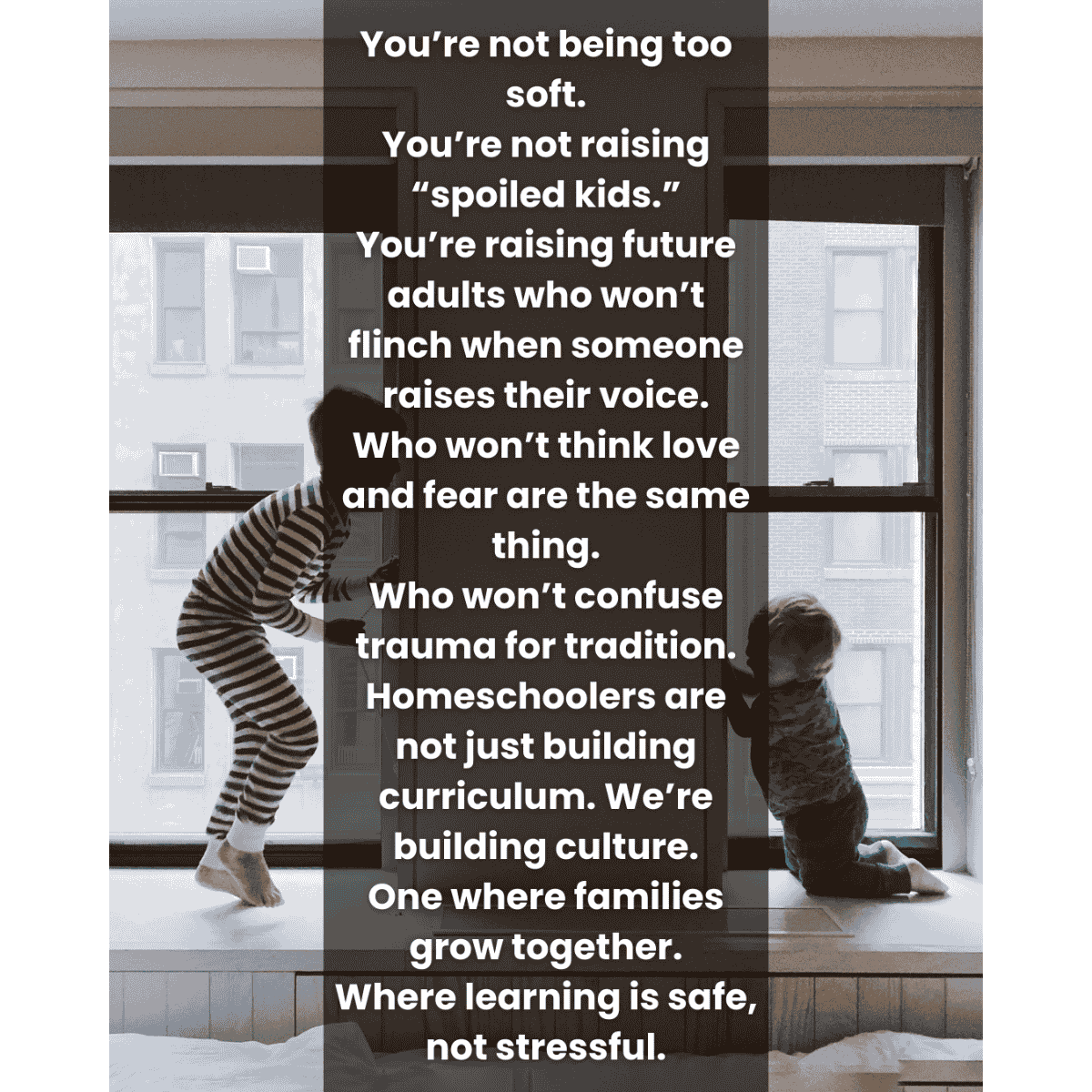
You’re not being too soft nor raising “spoiled kids.”
You’re raising future adults who won’t flinch when someone raises their voice.
In the ever-evolving landscape of parenting, the challenge of keeping kids engaged and excited about learning at home is one that many of us face. Fear not! Today, we dive into a treasure trove of fresh ideas to bust boredom and infuse your home with a sense of wonder and discovery. Get ready to explore innovative activities and discover how Schoolio Learning can be your digital ally in planning and scheduling engaging adventures for your kids.
A Modern Approach to Banishing Boredom
In the digital age, where screens dominate, finding activities that captivate kids’ attention and stimulate their creativity is no small feat. Let’s reimagine how we can bust boredom at home with activities that seamlessly blend fun and learning.
Digital Storytelling: Unleash Imagination Online
Harness the power of technology to spark creativity! Encourage your kids to become digital storytellers using Schoolio Learning’s interactive e-books. With captivating narratives and interactive elements, they can embark on literary adventures right from the comfort of home.
Virtual Science Experiments: Lab Fun Without the Mess
Transform your kitchen into a virtual laboratory! Explore exciting science experiments and demonstrations online. Schoolio Learning’s digital resources offer a wealth of interactive science modules, allowing your kids to learn and experiment without the need for a cleanup crew.
Tech-Infused Arts and Crafts: Beyond Paper and Glue
Elevate traditional arts and crafts with a tech twist! Schoolio Learning provides digital art and design lessons that inspire creativity. From digital drawing to animation basics, your little artists can explore a new realm of artistic expression.
Coding Quests: Navigating the Digital Landscape
Equip your kids with valuable digital skills through coding adventures. Schoolio Learning’s coding lessons turn programming into a thrilling quest. Watch as they develop problem-solving skills and unravel the mysteries of coding in a fun and interactive way.
Virtual Field Trips: Explore the World from Home
Travel without leaving your living room! Schoolio Learning’s curated virtual field trips take your kids on a global journey, exploring historical sites, famous landmarks, and natural wonders. It’s an immersive way to broaden their horizons and spark curiosity about the world.
A Digital Playground of Possibilities
In a world where technology is at our fingertips, let’s leverage it to create a digital playground of possibilities for our kids. Schoolio Learning, with its wealth of digital resources, becomes your partner in banishing boredom and turning every day into an adventure of learning and discovery. Embrace the modern age of parenting, where innovation meets education, and watch as your home transforms into a hub of creativity and excitement.
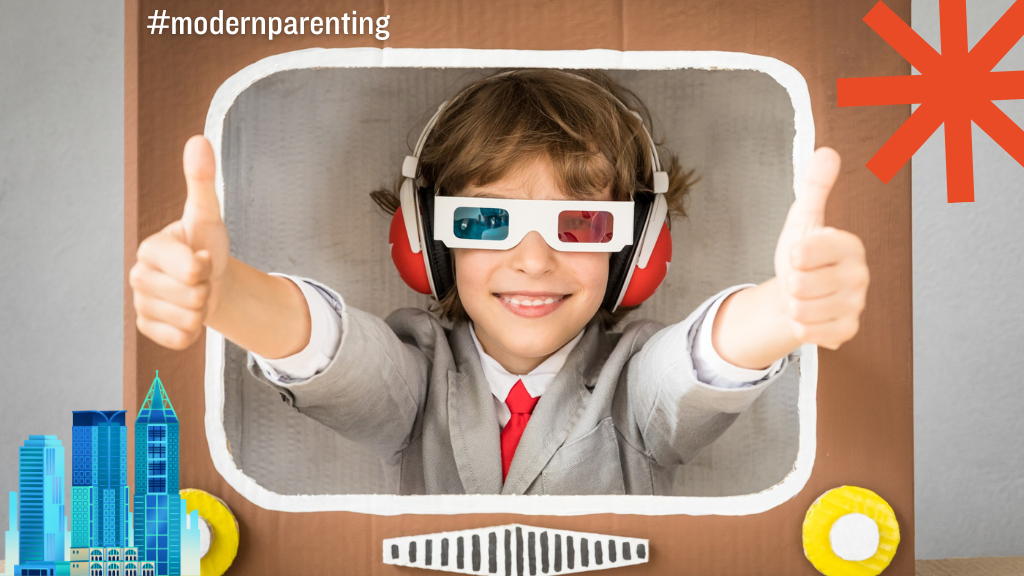
Ready to embark on this modern-age adventure? Explore Schoolio Learning and unlock a world of engaging activities for your kids! ?? #BustingBoredom #ModernParenting
Podcasts are unique because they’re informative, educational and effortless to use. You can listen to podcasts anywhere and at any time. All you need is your cell phone! You can play podcasts in the car while running errands, or at the gym with headphones, and even when your kids are watching a show or you’re doing dishes or laundry. Podcasts are the most excellent education and personal development tool for a parent. So let’s check out 10 of the best parenting podcasts.
10 of the best parenting podcasts:
Good Inside
We love this podcast because it genuinely empowers parents to feel stronger and more prepared to manage the many challenges of parenting. Dr. Becky Kennedy is the creator and host of the Good Inside podcast. She is also a clinical psychologist and mom of three. Dr. Becky was named by TIME Magazine “The Millennial Parenting Whisperer.” The Good Inside podcast immediately rose to #1 on the Apple Podcasts “Kids & Family” chart when she launched it in April 2021. Learn more about TheGood Insidepodcast or stream it directly on Spotify or Apple Podcasts.
Motherhood in Black & White
Another one of the best parenting podcasts is Motherhood in Black & White. This excellent podcast is hosted by Gen X moms Kanji Irby and Tara Campbell. They come from completely different worlds but have become extremely close friends through their shared experiences as ‘boy moms’ and working women in a male-dominated workplace. They also share their love of 90s hip-hop. You’re sure to enjoy this podcast as Kanji and Tara chat with each other as well as with guests about parenting, pop culture, and the tragedies and triumphs of motherhood. Learn more about Motherhood in Black & White, or stream it directly on Spotify, Apple Podcasts or Google Podcasts.
The Dad Edge (formerly The Good Dad Project)
Formerly The Good Dad Project, The Dad Edge Podcast is legendary to all dads. Their mission is to help dads become the best, strongest, and happiest version of themselves. They are hoping that you can better guide your child to be the best version of themselves through their podcast. The founder of The Dad Edge Podcast (formerly The Good Dad Project Podcast), Larry Hagner, breaks down everyday challenges that dads face, helping them overcome and understand. Learn more about The Dad Edge Podcast or stream it directly on Spotify, Apple Podcasts, or Stitcher.
We Are Family
The We Are Family podcast is brought to us by the people at Parents. It’s easy to see why it is one of the best parenting podcasts, celebrating diverse families of all shapes and sizes, with Co-hosts Shaun T and Julia Dennison. Shaun T is the creator of the Insanity workout and dad to twins with his husband, Scott Blokker. Julia Dennison is a single mom and the executive editor of Parents.com. Shaun T and Julia explore everything from adoption, IVF, LGBTQ, and blended families on the We Are Family Podcast. Check out more information on the We Are Family Podcast or stream it now on Apple Podcasts, Spotify, iHeart Radio, TuneIn, Stitcher, Google Podcasts, and everywhere that podcasts are available.
The Mom Hour
Meagan Francis and Sarah Powers are busy mamas that discuss everything related to parenting. This podcast is worth listening to with topics like mom-shaming, potty training, puberty, sleep deprivation, and more. The Mom hour has created a supportive community for mothers everywhere, with over 300 episodes. Learn more about The Mom Hour Podcast, and stream now on Apple Podcasts, Google Podcasts, Spotify, Stitcher, and more.
The Doctor Dads
Dr. David Wardy and Dr. Nick Jensen are the creators and co-hosts of The Doctor Dads Podcast. This podcast is dedicated to helping you learn the strategies for optimal living. You’ll enjoy their discussions about things everybody needs to hear to experience daily growth. The Doctor Dads Podcast aims to help you become a better version of yourself every day by improving mental/emotional, physical and biochemical health. To find more information about The Doctor Dads Podcast, stream now on Apple Podcasts or Spotify.
The Genuine Mom Club
Hosted by yours truly, Jaymee Davis, The Genuine Mom Club Podcast is all about helping parents unlearn this flawed idea that we have to have it together all the time. Each episode is filled with real-life content and tips to help parents have the best parenting journey. With expert guests worldwide and topics like living with a depressed spouse, top guilty pleasures of parenting, parenting hacks, keeping your child from spiralling, parental burnout, and balancing work at home – homeschooling life. There’s something for everyone! Learn more aboutThe Genuine Mom Club Podcastand stream it on Apple Podcasts, Spotify, Google Podcasts or anywhere you get your podcasts.
Ask Lisa: The Psychology of Parenting
This is truly one of the best parenting podcasts and a gem for parents everywhere. Covering topics like when your kid is dumped by their friends, what keeps kids from being honest, how step-parents should fit in, bribing your kids and more. This podcast with Dr. Lisa Damour and Reena Ninan is one of the greatest by far. Dr. Lisa Damour understands that raising kids can be challenging, stressful, and uncertain. This is why her podcast brings a sane, informed, and practical perspective to your parenting questions. Learn more about Ask Lisa: the Psychology of Parenting Podcastand stream on Spotify, Apple Podcasts, Google Podcasts, iHeart Radio, Stitcher and anywhere else you might get your podcasts.
The Balanced Educator
This weekly podcast hosted by the co-founders of Educalme, Kailey Lefko and Josianne Barnabe, aims to equip teachers and parents with practical, concrete, social-emotional learning and mindfulness strategies. With a further aim to empower them to feel calm, balanced and joyful when teaching or not. You can learn more about The Balanced Educator Podcast and stream it on Apple Podcasts, Spotify, Google Podcasts and Stitcher.
The Child Repair Guide
Pediatrician and dad Dr. Steve Silvestro brings insights and wisdom from the world’s best childhood health and wellness experts. He aims to equip parents with the best tools possible to raise healthy, confident and, most importantly, happy kids! Rather than Google your health concerns about your child, you can turn on one of these fantastic episodes. With topics like bedtime routine tips to get kids to sleep on time, your COVID Vaccine PB&J Questions, learning how to manage parental stress better, and raising cross-cultural kids. This podcast is wholesome and knowledge-filled. Learn more about The Child Repair Guide Podcastand stream episodes now on Apple Podcasts, Stitcher, iHeart Radio, Google Podcasts, or anywhere you get your podcasts.
We hope that you enjoyed learning about 10 of the best parenting podcasts and that you thoroughly enjoy listening to them! Let us know which one you liked the most and what other podcasts you’d recommend! We love to hear from you!
Being a parent is challenging enough somedays, now throw in the magic of Christmas and chances are you’re over the top exhausted. We all want our children to have a wholesome childhood filled with fond memories. The kind of childhood that shapes them into the amazing adults we are aiming for them to become. But let’s face it, it can be very exhausting when you’re always trying to make things great. Especially when it comes to the holidays. Which is why 15 ways to find joy during the holidays is extremely important.
Advertising lays the pressure on thick when it comes to holiday traditions and gifts you must buy. As a result the added stress of trying to make the holidays magical can compound the overwhelm of trying to give your children a wholesome childhood. Many families are just scraping by, the holidays often bring the extra pressure to buy gifts and decorations. Which then causes parents to go in debt to try to make things magical. And that debt is something that most will carry through the coming year.
The holidays don’t just place stress of finances, there are many other areas that hit a stressful point. Like the waking up early part. Wrapping gifts with time that you already don’t have. Moving the elf, then moving the elf again, and again and again. Spending hours in the kitchen making a holiday feast, only for it to be eaten in five minutes. We as parents can often become so overwhelmed by the never ending lists. Which causes the holidays to lead us to cringe with exhaustion just thinking about all the added pressure. So what’s the remedy? What are 15 ways to find joy during the holidays as a parent?
15 Ways to Find Joy During the Holidays as a Busy Parent.
We’ve compiled this pretty incredible list of ways to bring joy to yourself during the holidays. And please don’t think that that’s selfish. It’s not selfish to take steps towards untouchable happiness, it’s actually the opposite. Because if you are finding joy, even in the tough moments, your entire family will benefit.
1. Let the Schedule Go.
Does the idea of falling out of schedule make you nervous? That might be because your parenting schedule is something that you have control over in a world that is anything but normal. However, you may find that during the holiday season, it will be so much more difficult to stay on your normal routine and schedules. Bedtimes might get pushed, morning routines may become messy. When this happens, don’t fight it. Just go with it. Your families routine isn’t a reflection of your parenting skills.
It’s really simple, the joy that you feel from trying to stay on track with your schedule and routine is often false joy, or limited joy. Instead, aim for the joy that comes with your children’s beautiful smiles, and with the laughter that fills the room when you all share a funny memory.
2. Spend Time With Your Family.
Number 2 of the 15 ways to find joy during the holidays comes down to undivided attention. Truly something that your children crave. Society is digital, we can sometimes spend hours chatting with someone who is thousands of miles away. Then when we look up from the phone we see the little eyes of someone that loves you so much, is right here in the room with you but feels miles away. Instead of being glued to your device, put it away. Spend time with your kids. Talk to them, tell them stories about the holidays when you were a kid.
The undivided attention that you can provide them with is worth so much more than a cool new lego set, or barbie doll. When you spend that special time with your children, you will feel so much more fulfilled in knowing that your bond is growing stronger.
3. Make Cards Together.
The last normal Christmas that we had was in 2019. That’s a bit of a scary thought. However, one small thing that can bring comfort is knowing that every person you meet is experiencing this also. So, why not bring some joy to others? Creating some fun holiday cards with your kids, and handing them out to neighbours and friends is an excellent way to share and bring holiday joy. Teaching our kids to be kind to others by doing something as simple as making and delivering a Christmas card, is a life lesson that they will forever keep.
When you do this, you can take joy in knowing that you not only brightened someone else’s day, you also helped your child learn the value of spreading kindness during a time of year that is often cold and dark for so many.
4. Gift a Stranger.
I promise this isn’t sketchy. It’s actually really amazing. Last Christmas I was feeling really blue. The pandemic, impending shut down, losing our dog, and a bunch of other things had left me in a state of blah. Trying to get in the Christmas Spirit was just not something I could do. Until I saw this incredible idea on Instagram. Writing notes of kindness to strangers. I quickly adopted the idea. And took six special cards, wrote special notes inside them and placed $20 in each card.
After we masked up, the kids and I went to the mall, and found six people that seemed like they could really use a ‘pick me up’. We gifted these little cards, with no explanation. Later that day, I saw on a local Facebook group, people writing posts about the random envelopes from the kids at the mall that changed their day and helped them see a light.
This simple gesture brought so much joy to my and my children’s hearts. There’s just something so amazing about gifting to someone. If you don’t have extra money to spare, then don’t place yourself in a stressful spot. Even just writing a kind note and gifting it to someone can be such a a game-changer.
5. Support a Charity.
Recent research has shown that supporting a cause can actually work to increase joy. Knowing that you are doing something bigger than you, can be really mood boosting. This year, I had my kids sit down with a gift catalogue. Not a normal gift catalogue, this gift catalogue had items needed most around the world, and also right here in our own country. My kids selected seeds for a family to plant in another country, a water filter for another family to drink. And to feed a student lunch for one year here in our country.
I watched as my kids faces lit up when they knew that what they were doing was going to help others. They don’t know who it will help, and we will likely never meet those who we are helping. However, the joy of knowing that someone, somewhere will have something they really need because of your gift. That’s joy inducing.
6. Create Meaningful Traditions.
Traditions are something that you and your kids can look forward to with excitement. Set up new, fun traditions. Like holiday baking on December 23rd or having a pyjama wearing, Christmas movie watching, marathon. You could also create your own home decorations together every year, using your imagination and creativity to come up with some awesome designs.
7. Have a Christmas Movie Marathon.
I know, you’re thinking ‘didn’t I just read this as part of the creating meaningful traditions?’ You did! You absolutely did! However, it was too good to leave out of the 15 ways to find joy during the holidays. As parents we can become so busy and overwhelmed. When we lounge around we often think that we are failing in some way because we should be busy doing something else.
Dedicate one day of the winter break to lounging in your pyjamas with your kids, watching Christmas movies. Snuggling, eating, and relaxing are three things that are sure to cause joy and make memories. Take a break from the business and prioritize rest.
8. Lower Your Expectations.
We often think that it’s our children that have the high expectations for the holidays. When more often than not, it’s us that have the unrealistic expectations of how the holidays should go. In our minds we cultivate this vision of you playing holiday songs, drinking hot chocolate, while a three coarse breakfast is cooking. As your children happily open their gifts and the house smells of cinnamon and happiness.
Reality is often so much more different. You’re likely sitting on the couch, looking over at your partner as you both try not to fall asleep while your kids rip through the gifts as quickly as possible. That giant holiday breakfast that you wanted to prepare has turned into a box of cereal and you already snapped when your kids accidentally kicked you in the nose when they were jumping on your bed trying to get you to get up.
So, lower your expectations. Will the holidays be magical? Maybe. But are you going to sacrifice your mental well-being in order to make it that way? No.
9. Keep Things Simple.
This point really goes along well with number eight. Aim to keep things simple. The holidays don’t need to be extravagant and mind-blowing. In fact, keeping the holidays simple will bring more joy to you and your whole family. Because you’re taking that painful pressure off of yourself.
10. Let Go of Resentment.
The holidays sometimes can bring up some feelings that aren’t exactly joy inducing. Thinking about how your mother-in-law didn’t even call the kids to say hello. Or about how your partner didn’t bother to get you a gift again. These feelings of resentment will poison your state of mind and cause the joy to seep right out of you. Give yourself the gift of letting it go. People aren’t perfect, you’ll always be able to find some way that things didn’t go right because of someone else. Please do yourself a favour, and let it go.
“The heart is like a garden: it can grow compassion or fear, resentment or love. What seeds will you plant there?”
Jack Kornfield
11. Let Go of the Bad Moments.
Sometimes it can seem like for every good moment you have, there are ten bad moments that cloud it. Our minds seem to be susceptible to negativity. Being drawn to the bad will only make the good that much more invisible. Will you have bad moments during the holidays? Probably! But not all moments will be bad, truly there will be some wonderful moments that you can remember and focus on with joy.
12. Keep Up With Healthy Habits.
Please don’t be confused by this. I know that number one of the 15 ways to find joy during the holidays was “Let go of the schedule”. However, healthy habits are a different category completely. During the holiday season there are so many treats, and so many opportunities to give up on healthy habits that we have set for ourselves. Let me encourage you not to do that. Make healthy eating, adequate amount of sleep and exercise a part of your holiday traditions. It can be so tempting to devour the box of chocolates that your friend gave you. Or skip exercise entirely.
Healthy Habits are gifts that your body needs to feel great during the holidays. Taking away those healthy habits will only cause you to feel like you aren’t grounded. So stick with it!
The pandemic has made connection and community something that is few and far between. I never thought I would be unable to see my family, until the pandemic happened. While it may still not be safe to connect with your entire family, you still have the gift of technology. Set up a time for your family to video chat a loved one. Share laughs, stories and moments. It won’t be the same as the in-person visits you’d love to have. But it will still be worth it for the whole family.
14. Let Yourself Feel the Feelings.
Maybe you are just really struggling with finding joy. But the fact that you are struggling is making you feel more anxious because you feel like you shouldn’t be feeling that way. Did you follow that? It was a little confusing. Listen, if you’re struggling to find joy and you’re ashamed of yourself because you think that you should be exuding joy right now, just know that your feelings are valid. Please don’t try to push those feelings way deep down. Instead, embrace them for what they are. Life is different now, the holidays can be challenging. It’s ok to not be feeling ok. Talk to a friend, family member, or licensed therapist about your feelings.
15. Be Kind to Yourself.
We place such a huge emphasis on being kind to others, but we often forget to include ourselves in the equation. Please remember to show yourself kindness. Please don’t condemn yourself just because you forgot to buy the eggnog. You’re doing a great job, you’re an amazing parent that just wants the best for your family. So, please be gentle with yourself.
Bonus: Are your kids bored? Keep them Entertained for Free!
Is your kids boredom driving you slightly nuts? It can be so much more difficult to find joy when your kids are whining to you about their boredom. Try some of the free special interest units by Schoolio!
Currently on The Schoolio Marketplace you will find these products for free:
Check out these amazing free units to help your kids learn and have fun this holiday season. Additionally, we have some pretty amazing, discounted units available for your child to enjoy this season.
The Schoolio Marketplace Discounted Special Interest Units:
As parents we want to be able to set our children up for success, whether that’s emotionally, financially, mentally, or with healthy friendships. We want our kids to have a vibrant and joy filled life. It’s important that our children learn positive communication skills in order to be able to cultivate healthy relationships with the people that will come into their lives.
As always, the best form of education for your child is what they see from you. When they see you as the parent modelling healthy friendships with open communication and boundaries, they will in turn understand what relationships should look like. That said, life can be tough and sometimes we as adults aren’t up to par on our communication skills either. That’s ok, we all have those days. Which is another important lesson to teach your kids. That sometimes, even in our relationships with others, we make mistakes. But it’s where we go from there that determines whether or not we are maintaining healthy friendships.
There’s this huge misconception about homeschooling.
Many people still believe that homeschooled children are not socialized, or not as socialized as children who go to school. Which in turn would make them less capable of maintaining healthy friendships and wholesome relationships. But, that’s not true! In fact, in a lot of cases, homeschooled children are sometimes more socialized than their peers who go to ‘real school’. How could that possibly be? Well, check out this blog from Lindsey about Socialization and homeschool:“Let’s Talk About Socialization”
In a normal world (pre pandemic) a homeschooled child had the opportunity to socialize and have fun with their peers just as much as children in traditional school. But, given the fact that we’ve been in a global pandemic for nearly two years. All children are truly lacking in the social category right now. Not being able to see friends and family has caused many children to struggle with their relationship building and maintaining skills. They still have the digital side of friendship, but realistically, seeing someone on a screen could just never replace the valuable time spent in the presence of their friends and loved ones.
Our children will always have tough times with their friendships, and relationships that sometimes get severed. But even those bumps in the road are vital to our children learning about how to maintain healthy friendships. All these things have generally been put on pause until things get back to some form of normal.
Most kids are truly out of practice when it comes to figuring out relationships (and adults are too). So, what are some steps we can take to help our kids after the pandemic to rebuild friendships, and utilize their friendship making tools to be able to get back on the healthy friendships wagon?
According to Very Well Family, you can try these activities once life gets back to some form of normal:
Join School Sponsored Activities and Study Groups (Or a local homeschool group). These opportunities will help your child reconnect with their classmates (or homeschool buddies). Check out outdoor activities that they can do with their peers, like soccer, baseball, basketball, golf etc.
Take your kids to the playground! Playgrounds are a breeding ground for friendships! And if your child learns healthy friendships skills (they’ll be one step ahead).
Let your child play online games with friends (while we wait for the world to officially open up). Whether your child uses a game console, or maybe sets up a Zoom call. Playing together (even online), will help your child with their communication skills, collaboration, and problem-solving skills. And, once it’s safe to do so – they can play in real life again!
Reach out to parents of children you already know. (Or better yet, have your child do it) Make plans for your kids to ride bikes, or scooters together. Do scavenger hunts, hikes, and the list goes on and on! Having a fun, planned activity to do together can really help the kids with easing back into a healthy friendship. (Being sure to follow all local social distancing guidelines).
Reassure your child that it’s totally normal to feel kind of awkward when they start to socialize in person again. Let them know they aren’t alone, maybe you’re feeling that way too?
Remember to be patient with your child, and remind them to be patient with themselves also. Relationships can be tricky, and it’s important for them to know when a friendship isn’t healthy and how to either improve it, or walk away. Listen to your child when they voice their concerns and frustrations. Be present, try to understand where they’re coming from. And, guide them to make healthy choices with their relationships.
If you need more pointers on how to help your child with their relationships, check out the ‘Healthy Friendships’ mini unit. There are tons of activities in this excellent mini unit, to help your child with things like: Conflict resolution, How to apologize, and more.
Hey Lindsey, what’s the difference between Socialization and Socializing when it comes to Homeschooling?
Ah socialization, the most common question asked of the seasoned homeschooler. It’s asked by grandparents and aunts and uncles and family friends and strangers at the grocery store. It’s the source of memes and eyerolls and, yes, sometimes a snarky reply here and there. You have to cut us a break, because we get asked it A LOT. Like, a lot, a lot. And for some people, it’s actually insulting.
I don’t personally mind answering the socialization question repeatedly because I love to inform people about what homeschooling is really like. Homeschooling has been such an enriching and positive experience for our family that I can’t help but want to recruit everyone else to our side of the fence, where the grass is certainly greener from our view.
I like to answer the socialization question in two parts. Because I think people don’t 100% understand what they’re asking to begin with. There’s a difference between “socialization” and “socializing”. Socialization is the process by which a person learns the norms, values, behaviour, and social skills appropriate to his or her society. Socializing, on the other hand, means mingling sociably with others. When most people ask, “But what about SOCIALIZATION?” they are actually asking if my homeschooled children SOCIALIZE. But, since it was asked, I like to go ahead and answer to both.
First of all, yes, my homeschooled children SOCIALIZE. Homeschooling may be more popular than you realize. The numbers certainly differ from area to area, but in my city of 100,000 people in Eastern Ontario, we have more than 100 children who are part of our formal homeschool group- and there’s many more locally who are not part of the formal group. My children do all their extra curricular activities through our homeschool group, which includes, soccer, gymnastics, swimming lessons, art lessons, skating, and track and field. They go to an academic co-op once a month, and a physical education co-op twice a month in the winter. They go to themed parties for Halloween, Christmas, Easter, and at the beginning and end of the school year (our Not-Going-Back-to-School Beach Party on the first day of public school is a blast every year!), as well as weekly park meet-ups all summer long. We average 3 field trips per month from September to June- way out pacing the public school system- and these aren’t just meeting up at a museum and paying the admission, these are regular school field trips organized by our members and hosted and taught by the experts at the various locations. At all of these events, my children see the same groups of kids over and over. I’ll see an email come through for sign-up for some event, and the first thing I do is text the parents of my kids’ closest friends to find out if they’re signing up for that event too.
One amazing beneficial consequence to doing all our extra curricular activities with the homeschooling group, is that it’s ended the crazed rush of getting dinner, homework, and extra curriculars done on weekday evenings. Gone are spending Saturdays bustling from one child’s activity to the next. Our evenings are peaceful times, with healthy dinners, practical bedtimes, and no stressful rushing. Our weekends are for time together as a family.
Now that SOCIALIZING is out of the way, let’s talk about the word most people actually use without understanding what it means. SOCIALIZATION. If we’re talking about the process by which our young and impressionable children, with their growing and not-yet-fully-developed brains, are taught behaviour that is socially acceptable to the society in which they live- who do you think is best suited to provide this social instruction? The mature, experienced adults in their lives who love and care about them? Or their equally immature and inexperienced peers on the playground?
My homeschooled kids are not “helicopter parented”, in fact those who know me know I advocate strongly for free range parenting, but they do have the benefit of my presence as they learn to navigate the difficult waters of peer interaction and socialization. For example, when in public school, if my child had a problem on the playground with a friend, I wouldn’t hear about it until the end of the day. By then, the details are blurred, and my child has already had to make a decision on how to respond and action that decision long ago, when the incident happened. My feedback and guidance, in this instance, comes far too late. Alternatively, when we’re at homeschool activities, the children go off and play together independent of the adults, while we sit together and socialize ourselves. When something comes up, as always does with children, my children are able to come to me, explain the situation and problem before it’s escalated too far, and talk it through and get my guidance immediately. They can then make a decision about their next course of action, and I send them off to action that decision with the person they’re conflicting with. Social Conflict Expert (adult) Consultation and Guidance Independent Decision and Action. Usually followed up later in the day with reflection when I inquire as to how it went. This supported learning of social interaction and conflict resolution with a mature adult acting as advisor has led me to see many amazingly mature interactions between even very young children when they are both homeschoolers.
Speaking of mature interactions, have you ever sat and had a conversation with a homeschooled teenager? They are amazing individuals who have interests and beliefs, and things to say about them. No stereotypical teenage angst, sullen, withdrawn behaviour. No embarrassment to be talking to “old people”. These young adults are articulate and confident and are as lovely and easy to converse with as any adult my own age. I’ve met introverted and extroverted homeschooled teens, but I’ve yet to ever meet the socially awkward, bow-tied, weird “stepford” kid that gets passed around in the stereotypes of homeschooled children.
The benefits of being socialized as a homeschooler are numerous, and yet a lot is said, especially lately, about the “mental health benefits” to children going to school. And always one of the reasons they benefit from school is said to be the “social aspects”. While some children enjoy school, an equal number, if not more, hate it there, either due to the academics or the “social aspects”. I would argue that the public school system is not a positive social education for the majority.
In public school, children are cohorted based on birth year alone. For homeschooled children, they make friends based on interests and personality, rather than year of birth. Both my children have a “best friend”, and neither of their best friends are the same age as they are. Age is a non-issue when it comes to choosing friends in the homeschool world. Part of the toxic culture of public school is the idea that it is “uncool” to socialize with anyone younger than you. Therefore, rarely does anyone socialize outside their age bracket, especially as they get to older elementary years. The smaller the school your child attends, the fewer options they have for friends out of this select age group.
The culture of public school teaches kids these toxic socialization rules, another one of which is that adults are the enemy. Being close to an adult or teacher is not cool (“Teacher’s Pet”), speaking up when rules are broken is not cool (“Tattle Tale”), and consulting and confiding in parents is definitely not cool. Hiding things from the adults, getting away with things, and breaking rules is what is considered cool in this culture. On top of all this, fitting in is the most important social achievement of all. Above all else, conform. Conform, or your life will be made miserable. Failure to conform to the social rules of public school will end with you either being bullied, or at a minimum ostracized and without friends and support. This is a high pressure atmosphere our young people are interacting in every single day, and it’s no wonder so many children suffer from anxiety. Children who enjoy the social side of school are the ones who are best at conforming, either because it follows their natural personality or because they work at it, which is also high-stress and exhausting even if successful. And I think we all know what constant high levels of stress do to a person’s ability to learn, don’t we?
Now some will say, “but kids need to go to school to learn how to deal with those negative interactions, for the real world!”. Ok first of all, how much is the public school system a reflection of the “real world”? And here’s the difference between being bullied at public school, and dealing with the inevitable jerk at work in the “real world”: when you’re a child at public school (first of all, you’re a CHILD, not an adult), school is your WHOLE WORLD. When you’re an adult and have a job, you may have a jerk for a boss or a colleague that bullies you, but at the end of the day you come home to your family, you have friends who have no relation to your work, and you have support and camaraderie outside of the toxic environment work may be. For our kids, school is it. Yes, they come home to their family who love them and certainly want to help and support them, but remember that the culture of public school has taught them that adults are the enemy, and they know that confiding in their parents will make the bullying worse if it’s discovered by their tormentors. They don’t usually have friends outside of the school, so if they’re an outcast at school, everyone knows it. Children also lack the brain development for the kind of foresight that tells them that this won’t be how life is forever. This is why we see children committing suicide or shooting up their school mere months from graduation. Furthermore, if an adult has a toxic work atmosphere, they can actively work towards changing it- remedial education, job hunting, change of department, etc. Children do not have those options, to them, there’s no way out. Bullying at school is more than “learning to deal with jerks”, it is incessant and inescapable. How can we know all this, and still think the culture at public school is a positive social experience?
So to answer the question they didn’t ask but meant to, yes, my children regularly SOCIALIZE. And to answer the one they did ask but maybe had never really considered, no my children don’t need school to learn SOCIALIZATION. They’re being socialized in a positive, loving environment, and they are, in my opinion, all the better for it.