Self-Regulation Over Bans

Self-Regulation Over Bans

This has been on my mind today…

I keep seeing the same debate come up in different forms. Ban the phones. Lock them away. Remove the distraction.

And I understand the instinct.

When something feels out of control, we reach for control.

But I am not sure control is the same thing as capacity.

As parents, especially homeschooling parents, we are not just trying to create quiet rooms. We are trying to raise children who can function in a loud world. And the world they are growing into is not analog. It is always on. Always connected. Always competing for attention.

Banning a device can create temporary calm. But it does not automatically build self regulation.

That is the harder work.

The truth is, the system most of us grew up in was not designed for devices in every pocket. Technology was layered on top of a structure that was built for scarcity of information. So of course there is friction.

But pretending devices are purely harmful ignores reality. This generation learns, connects, creates, and even earns through digital tools. The issue is not technology itself. It is distraction. It is design. It is intention.

There is a difference between a child using a math app for 20 focused minutes and scrolling an algorithm built to hijack attention.

One builds skill.

The other fragments it.

In a homeschool setting, we have something powerful that traditional systems often lack. Flexibility. We can decide not just if a device is used, but how and why.

Instead of asking, “How do I eliminate screens?” maybe the better question is, “How do I teach my child to manage them?”

That might look like:

Clear time boundaries.

Purpose driven usage.

Conversations about how algorithms work.

Practicing focus in short, intentional blocks.

Because self regulation is not learned in isolation. It is learned in context.

The real goal is not to control every input. It is to build internal strength. If our kids are going to function in a digital world, they have to practice focus within it, not be shielded from it entirely.

That takes nuance. It takes patience. And it takes modeling the habits we want them to build.

Homeschooling gives us the space to rethink these patterns instead of reacting to them.

And maybe that is the opportunity. Not panic. Not total bans. But thoughtful capacity building in a world that is not slowing down.

Sathish

still learning, still unlearning

When Kids Solve Real Problems, Something Shifts

When Kids Solve Real Problems, Something Shifts


This has been on my mind today…

When kids solve real problems, something shifts.

Not on a report card.

Not in a percentage.

In themselves.

When they fix something broken.

When they build something useful.

When they grow something and watch it thrive.

They begin to believe they can solve bigger problems.

They start to see themselves as capable.

And that belief is not graded. It is felt.

I think this is where many kids quietly disconnect from school.

Not because they are lazy.

Not because they are incapable.

But because so much of what they are asked to do feels disconnected from their living reality.

Pages of theory.

Lessons without context.

Concepts without application.

When learning does not connect to life, it starts to feel performative. Do this to get the mark. Memorize this to pass the test. Complete this because it is assigned.

But this generation is different.

More than ever, they want to know why first.

Why are we learning this?

Where does this show up in the real world?

How does this matter?

If that question is not answered, attention drifts. Motivation fades. Learning becomes compliance instead of curiosity.

We have designed school for efficiency. For scale. For managing large groups. That worked when information was scarce and the classroom was the gateway.

But now information is everywhere.

What is scarce is meaning.

When a child can see how math helps them measure wood for a project, it sticks. When writing helps them communicate an idea they care about, it matters. When science explains something they experience, it connects.

Real work grounds learning in purpose.

And purpose fuels effort.

When kids experience that connection, they do not just complete assignments. They engage. They take ownership. They ask better questions.

Because they are no longer learning for the grade.

They are learning because it makes sense.

If we want more engagement, we cannot just adjust the curriculum. We have to reconnect learning to life.

Because when kids solve real problems, they begin to believe they can solve bigger ones.

And that belief might be the most important outcome of education.


Sathish

still learning, still unlearning


Neurodivergent Burnout in Kids: When the Cycle Comes Around Again

Neurodivergent Burnout in Kids: When the Cycle Comes Around Again


Do you ever notice a rhythm with your neurodivergent child?

I do.

About every six weeks — almost on cue — one of my autistic kids falls apart.

Not in a dramatic, explosive way.

In a quiet unraveling.

Tears they can’t explain.

Sleeping in my bed again.

Sleeping a lot.

Periods of going non-verbal.

Sensory tolerance dropping.

Everything suddenly feeling “too much.”

And around that same time, my ADHD child crashes too — but it looks completely different.

His room becomes unmanageable.

Schoolwork that was moving along suddenly stalls.

Routines unravel.

Motivation disappears.

Same timing.

Different presentation.

For a while, I wondered: Is this just my kids?

It turns out, no.

This is something many parents of neurodivergent kids quietly observe.


What Is Neurodivergent Burnout?

Burnout isn’t laziness.

It isn’t regression.

It isn’t defiance.

Burnout is nervous system exhaustion.

Neurodivergent kids use more energy than we often realize.

They work harder to:

  • manage sensory input
  • regulate emotions
  • navigate social expectations
  • initiate tasks
  • transition between activities
  • maintain routines
  • suppress stims
  • meet standards that weren’t designed for their brains

They can do it.

Until they can’t.

Burnout is what happens when output has exceeded capacity for too long.

And here’s what’s important:

This isn’t about homeschooling causing burnout.

This happens in public school too.

It happens in summer camps.

It happens in extracurricular seasons.

It happens during growth spurts and life transitions.

It’s not about where they learn.

It’s about how much energy their nervous system has been spending.


Why It Can Feel Cyclical

Many parents describe a pattern.

Four weeks.

Six weeks.

A school term.

A busy season.

It’s not that autistic or ADHD brains have a biological timer set to crash every 42 days.

It’s that effort accumulates.

Novelty fades.

Demands compound.

Sleep drifts slightly off.

Sensory load builds.

Emotional labor increases.

Neurodivergent kids often don’t feel the early signs of fatigue clearly — especially if they have interoceptive differences. They don’t always sense “I’m getting overwhelmed” until they are already there.

So they push.

And then something small tips the scale.

A math worksheet.

A sibling conflict.

A minor change in routine.

And it looks sudden.

But it was building.


Autistic Burnout vs ADHD Burnout

One reason burnout can feel confusing is that it doesn’t look the same in every child.

In autistic kids, burnout often looks like withdrawal.

Increased meltdowns or shutdowns.

More sensory sensitivity.

Needing more sleep.

Loss of words.

Reduced tolerance for social interaction.

Skill regression.

Autistic burnout tends to say, “I can’t.”

The nervous system is conserving energy.

ADHD burnout often looks more external.

Irritability.

Apathy.

Avoidance.

Impulsivity increasing.

Routines collapsing.

Motivation evaporating.

ADHD burnout often sounds like, “I don’t care.”

But underneath it is usually, “I don’t have the fuel.”

ADHD brains run heavily on dopamine. Sustained executive effort without enough reward can drain that system. When the dopamine well runs low, even things they normally enjoy can feel flat.

If your child is both autistic and ADHD, you may see both patterns layered together.

That can feel especially overwhelming as a parent.


It’s Not Regression. It’s Recovery Demanded.

Burnout can look like regression.

But often it’s a nervous system demanding recovery.

The tears that “don’t make sense.”

The need to sleep beside you again.

The messy room.

The missing assignments.

Those aren’t moral failings.

They’re signals.

And they don’t respond well to pressure.

Pushing harder during burnout usually deepens it.

What helps is tapering.

Reducing output.

Lowering expectations temporarily.

Increasing rest.

Adding sensory safety.

Prioritizing connection over correction.

Not forever.

Just long enough for the nervous system to reset.


The Homeschool Reframe

If anything, homeschooling gives you the flexibility to respond.

Instead of labeling a child as disruptive, behind, or unmotivated, you can say:

“I see the pattern.”

You can lighten the week.

Shift to audiobooks.

Move lessons outside.

Build instead of write.

Pause instead of push.

That’s not giving up.

That’s respecting capacity.

Burnout doesn’t mean your child can’t learn.

It means they’ve been working hard.

Often harder than we realized.


If You’re Seeing the Cycle

If you’re reading this and thinking, “Yes. This. Every few weeks,” you are not alone.

It’s not just your child.

It’s not bad parenting.

It’s not fragility.

It’s a nervous system rhythm.

The goal isn’t to eliminate the rhythm entirely.

It’s to start recognizing it earlier.

To build in rest before collapse.

To shift from:

Push → Crash → Panic

to

Build → Taper → Rest → Reset

Because when recovery becomes intentional instead of forced, the crashes get smaller.

And your child doesn’t have to fall quite so far.
What Is Time Blindness and Time Optimism? (And Why Your ADHD Child Isn’t “Late on Purpose”)

What Is Time Blindness and Time Optimism? (And Why Your ADHD Child Isn’t “Late on Purpose”)

Have you ever said:
“We’re leaving in ten minutes.”
And your child hears it… nods… and then somehow starts a brand new LEGO build?
Or you ask how long their math will take and they confidently say, “Five minutes,” and forty-five minutes later they’re still halfway through?
Or they’re shocked — genuinely shocked — that it’s already bedtime?
That’s not laziness.
That’s not defiance.
That’s very often time blindness.
What Is Time Blindness?
Time blindness is the difficulty sensing and tracking the passage of time internally.
For many ADHDers, time does not feel linear.
It feels like:
Now
Not Now
That’s it.
Five minutes and fifty minutes can feel almost identical without external cues.
An hour can disappear in hyperfocus.
Ten minutes can feel unbearably long when doing something boring.
Time blindness is tied to executive functioning and working memory — both of which are heavily impacted in ADHD brains.
If working memory is the “mental sticky note” that keeps track of what you’re doing and how long you’ve been doing it, ADHD brains often have much weaker glue.
So the brain loses track.
Not because they don’t care.
Because they can’t feel it.
What Is Time Optimism?
Time optimism is the cheerful cousin of time blindness.
It’s the tendency to genuinely believe something will take less time than it actually will.
“I’ll clean my room in 10 minutes.”
“I can finish this before dinner.”
“I have tons of time.”
It’s not lying.
It’s not manipulation.
It’s an executive projection issue.
ADHD brains often struggle with future simulation — accurately picturing how long tasks require.
Add in dopamine-driven motivation (which rises when something is exciting and plummets when it’s not), and you get wildly inaccurate time estimates.
If the task feels easy in their head, they assume it will be quick.
The brain isn’t calculating past experience consistently.
It’s guessing.
Optimistically.
Is This Just an ADHD Thing?
Time blindness and time optimism are most strongly associated with ADHD because they’re rooted in executive function and dopamine regulation.
That said, autistic kids can also struggle with time — but usually for different reasons.
An autistic child may:
  • hyperfocus and lose track of time
  • struggle with transitions
  • feel distress when routines shift
  • have difficulty estimating task-switching effort

But their experience of time is often more about rigidity or deep focus than about an internal inability to sense its passing.

In ADHD, time itself feels slippery.
In autism, time may feel predictable but transitions feel destabilizing.
If your child is both ADHD and autistic, you may see both patterns layered together.
What Time Blindness Looks Like at Home
It can look like:
  • Chronic lateness — even when they’re trying.
  • Starting huge projects right before leaving the house.
  • Being confused about how long homework takes.
  • Struggling to pace themselves.
  • Forgetting how much time has already passed.
  • Underestimating transitions.
And here’s the hard part:
To the outside world, this looks like irresponsibility.
To the ADHD brain, it feels like confusion.
Why Punishment Doesn’t Fix It
If a child could “try harder” to feel time, they would.
Time blindness isn’t solved by:
  • scolding
  • shame
  • “you need to be more responsible”
  • taking away privileges

Because the issue isn’t motivation.

It’s perception.
You wouldn’t punish a child for being near-sighted.
Time blindness is similar — except it’s temporal.
What Actually Helps
Externalizing time.
ADHD brains often need time to be visible and tangible.
  • Timers.
  • Visual clocks.
  • Countdowns.
  • Written schedules.
  • Auditory reminders.
  • Chunking tasks with defined breaks.
Instead of saying, “We’re leaving soon,” try:
“We’re leaving in 15 minutes. I’m setting a 10-minute timer, and then a 5-minute warning.”
Instead of, “How long will that take?” try:
“Last time this took 40 minutes. Let’s plan for that.”
Instead of assuming they’re careless, assume they’re time-blind.
That shift changes your tone immediately.
The Bigger Picture
Time blindness and time optimism don’t mean your child is unreliable.
They mean their brain doesn’t automatically track duration the way neurotypical brains do.
And when we stop treating it like a character flaw and start treating it like a neurological difference, something softens.
We move from: “Why are you like this?”
To: “How can we support this?”
That’s where real change starts.
? Lindsey
certified special-ed educator, homeschool mom, & co-founder of Schoolio

How We Took the Fear Out of Math (Without Making It a Game Show)

How We Took the Fear Out of Math (Without Making It a Game Show)

Math has a reputation in a lot of neurodivergent households.
 
Tears.
Avoidance.
Stomach aches.
Instant shutdown.
 
And I get it.
 
When numbers don’t click easily — especially with dyscalculia, ADHD, processing differences, or math anxiety layered on top — math can feel like a daily threat instead of a skill.
 
For a long time, I thought the solution was to make math “fun.”
 
More games.
More flashy activities.
More attempts to disguise it.
 
But here’s what I learned: Math doesn’t need to be a circus.
 
It needs to feel safe.
 
The Week We Slowed Fractions Way Down
 
One year, we were working on fractions. We were struggling. The kids didn’t get it. I don’t blame them, I’m not great at it either.
 
Instead of continuing to push at that one lesson, I decided we needed to slow everything down and turn one Schoolio lesson and a worksheet, into a full week of understanding.
 
Monday:
We watched the lesson video. Just the concept. No pressure to perform.
 
Tuesday:
We made mini pizzas in the kitchen.
Cut them into halves. Quarters. Eighths.
 
We talked about which pieces were bigger. Which were smaller. Added pieces together.
 
We ate the evidence.
 
Wednesday:
We did the printable worksheet.
Nothing fancy. Low pressure. On the couch. Just gentle practice.
 
Thursday:
We pulled out the Lego.
Built wholes. Broke them into parts. Compared pieces.
 
Friday:
We went back to the original lesson and did the quiz.
Not as a threat — but as a check-in.
 
Did it stick?
Sometimes yes.
Sometimes we needed another week.
And that was okay.
 
Concrete First. Abstract Later.
 
For a lot of neurodivergent kids, abstract math feels slippery.
Numbers on a page don’t mean much.
 
But pizza does.
Lego does.
Cutting something real into real pieces makes fractions tangible.
And once something is tangible, it’s less scary.
 
Less scary means less resistance.
Less resistance means more learning.
 
Predictability Lowers Anxiety
 
The other thing that helped?
Predictability.
 
Math wasn’t a surprise attack.
 
It wasn’t:
“Quick, do this worksheet before you melt down.”
 
It had rhythm.
 
Concept → hands-on → practice → reinforce → assess.
 
That pattern lowered anxiety because they knew what was coming.
 
When the nervous system isn’t bracing for impact, the brain has space to think.
 
It Doesn’t Have to Be Entertaining to Be Gentle
 
Here’s something important:
We didn’t turn math into a game show.
There were no prizes. No countdown clocks. No glitter explosions.
 
We just slowed it down.
We made it concrete.
We made it predictable.
And we removed the pressure to rush.
 
Math doesn’t need to be constantly “fun.” It’s ok to teach our kids that some things in life are hard, but still worth doing.
 
But it should never feel like trauma.
 
There’s a huge difference between effort and fear.
 
I’m okay with effort.
I’m not okay with fear.
 
The Goal Isn’t Speed
 
In traditional classrooms, math often moves fast.
 
New concept. Practice. Test. Move on.
 
But when a child struggles with numbers, speed becomes the enemy.
 
So we changed the metric.
Not: “How fast can you get this done?”
But: “Do you understand it?”
 
And if the answer was no?
 
We stayed.
No shame.
No panic.
No race.
Just peaceful.
 
Because confidence in math doesn’t come from getting everything right.
 
It comes from surviving hard concepts and realizing you can figure them out. Even if it takes time. Even if it’s hard. It’s learning that slowing down isn’t an enemy of progress.
 
If math feels heavy in your house, try this:
 
Stretch one concept across a week.
Touch it. Build it. Eat it. Break it apart.
 
Lower the pace before you try to raise engagement.
 
Sometimes the fear leaves first.
And learning follows.
 
? Lindsey
 
certified special-ed educator, homeschool mom, & co-founder of Schoolio


If You Want Your Child To Be Social, Do Not Homeschool.

If You Want Your Child To Be Social, Do Not Homeschool.

This has been on my mind today…

I still see this stereotype floating around.

If you want your child to be social, do not homeschool.

It is an old argument built on an outdated picture of what homeschooling looks like.

The idea assumes that socialization only happens in a classroom of same age peers, sitting in rows, moving together by bell schedule. That is not how real life works. Adults are not grouped by birth year. We collaborate across ages, backgrounds, and interests every day.

Modern homeschooling rarely looks like isolation.

Kids are in co ops, sports teams, music groups, church communities, neighborhood pods, volunteer programs, online collaborations, and microschools. Many interact with more diverse age groups than they would inside a single grade classroom.

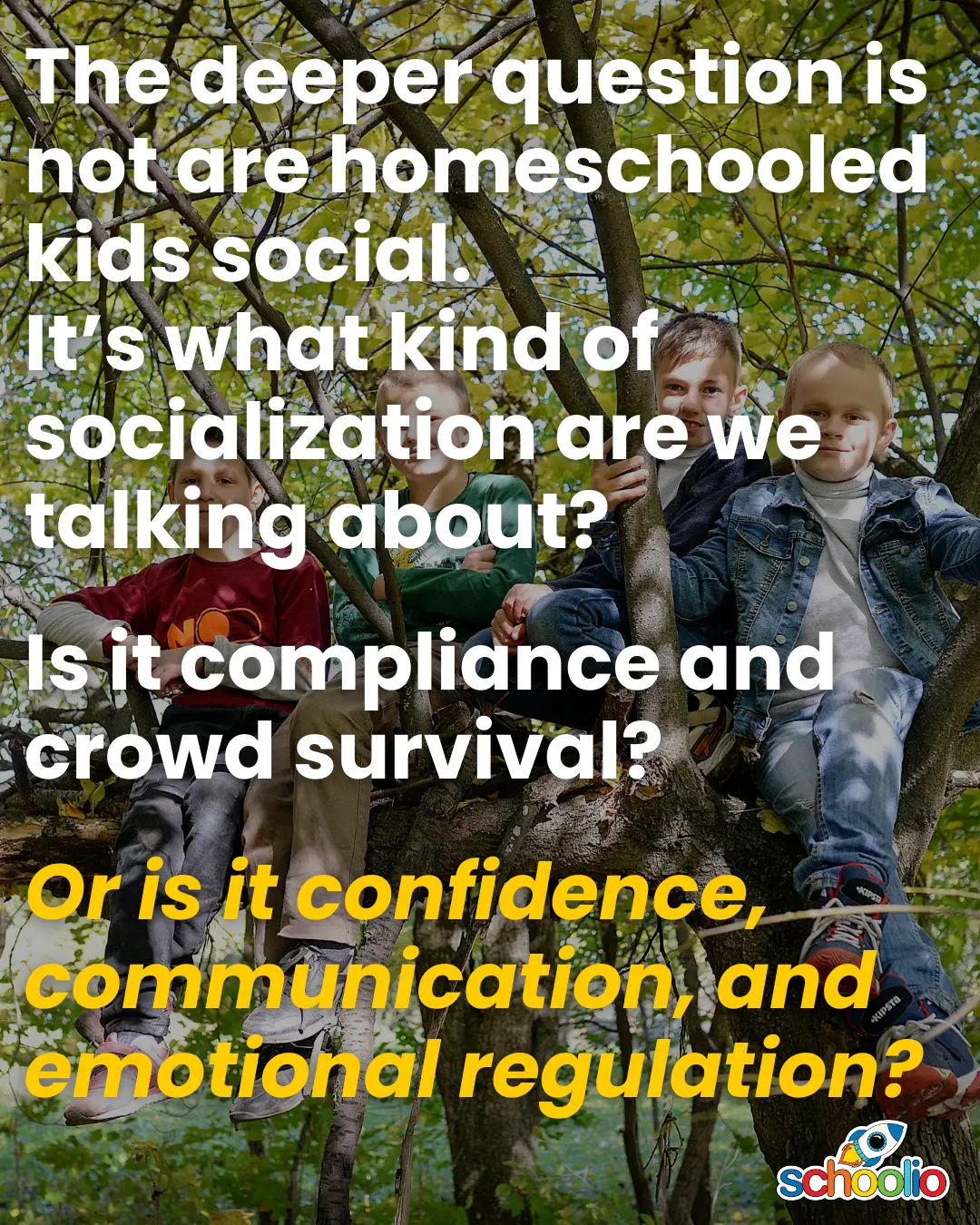
The deeper question is not are homeschooled kids social.

It is what kind of socialization are we talking about.

Is it compliance and crowd survival?

Or is it confidence, communication, and emotional regulation?

I have seen kids who struggled in traditional school labeled antisocial. In reality, they were overwhelmed. Remove the rigidity. Adjust the pace. Give them agency. They open up.

Homeschooling is not anti social. It is intentional social.

The stereotype lingers because it is easy. The reality is more nuanced.

Sathish

still learning, still unlearning

Source: **https://thegatewayonline.ca/2026/02/how-to-be-a-social-person-dont-homeschool/**


You’re Not Doing It Wrong. You’re Parenting a Neurodivergent Child.

You’re Not Doing It Wrong. You’re Parenting a Neurodivergent Child.


If you’re homeschooling a neurodivergent child, there’s a moment most of us hit where the doubt gets loud.

Your child is bright. Creative. Curious. And yet… school didn’t work. Public school didn’t work. Private school didn’t work. And now, even homeschooling can feel heavy some days.

You start wondering if you’re missing something. If you picked the wrong program. If you should be doing more. If the anxiety around math or reading means you’ve somehow failed them.

I want to say this clearly, because so many parents need to hear it:

You’re not doing it wrong. You’re parenting a neurodivergent child in a world that wasn’t built for them.

So many of the families I talk to are raising kids who are Autistic, ADHD, PDA, dyslexic, anxious or combinations. These are kids with incredible strengths — but they don’t respond well to rigid systems, constant demands, or learning environments that prioritize compliance over safety.

When learning comes with pressure, their nervous systems go into protection mode. Anxiety rises. Resistance shows up. And suddenly the focus isn’t learning anymore — it’s survival.

That doesn’t mean your child is “behind.”

It means the environment hasn’t fit them yet.

One of the hardest parts of homeschooling neurodivergent kids is letting go of the idea that learning should look linear. Or quiet. Or efficient. These kids often learn in bursts. In spirals. In intense interest-driven deep dives, followed by periods where they need rest and regulation more than content.

And that’s not a flaw — it’s information.

A child who struggles with math anxiety isn’t refusing because they’re lazy. A child who avoids reading isn’t failing because they don’t care. A child with PDA isn’t being oppositional — they’re protecting their autonomy because demands feel unsafe in their body.

When we understand that, everything shifts.

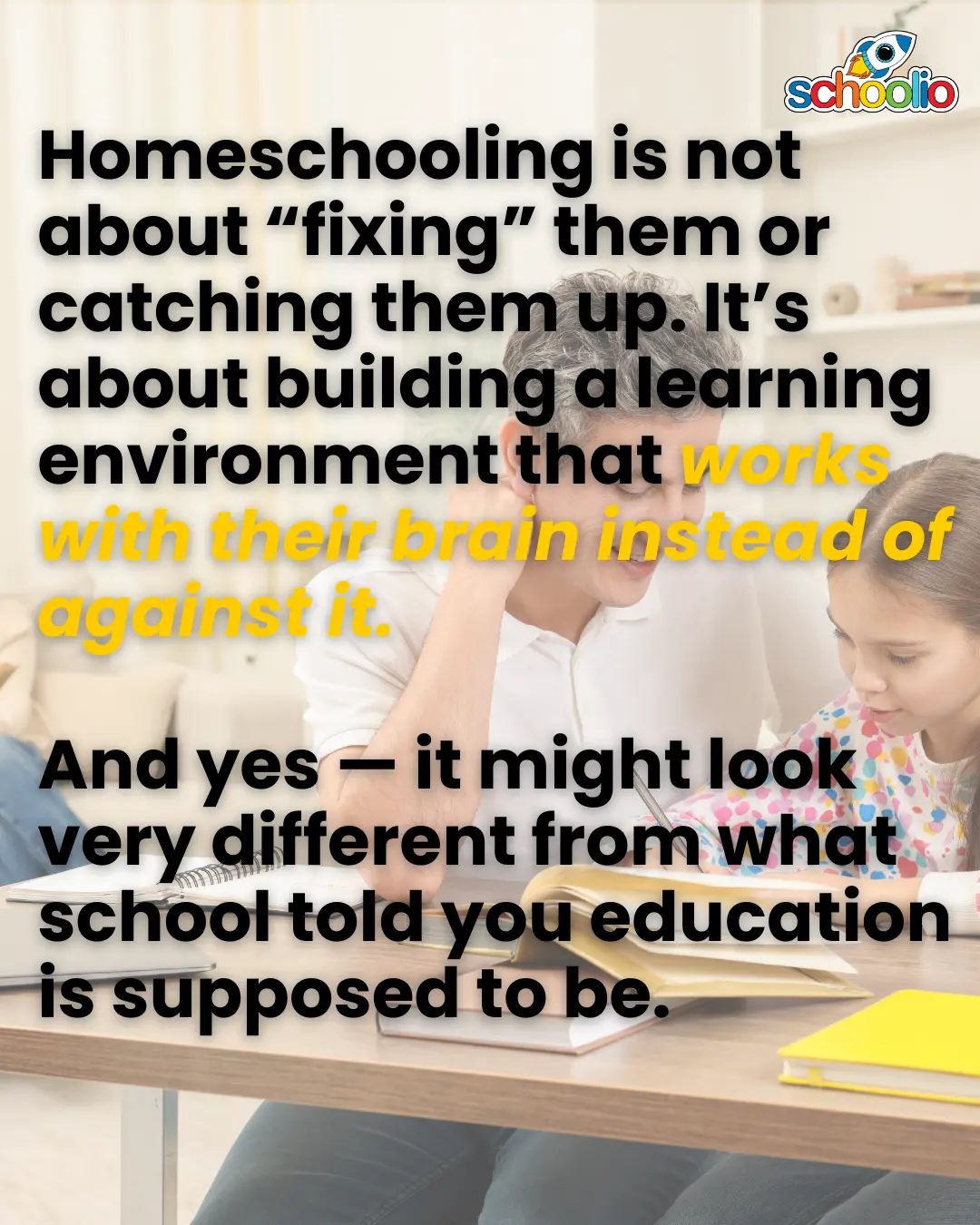
Homeschooling stops being about “fixing” them or catching them up, and starts becoming about building a learning environment that works with their brain instead of against it.

That might mean slowing down.

It might mean breaking lessons into smaller pieces.

It might mean offering more choice.

It might mean focusing on engagement and confidence before academics.

And yes — it might look very different from what school told you education is supposed to be.

But different doesn’t mean wrong.

If you’re showing up, adjusting, listening, and trying to understand your child — you’re already doing the most important part of this work. Neurodivergent kids don’t need perfect plans. They need adults who see them, trust them, and are willing to learn alongside them.

You’re not failing.

You’re learning.

And that’s exactly what your child needs from you.


? Lindsey

certified special-ed educator & co-founder, Schoolio

Modulated Noise, Binaural Beats, and “Sensory Audio”: What Actually Helps Neurodivergent Kids (and What Doesn’t)

Modulated Noise, Binaural Beats, and “Sensory Audio”: What Actually Helps Neurodivergent Kids (and What Doesn’t)


If you’ve ever searched focus music for ADHD or “calming sounds for autistic kids,” you’ve probably fallen down a rabbit hole of options:

White noise.

Brown noise.

Binaural beats.

8D audio.

Spatial soundscapes.

“Roman café sounds.”

And if you’re anything like most neurodivergent parents, you’ve probably asked yourself:

Is this actually helping my kid… or is this just another thing I’m supposed to try?

Let’s slow this down and talk about what these sounds actually are, what the research does (and doesn’t) say, and how to use audio support in a way that’s regulating instead of overwhelming.


First: Why Sound Matters So Much for Neurodivergent Kids

For many ADHDers and autistic kids, sound isn’t just background — it directly impacts the nervous system.

Noise can:

  • help the brain stay regulated
  • reduce sensory overload
  • support focus and task initiation
  • or… do the exact opposite

There is no one “best” audio solution. What helps one child focus might send another into shutdown or agitation. And that’s not a failure — it’s information.


Modulated Noise (White, Pink, Brown Noise)

Let’s start with the most evidence-supported category.

Modulated noise refers to steady, non-intrusive sound that masks environmental distractions.

  • White noise: equal intensity across frequencies (static-like)
  • Pink noise: softer, more balanced (often better tolerated)
  • Brown noise: deeper, lower tones (frequently preferred by ADHDers)

Why this can help

For ADHD brains especially, background noise can actually increase focus by:

  • boosting dopamine slightly
  • reducing sudden auditory interruptions
  • giving the brain “just enough” stimulation

Many ADHD kids work better with noise than in silence — silence can feel loud.

Watch for:

  • irritation or headaches
  • increased agitation
  • sensory fatigue over long periods

If it helps, great. If it doesn’t, don’t force it.


Sensory & Ambient Audio (Rain, Cafés, “Roman Sounds”)

These are layered soundscapes meant to feel immersive or comforting.

Rain.

Fireplaces.

Cafés.

Nature.

Ancient city ambience.

Despite the fancy names, these are not therapeutic frequencies — they’re sensory environments.

Why they help some kids

  • provide predictable auditory input
  • mask unpredictable household noise
  • feel emotionally grounding or familiar

For autistic kids especially, this kind of audio can create a sense of place safety.

When they don’t help

  • too many layers can overload sensory processing
  • looping sounds can become irritating
  • immersive tracks may pull attention away from learning

These work best for:

  • calming
  • transitions
  • background regulation — not always active learning

Spatial Audio & “8D Sound”

Spatial or “8D” audio uses headphones to simulate sound moving around the head.

This is not a medical or therapeutic category, despite how it’s marketed.

Potential benefits

  • novelty-driven engagement (especially for ADHDers)
  • immersive listening for short periods

Potential issues

  • can be disorienting
  • may increase sensory overload
  • often distracting rather than regulating

This is very individual. Some kids love it. Many don’t.


Rhythm-Based Music (Often the Unsung Hero)

This is one of the most overlooked — and often most effective — tools.

Music with:

  • steady tempo
  • predictable rhythm
  • minimal variation

Think lo-fi beats, instrumental tracks, slow drumming.

Why this works

Rhythm helps regulate the nervous system by:

  • supporting pacing
  • aiding task initiation
  • providing structure without demand

For many autistic kids, this is far more tolerable than binaural or modulated sounds.


Binaural Beats (The Most Misunderstood)

Binaural beats use two different tones, one in each ear, to create a perceived frequency difference in the brain.

Yes — there is some research suggesting potential effects on brainwave states.

No — it is not consistent, not universal, and not a magic solution.

Important things parents should know

  • Headphones are required
  • Many autistic people find them uncomfortable or distressing
  • Effects vary wildly between individuals
  • Some kids report headaches or agitation

If they help your child regulate — that’s valid.

If they don’t — also valid.


Isochronic Tones (Often Labeled Incorrectly)

These are single tones that pulse rhythmically.

They do not require headphones and are sometimes better tolerated than binaural beats — or sometimes much worse.

Again: individual response matters more than theory.


What These Sounds Are Actually Doing

None of these sounds “fix” ADHD or autism.

What they can do is:

  • support nervous system regulation
  • reduce sensory stress
  • help the brain reach a more workable state

Think of them like external supports, not treatments.

Just like glasses don’t fix eyesight — they help the world feel manageable.


How to Use Audio Supports Without Overwhelm

Here’s the most important part.

Start with regulation, not productivity

Ask:

Does this help my child feel calmer, safer, or more settled?

Focus comes after regulation.


Offer choice whenever possible

Control matters — especially for neurodivergent kids.

Let them choose:

  • the sound
  • the volume
  • when it’s on or off

Choice = nervous system safety.


Keep volume lower than you think

If it’s too loud, the brain stays in alert mode.

Quiet, steady, predictable sounds work best.


Use audio as a tool, not a rule

No child needs to “get used to” a sound that dysregulates them.

If today it works and tomorrow it doesn’t — that’s okay.


A Gentle Reminder for Parents

If your child needs sound to focus, calm, or learn:

That’s not a bad habit.

That’s not avoidance.

That’s not dependence.

That’s self-regulation.

Neurodivergent kids aren’t broken for needing external supports — their nervous systems simply work differently.

And when we work with that difference instead of against it, learning gets easier… for everyone.

Why More Parents Are Choosing Homeschooling Even When It Was Never the Plan

Why More Parents Are Choosing Homeschooling Even When It Was Never the Plan


This has been on my mind today…

I read a story recently about a parent who never planned to homeschool. It was not ideological. It was not a protest. It was not about rejecting school. It was simply about responding to a child who was struggling in ways that could no longer be ignored.

That story keeps echoing because it sounds like so many families I speak to.

The decision to homeschool is often framed as a bold choice or a radical one. In reality, for many parents, it is a quiet pivot. A moment where they realize that what is supposed to be working simply is not. Their child is anxious. Or exhausted. Or shutting down. Or falling behind while being told they are doing fine.

What struck me most was how ordinary the story was. No dramatic failure. No single breaking point. Just a slow accumulation of signs that school was costing more than it was giving.

This is something we do not talk about enough.

We talk about grades. We talk about outcomes. We talk about standards. But we rarely talk about the emotional tax school can take on a child who learns differently or feels out of place. We rarely talk about how long parents sit with doubt before making a change. Or how much guilt comes with admitting that the default path might not be the right one for your child.

Homeschooling, in these stories, is not about pulling kids away from the world. It is about bringing learning closer to who they are. It is about restoring confidence. It is about slowing things down long enough for curiosity to return.

Many of these parents still value structure. They still value rigor. They still care deeply about education. They are not opting out. They are opting in differently.

What keeps coming up is this idea of safety. Not physical safety, but emotional safety. The freedom to ask questions without fear. The space to make mistakes without labels. The ability to learn at a pace that does not constantly signal failure.

This is where homeschooling becomes less about location and more about intention.

At schoolio, we see this pattern over and over. Families who did not start out wanting to homeschool. Families who simply wanted their child to feel capable again. Families who wanted learning to stop being a daily battle.

Homeschooling is not a punishment. It is not giving up. It is not settling for less. For many families, it is a way to rebuild trust in learning itself.

Every child has a relationship with education. When that relationship is damaged, it needs care. Sometimes that care looks like staying and advocating. Sometimes it looks like stepping back and rebuilding at home.

What matters most is that we stop pretending there is only one right way.

Homeschooling is not for everyone. But for the families who choose it, often unexpectedly, it is not about escaping school. It is about choosing their child.


Sathish

still learning, still unlearning

Will They Be Alright?

Will They Be Alright?


This has been on my mind today…

Lately, I’ve been thinking a lot about the world we’re living in. The noise of politics, the chaos of AI, the constant scroll of news about conflict, anxiety, and the growing mental health crisis. Sometimes it feels like humanity is sprinting faster than it can breathe.

And in quiet moments, when I look at my two kids, a single question keeps coming back. Will they be alright?

It’s a question I’ve heard from so many parents — on calls, in messages, and in conversations that start with school but end in fear. It’s not just worry. It’s the quiet recognition that the world is changing faster than we can make sense of it. Like holding on to a fast-moving train, hoping it’s heading somewhere safe, but not really sure.

When my parents raised me, their worries were simpler — education, stability, respect. Now, the world feels heavier. AI is rewriting jobs, politics divides homes, and even rest feels like a luxury. The pace of it all makes you wonder if we’ve traded depth for speed, wisdom for convenience.

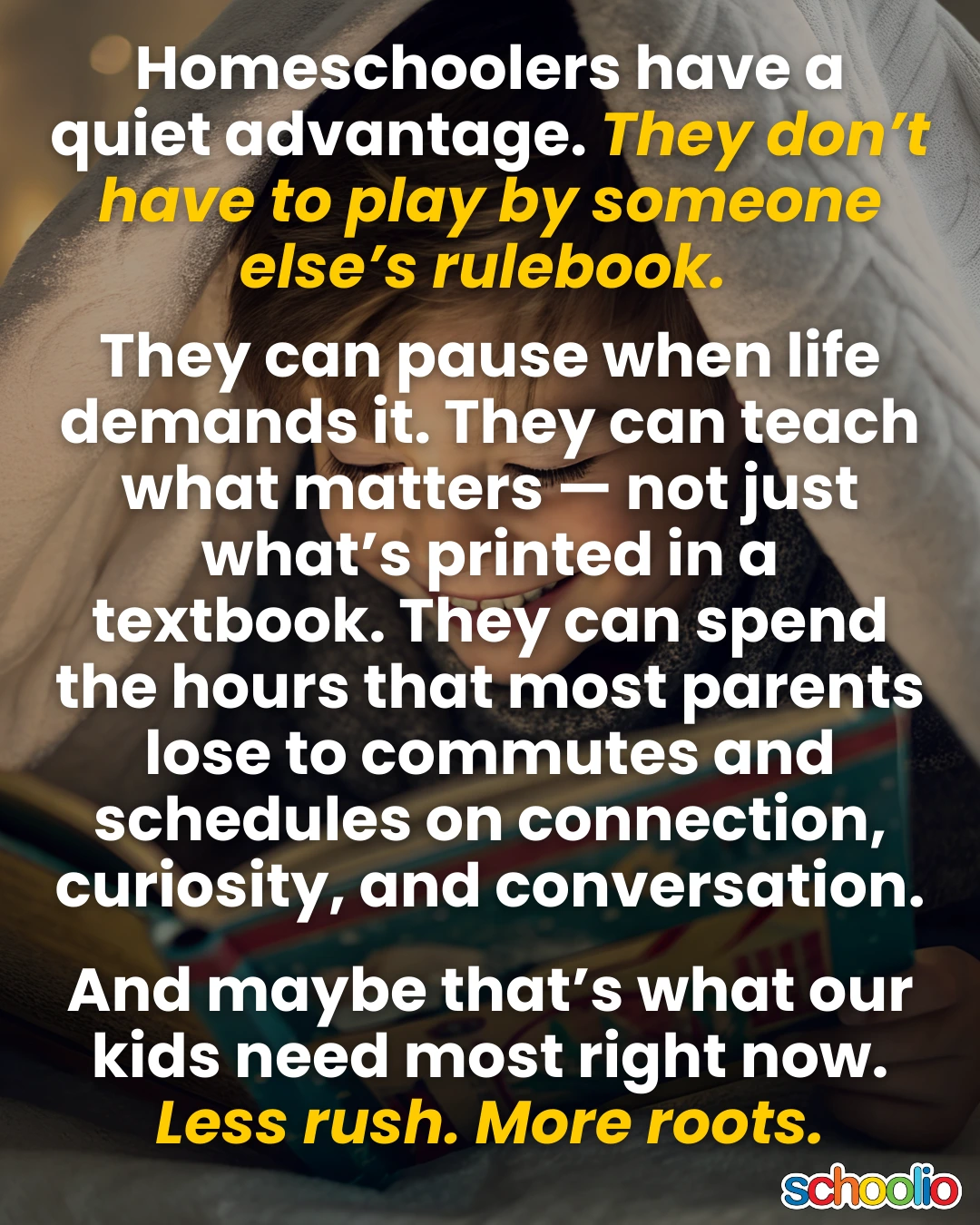
That’s why I see homeschooling through a different lens. Homeschoolers have a quiet advantage. They don’t have to play by someone else’s rulebook. They can pause when life demands it. They can teach what matters — not just what’s printed in a textbook. They can spend the hours that most parents lose to commutes and schedules on connection, curiosity, and conversation.

And maybe that’s what our kids need most right now. Less rush. More roots.

So when I ask myself will they be alright, I remind myself that being alright isn’t about grades or university acceptance letters. It’s about raising kids who are thoughtful, kind, adaptable, and brave enough to navigate a world that’s still figuring itself out.

If we can give them that, they’ll be more than alright.


Sathish

still learning, still unlearning

To the Weak, Everything Feels Like a Threat

To the Weak, Everything Feels Like a Threat


This has been on my mind today…


Every time education shifts forward, fear gets louder.

Teachers are angry that families are exploring alternatives during the Alberta strike. Some are even calling parents “disloyal” for turning to online resources. But let’s be honest — what else are families supposed to do when the system stops working?

The truth is, teachers are afraid. And I get it. They’ve been handed an impossible job inside a system that hasn’t evolved in 150 years. A system built for industrial workers, not creative thinkers. For compliance, not curiosity.

AI. Homeschooling. Microschools. Digital curriculum.

All of it is growing — fast.

And instead of seeing these tools as extensions of learning, too many educators see them as enemies.

Here’s the reality:

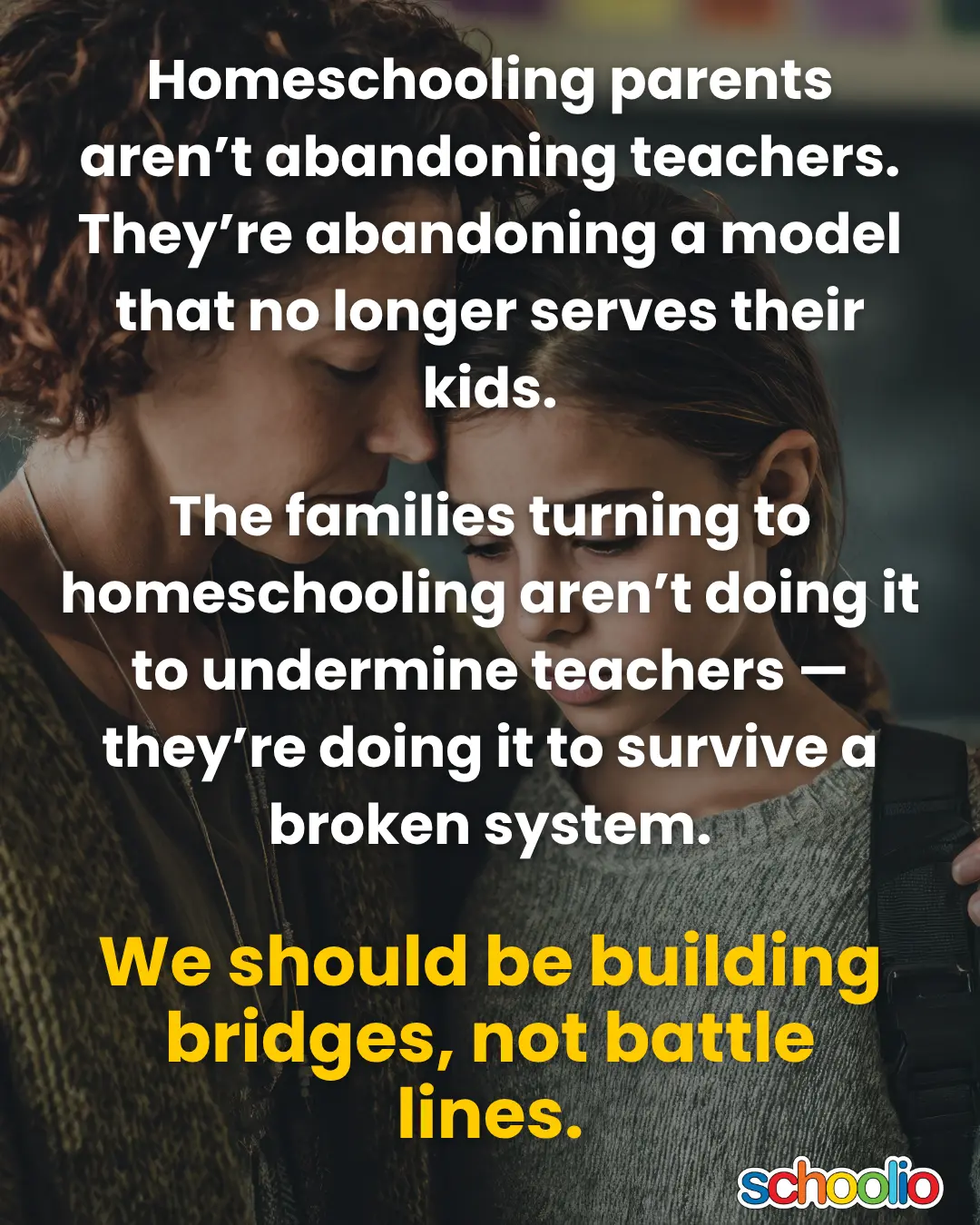
Parents aren’t abandoning teachers. They’re abandoning a model that no longer serves their kids.

Innovation in education isn’t an attack. It’s an answer.

The families turning to homeschooling or digital learning aren’t doing it to undermine teachers — they’re doing it to survive a broken system.

We should be building bridges, not battle lines.

Technology and teachers can coexist. But that requires courage — the kind that looks at change and says, “Let’s learn from it.”

Because the future of education won’t be built by those defending the old ways. It’ll be built by the ones bold enough to imagine new ones.

Alberta


Sathish
Still learning, still unlearning

Worried Homeschooling Is Too Expensive? Here’s Your Defense Over the Costs

Worried Homeschooling Is Too Expensive? Here’s Your Defense Over the Costs


Yes, homeschooling has costs — but so does public school. The difference? You control what you spend and why.

I hear from parents considering homeschooling all the time…

“I want to start homeschooling… but what if I just can’t afford it?”

It’s a fair question. And while homeschooling does cost money — for curriculum, field trips, and supplies — I think it’s time we talk honestly about something people don’t always mention:

? Public school isn’t free.

The truth is, both paths have costs. But with homeschooling, you get to decide what you buy and how much you spend, based on your values and your child’s needs — not what’s written on a school form or fundraiser sheet.

Let’s break it down.


? How Much We Spend on Homeschooling

If you’ve met me, and a lot of you have, you probably know I’m an incurable Type-A planner. We also homeschooled our two kids on one income, as I know many of you are as well. For several years I tracked everything that was homeschool related, so I knew exactly how much we were spending on:

  • Curriculum
  • Field trips
  • Supplies
  • Anything we wouldn’t have spent otherwise if they were in school

But here’s the kicker…


vs. What We Spent in Public School (Hint: It Was More)

This spending tracking didn’t begin with homeschooling though- back when my kids were in public school, I also tracked our spending. Those years?

We spent almost $100 more per childfor free public school.

Here’s where that money went:

  • Back-to-school supplies (the specific ones required)
  • Indoor shoes, gym clothes, weather gear – and clothing replacements when they are lost and stolen
  • School events: BBQs, fairs, pizza day, candy cane day, milkshake day…
  • Valentines, classroom parties, book fairs, teacher gifts
  • Hot lunches and fundraiser purchases
  • Fad items and brand names your kids have to have in order to not be bullied

We weren’t even high-participation parents! We did just enough that our kids didn’t feel left out, but not every event or lunch or fundraiser.

And still? It added up.


? The Big Difference with Homeschooling: You’re in Control Now

Homeschooling gives you something public school doesn’t:

Control over what you spend — and what you get for it.

You decide:

  • Which curriculum to invest in (or whether to build your own)
  • How often you take field trips
  • Whether you spend more time or more money — whichever fits your family
  • What supplies, tools, or extras actually matter in your homeschool

You’re not just handing money over for a pizza party you didn’t ask for.

You’re choosing what best supports your child’s growth — and your family’s goals.


? Homeschooling Can Work on a Budget

You’ll spend either money or time — or some combination of both.

The beauty is: you get to choose what’s worth it.

Whether you’re middle-of-the-road spenders, doing things ultra-minimally with free resources and DIY everything, or have some room to buy back more time — there’s no one “right” budget for homeschooling.

But don’t let the myth of free public school fool you. The costs are real.

The difference is, with homeschooling, you’re investing with intention.

Lindsey

Certified Special Ed Educator & Co-Founder, Schoolio