When Kids Solve Real Problems, Something Shifts
This has been on my mind today…
When kids solve real problems, something shifts.
Not on a report card.
Not in a percentage.
In themselves.
When they fix something broken.
When they build something useful.
When they grow something and watch it thrive.
They begin to believe they can solve bigger problems.
They start to see themselves as capable.
And that belief is not graded. It is felt.
I think this is where many kids quietly disconnect from school.
Not because they are lazy.
Not because they are incapable.
But because so much of what they are asked to do feels disconnected from their living reality.
Pages of theory.
Lessons without context.
Concepts without application.
When learning does not connect to life, it starts to feel performative. Do this to get the mark. Memorize this to pass the test. Complete this because it is assigned.
But this generation is different.
More than ever, they want to know why first.
Why are we learning this?
Where does this show up in the real world?
How does this matter?
If that question is not answered, attention drifts. Motivation fades. Learning becomes compliance instead of curiosity.
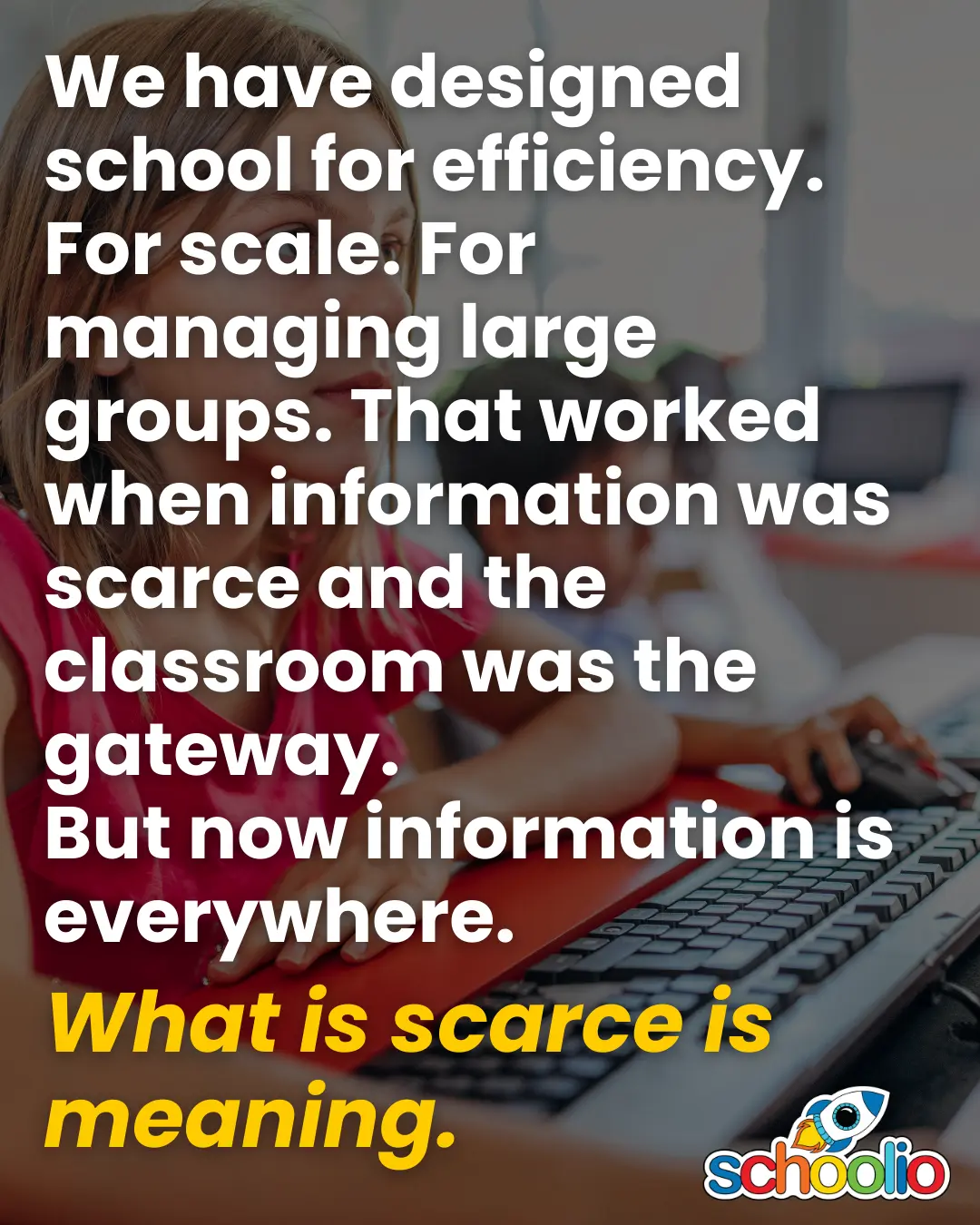
We have designed school for efficiency. For scale. For managing large groups. That worked when information was scarce and the classroom was the gateway.
But now information is everywhere.
What is scarce is meaning.
When a child can see how math helps them measure wood for a project, it sticks. When writing helps them communicate an idea they care about, it matters. When science explains something they experience, it connects.
Real work grounds learning in purpose.
And purpose fuels effort.
When kids experience that connection, they do not just complete assignments. They engage. They take ownership. They ask better questions.
Because they are no longer learning for the grade.
They are learning because it makes sense.
If we want more engagement, we cannot just adjust the curriculum. We have to reconnect learning to life.
Because when kids solve real problems, they begin to believe they can solve bigger ones.
And that belief might be the most important outcome of education.
still learning, still unlearning