What Is Trauma-Informed Education, And Why It Might Be Exactly What Your Child Needs
By Lindsey, certified special-ed educator and co-founder, Schoolio
If you’ve pulled your child out of school because something wasn’t working- and I mean really wasn’t working- you’re not alone.
We hear from families every day whose kids are recovering from what we call school trauma.
Maybe your child:
- Was bullied and felt unsafe
- Shut down from anxiety or sensory overload
- Was constantly in trouble for behavior no one tried to understand
- Masked all day to fit in and melted down at home
- Fell behind and couldn’t catch up, no matter how hard they tried and had their confidence and self-esteem shaken
Whatever your story looks like, one thing is clear:
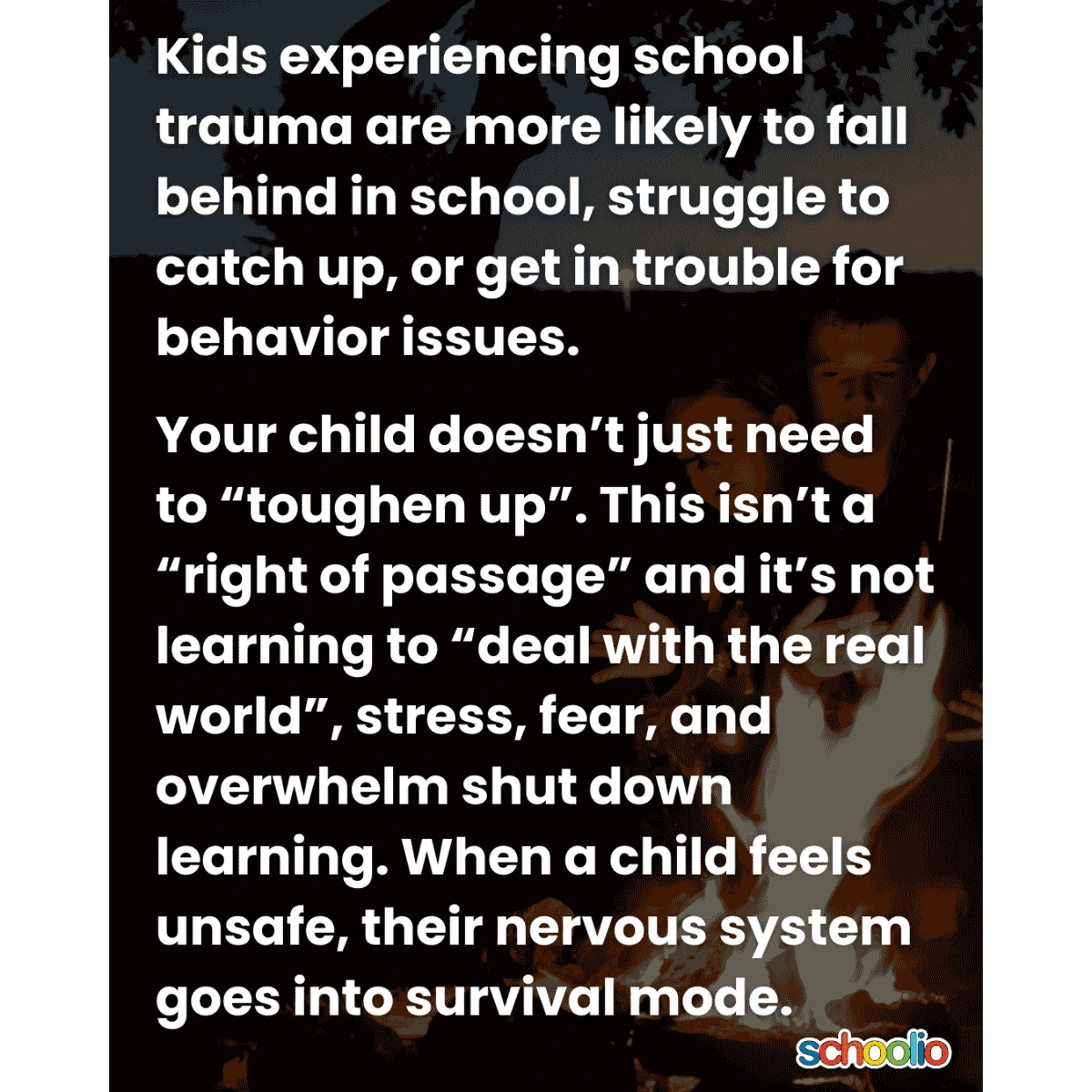
Your child didn’t just need to “toughen up”. This isn’t a “right of passage” and it’s not learning to “deal with the real world”, they need a completely different kind of learning environment to feel safe and recover.
What “Counts” As Trauma?
Trauma is not something we narrowly define. In reality, all experiences that have negative and long-lasting impact can cause trauma. Another child being mean to your child one time on the playground may not be a traumatic event, but on-going bullying and the emotional abuse, harassment, and character destruction that includes certainly can be. In fact, it is the way we process and experience certain events that defines how traumatic they are; two kids may process the same episode quite differently, making it a traumatic event for one but a minor blip on the radar for the other.
Trauma impacts learning and behavior. It can significantly slow down, or completely stop our ability to learn.
Kids experiencing trauma are more likely to fall behind in school, struggle to catch up, or get in trouble for behavior issues. These results can compound more trauma and make things increasingly worse.
If your child has experienced school trauma, you did the right thing by removing them from that environment. But you might be asking yourself, now what?
That’s where trauma-informed education comes in.
What Is Trauma-Informed Education?
Trauma-informed education isn’t just a buzzword- it’s a researched, intentional framework grounded in how children process stress and recover from negative experiences. It is an approach to teaching that recognizes the widespread impact of trauma on a child, and aims to create a safe, supportive, and inclusive learning environment. It acknowledges that your child’s past experiences, including trauma, can directly affect their ability to learn. By understanding these impacts, we can adjust teaching methods and create a home environment that fosters their recovery and resilience while supporting real learning.
Trauma-Informed Education is built on six key principles:
- Safety: Children must feel emotionally, mentally, and physically safe in their learning environment. You’ve established this by bringing them home to learn and removing them from the unsafe environment of school.
- Trustworthiness and Transparency: It’s important now that your feels like they know what to expect and know that the adults around them are predictable and honest.
- Empowerment, Voice, and Choice: Kids do better when they have a say in their learning process and are given appropriate autonomy.
- Collaboration and Mutuality: Learning should not be something done to a child, but something done with them.
- Peer Support: Feeling part of a community and knowing you are not alone is a critical part of healing. Remember that your family unit is also a “community”.
- Cultural Responsiveness: It’s cruical that your home and family affirm and respect your child’s identity, history, and experiences.
A trauma-informed approach recognizes that stress, fear, and overwhelm shut down learning. When a child feels unsafe, emotionally or physically, their nervous system goes into survival mode. And survival mode leaves very little room for comprehension, creativity, or curiosity. Feeling “unsafe” doesn’t always mean they feel like they’re in danger. Fear of failure or criticism, fear of exclusion, and fear of retaliation are all legitimate attacks on a child’s sense of safety.
Trauma-informed education begins with the right questions:
- Does my child feel safe right now?
- Remember the above ways of feeling unsafe- this includes their feel of failing or getting in trouble.
- Do they feel heard and respected?
- Are they given choices and control over their learning?
- Is our environment calm, clear, and consistent?
- As parents, we get frustrated and overwhelmed too- we’re human after all. If you need a break to calm down, take it. The environment isn’t calm if you’re stressed. Only a regulated person can help calm a dysregulated person.
If the answer to those questions is no, it doesn’t matter how high-quality the curriculum is, their brain won’t be ready to receive it. Establish all four consistently before you start a learning program. Deschooling and recovering from public school burnout should come first. Download our free guide here.
How Schoolio Supports Trauma-Impacted Learners
We didn’t create Schoolio to be a trauma recovery program. But we did design it to be flexible, gentle, and deeply learner-centered. For many children recovering from difficult school experiences, that’s exactly what they need.
Here’s how our program applies trauma-informed educational practices, supports recovery, and helps you provide a safe and calm learning experience for your child:
- Predictability Without Pressure
Our lessons follow a consistent, easy-to-understand structure, but you, the parent, set the pace.
Kids who’ve experienced chaos or overstimulation in school find relief in knowing what to expect, without the added stress of rigid deadlines.
- Reduced Sensory Load
Our videos and digital content are intentionally designed to be calm and simple. We avoid overstimulation and excessive noise or visuals because overstimulated brains don’t retain information, they shut down.
- Adaptable to Their Energy and Academic Levels
Many children exiting the school system are burnt out. They don’t need another mountain to climb, they need space to breathe. Schoolio’s bite-sized lessons, printable offline options, and flexible scheduling create room for healing without halting progress. You can also mix-and-match grade levels to create a program where they feel confident and successful, rebuilding self-esteem and security.
- Emotional Learning Built In
Our social-emotional learning and mental health courses are not extras, they’re part of our core offerings. Kids deserve to learn how to name their feelings, manage emotions, build healthy relationships, and recover from stress. These aren’t bonus skills, they’re life skills.
- No One-Size-Fits-All Expectations
Many kids develop trauma in school simply because they didn’t fit the mold. At Schoolio, we don’t have a mold.
Your child can move ahead in one subject while slowing down in another.
They can demonstrate knowledge through art, play, projects, and conversation, not just multiple-choice tests.
They can build a learning plan that matches their pace, their passions, and their strengths.
Final Thoughts
If your child is resistant to learning right now, that doesn’t mean they’re lazy or broken.
If they seem shut down, checked out, or angry, that doesn’t mean homeschooling won’t work.
It means they’re still healing.
They need time, safety and trust.
And they need a learning environment that sees them as a whole person, not a problem to fix.
That’s what trauma-informed education offers.
That’s what we aim to provide at Schoolio.
And if that’s what your child needs, you’re in the right place.
Lindsey
certified special-ed educator and co-founder, Schoolio