Cycle Breakers: Parenting Without Fear

This has been on my mind today…

I was parented through fear.

Not cruelty. Not malice.

Just — the tools that were handed down.

Behave or there are consequences. Perform or you’ll fall behind. Fit in or be left out.


Fear works. That’s the problem.

It produces short-term compliance.

But it leaves something behind.

A quiet voice that says: you are only okay if you are performing.


I see something different in the homeschool families I meet.

Not perfect families. Not families without struggle.

But families who made a decision — sometimes consciously, sometimes just by feel — to parent through trust instead.


Trust that their child wants to learn.

Trust that growth doesn’t have to be forced.

Trust that a child given space and guidance will find their way.


Why Cycle Breaking in Parenting Matters

Cycle breaking is hard work.

It is unlearning the parenting and teaching that was modeled to us.

It is finding your way without a roadmap.

No one hands you a guide for how to parent differently than you were parented.

You figure it out. You get it wrong sometimes. You keep going.

But it is one of the most important things we can do for our children.

And for their education.

Imagine a child who is encouraged to explore their interests. Maybe your child loves dinosaurs. Instead of forcing them to stick to a rigid curriculum, you can integrate their interest into various subjects. Reading about dinosaurs, calculating their sizes in math, or even creating art projects based on them can make learning exciting and relevant.

Consider a real-life example: A homeschooling mom shared how her son struggled with traditional math methods. Instead of insisting on the standard approach, she allowed him to explore math through cooking, measuring ingredients, and doubling recipes. This practical application not only improved his math skills but also boosted his confidence.


Building Trust in Cycle Breaker Parenting

Parents who were taught through shame choosing to teach through curiosity.

Parents who were controlled choosing to guide.

Parents who were never trusted deciding that their kids will be.

Building trust takes time and patience. It involves listening to your child’s needs and interests, and sometimes it means stepping back and allowing them to make mistakes. For instance, if your child shows an interest in gardening, allow them to plant their own seeds and care for the plants. They might make mistakes along the way, but these are valuable learning experiences.

Trust also means believing in your child’s ability to learn at their own pace. In homeschooling, this can be particularly powerful. A friend of mine decided to let her daughter, who was struggling with reading, choose her own books. Over time, her daughter’s love for reading blossomed, and she began to read more complex texts on her own.


That’s not small.

That’s generational.

Sathish

still learning, still unlearning
What (and Why) to Teach in Social Studies in K–8

What (and Why) to Teach in Social Studies in K–8


When most parents hear “Social Studies,” they think:

History.

Geography.

Maybe a few maps.

And then they wonder…

How much does this really matter in elementary school?

But Social Studies is so much bigger than memorizing dates and capitals.

It’s not just about the past.

It’s about people.

It’s about identity.

It’s about belonging.

And when we teach it well in the early years, we aren’t just building knowledge — we’re building citizens.


Social Studies Is More Than History and Maps

In K–8, Social Studies is an umbrella.

And under that umbrella, we’re teaching multiple big ideas:

  • History and Geography, yes.

But also,

  • People
  • Communities
  • Cultures
  • Heritage
  • Identity
  • Citizenship

Let’s break that down.


Geography: People, Communities, and Cultures

Yes, geography includes landforms and continents.

But in the early grades, it starts much closer to home.

A kindergartener doesn’t need to memorize world capitals.

They need to understand:

Who are the people in my community?

What jobs do they do?

How do we help one another?

A first grader can learn:

What is a community?

Why do we have libraries, fire stations, parks?

Who makes our town function?

As they grow, geography expands:

How do people live in different parts of the world?

What do families look like in different cultures?

What traditions do people celebrate?

When kids learn about different family structures, religions, foods, and customs, they are building empathy.

They are learning tolerance.

They are widening their worldview.

And that matters just as much as knowing where France is on a map.


History: Story Before Timeline

History in the early years isn’t about memorizing wars.

It’s about story.

It starts with:

What is “the past”?

What was my family like before I was born?

Where did my grandparents grow up?

Children can explore their own heritage:

Where did our family come from?

Why did they immigrate?

What traditions have we kept?

Understanding personal history builds identity.

Later, that expands into:

Major events.

Important figures.

How societies changed over time.

But when we start with personal connection, history feels human — not just a list of facts.


Heritage and Identity

When kids explore their heritage, they begin to see themselves as part of a bigger story.

That’s powerful.

It gives them roots.

It gives them context.

It teaches them that their family’s journey — whether recent immigration or generations in one place — is part of the fabric of society.

And when they understand their own story, they’re more open to respecting someone else’s.


Citizenship: It Starts So Small

Citizenship doesn’t begin in middle school with a textbook on government.

It begins in first grade.

It begins when a child learns to:

Pick up trash in the park.

Hold the door open.

Follow shared rules at the library.

Understand fairness.

Those small acts are the foundation of civic responsibility.

By grade 5 or 6, we can expand into:

What is local government?

What does a mayor do?

What are the levels of government?

Why do we vote?

But those bigger ideas only land when kids understand that they are part of a community.

Citizenship is belonging plus responsibility.

And it builds year by year.


Why This Matters in K–8

If we reduce Social Studies to “history and geography facts,” we miss the point.

Social Studies is where we teach kids:

How to see others.

How to understand systems.

How to think critically about fairness.

How to participate in their community.

How to value diversity.

How to understand where they come from.

In a world that feels increasingly divided, those skills are not optional.

They are foundational.


It’s Not Extra — It’s Essential

In the early years especially, Social Studies isn’t separate from real life.

It is real life.

It’s conversations at the dinner table.

It’s noticing the helpers in your town.

It’s asking where your family’s traditions came from.

It’s learning why we follow rules.

It’s understanding that different doesn’t mean wrong.

From a first grader learning to care for their local park…

to a sixth grader learning how government works…

It all builds.

And when we teach Social Studies with intention, we aren’t just raising students.

We’re raising thoughtful, informed, empathetic humans.

?

Lindsey

certified special-ed educator, homeschooling mom, & co-founder of Schoolio

When Kids Solve Real Problems, Something Shifts

When Kids Solve Real Problems, Something Shifts


This has been on my mind today…

When kids solve real problems, something shifts.

Not on a report card.

Not in a percentage.

In themselves.

When they fix something broken.

When they build something useful.

When they grow something and watch it thrive.

They begin to believe they can solve bigger problems.

They start to see themselves as capable.

And that belief is not graded. It is felt.

I think this is where many kids quietly disconnect from school.

Not because they are lazy.

Not because they are incapable.

But because so much of what they are asked to do feels disconnected from their living reality.

Pages of theory.

Lessons without context.

Concepts without application.

When learning does not connect to life, it starts to feel performative. Do this to get the mark. Memorize this to pass the test. Complete this because it is assigned.

But this generation is different.

More than ever, they want to know why first.

Why are we learning this?

Where does this show up in the real world?

How does this matter?

If that question is not answered, attention drifts. Motivation fades. Learning becomes compliance instead of curiosity.

We have designed school for efficiency. For scale. For managing large groups. That worked when information was scarce and the classroom was the gateway.

But now information is everywhere.

What is scarce is meaning.

When a child can see how math helps them measure wood for a project, it sticks. When writing helps them communicate an idea they care about, it matters. When science explains something they experience, it connects.

Real work grounds learning in purpose.

And purpose fuels effort.

When kids experience that connection, they do not just complete assignments. They engage. They take ownership. They ask better questions.

Because they are no longer learning for the grade.

They are learning because it makes sense.

If we want more engagement, we cannot just adjust the curriculum. We have to reconnect learning to life.

Because when kids solve real problems, they begin to believe they can solve bigger ones.

And that belief might be the most important outcome of education.


Sathish

still learning, still unlearning


Why Your ADHD Child Can’t Sit Still- What is Vestibular Input?

Why Your ADHD Child Can’t Sit Still- What is Vestibular Input?


If you have an ADHD child, you’ve probably said one of these phrases at least once (or, let’s be honest, many times):
“Sit properly, please.”
“Feet down.”
“Stop spinning that chair.”


“Why are you upside down right now?”

And yet, no matter how many times you say it… they just can’t seem to stop.

It’s easy to see this as misbehavior or lack of focus. But in reality, what you’re seeing might be something deeper — your child’s nervous system doing its best to get the vestibular input it needs to feel regulated, alert, and ready to learn.

vestibular input

What Is Vestibular Input?

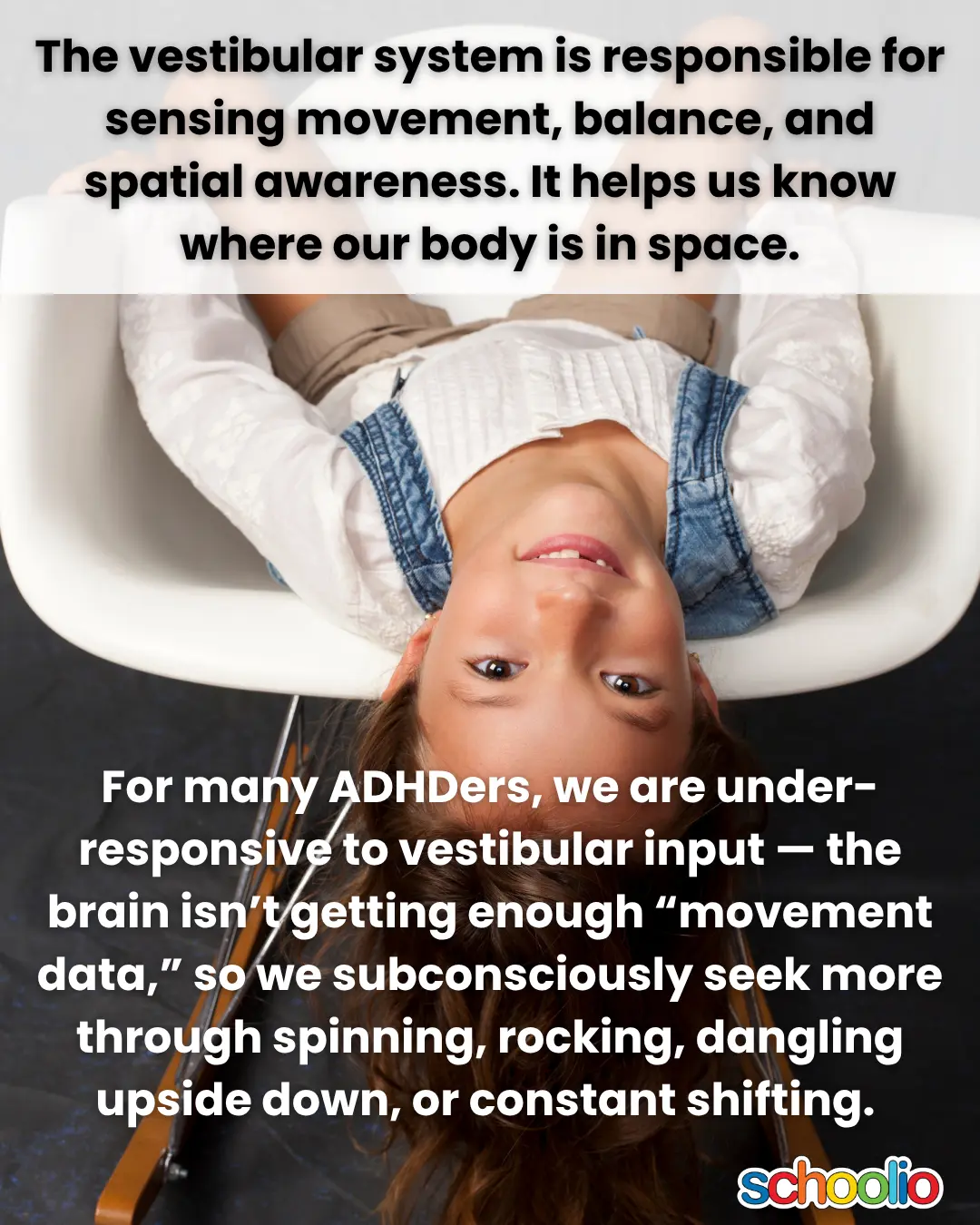
The vestibular system lives in the inner ear, and it’s responsible for sensing movement, balance, and spatial awareness. It helps us know where our body is in space — like whether we’re sitting upright, moving fast, or tilting our head.

For neurotypical people, this system runs quietly in the background, keeping them centered. But for many ADHDers, it doesn’t process quite the same way.

Some ADHD kids are under-responsive to vestibular input — their brain isn’t getting enough “movement data,” so they subconsciously seek more through spinning, rocking, dangling upside down, or constant shifting. Others may be over-responsive, finding certain motions overwhelming or dizzying.

Both patterns are common — and both are the body’s way of saying, “I need help regulating.”

? Science Note: The Vestibular–Dopamine Connection

The vestibular system doesn’t work alone — it’s closely tied to the dopamine pathways in the brain that control motivation, focus, and emotional regulation.

When your child moves — spinning, jumping, rocking — those physical sensations activate parts of the brainstem and cerebellum that help regulate dopamine and norepinephrine, both of which are often low in ADHD brains.

That’s why movement helps ADHD kids “wake up” their brains:

  • It boosts alertness and attention.
  • It improves emotional regulation.
  • It supports executive function — planning, memory, and self-control.

So when your child is fidgeting or in constant motion, they’re not being disruptive — they’re literally helping their brain function better.


What “Dopamine Seeking” Looks Like in the Body

We often talk about ADHD as dopamine-driven, but the vestibular system plays a huge role, too. Movement actually helps stimulate dopamine release — which is why your ADHD child may suddenly start pacing, swinging their legs, or balancing on the edge of a chair right when you need them to concentrate.

These “weird” positions aren’t defiance. They’re your child’s nervous system self-medicating through movement.

They might:

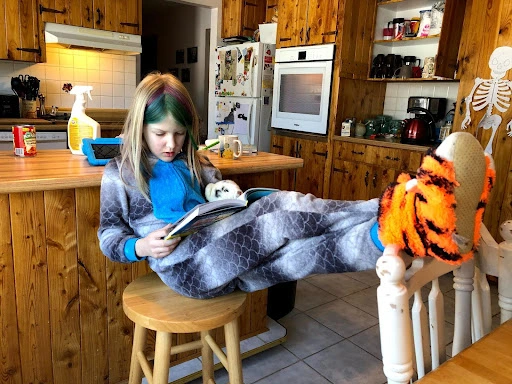
  • Sit with one leg over the arm of a chair
  • Hang off the couch upside down
  • Constantly rock, bounce, or sway
  • Spin in circles for “fun” (and never seem dizzy)
  • Climb furniture or balance on unstable surfaces

It can look chaotic — but for them, it’s regulating.


What It Feels Like for ADHD Kids

For a child whose vestibular system isn’t getting enough input, sitting still can feel physically uncomfortable — like trying to focus with an itch you can’t scratch. Their brain is searching for balance signals, and until it gets them, it’s hard to settle down.

You might see:

  • Fidgeting during reading or lessons
  • Difficulty maintaining posture
  • Restlessness or frustration during quiet tasks
  • Frequent “breaks” to move or reposition

The movement isn’t the problem — it’s the coping mechanism for an unmet sensory need.

How This Impacts Learning

When a child’s body is unregulated, their brain can’t prioritize learning. The vestibular system connects directly to areas of the brain that control attention, emotion regulation, and executive function — meaning movement needs aren’t separate from learning needs.

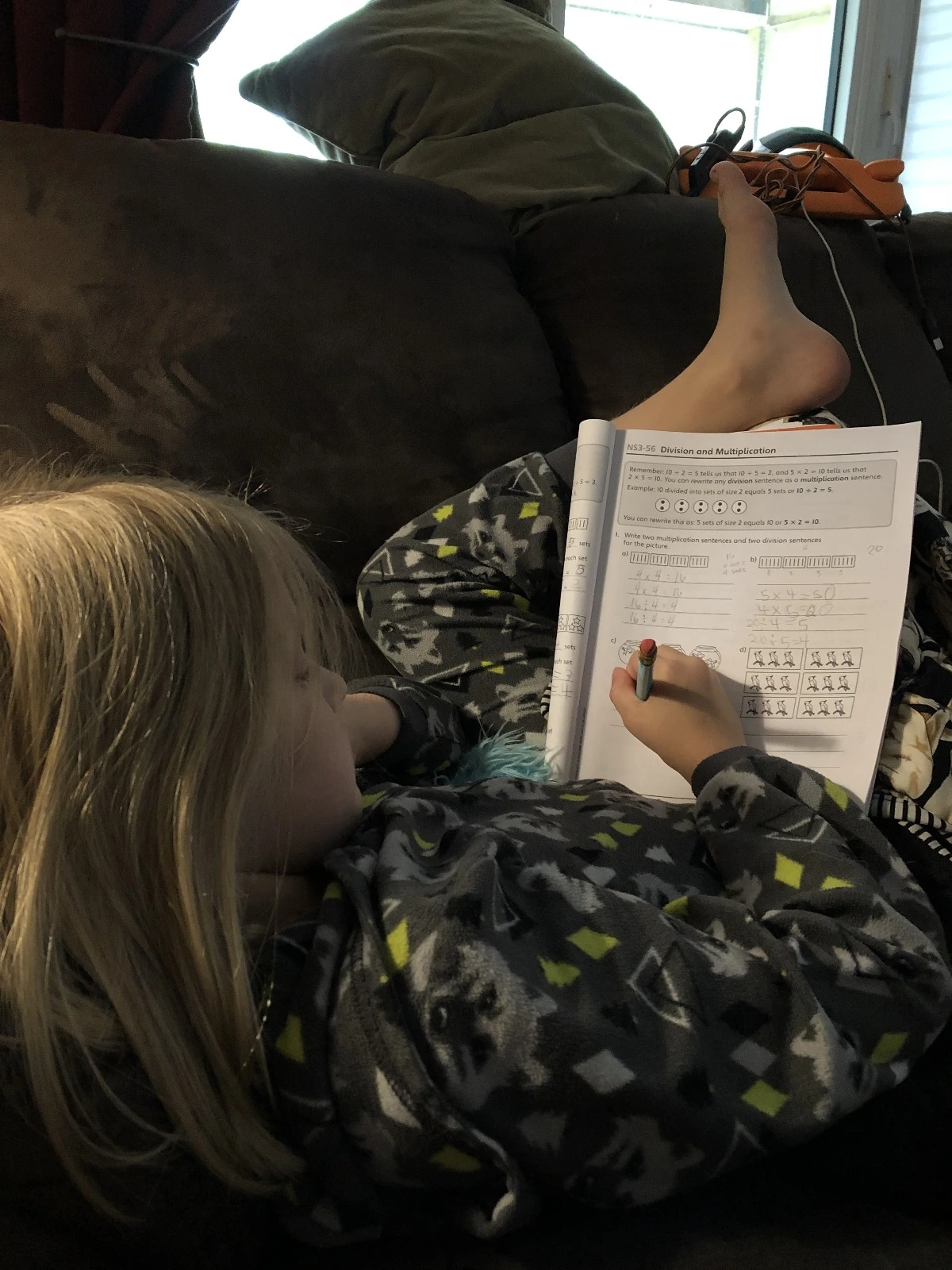
So when your ADHD child spins in their chair, lies on the floor to do math, or wiggles constantly through read-alouds… that’s not distraction. It’s adaptation.

Supporting Your Child’s Vestibular Needs at Home

Instead of trying to eliminate movement, think about channeling it. Here are some strategies to support vestibular regulation in your homeschool:

1. Build Movement Into the Day

  • Use active learning breaks between subjects.
  • Try standing desks, wobble stools, or yoga balls.
  • Let your child read or write while pacing, swinging, or lying down.activity

2. Offer “Heavy Work”

Proprioceptive input (like pushing, pulling, or lifting) helps calm the vestibular system. Try:

  • Carrying laundry or groceries
  • Wall push-ups or wheelbarrow walks
  • Building with weighted materials like LEGO or clay

3. Use Safe Spinning or Swinging

If your child seeks spinning, consider safe options like:

  • Swivel chairs
  • Therapy swings
  • Hanging pods or hammocks

4. Respect Their Positions

If your child learns best while lying on the floor or sitting cross-legged on a chair, that’s okay. Focus on engagement, not posture.

5. Schedule Movement Intentionally

Start the day with movement-rich activities: walking the dog, dancing, yoga, or playground time. Meeting those vestibular needs early can make focused work easier later.

The Homeschooling Advantage

Traditional classrooms often punish movement — “sit still,” “stop rocking,” “stay in your seat.” But at home, you have the flexibility to do the opposite: to embrace movement as part of learning.

When you let your ADHD child learn in the way their body needs — rocking, fidgeting, or balancing — you’re not giving in to bad habits. You’re helping their nervous system regulate so their brain can focus, absorb, and thrive.

Movement isn’t a distraction. For ADHDers, movement is medicine.

“Effects of stochastic vestibular stimulation on cognitive functions in children with ADHD” — PMC article discussing vestibular stimulation and cognition for ADHD. https://pmc.ncbi.nlm.nih.gov/articles/PMC10635964


“Vestibular Rehabilitation for ADHD” — article from Neurologic Wellness Institute referencing the regulation of dopamine via vestibular input. https://neurologicwellnessinstitute.com/vestibular-rehabilitation-for-adhd/


“Vestibular therapy improved motor planning, attention, and balance in children with Attention-Deficit Hyperactivity Disorders – A RCT” — study showing improved attention and response control following vestibular intervention in children with ADHD. https://www.oatext.com/vestibular-therapy-improved-motor-planning-attention-and-balance-in-children-with-attention-deficit-hyperactivity-disorders-a-randomized-controlled-trial.php


The Night-Time Spiral

The Night-Time Spiral


It’s always at night, isn’t it? The house is quiet. Everyone’s asleep.

Except you.

The worrying… it creeps in so easily when you’re homeschooling. You start wondering…

Are we doing enough?

Are we behind?

Are they really learning?

What if they’d be better off in school?

Before you know it, you’re spiraling.

I know those nights too well.

So many nights, I’d lie awake, scrolling through Pinterest activities and curriculum reviews at 1 a.m., wondering if maybe this one will be the fix we need to make me feel confident we were “on track”. Replaying the day in my head- the math lesson that ended in tears, the half-finished writing assignment, the forgotten science experiment-  and convincing myself I was failing.

We’d never catch up.

I’d ruined their lives by homeschooling them.

Why had I ever thought that I could do this?

The self-talk… it gets bad in the still of the night, doesn’t it?

But here’s something I’ve learned after years of homeschooling and many of my own late-night spirals:

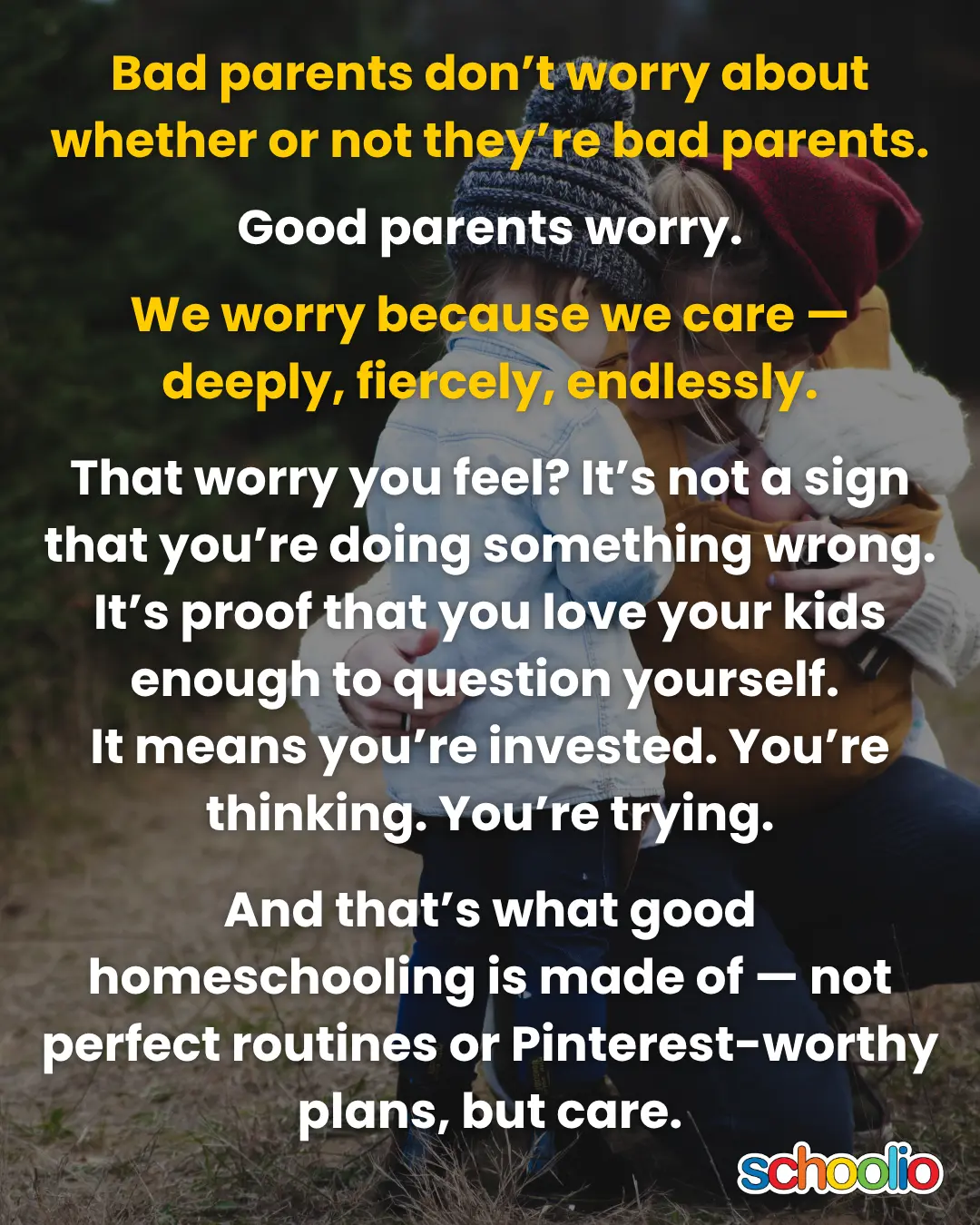
Bad parents don’t worry about whether or not they’re bad parents.

Good parents worry.

We worry because we care — deeply, fiercely, endlessly.

That worry you feel? It’s not a sign that you’re doing something wrong. It’s proof that you love your kids enough to question yourself. It means you’re invested. You’re thinking. You’re trying.

And that’s what good homeschooling is made of — not perfect routines or Pinterest-worthy plans, but care.

Every good parent I know worries about whether they’re doing it right.

Every good homeschooler I know questions if they’re doing “enough”.

It’s part of the process.

But try to reframe that worry the next time it sneaks up on you in the quiet hours. Instead of letting it spiral into fear, remind yourself what it really means:

You care enough to notice.

You care enough to show up.

You care enough to want the best for your kids.

And caring that much — that’s the heart of everything that matters.

So take a breath.

You’re not failing. You’re loving.

And that’s exactly what they need most.

Lindsey
Certified Special Ed Educator & Co-Founder, Schoolio

When Science Turned Into a Betta Fish

When Science Turned Into a Betta Fish


By Lindsey Casselman, special-ed teacher & homeschooling mom


One of the things I love most about homeschooling is how easily learning can connect to real life. Sometimes the best projects don’t come from a curriculum guide — they come from your child’s heart.

When my daughter was seven, she desperately wanted a Betta fish. Like many parents, my first instinct was to say, “That’s a lot of responsibility — are you sure you’re ready for that?” But instead of just saying no, I turned it into an opportunity for learning.

We made it her science project. She had to create the classic tri-board presentation — research, write, and present — all about Betta fish. She learned where they live in the wild, what they eat, how to set up the right tank environment, and common mistakes people make in caring for them. But the project didn’t stop at facts. She also had to make the case for why she was ready to take care of one.

I’ll never forget watching her stand in front of that board, confidently explaining filtration systems, water temperatures, and feeding schedules. This wasn’t just a science lesson anymore. It was research skills. Public speaking. Persuasive writing. Responsibility.

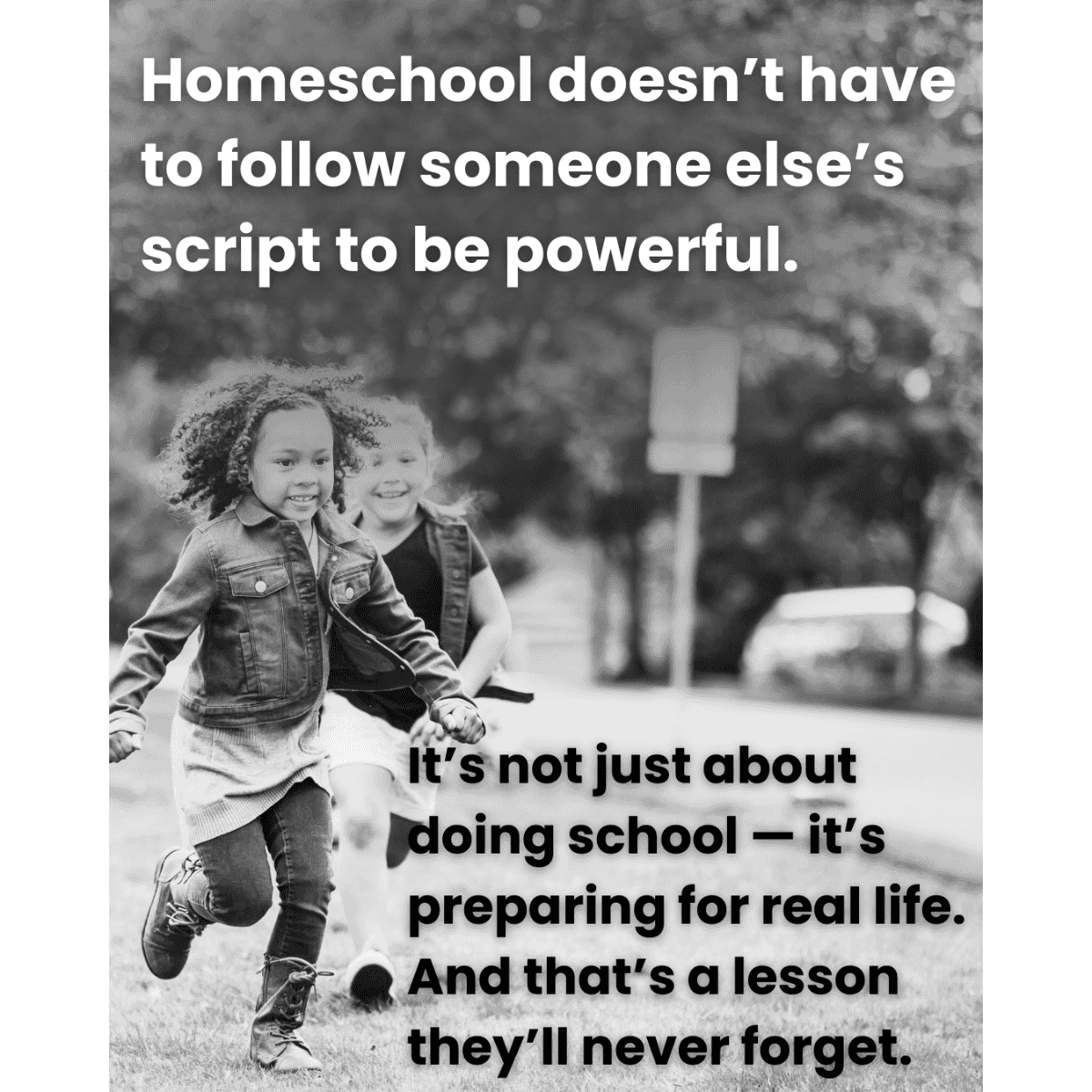
And it was driven entirely by her motivation. Because she wanted that fish, she owned the project. She went deeper than she would have if I had assigned “Chapter 3: Aquatic Life.” She wasn’t just doing school — she was preparing for real life.

In the end, she did get her Betta fish. But honestly, the project itself was the real win. She learned that with research and preparation, she could rise to a challenge. And I learned (again) that homeschool doesn’t have to follow someone else’s script to be powerful.

And apparently, I also set a precedent in our house without realizing it. Fast forward a few years, and Grace — now 13 — wanted a new pet. Out of nowhere, I found myself sitting on the couch watching a full PowerPoint presentation on why she should be allowed to get a snake. I hadn’t asked for it, and I hadn’t suggested it. She just knew she needed to convince me in a smart and prepared way.

So fair warning: this approach works beautifully for learning… but it may also get you into more pets than you imagined! ?

? Lindsey

Certified Special-Ed Educator & Co-Founder, Schoolio

New Generation, New Rules: How We’re Redefining Discipline

New Generation, New Rules: How We’re Redefining Discipline


This has been on my mind today…

Growing up in a South Asian home, discipline meant one thing: fear.

A raised voice. A quick slap. A look that could shut your whole body down. It was all normal. So normal that no one around you even called it violence. They called it “raising you right.”

My friends weren’t hit — they were “grounded.” That concept felt foreign. Like something only white parents did. “You’re grounded” never hit the same as your dad walking in with a belt, and you instinctively hiding under the bed.

Now fast forward to today. I’m a father of two. And when it comes to discipline, I catch myself constantly questioning: what do I do instead?

We don’t hit. We don’t shame. But we also don’t let chaos rule the house.

So what do we do? We take away the iPad.

Not as punishment. But as a boundary.

No yelling. No lecture about how we had “nothing growing up.” Just a quiet, firm decision — you didn’t clean your room, so screen time’s done for the day. That’s it.

And sometimes I wonder… is that enough?

Did I go too soft? Am I raising them to be weak?

But here’s the truth I keep coming back to: violence didn’t make us strong. It made us scared.

Grounding didn’t teach kids how to think. It just taught them to lie better.

Discipline in 2025 isn’t about obedience. It’s about accountability.

Our kids don’t need to “fear us to respect us.” They need to trust us to listen.

They need to know their actions have consequences — not because they’ll be hit or humiliated, but because choices carry weight.

When I take the iPad away, it’s not about power. It’s about consistency.

When I stay calm, it’s not because I’m weak. It’s because I’m breaking a cycle.

And if you’re a South Asian parent trying to figure it all out — same as me — let me say this:

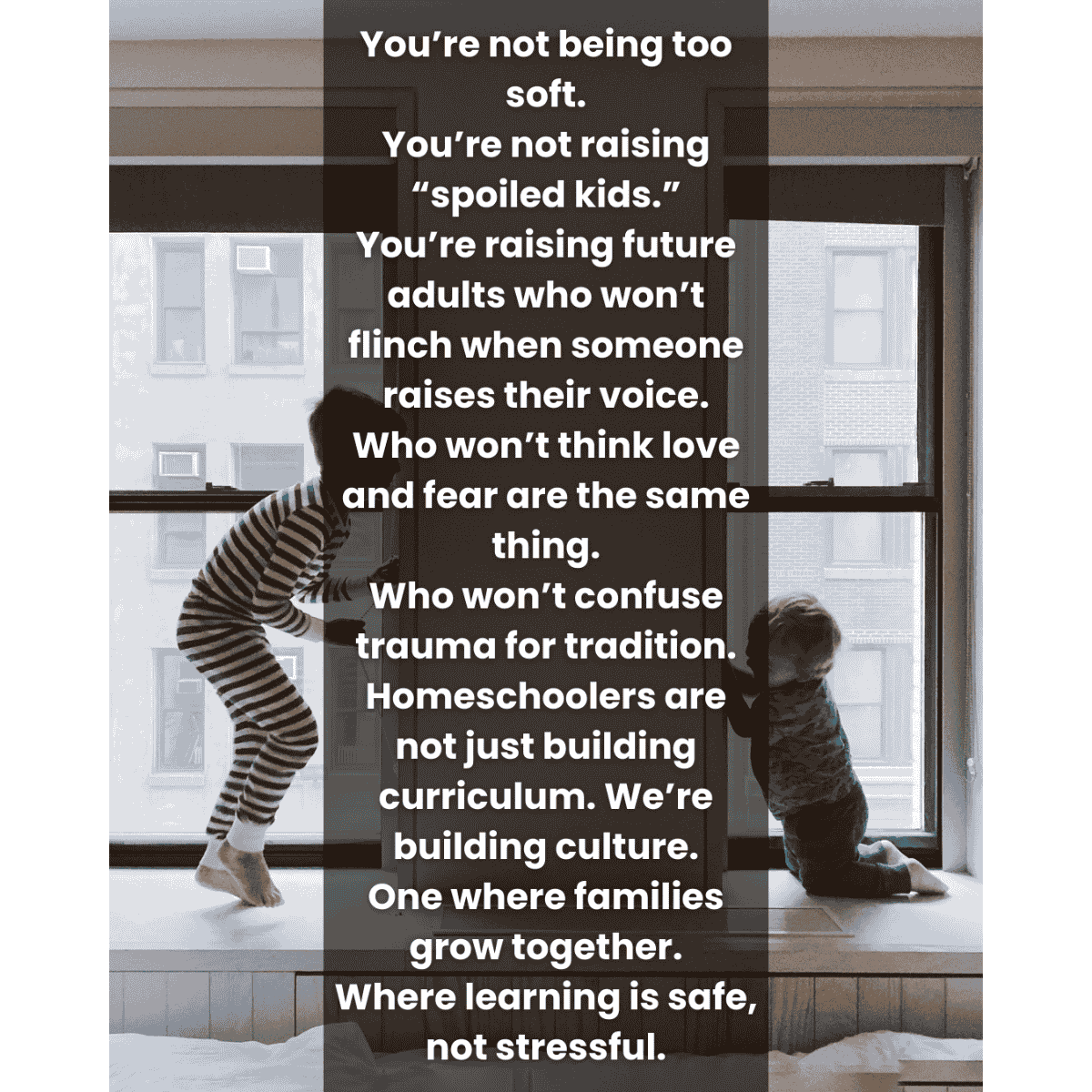
You’re not being too soft nor raising “spoiled kids.”

You’re raising future adults who won’t flinch when someone raises their voice.

Who won’t think love and fear are the same thing.

Who won’t confuse trauma for tradition.

This is why Schoolio matters to me.

Because we’re not just building curriculum. We’re building culture.

One where families grow together.

Where learning is safe, not stressful.

Where discipline is about guiding — not punishing.

This isn’t about making parenting easier. It’s about making it better.

And the better way?

Starts with us.

Sathish

still learning, still unlearning
Homeschooling Is Parenting, Just a Little Louder

Homeschooling Is Parenting, Just a Little Louder

This has been on my mind today…

When we first pulled our kids out of school, I wasn’t sure I had what it took. I had the usual fears. Would I mess up their education? Could I keep up with all the subjects? What if I missed something big?

But over time, something quiet and powerful started to sink in. I wasn’t stepping into a classroom role. I was just continuing what I’d always done as their mom — helping them learn. Teaching them to tie shoes. To ask for help. To apologize. To be kind. Homeschooling, it turns out, is just an extension of parenting.

There’s this quote I came across recently that stopped me in my tracks:

“Educating a child is a natural process. Homeschooling is nothing more than an extension of parenting.”

—John Taylor Gatto

It made me pause because that’s what homeschooling has become for us. It’s not school at home. It’s life at home, full of learning.

The structure looks different, of course. We have a curriculum (Schoolio made that piece so much easier). We have rhythms that feel like school hours some days. But at the heart of it, it’s still me parenting — noticing what lights my child up, what challenges them, what makes them pull away or lean in.

And because it’s just an extension of parenting, the learning is so much more natural. Conversations at lunch become lessons in geography. A baking mess turns into math. A walk in the neighborhood ends up being a discussion about community and kindness and nature.

If you’re feeling unsure about starting homeschooling, or doubting if you’re “qualified,” let me gently tell you this: you’ve already been doing it. Since the day your child was born, you’ve been their guide. Their teacher. Their advocate. Homeschooling doesn’t change that. It just adds a little structure, a little support, and a whole lot of flexibility.

Let’s stop thinking of homeschooling as this big, scary shift. It’s simply parenting — just a little louder, a little more curious, and a lot more present.

Lindsey

certified special-ed educator & co-founder, Schoolio

Busting Boredom at Home: Modern Age Activities for Kids

In the ever-evolving landscape of parenting, the challenge of keeping kids engaged and excited about learning at home is one that many of us face. Fear not! Today, we dive into a treasure trove of fresh ideas to bust boredom and infuse your home with a sense of wonder and discovery. Get ready to explore innovative activities and discover how Schoolio Learning can be your digital ally in planning and scheduling engaging adventures for your kids.

A Modern Approach to Banishing Boredom

In the digital age, where screens dominate, finding activities that captivate kids’ attention and stimulate their creativity is no small feat. Let’s reimagine how we can bust boredom at home with activities that seamlessly blend fun and learning.

  1. Digital Storytelling: Unleash Imagination Online

Harness the power of technology to spark creativity! Encourage your kids to become digital storytellers using Schoolio Learning’s interactive e-books. With captivating narratives and interactive elements, they can embark on literary adventures right from the comfort of home.

  1. Virtual Science Experiments: Lab Fun Without the Mess

Transform your kitchen into a virtual laboratory! Explore exciting science experiments and demonstrations online. Schoolio Learning’s digital resources offer a wealth of interactive science modules, allowing your kids to learn and experiment without the need for a cleanup crew.

  1. Tech-Infused Arts and Crafts: Beyond Paper and Glue

Elevate traditional arts and crafts with a tech twist! Schoolio Learning provides digital art and design lessons that inspire creativity. From digital drawing to animation basics, your little artists can explore a new realm of artistic expression.

  1. Coding Quests: Navigating the Digital Landscape

Equip your kids with valuable digital skills through coding adventures. Schoolio Learning’s coding lessons turn programming into a thrilling quest. Watch as they develop problem-solving skills and unravel the mysteries of coding in a fun and interactive way.

  1. Virtual Field Trips: Explore the World from Home

Travel without leaving your living room! Schoolio Learning’s curated virtual field trips take your kids on a global journey, exploring historical sites, famous landmarks, and natural wonders. It’s an immersive way to broaden their horizons and spark curiosity about the world.

A Digital Playground of Possibilities

In a world where technology is at our fingertips, let’s leverage it to create a digital playground of possibilities for our kids. Schoolio Learning, with its wealth of digital resources, becomes your partner in banishing boredom and turning every day into an adventure of learning and discovery. Embrace the modern age of parenting, where innovation meets education, and watch as your home transforms into a hub of creativity and excitement.

Ready to embark on this modern-age adventure? Explore Schoolio Learning and unlock a world of engaging activities for your kids! ?? #BustingBoredom #ModernParenting