Justice Sensitivity in Autistic Kids: When “That’s Not Fair” Isn’t Just a Phase

Justice Sensitivity in Autistic Kids: When “That’s Not Fair” Isn’t Just a Phase

Have you ever watched your child completely unravel over something that seems… small?

A rule that wasn’t followed.

A sibling getting away with something.

A teacher enforcing something inconsistently.

A character in a book being treated unfairly.

And suddenly your child is in tears.

Or arguing intensely.

Or refusing to move on.

And you find yourself thinking:

Why can’t they just let this go?

If your child is autistic, there’s a good chance you’re not dealing with stubbornness.

You’re seeing justice sensitivity.


What Is Justice Sensitivity?

Justice sensitivity is a heightened emotional and cognitive response to perceived unfairness.

For some autistic kids, fairness isn’t a preference.

It’s a core organizing principle.

Their brains often process rules and systems in very black-and-white ways. If the rule is the rule, then it should apply consistently. If something is wrong, it is wrong. Not “kind of.” Not “depending on context.”

And when that structure breaks?

It can feel destabilizing.

This isn’t just moral passion.

It’s neurological discomfort.


Why It’s So Intense

Autistic brains often seek predictability.

Rules create predictability.

Fairness creates predictability.

When something violates fairness, it can feel like the entire structure shifts.

A sibling breaks a rule and nothing happens?

A teacher disciplines one student but not another?

A parent changes a plan without explanation?

To a justice-sensitive child, that doesn’t feel minor.

It feels unsafe.

And when something feels unsafe, the nervous system reacts.

Sometimes that looks like arguing.

Sometimes it looks like crying.

Sometimes it looks like refusing to participate at all.

But underneath it is usually distress.


Is This Only an Autism Thing?

Justice sensitivity is especially common and intense in autistic individuals, partly because of:

  • strong rule orientation
  • black-and-white processing
  • deep moral reasoning
  • difficulty tolerating inconsistency

That said, ADHDers can experience it too — often layered with rejection-sensitive dysphoria or emotional intensity.

But when you see a child who cannot move past perceived unfairness, who perseverates on it, who feels it in their body for hours?

That’s often a very autistic profile.


What It Looks Like at Home

Justice sensitivity can show up as:

Relentless “That’s not fair!”

Correcting others constantly.

Getting deeply upset about rule-breaking.

Struggling when siblings are treated differently (even if developmentally appropriate).

Arguing about wording or technicalities.

Emotional reactions to injustices in books or shows.

And here’s something important:

Many justice-sensitive kids aren’t just upset when they’re treated unfairly.

They’re upset when anyone is.

They may cry over news stories.

Over fictional characters.

Over classmates.

Their empathy can be enormous.

But it can also be overwhelming.


Why “Life Isn’t Fair” Doesn’t Help

It’s tempting to respond with:

“Well, life isn’t fair.”

But that statement doesn’t regulate a nervous system.

It often escalates it.

Because to a justice-sensitive child, fairness isn’t optional.

It’s foundational.

Dismissing the feeling can make them feel unheard — and that compounds the distress.

Validation doesn’t mean agreeing.

It means acknowledging.

“I can see why that feels unfair to you.”

“That makes sense that you’d be upset about that.”

That simple step lowers intensity dramatically.


The Hard Part: When They’re Technically Right

Sometimes your child is correct.

It was inconsistent.

It was unfair.

You did treat siblings differently.

The rule did change.

And this is where growth happens.

Instead of defending immediately, we can model repair.

“You’re right. That wasn’t consistent. Let me think about that.”

That teaches flexibility without dismissing principle.

Another one I liked teaching my own kids, and the kids I taught in classrooms is this: “Fair doesn’t mean everyone gets the same, fair means everyone gets what they need to succeed.” This teaches our kids that rules aren’t always black and white, and to be empathetic when others need support or accommodations. This will be important as they get older too and need to self-advocate for their own needs as autistic people in the world.


Teaching Nuance Without Breaking Them

Justice-sensitive kids don’t need their sense of fairness erased.

It’s often a strength.

They grow into adults who:

  • advocate
  • protect others
  • notice inequity
  • care deeply about ethics

But they do need help tolerating imperfection.

That looks like:

Explaining context.

Teaching developmental differences.

Helping them see intention vs outcome.

Practicing flexibility in low-stakes situations.

Building emotional regulation tools for when unfairness happens.

Not forcing them to stop caring.

Helping them care sustainably.


The Bigger Reframe

If your autistic child melts down over fairness, it doesn’t mean they’re dramatic.

It means they care deeply.

And sometimes, deeply caring in a world that is inconsistent is exhausting.

Justice sensitivity isn’t something to squash.

It’s something to guide.

When you validate the feeling but gently expand perspective, you’re not weakening their moral compass.

You’re helping them carry it without it crushing them.

World Autism Acceptance Day: Why Homeschooling is a Game-Changer for Autistic Children

April 2nd marks World Autism Acceptance Day—a day dedicated not just to awareness, but to true acceptance, inclusion, and celebrating the unique ways neurodivergent minds experience the world.

For many parents of autistic children, the traditional education system can feel like trying to fit a square peg into a round hole. Bright fluorescent lights, chaotic hallways, rigid schedules, and a one-size-fits-all curriculum often lead to sensory overload and burnout.

This is exactly why a growing number of families are turning to homeschooling. Here is how taking control of your child’s educational environment can change everything.

1. Complete Control Over the Sensory Environment

Traditional classrooms are sensory minefields. When you homeschool, you dictate the environment. Does your child need to learn in a dim room with noise-canceling headphones? Can they focus better while sitting on a yoga ball or swinging in a hammock? Homeschooling allows you to completely eliminate the sensory friction that prevents learning.

2. Learning at Their Own Pace

Autistic children often have “spiky” cognitive profiles—they might read at a 6th-grade level but need 2nd-grade math support. Traditional schools struggle to accommodate this. Homeschooling allows you to mix-and-match grade levels per subject so your child is perfectly challenged, never bored, and never left behind.

3. Leaning Into Special Interests

Autistic children often have deep, passionate interests. Homeschooling gives you the freedom to weave those interests directly into their education. If your child loves trains, you can learn about the history of locomotives for Social Studies, calculate the speed of trains for Math, and read stories about train conductors for Language Arts.

Real Parents, Real Results

We don’t just build curriculum; we listen to the families using it. The relief parents feel when they finally find a system that works for their neurodivergent child is exactly why we do what we do:

“I wish there was more material like this. I recently discovered Schoolio. I have been homeschooling 2 neuro diverse children for years and it has been such a struggle. I love this curriculum.”Liane Sabatino

“You’ve made homeschooling so much easier and stress free than I could have imagined. I’m doing grade 2 with my daughter who is a bit behind developmentally and has CP and she’s finally understanding things with the one on one and your lessons. I couldn’t be happier.”Holly

“My gr. 6er is dyslexic and is having an easy time with the instructions and able to follow along.”Leanne Smith

Schoolio’s Commitment to Neurodivergent Learners

At Schoolio, we believe that every child deserves to learn in a way that makes sense to their brain. That’s why our curriculum is built from the ground up to be neurodivergent-friendly:

  • No Grade Levels on the Pages: We remove the stigma. Kids just see the work, not a grade number telling them they are “behind.”
  • Clean, Uncluttered Design: We intentionally limit distracting graphics and busy pages to reduce visual overwhelm.
  • Bite-Sized Lessons: Short, focused lessons that are perfectly suited for shorter attention spans and frequent sensory breaks.

This World Autism Acceptance Day, let’s commit to building educational environments that don’t ask our children to change who they are, but instead change to support how they learn.

Tools Designed for Neurodivergent Minds

If you’re looking for a place to start your homeschooling journey, Schoolio offers several resources built specifically with neurodivergent learners in mind. These programs focus on emotional regulation, self-paced learning, and sensory-friendly design.

Neurodivergent Homeschool Program

The Schoolio Neurodivergent Program
A complete, flexible approach to K-8 education that strips away the pressure of “grade levels” and lets your child learn exactly how their brain works best.

Social Emotional Learning

Social Emotional Learning (SEL) Bundles
From Pre-K all the way to Grade 8, these dedicated units help children understand their feelings, build resilience, and navigate social situations with confidence.

Thoughts & Feelings

Thoughts & Feelings Unit
A specialized workbook designed to help kids identify, process, and manage complex emotions in a healthy, structured way.

Oral Stims, Echolalia, Song Loops, and Counting: What Your Neurodivergent Child Is Actually Doing

Oral Stims, Echolalia, Song Loops, and Counting: What Your Neurodivergent Child Is Actually Doing


Last week my daughter asked me something that stopped me mid-laundry.

“What’s the difference between an oral stim and echolalia?”

Then she added, almost as an afterthought:

“And why do I get a little piece of a song stuck in my head when I’m stressed? Is that a stim too?”

If you’re parenting a neurodivergent child, you’ve probably seen versions of all of this.

The humming.
The repeating lines from shows.
The constant chewing.
The whispering under their breath.
The same five seconds of a song looping again and again.

Maybe you’ve wondered if you should stop it.
Maybe someone has told you it’s “annoying.”
Maybe you’ve corrected it without even thinking.

Before we decide what to do about it, we need to understand what it is.

Because most of the time?

It’s regulation.

What Is a Stim, Really?

Stimming is short for self-stimulatory behavior.

That sounds clinical. But in real life, it just means this:

The nervous system doing something to help itself stay balanced.

Everyone stims.

Some people bounce their leg.
Some twirl their hair.
Some chew ice.
Some scroll when they’re overwhelmed.

Neurodivergent kids often stim more visibly — or more frequently — because their nervous systems require more input to stay regulated.

Stims can be physical.
They can be verbal.
They can be oral.
They can be completely internal.

They are not “bad habits.”

They are tools.

Oral Stims: The Mouth as a Regulation Tool

An oral stim involves the mouth.

Chewing hoodie strings, sleeves, lips, even hair.
Biting pencils. Biting nails.
Humming.
Clicking their tongue.
Needing gum constantly. Needing a snack to emotionally settle.

The mouth has a high density of nerve endings. Oral input can calm the nervous system. It can increase alertness. It can improve focus. For many ADHDers especially, oral input provides a small dopamine boost — and dopamine is often in short supply in ADHD brains.

What looks like “why are you chewing again?” might actually be the brain saying:

“I need input to stay steady.”

It isn’t random.
It isn’t defiant.
It’s neurological.

Echolalia: Repeating Words Is Not Meaningless

Echolalia is the repetition of words, phrases, or sounds.

It can be immediate — repeating what you just said or a sound they just heard.

Or delayed — quoting a line from a show hours later, sometimes in a completely different context.

Echolalia is most commonly associated with autism, but ADHDers can also repeat language for regulation or processing.

And here’s the important part:

It’s often communication.

Echolalia can be:

  • language processing

  • rehearsal

  • self-soothing

  • emotional expression

  • nervous system regulation

Sometimes a child repeats a phrase not because they’re “stuck,” but because that phrase carries a feeling they don’t yet have the words for.

It overlaps with scripting. Scripting involves mentally preparing or replaying conversations for safety. Echolalia can serve a similar purpose. It gives structure to social language that otherwise feels unpredictable.

It isn’t empty repetition.

It’s scaffolding.

The Song That Won’t Leave: Musical Looping

Now let’s talk about the tiny piece of music that won’t stop playing.

That five-second line.
Over and over.

This is sometimes called musical looping. You might also hear it described as auditory stimming or cognitive stimming. Outside neurodivergent spaces, people casually call them “earworms,” but that word often dismisses what’s actually happening.

For many neurodivergent kids, that looping music can function as a mental stim.

When stress rises, the nervous system looks for predictability.

Music is predictable.
It has rhythm.
It has repetition.
It doesn’t suddenly criticize or overwhelm.

So the brain grabs something familiar and plays it again.

Not because it’s broken.

Because it’s building stability.

Sometimes the loop stays internal.
Sometimes it turns into humming.

Either way, it can be regulation — not distraction.

What About Counting in Your Head?

Sometimes it isn’t a song.

Sometimes it’s counting.

Counting steps.
Counting ceiling tiles.
Counting backwards from 100.
Counting in patterns.

Parents often ask, “Is that an auditory stim?”

It can be.

But more specifically, counting in your head is usually what we’d call a cognitive stim or an internal verbal stim.

If your child “hears” the numbers in their mind, it’s engaging the verbal/auditory system. If they see the numbers visually, it may lean more cognitive or visual.

But the function is often the same.

Counting creates rhythm.

And rhythm stabilizes the nervous system.

When emotions feel chaotic, numbers move in order. They don’t judge. They don’t escalate. They don’t surprise.

So the brain uses them.

And here’s where we stay curious.

If counting helps your child calm down or focus, it’s serving them.

If counting feels urgent, rigid, or distressing when interrupted, that may point toward anxiety underneath it.

The behavior isn’t the whole story.

The nervous system underneath it is.

Why This Matters So Much

Neurodivergent kids are corrected constantly.

“Stop making that noise.”
“Why do you keep repeating that?”
“That’s annoying.”
“Just sit normally.”

But what if the humming is preventing a meltdown?

What if the repetition is organizing language?

What if the counting is blocking intrusive thoughts?

What if the song loop is holding back a wave of overwhelm?

By age 12, ADHD kids have often heard tens of thousands more negative comments than their neurotypical peers.

What if we stopped correcting regulation?

What if we started understanding it instead?

When we shift from:

“What’s wrong with this behavior?”

to

“What is this behavior helping them manage?”

Everything changes.

You Don’t Have to Eliminate Every Stim

Of course, if a stim is physically harmful or significantly interfering, we gently redirect.

But redirection is different from shame.

Instead of “Stop that,” we might say:

“It looks like your body needs input. Let’s find something that helps.”

Chewelry instead of hoodie strings or hair.
Quiet humming instead of loud repetition.
A fidget during lessons instead of suppression.

The goal isn’t silence.

The goal is regulation.

The Bigger Picture

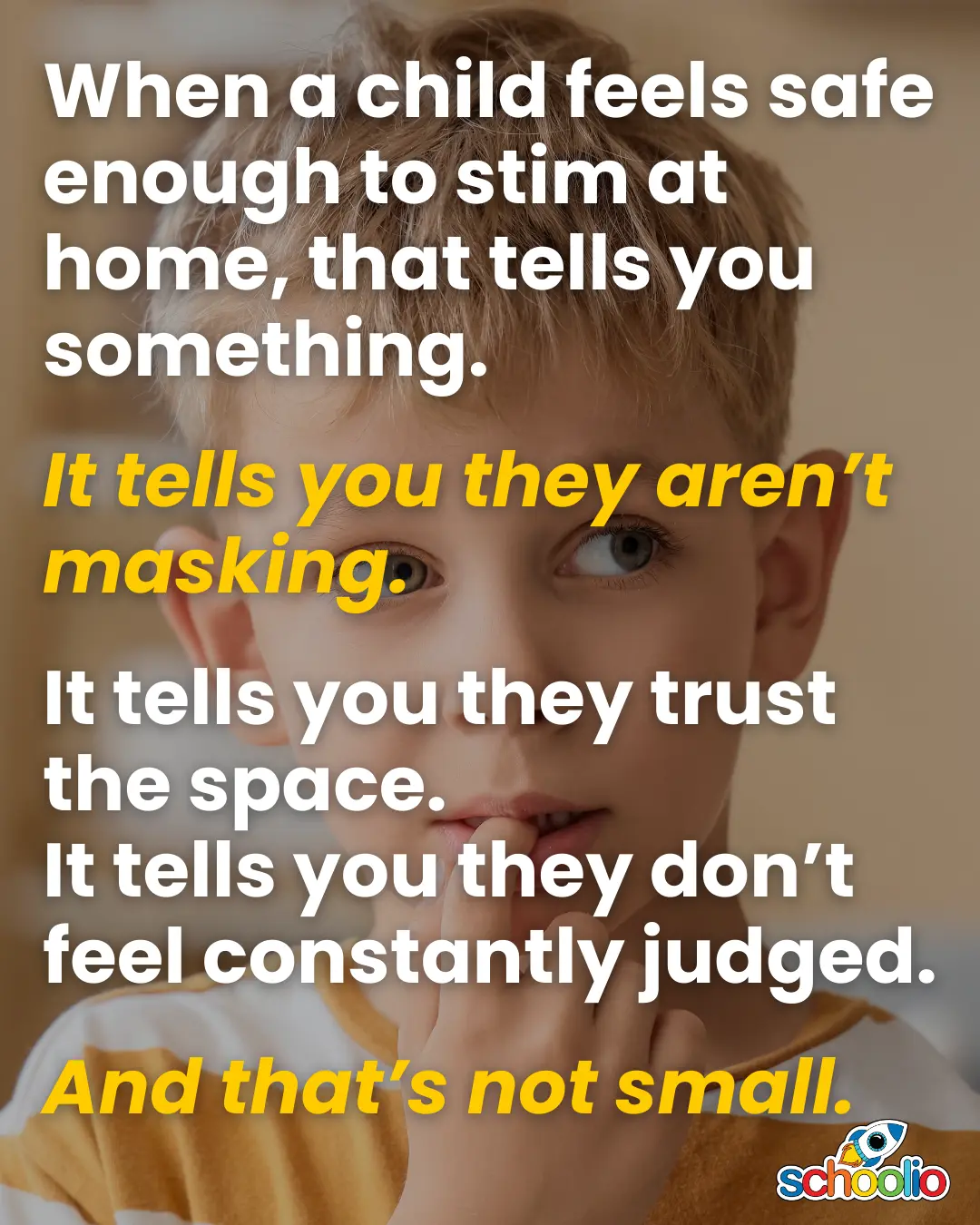
When a child feels safe enough to stim at home, that tells you something.

It tells you they aren’t masking.

It tells you they trust the space.

It tells you they don’t feel constantly judged.

And that’s not small.

Sometimes the most powerful thing we can do isn’t teaching our kids how to stop stimming.

It’s helping them understand why they do it.

Because when a child understands their nervous system, they stop feeling broken.

And when they stop feeling broken, they start building regulation from the inside out.

Stop Trying to Fix What Was Never Broken: Rethinking Autism and Blame

Stop Trying to Fix What Was Never Broken: Rethinking Autism and Blame


This has been on my mind today…

The latest debates around Tylenol and autism feel like déjà vu. Another attempt to eliminate something we don’t fully understand. This time, the theory is that avoiding acetaminophen during pregnancy could somehow prevent a child from being autistic. And while the internet grabs onto that narrative like it’s gospel, I can’t help but think of the damage it’s doing — not just to scientific truth, but to every child being born into a world where their neurodivergence is seen as a defect.

Autism was discovered long before Tylenol hit pharmacy shelves. The spectrum existed before there were labels, diagnoses, or heated panels on morning talk shows. What’s new isn’t autism. What’s new is our panic around accepting it.

I grew up in Singapore, where the approach to childhood “issues” was very different — but carried the same dangerous root: blame. If you weren’t performing well in school, it wasn’t because you learned differently or were overwhelmed or needed support. You were lazy. Disrespectful. A problem.

My parents believed this. So did my teachers. My inability to focus or sit still or memorize math formulas wasn’t something to understand — it was something to beat out of me. Literally.

I was hit at home. Disciplined at school. Shamed in front of peers. I remember hearing the word potential thrown around like it was a threat — like I could have been something, if I just tried harder. The system, they said, was fine. I just didn’t fit it. That was my fault.

Now I’m older, a father, and an educator building a company that works with thousands of students — many of them neurodivergent. And I see the same root problem, just dressed differently.

Instead of beating kids into conformity, we now try to scare parents out of having children that are different in the first place. Avoid this. Don’t take that. Follow these rules and maybe, just maybe, your kid won’t be one of those.

But that’s not progress. That’s erasure.

Autism isn’t something to get rid of. It’s something to understand. Neurodivergent kids aren’t broken. They’re brilliant. But only if we stop trying to fix them.

We need to stop treating difference like a disease. We need to stop hiding behind policies and prevention myths and start asking better questions. Like: How do we build schools, communities, and systems that allow all kids — not just the compliant ones — to thrive?

At Schoolio, that’s our mission. Not just because it’s good pedagogy, but because it’s personal. I know what it feels like to be punished for the way your brain works. I also know what it feels like to unlearn all of that — to parent differently, build differently, lead differently.

So no, I don’t believe Tylenol is the problem. And I don’t believe discipline should be violent, whether physical or emotional. I believe in kids. I believe in learning environments that adapt to the child — not the other way around.

This isn’t about prevention. It’s about permission — to be different, to be seen, to be accepted.

Let’s stop blaming. And start building.


Sathish

still learning, still unlearning

When Little Things Feel Too Big: Frustration Intolerance in ADHD & Autistic Kids

When Little Things Feel Too Big: Frustration Intolerance in ADHD & Autistic Kids

Does your child melt down the moment something doesn’t go their way? Maybe a math problem is “too hard,” or the Wi-Fi glitches during their game, and suddenly you’re facing tears, yelling, or complete shutdown.

For many ADHD and autistic kids, this isn’t just “having a short fuse.” It’s called frustration intolerance — a real struggle where even small challenges feel unbearable. And if you’re parenting or homeschooling a child who experiences it, you know how exhausting (and heartbreaking) it can be.


What Is Frustration Intolerance?

Frustration intolerance means struggling to cope with situations that are difficult, unpleasant, or don’t go as planned. Instead of “pushing through,” kids may:

  • Explode in anger or tears.
  • Refuse to keep going (“I quit!”).
  • Withdraw completely and shut down.

It’s not about being dramatic. It’s about their brain hitting a wall — and not yet knowing how to climb over it.


Why Neurodivergent Kids Struggle More

For ADHD and autistic kids, frustration intolerance often shows up bigger and louder because of how their brains process the world. Here’s why:

1. Executive Functioning Differences

Planning, organization, emotional control — all of these “thinking skills” are harder for many ND kids. When a task feels overwhelming, their ability to regulate frustration can collapse fast.

2. Sensory Sensitivities

Bright lights, loud noises, scratchy clothes — sensory overload lowers tolerance. Once they’re maxed out, even a tiny frustration feels huge.

3. Dopamine and Motivation

For kids with ADHD, dopamine regulation plays a big role. Tasks that feel boring, slow, or unrewarding become almost impossible to stick with, triggering fast frustration.

4. Rigid Thinking

For many autistic kids, when things don’t go as expected, it’s hard to adapt. A simple change — like math problems being harder than yesterday — can cause them to feel stuck and defeated.


How It Shows Up in Daily Life

Parents of frustration-intolerant kids often see:

  • Homework battles that spiral into tears.
  • Meltdowns over minor inconveniences.
  • Avoidance of activities that might be “too hard.”
  • Perfectionism or quitting early to avoid failure.

If this sounds like your child, you’re not alone. And there are ways to help.


Helping Your Child Cope With Frustration

The good news? Kids can learn to tolerate frustration better — with support, practice, and patience. Here are some strategies you can start using today:

1. Teach Emotional Regulation Tools

Breathing exercises, mindfulness, or fidgets help kids calm their nervous system before frustration takes over. Practice during calm moments so the tools are ready when needed.

2. Break Tasks Into Smaller Steps

Instead of “Write your essay,” try “Brainstorm three ideas.” Smaller steps feel doable — and success builds momentum.

3. Set Realistic Expectations

Match goals to your child’s current capacity. Celebrate small wins and progress, not just the final result.

4. Create a Calm Space

Reduce sensory overload by offering a quiet, comfortable spot for learning or calming down.

5. Use Visual Supports

Schedules, checklists, and timers help make tasks concrete and predictable. Kids feel less overwhelmed when they can see what’s happening and what’s next.

6. Model Problem-Solving

Show them how you handle frustration. Talk through challenges out loud: “This isn’t working. Let’s try another way.” Role-play different solutions together.

7. Stay Patient and Supportive

Setbacks are part of the process. When your child is overwhelmed, validate their feelings: “I can see you’re frustrated. That’s okay.” Then gently guide them toward coping strategies.


Why This Matters

Frustration intolerance doesn’t just impact schoolwork — it shapes how kids see themselves. Without support, they may start believing: “I can’t do hard things.” But with the right tools, they learn that challenges aren’t the enemy — they’re opportunities to grow.


A Hopeful Reminder

If your child struggles with frustration, it doesn’t mean they’re lazy, dramatic, or incapable. It means their brain needs extra scaffolding to build tolerance. And as a parent — especially a homeschooling parent — you have the unique chance to create a space where frustration isn’t the end of the story, but the beginning of resilience.

✨ Want to learn more about frustration intolerance and how it connects to executive dysfunction in neurodivergent kids? Read the full article here ? https://schoolio.com/blog/frustration-intolerance-in-adhd-and-austistic-kids/.

PDA in ADHD and Autistic Kids and How to Help Them Thrive

Pathological Demand Avoidance (PDA) in ADHD and autistic kids is more common than you may realize.

Picture this: It’s almost time for dinner and you ask your ADHD 8-year-old to clean up his toys and wash his hands. He procrastinates, “I just need to finish this one thing first.” You ask him again 5 minutes later. “I’m too tired. My tummy hurts.” Getting frustrated, you put your foot down and insist, “No more excuses, time to clean up now!” Your child escalates, crumples to the floor, crying and in full meltdown. You wonder why your child is so defiant and can’t just listen to you when you ask for something simple like tidying up. If this sounds familiar, you aren’t alone. Getting dressed, brushing teeth, cleaning up, turning off the Playstation or tablet, getting into bed- seemingly simple requests are continuously met with resistance that seems way over the top. The more you insist, the harder they resist. It’s a cycle that leaves you frustrated and angry with a child in a meltdown. Pathological Demand Avoidance, known as PDA, is a term that has gained increasing recognition within the neurodivergent community, particularly when discussing children with ADHD and autism. For those of us parents homeschooling neurodivergent kids, understanding PDA in ADHD and autistic kids is crucial to understanding our kids and then providing the right supports to create an effective learning environment. But what even is PDA? How does it manifest in neurodivergent children and what makes it different than straight-up defiance?

What is PDA?

PDA in ADHD and autistic kids refers to a behavioral profile characterized by an extreme avoidance of everyday demands and expectations, driven by a need to maintain a sense of control. Unlike typical forms of demand avoidance, PDA is rooted in anxiety, where the child’s need to avoid demands is not about defiance but rather about a deep-seated fear of losing autonomy.

PDA is increasingly recognized as a distinct profile within the autism spectrum. It can also co-exist with ADHD, leading to a complex interplay of symptoms that can make traditional behavioral interventions less effective.

PDA in adhd and autistic kids looks like this young boy refusing to mow the yard.

It’s important to note that this avoidance is not merely defiance; it’s driven by anxiety and an overwhelming need to maintain control over the situation. The child isn’t rejecting the task itself but rather the perceived loss of autonomy and the fear of failure or overwhelm if they try to comply.

Another important understanding is what is a “demand”? When we hear the word demand, it can sound like strict orders, but really a demand is any mandatory request, ie. something you tell them to do that they don’t see themselves having an option about complying with. We all make and receive many “demands” every day in our lives.

Signs and Symptoms of PDA in ADHD and Autistic Kids

Recognizing PDA in ADHD and autistic kids involves observing specific behaviors that go beyond a typical resistance to tasks. Here are some common signs you can look out for:

  1. Extreme Demand Avoidance: Children with PDA will go to great lengths to avoid demands, often using strategies like distraction, excuses, or outright refusal. They might agree to tasks but then find ways to delay or disrupt them. Their need to avoid demands is so intense that they may do things out of character, like lie, manipulate, or coerce to avoid it. 
  2. Surface Sociability: Kids with PDA often appear socially adept on the surface, and you may find they get good at using charm or negotiation to avoid demands. However, this sociability can be superficial and more of a learned behavior than a genuine personality trait, and may be masking deeper social difficulties common in autistic people.
  3. Mood Swings and Emotional Dysregulation: PDA in ADHD and autistic kids can result in rapid mood changes, especially when they feel pressured. These mood swings are often linked to their anxiety about demands. They may seem to swing suddenly from happy and relaxed to stubborn, angry, and resistant.
  4. Obsessive Behavior: Children with PDA may develop intense interests or obsessions, often as a way to gain control or escape demands. Special interests, or SPINs, are common in autistic people, but may become more pronounced and the need to engage in them more intense when faced with demands.
  5. Resistance to Routine: Most autistic children find comfort in routine. ADHD children usually thrive with routine but seek novelty to help with dopamine deficiency. Those with PDA may resist routines imposed by others, preferring to set their own schedules and routines, or buck the routine entirely. This is a bid for control and autonomy as a way to combat their anxiety.
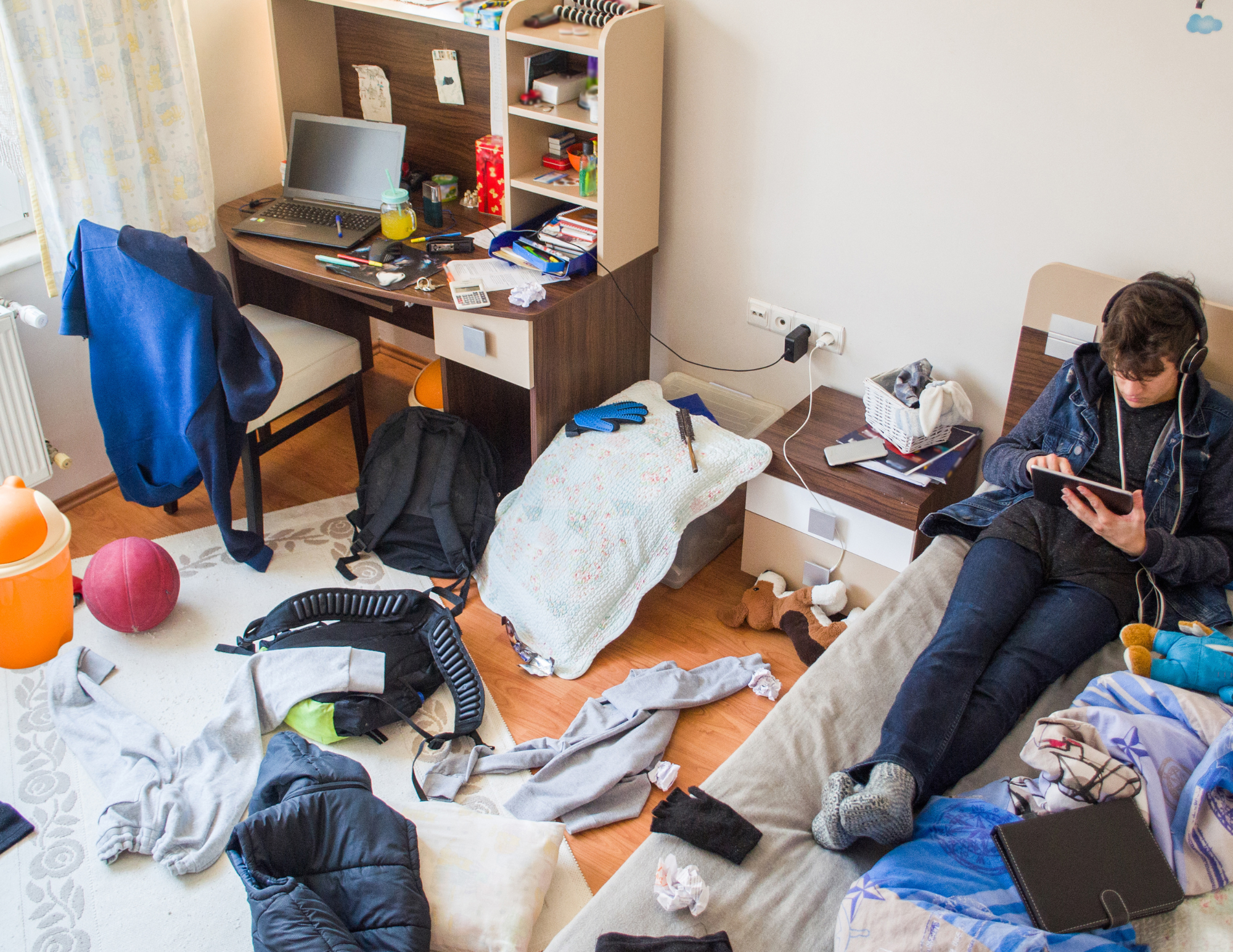
Teen sits on his bed on his tablet surrounded by a messy room.

Why is PDA More Common in Neurodivergent Kids?

PDA in ADHD and autistic kids is more prevalent due to the underlying cognitive and emotional challenges associated with these conditions. Here’s why PDA is often seen in neurodivergent children:

  1. Heightened Anxiety: Children who are ADHD and autistic often experience higher levels of anxiety, making them more likely to develop avoidance behaviors as a coping mechanism. Because daily life can be more challenging to those who are ADHD or autistic, along with the persistent feeling that they are unlike their peers, The demands of daily life can feel overwhelming, leading to the development of PDA.
  2. Need for Control: Neurodivergent children, particularly those who are autistic, may have a heightened need for control in order to feel safe and secure. This need can manifest as PDA when they perceive demands as a threat to their autonomy. If you find your child is especially demanding and needs to control their world very strictly, along with resistance to demands you make of them, then this can be a warning sign for PDA.
  3. Executive Functioning Challenges: ADHD, and sometimes autism as well, can be characterized by difficulties with executive functioning, such as planning, organizing, and following through with tasks. This can heighten anxiety, as well as make demands feel more burdensome and stressful, leading to avoidance strategies seen in PDA.
  4. Sensitivity to Change: Many autistic children are sensitive to changes in their environment or routine. Often, they are not only sensitive to change, but require routine for function and comfort. PDA can develop as a way to resist changes that feel unpredictable or uncontrollable.
PDA in ADHD and autistic kids manifests with little girl giving the thumbs down and a grumpy face

Strategies for Managing PDA in ADHD and Autistic Kids

Managing PDA in ADHD and autistic kids can feel really frustrating as a parent. It requires an approach that respects the child’s need for control while gently encouraging cooperation. And lots of patience!

Here are some strategies that can help:

1. Collaboration

Instead of imposing demands, engage your child in collaboration with you, especially if this can be built around problem solving. This approach means you invite your kiddo to engage in a demand with you, rather than asking them to do it alone. Collaborative problem solving involves working together to identify a problem, discuss possible solutions, and agree on a plan of action. By involving your child in decision-making processes, and working together, you can reduce their anxiety and resistance to demands.

Tip: Use language that emphasizes partnership. Two powerful words for kids with PDA are “together” and “let’s”. Instead of saying, “Put on your shoes so you’re ready to go,” try “Let’s put on our shoes together so we are ready to go.” This way, you make the task collaborative and reduce the stress of demand.

2. Offer Choices

Providing choices is a powerful way to give your child a sense of control and autonomy while still guiding them toward completing the tasks you need them to complete. Offer limited, structured choices that allow your child to feel empowered without being overwhelmed by too many options. This can work for both day-to-day parenting and in your homeschool.

Tip: Present choices that are acceptable to you and get what you need done, but still give your child the autonomy of choice. Instead of saying, “It’s time for math,” try “Would you like to start with math or reading today?” This way, tasks are still being completed, but you aren’t triggering your child’s PDA tendencies with a direct demand. You’re also giving them ownership over their learning, which will help them complete activities and tasks assigned to them without feeling like it’s an obligatory demand from you.

Young boy makes choice of breakfast between cereal and fruit

3. Reduce Perceived Demands and Create Challenges

This is when we can minimize the pressure of demands by breaking tasks into smaller, manageable steps or turning them into a challenge or game. Use indirect language or suggestions to reduce the intensity of demands, such as “I wonder if…” or “It might be fun to…” Avoid framing activities as demands and instead present them as opportunities for play by making them a game, or turning them into a challenge. For example, instead of saying, “You need to clean your room,” you could say, “Let’s see how many toys we can put away together in the length of a song.” Another strategy is to use PDA to your advantage by suggesting your child can’t do the thing you want them to do. For example, “I bet you can’t get all the blocks back in the bin before I finish setting the table.” For a lot of people with PDA, suggesting they can’t do something creates a challenge they want to take on. When you turn a demand into a challenge or a game, it not only makes it more motivating and stimulating, but it also creates dopamine in the brain, which ADHDers are lacking and can help them focus and manage stress.

Tip: Try implementing a rewarding deadline. A “rewarding deadline” is a concept used in time management and productivity strategies, particularly for people who struggle with motivation, such as people who are ADHD and autistic. It involves setting a deadline for completing a task and then linking the completion of that task with a reward. The idea is to create a positive incentive to finish the task by the deadline, making the process more motivating and enjoyable. For example, if you want your child to complete their chores by 2pm, instead of saying, “You need to finish your chores by 2:00,” try saying, “If you finish your chores by 2pm, we can go to the park afterward.” The deadline is not just about the time by which the task needs to be completed, but also about the positive outcome that follows, making it a “rewarding deadline.” This technique helps to make the task more appealing and provides a tangible benefit that your child can look forward to, thus increasing the likelihood of task completion. It leverages the brain’s reward system to encourage better time management and task follow-through while avoiding PDA triggers.

4. Establish Predictable Routines

While children with PDA may resist externally imposed routines, establishing a predictable and flexible routine can provide a sense of security. Many autistic kids need routine to thrive, and most ADHD kids do better with a routine as well. Involve your child in creating the routine, allowing them to have input on the schedule and activities. Use visual schedules or checklists that your child can personalize, giving them ownership of their daily routine. This collaborative approach can reduce resistance and increase cooperation. Predictability is important to a feeling of safety, especially in our autistic kids, and deviation from the predictable can cause considerable stress. Stress means we are more likely to trigger their PDA. 

Tip: If a change in routine is unavoidable, as it sometimes is in life, there are things you can do to mitigate the distress for your child. Priming is when we prepare our autistic kids for an unknown or a deviation from the routine by telling them in advance what will be happening, and providing them with as much detail about what the change will be like as possible. Another helpful tool, especially if the change was unexpected and last minute, is simple distraction. Allow them to engage in their special interest or use noise canceling headphones or a tablet or other device to help them regulate through the change in routine.

Boy looks bored over a textbook

5. Use Positive Reinforcement

Positive reinforcement is always a more powerful motivator for children than negative consequences, especially for children with PDA. Focus on praising effort and progress rather than specific outcomes, and use rewards that are meaningful to your child. Rewards aren’t the same as bribes, but rather they are recognition of their hard work and cooperation and a goal for your child to strive towards while completing their obligations.

Tip: Create a reward system that is consistent and predictable. Using something visual is helpful, especially for younger children. Make sure your system is predictable but also flexible enough to adapt to your child’s changing needs and preferences as they grow.

6. Be Patient and Flexible

Managing PDA in ADHD and autistic kids requires a lot of patience and flexibility. Recognize that progress may be slow and that setbacks are normal. Give yourself forgiveness when you inevitably get frustrated or angry. It’s important to remain calm and avoid power struggles, as these can exacerbate the child’s anxiety and resistance. It’s also more important to model for our children how we apologize and repair our mistakes then to model perfect behavior, so be sure to be patient with yourself as well.

Tip: Celebrate small victories and remember that this is not a condition your child asked for, or that they can control or turn off. Remember that you are both learning and growing through this process.

Parents of PDA in ADHD and autistic kids sit on couch looking frustrated while kids run around them

The Role of Homeschooling in Supporting PDA

Homeschooling offers a unique advantage for managing PDA in ADHD and autistic kids. The flexibility and individualized nature of homeschooling allow us as parents to create a learning environment that respects our children’s need for control while gently encouraging progress. It also creates an environment where you can prioritize emotional safety and comfort while helping your child learn about themselves and how to self-manage their needs.

Understanding and managing PDA in ADHD and autistic kids is essential for helping them thrive both academically and emotionally. By recognizing the signs of PDA and implementing these strategies, you can create a supportive and effective homeschooling environment that empowers your child to not only succeed now, but to learn how to manage their own needs in the future. Remember, patience, empathy, and flexibility are key to navigating the challenges of PDA, and with the right approach, your child can develop the confidence and skills they need to manage demands and achieve their full potential.

If you find that PDA is a significant challenge for your child, consider seeking additional support from professionals who specialize in ADHD, autism, and demand avoidance. Together, you can address your child’s unique needs and help them build a positive relationship with learning.

Frustration Intolerance in ADHD and Autistic Kids

Frustration intolerance is a common challenge for many children, but it can be particularly pronounced in our ADHD and autistic kiddos. As a homeschooling parent, understanding frustration intolerance in your child is crucial to helping them develop better coping strategies and improving their overall learning experience. What exactly is frustration intolerance, why is it more prevalent in neurodivergent children, and what are some practical ways we can help our kids manage and overcome these feelings?

A young girl struggles with frustration intolerance while her dad looks over her shoulder and offers support.

What is Frustration Intolerance?

Frustration intolerance refers to the difficulty or inability to tolerate situations that are perceived as difficult, unpleasant, or challenging. For children, this can manifest as anger, meltdowns, avoidance, or shutting down when faced with tasks or situations that don’t go as planned or require sustained effort. This emotional response often arises because the child feels overwhelmed, defeated, or incapable of handling the situation. As a homeschooling parent, you’ve probably encountered this over schoolwork at some point. It can also be related to chores, sports, interacting with others, or really any situation that becomes challenging.

Why is Frustration Intolerance More Common in Neurodivergent Kids?

Frustration intolerance in kids who are neurodivergent, such as those with ADHD or autism, is more common. This is often because they experience heightened frustration due to a combination of factors inherent in their neurodevelopmental conditions. Understanding these factors can help you better support your child.

1. Executive Functioning Challenges

Children with ADHD and autism often struggle with executive functioning, which includes skills like planning, organization, emotional regulation, and working memory. When a task is challenging or requires sustained effort, the brain’s ability to regulate frustration is compromised. This can lead to feelings of overwhelm and frustration, especially when the child is unable to see a clear path to success.

2. Sensory Sensitivities

For autistic and ADHD children, sensory sensitivities can play a significant role in frustration intolerance. Loud noises, bright lights, or uncomfortable textures can cause sensory overload, making it difficult for the child to cope with even minor frustrations. When the sensory environment is overwhelming, their capacity to handle frustration diminishes.

Teenager looking frustrated over school work while her dad tries to help her.
Young dark-skinned woman feeling stressed, holding head in despair, can’t stand through financial trouble while man in spectacles trying to calm her down, telling that everything will be alright

3. Dopamine Imbalance

ADHD is associated with dopamine dysregulation in the brain, which affects motivation and reward systems. This imbalance can make it harder for ADHD kids to tolerate tasks that are boring, difficult, or not immediately rewarding, leading to quicker frustration and a desire to give up.

4. Rigid Thinking Patterns

Many autistic children exhibit rigid thinking patterns, making it difficult for them to adapt when things don’t go as expected. When faced with changes or challenges, they may struggle to find alternative solutions, leading to heightened frustration.

Tips for Helping Your Child Learn to Manage Frustration Intolerance

As a homeschooling parent, you have the flexibility to create an environment that supports your child’s emotional needs and helps them develop better coping mechanisms. You can also add resources, such as Social-Emotional Learning, to your programming to help your child.

Here are some strategies to help your child manage frustration intolerance.

1. Teach Emotional Regulation Techniques

One of the most effective ways to help kids with frustration intolerance is by teaching them emotional regulation strategies. This includes deep stress and anger management tools, mindfulness practices, and the use of sensory tools like stress balls or fidget toys. These techniques can help your child calm down when they start to feel overwhelmed, and also helps them understand their own thoughts and feelings better. Recognizing their triggers, unhelpful thoughts, and big feelings leads to self-awareness and awareness is the first step in management.

Tip: Practice intervention techniques regularly, when your child is not frustrated, so they become second nature when they are needed most.

The Schoolio Social-Emotional Learning library offers a wealth of tools for teaching emotional intelligence to your kids which can greatly reduce frustration intolerance.

Young mother pointing at laptop while surfing on the internet with her daughter

2. Break Tasks into Smaller Steps

Large tasks can be overwhelming, especially for children who struggle with executive functioning. Break assignments or chores into smaller, more manageable steps. This approach not only makes the task less intimidating but also gives your child a sense of accomplishment as they complete each step.

Tip: Use visual aids, such as checklists or charts, to help your child keep track of their progress and stay motivated.

3. Set Realistic Expectations

It’s important to set realistic expectations that match your child’s abilities. Pushing too hard or expecting too much can lead to increased frustration and a sense of failure. Instead, set achievable goals and celebrate small successes to build your child’s confidence. Remember that homeschooling lessons typically take a fraction of the time they do in a busy classroom, so you shouldn’t be expecting your child to sit and do schoolwork for multiple hours per day.

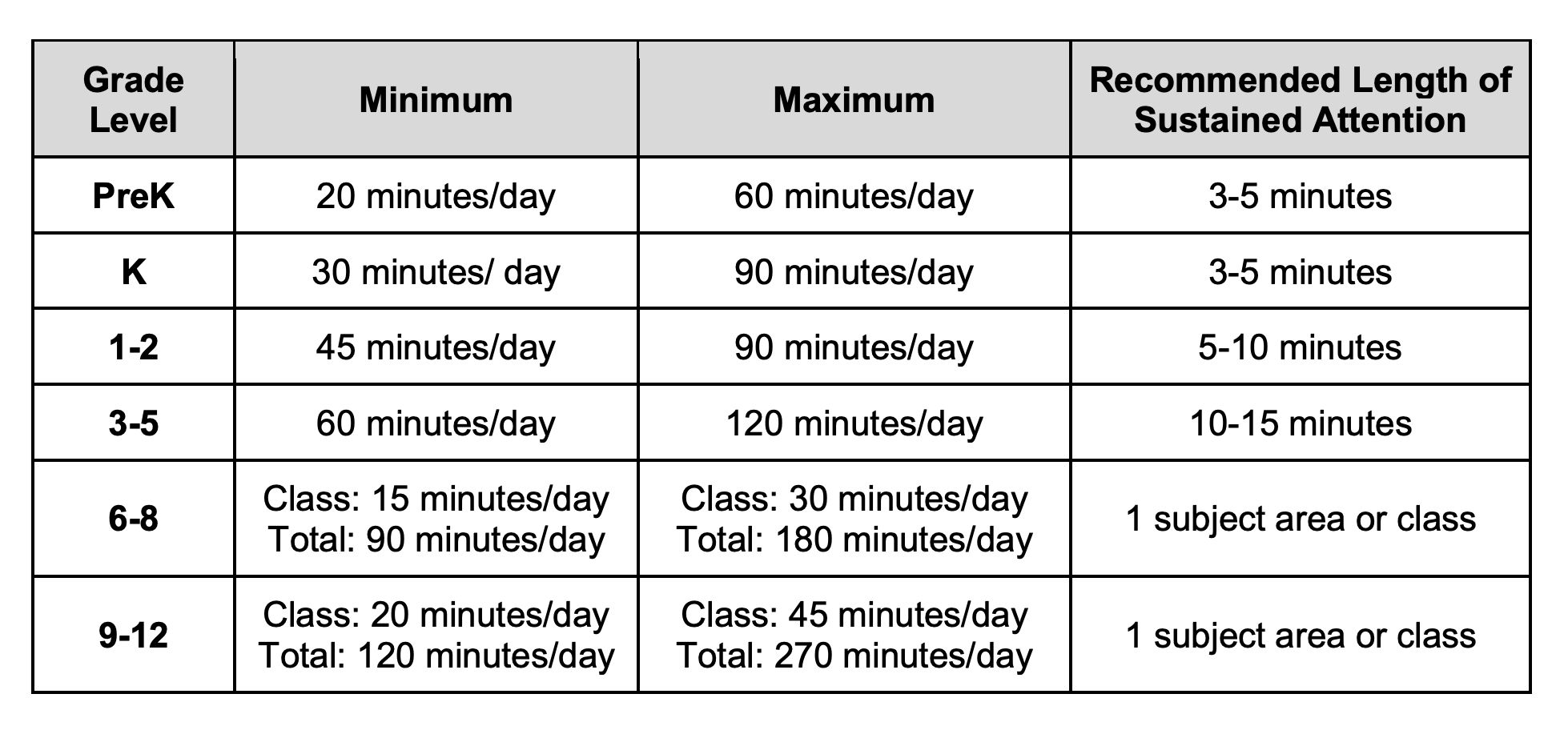
Here is an outline of the typical timelines for how long homeschooling should take you each day:

To avoid frustration intolerance, adhere to these recommendations for learning time lengths in homeschooling.

Tip: Use positive reinforcement to encourage effort, rather than focusing solely on the outcome. This helps kids learn that progress is more important than perfection and reduces frustration intolerance. Adapt your expectations to their needs and abilities. One child may complete 10 math questions in 20 minutes, but another might only complete 2 questions in the same time. If both are trying their best, they should both be done after the 20 minutes of sustained attention.

4. Create a Calm Learning Environment

A calm and structured environment can significantly reduce sensory overload and help your child focus on their tasks without becoming overwhelmed. This is particularly important for ADHD and autistic children who may be sensitive to noise, light, or other sensory stimuli, leading to more frustration intolerance. Being at home gives you a unique opportunity to curate a perfect learning environment for your child- whether that means learning at a desk, on the couch, or on the trampoline- you can make the best situation for their needs.

Tip: Designate a quiet, comfortable space in your home for learning, free from distractions and sensory triggers.

5. Use Visual Supports

Visual supports, such as schedules, social stories, and visual timers, can help manage frustration intolerance in kids because it helps them understand what is expected of them and reduce anxiety about transitions or changes. These tools provide a clear, concrete way for children to process information and manage their frustration.

Tip: Use a visual timer to help your child see how much time is left for a task. This can make it easier for them to tolerate activities they find challenging or boring.

6. Model and Practice Problem-Solving Skills

Teach your child problem-solving skills by modeling how to approach challenges in a calm and methodical way. This will improve their ability to manage frustration intolerance. Encourage them to think of multiple solutions to a problem and to try different approaches when the first one doesn’t work. Modeling good frustration tolerance can be challenging for some of us- after all, we weren’t taught a lot of emotional regulation skills as kids ourselves! Remember that it’s ok to lose your cool sometimes, we all do. Its just as valuable for your child to see you make a mistake, and then take steps to correct your behavior and do any needed repair work with others, as it is for them to see you handle a situation “perfectly”.

Tip: Role-play different scenarios with your child to practice problem-solving in a low-pressure environment.

Three focused children are playing on the floor and drawing in coloring books

7. Be Patient and Supportive

It’s important to remain patient and supportive as your child learns to manage their frustration intolerance. Understand that this is a process that takes time and that setbacks are normal. Your role as a parent is to provide guidance, encouragement, and a safe space for your child to express their emotions. When they are emotionally dysregulated, or are escalating, try your best to be the calm to their storm, and not to have your own frustrations escalate in response. I know it can be hard when you go through this regularly! Take deep breaths, remind yourself that this is how their brain works and they are not doing it on purpose or to be willful or “naughty”, and take breaks and step away when you need to. You got this!

Tip: Validate your child’s feelings by acknowledging their frustration and letting them know it’s okay to feel upset. Then, gently guide them toward using their coping strategies. A Quiet Corner can be an excellent space for calming big emotions.

Adding SEL to Your Home Learning Program

Frustration intolerance is often linked to executive dysfunction and emotional regulation skills. As homeschooling parents, we are lucky to be able to add learning these crucial skills into our home learning programming in ways traditional schools cannot. These skills are the cornerstones of comprehensive Social-Emotional Learning programs. You can learn more about adding an SEL program to your homeschool or download the free book from Schoolio.

Conclusion

Frustration intolerance is a common challenge for ADHD and autistic kids, but with the right support and strategies, they can learn to manage their emotions and build resilience. As a homeschooling parent, you have the unique opportunity to create a learning environment tailored to your child’s needs, helping them develop the skills they need to overcome frustration and succeed. Remember, patience and understanding are key to helping your child navigate their emotions and learn in a way that works best for them.

Executive Functioning: What Is It and How to Support Your Child

What is Executive Functioning and How to Improve Your Child’s Skills in Your Homeschool

Young boy looks bored while drawing.

You may have heard of executive functioning before, but what is it exactly? Executive Functioning is the cognitive skills that allow us to manage our thoughts, actions, and emotions in order to achieve our goals- whether those are big goals like going to the Olympics one day or little goals like getting our laundry done. These skills are essentially our brain’s management system, they allow us to plan, focus our attention, remember instructions, and juggle multiple tasks at once. For those of us homeschooling our children, particularly those who are neurodivergent, understanding and supporting the development of executive functioning may be crucial to our child’s success. Let’s explore what executive functioning is, break down its key components, and talk about strategies for improving these skills in your homeschool environment.

Understanding Executive Functioning

Executive functioning is a term that includes a range of cognitive processes that are essential for our goal-directed behaviors. These functions develop throughout childhood and adolescence and are important for academic success, social interactions, and daily living. Here are the 12 key components of executive functioning:

Task Initiation & Initiative:

This function is about our ability to start tasks independently and take proactive steps without external prompts. People with strong task initiation skills can begin tasks like work or chores without needing constant reminders. People with poor task initiation and initiative may know what tasks they should do, but struggle with how to get started or just making the movement to initiate the task. If you regularly find yourself thinking things such as, “I really need to get up and turn the laundry over” and there’s no reason not to (ie. you aren’t too tired or don’t want to) but you just can’t seem to get up and do it, you may be struggling with task initiation.

Boy demonstrates good executive functioning with task initiation

Task Monitoring & Task Completion:

This function is all about the capacity to track progress and follow through on tasks until they are finished. This includes recognizing when a task is complete and ensuring that all aspects have been addressed. It can also include the ability to see when a project needs to be modified in order for successful completion. If you ever struggle with starting multiple projects or tasks and not finishing any of them, you may struggle in this area. Task Completion is often considered an outcome of several other executive functions working together such as Planning and Prioritization, Time Management, Sustained Attention, Organization, Response Inhibition, and Working Memory, so poor Task Completion can also be a dysfunction in one or more of these other functions.

Planning and Prioritization:

This is the ability to create a plan or strategy to accomplish goals and being able to prioritize the steps needed to reach them. This is crucial for managing our time and resources, making it a cornerstone of executive functioning. Many of us struggle with jumping into a task or project without taking time to plan first, and many of us struggle as well or alternatively with prioritizing our time and resources (resources being anything from money to our own energy) in a way that gets things done most efficiently.

Teenage girls plan soccer play

Organization:

Some people seem to be perpetually well organized, while others are constantly struggling with mess and order! The ability to create and maintain systems for keeping track of information or items, including organizing a workspace, managing time, keeping a schedule, and sorting tasks by importance all fall under the Organization function.

Time Management:

We tend to talk about time management in simple terms- you’re on time or you’re late- but time management as an executive function is about having the capacity to estimate how long tasks will take and then having the ability to allocate time efficiently to complete them within deadlines or by set times. This is a key aspect of executive functioning. Whether you’re on time to meet friends for a movie or handing in an assignment before the deadline, time management is the skill needed to have the oversight to figure out when to start and how to divided the needed tasks over the time period available in order to manage your time.

Working Memory:

Working memory is different than short term memory. Short-term memory refers to the temporary storage of information that is held in your mind for a brief period, usually around 15-30 seconds. It is where information is kept for immediate use but is not manipulated or actively worked on. For example, short term memory allows you to remember a phone number just long enough to dial it before the information is forgotten. Working memory is a more complex cognitive process that involves not only holding information in mind but also manipulating and processing it. It’s the ability to retain and use information to complete tasks, solve problems, or respond to situations in real-time. For example, working memory allows you to perform tasks like mental math, problem-solving, and following multi-step instructions. If you struggle with things like doing math in your head, or brainstorming, you may have poor working memory.

Young boy works through school workbook, executive functioning

Metacognition & Self-Monitoring:

This is also sometimes referred to as self-awareness. It’s all about the capacity to think our own thinking and to self-evaluate our performance. This includes being aware of our strengths and weaknesses, as well as assessing how we handled a situation and what we might want to do differently next time. It’s a lot of self-reflection and considering the how and why of how we think or act. Without good metacognition and self-monitoring, we’re destined to repeat old habits, not take accountability for mistakes, and struggle to grow and change in positive ways.

Response Inhibition (Impulse Control):

Our Response Inhibition, or Impulse Control, is our ability to think before acting and to resist behaviors that are inappropriate, unnecessary, or that we’ve decided previously we don’t want to do. Impulse control is critical for staying focused, avoiding distractions, and remaining in control of our words and actions. Many of us with neurodivergencies such as ADHD struggle with impulse control, in fact it’s a hallmark symptom of ADHD. You can read more about ADHD and Impulse Control here.

Emotional Regulation:

The ability to manage emotions to achieve goals, complete tasks, or control our behavior is an executive function known as Emotional Regulation. Emotional regulation is key to handling frustration, stress, anger, or setbacks, which is vital for success. When we improve our emotional regulation skills, we improve our personal resiliency and perseverance, which helps us succeed. Another interesting fact about emotional regulation is that science has shown us that a child who is emotionally dysregulated cannot learn. Therefore, emotional regulation in our homeschools is crucial.

Young girl reflects

Sustained Attention:

Sustained Attention is something everyone struggles with at some points. This is our ability to maintain focus on a task or goal despite distractions, fatigue, or boredom. While everyone loses focus sometimes, especially with tasks we’re not interested or invested in the outcome, for someone who struggles with this executive function, it can be very debilitating to accomplishing tasks and goals.

Cognitive Flexibility:

Cognitive Flexibility is the capacity to adapt to new situations, switch between tasks, or change strategies when necessary. Rigid thinking is a hallmark of some neurodivergencies, particularly Austism. Cognitive Flexibility would be what we casually refer to as, “going with the flow”- being able to adapt and change directions mentally when the situation around us changes, or the needs of a project or task change. For people who struggle with cognitive flexibility this is really difficult and uncomfortable.

Goal-Directed Persistence:

This executive function is our ability to set and pursue goals. This skill is what allows us to maintain the effort and focus required to achieve goals, even in the face of obstacles. Our goal-directed persistence helps us be resilient and maintain drive and motivation.

Boy and mother executive functioning and doing chores

Why is Executive Functioning Important?

Executive functioning is essential for almost every aspect of our lives, from the big goals to the little daily tasks. In a homeschool setting, these skills help our kids manage their workload, complete assignments on time, and handle the challenges that come with learning new concepts. Without strong executive functioning, our children may struggle to organize their thoughts and spaces, manage their time, stay focused on tasks, and achieve their goals. All of these contribute to avoiding frustration, having good self-esteem, and being successful.

How to Improve Your Child’s Executive Functioning Skills in Your Homeschool

As homeschooling parents, we have the unique opportunity to tailor our teaching methods and environment to support your child’s executive functioning development. We also have the motivation and desire to make sure we’re teaching our kids all the things they need to be successful in adulthood, and not just the core academics that a school usually teaches.

Here are some strategies to help improve executive functions skills:

1. Create a Structured Environment

Children thrive in environments where there is a predictable routine. This doesn’t mean you need a strict schedule with timed learning blocks, it just means that you have a regular structure and flow to your days. This models good executive functioning habits for your kids, and they’ll develop good habits. Using visual schedules, checklists, or planners can help your child understand what is expected and to learn to manage their time and tasks independently in time.

2. Break Tasks into Manageable Steps

Large tasks can feel overwhelming, especially for children who struggle with executive functioning. Break down assignments into smaller, more manageable steps, and set short-term goals that lead to the completion of the larger task.

Tip: Encourage your child to check off each step as they complete it to build a sense of accomplishment.

3. Use Timers and Alarms

Time management is a crucial aspect of executive functioning. Timers and alarms can help children stay on track and manage their time more effectively. Use timers for specific tasks or school work sessions, and set alarms for transitions between activities.

Tip: Try the Pomodoro Technique, where your child works for 25 minutes and then takes a 5-minute break, to maintain focus and productivity.

4. Organize Your Learning Space

A well-organized space can help reduce distractions and make it easier for your child to focus on their work. It doesn’t matter where you do your homeschool work- some families have designated spaces and others don’t- but ensuring the places your child frequents stay reasonably tidy can help your child a lot. Prepping tools and materials you’ll need for your lessons in advance can also help limit distractions and break your child’s focus.

Young girl plays in a tidy room

Tip: Involve your child in organizing their spaces! Doing all the tidying and decluttering for them may help them focus, but doesn’t teach them how to develop the skill for themselves. Help them take ownership of their environment and develop their organizational skills by taking part, but don’t overwhelm them by giving them big clean-up tasks to handle on their own. Teach and demonstrate how to get the job done by doing it together.

5. Teach Planning and Prioritization

We can help our children learn to plan their day and prioritize tasks, a skill they will use their entire lives! Consider some sort of daily or weekly planner such as an agenda, a whiteboard, or simple lists that you create together. Start by sitting down together to list all the tasks that need to be completed, and then discuss which ones should be done first based on importance and deadlines. Modelling these skills will help them learn to do them themselves as they get older.

Tip: Use a whiteboard or planner to visually lay out tasks and priorities. This can help your child see the big picture and manage their time effectively, enhancing their executive functioning.

Teen works in a planner, good executive functioning

6. Develop Emotional Regulation Skills

Emotional regulation is key to managing frustration and stress, which are common obstacles to completing tasks and make executive functioning more difficult. Teach your child to manage their thoughts and feelings, practice mindfulness techniques such as deep breathing, and know strategies and skills for emotional regulation, in order to help them stay calm and focused.

Tip: Incorporate social-emotional learning into your homeschool and regularly talk about how we manage how we think and feel.

7. Encourage Self-Monitoring and Reflection

Teach your child to self-monitor by regularly asking them to assess their progress on tasks and how they are feeling. Encourage them to reflect on what went well and what could be improved, fostering metacognition and self-awareness.

Tip: Try to get in the habit of reflecting- this can be about school tasks like a big project, about something around the home like way chores are distributed, or even about a family trip. Talk openly and honestly about what you enjoyed, what went according to plan and what didn’t, and what you would do differently next time. This fosters open communication between you and your child as well as cognitive flexibility and self-reflection.

8. Promote Cognitive Flexibility

Encourage your child to think about problems in different ways and to try new approaches when they encounter obstacles. This can help them become more adaptable and improve their problem-solving skills.

Tip: Use games and activities that require flexible thinking, such as strategy games, to build cognitive flexibility in a fun way.

9. Foster Goal-Directed Persistence

Help your child set long-term goals and then help them break them down into smaller, actionable steps. Celebrate progress towards these goals to keep them motivated and focused on achieving them.

Tip: Create a vision board with your child to visually represent their goals and the steps they need to take to achieve them.

Girl displays vision board

What is Executive Dysfunction?

While many children can develop strong executive functioning skills with practice and support, some may struggle with executive dysfunction. Executive dysfunction refers to significant difficulties in one or more areas of executive functioning, which can impact a child’s ability to manage tasks, control impulses, and regulate emotions. This is common in neurodivergent kids, particularly those who are ADHD or autistic. If your child exhibits persistent challenges in these areas, it may be helpful to explore strategies and supports specifically designed to address executive dysfunction.

Conclusion

Executive functioning is the foundation for effective learning and daily living. By understanding these skills and actively working to improve them in your homeschool, you can help your child become more organized, focused, and successful in their academic and personal endeavors. With the right support and strategies, your child can develop the executive functioning skills they need to thrive.

ADHD and Autistic Kids: Hyperfocus and SPINs

ADHD and autistic kids often experience uniquenesses that can be both a source of strength and challenge. Today we’re going to look at one of these cool uniquenesses known as hyperfocus, hyperfixation, and SPINs. SPINs is neurodivergent community slang for Special Interest, a uniqueness so common that neurodivergent folks bond over it regularly! While these terms are sometimes used interchangeably, they actually describe different aspects of how neurodivergent minds can intensely focus on specific tasks, ideas, or topics, so let’s look at each of them individually so we can better support and educate our ADHD and autistic kids!.

ADHD or autistic kid plays with trains

What is Hyperfocus in ADHD and Autistic Kids?

Hyperfocus refers to an intense, almost obsessive concentration on a specific task or activity. For ADHD and autistic kids, this state of deep engagement can last for hours, making it difficult for them to shift attention to other tasks. Hyperfocus is not unique to ADHD and autism, but it is particularly common among individuals with these neurodivergent conditions.

Characteristics of Hyperfocus in ADHD and Autistic Kids:

  • Intense Concentration: When in a state of hyperfocus, ADHD and autistic kids may become so absorbed in an activity that they lose track of time and surroundings. This can include forgetting basic self-care, like eating, drinking, and using the restroom!
  • Difficulty Transitioning: Shifting attention away from the hyperfocused task can be challenging, often leading to frustration or resistance. Even alarms and warnings might not help with the transition from the task they are hyperfocusing on to something else.
  • Heightened Productivity: During hyperfocus, these kids can accomplish a significant amount of work in a short period, often with remarkable detail and accuracy.

While hyperfocus can be beneficial for completing complex tasks or deepening knowledge in a particular area, it can also lead to neglecting other important responsibilities, such as homework, chores, or social interactions. However, most hyperfocus is harmless and the ADHD or autistic kid is happy while consumed, so it’s ok to let them enjoy the time as long as they’d like. Bring them a snack once in awhile and remind them to stretch and use the bathroom periodically!

ADHD and autistic kid plays with dinosaurs

Understanding Hyperfixation in ADHD and Autistic Kids

Hyperfixation is closely related to hyperfocus but differs in some key ways. Hyperfixation refers to an intense and prolonged focus on a specific topic, activity, or object, often to the exclusion of everything else. Unlike hyperfocus, which may be task-specific, hyperfixation is usually topic-specific and can last for weeks, months, or even years.

Key Aspects of Hyperfixation:

  • Intense Interest: ADHD and autistic kids may become deeply interested in a specific subject, such as dinosaurs, trains, or a particular video game.
  • Emotional Attachment: Hyperfixation is often accompanied by strong emotional connections to the subject, making it a source of comfort and security. Engaging in their hyperfixation topic is comforting and if they can’t engage in it, they may talk about it instead as a way to access the comfort of the topic.
  • Difficulty Shifting Focus: Similar to hyperfocus, transitioning away from a hyperfixation can be difficult, sometimes leading to distress or anxiety.

Hyperfixation can be both a strength and a challenge for ADHD and autistic kids. On the one hand, it allows them to develop expertise and deep knowledge in specific areas. A child with a hyperfixation on trains will know so much detail about them! On the other hand, it can make it challenging to balance other aspects of life, such as academics, social relationships, and self-care. They may annoy other kids with their constant interest in one topic, or forget to do things like drink water while engaging with their hyperfixation.

SPINs: Special Interests in Neurodivergent Kids

SPINs, or Special Interests, are a hallmark of autism but are also present in some kids with ADHD. SPINs refer to intense, all-consuming interests in specific subjects that bring immense joy and fulfillment to neurodivergent kids. Stimpunks.org refer to SPINs: “Having a special interest is like having a crush or being newly in love. It is consuming and delightful.” These interests often go beyond mere hobbies and become central to their identity and daily life.

Characteristics of SPINs:

  • Passionate Engagement: SPINs are pursued with passion and dedication, often involving extensive research, collecting, or creating related content. A SPIN in, say, Pokemon will mean your child knows seemingly EVERYTHING about them and can talk endlessly about the details.
  • Source of Comfort: Engaging in SPINs can provide a sense of security and calm, particularly in overwhelming or stressful situations.
  • Social Interaction: While SPINs can sometimes lead to social isolation, they can also be a way for neurodivergent kids to connect with others who share similar interests.

Supporting SPINs in ADHD and autistic kids is crucial for their emotional well-being and development. Encouraging these interests can help build self-esteem, foster social connections, and even lead to future academic or career opportunities.

Managing Hyperfocus, Hyperfixation, and SPINs in ADHD and Autistic Kids

While hyperfocus, hyperfixation, and SPINs can be powerful tools for learning and personal growth, they are also inherent aspects of the neurodivergent experience. These patterns of focus are not something that ADHD and autistic kids can simply “turn off” or ignore. They are deeply rooted in how their brains are wired, and expecting them to easily shift away from these intense states is unrealistic.

For example, my daughter had a SPIN in stuffed animals from the time she was about two years old until probably 10 or so. If we left the house and she forgot to bring a stuffy, she would panic and have a meltdown. She needed it for comfort and security when we were out in the world. It may seem like a silly thing to “need” to us, but I learned that turning around and going back for the forgotten stuffy, and later having an “emergency stuffy” that stayed in the car, was essential to her comfort and ability to cope. Managing without wasn’t something I could realistically ask of her, because she is neurodivergent.

Young girl with stuffed animals

Legitimacy of Neurodivergent Focus Patterns: It’s essential to recognize that hyperfocus, hyperfixation, and SPINs are legitimate parts of the neurodivergent experience. They are not simply quirks or habits to be managed, or for kids to learn to go without, but are integral to how our kids engage with the world. This intense focus can be a source of pride, achievement, and fulfillment, and it’s a important part of comfort and calm. It’s crucial for parents and educators to honor and respect these aspects of neurodivergence.

The Discomfort of Disconnection: For ADHD and autistic kids, being unable to engage in their SPIN or hyperfocus/fixation activity can lead to significant discomfort, frustration, and even distress. This sense of disconnection from what brings them joy and satisfaction can result in emotional dysregulation, anxiety, or a feeling of being “lost.” It’s important to understand that these activities are not just hobbies but are often central to their emotional well-being. This is part of why traditional school can be so hard for ADHD and Autistic kids, because they are separated from their source of comfort and what makes them who they are, for so much of the day This is one of the benefits of homeschooling, your child can engage in their SPIN much more often. Programs like Schoolio are rooted in interest-based learning, and allow you to choose topics in science, social studies, and more that align with your child’s interests, making learning more exciting for your child and decreasing discomfort when learning.

Navigating the In-Between States: There are also times when neurodivergent kids may find themselves in an “in-between” state, where they are not currently engaged in a hyperfixation or SPIN. Neurodivergent adults attest to the discomfort of the time between one SPIN “wearing off” and discovering a new one. This period can be unsettling, as it may feel like a loss of direction or purpose. During these times, it’s important to provide support, offer new opportunities for exploration, and help them navigate this transitional phase with patience and understanding.

Practical Strategies:

  1. Set Time Limits: Encourage breaks and set time limits to ensure that other responsibilities are not neglected. Use visual timers or schedules to help ADHD and autistic kids transition between tasks. Give them lots of transition warning, and don’t take away time from their SPIN for “no good reason” because that will seem unjustified to your ADHD or autistic kid.
  2. Incorporate Interests into Learning: Whenever possible, incorporate their hyperfixations or SPINs into the curriculum. This can make learning more engaging and enjoyable. When my daughter’s SPIN was dragons, we altered a geography activity to include her SPIN. The curriculum wanted her to make a booklet with a page dedicated to each of the physical regions of the country, so I asked her to create a dragon for each region and describe it’s habitat, diet, and other features that it would have based on where it lived. Don’t be afraid to alter your programming to include your child’s special interests!
  3. Create a Balance: It’s great to teach the importance of balancing to your kids. Their intense interests are important, but they do need to learn to not neglect their own self-care or their responsibilities. You may want to encourage participation in other activities and experiences to help them develop new skills and discover other interests, but remember that their SPINs and hyperfocus are not in their control, and are usually harmless and comforting to your child, so don’t feel the need to force them away from it for no reason.
  4. Communicate Openly: Discuss the benefits and challenges of hyperfocus and hyperfixation with your child. Help them understand the characteristics of their ADHD or autism so they learn how to leverage these traits positively while managing potential downsides.
Young ADHD or autistic boy plays with diggers

Conclusion

Understanding and managing hyperfocus, hyperfixation, and SPINs in ADHD and autistic kids is essential for helping them thrive. These intense focus patterns are not just challenges to be managed but strengths to be harnessed. By supporting their unique ways of engaging with the world, parents and educators can help neurodivergent kids achieve their full potential and lead fulfilling lives.

Rejection-Sensitive Dysphoria in Neurodivergent Kids

Rejection-Sensitive Dysphoria in neurodivergent kids (RSD) is a condition that describes the intense emotional pain or discomfort some people experience when they perceive rejection or criticism, whether real or imagined. While many individuals may feel hurt by rejection, those with RSD, particularly neurodivergent kids, often experience this pain more deeply and intensely, leading to significant emotional distress. This condition is especially relevant for children with Attention-Deficit/Hyperactivity Disorder (ADHD) and Autism Spectrum Disorder (ASD), as it can compound the challenges they already face in managing emotions and navigating social interactions.

Young girl experiences Rejection Sensitive Dysphoria as a neurodivergent kids

Understanding RSD in Neurodivergent Kids

Rejection-Sensitive Dysphoria in neurodivergent children is characterized by extreme emotional sensitivity to perceived or actual rejection, criticism, or failure. Unlike general emotional sensitivity, RSD is marked by a rapid and overwhelming emotional response that can feel unbearable. The term “dysphoria” refers to a profound state of unease or dissatisfaction, which accurately describes the intense emotional turmoil associated with RSD.

Children with RSD may experience a variety of emotional responses, including:

  • Severe Anxiety: Worrying excessively about being judged, rejected, or criticized by others.
  • Depression: Feeling deep sadness, hopelessness, or worthlessness after perceived rejection or failure.
  • Anger or Rage: Responding with intense anger or frustration when feeling rejected or criticized.
  • Social Withdrawal: Avoiding social situations or relationships to prevent the possibility of rejection.

RSD is not a formally recognized diagnosis in the Diagnostic and Statistical Manual of Mental Disorders (DSM-5), but it is widely acknowledged among mental health professionals who see Rejection Sensitive Dysphoria in neurodivergent kids as a significant and impactful issue..

The ADHD and Rejection Sensitive Dysphoria Connection

ADHD is a neurodevelopmental disorder that affects attention, impulse control, and emotional regulation. Children with ADHD often experience heightened emotional sensitivity, which can make them more susceptible to Rejection Sensitive Dysphoria. The neurological basis of ADHD involves differences in brain structure and function, particularly in areas that regulate emotions and responses to social stimuli. These differences can amplify the intensity of emotional reactions to perceived rejection or criticism.

For kids with ADHD, RSD can manifest as:

  • Intense Emotional Reactions: Overwhelming feelings of shame, embarrassment, or humiliation in response to criticism or rejection.
  • Avoidance Behaviors: Steering clear of situations where they might be judged or rejected, such as public speaking, trying new activities, or forming new relationships.
  • Perfectionism: Striving to avoid criticism or rejection by being perfect, which can lead to burnout and exhaustion.
  • People-Pleasing: Going to great lengths to gain approval from others, often at the expense of their own needs or desires.
Rejection Sensitive Dysphoria manifests in neurodivergent kid
Black girl with sadness emotion

Autism and Rejection Sensitive Dysphoria: How They Intersect

Autism Spectrum Disorder (ASD) is a neurodevelopmental condition characterized by challenges in social communication, repetitive behaviors, and restricted interests. Children with autism may also experience emotional dysregulation and heightened sensitivity to social cues, which can contribute to the development of RSD. Social interactions can be particularly challenging for neurodivergent kids with autism, making them more vulnerable to feelings of rejection or criticism.

For kids with autism, RSD can present as:

  • Social Anxiety: Intense fear of social situations where they may be judged or rejected.
  • Rigid Thinking: Difficulty accepting criticism or feedback, leading to feelings of distress when things don’t go as planned.
  • Meltdowns or Shutdowns: Emotional overload in response to perceived rejection, resulting in either intense outbursts (meltdowns) or withdrawal (shutdowns).
  • Difficulty with Change: Struggling with transitions or changes in routine, which can trigger feelings of rejection or inadequacy if they perceive themselves as failing to adapt.
Young boy practices facial expressions in a mirror

Hyperfixation and Rejection Sensitive Dysphoria in Neurodivergent Kids

RSD in neurodivergent kids can also lead to hyperfixation on the problem they were criticized for or the person who rejected them. Hyperfixation is a common experience in both ADHD and autism, where an individual becomes intensely focused on a particular subject, thought, or task, often to the exclusion of other things.

When neurodivergent children experience criticism or rejection and have Rejection Sensitive Dysphoria, the emotional impact can be so overwhelming that they become consumed by it. This can lead to hyperfixation on the situation, replaying the criticism or rejection in their mind repeatedly, trying to analyze what went wrong, or even obsessing over the person who delivered the criticism or rejection. This can exacerbate feelings of distress, anxiety, and low self-esteem, making it difficult for the individual to move past the incident.

Hyperfixation in the context of RSD can manifest as:

  • Replaying the Event: Continuously thinking about the moment of rejection or criticism, trying to understand every detail, and often feeling the emotional pain repeatedly.
  • Over-Analyzing the Criticism: Focusing excessively on the problem that was pointed out, which can lead to perfectionism, a desire to “fix” the issue, or an attempt to avoid similar criticism in the future.
  • Obsessing Over the Person: Fixating on the person who delivered the criticism or rejection, which may involve trying to figure out why they did it, what they think of the individual, or even attempting to regain their approval.
  • Difficulty Letting Go: Struggling to move on from the incident, which can lead to prolonged emotional distress and impact other areas of life, such as relationships, work, or academics.

The Impact of RSD on Daily Life

There can be a profound impact on the daily lives of neurodivergent kids with Rejection Sensitive Dysphoria. The emotional and behavioral responses to perceived rejection can affect various aspects of life, including:

  • Emotional Health: The intense emotional pain associated with RSD can lead to chronic anxiety, depression, and low self-esteem. Kids may feel constantly on edge, worrying about potential rejection or criticism in every interaction.
  • Relationships: RSD can strain relationships with family, friends, and peers. The fear of rejection may cause neurodivergent kids to withdraw from social situations, leading to isolation and loneliness. Alternatively, they may become overly dependent on others’ approval, leading to unhealthy relationships or attachments.
  • Academic and Work Performance: The fear of failure or criticism can cause children to avoid challenging tasks, limit their participation in academic or extracurricular activities, and ultimately hinder their success.
  • Social Life: The impact of RSD can extend to social interactions, where the individual might avoid making new friends, joining groups, or engaging in social activities due to the fear of rejection.
Rejection Sensitive Dysphoria in neurodivergent kid strains relationship
Sad girl sitting in kitchen while woman talking on mobile phone in background

Recognizing Rejection Sensitive Dysphoria in Neurodivergent Kids

Recognizing the signs of RSD in neurodivergent kids can be the first step toward managing its impact. Here are some common signs and symptoms to watch for:

  • Overreaction to Criticism: An intense emotional response, such as crying, anger, or withdrawal, after receiving criticism or feedback, even when you tried to deliver it very gently.
  • Avoidance of Social Situations: Avoiding social interactions, new experiences, or challenges due to fear of rejection or failure.
  • People-Pleasing: Going to extreme lengths to gain approval from others, often neglecting personal needs or boundaries.
  • Perfectionism: An overwhelming desire to be perfect in order to avoid criticism or rejection.
  • Low Self-Esteem: A pervasive sense of inadequacy or worthlessness, often tied to the fear of not being accepted by others.

Coping Strategies for Managing RSD

While Rejection Sensitive Dysphoria in neurodivergent kids can be challenging, there are strategies that can help manage its effects:

  1. Cognitive-Behavioral Therapy (CBT): CBT can help neurodivergent kids identify and challenge negative thought patterns that contribute to RSD. By reframing thoughts and practicing healthier responses to rejection, they can reduce the emotional impact of RSD. Schoolio’s best-selling unit, Thoughts & Feelings: Learning to Manage How I Think and Feel, is an introduction to CBT for kids of all ages.
  2. Mindfulness and Relaxation Techniques: Mindfulness practices, such as deep breathing, meditation, and grounding exercises, can help kids stay present and manage emotional reactions to perceived rejection. Learn more about how to help your child with these strategies from our free SEL Parent Bootcamp!
  3. Setting Boundaries: Learning to set healthy boundaries with others can help protect emotional well-being and reduce the impact of rejection or criticism.
  4. Self-Compassion: Encouraging self-compassion and self-care can help neurodivergent kids build resilience against the emotional pain of RSD. This includes recognizing their own worth and practicing kindness toward themselves, even when they experience rejection.
  5. Seeking Support: Connecting with a therapist, counselor, or support group can provide a safe space to discuss experiences with RSD and receive guidance on coping strategies.
  6. Open Communication: Encouraging open communication with trusted friends and family members can help kids express their feelings and receive support when they experience RSD.

Supporting Neurodivergent Kids with Rejection-Sensitive Dysphoria

Rejection-sensitive dysphoria in neurodivergent kids is a significant challenge that can impact every aspect of their lives, from relationships to academic performance. The intense emotional pain associated with perceived rejection or criticism can be overwhelming, but by recognizing the signs and implementing coping strategies, neurodivergent kids can learn to manage their emotional responses and build resilience. With the right support and tools, those affected by rejection-sensitive dysphoria can lead fulfilling lives and navigate social interactions with greater confidence and ease.

The Hidden Struggles of Neurodivergent Learners in Traditional Classrooms

As a homeschooling mom to neurodivergent learners, and having once been a neurodivergent kid myself in a traditional school, I have seen firsthand how those traditional school environments can be incredibly challenging for children who think and learn differently. While many aspects of school are difficult for any child, neurodivergent learners often face a unique set of obstacles that can make their school experience range from difficult to completely intolerable. If you’re considering the switch to homeschooling your neurodivergent child, then understanding these challenges can help you better support your child and make informed decisions about their education.

Sensory Issues for Neurodivergent Learners

One of the biggest challenges for neurodivergent learners in traditional classrooms is dealing with sensory issues. Overstimulation or under-stimulation in typical classroom environments can range from a low-level constant distraction to downright torture. Imagine sitting in a classroom where the fluorescent lights buzz incessantly, the noise levels are unpredictable, the temperature is uncomfortable, and there is a constant expectation to remain still and quiet. For many neurodivergent learners, these sensory inputs can be overwhelming and can make it nearly impossible to focus on learning. For others, the lack of sensory stimulation like movement and vocal stims is equally hard to manage. Neurodivergent learners are often expending energy to simply tolerate the environment, before they even try to add learning to their mental load.

A boy hides under a desk in a classroom, looking like an overstimulated neurodivergent learner .

Emphasis on Academic Achievement Can Be Harmful for Neurodivergent Learners

Traditional schools place a heavy emphasis on academic achievement as the sole measure of success or failure. Obviously, that’s why kids are there, right? There are no grades given for personal character traits like effort, initiative, responsibility, community-mindedness, empathy, resiliency, or others. This narrow focus can be particularly detrimental to neurodivergent learners who may excel in other areas but struggle academically. Not only is success or failure of the child measured only by academic achievement, but we also make grade-earning restricted to only those whose brains are able to perform under constant pressure and are able to demonstrate knowledge in a specific, standardized test format. Traditional schools do not typically allow for variation in proof-of-comprehension for kids, and our neurodivergent learners can suffer massive self-esteem issues, feeling like failures despite their unique strengths and abilities.

A neurodivergent learner boy struggles with a test in a classroom.

Lack of Differentiated Instruction and Knowledge Proof for Neurodivergent Learners

One-size-fits-all teaching methods and assessments fail to accommodate the diverse learning styles of neurodivergent learners. In overcrowded and underfunded classrooms, teachers are often unable to provide the necessary accommodations that these students need to succeed. As a former teacher, I understand the limitations of what can be done within the traditional school system. Teachers have a lot of kids to deal with and many may be in need of extra support. Neurodivergent learners specifically may need different types of instruction, explanations, or ways to demonstrate their knowledge and prove retention, but they also may not be the loudest student, or most problematic behavior-wise, meaning they can be easily overlooked. It is much easier to accommodate your child’s specific and unique learning needs in a homeschooling setting and adjust activities, instructions, and proof-of-knowledge requests to meet their needs.

Conformity-Based Behavior Expectations

Traditional schools often emphasize strict behavior that requires children to sit still, be quiet, and wait their turn. While these expectations can be challenging for any child, they are especially difficult for neurodivergent learners who may have to exert a tremendous amount of mental and physical effort to conform. The classic instructions—sitting “criss-cross applesauce”, keeping hands in their lap, quiet lips, quiet hands, feet still, lining up, and not speaking out during instructional periods—can be almost if not actually impossible for some neurodivergent learners. When they struggle to meet these expectations, they often find themselves in trouble, not because they don’t want to behave, but because they literally can’t.

A row of children sit quietly with textbooks and hands in laps.

Collective Punishment and Privilege Removal

Collective punishment, where the entire group is punished for the behavior of one or a few, is a common practice in traditional schools aimed at enforcing conformity through peer pressure. While this practice does tend to get results in a classroom, this approach can be particularly damaging for neurodivergent learners. For the child who was behaving well, this practice feels like an injustice. Neurodivergent learners, specifically our autistic kids, have a stronger sense of justice and fairness, and being punished for a “crime” they didn’t commit can be especially overwhelming for them- possibly leading to a meltdown or After School Restraint Collapse. For the child who was misbehaving but couldn’t help it, which we often see in our ADHD kids who need movement, stimulation, and lack impulse control, it creates resentment among their peers and hurts them socially- an area they likely already struggle in. Similarly, the removal of privileges such as recess, gym, and art—activities that are often most beneficial and most important to neurodivergent learners—is frequently used as the leverage to enforce conformity. These opportunities for movement, freedom, and creative expression are vital for all children’s well-being, and for our neurodivergent learners’ ability to regulate, and are usually the first to be taken away as punishment, seen as “fun” rather than “important”, like other academic subjects.

Social Challenges for Neurodivergent Learners

Navigating the complex social dynamics of traditional schools is challenging for most children, but it is especially daunting for neurodivergent learners. The social labyrinth of school life—making friends, understanding social cues, and fitting in—can be a source of significant stress and anxiety. Neurodivergent learners often struggle with these unspoken social rules, leading to feelings of loneliness and isolation and often express themselves differently than their neurotypical peers, leading to misunderstandings and rejection.

A young girl in a classroom looks dejected as her classmates point and laugh at her.

Limited Movement and Physical Activity

Traditional classrooms typically offer limited opportunities for movement and physical activity, because we overemphasize the importance of academics, and present academic learning in limited ways, such as listening to lectures, watching videos, and reading. The ability to move our body and engage in physical exercise is crucial for the health and well-being of all people, but is especially essential for neurodivergent learners, particularly those with ADHD. For example, physical exercise helps ADHD Hyperactive-Impulsive Type to exert some of the extra energy they naturally have, and physical exercise helps the ADHD Inattentive Predominant Type as well by causing dopamine to be released in the brain, which literally helps them to focus and concentrate. The expectation to sit still for long periods can be especially challenging for our neurodivergent learners who need to move to stay focused and engaged. The lack of physical activity not only impacts their ability to learn but also their overall physical and mental health.

Young boy, possibly neurodivergent learner, in a classroom looking very frustrated.

Homeschooling: A Great Alternative for Neurodivergent Learners

Homeschooling is an amazing alternative for neurodivergent learners, because you can create a flexible and accommodating environment tailored specifically to your child’s unique needs. In a homeschool setting, parents can create a learning environment free from the sensory overloads often found in traditional classrooms. They can adjust the pace of learning to match their child’s individual needs, incorporate movement breaks, and use teaching methods that cater to their child’s strengths.

Mother helps son with school work. Boy is a neurodivergent learner wearing headphones.

Homeschooling allows for differentiated instruction, ensuring that neurodivergent learners receive the accommodations they need to thrive academically. Programs specifically designed for neurodivergent learners, such as Schoolio, can help parents provide different instruction and activity types, and learn more about their neurodivergent learner. Homeschooling also eliminates the negative aspects of conformity-based behavior expectations, collective punishment, and privilege removal. Instead, homeschooling fosters a supportive atmosphere where children can learn in a way that makes sense to them, reducing stress and anxiety associated with traditional schooling. 

Mother and daughter learning happily on a laptop together accomodating neurodivergent learner needs..

Socially, homeschooling provides the opportunity for neurodivergent learners to interact in smaller, more controlled settings, with more consistent and immediate feedback from empathetic adults as guidance. This helps them build meaningful relationships without the pressure of navigating complex school social hierarchies. This personalized approach can significantly enhance their self-esteem and overall well-being.

Conclusion

Understanding the challenges that neurodivergent learners face in traditional classrooms is the first step towards creating a more supportive and accommodating learning environment for them. As homeschooling parents, we have the opportunity to tailor our teaching methods and environments to meet the unique needs of our children, allowing them to thrive in ways that wouldn’t be possible in a traditional classroom. By recognizing and addressing these challenges, we can help our neurodivergent learners reach their full potential and develop a love for learning that will last a lifetime!

Is Your Neurodivergent Learner Struggling in a Traditional Classroom?

You don’t have to watch your child struggle anymore. Homeschooling provides the flexibility, support, and accommodations neurodivergent learners need to thrive. With Schoolio, you can create a customized learning experience that celebrates your child’s strengths and supports their challenges.

Start your homeschooling journey today!

? Learn More About Schoolio

Inclusive Learning Environments: How Schoolio Supports Neurodiversity

Inclusive Learning Environments: How Schoolio Supports Neurodiversity

Inclusive Learning Environments: How Schoolio Supports Neurodiversity

There is a growing awareness of the need for inclusive learning environments. The traditional education system, while effective for many, may not always cater to the diverse needs of every student. Particularly those with neurodivergent learning styles. This is where Schoolio comes into play, offering home education for special needs that prioritizes a personalized and supportive approach.

Recognizing Neurodiversity

Neurodiversity is a term that emphasizes the natural variation in the human brain. It encompasses conditions such as ADHD, autism, dyslexia, and more. Acknowledging that these differences should be respected and accommodated in educational settings. Schoolio has embraced this concept, making it a cornerstone of their approach to education.

Schoolio Family Plan

In Schoolio’s neurodiverse education at home, the focus is on understanding and celebrating the unique strengths and challenges of each learner. By recognizing and appreciating neurodivergent learning support, the program aims to create an environment where all students feel valued and understood.

Tailored Supportive Homeschool Programs

One of the key features that sets Schoolio apart is its commitment to offering supportive homeschool programs. These programs are designed to accommodate the needs of neurodivergent learners. Doing so by providing a flexible and personalized curriculum that caters to their individual learning styles.

In these personalized neurodivergent education programs, students can progress at their own pace. Which allows for a deeper understanding of concepts without the pressure of strict timelines. Schoolio believes that learning is a unique journey for every student, and by tailoring the curriculum, they empower students to thrive in their educational pursuits.

Home Education for Special Needs: A Holistic Approach

Schoolio takes a holistic approach to home education for special needs. It extends beyond academics to address the social and emotional aspects of a student’s development. The program emphasizes the importance of fostering a sense of community and belonging, recognizing that a supportive social environment is essential for overall well-being.

Click here for strategies for neurodivergent learner success

Schoolio e-books

In Schoolio’s neurodiverse education at home, students have the opportunity to engage with their peers in ways that suit their comfort levels with Live Classes. This fosters a sense of inclusivity and understanding among students, promoting a positive and accepting atmosphere.

Bridging Gaps in Neurodivergent Learning Support

In the realm of neurodivergent learning support, Schoolio acts as a bridge, connecting students with learning materials that cater to their diverse learning needs. The program actively involves parents in the educational journey, providing resources and guidance to ensure a collaborative effort in supporting the student’s growth.

Supportive homeschool programs from Schoolio not only focus on academic excellence but also on building life skills and fostering independence. By addressing the unique challenges that neurodivergent learners may face, Schoolio aims to create a foundation for lifelong success.

A Space Where Every Student Can Thrive

Through home education for special needs, personalized neurodivergent education, and supportive homeschool programs. Schoolio is making strides in creating a space where every student can thrive. As we continue to evolve in our understanding of diverse learning needs, Schoolio aims to illuminate the path toward a more inclusive and supportive educational landscape.

Schoolio Learning Resources

Transitioning from traditional school? Click here!