Can ChatGPT Do Your Child’s Homework?

Can ChatGPT Do Your Child’s Homework?

Can ChatGPT do your child's homework?

As technology advances, it has become easier for students to complete their homework with the help of artificial intelligence. ChatGPT is a language model that uses deep learning techniques to generate human-like text. It has assisted students in completing their assignments, making homework more accessible than ever. So, can ChatGPT do your child’s homework? 

What is ChatGPT?

ChatGPT is an artificial intelligence language model that uses deep learning techniques to generate human-like text. It was created by OpenAI and is based on the GPT (Generative Pre-trained Transformer) architecture. The model has been pre-trained on a large corpus of text. ChatGPT can generate coherent and contextually appropriate text responding to a given prompt. This has made it a popular tool for natural language processing tasks. Such as language translation, question answering, and text generation. With the help of ChatGPT, students can quickly complete their homework and assignments.

How does ChatGPT work? 

ChatGPT is based on the GPT (Generative Pre-trained Transformer) architecture. It uses a deep learning technique called a transformer network to generate text. The model has been pre-trained on a large corpus of text and can generate coherent and contextually appropriate text in response to a given prompt.

The model works by predicting the next word in a sequence of text based on the previous words. It uses a multi-head attention mechanism to weigh the importance of different parts of the input sequence and a feedforward neural network to process the information. This allows the model to generate grammatically correct and semantically meaningful text.

ChatGPT can be fine-tuned on specific tasks by training it on a smaller dataset of examples. This allows it to generate text tailored to a specific domain or task. For example, it could be trained to generate summaries of scientific articles or to answer questions about a particular topic. With its ability to generate human-like text, ChatGPT has the potential to revolutionize the way students complete their homework and assignments.

What the experts are saying.

LifeWire did a series of interviews with educators and tech entrepreneurs about using ChatGPT in education. Founder of Schoolio Learning, Sathish Bala, shared that “Over-reliance on AI may prevent students from developing critical thinking and research skills. Which are crucial for academic success.” Bala continued, “Therefore, it is crucial to provide students with homework that encourages them to keep honing these skills. While also teaching them how to use AI tools effectively.” in his interview with Lifewire.

Marnix Broer, CEO of Studocu, an online resource centre for children. Shared with Lifewire that “AI can help students learn and complete homework faster. So they can focus more on knowledge-building tasks, like studying, than on data search or organization,” Broer said. “AI can also prevent students from getting ‘stuck’ when working through problems at home. Since they don’t have the help of a teacher close by. Students can use AI to find the answers they need. This extra support can also help even the playing field for students that might not have as much access to parental help as others.”

Read the full article here

How can ChatGPT help students? 

ChatGPT can help students in many ways. One of the most significant benefits is that it can generate grammatically correct and contextually appropriate text. Students can use ChatGPT to complete their homework and assignments quickly and easily. Students struggling to write an essay on a particular topic can use ChatGPT to generate a starting point or complete the entire essay.

Another benefit of ChatGPT is that it can be fine-tuned on specific tasks by training it on a smaller dataset of examples. This allows it to generate text tailored to a specific domain or task. For example, it could be trained to generate summaries of scientific articles or to answer questions about a particular topic.

Ultimately, ChatGPT has the potential to revolutionize the way students complete their homework and assignments. With its ability to generate human-like text, students can use ChatGPT to learn more effectively and efficiently.

What are the cons of using ChatGPT?

While ChatGPT can be a helpful tool for students, there are also potential downsides to using it. One concern is that students may become too reliant on the tool and not develop their writing skills. Additionally, plagiarism is risky if students use ChatGPT to generate entire assignments without adequately citing their sources. It’s also important to note that ChatGPT may not always generate accurate or appropriate responses. It is still an artificial intelligence model, not a human.

How should educators and students use ChatGPT?

Teachers and ChatGPT

There are several ways that students and educators can use ChatGPT effectively.

First, it can help students generate ideas or starting points for assignments. For example, a student struggling to develop a thesis statement for an essay could input their topic into ChatGPT and generate a few options to consider.

Second, ChatGPT can be used to help students learn how to write more effectively. By inputting their writing into ChatGPT, students can receive feedback. This includes feedback on their writing style and grammar, helping them improve their skills.

Finally, educators can use ChatGPT to help students learn how to identify and avoid plagiarism. By inputting passages from existing texts into ChatGPT, students can identify whether their writing is too similar to existing texts and how to cite their sources properly.

Overall, ChatGPT has the potential to be a valuable tool for both students and educators. But it is essential to use it responsibly and in conjunction with other learning resources.

Rethinking homeschool with ChatGPT?

Here’s Why It’s so Important to Praise Your Child

Here’s why it’s so important to praise your child.

Here's why it's so important to praise your child

As parents, we all want the best for our children. We want them to grow up to be happy, confident, and successful adults. However, sometimes in our efforts to ensure that our children are disciplined and well-behaved, we forget to praise them for their achievements and contributions. Praising your child can significantly impact their self-esteem and overall well-being. So, here’s why it’s so important to praise your child.

The importance of praising your child.

When a child receives praise from their parent, it helps them feel valued and appreciated. This sense of belonging is crucial to a child’s development and can help them build confidence and self-esteem. Praise can also help to reinforce positive behaviors and encourage your child to continue to do well in the future. Additionally, receiving praise can help build a stronger bond between parent and child. When children feel loved and appreciated, they are more likely to open up and share their thoughts and feelings with their parents.

Suggestions for Parents

It’s essential to praise your child appropriately and at the right time. Here are a few suggestions for parents on how to praise their kids and when to do it:

  1. Be specific: When you praise your child, be specific about what they did well. For example, instead of saying, “Good job,” say, “Great work on finishing your homework on time.” This helps your child understand exactly what they did well and reinforces that positive behavior.
  2. Praise effort, not just results: It’s important to praise your child’s effort for something, not just the outcome. Even if your child doesn’t succeed, praise them for trying their best. This helps your child understand that effort and hard work are valued and appreciated, regardless of the outcome.
  3. Praise them in public: When your child does something noteworthy, praise them in front of others. This can be a powerful motivator for your child and help build their confidence. It also helps to reinforce positive behaviors and encourages your child to continue to do well in the future.

Praise is the most powerful parenting tool.

According to Dr. Laura Markham, a child psychologist, “Praise is one of our most powerful parenting tools. When we praise our children, we show them their efforts are valued and appreciated. This, in turn, helps them develop a positive self-image and build their self-confidence.” It’s important to remember that praise can significantly impact your child’s self-esteem and overall well-being.

Here's why it's so important to praise your child

Helping your child grow up to be happy and confident.

In conclusion, praising your child can have many positive benefits for their self-esteem and overall well-being. As parents, we can help our children build confidence and self-esteem by praising them appropriately and at the right time. Following the suggestions outlined in this blog post and the advice of child psychologists like Dr. Laura Markham, we can help our children grow up to be happy, confident, and successful adults. Remember to take the time to praise your child for their achievements and contributions, and watch them thrive.

Are you looking to teach your child more emotional skills?

We hope you enjoyed reading the blog about praising your child. But while you’re here, let’s discuss Social Emotional Learning.

Adding Social Emotional Learning to your child’s learning plan.

Here's why it's so important to praise your child

Social Emotional Learning (SEL) is essential to a child’s development. SEL teaches children to recognize and manage their emotions, build positive relationships, and make responsible decisions. Children who learn these skills are better equipped to handle stress, build healthy relationships, and succeed in school and beyond. SEL has been shown to positively impact academic achievement, mental health, and overall well-being. By incorporating SEL into their daily lives, parents can help their children develop the skills they need to thrive in all areas.

Check out Schoolio’s extensive library of Social Emotional Learning units!

Homeschooling Your Neurodivergent Child: A Comprehensive Guide

Homeschooling your neurodivergent child.

As a parent, homeschooling your neurodivergent child offers an opportunity to provide tailored education that meets their unique needs. Understanding your child’s strengths and challenges is essential in creating an inclusive and supportive homeschooling environment.

Challenges neurodivergent children face in traditional education.

Neurodivergent children often face unique challenges in traditional educational settings. These challenges can include difficulty with social interactions, sensory processing issues, executive functioning deficits, and learning differences. These challenges can make it difficult for neurodivergent children to succeed in traditional classrooms, leading to frustration and a sense of failure.

Learning with ADHD

Neurodivergent children often face unique challenges in traditional educational settings. These challenges can include difficulty with social interactions, sensory processing issues, executive functioning deficits, and learning differences. For example, a child with autism may struggle with social cues and communication, which can make it difficult to connect with peers and teachers.

A child with ADHD may struggle with executive functioning, such as organizing tasks and managing time, which can lead to academic struggles and frustration. A child with dyslexia may struggle with reading and writing, which can impact their ability to learn and succeed in traditional classrooms. These challenges can make it difficult for neurodivergent children to succeed in traditional classrooms, leading to frustration and a sense of failure. In contrast, homeschooling can offer a tailored learning experience that addresses the specific needs of neurodivergent children.

How homeschooling your neurodivergent child can be beneficial.

Homeschooling can offer a tailored learning experience that addresses the specific needs of neurodivergent children. By creating a supportive and inclusive learning environment, homeschooling parents can help their children thrive academically and personally. By embracing their strengths, understanding neurodiversity, and adapting teaching methods, homeschooling parents can create a nurturing and engaging learning experience that meets the unique needs of their neurodivergent child.

While homeschooling has its own challenges, such as creating structure and routine or finding resources and support, it can offer a more individualized and supportive approach to education for neurodivergent children. By prioritizing their child’s needs and focusing on their strengths, homeschooling parents can help their neurodivergent child achieve academic success and personal growth.

Here are some tips for homeschooling your neurodivergent child effectively:

1. Embrace strengths

Focus on your child’s interests and talents. Encourage them to explore their passions, boosting self-esteem and enhancing their homeschooling experience.

2. Understand neurodiversity

Educate yourself on your child’s neurodivergent traits to support their homeschooling journey. Research resources, consult professionals, and join online forums to gain insight into their learning differences.

3. Structure and routine

Establish a consistent homeschooling schedule accommodating your child’s needs. Routine and structure provide stability and help them manage expectations and transitions.

4. Adapt teaching methods

Use multisensory teaching techniques to cater to your child’s learning preferences. For example, incorporate visual aids, hands-on activities, or auditory cues to enhance their homeschooling experience.

homeschooling your neurodivergent child

5. Collaborate with educators

Seek guidance from educators and therapists to develop a tailored homeschooling curriculum for your neurodivergent child. Utilize their expertise to create an effective and engaging learning plan.

6. Develop social skills

Facilitate social interactions for your child by organizing playdates, joining homeschooling co-ops, or participating in community events. These experiences can help them build social skills and connections with their peers. 

7. Advocate for your child

Educate others about neurodiversity and promote understanding and acceptance in your homeschooling community. Advocate for your child’s needs and ensure they receive the support they require.

8. Foster independence

Encourage your neurodivergent child to take on age-appropriate responsibilities within their homeschooling routine. This can help build their confidence and self-reliance.

9. Seek support

Connect with other homeschooling parents of neurodivergent children to share experiences, resources, and advice. This support network can offer invaluable guidance and encouragement.

10. Patience and understanding

Be patient and understanding with your child and yourself during your homeschooling journey. Celebrate small victories and remember that progress may be slow but steady.

Homeschooling your neurodivergent child can be a rewarding and fulfilling experience, allowing them to thrive academically and personally. By implementing these tips, you can create a nurturing and tailored homeschooling environment that supports your child’s unique needs and helps them reach their full potential.

Can Homeschooling Help with Social Anxiety?

Can homeschooling help with social anxiety? Let’s take a look.

Can homeschooling help with social anxiety?

Social anxiety is a common mental health condition that affects many people, including children and teens. It can make it difficult for individuals to feel comfortable in social situations, leading to avoidance behaviors and a lack of participation in activities. Can homeschooling help with social anxiety? Yes! Homeschooling can be an effective way to help children and teens manage their social anxiety. In this blog, we will explore how homeschooling can provide a supportive and low-stress environment that can help individuals with social anxiety thrive.

What is social anxiety, and how does it affect our children?

Social anxiety is a common mental health condition characterized by intense fear, nervousness, and self-consciousness in social situations. People with social anxiety may feel overwhelmed when expected to interact with others or perform in front of others. This can lead to avoidance behaviors, such as avoiding social situations, school, work, or other activities. Social anxiety can also have physical symptoms, such as sweating, trembling, heart palpitations, and nausea. It is essential to seek professional help if you or someone you know is experiencing social anxiety.

Who does social anxiety affect?

Social anxiety is a common mental health condition that affects many people, including children and teens. It typically develops in childhood or adolescence and can last into adulthood if left untreated. Unfortunately, there are no specific statistics available on social anxiety in children. However, it is estimated that approximately 7% of the US population in any given year experiences social anxiety, and this includes both children and adults.

Social Anxiety Symptoms

Symptoms of social anxiety in children can look like:

  • Intense fear,
  • Nervousness,
  • Self-consciousness in social situations
  • Overwhelming anxiety in situations where they are expected to interact with others or perform in front of others
  • Avoidance behaviors, such as avoiding social situations, school, work, or other activities
  • Physical symptoms, such as sweating, trembling, heart palpitations, and nausea

Here are some ways to help a child cope with social anxiety:

  • Encourage them to engage in activities they enjoy: Activities that your child enjoys can help take their mind off their anxiety and provide a sense of accomplishment. This can help build their confidence and self-esteem.
  • Gradual exposure to social situations: Gradually exposing your child to social situations that they find challenging can help them build up their tolerance and reduce their anxiety. Start with situations that are less intimidating and gradually work your way up.
  • Teach relaxation techniques: Relaxation techniques, such as deep breathing, meditation, and muscle relaxation, can help your child manage their anxiety when feeling overwhelmed. These techniques can be practiced at home or in other safe environments.
  • Help them challenge negative thoughts: Children with social anxiety may have negative thoughts about themselves or their abilities. Help them challenge these thoughts by asking them to think about evidence that supports or contradicts their beliefs.
  • Provide social skills training: Social skills training can help your child develop the skills they need to interact with others positively. This can include making eye contact, starting conversations, and resolving conflicts.

Remember that every child is different, and what works for one child may not work for another. It is important to work with your child and their mental health professional to develop a personalized plan for managing their social anxiety.

Social Emotional Learning and homeschooling

How can homeschooling help with social anxiety?

While social anxiety can be challenging, homeschooling can provide a supportive and low-stress environment that can help children and teens manage their social anxiety. When children are homeschooled, they are able to learn in an environment that is tailored to their unique needs and strengths. This can help them build confidence in their abilities and develop a positive self-image.

Furthermore, homeschooling can provide children and teens with opportunities to interact with others in a controlled and safe environment. Homeschooling groups and co-ops offer a chance for students to socialize with peers who share similar interests and values. This can help children and teens with social anxiety develop social skills and form meaningful relationships.

In addition, homeschooling can allow children and teens to avoid the stress and pressure that can come with traditional school settings. Homeschooling can provide a flexible schedule that allows for breaks when needed and a more relaxed pace of learning. This can help students with social anxiety feel less overwhelmed and more in control of their education.

Adding Social Emotional Learning to your homeschool.

Social Emotional Learning

Adding social emotional learning (SEL) to your child’s learning plan can be an effective way to help them manage their social anxiety. SEL refers to the process of developing social and emotional skills. Such as self-awareness, self-management, social awareness, relationship skills, and responsible decision-making. These skills can help children and teens with social anxiety build self-confidence, develop positive relationships, and manage their emotions in a healthy way.

Integrating SEL into your homeschooling curriculum can be done in various ways. Such as through role-playing, group discussions, and problem-solving activities. SEL can also be incorporated into academic subjects. Like using literature to teach empathy and perspective-taking, or using math problems to teach decision-making and problem-solving skills.

By incorporating SEL into your child’s learning plan, you can help them develop the skills they need to manage their social anxiety and thrive in social situations. Remember, every child is different. And it is important to work with your child and their mental health professional to develop a personalized plan for managing their social anxiety.

Seeking professional help.

While homeschooling can be an effective way to help children and teens manage their social anxiety. It is important to seek professional help if social anxiety symptoms persist or worsen. A mental health professional can provide guidance and support. Which helps individuals with social anxiety develop coping strategies and manage their symptoms.

In conclusion, homeschooling can be an effective way to help children and teens manage social anxiety. It provides a supportive and low-stress environment that can help individuals with social anxiety develop confidence, social skills, and positive relationships. Additionally, incorporating social emotional learning into your homeschooling curriculum can help children and teens develop the skills they need to manage their social anxiety and thrive in social situations. Remember, seeking professional help is always important if social anxiety symptoms persist or worsen.

Is Homeschooling Best for My Child?

Is homeschooling best for my child?

Is homeschooling best for my child? What are the positives and drawbacks?

Homeschooling is a topic and form of education that has gained much attention recently, with many parents choosing it over traditional schooling. It is a type of education where children are taught at home by their parents or tutors rather than attending school. Homeschooling offers several benefits but has some drawbacks that parents must consider before making decisions.

The decision to homeschool should be a family decision that involves open communication and discussion. It is essential to involve the child in the decision-making process, as they will be the ones primarily affected by the choice. Parents should also seek the advice and input of other homeschooling families or educational professionals to better understand the advantages and disadvantages of homeschooling and get tips and resources for success.

Advantages to homeschooling.

One of the most significant advantages of homeschooling is that it allows for a more personalized education. Parents can tailor the curriculum to their child’s needs and interests, which can be especially beneficial for children with learning disabilities or those who are gifted. Children can learn at their own pace without the pressure of keeping up with a classroom full of students, which can help them to retain information more effectively.

  • Personalized education tailored to the student’s needs and interests
  • More flexible scheduling to accommodate unique circumstances
  • A safer and more comfortable learning environment free from bullying and negative influences

Homeschooling can provide a more comfortable learning environment.

Homeschooling can also provide a safer and more comfortable learning environment, free from bullying and other negative influences. Parents can control the environment and ensure that their child is not exposed to harmful behaviors or situations. Additionally, homeschooling allows for more flexibility in scheduling, which can be helpful for families with unique circumstances, such as frequent travel, medical concerns, or other unique needs.

What are some drawbacks of homeschooling?

Homeschooling also has some drawbacks that parents should consider before making decisions.

Missed socialization opportunities.

Homeschooled children may miss out on the socialization opportunities of attending a traditional school. They may also lack exposure to diverse perspectives and experiences that can be gained from interacting with a diverse group of peers. Furthermore, homeschooling can be a significant time commitment for parents, who must take on the role of the teacher in addition to their other responsibilities.

Added stress for parents.

From a parent’s perspective, another drawback of homeschooling can be the added responsibility of being the child’s primary teacher, which can be time-consuming and stressful. Additionally, parents may feel isolated or lack support from a community of educators, which can make it more difficult to address challenges or seek guidance. Lastly, homeschooling may require a significant financial investment, including the cost of curriculum materials, resources, and equipment, which may be a barrier for some families.

How can I help my homeschooled child with socialization?

Join a homeschool co-op.

Homeschooling co-ops can be a great way for homeschooled children to socialize and interact with peers their own age. Co-ops are typically organized by homeschooling parents, who come together to provide group learning experiences and social activities for their children. These groups can provide opportunities for children to learn together. While also participating in group projects, and developing social skills in a safe and supportive environment.

Co-ops can also offer benefits to parents, who can share teaching responsibilities and resources. As well as gain support and advice from other homeschooling families. By working together, parents can create a more comprehensive and diverse curriculum for their children. And also provide opportunities for them to explore new topics and interests.

Overall, homeschooling co-ops can be a great way for families to enhance their homeschooling experience. While also providing additional learning and socialization opportunities for their children. However, it is important to carefully research and vet any co-op before joining, to ensure that it aligns with the family’s educational goals and values.

How can I manage as a homeschooling parent?

Homeschooling can be a challenging but rewarding experience for parents who choose to take on the role of teacher. Here are some tips for managing homeschooling:

  1. Establish a routine: Set a schedule for each day that includes time for learning, breaks, and other activities. Stick to the routine as much as possible, but also be flexible when necessary.
  2. Plan ahead: Create lesson plans and activities in advance, and keep a record of what has been covered. This can help to ensure that all necessary topics are covered and can also make it easier to track progress.
  3. Use a variety of resources. There are many different resources available for homeschooling, including textbooks, workbooks, online courses, and educational videos. Use a mix of resources to keep things exciting and engaging for your child.
  4. Get creative: Homeschooling presents an opportunity to be creative and flexible in your approach to education. Consider incorporating hands-on activities, field trips, and other experiential learning opportunities into your child’s education.
  5. Homeschooling can be isolating, so it is important to seek support from other homeschooling families or online communities. Joining a co-op or attending homeschooling events can also provide opportunities for socialization and support.
  6. Take breaks: Homeschooling can be intense, so it is essential to take breaks and recharge. Make time for self-care and relaxation, and don’t be afraid to take a day off when needed.

By following these tips and being flexible, parents can successfully manage homeschooling and provide a high-quality education for their children.

Important checklist before making the decision to homeschool.

Ultimately, the decision to homeschool a child should be based on what is best for the individual child and family. Parents should consider their child’s learning style, interests, and socialization needs, as well as their capabilities and availability. It is also important to research state and local homeschooling laws and regulations to ensure compliance.

Here are some points parents should consider before homeschooling:

  • The child’s learning style, interests, and socialization needs
  • The parent’s capabilities and availability
  • State and local homeschooling laws and regulations
  • The pros and cons of homeschooling, including its advantages and disadvantages
  • The child’s age and grade level, as well as their future educational goals and plans
  • The availability of resources and support, such as homeschooling co-ops or online communities

Homeschooling can be a viable option for some families, but it is not necessarily the best choice for everyone. Parents should carefully weigh the pros and cons before making any decisions about their child’s education. With proper planning, preparation, and research, homeschooling can be a successful and rewarding experience for both parents and children.

When Homeschooling Fails

When Homeschooling Fails

What happens when homeschooling fails, and how does it occur?

Homeschooling can be an excellent option for families who want to provide their children with a personalized education. However, there are times when homeschooling can fail to deliver the desired outcomes. What does it look like when homeschooling fails?

One of the most common reasons why homeschooling fails.

One of the most common reasons homeschooling fails is the lack of structure and discipline. Homeschooled children may not have a set schedule or clear expectations, which can lead to a lack of motivation and focus. Parents may struggle to provide their children with education without a well-structured curriculum and well-rounded ed. Additionally, parents who lack teaching experience may not be able to provide their children with the necessary skills and knowledge to succeed academically.

Social isolation can also play a part in what happens when homeschooling fails.

What happens when homeschooling fails

Another factor that can contribute to homeschooling failure is social isolation. Homeschooled children may miss out on the socialization opportunities that traditional schools provide. They may not have access to extracurricular activities, sports teams, or clubs that can help them connect with peers and develop social skills. This can lead to feelings of loneliness and isolation, negatively impacting their mental health.

Finally, homeschooling can fail when parents cannot recognize and address their children’s learning challenges. Homeschooled children may require specialized instruction or accommodations to help them succeed academically. They may fall behind or struggle to keep up without proper support. This can lead to frustration and a lack of confidence in their abilities.

Homeschooling can be a fantastic educational option, but sometimes it doesn’t fit every family.

We understand that homeschooling can be a fantastic educational option, but it is not always the best fit for every family. Parents considering homeschooling should carefully evaluate their ability to provide a structured and comprehensive education and their children’s social and academic needs. They should also consider the potential challenges homeschooling can present and how they will address them. 

Parents can create a successful homeschooling experience for their children with careful planning and support.

Parents can create a successful homeschooling experience for their children

Tips for Successful Homeschooling:

  • Set clear expectations for academic progress
  • Establish a daily routine that includes dedicated time for studying
  • Provide access to a variety of educational resources such as textbooks, workbooks, and online courses
  • Find ways to provide opportunities for socialization
  • Participate in community activities, join homeschooling groups, or enroll children in extracurricular activities such as sports or music lessons
  • Be vigilant in identifying and addressing children’s learning challenges
  • Seek out specialized instruction or accommodations, such as tutoring or therapy, or adapt teaching methods to better suit children’s learning styles

Creating a structured and organized environment that promotes learning is very important.

To ensure that homeschooling is successful, parents need to create a structured and organized environment that promotes learning. This includes setting clear expectations for their children’s academic progress, establishing a daily routine that includes dedicated time for studying, and providing access to various educational resources such as textbooks, workbooks, and online courses.

Socialization is another important aspect of successful homeschooling.

Another key component of successful homeschooling is socialization. Parents need to find ways to provide their children with opportunities to interact with peers and develop social skills. This can include participating in community activities, joining homeschooling groups, or enrolling their children in extracurricular activities such as sports or music lessons.

Finally, parents must be vigilant in identifying and addressing their children’s learning challenges. This may involve seeking specialized instruction or accommodations, such as tutoring or therapy, or adapting their teaching methods to suit their children’s learning styles better.

Homeschooling is a fantastic educational option that requires careful planning.

In conclusion, while homeschooling can be a fantastic educational option, it requires careful planning, organization, and support to be successful. Parents considering homeschooling should be prepared to dedicate significant time and effort to ensure that their children receive a well-rounded education and have opportunities to develop social skills. 

Be prepared to address any learning challenges.

They should also be prepared to identify and address any learning challenges that their children may face. If homeschooling is not working out, parents should be open to considering other educational options, such as traditional schools or online learning programs. Ultimately, the most critical factor in ensuring a successful homeschooling experience is the commitment and dedication of parents to their children’s education and well-being.

Are you worried about what happens when homeschooling fails? Let us help.

Thank you for reading our blog on When Homeschooling Fails. We hope this article has provided valuable insights into the potential challenges of homeschooling and how to overcome them. If you have any questions or comments, please get in touch with us.

Do you feel like homeschooling isn’t working? Click here to learn what to do.

Can Teachers Detect Chat GPT

Can teachers detect Chat GPT

Can Teachers Detect Chat GPT?

As the use of artificial intelligence (AI) grows, concerns about its impact on education also increase. One such concern is whether teachers can detect chat GPT (Generative Pre-trained Transformer) language models that students might use to cheat on exams or online discussions. More and more people are wondering can teachers detect Chat GPT?

What is Chat GPT?

Chat GPT is an AI model that can generate human-like responses to text-based queries. Students might use chat GPT models to generate answers to exam questions or create convincing arguments in online discussions, or potentially use it to write a paper. This raises the question of whether teachers can detect when students use chat GPT models to cheat.

Why would students want to use CHATGPT?

  • To generate human-like responses to text-based queries
  • To create engaging and interactive content for assignments or projects
  • To cheat on exams or in online discussions by generating answers to questions or creating convincing arguments

Students might want to use Chat GPT to generate human-like responses to text-based queries. This could be useful for them to create engaging and interactive content for their assignments or projects. However, some students might also use chat GPT models to cheat on exams or online discussions. By generating answers to exam questions or creating convincing arguments in online discussions, students could potentially gain an unfair advantage and compromise the integrity of the learning environment.

Chat GPT can be helpful in education but should be monitored.

It is important to note that while chat GPT models can be helpful for specific tasks, their use in academic settings should be monitored and regulated to ensure that students are not engaging in cheating or academic dishonesty. Teachers should take appropriate measures to detect and prevent the use of chat GPT models for cheating purposes, such as using plagiarism detection software like Turnitin or Grammarly.

Apart from the potential ethical concerns, using chat GPT models for academic purposes could also hinder students’ learning and development. Students could miss out on valuable learning opportunities by relying on AI-generated responses instead of developing their own critical thinking and writing skills. Therefore, teachers must encourage students to engage in authentic and original work and use chat GPT models only in appropriate and ethical ways.

There are tools to help teachers detect Chat GPT.

As discussed earlier in the article, chat GPT is an AI model that can generate human-like responses to text-based queries. This poses a challenge for teachers to detect when students use such models to cheat on exams or online discussions. Fortunately, there are several tools available that can help teachers identify instances of cheating.

Turnitin for detecting Chat GPT.

One of the most effective tools is Turnitin, widely used by educational institutions to detect plagiarism. Turnitin uses a combination of machine learning and human expertise to identify text that chat GPT models have generated. It is highly effective in detecting plagiarism in student work and can help teachers ensure their students submit original work.

Grammarly for detecting Chat GPT.

Another valuable tool for teachers is Grammarly, a popular writing assistant. Grammarly uses a combination of machine learning and natural language processing to detect errors in writing, including text generated by chat GPT models. This tool is not only helpful in identifying chat GPT-generated text but also helps students improve their writing skills and ensure that their work is free of plagiarism.

Apart from Turnitin and Grammarly, several other tools can help teachers detect chat GPT. For instance, Copyscape is a plagiarism detection tool that can identify a text copied from other sources, including chat GPT-generated text. Another tool is Unicheck, which uses advanced algorithms to detect plagiarism in student work.

Helping teachers ensure their students are producing original work.

In conclusion, teachers can detect chat GPT models that students might use to cheat on exams or online discussions. Using tools like Turnitin and Grammarly, teachers can ensure that students produce original work and engage in honest discussions. These tools not only help teachers detect instances of cheating, but they also promote academic integrity and help students develop their writing skills.

How do you teach your students about ChatGPT?

ChatGPT is an exciting tool for anyone interested in natural language processing and AI. But where does ChatGPT fit with education? Click here to learn more about how to teach your students about ChatGPT and what tools and resources are available to help you!

Check out this unique unit, Introduction to ChatGPT & Natural Language Processing

What Homeschoolers Are Doing Right

What Homeschoolers are Doing right

The Advantages of Homeschooling and What Homeschoolers are Doing Right.

Homeschooling has become a popular option for many families worldwide, and for a good reason. It offers parents the flexibility to design a personalized education for their children that takes into account their individual interests, strengths, and weaknesses. This approach to education allows children to learn at their own pace and in a way that works best for them.

How common is homeschooling?

According to the National Home Education Research Institute, the number of homeschooled students in the United States has increased by 2.2% per year over the past ten years, with an estimated 2.5 million students homeschooled in 2019. Homeschooled students also tend to score higher on standardized tests and have higher college attendance rates than traditionally schooled students.

What Homeschoolers are doing right

Some of the ways homeschoolers are doing things right include:

  • Tailoring education to the child’s needs
  • Focusing on character development
  • Encouraging independent thinking
  • Building strong family bonds
  • Providing a safe and nurturing environment.
  • Tailoring education to the child’s needs
  • Focusing on character development
  • Encouraging independent thinking
  • Building strong family bonds
  • Providing a safe and nurturing environment.

Advantages of homeschooling and what homeschoolers are doing right.

Character Development

One of the main advantages of homeschooling is parents’ emphasis on character development. Homeschooling parents often instill virtues like honesty, empathy, and kindness in their children, which helps them to develop strong values and a sense of responsibility. This focus on character development can help children grow into well-rounded individuals equipped to face life’s challenges. Add Social Emotional Learning to your homeschool.

Encourages Creativity

Another important aspect of homeschooling is that it encourages independent thinking and creativity in children. Homeschoolers provide a learning environment that fosters curiosity and exploration, which can help children to become more self-motivated and capable of thinking outside the box. This approach can also help children to develop a lifelong love of learning.

More Quality Family Time

Advantages to homeschooling

Homeschooling also allows families to spend more time together and build strong family bonds. Parents can be more involved in their children’s education, which can help to create a closer relationship between parents and children. Homeschooled children often have a closer relationship with their siblings as well, as they can spend more time together and learn from each other.

Safety Concerns

One concern that some families have with traditional schools is safety. Homeschooling provides a safe and secure environment for children to learn and grow without the risk of exposure to negative influences that can be found in traditional schools. This can bring peace of mind to parents and allow them to focus on their children’s education without worrying about their safety which can help to create a more positive outlook on life and increase confidence in themselves.

There are many benefits for homeschool families.

In conclusion, homeschooling offers many benefits for families. Homeschoolers are doing something right by tailoring education to the child’s needs, focusing on character development, encouraging independent thinking, building strong family bonds, and providing a safe and nurturing environment. It is no surprise that more and more families are choosing this educational option for their children.

Top 5 Ways Teachers are Burning Out with the Changes in Education

Introduction

The education system has undergone significant changes in recent years, with virtual classrooms and hybrid learning becoming the norm. These changes have brought about numerous challenges for teachers, leading to burnout, a growing concern in the field. In this blog post, we will discuss the top five ways teachers are burning out with the changes in education.

Increased Workload

The transition to online learning has brought about an increased workload for teachers. They must create and design online lesson plans, grade assignments online, and conduct virtual meetings. The need to adapt to new technologies and platforms adds to the already overwhelming workload. This increased workload can lead to burnout, which can negatively impact their productivity and their ability to meet the needs of their students.

Lack of Support

The changes in education have also led to a lack of support for teachers. Teachers need proper training and support to deliver quality education with new teaching methods and technologies. However, many teachers are left to navigate the changes on their own, leading to frustration and burnout. The lack of support can also lead to feelings of isolation and disconnection from the school community.

Student Engagement

The shift to virtual and hybrid learning has had a significant impact on student engagement. With the lack of face-to-face interaction, teachers find it challenging to keep students engaged and motivated. The need to create interactive and engaging online lessons that cater to different learning styles is becoming increasingly challenging. This struggle to maintain student engagement can lead to burnout as teachers feel like they are not making progress in their teaching.

Limited Resources

The changes in education have also led to limited resources for teachers. With the need for new technologies and platforms, teachers are often required to use their personal resources to get the job done. This can lead to financial strain and added stress, which can contribute to burnout. Additionally, the limited resources can impact the quality of education, leading to a lack of motivation and job satisfaction.

Lack of Work-Life Balance

Finally, the changes in education have led to a lack of work-life balance for teachers. With the need to be available around the clock for virtual meetings and correspondence, teachers find it challenging to switch off from work. The lack of boundaries between work and personal life can lead to burnout, as teachers struggle to find time for self-care and personal pursuits.

Conclusion

In conclusion, the changes in education have brought about numerous challenges for teachers, leading to burnout. The increased workload, lack of support, student engagement, limited resources, and lack of work-life balance are among the top reasons why teachers are burning out. It is crucial that schools prioritize teacher well-being and provide the necessary support and resources to help them navigate the changes with ease. By doing so, we can ensure that teachers remain motivated and engaged in their profession, leading to better outcomes for students.

Top 5 Ways Teachers are Burning Out with the Changes in Education

Changing education is burning out teachers in these 5 ways

Introduction

The education system has undergone significant changes in recent years, with virtual classrooms and hybrid learning becoming the norm. These changes have brought about numerous challenges for teachers, leading to burnout, a growing concern in the field. In this blog post, we will discuss the top five ways teachers are burning out with the changes in education.

Increased Workload

The transition to online learning has brought about an increased workload on teachers. They must create and design online lesson plans, grade assignments online, and conduct virtual meetings. The need to adapt to new technologies and platforms adds to the already overwhelming workload. This increased workload can lead to burnout, which can negatively impact their productivity and their ability to meet the needs of their students.

Lack of Support

The changes in education have also led to a lack of support for teachers. Teachers need proper training and support to deliver quality education with new teaching methods and technologies. However, many teachers are left to navigate the changes on their own, leading to frustration and burnout. The lack of support can also lead to feelings of isolation and disconnection from the school community.

Student Engagement

The shift to virtual and hybrid learning has had a significant impact on student engagement. With the lack of face-to-face interaction, teachers find it challenging to keep students engaged and motivated. The need to create interactive and engaging online lessons that cater to different learning styles is becoming increasingly challenging. This struggle to maintain student engagement can lead to burnout as teachers feel like they are not making progress in their teaching.

Limited Resources

The changes in education have also led to limited resources for teachers. With the need for new technologies and platforms, teachers are often required to use their personal resources to get the job done. This can lead to financial strain and added stress, which can contribute to burnout. Additionally, the limited resources can impact the quality of education, leading to a lack of motivation and job satisfaction.

Lack of Work-Life Balance

Finally, the changes in education have led to a lack of work-life balance for teachers. With the need to be available around the clock for virtual meetings and correspondence, teachers find it challenging to switch off from work. The lack of boundaries between work and personal life can lead to burnout, as teachers struggle to find time for self-care and personal pursuits.

Conclusion

In conclusion, the changes in education have brought about numerous challenges for teachers, leading to burnout. The increased workload, lack of support, student engagement, limited resources, and lack of work-life balance are among the top reasons why teachers are burning out. It is crucial that schools prioritize teacher well-being and provide the necessary support and resources to help them navigate the changes with ease. By doing so, we can ensure that teachers remain motivated and engaged in their profession, leading to better outcomes for students.

How to Clear Your Cache

Feeling Confused About How to Clear Your Cache?

You may have heard that the Schoolio Digital Platform relaunched its epic learning platform. With this launch comes many new, exciting features, progress tracking measures, testing and more. If you have an existing account on the Schoolio Digital Platform, you may log in and see no changes at all. How could this be? You might need to empty your cache. Are you wondering how to clear your cache? Let’s take a look!

First, let’s identify what type of computer/tablet you have when learning how to clear your cache.

As you are aware, there are many different computers and tablets available. And with that comes many different browser options also. So, let’s identify your computer type, Mac or PC? Are you using an iPad, Samsung Galaxy Tab, Lenovo Smart Tab or another device?

Second, let’s identify what browser you use on your device.

Now we can figure out what browser you use on your device. So many different types of browsers are available on other devices. If you have an Apple Device, you are likely using Safari unless you have opted for another browser like Chrome or Mozilla Firefox.

So, which browser are you using?

  • Internet Explorer
  • Google Chrome
  • Mozilla Firefox
  • Safari
  • Opera
  • Konqueror
  • Lynx

Now that you have identified which device and browser you use, let’s learn about how to clear your cache.

What do you do to empty the cache on Internet Explorer:

If you have an Internet Explorer browser, emptying your cache is pretty simple! This quick video by The RhinestoneWorld can help you quickly and efficiently clear your cache.

Clear Your Cache in Internet Explorer by Rhinestone World

Let’s Clear the Cache on Google Chrome.

Another popular web browser is Google Chrome. Watching this quick video by Gauging Gadgets will have you doing this on Google Chrome in no time.

Clear Cache Chrome by Gauging Gadgets

Clearing Cache on Mozilla Firefox.

Are you using Mozilla Firefox for all your online browsing needs? Like the other browsers, emptying the Mozilla Firefox cache is much easier than you’d think. This video by Hostinger Academy will have you becoming a Firefox cache-emptying genius in no time.

Clear Firefox Cache by Hostinger Academy.

Clearing the cache on Safari.

If you’re using an Apple Product, you are likely using Safari for your web browsing needs. This means you need to learn how to clear your cache on Safari. This video by Foxy Tech Tips will help you with this task.

How to Clear Safari Cache & Cookies on Mac by Foxy Tech Tips

Using Opera? This is how you clear the cache.

If you are using Opera for browsing, you can watch this video by Husker’s Tech to learn how to clear your cache.

https://www.youtube.com/watch?v=733xX0YR7d4
How to Empty Cache in Opera GX Browser by Husker’s Tech

What if I have a different browser?

If you have a different browser than those listed in these how-to videos, a quick Google Search can help you find the answers you seek. When you visit Google, enter your question, “How to empty the Cache on (enter your browser name)?” Then click enter! Results will show instantly, and you’ll be ready to go!

The Schoolio Digital Update You’ve Been Waiting For

This is Big! The Schoolio Digital Update You’ve Been Waiting For!

The Schoolio Digital Update

Schoolio Digital was released in September of 2022, and if you’ve tried it at any point in the past six months, you’ll know just how great it is. Schoolio Digital takes our celebrated curriculum content and has entirely digitized it. We’ve taken the content you love from our fantastic read-aloud book format to an animated audio-video experience. Doing so for a generation of kids who’ve grown up learning from screens. Now, Schoolio is ready to release the next version of the platform, delivering multiple features that Schoolio users have been asking and waiting for, and we can’t wait to show it to you! Which is why this is big! The Schoolio Digital update you’ve been waiting for!

What’s included in the Schoolio Digital update you’ve been waiting for?

Performance and Video Updates:

Clip from Schoolio Digital Learning Lesson

If you’re new to the Schoolio platform, you won’t know how BIG a facelift the platform just got in both speeds of performance and appearance. If you’ve been with us for some time, we’re excited to bring you a better experience. Including faster load times, no more lagging videos, and the new platform appearance is SO MUCH FUN! Schoolio students are space explorers, travelling from planet to planet, always learning something new!

Assessment Updates:

Digital Assessments:

You asked for it, and we delivered! We’ve added digital post-lesson assessments all over the Schoolio Digital platform! Now your student can learn and test their knowledge on the platform! We’re recording their scores for you, so don’t worry about that pesky marking! For kids who love to be entirely online, this is a significant update to our capabilities to mark and record keep on your behalf!

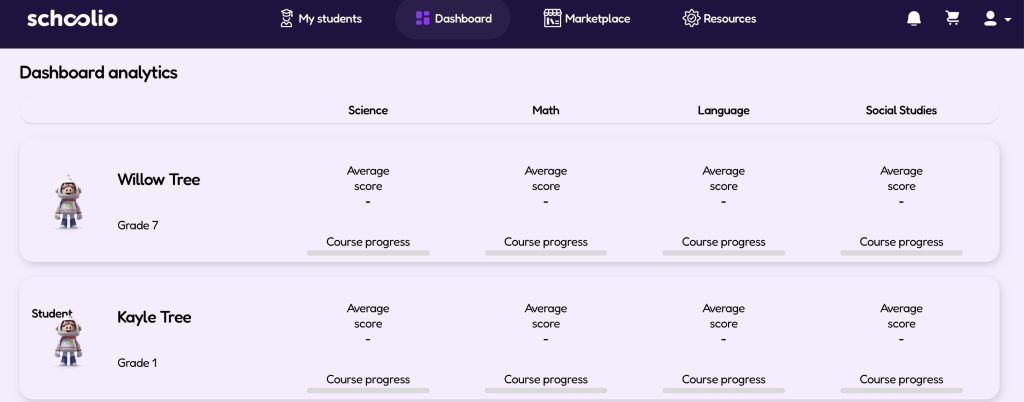
Dashboard Analytics:

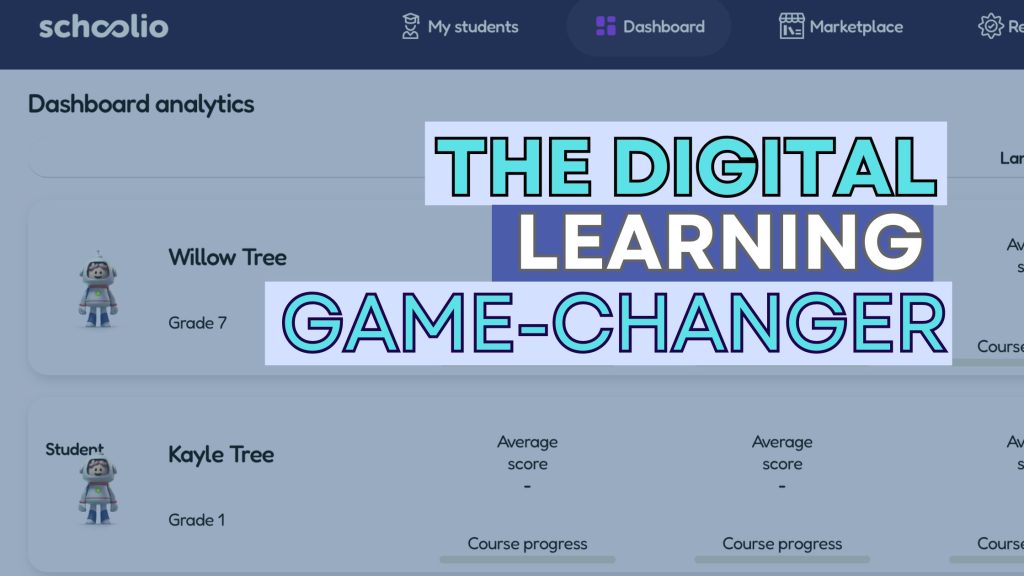
All those digital responses your child does? Don’t worry; they’re being recorded for you, and grades are collected. You’ll be able to see where your child is within a course and how they are doing grade-wise in that course. This dashboard will become more and more robust with our subsequent updates as we keep adding and adding to the platform’s capabilities.
Schoolio Digital Dashboard

PDF Downloads:

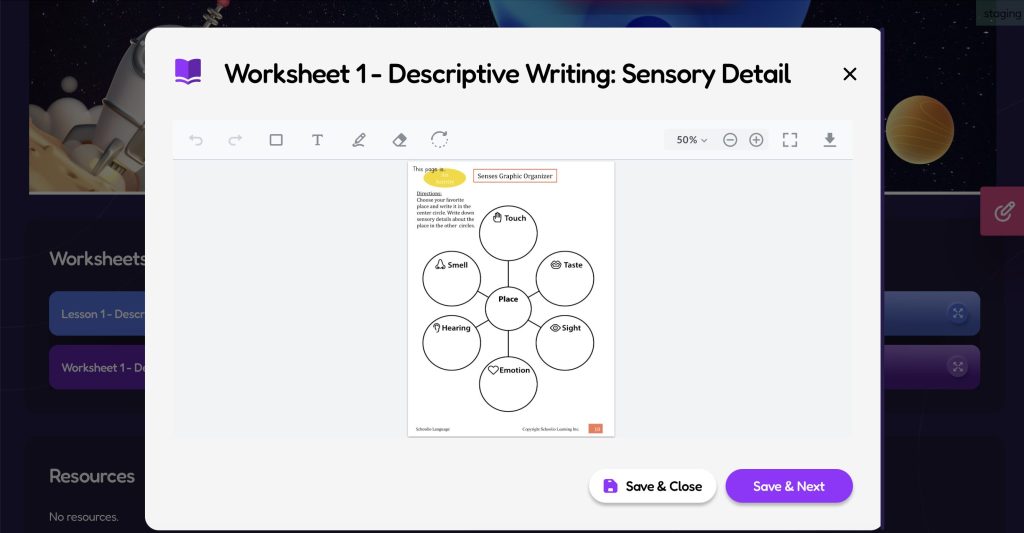
Do you love that the Schoolio platform combines video lessons with printable activity pages to do at home, hands-on and handwritten? You’re not alone! Many customers enjoy this hybrid experience, so don’t worry; the PDF download option for lesson activities isn’t going anywhere!

Schoolio Digital Worksheet

Vibe CheckTM:

What is Vibe CheckTM? It’s what we’re calling the new addition to the Schoolio platform that checks in with your student as they do their daily work, seeing how they are feeling about school. Sure, knowing your child’s academic scores are excellent, and sometimes necessary. But at Schoolio, we genuinely believe there’s more to success than math scores.
How a child feels about learning is vital to their engagement and retention. And how do we know how they feel about learning if we never ask? Vibe CheckTM is in its infancy on the platform right now. We ask your student periodically how they are doing, collect the data, and present it to you on your Parent Dashboard.
Still, the scope and capabilities of this feature will skyrocket in the coming months as we can review the data and make changes and improvements to the content, the platform, and the experience as a whole as a result of the feedback. Imagine a platform that tells you if your child is experiencing math anxiety, the best time to learn grammar for maximum retention, the courses they should try based on their preferences and passions, and even when they need a quick wiggle break! All this will be coming soon from the Schoolio Vibe CheckTM tool.

Content Updates With The Schoolio Digital Update You’ve Been Waiting For:

More:

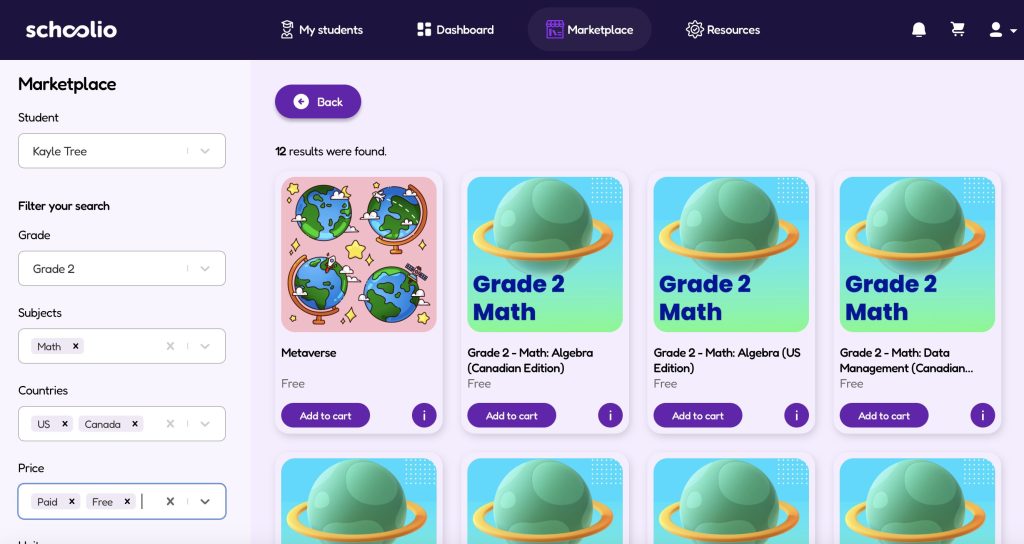
We’ve added even more content to the platform, and you’ll see as soon as you explore the marketplace that the number of courses being offered has expanded. With additional courses, you can create an even more customized and robust program for your child!

Our content still includes all four core subject areas- Math, Science, Language Arts, and Social Studies (history and geography). We’ve added more science and social studies topics to encourage engagement and spark your child’s curiosity. And, in classic Schoolio style, our library will continue to grow as we stay dedicated to offering choice and customization at the heart of our educational design.

Standard (Imperial) & Metric:

We’re also happy to now offer all our courses in both American and Canadian versions. This means our Canadian customers can get their math and science in metric measurements, Financial Literacy in Canadian money, and a library of Canadian history and geography courses!

Mix-and-Match Grade Levels:

As always, Schoolio is dedicated to a custom-fit program for each learner. Your child is unique, and their education should be too! All our courses are split into individual units, allowing you to mix and match grade levels at the strand level. This means instead of choosing a single Math course containing all strands at a single grade level. You can mix and match the strands within Mathematics. Maybe your child struggles with Geometry, but they’re well ahead of the game in Financial Literacy. You aren’t restricted to choosing the same grade level for both strands. All our content is provided in this way to allow you to design the perfect program for your child!

Schoolio Digital Marketplace

Neurodivergent Friendly:

Just as our paper books have been esteemed as a fantastic fit for our neurodivergent learners (autism, ADHD, dyslexia, etc.), so will our online platform. We’ve maintained our bite-sized learning lessons for maximum attention and engagement. Our post-lesson activities continue to give you options for hands-on learning, outdoor exploration, and alternative strategies for all learners to thrive!

Scheduling Updates: 

Timetabling:

Custom scheduling has been one of our forefront features; with this new release, it gets even better. Choosing to school with Schoolio doesn’t mean you’re confined to your schedule or pace. Can you make a custom schedule for each of your students? Of course. Can you schedule an entire course as a repeating event (say, every Monday at 2 pm?) Absolutely! Take a vacation whenever you want- you’re in charge of the schedule and create your timetable, which appears on your parent and student’s dashboard for reference and time management.

Custom Courses:

Did you know you can make custom courses and lessons with Schoolio Digital? You can! What does that mean? It means you can finally have everything you use to school in one place. It means you can create and upload your content right into the platform. You can add that Escape Room you bought from Etsy into your child’s timetable and lesson schedule. You can even add extracurricular, like sports practices or club meetings, to the schedule, or you can add errands and chores to your child’s timetable. This feature is a game-changer!

We Love Feedback!

We are so excited to launch this massive update to the Schoolio Digital platform, and we hope that our current customers love it even more than you already have and that if you haven’t tried it out yet, you’ll come and explore it. Loving a feature? Wishing for a tweak? From course topic suggestions to Parent Dashboard display or any other features, please don’t hesitate to contact Schoolio with your ideas and suggestions! The best part about teaming up with a company committed to customization and in the building phase of the platform is that we can (and want to!) design it to be precisely what you need, so please let us know!