Why Parents Hesitate to Homeschool: Overcoming the 3 Biggest Barriers

TL;DR – Quick Answer:
Why Parents Hesitate to Homeschool: Overcoming the 3 Biggest Barriers offers significant advantages for homeschooling families by prioritizing individual learning styles and flexibility. Our community of over 10,000 Schoolio families demonstrates that a personalized, neurodiversity-affirming approach is the key to academic success and emotional well-being.

Most parents hesitate to homeschool due to three primary barriers: outdated socialization myths, a lack of confidence in their own teaching ability, and the fear of taking full responsibility for academic outcomes. Overcoming these hurdles requires shifting from a ‘lecturer’ role to a ‘facilitator’ role, utilizing open-and-go digital tools, and recognizing that the Schoolio ecosystem—with over 10,000 families already proving its success—provides the community and structure needed to thrive.

The decision to homeschool is one of the most significant shifts a family can make. Yet, for every parent who takes the leap, there are dozens more who stay ‘on the fence,’ paralyzed by a specific set of hesitations. We all want the best for our children, but when you consider going against the grain of traditional schooling, you aren’t just choosing a curriculum; you are navigating a complex web of social stereotypes, personal insecurities, and deeply rooted fears.

Barrier 1: The Socialization Myth

Despite homeschooling being the fastest-growing form of alternative education, it is still often besieged by the ‘socially awkward’ stereotype. Many parents worry their children will miss out on essential life experiences like sports, clubs, or the simple daily interaction with peers.

The reality is that modern homeschooling has evolved into a vibrant, diverse ecosystem. Homeschooled students today aren’t isolated at a kitchen table; they are participating in community service, competitive sports, and specialized extracurricular activities where they connect with peers based on shared interests. Research consistently shows that homeschoolers often perform better socially and academically than their traditionally schooled peers, precisely because their social interactions are based on authentic engagement rather than just age-based proximity.

Barrier 2: The ‘Crisis of Confidence’

Many parents doubt their ability to teach because they don’t remember ‘Pythagorean’s Theorem’ or complex long division. This ‘Crisis of Confidence’ is often a result of the very school system that left the parent feeling inadequate in the first place.

The truth is, you don’t need to be a walking encyclopedia to be an effective educator. In fact, modeling how to *find* an answer is a more valuable life skill than simply *having* one. As a parent, you are the absolute expert on your unique child. You don’t need a specialized degree to understand their learning style, their frustrations, or their passions. By utilizing comprehensive homeschooling programs, you can move from being the ‘lecturer’ to being the ‘supportive coach’—learning alongside your child as they explore our scripted, video-supported lessons.

Barrier 3: The Fear of Responsibility

Homeschooling feels scary because it places parents squarely in the driver’s seat. When a child is in public school, parents often feel that the outcome is the ‘school’s responsibility.’ But the reality is that parents are *always* responsible for their child’s education. If a child falls behind in public school, the burden of tutoring and catch-up work still falls on the family.

Homeschooling allows you to take a proactive rather than reactive stance. It removes the ‘power struggle’ from your relationship and lets you tailor the pace to your child’s specific needs. As Lindsey Casselman often says, the fear of making a mistake is often outweighed by the regret of not trying a path that aligns with your family’s values.

“Homeschooling isn’t about knowing all the answers; it’s about being the person who helps your child discover them. You have taught your child how to walk, talk, and navigate the world—academics are simply the next chapter in the journey you are already leading.” — Lindsey Casselman, Co-Founder of Schoolio

Taking the Leap

It is normal to be nervous. Going against the mainstream is a risk, but staying in an environment that isn’t serving your child is also a risk. The best way to alleviate these fears is to start small, utilize digital learning options that provide a clear roadmap, and remind yourself that no decision is permanent. You can always adjust your path as your child grows.

For further reading on evidence-based educational strategies, explore the research provided by the Child Mind Institute.


Unlocking the Benefits of Online Learning: Why the Schoolio Learning Platform is a Game-Changer

TL;DR – Quick Answer:
Unlocking the Benefits of Online Learning: Why the Schoolio Learning Platform is a Game-Changer offers significant advantages for homeschooling families by prioritizing individual learning styles and flexibility. Our community of over 10,000 Schoolio families demonstrates that a personalized, neurodiversity-affirming approach is the key to academic success and emotional well-being.

The benefits of online learning extend far beyond simple convenience, offering a 40-60% time-saving advantage over traditional classroom settings. By utilizing the Schoolio Digital Learning Platform, families can access personalized Grade 1-8 curriculum, interactive video lessons, and real-time emotional tracking via VibeCheck. Shifting to an online-first model allows homeschooling parents to move from a lecturer role to a supportive coaching role, fostering academic mastery and emotional regulation.

Online learning, often referred to as e-learning, has revolutionized education, providing learners of all ages with a flexible and customizable pathway to success. This transformation is exemplified by the Schoolio Digital Learning Platform, which excels in delivering an exceptional online education experience tailored specifically for the modern homeschooling family. By unlocking the benefits of online learning, parents can move from being the ‘primary lecturer’ to the ‘supportive coach,’ reducing burnout while accelerating their child’s academic growth.

Transitioning to a digital-first homeschooling model isn’t just about moving worksheets to a screen; it’s about leveraging technology to create a more efficient, engaging, and emotionally regulated learning environment. According to a Brandon-Hall Study, online learning typically demands 40-60% less time than traditional classroom learning for the same material, allowing families to reclaim their most valuable resource: time.

1. Flexibility and Extreme Convenience

One of the primary benefits of online learning is the ability to access educational content whenever and wherever suits your family best. With the Schoolio Digital platform, this convenience is taken to the next level. Learners can engage with interactive video lessons, assessments, and digital worksheets on their own terms. This flexibility is a game-changer for families who travel, participate in competitive sports, or simply prefer a non-traditional daily rhythm.

2. Personalized Learning at Scale

Tailoring education to individual needs is crucial in today’s diverse educational landscape. The Schoolio Learning Platform offers a fully customizable experience, ensuring that every student can progress at their own pace and level across Grades 1-8. Whether your child needs to ‘mix-and-match’ grade levels for different subjects or spend extra time mastering a specific concept, the digital platform adapts to their unique neurological wiring.

3. Emotional Intelligence with VibeCheck

Keeping track of a student’s emotional well-being is just as important as monitoring their math scores. Schoolio incorporates ‘VibeCheck,’ a groundbreaking feature that allows parents to gauge a child’s emotional state before, during, and after lessons. This tool helps prevent after-school restraint collapse and ensures that the learning environment remains neurodiversity-affirming and supportive.

4. Captivating Interactive Video Lessons

Passive learning is the enemy of retention, especially for children with ADHD. Schoolio’s interactive video lessons are designed to captivate young minds, turning complex concepts into exciting adventures. These videos provide the ‘external instruction’ needed to remove power struggles between parent and child, as the video becomes the teacher and the parent becomes the cheerleader.

5. Instant Feedback and Mastery-Based Assessments

Traditional grading often leaves students waiting days or weeks to understand their mistakes. Digital learning provides instant feedback. Regular assessments on the Schoolio platform allow students to measure their understanding in real-time, identifying exactly where they need a ‘micro-burst’ of extra help. This mastery-based approach builds the self-efficacy and confidence needed for long-term academic success.

“Online learning isn’t meant to replace the parent; it’s meant to empower them. By removing the burden of lesson prep and instruction, we allow parents to focus on what matters most: the connection and growth of their child.” — Lindsey Casselman, Co-Founder of Schoolio

6. The Best of Both Worlds: Hybrid Digital & Print

While the future of education is online, we recognize the value of offline practice. The Schoolio platform offers printable worksheets that align perfectly with digital video lessons. This hybrid approach ensures a comprehensive learning experience that satisfies both the need for digital interactivity and the tactile benefits of traditional writing and problem-solving.

The Future is Online

The benefits of online learning are vast, making it easier than ever for families to catch up, thrive, and rediscover the joy of education. By choosing a platform that is interactive, customizable, and neurodivergent-friendly, you are setting your child up for success in an increasingly digital world. You can explore our verified reviews archive to see how over 10,000 families are already using Schoolio to transform their homes.

For further reading on evidence-based educational strategies, explore the research provided by the Child Mind Institute.

The First Four Weeks of the Homeschooling Year: A Strategic Reflection Guide

TL;DR – Quick Answer:
The First Four Weeks of the Homeschooling Year: A Strategic Reflection Guide offers significant advantages for homeschooling families by prioritizing individual learning styles and flexibility. Our community of over 10,000 Schoolio families demonstrates that a personalized, neurodiversity-affirming approach is the key to academic success and emotional well-being.

Reflecting on the first four weeks of homeschooling is a vital strategic diagnostic for every family. To ensure a successful year, parents should audit their goals for realism, evaluate curriculum effectiveness, and prioritize parental self-care to prevent burnout. Transitioning from a rigid institutional schedule to a flexible, interest-led rhythm allows for deeper academic engagement and a stronger parent-child connection.

The first four weeks of a new homeschooling year are often a whirlwind of excitement, trial-and-error, and adjusted expectations. Whether you are a veteran educator or recently made the ‘Mid-Year Crisis Pull,’ this initial month is more than just a warm-up; it is a critical diagnostic period. To ensure the next eight months are successful, families must pause and reflect on their progress, systems, and emotional health.

As we complete this foundational first month, it is time to move beyond ‘surviving the week’ and start looking at the long-term sustainability of your homeschool. Reflection isn’t just about looking back; it is about making the strategic pivots necessary to honor your child’s unique learning style and your own mental bandwidth.

1. Setting Strategic Goals and Expectations

The beginning of a new year is the perfect time to audit your vision. Reflect on your initial goals: Were they realistic, or were you trying to replicate an institutional 7-hour school day? Many parents find that they can achieve higher academic outcomes in just two hours of focused, one-on-one instruction. Revisit your academic milestones and personal development goals, ensuring they align with your family’s core values rather than external pressure.

2. Dynamic Curriculum Evaluation

Is your current curriculum serving you, or are you serving it? If you find yourself battling your child over every lesson, the curriculum might be the problem. The first four weeks should reveal if your chosen materials are engaging and neurodiversity-affirming. If they aren’t, remember that you have the authority to pivot. Utilizing all-in-one homeschooling programs can often remove the prep-work burden and power struggles that cause early-year burnout.

3. Time Management and Rhythm

Reflect on the ‘rhythm’ of your day versus a rigid schedule. The most successful homeschooling families often trade strict bells for a predictable flow. Have you found the balance between structured core subjects and unstructured, interest-led exploration? Assess your time management strategies and adjust your schedule to ensure it remains flexible, adaptable, and conducive to deep learning micro-bursts.

4. Assessing Individual Breakthroughs

Take note of the small wins. Has your child gained confidence in a subject they previously feared? Are they becoming more autonomous? Homeschooling allows you to personalize education to a degree that is impossible in a classroom. If your child is struggling, explore alternative resources or learning environments that foster their individual development. Check our digital learning platform for tools that help track this progress in real-time.

5. Prioritizing Parental Self-Care

You cannot pour from an empty cup. Homeschooling is a marathon, not a sprint, and parental burnout is the #1 reason families return to the public system. Reflect on your own well-being over the last 30 days. Have you established boundaries between ‘school’ and ‘home life’? Incorporating self-care into your routine is a strategic necessity, not an indulgence. As Lindsey Casselman often says, a happy, regulated parent is the most valuable educational resource a child has.

“The first month of homeschooling isn’t about perfect execution; it’s about learning the dance between parent and child. If you’re still stepping on each other’s toes, don’t worry—just change the music. Your flexibility is your greatest strength.” — Sathish Bala, CEO of Schoolio

6. Socialization and Community Building

Isolation is a catalyst for burnout. Reflect on your child’s (and your own) socialization opportunities. Are you participating in local co-ops, sports, or specialized extracurricular activities? Community provides perspective and support that makes the homeschooling journey sustainable. If your child is craving more peer interaction, look for interest-led groups that offer authentic engagement.

7. The Learning Environment Audit

Assess the physical and emotional space you have created. Is your ‘classroom’ a place of focus and creativity, or a source of sensory overload? Sometimes a simple change—like moving math to the porch or adding more visual checklists—can radically improve engagement. Ensure that your environment supports your child’s neurological needs, especially if you are homeschooling a child with ADHD or Autism.

8. Communication and Collaboration

Evaluate the ‘teamwork’ aspect of your homeschool. Are you acting as a lecturer or a supportive coach? Open communication and mutual understanding are vital for a healthy learning relationship. Implement regular ‘Check-Ins’ with your child to seek their input on the curriculum and schedule. This collaboration fosters the autonomy and self-efficacy that defines modern homeschooling.

Embracing the Journey

Reflecting on the first four weeks is the best way to ensure a rewarding academic year. By evaluating your goals, systems, and connection, you set a solid foundation for everything to come. Homeschooling is an evolving process, and your ability to adapt is the key to success. Embrace the freedom you’ve reclaimed and enjoy the enrichment that only a tailored education can provide.

For further reading on evidence-based educational strategies, explore the research provided by the Child Mind Institute.

What Self-Care Really Means: A Strategic Guide for Homeschooling Parents

TL;DR – Quick Answer:
What Self-Care Really Means: A Strategic Guide for Homeschooling Parents offers significant advantages for homeschooling families by prioritizing individual learning styles and flexibility. Our community of over 10,000 Schoolio families demonstrates that a personalized, neurodiversity-affirming approach is the key to academic success and emotional well-being.

Self-care for homeschooling parents is a strategic necessity, not an indulgence. To beat the ‘Winter Blahs’ and avoid burnout, families must identify ‘invisible leaks’ like comparison and unrealistic expectations. Shifting from a lecturer to a coaching role, externalizing curriculum with all-in-one digital tools, and finding a supportive community are the three most effective ways to refill your mental cup and build a sustainable homeschooling journey.

You have likely heard the old adage, ‘You cannot pour from an empty cup.’ But in the world of homeschooling—where the ‘cup’ is often drained by 24/7 child-rearing, lesson planning, and household management—this phrase can start to feel like another item on a never-ending to-do list. True self-care isn’t a luxury; it’s a strategic necessity for maintaining the longevity of your homeschooling journey.

For the homeschooling parent, self-care is often misunderstood as an indulgence like a spa day or a quiet glass of wine. While those things are wonderful, they are temporary fixes for a systemic problem. Strategic self-care is about identifying the ‘invisible leaks’ in your energy and building a lifestyle that preserves your identity and mental health, even in the middle of a chaotic school year.

Identifying the ‘Invisible Leaks’ in Your Homeschool Cup

Burnout rarely happens all at once. It happens little by little, through small, daily drains that we often ignore until we reach a breaking point. To reclaim your energy, you first must identify where it is going. Common ‘cup-emptiers’ for homeschooling families include:

– **Setting Unrealistic Expectations:** Trying to replicate a 6-hour institutional school day in a 1-on-1 home environment.

– **The Comparison Trap:** Measuring your ‘behind-the-scenes’ mess against another parent’s highly curated social media feed.

– **Lack of Community:** Attempting to ‘do it all’ without a village, leading to isolation and sensory overload.

– **Overlooking Personal Identity:** Losing the person you were before you became a full-time facilitator of your child’s education.

Step 1: Redefine Self-Care as Systemic Maintenance

If your car is running out of oil, you don’t give it a new paint job; you fix the engine. Similarly, if you are struggling with homeschooling burnout, a bubble bath won’t fix a curriculum that isn’t working. Strategic self-care means choosing an all-in-one curriculum that reduces your prep time from hours to minutes.

When you externalize the teaching through video-supported lessons and scripted guides, you stop being the primary source of all information. This shift allows you to move into the ‘coaching’ role, which is significantly less taxing on your mental bandwidth. By lowering your cognitive load, you are performing an act of self-care that lasts all week, not just for thirty minutes in a tub.

Step 2: The ‘Mid-Year Pivot’ and Deschooling

Many parents reach a state of crisis in February or March—the ‘Winter Blahs.’ If you find yourself in this cycle, the most radical act of self-care you can perform is a ‘Pivot.’ This might mean taking a week off for interest-led learning or entirely changing your approach to a subject that causes daily tears.

Remember: you are the authority in your homeschool. If a plan isn’t working for you or your child, you have the permission to scrap it. Reclaiming your agency as a parent is the ultimate form of self-empowerment.

“Self-care for a homeschooling parent isn’t about escaping your life; it’s about building a life you don’t feel the need to escape from. It starts with setting boundaries around your time and choosing tools that support your sanity as much as your child’s education.” — Lindsey Casselman, Co-Founder of Schoolio

Step 3: Find Your Village

Isolation is a catalyst for burnout. Human beings are built for connection, and homeschooling in a vacuum is a recipe for exhaustion. Whether it is a local co-op, a specialized digital community, or even an active online community, finding other parents who ‘get it’ is essential.

Community provides more than just socialization for your kids; it provides perspective for you. When you hear that other families also struggle with math or that their kitchen table is also covered in science experiments, the weight of the ‘comparison trap’ begins to lift.

Step 4: Prioritize Your ‘Non-Academics’ Self

Who are you outside of being a teacher? Reconnecting with your own hobbies—whether it is reading, gardening, or a professional side-project—is vital. Set a boundary: ‘School ends at 2:00 PM.’ After that, you are allowed to be a person again. This distinction prevents your identity from being entirely consumed by the role of ‘Homeschool Mom’ or ‘Homeschool Dad.’

Refilling the Cup

Homeschooling is a marathon, not a sprint. If you are struggling today, take it as a sign to slow down and audit your systems. Be gentle with yourself, lower your expectations, and remember that a happy, regulated parent is the most valuable educational resource a child can have.

For further reading on evidence-based educational strategies, explore the research provided by the Child Mind Institute.

Struggling With Homeschool: 5 Strategic Steps to Reclaim Peace in Your Home

TL;DR – Quick Answer:
Struggling With Homeschool: 5 Strategic Steps to Reclaim Peace in Your Home offers significant advantages for homeschooling families by prioritizing individual learning styles and flexibility. Our community of over 10,000 Schoolio families demonstrates that a personalized, neurodiversity-affirming approach is the key to academic success and emotional well-being.

Struggling with homeschooling is often a sign of nervous system overwhelm rather than academic failure. To reclaim peace, families should prioritize connection over curriculum, embrace the mandatory deschooling phase, and utilize open-and-go digital tools to remove power struggles. Transitioning to a low-demand, micro-burst learning model allows both parent and child to regulate and rediscover the joy of education.

When you first considered homeschooling, you likely heard the siren song of experienced parents: ‘We finish school in a couple of hours, then the rest of the day is pure exploration and play!’ It sounds like a dream. You envisioned a peaceful kitchen table, a curious child, and a deep, meaningful connection. But the reality for many families—especially those who have recently made the ‘Mid-Year Crisis Pull’—is often far different. Instead of a dream, you find yourself sitting at the dining room table, listening to your child whine about a math worksheet while you battle your own feelings of inadequacy and frustration.

If you find yourself asking, ‘Why did I do this?’ or wondering if your child would be better off back in the public system, you are not alone. Struggling with homeschooling is a universal experience, but it is rarely discussed in the ‘perfect’ world of social media. The good news is that struggle is not a sign of failure; it is a signal that your environment or your expectations need a strategic adjustment.

The Myth of the Perfect Homeschool Day

The first step in overcoming homeschooling struggles is to dismantle the myth of the ‘perfect day.’ Traditional school environments rely on institutional compliance—bells, rows of desks, and the peer pressure of 30 other children doing the same thing. When you bring that model into your home, it inevitably clashes with the messy, complex reality of family life.

You might find yourself longing for the days when you could just put your kid on a bus and let someone else handle the education. This longing is a symptom of burnout, not a lack of love for your child. Acknowledging that homeschooling is hard—and that you are allowed to feel overwhelmed—is the first step toward finding a sustainable path forward. According to research on parental stress from the Child Mind Institute, parental burnout can directly impact a child’s ability to learn, creating a cycle of frustration for everyone involved.

Step 1: Prioritize Connection Over Curriculum

The most common mistake struggling homeschoolers make is trying to push through a lesson when the child (or the parent) is emotionally dysregulated. If you have been stuck on three math problems for an hour, the math is no longer the issue. The issue is a nervous system that has shut down.

In our guide on 12 Principles for Raising and Homeschooling a Child with ADHD, we emphasize the rule of ‘Connection before Correction.’ If your child is struggling, stop the lesson. Put the book away. Go for a walk, have a snack, or just sit together and talk. Rebuilding the safety of your relationship is far more important than finishing a page in a workbook.

Step 2: The Power of the ‘Emergency Day Off’

It is okay to walk away. Many parents feel a self-imposed pressure to stick to a rigid schedule to avoid ‘falling behind.’ But in a home environment, a day spent building Lego, baking a cake, or watching a nature documentary is still a day spent learning. These ‘Emergency Days Off’ are essential for preventing long-term burnout.

When you allow your child to pursue interest-led activities, you are fostering the autonomy that traditional schooling often suppresses. If you find you are needing these days off frequently, it may be time to evaluate if you are in a phase of Deschooling, which is mandatory for any child transitioning out of a high-stress school environment.

“Your tiredness is earned, but it doesn’t have to be permanent. Homeschooling isn’t about replicating the school day; it’s about reclaiming your family’s time. If the curriculum is making you cry, the curriculum is the problem, not you or your child.” — Lindsey Casselman, Co-Founder of Schoolio

Step 3: Model Emotional Regulation

Our children are highly attuned to our energy. If you are approaching the school day with dread and anxiety, they will mirror that back to you. Modeling good behavior doesn’t mean being perfect; it means being honest.

If you lose your patience, acknowledge it. Tell your child, ‘I’m feeling really frustrated right now because this math is hard to explain. I’m going to take five minutes to breathe, and then let’s try again.’ Showing them that adults also struggle with frustration—and have tools to manage it—is one of the most valuable life skills you can teach.

Step 4: Externalize the Teaching

One of the biggest drivers of homeschool struggle is the burden of ‘being the teacher’ for every single subject. If you find that a particular subject (like math or writing) always leads to a fight, it is time to externalize the teaching.

Utilizing a digital platform that provides video lessons and interactive content can remove the ‘power struggle’ from the equation. When a video explains the concept, you move from being the ‘bad guy’ who is forcing the work to the ‘supportive coach’ who is helping them understand the video. You can explore Schoolio’s Academics programs to see how our scripted, video-supported lessons can lower the cognitive load for parents.

Step 5: Simplify Your Setup

Complexity is the enemy of consistency. If your current homeschooling setup requires hours of prep work every Sunday night, you are setting yourself up for exhaustion. Switch to an open-and-go model.

An affordable, all-in-one system ensures that you are covering all the necessary standards without the ‘Sunday night panic.’ You can check our Digital Learning platform to find a digital solution that streamlines your day and lets you focus on your child rather than the logistics.

Finding Your Flow

Change is hard, and the transition to homeschooling is a massive shift for any family. But remember: you are an incredible human being for giving your child this opportunity to learn in a safe, tailored environment. Take it day by day, be gentle with yourself, and don’t be afraid to rewrite the rules until you find a rhythm that brings peace back to your kitchen table.

Time Management for Child Actors: How to Balance Auditions and Academics

TL;DR – Quick Answer:
Time Management for Child Actors: How to Balance Auditions and Academics offers significant advantages for homeschooling families by prioritizing individual learning styles and flexibility. Our community of over 10,000 Schoolio families demonstrates that a personalized, neurodiversity-affirming approach is the key to academic success and emotional well-being.

Time management for child actors requires a strategic shift from rigid classroom hours to a portable, digital-first learning model. By utilizing the Schoolio Digital platform, young performers can achieve academic mastery in 40-60% less time than traditional school, providing the flexibility needed for auditions and on-set commitments. Transitioning to a ‘coach’ model rather than a lecturer role allows parents to support their child’s artistic aspirations without compromising educational standards.

For child actors, the high-stakes balance between auditions, rehearsals, and performance schedules requires more than just talent—it requires professional-grade time management. Traditional school environments often struggle to accommodate the erratic rhythms of the entertainment industry, leading to educational gaps and increased family stress. Transitioning to a digital-first homeschooling model allows young performers to treat their education as a portable asset, ensuring that academic progress continues whether they are in a classroom or on a movie set.

Effective time management for child actors isn’t about fitting school into the ‘gaps’ of an acting career; it is about creating a synergistic partnership between the two. By leveraging the 40-60% time-saving advantage of digital learning, families can achieve high academic standards in just a few hours a day, leaving ample room for auditions, travel, and the intensive study of their craft.

1. Flexibility is the Ultimate Asset

Showbiz doesn’t follow a 9-to-3 schedule. An audition call can come in at any hour, and a shoot might require 10-hour days for weeks at a time. The Schoolio Digital platform provides the extreme flexibility needed for these circumstances. Because the curriculum is accessible from any device, education becomes mobile. A child can complete a math unit in a trailer between scenes or study language arts on a flight to a callback, ensuring that ‘on-set’ time remains productive.

2. Transitioning to the ‘Coach’ Model

Many parents of young performers feel the ‘Crisis of Confidence’ regarding their ability to teach complex subjects while managing their child’s career. By utilizing video-supported homeschooling programs, parents can shift from being the primary lecturer to being the supportive coach. When a professional educator explains the concept via video, the parent is freed to focus on the logistics of the child’s career and emotional well-being, reducing the friction at the kitchen table.

3. Micro-Bursts and Learning Efficiency

The erratic nature of a child actor’s day is perfectly suited for the ‘Micro-Burst’ learning model. Rather than attempting to focus for hours on end, break the academic day into 15-minute high-intensity sessions. This approach honors the neurological need for movement and short feedback loops, which is especially effective for neurodivergent performers. These bursts allow a child to stay ‘warmed up’ academically without the burnout of a traditional school day.

4. Building Self-Efficacy and Discipline

Managing a dual career as a student and a performer builds a unique set of life skills: discipline, resilience, and personal accountability. Homeschooling fosters this self-efficacy by giving students more agency over their schedule. When a child understands that finishing their ‘strands’ early means more time for an acting workshop or a passion project, they develop the internal motivation that defines successful adults. You can explore how other families manage this in our verified reviews archive.

“Homeschooling isn’t just about academics; it’s about reclaiming your family’s time to support your child’s highest aspirations. When we remove the rigid constraints of a classroom, we give young performers the freedom to excel in their art while building a rock-solid educational foundation.” — Sathish Bala, CEO of Schoolio

5. Reclaiming Connection

The journey to stardom can be isolating and high-pressure. Homeschooling ensures that the parent-child connection remains the priority. By choosing tools that reduce the ‘prep-work’ burden, you can spend your time supporting your child’s dreams rather than fighting over homework. Whether you are navigating the ‘Mid-Year Crisis Pull’ or planning a full year on the road, remember that your flexibility is your greatest competitive advantage in the entertainment industry.

For further reading on evidence-based educational strategies, explore the research provided by the Child Mind Institute.

The Role of Outdoor Education in Homeschooling: Nature-Based Learning

TL;DR – Quick Answer:
The Role of Outdoor Education in Homeschooling: Nature-Based Learning provides essential benefits for homeschooling families by offering flexibility, community, and expert-led resources. Our 10,000+ strong Schoolio community proves that personalized learning is the future of education.

The Role of Outdoor Education in Homeschooling: Nature-Based Learning

While traditional classroom settings provide structured learning environments, many parents are turning to homeschooling to personalize their child’s education and foster unique learning experiences. Among the various methodologies within homeschooling, outdoor education, particularly nature-based learning, has emerged as a powerful tool for holistic development. In this blog, we’ll delve into the role of outdoor education in homeschooling, exploring its benefits and strategies for implementation.

Connecting with Nature: The Educational Value

Nature serves as a vast and dynamic classroom, offering countless opportunities for exploration, discovery, and learning. Incorporating outdoor education into homeschooling allows children to engage with the natural world in meaningful ways, fostering a deep connection to their environment. Whether it’s observing wildlife, studying plant life cycles, or exploring geological formations, nature-based learning provides hands-on experiences that stimulate curiosity and critical thinking skills.

By integrating outdoor exploration into different homeschool programs, children can experience a more immersive and engaging learning environment. From the best homeschool programs to popular homeschool programs, outdoor education can enhance any curriculum by providing real-world context and experiential learning opportunities.

Holistic Development: Mind, Body, and Spirit

One of the primary advantages of outdoor education is its ability to support holistic development. Unlike traditional classroom settings that often prioritize academic achievement, nature-based learning nurtures the whole child, addressing physical, emotional, and social well-being. Spending time outdoors encourages physical activity, promotes mental health, and instills a sense of wonder and awe. Moreover, interacting with natural elements cultivates empathy, resilience, and environmental stewardship, fostering a well-rounded individual.

Online learning for kids can also be complemented by outdoor education, offering a balanced approach to homeschooling programs. Incorporating outdoor activities into a full year homeschool curriculum ensures that children receive a comprehensive education that promotes their overall well-being.

Experiential Learning: Lessons from the Outdoors

In the outdoors, learning becomes a multisensory experience, allowing children to engage with their surroundings in immersive ways. Whether it’s conducting science experiments in a local park, practicing math skills through nature scavenger hunts, or honing language arts abilities through creative writing inspired by the natural world, outdoor education offers endless possibilities for experiential learning. By integrating academic concepts with real-world experiences, children develop a deeper understanding of subjects and cultivate a lifelong love of learning.

For families exploring different homeschool programs, nature-based learning can be a valuable addition to any curriculum. By incorporating outdoor education into their homeschooling programs, parents can provide their children with rich and meaningful learning experiences that extend beyond the confines of traditional textbooks and classroom walls.

Fostering Curiosity and Creativity

Nature’s inherent beauty and complexity spark curiosity and ignite creativity in learners of all ages. Outdoor education encourages children to ask questions, explore their surroundings, and seek answers through inquiry-based learning. Whether they’re building forts in the woods, painting landscapes en plein air, or constructing birdhouses from natural materials. Outdoor activities stimulate imagination and problem-solving skills. By embracing the freedom and spontaneity of outdoor exploration, homeschooling families can nurture a spirit of creativity that transcends traditional boundaries.

Integrating outdoor education into homeschooling programs empowers children to become active participants in their own learning journey. By incorporating nature-based learning into different homeschool programs, parents can provide their children with a well-rounded education. One that fosters curiosity, creativity, and a deep appreciation for the natural world.

Practical Tips for Incorporating Outdoor Education

For homeschooling families interested in integrating outdoor education into their curriculum, here are some practical tips to consider:

Plan outdoor excursions: Schedule regular trips to local parks, nature reserves, or botanical gardens. Doing so to explore different ecosystems and engage in hands-on learning activities.

Use nature as a classroom: Take advantage of outdoor spaces for lessons in science, math, art, and literature. Utilize natural materials like rocks, leaves, and shells to facilitate learning experiences.

Encourage free play: Allow children ample time for unstructured outdoor play, which promotes creativity, social skills, and physical development.

Document observations: Keep nature journals or sketchbooks to record observations, document discoveries, and reflect on outdoor experiences.

Embrace seasonal learning: Take advantage of seasonal changes to explore themes such as migration, plant growth cycles, or weather patterns.

Creating a Dynamic and Engaging Educational Experience

Outdoor education plays a crucial role in homeschooling, providing children with enriching experiences that promote holistic development, curiosity, and creativity. By incorporating nature-based learning into different homeschool programs, parents can create dynamic and engaging educational experiences. One that inspires a love of learning and a deep connection to the natural world. Whether as a complement to online learning for kids or as a central component of a full year homeschool curriculum. Outdoor education offers endless opportunities for exploration, discovery, and growth.

For further reading on evidence-based educational strategies, explore the research provided by the Child Mind Institute.

Teaching Kids About Diversity While Traveling

TL;DR – Quick Answer:
Teaching Kids About Diversity While Traveling provides essential benefits for homeschooling families by offering flexibility, community, and expert-led resources. Our 10,000+ strong Schoolio community proves that personalized learning is the future of education.

Teaching Kids About Diversity While Traveling

Exploring Diversity: A Journey in Traveling Education

Traveling with children offers a unique opportunity to teach them about diversity in an experiential and profound way. As families embark on adventures around the globe, they can weave lessons about different cultures, traditions, and perspectives into their journeys. Let’s learn about teachings kids about diversity while traveling and homeschooling. And leveraging resources like Schoolio, an online learning platform, and other remote homeschool programs.

Key Strategies for Teaching Kids About Diversity While Traveling:

1. Cultural Immersion

One of the most enriching aspects of traveling is immersing oneself in different cultures. Encourage your children to embrace local customs, try traditional foods, and participate in cultural events. Whether it’s learning a new language in a foreign land or understanding the significance of rituals and festivals, these experiences foster empathy and appreciation for diversity.

2. Historical Context

Every destination has a rich history that shapes its present-day culture. Use travel as an opportunity to delve into the historical context of each place you visit. Discuss the impact of colonization, wars, and migration on local communities. Through this lens, children can grasp the complexities of identity and how historical events have shaped diverse societies.

3. Global Citizenship

Teach your children the importance of being responsible global citizens. Discuss pressing issues like climate change, poverty, and human rights, and explore how these issues vary across different regions. Engage in activities that promote empathy and activism, such as volunteering at local organizations or participating in community projects.

4. Interactive Learning

Make learning about diversity interactive and engaging for your children. Utilize online resources like interactive maps, educational videos, and virtual museum tours to supplement their learning. Platforms such as Schoolio offer comprehensive education online, allowing children to explore diverse subjects from the comfort of their laptops or tablets.

5. Respect and Empathy

Above all, instill values of respect and empathy in your children. Teach them to appreciate differences and celebrate diversity in all its forms. Encourage open-mindedness and curiosity, and foster a sense of empathy towards people from diverse backgrounds. By modelling inclusive behaviour and encouraging meaningful interactions, you can nurture a generation of compassionate global citizens.

A Unique Opportunity to Educate Children

Homeschooling while traveling provides a unique opportunity to educate children about diversity in a holistic and immersive way. By incorporating lessons on culture, history, and global citizenship into your travels, you can instill valuable values and perspectives in your children. Leveraging resources like Schoolio and other remote homeschool programs enhances the learning experience, offering comprehensive education online. Together, let’s embark on a journey of exploration and understanding, one that celebrates the rich tapestry of humanity.

For further reading on evidence-based educational strategies, explore the research provided by the Child Mind Institute.
Justice Sensitivity in Autistic Kids: When “That’s Not Fair” Isn’t Just a Phase

Justice Sensitivity in Autistic Kids: When “That’s Not Fair” Isn’t Just a Phase

Have you ever watched your child completely unravel over something that seems… small?

A rule that wasn’t followed.

A sibling getting away with something.

A teacher enforcing something inconsistently.

A character in a book being treated unfairly.

And suddenly your child is in tears.

Or arguing intensely.

Or refusing to move on.

And you find yourself thinking:

Why can’t they just let this go?

If your child is autistic, there’s a good chance you’re not dealing with stubbornness.

You’re seeing justice sensitivity.


What Is Justice Sensitivity?

Justice sensitivity is a heightened emotional and cognitive response to perceived unfairness.

For some autistic kids, fairness isn’t a preference.

It’s a core organizing principle.

Their brains often process rules and systems in very black-and-white ways. If the rule is the rule, then it should apply consistently. If something is wrong, it is wrong. Not “kind of.” Not “depending on context.”

And when that structure breaks?

It can feel destabilizing.

This isn’t just moral passion.

It’s neurological discomfort.


Why It’s So Intense

Autistic brains often seek predictability.

Rules create predictability.

Fairness creates predictability.

When something violates fairness, it can feel like the entire structure shifts.

A sibling breaks a rule and nothing happens?

A teacher disciplines one student but not another?

A parent changes a plan without explanation?

To a justice-sensitive child, that doesn’t feel minor.

It feels unsafe.

And when something feels unsafe, the nervous system reacts.

Sometimes that looks like arguing.

Sometimes it looks like crying.

Sometimes it looks like refusing to participate at all.

But underneath it is usually distress.


Is This Only an Autism Thing?

Justice sensitivity is especially common and intense in autistic individuals, partly because of:

  • strong rule orientation
  • black-and-white processing
  • deep moral reasoning
  • difficulty tolerating inconsistency

That said, ADHDers can experience it too — often layered with rejection-sensitive dysphoria or emotional intensity.

But when you see a child who cannot move past perceived unfairness, who perseverates on it, who feels it in their body for hours?

That’s often a very autistic profile.


What It Looks Like at Home

Justice sensitivity can show up as:

Relentless “That’s not fair!”

Correcting others constantly.

Getting deeply upset about rule-breaking.

Struggling when siblings are treated differently (even if developmentally appropriate).

Arguing about wording or technicalities.

Emotional reactions to injustices in books or shows.

And here’s something important:

Many justice-sensitive kids aren’t just upset when they’re treated unfairly.

They’re upset when anyone is.

They may cry over news stories.

Over fictional characters.

Over classmates.

Their empathy can be enormous.

But it can also be overwhelming.


Why “Life Isn’t Fair” Doesn’t Help

It’s tempting to respond with:

“Well, life isn’t fair.”

But that statement doesn’t regulate a nervous system.

It often escalates it.

Because to a justice-sensitive child, fairness isn’t optional.

It’s foundational.

Dismissing the feeling can make them feel unheard — and that compounds the distress.

Validation doesn’t mean agreeing.

It means acknowledging.

“I can see why that feels unfair to you.”

“That makes sense that you’d be upset about that.”

That simple step lowers intensity dramatically.


The Hard Part: When They’re Technically Right

Sometimes your child is correct.

It was inconsistent.

It was unfair.

You did treat siblings differently.

The rule did change.

And this is where growth happens.

Instead of defending immediately, we can model repair.

“You’re right. That wasn’t consistent. Let me think about that.”

That teaches flexibility without dismissing principle.

Another one I liked teaching my own kids, and the kids I taught in classrooms is this: “Fair doesn’t mean everyone gets the same, fair means everyone gets what they need to succeed.” This teaches our kids that rules aren’t always black and white, and to be empathetic when others need support or accommodations. This will be important as they get older too and need to self-advocate for their own needs as autistic people in the world.


Teaching Nuance Without Breaking Them

Justice-sensitive kids don’t need their sense of fairness erased.

It’s often a strength.

They grow into adults who:

  • advocate
  • protect others
  • notice inequity
  • care deeply about ethics

But they do need help tolerating imperfection.

That looks like:

Explaining context.

Teaching developmental differences.

Helping them see intention vs outcome.

Practicing flexibility in low-stakes situations.

Building emotional regulation tools for when unfairness happens.

Not forcing them to stop caring.

Helping them care sustainably.


The Bigger Reframe

If your autistic child melts down over fairness, it doesn’t mean they’re dramatic.

It means they care deeply.

And sometimes, deeply caring in a world that is inconsistent is exhausting.

Justice sensitivity isn’t something to squash.

It’s something to guide.

When you validate the feeling but gently expand perspective, you’re not weakening their moral compass.

You’re helping them carry it without it crushing them.

Priming: Helping Your Neurodivergent Child Handle Something New (Without Meltdowns)

Priming: Helping Your Neurodivergent Child Handle Something New (Without Meltdowns)


Have you ever sprung something “small” on your child and watched it become very not small?

“By the way, we’re stopping at the store after this.”

“Surprise! Grandma’s coming over.”

“Actually, your lesson is different today.”

And suddenly the reaction feels disproportionate.

Tears.

Anger.

Shutting down.

Refusal.

From the outside, it looks like overreacting.

From the inside, it’s usually nervous system shock.

This is where priming becomes one of the most powerful tools you can use as a parent of a neurodivergent child.


What Is Priming?

Priming is simply preparing your child in advance for something new, different, or potentially challenging.

It means giving their brain time to adjust before the experience happens.

Not in the moment.

Not while they’re already overwhelmed.

Before.

Priming might sound like:

“Tomorrow we’re going to the dentist. It will be bright and loud, but it will be quick.”

“After lunch, we’re trying a new math game. It’s different than what we usually do.”

“In five minutes, we’re going to leave the park.”

It’s not lecturing.

It’s previewing.

And for neurodivergent kids, previewing can make the difference between flexibility and collapse.


Why Neurodivergent Kids Struggle With Sudden Change

Many ADHD and autistic kids don’t transition easily — not because they’re stubborn, but because their brains need time to shift gears.

Autistic nervous systems often rely on predictability for safety. Sudden change feels like instability.

ADHD brains can struggle with task-switching and cognitive flexibility. A surprise transition requires executive function energy they may not have readily available.

Add in anxiety, sensory sensitivity, or PDA tendencies, and a small shift can feel like a loss of control.

When something unexpected happens, the brain can interpret it as threat.

And when the brain senses threat, it moves into fight, flight, freeze, or fawn.

Priming reduces the threat response by increasing predictability.

Predictability equals safety.


What Priming Actually Does in the Brain

When you prime a child, you’re giving their nervous system time to rehearse.

Their brain gets to:

Picture it.

Ask questions.

Process sensory expectations.

Adjust emotionally.

Grieve the previous plan if needed.

Without priming, the brain has to do all of that in real time.

And real-time processing under stress is much harder.

Priming stretches that processing window out.

It turns shock into preparation.


Priming Is Not Over-Explaining

This is important.

Priming is not giving your child a 30-minute speech about everything that could possibly happen.

It’s not catastrophizing.

It’s not overwhelming them with detail.

It’s simply giving enough information so the change doesn’t feel like an ambush.

For some kids, that might mean telling them the day before.

For others, it might mean 10 minutes’ notice.

For some, visual schedules help.

For others, walking through it verbally is enough.

The key question is:

“How much time does my child need to emotionally adjust?”


Priming and Anxiety

If your child tends to worry, you might fear that priming will make anxiety worse.

Sometimes it can — if the information is delivered in a way that feels heavy or loaded.

But when done gently, priming usually lowers anxiety.

It says:

“There will be something different.”

“You won’t be surprised.”

“I will help you through it.”

It builds trust.

And over time, that trust increases flexibility.


Priming in Homeschool Life

Homeschooling gives you a unique advantage here.

You can prime before:

  • starting a new unit
  • introducing a harder subject
  • changing routines
  • inviting people over
  • trying a new extracurricular
  • shifting wake-up times
  • traveling
  • even taking a rest week

Instead of:

“Surprise! We’re doing something different.”

You can say:

“Next week, we’re going to try something new. Let’s talk about what that might look like.”

That one sentence can prevent days of dysregulation.


What Priming Is Not

Priming is not giving your child control over whether something happens.

It’s giving them emotional preparation for when it does.

It doesn’t mean avoiding hard things.

It means supporting the nervous system through them.

It doesn’t mean your child will never react.

It means the reaction may be smaller.

And sometimes that’s the win.


When Priming Is Especially Important

Priming is especially powerful for:

  • kids with PDA profiles
  • kids with high anxiety
  • kids who struggle with interoception
  • kids who need routine for regulation
  • kids who tend to meltdown at transitions

If your child frequently says, “You didn’t tell me!” or “I wasn’t ready!” — priming might be the missing piece.


The Bigger Picture

At its core, priming communicates something very simple:

“I respect your nervous system.”

It tells your child that change isn’t something done to them without warning.

It tells them you’re not trying to catch them off guard.

And that builds safety.

Safety builds flexibility.

Flexibility builds resilience.

And resilience is what we’re actually aiming for — not compliance.

Neurodivergent Burnout in Kids: When the Cycle Comes Around Again

Neurodivergent Burnout in Kids: When the Cycle Comes Around Again


Do you ever notice a rhythm with your neurodivergent child?

I do.

About every six weeks — almost on cue — one of my autistic kids falls apart.

Not in a dramatic, explosive way.

In a quiet unraveling.

Tears they can’t explain.

Sleeping in my bed again.

Sleeping a lot.

Periods of going non-verbal.

Sensory tolerance dropping.

Everything suddenly feeling “too much.”

And around that same time, my ADHD child crashes too — but it looks completely different.

His room becomes unmanageable.

Schoolwork that was moving along suddenly stalls.

Routines unravel.

Motivation disappears.

Same timing.

Different presentation.

For a while, I wondered: Is this just my kids?

It turns out, no.

This is something many parents of neurodivergent kids quietly observe.


What Is Neurodivergent Burnout?

Burnout isn’t laziness.

It isn’t regression.

It isn’t defiance.

Burnout is nervous system exhaustion.

Neurodivergent kids use more energy than we often realize.

They work harder to:

  • manage sensory input
  • regulate emotions
  • navigate social expectations
  • initiate tasks
  • transition between activities
  • maintain routines
  • suppress stims
  • meet standards that weren’t designed for their brains

They can do it.

Until they can’t.

Burnout is what happens when output has exceeded capacity for too long.

And here’s what’s important:

This isn’t about homeschooling causing burnout.

This happens in public school too.

It happens in summer camps.

It happens in extracurricular seasons.

It happens during growth spurts and life transitions.

It’s not about where they learn.

It’s about how much energy their nervous system has been spending.


Why It Can Feel Cyclical

Many parents describe a pattern.

Four weeks.

Six weeks.

A school term.

A busy season.

It’s not that autistic or ADHD brains have a biological timer set to crash every 42 days.

It’s that effort accumulates.

Novelty fades.

Demands compound.

Sleep drifts slightly off.

Sensory load builds.

Emotional labor increases.

Neurodivergent kids often don’t feel the early signs of fatigue clearly — especially if they have interoceptive differences. They don’t always sense “I’m getting overwhelmed” until they are already there.

So they push.

And then something small tips the scale.

A math worksheet.

A sibling conflict.

A minor change in routine.

And it looks sudden.

But it was building.


Autistic Burnout vs ADHD Burnout

One reason burnout can feel confusing is that it doesn’t look the same in every child.

In autistic kids, burnout often looks like withdrawal.

Increased meltdowns or shutdowns.

More sensory sensitivity.

Needing more sleep.

Loss of words.

Reduced tolerance for social interaction.

Skill regression.

Autistic burnout tends to say, “I can’t.”

The nervous system is conserving energy.

ADHD burnout often looks more external.

Irritability.

Apathy.

Avoidance.

Impulsivity increasing.

Routines collapsing.

Motivation evaporating.

ADHD burnout often sounds like, “I don’t care.”

But underneath it is usually, “I don’t have the fuel.”

ADHD brains run heavily on dopamine. Sustained executive effort without enough reward can drain that system. When the dopamine well runs low, even things they normally enjoy can feel flat.

If your child is both autistic and ADHD, you may see both patterns layered together.

That can feel especially overwhelming as a parent.


It’s Not Regression. It’s Recovery Demanded.

Burnout can look like regression.

But often it’s a nervous system demanding recovery.

The tears that “don’t make sense.”

The need to sleep beside you again.

The messy room.

The missing assignments.

Those aren’t moral failings.

They’re signals.

And they don’t respond well to pressure.

Pushing harder during burnout usually deepens it.

What helps is tapering.

Reducing output.

Lowering expectations temporarily.

Increasing rest.

Adding sensory safety.

Prioritizing connection over correction.

Not forever.

Just long enough for the nervous system to reset.


The Homeschool Reframe

If anything, homeschooling gives you the flexibility to respond.

Instead of labeling a child as disruptive, behind, or unmotivated, you can say:

“I see the pattern.”

You can lighten the week.

Shift to audiobooks.

Move lessons outside.

Build instead of write.

Pause instead of push.

That’s not giving up.

That’s respecting capacity.

Burnout doesn’t mean your child can’t learn.

It means they’ve been working hard.

Often harder than we realized.


If You’re Seeing the Cycle

If you’re reading this and thinking, “Yes. This. Every few weeks,” you are not alone.

It’s not just your child.

It’s not bad parenting.

It’s not fragility.

It’s a nervous system rhythm.

The goal isn’t to eliminate the rhythm entirely.

It’s to start recognizing it earlier.

To build in rest before collapse.

To shift from:

Push → Crash → Panic

to

Build → Taper → Rest → Reset

Because when recovery becomes intentional instead of forced, the crashes get smaller.

And your child doesn’t have to fall quite so far.

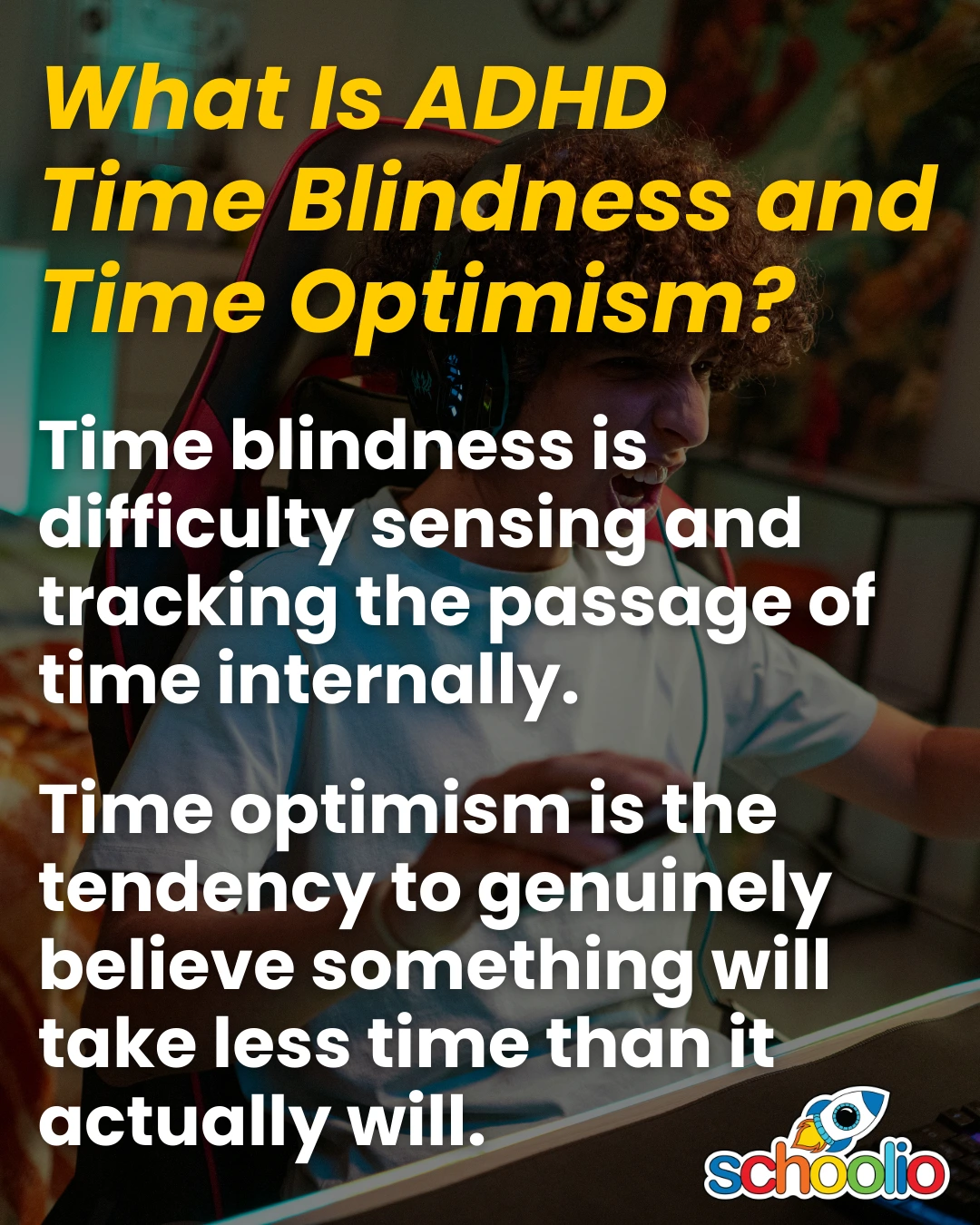
What Is Time Blindness and Time Optimism? (And Why Your ADHD Child Isn’t “Late on Purpose”)

What Is Time Blindness and Time Optimism? (And Why Your ADHD Child Isn’t “Late on Purpose”)

Have you ever said:
“We’re leaving in ten minutes.”
And your child hears it… nods… and then somehow starts a brand new LEGO build?
Or you ask how long their math will take and they confidently say, “Five minutes,” and forty-five minutes later they’re still halfway through?
Or they’re shocked — genuinely shocked — that it’s already bedtime?
That’s not laziness.
That’s not defiance.
That’s very often time blindness.
What Is Time Blindness?
Time blindness is the difficulty sensing and tracking the passage of time internally.
For many ADHDers, time does not feel linear.
It feels like:
Now
Not Now
That’s it.
Five minutes and fifty minutes can feel almost identical without external cues.
An hour can disappear in hyperfocus.
Ten minutes can feel unbearably long when doing something boring.
Time blindness is tied to executive functioning and working memory — both of which are heavily impacted in ADHD brains.
If working memory is the “mental sticky note” that keeps track of what you’re doing and how long you’ve been doing it, ADHD brains often have much weaker glue.
So the brain loses track.
Not because they don’t care.
Because they can’t feel it.
What Is Time Optimism?
Time optimism is the cheerful cousin of time blindness.
It’s the tendency to genuinely believe something will take less time than it actually will.
“I’ll clean my room in 10 minutes.”
“I can finish this before dinner.”
“I have tons of time.”
It’s not lying.
It’s not manipulation.
It’s an executive projection issue.
ADHD brains often struggle with future simulation — accurately picturing how long tasks require.
Add in dopamine-driven motivation (which rises when something is exciting and plummets when it’s not), and you get wildly inaccurate time estimates.
If the task feels easy in their head, they assume it will be quick.
The brain isn’t calculating past experience consistently.
It’s guessing.
Optimistically.
Is This Just an ADHD Thing?
Time blindness and time optimism are most strongly associated with ADHD because they’re rooted in executive function and dopamine regulation.
That said, autistic kids can also struggle with time — but usually for different reasons.
An autistic child may:
  • hyperfocus and lose track of time
  • struggle with transitions
  • feel distress when routines shift
  • have difficulty estimating task-switching effort

But their experience of time is often more about rigidity or deep focus than about an internal inability to sense its passing.

In ADHD, time itself feels slippery.
In autism, time may feel predictable but transitions feel destabilizing.
If your child is both ADHD and autistic, you may see both patterns layered together.
What Time Blindness Looks Like at Home
It can look like:
  • Chronic lateness — even when they’re trying.
  • Starting huge projects right before leaving the house.
  • Being confused about how long homework takes.
  • Struggling to pace themselves.
  • Forgetting how much time has already passed.
  • Underestimating transitions.
And here’s the hard part:
To the outside world, this looks like irresponsibility.
To the ADHD brain, it feels like confusion.
Why Punishment Doesn’t Fix It
If a child could “try harder” to feel time, they would.
Time blindness isn’t solved by:
  • scolding
  • shame
  • “you need to be more responsible”
  • taking away privileges

Because the issue isn’t motivation.

It’s perception.
You wouldn’t punish a child for being near-sighted.
Time blindness is similar — except it’s temporal.
What Actually Helps
Externalizing time.
ADHD brains often need time to be visible and tangible.
  • Timers.
  • Visual clocks.
  • Countdowns.
  • Written schedules.
  • Auditory reminders.
  • Chunking tasks with defined breaks.
Instead of saying, “We’re leaving soon,” try:
“We’re leaving in 15 minutes. I’m setting a 10-minute timer, and then a 5-minute warning.”
Instead of, “How long will that take?” try:
“Last time this took 40 minutes. Let’s plan for that.”
Instead of assuming they’re careless, assume they’re time-blind.
That shift changes your tone immediately.
The Bigger Picture
Time blindness and time optimism don’t mean your child is unreliable.
They mean their brain doesn’t automatically track duration the way neurotypical brains do.
And when we stop treating it like a character flaw and start treating it like a neurological difference, something softens.
We move from: “Why are you like this?”
To: “How can we support this?”
That’s where real change starts.
? Lindsey
certified special-ed educator, homeschool mom, & co-founder of Schoolio