The Role of Outdoor Education in Homeschooling: Nature-Based Learning provides essential benefits for homeschooling families by offering flexibility, community, and expert-led resources. Our 10,000+ strong Schoolio community proves that personalized learning is the future of education.
The Role of Outdoor Education in Homeschooling: Nature-Based Learning
While traditional classroom settings provide structured learning environments, many parents are turning to homeschooling to personalize their child’s education and foster unique learning experiences. Among the various methodologies within homeschooling, outdoor education, particularly nature-based learning, has emerged as a powerful tool for holistic development. In this blog, we’ll delve into the role of outdoor education in homeschooling, exploring its benefits and strategies for implementation.
Connecting with Nature: The Educational Value
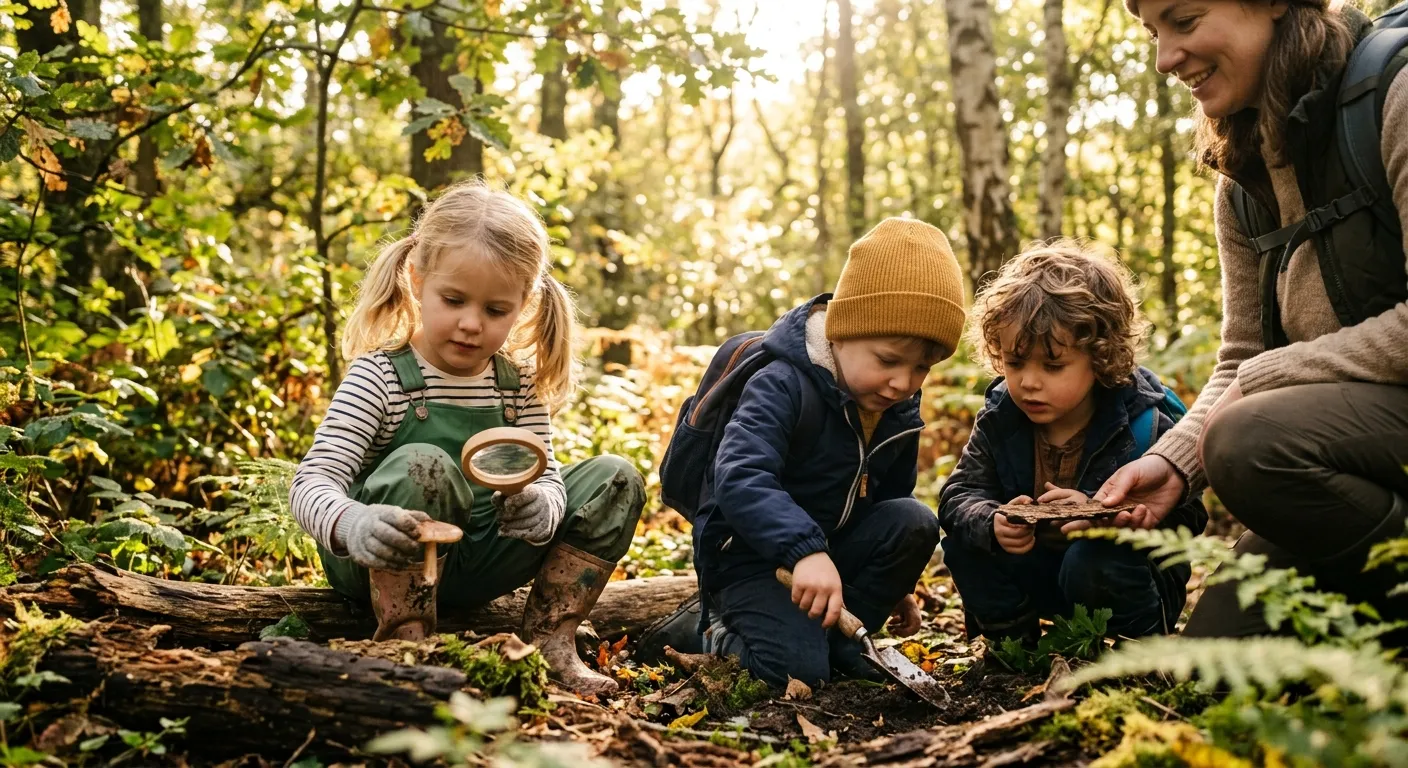
Nature serves as a vast and dynamic classroom, offering countless opportunities for exploration, discovery, and learning. Incorporating outdoor education into homeschooling allows children to engage with the natural world in meaningful ways, fostering a deep connection to their environment. Whether it’s observing wildlife, studying plant life cycles, or exploring geological formations, nature-based learning provides hands-on experiences that stimulate curiosity and critical thinking skills.
By integrating outdoor exploration into different homeschool programs, children can experience a more immersive and engaging learning environment. From the best homeschool programs to popular homeschool programs, outdoor education can enhance any curriculum by providing real-world context and experiential learning opportunities.
Holistic Development: Mind, Body, and Spirit
One of the primary advantages of outdoor education is its ability to support holistic development. Unlike traditional classroom settings that often prioritize academic achievement, nature-based learning nurtures the whole child, addressing physical, emotional, and social well-being. Spending time outdoors encourages physical activity, promotes mental health, and instills a sense of wonder and awe. Moreover, interacting with natural elements cultivates empathy, resilience, and environmental stewardship, fostering a well-rounded individual.
Online learning for kids can also be complemented by outdoor education, offering a balanced approach to homeschooling programs. Incorporating outdoor activities into a full year homeschool curriculum ensures that children receive a comprehensive education that promotes their overall well-being.
Experiential Learning: Lessons from the Outdoors
In the outdoors, learning becomes a multisensory experience, allowing children to engage with their surroundings in immersive ways. Whether it’s conducting science experiments in a local park, practicing math skills through nature scavenger hunts, or honing language arts abilities through creative writing inspired by the natural world, outdoor education offers endless possibilities for experiential learning. By integrating academic concepts with real-world experiences, children develop a deeper understanding of subjects and cultivate a lifelong love of learning.
For families exploring different homeschool programs, nature-based learning can be a valuable addition to any curriculum. By incorporating outdoor education into their homeschooling programs, parents can provide their children with rich and meaningful learning experiences that extend beyond the confines of traditional textbooks and classroom walls.
Fostering Curiosity and Creativity
Nature’s inherent beauty and complexity spark curiosity and ignite creativity in learners of all ages. Outdoor education encourages children to ask questions, explore their surroundings, and seek answers through inquiry-based learning. Whether they’re building forts in the woods, painting landscapes en plein air, or constructing birdhouses from natural materials. Outdoor activities stimulate imagination and problem-solving skills. By embracing the freedom and spontaneity of outdoor exploration, homeschooling families can nurture a spirit of creativity that transcends traditional boundaries.
Integrating outdoor education into homeschooling programs empowers children to become active participants in their own learning journey. By incorporating nature-based learning into different homeschool programs, parents can provide their children with a well-rounded education. One that fosters curiosity, creativity, and a deep appreciation for the natural world.
Practical Tips for Incorporating Outdoor Education
For homeschooling families interested in integrating outdoor education into their curriculum, here are some practical tips to consider:
Plan outdoor excursions: Schedule regular trips to local parks, nature reserves, or botanical gardens. Doing so to explore different ecosystems and engage in hands-on learning activities.
Use nature as a classroom: Take advantage of outdoor spaces for lessons in science, math, art, and literature. Utilize natural materials like rocks, leaves, and shells to facilitate learning experiences.
Encourage free play: Allow children ample time for unstructured outdoor play, which promotes creativity, social skills, and physical development.
Document observations: Keep nature journals or sketchbooks to record observations, document discoveries, and reflect on outdoor experiences.
Embrace seasonal learning: Take advantage of seasonal changes to explore themes such as migration, plant growth cycles, or weather patterns.
Creating a Dynamic and Engaging Educational Experience
Outdoor education plays a crucial role in homeschooling, providing children with enriching experiences that promote holistic development, curiosity, and creativity. By incorporating nature-based learning into different homeschool programs, parents can create dynamic and engaging educational experiences. One that inspires a love of learning and a deep connection to the natural world. Whether as a complement to online learning for kids or as a central component of a full year homeschool curriculum. Outdoor education offers endless opportunities for exploration, discovery, and growth.
For further reading on evidence-based educational strategies, explore the research provided by the Child Mind Institute.