Understanding ADHD Motivation in Kids: It’s Not Broken, Just Different

Understanding ADHD Motivation in Kids: It’s Not Broken, Just Different


“You just need to try harder.”
“If you’d only apply yourself.”
“You’d do it if you really wanted to.”

Sound familiar? If you’re raising or homeschooling an ADHD child, you’ve probably heard these words directed at them—or even caught yourself thinking them in moments of frustration. Unfortunately, our kids hear this kind of messaging a lot. In fact, research estimates that by age 12, ADHD children have heard around 20,000 more negative comments than their neurotypical peers.

That steady stream of criticism teaches ADHD kids that they’re lazy, unmotivated, or difficult. But here’s the truth: your child’s motivation isn’t broken. Their brain simply runs on a different operating system, and understanding how it works is the first step to helping them thrive.

How Motivation Works Differently in ADHD Brains

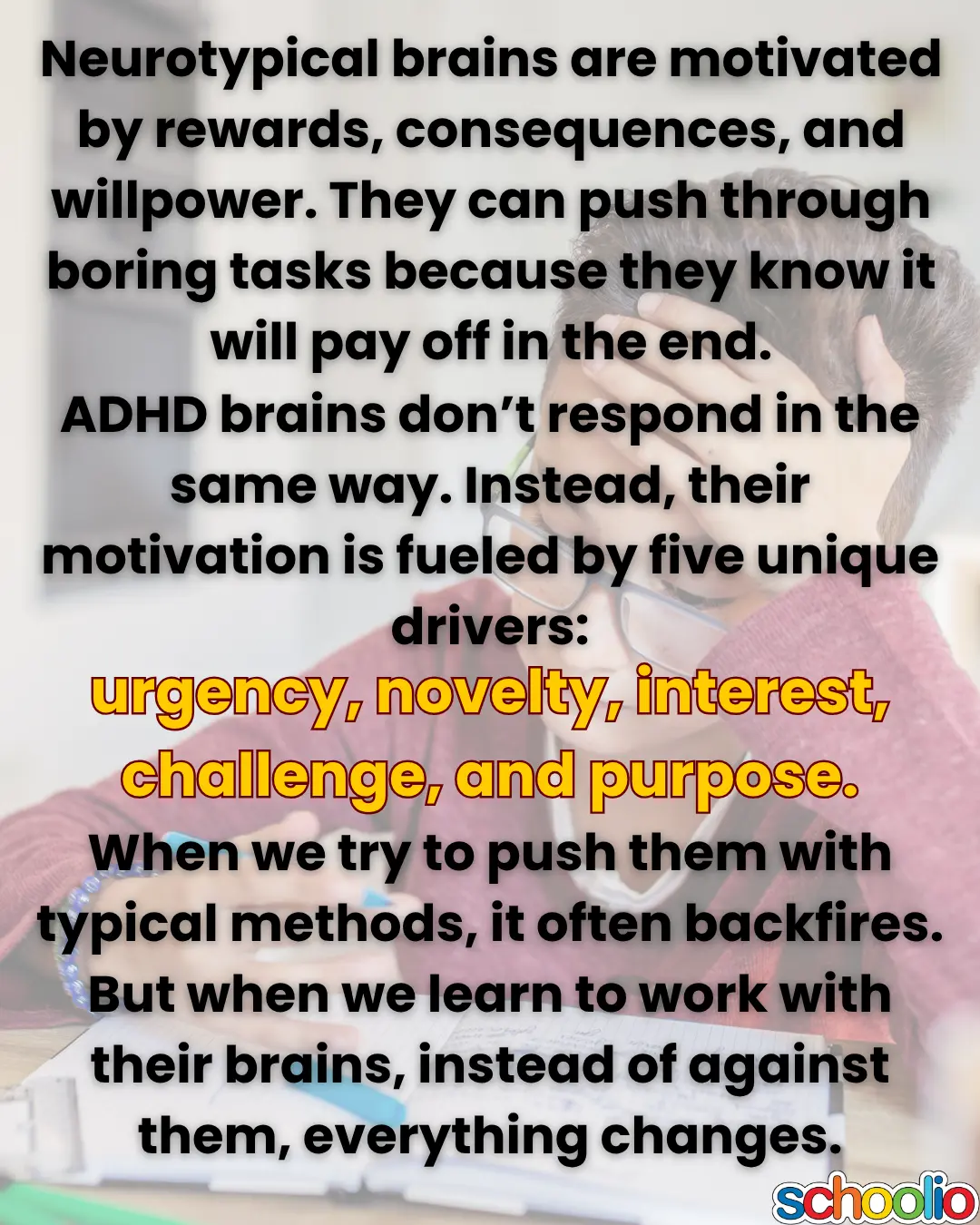
Neurotypical brains are generally motivated by rewards, consequences, and willpower. They can push through boring tasks because they know it will pay off in the end.

ADHD brains don’t respond to those motivators in the same way. Instead, their motivation is fueled by five unique drivers: urgency, novelty, interest, challenge, and purpose. When we try to push them with typical methods, it often backfires. But when we learn to work with their motivators, instead of against them, everything changes.

The 5 Key Motivators in ADHD Kids

1. Urgency

Ever notice your child suddenly works like a whirlwind right before a deadline—but can’t start two weeks earlier? That’s urgency at play. Their brain doesn’t register “later” as important—it needs “right now” to kick into gear.

How parents can help:

  • Break big tasks into smaller steps with shorter deadlines.

  • Use timers—turn chores into races.

  • Try body-doubling: sit beside them while you each work on something.

2. Novelty

ADHD kids thrive on newness. A new book, a new game, a new learning method? Instant focus. But once the shine wears off, their interest crashes. This isn’t stubbornness—it’s brain chemistry.

How parents can help:

  • Introduce small changes to routines (a new pen, studying in a new spot).

  • Rotate activities instead of relying on the same approach every day.

  • Lean into their love of trying new things—then build learning around it.

3. Interest

Have you ever been amazed at how your child can remember every detail of their favorite video game, but can’t recall what you just asked them to do? ADHD brains run on an interest-based nervous system. When they care, they can focus like a laser. When they don’t, it feels impossible to start.

How parents can help:

  • Connect “boring” tasks to your child’s passions.

    • Hate writing? Turn the essay into a comic strip or YouTube script.

    • Math struggles? Frame problems as Pokémon stats or Minecraft builds.

  • Let them dive deep into special interests—it strengthens focus muscles.

4. Challenge

Too easy = boring. Too hard = overwhelming. ADHD brains need the sweet spot in between, where a task feels like a puzzle to solve.

How parents can help:

  • Turn chores into challenges (“Can you beat yesterday’s cleanup time?”).

  • Use levels or point systems like a game.

  • Encourage self-competition, not competition with siblings or peers.

5. Purpose

Above all, ADHD kids need to know why they’re doing something. “Because I said so” rarely works. If a task feels meaningful, they can stick with it. If not, motivation evaporates.

How parents can help:

  • Reframe chores: cleaning a room = having a calmer, less stressful space.

  • Link schoolwork to goals they care about (Spanish = talking with new friends, watching shows without subtitles).

  • Talk about long-term benefits in a way that feels personal, not abstract.

Helping Your Child Feel Seen

When ADHD kids don’t respond to “normal” motivators, it’s not laziness—it’s wiring. And when they hear constant negative messages, it chips away at their confidence. But as a parent, you can flip the script.

By working with your child’s unique motivators—urgency, novelty, interest, challenge, and purpose—you’re not just helping them get through daily tasks. You’re teaching them how their brain works, building self-awareness, and showing them that their differences aren’t deficits.

Your child doesn’t need to “try harder.” They need to try differently—and they need adults who understand how to guide them there.

When Learning Becomes Theirs

When Learning Becomes Theirs


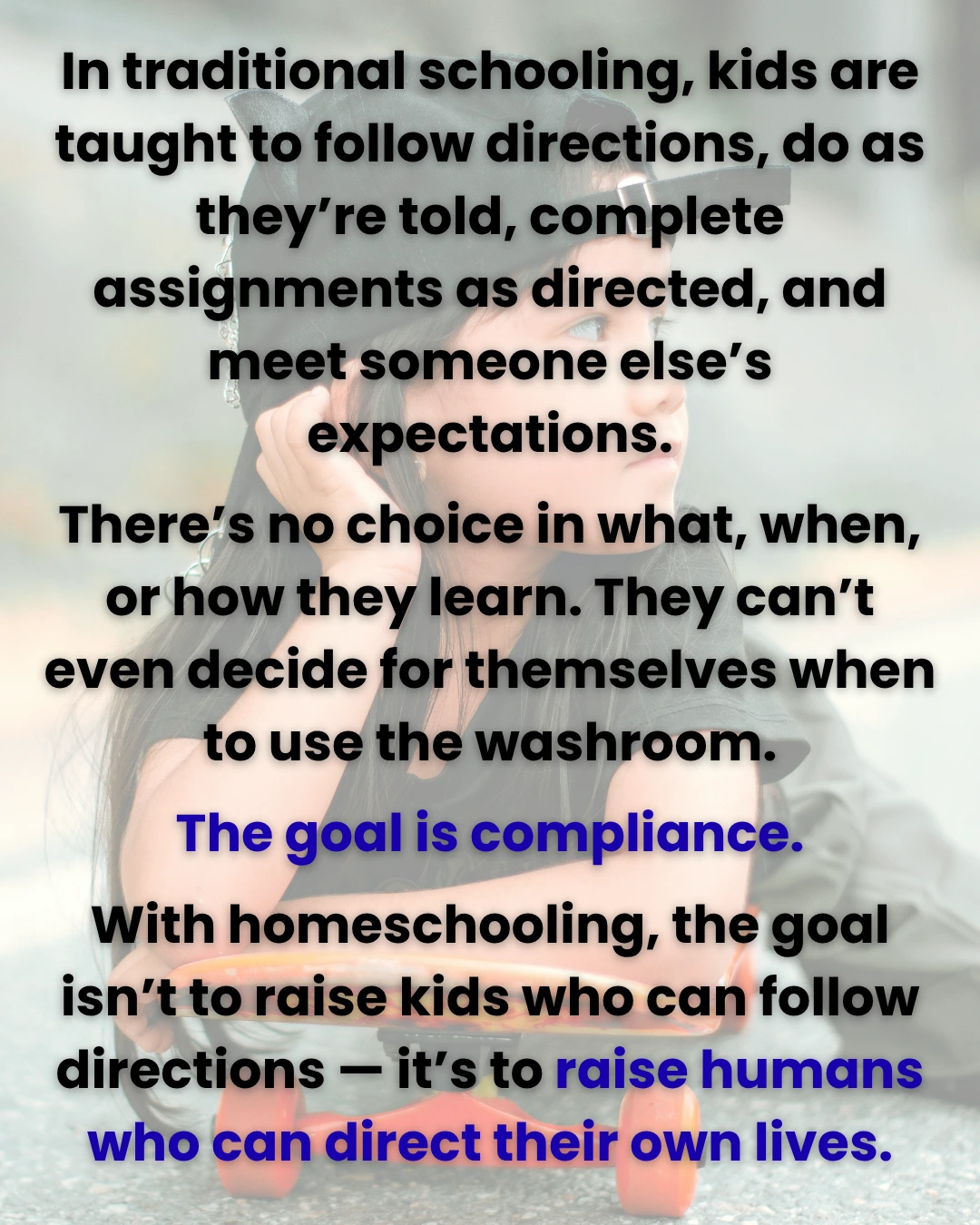
In traditional schooling, kids are taught to follow directions, do as they’re told, complete assignments as directed, and meet someone else’s expectations.

There’s no choice in what, when, or how they learn. They can’t even decide for themselves when to use the washroom.

And that’s a way of learning — but it’s not the same as learning how to:

  • Set personal goals
  • Reflect on growth
  • Ask great questions
  • Navigate challenges with persistence
  • Make choices about what (and how) they want to learn

That’s the difference between compliance and ownership.

When kids feel like school is something being done to them, resistance sets in.

When they feel like it’s something they’re actively building, everything changes.

I’ve seen this shift happen over and over in homeschooling. When you give kids a voice in their learning — whether it’s choosing which subject to start with, setting a goal for the week, or diving deep into something they’re curious about — they start to care differently.

They ask better questions. They push through challenges. They learn because they want to, not because they have to.

It’s not about giving up structure — it’s about sharing the steering wheel.

When we invite kids into the process of shaping their education, we’re not just teaching academics. We’re teaching self-awareness, confidence, and lifelong learning skills that reach far beyond any test score.

Because the ultimate goal isn’t to raise kids who can follow directions — it’s to raise humans who can direct their own lives.

? Lindsey

Certified Special-Ed Educator & Co-Founder, Schoolio

School Resistance and Refusal: Understanding Your Child’s Struggles

School Resistance and Refusal: Understanding Your Child’s Struggles


For many parents, the morning routine becomes an exhausting battle when their child simply refuses to go to school. While the occasional reluctance is common for most children, school resistance and refusal is a much deeper issue that impacts a significant number of families. When your child consistently resists going to school or experiences extreme anxiety at the idea of attending, it’s more than a phase; it’s a complex issue requiring careful consideration, understanding, and potential lifestyle changes.

In this blog, we’ll explore what school resistance and refusal is, why it’s more common in neurodivergent children, and why homeschooling could be a viable option for parents feeling the strain of daily school-related struggles.

What is School Resistance and Refusal?

School resistance and refusal occur when children avoid going to school due to intense feelings of fear, anxiety, or frustration. It’s not just a simple dislike of school or laziness. Children experiencing school refusal often feel an overwhelming sense of dread, and forcing them into school may exacerbate their emotional distress.

This behavior can manifest as physical symptoms like stomachaches, headaches, or even panic attacks on school days. It might also appear as sudden emotional meltdowns or refusal to leave the house. If your child resists going to school regularly, it’s crucial to recognize that something more significant is going on.

While this can happen with any child, it’s important to acknowledge that school resistance and refusal is more common in neurodivergent kids, including those with ADHD, autism, anxiety disorders, or sensory processing issues. The standard structure of traditional schools often conflicts with the needs of children who have different ways of processing information, interacting with their environment, or managing their emotions.

School Resistance and Neurodivergency

For neurodivergent kids, school environments can be overwhelming, uncomfortable, and even traumatic. Children with autism, ADHD, or anxiety often struggle with the rigidity of the school day, the social pressures of interacting with peers, and the sensory overload caused by noise, fluorescent lighting, and crowded spaces.

Neurodivergent children may have difficulties adhering to conventional behavior expectations, like sitting still, paying attention for long periods, or waiting their turn. This can lead to conflicts with teachers and peers, triggering feelings of inadequacy or shame. The school environment might feel like a place where they constantly fail, which, in turn, increases school resistance and refusal.

In some cases, the underlying issues may stem from sensory processing difficulties or executive dysfunction, both common in neurodivergent children. This could mean that certain aspects of the school environment feel unbearably intense for them, whether it’s the sound of the bell ringing, the texture of their clothes, or the constant demands for task initiation. Over time, these daily stressors add up and create an emotional block to attending school.

Trust Your Parental Instincts

When parents encounter school resistance and refusal, it’s easy to feel pressure to force their child to comply with school attendance. However, your parental instincts may be telling you something else. It’s important to listen to those instincts.

If your child is expressing extreme discomfort or distress about school, this is a signal that something is wrong. Forcing your child to attend school against their will might seem like the simplest solution in the short term, but it often worsens the underlying issues. Rather than pushing through, it’s vital to approach the situation with empathy, curiosity, and a desire to understand your child’s perspective.

Common Reasons for School Resistance in All Kids

While school resistance and refusal is more frequent among neurodivergent kids, it can happen with any child. Here are some common reasons children might resist school:

  1. Anxiety: School can be a source of significant stress for children, whether it’s due to academic pressure, social challenges, or fear of separation from their parents.
  2. Bullying: A common reason for children to refuse school is bullying or negative social interactions. This might be happening without the parent’s knowledge, so keeping an open line of communication with your child is essential.
  3. Learning Disabilities: Children who struggle academically due to undiagnosed learning disabilities may avoid school because they feel like they can’t keep up or fear being labeled as “stupid” by their peers or teachers.
  4. Separation Anxiety: For younger children, being away from their parents can cause overwhelming separation anxiety, leading to school resistance and refusal.
  5. Sensory Sensitivities: Even neurotypical children may struggle with sensory sensitivities, such as loud noises, bright lights, or certain textures, making the school environment a difficult place to spend extended periods.

Homeschooling: A Viable Option for School Resistance and Refusal

For parents dealing with school resistance and refusal, homeschooling can be a viable alternative to the traditional school environment. Homeschooling offers a flexible and personalized learning approach that can cater to your child’s unique needs, interests, and pace.

Here’s why homeschooling can be a great option for children who resist school:

  1. Individualized Learning Plans: In a homeschool setting, you can tailor the curriculum to your child’s specific strengths, needs, and interests. This allows for a more engaging and supportive educational experience.
  2. Reduced Pressure: Homeschooling removes the rigid time constraints and constant performance evaluations found in traditional schools. Without the pressure to meet arbitrary timelines, your child may feel less overwhelmed and more willing to engage in learning.
  3. A Sensory-Friendly Environment: You can modify the home learning environment to be more sensory-friendly, providing a comfortable space for your child to learn without the noise and distractions that come with a crowded classroom.
  4. Emotional Support: Homeschooling allows you to be there for your child during difficult emotional moments, offering immediate support and understanding that a teacher in a traditional setting might not have the time or capacity to provide.
  5. Flexible Scheduling: Homeschooling offers flexibility in scheduling, allowing you to plan learning around your child’s peak focus times and energy levels. If your child struggles to start their day early, you can adjust the schedule accordingly.

Addressing Concerns About Homeschooling

It’s normal for parents to feel unsure about homeschooling, especially if they’ve only experienced traditional schooling themselves. However, homeschooling has become increasingly mainstream, and there are vast resources available to support you in this journey.

Some common concerns parents have include socialization and academic progress. The reality is that homeschooling communities are thriving, with co-ops, group activities, and extracurriculars readily available to help your child socialize. Additionally, many parents find that homeschooled children often excel academically because they receive individualized attention and are able to learn in a way that suits their unique style.

Steps to Take if Your Child is Struggling

If your child is struggling with school resistance and refusal, here are some steps you can take:

  1. Open Communication: Talk to your child about their feelings toward school. Validate their emotions and try to understand the underlying reasons behind their resistance.
  2. Involve a Professional: If you suspect anxiety, depression, or neurodivergence is contributing to your child’s school refusal, consider seeking guidance from a mental health professional who specializes in working with children.
  3. Explore Educational Alternatives: Look into homeschooling or other alternative education options, such as online schooling or Montessori education, that may better suit your child’s needs.
  4. Create a Plan: Develop a collaborative plan with your child. Whether this involves gradually returning to school or transitioning to a new learning method, ensure your child feels heard and involved in the decision-making process.

Conclusion: Trusting Your Instincts

If your child is experiencing school resistance and refusal, it’s essential to trust your instincts and explore all available options. Forcing your child into a system that is clearly not working for them may do more harm than good. Instead, consider homeschooling as a way to provide the supportive, individualized learning environment your child needs to thrive. Remember, every child is different, and the goal is to help them learn in a way that makes them feel safe, capable, and understood.

By considering alternatives like homeschooling, you’re not only validating your child’s experience but also creating a path for their academic success and emotional well-being.
Trauma-Informed Education

What Is Trauma-Informed Education, And Why It Might Be Exactly What Your Child Needs


By Lindsey, certified special-ed educator and co-founder, Schoolio

If you’ve pulled your child out of school because something wasn’t working- and I mean really wasn’t working- you’re not alone.

We hear from families every day whose kids are recovering from what we call school trauma.

Maybe your child:

  • Was bullied and felt unsafe
  • Shut down from anxiety or sensory overload
  • Was constantly in trouble for behavior no one tried to understand
  • Masked all day to fit in and melted down at home
  • Fell behind and couldn’t catch up, no matter how hard they tried and had their confidence and self-esteem shaken

Whatever your story looks like, one thing is clear:

Your child didn’t just need to “toughen up”. This isn’t a “right of passage” and it’s not learning to “deal with the real world”, they need a completely different kind of learning environment to feel safe and recover.


What “Counts” As Trauma?

Trauma is not something we narrowly define. In reality, all experiences that have negative and long-lasting impact can cause trauma. Another child being mean to your child one time on the playground may not be a traumatic event, but on-going bullying and the emotional abuse, harassment, and character destruction that includes certainly can be. In fact, it is the way we process and experience certain events that defines how traumatic they are; two kids may process the same episode quite differently, making it a traumatic event for one but a minor blip on the radar for the other.

Trauma impacts learning and behavior. It can significantly slow down, or completely stop our ability to learn.

Kids experiencing trauma are more likely to fall behind in school, struggle to catch up, or get in trouble for behavior issues. These results can compound more trauma and make things increasingly worse.

If your child has experienced school trauma, you did the right thing by removing them from that environment. But you might be asking yourself, now what?

That’s where trauma-informed education comes in.


What Is Trauma-Informed Education?

Trauma-informed education isn’t just a buzzword- it’s a researched, intentional framework grounded in how children process stress and recover from negative experiences. It is an approach to teaching that recognizes the widespread impact of trauma on a child, and aims to create a safe, supportive, and inclusive learning environment. It acknowledges that your child’s past experiences, including trauma, can directly affect their ability to learn. By understanding these impacts, we can adjust teaching methods and create a home environment that fosters their recovery and resilience while supporting real learning.

Trauma-Informed Education is built on six key principles:

  1. Safety: Children must feel emotionally, mentally, and physically safe in their learning environment. You’ve established this by bringing them home to learn and removing them from the unsafe environment of school.
  2. Trustworthiness and Transparency: It’s important now that your feels like they know what to expect and know that the adults around them are predictable and honest.
  3. Empowerment, Voice, and Choice: Kids do better when they have a say in their learning process and are given appropriate autonomy.
  4. Collaboration and Mutuality: Learning should not be something done to a child, but something done with them.
  5. Peer Support: Feeling part of a community and knowing you are not alone is a critical part of healing. Remember that your family unit is also a “community”.
  6. Cultural Responsiveness: It’s cruical that your home and family affirm and respect your child’s identity, history, and experiences.

A trauma-informed approach recognizes that stress, fear, and overwhelm shut down learning. When a child feels unsafe, emotionally or physically, their nervous system goes into survival mode. And survival mode leaves very little room for comprehension, creativity, or curiosity. Feeling “unsafe” doesn’t always mean they feel like they’re in danger. Fear of failure or criticism, fear of exclusion, and fear of retaliation are all legitimate attacks on a child’s sense of safety.

Trauma-informed education begins with the right questions:

  • Does my child feel safe right now?
    • Remember the above ways of feeling unsafe- this includes their feel of failing or getting in trouble.
  • Do they feel heard and respected?
  • Are they given choices and control over their learning?
  • Is our environment calm, clear, and consistent?
    • As parents, we get frustrated and overwhelmed too- we’re human after all. If you need a break to calm down, take it. The environment isn’t calm if you’re stressed. Only a regulated person can help calm a dysregulated person.

If the answer to those questions is no, it doesn’t matter how high-quality the curriculum is, their brain won’t be ready to receive it. Establish all four consistently before you start a learning program. Deschooling and recovering from public school burnout should come first. Download our free guide here.

How Schoolio Supports Trauma-Impacted Learners

We didn’t create Schoolio to be a trauma recovery program. But we did design it to be flexible, gentle, and deeply learner-centered. For many children recovering from difficult school experiences, that’s exactly what they need.

Here’s how our program applies trauma-informed educational practices, supports recovery, and helps you provide a safe and calm learning experience for your child:

  1. Predictability Without Pressure

    Our lessons follow a consistent, easy-to-understand structure, but you, the parent, set the pace.

    Kids who’ve experienced chaos or overstimulation in school find relief in knowing what to expect, without the added stress of rigid deadlines.

  2. Reduced Sensory Load

    Our videos and digital content are intentionally designed to be calm and simple. We avoid overstimulation and excessive noise or visuals because overstimulated brains don’t retain information, they shut down.

  3. Adaptable to Their Energy and Academic Levels

    Many children exiting the school system are burnt out. They don’t need another mountain to climb, they need space to breathe. Schoolio’s bite-sized lessons, printable offline options, and flexible scheduling create room for healing without halting progress. You can also mix-and-match grade levels to create a program where they feel confident and successful, rebuilding self-esteem and security.

  4. Emotional Learning Built In

    Our social-emotional learning and mental health courses are not extras, they’re part of our core offerings. Kids deserve to learn how to name their feelings, manage emotions, build healthy relationships, and recover from stress. These aren’t bonus skills, they’re life skills.

  5. No One-Size-Fits-All Expectations

    Many kids develop trauma in school simply because they didn’t fit the mold. At Schoolio, we don’t have a mold.

    Your child can move ahead in one subject while slowing down in another.

    They can demonstrate knowledge through art, play, projects, and conversation, not just multiple-choice tests.

    They can build a learning plan that matches their pace, their passions, and their strengths.

Final Thoughts

If your child is resistant to learning right now, that doesn’t mean they’re lazy or broken.

If they seem shut down, checked out, or angry, that doesn’t mean homeschooling won’t work.

It means they’re still healing.

They need time, safety and trust.

And they need a learning environment that sees them as a whole person, not a problem to fix.

That’s what trauma-informed education offers.

That’s what we aim to provide at Schoolio.

And if that’s what your child needs, you’re in the right place.


Lindsey

certified special-ed educator and co-founder, Schoolio

When Science Turned Into a Betta Fish

When Science Turned Into a Betta Fish


By Lindsey Casselman, special-ed teacher & homeschooling mom


One of the things I love most about homeschooling is how easily learning can connect to real life. Sometimes the best projects don’t come from a curriculum guide — they come from your child’s heart.

When my daughter was seven, she desperately wanted a Betta fish. Like many parents, my first instinct was to say, “That’s a lot of responsibility — are you sure you’re ready for that?” But instead of just saying no, I turned it into an opportunity for learning.

We made it her science project. She had to create the classic tri-board presentation — research, write, and present — all about Betta fish. She learned where they live in the wild, what they eat, how to set up the right tank environment, and common mistakes people make in caring for them. But the project didn’t stop at facts. She also had to make the case for why she was ready to take care of one.

I’ll never forget watching her stand in front of that board, confidently explaining filtration systems, water temperatures, and feeding schedules. This wasn’t just a science lesson anymore. It was research skills. Public speaking. Persuasive writing. Responsibility.

And it was driven entirely by her motivation. Because she wanted that fish, she owned the project. She went deeper than she would have if I had assigned “Chapter 3: Aquatic Life.” She wasn’t just doing school — she was preparing for real life.

In the end, she did get her Betta fish. But honestly, the project itself was the real win. She learned that with research and preparation, she could rise to a challenge. And I learned (again) that homeschool doesn’t have to follow someone else’s script to be powerful.

And apparently, I also set a precedent in our house without realizing it. Fast forward a few years, and Grace — now 13 — wanted a new pet. Out of nowhere, I found myself sitting on the couch watching a full PowerPoint presentation on why she should be allowed to get a snake. I hadn’t asked for it, and I hadn’t suggested it. She just knew she needed to convince me in a smart and prepared way.

So fair warning: this approach works beautifully for learning… but it may also get you into more pets than you imagined! ?

? Lindsey

Certified Special-Ed Educator & Co-Founder, Schoolio

Stop Trying to Fix What Was Never Broken: Rethinking Autism and Blame

Stop Trying to Fix What Was Never Broken: Rethinking Autism and Blame


This has been on my mind today…

The latest debates around Tylenol and autism feel like déjà vu. Another attempt to eliminate something we don’t fully understand. This time, the theory is that avoiding acetaminophen during pregnancy could somehow prevent a child from being autistic. And while the internet grabs onto that narrative like it’s gospel, I can’t help but think of the damage it’s doing — not just to scientific truth, but to every child being born into a world where their neurodivergence is seen as a defect.

Autism was discovered long before Tylenol hit pharmacy shelves. The spectrum existed before there were labels, diagnoses, or heated panels on morning talk shows. What’s new isn’t autism. What’s new is our panic around accepting it.

I grew up in Singapore, where the approach to childhood “issues” was very different — but carried the same dangerous root: blame. If you weren’t performing well in school, it wasn’t because you learned differently or were overwhelmed or needed support. You were lazy. Disrespectful. A problem.

My parents believed this. So did my teachers. My inability to focus or sit still or memorize math formulas wasn’t something to understand — it was something to beat out of me. Literally.

I was hit at home. Disciplined at school. Shamed in front of peers. I remember hearing the word potential thrown around like it was a threat — like I could have been something, if I just tried harder. The system, they said, was fine. I just didn’t fit it. That was my fault.

Now I’m older, a father, and an educator building a company that works with thousands of students — many of them neurodivergent. And I see the same root problem, just dressed differently.

Instead of beating kids into conformity, we now try to scare parents out of having children that are different in the first place. Avoid this. Don’t take that. Follow these rules and maybe, just maybe, your kid won’t be one of those.

But that’s not progress. That’s erasure.

Autism isn’t something to get rid of. It’s something to understand. Neurodivergent kids aren’t broken. They’re brilliant. But only if we stop trying to fix them.

We need to stop treating difference like a disease. We need to stop hiding behind policies and prevention myths and start asking better questions. Like: How do we build schools, communities, and systems that allow all kids — not just the compliant ones — to thrive?

At Schoolio, that’s our mission. Not just because it’s good pedagogy, but because it’s personal. I know what it feels like to be punished for the way your brain works. I also know what it feels like to unlearn all of that — to parent differently, build differently, lead differently.

So no, I don’t believe Tylenol is the problem. And I don’t believe discipline should be violent, whether physical or emotional. I believe in kids. I believe in learning environments that adapt to the child — not the other way around.

This isn’t about prevention. It’s about permission — to be different, to be seen, to be accepted.

Let’s stop blaming. And start building.


Sathish

still learning, still unlearning

When I Realized My Child’s Learning Style Didn’t Match My Own

When I Realized My Child’s Learning Style Didn’t Match My Own

By Lindsey, certified special-ed educator & co-founder, Schoolio


This has been on my mind today…

When I first started homeschooling, I assumed my kids would learn the way I learn. That’s the default, right? We teach from our own perspective. But it didn’t take long for me to realize their learning styles—and their needs—were very different from mine.

I’m ADHD. I thrive on novelty, challenge, and curiosity. I love going out, seeing people, doing things. My brain comes alive when there’s energy in the room. Planning homeschool field trips, events, parties, and mom meet-ups? That gave me life. I thought it would do the same for my kids.

But my kids are autistic. They enjoy their friends, yes—but in small doses, one-on-one, in familiar settings. Big group outings didn’t energize them the way they did me. They drained them. Where I walked away buzzing with energy, they walked away needing quiet, calm, and time to recover.

It was the same in our learning space. I always wanted music playing, stimulation in the background. They wanted silence. I craved variety and spontaneity. They needed consistent, reliable routines. I thrived on the excitement of new challenges. They thrived on knowing what to expect.

At first, I resisted that difference. I kept thinking, but this is how I learn best—shouldn’t it work for them too? When it didn’t, I felt frustrated. But slowly, I realized I had it backwards. My job wasn’t to shape them into my rhythm. It was to honor theirs.

That shift changed everything.

I began planning fewer big events and focusing on more intentional one-on-one time with friends. Instead of background noise, I chose quiet. Our homeschool days gained more rhythm and held fewer surprises. Along the way, I learned how to stretch myself to meet their needs, and gently taught them to stretch a little too—tolerating small bits of novelty, practicing compromise, and knowing it was okay to ask for quiet whenever they needed it.

Homeschooling taught me as much about myself as it did about them. It reminded me that love often looks like adjusting our pace, our preferences, and our expectations—not forcing someone else into our mold.

And it gave me this truth:

We don’t have to learn the same way to learn together.

What Dopamine Deficiency Looks Like in ADHD Kids

What Dopamine Deficiency Looks Like in ADHD Kids


Because ADHD brains don’t release or regulate dopamine effectively, kids often live in a state of chronic “dopamine hunger.” Just like being low on food makes you hungry, being low on dopamine makes the brain crave stimulation.

For ADHD kids, that deficiency can show up as:

  • Inattention: Struggling to stay engaged with boring or repetitive tasks.
  • Restlessness: Constantly moving, fidgeting, or seeking stimulation.
  • Mood swings: Irritability, frustration, or feeling flat when dopamine is low.
  • Low motivation: Finding it nearly impossible to start tasks without external stimulation.
  • Emotional sensitivity: Stronger reactions to rejection, failure, or disappointment.

For your child, it may feel like a constant itch they can’t scratch—an internal restlessness that only eases when something exciting, novel, or rewarding captures their attention.


Dopamine-Seeking Behavior: It’s Not Their Fault

When your child bounces from one activity to another, gets “hooked” on video games, or melts down when asked to do something boring, it’s easy to feel like they’re being defiant or careless. But here’s the truth: their brain is driving them to seek dopamine in the same way hunger drives you to eat.

This is why ADHD kids often:

  • Hyperfocus on video games or special interests.
  • Struggle to stop stimulating activities.
  • Seek out novelty and excitement.
  • Resist boring or repetitive tasks, no matter how important.

It’s not a lack of discipline—it’s survival. Their brain is looking for the fuel it needs.


How Dopamine Affects Learning and Behavior

Dopamine deficiency in ADHD can impact every part of your child’s life:

  • Attention: Without dopamine, focusing feels nearly impossible.
  • Behavior: Kids may act impulsively, even dangerously sometimes, always chasing the next burst of stimulation. Dopamine-seeking risky behaviors can be especially problematic for teenagers.
  • Learning: Learning is always harder when your body is lacking a needed brain chemical, just like with anxiety, depression, or trauma. A dysregulated brain cannot learn, so focus on mental and emotional stability first.
  • Emotions: Dopamine imbalance can make moods more volatile and rejection harder to handle.

When we frame these struggles as brain chemistry—not willpower—it changes everything.


Strategies for Supporting Your Child’s Dopamine Needs

The good news: there are ways to help regulate your child’s dopamine levels and create a homeschooling environment that works with their brain instead of against it.

1. Build in Small Rewards

Break tasks into smaller steps, and celebrate progress often. Rewards don’t have to be big—a sticker, praise, or a short break can be enough to trigger dopamine.

2. Backward Rewarding

“Backward rewarding” is a practice that works well for ADHD kids because it gives them the dopamine they require upfront. We typically reward for work well done- at the end of the task- but without dopamine, no amount of desire, will-power, or motivation will make your child capable of performing the task. For example, 30 minutes of video games before you start school, along with a 30 minute reward at the end, might have math going much more smoothly then with the end-reward only. (Make sure you make the time limit clear before they start, and set timers to remind of the end coming multiple times to make the transition happen.)

3. Use Movement

Physical activity boosts dopamine. Try starting the school day with a walk, dance break, or jumping jacks. Build movement into lessons whenever you can.

4. Lean Into Interests

Remember, interest = dopamine. Whenever possible, tie schoolwork to your child’s passions. If they love animals, use animal examples in math problems or writing prompts. Don’t be afraid to go “off-book” when pulling their interests into your learning. Remember when I turned our geography into dragons? That’s what we’re going for!

5. Add Novelty

Switch up routines occasionally—study in a new spot, use a different color pen, or bring in hands-on projects. Small changes can spark big dopamine boosts.

6. Prioritize Sleep and Nutrition

Dopamine regulation depends on healthy sleep cycles and steady nutrition. Work toward consistent bedtimes and balanced meals with protein to support brain chemistry.

7. Use Tech Wisely

Screen time provides big dopamine hits, which is why it can be so hard for ADHD kids to stop. Instead of banning screens completely, use them strategically—incorporate educational apps, set clear boundaries, and use them as short, structured rewards. Always give multiple warnings for transitions off screens


A Homeschooling Lens

Homeschooling gives you the freedom to design a learning environment that supports your child’s dopamine needs instead of punishing them for them. That means:

  • Flexible schedules to account for energy highs and lows.
  • Interest-driven projects that keep motivation high.
  • Frequent breaks for movement and stimulation.
  • Celebrating effort, not just outcomes, to give consistent dopamine boosts.

Your child doesn’t need to be “fixed.” They need understanding. When you see their restlessness, hyperfocus, or boredom through the lens of dopamine deficiency, it stops looking like defiance and starts looking like what it truly is: a brain craving balance.

With patience, creativity, and neurodiversity-affirming strategies, you can help your child feel less hungry for dopamine—and more successful in learning and in life.

One Size Doesn’t Fit All: How My Two Kids Taught Me to Rethink Homeschool Goals

One Size Doesn’t Fit All: How My Two Kids Taught Me to Rethink Homeschool Goals


This has been on my mind today…

When I first started homeschooling, I thought my kids would more or less need the same kind of structure. Same curriculum, same goals, same “system.” What I learned very quickly is that no two brains work the same way — even when they’re siblings.

My son, Gavin, has always been a dawdler and a daydreamer. He’ll happily sit with a math page for an hour — but not because he’s focused. He might be staring at a butterfly out the window or lost in his thoughts about the Lego project waiting for him in the other room. For him, saying “Do 20 minutes of math” was a recipe for wasted time. His strength was that once he actually did the work, he could get through it. So instead of giving him time-based goals, I gave him task-based ones: “Do 8 math questions.” If he worked steadily, that took about 20 minutes. If he dawdled, it might take an hour. But either way, the goal was clear and doable.

Grace, on the other hand, is wired completely differently. She has dyslexia and dyscalculia, which make reading and math both more difficult and much more tiring. For her, telling her “Do 8 math questions” was overwhelming. It felt like a mountain. What worked for her was time. If I said, “Do 20 minutes,” she’d buckle down and focus — because she wanted to finish and move on with her day. Sometimes she’d get through 8 questions, sometimes only 2. But I knew she’d be working hard the whole time, and by the end of that 20 minutes, she’d be at her limit.

That’s the beauty of homeschooling. I didn’t have to nag Gavin to hurry up, and I didn’t have to push Grace to burnout. They each got a plan that fit their brain. The goals were different, but the value was the same: honoring their process while still moving forward.

There is no one-size-fits-all way to learn. And as parents, when we shift from “making school fit the child” to “making learning fit the child,” everything changes.

? Lindsey

Certified Special-Ed Educator & Co-Founder, Schoolio

Homeschooling Is Parenting, Just a Little Louder

Homeschooling Is Parenting, Just a Little Louder

This has been on my mind today…

When we first pulled our kids out of school, I wasn’t sure I had what it took. I had the usual fears. Would I mess up their education? Could I keep up with all the subjects? What if I missed something big?

But over time, something quiet and powerful started to sink in. I wasn’t stepping into a classroom role. I was just continuing what I’d always done as their mom — helping them learn. Teaching them to tie shoes. To ask for help. To apologize. To be kind. Homeschooling, it turns out, is just an extension of parenting.

There’s this quote I came across recently that stopped me in my tracks:

“Educating a child is a natural process. Homeschooling is nothing more than an extension of parenting.”

—John Taylor Gatto

It made me pause because that’s what homeschooling has become for us. It’s not school at home. It’s life at home, full of learning.

The structure looks different, of course. We have a curriculum (Schoolio made that piece so much easier). We have rhythms that feel like school hours some days. But at the heart of it, it’s still me parenting — noticing what lights my child up, what challenges them, what makes them pull away or lean in.

And because it’s just an extension of parenting, the learning is so much more natural. Conversations at lunch become lessons in geography. A baking mess turns into math. A walk in the neighborhood ends up being a discussion about community and kindness and nature.

If you’re feeling unsure about starting homeschooling, or doubting if you’re “qualified,” let me gently tell you this: you’ve already been doing it. Since the day your child was born, you’ve been their guide. Their teacher. Their advocate. Homeschooling doesn’t change that. It just adds a little structure, a little support, and a whole lot of flexibility.

Let’s stop thinking of homeschooling as this big, scary shift. It’s simply parenting — just a little louder, a little more curious, and a lot more present.

Lindsey

certified special-ed educator & co-founder, Schoolio

When Little Things Feel Too Big: Frustration Intolerance in ADHD & Autistic Kids

When Little Things Feel Too Big: Frustration Intolerance in ADHD & Autistic Kids

Does your child melt down the moment something doesn’t go their way? Maybe a math problem is “too hard,” or the Wi-Fi glitches during their game, and suddenly you’re facing tears, yelling, or complete shutdown.

For many ADHD and autistic kids, this isn’t just “having a short fuse.” It’s called frustration intolerance — a real struggle where even small challenges feel unbearable. And if you’re parenting or homeschooling a child who experiences it, you know how exhausting (and heartbreaking) it can be.


What Is Frustration Intolerance?

Frustration intolerance means struggling to cope with situations that are difficult, unpleasant, or don’t go as planned. Instead of “pushing through,” kids may:

  • Explode in anger or tears.
  • Refuse to keep going (“I quit!”).
  • Withdraw completely and shut down.

It’s not about being dramatic. It’s about their brain hitting a wall — and not yet knowing how to climb over it.


Why Neurodivergent Kids Struggle More

For ADHD and autistic kids, frustration intolerance often shows up bigger and louder because of how their brains process the world. Here’s why:

1. Executive Functioning Differences

Planning, organization, emotional control — all of these “thinking skills” are harder for many ND kids. When a task feels overwhelming, their ability to regulate frustration can collapse fast.

2. Sensory Sensitivities

Bright lights, loud noises, scratchy clothes — sensory overload lowers tolerance. Once they’re maxed out, even a tiny frustration feels huge.

3. Dopamine and Motivation

For kids with ADHD, dopamine regulation plays a big role. Tasks that feel boring, slow, or unrewarding become almost impossible to stick with, triggering fast frustration.

4. Rigid Thinking

For many autistic kids, when things don’t go as expected, it’s hard to adapt. A simple change — like math problems being harder than yesterday — can cause them to feel stuck and defeated.


How It Shows Up in Daily Life

Parents of frustration-intolerant kids often see:

  • Homework battles that spiral into tears.
  • Meltdowns over minor inconveniences.
  • Avoidance of activities that might be “too hard.”
  • Perfectionism or quitting early to avoid failure.

If this sounds like your child, you’re not alone. And there are ways to help.


Helping Your Child Cope With Frustration

The good news? Kids can learn to tolerate frustration better — with support, practice, and patience. Here are some strategies you can start using today:

1. Teach Emotional Regulation Tools

Breathing exercises, mindfulness, or fidgets help kids calm their nervous system before frustration takes over. Practice during calm moments so the tools are ready when needed.

2. Break Tasks Into Smaller Steps

Instead of “Write your essay,” try “Brainstorm three ideas.” Smaller steps feel doable — and success builds momentum.

3. Set Realistic Expectations

Match goals to your child’s current capacity. Celebrate small wins and progress, not just the final result.

4. Create a Calm Space

Reduce sensory overload by offering a quiet, comfortable spot for learning or calming down.

5. Use Visual Supports

Schedules, checklists, and timers help make tasks concrete and predictable. Kids feel less overwhelmed when they can see what’s happening and what’s next.

6. Model Problem-Solving

Show them how you handle frustration. Talk through challenges out loud: “This isn’t working. Let’s try another way.” Role-play different solutions together.

7. Stay Patient and Supportive

Setbacks are part of the process. When your child is overwhelmed, validate their feelings: “I can see you’re frustrated. That’s okay.” Then gently guide them toward coping strategies.


Why This Matters

Frustration intolerance doesn’t just impact schoolwork — it shapes how kids see themselves. Without support, they may start believing: “I can’t do hard things.” But with the right tools, they learn that challenges aren’t the enemy — they’re opportunities to grow.


A Hopeful Reminder

If your child struggles with frustration, it doesn’t mean they’re lazy, dramatic, or incapable. It means their brain needs extra scaffolding to build tolerance. And as a parent — especially a homeschooling parent — you have the unique chance to create a space where frustration isn’t the end of the story, but the beginning of resilience.

✨ Want to learn more about frustration intolerance and how it connects to executive dysfunction in neurodivergent kids? Read the full article here ? https://schoolio.com/blog/frustration-intolerance-in-adhd-and-austistic-kids/.

From Survival Mode to Success: How Homeschooling Helps Kids Recover from Public School Burnout

From Survival Mode to Success: How Homeschooling Helps Kids Recover from Public School Burnout

By Lindsey, certified special-ed educator and homeschooling parent


Let’s talk about burnout.

Not yours (although that’s real too), but your child’s.

We don’t always recognize it at first — that slow unraveling that happens when a child is pushed too hard, too fast, or in the wrong environment for too long. But once you’ve seen it, you know.

The spark is gone.

The joy is missing.

School becomes a trigger — not a place of growth.

And for many families, burnout is the reason they start homeschooling.

Not because they always planned to.

But because they needed suddenly needed to.

Their child needed saving.


What Burnout Looks Like in Kids

It doesn’t always look dramatic. Sometimes it looks like:

  • Refusing to do any schoolwork
  • Saying things like “I’m stupid” or “I hate school”
  • Meltdowns over math problems
  • Constant headaches or stomachaches
  • Feeling defeated before they even start

Often, these reactions aren’t about laziness or attitude.

They’re about exhaustion.

They’re about a nervous system that’s been in overdrive, sometimes for years.

When a child reaches that point, what they need isn’t more pressure.

They need a reset.

Maybe now you’ve taken the first step and pulled them out. You’re probably feeling like you don’t know what to do next.


Here’s where I recommend you focus your attention for the next few weeks:

1. Focus on Relationship

The first goal isn’t academics, it’s connection.

Use this time to listen, play, talk, and just be together.

Remind your child that they are safe. That learning is no longer tied to stress or punishment.


2. Focus on Regulation

What helps your child feel calm?

That might look like daily walks, sensory play, quiet reading time, or lots of movement breaks.

Build your days around those regulating activities first, then gently add in small moments of structured learning when they’re ready. Remember that a dysregulated person cannot learn. Don’t try to force it.


3. Keep Learning Gentle and Flexible

For now, avoid tight schedules or packed plans. Start with short lessons and engaging, hands-on topics.

Follow their interests. Bake together. Do science experiments in the kitchen. Read out loud. Keep it light and meaningful.

Build confidence. If you only do their favorite subjects for a little while that’s totally fine. If you bump them down a grade or two (or as many as you need) to find a spot where they’re experiencing regular success and building their confidence in their own abilities, that’s where you need to be right now.


4. Let Rest Be Part of the Plan

Your child may need more sleep. More down time. More freedom. That’s not slacking, that’s burnout recovery.

You’re not falling behind. You’re laying the foundation for real, lasting learning. Let them sleep. Let them play. Let them be outside. Mostly, just let them be.


5. Watch for Small Signs of Re-engagement

You may not get a big “aha” moment. But you might notice them asking more questions. Smiling during a lesson. Picking up a book on their own.

Celebrate those small steps- they’re signs the spark is coming back!


A Gentle Reminder

If your child is in survival mode right now, you might be seeing some behaviors that are hard to handle. Avoidant, angry, overwhelmed. Remember that it doesn’t mean you’ve made the wrong choice, it means your child feels safe in your presence to let their emotions out.

It means they need time.

And homeschooling gives you that time.

Time to rest.

Time to reconnect.

Time to slowly reintroduce learning, in ways that feel safe and meaningful.

Eventually, the spark comes back.

The light returns to their eyes.

And you’ll realize: this isn’t just about school.

It’s about giving your child a soft place to land when the world became too much.

And that? That’s success.


Lindsey

certified special-ed educator and homeschooling parent

Download our Free Guide “Deschooling: The First 30 Days After Leaving Public School” with coupon code DESCHOOL.

https://schoolio.com/product/schoolio-understanding-deschooling/?wmc-currency=USD