How We Took the Fear Out of Math (Without Making It a Game Show)

How We Took the Fear Out of Math (Without Making It a Game Show)

Math has a reputation in a lot of neurodivergent households.
 
Tears.
Avoidance.
Stomach aches.
Instant shutdown.
 
And I get it.
 
When numbers don’t click easily — especially with dyscalculia, ADHD, processing differences, or math anxiety layered on top — math can feel like a daily threat instead of a skill.
 
For a long time, I thought the solution was to make math “fun.”
 
More games.
More flashy activities.
More attempts to disguise it.
 
But here’s what I learned: Math doesn’t need to be a circus.
 
It needs to feel safe.
 
The Week We Slowed Fractions Way Down
 
One year, we were working on fractions. We were struggling. The kids didn’t get it. I don’t blame them, I’m not great at it either.
 
Instead of continuing to push at that one lesson, I decided we needed to slow everything down and turn one Schoolio lesson and a worksheet, into a full week of understanding.
 
Monday:
We watched the lesson video. Just the concept. No pressure to perform.
 
Tuesday:
We made mini pizzas in the kitchen.
Cut them into halves. Quarters. Eighths.
 
We talked about which pieces were bigger. Which were smaller. Added pieces together.
 
We ate the evidence.
 
Wednesday:
We did the printable worksheet.
Nothing fancy. Low pressure. On the couch. Just gentle practice.
 
Thursday:
We pulled out the Lego.
Built wholes. Broke them into parts. Compared pieces.
 
Friday:
We went back to the original lesson and did the quiz.
Not as a threat — but as a check-in.
 
Did it stick?
Sometimes yes.
Sometimes we needed another week.
And that was okay.
 
Concrete First. Abstract Later.
 
For a lot of neurodivergent kids, abstract math feels slippery.
Numbers on a page don’t mean much.
 
But pizza does.
Lego does.
Cutting something real into real pieces makes fractions tangible.
And once something is tangible, it’s less scary.
 
Less scary means less resistance.
Less resistance means more learning.
 
Predictability Lowers Anxiety
 
The other thing that helped?
Predictability.
 
Math wasn’t a surprise attack.
 
It wasn’t:
“Quick, do this worksheet before you melt down.”
 
It had rhythm.
 
Concept → hands-on → practice → reinforce → assess.
 
That pattern lowered anxiety because they knew what was coming.
 
When the nervous system isn’t bracing for impact, the brain has space to think.
 
It Doesn’t Have to Be Entertaining to Be Gentle
 
Here’s something important:
We didn’t turn math into a game show.
There were no prizes. No countdown clocks. No glitter explosions.
 
We just slowed it down.
We made it concrete.
We made it predictable.
And we removed the pressure to rush.
 
Math doesn’t need to be constantly “fun.” It’s ok to teach our kids that some things in life are hard, but still worth doing.
 
But it should never feel like trauma.
 
There’s a huge difference between effort and fear.
 
I’m okay with effort.
I’m not okay with fear.
 
The Goal Isn’t Speed
 
In traditional classrooms, math often moves fast.
 
New concept. Practice. Test. Move on.
 
But when a child struggles with numbers, speed becomes the enemy.
 
So we changed the metric.
Not: “How fast can you get this done?”
But: “Do you understand it?”
 
And if the answer was no?
 
We stayed.
No shame.
No panic.
No race.
Just peaceful.
 
Because confidence in math doesn’t come from getting everything right.
 
It comes from surviving hard concepts and realizing you can figure them out. Even if it takes time. Even if it’s hard. It’s learning that slowing down isn’t an enemy of progress.
 
If math feels heavy in your house, try this:
 
Stretch one concept across a week.
Touch it. Build it. Eat it. Break it apart.
 
Lower the pace before you try to raise engagement.
 
Sometimes the fear leaves first.
And learning follows.
 
? Lindsey
 
certified special-ed educator, homeschool mom, & co-founder of Schoolio


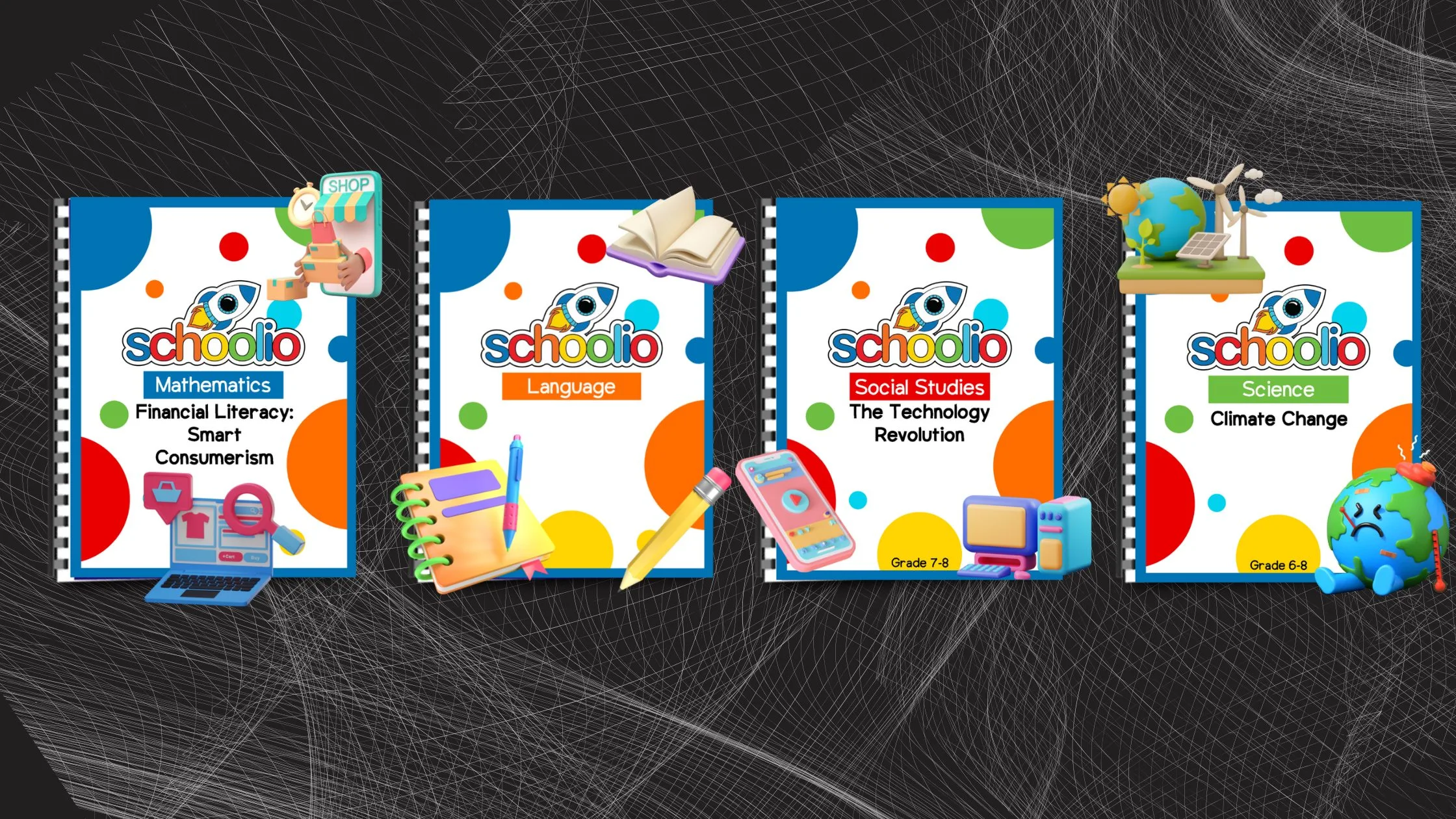
Exploring Schoolio’s Diverse Curriculum Options

Exploring Schoolio’s Diverse Curriculum Options

Exploring Schoolio’s Diverse Curriculum Options

At Schoolio, we believe that education should be as diverse as the students it serves. Our commitment to providing a comprehensive learning experience is reflected in the wide array of curriculum options we offer, catering to students from kindergarten to eighth grade. Let’s start exploring Schoolio’s diverse curriculum options by delving into the three main categories that define Schoolio’s robust curriculum: Core Curriculum, Electives, and Social Emotional Learning (SEL).

Core Curriculum: Building Foundations for Success

Math

Schoolio’s core math curriculum is designed to build a strong foundation in mathematical concepts. From basic arithmetic to more advanced topics, our curriculum adapts to each student’s learning pace and style.

Science

In the realm of science, Schoolio excels in providing engaging lessons that cover a spectrum of subjects. Whether exploring the mysteries of the universe, conducting hands-on experiments, or understanding the delicate balance of ecosystems, our science curriculum sparks curiosity and critical thinking.

Social Studies

Our social studies curriculum takes students on a journey through history, geography, and cultures. From ancient civilizations to contemporary global issues, Schoolio fosters an appreciation for the world’s diversity and helps students develop a well-rounded worldview.

Language Arts

Language arts form the cornerstone of effective communication and critical thinking. Schoolio’s language arts curriculum encompasses reading, writing, grammar, and more, empowering students to express themselves eloquently and comprehend complex texts.

Electives: Unleashing Creativity and Passion

For students seeking to explore beyond the core curriculum, Schoolio boasts an extensive library of electives. These courses are designed to tap into students’ interests and passions, making learning an exciting adventure. Some of our standout electives include:

  • Candy Chemistry: Uncover the sweet science behind your favorite treats.
  • Earth’s Core: Journey to the center of the Earth and discover its mysteries.
  • All About Honeybees: Explore the fascinating world of these crucial pollinators.
  • Novel Studies: Dive into the pages of captivating stories and analyze literary elements.
  • Introduction to Art: Ignite creativity through hands-on artistic expression.
  • Introduction to Gymnastics: Foster physical fitness and coordination in a fun and supportive environment.

These electives provide a rich tapestry of knowledge that goes beyond traditional subjects, allowing students to pursue their passions and develop a well-rounded skill set.

Social Emotional Learning (SEL): Nurturing Holistic Growth

Recognizing the importance of emotional well-being, Schoolio integrates Social Emotional Learning (SEL) into our curriculum. The “Thoughts and Feelings” unit, tailored to different age groups, helps students navigate their emotions, build resilience, and foster positive relationships. Additionally, our SEL framework is designed to instill empathy. While also helping with self-awareness, and effective communication skills. Doing so to prepare students for success not only academically but also in the complexities of life.

Empowering Students to Thrive Academically and Emotionally

Schoolio’s commitment to a diverse and comprehensive curriculum ensures that every student finds a path to success that aligns with their unique strengths and interests. From the foundational core subjects to exciting electives and essential Social Emotional Learning, Schoolio empowers students to thrive academically and emotionally.

Join us on the Schoolio Learning Platform. Where education is not just about acquiring knowledge but also about fostering a lifelong love for learning.

The Importance of Financial Literacy for Your Middle Schooler

The Importance of Financial Literacy for Your Middle Schooler

The Importance of Financial Literacy for Your Middle Schooler

Equipping our children with essential life skills is so important. One of these crucial skills is financial literacy. As your middle schooler navigates the maze of education, it’s essential to integrate financial education into their curriculum. In this blog post, we’ll explore the importance of financial literacy for middle schoolers and how Schoolio, a comprehensive online learning platform, can play a pivotal role in their financial education.

Why Financial Literacy for Middle Schoolers Matters:

Building a Foundation for the Future:

Middle school is an opportune time to lay the groundwork for a solid financial foundation. Teaching your child about budgeting, saving, and investing at this stage can set them on the path to making informed financial decisions later in life.

Real-world Application of Math Skills:

Financial literacy integrates seamlessly with math curriculum, providing a real-world context for mathematical concepts. As middle schoolers delve into the complexities of mathematics, applying these skills to manage money fosters a practical understanding that goes beyond the classroom.

Cultivating Responsible Decision-Making:

Financial literacy encourages responsible decision-making. Through understanding the consequences of financial choices, middle schoolers learn to make informed decisions about spending, saving, and investing, fostering a sense of responsibility and accountability.

Schoolio Family Plan

Preventing Future Financial Pitfalls:

Equipping your child with financial knowledge early on can help prevent common financial pitfalls in adulthood. Middle schoolers can grasp the concept of debt, credit, and the importance of saving, ensuring they enter adulthood with a strong financial footing.

Preparing for an Entrepreneurial Future:

In an era where entrepreneurship is celebrated, financial literacy empowers middle schoolers to explore their entrepreneurial spirit. Schoolio learning platform offers comprehensive education online, including specialized content on entrepreneurship, preparing your child for a dynamic future.

How Schoolio Facilitates Financial Literacy:

Tailored Homeschool Programs:

Schoolio recognizes the diverse needs of families, offering tailored homeschool programs that integrate financial literacy seamlessly. With a full year homeschool curriculum, your middle schooler can engage in comprehensive learning that includes essential financial education.

Engaging Home Education Programs:

Schoolio’s engaging home education program ensures that financial literacy is not a mundane topic. Interactive lessons and real-world scenarios keep middle schoolers captivated, making learning about money management an enjoyable experience.

Schoolio e-books

Best Homeschool Program for Comprehensive Learning:

As you search for the best homeschool program, consider Schoolio for its comprehensive approach. The platform’s commitment to providing a well-rounded education includes a robust financial literacy curriculum that aligns with national standards.

Programs for Homeschooling That Prioritize Financial Education:

Schoolio stands out among programs for homeschooling by placing a significant emphasis on financial education. Through thoughtfully curated content and engaging activities, middle schoolers can develop a strong understanding of financial concepts.

Invest in Their Future

Incorporating financial literacy into your middle schooler’s education is an investment in their future. By leveraging the Schoolio learning platform, you ensure that your child receives a comprehensive education online, with a focus on essential life skills like financial literacy. Empower your middle schooler to make informed financial decisions and embark on a path towards financial success.

Schoolio Learning Resources

Prepare Your Child for Grade Three

Do you feel like your child is prepared for grade three? During the summer, are you planning to help your child stay on track with their learning or have a free-for-all summer with no sign of curriculum? Do you want to ensure your child stays on track but not overwhelm them with too much ‘work’? Let us help you with all your questions on how to prepare your child for grade three.

Preparing your child for grade three while aiming to avoid summer learning loss.

The first thing you need to do when aiming to prepare your child for grade three while avoiding summer learning loss? Don’t stress so much! As parents, we often worry about ensuring our children are on track with their learning. That worry can become more and more of a concern when we think about pandemic learning loss.
How to avoid summer learning loss on top of pandemic learning loss is another concern facing parents, especially when they hear that most children lose 2.6 months of math skills, two months of reading skills and the equivalent of one month of overall learning each summer.
You can learn more about Summer Learning Loss here. 
So, how can we help our children catch up on all the learning loss they’ve experienced, stay on track and not lose even more learning skills during the summer?
Reading, writing, math and learning, in general, are essential skills your child must continually practice to develop correctly, especially during the summer.

How to prepare your child for grade three? First, let’s simplify learning.

One thing you absolutely must avoid is overthinking their learning. We often assume that to prepare your child for grade three, you must have elaborate plans, and it has to be a huge, exhausting endeavour when the actual reality is that it can be a simple process.
One of the best ways to simplify their summer learning is to use the Summer Schoolio: Ready for Grade 3 book! This book was created specifically to help children about to move onto grade three. Using the Summer Schoolio: Ready for Grade 3 book, your child will stay refreshed and on track with their essential learning. This will also save you hundreds of dollars and time because you won’t be searching for a homeschool curriculum that will still be too much or too little when aiming to prepare your child for grade three.

Take a look inside the Summer Schoolio: Ready for Grade 3 workbook!

Prepare Your Child for Grade 3
Having an enjoyable summer without the stress of trying to complete extra tasks is essential! This is why our Summer Schoolio books have been designed to be simple. Without the overwhelm of having to complete a mountain of overwhelming tasks.
In the Summer Schoolio: Ready for Grade 3 book, we have combined the best of our secular homeschooling curriculum concepts to bring you and your child a unique summer learning solution that will prepare your child for grade three. In a fantastic combination of homeschooling writing curriculum, homeschooling language arts curriculum and homeschooling math curriculum, we aim to help your child practice those essential skills to stay on track.

Summer Schoolio: Ready for Grade 3 overview:

Prepare your child for grade three
The Summer Schoolio: Ready for Grade 3 workbook is loaded with materials that aren’t just educational; they’re fun too! This combination is an excellent resource to help prepare your child for grade three. Created for six weeks of learning, your child will have the opportunity to learn and refresh different learning concepts each week.

Week one includes:

The Summer Schoolio week includes three days of simple learning that won’t be overwhelming or take too long to complete.

  • Day one, Weekly Writing – Writing Fiction – and Math – Number Sense.
  • Day two has Weekly Writing and Math – Number Sense.
  • On day three, your child will work on Weekly Writing – Scrapbooking – and Math – Number Sense.

Week two includes:

The second week of Summer Schoolio: Ready for Grade 3 is similar to week one, just switching up learning concepts.

  • During week two, on day one, your child will have Weekly Writing – Autobiography – and Math – Number Sense.
  • On Day Two, they will have Weekly Writing and Number Sense.
  • On day three, they will have Weekly Writing – Scrapbook and Math – Number Sense.

Week three includes:

During the third week of the Summer Schoolio: Ready for Grade 3 book, your child will be working on:

  • Day one, Weekly Writing – Reviewing a Book – and Math – Algebra.
  • Then on day two, your child will work on Weekly Writing and Math – Algebra.
  • Followed by day three, which is Weekly Writing – Scrapbook and Math – Algebra.

Week four includes:

When your child is working on week four:

  • Day one, Weekly Writing – Writing Non-Fiction – and Math – Geometry/Spatial Sense.
  • Then on day two, they will be working on Weekly Writing and Math – Geometry/Spatial Sense.
  • On day three, they will get to work on their scrapbook for Weekly Writing and the final day of Math – Geometry/Spatial Sense.

Week five includes:

  • Day one of week five is Weekly Writing – Poetry – and Math – Data.
  • Then on day two, they will work on Weekly Writing and Math – Data.
  • Day three is Scrapbooking for Weekly Writing and Data for Math.

Week six includes:

  • The first day of week six focuses on Weekly Writing – Summarizing – and Math – Financial Literacy.
  • The second day is all about Weekly Writing and Financial Literacy for Math.
  • Then on day three, your child can work on their scrapbook again for Weekly Writing and enjoy their final Financial Literacy assignment.

The schedule and assignments are repetitive but changing to help your child stay structured and interested. This technique helps your child master all the essential math and reading/writing concepts for grade three.

What does a typical week look like using the Summer Schoolio: Ready for Grade 3 program?

Prepare your child for grade three
The Summer Schoolio: Ready for Grade 3 book includes a sample schedule/calendar you can follow daily. It translates to:
Monday: Read a Book or Chapter.
Tuesday: Weekly Writing Day 1, Math Day 1, Read a Book or Chapter.
Wednesday: Weekly writing Day 2, Math Day 2, Read a Book or Chapter.
Thursday: Weekly Writing Day 3, Math Day 3, Read a Book or Chapter.
Friday: Read a Book or Chapter.
Keeping your child on track and up-to-date with their learning doesn’t need to be an overwhelming and stressful process. And you don’t need to take a massive chunk of time each time to accomplish it. The Summer Schoolio: Ready for Grade 3 book helps your child keep up with their learning needs, refresh and not become overwhelmed by too much information crammed into one day.

Prepare your child for grade three.


Pick up your copy of Summer Schoolio