After School Restraint Collapse

Does Your Kid Struggle with School? What Is After-School Restraint Collapse?


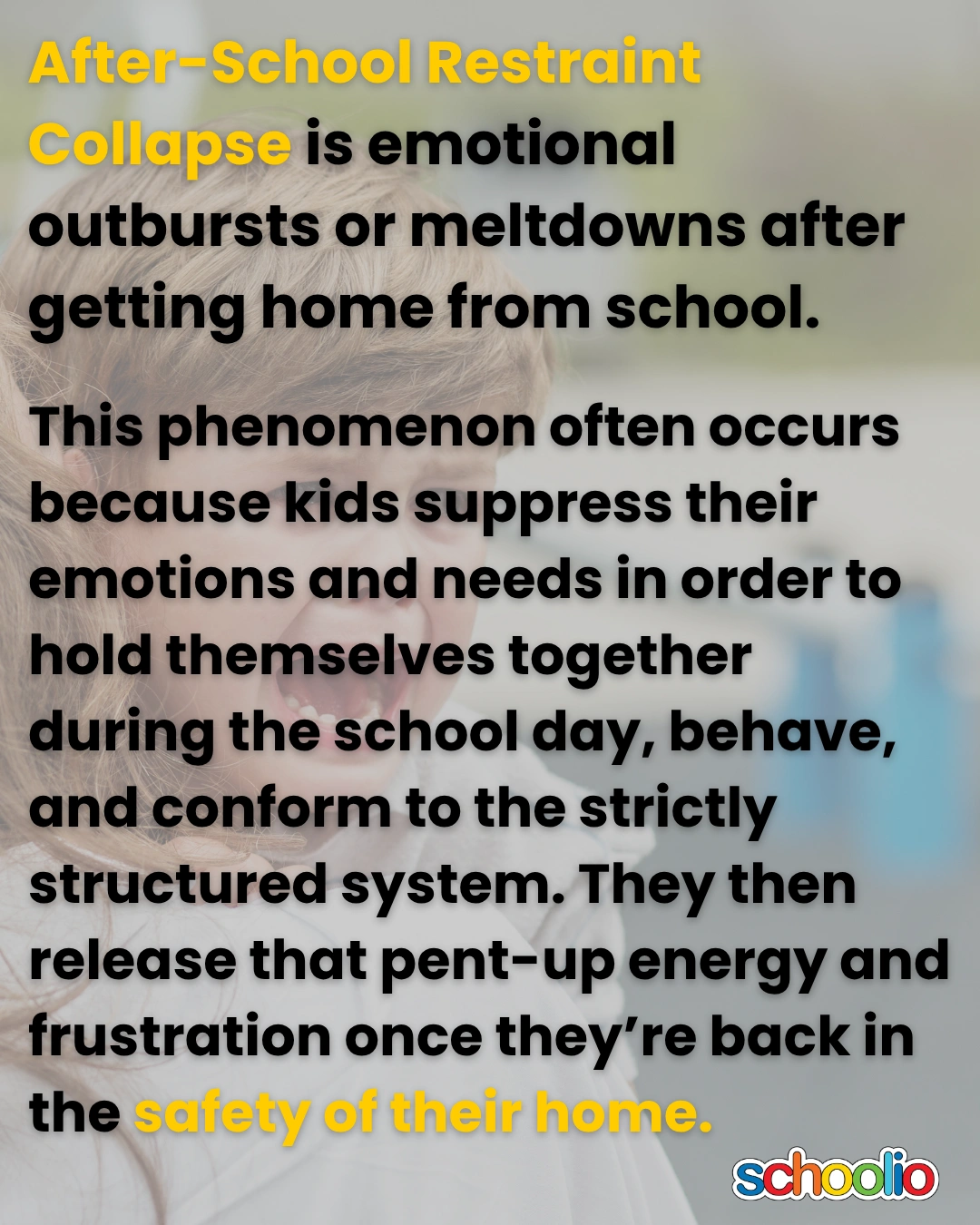
If your kid struggles with school, you may be familiar with After-School Restraint Collapse, even if you’ve never heard the term. Does your child have frequent emotional outbursts or meltdowns immediately or shortly after getting home from school? They may be experiencing [After-School Restraint Collapse](https://www.bbc.co.uk/bitesize/articles/z863cxs#:~:text=This type of behaviour is,to let it all out!). This phenomenon often occurs because kids suppress their emotions and needs in order to hold themselves together during the school day, behave, and conform to the strictly structured system. They then release that pent-up energy and frustration once they’re back in the safety of their home. After-School Restraint Collapse can happen to any child, but for kids who are ADHD, autistic, or have other neurodivergencies, it can be more frequent and more intense, because school is just that much harder for them to manage, and they are more easily overwhelmed or overstimulated. This intense emotional release can feel overwhelming for your child, and can be incredibly hard to witness as their parent.

Let’s talk about what After-School Restraint Collapse is, why it’s more common in neurodivergent kids, and then look at some practical ways to support your child. We’ll also talk about how homeschooling can be a viable option for families dealing with extreme school struggles.

What is After-School Restraint Collapse?

After-School Restraint Collapse is the emotional or physical meltdown that occurs when children who have been controlling their emotions all day at school finally feel safe enough to let go. This is especially common in kids struggling with school, where the effort to manage expectations and regulate their behavior leads to emotional exhaustion. After a day of staying relatively still and quiet, following directions, and meeting social expectations, they return home and can’t hold it together anymore.

For neurodivergent children—such as those who are ADHD, autistic, or have sensory processing disorders—this collapse can be even more intense. School environments can be highly demanding, with sensory overload, social complexities, and academic pressures draining their emotional and mental energy.

Why Does After-School Restraint Collapse Happen More Often in Neurodivergent Kids?

Many kids struggling with school are neurodivergent, such as those who are ADHD or autistic, and often face unique challenges that make the school day even more exhausting and overwhelming than for their neurotypical peers. Here are some of the reasons why your neurodivergent kiddo is more likely to experience After-School Restraint Collapse:

1. Sensory Overload

Neurodivergent children often have sensory sensitivities, which can make the school environment overwhelming. Loud classrooms, bright lights, crowded hallways, and constant stimuli can make it difficult for them to stay regulated. By the time they get home, they are overstimulated and emotionally exhausted, leading to a meltdown.

2. Social and Communication Pressures

For a lot of our neurodivergent kids, social communication is difficult or confusing, which makes the social aspect of school exhausting. Neurodivergent children often spend significant mental energy trying to fit in, understand social cues, and avoid conflicts with peers or teachers. This constant effort can lead to emotional exhaustion by the time they return home.

3. Executive Dysfunction

Many neurodivergent children struggle with executive dysfunction, which affects their ability to plan, organize, and manage tasks. The school day can be filled with tasks that require executive functioning, and the effort to stay on top of things like class transitions, homework, and listening to instructions can become overwhelming. In addition, they may hear a lot of negativity about their inability to self-manage the way their neurotypical peers can and wonder why they can’t keep up, leading to self esteem issues and more emotional exhaustion.

4. Emotional Regulation Difficulties

For children who are ADHD or autistic emotional regulation can be challenging. Our kids may suppress their emotions throughout the day to meet behavioral expectations, but once they are home, they release all the frustration and stress they’ve been holding in all day.

Ways to Support Your Child Through After-School Restraint Collapse

Understanding the causes of After-School Restraint Collapse is the first step toward supporting your child. There are several strategies that can help ease your child’s transition from school to home and reduce emotional overload. Drawing from expert advice, let’s look at some practical and concrete ways to support a kid struggling with school:

1. Create a Safe Space for Unwinding

Provide a quiet, calm space at home where your child can unwind after school. This space should be free of distractions and filled with comforting items, such as soft blankets, pillows, or their favorite sensory toys. Creating a sensory-friendly environment where your child can decompress will help reduce overstimulation and provide a sense of security.

2. Prioritize Downtime After School

Don’t jump straight into homework, chores, or structured activities when your child gets home. Limit demands and expectations no matter how small they may seem to you. Allow them to have downtime to relax and recharge. This might be free play, reading, or any activity they find soothing. Don’t try to ask them too many questions about their day or engage in conversation immediately if your child isn’t feeling it. Let them have quiet and their own space. and allow them to decide when they’re ready to start homework or other after-school activities. By reducing pressure and giving them control over their time, you give your child the freedom to decompress, which will help prevent emotional meltdowns.

3. Offer Physical Outlets

Some children find that engaging in physical activity helps release the built-up tension from the school day, especially those who are ADHD- Hyperactive Type. Whether it’s jumping on a trampoline, going for a walk, or engaging in a fun physical activity like dancing, movement can help reduce emotional overload and improve their mood.

4. Seek Support When Needed

If your child seems unusually upset after school, it might be because of an issue during the day that wasn’t fully addressed or resolved. After-school behavior could indicate that something challenging happened while they were at school.

It’s important to check in and find out if something during their school day is affecting them. Bullying is unfortunately extremely common for neurodivergent children, so you want to make sure your child isn’t being victimized at school. They are also more likely to have social struggles with peers, so fights and misunderstandings with friends can happen and leave your child feeling hurt and confused. Do your best to know what’s happening at school so you can address the issues at home and help guide your child through these altercations, as well as reach out to the school if needed.

5. Validate Their Feelings and Make Sure They Feel Heard

After a long day of masking their emotions, your child needs to feel heard and understood. Validate their emotions by acknowledging their feelings: “I know today was tough, and it’s okay to feel upset.” Listening without judgement helps your child feel supported and understood, which can lessen the intensity of their emotional outbursts.

6. Understand How Hard School Is For Some Children

Many children struggle with anxiety, separation, and security. Being away from the safety and connection of their parents all day is hard for these kids, especially our neurodivergent kiddos. All of this is in addition to having dealt with the day, peers, academics, and sensory stimulation. Reconnecting with you at the end of the day can bring a flood of emotions, from relief to frustration, all laddering up to a feeling of overwhelm.

Considering Homeschooling?

If your kid struggles with school to the point that After-School Restraint Collapse is becoming a daily occurrence, homeschooling may be an option worth considering. Homeschooling offers the flexibility to create an environment that’s specifically tailored to your child’s unique needs, making it a great alternative for neurodivergent kids who find the traditional school environment overwhelming.

How Homeschooling Can Support Neurodivergent Kids

  1. Flexible Learning Environment: Homeschooling allows you to customize your child’s learning environment to fit their sensory preferences. You can create a space that’s quiet and calm, free of the sensory triggers that may overwhelm them in a traditional classroom.
  2. Personalized Curriculum: Homeschooling offers the freedom to choose a curriculum that fits your child’s learning style and pace. You can select a curriculum like Schoolio that’s designed with neurodivergent learners in mind, offering bite-sized lessons, interest-based electives, and unique flexibility.
  3. Social Learning with Support: For neurodivergent children who struggle with social interactions, homeschooling provides an environment where they can engage with others at a frequency that doesn’t drain their social battery or create overwhelm.. Socialization can take place in smaller, more controlled settings, reducing the stress of large group dynamics. Not only that, but with your regular support they can learn emotional regulation and social skills in a healthy manner with guidance from an adult who has their best interests at heart.
  4. Emotional Support: Homeschooling gives you the chance to be present for your child throughout the day, offering emotional support as needed. This allows you to incorporate social-emotional learning into your daily routine, helping your child develop the emotional regulation skills they need to thrive.

The First 3 Steps to Get Started with Homeschooling

  1. Understand Your State Laws: Homeschooling laws vary by state, so it’s important to familiarize yourself with the specific regulations in your area. Some states require you to notify your local school district, while others have stricter guidelines around curriculum and testing.
  2. Choose a Curriculum: There are many homeschooling curricula available, but it’s important to find one that fits your child’s learning style. Schoolio is a great option for families starting out with homeschooling, as it offers all subjects in one place, flexibility and lots of support. It’s also designed to be accessible for neurodivergent learners, making your initial dive into homeschooling much easier and stress-free.
  3. Find Support: Look for local or online homeschooling communities where you can connect with other parents and seek advice and support. Joining a homeschooling co-op or an online group can provide much-needed support and confidence for both you and your child.

Conclusion

After-School Restraint Collapse is a common experience for lots of kids, and those of us with neurodivergent kids struggle in school even more. With the right support strategies, you can help your child manage their emotions and hopefully ease the transition from school to home. If school is simply not a fit for your child and likely never will be, don’t hesitate to consider homeschooling as a viable option. Your child’s emotional well-being should always be the top priority. If your kid struggles with school, it’s essential to listen to their needs.
Homeschooling Parent- The Quietly Bold

Homeschooling Parent- The Quietly Bold


Fortune favors the bold.

Not the loudest.

Not the most perfect.

Not the ones with the most polished plans.

The bold.

The parent who pulls their kid out of a system everyone else still trusts.

The parent who chooses connection over conformity.

Flexibility over tradition.

Peace over pressure.

I’ve met hundreds of these parents. Quietly bold.

No parade. No validation. Just a gut feeling that this was right for their child.

They didn’t wait for permission.

They didn’t wait for the school to change.

They made the change themselves.

And the result? That’s the “fortune” part.

Kids who smile again.

Kids who ask questions again.

Kids who don’t hate learning.

Kids who feel seen.

We get asked all the time: “Is homeschooling a risk?”

Yes. So is sending your child into a system that doesn’t fit. Both paths take boldness. One just gives you more control.

This is why I believe in homeschooling.

This is why I believe in Schoolio.

Not because it’s trendy. Not because it’s perfect. But because it puts the child back at the center — and trusts the parent to lead.

Fortune favors the bold.

If you’ve made the leap, you already know.

If you’re on the edge, maybe this is your sign.


Sathish

still learning, still unlearning

The Quiet Wins That Matter Most

The Quiet Wins That Matter Most


This has been on my mind today…

Some days, the work feels heavy. You’re building something that doesn’t yet exist. A platform that reimagines education, reshapes how kids learn, and gives power back to the people who’ve been left out of the conversation for too long—parents, students, and those who learn a little differently.

You push through meetings, plans, deadlines, product reviews. You tweak systems, question decisions, and hold the big vision in your mind like a lighthouse, even on foggy days. But once in a while, something cuts through all that noise. A comment. A thank-you. A message that reminds you why you started this in the first place.

That happened to me recently.

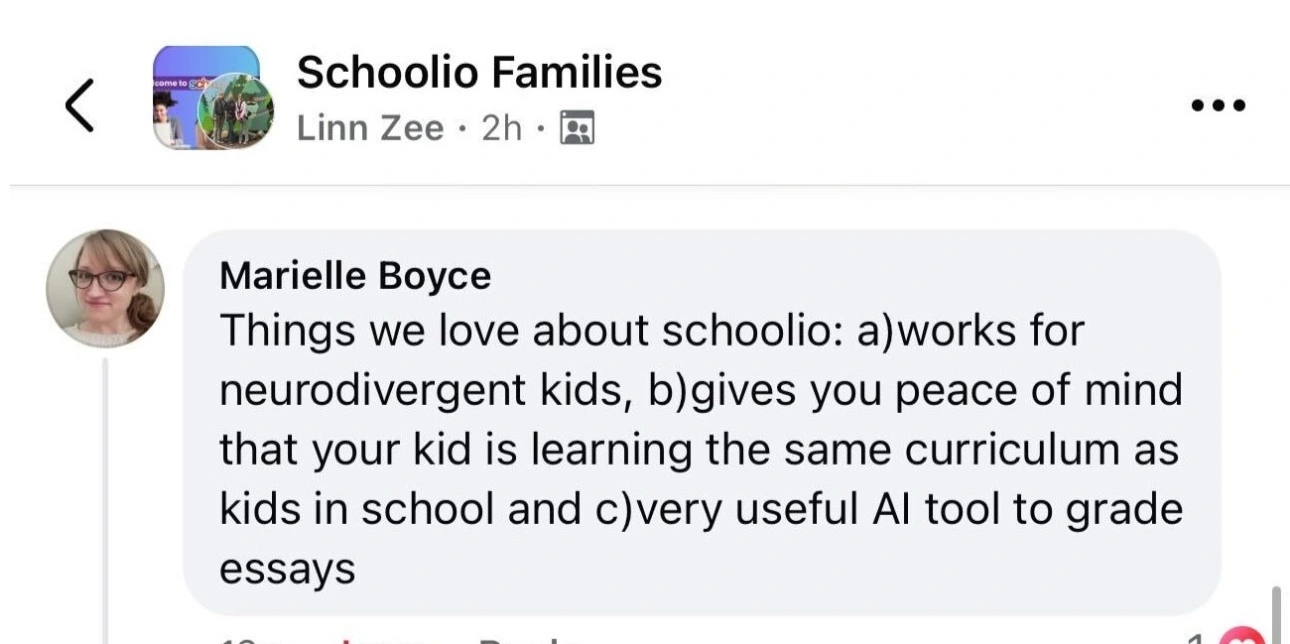
A parent shared a short post in our Schoolio Families group. Just a few lines. No hashtags. No fuss. Just truth.She said she loved Schoolio because it works for her neurodivergent child. Because it gives her peace of mind knowing her kid is learning the same curriculum as students in traditional school. And because the AI tools helped with grading essays.


Customer Testimonial

Simple. Direct. But when I read it, it stopped me.

Because that right there is the quiet win that matters.

She didn’t say we changed her life. She didn’t say we were perfect. What she shared was something more real. She shared relief. Confidence. Stability. The kind of stability every parent needs, but especially the ones who are walking a different path.


The truth is, a lot of the parents we serve never wanted to homeschool. They weren’t planning for it. It wasn’t on their vision board. But something shifted—maybe a bad experience at school, a child’s needs not being met, or just a gut feeling that things weren’t working.

And now they’re here, trying to do what’s best for their child, even when the world questions them for it.

This is what we built Schoolio for. For that parent who lies awake at night wondering if they’re doing enough, for the child who learns better with space and silence, for the families that don’t see themselves in glossy brochures or test scores and for the moments when a tool actually helps and no one has to fight for it.

You don’t always get to see the impact of your work. You don’t always hear how it lands. But every now and then, someone like Marielle speaks up and says, This helped. And for me, that’s everything.

Because this isn’t just about curriculum or platforms or AI tools. This is about building something that lets families breathe again. Something that says: you’re not alone. You’re not wrong. And yes, you can do this.

That’s the win I hold onto today.


Sathish

still learning, still unlearning

Unpopular Opinion- Learning Shouldn’t Always Be Fun

Unpopular Opinion- Learning Shouldn’t Always Be Fun

By Lindsey, certified special-ed educator & co-founder, Schoolio


Does this sound familiar?

“How many questions do I have to do?”
“How much longer?”
“I’m bored!”
“Are we done yet?”

If your homeschool days feel like a marathon of sighs, tears, or endless negotiating, you are not alone. And it’s not because you’re a “bad teacher” or your child is “unmotivated.”

The real culprit?
You’re probably replicating school at home.

And the solution is simpler than it sounds: stop doing that.

At Schoolio, we talk a lot about our Philosophy of Learning. But here’s the gist of it: thriving in homeschool comes down to two big ideas—Relevancy and Responsibility.

Relevancy: The “Why” Behind Learning

Kids learn best when they understand why they’re learning something. And there are really only two powerful “whys”:

  • CuriosityI want to know this because it interests me.

  • PurposeI know why this is important for me to learn.

When kids have one of those reasons in mind, they’re naturally more engaged. That’s why Schoolio makes curiosity and purpose central, with our Future Readiness Library and electives that stretch way beyond the basics. Whether it’s learning all about cats, entrepreneurship, or the history of pirates, kids can find what they’re interested in, or see the value of- and often, they’re genuinely excited to learn.

Responsibility: Learning Isn’t Always Fun

Here’s the unpopular opinion: not all learning should be fun.

We love hands-on projects, electives that spark excitement, and letting kids explore their interests. But the truth is, some things in life simply just require effort. Some subjects take persistence. And not everything in life can, or should, be gamified or turned into an adventure.

And that’s not a bad thing. In fact, it’s one of the most valuable lessons homeschool can offer.

Real-world readiness means teaching kids:

✔ Some things you want or need to learn won’t come easily, but they’re worth the effort.
✔ Not everything is a game, but it still has to be done.
✔ Responsibility means following through, even when something isn’t fun.

Because in the end, building grit, self-discipline, and responsibility are just as important as mastering math facts or essay writing.

The Balance

Homeschool should not be all drudgery, but it doesn’t have to be all glitter and games either. The sweet spot is in teaching both: helping kids chase what excites them and showing them how to stick with the hard stuff when it matters.

So maybe the next time you hear “I’m bored!” or “How much longer?” you’ll remember: you’re not failing, you’re teaching real life.

? Lindsey

New Generation, New Rules: How We’re Redefining Discipline

New Generation, New Rules: How We’re Redefining Discipline


This has been on my mind today…

Growing up in a South Asian home, discipline meant one thing: fear.

A raised voice. A quick slap. A look that could shut your whole body down. It was all normal. So normal that no one around you even called it violence. They called it “raising you right.”

My friends weren’t hit — they were “grounded.” That concept felt foreign. Like something only white parents did. “You’re grounded” never hit the same as your dad walking in with a belt, and you instinctively hiding under the bed.

Now fast forward to today. I’m a father of two. And when it comes to discipline, I catch myself constantly questioning: what do I do instead?

We don’t hit. We don’t shame. But we also don’t let chaos rule the house.

So what do we do? We take away the iPad.

Not as punishment. But as a boundary.

No yelling. No lecture about how we had “nothing growing up.” Just a quiet, firm decision — you didn’t clean your room, so screen time’s done for the day. That’s it.

And sometimes I wonder… is that enough?

Did I go too soft? Am I raising them to be weak?

But here’s the truth I keep coming back to: violence didn’t make us strong. It made us scared.

Grounding didn’t teach kids how to think. It just taught them to lie better.

Discipline in 2025 isn’t about obedience. It’s about accountability.

Our kids don’t need to “fear us to respect us.” They need to trust us to listen.

They need to know their actions have consequences — not because they’ll be hit or humiliated, but because choices carry weight.

When I take the iPad away, it’s not about power. It’s about consistency.

When I stay calm, it’s not because I’m weak. It’s because I’m breaking a cycle.

And if you’re a South Asian parent trying to figure it all out — same as me — let me say this:

You’re not being too soft nor raising “spoiled kids.”

You’re raising future adults who won’t flinch when someone raises their voice.

Who won’t think love and fear are the same thing.

Who won’t confuse trauma for tradition.

This is why Schoolio matters to me.

Because we’re not just building curriculum. We’re building culture.

One where families grow together.

Where learning is safe, not stressful.

Where discipline is about guiding — not punishing.

This isn’t about making parenting easier. It’s about making it better.

And the better way?

Starts with us.

Sathish

still learning, still unlearning

When I Realized My Child’s Learning Style Didn’t Match My Own

When I Realized My Child’s Learning Style Didn’t Match My Own

By Lindsey, certified special-ed educator & co-founder, Schoolio


This has been on my mind today…

When I first started homeschooling, I assumed my kids would learn the way I learn. That’s the default, right? We teach from our own perspective. But it didn’t take long for me to realize their learning styles—and their needs—were very different from mine.

I’m ADHD. I thrive on novelty, challenge, and curiosity. I love going out, seeing people, doing things. My brain comes alive when there’s energy in the room. Planning homeschool field trips, events, parties, and mom meet-ups? That gave me life. I thought it would do the same for my kids.

But my kids are autistic. They enjoy their friends, yes—but in small doses, one-on-one, in familiar settings. Big group outings didn’t energize them the way they did me. They drained them. Where I walked away buzzing with energy, they walked away needing quiet, calm, and time to recover.

It was the same in our learning space. I always wanted music playing, stimulation in the background. They wanted silence. I craved variety and spontaneity. They needed consistent, reliable routines. I thrived on the excitement of new challenges. They thrived on knowing what to expect.

At first, I resisted that difference. I kept thinking, but this is how I learn best—shouldn’t it work for them too? When it didn’t, I felt frustrated. But slowly, I realized I had it backwards. My job wasn’t to shape them into my rhythm. It was to honor theirs.

That shift changed everything.

I began planning fewer big events and focusing on more intentional one-on-one time with friends. Instead of background noise, I chose quiet. Our homeschool days gained more rhythm and held fewer surprises. Along the way, I learned how to stretch myself to meet their needs, and gently taught them to stretch a little too—tolerating small bits of novelty, practicing compromise, and knowing it was okay to ask for quiet whenever they needed it.

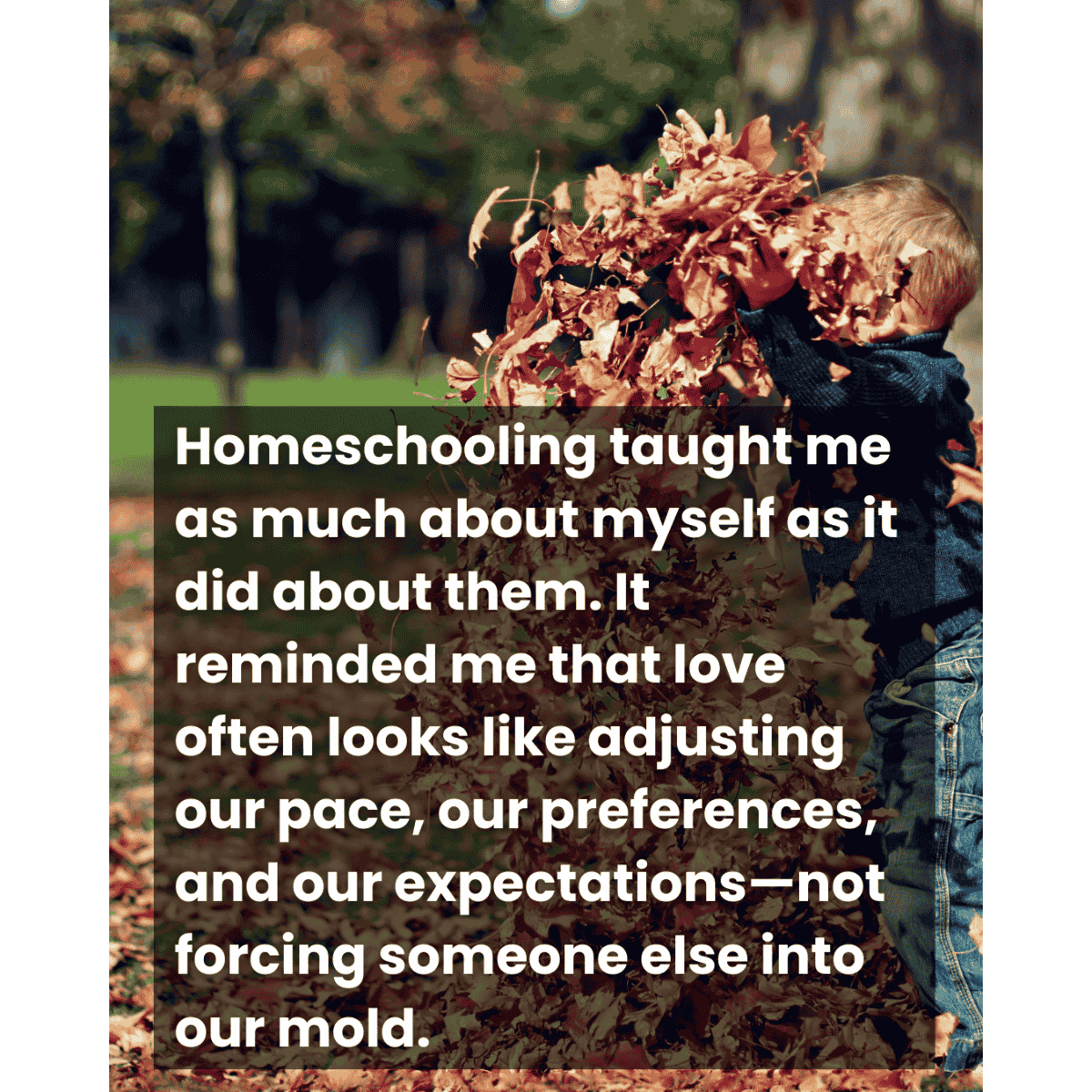
Homeschooling taught me as much about myself as it did about them. It reminded me that love often looks like adjusting our pace, our preferences, and our expectations—not forcing someone else into our mold.

And it gave me this truth:

We don’t have to learn the same way to learn together.

We Banned Calculators Once. Out of Fear. Not Logic.

We Banned Calculators Once. Out of Fear. Not Logic.


They said it would make kids lazy. That if we let students use calculators, they’d forget how to think. Teachers warned of doom, boards debated bans, and parents worried that the math their children were learning wasn’t “real.” But the truth is, the calculator didn’t replace understanding—it freed it. It helped students move faster, go deeper, and build confidence instead of anxiety. We don’t question calculators anymore. They’re standard. Obvious. Necessary.

And yet here we are again.

Today, it’s not calculators we’re afraid of—it’s AI. It’s new models of learning that don’t look like the rigid classrooms we remember. It’s the idea that maybe, just maybe, school shouldn’t be one-size-fits-all. And that fear, as it always has, shows up in familiar ways: skepticism, delay, control. The irony is that the world is changing faster than ever, but our systems still ask kids to move in lockstep. To sit still. To follow instructions. To learn passively in a world that demands action, agility, and personal agency.

At Schoolio, we see this every day. Families come to us because they’re not just choosing homeschooling—they’re choosing possibility. They’re choosing to move past fear and toward tools that give them freedom. Freedom to customize. Freedom to pause and restart. Freedom to learn with joy, not dread. And the moment parents hand over that freedom to their kids, something amazing happens. Not because they’re chasing trends, but because they’ve decided to lead.

We didn’t build Schoolio to replace teachers or classrooms. We built it because we believe that learning should reflect real life—messy, beautiful, nonlinear, and full of second chances. Our hybrid model combines digital lessons and print-based work, future-readiness and core subjects, structure and flexibility, because we know real learning lives somewhere in between.

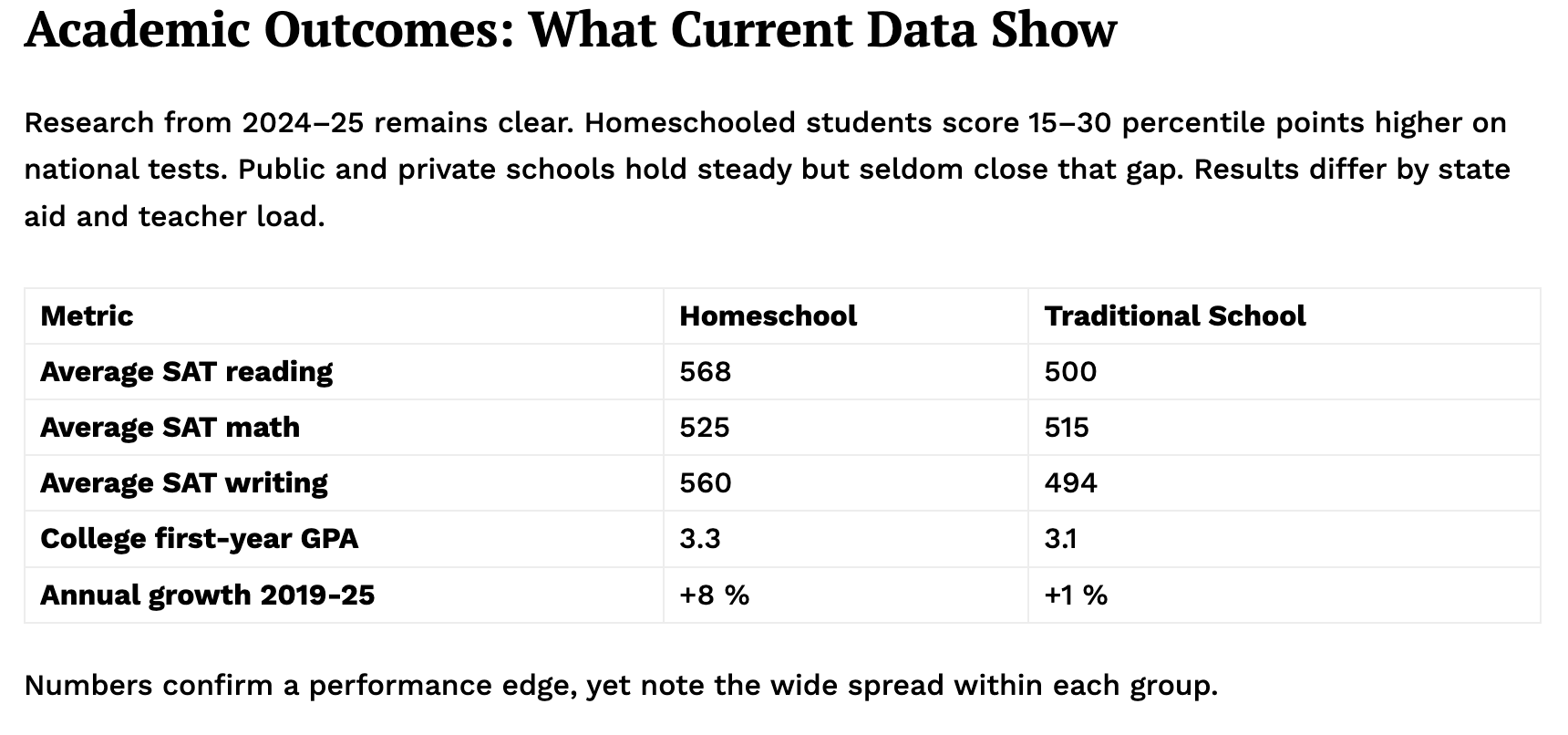
https://www.intelligentliving.co/homeschooling-vs-traditional-school-2025/

Academic Outcomes 


It’s easy to fear the future when you don’t trust the tools. But just like the calculator, the right tools don’t replace thinking—they unlock it.

And this time, we don’t have to wait decades to figure that out.

Something is breaking—and the cracks are no longer subtle.

Something is breaking—and the cracks are no longer subtle.

Something is breaking—and the cracks are no longer subtle. This week, Ontario’s Education Minister Paul Calandra said the quiet part out loud: “We have to change the way school boards behave.” In his remarks to the legislature, he called out dysfunction, political distractions, and a lack of unified leadership across the province. The full article is worth reading here.

When politicians start publicly questioning the structure of an entire education system, it’s not a small thing. It signals something deeper—a disconnection between families and the institutions meant to serve them. Between what students need, and what schools are able—or willing—to provide.

At Schoolio, we’ve heard this unraveling for years. Quietly at first. A parent unsure if their neurodivergent child will ever be supported. A teacher burned out from fighting for basic classroom resources. A school board spending more on internal legal battles than on inclusive programming. And now, those whispers have grown into something louder. More urgent.

The traditional school model is struggling under the weight of complexity it can no longer carry. Bureaucracy, politics, budget cuts, and reactive policies are not a foundation for innovation or well-being. When boards debate flags and book bans while special education runs deficits, it’s not just the system that’s broken—it’s the trust.

This isn’t about abandoning schools—it’s about acknowledging that they no longer serve every child equally. It’s about making space for alternatives that are working right now, for real families, in real time.

Homeschooling, once dismissed as fringe, is now a lifeline. Microschools are quietly multiplying. Parents are reclaiming agency not out of rebellion, but out of necessity. And at Schoolio, we’ve built a platform to meet them there. A hybrid curriculum that blends structure with flexibility. A place where emotional safety, real-world skills, and learning readiness are just as important as test scores.

The question isn’t whether the old model can be fixed. The question is: will we keep asking families to wait?

Because they’re not waiting anymore.

They’re moving forward—with or without the system.

And Schoolio is walking beside them.

Sathish
still learning, still unlearning

When Grief Stopped Our Homeschool, and Yet the Kids Didn’t End Up “Behind”

When Grief Stopped Our Homeschool, and Yet the Kids Didn’t End Up “Behind”

This has been on my mind today…

In the fall of 2020, we had a death in the family. The kids were struggling. I was wrecked. And academic learning came to a screeching halt.

I want to be clear: learning never really stops—kids are always learning. But “schoolwork”? That stopped completely. Instead, the kids played with toys. We read books before bed. They watched a lot of TV. We just… existed together.

By February, the fog of grief had lifted only enough for me to feel the heavy weight of guilt. I felt like I had failed my kids that year. I knew I should restart, but I couldn’t find the energy. That guilt eventually pushed me toward my first experiences with online learning. I signed up for a math program, a typing platform, a science video subscription. None of it was structured or connected—I just needed to feel like the kids were doing something. To be honest, I wasn’t really paying attention.

Fast forward to the next year. We started a new grade. I had no idea what they had learned—or not learned—the year before. So I thought, let’s just start fresh and see what happens. And wouldn’t you know it? They were fine. We backfilled here and there, but there wasn’t the gaping hole in their knowledge that I’d been bracing for.

I once read a story from someone who had grown up as a refugee. They had missed three years of formal schooling. When they came to America, they were placed in the grade that matched their age, not their transcripts. And you know what? They did just fine.

That stuck with me. Because the truth is: kids in school aren’t learning as much as we assume. And our kids at home are learning so much more than we realize—even when we think we aren’t “teaching.”

Looking back, I really believe that the space homeschooling gave us to grieve properly—as a family, at our own pace—helped us heal faster and carry less long-term pain. If we had been tied to public school’s “back to normal” timeline, I think the scars would have run deeper.

So if you’re in the middle of a big life change—grief, divorce, a move, a season that shakes your family—please don’t stress about schoolwork. Take care of yourselves. Focus on healing. The academics can wait. And I promise: your kids will be just fine.

Lindsey
certified special-ed educator & co-founder, Schoolio

How to Homeschool Multiple Kids Without Losing Your Mind

How to Homeschool Multiple Kids Without Losing Your Mind

by Lindsey, Head of Curriculum at Schoolio

This has been on my mind today…

Homeschooling even one child is a full-time emotional and mental job. Homeschooling two or three? That’s a whole circus. And if they’re at different grade levels? Let’s just say it took me a while to stop waking up already overwhelmed.

I remember those early years when I felt like I had to mimic a real school day. Everyone had to be at the table at the same time, working on math at 9, reading at 10, science after lunch. It was rigid, exhausting, and full of frustration. Someone always needed help, someone else was bored or acting out. There were tantrums. Sometimes theirs. Sometimes mine.

What saved us was realizing that homeschooling doesn’t have to look anything like public school. And honestly, it probably shouldn’t.

One of the biggest mindset shifts we had was dropping the idea that everyone had to do the same subject at the same time. That’s not how real life works, and it’s not how learning naturally happens. So I started calling the kids to me one at a time. When one was off playing, I could work through a new math concept with the other. Once they had the hang of it, I’d set them up with independent work and call the next one in for reading time. It wasn’t about multitasking anymore. It was about focused, calm, short bursts of one-on-one time.

The second big shift came when I stopped letting grade levels rule our world. At first I was clinging to the public school timeline — this topic in science at this age, this history chapter in third grade, and so on. But it didn’t make sense anymore. Why teach something just because the curriculum says it’s “time,” if they’re not curious or ready? So we started learning science and social studies as a team — everyone at the same time, just at different depths. We’d dive into volcanoes or ancient Egypt or the weather together, and I’d tweak the activities up or down depending on the child. They started helping each other, sharing facts, building projects side by side. The learning stuck. And I wasn’t exhausted.

I used to feel guilty every day. Guilty that one child got more of my attention. Guilty we didn’t finish the lesson plan. Guilty I wasn’t following the school’s rhythm. But I’ve learned that flexibility is not a failure. In homeschooling, it’s a strength.

We use our homeschool planner loosely now — more like a compass than a stopwatch. And the beauty of online homeschool programs is that they let you set your own pace. With Schoolio, I can see where each kid is, pick the lessons that matter most for them right now, and let go of the rest.

So if you’re in the thick of trying to homeschool multiple kids and feeling like you’re falling apart, I promise you’re not alone. The magic isn’t in doing it all at once. The magic is in tuning into your children, one by one, moment by moment — and building a life that works for your family.

And guess what? That’s more than enough.

Lindsey

certified special-ed educator & co-founder, Schoolio


Curious how Schoolio helps families balance learning for multiple kids? Start a 7-day free trial or explore our all-in-one planner built for real homeschool life.

Start your FREE TRIAL.

Why We Need to Redefine What ‘Progress’ Looks Like in Homeschooling

Why We Need to Redefine What ‘Progress’ Looks Like in Homeschooling

Voice: Sathish

This has been on my mind today…

The word “progress” shows up a lot when we talk about education. Are they on grade level? Are they reading at the right age? Are they behind? Ahead? Caught up? We use these markers like a ruler held up against our kids — even when we know, deep down, that learning doesn’t work that way.

I’ve spoken to so many families who felt pressure to make their homeschool look like school. If their child wasn’t hitting the same pace or benchmarks, something must be wrong. But more and more I’m hearing stories from parents that flip that narrative completely.

Like Suzanne. Her son is autistic and in grade 6. They were searching for something — anything — that would actually work for him. She called finding Schoolio a “game changer.” For the first time, her son is doing really well. Not just keeping up — thriving. Not because someone pushed him through a one-size-fits-all curriculum, but because they finally found a platform that met him where he was.

Or Holly, who told us her daughter was developmentally behind and struggling to understand things. Public school left her confused and overwhelmed. But now? With Schoolio lessons, she’s finally understanding. She’s gaining confidence. She’s calm and learning. And Holly said, “I couldn’t be happier.”

These stories remind me that real progress isn’t always loud. It doesn’t always show up on a test score. Sometimes progress is your child smiling during a lesson instead of crying. Sometimes it’s the first time they ask to keep going. Or the first time they feel safe enough to say, “I don’t get it,” and actually get the support they need.

We have to unlearn the idea that speed equals success. Learning isn’t a race. If your child needs more time to grasp a concept, that’s not failure — that’s human. Especially for neurodivergent learners or kids recovering from years of being overwhelmed by noise, rules, and fast-paced instruction.

Progress can be your child doing less… but doing it with joy. It can be fewer meltdowns. More calm. Asking questions again. Finding confidence. Progress might not be a straight line. But when we build learning around the child — not the system — it shows up in ways that actually matter.

So if you’re homeschooling and worried that your child is “behind,” take a breath. Ask yourself — are they more curious? More relaxed? Starting to enjoy learning again?

That might be the most important kind of progress there is.

Sathish

still learning, still unlearning


Personalized Education: The Key to Engaging Homeschooling

In the world of education, one size rarely fits all. This is especially true in homeschooling, where the ability to tailor the learning experience to each child’s unique needs, interests, and learning style can make all the difference in keeping students engaged and motivated. At Schoolio, we believe that personalized education is the cornerstone of effective learning, and our customizable homeschool curriculum is designed to help you create a dynamic and engaging educational journey for your child.

Why One-Size-Fits-All Doesn’t Work

Traditional educational models often rely on a standardized curriculum, which can fail to address the individual strengths and weaknesses of each student. This approach can lead to disengagement, as children may feel either overwhelmed by material that is too challenging or bored by content that doesn’t challenge them enough. By contrast, personalized education acknowledges that every child is unique and benefits from a tailored approach that adapts to their specific needs.

The Benefits of Personalized Homeschooling

  1. Enhanced Engagement and Motivation

When learning is personalized, students are more likely to stay engaged and motivated. They see the relevance of what they are learning to their own lives and interests, which fosters a deeper connection to the material. According to ASCD, student engagement is crucial for effective personalized learning. With Schoolio’s customizable homeschool curriculum, you can create lessons that resonate with your child’s passions, whether it’s science, literature, art, or technology.

  1. Addressing Individual Learning Styles

Every child has a preferred way of learning, whether they are visual, auditory, or kinesthetic learners. Personalized education allows you to cater to these learning styles, making it easier for children to absorb and retain information. Schoolio’s platform offers a variety of teaching tools and resources that support different learning modalities, ensuring that each lesson is accessible and engaging.

  1. Flexibility to Adapt and Grow

A personalized approach to education provides the flexibility to adapt the curriculum as your child grows and their interests evolve. This dynamic method keeps learning fresh and exciting, preventing burnout and maintaining a high level of engagement. Schoolio’s digital platform makes it easy to adjust your homeschooling plan, incorporating new topics and activities that align with your child’s developing interests.

  1. Building Confidence and Independence

When children learn at their own pace and in ways that suit them best, they build confidence in their abilities. This self-assurance encourages them to take ownership of their learning, fostering independence and a love for lifelong learning. Schoolio’s resources are designed to support this growth, offering opportunities for self-directed projects and exploratory learning.

How Schoolio Supports Personalized Homeschooling

  1. Comprehensive Curriculum Kits

Schoolio provides comprehensive homeschool curriculum kits that cover core subjects while allowing for extensive customization. These kits include a variety of materials and resources, from interactive lessons to hands-on activities, making it easy to tailor the educational experience to your child’s needs.

  1. Interactive Digital Platform

Our digital platform is a hub of interactive resources that support personalized learning. With access to a wide range of subjects and customizable lesson plans, parents can easily modify the curriculum to suit their child’s learning style and interests. Features like adaptive learning tools and progress tracking help ensure that your child remains engaged and on track.

  1. Community and Support

Homeschooling doesn’t have to be a solitary journey. Schoolio’s community forums and support networks connect you with other homeschooling families and educators. Share tips, resources, and experiences to enhance your personalized homeschooling efforts. Our platform also offers access to educational consultants who can provide personalized advice and support.

  1. Focus on Life Skills and Real-World Learning

In addition to academic subjects, Schoolio emphasizes the importance of life skills and real-world learning. Our curriculum includes practical activities that teach financial literacy, critical thinking, problem-solving, and other essential skills. This holistic approach ensures that your child is well-prepared for both academic success and real-life challenges.

Success Stories from Schoolio Families

Many families have found success with Schoolio’s personalized approach to homeschooling. Here’s what some of our satisfied customers have to say:

  • “Schoolio’s tailored curriculum has transformed our homeschooling experience. My child is more engaged and excited about learning than ever before.”
  • “The flexibility and variety of resources on Schoolio’s platform have made it easy to adapt lessons to my child’s unique interests and learning style.”
  • “With Schoolio, we have the support and tools we need to provide a high-quality, personalized education that keeps our kids motivated and thriving.”

Conclusion

Personalized education is the key to keeping students engaged and excited about learning. By moving away from a one-size-fits-all approach, homeschooling families can create a dynamic and enriching educational experience that caters to the unique needs of each child. Schoolio’s customizable homeschool curriculum and digital platform provide the tools and support you need to make personalized education a reality.

Explore Schoolio today to discover how our resources can help you craft a personalized and engaging homeschooling journey for your child. With Schoolio, every child can experience the joy of learning in a way that suits them best.