When a Mom in Our Community Answered a Simple Question with One Word.

When a Mom in Our Community Answered a Simple Question with One Word.


This has been on my mind today…

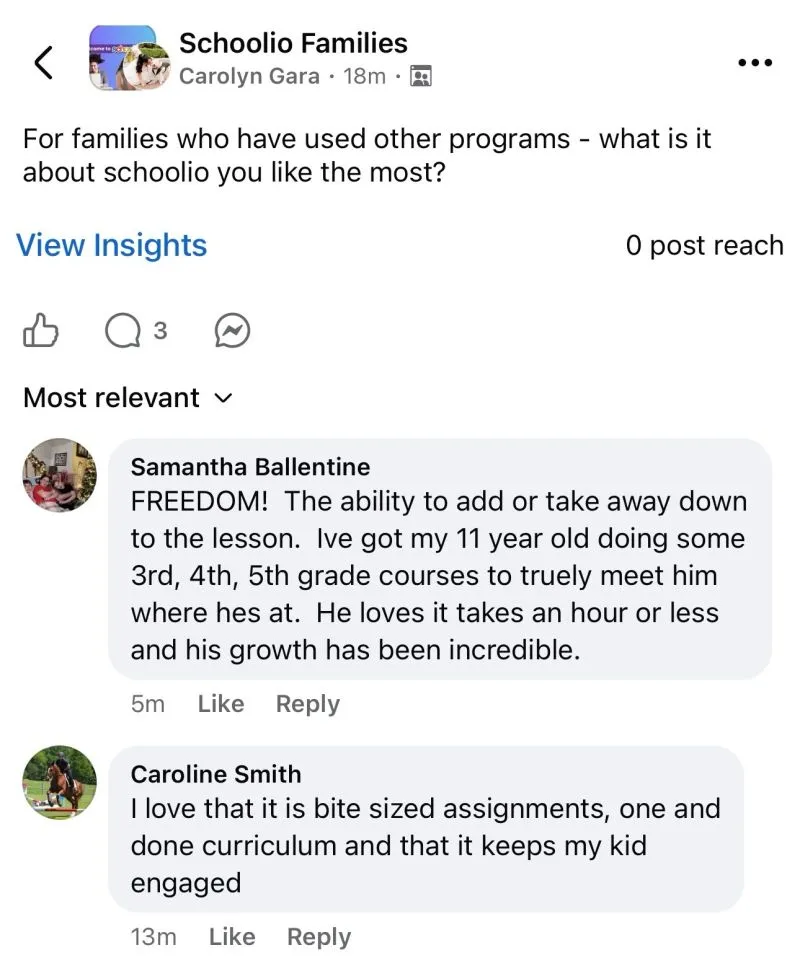
A mom in our community answered a simple question with one word.

Freedom.

Not freedom from learning. Freedom inside learning.

One parent shared that her eleven year old moves between third, fourth, and fifth grade work depending on the subject. Not because he is behind. Not because he is ahead. Because that is where he is.

Another said she loves the bite sized, one and done lessons. Her child stays engaged. It takes less than an hour. Growth has been incredible.

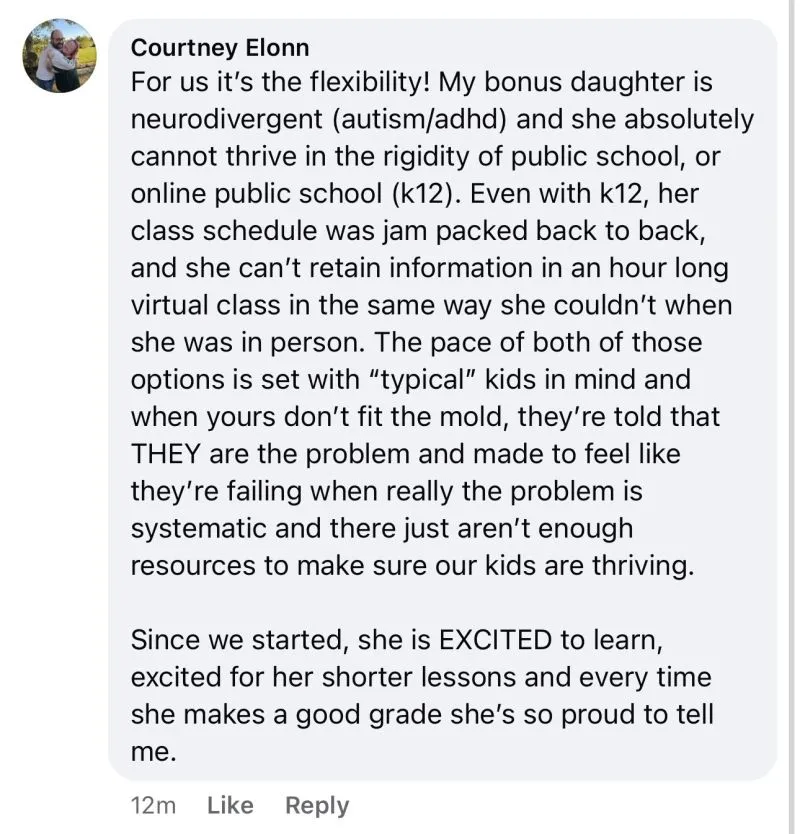
And then a mom of a neurodivergent daughter said something that hit hard. In public school and even online public school, the pace was built for typical kids. When her child could not keep up, she was made to feel like the problem.

Since switching, her daughter is excited to learn. Proud of her grades. Thriving.

This is why homeschooling is becoming more normal across the world.

It is not about escaping school. It is about building systems that adapt to kids instead of asking kids to adapt to systems.

When parents say freedom, what they mean is their child finally fits.


Sathish

still learning, still unlearning


When “Grade-Level” Tests Make Homeschool Parents Feel Like Failures

When “Grade-Level” Tests Make Homeschool Parents Feel Like Failures


This has been on my mind today…

I talk to so many homeschooling parents who have had this moment:

They run a school-based diagnostic test to see if their child is “on grade level”.

They see a score they weren’t expecting.

And suddenly, their confidence collapses.

“I think my kids have fallen behind.”

“I feel like I’ve failed them.”

“Did homeschooling make them lose skills?”

Let me say this clearly, as both a former teacher and a homeschooling mom:

School-based testing does not measure your child’s intelligence.

And it absolutely does not measure the value of your homeschool.

Most of these assessments — especially the popular ones families use to “check grade level” — were designed for traditional classrooms. They measure a very specific thing: a child’s ability to memorize and recall the exact skills schools have decided are important, in the exact format they expect.

That’s it.

They usually test math and language.

They don’t test problem-solving.

They don’t test creativity.

They don’t test if your child is happier, more confident, or less anxious than they were in school.

They don’t test emotional regulation skills.

They don’t test adaptability, curiosity, persistence, or resilience.

And yet those are the very skills that matter most once school is over.

Here’s something else most parents don’t realize:

The human brain only retains information for two reasons.

  1. Intrinsic interest — the learner genuinely cares about the topic.
  2. Perceived usefulness — the learner understands why this information matters in their real life.

Everything else? The brain offloads.

This is why retention in public school is so low. It’s why every fall, teachers spend weeks “reviewing” material kids supposedly learned the year before — and most students swear they were never taught it. They were. Their brains just didn’t keep it.

We adults are no different.

If most of us took a grade 7 math test today, we’d struggle — unless we’re naturally “math people” (intrinsic interest) or use it regularly in our work (perceived usefulness). That doesn’t make us less intelligent than a seventh grader. It just means we’ve let go of information we don’t need.

Kids do the same thing.

So when a homeschool parent sees a test score and panics, what they’re often seeing isn’t “lost intelligence.”

They’re seeing a mismatch between how the brain actually learns and how schools measure learning.

Homeschooling offers something radically different — and far more valuable. It teaches kids how to learn. How to ask questions. How to find information when they need it. How to notice what interests them and pursue it deeply. How to persist through challenges without shame.

Those skills don’t show up on standardized diagnostics.

But they show up everywhere else in life.

Now, if it’s important to you that your child aligns closely with public school benchmarks, that’s okay. Homeschooling isn’t one thing — it’s yours to shape. You can absolutely use test results as information, identify gaps, and choose to work on specific skills.

What I don’t want you to do is let those numbers define your child — or yourself.

Your kids are not checkboxes.

Your homeschool is not a failure because it doesn’t mirror school.

And you are not doing this wrong because your child’s brain didn’t perform on demand for a system you intentionally stepped away from.

Please take school-based tests for what they are: limited tools, not verdicts.

You are building something bigger than scores.

Something more human.

And that matters far more than any diagnostic ever will.


? Lindsey

Certified Special-Ed Educator & Co-Founder, Schoolio

Anxiety in Neurodivergent Kids: When Behavior Is Really a Nervous System Response

Anxiety in Neurodivergent Kids: When Behavior Is Really a Nervous System Response


Anxiety in neurodivergent kids doesn’t always look like worry, tears, or saying “I’m anxious.”

More often, it looks like:

  • Arguing over small requests
  • Avoiding work until the very last minute
  • Staring off into space when asked a question
  • Melting down over something that seems minor
  • Saying “sorry” over and over again

And because it doesn’t look like anxiety, it’s often misunderstood as defiance, laziness, disinterest, or immaturity.

But for ADHDers and autistic kids, anxiety is frequently a body response, not a thought problem. Their nervous system is reacting to perceived threat — even when there’s no obvious danger.

To understand this, we need to talk about the four stress responses.

The Four “F” Responses: How Anxiety Shows Up in ND Kids

When the nervous system detects a threat, it doesn’t stop to ask whether the threat is logical. It reacts automatically. For neurodivergent kids — whose brains already process the world more intensely — everyday situations can trigger these responses more easily.

These aren’t signs of dysfunction.

They are adaptive survival responses.

1. Fight

What parents often see:

  • Verbal outbursts
  • Argumentative or oppositional behavior
  • Clenched jaw or fists
  • Explosive reactions to small requests

What’s actually happening:

The child’s body feels under attack — by pressure, overwhelm, sensory overload, or loss of control. The nervous system shifts into defense mode.

Fight isn’t about wanting conflict.

It’s about protecting oneself when escape doesn’t feel possible.

Common triggers for ND kids:

  • Being rushed
  • Feeling misunderstood
  • Too many demands at once
  • Sensory overload (noise, light, touch)

2. Flight

What parents often see:

  • Leaving the room
  • Avoiding tasks
  • Procrastination
  • Excessive bathroom breaks
  • Daydreaming or “checking out”

What’s actually happening:

The nervous system has decided, I need to get away from this.

Flight doesn’t always mean physically running. It often shows up as mental escape — zoning out, scrolling, disappearing into imagination, or putting tasks off indefinitely.

For ND kids, flight is common when:

  • A task feels too big or unclear
  • Failure feels likely
  • The environment feels overwhelming

Avoidance isn’t laziness.

It’s anxiety trying to reduce harm.


3. Freeze

What parents often see:

  • Blank stares
  • Non-responsiveness
  • “I don’t know” repeated over and over
  • Difficulty starting tasks
  • Seeming shut down or slow

What’s actually happening:

The nervous system is overloaded and hits pause.

Freeze happens when fight and flight both feel unsafe or unavailable. The brain goes offline to protect itself.

This is especially common in neurodivergent kids with:

  • Executive dysfunction
  • Auditory processing challenges
  • High emotional sensitivity

To a parent, it may look like refusal.

To the child, it feels like their brain just… stopped.


4. Fawn

What parents often see:

  • Over-accommodating behavior
  • Difficulty setting boundaries
  • Excessive apologizing
  • People-pleasing
  • Fear of disappointing others

What’s actually happening:

The nervous system believes safety comes from keeping others happy.

Fawn responses often develop in ND kids who have learned — consciously or unconsciously — that being “easy,” compliant, or agreeable reduces conflict or criticism.

This response is frequently seen in:

  • Girls and AFAB neurodivergent kids
  • Kids who mask heavily
  • Kids with rejection-sensitive dysphoria

It looks calm on the outside, but it’s often driven by deep anxiety.


Why Neurodivergent Kids Are More Vulnerable to Anxiety

Neurodivergent kids experience the world as louder, faster, brighter, and more demanding.

Their anxiety is often triggered by:

  • Sensory overload (noise, lighting, textures)
  • Social pressure (expectations to behave “normally”)
  • Environmental mismatch (settings not designed for their brain)
  • Constant correction or criticism
  • Unclear expectations or sudden changes

When a child’s nervous system is constantly bracing for overwhelm, anxiety becomes a baseline — not an occasional emotion.


Reframing Behavior Through a Nervous System Lens

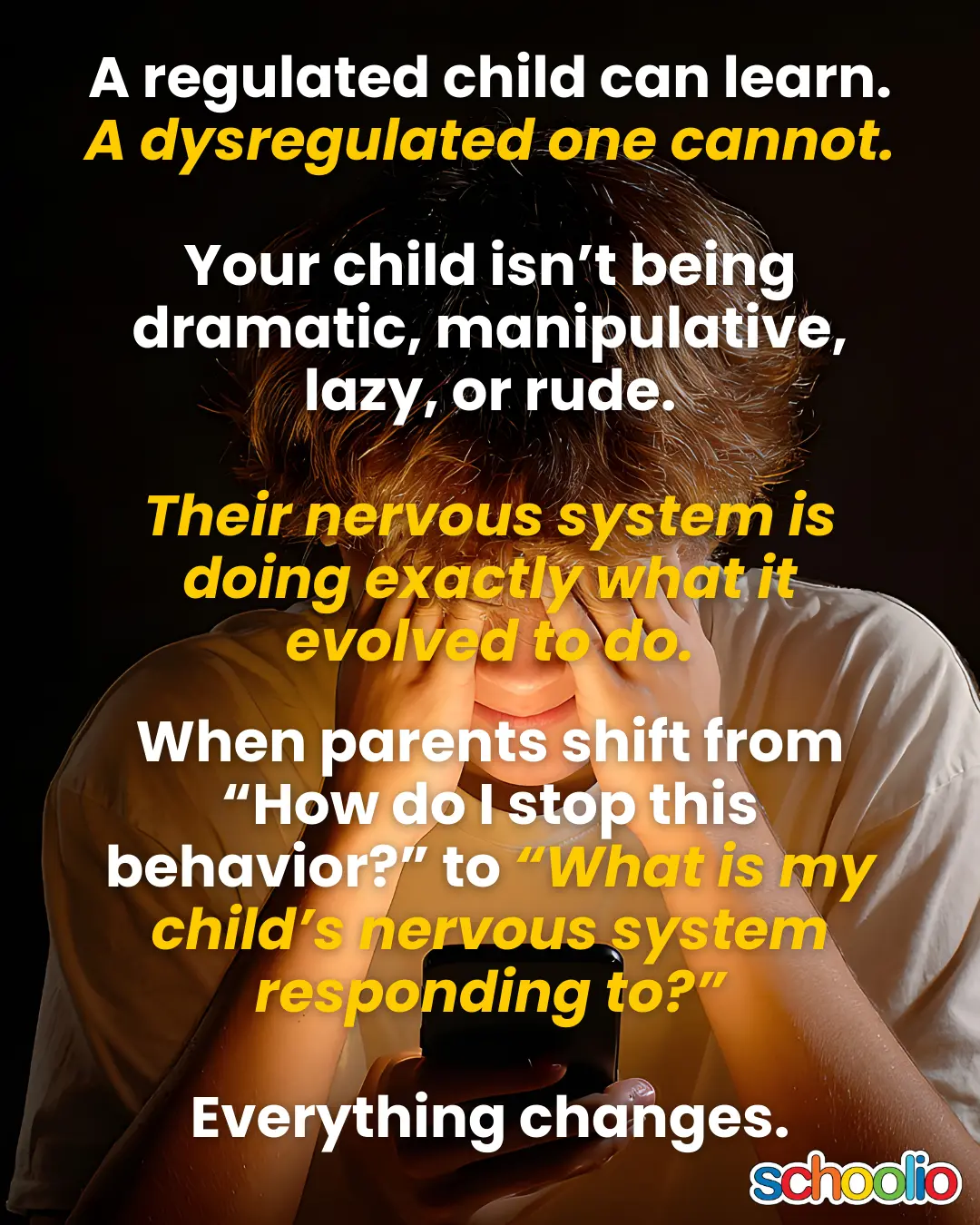
When parents shift from “How do I stop this behavior?” to “What is my child’s nervous system responding to?”

Everything changes.

Instead of punishment, we move toward regulation.

Instead of control, we build safety.

Instead of power struggles, we create connection.


How Parents Can Support Anxiety in ND Kids

1. Reduce Perceived Threat

Lower the emotional intensity around tasks.

  • Fewer words
  • Softer tone
  • More time

Pressure escalates anxiety. Safety reduces it.


2. Name What You See

“You’re not in trouble. I think your body feels overwhelmed right now.”

Naming the response helps kids feel understood instead of ashamed.


3. Offer Regulation Before Expectation

A regulated child can learn.

A dysregulated one cannot.

Movement, quiet time, deep pressure, or sensory breaks often need to come before problem-solving.


4. Build Predictability

Consistency lowers anxiety for ND kids.

  • Clear routines
  • Visual schedules
  • Advance warning for changes

Predictability tells the nervous system: you’re safe here.


5. Avoid Moralizing Anxiety Responses

These responses are not choices.

They are reflexes.

Your child isn’t being dramatic, manipulative, lazy, or rude.

Their nervous system is doing exactly what it evolved to do.


The Takeaway

Fight, flight, freeze, and fawn aren’t flaws.

They’re signals.

When we recognize anxiety behaviors in neurodivergent kids as adaptive responses to perceived threat, we stop trying to fix the child — and start fixing the environment.

And that’s where real healing begins.
The Magic in the Daily

The Magic in the Daily


This has been on my mind today…

“Why?” he would ask.

And I’d answer.

“Why?” he’d ask again.

And I’d stop whatever I was doing to explain another thing that caught his attention. He was five. Curious about everything. I loved answering his million questions a day.

As we get older, we forget that feeling. We take the everyday things for granted. But through the eyes of a five-year-old, everything is magical. The TV remote is magical. The spoon is magical. The window light feels magical.

I miss that. The magic in the daily.

There’s so much noise now. So much to focus on, worry about, manage. And for parents who have taken on the incredible task of homeschooling, I see you. You are some of the most courageous people I’ve met through Schoolio. You are re-learning curiosity alongside your kids, rebuilding connection in the middle of chaos.

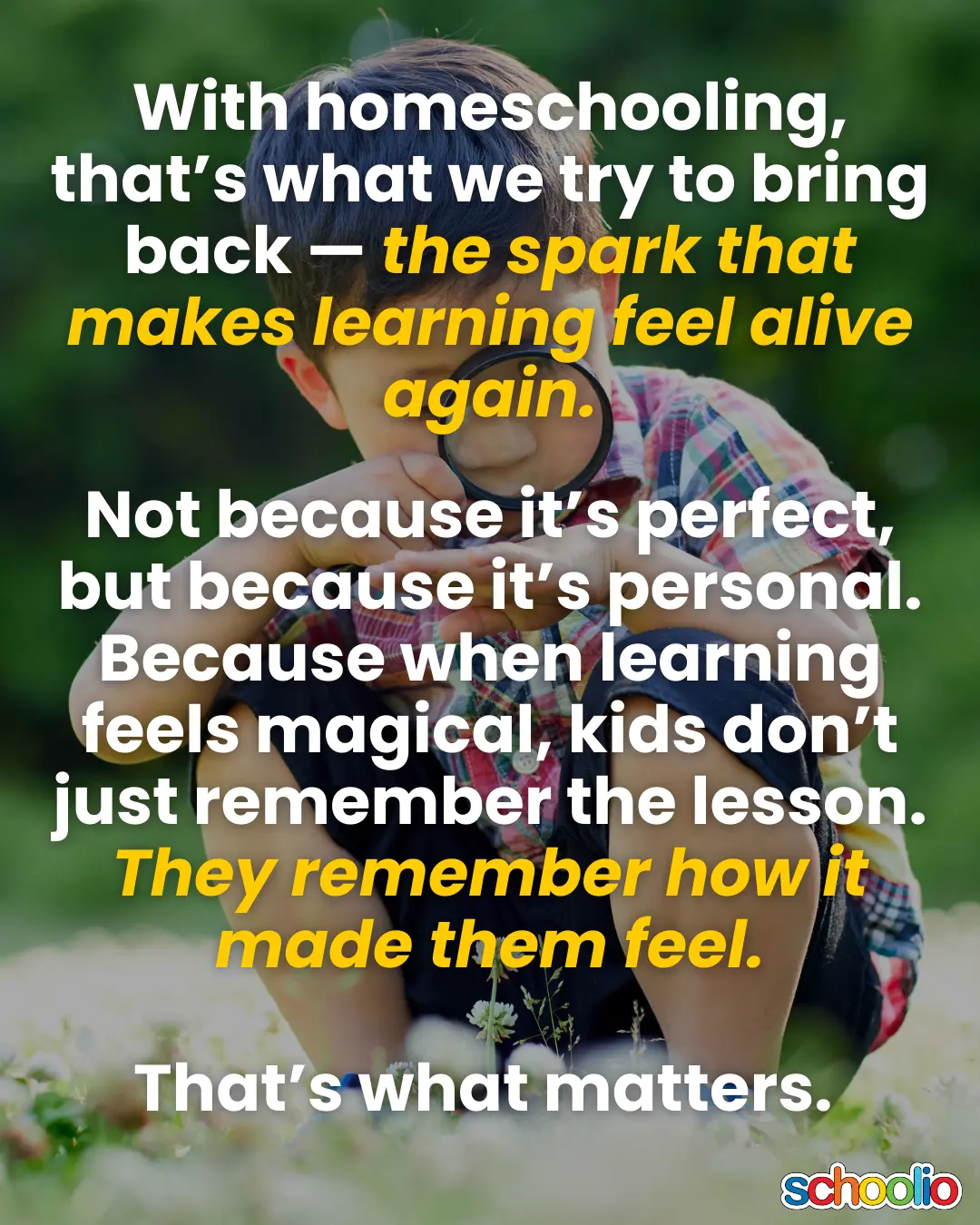
At Schoolio, that’s what we try to bring back — the why. The spark that makes learning feel alive again. Not because it’s perfect, but because it’s personal. Because when learning feels magical, kids don’t just remember the lesson. They remember how it made them feel.

That’s what matters. That’s what we’re building.


Sathish
still learning, still unlearning

To the Weak, Everything Feels Like a Threat

To the Weak, Everything Feels Like a Threat


This has been on my mind today…


Every time education shifts forward, fear gets louder.

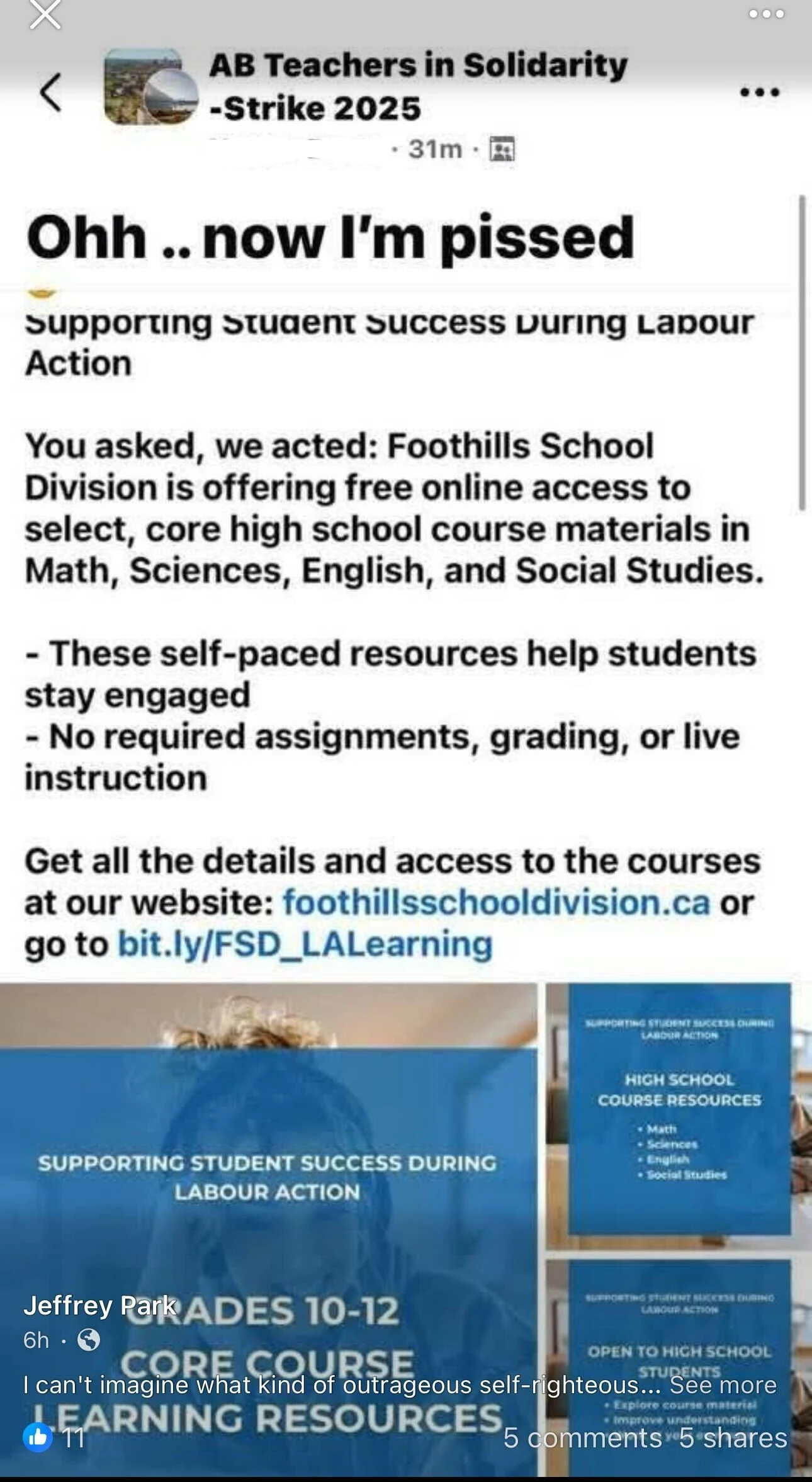
Teachers are angry that families are exploring alternatives during the Alberta strike. Some are even calling parents “disloyal” for turning to online resources. But let’s be honest — what else are families supposed to do when the system stops working?

The truth is, teachers are afraid. And I get it. They’ve been handed an impossible job inside a system that hasn’t evolved in 150 years. A system built for industrial workers, not creative thinkers. For compliance, not curiosity.

AI. Homeschooling. Microschools. Digital curriculum.

All of it is growing — fast.

And instead of seeing these tools as extensions of learning, too many educators see them as enemies.

Here’s the reality:

Parents aren’t abandoning teachers. They’re abandoning a model that no longer serves their kids.

Innovation in education isn’t an attack. It’s an answer.

The families turning to homeschooling or digital learning aren’t doing it to undermine teachers — they’re doing it to survive a broken system.

We should be building bridges, not battle lines.

Technology and teachers can coexist. But that requires courage — the kind that looks at change and says, “Let’s learn from it.”

Because the future of education won’t be built by those defending the old ways. It’ll be built by the ones bold enough to imagine new ones.

Alberta


Sathish
Still learning, still unlearning

Why Your ADHD Child Can’t Sit Still- What is Vestibular Input?

Why Your ADHD Child Can’t Sit Still- What is Vestibular Input?


If you have an ADHD child, you’ve probably said one of these phrases at least once (or, let’s be honest, many times):
“Sit properly, please.”
“Feet down.”
“Stop spinning that chair.”


“Why are you upside down right now?”

And yet, no matter how many times you say it… they just can’t seem to stop.

It’s easy to see this as misbehavior or lack of focus. But in reality, what you’re seeing might be something deeper — your child’s nervous system doing its best to get the vestibular input it needs to feel regulated, alert, and ready to learn.

vestibular input

What Is Vestibular Input?

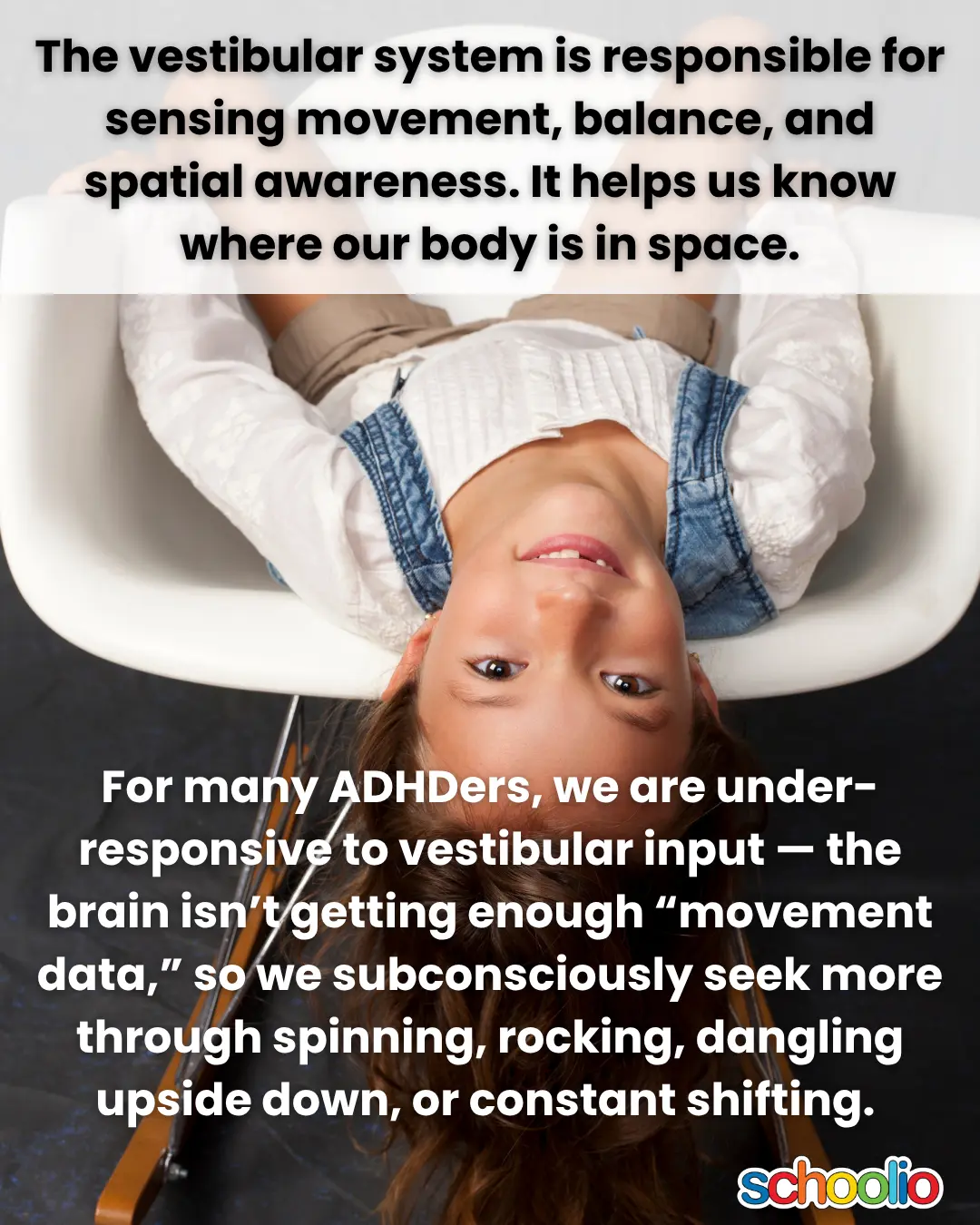
The vestibular system lives in the inner ear, and it’s responsible for sensing movement, balance, and spatial awareness. It helps us know where our body is in space — like whether we’re sitting upright, moving fast, or tilting our head.

For neurotypical people, this system runs quietly in the background, keeping them centered. But for many ADHDers, it doesn’t process quite the same way.

Some ADHD kids are under-responsive to vestibular input — their brain isn’t getting enough “movement data,” so they subconsciously seek more through spinning, rocking, dangling upside down, or constant shifting. Others may be over-responsive, finding certain motions overwhelming or dizzying.

Both patterns are common — and both are the body’s way of saying, “I need help regulating.”

? Science Note: The Vestibular–Dopamine Connection

The vestibular system doesn’t work alone — it’s closely tied to the dopamine pathways in the brain that control motivation, focus, and emotional regulation.

When your child moves — spinning, jumping, rocking — those physical sensations activate parts of the brainstem and cerebellum that help regulate dopamine and norepinephrine, both of which are often low in ADHD brains.

That’s why movement helps ADHD kids “wake up” their brains:

  • It boosts alertness and attention.
  • It improves emotional regulation.
  • It supports executive function — planning, memory, and self-control.

So when your child is fidgeting or in constant motion, they’re not being disruptive — they’re literally helping their brain function better.


What “Dopamine Seeking” Looks Like in the Body

We often talk about ADHD as dopamine-driven, but the vestibular system plays a huge role, too. Movement actually helps stimulate dopamine release — which is why your ADHD child may suddenly start pacing, swinging their legs, or balancing on the edge of a chair right when you need them to concentrate.

These “weird” positions aren’t defiance. They’re your child’s nervous system self-medicating through movement.

They might:

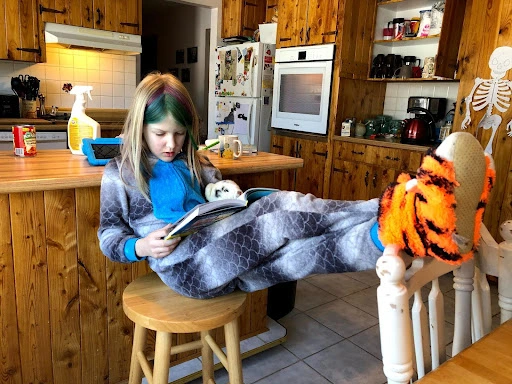
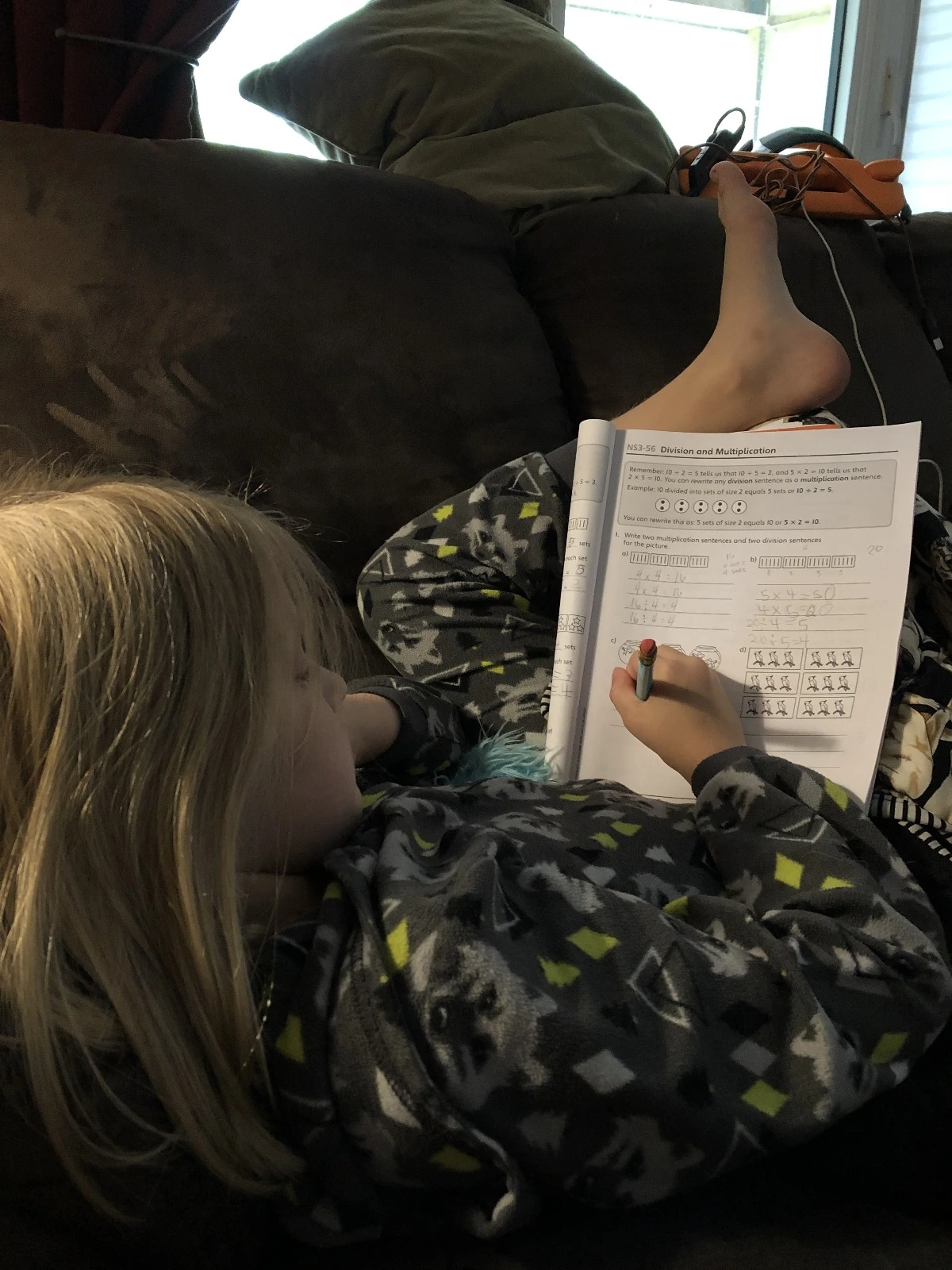
  • Sit with one leg over the arm of a chair
  • Hang off the couch upside down
  • Constantly rock, bounce, or sway
  • Spin in circles for “fun” (and never seem dizzy)
  • Climb furniture or balance on unstable surfaces

It can look chaotic — but for them, it’s regulating.


What It Feels Like for ADHD Kids

For a child whose vestibular system isn’t getting enough input, sitting still can feel physically uncomfortable — like trying to focus with an itch you can’t scratch. Their brain is searching for balance signals, and until it gets them, it’s hard to settle down.

You might see:

  • Fidgeting during reading or lessons
  • Difficulty maintaining posture
  • Restlessness or frustration during quiet tasks
  • Frequent “breaks” to move or reposition

The movement isn’t the problem — it’s the coping mechanism for an unmet sensory need.

How This Impacts Learning

When a child’s body is unregulated, their brain can’t prioritize learning. The vestibular system connects directly to areas of the brain that control attention, emotion regulation, and executive function — meaning movement needs aren’t separate from learning needs.

So when your ADHD child spins in their chair, lies on the floor to do math, or wiggles constantly through read-alouds… that’s not distraction. It’s adaptation.

Supporting Your Child’s Vestibular Needs at Home

Instead of trying to eliminate movement, think about channeling it. Here are some strategies to support vestibular regulation in your homeschool:

1. Build Movement Into the Day

  • Use active learning breaks between subjects.
  • Try standing desks, wobble stools, or yoga balls.
  • Let your child read or write while pacing, swinging, or lying down.activity

2. Offer “Heavy Work”

Proprioceptive input (like pushing, pulling, or lifting) helps calm the vestibular system. Try:

  • Carrying laundry or groceries
  • Wall push-ups or wheelbarrow walks
  • Building with weighted materials like LEGO or clay

3. Use Safe Spinning or Swinging

If your child seeks spinning, consider safe options like:

  • Swivel chairs
  • Therapy swings
  • Hanging pods or hammocks

4. Respect Their Positions

If your child learns best while lying on the floor or sitting cross-legged on a chair, that’s okay. Focus on engagement, not posture.

5. Schedule Movement Intentionally

Start the day with movement-rich activities: walking the dog, dancing, yoga, or playground time. Meeting those vestibular needs early can make focused work easier later.

The Homeschooling Advantage

Traditional classrooms often punish movement — “sit still,” “stop rocking,” “stay in your seat.” But at home, you have the flexibility to do the opposite: to embrace movement as part of learning.

When you let your ADHD child learn in the way their body needs — rocking, fidgeting, or balancing — you’re not giving in to bad habits. You’re helping their nervous system regulate so their brain can focus, absorb, and thrive.

Movement isn’t a distraction. For ADHDers, movement is medicine.

“Effects of stochastic vestibular stimulation on cognitive functions in children with ADHD” — PMC article discussing vestibular stimulation and cognition for ADHD. https://pmc.ncbi.nlm.nih.gov/articles/PMC10635964


“Vestibular Rehabilitation for ADHD” — article from Neurologic Wellness Institute referencing the regulation of dopamine via vestibular input. https://neurologicwellnessinstitute.com/vestibular-rehabilitation-for-adhd/


“Vestibular therapy improved motor planning, attention, and balance in children with Attention-Deficit Hyperactivity Disorders – A RCT” — study showing improved attention and response control following vestibular intervention in children with ADHD. https://www.oatext.com/vestibular-therapy-improved-motor-planning-attention-and-balance-in-children-with-attention-deficit-hyperactivity-disorders-a-randomized-controlled-trial.php


“Not Educable”? Or Just Not Understood?

“Not Educable”? Or Just Not Understood?


This has been on my mind today…


I was in a private “teachers only” Facebook group recently — don’t ask me how I got in ? — and one comment stopped me cold.

“Some of these kids just aren’t educable.”

It triggered me. Deeply.

Because I’ve been that kid.

Because I’ve raised a child labeled “lazy” for not learning the way others expected.

Because I’ve built a company, Schoolio, for the very kids traditional systems are too quick to write off.

When a teacher — someone trained to unlock potential — says a child can’t be educated, what they’re really saying is: “I don’t know how. And I’m not willing to try.” But no child is uneducable. Some are misunderstood.

Some are neurodivergent.

Some are traumatized.

Some are learning in a way you weren’t trained to see.

Education is a relationship, not a one-way delivery service. It’s not just about curriculum — it’s about care, creativity, and compassion.

What we can’t do is confuse a system’s failure with a child’s inability. The system was never designed to serve every child — especially those who learn differently.

And that’s why Schoolio exists.

We don’t believe in “bad kids.”

We believe in bad assumptions, outdated frameworks, and a desperate need for empathy in education. Because when you tell a child they’re uneducable, you’re not describing them — you’re indicting yourself.

So the next time a student struggles… pause.

Ask what’s missing.

Ask how you can adapt.

Ask what support might unlock their potential.

Because learning isn’t a light switch. It’s a spark. You just have to be willing to see it.


Sathish
Still learning, still unlearning


Fear Says “Fit In.” Values Say “Stay Firm.”

Fear Says “Fit In.” Values Say “Stay Firm.”

This has been on my mind today…

Most of us were raised with fear dressed up as discipline.

Fear of standing out.

Fear of falling behind.

Fear of being different — or being too much of something.

When I was growing up, that fear had a thousand voices:

“Don’t talk back.”

“Respect your elders.”

“Just do what you’re told.”

“Don’t embarrass the family.”

South Asian homes are particularly good at this — teaching you to blend in so well that, one day, you wake up and realize you don’t even know what you stand for. You’ve become a collage of other people’s expectations. You chase safety instead of passion. Approval instead of purpose.

That’s why, now as a father, I keep coming back to one truth:

Fear says “fit in.”

Values say “stay firm.”

And if I want my kids to stay firm — to know who they are, to know when to walk away, to know what matters even when it’s unpopular — then I have to show them how.

Not lecture them.

Not shame them.

Not compare them to anyone else.

Just live it.

That means letting them speak, even if I disagree.

Letting them dress how they want, even if I don’t get it.

Letting them explore paths I didn’t choose — or couldn’t.

It also means apologizing when I parent from fear instead of from values.

Because I still catch myself doing it.

If you’ve chosen to homeschool, to opt out of the system, to rewire how learning happens in your house — then you already know this feeling. The discomfort of not fitting in. The awkward pauses in family conversations. The well-meaning but judgmental stares from old friends.

Let them come.

Let fear have its moment.

But then let your values speak louder.

You didn’t choose this path because it was easy. You chose it because it was right.

And if your kids learn anything from you, let it be this:

The world doesn’t need more people who know how to fit in.

It needs more people brave enough to stay firm.

Sathish

still learning, still unlearning

Homeschooling Parent- The Quietly Bold

Homeschooling Parent- The Quietly Bold


Fortune favors the bold.

Not the loudest.

Not the most perfect.

Not the ones with the most polished plans.

The bold.

The parent who pulls their kid out of a system everyone else still trusts.

The parent who chooses connection over conformity.

Flexibility over tradition.

Peace over pressure.

I’ve met hundreds of these parents. Quietly bold.

No parade. No validation. Just a gut feeling that this was right for their child.

They didn’t wait for permission.

They didn’t wait for the school to change.

They made the change themselves.

And the result? That’s the “fortune” part.

Kids who smile again.

Kids who ask questions again.

Kids who don’t hate learning.

Kids who feel seen.

We get asked all the time: “Is homeschooling a risk?”

Yes. So is sending your child into a system that doesn’t fit. Both paths take boldness. One just gives you more control.

This is why I believe in homeschooling.

This is why I believe in Schoolio.

Not because it’s trendy. Not because it’s perfect. But because it puts the child back at the center — and trusts the parent to lead.

Fortune favors the bold.

If you’ve made the leap, you already know.

If you’re on the edge, maybe this is your sign.


Sathish

still learning, still unlearning

Trauma-Informed Education

What Is Trauma-Informed Education, And Why It Might Be Exactly What Your Child Needs


By Lindsey, certified special-ed educator and co-founder, Schoolio

If you’ve pulled your child out of school because something wasn’t working- and I mean really wasn’t working- you’re not alone.

We hear from families every day whose kids are recovering from what we call school trauma.

Maybe your child:

  • Was bullied and felt unsafe
  • Shut down from anxiety or sensory overload
  • Was constantly in trouble for behavior no one tried to understand
  • Masked all day to fit in and melted down at home
  • Fell behind and couldn’t catch up, no matter how hard they tried and had their confidence and self-esteem shaken

Whatever your story looks like, one thing is clear:

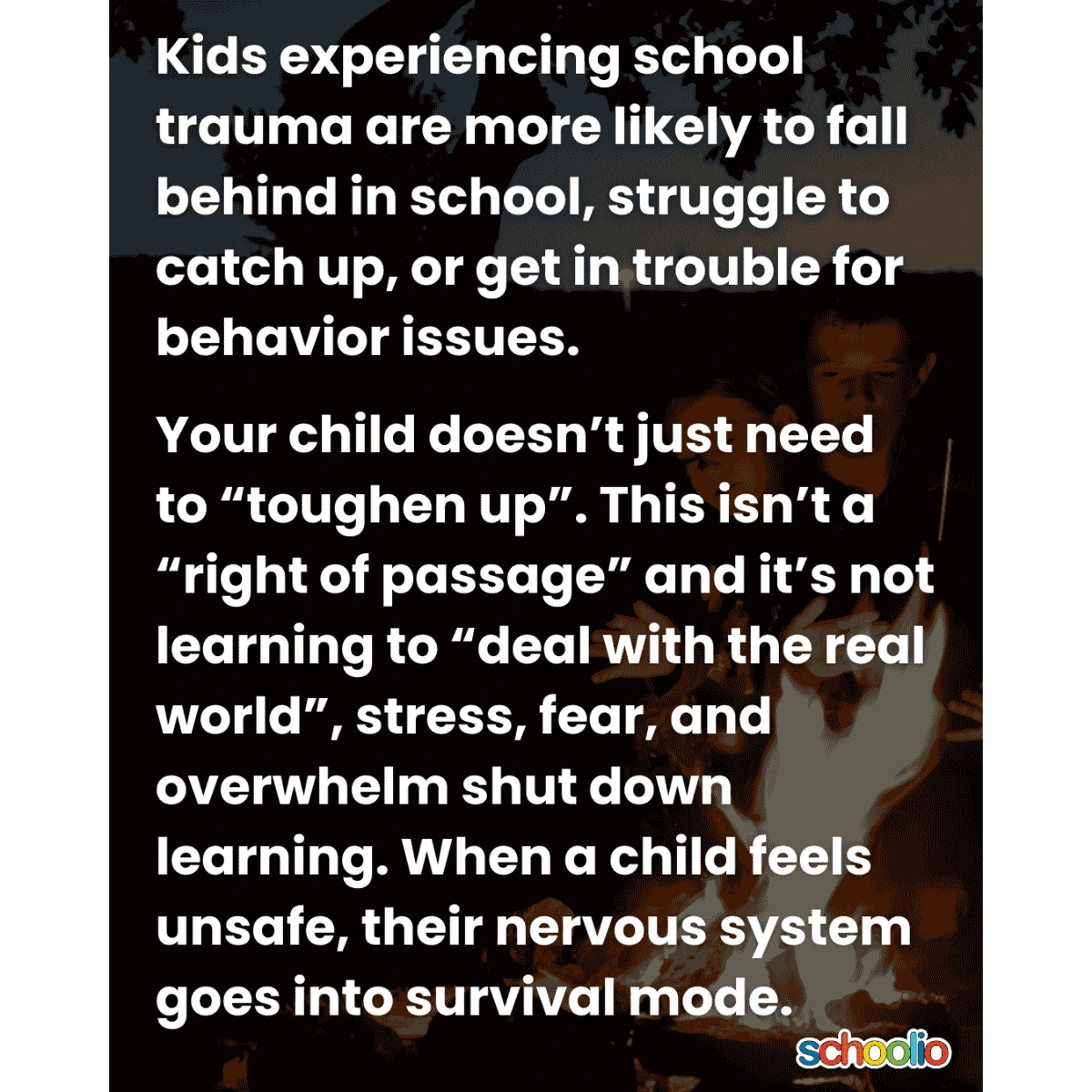
Your child didn’t just need to “toughen up”. This isn’t a “right of passage” and it’s not learning to “deal with the real world”, they need a completely different kind of learning environment to feel safe and recover.


What “Counts” As Trauma?

Trauma is not something we narrowly define. In reality, all experiences that have negative and long-lasting impact can cause trauma. Another child being mean to your child one time on the playground may not be a traumatic event, but on-going bullying and the emotional abuse, harassment, and character destruction that includes certainly can be. In fact, it is the way we process and experience certain events that defines how traumatic they are; two kids may process the same episode quite differently, making it a traumatic event for one but a minor blip on the radar for the other.

Trauma impacts learning and behavior. It can significantly slow down, or completely stop our ability to learn.

Kids experiencing trauma are more likely to fall behind in school, struggle to catch up, or get in trouble for behavior issues. These results can compound more trauma and make things increasingly worse.

If your child has experienced school trauma, you did the right thing by removing them from that environment. But you might be asking yourself, now what?

That’s where trauma-informed education comes in.


What Is Trauma-Informed Education?

Trauma-informed education isn’t just a buzzword- it’s a researched, intentional framework grounded in how children process stress and recover from negative experiences. It is an approach to teaching that recognizes the widespread impact of trauma on a child, and aims to create a safe, supportive, and inclusive learning environment. It acknowledges that your child’s past experiences, including trauma, can directly affect their ability to learn. By understanding these impacts, we can adjust teaching methods and create a home environment that fosters their recovery and resilience while supporting real learning.

Trauma-Informed Education is built on six key principles:

  1. Safety: Children must feel emotionally, mentally, and physically safe in their learning environment. You’ve established this by bringing them home to learn and removing them from the unsafe environment of school.
  2. Trustworthiness and Transparency: It’s important now that your feels like they know what to expect and know that the adults around them are predictable and honest.
  3. Empowerment, Voice, and Choice: Kids do better when they have a say in their learning process and are given appropriate autonomy.
  4. Collaboration and Mutuality: Learning should not be something done to a child, but something done with them.
  5. Peer Support: Feeling part of a community and knowing you are not alone is a critical part of healing. Remember that your family unit is also a “community”.
  6. Cultural Responsiveness: It’s cruical that your home and family affirm and respect your child’s identity, history, and experiences.

A trauma-informed approach recognizes that stress, fear, and overwhelm shut down learning. When a child feels unsafe, emotionally or physically, their nervous system goes into survival mode. And survival mode leaves very little room for comprehension, creativity, or curiosity. Feeling “unsafe” doesn’t always mean they feel like they’re in danger. Fear of failure or criticism, fear of exclusion, and fear of retaliation are all legitimate attacks on a child’s sense of safety.

Trauma-informed education begins with the right questions:

  • Does my child feel safe right now?
    • Remember the above ways of feeling unsafe- this includes their feel of failing or getting in trouble.
  • Do they feel heard and respected?
  • Are they given choices and control over their learning?
  • Is our environment calm, clear, and consistent?
    • As parents, we get frustrated and overwhelmed too- we’re human after all. If you need a break to calm down, take it. The environment isn’t calm if you’re stressed. Only a regulated person can help calm a dysregulated person.

If the answer to those questions is no, it doesn’t matter how high-quality the curriculum is, their brain won’t be ready to receive it. Establish all four consistently before you start a learning program. Deschooling and recovering from public school burnout should come first. Download our free guide here.

How Schoolio Supports Trauma-Impacted Learners

We didn’t create Schoolio to be a trauma recovery program. But we did design it to be flexible, gentle, and deeply learner-centered. For many children recovering from difficult school experiences, that’s exactly what they need.

Here’s how our program applies trauma-informed educational practices, supports recovery, and helps you provide a safe and calm learning experience for your child:

  1. Predictability Without Pressure

    Our lessons follow a consistent, easy-to-understand structure, but you, the parent, set the pace.

    Kids who’ve experienced chaos or overstimulation in school find relief in knowing what to expect, without the added stress of rigid deadlines.

  2. Reduced Sensory Load

    Our videos and digital content are intentionally designed to be calm and simple. We avoid overstimulation and excessive noise or visuals because overstimulated brains don’t retain information, they shut down.

  3. Adaptable to Their Energy and Academic Levels

    Many children exiting the school system are burnt out. They don’t need another mountain to climb, they need space to breathe. Schoolio’s bite-sized lessons, printable offline options, and flexible scheduling create room for healing without halting progress. You can also mix-and-match grade levels to create a program where they feel confident and successful, rebuilding self-esteem and security.

  4. Emotional Learning Built In

    Our social-emotional learning and mental health courses are not extras, they’re part of our core offerings. Kids deserve to learn how to name their feelings, manage emotions, build healthy relationships, and recover from stress. These aren’t bonus skills, they’re life skills.

  5. No One-Size-Fits-All Expectations

    Many kids develop trauma in school simply because they didn’t fit the mold. At Schoolio, we don’t have a mold.

    Your child can move ahead in one subject while slowing down in another.

    They can demonstrate knowledge through art, play, projects, and conversation, not just multiple-choice tests.

    They can build a learning plan that matches their pace, their passions, and their strengths.

Final Thoughts

If your child is resistant to learning right now, that doesn’t mean they’re lazy or broken.

If they seem shut down, checked out, or angry, that doesn’t mean homeschooling won’t work.

It means they’re still healing.

They need time, safety and trust.

And they need a learning environment that sees them as a whole person, not a problem to fix.

That’s what trauma-informed education offers.

That’s what we aim to provide at Schoolio.

And if that’s what your child needs, you’re in the right place.


Lindsey

certified special-ed educator and co-founder, Schoolio

The Real Scorecard Isn’t Grades — It’s Humanity

The Real Scorecard Isn’t Grades — It’s Humanity


This has been on my mind today…

My daughter is starting college. A new lifestyle. A new rhythm. A new version of independence. And as I watch her step into it with grace, confidence, and heart, I find myself reflecting—not just on her growth, but on mine as a parent.

In the early years, I thought my role was to prepare her academically. Get her ready for the tests. The projects. The milestones. The classic definition of “success.” But somewhere along the way, that definition shifted.

Because life had other plans.

Because she had questions school didn’t answer.

Because I realized my real job was never about the grades. It was about something bigger.

We tried to raise a daughter who could walk into any room, look people in the eye, and see them—not for their titles or their background, but for their shared humanity. We talked about what it means to be kind when no one’s watching. To question with curiosity, not criticism. To love first, even when the world makes it hard.

We didn’t always get it right. I came from a childhood where discipline meant violence. Where falling behind in school wasn’t a symptom of struggle, but a sign of laziness that had to be “beaten out” of you. That trauma doesn’t just disappear—it echoes. And it took years to unlearn.

But we knew we had to break the cycle. We didn’t ground our kids. We didn’t reach for fear as our first parenting tool. We took away iPads. We paused and talked. We treated mistakes as data, not disgrace. Because the world they’re inheriting is complicated enough without adding guilt and shame to the mix.

Whether you homeschool, send your child to public school, or choose a private path—it doesn’t really matter. What matters is how you’re preparing them for the world outside the classroom. Because it’s moving fast. It’s emotionally volatile. And it’s filled with both beauty and brokenness.

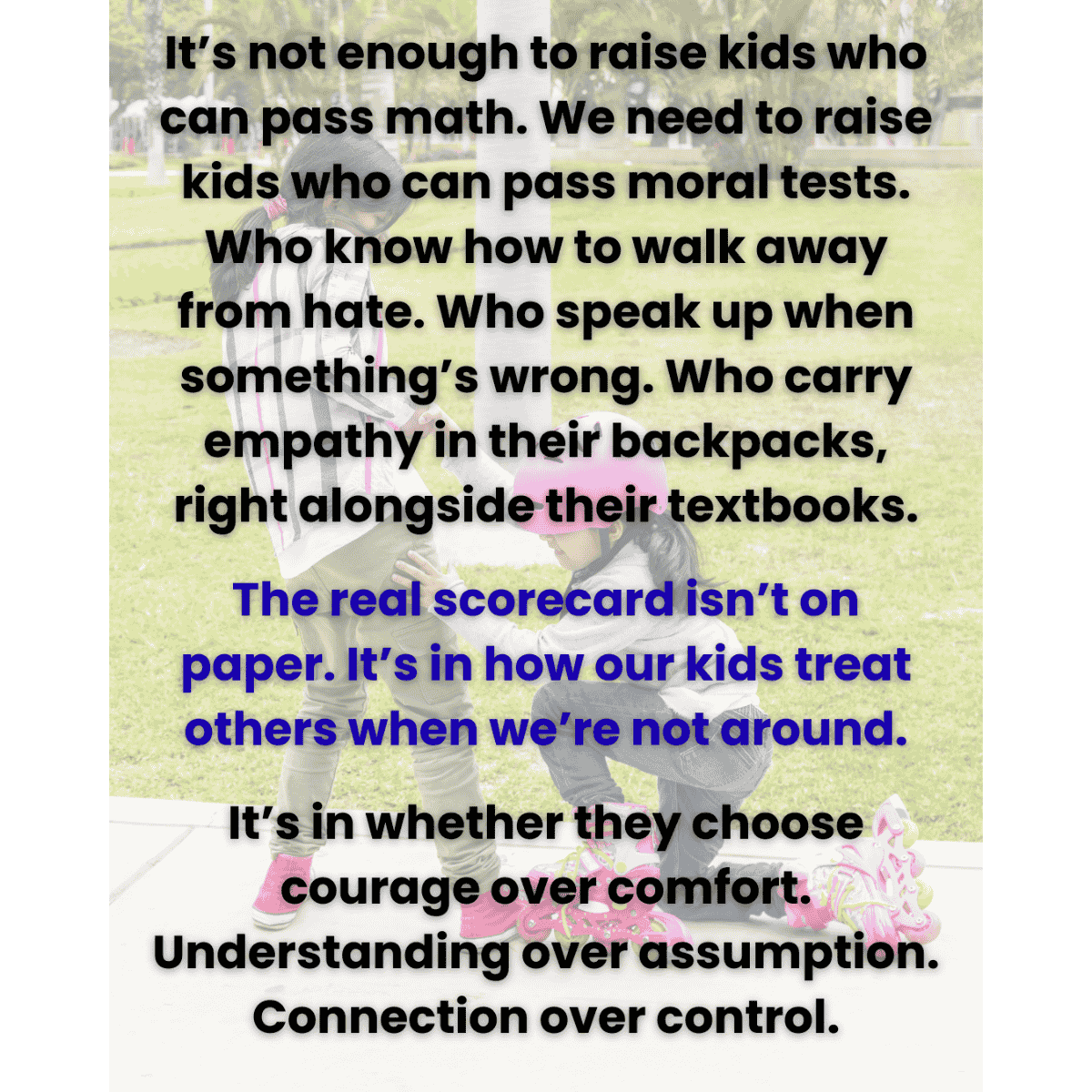
It’s not enough to raise kids who can pass math. We need to raise kids who can pass moral tests. Who know how to walk away from hate. Who speak up when something’s wrong. Who carry empathy in their backpacks, right alongside their textbooks.

The real scorecard isn’t on paper. It’s in how our kids treat others when we’re not around.

It’s in whether they choose courage over comfort. Understanding over assumption. Connection over control.

And those values? They’re not taught once. They’re modeled over time.

That’s why this company—Schoolio—is a personal mission for me. It’s why we build tools and content that don’t just cover curriculum, but embrace character. I don’t believe learning should be weaponized or used to judge. I believe it’s a lifelong, imperfect, beautiful process. A work in progress, just like all of us.

This week, I’m not just sending my daughter to college. I’m celebrating a milestone that started long before the acceptance letter. I’m watching her walk out into the world with her own voice. And I’m quietly reminding myself: That’s the legacy that matters.

—Sathish

still learning, still unlearning

When Science Turned Into a Betta Fish

When Science Turned Into a Betta Fish


By Lindsey Casselman, special-ed teacher & homeschooling mom


One of the things I love most about homeschooling is how easily learning can connect to real life. Sometimes the best projects don’t come from a curriculum guide — they come from your child’s heart.

When my daughter was seven, she desperately wanted a Betta fish. Like many parents, my first instinct was to say, “That’s a lot of responsibility — are you sure you’re ready for that?” But instead of just saying no, I turned it into an opportunity for learning.

We made it her science project. She had to create the classic tri-board presentation — research, write, and present — all about Betta fish. She learned where they live in the wild, what they eat, how to set up the right tank environment, and common mistakes people make in caring for them. But the project didn’t stop at facts. She also had to make the case for why she was ready to take care of one.

I’ll never forget watching her stand in front of that board, confidently explaining filtration systems, water temperatures, and feeding schedules. This wasn’t just a science lesson anymore. It was research skills. Public speaking. Persuasive writing. Responsibility.

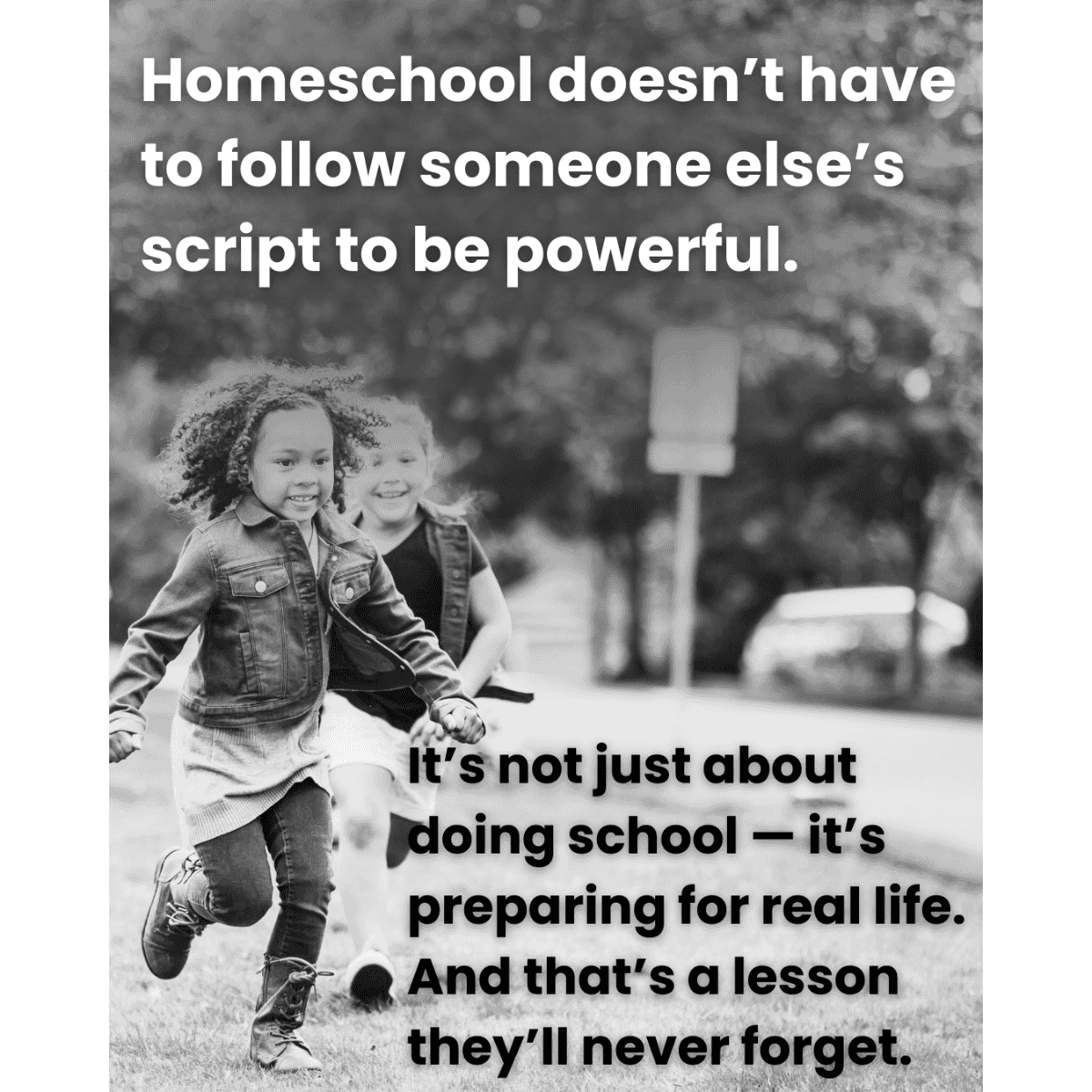
And it was driven entirely by her motivation. Because she wanted that fish, she owned the project. She went deeper than she would have if I had assigned “Chapter 3: Aquatic Life.” She wasn’t just doing school — she was preparing for real life.

In the end, she did get her Betta fish. But honestly, the project itself was the real win. She learned that with research and preparation, she could rise to a challenge. And I learned (again) that homeschool doesn’t have to follow someone else’s script to be powerful.

And apparently, I also set a precedent in our house without realizing it. Fast forward a few years, and Grace — now 13 — wanted a new pet. Out of nowhere, I found myself sitting on the couch watching a full PowerPoint presentation on why she should be allowed to get a snake. I hadn’t asked for it, and I hadn’t suggested it. She just knew she needed to convince me in a smart and prepared way.

So fair warning: this approach works beautifully for learning… but it may also get you into more pets than you imagined! ?

? Lindsey

Certified Special-Ed Educator & Co-Founder, Schoolio