Schoolio Comprehensive Report Card for Holistic Growth

Discover the Schoolio Comprehensive Report Card: A Holistic Homeschooling Tool

Homeschooling is a journey that transcends traditional academics, aiming to nurture a child’s overall development. At Schoolio, we recognize this multifaceted approach and have designed a tool that reflects it perfectly – the Schoolio Comprehensive Report Card. This free template is a fantastic resource for homeschooling parents who wish to capture the full spectrum of their child’s growth, from academic achievements to life skills and personal development.

Why Choose the Schoolio Comprehensive Report Card?

Homeschooling is not just about mastering math and reading; it’s about fostering qualities like responsibility, creativity, resiliency, and essential life skills. The Report Card is tailored to provide a holistic view of a student’s development, ensuring that every aspect of their growth is acknowledged and celebrated.

Key Features of the Schoolio Comprehensive Report Card

Holistic Development Areas

The Report Card template goes beyond traditional academic assessments. It includes sections to evaluate a student’s progress in responsibility, resiliency, creativity, life skills, physical education, attitude, and work habits. This comprehensive approach ensures that you have a complete picture of your child’s development.

Customizable for Individual Needs

Every child is unique, and their education should reflect that. The Report Card template is designed to adapt to the specific requirements of students from grades 1-8. Whether your child excels in certain areas or needs more support in others, this report card can be customized to suit their individual needs.

Easy-to-Use Format

We understand that homeschooling parents and educators have a lot on their plates. That’s why this Report Card features an easy-to-use format that simplifies the assessment process. With clear sections and straightforward criteria, you can efficiently track and document your child’s progress.

Encourages Positive Growth

One of the standout features of the Schoolio Comprehensive Report Card is its emphasis on areas beyond academics. It highlights emotional regulation, healthy choices, acts of kindness, social skills, and mental education. By recognizing and encouraging these aspects, we aim to foster positive growth in every child.

How to Use the Schoolio Comprehensive Report Card

Using the Schoolio Comprehensive Report Card is simple and intuitive. Here’s a step-by-step guide to help you get started:

  1. Download the Template: Access the free Report Card template from our website.
  2. Customize for Your Child: Tailor the report card to fit your child’s grade level and specific needs. You can adjust the criteria and sections to best reflect their development.
  3. Track Progress: Throughout the school year, use the report card to regularly assess and document your child’s progress in various areas. Be sure to include observations and examples to provide a complete picture.
  4. Review and Reflect: At the end of each term, review the report card with your child. Celebrate their achievements and discuss areas for improvement. This reflection helps in setting goals and fostering a growth mindset.

Benefits of the Schoolio Comprehensive Report Card

The Schoolio Comprehensive Report Card offers numerous benefits for both students and parents:

  • Balanced Evaluation: Provides a well-rounded assessment that includes both academic and personal development.
  • Enhanced Communication: Facilitates meaningful conversations between parents and children about their progress and goals.
  • Personalized Learning: Helps in tailoring the homeschooling approach to meet the child’s unique needs and strengths.
  • Motivation and Encouragement: Recognizes and celebrates achievements in all areas, boosting the child’s confidence and motivation.

Why Holistic Education Matters

In today’s world, education extends far beyond textbooks and exams. Holistic education emphasizes the importance of nurturing every aspect of a child’s growth, preparing them for success in all areas of life. The Report Card template is designed with this philosophy in mind, ensuring that your homeschooling journey is enriching and rewarding.

Testimonials from Homeschooling Families

Don’t just take our word for it! Here’s what some homeschooling families have to say about the Report Card Template:

  • Emily S.: “The Schoolio Comprehensive Report Card has been a game-changer for our family. It allows us to track our children’s progress in all areas, not just academics. We’re so grateful for this valuable tool!”
  • Michael R.: “I love how the report card highlights my kids’ strengths and areas for improvement in a balanced way. It’s easy to use and customize, making our homeschooling journey smoother and more organized.”

Get Your Free Schoolio Comprehensive Report Card Today!

Ready to embrace a broader perspective on education? Download the FREE Schoolio Report Card template today and start tracking your child’s holistic development. Celebrate their achievements, set meaningful goals, and support their growth in every facet of life.

Visit our website to get your Schoolio Report Card and discover how it can transform your homeschooling experience. At Schoolio, we’re committed to providing the tools and resources you need to ensure your child’s success – academically, personally, and beyond.

Understanding and Managing Anxiety in Neurodivergent Kids

Anxiety in Neurodivergent Kids

Raising a neurodivergent child comes with its own set of unique joys and challenges. One common challenge many parents face is helping their child manage anxiety. Anxiety in neurodivergent kids, including those who are autistic, ADHD, or have other developmental differences, often manifests more intensely than in their neurotypical peers. Understanding the roots of this anxiety and finding effective ways to manage it can significantly improve your child’s quality of life.

What Causes Anxiety in Neurodivergent Kids?

  1. Sensory Overload: Many neurodivergent children are highly sensitive to their environments. Bright lights, loud noises, and even certain textures can overwhelm them, leading to heightened anxiety.
  2. Routine Changes: A sudden change in routine can be extremely distressing for neurodivergent kids. They often find comfort in predictability, and any disruption can trigger anxiety.
  3. Social Interactions: Navigating social situations can be daunting. Misunderstanding social cues or worrying about fitting in can cause significant anxiety.
  4. Performance Pressure: Academic and extracurricular expectations can be a source of stress. The fear of not meeting these expectations can exacerbate anxiety.

Recognizing Anxiety Symptoms

Identifying anxiety in neurodivergent kids can sometimes be challenging as it may manifest differently. Common signs include:

  • Physical Symptoms: Headaches, stomachaches, or fatigue.
  • Behavioral Changes: Increased irritability, restlessness, or meltdowns.
  • Emotional Indicators: Excessive worry, fearfulness, or mood swings.
  • Avoidance: Reluctance to engage in certain activities or go to specific places.

Practical Strategies for Managing Anxiety

  1. Create a Safe Space: Designate a quiet, calm area at home where your child can retreat to when feeling overwhelmed. This space should be free from sensory triggers and filled with comforting items. It should never be used as a punishment- the child chooses to go there, they aren’t sent there as a reaction to behavior.
  2. Establish Routines: Consistent routines can provide a sense of security. Use visual schedules to help your child understand what to expect throughout the day. Let your child be involved as much as possible in creating the schedule.
  3. Teach Relaxation Techniques: Deep breathing, progressive muscle relaxation, and mindfulness exercises can help your child manage anxiety. Practice these techniques together to make them more effective.
  4. Use Social Stories: Social stories are a great tool to help neurodivergent kids prepare for new or challenging situations. They provide a clear narrative of what to expect and how to respond.
  5. Positive Reinforcement: Celebrate your child’s successes, no matter how small. Positive reinforcement can build confidence and reduce anxiety.
  6. Add a Social-Emotional Learning program to your homeschool: SEL programs like Schoolio offers help children learn to emotionally regulate, manage their thoughts and feelings, and cope better with stress and anxiety.
  7. Professional Support: Sometimes, professional intervention is necessary. Therapists, counselors, and support groups can provide additional strategies and support tailored to your child’s needs.

Schoolio’s Program is Neurodivergent-Friendly

Schoolio offers a homeschool program designed with neurodivergent kids in mind. Here are some features that make it a great choice for your child:

  • Unitization: Allows you to mix and match grade levels to fit your child’s unique learning pace and needs.
  • Bite-Sized Learning Sessions: Short, engaging lessons to keep your child’s attention and prevent overwhelm.
  • Alternative Learning Strategies: Various methods to cater to different learning styles and preferences.
  • Custom-Designed Student Success Plans: Personalized plans to ensure your child’s educational success.
  • Interest-Based Learning: Selections that align with your child’s interests to make learning more enjoyable.

Encouraging Open Communication

One of the most powerful tools in managing anxiety is fostering open communication. Encourage your child to express their feelings and fears without judgment. Let them know it’s okay to feel anxious and that you are there to support them.

Conclusion

Helping a neurodivergent child manage anxiety is an ongoing process that requires patience, understanding, and a lot of love. By creating a supportive environment, establishing routines, and teaching coping strategies, you can empower your child to navigate their world with greater confidence and less anxiety. Remember, you are not alone on this journey – there are numerous resources and communities ready to support you and your child every step of the way. Schoolio’s neurodivergent-friendly program can be a valuable part of your toolkit, offering the flexibility and support your child needs to thrive.

Schoolio VS. Miacademy: Curriculum Comparison

Schoolio vs. Miacademy: Homeschool Curriculum Comparison

Hey there, future-ready families! Are you on the hunt for the perfect curriculum to ignite your child’s love for learning? Well, you’re in for a treat! Today, we’re exploring two popular homeschooling platforms: Schoolio and Miacademy. Buckle up as we start on this homeschool curriculum comparison to help you find the best fit for your family!

Purpose: Our mission? To compare Schoolio with Miacademy and give you the lowdown on which might be the superstar homeschool curriculum for your education journey. Let’s dive in!

Overview of Both Products

Schoolio Overview: Schoolio is a cutting-edge homeschooling platform that’s all about future readiness and interest-based learning. It offers a wide range of core subjects and electives for all grade levels, allowing families to customize their learning experience. Schoolio is designed to make homeschooling fun, flexible, and accessible for everyone – especially neurodivergent kids!

Miacademy Overview: Miacademy is a comprehensive online learning platform covering K-8 education. It boasts hundreds of lessons in core subjects and a variety of electives, including language introductions and life skills. Miacademy’s claim to fame? Creating personalized learning paths for each child based on parent-selected courses and passing grades.

Comparison Criteria

Let’s break it down and see how these educational dynamos measure up:

  1. Curriculum Content: Core subjects, electives, and special programs.
  2. Customization and Flexibility: Ability to tailor the curriculum to individual needs.
  3. Support and Resources: Teacher support, supplemental materials, and online resources.
  4. Cost: Pricing structure and overall value.
  5. User Experience: Ease of use, platform accessibility, and customer service.
  6. Neurodivergent and Unique Needs Friendliness: Unique aspects that set each product apart.

Detailed Comparison

Curriculum Content:

  • Schoolio offers all core subjects (Math, Language Arts, Science, and Social Studies) for all grades, plus hundreds of electives. It emphasizes future readiness with content like financial literacy, emotional intelligence, and emerging technologies.
  • Miacademy provides core subjects for K-8, along with various electives including language introductions and life skills.

Customization and Flexibility:

  • Schoolio allows mixing and matching of curriculum across grades, offering a truly personalized learning experience. It also features downloadable and printed lessons and worksheets for a hybrid experience or taking learning offline as desired.
  • Miacademy creates personalized learning paths based on parent-selected courses and defined passing grades.

Support and Resources:

  • Schoolio provides a dedicated Student Success Coach for each family, offering custom program recommendations and regular check-ins. It also offers a comprehensive Homeschooling 101 guide and a vibrant Facebook community for additional support.
  • Miacademy offers engaging teaching videos and supplemental materials to reinforce learning.

Cost:

  • Schoolio: $29.99 per student per month, with a 30% sibling discount.
  • Miacademy: $36 per child per month, or $390 for a one-year plan. They also offer lifetime plans.

User Experience:

  • Schoolio offers an interactive, gamified platform with short, animated lessons, plus scheduling capabilities. It also provides an open exploration mode for learning without schedules, badges for course completion, certificates of achievement, and printable transcripts.
  • Miacademy provides pressure-free testing without timers, read-aloud options, and a self-paced curriculum.

Neurodivergent and Unique Needs Friendliness:

  • Schoolio is specifically designed to accommodate neurodivergent users. It offers four key ways to support neurodivergent learners, which you can explore in detail at schoolio.com/neurodivergent-homeschool-program/.
  • Miacademy offers features like read-aloud options and pressure-free testing, which can be beneficial for diverse learning needs.

Standout Features

Schoolio:

  1. Future-Ready Learning: Schoolio’s curriculum is designed with the future in mind, focusing on skills and knowledge that will be crucial in the years to come.
  2. Interest-Based Approach: By allowing children to explore subjects they’re passionate about, Schoolio makes learning engaging and fun.
  3. Neurodivergent-Friendly: Schoolio’s specific accommodations for neurodivergent learners ensure that every child can thrive in their educational journey.
  4. Personalized Support: The dedicated Student Success Coach is like having a personal education guide, helping you navigate your homeschooling adventure.
  5. Interactive Learning: With its gamified platform, animated lessons, and achievement rewards, Schoolio turns learning into an exciting quest!

Miacademy:

  1. Lifetime Plans: Miacademy offers lifetime access plans, which could be cost-effective for long-term homeschooling families.
  2. K-8 Focus: Miacademy specializes in elementary and middle school education.

Customer Testimonial:Schoolio you’re seriously making my life as a homeschooler easier than ever. These guys are good and the product is true. My child is doing awesome! “ – Starla, a homeschooling mom.

Conclusion

Both Schoolio and Miacademy offer robust homeschooling solutions, but Schoolio’s focus on future readiness, interest-based learning, and support for neurodivergent learners sets it apart.

Schoolio’s approach isn’t about replicating traditional school at home. Instead, it’s about creating a learning experience that truly fits your student, preparing them for the future in a way that rigid, traditional programs simply can’t match.

At Schoolio, we’re all about making your family’s learning adventure amazing! We keep things simple, fun, and tailored just for you. It’s like having a learning playground right at home, where every family member gets to join in the fun!

Ready to start your Schoolio adventure? Visit our website to learn more and sign up for a free trial. Your exciting, future-ready homeschooling journey is just a click away!

The TOP 3 Most Important Skills to Teach Your Kids

The Top 3 Essential Skills to Teach : A Homeschool Mom’s Perspective

Hey there, fellow parents and homeschoolers! Today, I’m excited to share with you what I’ve learned about the top 3 most important skills to teach we should be focusing. Trust me, these aren’t your typical reading, writing, and arithmetic – though those are important too! Let’s dive in and explore what really matters for our children’s future success and happiness.

  1. Embrace Their Passions (Even If They Seem Silly)

You know that game your kid can’t stop talking about? Or that seemingly random hobby they’ve picked up? Well, guess what – those interests are goldmines for learning!

Here’s why nurturing your child’s passions is so important:

  • Future career potential: Today’s “silly” interest could be tomorrow’s dream job.
  • Enhanced learning: Kids retain information better when it’s tied to something they love.
  • Lifelong love of learning: Encouraging curiosity now sets them up for continuous growth.

Personal story time:

My son was obsessed with Minecraft. At first, I didn’t get it. But when I started using it to teach him math concepts, his skills skyrocketed! Now he’s learning basic coding through the game. Who knew?

  1. Financial & Digital Literacy (A Tie for Second Place!)

These two skills are absolute must-haves in our modern world:

Financial Literacy:

Digital Literacy:

  • Online safety
  • Spotting fake news and misinformation
  • Protecting personal privacy
  • Understanding and using AI responsibly

Here’s the kicker: most schools and curriculum programs don’t cover these topics in-depth. As homeschoolers, we have the perfect opportunity to fill this gap!

Quick Tip: Turn grocery shopping into a budgeting lesson, or fact-check news stories together as a family activity.

  1. And the Winner Is… Emotional Intelligence!

Surprise! The number one predictor of both financial success and overall life satisfaction isn’t academic prowess – it’s emotional intelligence. This includes:

  • Stress management
  • Anger control
  • Adaptability to change
  • Interpersonal skills and teamwork

In the education world, we often call this “Social-Emotional Learning” or “Social-Emotional Wellness.” And here’s the best part: you can learn right alongside your kids!

A Challenge for You:

This week, try incorporating one activity that boosts emotional intelligence. Maybe it’s a family discussion about handling disappointment, or a game that requires teamwork. Small steps can make a big difference!

Wrapping It Up

Remember, as homeschoolers, we have the incredible opportunity to tailor our children’s education to what really matters. By focusing on these three areas – passion-driven learning, practical life skills, and emotional intelligence – we’re setting our kids up for success in ways that go far beyond traditional academics.

Want to dive deeper into these topics? Schoolio offers a Future-Readiness Library with courses on Social-Emotional Learning, Financial Literacy, and Digital Safety. Plus, their Electives Library is packed with subjects to spark curiosity in even the most reluctant learners.

What do you think about these top skills? Are there any you’d add to the list? Share your thoughts in the comments – I’d love to hear from you!

Until next time, happy homeschooling!

The Ultimate Guide to Choosing the Right Homeschool Curriculum

The Ultimate Guide to Choosing the Right Homeschool Curriculum with Schoolio

Making an informed decision about your child’s education is crucial, especially when embarking on a homeschooling journey. One of the most important steps in this process is selecting the right homeschool curriculum. With Schoolio’s homeschool curriculum guide, “How to Choose the Right Homeschool Curriculum,” you can unlock the secrets to a successful and personalized homeschooling experience.

Why a Homeschool Curriculum Guide is Essential

Choosing the right homeschool curriculum can be overwhelming due to the vast array of options available. A well-structured homeschool curriculum guide simplifies this process, providing clear insights and practical advice to help you navigate the choices. Schoolio’s guide is designed to ensure you select the perfect curriculum tailored to your child’s unique learning style and needs.

Understanding Different Homeschool Curriculum Types

One of the key features of Schoolio’s guide is its detailed explanation of various homeschool curriculum types. From all-in-one packages to mastery versus spiral learning approaches, this guide helps you understand the pros and cons of each type.

  • All-in-One Packages: These are comprehensive curriculums that cover multiple subjects, providing a structured learning path for your child. They are ideal for beginners who need a complete solution.
  • Mastery vs. Spiral Learning: Mastery learning focuses on mastering a concept before moving on, while spiral learning revisits topics periodically to reinforce understanding. The guide explains which approach might be best for your child based on their learning style.

By understanding these different types, you can make an informed choice that best suits your child’s educational needs.

Secular vs. Faith-Based Homeschool Curriculum

Another critical aspect covered in the guide is the choice between secular and faith-based homeschool curriculums. Schoolio’s guide provides insights into selecting a curriculum that aligns with your family’s beliefs and values. Whether you prefer a curriculum that incorporates religious teachings or one that focuses purely on secular education, this guide helps you weigh your options.

Special Learning Considerations

Every child is unique, but kids who are neurodivergent may have additional special learning needs. Schoolio’s guide includes strategies for accommodating these diverse learning requirements. It offers practical advice on choosing curriculums that provide the necessary support and resources to ensure every child can thrive academically.

  • Homeschool Curriculum for ADHD Kids: The guide recommends curriculums that incorporate interactive and hands-on learning to keep children with ADHD engaged and focused.
  • Homeschool Curriculum for Dyslexic Kids: It also suggests programs with strong phonics-based instruction and visual aids to support children with dyslexia.
  • Homeschool Curriculum for Autistic Kids: The guide highlights interest-based learning options to help autistic learners follow their passions and emphasizes short, to-the-point lessons. Social-emotional learning is also a key focus to support their development.

Budgeting and Time Management

Homeschooling can be a significant commitment in terms of both time and money. Schoolio’s guide offers practical advice on budgeting and time management to make homeschooling more manageable and cost-effective. It provides tips on finding affordable resources and creating a realistic homeschooling schedule that fits your family’s lifestyle.

  • Budgeting Tips: Learn how to find cost-effective solutions without compromising on quality, including using free online resources and second-hand materials.
  • Time Management: Discover strategies for balancing homeschooling with other responsibilities, ensuring that your educational plan is both effective and sustainable.

Interactive Tools and Resources

Incorporating technology and interactive tools can greatly enhance the homeschooling experience. Schoolio’s guide recommends various online platforms and hands-on learning materials to make education more engaging and effective. These tools are especially useful for maintaining your child’s interest and making complex subjects more accessible.

  • Interactive Learning: Use technology to create a dynamic learning environment, including educational apps, online courses, and virtual field trips.
  • Hands-On Resources: Incorporate physical activities and experiments to provide a well-rounded educational experience.

Take the First Step with Schoolio’s Quiz

To help you get started, Schoolio’s guide includes a quiz to pinpoint your homeschooling style. This quiz is a great tool to understand your educational preferences and needs, setting the foundation for a personalized and successful homeschooling journey.

  • Homeschooling Quiz: Identify your homeschooling style and get tailored recommendations for curriculum choices that align with your educational philosophy and goals.

Conclusion

Choosing the right homeschool curriculum is a critical step in ensuring a successful homeschooling experience. With Schoolio’s comprehensive guide, “How to Choose the Right Homeschool Curriculum,” you have a valuable resource that covers everything from understanding different curriculum types to accommodating special learning needs and managing your budget and time.

Don’t let the vast array of homeschooling options overwhelm you. Equip yourself with Schoolio’s expert guide and make informed decisions that will pave the way for a fulfilling and effective educational journey for your child. Visit Schoolio today to get your copy and start your homeschooling journey with confidence.

By focusing on these key aspects, you can ensure that your child’s homeschooling experience is not only educationally enriching but also tailored to their unique needs and interests. With Schoolio’s support, you can create a personalized learning environment where your child can thrive.

Homeschooling Neurodivergent Children: Customized Learning

Embracing Homeschooling for Neurodivergent Children: A Tailored Approach with Schoolio

Homeschooling is becoming an increasingly popular choice for parents seeking to provide a more customized and supportive learning environment for their neurodivergent children. Neurodivergent children, including those who are autistic, ADHD, dyslexic, or have other learning differences, often face unique challenges in traditional school settings. Homeschooling offers the flexibility and personalization that can better meet their needs and support their educational journey.

Why Homeschooling?

Traditional school environments can sometimes be overwhelming for neurodivergent children. Factors such as large class sizes, rigid schedules, sensory overload, and a lack of individualized attention can hinder their learning and emotional well-being. By choosing to homeschool, parents can create a nurturing environment tailored to their child’s specific needs, fostering both academic and personal growth.

Customizable Curriculum for Unique Needs

One of the primary benefits of homeschooling is the ability to customize the curriculum. Neurodivergent children often have distinct learning styles and paces, and a one-size-fits-all approach can be ineffective. Homeschooling allows parents to adapt teaching methods and materials to suit their child’s preferences, whether they are visual, auditory, or kinesthetic learners.

Platforms like Schoolio offer a comprehensive and customizable homeschool curriculum that caters to neurodivergent learners. With Schoolio, parents can access a wide range of resources designed to support diverse learning needs. From interactive lessons to hands-on activities, Schoolio provides the tools necessary to create an engaging and effective learning experience.

Creating a Safe and Supportive Learning Environment

For neurodivergent children, a safe and supportive learning environment is crucial. Homeschooling allows parents to control the sensory environment, reducing distractions and creating a space where their child feels comfortable and focused. This level of control can significantly enhance the learning experience and help manage sensory sensitivities.

According to a Whangarei mum considering homeschooling for her autistic son, the traditional school setting was not accommodating his learning needs. By homeschooling, she hopes to better manage his education and provide the individualized support he requires. Schoolio’s resources can assist parents in creating such a supportive environment, offering guidance on setting up a conducive learning space at home.

Flexibility to Adapt and Evolve

Neurodivergent children often benefit from a flexible learning schedule that adapts to their daily needs and rhythms. Homeschooling offers this flexibility, allowing parents to adjust the pace and content of lessons according to their child’s progress and interests. This approach can prevent burnout and keep learning enjoyable and stress-free.

Schoolio’s digital platform supports this flexibility by providing a range of customizable lesson plans and educational activities. Parents can easily modify the curriculum to keep it aligned with their child’s evolving needs and preferences, ensuring that learning remains relevant and engaging.

Focus on Strengths and Interests

One of the most powerful aspects of homeschooling is the ability to focus on a child’s strengths and interests. Neurodivergent children often have unique talents and passions that can be nurtured through a personalized education plan. By incorporating these interests into the curriculum, parents can boost their child’s motivation and confidence.

Schoolio’s curriculum includes a variety of subjects and activities that can be tailored to highlight a child’s strengths. Whether your child excels in science, art, music, or technology, Schoolio provides the resources to develop these skills further and integrate them into their overall learning plan.

Community and Support

While homeschooling can seem isolating, many resources and communities are available to support parents of neurodivergent children. Online forums, local support groups, and educational platforms like Schoolio offer valuable advice, resources, and a sense of community. Connecting with other homeschooling families can provide support, share experiences, and exchange ideas.

Schoolio’s community forums are an excellent place to start. Here, parents can engage with others facing similar challenges, share success stories, and find encouragement. Additionally, Schoolio offers access to educational consultants who can provide personalized advice and support tailored to the needs of neurodivergent learners.

Conclusion

Homeschooling offers a viable and beneficial alternative for parents of neurodivergent children, providing the flexibility, customization, and supportive environment these children need to thrive. With platforms like Schoolio, parents can access a wealth of resources designed to support their child’s unique learning journey.

By embracing homeschooling, parents can create a personalized education plan that not only addresses the academic needs of their neurodivergent children but also fosters their overall well-being and growth. Explore Schoolio today to discover how their comprehensive and customizable curriculum can help you provide the best educational experience for your neurodivergent child.

Schoolio vs. Time4Learning: Curriculum Comparison

Which Homeschooling Curriculum is Best for Your Child?

Hey there, future-ready families! Are you ready to embark on an exciting homeschooling adventure? With so many options out there, finding the perfect homeschooling curriculum can feel like searching for a needle in a haystack. But don’t worry – we’re here to help! Today, we’re talking about homeschooling curriculum comparison between Schoolio and Time4Learning. Our goal? To show you why Schoolio might just be the superhero your child’s education needs! So, grab your cape (or coffee mug), and let’s dive in!

Overview of Both Products: Schoolio Overview: Schoolio is a cutting-edge homeschooling platform that’s all about future readiness and interest-based learning. It offers a wide range of core subjects and electives for all grade levels, allowing families to customize their learning experience. Schoolio is designed to make homeschooling fun, flexible, and accessible for everyone – especially neurodivergent learners! Schoolio offers a free 7-day trial for you to check it out, and that there are lots of free resources in the Schoolio bookstore, such as Ultimate Homeschool Planning Bundle, Worldschooling with Schoolio: A Beginner’s Guide, Schoolio Activity Pack: Endless Fun and Learning for All Ages and many more.

Time4Learning Overview: Time4Learning is an online curriculum provider that offers standards-based education from PreK through high school. It aims to strengthen core academic skills while providing a flexible learning environment.

Comparison Criteria: Let’s see how these two homeschooling options stack up in our homeschooling curriculum comparison:

  • Curriculum Content: Core subjects, electives, and special programs.
  • Customization and Flexibility: Ability to tailor the curriculum to individual needs.
  • Support and Resources: Teacher support, supplemental materials, and online resources.
  • Cost: Pricing structure and overall value.
  • User Experience: Ease of use, platform accessibility, and customer service.
  • Neurodivergent and Unique Needs Friendliness: Unique aspects that set each product apart.

Detailed Homeschooling Curriculum Comparison:

Curriculum Content:

Schoolio offers all core subjects (Math, Language Arts, Science, and Social Studies) for all grades, plus hundreds of electives. It emphasizes future readiness and interest-based learning, preparing kids for the world of tomorrow. Time4Learning provides core subjects and electives, with coverage from PreK through high school.

Customization and Flexibility:

Schoolio allows mixing and matching of curriculum across grades, offering a truly personalized learning experience. It also features an open exploration mode for learning without schedules. Time4Learning offers flexibility in pacing and grade level adjustments.

Support and Resources:

Schoolio provides a dedicated Student Success Coach for each family, offering custom program recommendations and regular check-ins. It also offers a comprehensive Homeschooling 101 guide and a vibrant Facebook community for additional support. Time4Learning offers an online community through their Facebook Families Group and provides a Welcome to Homeschooling Guide.

Cost:

Schoolio: $29.99 per student per month, with a 30% sibling discount. Time4Learning: $29.95 per month for PreK-5th grade, $39.95 per month for 6th-12th grade.

User Experience:

Schoolio offers an interactive, gamified platform with short, animated lessons, plus scheduling capabilities. It also provides badges for course completion, certificates of achievement, and printable transcripts. Time4Learning provides an interactive platform with animated lessons for younger students and video lectures for older ones.

Neurodivergent and Unique Needs Friendliness:

Schoolio is specifically designed to accommodate neurodivergent users. It offers four key ways to support neurodivergent learners, which you can explore in detail at schoolio.com/neurodivergent-homeschool-program/. Time4Learning doesn’t have a specific statement about supporting neurodivergent learners.

Why Schoolio is Better: Schoolio stands out in several key areas in our homeschooling curriculum comparison:

  • Future-Ready Learning: Schoolio’s curriculum is designed with the future in mind, focusing on skills and knowledge that will be crucial in the years to come.
  • Interest-Based Approach: By allowing children to explore subjects they’re passionate about, Schoolio makes learning engaging and fun.
  • Neurodivergent-Friendly: Schoolio’s specific accommodations for neurodivergent learners ensure that every child can thrive in their educational journey.
  • Personalized Support: The dedicated Student Success Coach is like having a personal education guide, helping you navigate your homeschooling adventure.
  • Interactive Learning: With its gamified platform, animated lessons, and achievement rewards, Schoolio turns learning into an exciting quest!

Customer Testimonial:

Just wanted to let you know that both of our kids are doing well with Schoolio. I keep finding features that I really like on this platform. I love that! Being able to edit courses so that my kids can learn in the way that is best for them is an awesome feature!” – Mickey Matthews, homeschooling parent of two.

Conclusion:

While both Schoolio and Time4Learning offer solid homeschooling solutions, Schoolio’s focus on future readiness, interest-based learning, and support for neurodivergent learners sets it apart.

Schoolio’s approach isn’t about replicating traditional school at home. Instead, it’s about creating a learning experience that truly fits your student, preparing them for the future in a way that rigid, traditional programs simply can’t match.

Remember, high school programs offering credits often need to follow strict guidelines and standardized testing. But with Schoolio’s emphasis on interest-based learning, future-readiness, and customization, you’re choosing a different – and we believe better – approach to learning.

At Schoolio, we’re all about making your family’s learning adventure amazing! We keep things simple, fun, and tailored just for you. It’s like having a learning playground right at home, where every family member gets to join in the fun!Ready to start your Schoolio adventure? Visit Schoolio.com to learn more and sign up for a free trial. Your exciting, future-ready homeschooling journey is just a click away!

Personalized Education: The Key to Engaging Homeschooling

In the world of education, one size rarely fits all. This is especially true in homeschooling, where the ability to tailor the learning experience to each child’s unique needs, interests, and learning style can make all the difference in keeping students engaged and motivated. At Schoolio, we believe that personalized education is the cornerstone of effective learning, and our customizable homeschool curriculum is designed to help you create a dynamic and engaging educational journey for your child.

Why One-Size-Fits-All Doesn’t Work

Traditional educational models often rely on a standardized curriculum, which can fail to address the individual strengths and weaknesses of each student. This approach can lead to disengagement, as children may feel either overwhelmed by material that is too challenging or bored by content that doesn’t challenge them enough. By contrast, personalized education acknowledges that every child is unique and benefits from a tailored approach that adapts to their specific needs.

The Benefits of Personalized Homeschooling

  1. Enhanced Engagement and Motivation

When learning is personalized, students are more likely to stay engaged and motivated. They see the relevance of what they are learning to their own lives and interests, which fosters a deeper connection to the material. According to ASCD, student engagement is crucial for effective personalized learning. With Schoolio’s customizable homeschool curriculum, you can create lessons that resonate with your child’s passions, whether it’s science, literature, art, or technology.

  1. Addressing Individual Learning Styles

Every child has a preferred way of learning, whether they are visual, auditory, or kinesthetic learners. Personalized education allows you to cater to these learning styles, making it easier for children to absorb and retain information. Schoolio’s platform offers a variety of teaching tools and resources that support different learning modalities, ensuring that each lesson is accessible and engaging.

  1. Flexibility to Adapt and Grow

A personalized approach to education provides the flexibility to adapt the curriculum as your child grows and their interests evolve. This dynamic method keeps learning fresh and exciting, preventing burnout and maintaining a high level of engagement. Schoolio’s digital platform makes it easy to adjust your homeschooling plan, incorporating new topics and activities that align with your child’s developing interests.

  1. Building Confidence and Independence

When children learn at their own pace and in ways that suit them best, they build confidence in their abilities. This self-assurance encourages them to take ownership of their learning, fostering independence and a love for lifelong learning. Schoolio’s resources are designed to support this growth, offering opportunities for self-directed projects and exploratory learning.

How Schoolio Supports Personalized Homeschooling

  1. Comprehensive Curriculum Kits

Schoolio provides comprehensive homeschool curriculum kits that cover core subjects while allowing for extensive customization. These kits include a variety of materials and resources, from interactive lessons to hands-on activities, making it easy to tailor the educational experience to your child’s needs.

  1. Interactive Digital Platform

Our digital platform is a hub of interactive resources that support personalized learning. With access to a wide range of subjects and customizable lesson plans, parents can easily modify the curriculum to suit their child’s learning style and interests. Features like adaptive learning tools and progress tracking help ensure that your child remains engaged and on track.

  1. Community and Support

Homeschooling doesn’t have to be a solitary journey. Schoolio’s community forums and support networks connect you with other homeschooling families and educators. Share tips, resources, and experiences to enhance your personalized homeschooling efforts. Our platform also offers access to educational consultants who can provide personalized advice and support.

  1. Focus on Life Skills and Real-World Learning

In addition to academic subjects, Schoolio emphasizes the importance of life skills and real-world learning. Our curriculum includes practical activities that teach financial literacy, critical thinking, problem-solving, and other essential skills. This holistic approach ensures that your child is well-prepared for both academic success and real-life challenges.

Success Stories from Schoolio Families

Many families have found success with Schoolio’s personalized approach to homeschooling. Here’s what some of our satisfied customers have to say:

  • “Schoolio’s tailored curriculum has transformed our homeschooling experience. My child is more engaged and excited about learning than ever before.”
  • “The flexibility and variety of resources on Schoolio’s platform have made it easy to adapt lessons to my child’s unique interests and learning style.”
  • “With Schoolio, we have the support and tools we need to provide a high-quality, personalized education that keeps our kids motivated and thriving.”

Conclusion

Personalized education is the key to keeping students engaged and excited about learning. By moving away from a one-size-fits-all approach, homeschooling families can create a dynamic and enriching educational experience that caters to the unique needs of each child. Schoolio’s customizable homeschool curriculum and digital platform provide the tools and support you need to make personalized education a reality.

Explore Schoolio today to discover how our resources can help you craft a personalized and engaging homeschooling journey for your child. With Schoolio, every child can experience the joy of learning in a way that suits them best.

Navigating Legal Requirements for Homeschooling

Legal Requirements for Homeschooling- Embarking on the homeschooling journey can be an exciting adventure for families seeking a personalized education for their children. However, understanding and complying with the legal requirements is a crucial step. This guide will help you navigate the legal aspects of homeschooling and ensure your homeschool program meets local regulations.

Research Your Local Homeschooling Laws

Every region has its own homeschooling laws and regulations. It’s essential to start by researching the specific requirements in your area. Here are some steps to help you get started:

  • Visit Government Websites: Check your local education department’s website. They often provide detailed information about homeschooling laws and guidelines.
  • Join Homeschooling Associations: National and local homeschooling associations can be valuable resources. They offer legal advice, support, and up-to-date information on homeschooling regulations.
  • Consult Legal Experts: If you’re unsure about the legalities, consider consulting a legal expert specializing in education law. They can provide personalized advice to ensure your homeschool program is compliant.

Key Legal Aspects to Consider

When setting up your homeschool program, consider these key legal aspects:

  • Notification Requirements: Many regions require parents to notify the local school district or education department of their intent to homeschool. This notification may need to be submitted annually.
  • Homeschool Curriculum Standards: Some areas have specific curriculum standards that your homeschool program must meet. Ensure your chosen curriculum aligns with these requirements.
  • Record-Keeping: Keeping accurate records is crucial. This may include attendance logs, progress reports, and samples of your child’s work. These records may be requested by education authorities.
  • Homeschool Assessment Requirements: Certain regions require homeschooled students to undergo regular assessments or standardized testing. Familiarize yourself with these requirements to ensure compliance.

Finding Reputable Resources

To build a successful homeschool program, it’s important to use reputable resources. Here’s how you can find them:

  • Online Research: Use reliable websites dedicated to homeschooling, such as the Home School Legal Defense Association (HSLDA) and your local homeschooling association’s website.
  • Homeschooling Communities: Join online forums, social media groups, and local homeschooling co-ops. These communities often share valuable insights and resources.
  • Library and Bookstores: Look for books written by experienced homeschoolers and education experts. These can provide comprehensive guidance on setting up and maintaining a homeschool program.

Ensuring Compliance

Once you’ve gathered all the necessary information and resources, it’s time to ensure your homeschool program complies with local laws. Here’s a checklist to help you stay on track:

  • Submit Notifications: If required, submit your notice of intent to homeschool to the appropriate authorities.
  • Follow Curriculum Guidelines: Make sure your chosen curriculum meets local standards and covers all required subjects.
  • Maintain Records: Keep detailed records of your homeschooling activities, including attendance, grades, and examples of completed work.
  • Prepare for Assessments: Schedule any required assessments or standardized tests and ensure your child is prepared.

Understanding and navigating the legal requirements for homeschooling is an essential part of establishing a successful homeschool program. By researching local homeschooling laws, finding reputable resources, and ensuring compliance, you can create a strong educational foundation for your children. Remember, a well-structured homeschool program not only meets legal standards but also provides a supportive and enriching learning environment.

Ready to start your homeschooling journey with confidence? Visit Schoolio today to find the easiest and most effective homeschool program tailored to your family’s needs!

How the COVID-19 Pandemic Changed Schooling

Hey there! Have you ever wondered how the COVID-19 pandemic changed the way kids go to school? Well, let’s dive into what happened and how families are thinking about school differently now.

The Big Shift in School Enrollment

Four years after the pandemic started, many schools are still feeling the effects. In the 2022-23 school year, more kids went back to traditional public schools (TPS), but it’s still not like it was before the pandemic. Before COVID-19, lots of students were already attending TPS. Now, the numbers are about 4% lower than they were in 2019-20.

So, why are some families looking for different options? It’s not just because the population changed or more kids are going to charter schools. There are other reasons too.

Families Exploring New Options

During the pandemic, many parents got a closer look at what their kids were learning because schools moved to online classes. Some parents liked what they saw, but others thought they could find better ways to teach their kids. This led families to explore options like homeschooling or enrolling their kids in private or charter schools.

Perceived School Quality

Parents’ opinions about school quality have changed a lot since COVID-19. In New York City, many parents said they were less happy with their kids’ schools after the pandemic than they were before. This dissatisfaction made some families decide to try different schooling methods.

To get a better understanding, we looked at family satisfaction surveys from New York City Public Schools. These surveys showed that many parents were less satisfied with the education their children received after COVID-19. They felt that schools weren’t preparing their kids well enough for college, careers, and life in general.

The Rise of Homeschooling

Homeschooling became much more popular during the pandemic. In 2019, only about 3.7% of kids were homeschooled. By the fall of 2020, this number jumped to 11.1%. Some families found that homeschooling worked well for them and decided to stick with it even after schools reopened.

Different Reasons for Homeschooling

Before the pandemic, many families homeschooled for religious or moral reasons. After the pandemic, more families started homeschooling because they wanted to give their kids a better or faster-paced education. Some parents felt that their kids needed more help catching up, while others thought their kids could learn more quickly than in a traditional school setting.

Non-Classroom-Based Learning

Not all homeschooling is done completely by parents alone. Some families join groups where they share teaching responsibilities or hire a teacher to help. Others enroll in non-classroom-based charter schools, which allow kids to learn from home but still get support from teachers and access to educational resources.

In these charter schools, students can learn at their own pace while still meeting state education requirements. They are assigned a teacher who checks in regularly to make sure they are progressing well. This option has become popular in states like California and Alaska.

Benefits and Challenges

Homeschooling and non-classroom-based learning have their benefits and challenges. One big advantage is flexibility. Kids can learn at times that work best for them, and parents can tailor lessons to their child’s needs. However, it can also be challenging for parents who have to balance teaching with other responsibilities.

Another benefit is the sense of community that can come from joining homeschooling groups or charter school networks. Kids can still have social interactions through group activities and co-learning sessions. This helps prevent the isolation that some might worry about with homeschooling.

What’s Next for Schools?

The pandemic showed many families that there are different ways to learn. This could mean big changes for traditional public schools in the future. If more families keep choosing other options, some schools might have to close or combine with others.

Public schools will need to adapt to these changes. They might offer more flexible learning options or improve their online learning platforms to meet the needs of students and parents. Schools could also focus on improving communication with families to ensure they feel more satisfied with the education provided.

The COVID-19 pandemic presented a unique opportunity for families to explore different learning approaches. From homeschooling to private and charter schools, many discovered new and exciting ways to help their children flourish. By understanding these diverse experiences, we can shape a future of education that caters to a wider range of learning styles and needs. So, if you could customize your ideal learning experience, what would it look like? The future of education is brimming with possibilities, and it’s up to us to shape it in a way that benefits all learners!

10 Ways to Learn About the Solar Eclipse with Your Kids

As homeschooling parents, we constantly seek unique and engaging ways to bring education to life. The upcoming solar eclipse offers a perfect opportunity to explore a range of subjects, from the science behind celestial events to their cultural significance around the world. Here are ten enriching and fun ways to learn about the solar eclipse with your kids.

1. Dive into the Science

Begin with the basics: what is a solar eclipse? This natural phenomenon occurs when the moon passes between the Earth and the sun, temporarily obscuring the sun from our view. Discuss the different types of solar eclipses – total, partial, and annular – and investigate the celestial mechanics in play. Simple models using a lamp (sun), a basketball (Earth), and a smaller ball (moon) can demonstrate the alignment needed for an eclipse.

2. Explore Historical and Cultural Perspectives

Solar eclipses have fascinated humanity for millennia, often interpreted as omens or significant spiritual events. Delve into stories from various cultures, such as the ancient Greeks, who believed eclipses were signs of angry gods, or the Vikings, who thought eclipses occurred when a wolf was attempting to eat the sun. This exploration offers a rich, interdisciplinary learning experience, merging astronomy with history and mythology.

3. Prioritize Safety

Emphasize the importance of never looking directly at the sun without proper protection, even during an eclipse. Discuss the science of why eclipse viewing can be dangerous and how to use eclipse glasses. Alternatively, demonstrate how to make a pinhole projector out of simple household items for safe viewing.

4. Get Creative with Art

Encourage your kids to express what they’ve learned or feel about the eclipse through art. They can draw or paint the eclipse as they imagine it, create a comic strip about the event, or even build a model. Artistic expression not only solidifies their learning but also allows them to connect emotionally with the event.

5. Write Inspired by the Eclipse

Invite your children to write poems, stories, or essays inspired by the eclipse. They could pen a narrative from the perspective of someone experiencing an ancient eclipse or compose a poem that captures the eerie beauty of the event. This activity enhances writing skills while deepening their engagement with the topic.

6. Conduct Hands-on Science Experiments

There are numerous experiments to illustrate concepts related to eclipses. For example, explore the properties of light and shadow by using objects of different shapes and sizes to cast shadows, simulating how the moon blocks sunlight during an eclipse. You can also experiment with lenses and mirrors to demonstrate how light can be bent and reflected, simulating the corona visible during a total solar eclipse.

7. Uncover the Mathematics

The predictability of eclipses is a mathematical marvel. Introduce older children to the basic principles of how astronomers use the Saros cycle to predict eclipses. For younger kids, simple activities involving counting, measuring time, or using geometric shapes to model an eclipse can make the Math tangible and engaging.

8. Share Eclipse Myths and Legends

Storytelling can be a powerful tool for learning. Share myths from different cultures that explain solar eclipses, such as the Vietnamese myth of a frog eating the sun. After exploring various stories, encourage your kids to create their own myth explaining an eclipse, blending creativity with cultural exploration.

9. Plan Your Eclipse Day

Make the day of the eclipse an educational event. Start with a themed breakfast, followed by a review of safety viewing practices. Then, watch the eclipse using your chosen safe viewing methods. After the eclipse, engage in reflection activities, discussing what you observed and felt. This approach turns the eclipse into an immersive educational experience.

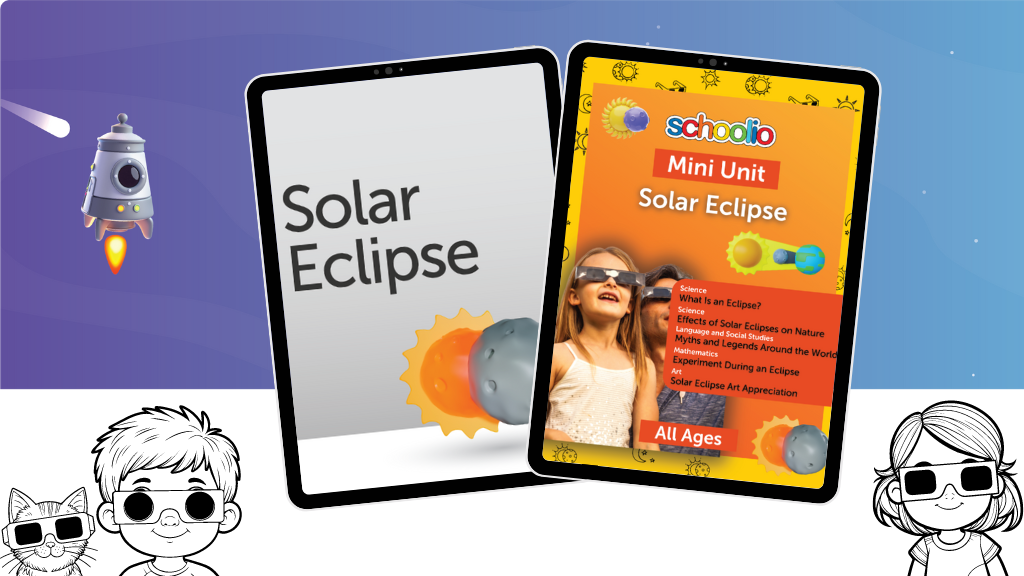
10. Download the FREE Schoolio Mini Unit

To ensure you have a well-rounded educational journey leading up to the eclipse, download the FREE Schoolio Mini Unit all about the Solar Eclipse. This resource is packed with ready-to-go lessons that cover the science, history, and cultural significance of solar eclipses. It’s an excellent way for your kids to get excited and informed about the event, providing structured learning alongside the activities suggested above.

Conclusion

Learning about the solar eclipse can be an enriching experience for both you and your children. By combining science, history, art, and storytelling, you can create a multidisciplinary curriculum that captivates their imagination and fuels their curiosity. Use this celestial event as a springboard for discovery, and don’t forget to download the Schoolio Mini Unit for a comprehensive guide to teaching about the eclipse. Happy learning, and clear skies for your eclipse day!

Outsource Learning Focus: Why It’s a Good Idea to Outsource Some Teaching

In the ever-evolving landscape of education, parents and caregivers are exploring innovative approaches to enhance their child’s learning experience. One such strategy gaining traction is the concept of outsourcing learning focus. In this blog post, we’ll delve into why outsourcing some teaching can be a game-changer for your child’s education.

The Changing Face of Education: Traditional learning environments, while effective, may not always cater to the individual needs and learning styles of each child. Recognizing this, parents are turning to outsourcing as a strategic solution to supplement and enrich their child’s educational journey.

Why Outsource Learning Focus?

  1. Specialized Expertise: Outsourcing allows your child to benefit from the specialized knowledge and expertise of professionals in specific subjects. Whether it’s advanced mathematics, foreign languages, or coding, outsourcing ensures that your child receives high-quality instruction.
  2. Diverse Learning Styles: Every child has a unique learning style. Outsourcing provides access to a variety of teaching methods and approaches, catering to different learning preferences and fostering a well-rounded educational experience.
  3. Time Management Skills: Learning to manage time effectively is a crucial life skill. By outsourcing certain aspects of teaching, your child can learn to balance their schedule, prioritize tasks, and develop essential time management skills that will serve them well in the future.
  4. Holistic Development: Outsourcing extends beyond traditional subjects. It includes extracurricular activities, sports, and creative pursuits. This holistic approach contributes to your child’s overall development, and nurturing skills such as teamwork, leadership, and creativity.

How to Integrate Outsourcing into Your Child’s Learning:

  1. Identify Learning Gaps: Assess your child’s strengths and weaknesses to identify areas where outsourcing could provide targeted support. This ensures a personalized approach tailored to your child’s needs.
  2. Research Trusted Resources: Explore reputable online platforms, educational services, and professionals that align with your child’s learning goals. Verified reviews, testimonials, and recommendations can guide you in making informed choices.
  3. Balanced Approach: Maintain a balance between outsourced learning and home-based instruction. Create a cohesive learning plan that integrates both, allowing your child to benefit from a diverse and comprehensive educational experience.
  4. Collaborative Projects: Schoolio’s collaborative project features, now enhanced with Live Classes, allow your child to work on assignments with fellow students and engage with vetted Tutors, promoting teamwork and communication skills. These projects simulate a classroom environment, providing a balance between individual learning and group interaction.

Outsourcing learning focus is not about replacing traditional education but enhancing it. Embracing this approach can open doors to a world of opportunities, providing your child with a customized, well-rounded education that prepares them for success. Consider the unique needs of your child, explore the vast resources available, and watch as outsourcing becomes a catalyst for their academic and personal growth.

In conclusion, the integration of social time into your homeschooling routine is crucial for your child’s holistic development. By leveraging Schoolio’s resources, including Live Classes with vetted Tutors, and fostering a balance between academics and socialization, you can create an enriching educational experience for your child. Embrace the power of social time, and watch as your child blossoms into a well-rounded individual. ?✨ #Homeschooling #EducationEvolved #SchoolioLiveClasses