Why Pausing Ontario’s Curriculum Overhaul Might Be the Best Thing That Could Happen
by Lindsey Casselman
When I think back on our homeschool journey — and honestly, even my time as a classroom teacher — one thing that always struck me was how often we tried to fix learning by changing the curriculum.
I’ve been watching the news about Ontario’s decision to pause its major curriculum reforms, especially the overhaul to kindergarten, and I’ll be honest — it felt familiar. Not because change is bad, but because too often, we mistake activity for progress.
As someone who’s both taught in public school and built curriculum from the ground up here at Schoolio, I’ve seen how these sweeping changes tend to go. New documents, new standards, new language — but very little impact on what really matters to kids and teachers. A few years later, we do it all over again.
It’s not reform. It’s spinning.
Somewhere along the way, we started treating education like a business — always marketing, rebranding, looking for the next system-wide breakthrough. But kids aren’t products. And learning isn’t a marketing strategy.
The truth is, what drives real learning is rarely found in a government PDF. Students thrive when their curiosity is sparked. When their teacher has the freedom and energy to explore a topic from a new angle. When lessons connect to the real world — to questions they actually ask.
But most curriculum overhauls don’t get at any of that. They shuffle standards. They update timelines. They insert buzzwords. But they rarely ignite joy — in students or teachers.
If you’ve ever sat at the kitchen table with your child, trying to make sense of a lesson that feels totally disconnected from real life, you know exactly what I mean. That glazed look. The frustration. The deep feeling of “why are we even doing this?”
That’s not a learning problem. That’s a relevance problem.
What we need isn’t a brand new curriculum every few years. What we need is a mindset shift.
Instead of building everything from the top down, what if we started from the ground up? What if we trusted teachers to lead the way, using their experience and insight to shape lessons that actually land? What if we listened — really listened — to the kids?
That’s how we design our units at Schoolio. We start with questions students already have. We build flexibility in, so families can pause or pivot. We make space for creativity, discussion, and the moments that stick.
And we don’t pretend that a perfect curriculum will solve everything. What we offer is structure, yes — but with enough room for learning to feel alive again.
So while the pause in Ontario’s reforms might seem like a step back, I see it differently. It’s a chance to stop the spinning. To ask better questions. To start designing for joy, not compliance.
Because if we’re really serious about helping kids learn — we have to remember why they learn in the first place.
The Importance of Choosing a Canadian Math Curriculum for Homeschooling
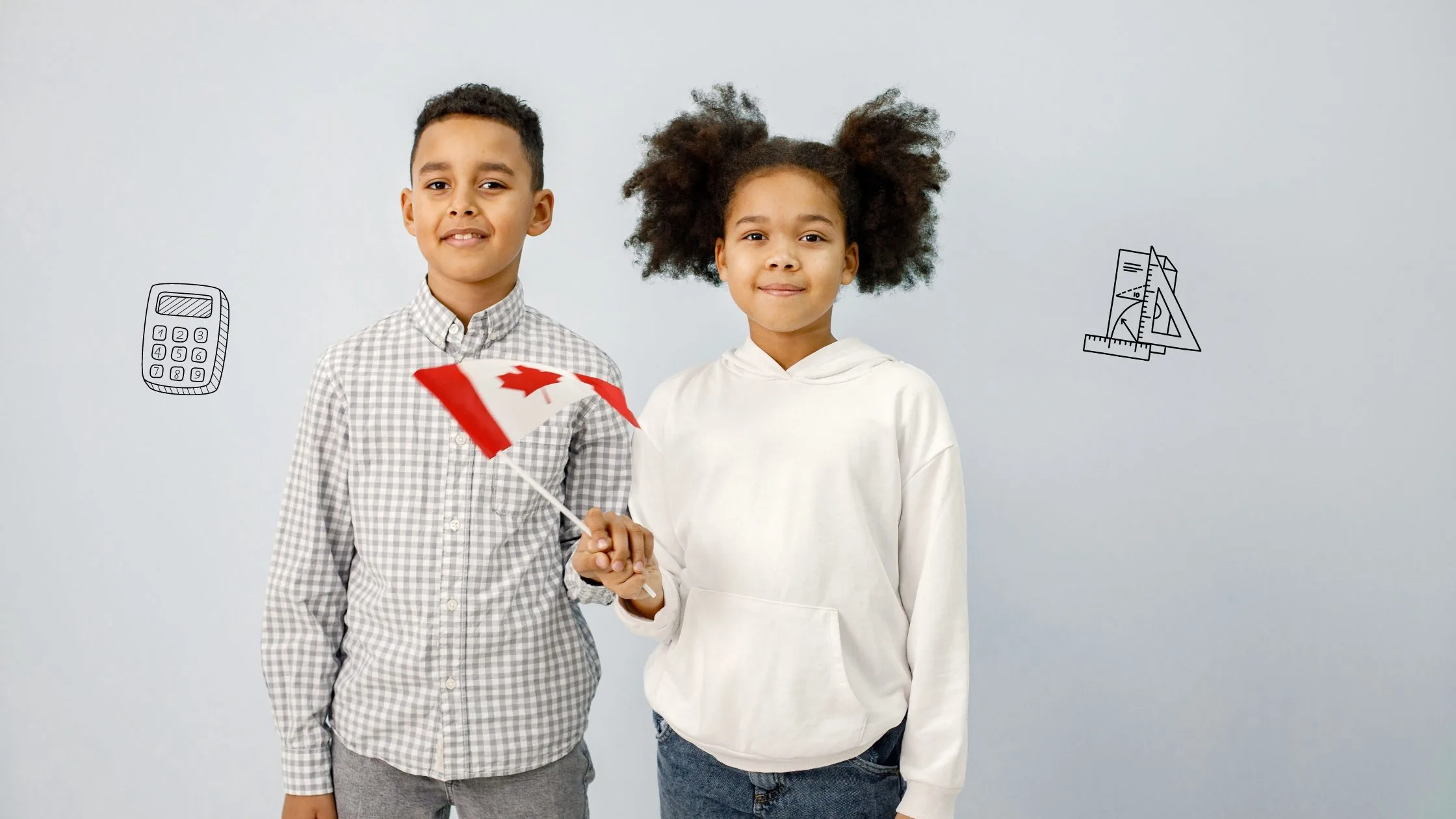
Canadian parents often find themselves faced with a crucial decision when it comes to selecting an appropriate educational path for their children. While the allure of American homeschool curriculums is undeniable, there exists a compelling case for embracing a Canadian approach to education. Let’s explore the importance of choosing a Canadian math curriculum for homeschooling.
Cultural Relevance Matters with Math:
Homeschooling goes beyond academics; it’s about instilling values, cultural awareness, and a sense of identity. When children are educated using a curriculum that reflects their own country’s values and context. They are more likely to develop a deep understanding of their roots. A Canadian math curriculum ensures that mathematical concepts are presented in a manner that resonates with the unique cultural nuances of Canada.
Differences in Canadian Math Curriculum:
Temperature Measurements: Celsius vs. Fahrenheit – A Canadian Perspective:
The choice of a Canadian math curriculum extends beyond numerical concepts into the practicalities of daily life. Canada, being a country that predominantly uses the Celsius scale for temperature measurement, underscores the importance of integrating this system into the educational fabric. By opting for a Canadian math program. Homeschooled children not only grasp mathematical concepts but also gain an intuitive understanding of temperature in degrees Celsius, aligning with the norms of their home country. This ensures that Canadian students can interpret and relate to weather forecasts, daily temperatures, and climate discussions in a way that reflects the reality of their environment.
Weight Measurements: Kilograms in Canada vs. Pounds in the US – Bridging the Gap:
In the pursuit of a comprehensive Canadian homeschool curriculum, the distinction in weight measurements cannot be overlooked. Canada predominantly uses the metric system, with kilograms as the standard unit of measurement. A Canadian math program, such as the one offered by Schoolio, incorporates this metric system seamlessly. By doing so, students not only become proficient in mathematical computations but also develop an innate understanding of weight in kilograms. This ensures that the weight-related concepts children encounter in their daily lives. From grocery shopping to scientific experiments, align with the Canadian measurement system.
Distance Measurements: Kilometres in Canada vs. Miles in the US – Navigating Canadian Spaces:
Another critical aspect that sets Canadian math curriculum apart is the inclusion of the metric system for distance measurements. Canada uses kilometres as its standard unit, a departure from the miles commonly used in the United States. The Schoolio learning platform recognizes this difference and incorporates it into its educational materials for kids. By learning distance in kilometres, Canadian homeschooled children not only acquire essential math skills but also develop a practical understanding of the distances they encounter in their daily lives. Making their education more relevant to the Canadian landscape and ensuring they navigate their surroundings with precision and accuracy.
Financial Literacy for Kids: A Crucial Aspect of Canadian Math:
Canadian homeschooled children need more than just mathematical proficiency; they need a solid foundation in financial literacy tailored to the Canadian economic landscape and currency. Schoolio’s curriculum integrates financial education seamlessly. Providing a holistic approach to math that prepares children for the financial realities they will face in their own country.
Math Homeschool Resources Designed for Canadian Minds:
The Schoolio math homeschool resources are crafted to align with Canadian educational standards. From foundational arithmetic to advanced algebra, these resources guide students through a curriculum. This curriculum is not only challenging but also imbued with Canadian examples and applications. This approach fosters a deeper understanding of mathematical concepts within the context of Canadian culture.
Schoolio Learning Platform: A Canadian Educational Beacon:
One of the standout options for Canadian homeschooling families is the Schoolio learning platform. Which provides full grade curriculum for American and Canadian learners. This platform not only provides educational materials for kids but also offers a comprehensive Canadian homeschool curriculum. By choosing Schoolio, parents can be confident that their children are receiving an education tailored to the Canadian context. Ensuring a more meaningful and relevant learning experience. Recognizing the importance of preparing children for the digital age, Schoolio incorporates coding lessons into its Canadian homeschool curriculum. Ensuring that children are equipped to thrive in a rapidly evolving global landscape.
The Schoolio Family Plan: Uniting Canadian Homeschooling Families:
Schoolio understands the importance of community and support in the homeschooling journey. The Schoolio Family Plan not only provides access to a robust Canadian home education curriculum. But also fosters a sense of belonging by connecting families across the nation. This collaborative approach enhances the homeschooling experience for both parents and students.
Choosing a Canadian math curriculum is not just a matter of academic preference; it’s a decision that shapes a child’s cultural identity. While prepareing them for the economic landscape, and equips them with skills relevant to their own country. Schoolio, with its emphasis on a Canadian homeschool curriculum, emerges as a beacon of educational excellence. Offering a holistic and culturally relevant learning experience for Canadian homeschooled children.
When most people think ‘homeschool,’ they think of the stereotypes attached to it, like the stereotype that people only homeschool for religious reasons. And while many do, statistics show that there is now a wide range of parents homeschooling their children worldwide. So why are so many parents homeschooling?
Why are so many parents homeschooling?
Since homeschooling is becoming so popular, it’s no surprise that around 3.7 million children were homeschooled in the United States from 2020-2021, from kindergarten to grade 12. According to theNational Home Education Research Institute, this translates to roughly 6% to 7% of school-aged children. In comparison, in the spring of 2019, 2.5 million children were homeschooled in the United States. Following the same trend, Canadian families have turned to homeschooling as their education choice. According toThe Fraser Institute, an average growth rate of more than 5% per year.
So why are so many parents homeschooling? There are so many reasons, and each homeschooling family has their unique reason for homeschooling. But some of the most popular reasons include:
Homeschooling offers stability.
The pandemic was a staunch reminder that the education system is fragile and struggles to pivot when things get messy. Children need stability, especially when it comes to their education. While many may assume that homeschooling is the opposite of a stable educational choice, they’re mistaken. Throughout the pandemic learning chaos, homeschooling families continued to do what they had done all along: learn. While many traditionally schooled children were slipping through the cracks, homeschooling children continued to thrive with their education.
The pandemic aside, there are many other reasons traditional education isn’t the most stable choice. Let’s take a look at education in Ontario, Canada, in the school year 2019-2020 before the pandemic made things even messier. Many forget that a teacher strike saw children missing essential learning time. Compacted with the pandemic caused learning loss to affect children in momentous proportions.
Homeschooling offers safe learning.
We have all seen the news and been traumatized by images of school shootings across the United States. Something so horrifying is, unfortunately, happening more and more. Many parents are fearful when they drop their children off for school, and many children face immense anxiety throughout the school day. As such, homeschooling offers safe learning, where children are safe in their own homes with the people they feel safest with, their parents.
Homeschooling is customizable.
There is no such thing as one size fits all regarding education. Yet, traditional education is very much one size fits all. When we try to answer the question of ‘why are so many parents homeschooling?’ we cannot overlook that homeschooling is customizable to meet the student’s needs. Every child is unique, and so is their learning style.
Say your child is technically in grade 4 but understands math on a grade 5 level; their reading and writing are on a grade 3 level. Homeschooling allows you to help your child learn what they need to learn. Not forcing them to understand the same way everyone else is, because one size fits nobody.
Or if your child learns better with a hands-on approach vs. Sitting at a desk for hours. Homeschooling offers the opportunity for children to learn in the way that best suits them.
Homeschooling offers different social opportunities.
When you think of homeschooling, you may assume that socialization isn’t a homeschooling family’s strong suit. But that’s false. Homeschooling offers children a fantastic opportunity to socialize in ways many traditional learning students do not have ready access to.
Homeschooled children can volunteer with their families at community events, nursing homes, veteran halls, and more. These opportunities allow children to socialize with more than just their peers. They can socialize with a wide variety of people, which helps them to have better social connections and understanding of the people around them.
Homeschooling helps children become self-reliant.
Many homeschooled children are independent and self-reliant. This is because homeschooled children can learn at their own pace while also self-motivating themselves as they need to be accountable for their progress. The significant benefit is that it helps children by boosting their confidence and helping to shape a sense of responsibility. Additionally, homeschooled children have the chance to go deeper with their interests while learning. This benefits them as they continue to develop greater independence and self-direction.
They also can develop their organizational and time-management skills better. As many older homeschooled, students can manage their schedules around extracurricular activities and studies. These wholesome benefits are confirmed by 87% of peer-reviewed studies. These studies demonstrated that statistically, homeschooled students score much better on emotional, social and psychological development metrics than their peers in traditional learning venues.
Homeschooling is becoming a much more affordable option.
There’s a misconception that you must be ‘rich’ to homeschool your children. The truth is that with homeschooling gaining popularity, many affordable curriculum options are becoming available to serve homeschooling families with all financial backgrounds. Schoolio Learning offers excellent rates for an all-in-one, open-and-go, inclusive homeschooling curriculum. Parents can homeschool easily, knowing they didn’t just break the bank to provide a quality homeschooling curriculum for their children. Concerned about homeschooling costs? Check out this blog on affordable homeschooling curricula.
Homeschooling allows more one-on-one time.
When you ask the question of why are so many parents homeschooling? You will likely get this response. Many parents only see their children for a couple of hours daily. Between rushing to school, coming home and rushing to sports, then off to bed as soon as they get home, many parents feel like their children are growing up without them getting to be present for a lot of it. Homeschooling offers families the opportunity to spend more time together. With a much more relaxed schedule, homeschooling families can embrace the valuable time learning together. Indeed, there are stressors and things that take from our time, but homeschooling offers parents the ability to spend more time with their children.
Homeschooling offers a bully-free environment.
Unfortunately, bullying seems to be a norm in school. According to PACER’s National Bullying Prevention Center, one out of every five (20.2%) students reports being bullied. 43% of students reported being bullied in the hallway/stairwell, 42% reported being bullied in the classroom, 27% reported being bullied in the cafeteria, 22% reported being bullied outside on school grounds, 12% reported being bullied in the bathroom or locker room, and 8% reported being bullied on the school bus.
One of the big answers to the question of ‘why are so many parents homeschooling?’ is that homeschooling offers children the chance to learn and grow in a safe environment, away from bullies and peer pressure, which means that children are free to be themselves without the fear of being bullied.
Homeschooling gives you the freedom to schedule your own time.
Parents that are homeschooling report that their children get much better sleep. Because they can sleep until their body is ready to wake up, some days are rushed, but most homeschooling days are much more relaxed than traditional learning days. Homeschooling families also have the opportunity to partake in more fun extracurricular activities, field trips, and learning fun.
Homeschooling keeps children from slipping through the cracks in the education system.
Unfortunately, many children are slipping through the cracks of a broken education system, even more so during and in the aftermath of pandemic learning. The sad reality is that many students are pushed onto the next grade level even though they don’t fully understand what they need to do. Thus many children are struggling now more than ever before. Yet, there is not enough time, money or resources available to help those children that are slipping through the cracks. Homeschooling meets the child where they are. Offering them the opportunity to learn what they need to and catch up on the areas they are struggling with.
There are countless answers to the question ‘why are so many parents homeschooling?’
While we listed some of the most popular reasons to answer the question of why so many parents are homeschooling? There are hundreds of more reasons. Each family is unique, and so is their reason for homeschooling their children. The bottom line is that homeschooling is becoming much more popular and for the right cause. Because children deserve the chance to learn in the environment that best suits them, whether traditional learning or homeschooling, finding the learning avenue that helps your child thrive is essential. Take some time to evaluate the pros and cons of homeschooling with conventional learning, then make the right decision for your family.
Look no further than Schoolio Learning for all your homeschooling needs.
Are you frustrated with your current homeschooling situation? Do you want to homeschool more efficiently? And does the circumstance below sound overly familiar?
It’s 2:00 pm, and your sink is full of dishes, goldfish and cheerios scattered all over the dining room and trailed into the living room like some odd trendy art studio. You dreamed of making a roast chicken and potato dish for dinner but forgot to pull the chicken out of the freezer to thaw.
There is a list of five hundred things you’d like to get done today, but you find yourself sitting at the table with your eight-year-old as he constantly avoids answering the math questions that appear before him. You feel like you are wasting 80% of your day trying to lesson plan and get your children to accomplish some curriculum.
Do you want to homeschool more efficiently? How can you accomplish this?
First, you need to simplify your learning materials. If you are using a homeschooling curriculum that is leaving you and your children frustrated and overwhelmed, you will never be successful.
Try a curriculum that is open-and-go.
What is an open-and-go homeschooling curriculum? It means you aren’t spending hours planning your homeschooling lessons. Schoolio’s open-and-go curriculum means you can simplify the prep and spend more time enjoying the process. If you couldn’t schedule prep time, the lessons are organized neatly so your child can stay on track without elaborate planning. They can open their books and go!
Use a curriculum that is easy to follow.
Have you used a homeschooling curriculum that had you check multiple books to ensure you covered all the bases adequately? The problem is that you are now overwhelmed by all these books, feel you’ve missed something, and your dining room table looks like a library that lacks a librarian?
The Schoolio curriculum has raving reviews from both seasoned homeschoolers and new homeschoolers. Both stated the same thing: We love the simplicity of the lessons. We don’t overcomplicate learning; we stick to the basics and make it easy for the student to understand and for the parent to teach.
Try a customizable curriculum.
Having a customizable curriculum is essential for your children’s learning needs. There’s this outdated misconception that children should all learn the same way and simultaneously. The opposite is true; kids thrive when their learning content is customized to meet their needs.
If your child needs help with concepts they haven’t yet mastered, you can customize the curriculum to help them master those skills. Alternatively, suppose your child finds their current level boring. In that case, you can customize their curriculum to reflect their interests by going more of an interest-based route with fun electives to keep them learning and intrigued.
Schoolio has received many positive reviews about our customizable curriculum options because we know that one size doesn’t fit all. Every child is unique, and therefore so should their learning journey. If your child is genuinely struggling with a specific subject like, for example, Math Grade 2 – remember they don’t need to stick with math grade 2. You can switch it up and dive back into a unit of Math Grade 1 to help them refresh and master the skill.
Use an affordable curriculum.
Many homeschooling families are single-income, so finding a good homeschooling curriculum can be tricky. Because let’s face it. Homeschooling curriculum can be expensive. Finding an affordable, quality homeschooling curriculum is so important. Compared to top homeschooling curriculum companies, Schoolio Learning is the #1 choice for affordable and quality content. Curious how the two compare? Check this out!
That means you can get what you need for your child’s learning without breaking the bank.
Purchase a curriculum that has a reasonable amount of content.
There are many homeschool curriculums that are so full of content, you barely have time to think. The pressure of ensuring your child finishes everything before the end of the year can leave many parents feeling stressed and overwhelmed as they know that if they miss a day, they won’t be able to finish at the time they’d like to.
Schoolio curriculum is created with those needed breaks in mind. Life happens; sometimes we get sick, sometimes we like to go on field trips, sometimes no one feels like diving into a lesson, and sometimes we want to take a week off to reset. Our curriculum was created by homeschooling parents that know that those homeschooling breaks are just as important as the content that you purchase to teach.
Our full learning bundles are filled with excellent lessons in Math, Social Studies, Science and Language Arts, enough to encourage continuous learning but not overwhelm the family’s schedule and rhythm.
Want to homeschool more efficiently? Remember you don’t have to revolve around your homeschooling curriculum.
Homeschooling is a beautiful opportunity to educate your child from home and help them thrive on their learning journey. We have to be careful not to be blinded by this idea that you must make your homeschool ‘just like traditional school.’ Suppose you constantly fight with your kids to get them to complete assignments x, y, and z before the ‘next period’ of your day. By the end of the day, everyone is burnt out and even if your child completed assignments x, y, and z, they didn’t retain the knowledge because they were too stressed.
Your life doesn’t have to and shouldn’t revolve around your homeschool. Your homeschool should revolve around your life. If you want to take a fun field trip with the homeschool group to the museum but have a pile of Math to complete, it’s ok to pause the math work to enjoy the fun moments.
Because learning happens everywhere. It’s not just in books or classrooms; learning happens in the car, at the park, grocery store, the museum, and the art gallery. Learning is everywhere.
Do you need help choosing the right homeschooling curriculum for your family?
We’ve got you covered! This blog is by Lindsey Casselman, co-founder and head curriculum writer at Schoolio Learning. She walks you through essential steps to choosing the best curriculum for your family and lifestyle.
The other day I heard someone say, “Parents work so hard and sacrifice so much so that at the end of the day, our kids will be a little further ahead and have more opportunities than we did.” This isn’t specific to our generation, as generations of parents before us have wanted better or the best for their children. We all stress that our children aren’t getting the opportunities they deserve or that they’ll fall behind somehow. Is there some magical remedy that you can tap into to help your child excel?
Let’s take a look at why we want our children to excel.
“I want them to have a better life than I did.” This is a common phrase that many parents share. And while many can offer the better life in the younger years, there comes a time when your child will leave the nest and rely on their abilities. This is why many parents feel the intense need to pressure their children to excel. Because if we can guarantee their success while they’re young, perhaps that will spill over into their adult years.
Another reason some parents wish for their children to excel is that they are competitive. Before you gasp and brush this off, let’s understand that many parents who have already been raised in or even work in a more competitive environment find that ‘pushing’ their children to do their best comes naturally.
You may assume that a competitive parent is the one screaming from the stands at the basketball game. But, competitive parents come in all different forms. While sports parents are the most relatable when we talk about competitive parents, we must remember that parents can also be competitive in the academic portion of life. For example: “My child has the best grades in the class.” “Well, my child was reading at the age of three.” “Did you know my child got an award for the best voice in her school?”
They’re our kids; we like to brag about them! But we must be cautious that that pride doesn’t put pressure on our children to excel. You might be thinking, ‘hold on, I thought this blog was about getting my child to excel?’ And it is. So, let’s jump to the first tip to help your child excel.
Help your child excel with these 7 tips.
1. Don’t place too much pressure on your child.
This tip is number one because it is the most important. As you read above, you’ll see that we as parents love to praise our children and brag about them for all their successes. But, you must be careful not to allow that bragging to pressure them always to do the best possible. Your child is exceptional, but you need to let them succeed and fail. When you only allow them to ‘do their best all the time,’ they will become overwhelmed and resent the idea of the success that you want for them.
Did your child have the best grade in their class or homeschool class during 7th grade, but their grades have declined in their 8th-grade year? That’s ok. Avoid saying things like, “I don’t understand what happened? You were doing so good.” That is unnecessary pressure that won’t lead them to success. In many cases, it will just lead them to the opposite.
2. Don’t push them.
Is this another confusing concept? Can your child excel without you pushing them to do so? Absolutely, and more so. Forcing your child to ‘do better, and be better without care and understanding will lead to frustration and overwhelm. You should aim for your child to trust you and know that your love for them comes before your desire for them to excel. Your child needs to know that you know what they need, what they can handle, and who they are. They don’t need us constantly reminding them of what they ‘can’ or ‘should’ accomplish.
While gentle nudges of love are acceptable, you have to be sure to keep those nudges peaceful, caring and loving.
3. Be sensitive to their needs.
Every child is unique in their way. One child might excel in sports but struggle with academics; another might excel in academics but struggle with sports. Some children may do well at everything they try, while others may work a little harder to accomplish what they need. Your child has needs, wants, hopes and dreams. Be sensitive to their thoughts and feelings. If you aren’t sure what your child ‘wants,’ then ask them. Talk to them. Could you help them?
Forget forcing your child to answer questions like “What do you want to be when you grow up?” instead, ask them, “what do you want to do right now?” Does your child have unique interests that they’d like to explore? Do they want to spend more time with you? Would they like to learn to cook with you? While you, as the parent, do have a good sense of what your child wants and needs, there is probably something you’re missing. Do you want to help your child excel? Then start a conversation.
4. Stop stressing so much.
This tip is significant for all parents but especially for our homeschooling parents. Are you stressed out that your child isn’t meeting the learning standards that they should? Do you worry that they aren’t doing enough in a day, so you essentially force them to sit and finish four pages of math, five pages of Language, and practice an instrument for a half hour?
Are you stressed and slightly annoyed when they don’t do all the things on the academic list? When parents are stressed, we tend to be less affectionate and responsive to our children. Parental stress can inadvertently spill into our parenting style, which has many adverse outcomes for our children. One particular concern is the feelings of failure and rejection that some children may experience when they feel as if they are the reason their parent is stressed.
If you want to help your child excel in any area of their life, being stressed about their success isn’t the answer.
5. Support their interests.
The outdated education system of measuring success based on grades is flawed. You should aim to support their interests because when your child can explore their interests, they will maintain much more learning than if they were forced to meet the standards of a broken education system.
What does this look like? If you want to know what your child is interested in, then clearly, as stated above, the first step is to talk to them. And if you and your child are still not getting a clear understanding as to what their interests might be, dive into some interest-based learning materials to help them find those things that make learning fun. You could exploreSpecial Interest Unitslike our Unique Electives for more variety for interest-based learning.
It’s no secret that children mirror what they see. Are you living a healthy and balanced life? Do you make sure you are ambitious regarding your health, nutrition, exercise, and rest? Does your child see you enjoying healthy hobbies and interests? When your child sees you modelling a healthy and balanced life, they will aim for that also.
Does this mean you must eat kale salad in front of them and run marathons on the weekend? No! There are two extremes when it comes to a healthy and unhealthy lifestyle. Aim for balance for yourself, and model that beautiful balance for your child.
7. Emphasize the importance of character.
Greek philosopher, Aristotle, said, “We are what we repeatedly do. Excellence, then, is not an act but a habit.” Excellence is a habit. Your child’s success in life is based on healthy habits. What are some fundamental habits that can lead to success? Listening, organization, sharing, timeliness, attention, good conduct and respect for adults, peers, and oneself. Just like it is essential to model a healthy and balanced lifestyle, it is as important to model a good character and help your child develop these fundamental habits for success.
Is your child prepared for grade two? Should you allow your child to have the summer off to play and avoid books altogether? Or should you cram in as much extra curriculum work as possible to ensure they’re prepared and ready to excel in grade two? We can help you with all your questions and how to prepare your child for grade two.
With summer learning loss being a significant threat to your child’s learning development during the summer months, how can you keep your children from falling behind while helping them prepare for what’s ahead in grade two?
Preparing your child for grade two while aiming to avoid summer learning loss.
The first step to preparing your child for grade two while avoiding summer learning loss is to not stress about it. As parents, we often worry about ensuring our children are on track with their learning. That worry can become increasingly more vigorous with the concerns around pandemic learning loss.
Then there’s the concern about summer learning loss and how most children lose 2.6 months of math skills, two months of reading skills and the equivalent of one month of overall learning during the summer.
How can we help our children catch up from the learning loss they’ve already experienced, stay on track and not lose more learning knowledge during the summer months?
Reading, writing, math and learning are essential skills your child must continually practice to develop correctly, especially during the summer.
Simplifying grade two prep to help prepare your child for grade two.
When you’re trying to prepare your child for grade two, don’t overthink it. So often, we assume that preparing our child for the next grade level needs to be a huge endeavour when the reality is that it can be a simple process when done correctly.
You can simplify their summer learning using the Summer Schoolio: Ready for Grade 2 book! Created specifically for helping children going into grade two, your child will stay refreshed and on track with their learning, so they’re fully prepared for grade two. Saving you hundreds of dollars from looking for and paying way too much for a homeschool curriculum will likely not be what you need to prepare your child for grade two.
Let’s look inside the Summer Schoolio: Ready for Grade 2 workbook!
Having an enjoyable summer without the stress of trying to complete extra tasks is essential! This is why our Summer Schoolio books have been designed to be simple. Without the overwhelm of having to complete a mountain of overwhelming tasks.
In the Summer Schoolio: Ready for Grade 2 book, we have combined the best of our secular homeschooling curriculum concepts to bring you and your child a unique summer learning solution that will prepare your child for grade two. In a fantastic combination of homeschooling writing curriculum, homeschooling language arts curriculum and homeschooling math curriculum, we aim to help your child practice those essential skills to stay on track.
Summer Schoolio: Ready for Grade 2 overview:
The Summer Schoolio: Ready for Grade 2 workbook is packed with fun learning materials to prepare your child for grade two. Created for six weeks, your child will have the opportunity to learn and refresh different concepts each week.
Week one includes:
A summer Schoolio week includes three days of simple learning that won’t take long to complete.
Day one, Weekly Writing – Friendly Letters – and Math – Number Sense.
Day two, Weekly Writing and Math – Number Sense.
Day three, Weekly Writing – Scrapbook and Math – Number sense.
Day one, Weekly Writing – Reviewing a Book – Math – Algebra.
Day two, your child will work on Weekly Writing and Math – Algebra.
Day three includes Weekly Writing – Scrapbook and Math – Algebra.
Week four includes:
When your child is working on week four they will complete:
On day one, they will do Weekly Writing – Writing Non-Fiction – and Math – Geometry/Spatial Sense.
On day two, they will be working on Weekly Writing and Math – Geometry/Spatial Sense.
On day three, they will get to work on their scrapbook for Weekly Writing and the final day of Math – Geometry/Spatial Sense.
Week five includes:
Day one of week five is Weekly Writing – Poetry and Math – Data.
Day two, they will work on Weekly Writing and Math – Data.
Day three is Scrapbooking for Weekly Writing and Data for Math.
Week six includes:
The first day of week six focuses on Weekly Writing – Summarizing along with Math – Financial Literacy.
The second day is all about Weekly Writing and Financial Literacy for Math.
On the third day, your child can work on their scrapbook for Weekly Writing and enjoy their final Financial Literacy assignment.
As you can see, the assignments and schedule are repetitive, only switching out concepts to keep your child’s learning structured and interesting. This will help your child master all the essential math and reading/writing concepts for grade two.
What does a typical week look like using the Summer Schoolio: Ready for Grade 2 program?
Their workbook will include a sample schedule/calendar you can follow each day. It will look like this:
Monday: Read a Book or Chapter.
Tuesday: Weekly Writing Day 1, Math Day 1, Read a Book or Chapter.
Wednesday: Weekly Writing Day 2, Math Day 2, Read a Book or Chapter.
Thursday: Weekly Writing Day 3, Math Day 3, Read a Book or Chapter.
Friday: Read a Book or Chapter.
It’s incredible how simplified the process of keeping on track with their learning can be. It’s simple and not stressful! The best part is that their learning time can be accomplished in as little as one hour per day. This way, your child can keep up with their learning needs, refresh and not become overwhelmed by too much information crammed into one day.
We all want to give our children the best opportunities to excel in life. And a good education seems like one of the most significant ways to ensure they get those opportunities. Some parents choose traditional education, some opt for private learning methods, while others prefer to homeschool. Those who choose the latter can sometimes find themselves exhausted from trying to provide the ultimate learning experience for their children. That’s where a digital learning platform might be the game-changer they’ve been longing for.
A Digital Learning Platform, unique innovation by Schoolio.
If you’ve never heard of Schoolio, we are a curriculum company based in Canada. But that’s not all; we are working on some fantastic educational innovations to support parents, teachers and most importantly, students. Our team has been working around the clock on a digital learning platform that will change the world of education as we know it.
We do so by converting all digital pdf lessons into audio and visual lessons for students. There are around 4,000 pieces of content from Kindergarten to Grade 8 across all core subjects, Math, Science, Language Arts and Social Studies. The videos are created for children to have fun while also absorbing the essential learning materials.
Creating a Unique Learning Experience For Each Child.
How are we doing that? By creating content geared toward your child’s age group to avoid learning fatigue. Our mission is always to help children everywhere have access to the education they deserve. We are proud to offer this learning option to everyone soon!
Watch this video from the Schoolio Live Q & A, Episode 3 with Nirmala and Sathish to see a preview of this fantastic new program!
Homeschooling in Atlantic Canada – How to Get Started
Are you considering homeschooling? Or perhaps are new to homeschooling in Atlantic Canada? How do you get started? Where do you begin? And what’s the best route to take in order to be a successful homeschooler? Is homeschooling even legal in Nova Scotia, New Brunswick, Prince Edward Island and Newfoundland & Labrador? We are going to cover each of these provinces unique learning standards for homeschooling.
Before we dive into homeschooling in Atlantic Canada Provinces it’s important to select a curriculum that works great for your family.(If you are in Newfoundland & Labrador, please check curriculum standards before selecting curriculum – See below)
How do I pick homeschool curriculum?
There are hundreds of curriculum options available for homeschooling families now. We recommend that you purchase a Canadian based curriculum. There are so many phenomenal American Homeschooling curriculum options. However, if you are homeschooling in Atlantic Canada, you will find that you have to supplement your curriculum more often than not for Canadian concepts.
The first province we will cover when it comes to homeschooling in Atlantic Canada is Nova Scotia.
Let’s start with the basics.
Is Homeschooling legal in Nova Scotia?
The answer is yes! In fact, homeschooling is legal in each province of Atlantic Canada, but rules do vary. The Department of education in Nova Scotia outlines thelegislation for home education. It’s always best to start there when you have questions about homeschooling in Nova Scotia.
Does your child need to be registered in Nova Scotia?
Yes! Parents and guardians in Nova Scotia are required to register their children, ages 6 to 16 in an educational program. First, you will need to register your child for Primary (Kindergarten) whether your child is 5 or 6 years old. Be sure to register them in the year that they will be 5 years old before December 31st. Secondly, you will need to provide a copy of your child’s birth certificate for their first year.
What are your responsibilities as a home schooling parent in Nova Scotia?
First, you need to advise the Department of Education (Halifax Office) of your intent to homeschool your child.
Secondly, you need to complete the registration form annually and return it to the Regional Education Office, Halifax, Nova Scotia. For a child that has not been registered in public or homeschool before, you will need to include proof of their age with your registration form.
Third, in June you will need to provide a report to the Department of Education (Halifax Office) on the progress of your homeschooled child(ren). This report should be compatible with the program of study of the child(ren).
Fourth, you as the homeschool parent need to ensure that your child is diligent in attempting to master their home education studies that had been described in the registration form.
Fifth, as the primary home education parent you must be prepared to meet with the school board officials if and when the child(ren) are to be enrolled in public school. You are required to provide evidence of your child’s education program. Because as the home-educating parent or guardian, you are responsible to provide solid evidence of your child’s education.
Where can you find the Registration form?
As the homeschooling parent you will need to fill out the registration form for each of your children at the beginning of the school year. Click here to visit the Nova Scotia Department of Education’s Websitewhere you can find the registration form. Overall the registration letter is simply laid out, very straightforward and easy to understand. This form will ask for both you as the parent or guardian and your child’s information along with the name of the curriculum that you are planning on using for that school year.
What are the requirements for reporting and grading in Nova Scotia?
Every June, the homeschooling parent or guardian must send in another form. This form is called “The Home Schooling Student Report Form.”Click here to view these forms.The Home Schooling Student Report Form is quick, simple and easy to fill out. You can fill out the subject/course name, test marks, and the overall course grade. Then you can use the little subject boxes to fill out a little more detail and information on the subjects covered in the school year. While also including your students learned.
If you were using Schoolio curriculum and needed to fill out the Science section for Grade 5. You could simply go to the table of contents of your child’s completed Science book. Then write the key lessons that they learned for the year. ‘Forms of Energy, Conservation with Renewable Resources, Electricity, Energy Footprint, Structures’ etc..
If you are registering your child for a primary grade for the first time you simply need to:
Register with the Department of Education by filling in the form and being sure to submit it in September.
Make a report on your child’s progress within your areas of study in June each year.
If your child is attending school already and you’d like to legally withdraw them from school in Nova Scotia:
Be sure to inform the school that you will be homeschooling. Ask them to remove your child from the school register.
Complete the Nova Scotia Department of Education Homeschooling Registration Form. Being sure to submit it to the Department of Education to register your child as a homeschooler.
The second province we will cover when it comes to homeschooling in Atlantic Canada is New Brunswick.
Let’s start with the basics: Is Homeschooling legal in New Brunswick?
Yes! It is every parent’s right to home educate their child in New Brunswick. Moreover, you do not need to have a teacher’s certificate or be a college graduate to homeschool your children. Additionally, there is no reporting or annual testing requirements in New Brunswick.
Your first step would be to establish if homeschooling is the right choice for your family.
The Minister of Education New Brunswick suggests that you answer these 5 questions.
Adequate Time?
Do you have Adequate Finances?
Strong Parenting Skills?
Do you have Effective Time-Management Skills?
Common Vision?
Families that choose to home educate are asked by the Province of New Brunswick to complete the Annual Homeschool Application Form. Then they are required to forward it to their local school district.
Keeping in mind that in order for your homeschool to be considered effective instruction it must include these areas of learning:
Language Arts
Mathematics
Science
Technology
Social Studies
Health
Career Development
French
Music
Art
Physical Education
What is the Annual Homeschool Application Form?
The Annual Homeschool Application Form states that you as the parent or legal guardian are taking full responsibility for the education of your child. Once this application has been submitted, the district office will forward the form to the Minister of Education. Following the submission of the letter, the Minister of Education will send the family a signed letter that states they have been approved to home educate their children for the current year.
Here you will find the French and English Annual Homeschooling Application Form:
If your child is just starting school, or you are pulling your child out of school to homeschool, you must inform their current school that you are homeschooling.
Choose a curriculum that suits your family.
Fill out the Annual Homeschool Application Form.
Submit the Homeschooling Application form to the district office.
Await the letter from the Minister of Education for approval.
The Basics of Homeschooling in Prince Edward Island.
The third province that we will cover when it comes to homeschooling in Atlantic Canada is Prince Edward Island.
Is Homeschooling Legal in Prince Edward Island?
Yes! Parents are able to home educate their children in Prince Edward Island! They can do so by using a home education program or public education curriculum.
How can you legally homeschool your child in Prince Edward Island?
You will need to notify the Department of Education and Lifelong Learning that you will be homeschooling your child before the school year begins. Find the Home Education Notice of Intent here.
What curriculum are you required to use?
You can choose whichever curriculum you would like. In addition to this, there is also another option to access curriculum books with provincial curriculum when home educating your child. At this time the Provincial Curriculum costs $50 per child, and that amount will be refunded once the books have been returned after use. Also it’s important to remember that you as the homeschooling parent are responsible for your child’s curriculum, record keeping and their testing.
Homeschooling in Prince Edward Island recap:
If your child is already registered in a school, be sure to notify the school that your child will not be attending.
Fill out the Notice of Parent’s Intention to Homeschool form and notify the Department of Education.
The Basics of Homeschooling in Newfoundland & Labrador.
The fourth province that we will cover when it comes to homeschooling in Atlantic Canada is Newfoundland and Labrador.
The first question, is homeschooling legal in Newfoundland and Labrador?
Yes! Parents do have the right to homeschool their children in Newfoundland and Labrador. However, there are mandates that local school boards are to monitor the progress of the students that are residing in their district.
What are the legal requirements of homeschooling in Newfoundland and Labrador?
Parents or legal guardians need to send in an application to homeschool. Moreover, the four regions of the Newfoundland & Labrador English School District have a Homeschool Coordinator who approves applications. The Homeschool Coordinator also oversees the homeschool program. For information on how to fill out the form click the NLESD Homeschooling Application.
What curriculum will you be required to use in Newfoundland & Labrador?
You can either choose to use the provincial curriculum of Newfoundland & Labrador or you can use any other curriculum which has been previously approved by the EECD. Furthermore, if you don’t want to use an approved curriculum, you will need to provide information about the curriculum to the homeschool coordinator. Then the homeschool coordinator will assess the curriculum that you would like to use. Doing so to decide whether it meets provincial learning standards.
Homeschooling in Newfoundland & Labrador recap:
Notify the school that your child is attending.
Find out who the Homeschool Coordinator is for your region.
Fill out and send the intent to homeschool form.
Choose a curriculum. Remember, if you choose a curriculum that isn’t approved by the EECD, you will need to include this curriculum in your homeschool plan for the Homeschool Coordinator.
We hope that this how to guide has cleared up your questions about homeschooling in Atlantic Canada. Please be sure to follow all the rules and guidelines of your province. And if you are still unsure about any of the standards and requirements for your province, please reach out to your local homeschooling group. Local homeschooling groups can connect you with other local homeschoolers. Additionally, homeschooling groups can help you learn the best route to take with homeschooling, along with the legal requirements for your province and region.
Homeschooling can be a huge transition for your family, so be sure to check out the Schoolio Blog for helpful tips on how to be successful when homeschooling. It’s our hope that you will enjoy your homeschooling journey, and that your children will benefit from this unique education opportunity.
For general information on how to get started with homeschooling in Canada click here: How Do I Homeschool?
Are you a Schoolio Customer?
Join the unique Schoolio Families Facebook Group. Created for Schoolio families to connect, learn and grow together.
Are you curious why we are so passionate about our digital curriculum? Lately, we’ve been receiving multiple questions about what a digital curriculum is? How can you use a digital curriculum? And what are the best ways to be successful using a digital curriculum? This is why this blog is all about how to use a digital curriculum and why we’re so passionate about it.
Why do we promote and sell a digital curriculum?
Convenience is always the ideal. This is why the idea of having only physical workbooks in hand is the ideal and preferred method for most families. This is why we are passionate about finding an alternative that will make the family and the environment happy. It should be alarming that roughly 15 billion trees are cut down annually. Researchers estimate that since the onset of human civilization, the global number of trees has dropped by approximately 46%. Find more details here.
Those are some staggering and alarming statistics.
Especially because trees are such an essential part of life here on planet earth, trees and shrubs improve soil and water conservation while storing carbon. They also help moderate local climates by providing shade. Trees act to regulate temperature extremes and provide homes for much of the world’s wildlife.
Trees are so important and needed. Yet, they are the first to be cut down when we need lumber to build more houses, furniture, and paper for books. This is why we are committed to helping heal the environment. And while we are just a small, start-up company. We are determined to make a difference in the world around us.
Digital curriculum means: Fewer trees being cut down to provide for single-use books.
That’s important to us. We understand that some families wish to have a physical product in their hands. That ‘pen to paper’ feel is hard to replace. The pen-to-paper ‘feel’ is something that most people greatly value, and we agree. It is essential to be able to use a pencil to learn better writing skills, especially in the beginning years. We aren’t saying you need to throw out ‘paper’ altogether, as our digital curriculum comes with many options.
Partial Printing:
When you purchase our digital curriculum, you can only choose to print out the worksheets your child needs to practice with. The ‘reading’ and ‘lesson’ parts of each lesson can be used by simply opening the digital curriculum on your iPad. Read and learn together, then have the worksheets printed out – and let them get to work.
This is a sure way to guarantee that less paper is being used while ensuring that your child is still getting that pen-to-paper feel.
Fully Digital:
Alternatively, some families successfully download their digital e-books from their dashboard and use their digital curriculum with a tablet or iPad. They then have their child use a Stylus pen or Apple Pen to fill in the answers. Once they have completed the page, they save it. When you choose this option, you are using essentially no paper, which is a massive gift to the environment or your organization.
Your Digital Curriculum is Still Useful, Even if You Had The Workbooks Printed.
Those files aren’t just a waste. You can use the digital files to plan your lessons, look ahead, save for later, and help you stay organized and on track. Having your digital curriculum is also an excellent backup. What if you spill a drink on your paper workbooks? Those digital files are a simple replacement. You don’t have to purchase a whole new book. You can easily print off the pages that were compromised by juice.
Digital Curriculum Helps Parents and Teachers Jump Right In.
Our digital curriculum is also beneficial because you have access to it as soon as it’s purchased. That means you don’t have to wait for the curriculum to arrive to begin planning. As soon as it’s downloaded off your dashboard, you will have the ability to get familiar with everything needed to have a successful homeschool year.
Digital Curriculum is more affordable.
The curriculum will always be a little expensive because a lot of work and information goes into your curriculum. However, when it comes to a digital curriculum that isn’t printed – those costs become much less. We are committed to making quality home education available for families across Canada and The United States of America.
How are we giving back with our digital curriculum and workbooks?
We know that not everyone will want to have a digital curriculum. This is why we have offered a printing and shipping option through our third-party printer. All that paper takes away from our goal to help save the trees. So that is why we teamed up with One Tree Planted. Because we care deeply about the planet and give back to nature. We are investing 1% of monthly revenue to One Tree Planted. By doing so, we are planting trees across Canada and the world. Giving back where we can to help our environment.
Start small if you aren’t sure how you would feel about going ‘digital’ with your curriculum.
This unique science unit is just 39 pages and covers fun lessons like What Causes Weather, The Sun, The Wind, All About Precipitation, Hurricanes and Tornadoes, Human Impacts on Climate and Meteorology. With this compact Special Interest Unit, your child can learn about the weather digitally.
Another excellent science resource is: ‘Optics,’ which gives you another chance to try it out digitally. Optics is geared towards Grade 7-8. This Special Interest Unit is only 38 pages and teaches your student about Light and Vision, Transmission and Absorption, Reflection, Lenses, The Human Eye and more. Click here to learn more about ‘Optics.’
These Special Interest Units are filled with great content. Choosing to use these units Digital vs. getting printing done will allow your family to try out a fully digital curriculum on a smaller platform.
If you need more tips on using our digital curriculum, our team is always here to help.
Tablets and stylus pens can be purchased at any electronic store. Our favourites for digital curriculum use are the iPad and apple pen combo to fill out the curriculum quickly.
Remember, whatever way you choose to use your digital curriculum, we stand behind you and are here to help you be successful.