What Exactly Are “Strands” in Schoolio Academics? Let’s Break It Down

What Exactly Are “Strands” in Schoolio Academics? Let’s Break It Down


One thing that can be tricky for parents new to homeschooling is understanding what’s covered under the “umbrella” of a subject. Names like “Language Arts” and “Science” are important but we know there’s so many topics that fall under each.

Okay so… what does each subject actually include?!

“Math” isn’t just fractions.

“Science” isn’t just biology.

“Language Arts” isn’t just reading books.

Every core subject is actually made up of strands — smaller categories that build specific skills and knowledge.

And understanding those strands?

It helps you see what your child is really learning, what might need extra focus, and what they’re already mastering.


? At Schoolio, Here’s How We Break It Down:

We’ve organized our curriculum by subject and strand — so you’re not guessing what’s inside a course, or whether something’s missing. This is also part of our neurodivergent-friendly design, because when strands are separated into individual courses, you can mix & match grade levels between them.

Here’s what’s covered:

➗ Math

  • Number Sense & Numeration
  • Algebra, Patterning & Coding
  • Geometry & Spatial Sense
  • Data Management & Probability

? What this means: It’s not just computation. Your child also learns how to spot patterns, organize data, and apply logic in real-world scenarios.

? English Language Arts (ELA)

  • Writing Skills
  • Literature Study & Reading Comprehension
  • Grammar Foundations
  • Spelling

? What this means: Reading and writing are treated as distinct (and equally important!) skills — with grammar, vocabulary, and reading analysis woven in naturally.

? Science

  • Biology & Life Systems
  • Structures, Mechanisms & Engineering
  • Earth & Space Systems
  • Matter & Energy Systems

? What this means: Your child gets hands-on exposure to all areas of science — not just life science. And yes, there’s plenty of room for rockets and slime.

? Social Studies

  • History, Heritage & Citizenship
  • Geography, People & Cultures

? What this means: Learning about the world and our place in it — from past to present, and here to everywhere.

? Future Readiness (only at Schoolio)

This is our favorite subject — and one that most public schools completely overlook.

Strands include:

  • Social Skills & Emotional Intelligence
  • Financial Literacy & Money Sense
  • Business Studies
  • Emerging Technologies

? What this means: We’re not just preparing kids to pass a test. We’re preparing them for life.

From understanding how to budget or start a business…

To learning how AI and tech are shaping the future…

To building communication and emotional skills

— these are the lessons that stick.

? Electives

We also include:

  • Visual Arts, Music, and Drama
  • Sports and Physical Education

Because yes — creativity and movement matter, too.

? Why Strands Matter

When you break subjects into strands, a few amazing things happen:

  • You can see progress more clearly (“We’ve nailed Number Sense but need more Geometry practice”)
  • You can mix and match based on your child’s needs
  • You can build a balanced learning plan that doesn’t leave gaps
  • You can breathe easier, knowing you’re covering everything — without overloading

At Schoolio, we design with this in mind — so your homeschool isn’t a guessing game.

Instead, it’s clear, organized, and customizable — just like it should be.


? Lindsey

Certified Special-Ed Educator & Co-Founder, Schoolio
When Learning Becomes Theirs

When Learning Becomes Theirs


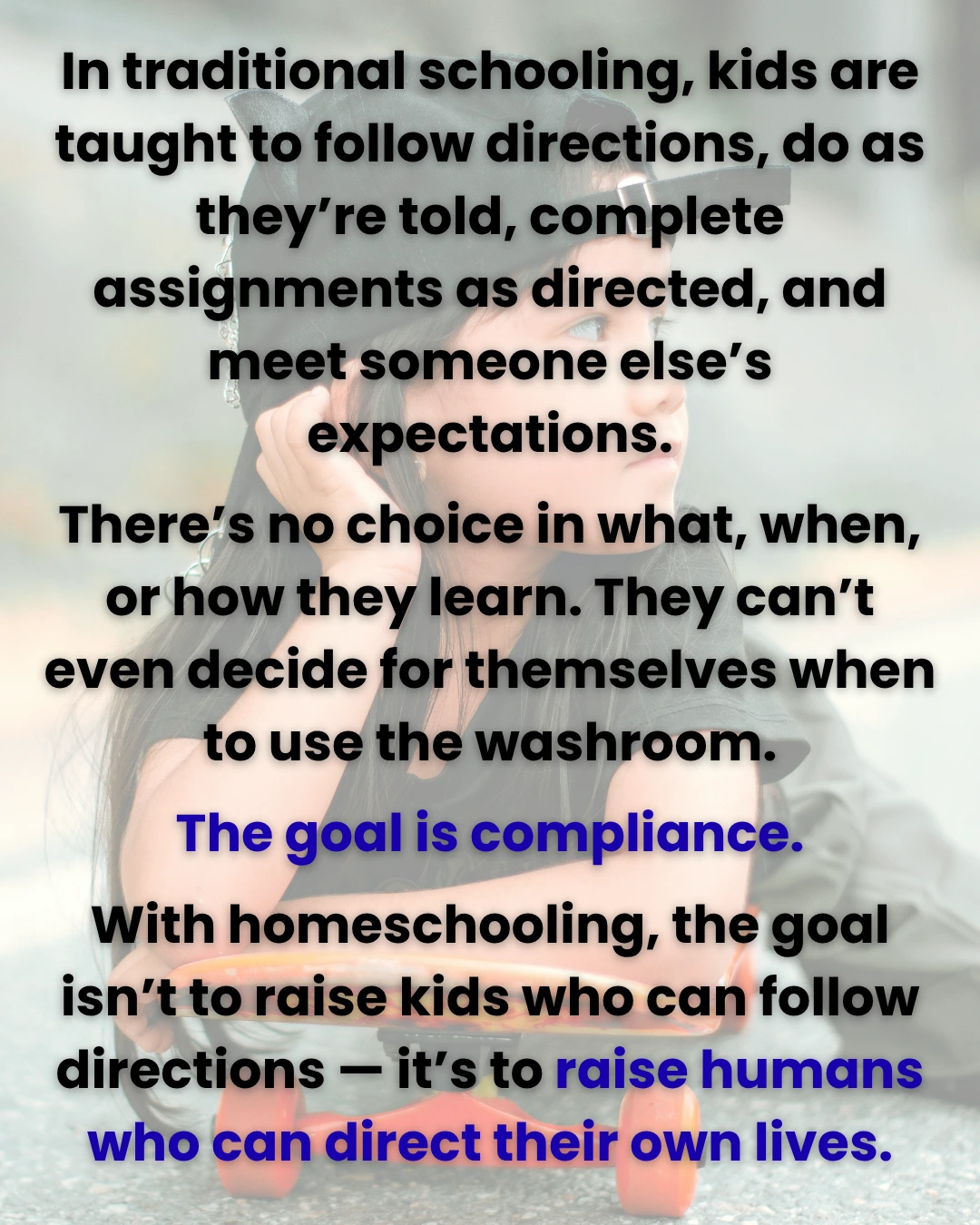
In traditional schooling, kids are taught to follow directions, do as they’re told, complete assignments as directed, and meet someone else’s expectations.

There’s no choice in what, when, or how they learn. They can’t even decide for themselves when to use the washroom.

And that’s a way of learning — but it’s not the same as learning how to:

  • Set personal goals
  • Reflect on growth
  • Ask great questions
  • Navigate challenges with persistence
  • Make choices about what (and how) they want to learn

That’s the difference between compliance and ownership.

When kids feel like school is something being done to them, resistance sets in.

When they feel like it’s something they’re actively building, everything changes.

I’ve seen this shift happen over and over in homeschooling. When you give kids a voice in their learning — whether it’s choosing which subject to start with, setting a goal for the week, or diving deep into something they’re curious about — they start to care differently.

They ask better questions. They push through challenges. They learn because they want to, not because they have to.

It’s not about giving up structure — it’s about sharing the steering wheel.

When we invite kids into the process of shaping their education, we’re not just teaching academics. We’re teaching self-awareness, confidence, and lifelong learning skills that reach far beyond any test score.

Because the ultimate goal isn’t to raise kids who can follow directions — it’s to raise humans who can direct their own lives.

? Lindsey

Certified Special-Ed Educator & Co-Founder, Schoolio
When Your Homeschool Program Stops Working

When Your Homeschool Program Stops Working


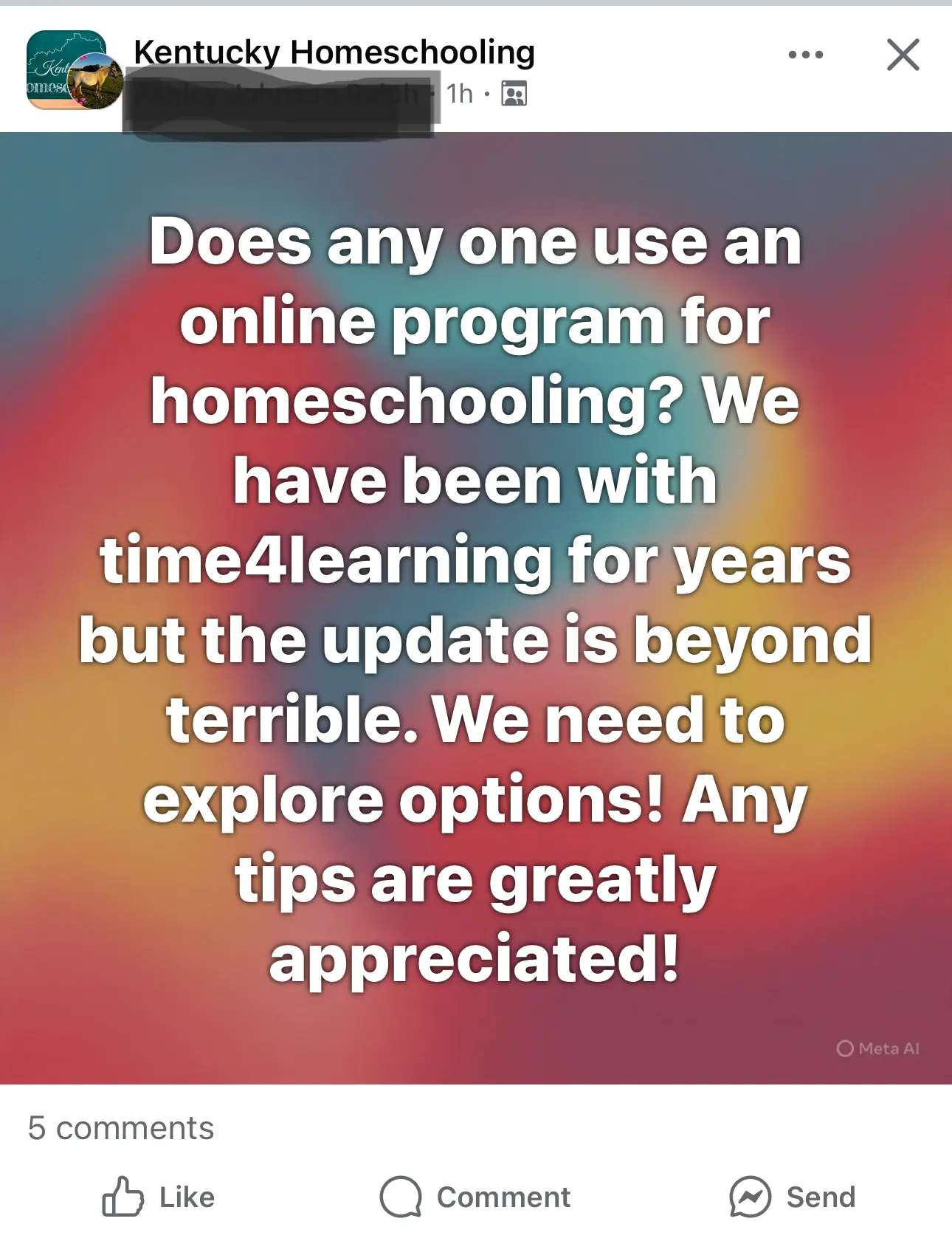
Lately, I’ve been hearing the same story from homeschool parents:

“We’ve used this program for years, but after the latest update it just isn’t working for us anymore. The kids hate it. I feel stuck. What else is out there?”

If that’s you, you’re not alone.

Sometimes a program that served you well in one season stops fitting in the next. Maybe your kids have grown and their needs have changed. Maybe what felt simple and reliable at first now feels limiting. Maybe the content just doesn’t line up with the kind of education you want your child to have.

That doesn’t mean you’ve failed. It just means your homeschool is evolving — and your tools need to evolve with it.

That’s why more and more families are switching to Schoolio.

Not because we’re “perfect” (no program is), but because Schoolio was designed to support the things that matter most in a modern homeschool:

Flexibility: Mix and match grade levels across subjects, skip ahead in one area and slow down in another, and create a program that fits your child instead of forcing your child to fit the program.

Future-Readiness: We go beyond the basics of math, science, and reading. Schoolio includes courses like Financial Literacy, Emotional Intelligence, and Emerging Technology — so kids don’t just learn to pass tests, they learn to thrive in the real world.

Neurodivergent-Friendly Design: Short, bite-sized lessons. Minimized distractions. Hands-on and interest-based options. Schoolio was created by homeschooling parents who know what it’s like to teach ADHD, autistic, and otherwise unique learners — because we’ve lived it.

At the end of the day, switching programs can feel like a big leap. But sometimes, it’s exactly the reset your homeschool needs.

If your current program no longer feels like a fit, that’s not the end of the story — it’s the start of building a homeschool that works better for you today.


? Lindsey

One Size Doesn’t Fit All: How My Two Kids Taught Me to Rethink Homeschool Goals

One Size Doesn’t Fit All: How My Two Kids Taught Me to Rethink Homeschool Goals


This has been on my mind today…

When I first started homeschooling, I thought my kids would more or less need the same kind of structure. Same curriculum, same goals, same “system.” What I learned very quickly is that no two brains work the same way — even when they’re siblings.

My son, Gavin, has always been a dawdler and a daydreamer. He’ll happily sit with a math page for an hour — but not because he’s focused. He might be staring at a butterfly out the window or lost in his thoughts about the Lego project waiting for him in the other room. For him, saying “Do 20 minutes of math” was a recipe for wasted time. His strength was that once he actually did the work, he could get through it. So instead of giving him time-based goals, I gave him task-based ones: “Do 8 math questions.” If he worked steadily, that took about 20 minutes. If he dawdled, it might take an hour. But either way, the goal was clear and doable.

Grace, on the other hand, is wired completely differently. She has dyslexia and dyscalculia, which make reading and math both more difficult and much more tiring. For her, telling her “Do 8 math questions” was overwhelming. It felt like a mountain. What worked for her was time. If I said, “Do 20 minutes,” she’d buckle down and focus — because she wanted to finish and move on with her day. Sometimes she’d get through 8 questions, sometimes only 2. But I knew she’d be working hard the whole time, and by the end of that 20 minutes, she’d be at her limit.

That’s the beauty of homeschooling. I didn’t have to nag Gavin to hurry up, and I didn’t have to push Grace to burnout. They each got a plan that fit their brain. The goals were different, but the value was the same: honoring their process while still moving forward.

There is no one-size-fits-all way to learn. And as parents, when we shift from “making school fit the child” to “making learning fit the child,” everything changes.

? Lindsey

Certified Special-Ed Educator & Co-Founder, Schoolio
When Curiosity Leads the Way

When Curiosity Leads the Way


There’s a moment we often overlook. A small, almost imperceptible shift happens when you ask a child a simple question: What do you want to learn?

Not what the curriculum says. Not what the grownups planned. But what you—the learner—are curious about.

“In that moment, the atmosphere changes. Eyes light up. Shoulders relax. Kids don’t always notice that the question invites them through a door. But when they step through, curiosity walks in with them—and that’s the magic.

At Schoolio, we see this spark ignite again and again. A student watches a space documentary and suddenly dives into the solar system. A reluctant reader discovers graphic novels or animal stories and starts devouring books. With choice in their learning journey, they flourish. And from the sidelines, parents often say with surprise, ‘I never knew they were interested in that.'”

We’re conditioned to believe that education must follow a script. That success is found in standardization. But ask any innovator, artist, or scientist—curiosity is the birthplace of breakthroughs. It’s what turns learning from a task into a quest.

That’s why our homeschooling platform was never designed to dictate. Schoolio is built to empower. When a parent or educator opens the platform and hands the keys to the student, something incredible happens. The learning becomes theirs. The motivation becomes intrinsic. And the joy—the joy is real.

The world often squashes curiosity in favor of conformity, but at Schoolio we help families protect it. We believe learning should feel like discovery, not like chasing a deadline. When students get permission to explore, they don’t just learn more—they rediscover why learning felt exciting in the first place.

Because once a child feels ownership, once they realize they have a say—they don’t just study. They soar.


Sathish,

Still learning, still unlearning

When Grief Stopped Our Homeschool, and Yet the Kids Didn’t End Up “Behind”

When Grief Stopped Our Homeschool, and Yet the Kids Didn’t End Up “Behind”

This has been on my mind today…

In the fall of 2020, we had a death in the family. The kids were struggling. I was wrecked. And academic learning came to a screeching halt.

I want to be clear: learning never really stops—kids are always learning. But “schoolwork”? That stopped completely. Instead, the kids played with toys. We read books before bed. They watched a lot of TV. We just… existed together.

By February, the fog of grief had lifted only enough for me to feel the heavy weight of guilt. I felt like I had failed my kids that year. I knew I should restart, but I couldn’t find the energy. That guilt eventually pushed me toward my first experiences with online learning. I signed up for a math program, a typing platform, a science video subscription. None of it was structured or connected—I just needed to feel like the kids were doing something. To be honest, I wasn’t really paying attention.

Fast forward to the next year. We started a new grade. I had no idea what they had learned—or not learned—the year before. So I thought, let’s just start fresh and see what happens. And wouldn’t you know it? They were fine. We backfilled here and there, but there wasn’t the gaping hole in their knowledge that I’d been bracing for.

I once read a story from someone who had grown up as a refugee. They had missed three years of formal schooling. When they came to America, they were placed in the grade that matched their age, not their transcripts. And you know what? They did just fine.

That stuck with me. Because the truth is: kids in school aren’t learning as much as we assume. And our kids at home are learning so much more than we realize—even when we think we aren’t “teaching.”

Looking back, I really believe that the space homeschooling gave us to grieve properly—as a family, at our own pace—helped us heal faster and carry less long-term pain. If we had been tied to public school’s “back to normal” timeline, I think the scars would have run deeper.

So if you’re in the middle of a big life change—grief, divorce, a move, a season that shakes your family—please don’t stress about schoolwork. Take care of yourselves. Focus on healing. The academics can wait. And I promise: your kids will be just fine.

Lindsey
certified special-ed educator & co-founder, Schoolio

From Survival Mode to Success: How Homeschooling Helps Kids Recover from Public School Burnout

From Survival Mode to Success: How Homeschooling Helps Kids Recover from Public School Burnout

By Lindsey, certified special-ed educator and homeschooling parent


Let’s talk about burnout.

Not yours (although that’s real too), but your child’s.

We don’t always recognize it at first — that slow unraveling that happens when a child is pushed too hard, too fast, or in the wrong environment for too long. But once you’ve seen it, you know.

The spark is gone.

The joy is missing.

School becomes a trigger — not a place of growth.

And for many families, burnout is the reason they start homeschooling.

Not because they always planned to.

But because they needed suddenly needed to.

Their child needed saving.


What Burnout Looks Like in Kids

It doesn’t always look dramatic. Sometimes it looks like:

  • Refusing to do any schoolwork
  • Saying things like “I’m stupid” or “I hate school”
  • Meltdowns over math problems
  • Constant headaches or stomachaches
  • Feeling defeated before they even start

Often, these reactions aren’t about laziness or attitude.

They’re about exhaustion.

They’re about a nervous system that’s been in overdrive, sometimes for years.

When a child reaches that point, what they need isn’t more pressure.

They need a reset.

Maybe now you’ve taken the first step and pulled them out. You’re probably feeling like you don’t know what to do next.


Here’s where I recommend you focus your attention for the next few weeks:

1. Focus on Relationship

The first goal isn’t academics, it’s connection.

Use this time to listen, play, talk, and just be together.

Remind your child that they are safe. That learning is no longer tied to stress or punishment.


2. Focus on Regulation

What helps your child feel calm?

That might look like daily walks, sensory play, quiet reading time, or lots of movement breaks.

Build your days around those regulating activities first, then gently add in small moments of structured learning when they’re ready. Remember that a dysregulated person cannot learn. Don’t try to force it.


3. Keep Learning Gentle and Flexible

For now, avoid tight schedules or packed plans. Start with short lessons and engaging, hands-on topics.

Follow their interests. Bake together. Do science experiments in the kitchen. Read out loud. Keep it light and meaningful.

Build confidence. If you only do their favorite subjects for a little while that’s totally fine. If you bump them down a grade or two (or as many as you need) to find a spot where they’re experiencing regular success and building their confidence in their own abilities, that’s where you need to be right now.


4. Let Rest Be Part of the Plan

Your child may need more sleep. More down time. More freedom. That’s not slacking, that’s burnout recovery.

You’re not falling behind. You’re laying the foundation for real, lasting learning. Let them sleep. Let them play. Let them be outside. Mostly, just let them be.


5. Watch for Small Signs of Re-engagement

You may not get a big “aha” moment. But you might notice them asking more questions. Smiling during a lesson. Picking up a book on their own.

Celebrate those small steps- they’re signs the spark is coming back!


A Gentle Reminder

If your child is in survival mode right now, you might be seeing some behaviors that are hard to handle. Avoidant, angry, overwhelmed. Remember that it doesn’t mean you’ve made the wrong choice, it means your child feels safe in your presence to let their emotions out.

It means they need time.

And homeschooling gives you that time.

Time to rest.

Time to reconnect.

Time to slowly reintroduce learning, in ways that feel safe and meaningful.

Eventually, the spark comes back.

The light returns to their eyes.

And you’ll realize: this isn’t just about school.

It’s about giving your child a soft place to land when the world became too much.

And that? That’s success.


Lindsey

certified special-ed educator and homeschooling parent

Download our Free Guide “Deschooling: The First 30 Days After Leaving Public School” with coupon code DESCHOOL.

https://schoolio.com/product/schoolio-understanding-deschooling/?wmc-currency=USD

Why Pausing Ontario’s Curriculum Overhaul Might Be the Best Thing That Could Happen

Why Pausing Ontario’s Curriculum Overhaul Might Be the Best Thing That Could Happen

by Lindsey Casselman

When I think back on our homeschool journey — and honestly, even my time as a classroom teacher — one thing that always struck me was how often we tried to fix learning by changing the curriculum.

I’ve been watching the news about Ontario’s decision to pause its major curriculum reforms, especially the overhaul to kindergarten, and I’ll be honest — it felt familiar. Not because change is bad, but because too often, we mistake activity for progress.

As someone who’s both taught in public school and built curriculum from the ground up here at Schoolio, I’ve seen how these sweeping changes tend to go. New documents, new standards, new language — but very little impact on what really matters to kids and teachers. A few years later, we do it all over again.

It’s not reform. It’s spinning.

Somewhere along the way, we started treating education like a business — always marketing, rebranding, looking for the next system-wide breakthrough. But kids aren’t products. And learning isn’t a marketing strategy.

The truth is, what drives real learning is rarely found in a government PDF. Students thrive when their curiosity is sparked. When their teacher has the freedom and energy to explore a topic from a new angle. When lessons connect to the real world — to questions they actually ask.

But most curriculum overhauls don’t get at any of that. They shuffle standards. They update timelines. They insert buzzwords. But they rarely ignite joy — in students or teachers.

If you’ve ever sat at the kitchen table with your child, trying to make sense of a lesson that feels totally disconnected from real life, you know exactly what I mean. That glazed look. The frustration. The deep feeling of “why are we even doing this?”

That’s not a learning problem. That’s a relevance problem.

What we need isn’t a brand new curriculum every few years. What we need is a mindset shift.

Instead of building everything from the top down, what if we started from the ground up? What if we trusted teachers to lead the way, using their experience and insight to shape lessons that actually land? What if we listened — really listened — to the kids?

That’s how we design our units at Schoolio. We start with questions students already have. We build flexibility in, so families can pause or pivot. We make space for creativity, discussion, and the moments that stick.

And we don’t pretend that a perfect curriculum will solve everything. What we offer is structure, yes — but with enough room for learning to feel alive again.

So while the pause in Ontario’s reforms might seem like a step back, I see it differently. It’s a chance to stop the spinning. To ask better questions. To start designing for joy, not compliance.

Because if we’re really serious about helping kids learn — we have to remember why they learn in the first place.

Lindsey,

Certified Special-Ed Educator & Co-Founder, Schoolio

? Want curriculum that’s built around real questions, flexible structure, and student joy?

Explore our project-based bundles, download our free samples or start a 7-day trial to see what modern learning can look like at home.

Unlearning School: What Homeschooling Helped Me See Differently About Education

Unlearning School: What Homeschooling Helped Me See Differently About Education

By Sathish Bala

This has been on my mind today…

When I look back at my own schooling in Singapore during the 1980s, I realize how much of it was built around conformity. A student’s worth was tied to a test score. Our futures were determined by how well we followed instructions, memorized content, and stayed in our seats. That system didn’t see who we were. It only saw what we could produce.

So much of homeschooling — for me, and for the thousands of families I’ve now spoken with — is really about unlearning that model.

At first, most parents try to recreate school at home. Schedules. Desks. Checklists. But slowly, over time, the shift happens. We stop asking, “Am I doing enough?” and start asking, “Is my child curious? Are they feeling safe enough to learn at their own pace?”

We realize that learning doesn’t have to look like sitting still. It can be messy, playful, deeply personal. Sometimes that realization comes from the chaos — the days when nothing goes according to plan, and you see your child learning anyway. Sometimes it comes from joy.

One mom who just started her free trial with Schoolio shared this incredible moment with us:

“I just signed up for a free trial and had my neurodivergent son test out a lesson in Social Studies, a subject he has not previously enjoyed. Until now! He enjoyed the lesson so much he was asking me to please print the PDFs for him to work on, which he also never does. I think this is a very good sign and look forward to him completing other lessons!”

This is the kind of learning traditional school often misses. For many kids, especially neurodivergent learners, subjects like Social Studies or Language Arts become walls instead of doors. But when the format changes — when they get space to go at their pace, explore topics through different modalities, or simply feel like they’re being listened to — everything opens up.

Homeschooling has helped me see that education isn’t about information delivery. It’s about connection. It’s about nurturing curiosity and self-awareness. It’s about teaching kids how to learn, not just what to memorize.

And that’s what public school often forgets — it’s not just the curriculum that needs change. It’s the entire culture. At Schoolio, we believe deeply in giving families the tools to break that culture, and build something better.

Because when we unlearn school, we begin to see learning everywhere.

Sathish

still learning, still unlearning

When the System Breaks, Parents Step In

When the System Breaks, Parents Step In

by Sathish

This has been on my mind today…

The CBC story about Ontario stepping in to take control of four major school boards — including TDSB and TCDSB — hit hard, but it didn’t surprise me.

Mismanagement. Overspending. Broken trust.

It’s the kind of news that confirms what many parents have felt for a long time — the system isn’t just strained, it’s cracking. And when the system breaks, parents step in.

I’ve spoken with families in Toronto, Mississauga, Ottawa — parents who aren’t anti-school, they’re anti-chaos. They’re tired of seeing decisions made behind closed doors, while their children get shuffled, silenced, or lost in the mix.

When a school board needs to be taken over by the province, it’s not just a governance issue — it’s a signal to parents that no one’s steering the ship. And for some, the only real option left is to jump.

That’s why so many are turning to homeschooling. Not out of rebellion, but out of necessity. Not because they think they can do it all perfectly, but because they’ve lost faith that anyone else will put their kids first.

The truth is, the line between school and politics has always been blurry. But lately, it’s become hard to see the kids at all.

And here’s the part that worries me — in this vacuum of leadership, families are left choosing between two extremes. A system plagued by deficits, staff shortages, and closures. Or a DIY homeschooling path with no roadmap and no support.

But there’s a third path. And that’s where Schoolio comes in.

We’re not trying to replace the school system. We’re trying to build an alternative that works — something structured, supportive, and safe.

We align our curriculum with provincial standards because families deserve clarity. We offer live tutor support and parent communities because no one should homeschool alone. And we give you clear, trackable progress tools so you always know your child is moving forward — not just in academics, but in confidence and wellbeing too.

The bigger story in this government takeover isn’t about politics. It’s about trust. And once that’s broken, parents will do what they’ve always done — protect their kids, even if it means stepping into the unknown.

If that’s you — if you’re standing at that edge, wondering if it’s time to take back control — we’re here. Not with perfection, but with a plan. With people. With structure that puts your child at the center.

Because when the system breaks, we don’t give up. We build something better.

Sathish

still learning, still unlearning


? Want to see how Schoolio supports regulated, structured homeschooling in Ontario and beyond?

Explore our bookstore, check out our course catalog or join our 7-day trial to see how it feels in your home.

Investing in Your Child’s Future with Affordable Homeschooling Curriculum

Investing in Your Child’s Future with Affordable Homeschooling Curriculum

 Investing in Your Child’s Future with Affordable Homeschooling Curriculum

Many parents are recognizing the numerous benefits of taking charge of their child’s learning journey through home education programs. The flexibility, personalized attention, and tailored pace of learning are just a few advantages that make homeschooling an appealing choice for families. Let’s explore the benefits of homeschooling, the importance of selecting a suitable curriculum, and how affordable options like Schoolio Learning can be the key to unlocking your child’s potential. Are you thinking about investing in your child’s future with affordable homeschooling curriculum?

When Investing in Your Child’s Future, Learning About the Advantages of Homeschooling is Key!

The Advantages of Homeschooling:

  1. Personalized Learning: Homeschooling allows parents to tailor the learning experience to suit their child’s unique needs and learning style. With individualized attention, students can grasp concepts more effectively and build a strong foundation for future academic endeavors.
  2. Flexibility: One of the standout features of homeschool programs is the flexibility they offer. Families can create a schedule that accommodates their lifestyle, making it easier to integrate education into daily activities and outings.
  3. Customized Pace: Each child learns at their own pace, and homeschooling allows for a customized learning timeline. Students can delve deeper into subjects they are passionate about or take more time to master challenging concepts.
Schoolio Family Plan

Now that we understand some of the advantages of homeschooling, let’s find out how to choose the right homeschooling curriculum for your family.

Choosing the Right Homeschooling Curriculum:

Selecting an appropriate home education program is crucial for the success of your homeschooling journey. Here are some tips on how to choose the best curriculum for your child:

1. Assess Your Child’s Learning Style:

Consider your child’s learning preferences, whether they thrive with hands-on activities, visual aids, or self-paced learning. Knowing their learning style will help you identify a curriculum that caters to their needs.

2. Review Curriculum Options:

Explore various homeschooling programs available in the market. Look for features such as comprehensive lesson plans, engaging activities, and a diverse range of subjects. This research will help you make an informed decision based on your child’s academic requirements.

3. Affordability:

While investing in your child’s education is a priority, finding an affordable homeschooling curriculum is equally important. Fortunately, there are cheap homeschooling programs that offer high-quality education without breaking the bank.

Now we can dive into some of the popular homeschool curriculum companies and see which is the right fit for your child’s learning needs.

Schoolio e-books

Schoolio Learning:

  • Diverse Curriculum: Schoolio Learning offers a comprehensive curriculum covering a wide range of subjects from core academics to enriching electives.
  • Adaptability: The home study programs at Schoolio are designed to be adaptable to various learning styles and grade levels.
  • Cost-Effective: Schoolio provides affordable homeschooling programs without compromising on the quality of education.
  • Secular: Schoolio offers secular homeschooling curriculum that is not faith-based and remains neutral.
  • Digital Option: Schoolio Learning also has an online homeschooling curriculum with lesson videos, assessments and worksheets, all for an affordable price.

Abeka:

  • Structured Approach: Abeka’s structured approach may be beneficial for some, but it can be seen as too rigid for families seeking a more flexible and personalized learning experience.
  • Christian-Based: Abeka incorporates Christian values into its curriculum, making it suitable for families seeking a faith-based education.
  • Subject Coverage: While Abeka covers a broad range of subjects, some parents may find it lacks a modern or innovative approach to teaching.

Time4Learning:

  • Interactive Online Curriculum: Time4Learning’s online platform offers interactive lessons, but the heavy reliance on technology may concern parents seeking a more traditional approach.
  • Flexible Learning: The flexibility of Time4Learning might be advantageous, but it might lack the structure some students need for optimal learning.
  • Multisubject Coverage: While Time4Learning covers multiple subjects, the depth of coverage in each subject may not be sufficient for certain students.

Sonlight Curriculum:

  • Literature-Based Approach: While the literature-based approach of Sonlight promotes a love for reading, some parents may find the heavy reliance on books overwhelming or time-consuming.
  • Global Perspective: The global perspective in Sonlight’s curriculum is enriching, but it may not fully prepare students for region-specific academic standards.
  • Christian-Based: The Sonlight Curriculum is faith-based this is seen throughout the curriculum.
  • Family-Centric: While family-centric, Sonlight’s approach might be challenging for families with varying grade levels and learning needs.

BookShark:

  • Literature-Focused: BookShark’s literature-focused curriculum is a unique approach, but it may not suit students who learn better through alternative methods.
  • All-Subject Packages: While convenient, the all-subject packages might include materials that are redundant or unnecessary for some families.
  • Hands-On Activities: Incorporating hands-on activities, BookShark may require additional preparation time for parents, which can be demanding.

In evaluating these curriculum options, families should consider their specific educational goals, their child’s learning style, and the overall fit within their household dynamics. No curriculum is universally perfect, and it’s crucial to find the one that aligns most closely with your family’s preferences and values.

Schoolio Learning Resources

Investing in Your Child’s Future Through Homeschooling is a Significant Decision

While there are several popular homeschool programs available, Schoolio Learning distinguishes itself through its affordability, comprehensive curriculum, and adaptability. Some other programs may be costly or lack the flexibility needed for a personalized learning experience. Schoolio combines the best of both worlds, offering a top-notch education at a reasonable price.

In conclusion, investing in your child’s future through homeschooling is a significant decision, and choosing the right curriculum is paramount. Schoolio Learning emerges as a standout choice, providing a well-rounded education that meets the diverse needs of homeschooling families. With Schoolio, you’re not just investing in a curriculum; you’re investing in your child’s success.

Affordable Homeschooling Curriculum and Price Increases

Inflation is a word that makes many of us cringe as we watch the price of groceries, clothes, fuel, and everyday essentials rise. Finding ways to afford essential items has become a challenge for many people worldwide. Many people are concerned about their homeschooling curriculum needs as they continue to watch the cost of everything rise. How can they find an affordable homeschooling curriculum with these price increases?

Inflation is having a significant impact on everything.

According to the US inflation Calculator, “the annual inflation rate for the United States is 8.6% for the 12 months ended May 2022, the largest annual increase since December 1981.” Following suit, according to Statistics Canada, Canadian consumer prices rose 6.8% in April.

The price of groceries continues to increase and overwhelm many people as Canadians paid 9.7% more in April 2022 for food purchased when compared to April 2021. Worse, this increase exceeded 5% for the fifth month in a row, and much like the United States was the most significant increase since September 1981.

Groceries aren’t the only thing impacted by inflation. There are also substantial increases in gas prices, rent prices, general product prices, car prices and even school supplies.

Does inflation impact homeschooling?

The bitter answer is yes. Many homeschooling families are already single-income families struggling to find an affordable homeschooling curriculum. While some states/provinces offer financial support for homeschooling families, many states and provinces throughout North America do not provide any financial help for homeschooling families.

Unfortunately, many homeschooling families have been struggling to put food on the table, fuel in the car, a roof over their heads and an affordable homeschooling curriculum in front of their children.

So it’s with incredible frustration that many homeschooling families find that even the cost of a quality homeschool curriculum has increased.

How is a digital homeschooling curriculum affected by inflation and price increases?

You may have noticed that some of your favourite homeschooling curriculum companies have increased the prices of their products. While we cannot speak for all companies, we’d like to address the 15% increase you may have seen in our own Schoolio Curriculum network.

Since our beginnings in 2020, we at Schoolio Learning have been committed to offering you a secular, inclusive, open-and-go, affordable homeschooling curriculum. So, why have we increased our prices?

Why is there a price increase on our homeschooling curriculum?

There are two reasons you will see a 15% increase in our homeschooling curriculum.

Inflation affects our employees too.

Our team is growing to provide you and your child with the most up-to-date homeschooling curriculum to keep your homeschool running smoothly. As such, we need to take care of our team members. Inflation affects everyone; therefore, we must accommodate our team members and customers.

This slight price increase helps our team members to still provide for their families while writing and working on the best materials to keep your family learning at an affordable price.

We’ve enhanced our homeschooling curriculum to serve you better.

This is the most exciting news that we wanted to share with you. We have enhanced all of our curricula from Kindergarten to Grade 8!

What does that mean?

If you were a previous customer of Schoolio Learning, you would remember that we recommended you purchase the Canadian Curriculum workbooks or other practice workbooks to help your child get the essential practice work they needed? Extra workbooks are no longer required with our enhanced curriculum. It now includes all the necessary practice content to help your child learn and understand the concepts better.

To sum it up, why has Schoolio Learning Curriculum increased by 15%?

  • Inflation costs for our team members mean we must aim to meet their needs.
  • We have enhanced the curriculum, so you no longer need to search and spend money on additional practice workbooks.

Is Schoolio still an affordable homeschooling curriculum option? Let’s compare.

Before you jump to the conclusion of assuming you should find a cheaper homeschooling curriculum company because the 15% increase makes you cringe. Let’s look at another popular homeschooling curriculum company and its pricing compared to ours.

Schoolio Grade 3 Complete Bundle:

Our grade 3 bundle includes all the core subjects, Math, Social Studies, Science and Language Arts. With over 1,200 pages, lessons, teaching plans/discussions/ as well as countless activities.

The cost for the Schoolio full-year curriculum bundle: is $399.84 (digital) or $563 (books, printed and shipped).

Alternative homeschooling company Grade 3 Bundle:

A popular homeschooling curriculum company provides a complete kit much like our complete bundle for grade 3. A full kit includes the four core subjects, Math, Social Studies, Science and Language Arts, teaching instructions and lessons.

The cost for this homeschooling curriculum full-year: is $1,090.45.

As you can see, that’s a pretty huge price increase for comparable homeschool learning content.

Please don’t take our word for it; check it out yourself.

We want you to excel at homeschooling, which means finding the best option for your family and budget is essential. So, please research and compare our prices with other popular homeschooling curriculum companies.

We stand behind our price and will continue to provide an affordable homeschooling curriculum for all your learning needs.

Don’t forget our promotions.

Price increases and inflation can cause a lot of stress for families. We don’t want you to feel that you must stop homeschooling because you have to choose between a homeschool curriculum and groceries. So, please know that we periodically offer excellent promotions to help make our curriculum even more affordable for your homeschool. If you don’t see a promotion being advertised on the website, reach out to our customer service team members, and they will be happy to provide you with all the knowledge on current or upcoming promotions.

If you aren’t sure if we would be the best fit for your homeschool, check out our free sample packages to view just how authentic, simple and wholesome our curriculum is. We look forward to providing you with the best and most affordable homeschooling curriculum for all your homeschooling needs.

Check out our free sample packages today to find the perfect curriculum for your child’s grade and learning needs.

See for yourself:  


Click here for samples