How to Reduce Learning Resistance in Your Homeschool
Every homeschool parent hits it eventually. The crossed arms. The dramatic sighs. The “I don’t want to do this” that somehow stretches a 20-minute lesson into a two-hour standoff. Learning resistance is real — and it’s exhausting. But with a few simple strategies, you can reduce learning resistance and change the whole dynamic.
Here’s what works in our house.
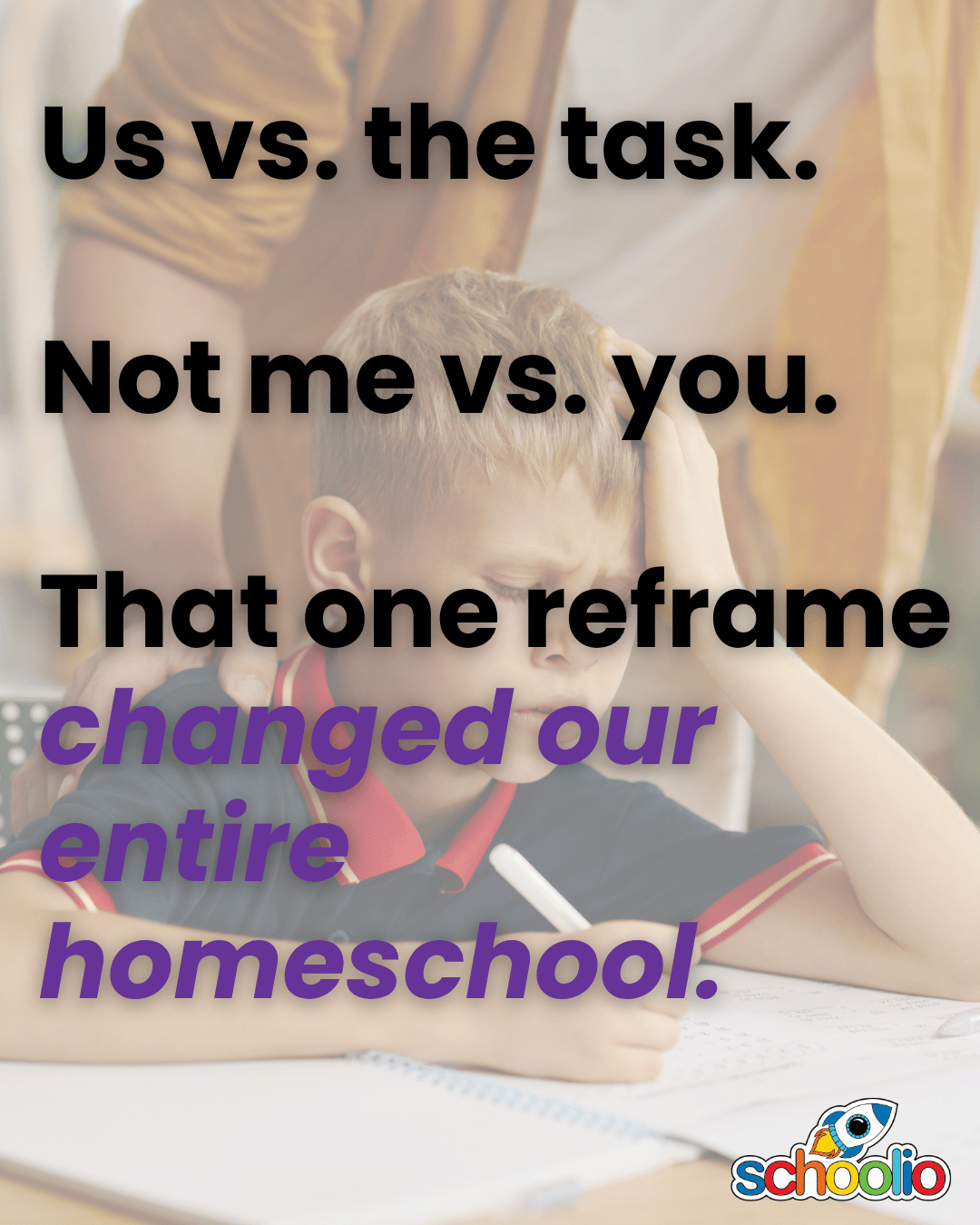
Reframe it: Us vs. the task.
One of the biggest sources of resistance is the dynamic itself. When a parent is telling a child what to do, and the child doesn’t want to do it, you get a power struggle. But when you step out of the adversarial position and join your child’s side — everything changes.
Instead of: “You need to do your math.”
Try: “Okay, we’ve got math to get through today. Let’s figure it out together.”
You’re not making them do anything. The math exists. It has to be done. And you’re both in it together. That reframe alone — us vs. the task instead of me vs. you — can dissolve resistance before it even starts.
For example, when my daughter was struggling with her Grade 5 math, I sat down with her and said, “Let’s solve this puzzle together.” Suddenly, it wasn’t about her doing it alone; it was a team effort.
Be honest about the reality.
My kids always responded well to straightforwardness. When resistance crept in, I would tell them:
“There is no reality in which you don’t learn today. That’s just not one of our options.”
Not as a threat. Just as a fact.
“We can do this long and slow and hard with you fighting me the whole way. Or we can buckle down together, get through it, and have the rest of the day free. But you know as well as I do that there’s no version of today where we skip school work.”
Kids — especially older ones — respond to being treated like they’re smart enough to understand reality. Because they are. This isn’t something I’m doing to you. This is something that needs to be done. Let’s just do it.
When my son was in Grade 8, he appreciated when I laid out the day’s work and explained, “This is what needs to be done for you to move on to high school next year.” It made the tasks feel purposeful.
Give them choice and autonomy wherever you can.
This is probably the single most powerful tool in my toolkit. Resistance often isn’t about the work itself — it’s about feeling controlled. When kids have no say in anything, resentment builds. When they have ownership over even small decisions, the whole energy of the day shifts.
Some ways to build autonomy into your homeschool day:
-
Let them choose the order. Write today’s subjects on the whiteboard and let them decide what to tackle first. They’re doing everything on the list — but they’re doing it their way.
-
Let them choose their courses. In subjects like science and social studies, where there’s more flexibility, let them pick what they study. A child who chose to study volcanoes is a very different learner than one who was assigned volcanoes.
-
Let them choose how they show what they know. Does the answer have to be written? Or could they explain it out loud, build something, draw something, record a video? Wherever you can offer a choice in how they demonstrate learning, offer it.
The more ownership a child has over their education, the less they feel the need to fight it. My youngest loves art, so when she was learning about ecosystems, I let her create a diorama instead of writing a report. She was engaged and excited to share her work.
Remind yourself — and them — that homeschool isn’t a full school day.
Sometimes resistance builds simply because a child feels like the work is never going to end. And if they’re picturing a six or eight hour school day stretching ahead of them, that feeling makes complete sense.
One of the most liberating things you can do is be transparent about how short homeschool actually is. Most homeschool days — done well and without the wasted time of a traditional classroom — take between one and three hours depending on your child’s age. That’s it.
When a child knows that buckling down means being done by lunchtime, the calculation changes completely. (Not sure how long your homeschool day should be? Read our full guide here: How Many Hours Should You Homeschool Each Day?)
For instance, when my kids realized they could finish by noon if they focused, they were much more motivated to get started each day.
The bottom line.
Learning resistance is almost never about learning. It’s about feeling controlled. Feeling overwhelmed. Feeling like there’s no end in sight and no say in any of it.
Give your child a partner instead of an authority. Give them honesty instead of pressure. Give them choices wherever you can. And remind them — and yourself — that you’re not recreating school at home. You’re doing something much better than that.