Homeschooling in Action: When Real Life Is the Lesson

 Homeschooling in Action: When Real Life Is the Lesson


This has been on my mind today…

Some of our best homeschool lessons didn’t happen at a desk. They happened in the kitchen.

Once a month, I had each of my kids choose a meal they wanted to learn to cook. Step one? Read the recipe. Step two? Make a grocery list. Then we’d take clipboards to the store and suddenly math came alive. They priced out items as we added them to the cart and compared brands. They calculated totals. Without a single worksheet, they were budgeting, adding, multiplying, and problem-solving in real time.

But here’s where it got really interesting: they also learned that meals cost very different amounts. One month, my son picked steak, asparagus, and Caesar salad. Delicious — but pricey. That same month, my daughter chose spaghetti with garlic bread. Much more affordable. They could see, right in front of them, how food choices affect a budget.

And there was another rule: each meal had to be balanced. So they weren’t just thinking about money, they were thinking about nutrition. Is there a protein? A vegetable? A healthy grain? They learned how to make choices that weren’t just tasty, but healthy, too.

Then came cooking day. Each child had their turn, side by side with me, learning how to chop, stir, season, and time things so it all came together. And in the end? We all sat down to eat the fruits of their labor together.

It was never just about cooking. It was reading comprehension, sequencing, chemistry, motor skills, patience, budgeting, and nutrition — all in one. And the learning stuck because it mattered to them.

That’s what I love about homeschooling. The “curriculum” doesn’t always look like curriculum. Learning is embedded in life. It’s tactile, it’s real, and that makes sense to kids, and that learning lasts.

So if you’re ever worried you’re not doing “enough,” here’s your reminder: cooking dinner together is school. And your kids might just learn more from it than any worksheet could offer.


? Lindsey

Certified Special-Ed Educator & Co-Founder, Schoolio
Something is breaking—and the cracks are no longer subtle.

Something is breaking—and the cracks are no longer subtle.

Something is breaking—and the cracks are no longer subtle. This week, Ontario’s Education Minister Paul Calandra said the quiet part out loud: “We have to change the way school boards behave.” In his remarks to the legislature, he called out dysfunction, political distractions, and a lack of unified leadership across the province. The full article is worth reading here.

When politicians start publicly questioning the structure of an entire education system, it’s not a small thing. It signals something deeper—a disconnection between families and the institutions meant to serve them. Between what students need, and what schools are able—or willing—to provide.

At Schoolio, we’ve heard this unraveling for years. Quietly at first. A parent unsure if their neurodivergent child will ever be supported. A teacher burned out from fighting for basic classroom resources. A school board spending more on internal legal battles than on inclusive programming. And now, those whispers have grown into something louder. More urgent.

The traditional school model is struggling under the weight of complexity it can no longer carry. Bureaucracy, politics, budget cuts, and reactive policies are not a foundation for innovation or well-being. When boards debate flags and book bans while special education runs deficits, it’s not just the system that’s broken—it’s the trust.

This isn’t about abandoning schools—it’s about acknowledging that they no longer serve every child equally. It’s about making space for alternatives that are working right now, for real families, in real time.

Homeschooling, once dismissed as fringe, is now a lifeline. Microschools are quietly multiplying. Parents are reclaiming agency not out of rebellion, but out of necessity. And at Schoolio, we’ve built a platform to meet them there. A hybrid curriculum that blends structure with flexibility. A place where emotional safety, real-world skills, and learning readiness are just as important as test scores.

The question isn’t whether the old model can be fixed. The question is: will we keep asking families to wait?

Because they’re not waiting anymore.

They’re moving forward—with or without the system.

And Schoolio is walking beside them.

Sathish
still learning, still unlearning

One Size Doesn’t Fit All: How My Two Kids Taught Me to Rethink Homeschool Goals

One Size Doesn’t Fit All: How My Two Kids Taught Me to Rethink Homeschool Goals


This has been on my mind today…

When I first started homeschooling, I thought my kids would more or less need the same kind of structure. Same curriculum, same goals, same “system.” What I learned very quickly is that no two brains work the same way — even when they’re siblings.

My son, Gavin, has always been a dawdler and a daydreamer. He’ll happily sit with a math page for an hour — but not because he’s focused. He might be staring at a butterfly out the window or lost in his thoughts about the Lego project waiting for him in the other room. For him, saying “Do 20 minutes of math” was a recipe for wasted time. His strength was that once he actually did the work, he could get through it. So instead of giving him time-based goals, I gave him task-based ones: “Do 8 math questions.” If he worked steadily, that took about 20 minutes. If he dawdled, it might take an hour. But either way, the goal was clear and doable.

Grace, on the other hand, is wired completely differently. She has dyslexia and dyscalculia, which make reading and math both more difficult and much more tiring. For her, telling her “Do 8 math questions” was overwhelming. It felt like a mountain. What worked for her was time. If I said, “Do 20 minutes,” she’d buckle down and focus — because she wanted to finish and move on with her day. Sometimes she’d get through 8 questions, sometimes only 2. But I knew she’d be working hard the whole time, and by the end of that 20 minutes, she’d be at her limit.

That’s the beauty of homeschooling. I didn’t have to nag Gavin to hurry up, and I didn’t have to push Grace to burnout. They each got a plan that fit their brain. The goals were different, but the value was the same: honoring their process while still moving forward.

There is no one-size-fits-all way to learn. And as parents, when we shift from “making school fit the child” to “making learning fit the child,” everything changes.

? Lindsey

Certified Special-Ed Educator & Co-Founder, Schoolio
There Are No Bad Kids.

There are no bad kids.

This has been on my mind today…

“Is that your firstborn?” someone would ask. And reluctantly, I would be acknowledged. I was 12 years old. A little boy whose greatest crime was a set of grades that didn’t meet someone else’s expectations.

In school, I wasn’t a troublemaker. But I was already being written off. I didn’t measure up. I didn’t fit in. And no one was coming to help.

What many adults forget is this: There are no bad kids.

there are no bad kids

Some kids feel confused. Others believe they are dumb before they even get a chance to feel capable. A system labels these kids with scores that start their story and end it before they can begin.

For so many children, the moment a poor grade lands in front of them, everything shifts. The label sticks. The expectations drop. The pressure increases. And the love? That part often fades into the background.

From that point forward, learning is no longer something you do to grow. It becomes something you have to prove.

I think back to my own childhood and wonder what would’ve been different if someone — anyone — had paused and asked not, “What’s wrong with you?” but instead, “What makes you come alive?”

That’s why this company, Schoolio, isn’t just a platform for me — it’s personal. I’m not building a business. I’m trying to build what I needed at 12. A place where kids don’t feel invisible. Where parents and students light up together. Where learning — or the lack of it — isn’t used as a weapon or a judgment, but seen as what it truly is: a work in progress. A human journey. A shared path.

That’s what homeschooling offers so many families — not just a curriculum, but a chance to reset the story. To raise children who know their worth, not by test scores, but by the fire in their eyes when something finally clicks. Or the calm that comes when they feel safe enough to try again.

I didn’t get that growing up.

But I’m doing my part to make sure someone else’s child does.

Making a child invisible is the harshest punishment.

Please — don’t do that to your kids.


Sathish

still learning, still unlearning

When Curiosity Leads the Way

When Curiosity Leads the Way


There’s a moment we often overlook. A small, almost imperceptible shift happens when you ask a child a simple question: What do you want to learn?

Not what the curriculum says. Not what the grownups planned. But what you—the learner—are curious about.

“In that moment, the atmosphere changes. Eyes light up. Shoulders relax. Kids don’t always notice that the question invites them through a door. But when they step through, curiosity walks in with them—and that’s the magic.

At Schoolio, we see this spark ignite again and again. A student watches a space documentary and suddenly dives into the solar system. A reluctant reader discovers graphic novels or animal stories and starts devouring books. With choice in their learning journey, they flourish. And from the sidelines, parents often say with surprise, ‘I never knew they were interested in that.'”

We’re conditioned to believe that education must follow a script. That success is found in standardization. But ask any innovator, artist, or scientist—curiosity is the birthplace of breakthroughs. It’s what turns learning from a task into a quest.

That’s why our homeschooling platform was never designed to dictate. Schoolio is built to empower. When a parent or educator opens the platform and hands the keys to the student, something incredible happens. The learning becomes theirs. The motivation becomes intrinsic. And the joy—the joy is real.

The world often squashes curiosity in favor of conformity, but at Schoolio we help families protect it. We believe learning should feel like discovery, not like chasing a deadline. When students get permission to explore, they don’t just learn more—they rediscover why learning felt exciting in the first place.

Because once a child feels ownership, once they realize they have a say—they don’t just study. They soar.


Sathish,

Still learning, still unlearning

When Does Learning End? For Me, It Was When My Father Went to Sleep

When Does Learning End? For Me, It Was When My Father Went to Sleep


This has been on my mind today…

I saw a post that simply said, “My son’s done with homeschooling in two hours.”

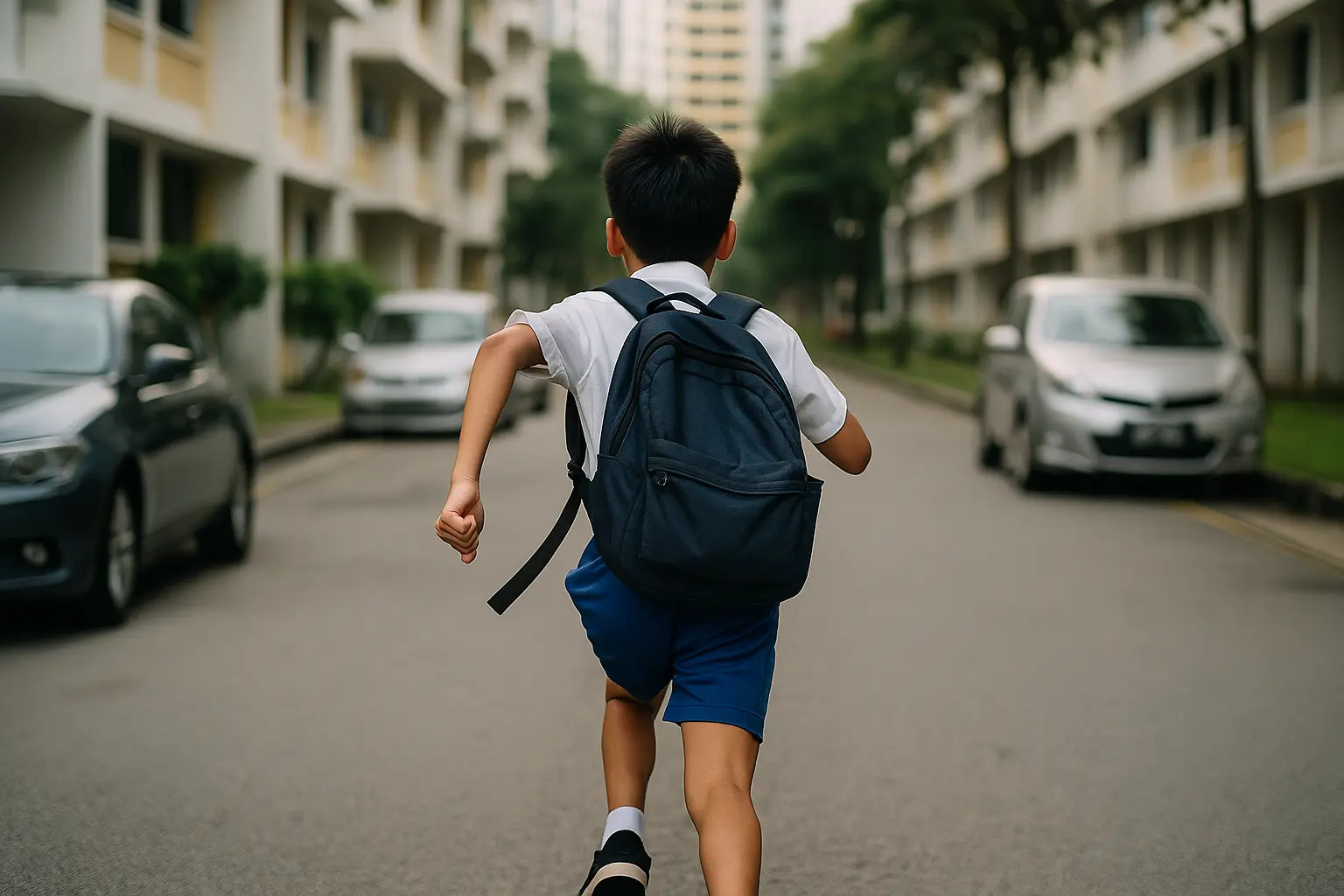
And just like that, I was back in Singapore — racing home from school, not for fun, but out of fear.

See, school for me ended close to 4pm.


school


My parents knew exactly how long it should take for me to get from the gates of the school to the door of our apartment.

If I was late, it wasn’t a missed bus or a slow walk — it was disrespect.

And there were consequences.

But the real weight?

School didn’t end when the bell rang.

It ended when my father went to sleep.

Usually around 6pm, he’d be home — and by then, we had to be seated, heads down, already into our homework or the next stack of extra workbooks.

Every day.

For years.

Twelve to fifteen hours a day spent studying.

Almost no play.

Very little conversation that wasn’t about performance, progress, or punishment.

That was childhood.

And even though I sent my own kids to public school, I made a quiet promise to do things differently.

School ended the minute they walked out of the building.

Evenings were for play.

For laughter.

For sitting together at the dinner table without a pencil in hand.

For movie nights and bike rides and not having to earn joy.

And yet — I see so many of my friends, especially fellow South Indian parents, unknowingly continuing the cycle.

Evenings and weekends filled with more learning.

Catch-up. Push ahead. Get into the best school. Stay ahead of the curve.

But the curve keeps shifting.

The truth is, the world our kids are stepping into will not reward them for how fast they finished a textbook.

It will reward them for their ideas.

For their empathy.

For how well they adapt and connect and create.

Jobs we know today won’t be around by the time they graduate.

Learning styles have changed.

Grades don’t mean what they used to.

Trade skills and entrepreneurship are on the rise.

And I’ll say it — homeschooling is where I’m seeing the balance emerge.

Not because it’s easier.

But because it’s more human.

It’s where a child can complete their day in two focused hours and spend the rest of their time living.

It’s where parents no longer feel the need to steal youth from their kids in the name of preparation.

It’s where play becomes part of the plan, not an afterthought.

And it’s where I’m learning — still learning — how to unlearn the things I was taught to fear.

If your evenings feel like an extension of school instead of a return to family, maybe it’s time for a new way.

Maybe it’s time to put the joy back into childhood.


Sathish

still learning, still unlearning

When Grief Stopped Our Homeschool, and Yet the Kids Didn’t End Up “Behind”

When Grief Stopped Our Homeschool, and Yet the Kids Didn’t End Up “Behind”

This has been on my mind today…

In the fall of 2020, we had a death in the family. The kids were struggling. I was wrecked. And academic learning came to a screeching halt.

I want to be clear: learning never really stops—kids are always learning. But “schoolwork”? That stopped completely. Instead, the kids played with toys. We read books before bed. They watched a lot of TV. We just… existed together.

By February, the fog of grief had lifted only enough for me to feel the heavy weight of guilt. I felt like I had failed my kids that year. I knew I should restart, but I couldn’t find the energy. That guilt eventually pushed me toward my first experiences with online learning. I signed up for a math program, a typing platform, a science video subscription. None of it was structured or connected—I just needed to feel like the kids were doing something. To be honest, I wasn’t really paying attention.

Fast forward to the next year. We started a new grade. I had no idea what they had learned—or not learned—the year before. So I thought, let’s just start fresh and see what happens. And wouldn’t you know it? They were fine. We backfilled here and there, but there wasn’t the gaping hole in their knowledge that I’d been bracing for.

I once read a story from someone who had grown up as a refugee. They had missed three years of formal schooling. When they came to America, they were placed in the grade that matched their age, not their transcripts. And you know what? They did just fine.

That stuck with me. Because the truth is: kids in school aren’t learning as much as we assume. And our kids at home are learning so much more than we realize—even when we think we aren’t “teaching.”

Looking back, I really believe that the space homeschooling gave us to grieve properly—as a family, at our own pace—helped us heal faster and carry less long-term pain. If we had been tied to public school’s “back to normal” timeline, I think the scars would have run deeper.

So if you’re in the middle of a big life change—grief, divorce, a move, a season that shakes your family—please don’t stress about schoolwork. Take care of yourselves. Focus on healing. The academics can wait. And I promise: your kids will be just fine.

Lindsey
certified special-ed educator & co-founder, Schoolio

Why Our “First Day of School” Looks Nothing Like Theirs — and Why I Wouldn’t Trade It

Why Our “First Day of School” Looks Nothing Like Theirs — and Why I Wouldn’t Trade It


This has been on my mind today…

The hardest part of the homeschool year for me wasn’t math lessons, or planning, or juggling the day-to-day chaos. It was the first day of public school.

Every September, my social media feeds would flood with photos of smiling kids at the end of the driveway — shiny shoes, new backpacks, parents buzzing with excitement. I would feel it in my chest, that little ache of missing out. Was I depriving my kids of this milestone? Was our homeschool missing something?

But then, something shifted. I realized those photos were it. The moment. The kids posed for a quick picture, then disappeared into a classroom to sit under fluorescent lights, being taught by a stranger for the rest of the day.

So one year, I decided to do something different. I started our own tradition.

That morning, I snapped a “first day of school” photo of my kids… still asleep. Because that’s the beauty of homeschooling: they wake when their bodies are rested, not when a bus pulls up.


Then, just for myself, I kept taking pictures throughout the day. Hour by hour.

? Pancakes in pajamas.

? Jumping on the trampoline after math.

? Reading aloud together on the couch.

? Baking cookies in the kitchen.

? Building sandcastles at a beach we had all to ourselves.

? A social studies lesson with a cat curled up in their lap.

? Walking the dog in the late summer sun.


And when I scrolled through those photos at the end of the day, I finally saw it: this was more.

It wasn’t just about lessons and curriculum (though those happened too). It was about time. About laughter. About siblings who actually enjoy each other. About kids who get to learn at their own pace and still have energy left to play, imagine, and connect. About a childhood that isn’t rushed out the door.

That was the day I stopped feeling wistful about the back-to-school buzz on my feed. Because the truth is, I wasn’t depriving my kids of anything. I was giving them something different. Something richer.

So now, every September, we take our first-day photos too. They just don’t look like everyone else’s. And I’m okay with that.

With love,

? Lindsey

Certified Special Ed Educator & Co-Founder, Schoolio
Why Public School Pressures Kids to Grow Up Too Fast—and Why I’m Grateful My Homeschooler Still Plays

Why Public School Pressures Kids to Grow Up Too Fast—and Why I’m Grateful My Homeschooler Still Plays

This has been on my mind today…

My daughter’s friend, who has always been in public school, told her recently that she wished she could still play with toys. My daughter, without hesitation, said, “So play with toys then! Who cares? Do what you want!” But her friend shook her head. She said no—she was too old for toys, and if other kids found out, they’d make fun of her.

They’re 13 years old. And here’s the thing: 13 is still a child. If a child that age still wants to play, that isn’t immaturity—it’s development happening at the pace it’s meant to. Play and imagination are not only normal, they’re scientifically proven to be deeply beneficial for kids’ brains. Yet her friend felt she couldn’t do it, because the social culture around her said she was “too old.”

And it wasn’t just about toys. She also shared that at her school, there’s pressure to start thinking about crushes, even dating. Imagine that—kids who still long to play with toys being told that what’s “normal” is pairing off romantically. That’s not freedom. That’s conformity.

People often ask homeschool families about socialization. “Aren’t you worried your kids won’t know how to socialize?” But what’s rarely asked is the harder question: what exactly are kids being socialized into at school? Too often, it’s a kind of toxic conformity that shames kids for being developmentally right where they are.

Our homeschoolers aren’t “immature.” They’re maturing at their natural pace. They’re free to linger in play, imagination, and curiosity without shame. And when the time comes, they’ll step naturally into new stages of life—without being rushed there before they’re ready.

One of the greatest gifts of homeschooling is that we get to protect childhood. We get to give our kids the time and space to grow up without unnecessary pressure. And sometimes, that looks like a 13-year-old proudly playing with toys, because she’s still a kid—and that’s exactly what she should be.

Want to give your child the freedom to grow at their own pace? Explore Schoolio’s homeschooling curriculum and see how it can support your family’s journey.

Lindsey
Certified Special Ed Educator & Co-Founder, Schoolio
When I Finally Let Go of the Curriculum That Just Didn’t Work

When I Finally Let Go of the Curriculum That Just Didn’t Work

By Lindsey, certified special-ed educator & co-founder, Schoolio


This has been on my mind today…

A few years ago, I made what I thought was going to be a game-changing purchase for our homeschool. I joined a group buy of Gather Round and was thrilled to finally have something that looked like it would make my life easier.

I loved everything about it—at least, on the surface.

The artwork? Gorgeous. Those soft watercolors made my teacher-heart swoon. Honestly, it felt like it was designed more for parents than kids, which, in hindsight, should’ve been a clue. The format? Brilliant in theory. Everyone learning the same thing at the same time? No more juggling three different subjects, three different levels, three different kids? Yes, please.

I wanted so badly for it to work.

But here’s the reality: my kids hated it.

The lessons felt like fact after fact with little room for curiosity or critical thinking. The images I found beautiful didn’t grab them at all. The activities didn’t spark anything except resistance. And instead of making life easier, it made it harder. Because when your kids aren’t engaged, you spend twice the energy convincing, redirecting, negotiating. It became a daily tug-of-war instead of a tool.

And it was expensive. Not just financially, though that stung too—but emotionally. I had invested hope. I had invested energy. And it felt like I had failed when it didn’t work.

Eventually, I had to admit what was obvious: it wasn’t the right fit. And like many other programs, books, and “perfect solutions” before it, I shelved it. This one, though, felt like the last straw.

Because here’s the thing: I don’t have standard-issue kids. I have neurodivergent learners. Their brains are curious, vibrant, and beautifully unique. They don’t learn by filling in the same worksheet, at the same time, in the same way. And when I tried to force it, all of us ended up frustrated.

That moment—closing the book on a curriculum I wanted so badly to work—was also the moment I realized I couldn’t keep outsourcing the decisions about what would fit my family. I had to build something that actually worked for them. Something that made sense not in theory, but in practice.

That’s when I started creating my own programming. Not because I wanted to, but because I had to. And honestly? It was the best “failure” that ever happened to our homeschool.

So if you’ve been there—spending money, time, and hope on a curriculum that ends up collecting dust—I want you to know it’s not you. It doesn’t mean you failed. It doesn’t mean your kids are “too difficult.” It just means that program wasn’t built for your unique learners. And that’s okay.

Sometimes letting go is exactly what opens the door to the kind of learning that works.

Why I Learned to Plan Our Homeschool in Pencil

Why I Learned to Plan Our Homeschool in Pencil

By Lindsey, certified special-ed educator & co-founder, Schoolio


This has been on my mind today…

When I first started homeschooling, I thought I needed a perfectly structured plan. Color-coded calendars. Long-term schedules. Daily checklists. If I could just organize everything, I told myself, then our homeschool would run smoothly.


And to be honest—I can make a banging plan. ADHD has given me that hyperfocus superpower. I can map out a schedule that looks incredible on paper. But sticking to it? Executing it with military precision day after day? That’s where things fall apart. My brain doesn’t thrive under that kind of rigidity. And neither do my kids.


I remember one day in particular. I had my agenda ready, subjects lined up, and a vision of us moving neatly through the day. Instead, I found myself still in pajamas, sipping my third cup of coffee, reading aloud from the couch while my kids snuggled beside me. That was “school” for the day. And honestly? It worked.


It took me about a year to unlearn the pressure of overplanning. Especially with neurodivergent kids, you never really know what a day will look like. I used to plan out weeks—sometimes months—at a time. But that just set me up for stress and disappointment when life inevitably didn’t go according to script.


Take field trips, for example. I’d schedule an outing with our homeschool friends, then expect the very next day to be a heavy academic “catch-up” day. But my autistic kiddos taught me something important: they needed two days for those big events. One day to go, explore, and engage. And another day to recharge quietly at home. Trying to push through the day after always ended in frustration for everyone.


So I learned to plan differently.


Now I plan in pencil. That’s both literal and metaphorical. I map out gentle rhythms, not rigid schedules. I leave space for flexibility, rest, and the unexpected. I don’t ask, “Are we keeping up?” anymore. I ask, “What do my kids need today?”


And that shift has changed everything.


The truth is, learning doesn’t only happen in neat blocks of time. It happens on the couch with a read-aloud, on a quiet day of rest, and yes—even in pajamas with a stack of coffee cups nearby. When I stopped treating our homeschool like something to control and started treating it like something to live, we all found more peace—and more learning, too.


So if you’re staring at your homeschool planner feeling like you’re always “behind,” I want to gently remind you: you don’t have to plan it all in ink. You don’t have to keep up with anyone else’s schedule. You can plan in pencil. And sometimes, those pajama days on the couch end up being the best days of all.

Homeschooling Is Parenting, Just a Little Louder

Homeschooling Is Parenting, Just a Little Louder

This has been on my mind today…

When we first pulled our kids out of school, I wasn’t sure I had what it took. I had the usual fears. Would I mess up their education? Could I keep up with all the subjects? What if I missed something big?

But over time, something quiet and powerful started to sink in. I wasn’t stepping into a classroom role. I was just continuing what I’d always done as their mom — helping them learn. Teaching them to tie shoes. To ask for help. To apologize. To be kind. Homeschooling, it turns out, is just an extension of parenting.

There’s this quote I came across recently that stopped me in my tracks:

“Educating a child is a natural process. Homeschooling is nothing more than an extension of parenting.”

—John Taylor Gatto

It made me pause because that’s what homeschooling has become for us. It’s not school at home. It’s life at home, full of learning.

The structure looks different, of course. We have a curriculum (Schoolio made that piece so much easier). We have rhythms that feel like school hours some days. But at the heart of it, it’s still me parenting — noticing what lights my child up, what challenges them, what makes them pull away or lean in.

And because it’s just an extension of parenting, the learning is so much more natural. Conversations at lunch become lessons in geography. A baking mess turns into math. A walk in the neighborhood ends up being a discussion about community and kindness and nature.

If you’re feeling unsure about starting homeschooling, or doubting if you’re “qualified,” let me gently tell you this: you’ve already been doing it. Since the day your child was born, you’ve been their guide. Their teacher. Their advocate. Homeschooling doesn’t change that. It just adds a little structure, a little support, and a whole lot of flexibility.

Let’s stop thinking of homeschooling as this big, scary shift. It’s simply parenting — just a little louder, a little more curious, and a lot more present.

Lindsey

certified special-ed educator & co-founder, Schoolio