What Do You Need to Know to Become a Homeschool Teacher?

What do superheroes and homeschool teachers have in common? They both need a multitude of skills to save the day!

To succeed as a homeschool teacher, it might feel like you need to be a master in an array of skills, but it’s not like that. Homeschool teachers’ job is not really different from parenting, it’s just an extension of that. 

With more families choosing to homeschool, the question of what makes a great homeschool teacher is becoming increasingly important. This guide dives into the many hats a homeschool teacher wears and explores the essential skills you’ll need.

Understanding the Role of a Homeschool Teacher

Homeschooling offers a unique and personalized approach to education, allowing parents to tailor learning experiences to their child’s individual needs. 

Unlike public school teachers, homeschool teachers are not bound by rigid state certifications, allowing for greater flexibility and adaptability in their teaching methods. Let’s understand this with a side by side comparison. 

Formal Teaching Credentials Vs. Homeschool Teaching Requirements

CriteriaFormal Teaching CredentialsHomeschool Teaching Requirements
Educational RequirementsBachelor’s degree in education or related fieldVaries by state; most states require a high school diploma or GED
CertificationMust complete a teacher preparation program and pass state examsNo certification required in most states
Background ChecksMandatory for public school teachersOnly two states require background checks for homeschool teachers
Continuing EducationRequired to maintain certificationNot required
Supervision and EvaluationRegular evaluations and student assessmentsVaries; few states require assessments of homeschooled students

Versatility and Multifaceted Role of Homeschool Teachers

A homeschool teacher wears many hats, embodying roles far beyond traditional teaching. As a parent, you might just be responsible for ensuring that your children studies well, but as a homeschooled teacher you need to take on the role of their teachers as well and nurture their various skills as a mentor. 

Public school teachers primarily focus on academics. However, homeschool teachers also take on administrative and parental responsibilities. 

This includes:

  • Curriculum planning
  • Individualized instruction
  • Integration of experiential learning opportunities

As a homeschool teacher, you can also personalize your teaching methods to cater to your child’s unique learning style:

  • You can include diagrams and charts if your child is a visual learner. 
  • If your child grasps things better by experimenting or having hands-on experience, you can tailor your methods to that. 

All of these things may seem like a steep learning curve, but as you progress through, you will find that being a homeschool teacher is one of the best experiences of your life. Seeing your child learn and grow and being the sculptor behind all of it is definitely one of the most precious feelings you can have. 

Necessary Skills to Become a Homeschool Teacher


Becoming an effective homeschool teacher requires a diverse set of skills that ensure you can provide a well-rounded and impactful education. 

There’s no need to be a master in all of these, but having a good understanding is preferred. However, as you progress further, you will eventually develop them. 

Here is the list of all the things you need to know; 

  • Organizational Skills:  These skills help homeschool teachers manage lesson plans, resources, and student progress efficiently. Organizing well helps in creating a structured learning environment that can help you maintain consistency and meet educational goals.
  • Time Management: Effective homeschooling starts with strong time management. It helps balance the responsibilities of preparing lessons, grading assignments, and planning activities. Good time management ensures all educational goals are met on time, preventing burnout and boosting productivity.
  • Instructional Skills: The ability to give the right instructions in a clear, engaging and effective manner is very important. This helps parents to deliver lessons more clearly and effectively. 
  • Research Skills: A homeschool teacher benefits greatly from being good at research and analysis. These skills help teachers find the best educational resources, keep up with the latest educational trends, and continuously enhance their teaching methods to provide a high-quality education for their children.
  • Classroom Management: Even in a homeschool setting, classroom management is important and can be easily achieved. By creating a positive learning environment, setting clear expectations, and maintaining discipline, you can foster a supportive atmosphere for learning and reduce distractions.
  • Curriculum Development: Designing a curriculum that meets standards and aligns with your child’s interests and needs and is simpler than you think. This ensures education is rigorous and personalized, setting your child up for success. Keep learning engaging and tailored to their strengths.

Dreaming of starting your own microschool? Schoolio’s annual platform license equips you with everything needed to create a dynamic, personalized learning environment. 

Our platform features a comprehensive K-8 curriculum, customizable courses, and interactive content to engage students and ignite a love of learning. Start today and turn your microschool vision into reality with Schoolio!

  • Communication: You don’t need to be a master of diplomatic talks. You need to have a level of connection which lets you communicate easily with your child. As a homeschool teacher, strong communication skills are essential. This includes both verbal and written communication. These skills help you explain complex concepts clearly and effectively.
  • Interpersonal Skills: These skills enable homeschool teachers to build strong relationships with their students, fostering a supportive and encouraging learning environment. These skills are essential for understanding and addressing students’ individual needs and for providing motivation and guidance.
  • Collaboration: Collaborative skills are important for homeschool teachers who work with co-op groups, other educators, or professionals to enhance the learning experience. Being able to collaborate effectively expands the educational opportunities available to students and integrates diverse perspectives and expertise.

Developing these skills will not only make you a more effective homeschool teacher but also ensure that your students receive a high-quality education tailored to their unique needs and potential.

You might also like: 5 Things You Need Before You Start Homeschooling


Understanding the legal requirements for homeschooling in the U.S. is crucial for parents and educators. 

Here’s a breakdown of the regulations based on the level of oversight required in different states:

States with High Levels of Regulation

These states have the most stringent requirements for homeschooling:

StateRequirement
New YorkYou must file quarterly reports on your student’s progress.
VermontRequires a “Student Narrative” for the first two years, detailing the instruction plan.
MassachusettsHomeschooling plans must be reviewed and approved by a homeschooling committee.
PennsylvaniaA detailed list of subjects must be taught, and a state-approved evaluator must evaluate students.
Rhode IslandRequires attendance records to be available for district review at the end of each year.

States with Moderate Levels of Regulation

These states have some regulatory requirements but are less stringent than the first group. 

Here’s the breakdown: 

StateRequirement
West Virginia, Hawaii, and OregonRequire standardized testing results to be sent to the district at specific grade levels.
North DakotaRequires assessments at grades 4, 6, 8, and 10.
MinnesotaHas an extensive list of subjects to be taught.
North CarolinaRequires the homeschool to have an official name and a designated Chief Administrator.
Virginia and South CarolinaOffer various homeschooling options to fit different needs.
WashingtonRequires an annual declaration of intent to homeschool.

States with Low Levels of Regulation

These states have minimal to no regulatory requirements for homeschooling. Generally, no formal notification or documentation is required. 

Here is a detailed breakdown: 

StateRequirement
ConnecticutMay ask for a letter of intent.
Illinois, Texas, Michigan, and IdahoRequire core subjects like mathematics and science to be taught.
Oklahoma and IndianaRequire at least 180 days of instruction and progress records.
Missouri and AlaskaHave no statewide regulations but may have local requirements.

States with Notice of Intent Requirements

These states require a notice of intent to homeschool but have varying additional requirements.

Here is a detailed list of requirements: 

StateRequirements
CaliforniaSubjects must be taught in English.
WyomingRequires a proposed curriculum.
Florida and ArizonaRequire an affidavit to start homeschooling and termination paperwork upon graduation or relocation.
MarylandOffers four main homeschooling options depending on circumstances.
AlabamaOnly requires physical education.
DelawareRequires notices of intent and attendance during the school year.

Understanding these regulations helps ensure that homeschool teachers comply with state laws and provide quality education tailored to their children’s needs.

Conclusion

Strong time management, curriculum development, and instructional skills make homeschooling rewarding and manageable. Being organized, empathetic, and good at communication helps a lot. Stay updated with educational trends and be open to adapting.

Personalized homeschooling caters to your child’s strengths and interests, enhancing their learning experience. It supports their academic success and overall development, preparing them for the future. Embrace these opportunities and watch your child thrive.

Remember, homeschooling is not a rocket science. You are just sharing your knowledge with them in a way that suits them the most. And all of this is an ongoing process, you can’t become a perfect homeschool teacher on day one. But with love and care, and learning along the way, you will definitely become their favourite teacher one day. 

At Schoolio, we offer the tools and support you need to succeed. Whether you’re just starting or looking to enhance your homeschooling approach, our resources are here to help. 

Contact us today to learn more about our tailored programs and see how we can support your goals. 

FAQs 

What are the essential skills required to be an effective homeschool teacher?

To be an effective homeschool teacher, you need strong time management, curriculum development, instructional skills, organization, empathy, and communication. Stay updated on teaching methods and educational trends.

How do homeschool teachers select the right curriculum?

Select a curriculum based on your child’s learning style, needs, and goals. Platforms like Schoolio offer customizable, expert-curated options to simplify the process.

What strategies can homeschool teachers use to keep children motivated and engaged?

To keep children motivated, homeschool teachers can use project-based learning, field trips, hands-on activities, and tailor lessons to the child’s interests. Mixing methods and adding fun, interactive elements also help engagement.

Schoolio Comprehensive Report Card for Holistic Growth

Discover the Schoolio Comprehensive Report Card: A Holistic Homeschooling Tool

Homeschooling is a journey that transcends traditional academics, aiming to nurture a child’s overall development. At Schoolio, we recognize this multifaceted approach and have designed a tool that reflects it perfectly – the Schoolio Comprehensive Report Card. This free template is a fantastic resource for homeschooling parents who wish to capture the full spectrum of their child’s growth, from academic achievements to life skills and personal development.

Why Choose the Schoolio Comprehensive Report Card?

Homeschooling is not just about mastering math and reading; it’s about fostering qualities like responsibility, creativity, resiliency, and essential life skills. The Report Card is tailored to provide a holistic view of a student’s development, ensuring that every aspect of their growth is acknowledged and celebrated.

Key Features of the Schoolio Comprehensive Report Card

Holistic Development Areas

The Report Card template goes beyond traditional academic assessments. It includes sections to evaluate a student’s progress in responsibility, resiliency, creativity, life skills, physical education, attitude, and work habits. This comprehensive approach ensures that you have a complete picture of your child’s development.

Customizable for Individual Needs

Every child is unique, and their education should reflect that. The Report Card template is designed to adapt to the specific requirements of students from grades 1-8. Whether your child excels in certain areas or needs more support in others, this report card can be customized to suit their individual needs.

Easy-to-Use Format

We understand that homeschooling parents and educators have a lot on their plates. That’s why this Report Card features an easy-to-use format that simplifies the assessment process. With clear sections and straightforward criteria, you can efficiently track and document your child’s progress.

Encourages Positive Growth

One of the standout features of the Schoolio Comprehensive Report Card is its emphasis on areas beyond academics. It highlights emotional regulation, healthy choices, acts of kindness, social skills, and mental education. By recognizing and encouraging these aspects, we aim to foster positive growth in every child.

How to Use the Schoolio Comprehensive Report Card

Using the Schoolio Comprehensive Report Card is simple and intuitive. Here’s a step-by-step guide to help you get started:

  1. Download the Template: Access the free Report Card template from our website.
  2. Customize for Your Child: Tailor the report card to fit your child’s grade level and specific needs. You can adjust the criteria and sections to best reflect their development.
  3. Track Progress: Throughout the school year, use the report card to regularly assess and document your child’s progress in various areas. Be sure to include observations and examples to provide a complete picture.
  4. Review and Reflect: At the end of each term, review the report card with your child. Celebrate their achievements and discuss areas for improvement. This reflection helps in setting goals and fostering a growth mindset.

Benefits of the Schoolio Comprehensive Report Card

The Schoolio Comprehensive Report Card offers numerous benefits for both students and parents:

  • Balanced Evaluation: Provides a well-rounded assessment that includes both academic and personal development.
  • Enhanced Communication: Facilitates meaningful conversations between parents and children about their progress and goals.
  • Personalized Learning: Helps in tailoring the homeschooling approach to meet the child’s unique needs and strengths.
  • Motivation and Encouragement: Recognizes and celebrates achievements in all areas, boosting the child’s confidence and motivation.

Why Holistic Education Matters

In today’s world, education extends far beyond textbooks and exams. Holistic education emphasizes the importance of nurturing every aspect of a child’s growth, preparing them for success in all areas of life. The Report Card template is designed with this philosophy in mind, ensuring that your homeschooling journey is enriching and rewarding.

Testimonials from Homeschooling Families

Don’t just take our word for it! Here’s what some homeschooling families have to say about the Report Card Template:

  • Emily S.: “The Schoolio Comprehensive Report Card has been a game-changer for our family. It allows us to track our children’s progress in all areas, not just academics. We’re so grateful for this valuable tool!”
  • Michael R.: “I love how the report card highlights my kids’ strengths and areas for improvement in a balanced way. It’s easy to use and customize, making our homeschooling journey smoother and more organized.”

Get Your Free Schoolio Comprehensive Report Card Today!

Ready to embrace a broader perspective on education? Download the FREE Schoolio Report Card template today and start tracking your child’s holistic development. Celebrate their achievements, set meaningful goals, and support their growth in every facet of life.

Visit our website to get your Schoolio Report Card and discover how it can transform your homeschooling experience. At Schoolio, we’re committed to providing the tools and resources you need to ensure your child’s success – academically, personally, and beyond.

Top Preschool Homeschool Curriculum Options

Ever noticed how kids can turn a cardboard box into a spaceship? Now, imagine channeling that creativity into their early education!

Early education plays a pivotal role in a child’s development, seamlessly blending play and formal learning to create a balanced and enriching experience. By providing the right stimuli, encouragement, and a structured routine, children can develop a strong foundation for future learning.

Choosing the right homeschool preschool curriculum is crucial for maximizing these benefits. It’s essential to select a program that aligns with your child’s pace, interests, and educational needs. 

This ensures that learning remains engaging and tailored to their unique abilities, setting the stage for a lifelong love of education. Explore these preschool curriculum options to find the perfect fit for your child’s early learning journey.

Top 11 Homeschool Preschool Curriculum

1. Schoolio

schoolio

Schoolio is a comprehensive homeschool kindergarten curriculum that can be used as early as age 3, designed to cater to the diverse needs of young learners. This program stands out due to its engaging and interactive approach, ensuring that children remain motivated and excited about learning. 

Schoolio’s curriculum covers essential subjects such as reading, math, science, and art, integrated with activities that promote critical thinking and creativity.

Key Features:

  • Structured and Flexible: Adapts to individual learning paces and interests, offering a balance between guided lessons and creative freedom.
  • Adaptable Curriculum: Allows parents to tailor lessons to their child’s strengths and areas for improvement.
  • Detailed Lesson Plans: Provides comprehensive guidance for parents with daily activities and learning objectives.
  • Printable Materials: Budget-friendly, easily accessible resources that promote hands-on learning experiences.
  • Supportive Online Community: Access to forums and groups for additional support, sharing experiences, and strategies.
  • Holistic Development: Emphasizes emotional and social growth alongside academics, ensuring well-rounded development.

Ideal For:

  • Preschool to K-8 students

Pricing:

  • Kindergarten is only available in book format, at $276 for the complete year. You can also purchase it one term at a time to spread out the cost.

Explore Schoolio’s comprehensive homeschool kindergarten curriculum today to create a fun and engaging learning environment for your child.

2. ABCmouse

ABCmouse

Image Source: ABCmouse

ABCmouse’s preschool curriculum is rich with interactive activities designed to captivate young learners. The platform includes animations, games, books, songs, and puzzles, all crafted to teach specific educational concepts in a fun and engaging manner. 

For instance, animated characters like Prospector Paul and King Grammar help teach letter combinations and proper nouns, respectively​

Key Features:

  • Interactive lessons in reading, math, science, and art
  • Children can personalize their learning experience with customizable avatars

Ideal For:

  • Children aged 2-8

Pricing:

  • $12.99/month or $59.99/year

3. Time4Learning


Image Source:
Time4Learning

Time4Learning offers an interactive curriculum for students from preschool to high school. 

Established as a flexible and engaging homeschooling solution, it integrates technology to provide a rich learning experience through thousands of lessons and activities.

Their preschool program, in particular, is designed to lay a solid educational foundation through fun, interactive lessons that captivate young learners’ interest.

Key Features:

  • Comprehensive online curriculum
  • Self-paced format with automated grading and recordkeeping

Ideal For:

  • Pre K-12 students

Pricing:

  • $29.95/month for PreK-8th grade

Also read: Schoolio vs. Time4Learning Curriculum Comparison

4. Sonlight Preschool


Image Source: Sonlight Preschool

Sonlight provides a literature-based curriculum for preschoolers. It includes read-aloud books, hands-on activities, and gentle introductions to math and language arts. 

The curriculum promotes a love for reading and exploration. The USP of Sonlight is its extensive library of high-quality books.

Key Features:

  • The program integrates Montessori principles by providing materials and activities that encourage independent learning and exploration.
  • The curriculum focuses on developing key skills such as motor skills, visual acuity, auditory skills, and comprehension.

Ideal For: 

  • Infants to preschool (6 weeks – 5 years of age)

Pricing:

  • Starting at $125/year per child

5. The Good and the Beautiful

Image Source: The Good and The Beautiful

The Good and the Beautiful offers a comprehensive and beautifully designed preschool curriculum aimed at children aged 3-5. The program integrates core academic subjects with character development, nature appreciation, and wholesome literature. 

Founded by Jenny Phillips, the curriculum emphasizes family values, God, and high moral character.

Key Features:

  • Faith-based, literature-rich curriculum
  • Integration of character development and high moral values

Ideal For:

  • K-8 students

Pricing:

  • Free for PDFs
  • $58-$149 for printed versions

6. Blossom and Root


Image Source: Blossom and Root

Blossom and Root offers a hands-on, nature-inspired curriculum. It integrates nature studies, art, literature, and math. The approach fosters exploration, critical thinking, and an appreciation for the natural world.

Its focus on nature-based education promotes creativity and holistic development, nurturing a love for learning.

Key Features:

  • The curriculum is filled with hands-on, play-based activities that promote critical thinking and problem-solving skills. 
  • The curriculum is structured to meet the developmental needs of preschool-aged children. 

Ideal For:

  • Pre K-5 students

Pricing:

  • $22-$49, depending on the volume you purchase

7. Timberdoodle


Image Source: Timberdoodle

Timberdoodle has been a reputable provider of homeschool curricula since 1985, known for its emphasis on experiential learning through hands-on activities and games. 

The company curates its curriculum kits from a wide range of publishers to provide comprehensive educational resources for different grade levels, including preschool.

Key Features:

  • Curated curriculum kits with interactive learning tools
  • Includes STEM, logic, and art activities

Ideal For:

  • Preschool children

Pricing:

  • $382-$1025 per kit

8. The Homegrown Preschooler

Image Source: The Homegrown Preschooler

The Homegrown Preschooler offers a hands-on, wonder-based curriculum designed for children aged 3-7. 

Founded by Kathy Lee and Lesli Richards, the curriculum aims to transform everyday home life into a rich learning environment, leveraging the natural learning opportunities found at home. 

This approach is backed by research supporting hands-on learning as a foundation for more complex subjects later on​.

Key Features:

  • Play-based curriculum focusing on sensory exploration
  • Emphasis on active learning and social skills development

Ideal For:

  • Preschool children

Pricing:

  • $148 for “A Year of Playing Skillfully” curriculum

9. Little Acorns Preschool


Image Source: Little Acorns Preschool

Little Acorns Preschool offers a nurturing and engaging environment for young children, focusing on hands-on, play-based learning. 

The preschool integrates various educational philosophies to provide a comprehensive early childhood education, emphasizing social, emotional, and cognitive development.

Key Features:

  • Religious curriculum with Bible stories
  • Focus on math, science, handwriting, and phonics

Ideal For:

  • Preschool children

Pricing:

  • Varies by provider

10. Explode the Code

Image Source: Explode The Code

Explode The Code is a research-based, systematic phonics program designed to build essential literacy skills. It utilizes the Orton-Gillingham approach to provide direct, hands-on, and multisensory instruction. 

The program is suitable for PreK through 4th grade and is available in both print and digital formats​.

Key Features:

  • The online version features a game-like interface with immediate feedback and a rewards system to keep students motivated. 
  • The curriculum incorporates visual, auditory, and kinesthetic activities, making it accessible and engaging for a variety of learners.

Ideal For:

  • K-4 students

Pricing:

  • $11.50 per workbook

11. Experience Early Learning


Image Source: Experience Early Learning

Experience Early Learning provides a play-based, thematic curriculum. It emphasizes arithmetic, science, literacy, and fine motor abilities as well as social and emotional growth. Lesson plans, resources, and music are all included in the curriculum. 

The unique selling point of Experience Early Learning is its themed approach that involves kids in play and exploration.

Key Features:

  • Each month includes a variety of hands-on learning materials such as literacy tools, math tools, art supplies, and science tools.
  • The curriculum is designed to develop 35 key skills through playful games and projects. 

Ideal For:

  • Preschool children

Pricing:

  • $85-$115 per month

5 Free Preschool Curriculum Options

Choosing a free preschool curriculum can be a daunting task, but several excellent options are available to ensure your child’s early education is both enriching and enjoyable. Here are some top free preschool curriculum options:

1. Reading Mama


Image Source: Reading Mama

  • Target Audience: Preschoolers with basic alphabet knowledge
  • Overview: This curriculum is designed to build upon a child’s existing knowledge of the alphabet, focusing on early reading skills. It includes various activities that promote phonemic awareness, letter recognition, and beginning reading skills.
  • Resources: Printable worksheets and hands-on activities.
  • Availability: Free to download from This Reading Mama’s website​​.

2. Progressive Phonics


Image Source: Progressive Phonics

  • Target Audience: Children from the alphabet stage to advanced phonics
  • Overview: Progressive Phonics offers a sequential learning path that starts with basic alphabet knowledge and progresses to advanced phonics. The program includes printable books, worksheets, and activities that make learning to read interactive and fun.
  • Resources: Books and matching handwriting worksheets.
  • Availability: Free to download from the Progressive Phonics website​.

3. Easy Peasy All-in-one Homeschool


Image Source: Easy Peasy All-in-one Homeschool

  • Target Audience: Preschoolers ready for an extensive online curriculum
  • Overview: Easy Peasy Preschool provides a comprehensive online curriculum covering a wide range of subjects. The curriculum focuses on reading, math, and basic preschool concepts such as shapes and colors. It includes printable materials and a structured daily schedule.
  • Resources: Online lessons, printable worksheets, and activity suggestions.
  • Availability: Available for free on the Easy Peasy All-in-One Homeschool website​​.

4. Motherhood on a Dime


Image Source: Motherhood on a Dime

  • Target Audience: Families seeking a Bible-based curriculum
  • Overview: This curriculum integrates Bible stories with varied educational activities. It includes lessons that cover academic skills, fine motor skills, and social-emotional development through engaging, hands-on activities.
  • Resources: Lesson plans, activity guides, and printable materials.
  • Availability: Free to access and download from their website​.

5. ABC Jesus Loves Me


Image Source: ABC Jesus Loves Me

  • Target Audience: Preschoolers benefiting from a blend of academic learning and play
  • Overview: ABC Jesus Loves Me combines academic learning with play-based activities. The curriculum includes a range of subjects such as reading, math, and Bible studies, with an emphasis on learning through play.
  • Resources: Printable lesson plans, activity sheets, and structured weekly schedules.
  • Availability: Free curriculum available on the ABC Jesus Loves Me website​​.

These free preschool curriculum options offer diverse approaches to early childhood education, ensuring that you can find a program that best fits your child’s needs and your homeschooling style.

Conclusion

Choosing the right preschool homeschool curriculum can set the stage for a lifelong love of learning. By selecting a program that aligns with your child’s pace, interests, and educational needs, you can create a balanced, enriching educational experience. 

Whether you opt for a structured program like Schoolio or explore free resources like Reading the Alphabet and Progressive Phonics, the key is to provide engaging, flexible, and supportive learning opportunities.

With the right curriculum, you can foster your child’s growth and development, preparing them for future educational success. Start exploring these top preschool curriculum options today to find the perfect fit for your child’s early learning journey.

Discover how Schoolio’s adaptable and detailed lesson plans can cater to your child’s unique learning needs. Explore our wide range of customized homeschooling plans that ensure comprehensive coverage of essential subjects and skills.

Frequently Asked Questions 

What are the benefits of using a homeschool preschool curriculum?

Using a homeschool preschool curriculum offers benefits such as personalized learning that matches your child’s pace and interests, a flexible schedule that fits family needs, and a fun, pressure-free environment. 

Are there any free homeschool preschool curriculum options available?

Several free homeschool preschool curriculum options are available, including Reading the Alphabet, Progressive Phonics, Easy Peasy Preschool, God’s Little Explorer and ABC Jesus Loves Me. These programs offer resources like printable worksheets, online lessons, and hands-on activities.
How can I create a flexible homeschooling schedule for my preschooler?

To create a flexible homeschooling schedule, establish a routine with both structured learning and free play. Include multiple breaks, outdoor activities, and hands-on projects to keep learning engaging. Adapt the schedule to your child’s needs and interests, and regularly reassess and adjust as necessary.

All Subjects 3rd Grade Homeschool Curriculum Bundle

The math book can be sad, because It has too many problems. But you need not be. At Least when it comes to homeschooling your curiosity-filled third grader! 

Your search for the perfect all-encompassing digital curriculum for your 3rd grader has come to an end. Our comprehensive guide offers everything you need to make your own 3rd grade homeschool curriculum. 

Tailored specifically for homeschooling parents and students, this curriculum will provide the flexibility and resources you need to create an effective and enjoyable learning environment at home. 

Dive in and discover how our all-in-one solution can transform your homeschooling experience and set your 3rd grader on the path to success.

Important Subjects in 3rd Grade Homeschool Curriculum


Wondering what subjects to include in your child’s 3rd-grade homeschool curriculum? Let’s dive into the essential areas that will set a strong foundation for their academic journey.

  • Math: At this stage, math becomes more complex and engaging. Your child will explore multiplication, division, fractions, and more. A robust math curriculum ensures they grasp these concepts with confidence.
  • Language Arts: Reading and writing are crucial in 3rd grade. Think about the joy of seeing your child read a book independently or write their first story! Including a variety of literature and writing exercises will boost their comprehension and communication skills.
  • Science: This subject sparks curiosity and wonder. From learning about the solar system to conducting simple experiments, science in the 3rd grade is all about exploring the world around us.
  • Social Studies: Understanding history, geography, and culture helps children appreciate the world they live in. Incorporate lessons about your state’s history or significant historical figures to make it relatable and exciting.
  • Technology: No wonder computer skills are essential. Teach basic keyboarding, introduce educational software, and ensure your child is comfortable navigating technology safely.
  • Physical Education (PE): Is your child getting enough physical activity? PE is vital for their overall health. Include activities like running, yoga, or team sports to keep them active and teach the importance of a healthy lifestyle.
  • Art, Music, and/or Foreign Language: These subjects enrich your child’s education and foster creativity. Whether it’s painting, learning an instrument, or picking up a new language, these areas can be a fun and engaging part of their curriculum.

Before you finalize your 3rd-grade homeschool curriculum, check your state’s requirements. Make sure to cover the subjects assessed to ensure your child is well-prepared.

By incorporating these essential subjects into your 3rd grade homeschool curriculum, you can provide a comprehensive and enriching education for your 3rd grader. 

Ready to make homeschooling an exciting adventure for your 3rd grader? Discover how Schoolio can help you create a customized, engaging, and comprehensive 3rd grade homeschool curriculum. Check out our range of customizable 3rd grade homeschool curriculum and get started!

Reading Books To Include in A 3rd Grade Homeschool Curriculum


Is your young reader ready to start a literary adventure that might just make you super proud? Choosing the right book can spark a lifelong love of reading. Here are some fantastic options that are sure to keep your young reader engaged and excited.

  • Stuart Little by E.B. White: This classic tale of a brave little mouse named Stuart is filled with adventure and heart. It’s perfect for 3rd graders who enjoy stories about friendship and courage.
  • James and the Giant Peach by Roald Dahl: Ever wondered what it would be like to live inside a giant peach? Roald Dahl’s imaginative story takes readers on a fantastical journey with James and his unusual friends. It’s a great choice for kids who love creative and whimsical tales.
  • Henry Huggins by Beverly Cleary: Follow the everyday adventures of Henry Huggins and his dog, Ribsy. This book is relatable and humorous, making it a hit with young readers who enjoy realistic stories about childhood.
  • Encyclopedia Brown Takes the Cake by Donald Sobol: For the budding detective in your home, this book offers fun and intriguing mysteries to solve. Encyclopedia Brown’s clever problem-solving skills will inspire your child’s curiosity and critical thinking.
  • Eight Balloons by Shel Silverstein: Filled with quirky poems and illustrations, Shel Silverstein’s work is both entertaining and thought-provoking. It’s perfect for kids who enjoy poetry and creative storytelling.
  • Heartwood Hotel- A true Home: This is a very heartwarming tale about a little mouse named Mona who finds her place in a magical woodland hote. It’s, perfect for sparking third graders’ imaginations and teaching lessons on friendship and community.

By providing these engaging books and resources, you’re not just filling their time—you’re nurturing a love for reading. Isn’t that what every parent dreams of? So, dive into these wonderful stories and watch your 3rd grader’s passion for reading grow. 

Incorporate these selections into your 3rd grade homeschool curriculum to enhance your child’s reading experience. 

Also Read: “The Ultimate Guide to Choosing the Right Homeschool Curriculum

Features of a Good 3rd Grade Homeschool Curriculum

Selecting the right 3rd grade homeschool curriculum can feel overwhelming. But fear not! By focusing on key features, you can find a curriculum that makes learning both effective and enjoyable for your child.

1. Engaging and Fun

At seven or eight years old, kids are naturally curious and eager to learn. A great homeschool curriculum should make learning fun, incorporating interactive activities and exciting lessons that keep your child engaged.

2. Clear and Real-World Examples

The best curriculums teach concepts clearly and relate them to real-world scenarios. This helps children understand and retain information better, making abstract ideas more tangible.

3. Easy Progress Tracking

 Keeping track of your child’s progress shouldn’t be a chore. Look for curriculums that include reporting tools. These tools simplify tracking and give you insights into your child’s strengths and areas for improvement, ensuring they stay on the right path.

4. Skill Reinforcement Opportunities

Reinforcing skills is crucial at this stage. Activities, quizzes, and reviews help solidify what your child has learned, boosting their confidence and mastery of the subjects.

5. Problem-Solving Skills Promotion

Promoting critical thinking and problem-solving skills is essential. Look for a curriculum that includes puzzles, experiments, and projects that encourage your child to think creatively and solve problems independently.

When selecting your 3rd grader homeschool curriculum, keeping these features in mind will ensure you provide a comprehensive and enjoyable educational experience for your child. Choose wisely and watch them flourish!

How Can Schoolio Help?


Finding the perfect fit for your 3rd grade homeschool curriculum feeling a bit too overwhelming? Schoolio makes personalization effortless, ensuring every child’s learning journey is unique and engaging.

Personalization Is Easy With Schoolio

At Schoolio, we understand that each child learns differently. Our platform allows you to tailor your 3rd grade homeschool curriculum to meet the specific needs of your child, whether they are neurodivergent or have unique learning styles.

Schoolio empowers your homeschooling, making it easy to watch your child thrive.

Learn Your Way with Schoolio’s Complete K-8 Homeschooling Solution

Schoolio is the ultimate all-in-one curriculum hub! Covering essentials like math, language arts, science, and social studies, we go beyond the basics with our extensive content libraries and innovative digital platform.

Interest-Based Learning Library

With Schoolio, your child can easily delve into their favorite topics with our extensive library. From Cats & Dogs to Pirates to Video Games & Technology, our continuously updated content keeps learning exciting and relevant.

Future-Readiness Library

Prepare your child for success with essential life skills. Our library includes Social-Emotional Learning, Financial Literacy, Digital Safety, Entrepreneurship, Leadership, and Emerging Technologies.

Flexible Learning Formats

All Schoolio content is available in both book format and self-paced online courses. Most families enjoy a mix of both, using our digital platform alongside downloadable and printable materials for offline learning.
Digital Platform Features

  • Scheduling Capabilities: You control what and when your child learns, allowing for a flexible and customized schedule.
  • Open-Exploration Mode: Encourage your child’s natural curiosity by allowing them to explore topics of interest.
  • Custom Lesson Creation: Enhance existing units with field trips, experiments, or other activities.
  • Custom Courses: Add your own learning materials or from other sources. You can even integrate chores, sports, or other activities into your child’s Schoolio schedule.

With our comprehensive 3rd grade homeschool curriculum, you can ensure thorough education of your chile. Along with that we ensure to provide you engaging curriculum tailored to their individual needs. 

Ready to transform your 3rd grade homeschooling experience? With Schoolio, the possibilities are endless.

Conclusion

Homeschooling your 3rd grader can be a rewarding journey. Focus on essential subjects like math, language arts, science, and social studies to build a strong foundation. Engage them with books like “Stuart Little” and “Heartwood Hotel” to foster a love for reading.

Choose a curriculum that makes learning fun, provides real-world examples, tracks progress easily, reinforces skills, and promotes problem-solving. Personalizing the curriculum to fit your child’s unique needs will ensure they thrive in their educational journey. 

Want to simplify your homeschooling experience while ensuring your child’s success? Contact us to see how our flexible and comprehensive curriculum can transform your 3rd grade homeschooling journey. Start today with Schoolio and watch your child thrive!

FAQs

What subjects should I include in my 3rd grade homeschool curriculum? 

You should include math, language arts, science, social studies, technology, physical education, and creative subjects like art, music, and foreign languages to provide a well-rounded education.

What are some good books for my 3rd grader to read? 

Some fantastic options include “Stuart Little” by E.B. White, “James and the Giant Peach” by Roald Dahl, “Henry Huggins” by Beverly Cleary, “Encyclopedia Brown Takes the Cake” by Donald Sobol, and “Eight Balloons” by Shel Silverstein.

How can I make reading more enjoyable for my 3rd grader? 

Choose engaging and age-appropriate books, and provide access to a variety of excerpts on different topics to build their comprehension and vocabulary.

Schoolio Summer Camp: Week 1 – Gardening and Plants ?

Schoolio Summer Camp Series

What do you do for homeschooling in the summer months? We asked Schoolio families, and the overwhelming answer was “light learning that’s fun.” This approach keeps kids engaged and helps neurodivergent kids stay regulated by maintaining a routine. Lightening up on academics while having summer fun is the best of both worlds! Since many homeschoolers love fun, summer-themed learning, we’ve got you covered! Welcome to the Schoolio Summer Camp Series! Each week, we introduce a new theme perfect for summer learning. We provide resources, and the best part? We have a full, day-by-day schedule for you. Every Friday, we post a plan for the following week, including lessons, activities, crafts, and more. This gives you the weekend to prepare. We bring you all the tools and planning you need for a complete summer program. Enjoy!

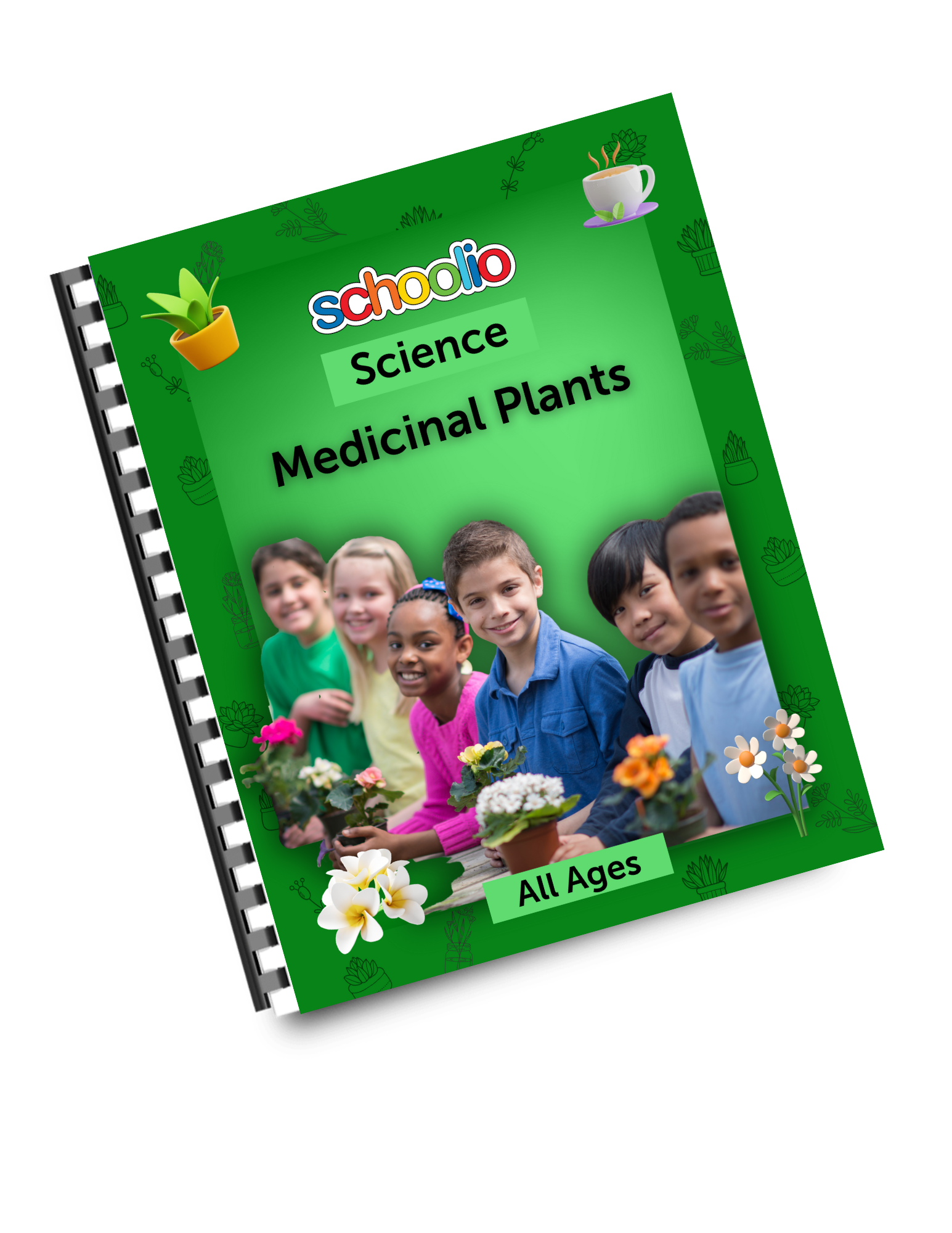
Discover the World of Medicinal Plants: A Schoolio Summer Camp Adventure

Join us for an immersive and educational summer camp experience. Explore the fascinating world of medicinal plants! Schoolio Summer Camp: Gardening and Plants is designed for curious minds and nature enthusiasts of all ages eager to learn about the healing powers of plants. This exciting week includes engaging Schoolio curriculum, hands-on activities, and outdoor adventures. The lessons for this week come from the Schoolio course Medicinal Plants, which is available in self-paced video format on the Schoolio Digital platform, or as an eBook in our bookstore. 

Day-by-Day Schedule

Monday ?

Morning Session

  • Lesson 1: Rethinking Weeds (Schoolio Curriculum: Medicinal Plants pg. 2-5)
  • Activity: Amazing Weed Scavenger Hunt
  • Additional Activity: Create intricate nature mandalas using leaves, flowers, seeds, and other natural materials.

Afternoon Session

Tuesday ?

Morning Session

  • Lesson 3: Gathering and Preparing Medicinal Herbs (Schoolio Curriculum: Medicinal Plants pg. 9-15)
  • Associated Curricular Activity: Gathering Medicinal Plants
  • Additional Activity: Field Guide Book OR Leaf Pressing and Plant Journals
  • Field Guide Book: Design and compile a field guide of medicinal plants in your local community, complete with drawings, photographs, descriptions, and uses. Visit this website for some tips: Make an At-Home Field Guide | Carmel Clay Parks & Recreation

Leaf Pressing and Plant Journals: Collect leaves and flowers to press and create your own plant

journals with detailed notes and sketches. Visit this website for some tips: Botanical Pressed Flower Journals.

Afternoon Session

Wednesday ?

Morning Session

  • Lesson 5: Teas, Infusions, and Decoctions (Schoolio Curriculum: Medicinal Plants pg. 22-25)
  • Activity: Making Tea
  • Additional Activities: Enjoy herbal tea time, meditation and journaling, or nature yoga.

Herbal Tea Time: Enjoy quiet moments sipping herbal tea, fostering a sense of rejuvenation and

relaxation.

Meditation and Journaling: As you have explored nature creations for regulating and calming the

central nervous system, incorporate meditation sessions focused on calming the body with breathing

and connecting with nature. Follow this with a reflective journaling session.

Meditation: Guided Imagery Meditation: Forest | CHOC

Journal Prompts: 100 Nature Journal Prompts for Kids to Inspire Creativity

Nature Yoga: Practise a yoga session in the great outdoors, incorporating the use of aromatic herbs

for enhanced relaxation.

Nature Yoga: Yoga and Mindfulness for Kids: Outside In The Woods | Cosmic Kids

Afternoon Session

  • Lesson 6: Herbal Syrups (Schoolio Curriculum: Medicinal Plants pg. 26-28)
  • Activity: Make a syrup
  • Additional Activity: Use natural dyes from plants to color fabrics and create tie-dye shirts or bandanas. Visit this website for some tips: How to Tie-Dye Clothes at Home, Naturally.
  • Daily Outing: Visit your local Botanical Gardens or Historical Gardens.

Thursday ?

Morning Session

Afternoon Session

  • Lesson 8: Herbal Infused Oils (Schoolio Curriculum: Medicinal Plants pg. 34-37)
  • Activity: Making herbal infused oils
  • Additional Activity: Create healthy smoothies and juices using fresh herbs and plants. Here are some recipes: Wild Herb Smoothie Recipes: Our Top 5.
  • Daily Outing: Visit your local Farm or Farmers Market.

Friday ?

Morning Session

  • Lesson 9: Making Your Own Skincare Products (Schoolio Curriculum: Medicinal Plants pg. 38-39)
  • Activity: Making a salve
  • Additional Activity: Create natural, herbal soaps using essential oils and plant extracts. Visit this website for some tips: DIY Bar Soap with Essential Oils | Kyndra Holley

Afternoon Session

  • Lesson 10: Plan a Medicinal Herb Garden (Schoolio Curriculum: Medicinal Plants pg. 40-45)
  • Activity: Designing a medicinal herb garden
  • Additional Activity: Plant a mini medicinal herb garden. Visit this website for some tips: How to Grow Lots of Herbs in a Small Space • Gardenary
  • Daily Outing: Visit your local plant store to source seeds for your medicinal garden.

Join the Fun!

We’re excited to kick off the Schoolio Summer Camp with Gardening and Plants. This theme is perfect for engaging children in meaningful, hands-on learning while enjoying the summer months. Don’t forget to share your summer camp experiences with us! Send pictures of your kids enjoying the camp to us via email or use the hashtag #SchoolioSummer if you share on social media, and be sure to tag us so we see it!.

Why Are Homeschool Programs Not Accredited?

You don’t need a Michelin star to make a delicious homemade meal, so why should homeschooling be any different?

Traditional schooling often falls short of providing the personalized and flexible education children need. But, what about accredited homeschool programs? Do they hold the key to a quality education, or is there more to consider? 

In the academic year 2021-2022, 3.1 million students in US were homeschooled, which is roughly 6% of school going children. 

Well, accreditation is a stamp of approval that ensures a school meets certain standards set by an official body. In the U.S., this process can be rigorous, involving regular evaluations and adherence to specific educational criteria. 

Many parents seek accredited homeschool programs for peace of mind, thinking it guarantees a successful homeschooling experience. However, the story isn’t so straightforward. While accreditation has its benefits, it is not at all necessary for a successful homeschooling journey. 

This blog delves into why many homeschool programs choose to forgo accreditation and explores viable alternatives available to homeschooling families. We will also analyze whether you truly need an accredited homeschool program to ensure your child’s success.

Common Reasons for Non-Accreditation of Homeschool Programs

Accreditation plays a crucial role in establishing the credibility and quality of educational programs. However, many homeschool programs choose not to pursue accreditation for various reasons. 

Understanding these reasons can help parents and educators make informed decisions about homeschooling. 

The lack of accreditation does not necessarily imply a lack of quality but often reflects the unique challenges and philosophies inherent in homeschooling.

Challenges in Meeting Accreditation Standards

One primary reason homeschool programs often lack accreditation is the challenge of meeting rigorous accreditation standards. Accrediting bodies set stringent requirements to ensure educational quality and consistency. These standards include:

  • A well-defined curriculum
  • Qualified teachers
  • Systematic student assessments

Many homeschool programs struggle to meet rigorous accreditation standards due to limited resources. With Schoolio’s comprehensive curriculum packages, you can ensure your homeschooling meets high educational standards. 

The Philosophy of Individuality in Homeschooling

The Philosophy of Individuality in Homeschooling

Homeschooling is often driven by a philosophy of individuality, emphasizing personalized education tailored to each child’s needs. This philosophy can conflict with the standardized nature of accreditation. Many parents choose homeschooling to escape the one-size-fits-all approach of traditional education systems. 

They value the freedom to design curricula that cater specifically to their children’s strengths, interests, and learning styles. 

While this individualized approach fosters creativity and deep learning, it also makes it challenging to adhere to the uniform standards required for accreditation.

Financial Implications of the Accreditation Process

The financial burden of accreditation is another significant factor. The process of gaining accreditation involves substantial costs, including:

  • Application fees
  • Ongoing compliance expenses
  • Possible curriculum adjustments

For many homeschooling families, these costs are prohibitive. Unlike public schools, which may receive government funding, homeschool programs are typically self-funded by families. The added financial strain of pursuing accreditation can be a significant deterrent, leading many to opt for non-accredited programs to keep educational expenses manageable.

Lack of Awareness 

Many homeschooling parents are unaware of the fact that accreditation is merely a stamp that approves that the school meets the required standards. But it’s not a reflection of the quality of the program. 

Additionally, accreditation limits the freedom and flexibility that homeschooling offers, discouraging parents from seeking it.

Is an Accredited Homeschool Program Important?

The debate over the necessity of an accredited homeschool program is ongoing. While accreditation has its benefits, it is not at all essential for a successful homeschool experience. 

Here are a few reasons why an accredited homeschool program is not necessary:

  • Flexibility and Customization: Homeschooling offers unmatched flexibility. Families can create or purchase curricula tailored to their child’s unique needs and interests. Accredited programs must follow standardized guidelines, limiting customization. A personalized approach often leads to a more engaging and effective learning experience.
  • Emphasis on Individualized Learning: Non-accredited programs allow for a focus on individualized learning. Parents can emphasize their child’s strengths and address weaknesses more directly. This tailored approach can foster a deeper understanding and love of learning, aligning with the child’s natural curiosity.
  • Cost-Effectiveness: Accreditation involves various fees, which can be costly. Non-accredited programs save families money, allowing investment in other educational resources. This financial flexibility can enhance the homeschooling experience without the burden of accreditation costs.
  • Real-World Learning Opportunities: Homeschooling provides opportunities for real-world learning. Families can include travel, community service, and internships in their educational plans. These hands-on activities offer practical knowledge and skills that are valuable in real-life settings.
  • Acceptance by Colleges and Employers: Many colleges and employers recognize the value of homeschooling, even without accreditation. Homeschooled students can demonstrate their readiness through standardized tests, portfolios, and recommendation letters. The skills developed in homeschooling are often highly valued by admissions officers and employers.
  • Encouraging Independence and Responsibility: Non-accredited homeschooling can foster independence and responsibility. Students often take greater ownership of their education, developing strong time management and self-discipline skills. These traits are beneficial for lifelong learning and personal development.
  • Alternative Knowledge Demonstration for Neurodivergent Learners: For many people, standardized testing is not the best way for them to demonstrate that they’ve obtained competency in a skill. For accreditation, programs must administer testing under very particular circumstances, which can be difficult for some kids, including neurodivergent learners, to accel in.

Also Read: Honest Pros and Cons of Homeschooling

Alternatives to Accredited Homeschool Programs

Alternatives to Accredited Homeschool Programs

If you don’t need an accredited homeschool program, there are several alternatives to it that you can consider. 

Below are some practical options that homeschool families can consider to ensure a comprehensive and credible education.

Enrollment in Umbrella Schools for Accreditation

One alternative to traditional accreditation for homeschool programs is enrollment in umbrella schools. These schools operate under the auspices of accredited institutions, providing homeschoolers with the benefits of accreditation without directly attending a traditional school. 

Umbrella schools oversee the homeschooling process, ensuring that the curriculum and educational standards meet the required accreditation criteria. This arrangement allows students to receive an accredited diploma upon completion of their studies. 

Umbrella schools can also provide additional support services, such as record-keeping, standardized testing, and access to extracurricular activities​​.

Preparing for GED as an Alternative Validation for Homeschool Education

For homeschoolers who do not pursue formal accreditation, preparing for and obtaining a General Educational Development (GED) certificate can serve as a valuable alternative. 

The GED is widely recognized as an equivalent to a high school diploma and can open doors to higher education and employment opportunities. 

Preparing for the GED involves studying core subjects such as math, science, social studies, and language arts and passing a series of exams. 

This pathway allows students to validate their homeschool education in a manner that is respected by colleges, universities, and employers, ensuring they are not disadvantaged by the lack of formal accreditation​.

Exploring these alternatives can help homeschooling families find the right balance between educational freedom and the benefits of accredited education, providing students with a solid foundation for future success.

How Can Schoolio Help?

Homeschooling is not a rocket science, but sometimes parents may find themselves perplexed trying to juggle between a bunch of tasks, such as designing curriculum, finding the right way to include real-world learnings, and finding the right direction. Well, this is where we come to the rescue. 

Schoolio offers a comprehensive solution that provides flexibility, quality, and support without the need for formal accreditation. 

Here’s how Schoolio can help you create a successful homeschooling experience:

Comprehensive Curriculum Packages

Schoolio provides detailed curriculum packages for various grades, ensuring a well-rounded education. These packages cover all core subjects:

  • Math
  • Science
  • Language arts
  • Social studies

Additionally, there are resources for elective subjects, including Social-Emotional Learning and Financial Literacy. This approach ensures high educational standards, even without accreditation.

Flexibility and Customization

Schoolio’s curriculum is customizable, allowing parents to:

  • Adapt lessons to their child’s learning style and pace.
  • Tailor the curriculum to focus on their child’s strengths and address weaknesses.

This personalized approach fosters a love of learning and ensures academic success.

Cost-Effective Solutions

Accreditation can be expensive, but Schoolio offers an affordable alternative. Schoolio provides high-quality educational resources at a fraction of the cost of traditional schooling or accredited programs. This cost-effectiveness allows families to:

  • Save money
  • Invest in other enriching activities and materials
  • Enhance the overall homeschooling experience

Real-World Learning Opportunities

Schoolio emphasizes real-world learning by integrating practical, hands-on activities into its curriculum. This ensures that students:

  • Learn theoretical concepts
  • Apply knowledge in real-life scenarios

Examples include:

  • Science experiments
  • Community service projects
  • Creative assignments

These activities help students develop valuable life skills.

Support and Resources

Schoolio offers extensive support and resources for homeschooling parents. These include:

  • Detailed lesson plans
  • Teaching guides
  • Online communities
  • Customer support

This support network ensures that parents feel confident and empowered in their homeschooling journey.

Preparation for Higher Education and Careers

Even without formal accreditation, Schoolio prepares students for higher education and future careers. The curriculum includes resources for:

  • Building strong academic portfolios
  • Standardized test preparation
  • Developing essential skills for college and the workplace

Schoolio focuses on critical thinking, problem-solving, and independent learning, ensuring that students are well-equipped for their next steps in life.

Conclusion

In summary, we discussed why many homeschool programs aren’t accredited, including challenges in meeting standards, individualized teaching approaches, and financial constraints. 

Alternatives like umbrella schools, accredited online programs, and the GED can provide flexibility and credibility for homeschoolers. Understanding these factors helps families balance educational freedom with the benefits of accreditation.

An accredited homeschool program may offer some quality assurances, but it is not essential for success. Non-accredited homeschooling provides flexibility, cost savings, and personalized learning, making it a viable and often advantageous option.

Join thousands of successful homeschooling families and discover how Schoolio can help you create a rich and rewarding educational experience.

Visit Schoolio today to explore our comprehensive curriculum packages, customization options, and extensive support resources. Empower your child’s learning journey with Schoolio – where education meets flexibility.

FAQs 

Why do some homeschool programs choose not to pursue accreditation?

Homeschool programs may choose not to pursue accreditation due to the challenges in meeting stringent standards, the desire for individualized learning, and the financial costs involved. Many families prioritize flexibility and personalized education over formal accreditation.

Is accreditation necessary for a successful homeschool experience?

Accreditation is not necessary for a successful homeschool experience. Many non-accredited programs offer high-quality education, flexibility, and personalized learning, which can be more beneficial for many students.

How can a non-accredited homeschool program prepare my child for college?

Non-accredited homeschool programs can prepare students for college through standardized test scores, detailed portfolios, and recommendation letters. Many colleges and universities recognize the value of homeschooling and accept these forms of validation.

Are there real-world learning opportunities in non-accredited homeschool programs?

Yes, non-accredited homeschool programs often incorporate real-world learning opportunities such as travel, community service, internships, and hands-on activities, providing practical knowledge and skills valuable in real-life settings.

Homeschool Kindergarten: A Guide to Curriculum and Schedule

Deciding to homeschool your Kindergartener can seem like a daunting task, but it doesn’t have to be! You’re already teaching your child every day. Choosing curriculum and scheduling the day are the two things parents worry about the most. Let’s look at how to plan for both, so your Kindergarten year is stress free! 

The importance and benefits of homeschooling at this stage are immense—it allows for a tailored approach to learning that can foster a deep love of discovery from the very beginning. 

By integrating play, exploration, and individualized instruction, homeschooling kindergarten not only builds foundational academic skills but also cultivates curiosity and a lifelong passion for learning. 

In this blog post, we provide you with a comprehensive method to make sure your homeschool kindergarten turns out to be a great learning experience for your child and fosters a deep connection between you two. 

Understanding the Right Way to Homeschool Kindergarten

Sometimes it might seem challenging to know the best way to homeschool your children. Especially, when it is your first child. 

So here are some steps that can help you decide on the best way  way to homeschool your kindergartener: 

1. Discover Your State’s Homeschooling Requirements

Before diving in, it’s essential to understand the legal requirements for homeschooling in your state. 

Each state has its own set of rules, so ensure you’re compliant to avoid any legal issues. This might include notifying local authorities or maintaining specific records.

2. Research Different Curricula Options

Choosing the right curriculum is crucial for your child’s learning experience. Explore various curricula that cater to different learning styles and needs. 

Look for programs that offer a blend of academic learning and hands-on activities, ensuring a well-rounded education.

3. Set Goals and Create a Homeschool Schedule

Establishing clear goals can help track your child’s progress. Create a flexible schedule that suits your family’s routine while ensuring your child receives consistent education. Include time for both structured learning and free play, which is vital at this age.

4. Calculate Your Homeschooling Costs

Budgeting for homeschooling is an important step. Consider the costs of curricula, supplies, and extracurricular activities. 

Homeschooling doesn’t have to be expensive. Plan your budget and then stick to it so you aren’t caused financial strain, but don’t worry that homeschooling Kindergarten needs to be an expensive endeavor. 

5. Track Your Child’s Progress

Regularly assessing your child’s milestones can help you feel more confident that you are making progress. Keep records of their work and achievements if you’d like, or if documentation is required by state laws.

6. Incorporate Fun Activities

Make learning fun by including field trips, hands-on activities, and play-based learning. These activities not only enhance learning but also keep your child engaged and excited about education.

Following these steps will help you create a structured yet flexible homeschooling environment that nurtures your kindergartener’s growth and love for learning. 

Also read: 5 things you need before starting homeschooling

What is the Best Kindergarten Curriculum for Homeschool? 

Curriculum for Homeschool

Designing a kindergarten curriculum for homeschool can be a delightful and rewarding task. 

Among plenty of options available, you can either design your own curriculum, or get a pre-made curriculum that fits your needs. 

Let’s first discuss how to design your own homeschool kindergarten curriculum:

Designing your own curriculum

Here’s how to create a well-rounded and engaging curriculum for your child:

1. Key Components of a Successful Kindergarten Curriculum

A high-quality kindergarten curriculum includes several essential components:

  • Developmental Appropriateness: Try to match the activities to your child’s developmental stage, focusing on physical, social, emotional, and cognitive growth.
  • Engagement and Interaction: Learning should be interactive and engaging, encouraging children to explore and ask questions.
  • Consistency and Flexibility: While consistency helps children understand routines, flexibility allows the curriculum to adapt to your child’s interests and learning pace​​.

2. Incorporating Core Subjects

To ensure a comprehensive education, your curriculum should cover the core subjects:

  • Math: Focus on basic concepts like counting, shapes, patterns, and simple addition and subtraction.
  • Language Arts: Develop reading and writing skills through phonics, storytelling, and alphabet activities.
  • Science: Encourage curiosity with hands-on experiments and exploration of natural phenomena.
  • Art: Foster creativity with various art projects and exposure to different art forms.
  • Physical Education: Promote physical health through activities like playing outside, simple sports, and movement exercises.

3. Optional Subjects to Enrich the Curriculum

Adding optional subjects can enhance your child’s learning experience:

  • Social Studies: Introduce basic concepts about communities, cultures, and history.
  • Music: Explore rhythm, melody, and different musical instruments.
  • Foreign Languages: Early exposure to a new language can be highly beneficial for cognitive development​.

Know that designing your own curriculum can be very rewarding, but is a lot of work. Make sure you’ve planned on the time commitment needed throughout the year. Now, let’s discuss what to look for in a pre-made curriculum if you choose to buy instead of create:

How to select the right pre-made curriculum? 

1. Choosing the Right Resources

Selecting the right curricula involves finding materials that align with your educational goals and your child’s learning style. Look for resources that provide:

  • Clear Instructions and Goals: Ensure the curriculum offers straightforward guidance and objectives.
  • Engaging Content: Choose materials that are visually appealing and interactive to keep your child interested.
  • Flexibility: Resources should allow for adaptation to suit your child’s unique needs and interests.

When it comes to designing a curriculum that fits on all the above criteria, it can sometimes feel like a difficult task, but Schoolio is here to  help. 

Get personalized kindergarten curriculum solutions tailored to your child’s unique needs and interests

2. The Best Criteria for Selecting a Curriculum

When selecting a curriculum, consider the following criteria:

  • Engagement: The material should captivate your child’s attention and make learning enjoyable.
  • Clarity: Instructions and expectations should be clear and easy to follow.
  • Tracking Progress: Effective curricula include methods for tracking your child’s progress and understanding.
  • Promoting Problem-Solving Skills: Look for resources that encourage critical thinking and problem-solving​.

By integrating these elements, you can design a kindergarten curriculum that is both effective and enjoyable, laying a strong foundation for your child’s educational journey..

How to Set Goals and Schedule for Homeschool Kindergarten?

Setting goals and creating a schedule for homeschooling kindergarteners can improve your success and let you feel confident that you are on track. Remember that it’s ok if goals change throughout the year as you learn more about how your child learns and how you teach, and to stay open and flexible to the schedule changing as you go. . Here’s how to make this process effective and enjoyable:

1. Creating Specific Learning Goals for Kindergarten

Setting clear, specific goals is important for  your child’s educational journey, and can help you feel confident you are on track. Focus on foundational skills such as basic math concepts, early literacy, and social skills. 

Goals should be measurable and attainable, like being able to count to 100, recognize all letters of the alphabet, or read simple words. Involving your child in goal-setting can also foster a sense of ownership and motivation.

2. Developing a Flexible Daily Schedule Tailored to the Child’s Needs

A well-structured yet flexible schedule is helpful when homeschooling. Tailor the daily routine to your child’s natural rhythms and interests. 

Begin with a morning routine that includes breakfast and a calm activity to ease into the day. Incorporate short learning sessions with regular breaks to keep your kindergartener engaged and eager to learn​​.

3. Benefits of Limiting Formal Homeschooling to an Hour a Day for Kindergarteners

Young children have shorter attention spans, so it’s beneficial to limit formal homeschooling at this age to a maximum of one hour a day. 

This approach helps maintain their enthusiasm for learning and allows ample time for play, which is also a vital part of their development​. A good rule to remember is that children can have sustained, uninterrupted focus for as many minutes as years they are old. So, if your child is 5 years old, they can focus on one task for 5 minutes, then you need to change to something else.

4. Optimal Scheduling Tips for Effective Learning

To optimize your homeschooling schedule:

  • Start with the Most Engaging Subjects: Begin the day with subjects your child enjoys the most to build momentum.
  • Incorporate Frequent Breaks: Short breaks between learning sessions help keep your child focused and energized.
  • Balance Structured Learning and Free Play: Mix academic lessons with creative activities and physical exercise.
  • Be Flexible: Adapt the schedule as needed based on your child’s mood and interest. Flexibility is one of the great advantages of homeschooling​.

By setting clear goals and creating a balanced, flexible schedule, you can provide a productive and enjoyable learning environment for your kindergartener.

Homeschooling at this stage should be about fostering a love for learning and curiosity.

Kindergarten Homeschool Best Practices and Ideas

Kindergarten Homeschool Best Practices and Ideas

Homeschooling your kindergartener can be an exciting adventure for both you and your child. Here are some best practices and ideas to make this year both memorable and successful:

1. Schedule Plenty of Playtime

Play is an essential part of childhood and learning. Incorporate ample playtime into your daily routine. 

Play encourages creativity, exploration, and social skills development. Activities like building blocks, role-playing, and outdoor games can make learning fun and engaging.

2. Read Together

Reading together is a wonderful opportunity to bond with your child. Snuggle up with a good book and explore stories together. 

This practice not only strengthens your relationship but also builds literacy, comprehension, and communication skills. Choose a variety of books to keep it interesting and educational.

3. Go on Field Trips

Field trips are a fantastic way to bring learning to life. Visit children’s museums, science centers, and local parks. 

These excursions offer hands-on learning experiences that are both fun and educational. Plan regular field trips to keep your child excited about learning and to provide a fresh perspective on different subjects.

4. Embrace Your Child’s Curiosity

Kindergarteners are naturally curious and full of questions. Use their curiosity to your advantage. Explore topics they are interested in and encourage them to ask questions. This approach fosters a love for learning and helps them develop critical thinking skills.

5. Keep an Open Mind

One of the greatest advantages of homeschooling is flexibility. Don’t feel pressured to stick strictly to the curriculum. 

Be open to new opportunities and spontaneous learning moments. Whether it’s a sudden interest in insects or a fascination with outer space, follow your child’s lead and adapt your lessons accordingly.

6. Be Flexible

Flexibility is key in homeschooling. Allow your schedule to be fluid. Some days may not go as planned, and that’s perfectly fine. 

If your child is having a challenging day, take a break and go outside. Learning can happen anywhere, so embrace the freedom to change the scenery and approach.

7. Take Frequent Breaks

Young children have lots of energy and short attention spans. Incorporate frequent breaks throughout the day. Whether it’s a snack break, a walk, or some quiet time, breaks help maintain focus and prevent frustration. 

Listen to your child’s needs and adjust the schedule to keep them engaged and happy. With the help of these tips, you will be able to create a nurturing and stimulating environment for your homeschool kindergarten. 

It is important to keep the goals in mind and thinking from the perspective of kindergarten children, and try to make things enjoyable for them. 

How Can Schoolio Help?

Schoolio offers an all-in-one homeschooling solution that makes education engaging and personalized.

1. Comprehensive Curriculum: Schoolio provides an all-in-one Kindergarten program in the bookstore, which gives you a complete year of learning, covering core subjects like math, language arts, science, and social studies, as well as social-emotional wellness, art, and health. This ensures a well-rounded education for your child and is an easy-to-follow format for you.

2. Personalized Learning: Schoolio provides tools to tailor the curriculum to your child’s unique needs, including those of neurodivergent students.

3. Flexible Formats: Schoolio offers both digital and printable resources, allowing families to choose the best format for their needs. This flexibility supports various learning styles and schedules.

4. Future-Readiness: Schoolio includes essential content for life skills and future success, such as financial literacy, digital safety, and social-emotional learning.

5. Support and Resources: Parents can access extensive support, including weekly tips, personalized student success plans, and a community of homeschooling families, ensuring you never feel alone in your homeschooling journey.

By integrating these features, Schoolio simplifies the homeschooling process, making it more effective and enjoyable for both parents and children.

Conclusion

Homeschooling your kindergartener is a unique and rewarding journey that allows for personalized education tailored to your child’s needs and interests. 

By following best practices and incorporating flexibility, play, and exploration into your curriculum, you can create an engaging and effective learning environment. 

Utilize resources like Schoolio to support your efforts with comprehensive curricula and personalized learning tools. Embrace the adventure of homeschooling, and watch your child’s curiosity and love for learning flourish.

Need guidance or resources to make your homeschooling journey smoother? Explore our variety of homeschool kindergarten programs and curriculum for your children, and see how Schoolio enhances their overall growth and development, right from the comfort of your home.

FAQs

What are the benefits of homeschooling a kindergartener? 

Homeschooling offers a tailored educational experience, fosters a love of learning, and allows for flexibility in teaching methods and schedules.

What subjects should be included in a kindergarten homeschool curriculum? 

Core subjects should include Math, Language Arts, Science, Art, and Physical Education. Optional subjects like Social Studies, Music, and Foreign Languages can enrich the curriculum.

How many hours a day should I homeschool my kindergartener? 

Typically, just an hour of focused learning per day is sufficient for kindergarteners, allowing ample time for play and exploration.

The TOP 3 Most Important Skills to Teach Your Kids

The Top 3 Essential Skills to Teach : A Homeschool Mom’s Perspective

Hey there, fellow parents and homeschoolers! Today, I’m excited to share with you what I’ve learned about the top 3 most important skills to teach we should be focusing. Trust me, these aren’t your typical reading, writing, and arithmetic – though those are important too! Let’s dive in and explore what really matters for our children’s future success and happiness.

  1. Embrace Their Passions (Even If They Seem Silly)

You know that game your kid can’t stop talking about? Or that seemingly random hobby they’ve picked up? Well, guess what – those interests are goldmines for learning!

Here’s why nurturing your child’s passions is so important:

  • Future career potential: Today’s “silly” interest could be tomorrow’s dream job.
  • Enhanced learning: Kids retain information better when it’s tied to something they love.
  • Lifelong love of learning: Encouraging curiosity now sets them up for continuous growth.

Personal story time:

My son was obsessed with Minecraft. At first, I didn’t get it. But when I started using it to teach him math concepts, his skills skyrocketed! Now he’s learning basic coding through the game. Who knew?

  1. Financial & Digital Literacy (A Tie for Second Place!)

These two skills are absolute must-haves in our modern world:

Financial Literacy:

Digital Literacy:

  • Online safety
  • Spotting fake news and misinformation
  • Protecting personal privacy
  • Understanding and using AI responsibly

Here’s the kicker: most schools and curriculum programs don’t cover these topics in-depth. As homeschoolers, we have the perfect opportunity to fill this gap!

Quick Tip: Turn grocery shopping into a budgeting lesson, or fact-check news stories together as a family activity.

  1. And the Winner Is… Emotional Intelligence!

Surprise! The number one predictor of both financial success and overall life satisfaction isn’t academic prowess – it’s emotional intelligence. This includes:

  • Stress management
  • Anger control
  • Adaptability to change
  • Interpersonal skills and teamwork

In the education world, we often call this “Social-Emotional Learning” or “Social-Emotional Wellness.” And here’s the best part: you can learn right alongside your kids!

A Challenge for You:

This week, try incorporating one activity that boosts emotional intelligence. Maybe it’s a family discussion about handling disappointment, or a game that requires teamwork. Small steps can make a big difference!

Wrapping It Up

Remember, as homeschoolers, we have the incredible opportunity to tailor our children’s education to what really matters. By focusing on these three areas – passion-driven learning, practical life skills, and emotional intelligence – we’re setting our kids up for success in ways that go far beyond traditional academics.

Want to dive deeper into these topics? Schoolio offers a Future-Readiness Library with courses on Social-Emotional Learning, Financial Literacy, and Digital Safety. Plus, their Electives Library is packed with subjects to spark curiosity in even the most reluctant learners.

What do you think about these top skills? Are there any you’d add to the list? Share your thoughts in the comments – I’d love to hear from you!

Until next time, happy homeschooling!

The Ultimate Guide to Choosing the Right Homeschool Curriculum

The Ultimate Guide to Choosing the Right Homeschool Curriculum with Schoolio

Making an informed decision about your child’s education is crucial, especially when embarking on a homeschooling journey. One of the most important steps in this process is selecting the right homeschool curriculum. With Schoolio’s homeschool curriculum guide, “How to Choose the Right Homeschool Curriculum,” you can unlock the secrets to a successful and personalized homeschooling experience.

Why a Homeschool Curriculum Guide is Essential

Choosing the right homeschool curriculum can be overwhelming due to the vast array of options available. A well-structured homeschool curriculum guide simplifies this process, providing clear insights and practical advice to help you navigate the choices. Schoolio’s guide is designed to ensure you select the perfect curriculum tailored to your child’s unique learning style and needs.

Understanding Different Homeschool Curriculum Types

One of the key features of Schoolio’s guide is its detailed explanation of various homeschool curriculum types. From all-in-one packages to mastery versus spiral learning approaches, this guide helps you understand the pros and cons of each type.

  • All-in-One Packages: These are comprehensive curriculums that cover multiple subjects, providing a structured learning path for your child. They are ideal for beginners who need a complete solution.
  • Mastery vs. Spiral Learning: Mastery learning focuses on mastering a concept before moving on, while spiral learning revisits topics periodically to reinforce understanding. The guide explains which approach might be best for your child based on their learning style.

By understanding these different types, you can make an informed choice that best suits your child’s educational needs.

Secular vs. Faith-Based Homeschool Curriculum

Another critical aspect covered in the guide is the choice between secular and faith-based homeschool curriculums. Schoolio’s guide provides insights into selecting a curriculum that aligns with your family’s beliefs and values. Whether you prefer a curriculum that incorporates religious teachings or one that focuses purely on secular education, this guide helps you weigh your options.

Special Learning Considerations

Every child is unique, but kids who are neurodivergent may have additional special learning needs. Schoolio’s guide includes strategies for accommodating these diverse learning requirements. It offers practical advice on choosing curriculums that provide the necessary support and resources to ensure every child can thrive academically.

  • Homeschool Curriculum for ADHD Kids: The guide recommends curriculums that incorporate interactive and hands-on learning to keep children with ADHD engaged and focused.
  • Homeschool Curriculum for Dyslexic Kids: It also suggests programs with strong phonics-based instruction and visual aids to support children with dyslexia.
  • Homeschool Curriculum for Autistic Kids: The guide highlights interest-based learning options to help autistic learners follow their passions and emphasizes short, to-the-point lessons. Social-emotional learning is also a key focus to support their development.

Budgeting and Time Management

Homeschooling can be a significant commitment in terms of both time and money. Schoolio’s guide offers practical advice on budgeting and time management to make homeschooling more manageable and cost-effective. It provides tips on finding affordable resources and creating a realistic homeschooling schedule that fits your family’s lifestyle.

  • Budgeting Tips: Learn how to find cost-effective solutions without compromising on quality, including using free online resources and second-hand materials.
  • Time Management: Discover strategies for balancing homeschooling with other responsibilities, ensuring that your educational plan is both effective and sustainable.

Interactive Tools and Resources

Incorporating technology and interactive tools can greatly enhance the homeschooling experience. Schoolio’s guide recommends various online platforms and hands-on learning materials to make education more engaging and effective. These tools are especially useful for maintaining your child’s interest and making complex subjects more accessible.

  • Interactive Learning: Use technology to create a dynamic learning environment, including educational apps, online courses, and virtual field trips.
  • Hands-On Resources: Incorporate physical activities and experiments to provide a well-rounded educational experience.

Take the First Step with Schoolio’s Quiz

To help you get started, Schoolio’s guide includes a quiz to pinpoint your homeschooling style. This quiz is a great tool to understand your educational preferences and needs, setting the foundation for a personalized and successful homeschooling journey.

  • Homeschooling Quiz: Identify your homeschooling style and get tailored recommendations for curriculum choices that align with your educational philosophy and goals.

Conclusion

Choosing the right homeschool curriculum is a critical step in ensuring a successful homeschooling experience. With Schoolio’s comprehensive guide, “How to Choose the Right Homeschool Curriculum,” you have a valuable resource that covers everything from understanding different curriculum types to accommodating special learning needs and managing your budget and time.

Don’t let the vast array of homeschooling options overwhelm you. Equip yourself with Schoolio’s expert guide and make informed decisions that will pave the way for a fulfilling and effective educational journey for your child. Visit Schoolio today to get your copy and start your homeschooling journey with confidence.

By focusing on these key aspects, you can ensure that your child’s homeschooling experience is not only educationally enriching but also tailored to their unique needs and interests. With Schoolio’s support, you can create a personalized learning environment where your child can thrive.

Unschooling: A Brave New World for Homeschooling Beginners

Unschooling: A Brave New World for Homeschooling Beginners

As you start your homeschooling journey, you may come across “unschooling” – an educational philosophy that challenges traditional curriculum and structure. For homeschooling beginners, unschooling can be both intriguing and daunting. At Schoolio, we help families explore different educational philosophies to find the best fit for their child’s needs. Unschooling embraces child-led exploration and organic discovery. It offers a flexible and personalized approach to education. This method encourages children to learn through their natural interests and experiences.

The Unschooling Philosophy

Unschooling believes children are natural learners, driven by curiosity. Instead of a rigid curriculum, children learn through their interests and experiences. Unschooling challenges the idea that learning happens only in classrooms. It recognizes that learning is constant and driven by a child’s passions. This approach values organic learning over structured lessons. It encourages children to explore the world around them freely. Learning becomes a natural part of daily life.

Embracing Child-Led Learning

Unschooling emphasizes that children learn best when engaged and motivated. By pursuing their interests, children develop a love for learning beyond traditional education. Whether interested in insects, mythology, or engines, unschooling allows them to explore deeply through hands-on experiences and self-directed research. This method fosters intrinsic motivation and curiosity. It supports personalized learning paths for each child. Children take ownership of their education. They explore topics that excite them and go at their own pace.

The Role of Curriculum in Unschooling

Unschooling doesn’t mean abandoning all educational resources. Many unschoolers use curriculum materials, books, and online courses to support their explorations. Schoolio offers a resource library and customizable curriculum to enrich your child’s learning journey. These resources can complement child-led learning. They provide additional information and structured activities when needed. Unschooling can blend with traditional resources to enhance learning. Flexibility is key in this approach.

Navigating Socialization and Life Skills

A common concern for homeschooling beginners considering unschooling is socialization and life skills. Unschooling advocates argue these concerns are often misconceptions. Through community activities and real-world experiences, unschooled children develop social skills and practical competencies in authentic ways. They interact with a diverse range of people. They learn through real-world engagements. This approach encourages meaningful social interactions. Life skills are learned through daily activities and responsibilities. Children gain practical experience in various situations.

Is Unschooling Right for Your Family?

Choosing unschooling is a personal decision. Consider your family’s values, your child’s learning style, and your educational goals. Unschooling requires patience, trust, and an open mind about what learning looks like. It may not be suitable for everyone. It’s important to evaluate if it aligns with your family’s needs. Talk to other unschooling families to gain insights. Reflect on your readiness to embrace a flexible learning path.

Conclusion

At Schoolio, we support you in exploring homeschooling philosophies, including unschooling. Our resources and forums offer insights and guidance as you explore child-led learning. Whether you fully embrace unschooling or incorporate elements of it, remember that homeschooling’s beauty lies in its flexibility. Be a guide, facilitator, and fellow learner. Trust that your child’s curiosity will lead to incredible discoveries and a lifelong love for learning. Embrace the journey with confidence. Let Schoolio assist you every step of the way.

Alternative Education Options: Lessons Learned

Exploring alternative education options has become a significant trend among families seeking the best possible educational paths for their children. One family’s journey through homeschooling and microschools in Virginia reveals valuable lessons that can guide others considering similar paths.

One of the standout benefits of alternative education is the flexibility it offers. Traditional schooling often features rigid schedules and curricula that may not accommodate every child’s unique learning pace and interests. In contrast, homeschooling and microschools provide the adaptability necessary to tailor the educational experience to each child’s needs. This flexibility allows families to incorporate breaks when necessary, delve deeper into subjects of interest, and adjust the learning pace to suit each child’s capabilities.

According to Schoolio, “Flexibility is one of the cornerstones of effective homeschooling, allowing children to learn at their own pace and explore their interests deeply.” This adaptability can be especially beneficial for children who may struggle with the constraints of a traditional classroom environment, enabling them to flourish academically and personally.

Personalized learning has proven to be a game-changer for many families. In traditional school settings, the one-size-fits-all approach often leaves some children disengaged or struggling to keep up. Alternative education options, such as homeschooling, allow for designing a curriculum that caters specifically to a child’s strengths and interests. This customization keeps children engaged and motivated, turning learning into an enjoyable and rewarding experience. One Schoolio user shared, “Schoolio’s tailored curriculum has transformed our homeschooling experience. My child is more engaged and excited about learning than ever before.” Personalized learning not only enhances engagement but also helps children develop a deeper understanding of subjects, as they are able to explore topics that genuinely interest them.

A common concern about alternative education is the potential for social isolation. However, many families discover a robust and supportive community of like-minded individuals. Homeschool groups, co-ops, and online forums provide ample opportunities for children to interact with peers, share experiences, and participate in group activities. These communities also offer parents a network of support and resources, making the homeschooling journey less daunting and more collaborative. Platforms like Schoolio provide forums where homeschooling families can connect, share resources, and support each other, creating a community of encouragement and shared learning. Engaging with these communities can help mitigate feelings of isolation and provide valuable insights and advice from other experienced homeschooling parents.

Alternative education opens the door to numerous real-world learning opportunities. Field trips, nature walks, and hands-on projects become integral parts of the educational approach. These experiences help children connect theoretical knowledge with practical applications, enhancing their understanding and retention of information. Activities such as gardening, cooking, and volunteering also teach valuable life skills that go beyond academic learning. Schoolio’s curriculum includes practical activities that integrate real-world learning, helping children apply what they learn in meaningful ways. For example, a science lesson on plant biology can be enriched by a gardening project, where children can observe plant growth and understand the scientific concepts firsthand.

Finding the right balance between structure and freedom is essential. While flexibility and freedom are significant advantages of alternative education, some structure is necessary to maintain consistency and progress. Setting goals, establishing routines, and using structured curricula for core subjects help families stay on track while allowing room for exploration and creativity. Schoolio’s digital platform offers customizable lesson plans that provide a structured framework while allowing for the flexibility to adapt as needed. This balance ensures that children receive a comprehensive education while still enjoying the benefits of a personalized learning experience.

One of the most rewarding aspects of the alternative education journey is the strengthening of family bonds. Spending more time together through homeschooling and alternative education initiatives allows families to connect on deeper levels. Parents become mentors and partners in their children’s learning journeys, fostering better communication, understanding, and mutual respect within the family. One Schoolio customer noted, “The bond we’ve developed through homeschooling is priceless. Schoolio’s resources have made our educational journey a collaborative and joyful experience.” The close-knit environment of homeschooling can lead to lifelong relationships and a supportive family dynamic that benefits everyone involved.

The journey of alternative education is not without its challenges. Balancing work, teaching, and household responsibilities requires careful planning and time management. Families may face skepticism and criticism from some quarters, questioning the effectiveness of non-traditional education paths. However, support from the community and the visible progress and happiness of the children often reinforce the decision. Schoolio offers various resources and support systems to help families navigate these challenges, from educational consultants to community forums. These resources provide guidance and practical solutions to common homeschooling obstacles, ensuring that families have the support they need to succeed.

Technology plays a pivotal role in the alternative education journey. Online resources, educational software, and digital platforms expand the teaching toolkit and provide diverse learning opportunities. Platforms like Schoolio offer customizable curricula, interactive lessons, and a community of support that enriches the homeschooling experience. One satisfied Schoolio user shared, “Schoolio’s interactive digital platform has made homeschooling both fun and effective. The variety of resources available has greatly enriched our learning experience.” By leveraging technology, homeschooling families can access a wealth of information and tools that enhance their educational efforts.

Perhaps the most significant lesson learned is the importance of confidence. Embracing alternative education requires belief in one’s ability to provide a quality education for their children. Moments of doubt and uncertainty are natural, but trusting instincts and seeing the positive impact on children’s development can reaffirm the choice. Confidence in the approach empowers families to create nurturing and effective learning environments. Schoolio reinforces this confidence by providing comprehensive tools and support, helping parents feel equipped and capable in their homeschooling journey. With the right resources and mindset, parents can overcome any obstacles and provide a fulfilling education for their children.

Exploring alternative education options has been a transformative journey for many families. The immense benefits of flexibility, personalized learning, community support, and real-world experiences make a significant difference in children’s education. While the path has its challenges, the rewards are profound, enriching children’s education and strengthening family bonds. For those considering alternative education, exploring the possibilities is encouraged. Each child is unique, and finding the right educational approach can make all the difference in their learning journey. With resources like Schoolio, the support of a community, and the courage to embrace new methods, families can provide a fulfilling and dynamic education for their children.

Alternative education is not just an option but an opportunity to redefine what learning can look like for your family. The lessons learned along the way, from flexibility to personalized engagement, are invaluable. As more families turn to homeschooling and other alternative methods, the landscape of education continues to evolve, offering a wealth of possibilities for those willing to explore them.

Personalized Education: The Key to Engaging Homeschooling

In the world of education, one size rarely fits all. This is especially true in homeschooling, where the ability to tailor the learning experience to each child’s unique needs, interests, and learning style can make all the difference in keeping students engaged and motivated. At Schoolio, we believe that personalized education is the cornerstone of effective learning, and our customizable homeschool curriculum is designed to help you create a dynamic and engaging educational journey for your child.

Why One-Size-Fits-All Doesn’t Work

Traditional educational models often rely on a standardized curriculum, which can fail to address the individual strengths and weaknesses of each student. This approach can lead to disengagement, as children may feel either overwhelmed by material that is too challenging or bored by content that doesn’t challenge them enough. By contrast, personalized education acknowledges that every child is unique and benefits from a tailored approach that adapts to their specific needs.

The Benefits of Personalized Homeschooling

  1. Enhanced Engagement and Motivation

When learning is personalized, students are more likely to stay engaged and motivated. They see the relevance of what they are learning to their own lives and interests, which fosters a deeper connection to the material. According to ASCD, student engagement is crucial for effective personalized learning. With Schoolio’s customizable homeschool curriculum, you can create lessons that resonate with your child’s passions, whether it’s science, literature, art, or technology.

  1. Addressing Individual Learning Styles

Every child has a preferred way of learning, whether they are visual, auditory, or kinesthetic learners. Personalized education allows you to cater to these learning styles, making it easier for children to absorb and retain information. Schoolio’s platform offers a variety of teaching tools and resources that support different learning modalities, ensuring that each lesson is accessible and engaging.

  1. Flexibility to Adapt and Grow

A personalized approach to education provides the flexibility to adapt the curriculum as your child grows and their interests evolve. This dynamic method keeps learning fresh and exciting, preventing burnout and maintaining a high level of engagement. Schoolio’s digital platform makes it easy to adjust your homeschooling plan, incorporating new topics and activities that align with your child’s developing interests.

  1. Building Confidence and Independence

When children learn at their own pace and in ways that suit them best, they build confidence in their abilities. This self-assurance encourages them to take ownership of their learning, fostering independence and a love for lifelong learning. Schoolio’s resources are designed to support this growth, offering opportunities for self-directed projects and exploratory learning.

How Schoolio Supports Personalized Homeschooling

  1. Comprehensive Curriculum Kits

Schoolio provides comprehensive homeschool curriculum kits that cover core subjects while allowing for extensive customization. These kits include a variety of materials and resources, from interactive lessons to hands-on activities, making it easy to tailor the educational experience to your child’s needs.

  1. Interactive Digital Platform

Our digital platform is a hub of interactive resources that support personalized learning. With access to a wide range of subjects and customizable lesson plans, parents can easily modify the curriculum to suit their child’s learning style and interests. Features like adaptive learning tools and progress tracking help ensure that your child remains engaged and on track.

  1. Community and Support

Homeschooling doesn’t have to be a solitary journey. Schoolio’s community forums and support networks connect you with other homeschooling families and educators. Share tips, resources, and experiences to enhance your personalized homeschooling efforts. Our platform also offers access to educational consultants who can provide personalized advice and support.

  1. Focus on Life Skills and Real-World Learning

In addition to academic subjects, Schoolio emphasizes the importance of life skills and real-world learning. Our curriculum includes practical activities that teach financial literacy, critical thinking, problem-solving, and other essential skills. This holistic approach ensures that your child is well-prepared for both academic success and real-life challenges.

Success Stories from Schoolio Families

Many families have found success with Schoolio’s personalized approach to homeschooling. Here’s what some of our satisfied customers have to say:

  • “Schoolio’s tailored curriculum has transformed our homeschooling experience. My child is more engaged and excited about learning than ever before.”
  • “The flexibility and variety of resources on Schoolio’s platform have made it easy to adapt lessons to my child’s unique interests and learning style.”
  • “With Schoolio, we have the support and tools we need to provide a high-quality, personalized education that keeps our kids motivated and thriving.”

Conclusion

Personalized education is the key to keeping students engaged and excited about learning. By moving away from a one-size-fits-all approach, homeschooling families can create a dynamic and enriching educational experience that caters to the unique needs of each child. Schoolio’s customizable homeschool curriculum and digital platform provide the tools and support you need to make personalized education a reality.

Explore Schoolio today to discover how our resources can help you craft a personalized and engaging homeschooling journey for your child. With Schoolio, every child can experience the joy of learning in a way that suits them best.