_____________________________________________________________________
Meeting All Learners Where They Are:
Differentiation Made Easy
By Chelsea McLeod

So have you been assigned your first class, or are you changing grades for the first time in years? Keep reading to find out how to make your prep easier and focus your attention on the students in your classroom rather than the mountains of planning required to differentiate student learning. This year, your Admin has told you that you will be teaching a 3rd-grade class and since you received this news, you have been diligently preparing all your 3rd-grade materials.
Since this is a single-grade class, all you’ll need is this single-stream curriculum approach to ensure your students are successful, right?! Wrong. This approach is a surefire way to set yourself and your students up to fail. But why? And how are we meeting all learners where they are?
All kids are different, so meeting all learners where they are is essential.
As babies, the professionals – doctors, nurses, child development experts, etc. – all tell us that the “milestones” to be reached are just guidelines and not set in stone. Each child learns to roll over, crawl, walk, and talk at their own pace, and the growth markers are estimates. Sometimes they are even arbitrary markers that will not affect long-term success. Your doctor will not hit the panic button if your baby is not rolling over at precisely four months or talking by the day of their 1st birthday. That would be silly.
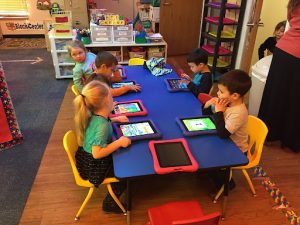
So why, then, are the growth stages in school treated differently? Why do we immediately hit the panic button when students are not at the level expected by a particular grade? Kids are different, it’s that simple, so while they are all in 3rd grade, they may not all be at the same level as 3rd grade. Learning is relative to each student, and we must treat them all as individuals to best support their learning by building them up from where they are rather than trying to make them attain a single “marker” by a certain age. This is where differentiation comes in, and Schoolio’s digital platform can make this easier.
What is Differentiation? What does it mean for Teachers?
Differentiation or Differentiated Instruction “is a teaching approach that tailors instruction to all students learning needs. All the students have the same learning goal. But the instruction varies based on student’s interests, preferences, strengths, and struggles.” (https://understood.org).
This means that you can teach to different student needs, learning styles and even interests individually while still working towards the same goal for success, the goal being the Outcomes or Common Core that students are required to achieve in each grade as defined in the curriculum and meeting all learners where they are.

What does this mean for Teachers? The plain answer is that straight-grade or single-graded classes are no longer as simple. A single-grade classroom nowadays is, in essence, the same as a multi-grade one. No student entering that classroom will learn or perform at the same level, and sometimes the predetermined “levels” they should be reaching seem arbitrary given the knowledge that all children are different. Our students all learn, grow and adapt on different timelines.
For example, some students will enter the 3rd grade struggling to read, maybe having trouble with sounds formation and not understanding some grammar concepts, while another student may be reading at a 5th, 6th grade or above level with no problem synthesizing the next grammar and spelling additions they learn in class.
So, while many schools do not have split grades, we are presented with split learners, and as a teacher, it is crucial to meet all students where they are. As previously discussed, babies and toddlers learn, grow and adapt at all times; so does every one of the students in each of our classrooms. So as teachers, we must be in tune with our students more as individuals and plan for individual student success.
How Do We Plan for Individual Student Success?
As a classroom teacher, you must consider all the pieces of the puzzle that make up each student in your classroom. When planning, it is essential to consider the student’s home life, family background, and parental time, as well as the achievements of the student. Each of these things and many other factors are all a part of student success. Therefore, we must have varied content available to create plans that help all learners at every level succeed. This is differentiation. Student interest is also a vital piece of the puzzle because ownership is essential to get full cooperation from the student.
For example, If you have a student obsessed with cars and spend all their free time reading and learning everything they can about cars, if you are trying to teach them math, you may have a difficult time. Sometimes, these students will see this math not as something vital for them to learn but as something that takes time and attention away from their passion.
So it’s not that they can’t understand something; it’s just that they don’t want to. I know we all have to do things we don’t want to do sometimes; however, it isn’t that simple, given the other factors involved. Sometimes parents will not force the issue, so as teachers, we need to get creative with how we approach learning.
Consequently, getting to know your students and what motivates/excites them is vital to being a classroom teacher. It’s okay to give students different lesson content if they are not engaging with the same materials as the rest of the class. The outcomes are required for the student to achieve, not the content. How you bring the student to achieve the result is essentially up to you.
So if you can find a way to make them feel successful, engage with their learning and take ownership of their achievements, you will have a much better classroom experience. To do this well, you will need to plan for differentiation. As the Teacher, you can differentiate the content, subject matter and sometimes even the length of the finished product to help cater to your learners’ success.

Now I know you’re thinking… But doesn’t that make so much more work for me? How on earth do I plan for 25 + different learners across all the core subject areas? One person cannot create that many lesson materials on top of all the other things teachers do! Therefore, the ability to teach grade-fluid content is a critical piece of this process and helps all teachers tremendously in meeting a student’s needs or catering to interest to spark participation and ownership of learning.
With the Schoolio Digital Curriculum, You Can Do Exactly That!
With Schoolio Digital, you can teach grade-fluid content and target your instruction to individual student success. Schoolio has lessons for the core subject areas for all grades created by teachers! If you are a member of the digital platform, you can mix and match exactly what your students need. This gives you flexibility and the opportunity to cater to individual student success while still maintaining your sanity and sleeping each night (not working round the clock to create materials).
So, don’t panic and spend hours “reinventing the wheel” to make all the content you need to support your in-class instruction when Schoolio has already done it. Now you can spend your precious classroom time getting to know your students, making lasting connections, and creating a safe place for students to learn and grow, all while using Schoolio’s Digital Platform to support all you are already doing. Sign up now and focus on what matters, the students in front of you, not the prep work while meeting all student’s where they are.