But What About Socialization? (Let’s Talk About It.)

But What About Socialization? (Let’s Talk About It.)


Ah yes… the classic question that every homeschooler has heard (probably a few dozen times):

“But… what about socialization?”

It’s asked by grandparents. Aunts and uncles. Curious friends. Grocery store strangers.

And yes, we’ve seen the memes. We’ve done the eyerolls. We’ve even — on occasion — offered a snarky reply.

But truthfully? I don’t mind the question. I like giving people a better picture of what homeschooling really looks like.

And when it comes to socialization, I answer it in two parts — because most people are actually asking the wrong thing.


?️ Part 1: Yes, My Kids Socialize

Let’s start with the easy answer.

Do my kids spend time with other kids?

Do they have friends? Go to activities? Go on field trips?

YES. Yes. And yes.

My kids were always part of our local homeschool group.

Here’s what my kids do with their homeschool group:

  • Soccer
  • Gymnastics
  • Swimming
  • Skating
  • Art lessons
  • Track and field
  • Academic co-op (monthly)
  • PE co-op (twice a month in winter)
  • Holiday parties & themed events
  • Weekly summer park meetups
  • 3 field trips per month (far more than they ever got in public school!)

And best of all — these are the same kids they see over and over again. The friendships are deep and real. The connections are consistent. The community is strong.

We even text each other to coordinate sign-ups for events, just like any other friend group would.

So yes. My kids socialize. A lot.


? Bonus Perk: Our Evenings and Weekends Are Peaceful

Because our extracurriculars happen during the day (with our homeschool group), we’re not cramming activities into busy evenings or rushing around on weekends.

We eat dinner together.

We go to bed at reasonable times.

We rest.

Homeschooling has given us the gift of balance — and that’s good for everyone’s mental health.


? Part 2: Let’s Talk About Socialization (The Real Kind)

Now for the word people use… without really understanding it.

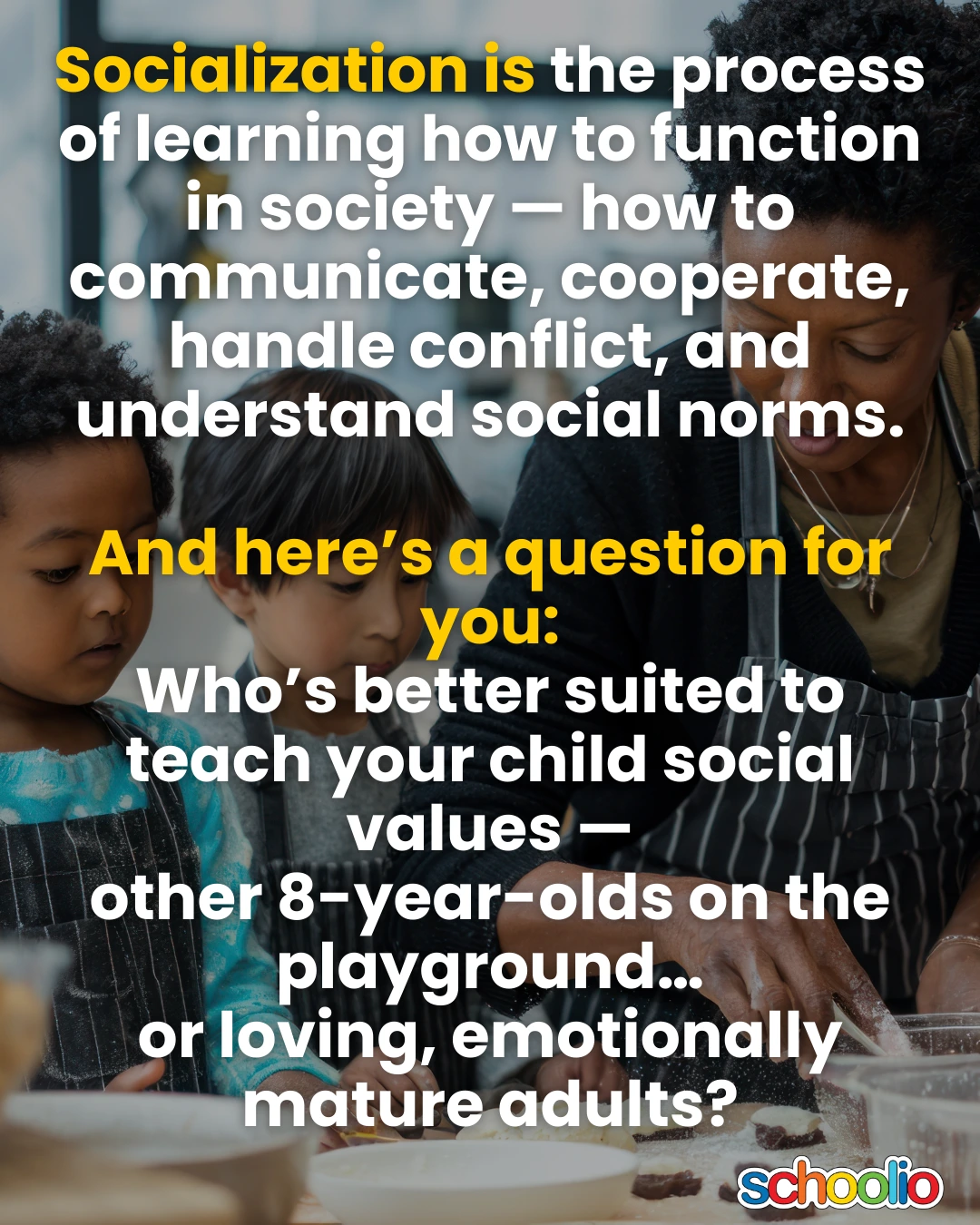
Socialization is the process of learning how to function in society — how to communicate, cooperate, handle conflict, and understand social norms.

And here’s a question for you:

Who’s better suited to teach your child social values —

other 8-year-olds on the playground…

or loving, emotionally mature adults?

When my child is at a homeschool event and has a conflict with a friend, they can come to me right away for support and coaching.

I help them understand the situation, plan a response, and reflect on how it went.

That means they’re learning social skills in real time, with guidance.

It’s not “helicopter parenting.” It’s real mentorship.

The result? Even very young homeschooled kids learn to resolve conflict with kindness and maturity.


? Homeschooled Teens Are (Surprise!) Really Cool

If you’ve ever had a full conversation with a homeschooled teen, you know what I mean.

They’re articulate.

Confident.

Curious.

Engaging.

Not sullen or withdrawn. Not afraid to talk to adults. Not obsessed with fitting in. Just… lovely humans.

No weird stereotypes. No Stepford vibes. Just kids who’ve had space to grow up at their own pace, in their own way.


? Public School Culture Is Not the Social Utopia People Think It Is

Yes, some kids enjoy the social side of school.

But many don’t — and for good reason.

Here’s what socialization looks like in most public schools:

  • Friend groups sorted by birth year only (not interest or personality)
  • Pressure to conform or risk bullying and isolation
  • Toxic norms that teach kids not to trust or confide in adults
  • A culture where “fitting in” > being yourself

Even kids who succeed socially often do so by constantly managing their behavior to meet those unwritten rules — and it’s exhausting.

We wonder why so many kids are anxious. But is it any surprise when the stakes of every interaction feel this high?


?‍♀️ “But School Prepares Them for the Real World…”

Here’s the thing:

Being trapped in a toxic environment with no way out is not “real world prep.”

Yes, adults deal with difficult coworkers. But as adults, we have:

  • Control over our environment
  • Emotional regulation
  • Resources
  • Options

Children don’t.

When a kid is being bullied at school, school is their entire world.

They often feel trapped, unsupported, and completely alone.

That’s not “character building.” That’s trauma.


✅ So Let’s Wrap It Up

Do my kids socialize? Yes. Joyfully, regularly, and with a diverse group of friends.

Are they socialized? Yes. In ways that are healthy, supported, and guided by loving adults.

And honestly?

They’re thriving — not despite homeschooling, but because of it.


Lindsey

Certified Special Ed Educator & Co-Founder, Schoolio

6 Reasons Why It’s Important To Encourage Multi-Age Play

Children are naturally curious and sociable beings. They love to explore, learn and play with others. As a parent, you want the best for your child; you want them to be happy, healthy, and well-adjusted. However, when it comes to playtime, parents may be hesitant to let their children play with kids of all ages. This is understandable for several reasons, one being that parents may want to ensure their children’s safety. However, there in fact several known benefits of encouraging children to play with peers of various ages. Encouraging your children to play with kids of all ages has a positive impact on their social emotional development. In this blog, we will discuss the 6 reasons why it’s important to encourage multi-age play.

It’s Important to Encourage Multi-Age Play; It Sets Children Up Both Personally and Professionally

Here Is A List Of Our 6 Reasons Why It’s Important To Encourage Multi-Age Play:

Playing Across Ages Builds Empathy and Understanding

When you follow these 6 reasons why it’s important to encourage multi-age play, you can help children learn to empathize with others and understand different perspectives. Playing with kids of all ages can help your child develop empathy. By interacting with others who are different from them, children learn to understand and appreciate different perspectives and experiences. This can help them become more compassionate and understanding individuals. Also, while playing with kids of all ages, children see their metaphorical journey reflected in the overall group. They see what lies ahead of them, as well as what they’ve already gone through. This helps build empathy for others, regardless for others, no matter their age or abilities.

6 reasons why it's important to encourage multi-age play

Inter-Age Play Develops Social Skills

Playing with peers of all ages can help develop important social skills. Younger children can learn how to communicate with older children, while older children can practice leadership and communication skills when playing with younger children. Children of different ages also have varying levels of physical and cognitive abilities, which can challenge children to adapt their play style and collaborate with their peers. Children are challenged to design games and cooperate in ways that meet a wider range of needs and skill levels. Younger children learn from older children’s experiences, and older children learn to be patient and nurturing toward their younger peers.

This interaction can foster a sense of community and belonging in children and create a more accepting and inclusive environment. Additionally, when children play with kids of different ages, they learn how to interact with others who have different needs, interests, and abilities. 6 reasons you should encourage multi-age play helps them develop important social skills such as communication, cooperation, empathy, and respect. Playing with older children can also expose younger children to more advanced language and social skills that they can learn from and develop.

6 reasons why it's important to encourage multi-age play

Cross-Age Play Encourages Creativity and Imagination

    When kids play with others of different ages, they are exposed to more diversity. This means that children of different needs, skills, and interests are included. This exposure encourages more complex conversations, problem-solving and critical thinking. Playing with peers of different ages can encourage children to use their imagination and creativity in new ways. When children play with peers of different ages, they are exposed to new perspectives, ideas, and experiences. This can inspire them to think differently and develop new, innovative ways of playing and problem-solving. Older children can introduce younger children to new games and activities that they may not have thought of before. While younger children can bring new perspectives and ideas to playtime. This interaction can inspire children to think outside of the box and explore their creative sides.

    6 reasons why it's important to encourage multi-age play

    Boosts Confidence and Self-Esteem

    Having meaningful interactions with kids of all ages can help boost a child’s confidence and self-esteem. Younger children look up to older role models and develop a sense of confidence from keeping up with older peers. Interacting with older children challenges younger children, which encourages them to push themselves to do better.  Therefore also encouraging younger children to scaffold their learning and challenge themselves in both their cognitive and physical development. Older children will feel pride and accomplishment when they teach younger children new skills. This skill transfer will help younger children to succeed in play. Similarly, younger children look up to older children. In this instance, they rely on them for guidance and support, which can make them feel important and valued. 

    Encouraging Multi-Age Play and Interaction Can Inspire Kids To Problem Solve And Create Innovative Ways To Play

    Promotes Positive Behavior

    When children play with kids of all ages they are exposed to a range of behaviours; helping them to learn what is acceptable and what is not. Older children can model positive behaviours and attitudes for younger children, who can then learn from these examples. 6 reasons why it’s important to encourage multi-age play can help to promote positive behaviour in your children. It can also discourage negative behaviours, such as bullying and exclusion.

    The presence of younger children allows older children the opportunity to learn about caregiving and leadership roles. This practice of caregiving can also lead older children to take responsibility for more vulnerable members of the group. Moreover, playing with kids of different ages can help your child build friendships with a much wider range of people. This can be especially helpful if your child has trouble making friends their own age. By playing with kids of different ages, they may find kindred spirits who share similar interests, values, or hobbies.

    6 reasons why it's important to encourage multi-age play

    Multi-Age Play Prepares Better Children for the Real World:

    Finally, 6 reasons why it’s important to encourage multi-age play can impact your child’s future. Playing with kids of all ages will help your child prepare for the real world. When playing and interacting with others of diverse ages, all children are able to experiment. In these groupings, children have space to take on various roles. They can experiment with hierarchies, power dynamics, leadership roles, and group rules in a way that reflects real life. In real life people of all ages interact with each other in a variety of contexts. Therefore, having the ability to communicate and collaborate with people of all ages is a valuable learning opportunity for children. They have the space to prepare for their future personal and professional life without adult consequences.

    6 reasons why it's important to encourage multi-age play

    6 Reasons Why It’s Important To Encourage Multi-Age Play; It Sets Children Up For Life

    In Conclusion;

    There are many benefits that can be seen from our 6 reasons why it’s important to encourage multi-age play.  Making space for children to play with peers of different ages has a positive impact on their socio-emotional development. In doing so, they develop important social skills, build self-confidence, foster creativity and imagination, encourage empathy, build friendships, foster confidence and self-esteem, promote positive behaviour and finally help to prepare them for the real world. 

    As parents, knowing that this type of mixed-age interaction is crucial for your child’s socio-emotional development; it is, therefore, essential for us to intentionally create opportunities for our children to interact with peers of all ages, whether it’s through playdates, community events, family gatherings or extracurricular activities. By doing so, we can help our children develop important socio-emotional skills that will benefit them throughout their whole lives and can help you to set them up for future personal and professional successes. So, the next time you’re arranging a playdate, consider inviting a child of a different age group and watch your child’s development soar!

    We hope you enjoyed reading about the 6 reasons why it’s important to encourage multi-age play. If you would like to read more helpful articles about child development or homeschooling please visit our Blog