I get this question a lot.
“Is there any good free homeschool curriculum out there?”
And the honest answer is: yes and no.
There are free worksheets. Free activity sites. Free videos and lessons and printables scattered all over the internet.
And yes, some of it is genuinely useful.
But here’s something I’ve come to believe after years of teaching and homeschooling:
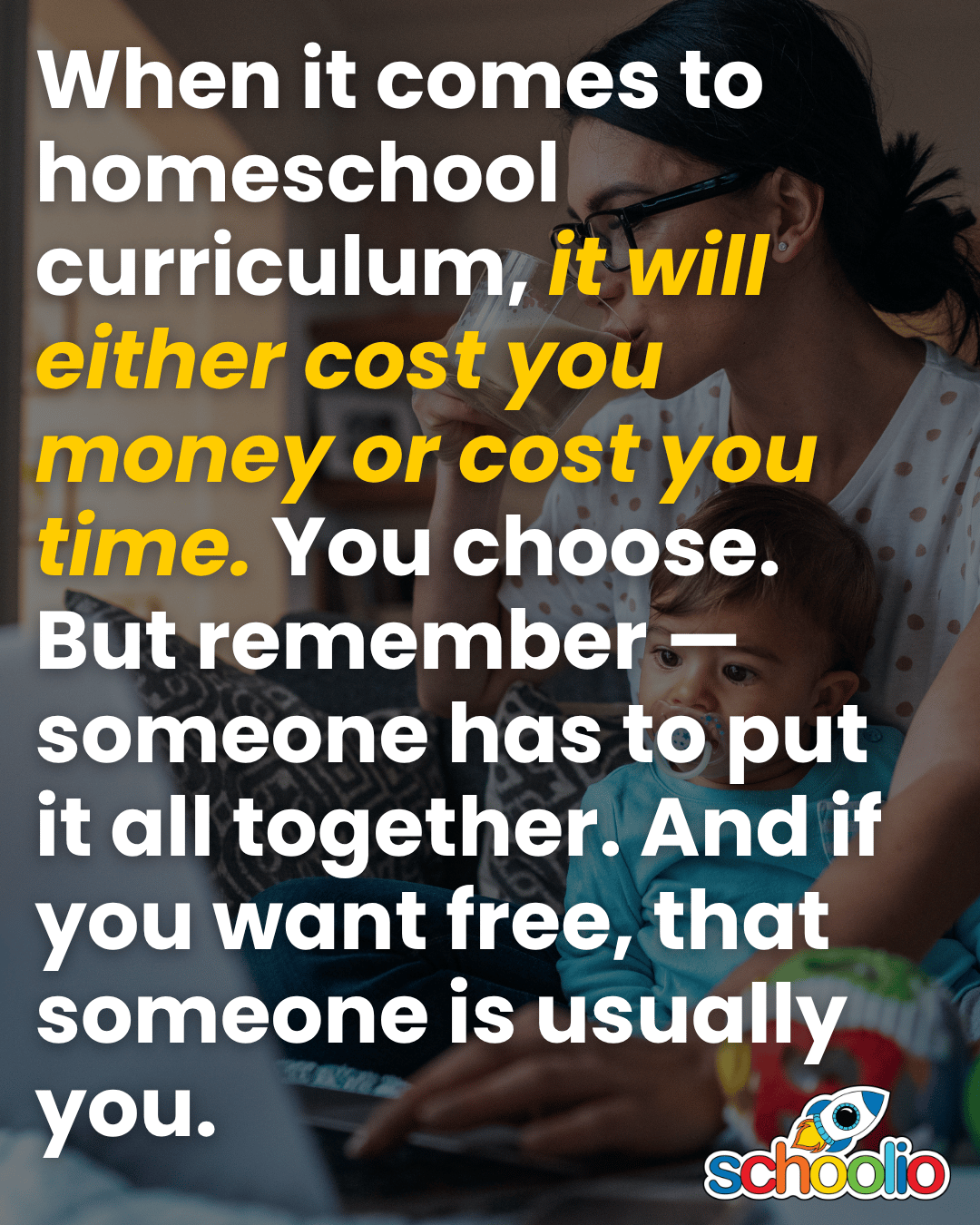
It will either cost you money or cost you time. You choose.
What “free” usually looks like in practice
Free curriculum is rarely complete. It’s rarely created by certified educators or professional curriculum designers. It’s rarely accredited or aligned to any recognized standard. What it usually is — is pieces.
A math worksheet here. A science activity there. A reading site someone recommended in a Facebook group. And someone has to assemble all of those pieces into something coherent, something progressive, something that actually adds up to an education.
That someone is you. If you have the time and the energy for that — genuinely, no judgment — it’s an option. But most parents who go that route find themselves spending hours every week planning, sourcing, and organizing. Hours that could have been spent actually learning with their kids.
For example, if you’re teaching Grade 3 math, you might find a great set of worksheets on fractions but struggle to find resources on multiplication. Or, you might find a wonderful science experiment on weather patterns but lack the follow-up materials to deepen the understanding. It’s like trying to build a puzzle without all the pieces.
Why does paid curriculum cost money?
I think it’s worth saying this out loud, because I don’t think it gets said enough. Curriculum companies — even small ones — have real people behind them. Certified teachers. Curriculum designers. Developers. Support staff. People who deserve to be paid fairly for their work.
A quality curriculum represents hundreds or thousands of hours of professional expertise, testing, and refinement. That costs money to build. And it costs money to maintain. When you pay for a curriculum, you’re not just buying a product. You’re paying for someone’s expertise so you don’t have to start from scratch.
Consider the difference it makes when teaching subjects like Grade 5 science or Grade 8 history, where having a structured, well-researched curriculum can save you hours of prep time and ensure your child is meeting educational standards.
What about “free” sites that aren’t really free?
Worth knowing: a lot of free educational content comes with strings attached. Advertising. Data collection. Sponsored content pushing specific products or agendas. Some free curricula are tied to specific religious, political, or ideological viewpoints — which may or may not align with your family’s values. Free isn’t always neutral.
Always worth asking: if this isn’t charging me, how is it paying its bills? For instance, a free math site might bombard your child with ads for unrelated products, or a free history resource might present a biased perspective on historical events. It’s crucial to vet these resources carefully to ensure they align with your educational goals and values.
How to make the most of free homeschool curriculum
If budget is genuinely a barrier, piecing together free resources is better than nothing. Start with one subject. Find something that works for your child. Build from there. For instance, you might begin with free online resources for Grade 4 English, focusing on reading comprehension and vocabulary, and gradually add more subjects as you find suitable materials.
But if you’re looking for something complete, professional, accredited, and actually designed to work — Look for a program that offers a free trial. That way you’re not paying for something sight unseen. You get to try it with your child, in your home, and decide if it’s the right fit before you commit.
That’s exactly what Schoolio offers. A real free trial — no strings, no pressure — so you can see for yourself.