Across North America, school boards and policymakers are rolling out a new silver bullet to fix the crumbling public education system: banning smartphones in the classroom. From state-wide mandates to individual district policies, the narrative is that removing devices will magically restore student focus, improve mental health, and elevate test scores. But this approach completely misses the point. Banning phones in schools is lazy leadership. It is a symptom of a much larger, systemic failure to adapt to the 21st century.
Smartphones are not the root cause of educational disengagement; they are the escape hatch. When a student is trapped in an archaic, one-size-fits-all classroom that forces them to sit passively for seven hours a day, listening to a lecture that has no relevance to their immediate world or future career, they check out. A device just happens to be the most convenient way to do so.
The Illusion of the “Good Old Days”
The push to ban phones is largely driven by a nostalgic desire to return to the “good old days” of education—a time when students allegedly stared raptly at the chalkboard and absorbed every word the teacher said. But those days never truly existed. Students have always found ways to check out of boring, uninspiring lessons. They passed notes, stared out windows, doodled in the margins of their notebooks, and daydreamed.
The difference today is that the alternative to the boring lecture is a supercomputer in their pocket that offers immediate access to the entire sum of human knowledge, connection to their peers, and highly engaging, algorithmically personalized content. When we ban the phone, we don’t suddenly make the outdated curriculum more interesting; we just remove the coping mechanism for the boredom.
Why Traditional Curriculum Fails the Modern Student
We are currently preparing Gen Z and Generation Alpha for a workforce that demands deep technological literacy, extreme adaptability, and autonomous problem-solving. Yet, we are doing so using an educational model designed during the Industrial Revolution to produce compliant factory workers. The traditional public school curriculum is heavily focused on rote memorization and standardized testing, ignoring the very real need for critical thinking, financial literacy, and technological fluency.
If a student can pull out their phone and find the answer to a teacher’s question in three seconds via Google or ChatGPT, the problem is not the phone. The problem is that we are still testing students on their ability to act as biological hard drives. As educational experts at Edutopia have pointed out, students—especially neurodivergent learners—require active, engaging, and relevant tasks to build true executive function.
“If your curriculum is so uninspiring that it cannot compete with a smartphone, the solution isn’t to ban the smartphone. The solution is to build a better, more engaging curriculum. Banning tools of the future to preserve methods of the past is educational malpractice.”
— Sathish Bala, CEO of Schoolio
Phones as Tools, Not Toys
In the real world—the world these students will enter the moment they graduate—smartphones and digital connectivity are absolute requirements. We do not ban phones in the modern workplace. Instead, we expect employees to learn how to manage their time, regulate their digital consumption, and use these devices as tools for productivity and collaboration.
By banning phones entirely, schools are missing a massive opportunity to teach digital citizenship and self-regulation. We are telling students, “You cannot be trusted to manage this technology,” rather than guiding them on how to use it responsibly. When we remove the scaffolding and the real-world application, we set them up for failure the moment they step off the graduation stage.
The Homeschooling and Microschool Alternative
This fundamental disconnect between what schools are teaching and what students actually need is a massive driver of the current homeschooling and microschooling boom. Parents are waking up to the fact that the traditional system is doubling down on obsolete methods.
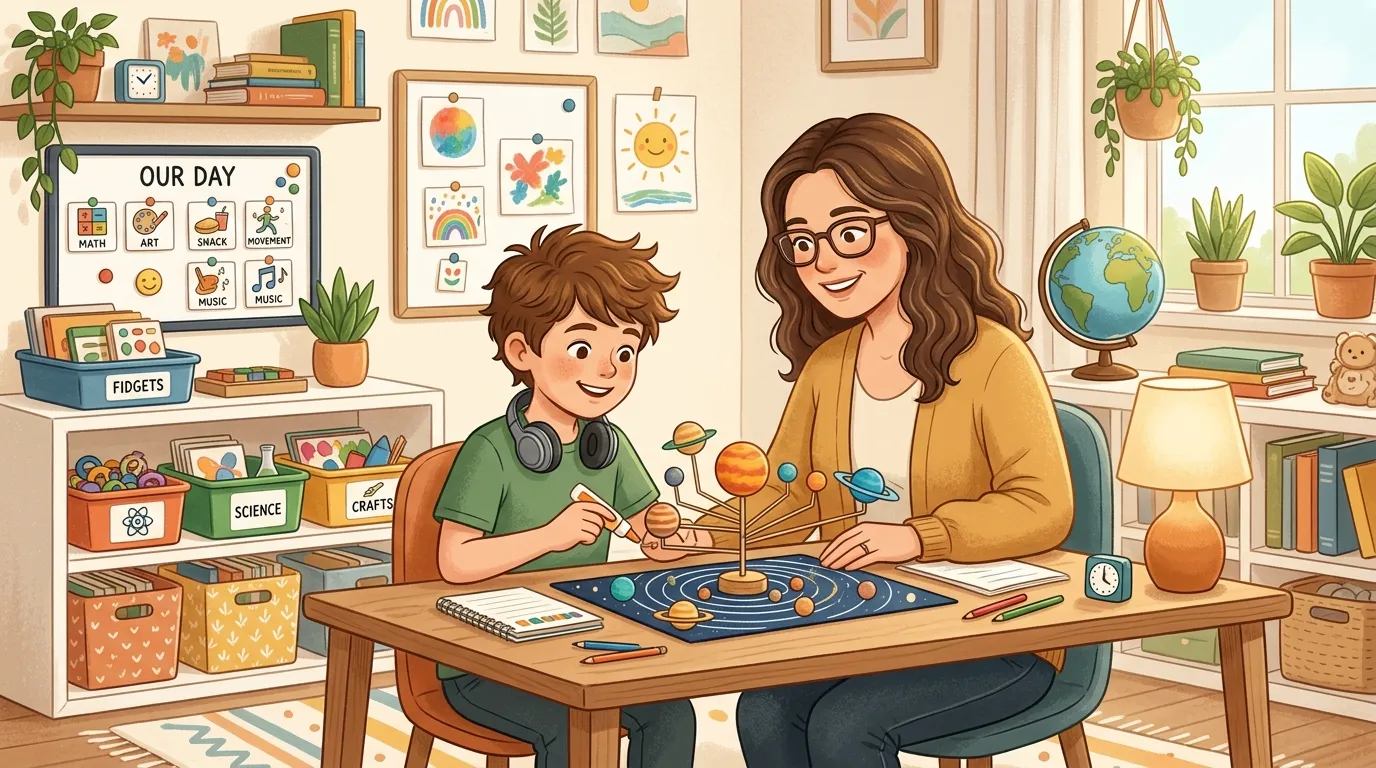
In a modern homeschool or microschool environment, technology is embraced as a core pillar of learning. Students use devices to conduct independent research, code software, edit videos, and collaborate with peers globally. If you are curious about how this model works in practice, explore our Academics programs to see how a flexible, modern curriculum integrates with a child’s natural curiosity rather than fighting against it.
When a child’s education is personalized, engaging, and tied to their actual interests, the “phone problem” largely disappears. A highly engaged student who is actively building a robotics project or writing a novel doesn’t need to scroll social media to escape their reality because their reality is deeply fulfilling.
Real Leadership Requires Real Change
Real leadership in education requires looking critically at the system itself. It requires asking the hard questions: Why are our students so desperate to escape the classroom? Why are our teachers burning out? Why are we still using 19th-century methods to teach 21st-century children?
Banning phones is a political band-aid. It gives the illusion of action while preserving the broken status quo. If we want to truly engage our students, we must overhaul the curriculum, embrace technological tools, and respect the autonomy of the learner. For parents who are tired of waiting for the system to catch up, the power to change your child’s education is already in your hands. You can review our Pricing Plans and discover how affordable and transformative an open-and-go, modern education can be.