Parents Do Not Choose Homeschooling for Novelty

Parents Do Not Choose Homeschooling for Novelty


This has been on my mind today…


I read about one of Afghanistan’s most iconic girls’ schools being turned into an empty shell. Classrooms that once held ambition and possibility now sit silent. Not because girls stopped wanting to learn. But because power decided who gets access to education and who does not.

What stayed with me was how fragile education really is. We like to believe progress always moves forward, but history keeps proving otherwise. When systems fail or fear takes over, learning is often the first thing taken away.

It reminded me that schooling and learning are not the same thing. Schools can close. Buildings can be taken. But the desire to learn lives inside people. When doors shut, that desire looks for another way in.

This is something homeschooling families understand deeply. Learning can happen anywhere. Around a kitchen table. Through conversation. Through curiosity. Through care. Homeschooling is not about opting out. It is often about protecting a child’s right to grow when the system cannot or will not support them.

At Schoolio, we work with families who did not choose an alternative path for novelty. They chose it for safety, dignity, and confidence. Children pushed out or worn down by systems that could not see them. Parents trying to hold onto their child’s love of learning.

Education poverty is not just about access to schools. It is about access to dignity and possibility. When a child is denied the right to learn freely, the damage goes far beyond missed lessons.

This story was a reminder of why flexible, resilient learning matters. Learning that travels with the child. Learning that adapts. Learning that cannot be shut down by a single decision.

Learning your way is not a luxury. For many families, it is survival. And protecting that right is work worth doing.


Sathish

still learning, still unlearning


Why Your ADHD Child Can’t Sit Still- What is Vestibular Input?

Why Your ADHD Child Can’t Sit Still- What is Vestibular Input?


If you have an ADHD child, you’ve probably said one of these phrases at least once (or, let’s be honest, many times):
“Sit properly, please.”
“Feet down.”
“Stop spinning that chair.”


“Why are you upside down right now?”

And yet, no matter how many times you say it… they just can’t seem to stop.

It’s easy to see this as misbehavior or lack of focus. But in reality, what you’re seeing might be something deeper — your child’s nervous system doing its best to get the vestibular input it needs to feel regulated, alert, and ready to learn.

vestibular input

What Is Vestibular Input?

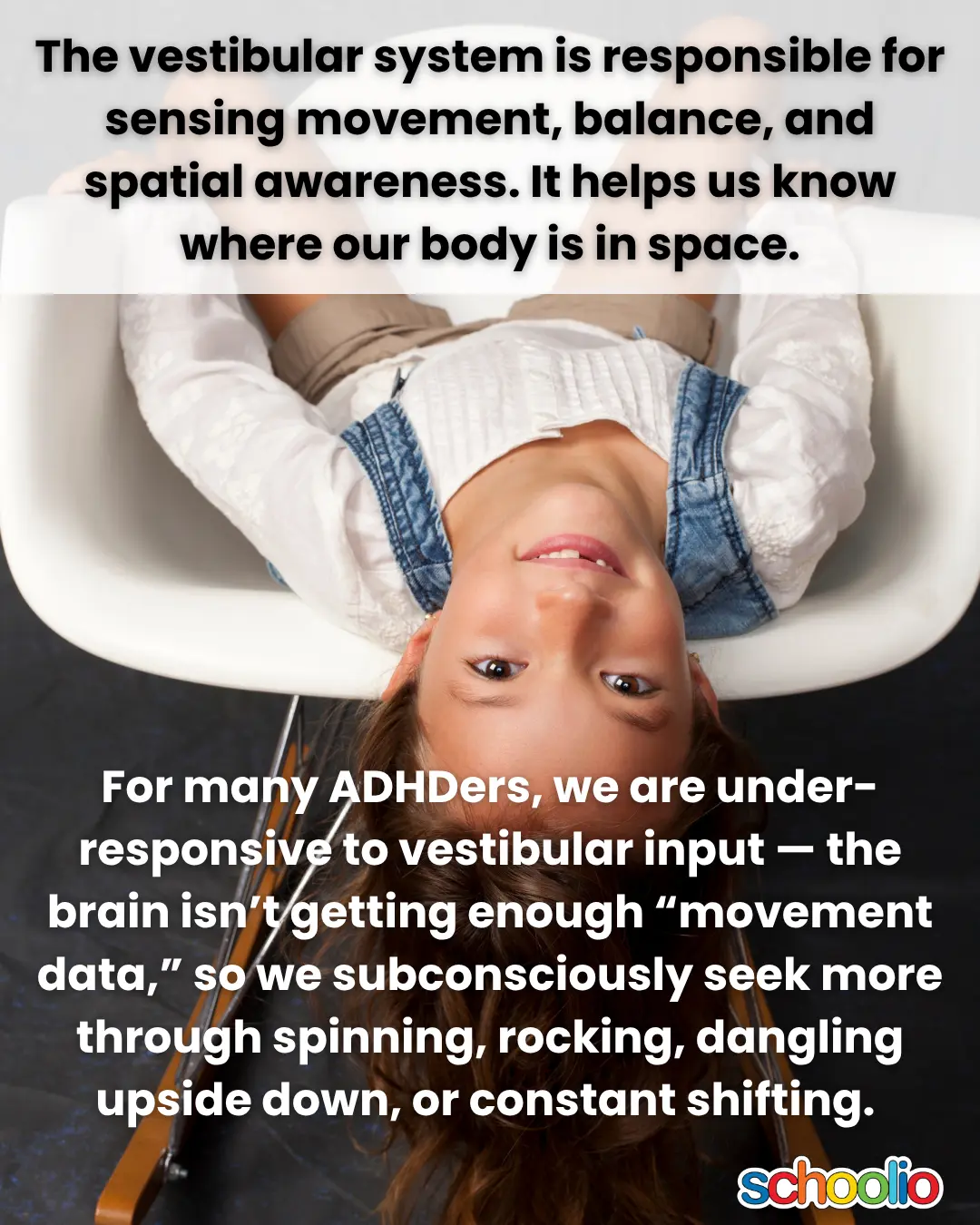
The vestibular system lives in the inner ear, and it’s responsible for sensing movement, balance, and spatial awareness. It helps us know where our body is in space — like whether we’re sitting upright, moving fast, or tilting our head.

For neurotypical people, this system runs quietly in the background, keeping them centered. But for many ADHDers, it doesn’t process quite the same way.

Some ADHD kids are under-responsive to vestibular input — their brain isn’t getting enough “movement data,” so they subconsciously seek more through spinning, rocking, dangling upside down, or constant shifting. Others may be over-responsive, finding certain motions overwhelming or dizzying.

Both patterns are common — and both are the body’s way of saying, “I need help regulating.”

? Science Note: The Vestibular–Dopamine Connection

The vestibular system doesn’t work alone — it’s closely tied to the dopamine pathways in the brain that control motivation, focus, and emotional regulation.

When your child moves — spinning, jumping, rocking — those physical sensations activate parts of the brainstem and cerebellum that help regulate dopamine and norepinephrine, both of which are often low in ADHD brains.

That’s why movement helps ADHD kids “wake up” their brains:

  • It boosts alertness and attention.
  • It improves emotional regulation.
  • It supports executive function — planning, memory, and self-control.

So when your child is fidgeting or in constant motion, they’re not being disruptive — they’re literally helping their brain function better.


What “Dopamine Seeking” Looks Like in the Body

We often talk about ADHD as dopamine-driven, but the vestibular system plays a huge role, too. Movement actually helps stimulate dopamine release — which is why your ADHD child may suddenly start pacing, swinging their legs, or balancing on the edge of a chair right when you need them to concentrate.

These “weird” positions aren’t defiance. They’re your child’s nervous system self-medicating through movement.

They might:

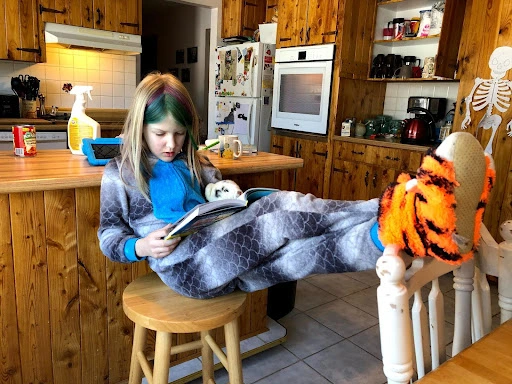
  • Sit with one leg over the arm of a chair
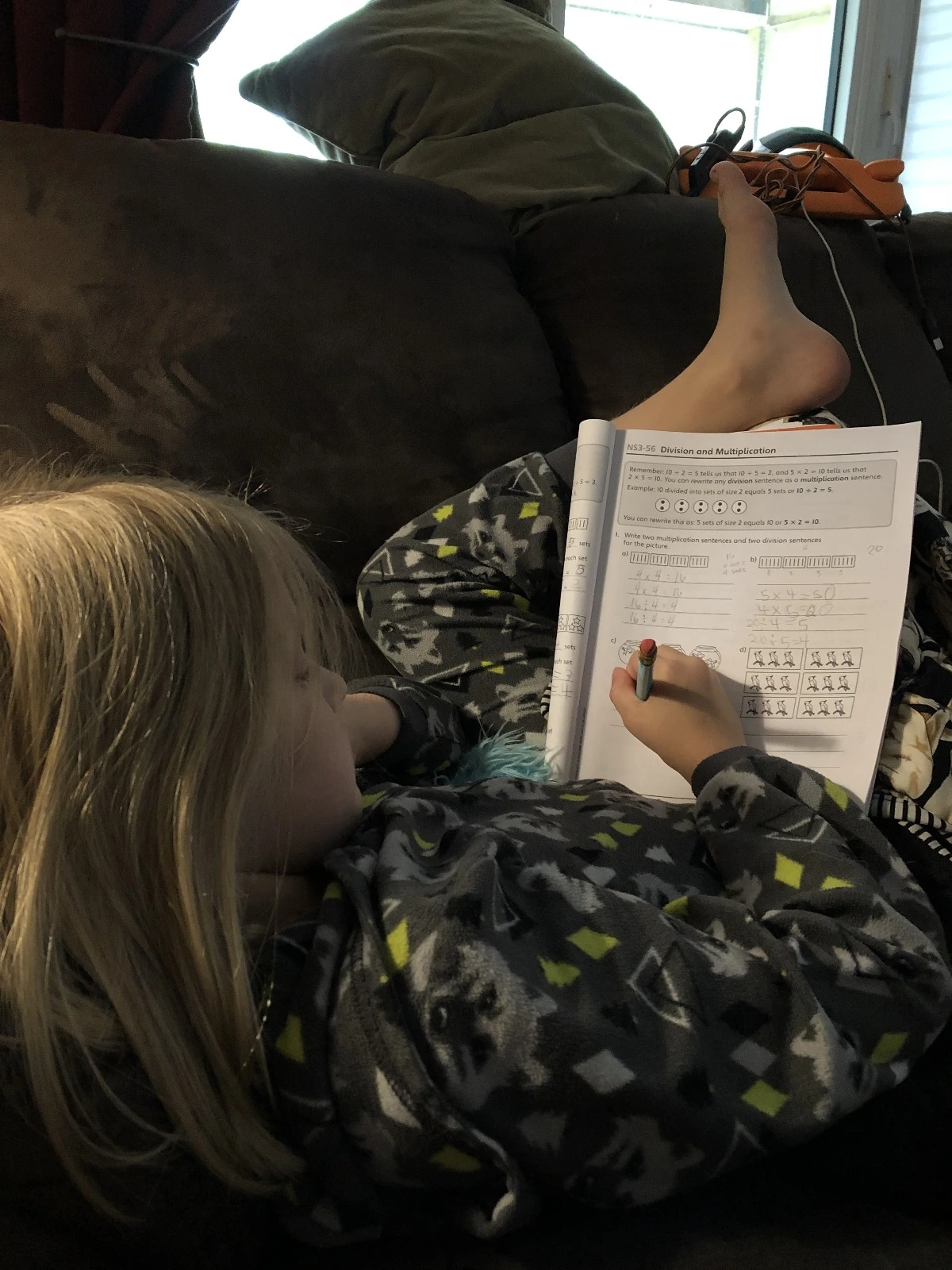
  • Hang off the couch upside down
  • Constantly rock, bounce, or sway
  • Spin in circles for “fun” (and never seem dizzy)
  • Climb furniture or balance on unstable surfaces

It can look chaotic — but for them, it’s regulating.


What It Feels Like for ADHD Kids

For a child whose vestibular system isn’t getting enough input, sitting still can feel physically uncomfortable — like trying to focus with an itch you can’t scratch. Their brain is searching for balance signals, and until it gets them, it’s hard to settle down.

You might see:

  • Fidgeting during reading or lessons
  • Difficulty maintaining posture
  • Restlessness or frustration during quiet tasks
  • Frequent “breaks” to move or reposition

The movement isn’t the problem — it’s the coping mechanism for an unmet sensory need.

How This Impacts Learning

When a child’s body is unregulated, their brain can’t prioritize learning. The vestibular system connects directly to areas of the brain that control attention, emotion regulation, and executive function — meaning movement needs aren’t separate from learning needs.

So when your ADHD child spins in their chair, lies on the floor to do math, or wiggles constantly through read-alouds… that’s not distraction. It’s adaptation.

Supporting Your Child’s Vestibular Needs at Home

Instead of trying to eliminate movement, think about channeling it. Here are some strategies to support vestibular regulation in your homeschool:

1. Build Movement Into the Day

  • Use active learning breaks between subjects.
  • Try standing desks, wobble stools, or yoga balls.
  • Let your child read or write while pacing, swinging, or lying down.activity

2. Offer “Heavy Work”

Proprioceptive input (like pushing, pulling, or lifting) helps calm the vestibular system. Try:

  • Carrying laundry or groceries
  • Wall push-ups or wheelbarrow walks
  • Building with weighted materials like LEGO or clay

3. Use Safe Spinning or Swinging

If your child seeks spinning, consider safe options like:

  • Swivel chairs
  • Therapy swings
  • Hanging pods or hammocks

4. Respect Their Positions

If your child learns best while lying on the floor or sitting cross-legged on a chair, that’s okay. Focus on engagement, not posture.

5. Schedule Movement Intentionally

Start the day with movement-rich activities: walking the dog, dancing, yoga, or playground time. Meeting those vestibular needs early can make focused work easier later.

The Homeschooling Advantage

Traditional classrooms often punish movement — “sit still,” “stop rocking,” “stay in your seat.” But at home, you have the flexibility to do the opposite: to embrace movement as part of learning.

When you let your ADHD child learn in the way their body needs — rocking, fidgeting, or balancing — you’re not giving in to bad habits. You’re helping their nervous system regulate so their brain can focus, absorb, and thrive.

Movement isn’t a distraction. For ADHDers, movement is medicine.

“Effects of stochastic vestibular stimulation on cognitive functions in children with ADHD” — PMC article discussing vestibular stimulation and cognition for ADHD. https://pmc.ncbi.nlm.nih.gov/articles/PMC10635964


“Vestibular Rehabilitation for ADHD” — article from Neurologic Wellness Institute referencing the regulation of dopamine via vestibular input. https://neurologicwellnessinstitute.com/vestibular-rehabilitation-for-adhd/


“Vestibular therapy improved motor planning, attention, and balance in children with Attention-Deficit Hyperactivity Disorders – A RCT” — study showing improved attention and response control following vestibular intervention in children with ADHD. https://www.oatext.com/vestibular-therapy-improved-motor-planning-attention-and-balance-in-children-with-attention-deficit-hyperactivity-disorders-a-randomized-controlled-trial.php


“Not Educable”? Or Just Not Understood?

“Not Educable”? Or Just Not Understood?


This has been on my mind today…


I was in a private “teachers only” Facebook group recently — don’t ask me how I got in ? — and one comment stopped me cold.

“Some of these kids just aren’t educable.”

It triggered me. Deeply.

Because I’ve been that kid.

Because I’ve raised a child labeled “lazy” for not learning the way others expected.

Because I’ve built a company, Schoolio, for the very kids traditional systems are too quick to write off.

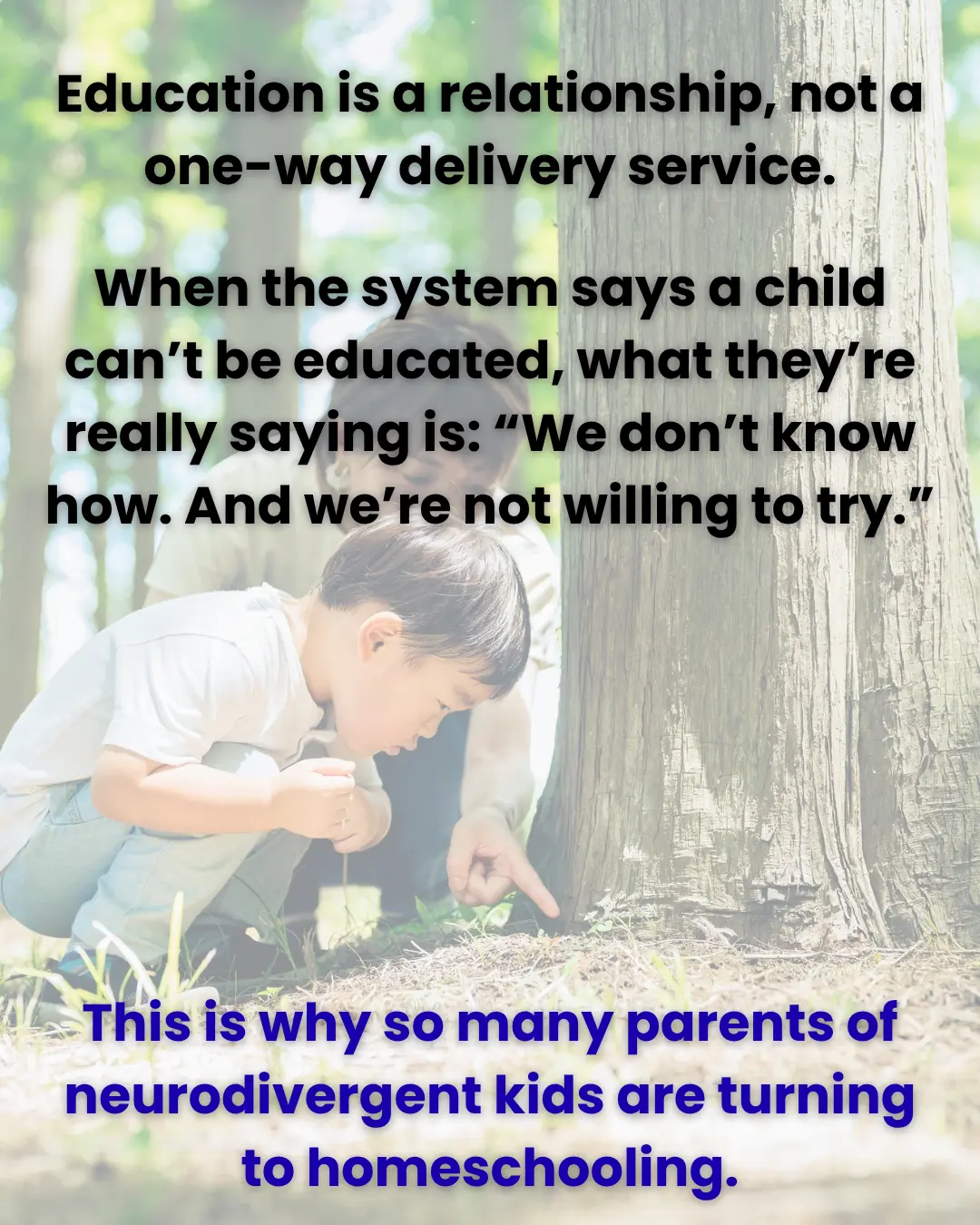
When a teacher — someone trained to unlock potential — says a child can’t be educated, what they’re really saying is: “I don’t know how. And I’m not willing to try.” But no child is uneducable. Some are misunderstood.

Some are neurodivergent.

Some are traumatized.

Some are learning in a way you weren’t trained to see.

Education is a relationship, not a one-way delivery service. It’s not just about curriculum — it’s about care, creativity, and compassion.

What we can’t do is confuse a system’s failure with a child’s inability. The system was never designed to serve every child — especially those who learn differently.

And that’s why Schoolio exists.

We don’t believe in “bad kids.”

We believe in bad assumptions, outdated frameworks, and a desperate need for empathy in education. Because when you tell a child they’re uneducable, you’re not describing them — you’re indicting yourself.

So the next time a student struggles… pause.

Ask what’s missing.

Ask how you can adapt.

Ask what support might unlock their potential.

Because learning isn’t a light switch. It’s a spark. You just have to be willing to see it.


Sathish
Still learning, still unlearning


The Real Scorecard Isn’t Grades — It’s Humanity

The Real Scorecard Isn’t Grades — It’s Humanity


This has been on my mind today…

My daughter is starting college. A new lifestyle. A new rhythm. A new version of independence. And as I watch her step into it with grace, confidence, and heart, I find myself reflecting—not just on her growth, but on mine as a parent.

In the early years, I thought my role was to prepare her academically. Get her ready for the tests. The projects. The milestones. The classic definition of “success.” But somewhere along the way, that definition shifted.

Because life had other plans.

Because she had questions school didn’t answer.

Because I realized my real job was never about the grades. It was about something bigger.

We tried to raise a daughter who could walk into any room, look people in the eye, and see them—not for their titles or their background, but for their shared humanity. We talked about what it means to be kind when no one’s watching. To question with curiosity, not criticism. To love first, even when the world makes it hard.

We didn’t always get it right. I came from a childhood where discipline meant violence. Where falling behind in school wasn’t a symptom of struggle, but a sign of laziness that had to be “beaten out” of you. That trauma doesn’t just disappear—it echoes. And it took years to unlearn.

But we knew we had to break the cycle. We didn’t ground our kids. We didn’t reach for fear as our first parenting tool. We took away iPads. We paused and talked. We treated mistakes as data, not disgrace. Because the world they’re inheriting is complicated enough without adding guilt and shame to the mix.

Whether you homeschool, send your child to public school, or choose a private path—it doesn’t really matter. What matters is how you’re preparing them for the world outside the classroom. Because it’s moving fast. It’s emotionally volatile. And it’s filled with both beauty and brokenness.

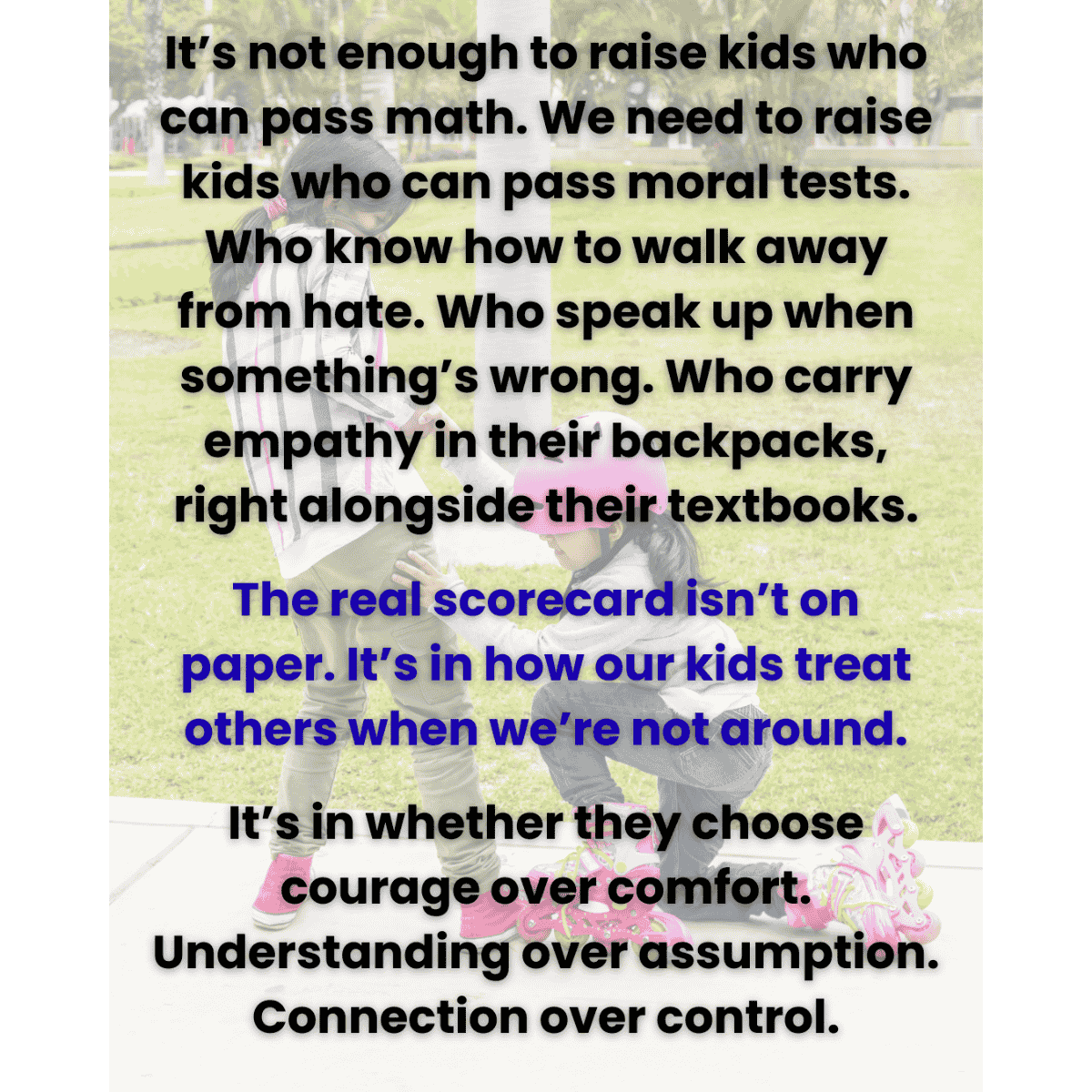
It’s not enough to raise kids who can pass math. We need to raise kids who can pass moral tests. Who know how to walk away from hate. Who speak up when something’s wrong. Who carry empathy in their backpacks, right alongside their textbooks.

The real scorecard isn’t on paper. It’s in how our kids treat others when we’re not around.

It’s in whether they choose courage over comfort. Understanding over assumption. Connection over control.

And those values? They’re not taught once. They’re modeled over time.

That’s why this company—Schoolio—is a personal mission for me. It’s why we build tools and content that don’t just cover curriculum, but embrace character. I don’t believe learning should be weaponized or used to judge. I believe it’s a lifelong, imperfect, beautiful process. A work in progress, just like all of us.

This week, I’m not just sending my daughter to college. I’m celebrating a milestone that started long before the acceptance letter. I’m watching her walk out into the world with her own voice. And I’m quietly reminding myself: That’s the legacy that matters.

—Sathish

still learning, still unlearning

When Science Turned Into a Betta Fish

When Science Turned Into a Betta Fish


By Lindsey Casselman, special-ed teacher & homeschooling mom


One of the things I love most about homeschooling is how easily learning can connect to real life. Sometimes the best projects don’t come from a curriculum guide — they come from your child’s heart.

When my daughter was seven, she desperately wanted a Betta fish. Like many parents, my first instinct was to say, “That’s a lot of responsibility — are you sure you’re ready for that?” But instead of just saying no, I turned it into an opportunity for learning.

We made it her science project. She had to create the classic tri-board presentation — research, write, and present — all about Betta fish. She learned where they live in the wild, what they eat, how to set up the right tank environment, and common mistakes people make in caring for them. But the project didn’t stop at facts. She also had to make the case for why she was ready to take care of one.

I’ll never forget watching her stand in front of that board, confidently explaining filtration systems, water temperatures, and feeding schedules. This wasn’t just a science lesson anymore. It was research skills. Public speaking. Persuasive writing. Responsibility.

And it was driven entirely by her motivation. Because she wanted that fish, she owned the project. She went deeper than she would have if I had assigned “Chapter 3: Aquatic Life.” She wasn’t just doing school — she was preparing for real life.

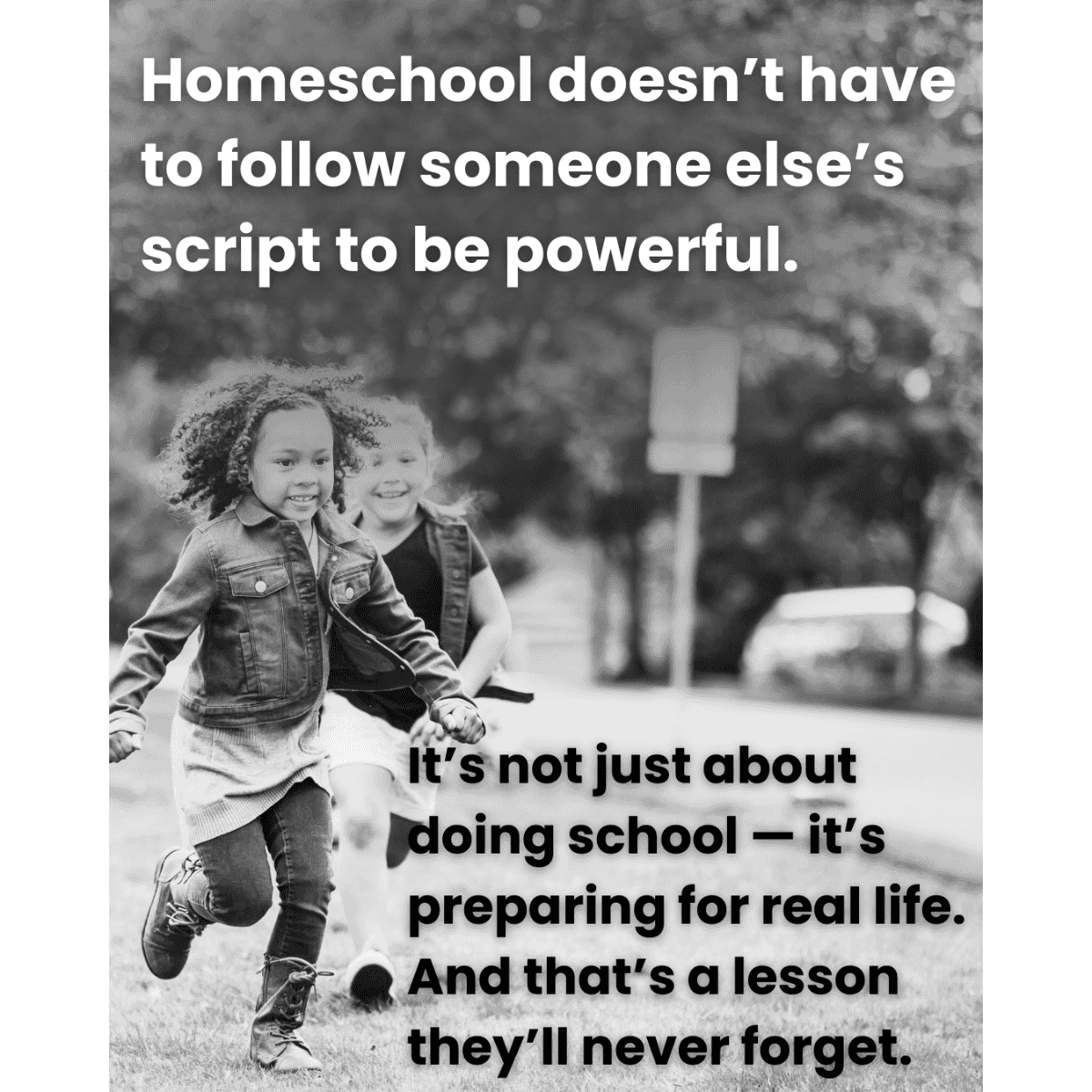
In the end, she did get her Betta fish. But honestly, the project itself was the real win. She learned that with research and preparation, she could rise to a challenge. And I learned (again) that homeschool doesn’t have to follow someone else’s script to be powerful.

And apparently, I also set a precedent in our house without realizing it. Fast forward a few years, and Grace — now 13 — wanted a new pet. Out of nowhere, I found myself sitting on the couch watching a full PowerPoint presentation on why she should be allowed to get a snake. I hadn’t asked for it, and I hadn’t suggested it. She just knew she needed to convince me in a smart and prepared way.

So fair warning: this approach works beautifully for learning… but it may also get you into more pets than you imagined! ?

? Lindsey

Certified Special-Ed Educator & Co-Founder, Schoolio

When My Daughter Hyperfocused on Dragons, This Is What I Did

When My Daughter Hyperfocused on Dragons, This Is What I Did

by Lindsey Casselman

From the moment I introduced 8-year-old Grace to the How to Train Your Dragon universe, she become OBSESSED with dragons. This wasn’t just an interest in the movies, it was a full-blown SPIN (special interest).

Dragons. Morning to night. Drawing them. Reading about them. Talking about them. Playing with the toys. Watching the movies. Wearing her dragon costume and sleeping with her dragon stuffies.

But dragons are not real, and not on the list of things to study in our homeschool. We were supposed to be learning about physical geography in Social Studies at that time, and frankly, no one was very excited about it.

Riveting stuff like landforms and regions of North America: plains vs. mountains, the Arctic vs. the Maritimes. The Schoolio course had an ongoing activity throughout where we were creating a booklet as we went through each region, one at a time. Learn the geography. Record the land features, water sources, vegetation, and animals for each.

She had zero interest.

To be honest? Neither did I.

But I’ve been at this long enough to know when it’s time to toss the plan and follow the spark instead. So one day, after reading the lesson to her aloud, I looked at her and said:

“What kind of dragon would live here?”

That was all it took.

Every lesson from that point on was golden. For each region, she studied the environment and designed a dragon that could survive there — down to the smallest detail.

The plains dragon was a dusty yellow and burrowed in wheat fields. It lived in underground dens and hunted at dusk, camouflaging in the tall grasses.

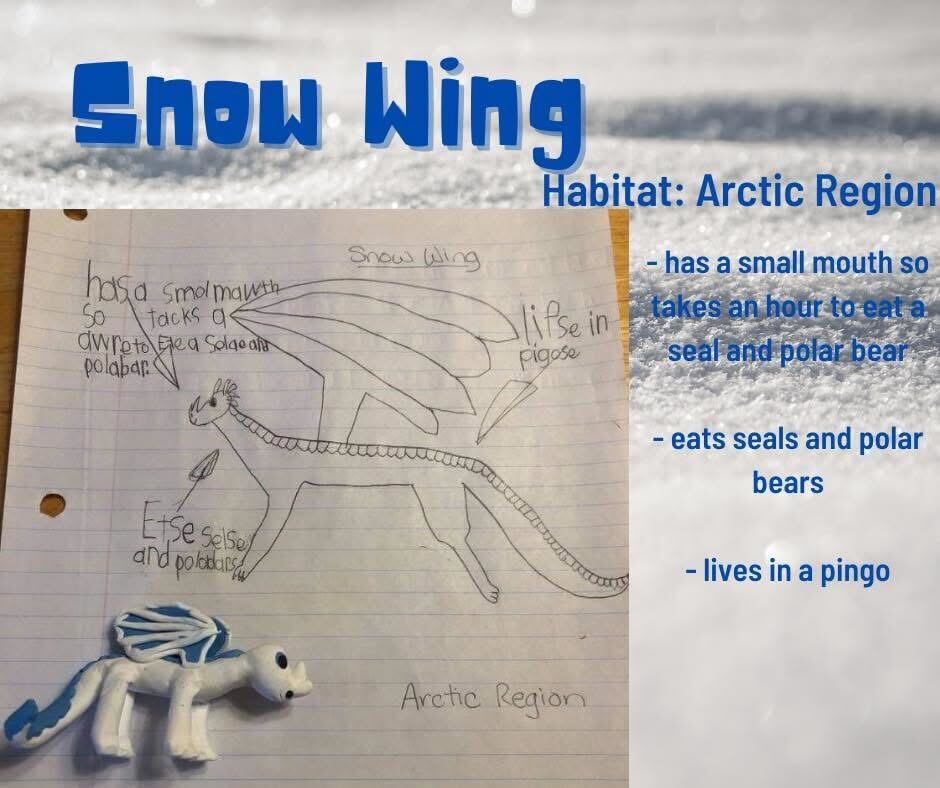
The Arctic dragon was brilliant white, blending into the snow and ice. It was slow-moving, conserving energy in the cold, and had thick scales to withstand frigid temperatures.

Snow wing
Snow Wing Dragon

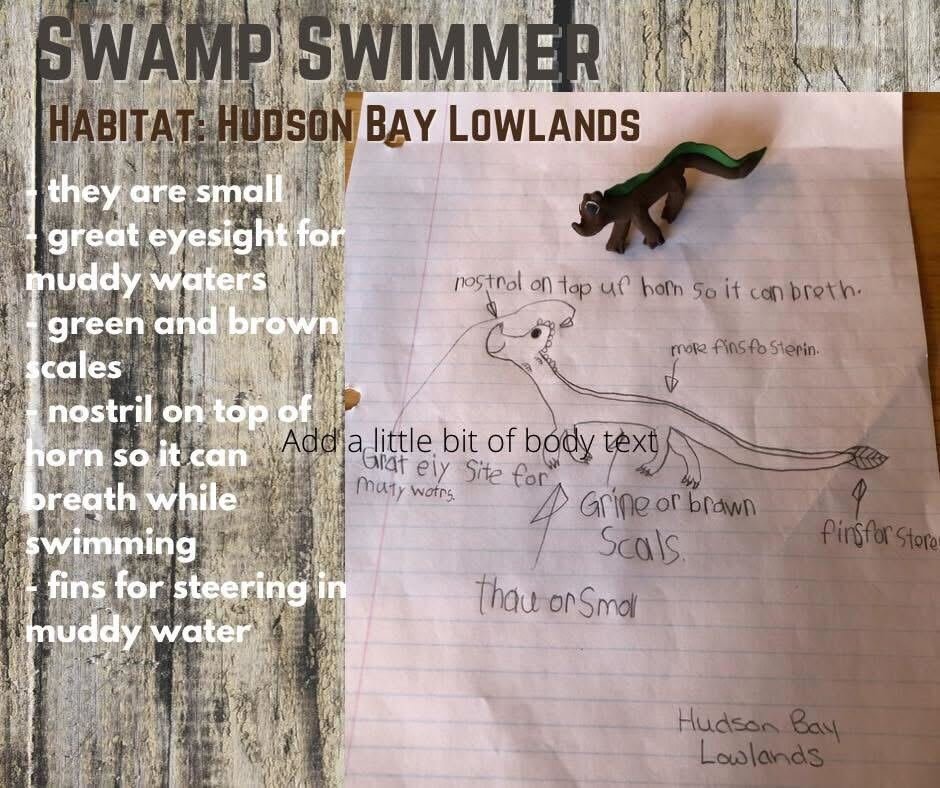
The Maritime dragon? A shimmering blue sea serpent, waterbound and fast, feeding on fish and crustaceans, curled up in coastal caves during storms.

Swamp Swimmer
Swamp Swimmer Dragon

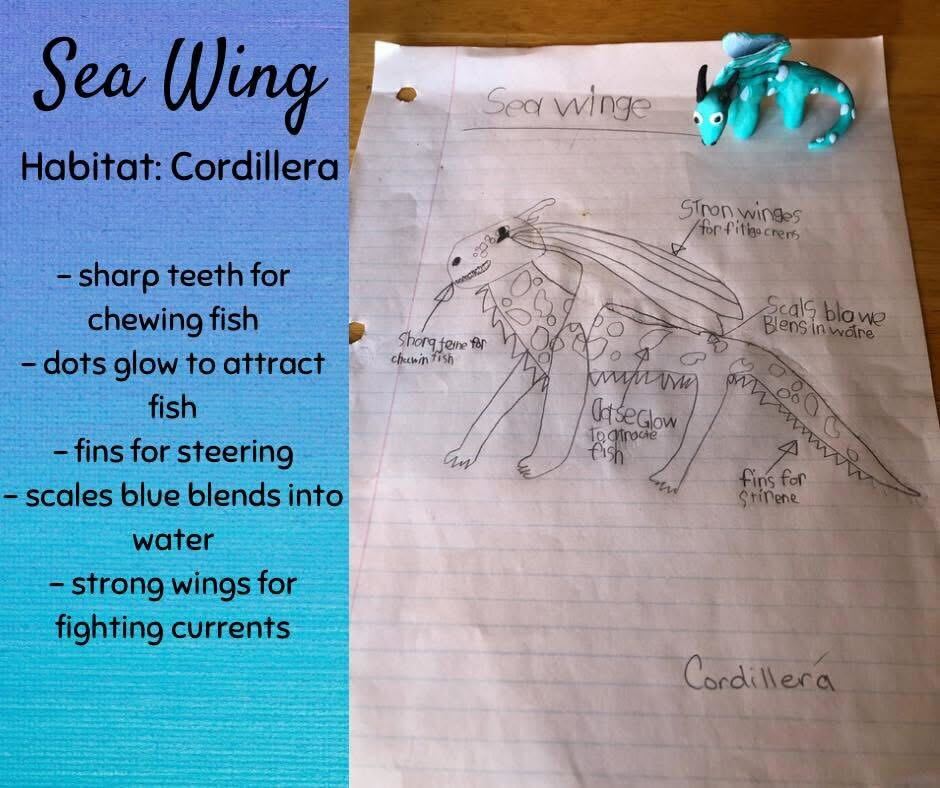
The mountain dragon was stone-grey and jagged, with thick claws that helped it cling to steep cliffs. She told me it would “echo-roar” through the valleys when it was angry.

Sea Wing
Sea Wing Dragon

She even brought out the clay and sculpted each of them — every single one. We had an entire dragon ecosystem on our homeschool table by the end of the week.

And she remembered everything.

Not just the dragons — the geography. The climate. The vegetation. The animals. The features of each region. It stuck.

Because when learning is connected to something meaningful — even something mythical — it matters. It lands. It lives in their brains and bodies in a way a worksheet never could.

We didn’t abandon the curriculum. We just used it differently. And isn’t that the whole point of homeschooling?

To follow the spark. To shift when something’s not working. To take a kid’s hyperfocus and say, “Yeah, let’s go there.”

Dragons and all.

? Lindsey

certified special-ed educator & co-founder, Schoolio

Building Stronger Parent-Child Connections Through Digital Learning

Building Stronger Parent-Child Connections Through Digital Learning

Building stronger parent-child connections through digital learning

In an age of rapid technological advancements, digital learning has emerged as a transformative educational force. It not only offers a host of educational benefits but also presents unique opportunities for building stronger parent-child connections. In this blog, we will explore the possibilities for building stronger parent-child connections through digital learning and how Schoolio Digital, a cutting-edge educational platform, can help you effectively harness these benefits.

The Digital Learning Revolution

The shift towards digital learning is undeniable. From online classes to interactive educational apps, technology has opened up a world of opportunities for students. Schoolio Digital has emerged as a standout platform in this dynamic environment, providing a comprehensive educational experience for students of all ages.

However, the most intriguing aspect of Schoolio Digital is not just its efficacy in delivering quality education. It also serves as a powerful tool for building stronger parent-child connections, bridging the generation gap, and creating shared experiences that can be cherished for years.

Digital Learning: Strengthening the Parent-Child Bond

Digital learning is a catalyst for enhancing parent-child relationships in various ways. Here are some of the key benefits it brings:

Collaborative Learning:

With digital learning, parents can actively participate in their child’s education journey. By engaging with the curriculum and monitoring their progress, parents convey the message that learning is a shared endeavor, creating a stronger connection.

Shared Learning Experiences:

Digital platforms like Schoolio Digital provide many interactive resources, from virtual kids’ clubs to lesson videos and assessments. These resources enable parents and children to explore subjects together, fostering shared learning experiences beyond the classroom.

Flexible Scheduling:

Digital learning

Digital learning offers flexibility in scheduling, allowing parents to spend more quality time with their children. This adaptability helps alleviate stress and promotes focused, relaxed interactions, contributing to a more harmonious parent-child relationship.

Empowering Parents as Learning Guides:

Schoolio Digital simplifies the learning process, making it accessible for everyone. With instructional materials and straightforward guidelines, parents can confidently take on the role of learning guides, enhancing their child’s educational journey.

Monitoring Progress and Growth:

Learning Progress

Digital learning platforms offer progress-tracking features, enabling parents to closely monitor their child’s learning development. This informs parents about their child’s academic performance and provides opportunities to celebrate achievements together.

Now That We Know the Benefits Let’s Talk About Building Stronger Parent-Child Connections Through Digital Learning:

Now, let’s explore how Schoolio Digital can catalyze building stronger parent-child connections:

Real-Time Progress Monitoring:

Schoolio Digital provides real-time insights into your child’s academic progress. Parents can track assignments, assessments, and grades, enabling them to have informed conversations with their child about their learning journey.

Interactive Learning:

Interactive lessons

Schoolio Digital’s interactive resources, including multimedia content and engaging assignments, facilitate a dynamic learning experience. Parents can actively participate in discussions and activities, strengthening their connection with their children.

Personalized Learning:

The platform allows for personalized learning plans tailored to your child’s pace and style of learning. This adaptability ensures that learning remains an enjoyable experience, fostering a positive attitude towards education.

Parental Engagement Resources:

Schoolio Digital provides resources and guidance designed for parents via the Schoolio Community. These resources can offer valuable tips on actively participating in your child’s education and building a stronger bond through the digital learning experience.

Incorporating Digital Learning for Happier Learning Results.

You won’t want to miss out on this opportunity to transform your family’s educational experience with Schoolio Digital. The benefits of digital learning are enormous, and Schoolio Digital is here to make it a reality for you and your child.

Unlock the power of digital learning and foster stronger parent-child connections that will last a lifetime. Click the button below to join Schoolio Digital and participate in this incredible transformation.