When Kids Solve Real Problems, Something Shifts

When Kids Solve Real Problems, Something Shifts


This has been on my mind today…

When kids solve real problems, something shifts.

Not on a report card.

Not in a percentage.

In themselves.

When they fix something broken.

When they build something useful.

When they grow something and watch it thrive.

They begin to believe they can solve bigger problems.

They start to see themselves as capable.

And that belief is not graded. It is felt.

I think this is where many kids quietly disconnect from school.

Not because they are lazy.

Not because they are incapable.

But because so much of what they are asked to do feels disconnected from their living reality.

Pages of theory.

Lessons without context.

Concepts without application.

When learning does not connect to life, it starts to feel performative. Do this to get the mark. Memorize this to pass the test. Complete this because it is assigned.

But this generation is different.

More than ever, they want to know why first.

Why are we learning this?

Where does this show up in the real world?

How does this matter?

If that question is not answered, attention drifts. Motivation fades. Learning becomes compliance instead of curiosity.

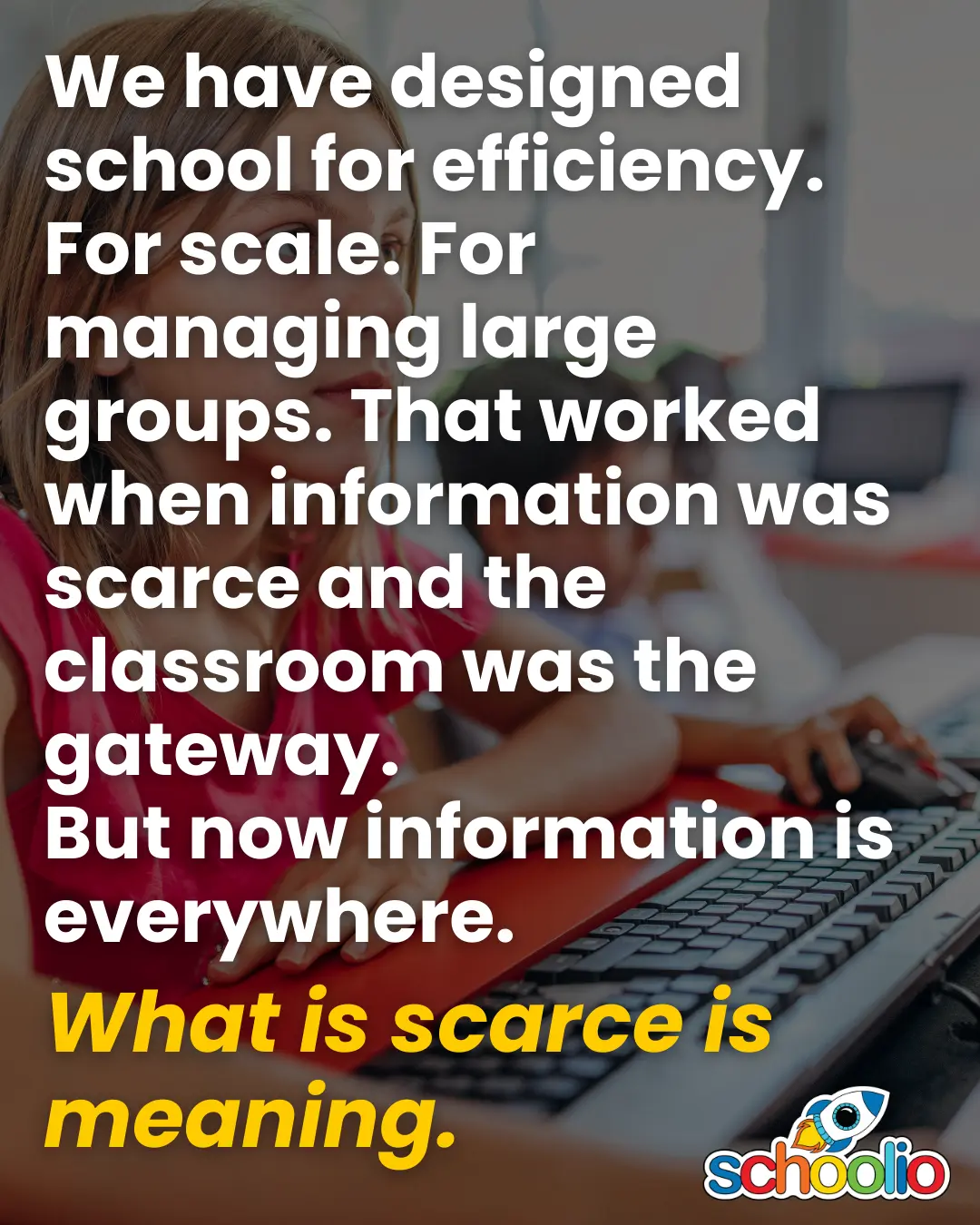
We have designed school for efficiency. For scale. For managing large groups. That worked when information was scarce and the classroom was the gateway.

But now information is everywhere.

What is scarce is meaning.

When a child can see how math helps them measure wood for a project, it sticks. When writing helps them communicate an idea they care about, it matters. When science explains something they experience, it connects.

Real work grounds learning in purpose.

And purpose fuels effort.

When kids experience that connection, they do not just complete assignments. They engage. They take ownership. They ask better questions.

Because they are no longer learning for the grade.

They are learning because it makes sense.

If we want more engagement, we cannot just adjust the curriculum. We have to reconnect learning to life.

Because when kids solve real problems, they begin to believe they can solve bigger ones.

And that belief might be the most important outcome of education.


Sathish

still learning, still unlearning


What Is “Math Anxiety” — And How Can You Help Your Child Overcome It?

What Is “Math Anxiety” — And How Can You Help Your Child Overcome It?

If your child melts down at the sight of a math worksheet…

If they freeze when you ask them a basic fact…

If they suddenly “forget everything” during a quiz…

You might be looking at math anxiety.

And no — it’s not the same thing as “being bad at math.”


What Math Anxiety Actually Is

Math anxiety is a stress response.

Not a knowledge gap.

Not laziness.

Not a lack of intelligence.

It’s what happens when your child’s nervous system associates math with pressure, shame, embarrassment, or repeated failure.

When the brain senses threat, it shifts into survival mode.

And here’s the tricky part:

The same part of the brain used for problem-solving (working memory) is the part that shuts down under stress.

So when a child says,

“I don’t know how to do this!”

Sometimes what they really mean is,

“My brain is offline right now.”

The anxiety blocks access to the skills they may actually have.


Where It Comes From

Math anxiety can develop from:

  • Timed tests

• Public correction in class

• Repeated low scores

• Moving too quickly through concepts

• Comparing themselves to peers

• Being told they’re “not a math person”

For neurodivergent kids — especially those with dyscalculia, ADHD, processing delays, or perfectionism — math anxiety is even more common.

If numbers are already harder to process, and then you layer time pressure or shame on top?

The brain starts to brace for math like it’s a threat.

And once that association forms, even opening the book can trigger it.


Signs You Might Be Seeing Math Anxiety

It doesn’t always look dramatic.

Sometimes it looks like:

  • Avoidance

• “Bathroom breaks” during math

• Complaints of headaches or stomach aches

• Tears over “easy” problems

• Perfectionism and erasing constantly

• Rushing to get it over with

• Refusing to try at all

The child isn’t being dramatic.

Their nervous system is trying to protect them.


How to Help

The goal isn’t to make math wildly entertaining.

The goal is to make it feel safe.

1. Slow It Down

If a concept is supposed to take one day, let it take a week.

Mastery builds confidence.

Speed builds stress.

You are not on a clock.


2. Remove the Time Pressure

Timed drills are a huge trigger for many kids.

Accuracy matters more than speed.

You can build fluency gradually — without a stopwatch.


3. Make It Concrete

Abstract numbers on paper can feel overwhelming.

Use:

  • Lego

• Baking

• Measuring cups

• Money

• Cutting food into fractions

• Building arrays with blocks

Touching math reduces fear.


4. Normalize Struggle

Be careful with language like:

“You’re so smart!”

Because when they struggle, they’ll think,

“Then why can’t I do this?”

Instead try:

“This is hard — and you’re working through it.”

“Struggling means your brain is growing.”

“We can take this one step at a time.”

Effort over identity.


5. Separate Their Worth from the Score

A low score is information.

Not a verdict.

If your child works for 60 hard minutes and gets 50%, that effort matters — even if the system doesn’t reward it.

Math is a skill.

Not a measure of intelligence.


The Long Game

Most adults use calculators.

Most adults look things up.

Most adults don’t solve equations under time pressure.

What they do need is perseverance.

Confidence.

The belief that they can face something hard and figure it out.

That’s what you’re building.

And that doesn’t come from pushing harder.

It comes from lowering fear.

Math anxiety can absolutely improve.

But it improves when the nervous system feels safe enough to try.

And if you’re reading this because you’re worried?

That tells me something important.

You care.

And caring is the foundation of everything that works.

? Lindsey

certified special-ed educator & co-founder, Schoolio

What Non Homeschoolers Need to Understand

What Non Homeschoolers Need to Understand


This has been on my mind today…

I saw a post that said homeschooling ends bullying, pointless peer pressure, and the undermining of family values.

Strong statement.

Whether someone agrees or not, here is what I think non homeschoolers need to understand.

For many families, this decision is not ideological. It is protective.

When I was growing Schoolio, I spoke to thousands of parents. Not angry parents. Not radical parents. Exhausted parents. Parents watching their child shrink. Parents watching anxiety spike. Parents watching confidence erode.

Bullying is real. Social pressure is real. Feeling misaligned with the environment is real.

Does homeschooling magically eliminate all of that? No.

But for some families, it changes the environment enough that their child can breathe again.

And that is what often gets missed in the debate.

It is easy to critique homeschooling from the outside. It is harder to sit across from a parent whose child dreads every morning.

You do not have to choose homeschooling to appreciate why someone else does.

At its best, it is not about escaping school.

It is about restoring stability, identity, and confidence in a child who was struggling inside a system that did not fit.

That deserves more understanding, even from those who would never choose it themselves.

Sathish

still learning, still unlearning
When “Grade-Level” Tests Make Homeschool Parents Feel Like Failures

When “Grade-Level” Tests Make Homeschool Parents Feel Like Failures


This has been on my mind today…

I talk to so many homeschooling parents who have had this moment:

They run a school-based diagnostic test to see if their child is “on grade level”.

They see a score they weren’t expecting.

And suddenly, their confidence collapses.

“I think my kids have fallen behind.”

“I feel like I’ve failed them.”

“Did homeschooling make them lose skills?”

Let me say this clearly, as both a former teacher and a homeschooling mom:

School-based testing does not measure your child’s intelligence.

And it absolutely does not measure the value of your homeschool.

Most of these assessments — especially the popular ones families use to “check grade level” — were designed for traditional classrooms. They measure a very specific thing: a child’s ability to memorize and recall the exact skills schools have decided are important, in the exact format they expect.

That’s it.

They usually test math and language.

They don’t test problem-solving.

They don’t test creativity.

They don’t test if your child is happier, more confident, or less anxious than they were in school.

They don’t test emotional regulation skills.

They don’t test adaptability, curiosity, persistence, or resilience.

And yet those are the very skills that matter most once school is over.

Here’s something else most parents don’t realize:

The human brain only retains information for two reasons.

  1. Intrinsic interest — the learner genuinely cares about the topic.
  2. Perceived usefulness — the learner understands why this information matters in their real life.

Everything else? The brain offloads.

This is why retention in public school is so low. It’s why every fall, teachers spend weeks “reviewing” material kids supposedly learned the year before — and most students swear they were never taught it. They were. Their brains just didn’t keep it.

We adults are no different.

If most of us took a grade 7 math test today, we’d struggle — unless we’re naturally “math people” (intrinsic interest) or use it regularly in our work (perceived usefulness). That doesn’t make us less intelligent than a seventh grader. It just means we’ve let go of information we don’t need.

Kids do the same thing.

So when a homeschool parent sees a test score and panics, what they’re often seeing isn’t “lost intelligence.”

They’re seeing a mismatch between how the brain actually learns and how schools measure learning.

Homeschooling offers something radically different — and far more valuable. It teaches kids how to learn. How to ask questions. How to find information when they need it. How to notice what interests them and pursue it deeply. How to persist through challenges without shame.

Those skills don’t show up on standardized diagnostics.

But they show up everywhere else in life.

Now, if it’s important to you that your child aligns closely with public school benchmarks, that’s okay. Homeschooling isn’t one thing — it’s yours to shape. You can absolutely use test results as information, identify gaps, and choose to work on specific skills.

What I don’t want you to do is let those numbers define your child — or yourself.

Your kids are not checkboxes.

Your homeschool is not a failure because it doesn’t mirror school.

And you are not doing this wrong because your child’s brain didn’t perform on demand for a system you intentionally stepped away from.

Please take school-based tests for what they are: limited tools, not verdicts.

You are building something bigger than scores.

Something more human.

And that matters far more than any diagnostic ever will.


? Lindsey

Certified Special-Ed Educator & Co-Founder, Schoolio

To the Weak, Everything Feels Like a Threat

To the Weak, Everything Feels Like a Threat


This has been on my mind today…


Every time education shifts forward, fear gets louder.

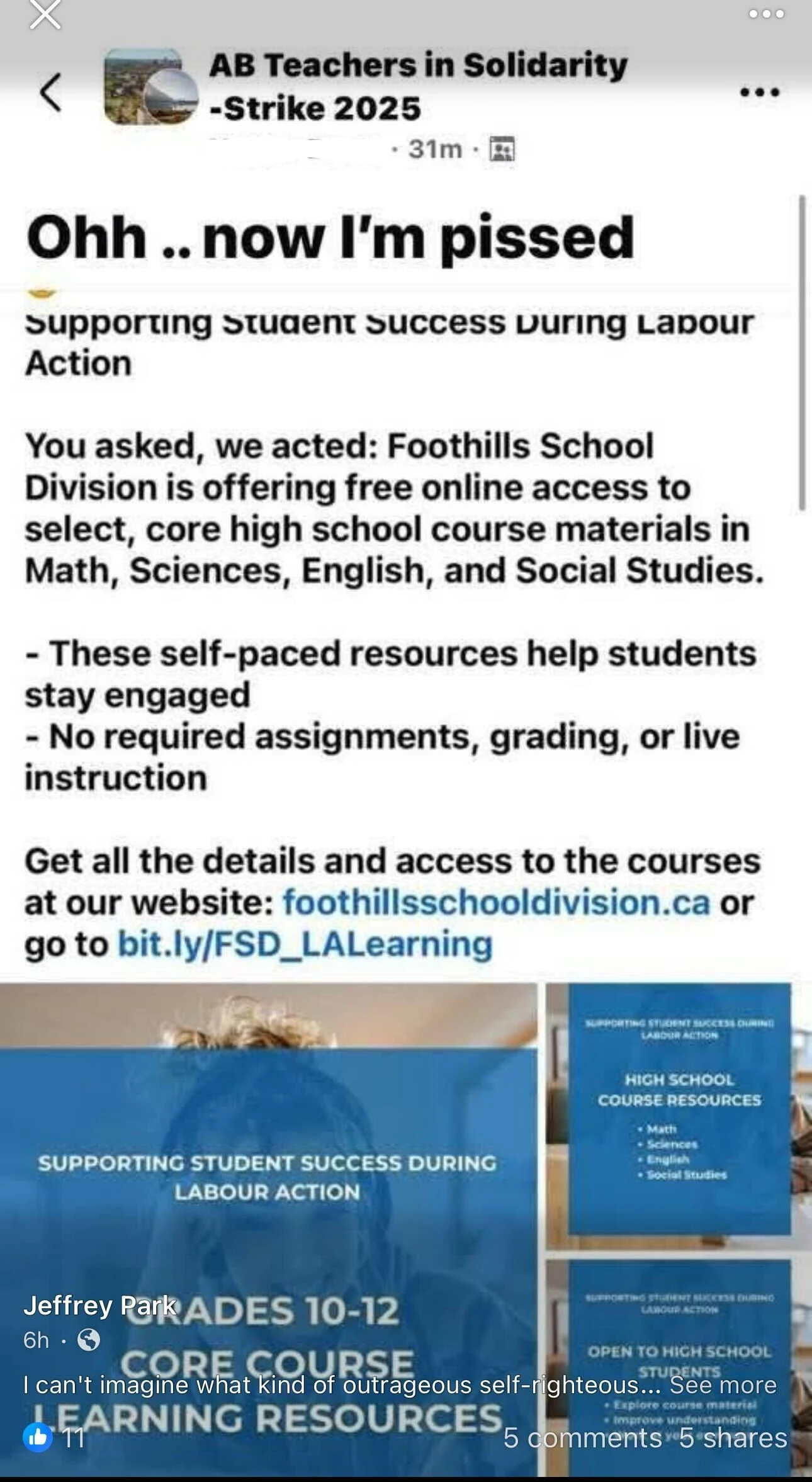
Teachers are angry that families are exploring alternatives during the Alberta strike. Some are even calling parents “disloyal” for turning to online resources. But let’s be honest — what else are families supposed to do when the system stops working?

The truth is, teachers are afraid. And I get it. They’ve been handed an impossible job inside a system that hasn’t evolved in 150 years. A system built for industrial workers, not creative thinkers. For compliance, not curiosity.

AI. Homeschooling. Microschools. Digital curriculum.

All of it is growing — fast.

And instead of seeing these tools as extensions of learning, too many educators see them as enemies.

Here’s the reality:

Parents aren’t abandoning teachers. They’re abandoning a model that no longer serves their kids.

Innovation in education isn’t an attack. It’s an answer.

The families turning to homeschooling or digital learning aren’t doing it to undermine teachers — they’re doing it to survive a broken system.

We should be building bridges, not battle lines.

Technology and teachers can coexist. But that requires courage — the kind that looks at change and says, “Let’s learn from it.”

Because the future of education won’t be built by those defending the old ways. It’ll be built by the ones bold enough to imagine new ones.

Alberta


Sathish
Still learning, still unlearning
Homeschooling Isn’t a Competition — It’s an Alignment

Homeschooling Isn’t a Competition — It’s an Alignment


I saw this passage today and it hit me hard.


Your life will change when you understand this


“You are only ever competing against one thing — your own self-doubt.”

When I think about homeschooling families, this couldn’t be more true.

So many parents start this journey filled with doubt. Am I enough? Am I doing it right? What if my child falls behind?
But the families who thrive — the ones I see at Schoolio every day — aren’t necessarily the most organized, experienced, or well-resourced.

They’re simply the ones who believe they can do this.

Who trust that learning at home, in their own rhythm, is enough.
They drop the competition mindset. They stop comparing their kids to traditional classrooms. They stop chasing grades and start building connection.

Homeschooling isn’t about outperforming anyone. It’s about aligning — with your child, your values, and the kind of life you want to build together.

When families stop trying to “fit in” and start trusting themselves, everything changes.
What you seek — confidence, peace, connection — is already seeking you.

Sathish
Still learning, still unlearning
“Not Educable”? Or Just Not Understood?

“Not Educable”? Or Just Not Understood?


This has been on my mind today…


I was in a private “teachers only” Facebook group recently — don’t ask me how I got in ? — and one comment stopped me cold.

“Some of these kids just aren’t educable.”

It triggered me. Deeply.

Because I’ve been that kid.

Because I’ve raised a child labeled “lazy” for not learning the way others expected.

Because I’ve built a company, Schoolio, for the very kids traditional systems are too quick to write off.

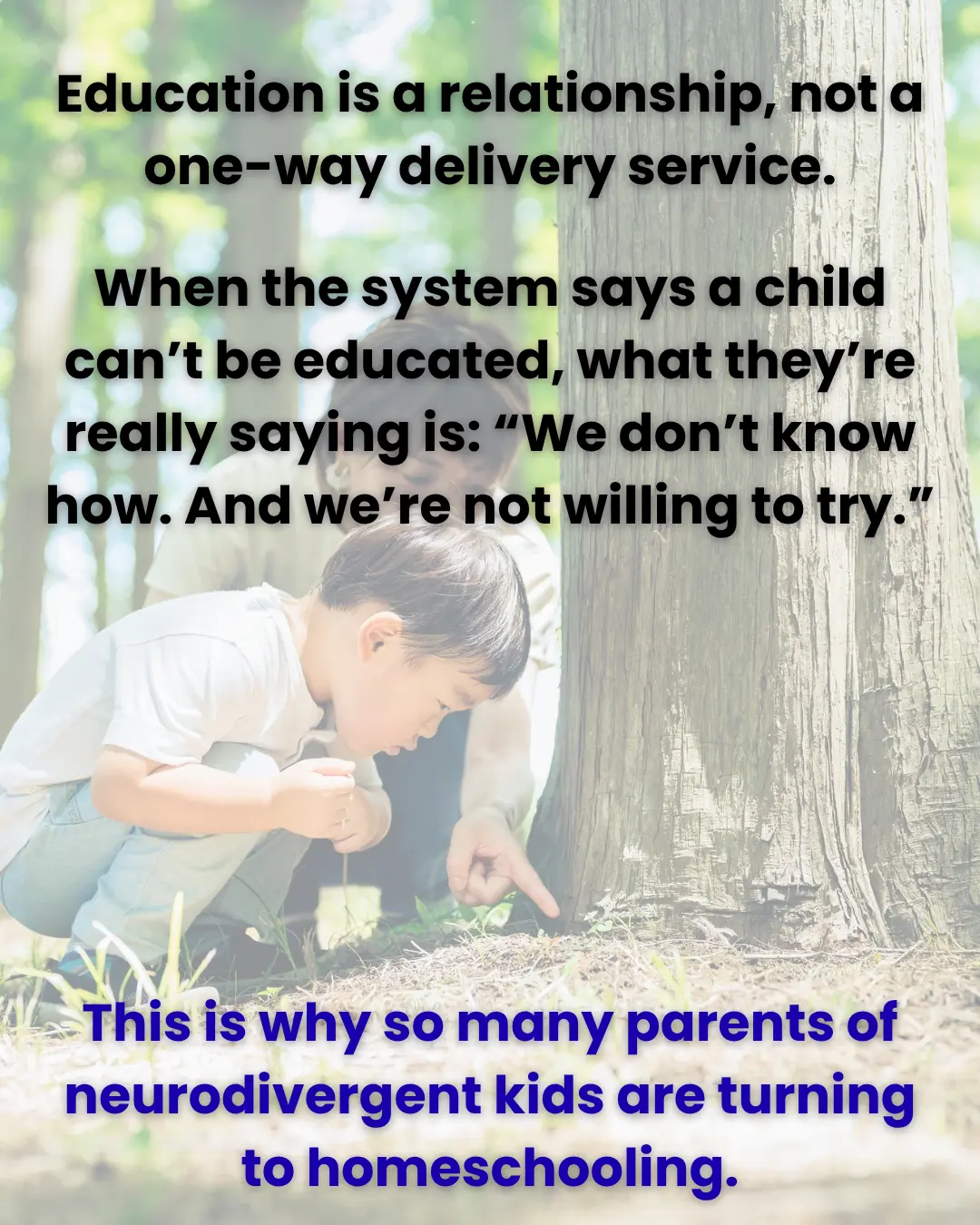
When a teacher — someone trained to unlock potential — says a child can’t be educated, what they’re really saying is: “I don’t know how. And I’m not willing to try.” But no child is uneducable. Some are misunderstood.

Some are neurodivergent.

Some are traumatized.

Some are learning in a way you weren’t trained to see.

Education is a relationship, not a one-way delivery service. It’s not just about curriculum — it’s about care, creativity, and compassion.

What we can’t do is confuse a system’s failure with a child’s inability. The system was never designed to serve every child — especially those who learn differently.

And that’s why Schoolio exists.

We don’t believe in “bad kids.”

We believe in bad assumptions, outdated frameworks, and a desperate need for empathy in education. Because when you tell a child they’re uneducable, you’re not describing them — you’re indicting yourself.

So the next time a student struggles… pause.

Ask what’s missing.

Ask how you can adapt.

Ask what support might unlock their potential.

Because learning isn’t a light switch. It’s a spark. You just have to be willing to see it.


Sathish
Still learning, still unlearning

 

Homeschooling Parent- The Quietly Bold

Homeschooling Parent- The Quietly Bold


Fortune favors the bold.

Not the loudest.

Not the most perfect.

Not the ones with the most polished plans.

The bold.

The parent who pulls their kid out of a system everyone else still trusts.

The parent who chooses connection over conformity.

Flexibility over tradition.

Peace over pressure.

I’ve met hundreds of these parents. Quietly bold.

No parade. No validation. Just a gut feeling that this was right for their child.

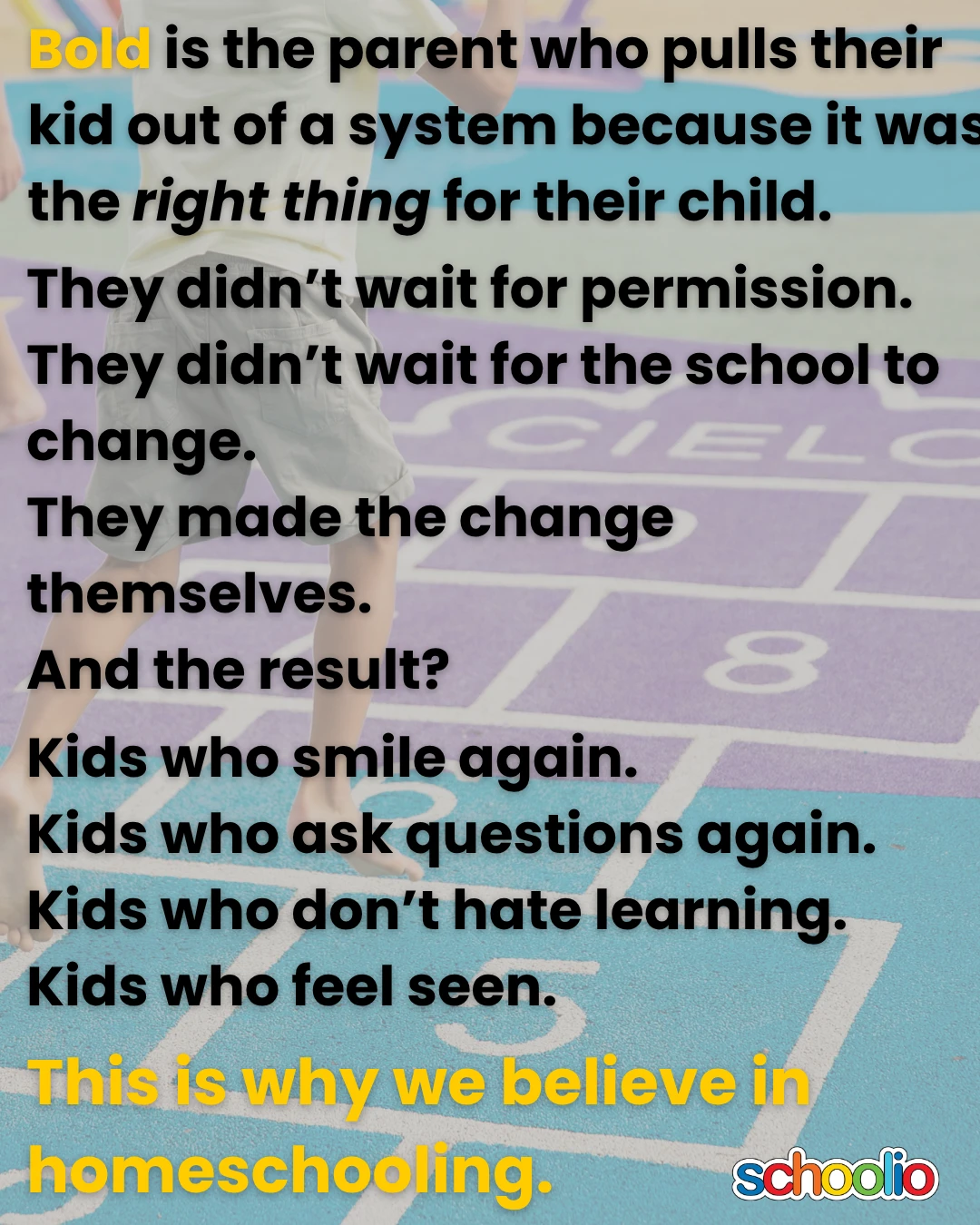
They didn’t wait for permission.

They didn’t wait for the school to change.

They made the change themselves.

And the result? That’s the “fortune” part.

Kids who smile again.

Kids who ask questions again.

Kids who don’t hate learning.

Kids who feel seen.

We get asked all the time: “Is homeschooling a risk?”

Yes. So is sending your child into a system that doesn’t fit. Both paths take boldness. One just gives you more control.

This is why I believe in homeschooling.

This is why I believe in Schoolio.

Not because it’s trendy. Not because it’s perfect. But because it puts the child back at the center — and trusts the parent to lead.

Fortune favors the bold.

If you’ve made the leap, you already know.

If you’re on the edge, maybe this is your sign.


Sathish

still learning, still unlearning

When Does Learning End? For Me, It Was When My Father Went to Sleep

When Does Learning End? For Me, It Was When My Father Went to Sleep


This has been on my mind today…

I saw a post that simply said, “My son’s done with homeschooling in two hours.”

And just like that, I was back in Singapore — racing home from school, not for fun, but out of fear.

See, school for me ended close to 4pm.


school


My parents knew exactly how long it should take for me to get from the gates of the school to the door of our apartment.

If I was late, it wasn’t a missed bus or a slow walk — it was disrespect.

And there were consequences.

But the real weight?

School didn’t end when the bell rang.

It ended when my father went to sleep.

Usually around 6pm, he’d be home — and by then, we had to be seated, heads down, already into our homework or the next stack of extra workbooks.

Every day.

For years.

Twelve to fifteen hours a day spent studying.

Almost no play.

Very little conversation that wasn’t about performance, progress, or punishment.

That was childhood.

And even though I sent my own kids to public school, I made a quiet promise to do things differently.

School ended the minute they walked out of the building.

Evenings were for play.

For laughter.

For sitting together at the dinner table without a pencil in hand.

For movie nights and bike rides and not having to earn joy.

And yet — I see so many of my friends, especially fellow South Indian parents, unknowingly continuing the cycle.

Evenings and weekends filled with more learning.

Catch-up. Push ahead. Get into the best school. Stay ahead of the curve.

But the curve keeps shifting.

The truth is, the world our kids are stepping into will not reward them for how fast they finished a textbook.

It will reward them for their ideas.

For their empathy.

For how well they adapt and connect and create.

Jobs we know today won’t be around by the time they graduate.

Learning styles have changed.

Grades don’t mean what they used to.

Trade skills and entrepreneurship are on the rise.

And I’ll say it — homeschooling is where I’m seeing the balance emerge.

Not because it’s easier.

But because it’s more human.

It’s where a child can complete their day in two focused hours and spend the rest of their time living.

It’s where parents no longer feel the need to steal youth from their kids in the name of preparation.

It’s where play becomes part of the plan, not an afterthought.

And it’s where I’m learning — still learning — how to unlearn the things I was taught to fear.

If your evenings feel like an extension of school instead of a return to family, maybe it’s time for a new way.

Maybe it’s time to put the joy back into childhood.


Sathish

still learning, still unlearning

Connecting with Other Digital Nomad Families: Building a Supportive Community

Connecting with Other Digital Nomad Families: Building a Supportive Community

Connecting with Other Digital Nomad Families: Building a Supportive Community

In today’s fast paced world, more families are embracing the freedom of a nomadic lifestyle. Digital nomad families, in particular, are rewriting the rulebook on education, work, and travel. One of the key aspects that contribute to their success is the creation of a supportive community. In this blog post, we’ll explore valuable tips for connecting with other digital nomad families and building a network that can enrich both your family’s journey and your children’s education.

How to Start Connecting With Other Digital Nomad Families:

Join Education Programs Tailored for Nomads

One of the challenges digital nomad families often face is finding suitable educational programs for their children. To address this, consider enrolling your kids in specialized education programs designed for nomadic lifestyles. Look for online platforms that offer remote learning opportunities, combining both traditional subjects and experiential learning. Some programs cater specifically to the needs of traveling families, providing a flexible and adaptable curriculum that aligns with your unique lifestyle.

Schoolio Family Plan

Embrace Homeschooling on the Road

Homeschooling has become a popular choice for digital nomad families, offering the flexibility to tailor the learning experience to each child’s needs and interests. While on the road, take advantage of the vast array of resources available online. Incorporate educational apps, virtual field trips, and online tutors into your homeschooling routine. The key is to strike a balance between formal education and real-world experiences, turning each destination into a classroom for your children.

Seek Out Traveling Family Education Communities

Connecting with other digital nomad families who share similar educational philosophies is crucial for building a supportive community. Join online forums, social media groups, and platforms dedicated to traveling family education. Engage in discussions, share your experiences, and seek advice from seasoned nomadic families. This exchange of knowledge can not only enhance your understanding of different educational approaches but also provide valuable insights into the challenges and triumphs of life on the road.

Explore Remote Homeschool Programs

Remote homeschool programs offer a structured curriculum that can be accessed from anywhere in the world. Research and enroll in reputable programs that align with your family’s values and educational goals. These programs often provide a sense of continuity and stability, ensuring that your children receive a consistent education regardless of your current location. Additionally, being part of a remote homeschooling community allows your children to interact with peers facing similar challenges, fostering a sense of connection.

Schoolio e-books

Attend Digital Nomad Family Meetups

To strengthen your ties with other digital nomad families, consider attending meetups or gatherings specifically tailored to your lifestyle. These events provide an excellent opportunity to connect with like-minded individuals, share stories, and exchange tips and resources. Whether in-person or virtual, these gatherings contribute to the creation of a tight-knit community. One that understands the unique challenges and joys of combining travel with education.

Learn how to create a travel journal

Building a supportive community as a digital nomad family involves actively seeking out and participating in educational programs. Additionally, you will need to connect with homeschooling initiatives, and communities designed for families on the move. By connecting with others who share your lifestyle, you not only enrich your children’s educational experiences but also create a network of support. One that can enhance every aspect of your nomadic journey.

Schoolio Learning Resources

Are you facing challenges from migrating to a new country?