The Marketing Engine: How to Attract Families to Your New Microschool

TL;DR – Quick Answer:
Don’t just market ‘homeschooling’; market ‘outcomes and connection.’ Build authority by sharing your ‘Supportive Coach’ philosophy and use evidence-based curriculum to build trust.

The biggest challenge for a new microschool is **trust**. Parents are leaving a familiar (even if broken) system for something unknown. To win them over, your marketing needs to focus on solving the **’institutional burnout’** they are feeling. They aren’t looking for a better version of the public board; they are looking for a completely different rhythm.

Authority-Driven Growth

Share your ‘permission to pivot’ narrative. Explain why your school focuses on micro-bursts and emotional wellness. By using a certified, **evidence-based** curriculum like Schoolio, you give parents the peace of mind that their child is meeting standards while thriving in a flexible environment.

Product Focus: The Microschool Launch Guide

We’ve helped hundreds of founders launch. Our all-in-one bundles provide the ‘box’ so you can focus on the ‘delivery.’ [IMAGE: Schoolio Ontario Bundle with Launch Materials]

Confidence is the precursor to conversion. If parents see you have a plan, they will trust you with their child’s future.

Selling the Pivot, Not the Product

Parents don’t switch to a microschool because they want a new math book. They switch because they are in crisis. Their child is crying before school, their family dynamic is strained, and they feel like the ‘institutional 7-hour day’ is stealing their child’s childhood. Your marketing must speak directly to that pain. You aren’t selling ‘school’; you’re selling the ‘permission to pivot’ to a life where education fits the child, not the other way around.

Trust Through Transparency

The biggest barrier to enrollment is the fear of ‘falling behind.’ By using an evidence-based, teacher-certified curriculum like Schoolio, you provide a layer of institutional trust to your alternative model. You can show parents exactly how their child is meeting provincial or state standards through our digital tracking, while still maintaining the flexible, interest-led rhythm of your school. This transparency is the engine that converts skeptical observers into committed advocates.

Ready to take the next step?

Browse Curriculum Bundles

Don’t Let School Convince You You’re Not Smart

Don’t Let School Convince You You’re Not Smart


My daughter and I spent several hours tonight studying for her math test tomorrow.

She’s neurodivergent. She struggles in math and English because of dyslexia and dyscalculia. There were a lot of tears. And at one point she said something that broke my heart:

“I wish I could just be as smart as everyone else.”

?

So I told her the truth.

Sweetie, everyone has hard things and easy things. Everyone.

This is your hard thing. Reading and numbers are harder for you. They just are. But that doesn’t mean you aren’t smart.

Here’s what no one tells you about school:

School is centered around reading and numbers.

Independent reading is how one adult manages thirty kids in a classroom. Tests are how large groups are measured quickly. The whole structure depends on literacy and numerical processing.

So if reading and numbers are your hard things, school will feel hard.

That doesn’t mean you’re not smart.

It means the system is built around your area of challenge.

And here’s another truth about school:

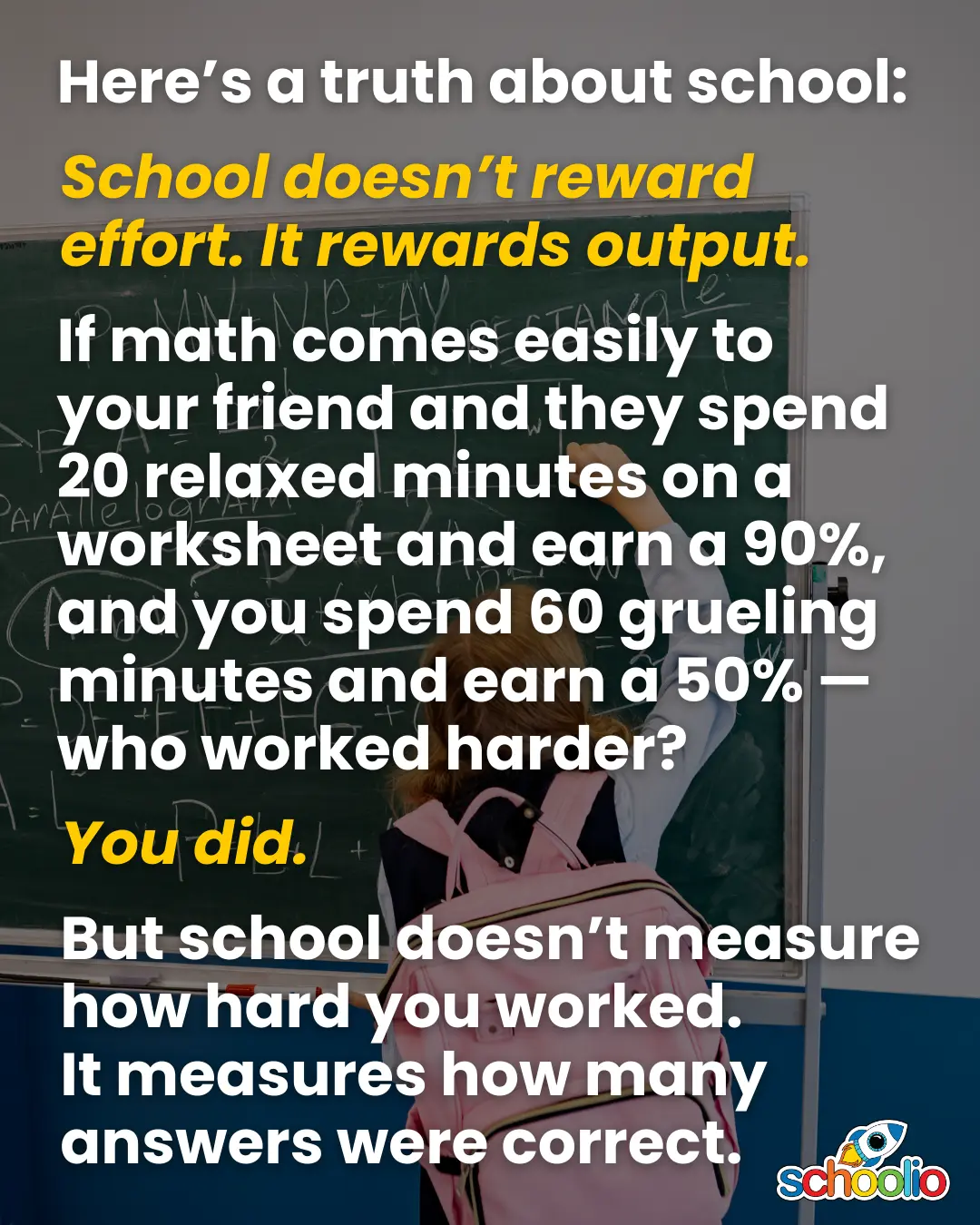
School doesn’t reward effort. It rewards output.

If math comes easily to your friend and she spends 20 relaxed minutes on a worksheet and earns a 90%, and you spend 60 grueling minutes and earn a 50% — who worked harder?

You did.

But school doesn’t measure how hard you worked.

It measures how many answers were correct.

Now imagine something different.

If school were centered around creativity…

or engineering-thinking…

or musical instinct…

or empathy and thoughtfulness…

or responsibility and trustworthiness…

You would be at the top of the class.

You would be absolutely crushing it.

But school doesn’t prioritize those traits.

But guess what? The real world does.

The real world cares that you show up on time.

That you think outside the box.

That you treat people with kindness.

That you keep going when things are hard.

The real world doesn’t care if you use a calculator to figure out a tip.

It doesn’t care if you prefer audiobooks over printed pages.

It doesn’t care how quickly you finish a worksheet.

The most powerful skill you’ll carry into adulthood isn’t mental math.

It’s perseverance.

It’s knowing how to work hard at something that doesn’t come easily.

So please — don’t let school convince you that you’re not smart just because it has a narrow definition of what counts.

Don’t let it shrink how you see yourself.

Don’t let it break your spirit.


? Lindsey

certified special-ed educator, homeschool mom, & co-founder of Schoolio

Kintsugi

Kintsugi


This has been on my mind today…

There is a Japanese art form called Kintsugi. When a bowl or cup breaks, it is not thrown away. The pieces are carefully put back together, and the cracks are filled with gold. The repair is not hidden. It is highlighted. The object becomes more valuable because it has been broken and repaired with care. The story becomes part of its beauty.

I think about that a lot when I reflect on my own life. I also think about it when I look at the families we support through homeschooling and the work we are building at Schoolio.

Too many children move through school systems quietly absorbing a message that they are broken. Not always through words, but through looks, labels, meetings, and expectations. They are told to sit still when their bodies want to move. To keep up when they need time. To fit into systems that were never designed for how they learn. Eventually, many of them begin to believe that something is wrong with them.

When those children come home, something different can happen. With patience, care, and attention, the pressure starts to lift. Confidence begins to return. Curiosity peeks back out. Learning feels possible again. Not rushed. Not forced. Just human.

But here is the part that matters most to me. Healing should never feel like hiding.

Homeschooling should not feel like punishment or retreat. It should not feel like we are sweeping children out of sight. It should feel like kintsugi. A celebration of the whole child. A recognition that learning differently does not mean learning less. It means learning in a way that honors who they are.

At Schoolio, we see this every day. Children who were once labeled as struggling begin to thrive when the pressure is removed and the support is real. When learning adapts to them instead of asking them to adapt to it. When their cracks are not erased, but respected.

Every student who leaves a system that did not serve them carries an incredible story. Those cracks are not flaws. They are experiences. When they are filled with care, trust, and belief, something stronger is created. Something more meaningful than what existed before.

That is what homeschooling can be.

That is what Schoolio is working toward.

Not fixing children, but honoring them.


Sathish

still learning, still unlearning

Will They Be Alright?

Will They Be Alright?


This has been on my mind today…

Lately, I’ve been thinking a lot about the world we’re living in. The noise of politics, the chaos of AI, the constant scroll of news about conflict, anxiety, and the growing mental health crisis. Sometimes it feels like humanity is sprinting faster than it can breathe.

And in quiet moments, when I look at my two kids, a single question keeps coming back. Will they be alright?

It’s a question I’ve heard from so many parents — on calls, in messages, and in conversations that start with school but end in fear. It’s not just worry. It’s the quiet recognition that the world is changing faster than we can make sense of it. Like holding on to a fast-moving train, hoping it’s heading somewhere safe, but not really sure.

When my parents raised me, their worries were simpler — education, stability, respect. Now, the world feels heavier. AI is rewriting jobs, politics divides homes, and even rest feels like a luxury. The pace of it all makes you wonder if we’ve traded depth for speed, wisdom for convenience.

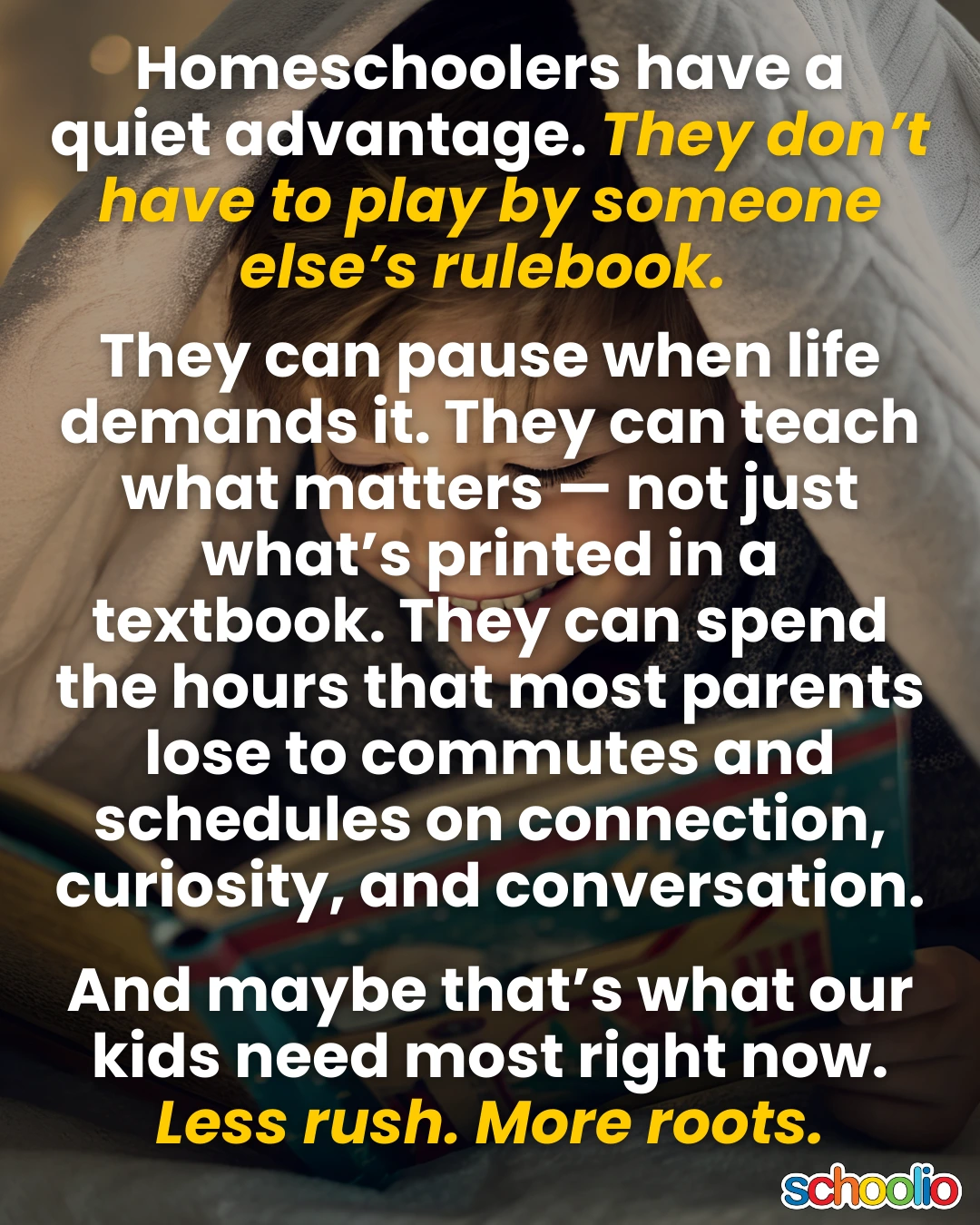
That’s why I see homeschooling through a different lens. Homeschoolers have a quiet advantage. They don’t have to play by someone else’s rulebook. They can pause when life demands it. They can teach what matters — not just what’s printed in a textbook. They can spend the hours that most parents lose to commutes and schedules on connection, curiosity, and conversation.

And maybe that’s what our kids need most right now. Less rush. More roots.

So when I ask myself will they be alright, I remind myself that being alright isn’t about grades or university acceptance letters. It’s about raising kids who are thoughtful, kind, adaptable, and brave enough to navigate a world that’s still figuring itself out.

If we can give them that, they’ll be more than alright.


Sathish

still learning, still unlearning

Why Your ADHD Child Can’t Sit Still- What is Vestibular Input?

Why Your ADHD Child Can’t Sit Still- What is Vestibular Input?


If you have an ADHD child, you’ve probably said one of these phrases at least once (or, let’s be honest, many times):
“Sit properly, please.”
“Feet down.”
“Stop spinning that chair.”


“Why are you upside down right now?”

And yet, no matter how many times you say it… they just can’t seem to stop.

It’s easy to see this as misbehavior or lack of focus. But in reality, what you’re seeing might be something deeper — your child’s nervous system doing its best to get the vestibular input it needs to feel regulated, alert, and ready to learn.

vestibular input

What Is Vestibular Input?

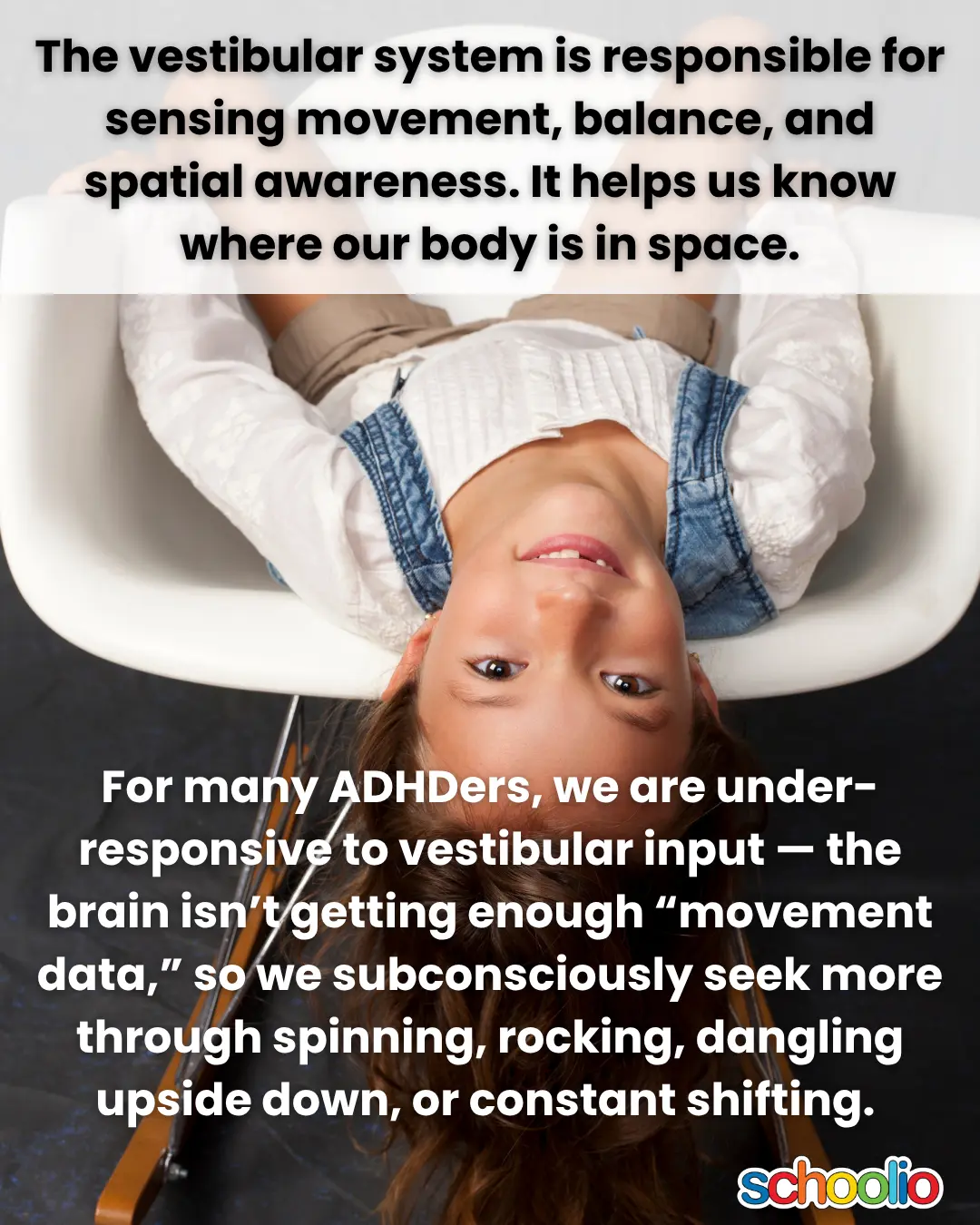
The vestibular system lives in the inner ear, and it’s responsible for sensing movement, balance, and spatial awareness. It helps us know where our body is in space — like whether we’re sitting upright, moving fast, or tilting our head.

For neurotypical people, this system runs quietly in the background, keeping them centered. But for many ADHDers, it doesn’t process quite the same way.

Some ADHD kids are under-responsive to vestibular input — their brain isn’t getting enough “movement data,” so they subconsciously seek more through spinning, rocking, dangling upside down, or constant shifting. Others may be over-responsive, finding certain motions overwhelming or dizzying.

Both patterns are common — and both are the body’s way of saying, “I need help regulating.”

? Science Note: The Vestibular–Dopamine Connection

The vestibular system doesn’t work alone — it’s closely tied to the dopamine pathways in the brain that control motivation, focus, and emotional regulation.

When your child moves — spinning, jumping, rocking — those physical sensations activate parts of the brainstem and cerebellum that help regulate dopamine and norepinephrine, both of which are often low in ADHD brains.

That’s why movement helps ADHD kids “wake up” their brains:

  • It boosts alertness and attention.
  • It improves emotional regulation.
  • It supports executive function — planning, memory, and self-control.

So when your child is fidgeting or in constant motion, they’re not being disruptive — they’re literally helping their brain function better.


What “Dopamine Seeking” Looks Like in the Body

We often talk about ADHD as dopamine-driven, but the vestibular system plays a huge role, too. Movement actually helps stimulate dopamine release — which is why your ADHD child may suddenly start pacing, swinging their legs, or balancing on the edge of a chair right when you need them to concentrate.

These “weird” positions aren’t defiance. They’re your child’s nervous system self-medicating through movement.

They might:

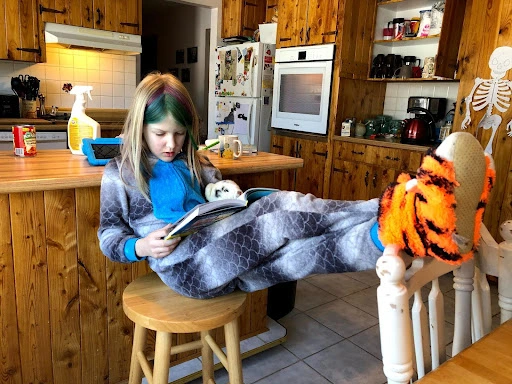
  • Sit with one leg over the arm of a chair
  • Hang off the couch upside down
  • Constantly rock, bounce, or sway
  • Spin in circles for “fun” (and never seem dizzy)
  • Climb furniture or balance on unstable surfaces

It can look chaotic — but for them, it’s regulating.


What It Feels Like for ADHD Kids

For a child whose vestibular system isn’t getting enough input, sitting still can feel physically uncomfortable — like trying to focus with an itch you can’t scratch. Their brain is searching for balance signals, and until it gets them, it’s hard to settle down.

You might see:

  • Fidgeting during reading or lessons
  • Difficulty maintaining posture
  • Restlessness or frustration during quiet tasks
  • Frequent “breaks” to move or reposition

The movement isn’t the problem — it’s the coping mechanism for an unmet sensory need.

How This Impacts Learning

When a child’s body is unregulated, their brain can’t prioritize learning. The vestibular system connects directly to areas of the brain that control attention, emotion regulation, and executive function — meaning movement needs aren’t separate from learning needs.

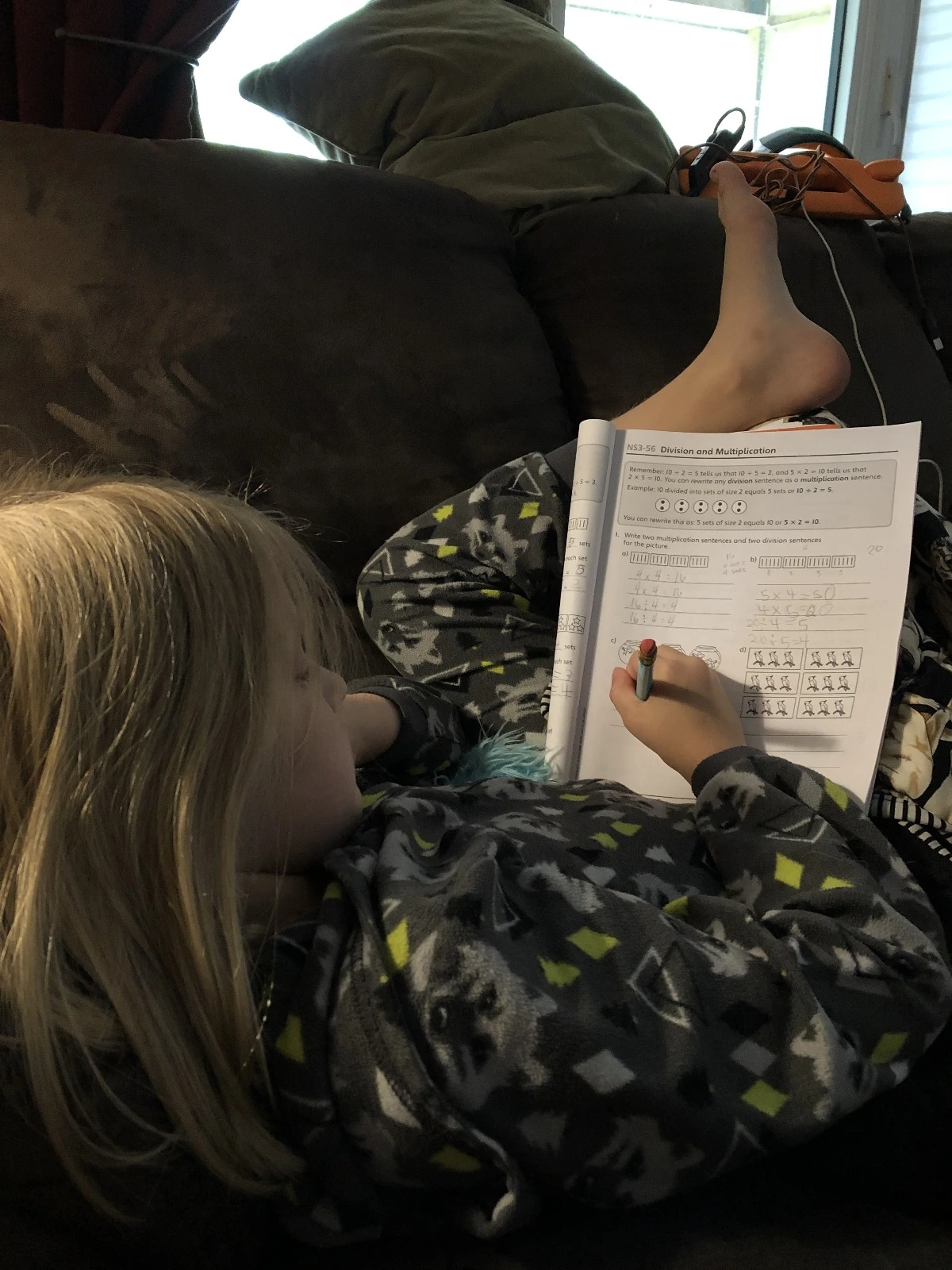
So when your ADHD child spins in their chair, lies on the floor to do math, or wiggles constantly through read-alouds… that’s not distraction. It’s adaptation.

Supporting Your Child’s Vestibular Needs at Home

Instead of trying to eliminate movement, think about channeling it. Here are some strategies to support vestibular regulation in your homeschool:

1. Build Movement Into the Day

  • Use active learning breaks between subjects.
  • Try standing desks, wobble stools, or yoga balls.
  • Let your child read or write while pacing, swinging, or lying down.activity

2. Offer “Heavy Work”

Proprioceptive input (like pushing, pulling, or lifting) helps calm the vestibular system. Try:

  • Carrying laundry or groceries
  • Wall push-ups or wheelbarrow walks
  • Building with weighted materials like LEGO or clay

3. Use Safe Spinning or Swinging

If your child seeks spinning, consider safe options like:

  • Swivel chairs
  • Therapy swings
  • Hanging pods or hammocks

4. Respect Their Positions

If your child learns best while lying on the floor or sitting cross-legged on a chair, that’s okay. Focus on engagement, not posture.

5. Schedule Movement Intentionally

Start the day with movement-rich activities: walking the dog, dancing, yoga, or playground time. Meeting those vestibular needs early can make focused work easier later.

The Homeschooling Advantage

Traditional classrooms often punish movement — “sit still,” “stop rocking,” “stay in your seat.” But at home, you have the flexibility to do the opposite: to embrace movement as part of learning.

When you let your ADHD child learn in the way their body needs — rocking, fidgeting, or balancing — you’re not giving in to bad habits. You’re helping their nervous system regulate so their brain can focus, absorb, and thrive.

Movement isn’t a distraction. For ADHDers, movement is medicine.

“Effects of stochastic vestibular stimulation on cognitive functions in children with ADHD” — PMC article discussing vestibular stimulation and cognition for ADHD. https://pmc.ncbi.nlm.nih.gov/articles/PMC10635964


“Vestibular Rehabilitation for ADHD” — article from Neurologic Wellness Institute referencing the regulation of dopamine via vestibular input. https://neurologicwellnessinstitute.com/vestibular-rehabilitation-for-adhd/


“Vestibular therapy improved motor planning, attention, and balance in children with Attention-Deficit Hyperactivity Disorders – A RCT” — study showing improved attention and response control following vestibular intervention in children with ADHD. https://www.oatext.com/vestibular-therapy-improved-motor-planning-attention-and-balance-in-children-with-attention-deficit-hyperactivity-disorders-a-randomized-controlled-trial.php


Fear Says “Fit In.” Values Say “Stay Firm.”

Fear Says “Fit In.” Values Say “Stay Firm.”

This has been on my mind today…

Most of us were raised with fear dressed up as discipline.

Fear of standing out.

Fear of falling behind.

Fear of being different — or being too much of something.

When I was growing up, that fear had a thousand voices:

“Don’t talk back.”

“Respect your elders.”

“Just do what you’re told.”

“Don’t embarrass the family.”

South Asian homes are particularly good at this — teaching you to blend in so well that, one day, you wake up and realize you don’t even know what you stand for. You’ve become a collage of other people’s expectations. You chase safety instead of passion. Approval instead of purpose.

That’s why, now as a father, I keep coming back to one truth:

Fear says “fit in.”

Values say “stay firm.”

And if I want my kids to stay firm — to know who they are, to know when to walk away, to know what matters even when it’s unpopular — then I have to show them how.

Not lecture them.

Not shame them.

Not compare them to anyone else.

Just live it.

That means letting them speak, even if I disagree.

Letting them dress how they want, even if I don’t get it.

Letting them explore paths I didn’t choose — or couldn’t.

It also means apologizing when I parent from fear instead of from values.

Because I still catch myself doing it.

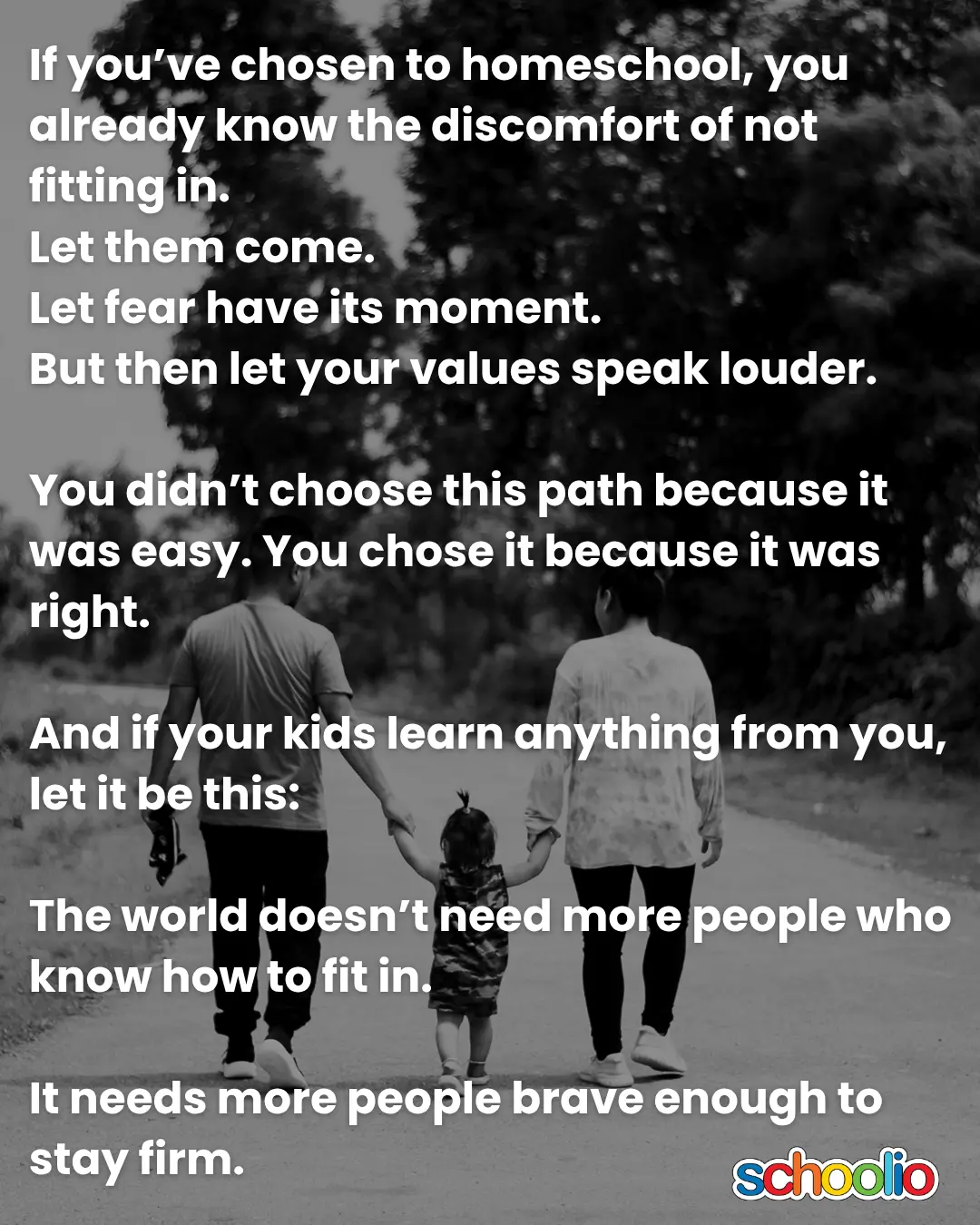
If you’ve chosen to homeschool, to opt out of the system, to rewire how learning happens in your house — then you already know this feeling. The discomfort of not fitting in. The awkward pauses in family conversations. The well-meaning but judgmental stares from old friends.

Let them come.

Let fear have its moment.

But then let your values speak louder.

You didn’t choose this path because it was easy. You chose it because it was right.

And if your kids learn anything from you, let it be this:

The world doesn’t need more people who know how to fit in.

It needs more people brave enough to stay firm.

Sathish

still learning, still unlearning

Why “Focus” Doesn’t Always Look Like Sitting Still

Why “Focus” Doesn’t Always Look Like Sitting Still


There was a season in our homeschool when math facts were… let’s just say painful.

Every time I pulled out the worksheets, I’d get groans. Wiggling in the chairs. The inevitable: “Do we have to do this?”

One day, instead of pushing through another tense math session at the table, I tried something different. We went outside. Onto the trampoline.

The kids bounced while I called out math facts. “What’s 7×6?” Bounce. Bounce. “42!” “What’s 9×8?” Bounce. Bounce. “72!”

Suddenly, the resistance melted away. They were laughing, shouting out answers between jumps, and begging for the next question. The energy that had been working against us at the table was now working for us.

And it hit me:

Focus doesn’t always look like sitting still.

For neurodivergent kids especially, learning can happen best in motion. While doodling. While bouncing. While tapping a pencil. While upside down on the couch. The movement isn’t a distraction — it’s the doorway to attention.

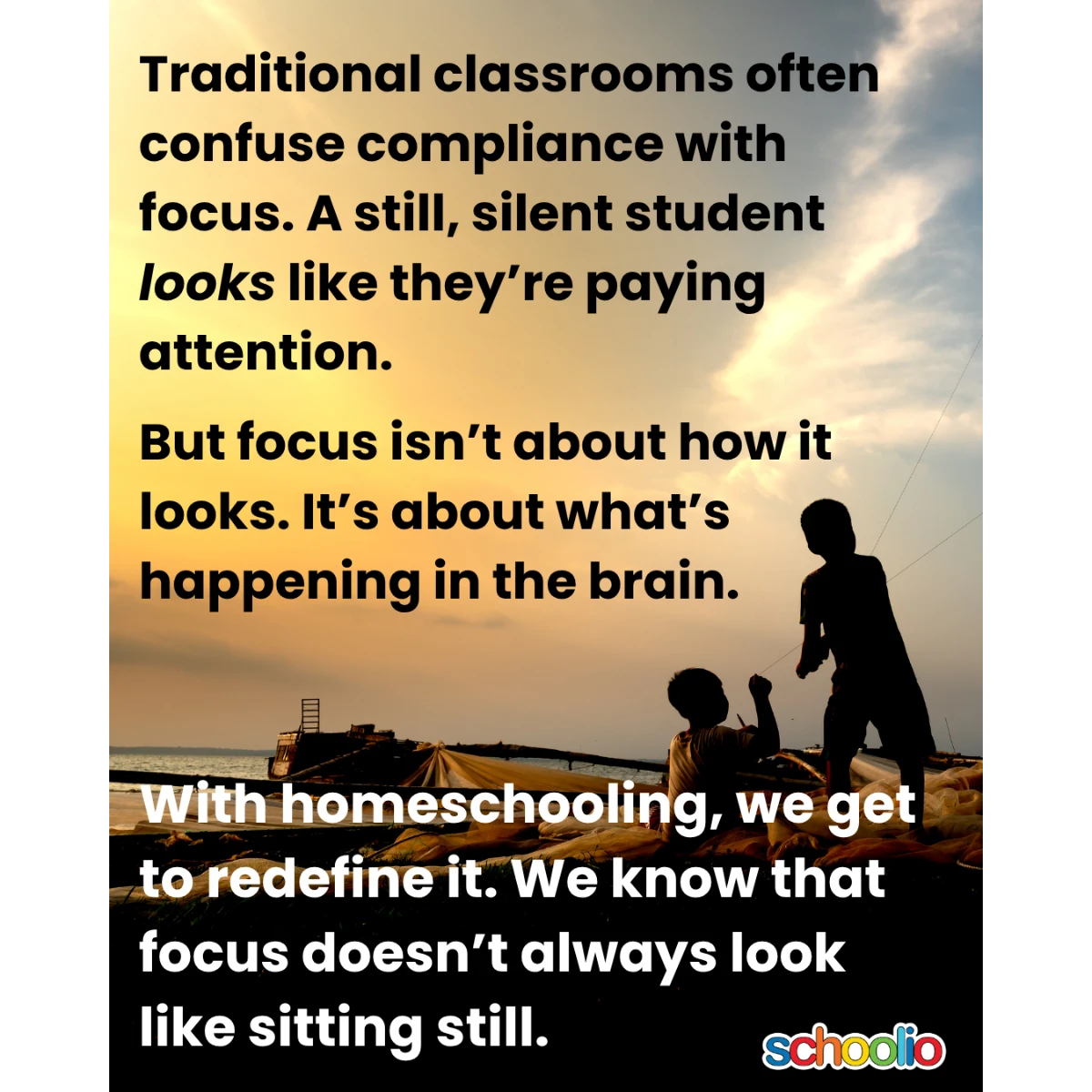
Traditional classrooms often confuse compliance with focus. A still, silent student looks like they’re paying attention. But how many times are they zoning out, daydreaming, or working hard just to appear calm?

At home, we get to redefine it.

✔ Focus can look like doodles in the margin while listening.

✔ Focus can look like bouncing on a trampoline while memorizing math facts.

✔ Focus can look like humming quietly while reading.


The truth is, focus isn’t about how it looks. It’s about what’s happening in the brain.

So if your child can’t sit still — maybe don’t fight it. Maybe lean into it. Movement can be the bridge between frustration and fun, resistance and retention.

Because focus doesn’t always look like stillness. Sometimes it looks like joy.


? Lindsey

Certified Special-Ed Educator & Co-Founder, Schoolio

The Quiet Wins That Matter Most

The Quiet Wins That Matter Most


This has been on my mind today…

Some days, the work feels heavy. You’re building something that doesn’t yet exist. A platform that reimagines education, reshapes how kids learn, and gives power back to the people who’ve been left out of the conversation for too long—parents, students, and those who learn a little differently.

You push through meetings, plans, deadlines, product reviews. You tweak systems, question decisions, and hold the big vision in your mind like a lighthouse, even on foggy days. But once in a while, something cuts through all that noise. A comment. A thank-you. A message that reminds you why you started this in the first place.

That happened to me recently.

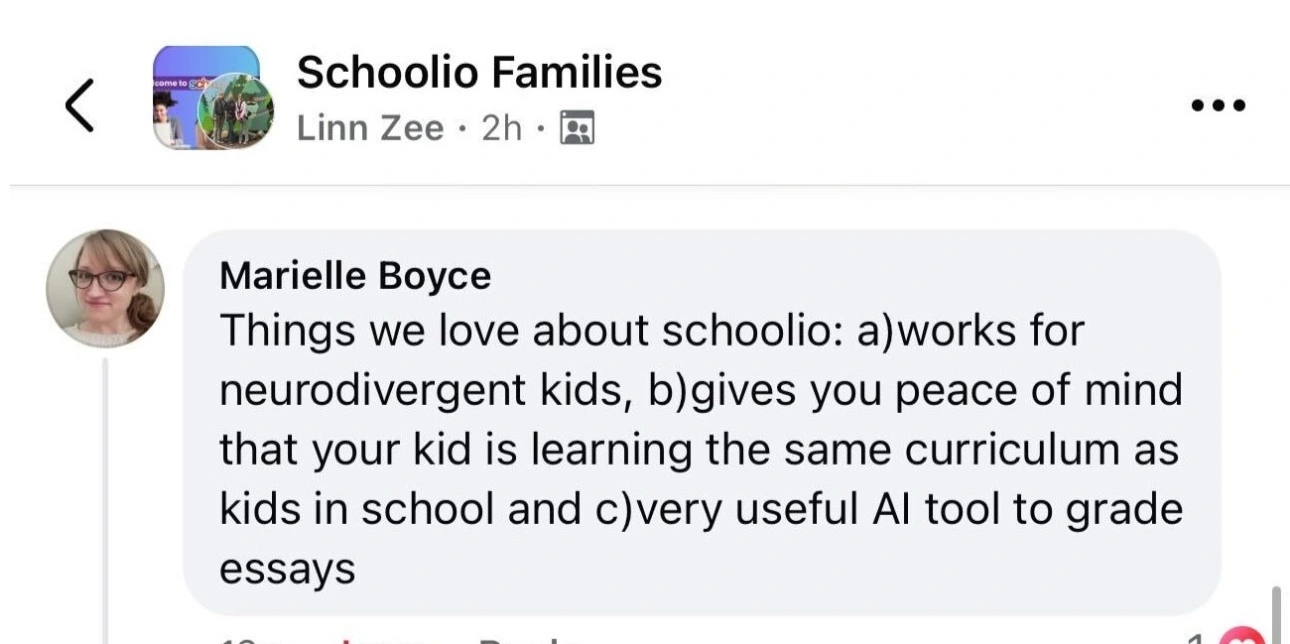
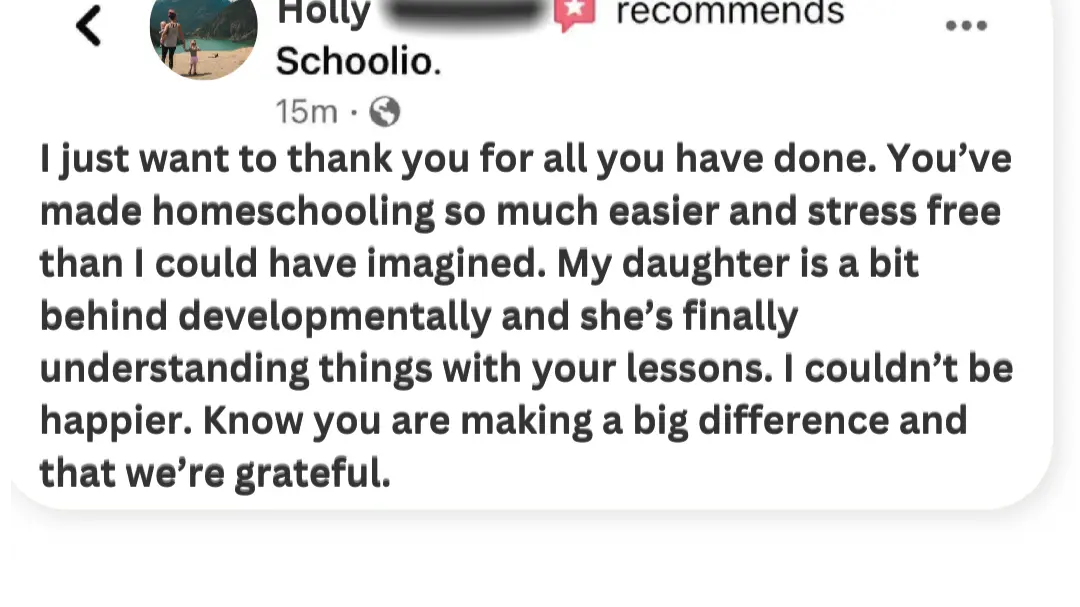
A parent shared a short post in our Schoolio Families group. Just a few lines. No hashtags. No fuss. Just truth.She said she loved Schoolio because it works for her neurodivergent child. Because it gives her peace of mind knowing her kid is learning the same curriculum as students in traditional school. And because the AI tools helped with grading essays.


Customer Testimonial

Simple. Direct. But when I read it, it stopped me.

Because that right there is the quiet win that matters.

She didn’t say we changed her life. She didn’t say we were perfect. What she shared was something more real. She shared relief. Confidence. Stability. The kind of stability every parent needs, but especially the ones who are walking a different path.


The truth is, a lot of the parents we serve never wanted to homeschool. They weren’t planning for it. It wasn’t on their vision board. But something shifted—maybe a bad experience at school, a child’s needs not being met, or just a gut feeling that things weren’t working.

And now they’re here, trying to do what’s best for their child, even when the world questions them for it.

This is what we built Schoolio for. For that parent who lies awake at night wondering if they’re doing enough, for the child who learns better with space and silence, for the families that don’t see themselves in glossy brochures or test scores and for the moments when a tool actually helps and no one has to fight for it.

You don’t always get to see the impact of your work. You don’t always hear how it lands. But every now and then, someone like Marielle speaks up and says, This helped. And for me, that’s everything.

Because this isn’t just about curriculum or platforms or AI tools. This is about building something that lets families breathe again. Something that says: you’re not alone. You’re not wrong. And yes, you can do this.

That’s the win I hold onto today.


Sathish

still learning, still unlearning

Why ADHD is Keeping Your Child Awake

Why ADHD is Keeping Your Child Awake: Understanding Sleep Struggles in ADHD Kids


It’s 10:00 p.m., and you’re already bracing yourself. Your ADHD child is tucked into bed, but instead of drifting off, they’re talking a mile a minute, bouncing their legs under the covers, or hyperfocusing on a book, game, or story idea. Hours later, they’re still awake — and you know the morning will be rough.

Sound familiar? You’re not alone. Many families of ADHDers find that bedtime is the hardest time of day. ADHD brains and sleep just don’t follow the same rules as everyone else’s. Understanding why ADHD makes sleep so tricky — and how to work with your child’s brain instead of against it — can help you reduce frustration, ease bedtime battles, and support your child’s overall health.


Why ADHD and Sleep Don’t Mix Easily

For kids (and adults) with ADHD, sleep difficulties are extremely common. Up to 70–80% of ADHDers experience persistent sleep problems — not just because of “bad habits,” but because of how their brains and bodies function.

Here are some key reasons ADHD kids struggle with falling and staying asleep:

1. Delayed Melatonin Release

Research shows that many ADHDers have a delay in melatonin production — the hormone that signals the body it’s time to sleep. Their “sleepy signal” comes hours later than typical, making them naturally more alert at night.

2. Hyperactivity as Racing Thoughts

For some ADHDers, hyperactivity doesn’t mean bouncing off the walls — it’s mental. At night, the brain races through thoughts, ideas, or worries, making it nearly impossible to “shut down.”

3. Hyperfocus at Night

When the world is quiet, ADHDers may lock into hyperfocus — reading, building, gaming, or creating — and lose track of time entirely. That 15-minute “just one more” quickly turns into hours.

4. Irregular Routines

ADHD brains crave novelty and struggle with consistency. Sticking to rigid routines can feel impossible, which often leads to inconsistent bedtimes and wake-ups that disrupt circadian rhythms.

5. Circadian Rhythm Shifts (DSPS)

Delayed Sleep Phase Syndrome (DSPS), where the natural body clock runs later than typical, is notably more common in ADHD individuals. They simply aren’t tired until much later than societal schedules allow, making mornings especially painful.


Signs ADHD Sleep Struggles Might Be Affecting Your Child

  • Bedtime stretching into late hours, no matter how early you start winding down
  • Extreme difficulty waking up, even with enough hours in bed
  • Morning irritability, brain fog, or emotional dysregulation
  • Best focus and energy late in the day instead of mornings
  • Constant battles around bedtime routines

If this sounds like your household, it’s not because you’re “failing” at bedtime. It’s because ADHD brains are wired differently.


The Impact of Poor Sleep on ADHD Kids

When kids with ADHD don’t get quality rest, the ripple effects show up everywhere:

  • Increased ADHD symptoms: impulsivity, distractibility, and poor regulation intensify.
  • Emotional dysregulation: meltdowns, frustration, and mood swings are more frequent.
  • Learning struggles: fatigue worsens focus, memory, and motivation.
  • Family stress: nightly battles and groggy mornings strain relationships.

Adapted Sleep Hygiene for ADHD Brains

Standard sleep hygiene tips often feel overwhelming or unrealistic for ADHD families. A neurodiversity-affirming approach makes them practical and supportive. Here are strategies that actually work for ADHDers:

1. Personalized Routines

Establish consistent wind-down rituals, but tailor them to sensory needs. Some kids may prefer dim lights and quiet reading, while others regulate best with stretching, deep pressure (like a weighted blanket), or calming play.

2. Environmental Supports

Create a sensory-friendly sleep environment. Use blackout curtains to block light, white noise to mask sound, weighted blankets for calming pressure, or soft bedding that avoids irritating textures.

3. Tech Timing

Set a structured cut-off for stimulating screens, but don’t remove special interests entirely. Calming formats like audiobooks, podcasts, or slow-paced shows can support winding down without triggering over-stimulation.

4. Flexible Approach

Avoid rigid “sleep rules” that lead to battles. Instead, focus on gradual adjustments, like moving bedtime earlier by 10–15 minutes at a time, or setting realistic goals instead of strict demands.

5. Regulation Aids

Mindfulness exercises, gentle movement before bed, or sensory tools can help calm the nervous system. In some cases, melatonin supplements (if recommended by a healthcare provider) can support resetting the body’s clock.


Homeschooling and ADHD Sleep Challenges

Here’s the good news: homeschooling gives you flexibility most families don’t have. Instead of fighting the impossible battle of making your ADHD child match a “standard” sleep schedule, you can:

  • Let them sleep until their bodies are rested, without alarms and out-the-door rushes.
  • Start academics later in the morning, when your child is alert and focused
  • Use mornings for movement, outdoor play, or low-demand activities
  • Let afternoons and evenings (their natural focus times) be the most academic
  • Teach self-awareness by helping them recognize when they feel tired or focused

This adaptability not only reduces stress but also helps your child thrive by working with their natural rhythms.

“But that won’t prepare them for the real world!”

I hear you naysayers, but forcing your child to go to bed early and wake up early now, won’t necessarily make it easier for them a decade from now. They have ADHD, which means their brains are wired differently—and they always will be. For many, mornings will always feel harder, and a 9–5 routine will always require an alarm. But that doesn’t mean they need to suffer through that reality now. Also, right now they are growing. They are learning. They are in need of good rest to be their best selves- why wouldn’t we give that to them as part of their homeschooling, and childhood, experience?


A Hopeful Note for Parents

If sleep feels like the never-ending struggle of your ADHD journey, remember this: your child isn’t being defiant, lazy, or manipulative. Their brain chemistry is different, and sleep challenges are part of the package.

With patience, adapted strategies, and flexible routines, you can support your child in finding rest. Homeschooling offers the gift of adjusting the day to fit your child’s real needs — not forcing them into a mold that doesn’t fit.

Better sleep won’t happen overnight (literally!), but small shifts add up. Over time, you’ll find the balance that lets your child rest, recharge, and thrive.


? Lindsey

Certified Special Ed Educator & Co-Founder, Schoolio

The Harder Path Forward

The Harder Path Forward


customer feedback

I didn’t understand the courage it took until years later.

When my family immigrated to Canada, I was angry. I didn’t have the words for it at the time, but every part of me resisted this new life. I missed my friends, my neighbourhood, my routines. I was a teenager lost between two worlds—resentful of the change, and confused by the silence I had to carry with me in every classroom, every hallway, every awkward introduction.

People looked at me differently. Sometimes with curiosity, sometimes with judgment, but always with the weight of assumptions I hadn’t earned. The stereotypes followed me. So did the loneliness.

Back then, I thought my parents were wrong. I thought they didn’t understand what I had lost. But as I grew older—became a parent, built a life, listened to others—I began to see the truth I’d missed entirely.


It wasn’t an escape. It was a sacrifice.


They had uprooted everything they knew for a sliver of possibility—a better education, a safer life, a shot at something bigger than what we’d left behind. And they did it quietly. Without recognition. Without thanks. Without certainty. Just faith.

That story echoes again and again in the lives of homeschooling families we meet at Schoolio. While the world rushes to label them—too radical, too soft, too unqualified—what we see is something different. We see courage. We see parents choosing a harder path, not because it’s easier, but because it’s right for their child.

It’s not a summer experiment. It’s not a last resort. It’s a quiet, determined rebellion against a system that no longer fits.

And here’s the question we rarely stop to ask: if the traditional school system—funded, structured, and normalized—is so perfect, why are so many parents choosing to leave it behind?

Why are they willing to rebuild an entire learning experience from scratch?


Because sometimes love means walking uphill.


At Schoolio, we don’t see homeschoolers as fringe or fearful. We see them as architects of something new. Builders of bridges their children can walk across safely. Parents who are saying, “I will not wait for the world to catch up. I’ll start right here.”

And for those of us who have walked a harder path before, we know exactly how much strength that takes.

Sathish
still learning, still unlearning

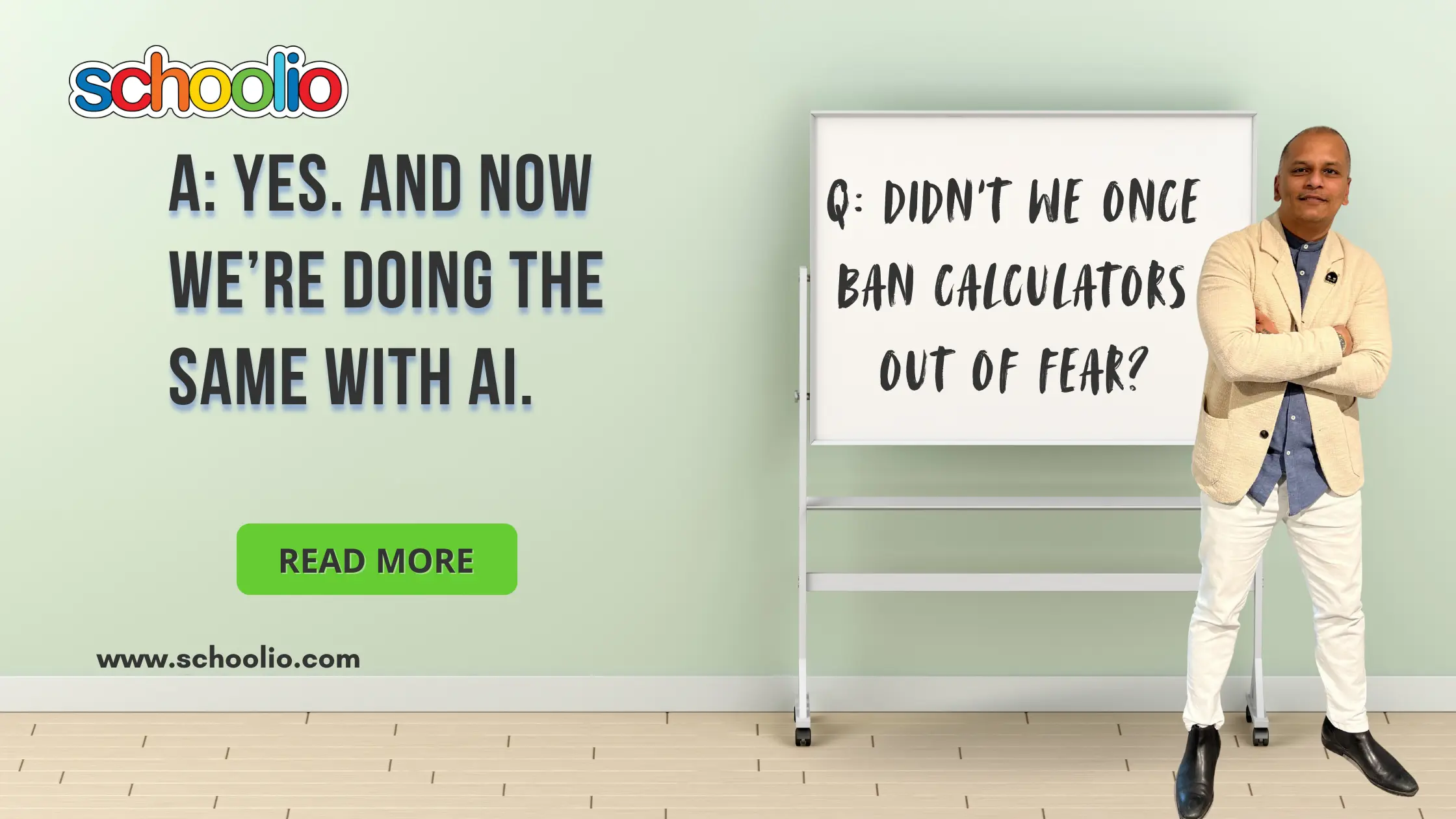
We Banned Calculators Once. Out of Fear. Not Logic.

We Banned Calculators Once. Out of Fear. Not Logic.


They said it would make kids lazy. That if we let students use calculators, they’d forget how to think. Teachers warned of doom, boards debated bans, and parents worried that the math their children were learning wasn’t “real.” But the truth is, the calculator didn’t replace understanding—it freed it. It helped students move faster, go deeper, and build confidence instead of anxiety. We don’t question calculators anymore. They’re standard. Obvious. Necessary.

And yet here we are again.

Today, it’s not calculators we’re afraid of—it’s AI. It’s new models of learning that don’t look like the rigid classrooms we remember. It’s the idea that maybe, just maybe, school shouldn’t be one-size-fits-all. And that fear, as it always has, shows up in familiar ways: skepticism, delay, control. The irony is that the world is changing faster than ever, but our systems still ask kids to move in lockstep. To sit still. To follow instructions. To learn passively in a world that demands action, agility, and personal agency.

At Schoolio, we see this every day. Families come to us because they’re not just choosing homeschooling—they’re choosing possibility. They’re choosing to move past fear and toward tools that give them freedom. Freedom to customize. Freedom to pause and restart. Freedom to learn with joy, not dread. And the moment parents hand over that freedom to their kids, something amazing happens. Not because they’re chasing trends, but because they’ve decided to lead.

We didn’t build Schoolio to replace teachers or classrooms. We built it because we believe that learning should reflect real life—messy, beautiful, nonlinear, and full of second chances. Our hybrid model combines digital lessons and print-based work, future-readiness and core subjects, structure and flexibility, because we know real learning lives somewhere in between.

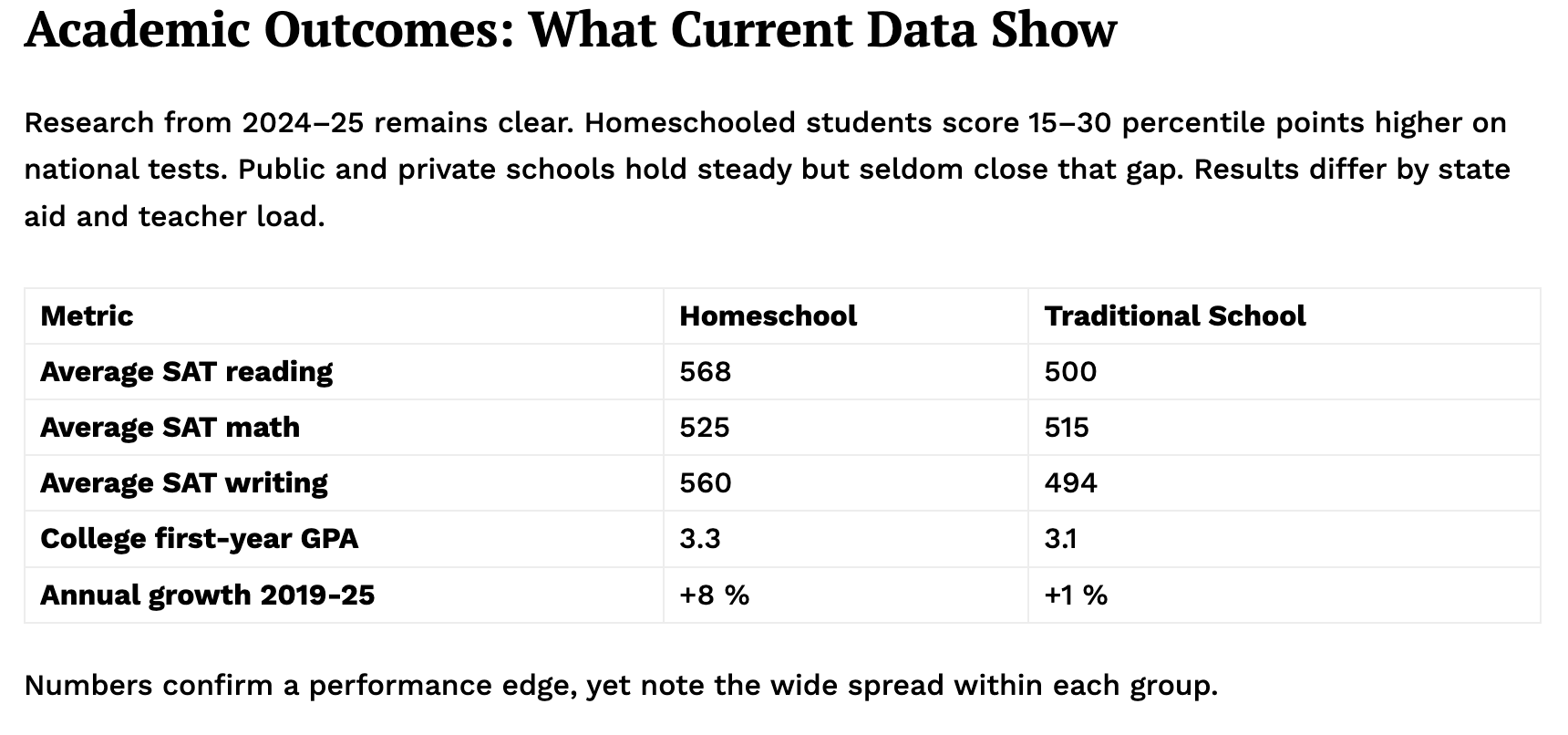
https://www.intelligentliving.co/homeschooling-vs-traditional-school-2025/

Academic Outcomes 


It’s easy to fear the future when you don’t trust the tools. But just like the calculator, the right tools don’t replace thinking—they unlock it.

And this time, we don’t have to wait decades to figure that out.

Homeschooling in Action: When Real Life Is the Lesson

 Homeschooling in Action: When Real Life Is the Lesson


This has been on my mind today…

Some of our best homeschool lessons didn’t happen at a desk. They happened in the kitchen.

Once a month, I had each of my kids choose a meal they wanted to learn to cook. Step one? Read the recipe. Step two? Make a grocery list. Then we’d take clipboards to the store and suddenly math came alive. They priced out items as we added them to the cart and compared brands. They calculated totals. Without a single worksheet, they were budgeting, adding, multiplying, and problem-solving in real time.

But here’s where it got really interesting: they also learned that meals cost very different amounts. One month, my son picked steak, asparagus, and Caesar salad. Delicious — but pricey. That same month, my daughter chose spaghetti with garlic bread. Much more affordable. They could see, right in front of them, how food choices affect a budget.

And there was another rule: each meal had to be balanced. So they weren’t just thinking about money, they were thinking about nutrition. Is there a protein? A vegetable? A healthy grain? They learned how to make choices that weren’t just tasty, but healthy, too.

Then came cooking day. Each child had their turn, side by side with me, learning how to chop, stir, season, and time things so it all came together. And in the end? We all sat down to eat the fruits of their labor together.

It was never just about cooking. It was reading comprehension, sequencing, chemistry, motor skills, patience, budgeting, and nutrition — all in one. And the learning stuck because it mattered to them.

That’s what I love about homeschooling. The “curriculum” doesn’t always look like curriculum. Learning is embedded in life. It’s tactile, it’s real, and that makes sense to kids, and that learning lasts.

So if you’re ever worried you’re not doing “enough,” here’s your reminder: cooking dinner together is school. And your kids might just learn more from it than any worksheet could offer.


? Lindsey

Certified Special-Ed Educator & Co-Founder, Schoolio