The Marketing Engine: How to Attract Families to Your New Microschool

TL;DR – Quick Answer:
Don’t just market ‘homeschooling’; market ‘outcomes and connection.’ Build authority by sharing your ‘Supportive Coach’ philosophy and use evidence-based curriculum to build trust.

The biggest challenge for a new microschool is **trust**. Parents are leaving a familiar (even if broken) system for something unknown. To win them over, your marketing needs to focus on solving the **’institutional burnout’** they are feeling. They aren’t looking for a better version of the public board; they are looking for a completely different rhythm.

Authority-Driven Growth

Share your ‘permission to pivot’ narrative. Explain why your school focuses on micro-bursts and emotional wellness. By using a certified, **evidence-based** curriculum like Schoolio, you give parents the peace of mind that their child is meeting standards while thriving in a flexible environment.

Product Focus: The Microschool Launch Guide

We’ve helped hundreds of founders launch. Our all-in-one bundles provide the ‘box’ so you can focus on the ‘delivery.’ [IMAGE: Schoolio Ontario Bundle with Launch Materials]

Confidence is the precursor to conversion. If parents see you have a plan, they will trust you with their child’s future.

Selling the Pivot, Not the Product

Parents don’t switch to a microschool because they want a new math book. They switch because they are in crisis. Their child is crying before school, their family dynamic is strained, and they feel like the ‘institutional 7-hour day’ is stealing their child’s childhood. Your marketing must speak directly to that pain. You aren’t selling ‘school’; you’re selling the ‘permission to pivot’ to a life where education fits the child, not the other way around.

Trust Through Transparency

The biggest barrier to enrollment is the fear of ‘falling behind.’ By using an evidence-based, teacher-certified curriculum like Schoolio, you provide a layer of institutional trust to your alternative model. You can show parents exactly how their child is meeting provincial or state standards through our digital tracking, while still maintaining the flexible, interest-led rhythm of your school. This transparency is the engine that converts skeptical observers into committed advocates.

Ready to take the next step?

Browse Curriculum Bundles

Justice Sensitivity in Autistic Kids: When “That’s Not Fair” Isn’t Just a Phase

Justice Sensitivity in Autistic Kids: When “That’s Not Fair” Isn’t Just a Phase

Have you ever watched your child completely unravel over something that seems… small?

A rule that wasn’t followed.

A sibling getting away with something.

A teacher enforcing something inconsistently.

A character in a book being treated unfairly.

And suddenly your child is in tears.

Or arguing intensely.

Or refusing to move on.

And you find yourself thinking:

Why can’t they just let this go?

If your child is autistic, there’s a good chance you’re not dealing with stubbornness.

You’re seeing justice sensitivity.


What Is Justice Sensitivity?

Justice sensitivity is a heightened emotional and cognitive response to perceived unfairness.

For some autistic kids, fairness isn’t a preference.

It’s a core organizing principle.

Their brains often process rules and systems in very black-and-white ways. If the rule is the rule, then it should apply consistently. If something is wrong, it is wrong. Not “kind of.” Not “depending on context.”

And when that structure breaks?

It can feel destabilizing.

This isn’t just moral passion.

It’s neurological discomfort.


Why It’s So Intense

Autistic brains often seek predictability.

Rules create predictability.

Fairness creates predictability.

When something violates fairness, it can feel like the entire structure shifts.

A sibling breaks a rule and nothing happens?

A teacher disciplines one student but not another?

A parent changes a plan without explanation?

To a justice-sensitive child, that doesn’t feel minor.

It feels unsafe.

And when something feels unsafe, the nervous system reacts.

Sometimes that looks like arguing.

Sometimes it looks like crying.

Sometimes it looks like refusing to participate at all.

But underneath it is usually distress.


Is This Only an Autism Thing?

Justice sensitivity is especially common and intense in autistic individuals, partly because of:

  • strong rule orientation
  • black-and-white processing
  • deep moral reasoning
  • difficulty tolerating inconsistency

That said, ADHDers can experience it too — often layered with rejection-sensitive dysphoria or emotional intensity.

But when you see a child who cannot move past perceived unfairness, who perseverates on it, who feels it in their body for hours?

That’s often a very autistic profile.


What It Looks Like at Home

Justice sensitivity can show up as:

Relentless “That’s not fair!”

Correcting others constantly.

Getting deeply upset about rule-breaking.

Struggling when siblings are treated differently (even if developmentally appropriate).

Arguing about wording or technicalities.

Emotional reactions to injustices in books or shows.

And here’s something important:

Many justice-sensitive kids aren’t just upset when they’re treated unfairly.

They’re upset when anyone is.

They may cry over news stories.

Over fictional characters.

Over classmates.

Their empathy can be enormous.

But it can also be overwhelming.


Why “Life Isn’t Fair” Doesn’t Help

It’s tempting to respond with:

“Well, life isn’t fair.”

But that statement doesn’t regulate a nervous system.

It often escalates it.

Because to a justice-sensitive child, fairness isn’t optional.

It’s foundational.

Dismissing the feeling can make them feel unheard — and that compounds the distress.

Validation doesn’t mean agreeing.

It means acknowledging.

“I can see why that feels unfair to you.”

“That makes sense that you’d be upset about that.”

That simple step lowers intensity dramatically.


The Hard Part: When They’re Technically Right

Sometimes your child is correct.

It was inconsistent.

It was unfair.

You did treat siblings differently.

The rule did change.

And this is where growth happens.

Instead of defending immediately, we can model repair.

“You’re right. That wasn’t consistent. Let me think about that.”

That teaches flexibility without dismissing principle.

Another one I liked teaching my own kids, and the kids I taught in classrooms is this: “Fair doesn’t mean everyone gets the same, fair means everyone gets what they need to succeed.” This teaches our kids that rules aren’t always black and white, and to be empathetic when others need support or accommodations. This will be important as they get older too and need to self-advocate for their own needs as autistic people in the world.


Teaching Nuance Without Breaking Them

Justice-sensitive kids don’t need their sense of fairness erased.

It’s often a strength.

They grow into adults who:

  • advocate
  • protect others
  • notice inequity
  • care deeply about ethics

But they do need help tolerating imperfection.

That looks like:

Explaining context.

Teaching developmental differences.

Helping them see intention vs outcome.

Practicing flexibility in low-stakes situations.

Building emotional regulation tools for when unfairness happens.

Not forcing them to stop caring.

Helping them care sustainably.


The Bigger Reframe

If your autistic child melts down over fairness, it doesn’t mean they’re dramatic.

It means they care deeply.

And sometimes, deeply caring in a world that is inconsistent is exhausting.

Justice sensitivity isn’t something to squash.

It’s something to guide.

When you validate the feeling but gently expand perspective, you’re not weakening their moral compass.

You’re helping them carry it without it crushing them.

Slow Is Not Falling Behind — Especially for Neurodivergent Kids

Slow Is Not Falling Behind — Especially for Neurodivergent Kids


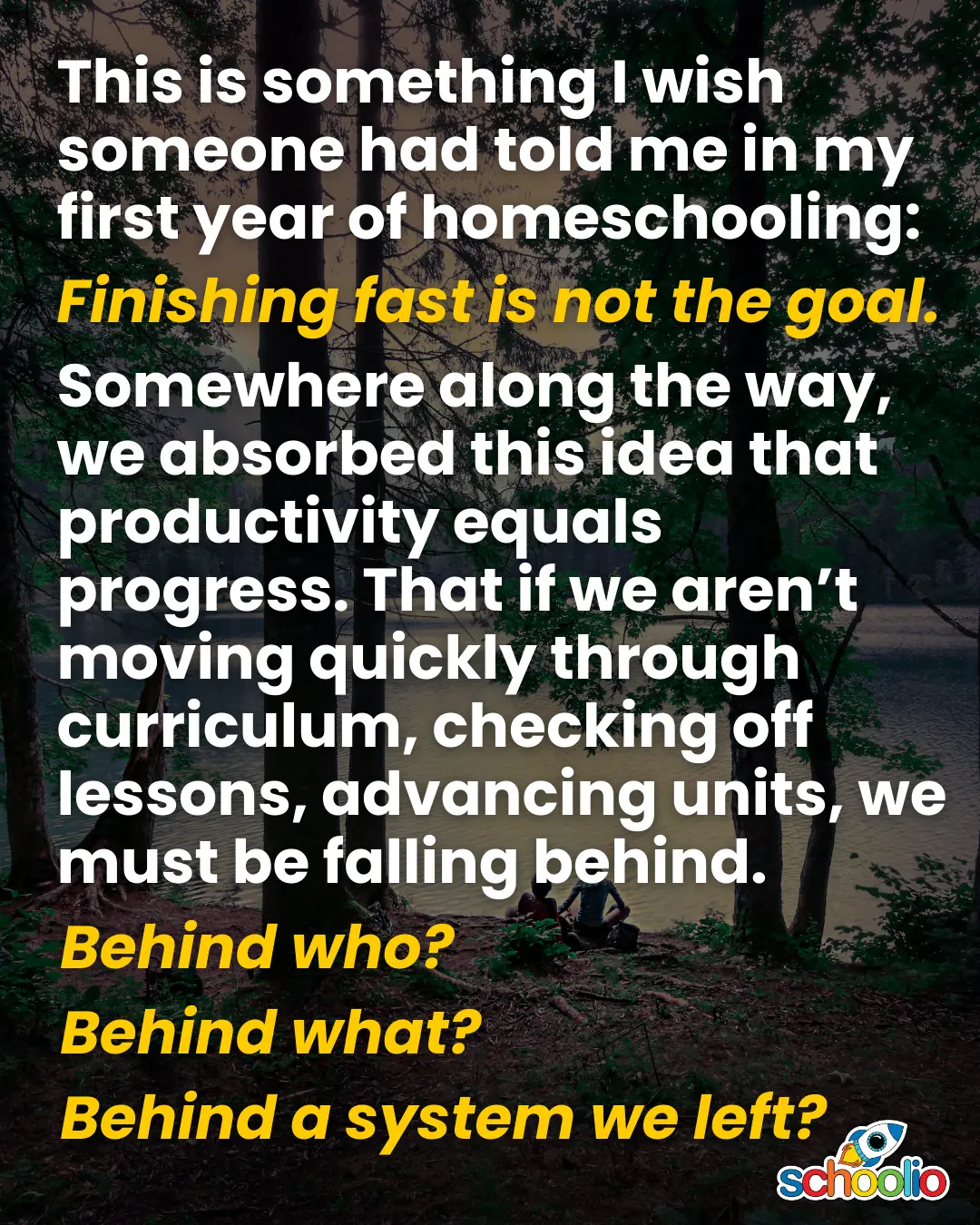
This is something I wish someone had told me in my first year of homeschooling:

Finishing fast is not the goal.

Especially not for neurodivergent kids.

Somewhere along the way, we absorbed this idea that productivity equals progress. That if we aren’t moving quickly through curriculum, checking off lessons, advancing units, we must be falling behind.

Behind who?

Behind what?

Behind a system we left?

When you’re homeschooling an autistic, ADHD, dyslexic, AuDHD, or otherwise neurodivergent child, pace is not a moral issue. It’s a nervous system issue.

And slow is not a flaw.


When “Four Lessons” Becomes Ten Days

Our writing courses, for example, are typically structured in four parts:

Lesson One: Brainstorming

Lesson Two: Writing day one

Lesson 3: Writing day two

Lesson 4: Editing

On paper, that’s four days.

In real life?

It might be ten.

And that’s okay.

If your child can only focus for fifteen solid minutes before their brain taps out, stretching one writing lesson across multiple days isn’t lowering the bar.

It’s protecting their capacity.

It’s teaching them that writing doesn’t have to feel like drowning.

I would rather see one writing assignment completed thoughtfully, with pride and confidence, than three rushed through with frustration and shutdown.

One done well is more valuable than three done miserably.

Every single time.


Productivity Culture Sneaks Into Homeschooling

Even when we leave traditional school, we bring its pace with us.

We feel pressure to “stay on track.”

We worry about being “behind.”

We compare how much we’ve covered.

But coverage is not comprehension.

Speed is not mastery.

And volume is not engagement.

Neurodivergent kids often need:

  • More repetition (or less redundancy!)
  • More breaks
  • More sensory regulation
  • More autonomy
  • More recovery time
  • More learning time dedicated to Social Skills and Emotional Intelligence

If we measure success by how much we completed, we miss the more important questions:

Did it stick?

Do they feel confident?

Are they emotionally regulated?


Engagement Beats Volume

When a child works at a sustainable pace, something powerful happens.

They stay willing.

They don’t start to hate the subject.

They don’t associate learning with shame or overwhelm.

They build confidence instead of resistance.

That’s not falling behind.

That’s building foundation.

And foundation matters more than speed.


Pace Is a Tool — Not a Rule

Curriculum pacing guides are suggestions.

Not contracts.

Not deadlines.

Not moral benchmarks.

If your child needs:

  • Three days for one math concept
  • Three weeks for a writing assignment
  • To read one chapter a day instead of three
  • A full pause during a hard life season

That is not failure.

That is responsive parenting.

That is adaptive education.

That is you paying attention to the human in front of you.


What Actually Matters

At the end of the year, I don’t ask:

“How many units did we finish?”

I ask:

Is my child still curious?

Do they feel capable?

Are they willing to try again tomorrow?

Because a happy, engaged child who trusts themselves as a learner will always outpace a burned-out child who learned to rush for approval.

Mastery beats completion.

Engagement beats volume.

Joy beats speed.

Slow is not behind.

Slow is intentional.

Slow is sustainable.

Slow is often exactly what neurodivergent kids need.


? Lindsey

certified special-ed educator, homeschool mom, & co-founder of Schoolio

Anxiety in Neurodivergent Kids: When Behavior Is Really a Nervous System Response

Anxiety in Neurodivergent Kids: When Behavior Is Really a Nervous System Response


Anxiety in neurodivergent kids doesn’t always look like worry, tears, or saying “I’m anxious.”

More often, it looks like:

  • Arguing over small requests
  • Avoiding work until the very last minute
  • Staring off into space when asked a question
  • Melting down over something that seems minor
  • Saying “sorry” over and over again

And because it doesn’t look like anxiety, it’s often misunderstood as defiance, laziness, disinterest, or immaturity.

But for ADHDers and autistic kids, anxiety is frequently a body response, not a thought problem. Their nervous system is reacting to perceived threat — even when there’s no obvious danger.

To understand this, we need to talk about the four stress responses.

The Four “F” Responses: How Anxiety Shows Up in ND Kids

When the nervous system detects a threat, it doesn’t stop to ask whether the threat is logical. It reacts automatically. For neurodivergent kids — whose brains already process the world more intensely — everyday situations can trigger these responses more easily.

These aren’t signs of dysfunction.

They are adaptive survival responses.

1. Fight

What parents often see:

  • Verbal outbursts
  • Argumentative or oppositional behavior
  • Clenched jaw or fists
  • Explosive reactions to small requests

What’s actually happening:

The child’s body feels under attack — by pressure, overwhelm, sensory overload, or loss of control. The nervous system shifts into defense mode.

Fight isn’t about wanting conflict.

It’s about protecting oneself when escape doesn’t feel possible.

Common triggers for ND kids:

  • Being rushed
  • Feeling misunderstood
  • Too many demands at once
  • Sensory overload (noise, light, touch)

2. Flight

What parents often see:

  • Leaving the room
  • Avoiding tasks
  • Procrastination
  • Excessive bathroom breaks
  • Daydreaming or “checking out”

What’s actually happening:

The nervous system has decided, I need to get away from this.

Flight doesn’t always mean physically running. It often shows up as mental escape — zoning out, scrolling, disappearing into imagination, or putting tasks off indefinitely.

For ND kids, flight is common when:

  • A task feels too big or unclear
  • Failure feels likely
  • The environment feels overwhelming

Avoidance isn’t laziness.

It’s anxiety trying to reduce harm.


3. Freeze

What parents often see:

  • Blank stares
  • Non-responsiveness
  • “I don’t know” repeated over and over
  • Difficulty starting tasks
  • Seeming shut down or slow

What’s actually happening:

The nervous system is overloaded and hits pause.

Freeze happens when fight and flight both feel unsafe or unavailable. The brain goes offline to protect itself.

This is especially common in neurodivergent kids with:

  • Executive dysfunction
  • Auditory processing challenges
  • High emotional sensitivity

To a parent, it may look like refusal.

To the child, it feels like their brain just… stopped.


4. Fawn

What parents often see:

  • Over-accommodating behavior
  • Difficulty setting boundaries
  • Excessive apologizing
  • People-pleasing
  • Fear of disappointing others

What’s actually happening:

The nervous system believes safety comes from keeping others happy.

Fawn responses often develop in ND kids who have learned — consciously or unconsciously — that being “easy,” compliant, or agreeable reduces conflict or criticism.

This response is frequently seen in:

  • Girls and AFAB neurodivergent kids
  • Kids who mask heavily
  • Kids with rejection-sensitive dysphoria

It looks calm on the outside, but it’s often driven by deep anxiety.


Why Neurodivergent Kids Are More Vulnerable to Anxiety

Neurodivergent kids experience the world as louder, faster, brighter, and more demanding.

Their anxiety is often triggered by:

  • Sensory overload (noise, lighting, textures)
  • Social pressure (expectations to behave “normally”)
  • Environmental mismatch (settings not designed for their brain)
  • Constant correction or criticism
  • Unclear expectations or sudden changes

When a child’s nervous system is constantly bracing for overwhelm, anxiety becomes a baseline — not an occasional emotion.


Reframing Behavior Through a Nervous System Lens

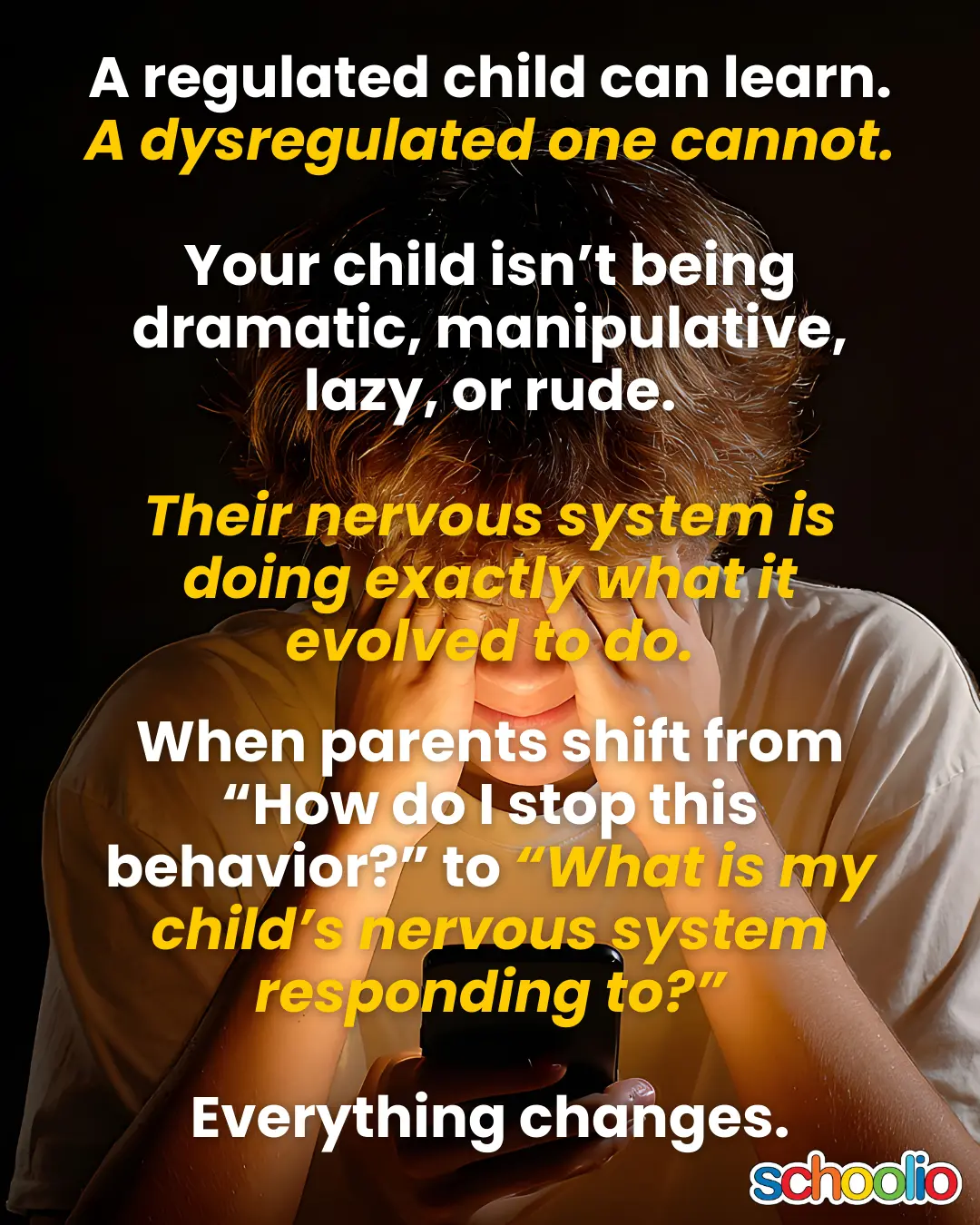
When parents shift from “How do I stop this behavior?” to “What is my child’s nervous system responding to?”

Everything changes.

Instead of punishment, we move toward regulation.

Instead of control, we build safety.

Instead of power struggles, we create connection.


How Parents Can Support Anxiety in ND Kids

1. Reduce Perceived Threat

Lower the emotional intensity around tasks.

  • Fewer words
  • Softer tone
  • More time

Pressure escalates anxiety. Safety reduces it.


2. Name What You See

“You’re not in trouble. I think your body feels overwhelmed right now.”

Naming the response helps kids feel understood instead of ashamed.


3. Offer Regulation Before Expectation

A regulated child can learn.

A dysregulated one cannot.

Movement, quiet time, deep pressure, or sensory breaks often need to come before problem-solving.


4. Build Predictability

Consistency lowers anxiety for ND kids.

  • Clear routines
  • Visual schedules
  • Advance warning for changes

Predictability tells the nervous system: you’re safe here.


5. Avoid Moralizing Anxiety Responses

These responses are not choices.

They are reflexes.

Your child isn’t being dramatic, manipulative, lazy, or rude.

Their nervous system is doing exactly what it evolved to do.


The Takeaway

Fight, flight, freeze, and fawn aren’t flaws.

They’re signals.

When we recognize anxiety behaviors in neurodivergent kids as adaptive responses to perceived threat, we stop trying to fix the child — and start fixing the environment.

And that’s where real healing begins.

When Learning Becomes Theirs

When Learning Becomes Theirs


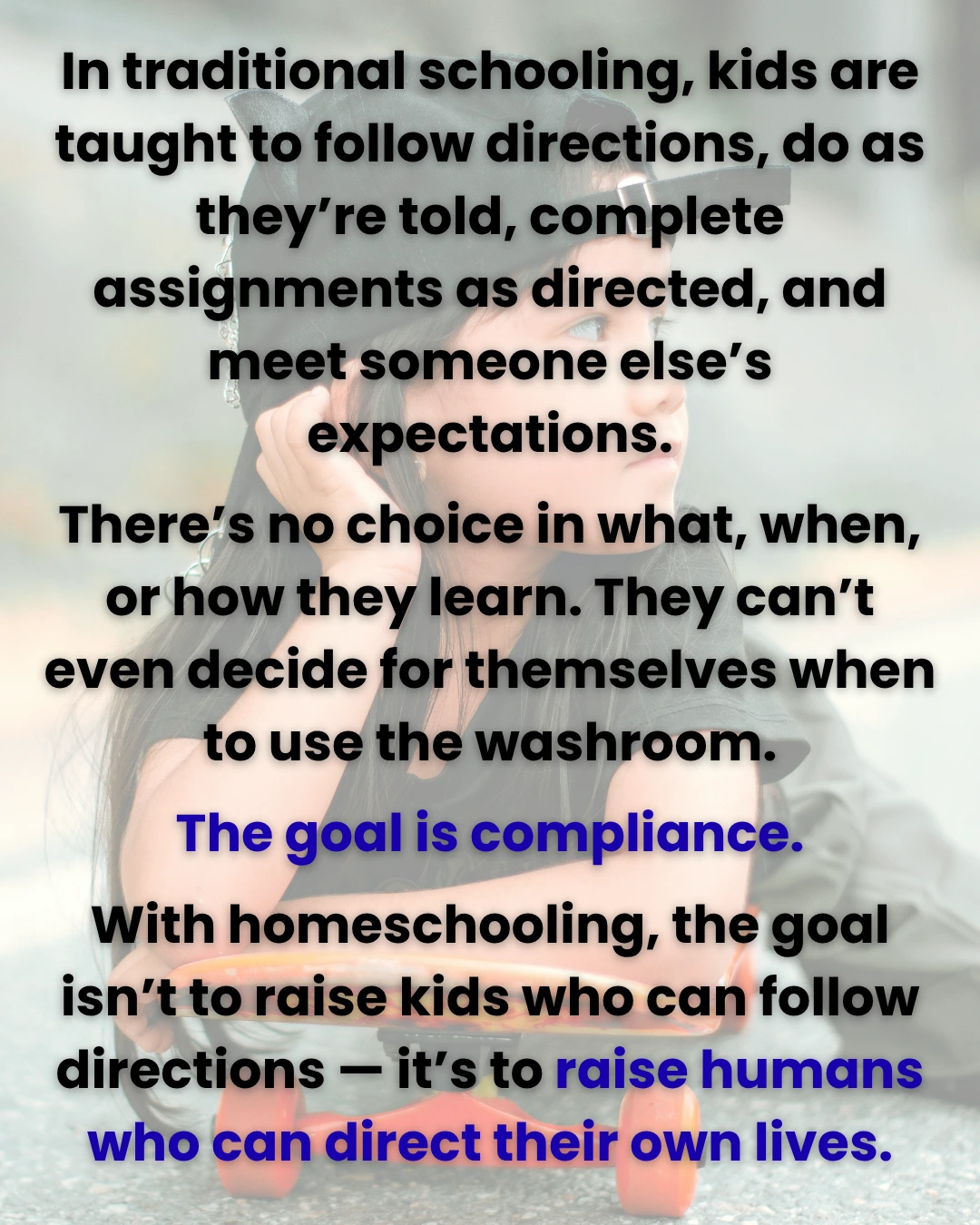
In traditional schooling, kids are taught to follow directions, do as they’re told, complete assignments as directed, and meet someone else’s expectations.

There’s no choice in what, when, or how they learn. They can’t even decide for themselves when to use the washroom.

And that’s a way of learning — but it’s not the same as learning how to:

  • Set personal goals
  • Reflect on growth
  • Ask great questions
  • Navigate challenges with persistence
  • Make choices about what (and how) they want to learn

That’s the difference between compliance and ownership.

When kids feel like school is something being done to them, resistance sets in.

When they feel like it’s something they’re actively building, everything changes.

I’ve seen this shift happen over and over in homeschooling. When you give kids a voice in their learning — whether it’s choosing which subject to start with, setting a goal for the week, or diving deep into something they’re curious about — they start to care differently.

They ask better questions. They push through challenges. They learn because they want to, not because they have to.

It’s not about giving up structure — it’s about sharing the steering wheel.

When we invite kids into the process of shaping their education, we’re not just teaching academics. We’re teaching self-awareness, confidence, and lifelong learning skills that reach far beyond any test score.

Because the ultimate goal isn’t to raise kids who can follow directions — it’s to raise humans who can direct their own lives.

? Lindsey

Certified Special-Ed Educator & Co-Founder, Schoolio

Learning Area and Perimeter in Minecraft

Learning Area and Perimeter in Minecraft


Math can feel abstract sometimes. Numbers on a page. Formulas to memorize. Eyes glazing over.

That’s exactly where we were when we hit perimeter and area. My kids weren’t connecting with it — and honestly, I couldn’t blame them. Why does drawing rectangles on a worksheet feel so important when you’re seven?

So we switched it up.

We opened Minecraft.

Suddenly, it wasn’t about boxes on paper. It was about building.

  • Perimeter became the fence we needed around our animals. How much fencing did we need to keep the sheep in?
  • Area became the flooring for the rooms of a house. How many blocks would it take to fill in the kitchen or living room?

And just like that, the concept clicked.

Instead of “math problems,” it became their world. They cared about the outcome, because they had ownership in the project. They weren’t just solving for numbers — they were solving for sheep. For walls. For a house they were excited to design.

That’s the power of leaning into your child’s interests. When you connect learning to something they love, the barriers start to fall away.

It doesn’t mean every lesson becomes a video game (though sometimes that helps ?). It means you take the thing they’re already excited about and use it as a bridge into the learning.

Because here’s the truth: kids don’t resist learning. They resist learning that feels irrelevant.

And sometimes, all it takes is a fence for sheep to make the numbers finally make sense.


? Lindsey

From Survival Mode to Success: How Homeschooling Helps Kids Recover from Public School Burnout

From Survival Mode to Success: How Homeschooling Helps Kids Recover from Public School Burnout

By Lindsey, certified special-ed educator and homeschooling parent


Let’s talk about burnout.

Not yours (although that’s real too), but your child’s.

We don’t always recognize it at first — that slow unraveling that happens when a child is pushed too hard, too fast, or in the wrong environment for too long. But once you’ve seen it, you know.

The spark is gone.

The joy is missing.

School becomes a trigger — not a place of growth.

And for many families, burnout is the reason they start homeschooling.

Not because they always planned to.

But because they needed suddenly needed to.

Their child needed saving.


What Burnout Looks Like in Kids

It doesn’t always look dramatic. Sometimes it looks like:

  • Refusing to do any schoolwork
  • Saying things like “I’m stupid” or “I hate school”
  • Meltdowns over math problems
  • Constant headaches or stomachaches
  • Feeling defeated before they even start

Often, these reactions aren’t about laziness or attitude.

They’re about exhaustion.

They’re about a nervous system that’s been in overdrive, sometimes for years.

When a child reaches that point, what they need isn’t more pressure.

They need a reset.

Maybe now you’ve taken the first step and pulled them out. You’re probably feeling like you don’t know what to do next.


Here’s where I recommend you focus your attention for the next few weeks:

1. Focus on Relationship

The first goal isn’t academics, it’s connection.

Use this time to listen, play, talk, and just be together.

Remind your child that they are safe. That learning is no longer tied to stress or punishment.


2. Focus on Regulation

What helps your child feel calm?

That might look like daily walks, sensory play, quiet reading time, or lots of movement breaks.

Build your days around those regulating activities first, then gently add in small moments of structured learning when they’re ready. Remember that a dysregulated person cannot learn. Don’t try to force it.


3. Keep Learning Gentle and Flexible

For now, avoid tight schedules or packed plans. Start with short lessons and engaging, hands-on topics.

Follow their interests. Bake together. Do science experiments in the kitchen. Read out loud. Keep it light and meaningful.

Build confidence. If you only do their favorite subjects for a little while that’s totally fine. If you bump them down a grade or two (or as many as you need) to find a spot where they’re experiencing regular success and building their confidence in their own abilities, that’s where you need to be right now.


4. Let Rest Be Part of the Plan

Your child may need more sleep. More down time. More freedom. That’s not slacking, that’s burnout recovery.

You’re not falling behind. You’re laying the foundation for real, lasting learning. Let them sleep. Let them play. Let them be outside. Mostly, just let them be.


5. Watch for Small Signs of Re-engagement

You may not get a big “aha” moment. But you might notice them asking more questions. Smiling during a lesson. Picking up a book on their own.

Celebrate those small steps- they’re signs the spark is coming back!


A Gentle Reminder

If your child is in survival mode right now, you might be seeing some behaviors that are hard to handle. Avoidant, angry, overwhelmed. Remember that it doesn’t mean you’ve made the wrong choice, it means your child feels safe in your presence to let their emotions out.

It means they need time.

And homeschooling gives you that time.

Time to rest.

Time to reconnect.

Time to slowly reintroduce learning, in ways that feel safe and meaningful.

Eventually, the spark comes back.

The light returns to their eyes.

And you’ll realize: this isn’t just about school.

It’s about giving your child a soft place to land when the world became too much.

And that? That’s success.


Lindsey

certified special-ed educator and homeschooling parent

Download our Free Guide “Deschooling: The First 30 Days After Leaving Public School” with coupon code DESCHOOL.

https://schoolio.com/product/schoolio-understanding-deschooling/?wmc-currency=USD

When My Daughter Hyperfocused on Dragons, This Is What I Did

When My Daughter Hyperfocused on Dragons, This Is What I Did

by Lindsey Casselman

From the moment I introduced 8-year-old Grace to the How to Train Your Dragon universe, she become OBSESSED with dragons. This wasn’t just an interest in the movies, it was a full-blown SPIN (special interest).

Dragons. Morning to night. Drawing them. Reading about them. Talking about them. Playing with the toys. Watching the movies. Wearing her dragon costume and sleeping with her dragon stuffies.

But dragons are not real, and not on the list of things to study in our homeschool. We were supposed to be learning about physical geography in Social Studies at that time, and frankly, no one was very excited about it.

Riveting stuff like landforms and regions of North America: plains vs. mountains, the Arctic vs. the Maritimes. The Schoolio course had an ongoing activity throughout where we were creating a booklet as we went through each region, one at a time. Learn the geography. Record the land features, water sources, vegetation, and animals for each.

She had zero interest.

To be honest? Neither did I.

But I’ve been at this long enough to know when it’s time to toss the plan and follow the spark instead. So one day, after reading the lesson to her aloud, I looked at her and said:

“What kind of dragon would live here?”

That was all it took.

Every lesson from that point on was golden. For each region, she studied the environment and designed a dragon that could survive there — down to the smallest detail.

The plains dragon was a dusty yellow and burrowed in wheat fields. It lived in underground dens and hunted at dusk, camouflaging in the tall grasses.

The Arctic dragon was brilliant white, blending into the snow and ice. It was slow-moving, conserving energy in the cold, and had thick scales to withstand frigid temperatures.

Snow wing
Snow Wing Dragon

The Maritime dragon? A shimmering blue sea serpent, waterbound and fast, feeding on fish and crustaceans, curled up in coastal caves during storms.

Swamp Swimmer
Swamp Swimmer Dragon

The mountain dragon was stone-grey and jagged, with thick claws that helped it cling to steep cliffs. She told me it would “echo-roar” through the valleys when it was angry.

Sea Wing
Sea Wing Dragon

She even brought out the clay and sculpted each of them — every single one. We had an entire dragon ecosystem on our homeschool table by the end of the week.

And she remembered everything.

Not just the dragons — the geography. The climate. The vegetation. The animals. The features of each region. It stuck.

Because when learning is connected to something meaningful — even something mythical — it matters. It lands. It lives in their brains and bodies in a way a worksheet never could.

We didn’t abandon the curriculum. We just used it differently. And isn’t that the whole point of homeschooling?

To follow the spark. To shift when something’s not working. To take a kid’s hyperfocus and say, “Yeah, let’s go there.”

Dragons and all.

? Lindsey

certified special-ed educator & co-founder, Schoolio

Homeschooling Neurodivergent Children: Customized Learning

Embracing Homeschooling for Neurodivergent Children: A Tailored Approach with Schoolio

Homeschooling is becoming an increasingly popular choice for parents seeking to provide a more customized and supportive learning environment for their neurodivergent children. Neurodivergent children, including those who are autistic, ADHD, dyslexic, or have other learning differences, often face unique challenges in traditional school settings. Homeschooling offers the flexibility and personalization that can better meet their needs and support their educational journey.

Why Homeschooling?

Traditional school environments can sometimes be overwhelming for neurodivergent children. Factors such as large class sizes, rigid schedules, sensory overload, and a lack of individualized attention can hinder their learning and emotional well-being. By choosing to homeschool, parents can create a nurturing environment tailored to their child’s specific needs, fostering both academic and personal growth.

Customizable Curriculum for Unique Needs

One of the primary benefits of homeschooling is the ability to customize the curriculum. Neurodivergent children often have distinct learning styles and paces, and a one-size-fits-all approach can be ineffective. Homeschooling allows parents to adapt teaching methods and materials to suit their child’s preferences, whether they are visual, auditory, or kinesthetic learners.

Platforms like Schoolio offer a comprehensive and customizable homeschool curriculum that caters to neurodivergent learners. With Schoolio, parents can access a wide range of resources designed to support diverse learning needs. From interactive lessons to hands-on activities, Schoolio provides the tools necessary to create an engaging and effective learning experience.

Creating a Safe and Supportive Learning Environment

For neurodivergent children, a safe and supportive learning environment is crucial. Homeschooling allows parents to control the sensory environment, reducing distractions and creating a space where their child feels comfortable and focused. This level of control can significantly enhance the learning experience and help manage sensory sensitivities.

According to a Whangarei mum considering homeschooling for her autistic son, the traditional school setting was not accommodating his learning needs. By homeschooling, she hopes to better manage his education and provide the individualized support he requires. Schoolio’s resources can assist parents in creating such a supportive environment, offering guidance on setting up a conducive learning space at home.

Flexibility to Adapt and Evolve

Neurodivergent children often benefit from a flexible learning schedule that adapts to their daily needs and rhythms. Homeschooling offers this flexibility, allowing parents to adjust the pace and content of lessons according to their child’s progress and interests. This approach can prevent burnout and keep learning enjoyable and stress-free.

Schoolio’s digital platform supports this flexibility by providing a range of customizable lesson plans and educational activities. Parents can easily modify the curriculum to keep it aligned with their child’s evolving needs and preferences, ensuring that learning remains relevant and engaging.

Focus on Strengths and Interests

One of the most powerful aspects of homeschooling is the ability to focus on a child’s strengths and interests. Neurodivergent children often have unique talents and passions that can be nurtured through a personalized education plan. By incorporating these interests into the curriculum, parents can boost their child’s motivation and confidence.

Schoolio’s curriculum includes a variety of subjects and activities that can be tailored to highlight a child’s strengths. Whether your child excels in science, art, music, or technology, Schoolio provides the resources to develop these skills further and integrate them into their overall learning plan.

Community and Support

While homeschooling can seem isolating, many resources and communities are available to support parents of neurodivergent children. Online forums, local support groups, and educational platforms like Schoolio offer valuable advice, resources, and a sense of community. Connecting with other homeschooling families can provide support, share experiences, and exchange ideas.

Schoolio’s community forums are an excellent place to start. Here, parents can engage with others facing similar challenges, share success stories, and find encouragement. Additionally, Schoolio offers access to educational consultants who can provide personalized advice and support tailored to the needs of neurodivergent learners.

Conclusion

Homeschooling offers a viable and beneficial alternative for parents of neurodivergent children, providing the flexibility, customization, and supportive environment these children need to thrive. With platforms like Schoolio, parents can access a wealth of resources designed to support their child’s unique learning journey.

By embracing homeschooling, parents can create a personalized education plan that not only addresses the academic needs of their neurodivergent children but also fosters their overall well-being and growth. Explore Schoolio today to discover how their comprehensive and customizable curriculum can help you provide the best educational experience for your neurodivergent child.

Strategies for Neurodivergent Learner Success in Schoolio

Strategies for Neurodivergent Learner Success in Schoolio

Strategies for Neurodivergent Learner Success in Schoolio

Are you worried about your Neurodivergent learner?

There’s a growing awareness of the diverse needs of learners. According to recent statistics, approximately 1 in 5 children have a variation in their brain development, such as ADHD or autism spectrum disorder. Traditional school systems often struggle to accommodate these learners effectively. Which then leads to feelings of frustration and inadequacy. However, homeschooling provides a unique opportunity for neurodiverse education at home tailored to meet individual needs. With the right strategies for neurodivergent learner success in Schoolio and resources. Neurodivergent learners can thrive in a supportive environment.

Understanding Neurodivergent Learning Needs

Neurodivergent learners encompass a wide range of abilities and challenges. Some may excel in certain subjects while struggling in others, while others may require alternative methods of instruction to grasp concepts effectively. Understanding your child’s unique learning profile is crucial in developing a successful homeschooling plan.

Schoolio Family Plan

Customizing Curriculum and Instruction

Good homeschool programs recognize the importance of flexibility in curriculum design. One effective strategy is to customize the full year homeschool curriculum to meet your child’s understanding. This may involve adjusting grade levels by subject. Or focusing on areas of strength while providing additional support in challenging subjects. Utilizing Adaptive learning for neurodivergent children allows for personalized instruction tailored to individual learning styles and pace.

Leveraging Online Learning Resources

In the age of technology, Online learning for kids offers a wealth of educational resources at your fingertips. Platforms like Schoolio Learning Platform provide a diverse range of lesson videos, assessments, and worksheets that can be tailored to accommodate different learning preferences. Additionally, Inclusive homeschool programs often incorporate multimedia elements and interactive activities to engage neurodivergent learners effectively.

Incorporating Hands-On Learning

For some neurodivergent learners, traditional worksheets and textbooks may not be the most effective learning tools. Ebook downloadable workbooks offer a more hands-on approach to writing and reading, allowing children to engage with material in a tangible way. Incorporating Educational resources for ADHD such as interactive games, manipulatives, and real-life simulations can enhance learning experiences and promote deeper understanding.

Schoolio e-books

Creating a Supportive Learning Environment

Inclusive learning environments are essential for neurodivergent learning support. Establishing a routine and clear expectations can help reduce anxiety and increase confidence in learning. Additionally, providing opportunities for breaks and movement can help neurodivergent learning support children with ADHD or sensory processing differences to stay focused and engaged.

Fostering Self-Advocacy and Independence

Empowering neurodivergent learners to advocate for their needs and preferences is crucial for long-term success. Encourage open communication and Supportive homeschool programs that prioritize self-awareness and self-regulation skills. Teaching organizational strategies and time management techniques can also help Neurodivergent learning support learners take ownership of their learning journey.

Collaborating with Professionals and Peers

Homeschooling does not mean learning in isolation. Seek out Inclusive learning for neurodivergent families communities and support groups where you can connect with other families facing similar challenges. Additionally, don’t hesitate to Homeschooling for neurodivergent kids consult with educational professionals, therapists, and specialists who can provide guidance and resources to support your child’s unique needs.

Adjusting Learning to Meet Your Child’s Needs

Homeschooling provides a unique opportunity to create a supportive and inclusive learning environment for neurodivergent learners. By adjusting the learning to meet your child’s needs and leveraging adaptive learning for neurodivergent children resources and strategies, you can help your child reach their full potential. Remember, every child is unique, and finding what works best for your family may require some experimentation and creativity. With patience, perseverance, and a commitment to neurodivergent learning support, you can help your child thrive academically and personally.

Schoolio Learning Resources

Click here to learn about recognizing and nurturing neurodivergent talents