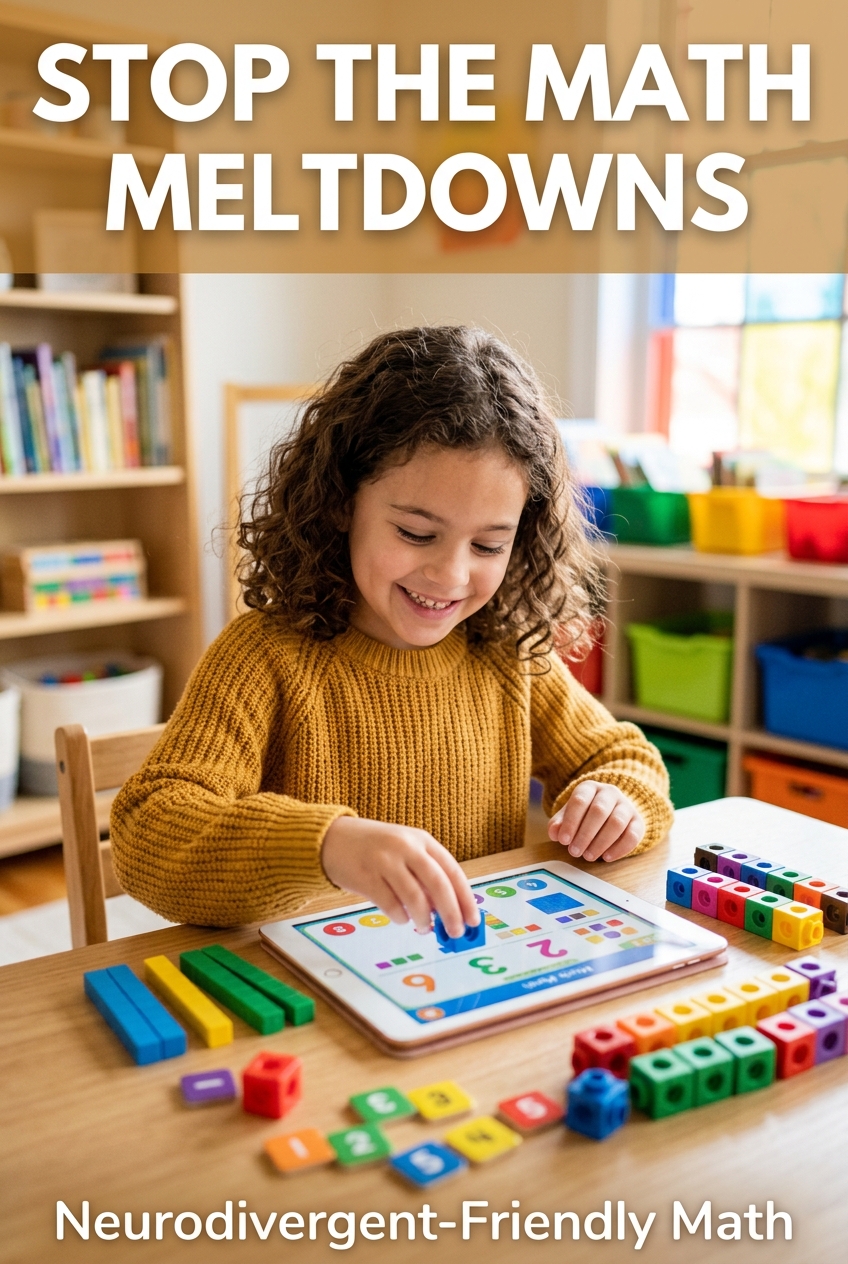
Creating an inclusive microschool isn’t just about ‘being nice’; it’s about neurodiversity-affirming design. Use micro-burst learning and clutter-free environments to reduce cognitive load.
Traditional institutional systems fail ADHD and neurodivergent learners because they demand a **rigid 7-hour day** of constant performance. Microschools have the unique advantage of being able to design for the **nervous system** first. This means moving away from over-stimulating classroom decor and 60-minute lectures.
The Power of Micro-Bursts in the Classroom
In a microschool setting, the **15-minute rule** is your best friend. Breaking core subjects like Math and ELA into high-intensity micro-bursts followed by interest-led play allows neurodivergent brains to regulate. You stop trying to ‘fix’ the student’s attention span and start designing a rhythm that respects it.
Product Focus: Clutter-Free Workbooks
Our physical workbooks are designed with this philosophy. We’ve stripped away the visual noise that causes ‘working memory leaks,’ providing a clean path to mastery. [IMAGE: Grade 4 Math Workbook Page Comparison]
When the environment is regulated, the learning happens naturally.
The Sensory Load of Traditional Schooling
We often talk about what children learn, but rarely *where* they learn it. Institutional schools are sensory minefields: fluorescent lights, constant bell ringing, and crowded hallways. For a neurodivergent learner, 80% of their energy is spent just trying to stay regulated in that environment, leaving only 20% for actual cognitive work. In your microschool, you have the opportunity to flip that ratio. By designing low-clutter, high-focus environments and prioritizing nervous system safety, you unlock the child’s true potential.
Dopamine-Friendly Learning Cycles
The ADHD brain doesn’t lack attention; it lacks dopamine. The ’15-minute rule’ works because it provides a clear finish line and immediate feedback. When you structure your microschool around micro-bursts, you’re creating a dopamine-friendly environment where students experience frequent ‘wins.’ This builds the confidence required to tackle more complex subjects like conceptual math. Our curriculum is built to support this Supportive Coach model, stripping away the visual ‘noise’ that leads to sensory overwhelm.
Ready to take the next step?