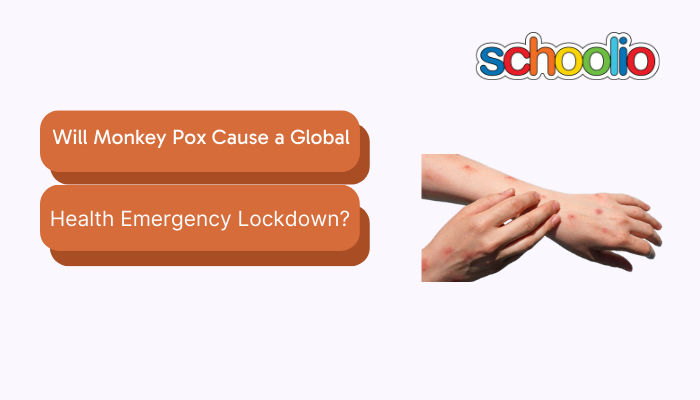
In recent years, the world has seen unprecedented public health challenges, and monkeypox lockdown fears are starting to surface. WHO has declared Mpox as a public health emergency. Now, you might wonder if we will face another global health lockdown.
Mpox has been spreading worldwide, raising concerns about its potential to cause widespread disruptions. While it’s natural to feel alarmed, the situation is not as dire as it may seem. Let’s dive deeper into the facts and explore whether a monkeypox lockdown is likely.
Current Situation and WHO’s Declaration About Monkey Pox Lockdown
In July 2022, the World Health Organization (WHO) declared Mpox a Public Health Emergency of International Concern (PHEIC). This declaration marked an important moment in the fight against this virus, which has spread in many countries. It signals the global need for cooperation in monitoring and control.
This situation may lead you to worry about your child’s safe education. But with flexible learning platforms like Schoolio, you can ensure uninterrupted education for your children, even if disruptions occur.
However, WHO’s alert raised awareness, leading to heightened surveillance and efforts to mitigate its spread. But does this mean a monkeypox lockdown is imminent?
Globally, the Mpox outbreak has resulted in tens of thousands of cases across several continents. Though the number of cases has surged, the death toll remains relatively low compared to other viral outbreaks.
According to WHO data, the number of cases reported so far this year is more than 15,600, with 537 deaths. While these figures are concerning, experts emphasize that Mpox is far less deadly than smallpox.
Additionally, certain regions have been hit harder by Mpox than others. Countries in West and Central Africa, where the virus originated, continue to report high numbers of cases. However, recent outbreaks have also emerged in Europe, North America, and Asia.
Notably, the U.S. and several European nations have rapidly increased cases, primarily among certain high-risk groups. Despite this spread, the response has been swift, and containment measures have helped slow transmission.
Also Read: Online Video-Based Homeschool Curriculum Instruction
Let’s understand the similarities and key differences between Mpox and Smallpox. This also sheds light on whether Mpox could lead to a public health crisis on the same scale.
Mpox vs. Smallpox: Similarities and Differences
To better understand the similarities and differences between Mpox and smallpox, it’s necessary to recognize their connections within the Orthopoxvirus family. This also explains how they manifest in transmission, symptoms, and severity.
While these two viruses share some characteristics, they differ in many ways that influence how we approach containment and public health responses, including the possibility of a monkeypox lockdown. The table below summarizes these comparisons:
| Feature | Mpox | Smallpox |
| Virus Family | Orthopoxvirus (related to smallpox) | Orthopoxvirus |
| Transmission | Primarily through close contact with bodily fluids, respiratory droplets, and contaminated materials (human-to-human or animal-to-human) | Human-to-human through droplets and direct contact |
| Natural Host | Mostly rodents, some primates (originates in animals) | Humans only (no animal reservoirs) |
| Symptoms | Fever, swollen lymph nodes, rash, skin lesions, mild compared to smallpox | Fever, rash, skin lesions, no lymph node swelling |
| Mortality Rate | 1-10% depending on the clade (Congo Basin being higher) | 30% on average before eradication |
| Incubation Period | 3-17 days | 7-19 days |
| Infectious Period | Infectious when symptoms appear, and lesions develop | Infectious once symptoms appear |
| Vaccine Availability | Smallpox vaccines provide protection; specific Mpox vaccines available | Vaccines available; smallpox was eradicated in 1980 |
| Global Impact | Endemic in parts of Africa, now spreading to other regions | Eradicated globally in 1980 |
Now that we’ve explored how Mpox compares to smallpox, it’s important to understand the nature of the Mpox virus itself.
Nature and Transmission of Mpox
- Mpox Virus Characteristics
Mpox is a result of monkeypox virus, which is related to the smallpox virus. However, it is less contagious and severe. The virus was first discovered in monkeys in 1958, hence the name. However, it was first introduced in rodents.
- Transmission Modes
The virus transmits in several ways, including animal-to-human transmission through contact with infected animals. Human-to-human transmission occurs through close contact with bodily fluids, lesions, respiratory droplets, or contaminated materials like bedding.
Unlike viruses that spread through casual contact, Mpox requires prolonged close contact for transmission. This reduces the likelihood of widespread community transmission and a monkeypox lockdown.
- Symptoms of Mpox
Mpox symptoms typically start with fever, muscle aches, and swollen lymph nodes. As the disease progresses, a rash and lesions develop, particularly on the face, hands, and feet.
These lesions eventually scab over and fall off. While these symptoms may sound alarming, most cases of Mpox resolve on their own within a few weeks.
The virus has two main clades: the Congo Basin clade, which is more severe, and the West African clade, which is milder. In the current outbreak, the West African clade is more widespread.
Are you ready to dive into the global spread and assess the risks associated with this virus? Let’s learn more!
Global Spread and Risk Assessment
As Mpox continues to make headlines, its global reach has raised concerns about how far and fast the virus might spread. Understanding the overall risk of transmission is important in predicting future outbreaks.
Let’s examine how Mpox spreads worldwide and assess its potential global threats to public health systems.
Areas of High Risk and Spread
High-risk areas include regions where endemic transmission has occurred for decades, such as parts of West and Central Africa. However, with recent outbreaks, new areas like Europe, the U.S., and Canada face significant spread risks.
Clusters have been identified in urban areas with high population density, especially among communities with close-knit social networks.
Risk of Spreading to Other Regions
As the virus spreads, public health experts are concerned that it will reach regions with limited healthcare infrastructure. However, the current risk of a global spread remains lower than that of other highly contagious diseases like COVID-19.
Experts believe the virus’s transmission patterns, which require prolonged close contact, will limit its ability to cause a monkeypox lockdown on a global scale. Even so, platforms like Schoolio can ensure your child’s learning continues smoothly, regardless of the circumstances.
Expert Opinions on Resurgence and Its Implications
Many virologists and epidemiologists are carefully monitoring the situation. They suggest that while the virus is concerning, it doesn’t warrant the extreme measures like lockdowns used during the COVID-19 pandemic. The limited transmission means a global outbreak is less likely to escalate to the point where a monkeypox lockdown would be necessary.
Time to explore the available vaccination and treatment options to control the outbreak and protect vulnerable populations.
Vaccination and Treatment to Avoid Monkey Pox Lockdown

Effective vaccination and treatments are the weapons to prevent widespread Mpox transmission. This step can help avoid the need for drastic measures like a monkeypox lockdown.
Vaccines offer strong protection against the virus, ensuring equitable access and addressing treatment challenges. It will certainly play an important role in controlling the outbreak. Here are the current vaccines and treatments available to fight Mpox.
Existing Vaccines and Efficacy
Smallpox vaccines, such as the ACAM2000 and Jynneos vaccines, have shown efficacy against Mpox. These vaccines can offer 85% protection against the virus, significantly lowering the chances of severe illness and transmission. Countries are now rolling out vaccination programs to target high-risk populations.
Challenges in Vaccine Distribution
One of the main challenges has been vaccine distribution, especially in regions with high case counts but limited resources. While wealthy nations have secured vaccines, lower-income countries struggle with access, potentially leading to uneven global protection.
WHO’s Emergency Use Listing (EUL)
WHO has included Mpox vaccines in its Emergency Use Listing (EUL) to address these disparities. This listing allows for faster distribution of vaccines to countries in need, especially those facing recent outbreaks. WHO’s goal is to ensure vaccines reach all affected regions equitably.
Partnerships for Vaccine Distribution
Organizations like UNICEF have also partnered with WHO and other bodies to facilitate vaccine distribution. These collaborations are important for ensuring the world’s most vulnerable populations receive protection against Mpox.
While vaccination and treatment play a major role, they must also receive support from strong public health measures to avoid the monkey pox lockdown.
Public Health Response and Measures
Let’s now look at how public health responses, including monitoring, contact tracing, and preventive strategies, are helping to contain the virus.
WHO Recommendations for ControllingMpox
WHO has issued guidelines recommending contact tracing, isolation, and vaccination as key strategies for controlling pox outbreaks. Strict measures are in place in high-risk areas; these do not currently include monkeypox lockdown.
Should there be any need for strict isolation, Schoolio allows your child to continue learning seamlessly from home.
Contact Tracing and Laboratory Investigations
Effective contact tracing is required to curb the virus’s spread. Alongside this, laboratory investigations help in confirming cases and understanding transmission patterns. This allows authorities to target their responses effectively, reducing the likelihood of a monkeypox lockdown.
Healthcare Worker Training
WHO has also launched initiatives to train healthcare workers to identify and manage Mpox cases. Proper training is important to limit the spread within healthcare settings, where close contact with infected individuals is common. The good news is that countries and organizations worldwide are working together! This unified response is a hope for global health security.
International Collaboration to Reduce the Chance of Monkey Pox Lockdown

Controlling a global outbreak like Mpox requires more than just national efforts. This is where international collaboration comes into the picture.
Collaboration with Africa CDC
International collaboration is important to face the Mpox outbreak. WHO has partnered with the Africa CDC to ensure that African nations, particularly those already dealing with Mpox, receive the necessary resources and support.
Coordinated Global Response
Countries worldwide have joined forces to tackle Mpox through coordinated international efforts. By sharing data, resources, and expertise, the global community is better prepared to face future outbreaks.
Funding for Global Response
Securing adequate vaccine distribution, testing, and research funding is a major priority. Governments and private sectors are working together to provide the necessary resources for a global response.
As international efforts continue, it’s necessary to consider future challenges. Let’s focus on the steps needed for long-term preparedness and global health security.
Future Challenges and Preparedness for Low Risk of Monkey Pox Lockdown
As we look ahead, strengthening global health systems and ensuring swift responses seems important to preventing future outbreaks.
WhileMpox is currently under control, the possibility of future outbreaks remains. To mitigate this risk, global health systems must be ready for any potential resurgence.
In the long term, experts are pushing for versatile vaccine manufacturing to adapt to new threats quickly, ensuring the world is better equipped to face future pandemics. Investing in global cooperation and preparedness decreases the likelihood of a monkey pox lockdown.
Conclusion
While the Mpox outbreak is a cause for concern, the current global response indicates that the situation is managable. Lockdowns are unlikely at this stage, thanks to targeted vaccination efforts, international collaboration, and effective public health measures. Meanwhile, Schoolio’s versatile platform ensures that your child’s education adapts just as quickly to new circumstances.
However, the ongoing Mpox outbreak requires continuous monitoring and preparedness. It has already influenced global health policies, leading to greater investments in surveillance and research. With the right strategies in place, the threat of a global health lockdown due to Mpox remains low. Global cooperation, along with proactive public health responses, will ensure we are well-prepared for any future challenges that may arise.
Also Read: The TOP 3 Most Important Skills to Teach Your Kids