Focus on Emotional Readiness Before Academics
This has been on my mind today…
I read about a mom in Queen Creek homeschooling her four kids using what she calls a more progressive approach. What stayed with me was not the label. It was the quiet confidence in how she trusted her children instead of managing them.
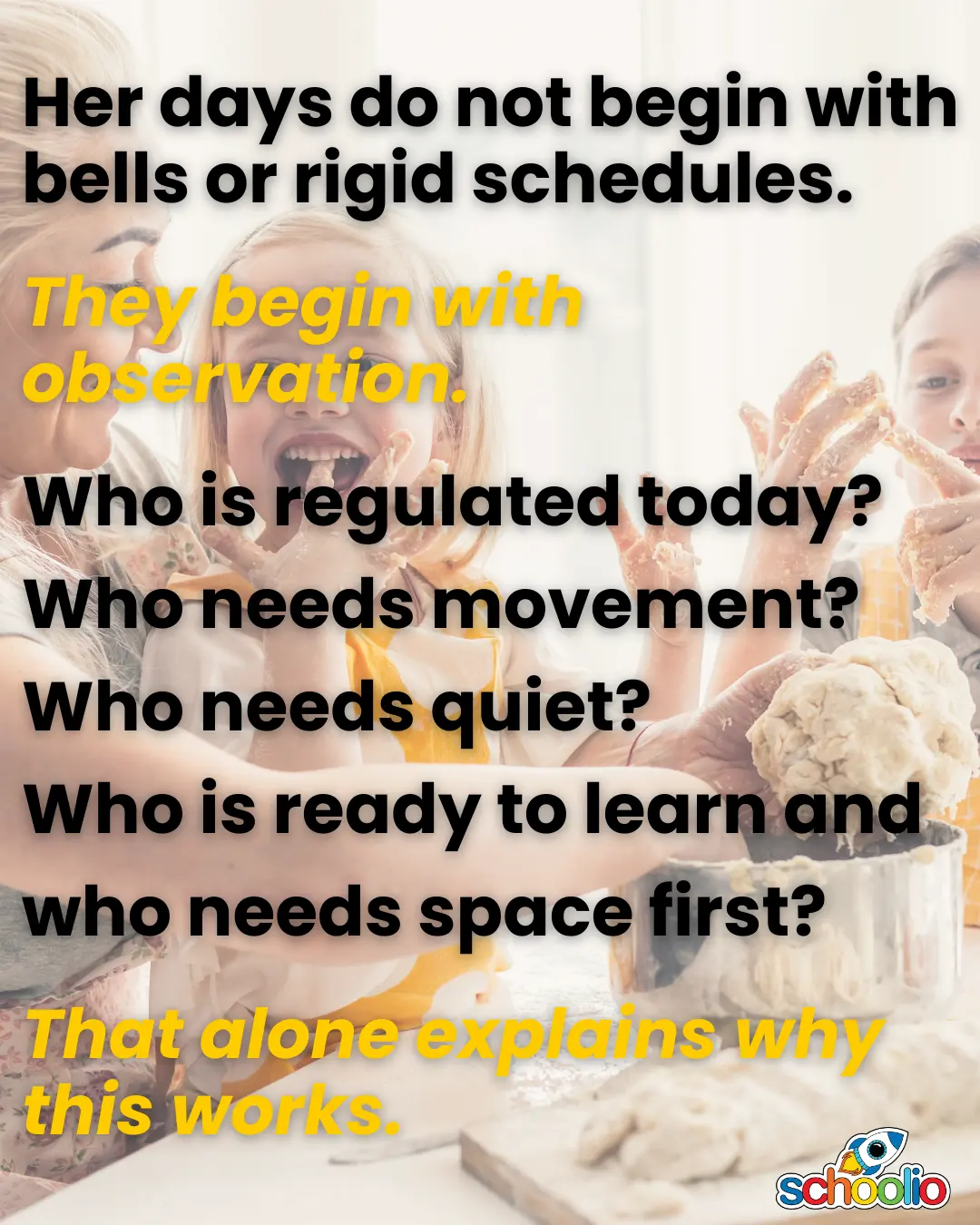
Her days do not begin with bells or rigid schedules. They begin with observation. Who is regulated today. Who needs movement. Who needs quiet. Who is ready to learn and who needs space first. That alone explains why this works.
She uses curriculum, but it is not the authority. It is a tool. Math might happen early for one child and later for another. Reading might be independent one day and shared the next. If something is not landing, she does not push harder. She pivots.
That is the part most systems struggle with. They confuse consistency with rigidity. They confuse pressure with progress.
What stood out most was her focus on emotional readiness before academics. She noticed that when her kids felt safe and calm, learning followed naturally. When they felt rushed or judged, everything shut down. Any parent of a neurodivergent or sensitive child knows this truth deeply, even if they have been told to ignore it.
This approach gives kids permission to go deep instead of wide. One child can stay with science longer without being rushed to keep pace. Another can take extra time with reading without being labeled behind. There is no artificial race. There is only progress that matches the child.
This is not chaos. It is intentional flexibility. It is structure that bends instead of breaks.
For neurodivergent kids especially, this matters. Many of them are not incapable. They are overwhelmed. They are not behind. They are overstimulated. When the environment adapts to them instead of forcing compliance, something powerful happens. Confidence returns. Curiosity comes back. Learning becomes possible again.
And here is where I get more opinionated.
Too many children are being pushed through systems that were never designed for how they think, feel, or regulate. When they struggle, the system calls them broken. This mom did the opposite. She changed the system around her kids instead of asking her kids to change who they are.
The result was not just better learning. It was a healthier home. Fewer battles. More willingness to try hard things. Less fear around mistakes. School stopped being something to survive and became something they could participate in.
That is the part we do not talk about enough.
For parents reading this and wondering what the takeaway is, it is not that you need to homeschool. It is that learning works best when your child feels seen first. Whether you are supplementing, transitioning, or rethinking school entirely, the question to ask is simple.
Is this environment helping my child feel capable or constantly reminding them they are not.
We see families arrive at schoolio from this exact moment. Not angry. Not anti school. Just deeply aware that their child needs something more responsive and more human. Especially neurodivergent kids who have spent years being told to try harder in systems that refuse to adapt.
Stories like this remind me that homeschooling does not have to be extreme or reactive. It can be thoughtful. Calm. Grounded in trust. Built around the child you have, not the one a system expects.
And when education starts there, kids do not just learn more. They believe more in themselves.
still learning, still unlearning
Source:
Queen Creek mom of 4 takes a more progressive approach to homeschooling
KJZZ Phoenix