When I look back at my own schooling in Singapore during the 1980s, I realize how much of it was built around conformity. A student’s worth was tied to a test score. Our futures were determined by how well we followed instructions, memorized content, and stayed in our seats. That system didn’t see who we were. It only saw what we could produce.
So much of homeschooling — for me, and for the thousands of families I’ve now spoken with — is really about unlearning that model.
At first, most parents try to recreate school at home. Schedules. Desks. Checklists. But slowly, over time, the shift happens. We stop asking, “Am I doing enough?” and start asking, “Is my child curious? Are they feeling safe enough to learn at their own pace?”
We realize that learning doesn’t have to look like sitting still. It can be messy, playful, deeply personal. Sometimes that realization comes from the chaos — the days when nothing goes according to plan, and you see your child learning anyway. Sometimes it comes from joy.
One mom who just started her free trial with Schoolio shared this incredible moment with us:
“I just signed up for a free trial and had my neurodivergent son test out a lesson in Social Studies, a subject he has not previously enjoyed. Until now! He enjoyed the lesson so much he was asking me to please print the PDFs for him to work on, which he also never does. I think this is a very good sign and look forward to him completing other lessons!”
This is the kind of learning traditional school often misses. For many kids, especially neurodivergent learners, subjects like Social Studies or Language Arts become walls instead of doors. But when the format changes — when they get space to go at their pace, explore topics through different modalities, or simply feel like they’re being listened to — everything opens up.
Homeschooling has helped me see that education isn’t about information delivery. It’s about connection. It’s about nurturing curiosity and self-awareness. It’s about teaching kids how to learn, not just what to memorize.
And that’s what public school often forgets — it’s not just the curriculum that needs change. It’s the entire culture. At Schoolio, we believe deeply in giving families the tools to break that culture, and build something better.
Because when we unlearn school, we begin to see learning everywhere.
When we think about homeschooling, we usually focus on the moment of decision — the bold step to withdraw your child from public school. But what no one really prepares you for is what comes next. The emotional rollercoaster. The fear. The freedom. The judgement. And sometimes, the deep, healing relief.
I remember sitting across the table from a group of school officials — a counselor, a legal advisor, the principal. All of them there with one clear message. They believed my daughter needed ADHD medication, and they were pushing hard. Not because we had explored every alternative. Not because she was in danger. But because the system didn’t know what else to do.
I was scared. I felt cornered. As a parent, I questioned everything in that moment — am I wrong? Am I risking her future? What happens if I say no?
But I did say no. I refused to medicate my daughter just to make her more “school ready.” I wanted her to grow up understanding her own mind and body. I wanted her to make choices as an adult with full awareness of the consequences — not be forced into something because a system didn’t have the tools to support her.
That moment was a turning point. It made me realize how many families are pushed toward homeschooling not because they planned to, but because they’re trying to protect their child from a system that won’t bend. And once they do take the leap, here’s what they often discover — the things no one tells you.
1. You’ll grieve what you thought school was supposed to be.
Even when school has been hard or harmful, there’s still a sense of loss. You grieve the routine, the friendships, the path you thought your child would follow. That’s normal. You’re not just changing schools — you’re changing your vision of the future. And that takes time.
2. Your child might decompress in ways you didn’t expect.
When kids leave a stressful school environment, they don’t always bounce back right away. Some become withdrawn. Others act out. Some sleep for days or resist any structure. This isn’t failure. It’s healing. You’ve given them space to feel safe — and that space will eventually be filled with curiosity and confidence again.
3. People will question your decision — sometimes harshly.
Friends, family, even strangers might ask, “Are you sure this is a good idea?” or “But what about socialization?” These questions sting, especially when you’re still figuring things out. But over time, you’ll grow more confident in your path — and your results will speak louder than any opinion.
4. You’ll start to see your child clearly — and that changes everything.
One of the most surprising and beautiful parts of homeschooling is how it reconnects you with your child. You notice their quirks, their strengths, their rhythms. You stop measuring them against someone else’s expectations. And you finally see them — not as a student to fix, but as a whole person with so much potential.
I’ve spoken to hundreds of families now who have made this jump. Some were pushed by crisis. Others chose it proactively. But every one of them, at some point, went through this quiet storm of feelings after leaving the public school system.
If that’s you, I just want to say — you’re not alone. This path isn’t easy, but it’s powerful. And your courage will shape your child’s life in ways no traditional system ever could.
Why Schoolio Is a Better Choice Than MiAcademy for Most Homeschool Families
MiAcademy is a popular homeschool program that’s been around for more than 20 years. It’s familiar. It’s easy. And if you’re looking to replicate traditional school at home with a little fun and games mixed in, it has a straightforward setup, a full list of core subjects, and a digital interface that feels familiar to kids coming out of the classroom.
But most families don’t start homeschooling because they want to recreate the classroom. They do it because the classroom wasn’t working.
You want something better for your kids.
Something more flexible, more purposeful, more in tune with your child’s unique needs, and something that gives you, the parent, more control to design the perfect program for your unique child and your unique family, especially those raising neurodivergent, curious, or outside-the-box learners.
That’s where Schoolio stands apart.
Both Schoolio and MiAcademy are digital homeschool programs, but they have some important differences. MiAcademy is a solid choice for families who want to follow a school-at-home model and aren’t bothered by having to supplement with other programs where digital learning falls short.
Schoolio is different.
It’s a whole new way to homeschool, built from the ground up by real homeschoolers, with modern families and neurodivergent learners in mind.
If you’re looking for a truly complete program with real customization, neurodivergent-friendly content, offline learning options, and the kind of future-ready education that will help your child thrive in the future, Schoolio is the clear winner.
Here are the top 5 reasons why Schoolio is a better choice than MiAcademy:
MiAcademy keeps things fairly simple when it comes to course offerings. Their non-core options are limited to Music & Art, World Languages, Life Skills, and Biblical Studies. And that’s pretty much it.
Schoolio goes far beyond that and offers hundreds of courses across a much broader range of subjects. We also offer an entire library of Future Readiness content, our one-of-a-kind collection you won’t find anywhere else.
Our Future Readiness courses include:
Financial Literacy (because balancing a budget is more useful than memorizing Pythagorean theorem)
Emotional Intelligence (because kids who understand themselves and others do better in life)
Emerging Technologies (because our kids are growing up in an digital-first world, and they need to understand how it works)
These courses are built with real-world relevance in mind, helping your child develop both academic skills and practical, future-ready thinking. This isn’t filler content. It’s the future. And it’s only at Schoolio.
2. Schoolio Is Designed for Neurodivergent Learners
This one’s huge, and it’s where many online programs miss the mark entirely.
If you have an ADHD or Autistic child, you already know that most educational platforms weren’t built with them in mind. MiAcademy, while decent in terms of simplicity and structure, doesn’t offer any specialized support for neurodivergent learners.
Schoolio does.
In fact, we’re the only homeschool curriculum platform intentionally designed to support and accommodate neurodivergent students.
We built our content and platform to maximize short attention spans, reduce redundancy, limit cognitive overwhelm, and allow for the flexibility neurodivergent learners often need. We have multiple ways to engage, and allow parents to switch between Scheduling Mode (for routine and structure) and Exploration Mode (for flexibility and curiosity-driven learning).
Our goal? To help families find what works, without power struggles or meltdowns. When your child feels successful and supported, everything changes.
3. Schoolio Costs Less and Delivers Way More
Let’s talk money.
Homeschooling families are often working with tight budgets, we understand, we’ve been there. At the end of the day, cost matters. MiAcademy’s pricing at $42/month per child is higher than our complete digital package (including every Schoolio course and every grade level) at just $39.99/month. And we offer 30% off for siblings, and a military discount too. Want to save even more? We also have discounted annual plans.
More flexibility. More content. Less money. It’s a no-brainer.
4. Schoolio’s ELA Program Crushes MiAcademy’s Lightweight Approach
ELA (English Language Arts) is often where fully online programs fall short, and MiAcademy is no exception.
Yes, they cover the basics: vocabulary, some reading comprehension, and grammar. But let’s be honest, a few vocab games and short reading passages won’t help your child become a thoughtful, articulate writer.
At Schoolio, we believe a strong ELA program must include:
Real novel studies
Essay and research writing
Creative writing and structured reflection
Oral communication and presentation skills
Our ELA curriculum goes far beyond multiple choice and true or false questions. We help your child build the writing, reading, and critical thinking skills they need to express themselves clearly and powerfully while building a love of reading and writing.
Our ELA program has been praised by homeschool parents as being simultaneously robust in its coverage and easy to implement for resistant writers and neurodivergent kiddos.
MiAcademy offers optional printable PDFs, but they’re not designed to be part of the main program flow, more as an optional add-on, and they’re not annotatable or savable, you have to print or save them and use a different program to annotate, then keep those for your records somewhere else. In other words, they’re a nice-to-have, not a core feature.
At Schoolio, we do things differently.
Our [Adaptive Learning Model](https://schoolio.com/programdesign/?) blends the best of both worlds: online tools and offline learning. You and your child get all the benefits of digital education: interactive lessons, flexible scheduling, auto-grading, and a dashboard to track progress. But that’s just the beginning.
We believe screen time should support learning, not dominate it.
That’s why every Schoolio course includes offline activities that often include hands-on activities such as:
Science experiments
Art projects
Outdoor exploration
Critical thinking and reflection
Opinion writing and research
Speeches and oral presentations
These aren’t just extras, they’re built into the curriculum intentionally, because we know kids learn best when they can connect ideas to the real world.
MiAcademy gives you a browser tab and calls it a day.
Parents love the balance. Kids love the variety. And everyone gets a break from staring at screens all day.
The Bottom Line: MiAcademy Imitates. Schoolio Innovates.
If you want to recreate the classroom on a screen, MiAcademy will check the boxes.
But if you’re homeschooling because your child deserves something better — something more human, more flexible, more real — Schoolio is your answer.
More future-focused content
Built-in neurodivergent support
Comprehensive ELA
True hybrid learning
All for less money
And if that weren’t enough, Schoolio is now WASC accredited, supports microschools around the world, and continues to launch new courses and innovative features to serve today’s learners, not yesterday’s model.
From the moment I introduced 8-year-old Grace to the How to Train Your Dragon universe, she become OBSESSED with dragons. This wasn’t just an interest in the movies, it was a full-blown SPIN (special interest).
Dragons. Morning to night. Drawing them. Reading about them. Talking about them. Playing with the toys. Watching the movies. Wearing her dragon costume and sleeping with her dragon stuffies.
But dragons are not real, and not on the list of things to study in our homeschool. We were supposed to be learning about physical geography in Social Studies at that time, and frankly, no one was very excited about it.
Riveting stuff like landforms and regions of North America: plains vs. mountains, the Arctic vs. the Maritimes. The Schoolio course had an ongoing activity throughout where we were creating a booklet as we went through each region, one at a time. Learn the geography. Record the land features, water sources, vegetation, and animals for each.
She had zero interest.
To be honest? Neither did I.
But I’ve been at this long enough to know when it’s time to toss the plan and follow the spark instead. So one day, after reading the lesson to her aloud, I looked at her and said:
“What kind of dragon would live here?”
That was all it took.
Every lesson from that point on was golden. For each region, she studied the environment and designed a dragon that could survive there — down to the smallest detail.
The plains dragon was a dusty yellow and burrowed in wheat fields. It lived in underground dens and hunted at dusk, camouflaging in the tall grasses.
The Arctic dragon was brilliant white, blending into the snow and ice. It was slow-moving, conserving energy in the cold, and had thick scales to withstand frigid temperatures.
Snow Wing Dragon
The Maritime dragon? A shimmering blue sea serpent, waterbound and fast, feeding on fish and crustaceans, curled up in coastal caves during storms.
Swamp Swimmer Dragon
The mountain dragon was stone-grey and jagged, with thick claws that helped it cling to steep cliffs. She told me it would “echo-roar” through the valleys when it was angry.
Sea Wing Dragon
She even brought out the clay and sculpted each of them — every single one. We had an entire dragon ecosystem on our homeschool table by the end of the week.
And she remembered everything.
Not just the dragons — the geography. The climate. The vegetation. The animals. The features of each region. It stuck.
Because when learning is connected to something meaningful — even something mythical — it matters. It lands. It lives in their brains and bodies in a way a worksheet never could.
We didn’t abandon the curriculum. We just used it differently. And isn’t that the whole point of homeschooling?
To follow the spark. To shift when something’s not working. To take a kid’s hyperfocus and say, “Yeah, let’s go there.”
When I was a kid growing up in Singapore, the classroom was a machine — neat rows, rigid structure, and one right way to behave, think, and perform. You either followed the rules or you were labeled. I was restless. I couldn’t sit still. My energy and curiosity didn’t have a place in that space, and there were no words for why I struggled. Neurodiversity wasn’t a concept we understood. You were either teachable or a problem.
That stayed with me.
Decades later, I see the same story playing out in schools across North America. Parents tell me how their kids are being flagged for behavior issues, attention problems, refusal to comply — all symptoms of being wired differently in a system built for uniformity.
Let’s be honest. The current school system wasn’t designed with neurodivergent learners in mind. It was built for efficiency, not flexibility. For order, not curiosity. And that mismatch is costing kids their confidence.
I’ve spoken with families whose children were once constantly in the principal’s office, overwhelmed by sensory overload, crushed by the pressure of timed tests, or made to feel like failures for not sitting quietly through long lessons. Many of these same kids began to thrive the moment they left the traditional classroom.
Homeschooling, for them, wasn’t a backup plan. It was freedom. It was healing. And for many, it was the first time learning felt possible.
At Schoolio, we don’t pretend to know everything about every child. But we do know that education should flex to fit the learner — not the other way around. Our online homeschool programs were built to allow pacing changes, subject switches, breaks when needed, and curriculum that doesn’t punish kids for needing to move, think differently, or question the process.
Is homeschooling effective for neurodivergent kids? I’ve seen it change lives, children regain their self-worth, and repair the relationship between learning and joy.
It’s not about perfect lessons or checking every box. It’s about giving kids the space to show us how they learn. Once we stop trying to fix them, we see there was nothing broken to begin with.
I read Chloe Jones’ story in The Big Issue recently, and it brought up something I’ve seen time and time again: when school no longer feels safe, kids find another way.
Chloe was labeled lazy. But what she was really carrying was anxiety. That invisible weight kept her from fully showing up at school — and instead of support, she was met with punishment. That’s the moment that broke my heart. Because that moment isn’t rare.
We’ve spoken with so many families at Schoolio who’ve lived a version of this. Their child wasn’t thriving, their mental health was deteriorating, and the school system just wasn’t equipped to respond with what was actually needed — understanding, flexibility, emotional safety.
So Chloe did what many brave students and parents do: she left.
She taught herself. She found community through her local Youth Zone. And she went on to earn top marks and awards at college. Her story doesn’t surprise me — but it inspires me. It shows what’s possible when a learner is finally given the freedom to move at their own pace, in an environment that feels safe.
This is why Schoolio exists. Not to replicate school at home, but to give families the tools to rebuild something better.
We’ve embedded social-emotional learning into the curriculum because it’s not optional anymore — it’s essential. We’ve designed our lessons to work digitally or offline so families can find a rhythm that works for them. And we make sure parents have community, because no one should have to do this alone.
Chloe’s success didn’t happen in a vacuum. She had motivation, yes. But she also had the space and support to heal while she learned.
That’s the balance we aim to strike at Schoolio — where mental health isn’t an afterthought, but part of the design. Where kids don’t have to choose between feeling okay and getting an education.
If you’re a parent, a microschool founder, or someone building alternative models of education — Chloe’s story is your reminder that the path forward isn’t just about curriculum. It’s about care. And that’s something we can all build around.
Sathish
still learning, still unlearning
? Want to support your child’s education and their mental health?
A recent article by Spark Sunderland explored a growing trend that hits close to home: families choosing homeschooling in response to mental health challenges. And while we’re glad to see more parents empowered to make choices that protect their kids, we also believe this conversation deserves more depth—because the rise in homeschooling isn’t just about leaving something behind. It’s about building something better.
More and more parents are reaching out to us with stories that begin the same way: a child overwhelmed by the school day, battling anxiety, isolation, or burnout. In many cases, parents make the call to homeschool out of urgency. Something’s not working. Their child is struggling. And the home becomes a sanctuary—a way to reclaim peace, safety, and time to heal.
We support that decision. In fact, we know it works. Homeschooling can absolutely provide a calmer, more emotionally supportive space for kids who are anxious, neurodivergent, or simply overstimulated in traditional classrooms. But at Schoolio, we also believe that the why of homeschooling matters just as much as the how.
And that leads to two honest questions we think every parent should consider.
First: Is homeschooling solving the problem—or just stepping away from it?
Pulling a child out of school to avoid bullying, peer pressure, or academic stress is often necessary. But long-term success means doing more than removing the trigger. It means rebuilding confidence, developing coping skills, and creating a foundation for healthy social-emotional growth. That’s why our curriculum includes lessons in empathy, emotional regulation, collaboration, and mental health awareness—woven right into the learning process, not added on.
Second: Are parents getting enough support?
This is a big one. When you homeschool, the responsibility doesn’t just shift—it multiplies. You’re the teacher, the guide, the emotional anchor. During the pandemic, researchers found that homeschooling parents often experienced increased stress, burnout, and feelings of isolation. We’ve seen it firsthand. That’s why we’ve built tools that support the entire family. From flexible pacing options to community spaces where parents can share, ask questions, and breathe a little—we want to make sure no one is doing this alone.
We believe in homeschool as a long-term wellness solution—not a last resort.
When mental health is part of the conversation, it changes everything. Families need structure, but they also need grace. Children need routine, but they also need room to rest, reset, and re-engage at their own pace. And parents need more than a workbook and a to-do list. They need real partnership.
That’s why we’ve built Schoolio to meet those needs—with curriculum that honors the emotional wellbeing of the learner, and tools that protect the emotional wellbeing of the parent too.
Because no one should have to choose between learning and healing.
My kid struggles in school and it leads to meltdowns at the end of each day…
If your kid struggles with school, you may be familiar with After-School Restraint Collapse, even if you’ve never heard the term. Does your child have frequent emotional outbursts or meltdowns immediately or shortly after getting home from school? They may be experiencing After-School Restraint Collapse. This phenomenon often occurs because kids suppress their emotions and needs in order to hold themselves together during the school day, behave, and conform to the strictly structured system. They then release that pent-up energy and frustration once they’re back in the safety of their home. After-School Restraint Collapse can happen to any child, but for kids who are ADHD, autistic, or have other neurodivergencies, it can be more frequent and more intense, because school is just that much harder for them to manage, and they are more easily overwhelmed or overstimulated. This intense emotional release can feel overwhelming for your child, and can be incredibly hard to witness as their parent.
Let’s talk about what After-School Restraint Collapse is, why it’s more common in neurodivergent kids, and then look at some practical ways to support your child. We’ll also talk about how homeschooling can be a viable option for families dealing with extreme school struggles.
What is After-School Restraint Collapse and Why Is It a Sign Your Kid Struggles in School?
After-School Restraint Collapse is the emotional or physical meltdown that occurs when children who have been controlling their emotions all day at school finally feel safe enough to let go. This is especially common in kids struggling with school, where the effort to manage expectations and regulate their behavior leads to emotional exhaustion. If your kid struggles in school all day staying relatively still and quiet, following directions, and meeting social expectations, they may return home and just can’t hold it together anymore.
For neurodivergent children—such as those who are ADHD, autistic, or have sensory processing disorders—this collapse can be even more intense. School environments can be highly demanding, with sensory overload, social complexities, and academic pressures draining their emotional and mental energy.
Why Does After-School Restraint Collapse Happen More Often in Neurodivergent Kids?
Many kids struggling with school are neurodivergent, such as those who are ADHD or autistic, and often face unique challenges that make the school day even more exhausting and overwhelming than for their neurotypical peers. Here are some of the reasons why your neurodivergent kiddo is more likely to experience After-School Restraint Collapse:
1. Sensory Overload
Neurodivergent children often have sensory sensitivities, which can make the school environment overwhelming. If your kid struggles in school, the loud classrooms, bright lights, crowded hallways, and constant stimuli may be making it difficult for them to stay regulated. By the time they get home, they are overstimulated and emotionally exhausted, leading to a meltdown.
2. Social and Communication Pressures
For a lot of our neurodivergent kids, social communication is difficult or confusing, which makes the social aspect of school exhausting. Neurodivergent children often spend significant mental energy trying to fit in, understand social cues, and avoid conflicts with peers or teachers. This constant effort can lead to emotional exhaustion by the time they return home.
3. Executive Dysfunction
Many neurodivergent children struggle with executive dysfunction, which affects their ability to plan, organize, and manage tasks. The school day can be filled with tasks that require executive functioning, and the effort to stay on top of things like class transitions, homework, and listening to instructions can become overwhelming. In addition, they may hear a lot of negativity about their inability to self-manage the way their neurotypical peers can and wonder why they can’t keep up, leading to self esteem issues and more emotional exhaustion.
4. Emotional Regulation Difficulties
For children who are ADHD or autistic emotional regulation can be challenging. If your kid struggles in school or after school, they may be suppressing their emotions throughout the day to meet behavioral expectations, but once they are home, they release all the frustration and stress they’ve been holding in all day.
Ways to Support Your Child Through After-School Restraint Collapse
Understanding the causes of After-School Restraint Collapse is the first step toward supporting your child and helping your kid who struggles in school. There are several strategies that can help ease your child’s transition from school to home and reduce emotional overload. Drawing from expert advice, let’s look at some practical and concrete ways to support a kid struggling with school:
1. Create a Safe Space for Unwinding
Provide a quiet, calm space at home where your child can unwind after school. This space should be free of distractions and filled with comforting items, such as soft blankets, pillows, or their favorite sensory toys. Creating a sensory-friendly environment where your child can decompress will help reduce overstimulation and provide a sense of security.
2. Prioritize Downtime After School
Don’t jump straight into homework, chores, or structured activities when your child gets home. Limit demands and expectations no matter how small they may seem to you. Allow them to have downtime to relax and recharge. This might be free play, reading, or any activity they find soothing. If your kid struggles in school, don’t try to ask them too many questions about their day or engage in conversation immediately if they aren’t feeling it. Let them have quiet and their own space. and allow them to decide when they’re ready to start homework or other after-school activities. By reducing pressure and giving them control over their time, you give your child the freedom to decompress, which will help prevent emotional meltdowns.
3. Offer Physical Outlets
Some children find that engaging in physical activity helps release the built-up tension from the school day, especially those who are ADHD- Hyperactive Type. Whether it’s jumping on a trampoline, going for a walk, or engaging in a fun physical activity like dancing, movement can help reduce emotional overload and improve their mood.
4. Seek Support When Needed
If your kid struggles in school or is unusually upset after school, it might be because of an issue during the day that wasn’t fully addressed or resolved. After-school behavior could indicate that something challenging happened while they were at school.
It’s important to check in and find out if something during their school day is affecting them. Bullying is unfortunately extremely common for neurodivergent children, so you want to make sure your child isn’t being victimized at school. They are also more likely to have social struggles with peers, so fights and misunderstandings with friends can happen and leave your child feeling hurt and confused. Do your best to know what’s happening at school so you can address the issues at home and help guide your child through these altercations, as well as reach out to the school if needed.
5. Validate Their Feelings and Make Sure They Feel Heard
After a long day of masking their emotions, your child needs to feel heard and understood. Validate their emotions by acknowledging their feelings: “I know today was tough, and it’s okay to feel upset.” Listening without judgement helps your child feel supported and understood, which can lessen the intensity of their emotional outbursts.
6. Understand How Hard School Is For Some Children
Many children struggle with anxiety, separation, and security. Being away from the safety and connection of their parents all day is hard for these kids, especially our neurodivergent kiddos. All of this is in addition to having dealt with the day, peers, academics, and sensory stimulation. Reconnecting with you at the end of the day can bring a flood of emotions, from relief to frustration, all laddering up to a feeling of overwhelm.
Considering Homeschooling?
If your kid struggles with school to the point that After-School Restraint Collapse is becoming a daily occurrence, homeschooling may be an option worth considering. Homeschooling offers the flexibility to create an environment that’s specifically tailored to your child’s unique needs, making it a great alternative for neurodivergent kids who find the traditional school environment overwhelming.
Young mother pointing at laptop while surfing on the internet with her daughter
How Homeschooling Can Support Any Kid Who Struggles in School
Flexible Learning Environment: Homeschooling allows you to customize your child’s learning environment to fit their sensory preferences. You can create a space that’s quiet and calm, free of the sensory triggers that may overwhelm them in a traditional classroom.
Personalized Curriculum: Homeschooling offers the freedom to choose a curriculum that fits your child’s learning style and pace. You can select a curriculum like Schoolio that’s designed with neurodivergent learners in mind, offering bite-sized lessons, interest-based electives, and unique flexibility.
Social Learning with Support: For neurodivergent children who struggle with social interactions, homeschooling provides an environment where they can engage with others at a frequency that doesn’t drain their social battery or create overwhelm.. Socialization can take place in smaller, more controlled settings, reducing the stress of large group dynamics. Not only that, but with your regular support they can learn emotional regulation and social skills in a healthy manner with guidance from an adult who has their best interests at heart. This is a big reason many parents find their kid struggles in school.
Emotional Support: Homeschooling gives you the chance to be present for your child throughout the day, offering emotional support as needed. This allows you to incorporate social-emotional learning into your daily routine, helping your child develop the emotional regulation skills they need to thrive.
The First 3 Steps to Get Started with Homeschooling
Understand Your State Laws: Homeschooling laws vary by state, so it’s important to familiarize yourself with the specific regulations in your area. Some states require you to notify your local school district, while others have stricter guidelines around curriculum and testing.
Choose a Curriculum: There are many homeschooling curricula available, but it’s important to find one that fits your child’s learning style. Schoolio is a great option for families starting out with homeschooling, as it offers all subjects in one place, flexibility and lots of support. It’s also designed to be accessible for neurodivergent learners, making your initial dive into homeschooling much easier and stress-free.
Find Support: If your kid struggles in school, support is extra important. Look for local or online homeschooling communities where you can connect with other parents and seek advice and support. Joining a homeschooling co-op or an online group can provide much-needed support and confidence for both you and your child.
Conclusion
After-School Restraint Collapse is a common experience for lots of kids, and those of us with neurodivergent kids struggle in school even more. With the right support strategies, you can help your child manage their emotions and hopefully ease the transition from school to home. If school is simply not a fit for your child and likely never will be, don’t hesitate to consider homeschooling as a viable option. Your child’s emotional well-being should always be the top priority. If your kid struggles with school, it’s essential to listen to their needs.
Pathological Demand Avoidance (PDA) in ADHD and autistic kids is more common than you may realize.
Picture this: It’s almost time for dinner and you ask your ADHD 8-year-old to clean up his toys and wash his hands. He procrastinates, “I just need to finish this one thing first.” You ask him again 5 minutes later. “I’m too tired. My tummy hurts.” Getting frustrated, you put your foot down and insist, “No more excuses, time to clean up now!” Your child escalates, crumples to the floor, crying and in full meltdown. You wonder why your child is so defiant and can’t just listen to you when you ask for something simple like tidying up. If this sounds familiar, you aren’t alone. Getting dressed, brushing teeth, cleaning up, turning off the Playstation or tablet, getting into bed- seemingly simple requests are continuously met with resistance that seems way over the top. The more you insist, the harder they resist. It’s a cycle that leaves you frustrated and angry with a child in a meltdown. Pathological Demand Avoidance, known as PDA, is a term that has gained increasing recognition within the neurodivergent community, particularly when discussing children with ADHD and autism. For those of us parents homeschooling neurodivergent kids, understanding PDA in ADHD and autistic kids is crucial to understanding our kids and then providing the right supports to create an effective learning environment. But what even is PDA? How does it manifest in neurodivergent children and what makes it different than straight-up defiance?
What is PDA?
PDA in ADHD and autistic kids refers to a behavioral profile characterized by an extreme avoidance of everyday demands and expectations, driven by a need to maintain a sense of control. Unlike typical forms of demand avoidance, PDA is rooted in anxiety, where the child’s need to avoid demands is not about defiance but rather about a deep-seated fear of losing autonomy.
PDA is increasingly recognized as a distinct profile within the autism spectrum. It can also co-exist with ADHD, leading to a complex interplay of symptoms that can make traditional behavioral interventions less effective.
It’s important to note that this avoidance is not merely defiance; it’s driven by anxiety and an overwhelming need to maintain control over the situation. The child isn’t rejecting the task itself but rather the perceived loss of autonomy and the fear of failure or overwhelm if they try to comply.
Another important understanding is what is a “demand”? When we hear the word demand, it can sound like strict orders, but really a demand is any mandatory request, ie. something you tell them to do that they don’t see themselves having an option about complying with. We all make and receive many “demands” every day in our lives.
Signs and Symptoms of PDA in ADHD and Autistic Kids
Recognizing PDA in ADHD and autistic kids involves observing specific behaviors that go beyond a typical resistance to tasks. Here are some common signs you can look out for:
Extreme Demand Avoidance: Children with PDA will go to great lengths to avoid demands, often using strategies like distraction, excuses, or outright refusal. They might agree to tasks but then find ways to delay or disrupt them. Their need to avoid demands is so intense that they may do things out of character, like lie, manipulate, or coerce to avoid it.
Surface Sociability: Kids with PDA often appear socially adept on the surface, and you may find they get good at using charm or negotiation to avoid demands. However, this sociability can be superficial and more of a learned behavior than a genuine personality trait, and may be masking deeper social difficulties common in autistic people.
Mood Swings and Emotional Dysregulation: PDA in ADHD and autistic kids can result in rapid mood changes, especially when they feel pressured. These mood swings are often linked to their anxiety about demands. They may seem to swing suddenly from happy and relaxed to stubborn, angry, and resistant.
Obsessive Behavior: Children with PDA may develop intense interests or obsessions, often as a way to gain control or escape demands. Special interests, or SPINs, are common in autistic people, but may become more pronounced and the need to engage in them more intense when faced with demands.
Resistance to Routine: Most autistic children find comfort in routine. ADHD children usually thrive with routine but seek novelty to help with dopamine deficiency. Those with PDA may resist routines imposed by others, preferring to set their own schedules and routines, or buck the routine entirely. This is a bid for control and autonomy as a way to combat their anxiety.
Why is PDA More Common in Neurodivergent Kids?
PDA in ADHD and autistic kids is more prevalent due to the underlying cognitive and emotional challenges associated with these conditions. Here’s why PDA is often seen in neurodivergent children:
Heightened Anxiety: Children who are ADHD and autistic often experience higher levels of anxiety, making them more likely to develop avoidance behaviors as a coping mechanism. Because daily life can be more challenging to those who are ADHD or autistic, along with the persistent feeling that they are unlike their peers, The demands of daily life can feel overwhelming, leading to the development of PDA.
Need for Control: Neurodivergent children, particularly those who are autistic, may have a heightened need for control in order to feel safe and secure. This need can manifest as PDA when they perceive demands as a threat to their autonomy. If you find your child is especially demanding and needs to control their world very strictly, along with resistance to demands you make of them, then this can be a warning sign for PDA.
Executive Functioning Challenges: ADHD, and sometimes autism as well, can be characterized by difficulties with executive functioning, such as planning, organizing, and following through with tasks. This can heighten anxiety, as well as make demands feel more burdensome and stressful, leading to avoidance strategies seen in PDA.
Sensitivity to Change: Many autistic children are sensitive to changes in their environment or routine. Often, they are not only sensitive to change, but require routine for function and comfort. PDA can develop as a way to resist changes that feel unpredictable or uncontrollable.
Strategies for Managing PDA in ADHD and Autistic Kids
Managing PDA in ADHD and autistic kids can feel really frustrating as a parent. It requires an approach that respects the child’s need for control while gently encouraging cooperation. And lots of patience!
Here are some strategies that can help:
1. Collaboration
Instead of imposing demands, engage your child in collaboration with you, especially if this can be built around problem solving. This approach means you invite your kiddo to engage in a demand with you, rather than asking them to do it alone. Collaborative problem solving involves working together to identify a problem, discuss possible solutions, and agree on a plan of action. By involving your child in decision-making processes, and working together, you can reduce their anxiety and resistance to demands.
Tip: Use language that emphasizes partnership. Two powerful words for kids with PDA are “together” and “let’s”. Instead of saying, “Put on your shoes so you’re ready to go,” try “Let’s put on our shoes together so we are ready to go.” This way, you make the task collaborative and reduce the stress of demand.
2. Offer Choices
Providing choices is a powerful way to give your child a sense of control and autonomy while still guiding them toward completing the tasks you need them to complete. Offer limited, structured choices that allow your child to feel empowered without being overwhelmed by too many options. This can work for both day-to-day parenting and in your homeschool.
Tip: Present choices that are acceptable to you and get what you need done, but still give your child the autonomy of choice. Instead of saying, “It’s time for math,” try “Would you like to start with math or reading today?” This way, tasks are still being completed, but you aren’t triggering your child’s PDA tendencies with a direct demand. You’re also giving them ownership over their learning, which will help them complete activities and tasks assigned to them without feeling like it’s an obligatory demand from you.
3. Reduce Perceived Demands and Create Challenges
This is when we can minimize the pressure of demands by breaking tasks into smaller, manageable steps or turning them into a challenge or game. Use indirect language or suggestions to reduce the intensity of demands, such as “I wonder if…” or “It might be fun to…” Avoid framing activities as demands and instead present them as opportunities for play by making them a game, or turning them into a challenge. For example, instead of saying, “You need to clean your room,” you could say, “Let’s see how many toys we can put away together in the length of a song.” Another strategy is to use PDA to your advantage by suggesting your child can’t do the thing you want them to do. For example, “I bet you can’t get all the blocks back in the bin before I finish setting the table.” For a lot of people with PDA, suggesting they can’t do something creates a challenge they want to take on. When you turn a demand into a challenge or a game, it not only makes it more motivating and stimulating, but it also creates dopamine in the brain, which ADHDers are lacking and can help them focus and manage stress.
Tip: Try implementing a rewarding deadline. A “rewarding deadline” is a concept used in time management and productivity strategies, particularly for people who struggle with motivation, such as people who are ADHD and autistic. It involves setting a deadline for completing a task and then linking the completion of that task with a reward. The idea is to create a positive incentive to finish the task by the deadline, making the process more motivating and enjoyable. For example, if you want your child to complete their chores by 2pm, instead of saying, “You need to finish your chores by 2:00,” try saying, “If you finish your chores by 2pm, we can go to the park afterward.” The deadline is not just about the time by which the task needs to be completed, but also about the positive outcome that follows, making it a “rewarding deadline.” This technique helps to make the task more appealing and provides a tangible benefit that your child can look forward to, thus increasing the likelihood of task completion. It leverages the brain’s reward system to encourage better time management and task follow-through while avoiding PDA triggers.
4. Establish Predictable Routines
While children with PDA may resist externally imposed routines, establishing a predictable and flexible routine can provide a sense of security. Many autistic kids need routine to thrive, and most ADHD kids do better with a routine as well. Involve your child in creating the routine, allowing them to have input on the schedule and activities. Use visual schedules or checklists that your child can personalize, giving them ownership of their daily routine. This collaborative approach can reduce resistance and increase cooperation. Predictability is important to a feeling of safety, especially in our autistic kids, and deviation from the predictable can cause considerable stress. Stress means we are more likely to trigger their PDA.
Tip: If a change in routine is unavoidable, as it sometimes is in life, there are things you can do to mitigate the distress for your child. Priming is when we prepare our autistic kids for an unknown or a deviation from the routine by telling them in advance what will be happening, and providing them with as much detail about what the change will be like as possible. Another helpful tool, especially if the change was unexpected and last minute, is simple distraction. Allow them to engage in their special interest or use noise canceling headphones or a tablet or other device to help them regulate through the change in routine.
5. Use Positive Reinforcement
Positive reinforcement is always a more powerful motivator for children than negative consequences, especially for children with PDA. Focus on praising effort and progress rather than specific outcomes, and use rewards that are meaningful to your child. Rewards aren’t the same as bribes, but rather they are recognition of their hard work and cooperation and a goal for your child to strive towards while completing their obligations.
Tip: Create a reward system that is consistent and predictable. Using something visual is helpful, especially for younger children. Make sure your system is predictable but also flexible enough to adapt to your child’s changing needs and preferences as they grow.
6. Be Patient and Flexible
Managing PDA in ADHD and autistic kids requires a lot of patience and flexibility. Recognize that progress may be slow and that setbacks are normal. Give yourself forgiveness when you inevitably get frustrated or angry. It’s important to remain calm and avoid power struggles, as these can exacerbate the child’s anxiety and resistance. It’s also more important to model for our children how we apologize and repair our mistakes then to model perfect behavior, so be sure to be patient with yourself as well.
Tip: Celebrate small victories and remember that this is not a condition your child asked for, or that they can control or turn off. Remember that you are both learning and growing through this process.
The Role of Homeschooling in Supporting PDA
Homeschooling offers a unique advantage for managing PDA in ADHD and autistic kids. The flexibility and individualized nature of homeschooling allow us as parents to create a learning environment that respects our children’s need for control while gently encouraging progress. It also creates an environment where you can prioritize emotional safety and comfort while helping your child learn about themselves and how to self-manage their needs.
Understanding and managing PDA in ADHD and autistic kids is essential for helping them thrive both academically and emotionally. By recognizing the signs of PDA and implementing these strategies, you can create a supportive and effective homeschooling environment that empowers your child to not only succeed now, but to learn how to manage their own needs in the future. Remember, patience, empathy, and flexibility are key to navigating the challenges of PDA, and with the right approach, your child can develop the confidence and skills they need to manage demands and achieve their full potential.
If you find that PDA is a significant challenge for your child, consider seeking additional support from professionals who specialize in ADHD, autism, and demand avoidance. Together, you can address your child’s unique needs and help them build a positive relationship with learning.
For homeschooling parents of children with ADHD, finding effective strategies to enhance focus and productivity not only makes your homeschooling days go much more smoothly, but helps teach your kids essential self-management skills they’ll need all their lives. One such technique that has gained popularity in the ADHD community is body doubling. This method involves having another person present while a task is being completed, providing a form of accountability and support that can significantly aid those with ADHD. This person, known as the “body double,” does not necessarily need to assist with the task, but simply being there can help the person with ADHD maintain their focus longer and reduce distractions and procrastination. The presence of the body double creates some structure that encourages task completion and minimizes distractions.
Have you ever found that your ADHD child struggles to complete their schoolwork when you leave them alone, but works much better if you sit with them, even if you’re not working with them? This is how Body Doubling works!
Why Does Body Doubling Work for ADHD?
For individuals with ADHD, executive function challenges often lead to difficulties with task initiation, focus, and follow-through. The strategy of body doubling for ADHD addresses these challenges by providing external support and accountability.
Here’s why body doubling works:
Increased Accountability: Having another person present creates a sense of obligation, which can motivate the ADHD person to start and complete tasks they might otherwise delay or avoid.
Reduced Distractions: Body Doubling for ADHD can help limit opportunities for distraction, as the ADHDer is less likely to engage in off-task behaviors with someone else around.
Enhanced Focus: The body double serves as a continuous gentle reminder to stay on track, helping the person to maintain focus on the task at hand. It also tends to serve as a deterrent to wandering off, which is a common problem for ADHD people.
Emotional Support: For some kids, just knowing that someone is there to help if they need it can provide emotional reassurance and reduce anxiety about the task they are working on.
How to Implement Body Doubling in Your Homeschool
To make the most of body doubling for ADHD in your homeschool setting, try these practical steps:
Choose the Right Body Double: Your body double needs to be someone who can be present during the times you need the most support. For your homeschooling kiddo, this could be another family member, a friend, or a sibling, but make sure that the body double understands the purpose of their role and is prepared to be a passive presence rather than an active participant, and certainly not a distraction! The best body double for your homeschooling child is most likely you.
Set Clear Expectations: It’s important that you and your body double understand the purpose and the expectations during the body doubling sessions. Outline or consider in advance what tasks will be worked on and what the body double’s role will be. Make sure your child understands that the body double is there for support, not to complete the task for them.
Create a Structured Routine: Establish a routine for body doubling sessions. Consistency can help your child adapt to the process and make it a regular part of their homeschooling routine. For example, you might schedule body doubling sessions during specific times of the day or for particular subjects that your child struggles with the most.
Use Technology for Remote Body Doubling: If in-person body doubling is not feasible, consider using technology. Video calls with a family member or friend can serve as an effective substitute, providing a similar sense of presence and accountability. This can be an excellent way for ADHD kids who live apart to learn to support each other. They don’t need to be working on the same task, or engage with each other, but the simple presence of someone else on the screen beside them can still work as body doubling.
Monitor and Adjust: Regularly assess how well the body doubling strategy is working for your child. Seek feedback from both your child and the body double to make any necessary adjustments. You may need to modify the frequency or duration of body doubling sessions based on what works best for your child.
Examples of Body Doubling in Practice
Here are a few examples of how you might incorporate body doubling for ADHD into your homeschooling routine:
School Work Sessions: Have a family member or friend present while your child works on school work. The body double can sit in the same room, quietly working on their own tasks, which can help your child stay focused. For example, you can read a book at the kitchen table while your child completes their math work.
Project Work: During long-term projects or assignments, schedule regular body doubling sessions to provide ongoing support and motivation. For example, if your child and a friend are entering the same homeschooler science fair, you can arrange for them to work on their individual projects at the same time, either in person or virtually.
Study Time: Incorporate body doubling during study or review sessions to enhance concentration and retention of information. For example, have your middle schooler study for their test at the kitchen counter while another family is making dinner.
The Role of Body Doubling in Managing Frustration Intolerance
Body doubling for ADHD can also help manage frustration intolerance, a common issue for neurodivergent children. When working on challenging tasks, having a body double can offer immediate support and encouragement, reducing feelings of frustration and helping your child persevere through difficult moments.
The Science Behind Body Doubling for ADHD
While the concept of body doubling might seem simple, there’s a psychological basis for why it works, particularly for individuals with ADHD. The presence of another person can help regulate the brain’s reward system, which is often dysregulated in ADHD. This regulation occurs because the social context provided by a body double can increase dopamine levels in the brain, making it easier for the person with ADHD to engage in and sustain focus on tasks.
Moreover, body doubling taps into the concept of “social facilitation,” a phenomenon where individuals perform better on tasks when others are present. This is especially true for tasks that might be perceived as mundane or challenging, where the mere presence of another person can boost motivation and performance.
Additional Benefits of Body Doubling
Aside from enhancing focus and reducing procrastination, body doubling for ADHD offers several additional benefits:
Building Social Skills: Regular body doubling sessions can also serve as an opportunity for your child to practice social interactions in a low-pressure setting. This can be especially beneficial for autistic children who may struggle with social communication.
Improving Task Completion Rates: Body doubling can significantly increase the likelihood of task completion, as the structured environment it creates helps your child push through the task, even when they encounter difficulties.
Fostering Independence Over Time: While the initial goal of body doubling is to provide support, over time, it can help your child develop greater independence. As they become more accustomed to working with a body double, they may begin to internalize the strategies and self-regulation skills they need to work independently.
Teaching Self-Management Skills: Showing your child strategies to support their ADHD needs teaches them ways to manage their condition in the future. It reaffirms that their struggles due to their ADHD isn’t something they need to “get over” but is a real condition that can be managed through practical skills and strategies. This self-management will help them all throughout their lives to understand how to support themselves and their needs with ADHD.
Potential Challenges and How to Overcome Them
While body doubling for ADHD can be highly effective, there are potential challenges that may arise:
Finding the Right Person: Not every person is suited to be a body double. It’s important to find someone who is patient, understands ADHD, and can provide the right balance of presence without being overly involved. In most cases of homeschooling kids, this is likely to be you, so you may need to accept that this is a support your ADHD child needs, and that they simply can’t work as independently as you may wish they could.
Balancing Dependence and Independence: There is a risk that your child might become too dependent on body doubling to complete tasks. It’s important to encourage independence as your child’s skills improve, while also not making them feel guilty or ashamed of needing on-going supports and accommodations.
Managing Distractions: Sometimes, the body double themselves can become a source of distraction, especially if they engage in conversations or other activities that divert the child’s attention. Setting clear boundaries and expectations can help mitigate this issue, and choosing the right body for each need.
Embrace Body Doubling for ADHD
Implementing body doubling for ADHD can be a valuable strategy for homeschooling parents seeking to support their child’s focus, productivity, and emotional well-being. By choosing the right body double, setting clear expectations, and creating a structured routine, you can help your child overcome challenges and find success in their homeschooling journey.
If you find that body doubling is beneficial, consider exploring other strategies and accommodations to further support your child’s unique needs. Remember, understanding and adapting to your child’s needs is key to fostering a positive and effective homeschooling experience.
Frustration intolerance is a common challenge for many children, but it can be particularly pronounced in our ADHD and autistic kiddos. As a homeschooling parent, understanding frustration intolerance in your child is crucial to helping them develop better coping strategies and improving their overall learning experience. What exactly is frustration intolerance, why is it more prevalent in neurodivergent children, and what are some practical ways we can help our kids manage and overcome these feelings?
What is Frustration Intolerance?
Frustration intolerance refers to the difficulty or inability to tolerate situations that are perceived as difficult, unpleasant, or challenging. For children, this can manifest as anger, meltdowns, avoidance, or shutting down when faced with tasks or situations that don’t go as planned or require sustained effort. This emotional response often arises because the child feels overwhelmed, defeated, or incapable of handling the situation. As a homeschooling parent, you’ve probably encountered this over schoolwork at some point. It can also be related to chores, sports, interacting with others, or really any situation that becomes challenging.
Why is Frustration Intolerance More Common in Neurodivergent Kids?
Frustration intolerance in kids who are neurodivergent, such as those with ADHD or autism, is more common. This is often because they experience heightened frustration due to a combination of factors inherent in their neurodevelopmental conditions. Understanding these factors can help you better support your child.
1. Executive Functioning Challenges
Children with ADHD and autism often struggle with executive functioning, which includes skills like planning, organization, emotional regulation, and working memory. When a task is challenging or requires sustained effort, the brain’s ability to regulate frustration is compromised. This can lead to feelings of overwhelm and frustration, especially when the child is unable to see a clear path to success.
2. Sensory Sensitivities
For autistic and ADHD children, sensory sensitivities can play a significant role in frustration intolerance. Loud noises, bright lights, or uncomfortable textures can cause sensory overload, making it difficult for the child to cope with even minor frustrations. When the sensory environment is overwhelming, their capacity to handle frustration diminishes.
Young dark-skinned woman feeling stressed, holding head in despair, can’t stand through financial trouble while man in spectacles trying to calm her down, telling that everything will be alright
3. Dopamine Imbalance
ADHD is associated with dopamine dysregulation in the brain, which affects motivation and reward systems. This imbalance can make it harder for ADHD kids to tolerate tasks that are boring, difficult, or not immediately rewarding, leading to quicker frustration and a desire to give up.
4. Rigid Thinking Patterns
Many autistic children exhibit rigid thinking patterns, making it difficult for them to adapt when things don’t go as expected. When faced with changes or challenges, they may struggle to find alternative solutions, leading to heightened frustration.
Tips for Helping Your Child Learn to Manage Frustration Intolerance
As a homeschooling parent, you have the flexibility to create an environment that supports your child’s emotional needs and helps them develop better coping mechanisms. You can also add resources, such as Social-Emotional Learning, to your programming to help your child.
Here are some strategies to help your child manage frustration intolerance.
1. Teach Emotional Regulation Techniques
One of the most effective ways to help kids with frustration intolerance is by teaching them emotional regulation strategies. This includes deep stress and anger management tools, mindfulness practices, and the use of sensory tools like stress balls or fidget toys. These techniques can help your child calm down when they start to feel overwhelmed, and also helps them understand their own thoughts and feelings better. Recognizing their triggers, unhelpful thoughts, and big feelings leads to self-awareness and awareness is the first step in management.
Tip: Practice intervention techniques regularly, when your child is not frustrated, so they become second nature when they are needed most.
The Schoolio Social-Emotional Learning library offers a wealth of tools for teaching emotional intelligence to your kids which can greatly reduce frustration intolerance.
Young mother pointing at laptop while surfing on the internet with her daughter
2. Break Tasks into Smaller Steps
Large tasks can be overwhelming, especially for children who struggle with executive functioning. Break assignments or chores into smaller, more manageable steps. This approach not only makes the task less intimidating but also gives your child a sense of accomplishment as they complete each step.
Tip: Use visual aids, such as checklists or charts, to help your child keep track of their progress and stay motivated.
3. Set Realistic Expectations
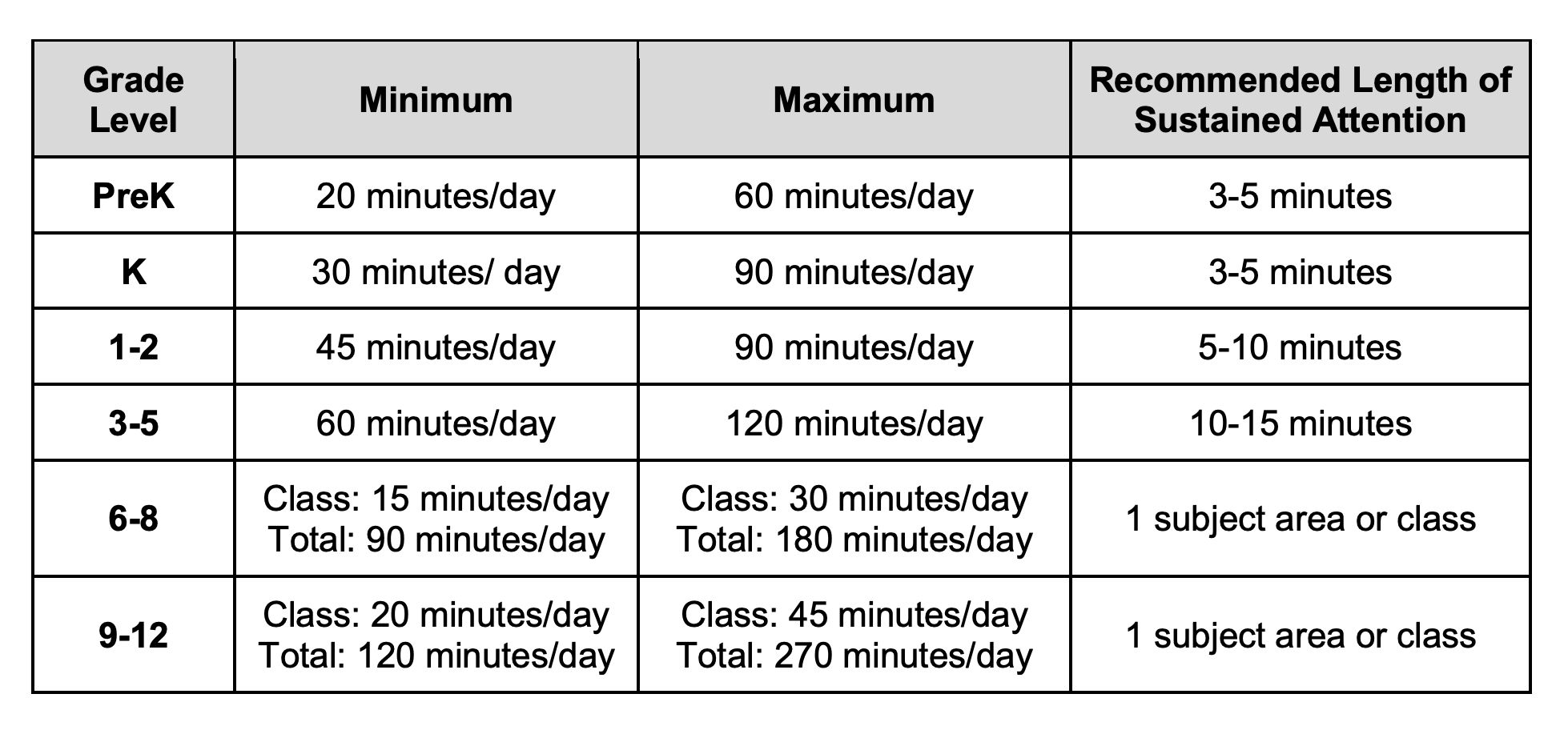
It’s important to set realistic expectations that match your child’s abilities. Pushing too hard or expecting too much can lead to increased frustration and a sense of failure. Instead, set achievable goals and celebrate small successes to build your child’s confidence. Remember that homeschooling lessons typically take a fraction of the time they do in a busy classroom, so you shouldn’t be expecting your child to sit and do schoolwork for multiple hours per day.
Here is an outline of the typical timelines for how long homeschooling should take you each day:
Tip: Use positive reinforcement to encourage effort, rather than focusing solely on the outcome. This helps kids learn that progress is more important than perfection and reduces frustration intolerance. Adapt your expectations to their needs and abilities. One child may complete 10 math questions in 20 minutes, but another might only complete 2 questions in the same time. If both are trying their best, they should both be done after the 20 minutes of sustained attention.
4. Create a Calm Learning Environment
A calm and structured environment can significantly reduce sensory overload and help your child focus on their tasks without becoming overwhelmed. This is particularly important for ADHD and autistic children who may be sensitive to noise, light, or other sensory stimuli, leading to more frustration intolerance. Being at home gives you a unique opportunity to curate a perfect learning environment for your child- whether that means learning at a desk, on the couch, or on the trampoline- you can make the best situation for their needs.
Tip: Designate a quiet, comfortable space in your home for learning, free from distractions and sensory triggers.
5. Use Visual Supports
Visual supports, such as schedules, social stories, and visual timers, can help manage frustration intolerance in kids because it helps them understand what is expected of them and reduce anxiety about transitions or changes. These tools provide a clear, concrete way for children to process information and manage their frustration.
Tip: Use a visual timer to help your child see how much time is left for a task. This can make it easier for them to tolerate activities they find challenging or boring.
6. Model and Practice Problem-Solving Skills
Teach your child problem-solving skills by modeling how to approach challenges in a calm and methodical way. This will improve their ability to manage frustration intolerance. Encourage them to think of multiple solutions to a problem and to try different approaches when the first one doesn’t work. Modeling good frustration tolerance can be challenging for some of us- after all, we weren’t taught a lot of emotional regulation skills as kids ourselves! Remember that it’s ok to lose your cool sometimes, we all do. Its just as valuable for your child to see you make a mistake, and then take steps to correct your behavior and do any needed repair work with others, as it is for them to see you handle a situation “perfectly”.
Tip: Role-play different scenarios with your child to practice problem-solving in a low-pressure environment.
Three focused children are playing on the floor and drawing in coloring books
7. Be Patient and Supportive
It’s important to remain patient and supportive as your child learns to manage their frustration intolerance. Understand that this is a process that takes time and that setbacks are normal. Your role as a parent is to provide guidance, encouragement, and a safe space for your child to express their emotions. When they are emotionally dysregulated, or are escalating, try your best to be the calm to their storm, and not to have your own frustrations escalate in response. I know it can be hard when you go through this regularly! Take deep breaths, remind yourself that this is how their brain works and they are not doing it on purpose or to be willful or “naughty”, and take breaks and step away when you need to. You got this!
Tip: Validate your child’s feelings by acknowledging their frustration and letting them know it’s okay to feel upset. Then, gently guide them toward using their coping strategies. A Quiet Corner can be an excellent space for calming big emotions.
Adding SEL to Your Home Learning Program
Frustration intolerance is often linked to executive dysfunction and emotional regulation skills. As homeschooling parents, we are lucky to be able to add learning these crucial skills into our home learning programming in ways traditional schools cannot. These skills are the cornerstones of comprehensive Social-Emotional Learning programs. You can learn more about adding an SEL program to your homeschool or download the free book from Schoolio.
Conclusion
Frustration intolerance is a common challenge for ADHD and autistic kids, but with the right support and strategies, they can learn to manage their emotions and build resilience. As a homeschooling parent, you have the unique opportunity to create a learning environment tailored to your child’s needs, helping them develop the skills they need to overcome frustration and succeed. Remember, patience and understanding are key to helping your child navigate their emotions and learn in a way that works best for them.
What is Executive Functioning and How to Improve Your Child’s Skills in Your Homeschool
You may have heard of executive functioning before, but what is it exactly? Executive Functioning is the cognitive skills that allow us to manage our thoughts, actions, and emotions in order to achieve our goals- whether those are big goals like going to the Olympics one day or little goals like getting our laundry done. These skills are essentially our brain’s management system, they allow us to plan, focus our attention, remember instructions, and juggle multiple tasks at once. For those of us homeschooling our children, particularly those who are neurodivergent, understanding and supporting the development of executive functioning may be crucial to our child’s success. Let’s explore what executive functioning is, break down its key components, and talk about strategies for improving these skills in your homeschool environment.
Understanding Executive Functioning
Executive functioning is a term that includes a range of cognitive processes that are essential for our goal-directed behaviors. These functions develop throughout childhood and adolescence and are important for academic success, social interactions, and daily living. Here are the 12 key components of executive functioning:
Task Initiation & Initiative:
This function is about our ability to start tasks independently and take proactive steps without external prompts. People with strong task initiation skills can begin tasks like work or chores without needing constant reminders. People with poor task initiation and initiative may know what tasks they should do, but struggle with how to get started or just making the movement to initiate the task. If you regularly find yourself thinking things such as, “I really need to get up and turn the laundry over” and there’s no reason not to (ie. you aren’t too tired or don’t want to) but you just can’t seem to get up and do it, you may be struggling with task initiation.
Task Monitoring & Task Completion:
This function is all about the capacity to track progress and follow through on tasks until they are finished. This includes recognizing when a task is complete and ensuring that all aspects have been addressed. It can also include the ability to see when a project needs to be modified in order for successful completion. If you ever struggle with starting multiple projects or tasks and not finishing any of them, you may struggle in this area. Task Completion is often considered an outcome of several other executive functions working together such as Planning and Prioritization, Time Management, Sustained Attention, Organization, Response Inhibition, and Working Memory, so poor Task Completion can also be a dysfunction in one or more of these other functions.
Planning and Prioritization:
This is the ability to create a plan or strategy to accomplish goals and being able to prioritize the steps needed to reach them. This is crucial for managing our time and resources, making it a cornerstone of executive functioning. Many of us struggle with jumping into a task or project without taking time to plan first, and many of us struggle as well or alternatively with prioritizing our time and resources (resources being anything from money to our own energy) in a way that gets things done most efficiently.
Organization:
Some people seem to be perpetually well organized, while others are constantly struggling with mess and order! The ability to create and maintain systems for keeping track of information or items, including organizing a workspace, managing time, keeping a schedule, and sorting tasks by importance all fall under the Organization function.
Time Management:
We tend to talk about time management in simple terms- you’re on time or you’re late- but time management as an executive function is about having the capacity to estimate how long tasks will take and then having the ability to allocate time efficiently to complete them within deadlines or by set times. This is a key aspect of executive functioning. Whether you’re on time to meet friends for a movie or handing in an assignment before the deadline, time management is the skill needed to have the oversight to figure out when to start and how to divided the needed tasks over the time period available in order to manage your time.
Working Memory:
Working memory is different than short term memory. Short-term memory refers to the temporary storage of information that is held in your mind for a brief period, usually around 15-30 seconds. It is where information is kept for immediate use but is not manipulated or actively worked on. For example, short term memory allows you to remember a phone number just long enough to dial it before the information is forgotten. Working memory is a more complex cognitive process that involves not only holding information in mind but also manipulating and processing it. It’s the ability to retain and use information to complete tasks, solve problems, or respond to situations in real-time. For example, working memory allows you to perform tasks like mental math, problem-solving, and following multi-step instructions. If you struggle with things like doing math in your head, or brainstorming, you may have poor working memory.
Metacognition & Self-Monitoring:
This is also sometimes referred to as self-awareness. It’s all about the capacity to think our own thinking and to self-evaluate our performance. This includes being aware of our strengths and weaknesses, as well as assessing how we handled a situation and what we might want to do differently next time. It’s a lot of self-reflection and considering the how and why of how we think or act. Without good metacognition and self-monitoring, we’re destined to repeat old habits, not take accountability for mistakes, and struggle to grow and change in positive ways.
Response Inhibition (Impulse Control):
Our Response Inhibition, or Impulse Control, is our ability to think before acting and to resist behaviors that are inappropriate, unnecessary, or that we’ve decided previously we don’t want to do. Impulse control is critical for staying focused, avoiding distractions, and remaining in control of our words and actions. Many of us with neurodivergencies such as ADHD struggle with impulse control, in fact it’s a hallmark symptom of ADHD. You can read more about ADHD and Impulse Control here.
Emotional Regulation:
The ability to manage emotions to achieve goals, complete tasks, or control our behavior is an executive function known as Emotional Regulation. Emotional regulation is key to handling frustration, stress, anger, or setbacks, which is vital for success. When we improve our emotional regulation skills, we improve our personal resiliency and perseverance, which helps us succeed. Another interesting fact about emotional regulation is that science has shown us that a child who is emotionally dysregulated cannot learn. Therefore, emotional regulation in our homeschools is crucial.
Sustained Attention:
Sustained Attention is something everyone struggles with at some points. This is our ability to maintain focus on a task or goal despite distractions, fatigue, or boredom. While everyone loses focus sometimes, especially with tasks we’re not interested or invested in the outcome, for someone who struggles with this executive function, it can be very debilitating to accomplishing tasks and goals.
Cognitive Flexibility:
Cognitive Flexibility is the capacity to adapt to new situations, switch between tasks, or change strategies when necessary. Rigid thinking is a hallmark of some neurodivergencies, particularly Austism. Cognitive Flexibility would be what we casually refer to as, “going with the flow”- being able to adapt and change directions mentally when the situation around us changes, or the needs of a project or task change. For people who struggle with cognitive flexibility this is really difficult and uncomfortable.
Goal-Directed Persistence:
This executive function is our ability to set and pursue goals. This skill is what allows us to maintain the effort and focus required to achieve goals, even in the face of obstacles. Our goal-directed persistence helps us be resilient and maintain drive and motivation.
Why is Executive Functioning Important?
Executive functioning is essential for almost every aspect of our lives, from the big goals to the little daily tasks. In a homeschool setting, these skills help our kids manage their workload, complete assignments on time, and handle the challenges that come with learning new concepts. Without strong executive functioning, our children may struggle to organize their thoughts and spaces, manage their time, stay focused on tasks, and achieve their goals. All of these contribute to avoiding frustration, having good self-esteem, and being successful.
How to Improve Your Child’s Executive Functioning Skills in Your Homeschool
As homeschooling parents, we have the unique opportunity to tailor our teaching methods and environment to support your child’s executive functioning development. We also have the motivation and desire to make sure we’re teaching our kids all the things they need to be successful in adulthood, and not just the core academics that a school usually teaches.
Here are some strategies to help improve executive functions skills:
1. Create a Structured Environment
Children thrive in environments where there is a predictable routine. This doesn’t mean you need a strict schedule with timed learning blocks, it just means that you have a regular structure and flow to your days. This models good executive functioning habits for your kids, and they’ll develop good habits. Using visual schedules, checklists, or planners can help your child understand what is expected and to learn to manage their time and tasks independently in time.
2. Break Tasks into Manageable Steps
Large tasks can feel overwhelming, especially for children who struggle with executive functioning. Break down assignments into smaller, more manageable steps, and set short-term goals that lead to the completion of the larger task.
Tip: Encourage your child to check off each step as they complete it to build a sense of accomplishment.
3. Use Timers and Alarms
Time management is a crucial aspect of executive functioning. Timers and alarms can help children stay on track and manage their time more effectively. Use timers for specific tasks or school work sessions, and set alarms for transitions between activities.
Tip: Try the Pomodoro Technique, where your child works for 25 minutes and then takes a 5-minute break, to maintain focus and productivity.
4. Organize Your Learning Space
A well-organized space can help reduce distractions and make it easier for your child to focus on their work. It doesn’t matter where you do your homeschool work- some families have designated spaces and others don’t- but ensuring the places your child frequents stay reasonably tidy can help your child a lot. Prepping tools and materials you’ll need for your lessons in advance can also help limit distractions and break your child’s focus.
Tip: Involve your child in organizing their spaces! Doing all the tidying and decluttering for them may help them focus, but doesn’t teach them how to develop the skill for themselves. Help them take ownership of their environment and develop their organizational skills by taking part, but don’t overwhelm them by giving them big clean-up tasks to handle on their own. Teach and demonstrate how to get the job done by doing it together.
5. Teach Planning and Prioritization
We can help our children learn to plan their day and prioritize tasks, a skill they will use their entire lives! Consider some sort of daily or weekly planner such as an agenda, a whiteboard, or simple lists that you create together. Start by sitting down together to list all the tasks that need to be completed, and then discuss which ones should be done first based on importance and deadlines. Modelling these skills will help them learn to do them themselves as they get older.
Tip: Use a whiteboard or planner to visually lay out tasks and priorities. This can help your child see the big picture and manage their time effectively, enhancing their executive functioning.
6. Develop Emotional Regulation Skills
Emotional regulation is key to managing frustration and stress, which are common obstacles to completing tasks and make executive functioning more difficult. Teach your child to manage their thoughts and feelings, practice mindfulness techniques such as deep breathing, and know strategies and skills for emotional regulation, in order to help them stay calm and focused.
Tip: Incorporate social-emotional learning into your homeschool and regularly talk about how we manage how we think and feel.
7. Encourage Self-Monitoring and Reflection
Teach your child to self-monitor by regularly asking them to assess their progress on tasks and how they are feeling. Encourage them to reflect on what went well and what could be improved, fostering metacognition and self-awareness.
Tip: Try to get in the habit of reflecting- this can be about school tasks like a big project, about something around the home like way chores are distributed, or even about a family trip. Talk openly and honestly about what you enjoyed, what went according to plan and what didn’t, and what you would do differently next time. This fosters open communication between you and your child as well as cognitive flexibility and self-reflection.
8. Promote Cognitive Flexibility
Encourage your child to think about problems in different ways and to try new approaches when they encounter obstacles. This can help them become more adaptable and improve their problem-solving skills.
Tip: Use games and activities that require flexible thinking, such as strategy games, to build cognitive flexibility in a fun way.
9. Foster Goal-Directed Persistence
Help your child set long-term goals and then help them break them down into smaller, actionable steps. Celebrate progress towards these goals to keep them motivated and focused on achieving them.
Tip: Create a vision board with your child to visually represent their goals and the steps they need to take to achieve them.
What is Executive Dysfunction?
While many children can develop strong executive functioning skills with practice and support, some may struggle with executive dysfunction. Executive dysfunction refers to significant difficulties in one or more areas of executive functioning, which can impact a child’s ability to manage tasks, control impulses, and regulate emotions. This is common in neurodivergent kids, particularly those who are ADHD or autistic. If your child exhibits persistent challenges in these areas, it may be helpful to explore strategies and supports specifically designed to address executive dysfunction.
Conclusion
Executive functioning is the foundation for effective learning and daily living. By understanding these skills and actively working to improve them in your homeschool, you can help your child become more organized, focused, and successful in their academic and personal endeavors. With the right support and strategies, your child can develop the executive functioning skills they need to thrive.