You Don’t Have to “Be the Teacher”

You Don’t Have to “Be the Teacher”


One of the things I hear most often from new homeschooling parents is:

“I’m worried about how to be the teacher.”

“How do I switch between being Mom and being Teacher?”

And I get it — that’s the model we were raised in. School was one thing. Home was another. Learning happened in a classroom, not the kitchen, and teachers were “official” in a way parents weren’t.

But that separation? It’s something we were taught.

And it’s one of the first things to unlearn when you start homeschooling.

The truth is, you already are your child’s most impactful and most important teacher.

You taught them to talk. To walk. To be kind. To navigate big feelings. You’ve taught them hundreds of things — without ever standing at a whiteboard or grading a paper.

Homeschooling doesn’t mean you suddenly need to transform into a formal “teacher” figure with a desk, a whistle, and a lesson plan binder.

It means you continue what you’ve always done — guiding your child through learning experiences that help them grow into capable, curious, thoughtful humans.

Let go of the image of kids sitting in desks while you lecture at the front. That’s not homeschooling. That’s school-at-home — and that’s not what your kids need.

Kids aren’t empty vessels waiting to be filled with facts. They’re active participants in their own learning.

When you give your child autonomy and ownership, everything changes.

You stop being “the enforcer,” and start being their guide. Their mentor. Their teammate.

You’re not switching between roles — you’re expanding the one you’ve always had.

In real life, learning doesn’t have boundaries. It doesn’t only happen between 9 and 3, or only from someone with a degree. It happens everywhere, all the time, through curiosity and connection.

Your homeschool doesn’t need to mirror school.

It needs to mirror life.


? Lindsey

Certified Special Ed Educator & Co-Founder, Schoolio

Why I Stopped Worrying About Learning Gaps

Why I Stopped Worrying About Learning Gaps

By Lindsey, certified special-ed educator & co-founder, Schoolio

This has been on my mind today…

The weight of comparison. It sneaks in quietly. A friend tells you what their child is learning in school. A neighbor asks about your homeschool “schedule.” You catch a glimpse of someone’s color-coded curriculum plan on Instagram. Suddenly your confidence starts to unravel.

I remember this feeling most clearly when my oldest was around eight or nine. We were deep into homeschooling, but I was constantly looking over my shoulder at what public school kids were doing. Were we covering the same content? Were we behind? Was I doing enough?

It became exhausting. I was trying to replicate school at home—not because it worked for us, but because I thought that’s what “real” education looked like.

Here’s the truth I had to learn the hard way: homeschool doesn’t need to imitate public school to be valid. In fact, the whole point is that it doesn’t.

I kept coming back to a simple question. If I can’t remember what I learned in third grade, why was I putting so much pressure on myself to make sure my child retained every single concept in the third grade curriculum? I realized I was clinging to a system I didn’t even believe in—one I had left behind for a reason.

When kids are in school, they’re taught for a set number of days, then tested. If they get a 60%, that means they missed 40%—and the class moves on. No one loops back. No one stops the train. That’s a gap. A big one. But it’s accepted.

In our homeschool, if my child gets sick or we need to pause for emotional rest, schoolwork pauses. School doesn’t go on without them on sick days, it waits for them. We don’t pretend 60% is good enough. The beauty of this lifestyle is that learning pauses with the child and picks up again when they’re ready.

That alone makes a massive difference.

And the truth is, we all have learning gaps. Adults included. Because humans only retain what they find meaningful. You can make a child memorize facts for a test, but they’ll likely forget most of it after. If something isn’t relevant to their lives, it doesn’t stick. So whether you never cover it, or they forget it, the result is the same.

That realization gave me freedom.

I stopped obsessing over whether we had checked every box. I started asking better questions: Was my child curious today? Did we connect? Did they ask questions that mattered to them? Those were my new benchmarks.

And wouldn’t you know—it made everything easier. They were learning more, not less. And I was enjoying it more, too.

So if you’re caught in that loop of comparison, wondering if your homeschool is “real” enough, let me gently offer this: your homeschool is enough because it’s yours. Because it fits your child. Because it’s rooted in love, flexibility, and intention.

That’s not falling behind. That’s choosing to lead.

certified special-ed educator & co-founder, Schoolio


? Need help trusting your homeschool rhythm?

Start with our free homeschool planner, explore flexible curriculum bundles, or try our 7-day trial to see how it can work in your home.

Why Pausing Ontario’s Curriculum Overhaul Might Be the Best Thing That Could Happen

Why Pausing Ontario’s Curriculum Overhaul Might Be the Best Thing That Could Happen

by Lindsey Casselman

When I think back on our homeschool journey — and honestly, even my time as a classroom teacher — one thing that always struck me was how often we tried to fix learning by changing the curriculum.

I’ve been watching the news about Ontario’s decision to pause its major curriculum reforms, especially the overhaul to kindergarten, and I’ll be honest — it felt familiar. Not because change is bad, but because too often, we mistake activity for progress.

As someone who’s both taught in public school and built curriculum from the ground up here at Schoolio, I’ve seen how these sweeping changes tend to go. New documents, new standards, new language — but very little impact on what really matters to kids and teachers. A few years later, we do it all over again.

It’s not reform. It’s spinning.

Somewhere along the way, we started treating education like a business — always marketing, rebranding, looking for the next system-wide breakthrough. But kids aren’t products. And learning isn’t a marketing strategy.

The truth is, what drives real learning is rarely found in a government PDF. Students thrive when their curiosity is sparked. When their teacher has the freedom and energy to explore a topic from a new angle. When lessons connect to the real world — to questions they actually ask.

But most curriculum overhauls don’t get at any of that. They shuffle standards. They update timelines. They insert buzzwords. But they rarely ignite joy — in students or teachers.

If you’ve ever sat at the kitchen table with your child, trying to make sense of a lesson that feels totally disconnected from real life, you know exactly what I mean. That glazed look. The frustration. The deep feeling of “why are we even doing this?”

That’s not a learning problem. That’s a relevance problem.

What we need isn’t a brand new curriculum every few years. What we need is a mindset shift.

Instead of building everything from the top down, what if we started from the ground up? What if we trusted teachers to lead the way, using their experience and insight to shape lessons that actually land? What if we listened — really listened — to the kids?

That’s how we design our units at Schoolio. We start with questions students already have. We build flexibility in, so families can pause or pivot. We make space for creativity, discussion, and the moments that stick.

And we don’t pretend that a perfect curriculum will solve everything. What we offer is structure, yes — but with enough room for learning to feel alive again.

So while the pause in Ontario’s reforms might seem like a step back, I see it differently. It’s a chance to stop the spinning. To ask better questions. To start designing for joy, not compliance.

Because if we’re really serious about helping kids learn — we have to remember why they learn in the first place.

Lindsey,

Certified Special-Ed Educator & Co-Founder, Schoolio


? Want curriculum that’s built around real questions, flexible structure, and student joy?

Explore our project-based bundles, download our free samples or start a 7-day trial to see what modern learning can look like at home.

Unlearning School: What Homeschooling Helped Me See Differently About Education

Unlearning School: What Homeschooling Helped Me See Differently About Education

By Sathish Bala

This has been on my mind today…

When I look back at my own schooling in Singapore during the 1980s, I realize how much of it was built around conformity. A student’s worth was tied to a test score. Our futures were determined by how well we followed instructions, memorized content, and stayed in our seats. That system didn’t see who we were. It only saw what we could produce.

So much of homeschooling — for me, and for the thousands of families I’ve now spoken with — is really about unlearning that model.

At first, most parents try to recreate school at home. Schedules. Desks. Checklists. But slowly, over time, the shift happens. We stop asking, “Am I doing enough?” and start asking, “Is my child curious? Are they feeling safe enough to learn at their own pace?”

We realize that learning doesn’t have to look like sitting still. It can be messy, playful, deeply personal. Sometimes that realization comes from the chaos — the days when nothing goes according to plan, and you see your child learning anyway. Sometimes it comes from joy.

One mom who just started her free trial with Schoolio shared this incredible moment with us:

“I just signed up for a free trial and had my neurodivergent son test out a lesson in Social Studies, a subject he has not previously enjoyed. Until now! He enjoyed the lesson so much he was asking me to please print the PDFs for him to work on, which he also never does. I think this is a very good sign and look forward to him completing other lessons!”

This is the kind of learning traditional school often misses. For many kids, especially neurodivergent learners, subjects like Social Studies or Language Arts become walls instead of doors. But when the format changes — when they get space to go at their pace, explore topics through different modalities, or simply feel like they’re being listened to — everything opens up.

Homeschooling has helped me see that education isn’t about information delivery. It’s about connection. It’s about nurturing curiosity and self-awareness. It’s about teaching kids how to learn, not just what to memorize.

And that’s what public school often forgets — it’s not just the curriculum that needs change. It’s the entire culture. At Schoolio, we believe deeply in giving families the tools to break that culture, and build something better.

Because when we unlearn school, we begin to see learning everywhere.

Sathish

still learning, still unlearning

Why Schoolio Is a Better Choice Than MiAcademy for Most Homeschool Families

Why Schoolio Is a Better Choice Than MiAcademy for Most Homeschool Families

MiAcademy is a popular homeschool program that’s been around for more than 20 years. It’s familiar. It’s easy. And if you’re looking to replicate traditional school at home with a little fun and games mixed in, it has a straightforward setup, a full list of core subjects, and a digital interface that feels familiar to kids coming out of the classroom.

But most families don’t start homeschooling because they want to recreate the classroom. They do it because the classroom wasn’t working.

You want something better for your kids.

Something more flexible, more purposeful, more in tune with your child’s unique needs, and something that gives you, the parent, more control to design the perfect program for your unique child and your unique family, especially those raising neurodivergent, curious, or outside-the-box learners.

That’s where Schoolio stands apart.

Both Schoolio and MiAcademy are digital homeschool programs, but they have some important differences. MiAcademy is a solid choice for families who want to follow a school-at-home model and aren’t bothered by having to supplement with other programs where digital learning falls short.

Schoolio is different.

It’s a whole new way to homeschool, built from the ground up by real homeschoolers, with modern families and neurodivergent learners in mind.

If you’re looking for a truly complete program with real customization, neurodivergent-friendly content, offline learning options, and the kind of future-ready education that will help your child thrive in the future, Schoolio is the clear winner.

Here are the top 5 reasons why Schoolio is a better choice than MiAcademy:


1. MiAcademy Courses Mirror School. Schoolio Builds Future-Ready Kids.

MiAcademy keeps things fairly simple when it comes to course offerings. Their non-core options are limited to Music & Art, World Languages, Life Skills, and Biblical Studies. And that’s pretty much it.

Schoolio goes far beyond that and offers hundreds of courses across a much broader range of subjects. We also offer an entire library of Future Readiness content, our one-of-a-kind collection you won’t find anywhere else.

Our Future Readiness courses include:

  • Financial Literacy (because balancing a budget is more useful than memorizing Pythagorean theorem)
  • Emotional Intelligence (because kids who understand themselves and others do better in life)
  • Emerging Technologies (because our kids are growing up in an digital-first world, and they need to understand how it works)

These courses are built with real-world relevance in mind, helping your child develop both academic skills and practical, future-ready thinking. This isn’t filler content. It’s the future. And it’s only at Schoolio.


2. Schoolio Is Designed for Neurodivergent Learners

This one’s huge, and it’s where many online programs miss the mark entirely.

If you have an ADHD or Autistic child, you already know that most educational platforms weren’t built with them in mind. MiAcademy, while decent in terms of simplicity and structure, doesn’t offer any specialized support for neurodivergent learners.

Schoolio does.

In fact, we’re the only homeschool curriculum platform intentionally designed to support and accommodate neurodivergent students.

We built our content and platform to maximize short attention spans, reduce redundancy, limit cognitive overwhelm, and allow for the flexibility neurodivergent learners often need. We have multiple ways to engage, and allow parents to switch between Scheduling Mode (for routine and structure) and Exploration Mode (for flexibility and curiosity-driven learning).

Our goal? To help families find what works, without power struggles or meltdowns. When your child feels successful and supported, everything changes.


3. Schoolio Costs Less and Delivers Way More

Let’s talk money.

Homeschooling families are often working with tight budgets, we understand, we’ve been there. At the end of the day, cost matters. MiAcademy’s pricing at $42/month per child is higher than our complete digital package (including every Schoolio course and every grade level) at just $39.99/month. And we offer 30% off for siblings, and a military discount too. Want to save even more? We also have discounted annual plans.

More flexibility. More content. Less money. It’s a no-brainer.


4. Schoolio’s ELA Program Crushes MiAcademy’s Lightweight Approach

ELA (English Language Arts) is often where fully online programs fall short, and MiAcademy is no exception.

Yes, they cover the basics: vocabulary, some reading comprehension, and grammar. But let’s be honest, a few vocab games and short reading passages won’t help your child become a thoughtful, articulate writer.

At Schoolio, we believe a strong ELA program must include:

  • Real novel studies
  • Essay and research writing
  • Creative writing and structured reflection
  • Oral communication and presentation skills

Our ELA curriculum goes far beyond multiple choice and true or false questions. We help your child build the writing, reading, and critical thinking skills they need to express themselves clearly and powerfully while building a love of reading and writing.

Our ELA program has been praised by homeschool parents as being simultaneously robust in its coverage and easy to implement for resistant writers and neurodivergent kiddos.


5. The Adaptive Learning Model: Offline + Online = Smarter Homeschooling

MiAcademy offers optional printable PDFs, but they’re not designed to be part of the main program flow, more as an optional add-on, and they’re not annotatable or savable, you have to print or save them and use a different program to annotate, then keep those for your records somewhere else. In other words, they’re a nice-to-have, not a core feature.

At Schoolio, we do things differently.

Our [Adaptive Learning Model](https://schoolio.com/programdesign/?) blends the best of both worlds: online tools and offline learning. You and your child get all the benefits of digital education: interactive lessons, flexible scheduling, auto-grading, and a dashboard to track progress. But that’s just the beginning.

We believe screen time should support learning, not dominate it.

That’s why every Schoolio course includes offline activities that often include hands-on activities such as:

  • Science experiments
  • Art projects
  • Outdoor exploration
  • Critical thinking and reflection
  • Opinion writing and research
  • Speeches and oral presentations

These aren’t just extras, they’re built into the curriculum intentionally, because we know kids learn best when they can connect ideas to the real world.

MiAcademy gives you a browser tab and calls it a day.

Parents love the balance. Kids love the variety. And everyone gets a break from staring at screens all day.


The Bottom Line: MiAcademy Imitates. Schoolio Innovates.

If you want to recreate the classroom on a screen, MiAcademy will check the boxes.

But if you’re homeschooling because your child deserves something better — something more human, more flexible, more real — Schoolio is your answer.

  • More future-focused content
  • Built-in neurodivergent support
  • Comprehensive ELA
  • True hybrid learning
  • All for less money

And if that weren’t enough, Schoolio is now WASC accredited, supports microschools around the world, and continues to launch new courses and innovative features to serve today’s learners, not yesterday’s model.


Experience the difference for yourself.

? Learn About Schoolio’s Mission and Founders

? Start your 7-day free trial
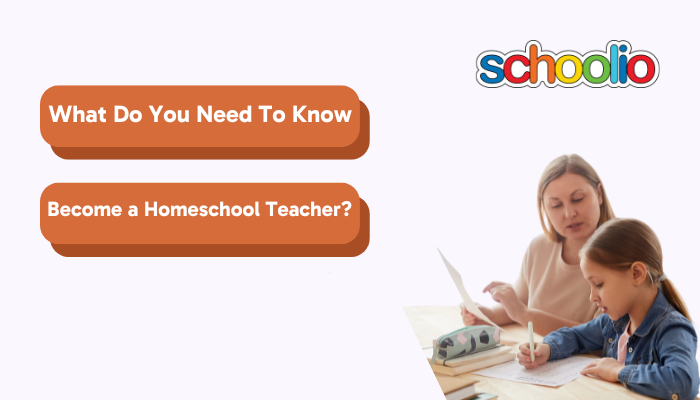
What Do You Need to Know to Become a Homeschool Teacher?

What do superheroes and homeschool teachers have in common? They both need a multitude of skills to save the day!

To succeed as a homeschool teacher, it might feel like you need to be a master in an array of skills, but it’s not like that. Homeschool teachers’ job is not really different from parenting, it’s just an extension of that. 

With more families choosing to homeschool, the question of what makes a great homeschool teacher is becoming increasingly important. This guide dives into the many hats a homeschool teacher wears and explores the essential skills you’ll need.

Understanding the Role of a Homeschool Teacher

Homeschooling offers a unique and personalized approach to education, allowing parents to tailor learning experiences to their child’s individual needs. 

Unlike public school teachers, homeschool teachers are not bound by rigid state certifications, allowing for greater flexibility and adaptability in their teaching methods. Let’s understand this with a side by side comparison. 

Formal Teaching Credentials Vs. Homeschool Teaching Requirements

CriteriaFormal Teaching CredentialsHomeschool Teaching Requirements
Educational RequirementsBachelor’s degree in education or related fieldVaries by state; most states require a high school diploma or GED
CertificationMust complete a teacher preparation program and pass state examsNo certification required in most states
Background ChecksMandatory for public school teachersOnly two states require background checks for homeschool teachers
Continuing EducationRequired to maintain certificationNot required
Supervision and EvaluationRegular evaluations and student assessmentsVaries; few states require assessments of homeschooled students

Versatility and Multifaceted Role of Homeschool Teachers

A homeschool teacher wears many hats, embodying roles far beyond traditional teaching. As a parent, you might just be responsible for ensuring that your children studies well, but as a homeschooled teacher you need to take on the role of their teachers as well and nurture their various skills as a mentor. 

Public school teachers primarily focus on academics. However, homeschool teachers also take on administrative and parental responsibilities. 

This includes:

  • Curriculum planning
  • Individualized instruction
  • Integration of experiential learning opportunities

As a homeschool teacher, you can also personalize your teaching methods to cater to your child’s unique learning style:

  • You can include diagrams and charts if your child is a visual learner. 
  • If your child grasps things better by experimenting or having hands-on experience, you can tailor your methods to that. 

All of these things may seem like a steep learning curve, but as you progress through, you will find that being a homeschool teacher is one of the best experiences of your life. Seeing your child learn and grow and being the sculptor behind all of it is definitely one of the most precious feelings you can have. 

Necessary Skills to Become a Homeschool Teacher


Becoming an effective homeschool teacher requires a diverse set of skills that ensure you can provide a well-rounded and impactful education. 

There’s no need to be a master in all of these, but having a good understanding is preferred. However, as you progress further, you will eventually develop them. 

Here is the list of all the things you need to know; 

  • Organizational Skills:  These skills help homeschool teachers manage lesson plans, resources, and student progress efficiently. Organizing well helps in creating a structured learning environment that can help you maintain consistency and meet educational goals.
  • Time Management: Effective homeschooling starts with strong time management. It helps balance the responsibilities of preparing lessons, grading assignments, and planning activities. Good time management ensures all educational goals are met on time, preventing burnout and boosting productivity.
  • Instructional Skills: The ability to give the right instructions in a clear, engaging and effective manner is very important. This helps parents to deliver lessons more clearly and effectively. 
  • Research Skills: A homeschool teacher benefits greatly from being good at research and analysis. These skills help teachers find the best educational resources, keep up with the latest educational trends, and continuously enhance their teaching methods to provide a high-quality education for their children.
  • Classroom Management: Even in a homeschool setting, classroom management is important and can be easily achieved. By creating a positive learning environment, setting clear expectations, and maintaining discipline, you can foster a supportive atmosphere for learning and reduce distractions.
  • Curriculum Development: Designing a curriculum that meets standards and aligns with your child’s interests and needs and is simpler than you think. This ensures education is rigorous and personalized, setting your child up for success. Keep learning engaging and tailored to their strengths.

Dreaming of starting your own microschool? Schoolio’s annual platform license equips you with everything needed to create a dynamic, personalized learning environment. 

Our platform features a comprehensive K-8 curriculum, customizable courses, and interactive content to engage students and ignite a love of learning. Start today and turn your microschool vision into reality with Schoolio!

  • Communication: You don’t need to be a master of diplomatic talks. You need to have a level of connection which lets you communicate easily with your child. As a homeschool teacher, strong communication skills are essential. This includes both verbal and written communication. These skills help you explain complex concepts clearly and effectively.
  • Interpersonal Skills: These skills enable homeschool teachers to build strong relationships with their students, fostering a supportive and encouraging learning environment. These skills are essential for understanding and addressing students’ individual needs and for providing motivation and guidance.
  • Collaboration: Collaborative skills are important for homeschool teachers who work with co-op groups, other educators, or professionals to enhance the learning experience. Being able to collaborate effectively expands the educational opportunities available to students and integrates diverse perspectives and expertise.

Developing these skills will not only make you a more effective homeschool teacher but also ensure that your students receive a high-quality education tailored to their unique needs and potential.

You might also like: 5 Things You Need Before You Start Homeschooling


Understanding the legal requirements for homeschooling in the U.S. is crucial for parents and educators. 

Here’s a breakdown of the regulations based on the level of oversight required in different states:

States with High Levels of Regulation

These states have the most stringent requirements for homeschooling:

StateRequirement
New YorkYou must file quarterly reports on your student’s progress.
VermontRequires a “Student Narrative” for the first two years, detailing the instruction plan.
MassachusettsHomeschooling plans must be reviewed and approved by a homeschooling committee.
PennsylvaniaA detailed list of subjects must be taught, and a state-approved evaluator must evaluate students.
Rhode IslandRequires attendance records to be available for district review at the end of each year.

States with Moderate Levels of Regulation

These states have some regulatory requirements but are less stringent than the first group. 

Here’s the breakdown: 

StateRequirement
West Virginia, Hawaii, and OregonRequire standardized testing results to be sent to the district at specific grade levels.
North DakotaRequires assessments at grades 4, 6, 8, and 10.
MinnesotaHas an extensive list of subjects to be taught.
North CarolinaRequires the homeschool to have an official name and a designated Chief Administrator.
Virginia and South CarolinaOffer various homeschooling options to fit different needs.
WashingtonRequires an annual declaration of intent to homeschool.

States with Low Levels of Regulation

These states have minimal to no regulatory requirements for homeschooling. Generally, no formal notification or documentation is required. 

Here is a detailed breakdown: 

StateRequirement
ConnecticutMay ask for a letter of intent.
Illinois, Texas, Michigan, and IdahoRequire core subjects like mathematics and science to be taught.
Oklahoma and IndianaRequire at least 180 days of instruction and progress records.
Missouri and AlaskaHave no statewide regulations but may have local requirements.

States with Notice of Intent Requirements

These states require a notice of intent to homeschool but have varying additional requirements.

Here is a detailed list of requirements: 

StateRequirements
CaliforniaSubjects must be taught in English.
WyomingRequires a proposed curriculum.
Florida and ArizonaRequire an affidavit to start homeschooling and termination paperwork upon graduation or relocation.
MarylandOffers four main homeschooling options depending on circumstances.
AlabamaOnly requires physical education.
DelawareRequires notices of intent and attendance during the school year.

Understanding these regulations helps ensure that homeschool teachers comply with state laws and provide quality education tailored to their children’s needs.

Conclusion

Strong time management, curriculum development, and instructional skills make homeschooling rewarding and manageable. Being organized, empathetic, and good at communication helps a lot. Stay updated with educational trends and be open to adapting.

Personalized homeschooling caters to your child’s strengths and interests, enhancing their learning experience. It supports their academic success and overall development, preparing them for the future. Embrace these opportunities and watch your child thrive.

Remember, homeschooling is not a rocket science. You are just sharing your knowledge with them in a way that suits them the most. And all of this is an ongoing process, you can’t become a perfect homeschool teacher on day one. But with love and care, and learning along the way, you will definitely become their favourite teacher one day. 

At Schoolio, we offer the tools and support you need to succeed. Whether you’re just starting or looking to enhance your homeschooling approach, our resources are here to help. 

Contact us today to learn more about our tailored programs and see how we can support your goals. 

FAQs 

What are the essential skills required to be an effective homeschool teacher?

To be an effective homeschool teacher, you need strong time management, curriculum development, instructional skills, organization, empathy, and communication. Stay updated on teaching methods and educational trends.

How do homeschool teachers select the right curriculum?

Select a curriculum based on your child’s learning style, needs, and goals. Platforms like Schoolio offer customizable, expert-curated options to simplify the process.

What strategies can homeschool teachers use to keep children motivated and engaged?

To keep children motivated, homeschool teachers can use project-based learning, field trips, hands-on activities, and tailor lessons to the child’s interests. Mixing methods and adding fun, interactive elements also help engagement.

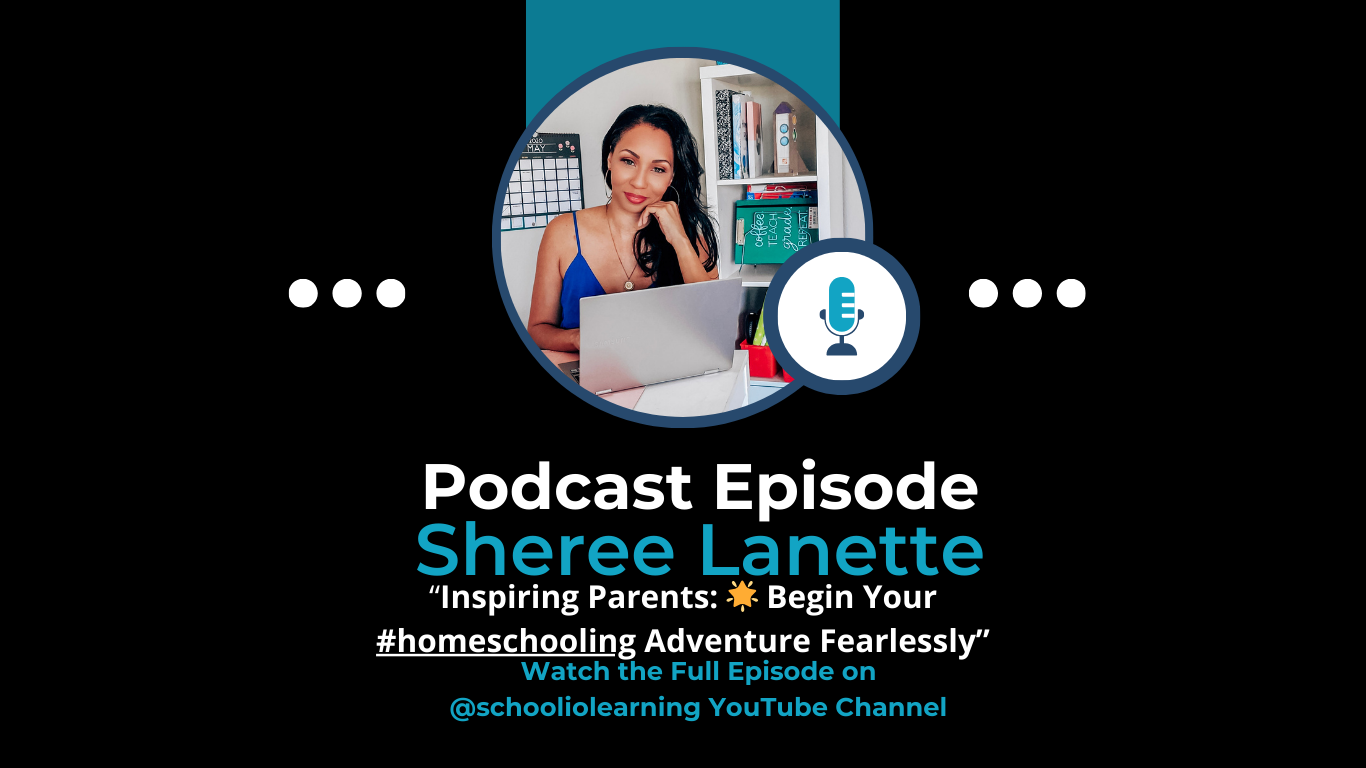
Discover Fearless Homeschooling with Sheree Lanette: A Journey into Educational Empowerment ? #InspiringParents

Embarking on the homeschooling journey can be a daunting decision for many parents, filled with uncertainties and questions. In the latest episode of Schoolio Learning‘s EdVenturers Podcast, Sheree Lanette shares her inspiring homeschooling journey, offering insights, wisdom, and a touch of humor.

Trusting Your Instincts: Sheree emphasizes the importance of trusting your instincts when considering homeschooling for the first time. She encourages parents to listen to that initial feeling of uncertainty and turn it into an opportunity for growth and exploration.

Building a Community in Texas: Contrary to the assumption of a thriving homeschooling community in Texas, Sheree reveals that she had no prior knowledge when she started in 2016. Living in an area with few homeschoolers, she navigated the challenge by actively seeking support through Facebook groups and attending homeschool days hosted by businesses, even if it meant traveling.

Family Ecosystem and Overcoming Doubts: Sheree opens up about her family ecosystem, discussing her son’s language delay and the initial concerns raised by her wife about homeschooling. Despite these concerns, Sheree and her husband, both former teachers, decided to take the plunge, realizing the need to provide a tailored education for their child.

Unlearning and Embracing the Journey: Addressing the common worry about not being a teacher, Sheree dispels the myth that formal teaching experience is a prerequisite for homeschooling success. She shares her own experience of unlearning traditional teaching methods, highlighting the flexibility and adaptability that homeschooling offers.

Looking to the Future: As the conversation segues into the future, Sheree briefly touches on her business. She underscores the importance of unlearning conventional approaches, emphasizing that lesson plans can be adapted, and curriculum can be purchased to suit individual needs.

Conclusion: Sheree Lanette’s homeschooling journey is a testament to the power of trusting one’s instincts, building a supportive community, and embracing the adventure of educating at home. Whether you’re a seasoned homeschooler or contemplating this educational path, Sheree’s story is a beacon of inspiration, proving that with dedication and flexibility, anyone can thrive on the homeschooling odyssey.

Listen to the full podcast episode here.

For Sheree’s Social Media Accounts, you can visit her
Facebook: www.facebook.com/shereelanette/
Instagram: www.instagram.com/shereelanette_/
Tiktok: www.tiktok.com/@shereelanette_
Email address: info@shereelanette.com

#Homeschooling #EdVenturersPodcast #Inspiration

Diving into the Schoolio Live Adventure: The Scoop on What’s Cooking!

Hey there, awesome learners! We’ve got some super exciting news to share with you, and it’s like diving into a whole new level of cool in your learning journey. Let’s plunge into the world of Schoolio Live Classes – a dream come true for us, and oh boy, it’s going to be a game-changer!

So, what’s the buzz about Schoolio Live Classes, you ask?

Well, it’s like this magical place where all the good stuff comes together under one roof. Imagine having your books, your online learning adventures, scheduling tools, and now, drumroll, live classes! It’s like having a learning party where you can choose to be offline or digital – total flexibility, dude!

But why did we decide to add live classes to the mix?

Great question! We started by chatting with you, our amazing customers, to find out what was missing. And guess what? Live Classes were the superheroes of your wish list! It’s like bringing the whole homeschooling experience into one epic Schoolio umbrella.

Now, you might wonder, “Why Live Classes?”

Aren’t there already a bunch of places for that?” Well, let’s spill the beans. Live classes are more than just learning; they’re a chance to be social, make friends, and dive into the fun side of education. It’s like having a mini classroom right at your fingertips.

As a homeschooling parent, I totally get it –Schoolio Live Classes can be a game-changer. For my extroverted kiddo, it’s a social feast, making friends and enjoying the buzz of a live session. And for my introverted one, it’s a gentle nudge out of the comfort zone, bringing that perfect balance to their learning adventure.

But here’s the cool part – if you ever find yourself at the brink of talking about dinosaurs for the gazillionth time and risking pulling your hair out, Schoolio Live Classes have your back! You can offload some topics to our awesome live sessions. It’s like having a learning escape route for those moments when you need a breather.

So, there you have it, the scoop on Schoolio Live Classes – where learning meets socializing, flexibility reigns supreme, and you get to choose your own learning adventure. Ready to dive into the Schoolio Live experience? Let the learning party begin! ?✨ #SchoolioLive #LearningAdventure #HomeschoolingFun

Empowering Parents: The Rise of Homeschooling


Homeschool Programs: Unlocking a World of Personalized Learning

The shift toward homeschooling is reshaping how we think about education, turning homes into dynamic classrooms and parents into educators. This change isn’t just about bringing the classroom home—it’s about reimagining it entirely. Let’s dive into how homeschool programs are empowering families to craft a learning journey as unique as each child.

The Heart of Homeschooling

At the core of the homeschool movement is a simple idea: education can be deeply personal and incredibly flexible. This isn’t just about following a set curriculum; it’s about mixing and matching, experimenting, and finding what truly lights up your child’s curiosity. Whether it’s the arts, sciences, or the magic of the written word, homeschooling allows you to tailor the learning experience, making every lesson resonate with your child’s interests and pace.

Why Families Are Choosing Homeschool Programs

Families flock to homeschooling for its customizability and the quality time it offers. Imagine designing a school day that aligns perfectly with your child’s natural rhythms, interests, and needs. From the early years, where play lays the foundation for learning, to high school, where education becomes a launchpad for future dreams, homeschool programs offer a spectrum of possibilities.

Flexibility and Freedom

One of the standout features of homeschooling is its unparalleled flexibility. No more rigid schedules or one-size-fits-all lessons. Instead, learning happens anytime, anywhere—be it during a morning walk, a visit to the museum, or a hands-on science experiment in the kitchen. This freedom transforms education into a series of adventures, where every day is a chance to explore something new.

Choosing the Right Program

The beauty of homeschooling lies in the sheer variety of programs available. Looking for something budget-friendly? There are options. Need a program for a curious three-year-old? You’re covered. From home study programs that delve deep into specific subjects to comprehensive packages that cover all the bases, there’s a homeschooling solution for every family.

A Future Tailored to Your Child

As more families embrace homeschooling, the education landscape is evolving, becoming more inclusive and adaptable. This movement isn’t just a trend; it’s a testament to the power of personalized education. By stepping into the role of both parent and educator, you’re not just overseeing your child’s education; you’re actively shaping it, ensuring it aligns with their dreams, interests, and strengths.


So, if you’re pondering the path of homeschooling, know that it’s more than a choice. It’s an opportunity to redefine education on your terms, to foster a love of learning in your child that goes beyond textbooks and tests. Homeschooling isn’t just about teaching; it’s about discovering together, growing alongside your child, and watching them flourish on a path that you’ve crafted side by side. Welcome to the journey—it’s going to be an amazing ride.

Can Teachers Detect Chat GPT

Can teachers detect Chat GPT

Can Teachers Detect Chat GPT?

As the use of artificial intelligence (AI) grows, concerns about its impact on education also increase. One such concern is whether teachers can detect chat GPT (Generative Pre-trained Transformer) language models that students might use to cheat on exams or online discussions. More and more people are wondering can teachers detect Chat GPT?

What is Chat GPT?

Chat GPT is an AI model that can generate human-like responses to text-based queries. Students might use chat GPT models to generate answers to exam questions or create convincing arguments in online discussions, or potentially use it to write a paper. This raises the question of whether teachers can detect when students use chat GPT models to cheat.

Why would students want to use CHATGPT?

  • To generate human-like responses to text-based queries
  • To create engaging and interactive content for assignments or projects
  • To cheat on exams or in online discussions by generating answers to questions or creating convincing arguments

Students might want to use Chat GPT to generate human-like responses to text-based queries. This could be useful for them to create engaging and interactive content for their assignments or projects. However, some students might also use chat GPT models to cheat on exams or online discussions. By generating answers to exam questions or creating convincing arguments in online discussions, students could potentially gain an unfair advantage and compromise the integrity of the learning environment.

Chat GPT can be helpful in education but should be monitored.

It is important to note that while chat GPT models can be helpful for specific tasks, their use in academic settings should be monitored and regulated to ensure that students are not engaging in cheating or academic dishonesty. Teachers should take appropriate measures to detect and prevent the use of chat GPT models for cheating purposes, such as using plagiarism detection software like Turnitin or Grammarly.

Apart from the potential ethical concerns, using chat GPT models for academic purposes could also hinder students’ learning and development. Students could miss out on valuable learning opportunities by relying on AI-generated responses instead of developing their own critical thinking and writing skills. Therefore, teachers must encourage students to engage in authentic and original work and use chat GPT models only in appropriate and ethical ways.

There are tools to help teachers detect Chat GPT.

As discussed earlier in the article, chat GPT is an AI model that can generate human-like responses to text-based queries. This poses a challenge for teachers to detect when students use such models to cheat on exams or online discussions. Fortunately, there are several tools available that can help teachers identify instances of cheating.

Turnitin for detecting Chat GPT.

One of the most effective tools is Turnitin, widely used by educational institutions to detect plagiarism. Turnitin uses a combination of machine learning and human expertise to identify text that chat GPT models have generated. It is highly effective in detecting plagiarism in student work and can help teachers ensure their students submit original work.

Grammarly for detecting Chat GPT.

Another valuable tool for teachers is Grammarly, a popular writing assistant. Grammarly uses a combination of machine learning and natural language processing to detect errors in writing, including text generated by chat GPT models. This tool is not only helpful in identifying chat GPT-generated text but also helps students improve their writing skills and ensure that their work is free of plagiarism.

Apart from Turnitin and Grammarly, several other tools can help teachers detect chat GPT. For instance, Copyscape is a plagiarism detection tool that can identify a text copied from other sources, including chat GPT-generated text. Another tool is Unicheck, which uses advanced algorithms to detect plagiarism in student work.

Helping teachers ensure their students are producing original work.

In conclusion, teachers can detect chat GPT models that students might use to cheat on exams or online discussions. Using tools like Turnitin and Grammarly, teachers can ensure that students produce original work and engage in honest discussions. These tools not only help teachers detect instances of cheating, but they also promote academic integrity and help students develop their writing skills.

How do you teach your students about ChatGPT?

ChatGPT is an exciting tool for anyone interested in natural language processing and AI. But where does ChatGPT fit with education? Click here to learn more about how to teach your students about ChatGPT and what tools and resources are available to help you!

Check out this unique unit, Introduction to ChatGPT & Natural Language Processing

Top 5 Ways Teachers are Burning Out with the Changes in Education

Changing education is burning out teachers in these 5 ways

Introduction

The education system has undergone significant changes in recent years, with virtual classrooms and hybrid learning becoming the norm. These changes have brought about numerous challenges for teachers, leading to burnout, a growing concern in the field. In this blog post, we will discuss the top five ways teachers are burning out with the changes in education.

Increased Workload

The transition to online learning has brought about an increased workload on teachers. They must create and design online lesson plans, grade assignments online, and conduct virtual meetings. The need to adapt to new technologies and platforms adds to the already overwhelming workload. This increased workload can lead to burnout, which can negatively impact their productivity and their ability to meet the needs of their students.

Lack of Support

The changes in education have also led to a lack of support for teachers. Teachers need proper training and support to deliver quality education with new teaching methods and technologies. However, many teachers are left to navigate the changes on their own, leading to frustration and burnout. The lack of support can also lead to feelings of isolation and disconnection from the school community.

Student Engagement

The shift to virtual and hybrid learning has had a significant impact on student engagement. With the lack of face-to-face interaction, teachers find it challenging to keep students engaged and motivated. The need to create interactive and engaging online lessons that cater to different learning styles is becoming increasingly challenging. This struggle to maintain student engagement can lead to burnout as teachers feel like they are not making progress in their teaching.

Limited Resources

The changes in education have also led to limited resources for teachers. With the need for new technologies and platforms, teachers are often required to use their personal resources to get the job done. This can lead to financial strain and added stress, which can contribute to burnout. Additionally, the limited resources can impact the quality of education, leading to a lack of motivation and job satisfaction.

Lack of Work-Life Balance

Finally, the changes in education have led to a lack of work-life balance for teachers. With the need to be available around the clock for virtual meetings and correspondence, teachers find it challenging to switch off from work. The lack of boundaries between work and personal life can lead to burnout, as teachers struggle to find time for self-care and personal pursuits.

Conclusion

In conclusion, the changes in education have brought about numerous challenges for teachers, leading to burnout. The increased workload, lack of support, student engagement, limited resources, and lack of work-life balance are among the top reasons why teachers are burning out. It is crucial that schools prioritize teacher well-being and provide the necessary support and resources to help them navigate the changes with ease. By doing so, we can ensure that teachers remain motivated and engaged in their profession, leading to better outcomes for students.

No More Math Meltdowns: How To Add Real-World Context And Teach Math In A Creative Way

By Chelsea McLeod 

Math is one of the more challenging subjects in school, and it can be difficult for students to see how the concepts they’re learning will be helpful in the real world. Math is more meaningful and engaging for students when we teach real-world applications. By making connections between math and the world around us, we can help our children understand the relevance of their learning. While also seeing how it will benefit them in the future, demonstrating real-world math. In this blog, No More Math Meltdowns: How To Add Real-World Context And Teach Math In A Creative Way we will discuss some fantastic ways to help your math lessons become more relevant to your child’s life.

Math is all around us, making it vital to Add Real-World Context to your child’s education and Teach Math in a Creative Way.

Unfortunately, many students struggle with math, and it can be challenging to understand why. So frustration and meltdowns can be a very real part of your homeschool day. Many children struggle with math because they do not see it applied in the real world. They can solve a mathematical equation, but do not understand why it matters or how it might come up in their daily lives. So, therefore, why should they care about it or want to learn it? Math is a fundamental skill for students to learn. It is everywhere, in our everyday life, and as such, it is crucial that children develop a strong understanding. So by reading this blog; No More Math Meltdowns: How To Add Real-World Context And Teach Math In A Creative Way, you will find some practical strategies to help overcome this.

To help children better understand math, it is vital to Add Real-World Context and show them how math applies to everyday situations. Connecting math concepts to everyday situations can help your child understand why math is important and give them a better chance of mastering the subject. So say goodbye to your homeschool math struggles with No More Math Meltdowns: How To Add Real-World Context And Teach Math In A Creative Way and make Math a subject you and your child both look forward to again.

No More Math Meltdowns: How To Add Real-World Context And Teach Math In A Creative Way

Does No More Math Meltdowns: How To Add Real-World Context And Teach Math In A Creative Way sound like a dream? Here are a few tips to help you make this a reality:

  • Get Visual
    • One of the best ways to help your child understand math is to use visual aids. There are a variety of ways in which you can do this, such as using pictures, models, or diagrams. Visual aids can also help your child understand the concepts they are learning by giving them a better understanding of how to apply these concepts in the real world.
    • If your child is learning how to calculate the area of a triangle, you can use a diagram of a triangle to help them visualize the concept. This can make it easier for them to understand and apply the idea to real-world problems.
  • Use Everyday Examples
    • When teaching math concepts to children, it is vital to provide real-world math examples to help them understand the concept. When teaching about addition, ask your child to help you figure out the cost of groceries at the store.
    • It can also be helpful to provide your child with everyday examples of how to use math concepts. If they are learning how to calculate the volume of a cylinder, show them that a can of soda is a cylinder. Then you can model how to determine the volume of the soda can.
    • By providing your child with examples of how to use math in everyday life, you can help them understand why it’s important and how to apply it to certain situations.
  • Give Examples from Your Own Life
    • You can also give your child examples of how you use math in your own life. For instance; if you’re calculating the cost of groceries, explain how you’re using math. Discuss how much money you’ll need and why. This will give your child a chance to see firsthand how to use math in the real world.
    • Giving your child examples from your own life can help them better understand why math is important. It will also give them a glimpse into how to use math in everyday situations. This will make it easier for them to make connections. It will also help them to feel that the math they are learning is relevant.
  • Allow Your Child to Practice
    • Have your child practice math problems in real-world settings. Give time to practice counting money when they go to the store or making change when they buy something.
    • Help your child make connections between math and everyday activities. For example, measure the ingredients together when baking and explain the importance of exact measurements.
  • Ask Questions & Talk About Math
    • Ask your child questions related to math problems they may encounter in life. Why not ask them to figure out how much change they should receive when making a purchase?
    • Have conversations with your child about the math they learn in school.
    • Take your child to places where they use math. Go to a bank, a grocery store, or a construction site for example and explain they use math at these places.
  • Play Math Games
    • Playing math games is another great way to help your child understand how we use math in the real world. Various math games are available, such as board games, card games, and online games. These games help your child more clearly see how we use math in everyday life and how it can be fun.
    • By playing math games, your child can learn math concepts in a fun and engaging way.
    • When you implement tips from this list, your child will develop a much clearer understanding of how to use math in the real world. As well, it can give them a better chance of mastering the subject. By providing real-world examples, you can help your child understand what they learn.
  • Use Technology & Encourage Problem-Solving
    • Use technology such as apps and websites to help your child learn math in a fun and interactive way.
    •  Allow your child to explore different methods of solving math problems. Encourage them to think about other solutions and work through the problem. Involving your child in real-world problem-solving can help them understand the practical applications of math. Encouraging children to think critically and find solutions to real-world problems will help them see why and why math is important. It will also lead them to develop a greater appreciation for what they’re learning, and how to use it in their lives.
No More Math Meltdowns: How To Add Real-World Context And Teach Math In A Creative Way

Keep It Fun; Add Real-World Context to math and enjoy your school days with No More Math Meltdowns

As you may have seen, Math is dull and uninspiring if not put into a real-world context. Many parents struggle to help their children understand the relevance of the math they are learning in school. But don’t worry! There are plenty of ways to make math more meaningful for your child. By adding context to what your child is learning, you can help make math more meaningful and enjoyable. Implementing these suggestions is a surefire way to help your child understand math much better. Take from our list and add the fun back into math!

Add Real-World Context And Teach Math In A Creative Way to Help Students Develop An Appreciation for Math

Add Real-World Context And Teach Math In A Creative Way to Help Students Develop An Appreciation for Math

In conclusion;

We hope you enjoyed No More Math Meltdowns: How To Add Real-World Context And Teach Math In A Creative Way. Clearly understanding how to add real-world context to math will make it more engaging and meaningful for students. By connecting math to everyday activities; we can help our children understand its relevance. We can also help them see how Math will benefit them in the future. These suggestions will help your child develop an appreciation for the value of math. As a result, they will be more motivated to learn and better equipped to succeed. Give it a try and see how it helps your child’s math skills! We hope yours is a future of No More Math Meltdowns!

Thank you for reading No More Math Meltdowns: How To Add Real-World Context And Teach Math In A Creative Way. We hope that you have learned some real strategies to use in your homeschool day. Hopefully, this will help you make Math enjoyable again for both you and your child. Have you checked out Schoolio Learning’s vast library of math materials? Keep learning fun by diving into Schoolio Math!