The 5 Core Emotional Needs of ADHDers (and Why They Matter More Than You Think)

The 5 Core Emotional Needs of ADHDers (and Why They Matter More Than You Think)

If you love an ADHDer — whether it’s your child, your partner, or even yourself — you’ve probably noticed that emotions run deep.
Joy can feel electric. Frustration can feel explosive. Rejection can feel unbearable.

ADHD isn’t just about focus or attention; it’s about emotion. ADHD brains experience emotional intensity, sensitivity, and regulation challenges at a level that can be hard for others to fully grasp.

That’s why emotionally healthy environments matter so much. ADHDers don’t just need structure or strategies — they need safety. The kind that lets their nervous system exhale. The kind that helps them believe they’re not broken, just wired differently.

Let’s talk about what that really means — and the five core emotional needs every ADHDer deserves to have met.


1. Safety & Acceptance

Freedom from judgment and the pressure to mask

ADHDers spend much of their lives in environments where they feel like they’re “too much” or “not enough.” Too loud, too distracted, too emotional, too impulsive. From school rules to social cues, the world often demands they shrink themselves to fit in.

That constant self-monitoring — called masking — is exhausting. It’s like running a marathon every day while pretending you’re fine.

What ADHDers need most is the feeling that they can exist exactly as they are — fidgety, passionate, tangential, emotional — and still be safe and accepted.

At home, that looks like gentle curiosity instead of correction:
“I can see your brain’s really busy right now — want to take a break?” instead of “Stop fidgeting.”

When safety replaces shame, healing begins.


2. Validation

Having feelings and experiences recognized as real — and being given credit for achievements that come easily to others.

ADHDers often grow up hearing things like,
“You’re overreacting.”
“It’s not that big a deal.”
“Why can’t you just calm down?”

Or they hear criticism of what looks like “behavior,” when it’s really the visible struggle of an ADHD brain trying to function in a neurotypical world:
“Why are you always late?”
“Why can’t you just remember when I tell you something?”
“If you cared, you’d be able to…”

But to an ADHD brain, it is that big a deal. Emotional regulation isn’t about choosing how to feel — it’s about the brain’s ability to return to baseline.

When feelings are dismissed or minimized, they don’t disappear — they just get lonelier.

Validation doesn’t mean agreeing with every emotion or excusing every action. It means acknowledging that what they feel is real, and that what they manage to do — even if it seems small — took effort.

“I can see that felt really unfair.”
“That sounds frustrating.”
“You worked hard to finish that, even though it wasn’t easy.”
“You’re allowed to feel disappointed.”

That kind of recognition helps ADHDers feel seen instead of defective. It teaches them that their emotions and their efforts both matter — and that’s the foundation for emotional growth and self-worth.


3. Autonomy

Choice, control, and consideration in decisions and pacing

Control is oxygen for ADHD brains.

Because ADHD impacts executive function — the part of the brain responsible for planning, organizing, and self-regulation — losing control can feel terrifying. It’s not about being oppositional or defiant. It’s about needing to steer their own ship, even if they’re still learning how.

But autonomy isn’t just about having choices — it’s about being considered.

For many ADHDers, life can feel like one long series of adjustments to fit a neurotypical world. They bend, mask, minimize, and stretch themselves to meet expectations that weren’t built with their brains in mind. Over time, that can make them feel invisible — like decisions are made for them, not with them.

Being considered — being included in plans, asked for input, and treated like their needs and preferences matter — is a form of freedom. It tells them, you belong here, as you are.

In homeschool environments, autonomy and consideration might look like:

  • Letting your child choose the order of subjects for the day 
  • Including them in planning routines or schedules that affect them 
  • Allowing them to decide whether to write with pencil, keyboard, or voice-to-text 
  • Giving them time limits that feel achievable instead of arbitrary 

When ADHDers are given genuine choice and genuine consideration, resistance turns into collaboration — and confidence blooms where shame used to live.

**If the need for autonomy and control feels even bigger for your child, to the point where they’re hyper-defiant of demands, you might be dealing with PDA (Pathological Demand Avoidance).


4. Connection

Supportive, understanding relationships

Underneath all the intensity and impulsivity, most ADHDers carry a deep fear of disconnection.

By age 12, the average child with ADHD has heard around 20,000 more negative or corrective messages than their neurotypical peers. (That’s a lot of “stop that,” “focus,” and “why can’t you just…”). Each one chips away at their sense of being lovable as they are.

That’s why connection is the antidote.

Connection tells the ADHD brain, you are still safe, even when you make mistakes.
It looks like laughter during lessons, shared problem-solving, and hugs after meltdowns. It’s eye contact, patience, and the unspoken message: we’re on the same team.

When ADHDers feel securely connected, their nervous system relaxes — and their capacity for learning, empathy, and resilience expands.


5. Consistency

Predictable environments that reduce stress

ADHD brains crave novelty, but they need predictability.

Inconsistent feedback, unpredictable schedules, or sudden changes can feel like emotional whiplash. Without a sense of what’s coming next, anxiety spikes — and so does dysregulation.

Consistency doesn’t mean rigidity. It means creating reliable patterns they can count on.

  • Clear expectations that stay the same 
  • Gentle transitions between activities 
  • A stable emotional tone at home 

Consistency tells the ADHD brain, you’re safe here. And safety builds the foundation for focus, trust, and growth.


Building Emotionally Safe Spaces for ADHDers

When these five needs — safety, validation, autonomy, connection, and consistency — are met, ADHDers thrive.

They regulate more easily.
They recover faster from mistakes.
They begin to trust themselves again.

And for parents, meeting these needs doesn’t mean being perfect. It means leading with compassion and curiosity, remembering that the behaviors you see are often the language of unmet needs.

When you give your ADHDer the emotional environment their brain truly needs, you’re not just teaching academics.
 

You’re teaching self-worth.
You’re teaching safety.
You’re teaching love that heals.


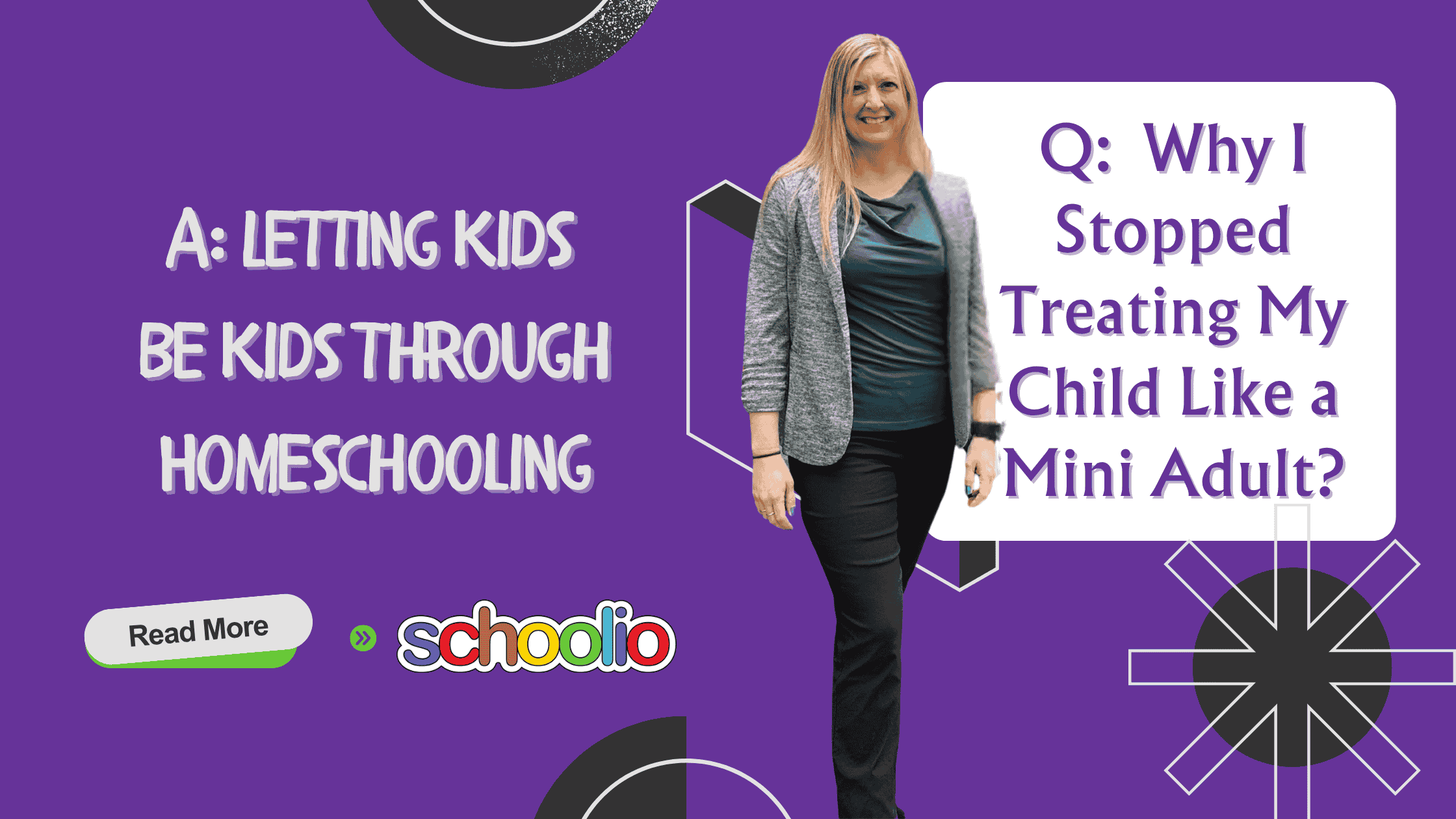
My Child Is Not an Adult in Training

My Child Is Not an Adult in Training


A home educator dares to imagine an education that matters to the child as a child, not just as an adult in training.” — Julie Bogart


This has been on my mind today…

Somewhere along the way, education stopped being about childhood. It became about adulthood. Test scores. GPAs. College readiness. Career prep.

But what about being ready to be a child?

When I started homeschooling, I thought I was just taking on a different method of schooling. What I didn’t expect was how quickly my kids began to reclaim parts of themselves that had been rushed, quieted, or overlooked.

They became more playful. More curious. They asked more questions. They stopped trying to always be “on” or “perfect” or older than they were.

And I realized something. So much of traditional education is focused on preparing kids for a future life that it forgets they are living one right now.

School culture pushes kids to grow up faster than they’re ready to. To give up play for “coolness” or “serious work”.

They are not adults in training. They are kids. With real thoughts. Real emotions. Real learning rhythms that don’t always fit neat timelines.

Homeschooling gives us the chance to slow it all down.

To build a world around them that says “you matter” without needing to add “when you grow up”, let them rest when they’re tired, and let them chase the weird, wild ideas they can’t stop thinking about.

To let them enjoy learning instead of fearing it.

Let them play.

This doesn’t mean we don’t care about their futures. It means we believe that honoring their present is part of preparing them for it.

I want my kids to grow into capable, wise, thoughtful adults. But I also want them to have a childhood they can look back on with joy — not burnout.

That’s the gift homeschooling gave us. And I’ll never regret choosing it.

With love,

Lindsey

Certified Special Ed Educator & Co-Founder, Schoolio

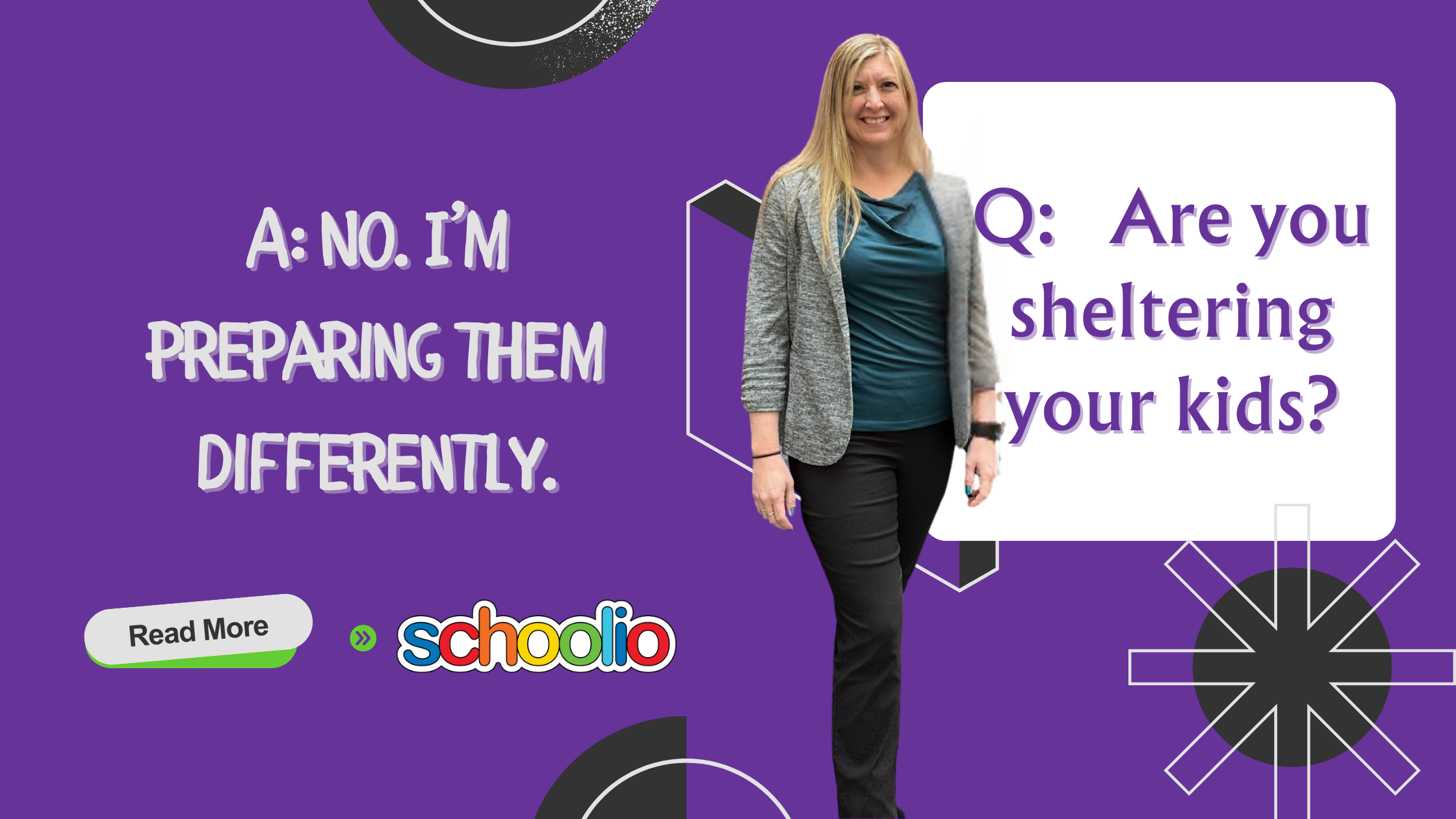
No, I’m Not Sheltering My Kids. I’m Preparing Them Differently.

No, I’m Not Sheltering My Kids. I’m Preparing Them Differently.

This has been on my mind today…

When people hear I homeschool, the first thing they say isn’t about academics. It’s usually something like,

“But how will your kids learn to handle the real world?”

And I get it. I used to ask the same thing.

It took me a while to realize that what we call the “real world” — the world of comparison, competition, cliques, and compliance — isn’t the one I want my kids trained to survive in.

I want them prepared to thrive in the world. And there’s a difference.

I don’t want my children to practice ignoring their needs just to fit in. I don’t want them to believe that being bullied is normal or that stress is a requirement of achievement.

I want them to know how to self-regulate. To set boundaries. To ask big questions. To speak kindly. To be confident in who they are without needing a grade to prove it.

That’s what we’re building at home.

No, we don’t have the same “socialization” that school provides. But you know what we do have?

Conversations that go deep.

Friendships that aren’t based on age.

Time for rest and play.

A learning path that honors their needs, not their test scores.

I’m not sheltering my kids from the world. I’m preparing them to enter it with strength, empathy, and a sense of self that isn’t shaken the first time someone tells them they’re not good enough.

And if that looks different than what most people expect — I’m okay with that.

With love,

Lindsey

Certified Special Ed Educator & Co-Founder, Schoolio

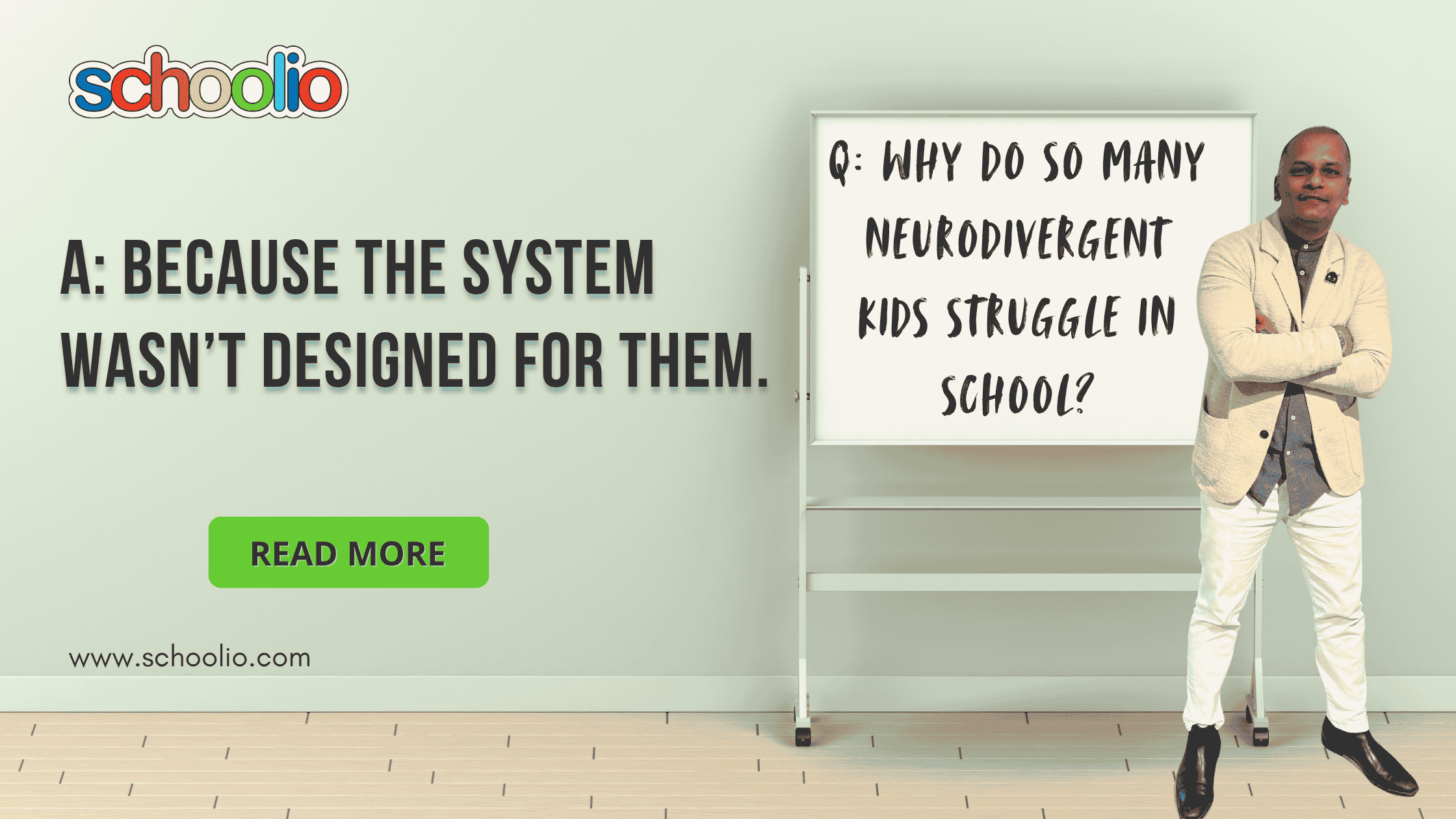
Why the Current School System Wasn’t Built for Neurodivergent Kids

Why the Current School System Wasn’t Built for Neurodivergent Kids

By Sathish, Founder of Schoolio

This has been on my mind today…

When I was a kid growing up in Singapore, the classroom was a machine — neat rows, rigid structure, and one right way to behave, think, and perform. You either followed the rules or you were labeled. I was restless. I couldn’t sit still. My energy and curiosity didn’t have a place in that space, and there were no words for why I struggled. Neurodiversity wasn’t a concept we understood. You were either teachable or a problem.

That stayed with me.

Decades later, I see the same story playing out in schools across North America. Parents tell me how their kids are being flagged for behavior issues, attention problems, refusal to comply — all symptoms of being wired differently in a system built for uniformity.

Let’s be honest. The current school system wasn’t designed with neurodivergent learners in mind. It was built for efficiency, not flexibility. For order, not curiosity. And that mismatch is costing kids their confidence.

I’ve spoken with families whose children were once constantly in the principal’s office, overwhelmed by sensory overload, crushed by the pressure of timed tests, or made to feel like failures for not sitting quietly through long lessons. Many of these same kids began to thrive the moment they left the traditional classroom.

Homeschooling, for them, wasn’t a backup plan. It was freedom. It was healing. And for many, it was the first time learning felt possible.

At Schoolio, we don’t pretend to know everything about every child. But we do know that education should flex to fit the learner — not the other way around. Our online homeschool programs were built to allow pacing changes, subject switches, breaks when needed, and curriculum that doesn’t punish kids for needing to move, think differently, or question the process.

Is homeschooling effective for neurodivergent kids? I’ve seen it change lives, children regain their self-worth, and repair the relationship between learning and joy.

It’s not about perfect lessons or checking every box. It’s about giving kids the space to show us how they learn. Once we stop trying to fix them, we see there was nothing broken to begin with.

Sathish

still learning, still unlearning

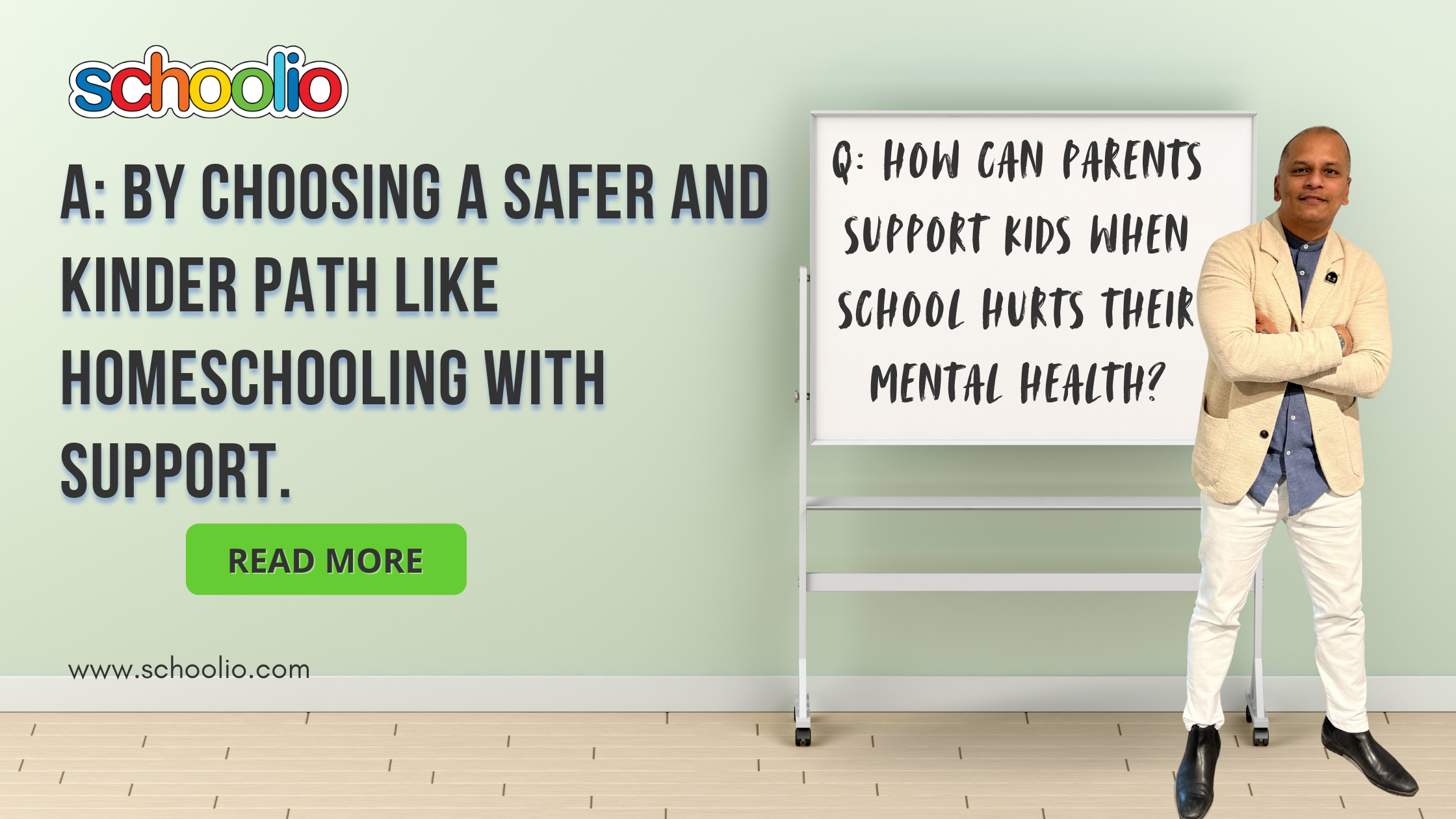
What Chloe’s Story Reminds Us About Mental Health and the Limits of Traditional School

What Chloe’s Story Reminds Us About Mental Health and the Limits of Traditional School

by Sathish

This has been on my mind today…

I read Chloe Jones’ story in The Big Issue recently, and it brought up something I’ve seen time and time again: when school no longer feels safe, kids find another way.

Chloe was labeled lazy. But what she was really carrying was anxiety. That invisible weight kept her from fully showing up at school — and instead of support, she was met with punishment. That’s the moment that broke my heart. Because that moment isn’t rare.

We’ve spoken with so many families at Schoolio who’ve lived a version of this. Their child wasn’t thriving, their mental health was deteriorating, and the school system just wasn’t equipped to respond with what was actually needed — understanding, flexibility, emotional safety.

So Chloe did what many brave students and parents do: she left.

She taught herself. She found community through her local Youth Zone. And she went on to earn top marks and awards at college. Her story doesn’t surprise me — but it inspires me. It shows what’s possible when a learner is finally given the freedom to move at their own pace, in an environment that feels safe.

This is why Schoolio exists. Not to replicate school at home, but to give families the tools to rebuild something better.

We’ve embedded social-emotional learning into the curriculum because it’s not optional anymore — it’s essential. We’ve designed our lessons to work digitally or offline so families can find a rhythm that works for them. And we make sure parents have community, because no one should have to do this alone.

Chloe’s success didn’t happen in a vacuum. She had motivation, yes. But she also had the space and support to heal while she learned.

That’s the balance we aim to strike at Schoolio — where mental health isn’t an afterthought, but part of the design. Where kids don’t have to choose between feeling okay and getting an education.

If you’re a parent, a microschool founder, or someone building alternative models of education — Chloe’s story is your reminder that the path forward isn’t just about curriculum. It’s about care. And that’s something we can all build around.

Sathish

still learning, still unlearning


? Want to support your child’s education and their mental health?

Explore our bookstore, check out our SEL program or join our 7-day trial to see how it feels in your home. 

Why More Parents Are Choosing Homeschooling for Mental Health—and What That Really Means

Why More Parents Are Choosing Homeschooling for Mental Health—and What That Really Means

by Sathish Bala, CEO

This has been on our mind today…

A recent article by Spark Sunderland explored a growing trend that hits close to home: families choosing homeschooling in response to mental health challenges. And while we’re glad to see more parents empowered to make choices that protect their kids, we also believe this conversation deserves more depth—because the rise in homeschooling isn’t just about leaving something behind. It’s about building something better.

More and more parents are reaching out to us with stories that begin the same way: a child overwhelmed by the school day, battling anxiety, isolation, or burnout. In many cases, parents make the call to homeschool out of urgency. Something’s not working. Their child is struggling. And the home becomes a sanctuary—a way to reclaim peace, safety, and time to heal.

We support that decision. In fact, we know it works. Homeschooling can absolutely provide a calmer, more emotionally supportive space for kids who are anxious, neurodivergent, or simply overstimulated in traditional classrooms. But at Schoolio, we also believe that the why of homeschooling matters just as much as the how.

And that leads to two honest questions we think every parent should consider.

First: Is homeschooling solving the problem—or just stepping away from it?

Pulling a child out of school to avoid bullying, peer pressure, or academic stress is often necessary. But long-term success means doing more than removing the trigger. It means rebuilding confidence, developing coping skills, and creating a foundation for healthy social-emotional growth. That’s why our curriculum includes lessons in empathy, emotional regulation, collaboration, and mental health awareness—woven right into the learning process, not added on.

Second: Are parents getting enough support?

This is a big one. When you homeschool, the responsibility doesn’t just shift—it multiplies. You’re the teacher, the guide, the emotional anchor. During the pandemic, researchers found that homeschooling parents often experienced increased stress, burnout, and feelings of isolation. We’ve seen it firsthand. That’s why we’ve built tools that support the entire family. From flexible pacing options to community spaces where parents can share, ask questions, and breathe a little—we want to make sure no one is doing this alone.

We believe in homeschool as a long-term wellness solution—not a last resort.

When mental health is part of the conversation, it changes everything. Families need structure, but they also need grace. Children need routine, but they also need room to rest, reset, and re-engage at their own pace. And parents need more than a workbook and a to-do list. They need real partnership.

That’s why we’ve built Schoolio to meet those needs—with curriculum that honors the emotional wellbeing of the learner, and tools that protect the emotional wellbeing of the parent too.

Because no one should have to choose between learning and healing.

Sathish

still learning, still unlearning


? Curious How Schoolio Supports Mental Health?

Explore our bookstore, check out our SEL program or join our 7-day trial to see how it feels in your home.

Understanding and Managing Anxiety in Neurodivergent Kids

Anxiety in Neurodivergent Kids

Raising a neurodivergent child comes with its own set of unique joys and challenges. One common challenge many parents face is helping their child manage anxiety. Anxiety in neurodivergent kids, including those who are autistic, ADHD, or have other developmental differences, often manifests more intensely than in their neurotypical peers. Understanding the roots of this anxiety and finding effective ways to manage it can significantly improve your child’s quality of life.

What Causes Anxiety in Neurodivergent Kids?

  1. Sensory Overload: Many neurodivergent children are highly sensitive to their environments. Bright lights, loud noises, and even certain textures can overwhelm them, leading to heightened anxiety.
  2. Routine Changes: A sudden change in routine can be extremely distressing for neurodivergent kids. They often find comfort in predictability, and any disruption can trigger anxiety.
  3. Social Interactions: Navigating social situations can be daunting. Misunderstanding social cues or worrying about fitting in can cause significant anxiety.
  4. Performance Pressure: Academic and extracurricular expectations can be a source of stress. The fear of not meeting these expectations can exacerbate anxiety.

Recognizing Anxiety Symptoms

Identifying anxiety in neurodivergent kids can sometimes be challenging as it may manifest differently. Common signs include:

  • Physical Symptoms: Headaches, stomachaches, or fatigue.
  • Behavioral Changes: Increased irritability, restlessness, or meltdowns.
  • Emotional Indicators: Excessive worry, fearfulness, or mood swings.
  • Avoidance: Reluctance to engage in certain activities or go to specific places.

Practical Strategies for Managing Anxiety

  1. Create a Safe Space: Designate a quiet, calm area at home where your child can retreat to when feeling overwhelmed. This space should be free from sensory triggers and filled with comforting items. It should never be used as a punishment- the child chooses to go there, they aren’t sent there as a reaction to behavior.
  2. Establish Routines: Consistent routines can provide a sense of security. Use visual schedules to help your child understand what to expect throughout the day. Let your child be involved as much as possible in creating the schedule.
  3. Teach Relaxation Techniques: Deep breathing, progressive muscle relaxation, and mindfulness exercises can help your child manage anxiety. Practice these techniques together to make them more effective.
  4. Use Social Stories: Social stories are a great tool to help neurodivergent kids prepare for new or challenging situations. They provide a clear narrative of what to expect and how to respond.
  5. Positive Reinforcement: Celebrate your child’s successes, no matter how small. Positive reinforcement can build confidence and reduce anxiety.
  6. Add a Social-Emotional Learning program to your homeschool: SEL programs like Schoolio offers help children learn to emotionally regulate, manage their thoughts and feelings, and cope better with stress and anxiety.
  7. Professional Support: Sometimes, professional intervention is necessary. Therapists, counselors, and support groups can provide additional strategies and support tailored to your child’s needs.

Schoolio’s Program is Neurodivergent-Friendly

Schoolio offers a homeschool program designed with neurodivergent kids in mind. Here are some features that make it a great choice for your child:

  • Unitization: Allows you to mix and match grade levels to fit your child’s unique learning pace and needs.
  • Bite-Sized Learning Sessions: Short, engaging lessons to keep your child’s attention and prevent overwhelm.
  • Alternative Learning Strategies: Various methods to cater to different learning styles and preferences.
  • Custom-Designed Student Success Plans: Personalized plans to ensure your child’s educational success.
  • Interest-Based Learning: Selections that align with your child’s interests to make learning more enjoyable.

Encouraging Open Communication

One of the most powerful tools in managing anxiety is fostering open communication. Encourage your child to express their feelings and fears without judgment. Let them know it’s okay to feel anxious and that you are there to support them.

Conclusion

Helping a neurodivergent child manage anxiety is an ongoing process that requires patience, understanding, and a lot of love. By creating a supportive environment, establishing routines, and teaching coping strategies, you can empower your child to navigate their world with greater confidence and less anxiety. Remember, you are not alone on this journey – there are numerous resources and communities ready to support you and your child every step of the way. Schoolio’s neurodivergent-friendly program can be a valuable part of your toolkit, offering the flexibility and support your child needs to thrive.

10 Tips to Help Your Neurodivergent Child Complete Chores

10 Effective Tips for Helping Your Neurodivergent Child Complete Chores – Schoolio’s Guide

Getting kids to complete chores can be challenging, and it can be even more so for neurodivergent (ND) children who might have unique needs and preferences. Here are 10 tips to help your neurodivergent child complete chores in a way that respects their needs and encourages positive outcomes, incorporating neurodivergent-friendly strategies from Schoolio.

1. Create a Visual Schedule

Neurodivergent children often benefit from visual aids. A visual schedule or checklist can help them understand what tasks need to be completed and in what order. Use pictures or icons along with words to make it more engaging and easier to follow.

  • Tip: Place the visual schedule in a prominent location, such as the refrigerator or their bedroom wall.

Schoolio’s Approach: Schoolio’s custom courses and lessons can be used to create a chore schedule that is seamlessly integrated into your child’s learning day.

2. Break Tasks into Smaller Steps

Large tasks can feel overwhelming. Breaking chores down into smaller, manageable steps can make them more approachable. For example, instead of “clean your room,” break it down into “pick up toys,” “make the bed,” and “put clothes in the hamper.”

  • Tip: Use a step-by-step list or a series of small cards that your child can move from a “to-do” pile to a “done” pile.

Schoolio’s Approach: Schoolio’s bite-sized lessons break entire courses down into manageable pieces. This maximizes attention, focus, and engagement while improving retention. As kids grow accustomed to the short learning model, you’ll find they are less apprehensive and resistant to completing their learning for the day.

3. Use a Timer

Timers can help neurodivergent children manage their time better and stay focused. Set a timer for each task to provide a clear start and end point. This method can also make chores feel like a game.

  • Tip: Use a fun, visual timer that your child enjoys, such as a sand timer or a digital one with a visual countdown.

Schoolio’s Approach: Schoolio’s learning sessions can be mirrored with chore time, using timers to create short, focused periods for completing tasks. Timers are especially helpful for kids who struggle in a subject area. They don’t feel like they have to work until it is done, but just as long as the timer lasts.

4. Offer Choices

Giving your child some control over their chores can increase their willingness to participate. Offer them choices about which chores to do first or how they would like to do them. This can help them feel more empowered and less resistant.

  • Tip: Provide a list of chores and let your child pick which ones they want to do each day.

Schoolio’s Approach: Schoolio’s interest-based learning selections provide children with choice, aligning tasks with your child’s interests and strengths. Empowering your child to have some control over both learning and chores encourages them to take more responsibility for the task.

5. Incorporate Interests and Strengths

If your child has specific interests or strengths, try to incorporate these into their chores. For example, if they love animals, caring for a pet might be a suitable chore. If they enjoy building, they might help with simple household repairs.

  • Tip: Turn chores into a fun activity that aligns with their interests to keep them engaged and motivated.

Schoolio’s Approach: Schoolio’s activity variation is similar take on this strategy. By offering kids a variety of ways to demonstrate their knowledge, we let them showcase their strengths and feel good about what they are doing, leading to more enjoyment. 

6. Provide Clear Instructions

Neurodivergent children often need clear, concise instructions. Avoid vague requests and instead, be specific about what you want them to do. Demonstrate the task if necessary.

  • Tip: Use simple language and give one instruction at a time to avoid overwhelming them.

Schoolio’s Approach: Schoolio’s emphasis on Social-Emotional Learning helps kids (and you!) learn to use clear communication skills, conflict resolution, and improve perseverance and resiliency- all skills needed in academics and in life.

7. Use Positive Reinforcement

Positive reinforcement can be highly effective. Praise your child for completing chores and consider using a reward system. Rewards can be anything from stickers and extra playtime to a small treat.

  • Tip: Create a reward chart where your child can earn points for each completed chore, which they can exchange for a reward.

Schoolio’s Approach: Similar to Schoolio’s custom-designed Student Success Plans, create a reward system that tracks progress and celebrates achievements, motivating your child to complete their chores.

8. Establish a Routine

Consistency is key for many neurodivergent children. Establish a daily or weekly routine for chores to help them understand when and what to expect. A consistent routine can reduce anxiety and increase compliance.

  • Tip: Incorporate chore time into their daily schedule at a consistent time each day.

Schoolio’s Approach: Just as Schoolio emphasizes structured learning, a consistent chore routine can provide the stability and predictability that neurodivergent children thrive on.

9. Make Chores Fun

Turning chores into a fun activity can make them less of a burden. Play their favorite music, turn it into a game, or work alongside them to make the experience more enjoyable.

  • Tip: Use a point system or create a chore bingo game where they can mark off tasks as they complete them.

Schoolio’s Approach: Schoolio’s engaging and interactive learning sessions can inspire fun and creativity in chore completion, making it a positive experience.

10. Be Patient and Flexible

Understand that it might take time for your child to get used to doing chores. Be patient and provide gentle reminders. Flexibility is crucial; if a particular approach isn’t working, be open to trying new strategies.

  • Tip: Regularly assess what is working and what isn’t, and be willing to adjust your approach as needed.

Schoolio’s Approach: Just as Schoolio offers flexible and adaptive learning plans, be prepared to adapt your chore strategies to find what works best for your child.

Conclusion

Helping your neurodivergent kid get their chores done can be challenging, but with the right strategies and support, it can become a positive and manageable part of your routine. By creating a supportive and structured environment, offering clear instructions, and incorporating their interests, you can help your child develop important life skills while contributing to the household.

With resources and strategies inspired by Schoolio’s neurodivergent-friendly program, you can create a chore routine that is engaging, effective, and tailored to your child’s unique needs. Remember, the goal is to make chores a positive experience that fosters independence and responsibility. With patience, creativity, and flexibility, you can find the methods that work best for your child and family.

The TOP 3 Most Important Skills to Teach Your Kids

The Top 3 Essential Skills to Teach : A Homeschool Mom’s Perspective

Hey there, fellow parents and homeschoolers! Today, I’m excited to share with you what I’ve learned about the top 3 most important skills to teach we should be focusing. Trust me, these aren’t your typical reading, writing, and arithmetic – though those are important too! Let’s dive in and explore what really matters for our children’s future success and happiness.

  1. Embrace Their Passions (Even If They Seem Silly)

You know that game your kid can’t stop talking about? Or that seemingly random hobby they’ve picked up? Well, guess what – those interests are goldmines for learning!

Here’s why nurturing your child’s passions is so important:

  • Future career potential: Today’s “silly” interest could be tomorrow’s dream job.
  • Enhanced learning: Kids retain information better when it’s tied to something they love.
  • Lifelong love of learning: Encouraging curiosity now sets them up for continuous growth.

Personal story time:

My son was obsessed with Minecraft. At first, I didn’t get it. But when I started using it to teach him math concepts, his skills skyrocketed! Now he’s learning basic coding through the game. Who knew?

  1. Financial & Digital Literacy (A Tie for Second Place!)

These two skills are absolute must-haves in our modern world:

Financial Literacy:

Digital Literacy:

  • Online safety
  • Spotting fake news and misinformation
  • Protecting personal privacy
  • Understanding and using AI responsibly

Here’s the kicker: most schools and curriculum programs don’t cover these topics in-depth. As homeschoolers, we have the perfect opportunity to fill this gap!

Quick Tip: Turn grocery shopping into a budgeting lesson, or fact-check news stories together as a family activity.

  1. And the Winner Is… Emotional Intelligence!

Surprise! The number one predictor of both financial success and overall life satisfaction isn’t academic prowess – it’s emotional intelligence. This includes:

  • Stress management
  • Anger control
  • Adaptability to change
  • Interpersonal skills and teamwork

In the education world, we often call this “Social-Emotional Learning” or “Social-Emotional Wellness.” And here’s the best part: you can learn right alongside your kids!

A Challenge for You:

This week, try incorporating one activity that boosts emotional intelligence. Maybe it’s a family discussion about handling disappointment, or a game that requires teamwork. Small steps can make a big difference!

Wrapping It Up

Remember, as homeschoolers, we have the incredible opportunity to tailor our children’s education to what really matters. By focusing on these three areas – passion-driven learning, practical life skills, and emotional intelligence – we’re setting our kids up for success in ways that go far beyond traditional academics.

Want to dive deeper into these topics? Schoolio offers a Future-Readiness Library with courses on Social-Emotional Learning, Financial Literacy, and Digital Safety. Plus, their Electives Library is packed with subjects to spark curiosity in even the most reluctant learners.

What do you think about these top skills? Are there any you’d add to the list? Share your thoughts in the comments – I’d love to hear from you!

Until next time, happy homeschooling!

Embracing Neurodiversity: Creative Learning Approaches for Homeschooled Children

Creative Learning- As a homeschooling family navigating the world of neurodivergent homeschooling, you understand the profound importance of tailoring your child’s educational experience to their unique needs, strengths, and challenges. Every child is wired differently, and those with learning differences such as dyslexia, ADHD, or autism spectrum disorders may require innovative and creative approaches to unlock their full potential.

At Schoolio, we celebrate neurodiversity and are committed to providing resources and support that empower families to embrace their child’s exceptional mind. Our approach to neurodivergent homeschooling emphasizes creativity, adaptability, and a deep understanding of each child’s distinct learning style.

Multisensory Creative Learning for Diverse Needs

One of the most effective strategies in neurodivergent homeschooling is the incorporation of multisensory learning techniques. By engaging multiple senses simultaneously, children with learning differences can better process and retain information, making the learning experience more immersive and impactful.

Schoolio’s extensive collection of resources includes a wide range of multisensory materials, from interactive simulations and tactile manipulatives to audiovisual presentations and hands-on experiments. Whether your child is a visual learner, an auditory processor, or a kinesthetic explorer, our flexible approach ensures that their unique learning style is accommodated and celebrated.

Personalized Pacing and Adaptive Curricula

Every child learns at their own pace, and in neurodivergent homeschooling, it’s crucial to embrace a flexible and adaptive approach to curriculum delivery. By tailoring the pace and structure of your child’s education, you can create an environment that nurtures their strengths while providing the necessary support and accommodations for their challenges.

Schoolio’s neurodivergent homeschooling resources include personalized learning plans, customizable curricula, and adaptive assessments that allow you to adjust the pace, delivery method, and content to meet your child’s evolving needs. Our knowledgeable educational consultants are also available to provide guidance and support as you navigate this personalized journey.

Strength-Based Learning and Passion Projects

One of the foundational principles of neurodivergent homeschooling is the recognition that every child possesses unique strengths and talents. By focusing on these strengths and nurturing their passions, you can create a learning environment that fosters motivation, self-confidence, and a love for lifelong learning.

Schoolio’s resources encourage strength-based learning and the integration of passion projects into your child’s educational journey. Whether your child excels in creative arts, technology, or analytical thinking, our materials and support empower you to create learning experiences that celebrate their gifts and fuel their curiosity.

Building Essential Life Skills

While academic achievement is undoubtedly important, neurodivergent homeschooling also emphasizes the development of essential life skills that will serve your child well beyond the classroom. Skills such as self-advocacy, emotional regulation, executive functioning, and social interaction are woven into our neurodivergent homeschooling resources, ensuring a holistic approach to your child’s growth and development.

Through interactive simulations, role-playing activities, and real-world scenarios, your child will have the opportunity to practice and refine these critical life skills in a supportive and nurturing environment, preparing them for a future of independence and self-empowerment.

Inclusive Homeschooling Resources

Inclusivity is at the heart of effective neurodivergent homeschooling. Schoolio offers a variety of inclusive homeschooling resources designed to meet the diverse needs of all students. These resources provide strategies for homeschooling children with ADHD, dyslexia, and autism, ensuring that every child has access to a high-quality, personalized education.

Innovative Homeschooling Methods

To keep learning engaging and effective, it’s essential to incorporate innovative homeschooling methods. Schoolio’s approach includes creative learning approaches that integrate technology, hands-on activities, and collaborative projects. This not only makes learning fun but also helps children develop a wide range of skills.

Tailored Education for Neurodiverse Children

At Schoolio, we believe in the power of tailored education plans. Our resources are designed to meet the specific needs of neurodiverse children, offering adaptive curricula that can be adjusted to fit each child’s learning style and pace. This personalized approach ensures that every child can thrive in their homeschooling environment.

At Schoolio, we understand that neurodivergent homeschooling is a journey of discovery, adaptation, and celebration. Our commitment to providing creative and innovative resources, coupled with our supportive community of educators and fellow homeschoolers, ensures that you have the tools and guidance you need to unlock your child’s full potential.

Embrace the beauty of neurodiversity, and let Schoolio be your trusted partner in crafting a homeschooling experience that celebrates your child’s exceptional mind. Together, we can create a learning environment that fosters confidence, curiosity, and a lifelong love for exploration.

How the COVID-19 Pandemic Changed Schooling

Hey there! Have you ever wondered how the COVID-19 pandemic changed the way kids go to school? Well, let’s dive into what happened and how families are thinking about school differently now.

The Big Shift in School Enrollment

Four years after the pandemic started, many schools are still feeling the effects. In the 2022-23 school year, more kids went back to traditional public schools (TPS), but it’s still not like it was before the pandemic. Before COVID-19, lots of students were already attending TPS. Now, the numbers are about 4% lower than they were in 2019-20.

So, why are some families looking for different options? It’s not just because the population changed or more kids are going to charter schools. There are other reasons too.

Families Exploring New Options

During the pandemic, many parents got a closer look at what their kids were learning because schools moved to online classes. Some parents liked what they saw, but others thought they could find better ways to teach their kids. This led families to explore options like homeschooling or enrolling their kids in private or charter schools.

Perceived School Quality

Parents’ opinions about school quality have changed a lot since COVID-19. In New York City, many parents said they were less happy with their kids’ schools after the pandemic than they were before. This dissatisfaction made some families decide to try different schooling methods.

To get a better understanding, we looked at family satisfaction surveys from New York City Public Schools. These surveys showed that many parents were less satisfied with the education their children received after COVID-19. They felt that schools weren’t preparing their kids well enough for college, careers, and life in general.

The Rise of Homeschooling

Homeschooling became much more popular during the pandemic. In 2019, only about 3.7% of kids were homeschooled. By the fall of 2020, this number jumped to 11.1%. Some families found that homeschooling worked well for them and decided to stick with it even after schools reopened.

Different Reasons for Homeschooling

Before the pandemic, many families homeschooled for religious or moral reasons. After the pandemic, more families started homeschooling because they wanted to give their kids a better or faster-paced education. Some parents felt that their kids needed more help catching up, while others thought their kids could learn more quickly than in a traditional school setting.

Non-Classroom-Based Learning

Not all homeschooling is done completely by parents alone. Some families join groups where they share teaching responsibilities or hire a teacher to help. Others enroll in non-classroom-based charter schools, which allow kids to learn from home but still get support from teachers and access to educational resources.

In these charter schools, students can learn at their own pace while still meeting state education requirements. They are assigned a teacher who checks in regularly to make sure they are progressing well. This option has become popular in states like California and Alaska.

Benefits and Challenges

Homeschooling and non-classroom-based learning have their benefits and challenges. One big advantage is flexibility. Kids can learn at times that work best for them, and parents can tailor lessons to their child’s needs. However, it can also be challenging for parents who have to balance teaching with other responsibilities.

Another benefit is the sense of community that can come from joining homeschooling groups or charter school networks. Kids can still have social interactions through group activities and co-learning sessions. This helps prevent the isolation that some might worry about with homeschooling.

What’s Next for Schools?

The pandemic showed many families that there are different ways to learn. This could mean big changes for traditional public schools in the future. If more families keep choosing other options, some schools might have to close or combine with others.

Public schools will need to adapt to these changes. They might offer more flexible learning options or improve their online learning platforms to meet the needs of students and parents. Schools could also focus on improving communication with families to ensure they feel more satisfied with the education provided.

The COVID-19 pandemic presented a unique opportunity for families to explore different learning approaches. From homeschooling to private and charter schools, many discovered new and exciting ways to help their children flourish. By understanding these diverse experiences, we can shape a future of education that caters to a wider range of learning styles and needs. So, if you could customize your ideal learning experience, what would it look like? The future of education is brimming with possibilities, and it’s up to us to shape it in a way that benefits all learners!

Breaking the Silence: Identifying and Addressing Bullying in Schools and Online

Breaking the Silence: Identifying and Addressing Bullying in Schools and Online

Breaking the Silence: Identifying and Addressing Bullying in Schools and Online

With huge technology advancements in the last twenty years, bullying has extended beyond the schoolyard. Infiltrating online spaces and creating new challenges for parents. This blog aims to provide insights into identifying if your child is facing bullying, steps to take if you suspect it, and valuable resources like Schoolio’s Social Emotional Learning program. Let’s talk about breaking the silence around bullying.

Recognizing the Signs of Bullying:

  1. Changes in Behavior:
    • Look for sudden shifts in mood, attitude, or behavior.
    • Pay attention to unexplained physical complaints or changes in sleep patterns.
  2. Social Withdrawal:
    • Observe if your child is avoiding social situations or isolating themselves.
    • Take note if they express reluctance or fear about going to school or participating in online activities.
  3. Decline in Academic Performance:
    • Monitor changes in grades or academic engagement.
    • Communication with teachers can provide insights into any noticeable decline.
Schoolio Family Plan

Steps to Take If You Suspect Bullying:

Open Communication:

  • Create a safe space for your child to share their feelings.
  • Use open-ended questions to encourage conversation.

Document Incidents:

  • Keep a record of bullying incidents, noting dates, times, and details.
  • Capture screenshots or save messages if the bullying is online.

Engage with School Authorities:

  • Reach out to teachers, counselors, or school administrators.
  • Share your concerns and collaborate on a plan to address the issue.

Involve Mental Health Professionals:

  • If needed, consult with mental health professionals to support your child emotionally.
  • Seek advice on coping mechanisms and strategies.

Explore Schoolio Learning Resources:

  • Schoolio offers inclusive homeschool programs tailored for unique learners.
  • Utilize their Social Emotional Learning resources to enhance your child’s emotional intelligence and resilience.
Schoolio e-books

Encourage Empowerment:

  • Teach your child strategies to handle bullying, such as assertiveness and conflict resolution.
  • Reinforce the importance of reporting incidents to trusted adults.

Connect with Other Parents:

  • Establish a network with other parents to share experiences and support each other.
  • Collaborate on advocating for a safer school environment.

Creating a safe and supportive environment for our children to thrive.

Addressing bullying requires a multi-faceted approach, encompassing communication, collaboration with educators, and leveraging resources like Schoolio’s Social Emotional Learning program. By taking proactive steps and seeking professional guidance, we can create a safe and supportive environment for our children to thrive academically and emotionally.

Schoolio Learning Resources