Stimming, Fidgets, and Movement in ADHD and Autistic Kids: What It Really Means
If you’ve ever found yourself saying:
“Can you sit still for five minutes?”
“Why are you rocking like that?”
“Stop tapping.”
“Do you have to make that noise right now?”
You are not alone.
Almost every parent of an ADHD or autistic child has had that moment — the one where the movement feels constant. The noise feels repetitive. The fidget feels distracting.
And underneath it all is that quiet question:
Why can’t they just sit still?
Let’s gently flip that question.
What if sitting still isn’t neutral?
What if sitting still actually costs them something?
What Is Stimming?
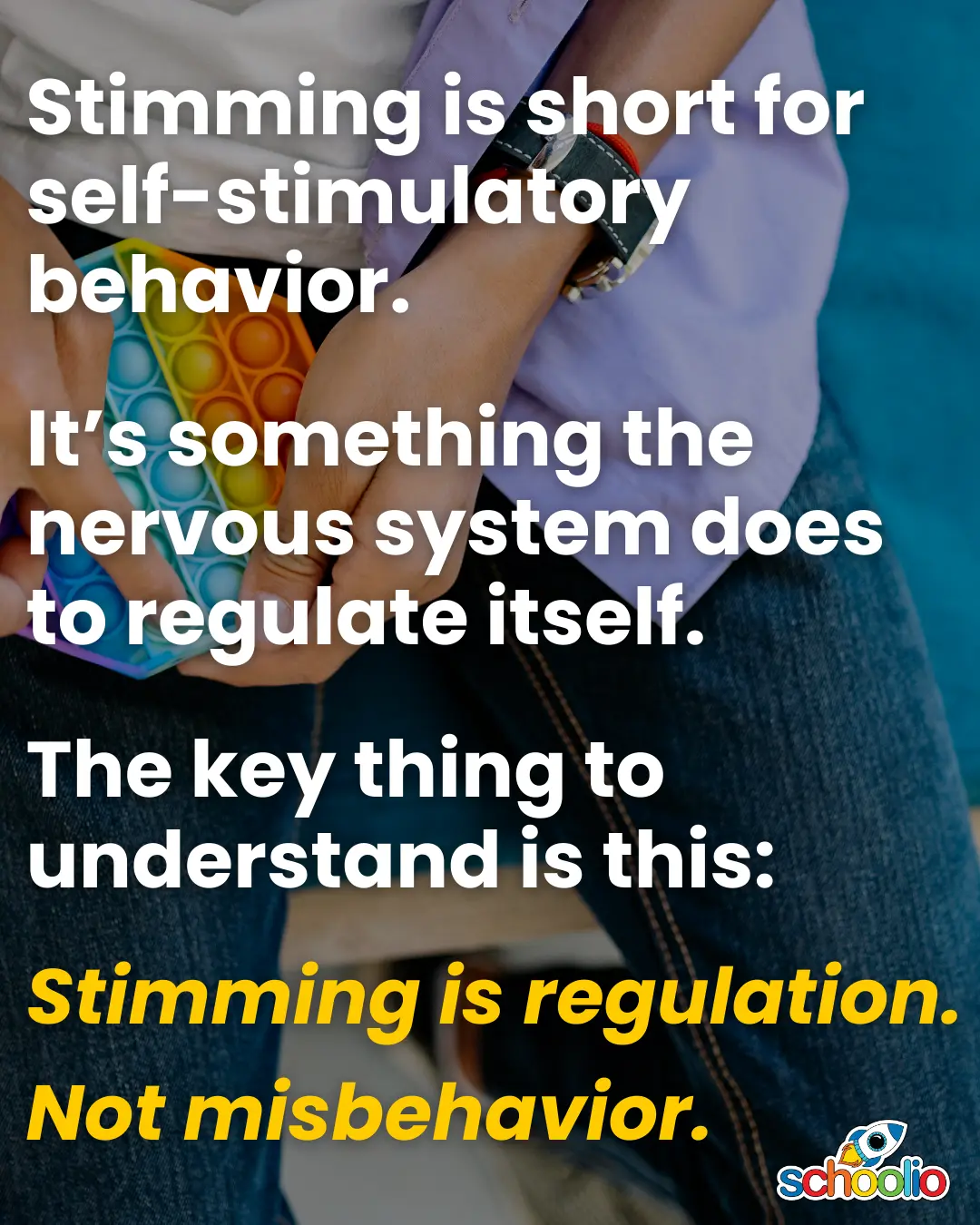
Stimming is short for self-stimulatory behavior.
That phrase sounds clinical, but the meaning is simple:
It’s something the nervous system does to regulate itself.
Everyone stims.
Neurotypical adults:
- bounce their leg in meetings
- click pens
- chew gum
- scroll their phone when anxious
Neurodivergent kids often stim more frequently or more visibly — not because they lack discipline, but because their nervous systems require more input to stay balanced.
Stimming can look like:
Rocking.
Flapping.
Pacing.
Spinning.
Humming.
Tapping.
Chewing.
Repeating phrases.
It can also be completely internal — like song loops or counting.
The key thing to understand is this:
Stimming is usually regulation.
Not misbehavior.
Why ADHD and Autistic Brains Move More
ADHD brains are often dopamine-seeking.
Movement increases dopamine.
Autistic nervous systems are often highly sensitive — either seeking more sensory input or trying to regulate overwhelming input.
Movement organizes the body.
Movement grounds the brain.
Movement creates rhythm.
And rhythm stabilizes the nervous system.
When you see your child:
- leaning upside down in a chair
- sitting in “weird” positions
- pacing during lessons
- needing to move constantly
You’re likely watching their vestibular system at work (that internal balance and movement system).
They aren’t moving to annoy you.
They’re moving because their brain functions better that way.
Fidgets Aren’t Distractions. They’re Tools.
There’s a common fear among adults that fidgets “distract” children.
But for many neurodivergent kids, the opposite is true.
A small amount of movement can:
- increase attention
- reduce anxiety
- prevent escalation
- improve working memory
- support listening
When the body gets the input it needs, the brain can focus on the lesson.
Think of it like this:
Some brains focus best in stillness.
Some brains focus best in motion.
If we demand stillness from a brain that needs motion, we’re working against biology.
When Stimming Is Suppressed
Here’s the part we don’t talk about enough.
Many neurodivergent kids learn to suppress their stims.
They learn:
“That’s weird.”
“Stop doing that.”
“People are annoyed by you.”
They mask.
And masking takes energy.
Sometimes the child who looks “calm and still” at school comes home and melts down — not because they’re dramatic, but because they’ve been suppressing regulation all day.
Movement that looks disruptive might actually be preventing collapse.
But What If It’s Too Much?
Of course, there are moments when stimming interferes — when it’s loud during a lesson, or physically unsafe, or escalating instead of calming.
The goal isn’t “allow everything always.”
The goal is to ask:
Is this regulating or dysregulating?
If it’s regulating, we support it or modify it.
If it’s dysregulating, we help redirect it to something safer or more grounding.
Instead of saying, “Stop.”
We might say, “Looks like your body needs input. Let’s find a way to help.”
Chewelry instead of hoodie strings.
A wobble cushion instead of tipping the chair.
Pacing while memorizing instead of forcing stillness.
We shift from control to collaboration.
The Homeschool Advantage
This is where homeschooling becomes powerful.
In traditional classrooms, stillness is often equated with compliance.
At home, you get to redefine what learning looks like.
Math while bouncing (we used to do math on the trampoline a lot, especially for rote memorization tasks like multiplication facts!)
Spelling while pacing.
History while building with LEGO.
Audiobooks while swinging.
Movement doesn’t mean they aren’t learning.
Sometimes it’s the only reason they can.
The Bigger Reframe
If you take nothing else from this, take this:
Stimming, fidgets, and movement are not character flaws.
They are nervous system strategies.
And when we understand them that way, we stop asking:
“How do I make this stop?”
And start asking:
“How do I support this safely?”
That shift alone can change the tone of your home.
Once you understand stimming as regulation, everything else makes more sense.
And when parents understand, kids feel safer.
And when kids feel safer, they regulate better.