But What About Socialization? (Let’s Talk About It.)

But What About Socialization? (Let’s Talk About It.)


Ah yes… the classic question that every homeschooler has heard (probably a few dozen times):

“But… what about socialization?”

It’s asked by grandparents. Aunts and uncles. Curious friends. Grocery store strangers.

And yes, we’ve seen the memes. We’ve done the eyerolls. We’ve even — on occasion — offered a snarky reply.

But truthfully? I don’t mind the question. I like giving people a better picture of what homeschooling really looks like.

And when it comes to socialization, I answer it in two parts — because most people are actually asking the wrong thing.


?️ Part 1: Yes, My Kids Socialize

Let’s start with the easy answer.

Do my kids spend time with other kids?

Do they have friends? Go to activities? Go on field trips?

YES. Yes. And yes.

My kids were always part of our local homeschool group.

Here’s what my kids do with their homeschool group:

  • Soccer
  • Gymnastics
  • Swimming
  • Skating
  • Art lessons
  • Track and field
  • Academic co-op (monthly)
  • PE co-op (twice a month in winter)
  • Holiday parties & themed events
  • Weekly summer park meetups
  • 3 field trips per month (far more than they ever got in public school!)

And best of all — these are the same kids they see over and over again. The friendships are deep and real. The connections are consistent. The community is strong.

We even text each other to coordinate sign-ups for events, just like any other friend group would.

So yes. My kids socialize. A lot.


? Bonus Perk: Our Evenings and Weekends Are Peaceful

Because our extracurriculars happen during the day (with our homeschool group), we’re not cramming activities into busy evenings or rushing around on weekends.

We eat dinner together.

We go to bed at reasonable times.

We rest.

Homeschooling has given us the gift of balance — and that’s good for everyone’s mental health.


? Part 2: Let’s Talk About Socialization (The Real Kind)

Now for the word people use… without really understanding it.

Socialization is the process of learning how to function in society — how to communicate, cooperate, handle conflict, and understand social norms.

And here’s a question for you:

Who’s better suited to teach your child social values —

other 8-year-olds on the playground…

or loving, emotionally mature adults?

When my child is at a homeschool event and has a conflict with a friend, they can come to me right away for support and coaching.

I help them understand the situation, plan a response, and reflect on how it went.

That means they’re learning social skills in real time, with guidance.

It’s not “helicopter parenting.” It’s real mentorship.

The result? Even very young homeschooled kids learn to resolve conflict with kindness and maturity.


? Homeschooled Teens Are (Surprise!) Really Cool

If you’ve ever had a full conversation with a homeschooled teen, you know what I mean.

They’re articulate.

Confident.

Curious.

Engaging.

Not sullen or withdrawn. Not afraid to talk to adults. Not obsessed with fitting in. Just… lovely humans.

No weird stereotypes. No Stepford vibes. Just kids who’ve had space to grow up at their own pace, in their own way.


? Public School Culture Is Not the Social Utopia People Think It Is

Yes, some kids enjoy the social side of school.

But many don’t — and for good reason.

Here’s what socialization looks like in most public schools:

  • Friend groups sorted by birth year only (not interest or personality)
  • Pressure to conform or risk bullying and isolation
  • Toxic norms that teach kids not to trust or confide in adults
  • A culture where “fitting in” > being yourself

Even kids who succeed socially often do so by constantly managing their behavior to meet those unwritten rules — and it’s exhausting.

We wonder why so many kids are anxious. But is it any surprise when the stakes of every interaction feel this high?


?‍♀️ “But School Prepares Them for the Real World…”

Here’s the thing:

Being trapped in a toxic environment with no way out is not “real world prep.”

Yes, adults deal with difficult coworkers. But as adults, we have:

  • Control over our environment
  • Emotional regulation
  • Resources
  • Options

Children don’t.

When a kid is being bullied at school, school is their entire world.

They often feel trapped, unsupported, and completely alone.

That’s not “character building.” That’s trauma.


✅ So Let’s Wrap It Up

Do my kids socialize? Yes. Joyfully, regularly, and with a diverse group of friends.

Are they socialized? Yes. In ways that are healthy, supported, and guided by loving adults.

And honestly?

They’re thriving — not despite homeschooling, but because of it.


Lindsey

Certified Special Ed Educator & Co-Founder, Schoolio

No, I’m Not Sheltering My Kids. I’m Preparing Them Differently.

No, I’m Not Sheltering My Kids. I’m Preparing Them Differently.

This has been on my mind today…

When people hear I homeschool, the first thing they say isn’t about academics. It’s usually something like,

“But how will your kids learn to handle the real world?”

And I get it. I used to ask the same thing.

It took me a while to realize that what we call the “real world” — the world of comparison, competition, cliques, and compliance — isn’t the one I want my kids trained to survive in.

I want them prepared to thrive in the world. And there’s a difference.

I don’t want my children to practice ignoring their needs just to fit in. I don’t want them to believe that being bullied is normal or that stress is a requirement of achievement.

I want them to know how to self-regulate. To set boundaries. To ask big questions. To speak kindly. To be confident in who they are without needing a grade to prove it.

That’s what we’re building at home.

No, we don’t have the same “socialization” that school provides. But you know what we do have?

Conversations that go deep.

Friendships that aren’t based on age.

Time for rest and play.

A learning path that honors their needs, not their test scores.

I’m not sheltering my kids from the world. I’m preparing them to enter it with strength, empathy, and a sense of self that isn’t shaken the first time someone tells them they’re not good enough.

And if that looks different than what most people expect — I’m okay with that.

With love,

Lindsey

Certified Special Ed Educator & Co-Founder, Schoolio

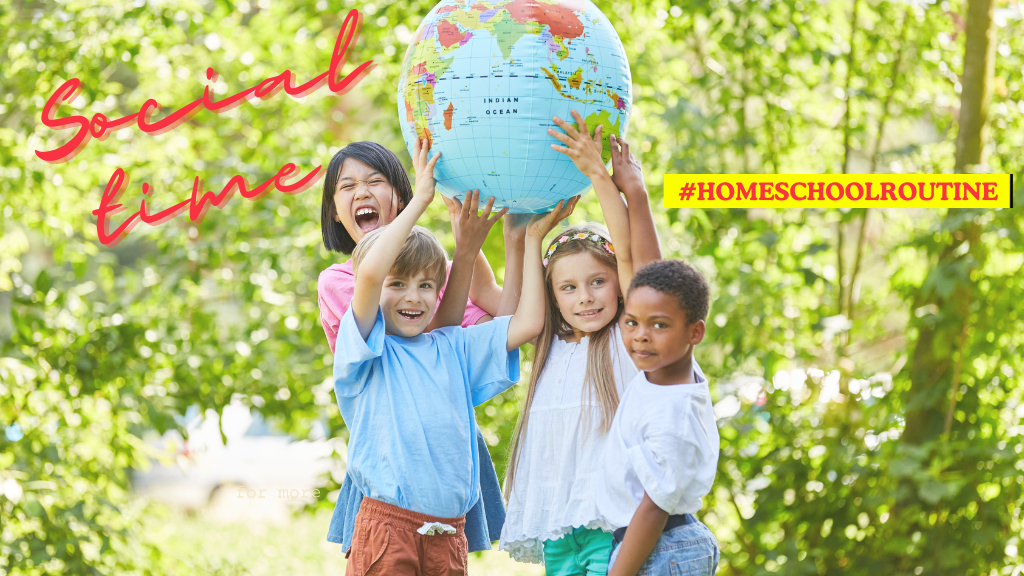
Unlocking Potential: The Crucial Role of Social Time in Your Homeschool Routine with Schoolio

In the realm of homeschooling, striking the right balance between academics and social development is paramount. As parents, educators, and caregivers, we recognize the importance of fostering a well-rounded learning environment for our children. In this blog post, we will explore the significance of incorporating social time into your homeschool kids’ calendars and how Schoolio can help you achieve this delicate equilibrium.

Why Social Time Matters: Socialization is a fundamental aspect of a child’s growth, influencing emotional intelligence, communication skills, and the ability to collaborate. While homeschooling provides a tailored academic experience, it is equally crucial to nurture a child’s social development. Here’s why:

  1. Building Social Skills: Engaging in regular social activities helps children develop essential social skills, including communication, teamwork, and conflict resolution. These skills are invaluable in both academic and real-world settings.
  2. Emotional Well-being: Social interactions contribute to a child’s emotional well-being. Positive connections with peers and adults outside the family unit provide emotional support, reducing feelings of isolation and enhancing mental health.
  3. Diverse Perspectives: Interacting with a variety of individuals exposes children to diverse perspectives and ideas. This broadens their understanding of the world and fosters open-mindedness, a crucial quality in today’s interconnected society.

How Schoolio Elevates Social Time in Homeschooling:

Embracing a holistic educational experience is at the heart of Schoolio’s comprehensive homeschooling platform. Here’s how Schoolio, including Live Classes with vetted Tutors, facilitates the integration of social time into your homeschooling routine:

  1. Online Communities: Dive into Schoolio’s vibrant online communities, where homeschooling families connect, share experiences, and organize social events. These virtual spaces create a sense of community for your child, fostering friendships and social bonds.
  2. Extracurricular Adventures: Explore the diverse world of Schoolio’s extracurricular options, from virtual clubs and sports to creative arts programs. These activities not only complement your child’s academic journey but also provide exciting avenues for social engagement and skill development.
  3. Collaborative Projects: Schoolio’s collaborative project features go beyond individual learning. Your child can collaborate on assignments with fellow students, promoting teamwork and communication skills. These projects simulate a classroom environment, striking the perfect balance between independent learning and group interaction.

In conclusion, integrating social time into your homeschooling routine is vital for your child’s holistic development. With Schoolio’s resources, including Live Classes with vetted Tutors, you can create an enriching educational experience that seamlessly blends academics and socialization. Embrace the power of social time, and witness your child blossom into a well-rounded learner. ?? #HomeschoolingSocialTime #SchoolioLearning #HolisticEducation

Socialization and Homeschooling

What is the number one homeschooling myth that drives homeschool parents crazy?

Does it have to do with Socialization and Homeschooling? You bet!  This whole idea that homeschooled children must be isolated and not able to understand social cues, needs to stop! Because the fact is that homeschooled children do have a social life. Whether you’d like to believe it or not, socialization and homeschooling go hand in hand.

Naturally, you’d think because I was homeschooled and grew up in the country that socialization and homeschooling weren’t a pair for my siblings and I. But that couldn’t be further from the truth. We went to homeschool events (yes, even back in the 90s). We had Christmas plays, and believe it or not I had a healthy social group filled with best friends.

My mom ran a soup kitchen in the city close to us, and she would take us with her every Tuesday to help prep food and serve the homeless. Sometimes when my dad had time off, he would come home and tell us to pack our bags. We’d jump in the truck with him and my mom and go for an adventure. We’d cross the border to the United States and travel up and down the East coast. Meeting tons of people, experiencing different parts of another country, and gaining valuable life experience.

Why the questions about Socialization and Homeschooling drive me crazy.

I started homeschooling my oldest daughter in 2015. I would get so frustrated with the constant questions from family, friends, neighbours and even strangers. A fan favourite was: “How are you going to socialize her?” Obviously, the same way you socialize other kids! It became increasingly difficult for me to restrain my attitude when I’d receive the same questions over and over again. By 2019, I had become a pro at answering these questions. I’d spew off all of the things that my children were participating in. Homeschool gymnastics, co-ops, French lessons, track and field, swimming lessons, park dates, field trips and more. My children have neighbourhood friends, homeschool friends and a long list of others. And, I was determined to prove to all the ‘What about socialization’ people that my kids were doing just fine in that department.

Then the pandemic hit, and with it brought isolation that we had never experienced before.

Now, I felt that I had to defend homeschooling in a whole new way.

Quickly I found that parents were taking to social media to say ‘Homeschooling sucks!’ when they were stuck in the thick of trying to deal with virtual learning. I remember telling people: “Virtual Learning, and pandemic learning are completely different from homeschooling.” But, not too many would agree with me.

Most parents assumed that because homeschooling was the same as virtual learning and isolation. This idea goes hand and hand with the myth that Homeschooled children don’t have a social life. When I chat with friends, acquaintances, my husband’s co-workers, and neighbours, the new question about socialization and homeschooling is: “Your lives wouldn’t have been that different because you already homeschooled before the pandemic.” Cue the eye roll. Yes, our lives were interrupted by the pandemic. Because, no, my children don’t just spend their time in the house reading books and ignoring the world outside. My children have had to go through isolation just like the rest of the children out there. We weren’t able to see friends, go to sports, activities, co-ops, and music lessons.

The issue lies with this idea that children need to go to traditional school in order to have a healthy social life. Is this actually accurate?

Before I answer that, I just want to clear something up first. It’s not Homeschooling against Traditional Education. It’s not a matter of ‘what’s better overall’. The point is, that homeschool parents are doing an excellent job of teaching their children, caring for them, cultivating their interests, and helping them to have a thriving social life. Public School parents are doing an excellent job also. Each family must decide what works best for them, traditional education or homeschool. Neither is wrong, so neither need to be bashed. But, for whatever reason Homeschooled parents are the ones that are constantly bombarded with the questions and the comments. The ones that are forever being asked about socialization and homeschooling. Why is that?

I really don’t know. I’d like to say it’s because it’s not the ‘normal’, and people don’t understand when something is different. But, that’s really not the case. Because since 2012 homeschooling has been on the up and up in both Canada and the United States. More and more families are turning to in-home education. I should point out that the turn towards homeschooling started well before the pandemic.


Am I just being defensive because it was our choice to homeschool? So, I feel I must defend their socialization to everyone that asks?

That could be. But I choose to look at facts and research first. Not just at my family and our social lives. But at the many, many homeschooling families around the world. Then looking at how their social lives compare to those of traditional education. According to Evidence for Homeschooling: Constitutional Analysis in Light of Social Science Research, “Studies demonstrate that homeschooled students are well socialized.”

“Several studies found no significant difference in the social skills of homeschooled and non-homeschooled students. Other studies found that homeschooled children score significantly higher on social development rating scales/questionnaires. For instance, one study using the Vineland Adaptive Behavior Scale, a well-tested diagnostic tool of measuring communication and daily living skills, found that homeschooled students substantially outperformed traditionally schooled students. The average overall score for the homeschooled children on communication, daily living skills, socialization, and social maturity subscales was at the 84thpercentile compared to the 23rd percentile for the traditional schooled students.”

That’s an interesting find. Isn’t it?

Could it be that Homeschool parents are right to feel frustrated when people ask them the same questions about socialization and homeschooling?

Through direct observations and recording his findings on the standardized measure known as the Child Behavior Checklist, Richard Medlin, PhD, was able to measure students’ social skills. He compared the social behaviour of seventy homeschooled and seventy traditionally schooled eight to ten-year-olds. “These students were matched along demographic and socio-economic lines and found no significant differences between the two groups regarding measures of self-concept and assertiveness.” Read about it here!

Interestingly enough, Dr. Richard Medlin found that, based on the checklist, non-homeschooled students had more behaviour difficulties than homeschooled ones.

Want to know another really cool fact about socialization and homeschooling? When formerly homeschooled college students rated their own characteristics and personality traits. (They did this through a standardized measure called the NEO Five-Factor Inventory- 3. )These students showed to be significantly more agreeable, conscientious, and open minded than the national sample, consisting of mostly traditionally schooled children.

How could this possibly be the case?

Shouldn’t homeschooled children be the ones struggling with socialization? Nope. Why is that? Do traditionally schooled children have a social life because of the classroom setting? The answer is simple, no. When children are in class, they aren’t to talk. Socialization happens on the playground, on class trips, playdates, sports, volunteer work, in music and art classes. And guess what? Homeschooled children have all the same opportunities and often more!

The conclusion is, homeschooled children are not isolated, socially-lacking creatures.

Despite the myths surrounding socialization and homeschooling, homeschooled children do have a healthy social life.  So, next time someone starts to question how your homeschooled child could possibly have a social life. Remember these facts, or point them to this blog! It’s time to break down the stereotype that homeschooled children are destined to be socially awkward.


Read more from Schoolio about Socialization and Homeschooling, click here! 

Sources for this blog: 

Let’s Talk About: Socialization

Hey Lindsey, what’s the difference between Socialization and Socializing when it comes to Homeschooling? 

Ah socialization, the most common question asked of the seasoned homeschooler. It’s asked by grandparents and aunts and uncles and family friends and strangers at the grocery store. It’s the source of memes and eyerolls and, yes, sometimes a snarky reply here and there. You have to cut us a break, because we get asked it A LOT. Like, a lot, a lot. And for some people, it’s actually insulting.

I don’t personally mind answering the socialization question repeatedly because I love to inform people about what homeschooling is really like. Homeschooling has been such an enriching and positive experience for our family that I can’t help but want to recruit everyone else to our side of the fence, where the grass is certainly greener from our view.

I like to answer the socialization question in two parts. Because I think people don’t 100% understand what they’re asking to begin with. There’s a difference between “socialization” and “socializing”. Socialization is the process by which a person learns the norms, values, behaviour, and social skills appropriate to his or her society. Socializing, on the other hand, means mingling sociably with others. When most people ask, “But what about SOCIALIZATION?” they are actually asking if my homeschooled children SOCIALIZE. But, since it was asked, I like to go ahead and answer to both.

First of all, yes, my homeschooled children SOCIALIZE. Homeschooling may be more popular than you realize. The numbers certainly differ from area to area, but in my city of 100,000 people in Eastern Ontario, we have more than 100 children who are part of our formal homeschool group- and there’s many more locally who are not part of the formal group. My children do all their extra curricular activities through our homeschool group, which includes, soccer, gymnastics, swimming lessons, art lessons, skating, and track and field. They go to an academic co-op once a month, and a physical education co-op twice a month in the winter. They go to themed parties for Halloween, Christmas, Easter, and at the beginning and end of the school year (our Not-Going-Back-to-School Beach Party on the first day of public school is a blast every year!), as well as weekly park meet-ups all summer long. We average 3 field trips per month from September to June- way out pacing the public school system- and these aren’t just meeting up at a museum and paying the admission, these are regular school field trips organized by our members and hosted and taught by the experts at the various locations. At all of these events, my children see the same groups of kids over and over. I’ll see an email come through for sign-up for some event, and the first thing I do is text the parents of my kids’ closest friends to find out if they’re signing up for that event too. 

One amazing beneficial consequence to doing all our extra curricular activities with the homeschooling group, is that it’s ended the crazed rush of getting dinner, homework, and extra curriculars done on weekday evenings. Gone are spending Saturdays bustling from one child’s activity to the next. Our evenings are peaceful times, with healthy dinners, practical bedtimes, and no stressful rushing. Our weekends are for time together as a family.

Now that SOCIALIZING is out of the way, let’s talk about the word most people actually use without understanding what it means. SOCIALIZATION. If we’re talking about the process by which our young and impressionable children, with their growing and not-yet-fully-developed brains, are taught behaviour that is socially acceptable to the society in which they live- who do you think is best suited to provide this social instruction? The mature, experienced adults in their lives who love and care about them? Or their equally immature and inexperienced peers on the playground?

My homeschooled kids are not “helicopter parented”, in fact those who know me know I advocate strongly for free range parenting, but they do have the benefit of my presence as they learn to navigate the difficult waters of peer interaction and socialization. For example, when in public school, if my child had a problem on the playground with a friend, I wouldn’t hear about it until the end of the day. By then, the details are blurred, and my child has already had to make a decision on how to respond and action that decision long ago, when the incident happened. My feedback and guidance, in this instance, comes far too late. Alternatively, when we’re at homeschool activities, the children go off and play together independent of the adults, while we sit together and socialize ourselves. When something comes up, as always does with children, my children are able to come to me, explain the situation and problem before it’s escalated too far, and talk it through and get my guidance immediately. They can then make a decision about their next course of action, and I send them off to action that decision with the person they’re conflicting with. Social Conflict Expert (adult) Consultation and Guidance Independent Decision and Action. Usually followed up later in the day with reflection when I inquire as to how it went. This supported learning of social interaction and conflict resolution with a mature adult acting as advisor has led me to see many amazingly mature interactions between even very young children when they are both homeschoolers. 

Speaking of mature interactions, have you ever sat and had a conversation with a homeschooled teenager? They are amazing individuals who have interests and beliefs, and things to say about them. No stereotypical teenage angst, sullen, withdrawn behaviour. No embarrassment to be talking to “old people”. These young adults are articulate and confident and are as lovely and easy to converse with as any adult my own age. I’ve met introverted and extroverted homeschooled teens, but I’ve yet to ever meet the socially awkward, bow-tied, weird “stepford” kid that gets passed around in the stereotypes of homeschooled children.

The benefits of being socialized as a homeschooler are numerous, and yet a lot is said, especially lately, about the “mental health benefits” to children going to school. And always one of the reasons they benefit from school is said to be the “social aspects”. While some children enjoy school, an equal number, if not more, hate it there, either due to the academics or the “social aspects”. I would argue that the public school system is not a positive social education for the majority. 

In public school, children are cohorted based on birth year alone. For homeschooled children, they make friends based on interests and personality, rather than year of birth. Both my children have a “best friend”, and neither of their best friends are the same age as they are. Age is a non-issue when it comes to choosing friends in the homeschool world. Part of the toxic culture of public school is the idea that it is “uncool” to socialize with anyone younger than you. Therefore, rarely does anyone socialize outside their age bracket, especially as they get to older elementary years. The smaller the school your child attends, the fewer options they have for friends out of this select age group. 

The culture of public school teaches kids these toxic socialization rules, another one of which is that adults are the enemy. Being close to an adult or teacher is not cool (“Teacher’s Pet”), speaking up when rules are broken is not cool (“Tattle Tale”), and consulting and confiding in parents is definitely not cool. Hiding things from the adults, getting away with things, and breaking rules is what is considered cool in this culture. On top of all this, fitting in is the most important social achievement of all. Above all else, conform. Conform, or your life will be made miserable. Failure to conform to the social rules of public school will end with you either being bullied, or at a minimum ostracized and without friends and support. This is a high pressure atmosphere our young people are interacting in every single day, and it’s no wonder so many children suffer from anxiety. Children who enjoy the social side of school are the ones who are best at conforming, either because it follows their natural personality or because they work at it, which is also high-stress and exhausting even if successful. And I think we all know what constant high levels of stress do to a person’s ability to learn, don’t we? 

Now some will say, “but kids need to go to school to learn how to deal with those negative interactions, for the real world!”. Ok first of all, how much is the public school system a reflection of the “real world”? And here’s the difference between being bullied at public school, and dealing with the inevitable jerk at work in the “real world”: when you’re a child at public school (first of all, you’re a CHILD, not an adult), school is your WHOLE WORLD. When you’re an adult and have a job, you may have a jerk for a boss or a colleague that bullies you, but at the end of the day you come home to your family, you have friends who have no relation to your work, and you have support and camaraderie outside of the toxic environment work may be. For our kids, school is it. Yes, they come home to their family who love them and certainly want to help and support them, but remember that the culture of public school has taught them that adults are the enemy, and they know that confiding in their parents will make the bullying worse if it’s discovered by their tormentors. They don’t usually have friends outside of the school, so if they’re an outcast at school, everyone knows it. Children also lack the brain development for the kind of foresight that tells them that this won’t be how life is forever. This is why we see children committing suicide or shooting up their school mere months from graduation. Furthermore, if an adult has a toxic work atmosphere, they can actively work towards changing it- remedial education, job hunting, change of department, etc. Children do not have those options, to them, there’s no way out. Bullying at school is more than “learning to deal with jerks”, it is incessant and inescapable. How can we know all this, and still think the culture at public school is a positive social experience?

So to answer the question they didn’t ask but meant to, yes, my children regularly SOCIALIZE. And to answer the one they did ask but maybe had never really considered, no my children don’t need school to learn SOCIALIZATION. They’re being socialized in a positive, loving environment, and they are, in my opinion, all the better for it.


Will My Grade 1 Child be isolated?

With the COVID-19 situation evolving, many parents are concerned about their child’s safety in a school setting. And rightfully so. There’s something terrifying about putting your child in a vulnerable situation that could open them up for infection. So now you’re looking for satisfactory, homeschool alternatives for your grade 1 child that will measure up or surpass their current education. Well, you’re in the right place. Schoolio offers only the best materials for you and your child. 

So, you’ve found an exceptional curriculum that follows grade 1 Ontario curriculum but you’re still struggling with doubts about homeschooling your child. What concerns are you struggling with? 

Could it be the social aspect of homeschooling? I think that’s honestly the number one concern that I hear from parents when they’re considering homeschooling. ‘I don’t want my child to miss out on the social aspect of school.’ And fair enough, the stereotypical aspect of home school, would make you believe that children can’t be socialized while homeschooling. But I’m here to tell you that’s just not the case. 

My children have an excellent social network. In fact, my daughter has more friends than I do. But how? And where do they meet these friends? Every city has a homeschool group, or sometimes more than one. (And if your town doesn’t have one – start one!) These homeschool groups are run by talented individuals who care about the mental and educational well-being of your child. They care about their education and most importantly, their safety. Our local homeschool group has many different opportunities for socialization. Like ‘Bubble Homeschool Gymnastics’, where the children are joining a bubble of other children to have weekly gymnastics classes together. There are also art classes at art studios like, 4 cats! Swimming lessons, park dates, co-ops, French tutoring with other home school students, Soccer, outdoor PE, and the list goes on and on. 

There’s absolutely no reason your child can’t be socialized. There are so many different opportunities for them to get out there and make friends/see friends. When most people think of home school, they think of children out on a country farm, sitting in a field playing with sticks, never seeing other people or kids and possibly also having their education completely neglected. But guess what? That’s completely not the way!  

When COVID-19 hit and quarantine began, many people got a taste of having their children home for school.  And it probably confirmed their beliefs that homeschool is isolating, but how could it not be in that situation? That was called ‘Isolation schooling’, not home school. Homeschool is a much better, wholesome experience. So, let’s not make the mistake of putting isolation schooling and homeschooling in the same category. They’re so different. 

You’re worried that maybe your child won’t be getting the same mental stimulation and education as in school? Well, my friend, that’s also not the case. Schoolio takes education very seriously, while making it fun and enjoyable for your child. Following strict grade 1 Ontario Curriculum, you have absolutely nothing to worry about when it comes to making sure your child is learning the right amount of material. 

Maybe you’re afraid that you won’t be a good teacher, or that you won’t be able to handle that extra pressure on your own. First of all, don’t doubt yourself. You are a brilliant human being that makes the best decisions – like choosing to homeschool your child and utilizing Schoolio to accomplish that. Schoolio cares about you and your child. We are here to help. If you have any issues with your curriculum or questions about the content – just ask!  

If you are able to stay home with your child, then deciding to homeschool them will always be a wonderful decision. Sure, you’ll have some tough days, some days that you just want to end. But each day gives you another opportunity to help your child learn and grow, and that’s a gift. Don’t let the little worries stop you from doing something that you know would be beneficial for your child. You are a champion, and you are going to rock this thing.

Jaymee Davis is a stay at home/work at home/ homeschool mama. She believes in your ability to teach your children from home, and aims to help you reach this goal.

Let’s Talk About: Activities

So Lindsey, parents want to know is homeschooling boring? Wouldn’t my children get bored always being home? What are some activities that you’ve done with your children to make the homeschool days less boring and still give them fun opportunities?

“This is a list of all the activities my kids have done as homeschoolers, mostly all with the homeschool group we’re in (so seeing the same friends every time), and some outside our home city have been done as a family trip.”

Field Trips:

Fall Fair

Treetop Adventure World

Museum of Health Care

Theatre Performance- Christmas Show

Aquatarium

Geology Museum

Sir John A MacDonald House

Theatre Performance- Dinosaur Show

Woodworking Museum

Polymer Clay Art Class

Overnight at Upper Canada Village

Water Park Day

Art Museum

Toronto Zoo

Medieval Times Dinner and Tournament

Casaloma

Science Centre

Trenton Air Force Museum

CFSCE Communications Museum

Let’s Talk Science

Little Cataraqui Conservation Centre

Activities:

Academic Co-Op (once a month Sept- June)

Soccer (once a week in the fall)

Gymnastics (once a week Sept-June)

Swimming Lessons (once a week in the spring)

Track and Field (once a week in the spring)

Phys Ed. Program (twice a month Oct.- April)

Orienteering (6 week program in the fall)

Annual Homeschooler Science Fair

Weekly Summer Park Meet-Ups

Parties:

Not-Going-Back-to-School Picnic and Beach Day

Autumn Party

Christmas Party

Easter/Spring Party

Year End Homeschooler Sandbanks Beach Day

Year End Family BBQ and Bonfire

“Obviously different areas have different field trip possibilities and different group dynamics (some are bigger/smaller than others, some are more active than others) but this gives you an idea of what the social aspect of your homeschooling CAN look like, if you want it to. Sometimes we get so busy socializing we need to catch up on our academics! And if Covid makes all these socializing ideas impossible this year, just remember that the kids in school aren’t getting to socialize much either. All of us will be suffering pretty equally this year unfortunately.”

There you have it, homeschooling doesn’t mean sitting at home by yourself with your kids. You can have many fun field trips, socialization activities and more.