Don’t Let School Convince You You’re Not Smart

Don’t Let School Convince You You’re Not Smart


My daughter and I spent several hours tonight studying for her math test tomorrow.

She’s neurodivergent. She struggles in math and English because of dyslexia and dyscalculia. There were a lot of tears. And at one point she said something that broke my heart:

“I wish I could just be as smart as everyone else.”

?

So I told her the truth.

Sweetie, everyone has hard things and easy things. Everyone.

This is your hard thing. Reading and numbers are harder for you. They just are. But that doesn’t mean you aren’t smart.

Here’s what no one tells you about school:

School is centered around reading and numbers.

Independent reading is how one adult manages thirty kids in a classroom. Tests are how large groups are measured quickly. The whole structure depends on literacy and numerical processing.

So if reading and numbers are your hard things, school will feel hard.

That doesn’t mean you’re not smart.

It means the system is built around your area of challenge.

And here’s another truth about school:

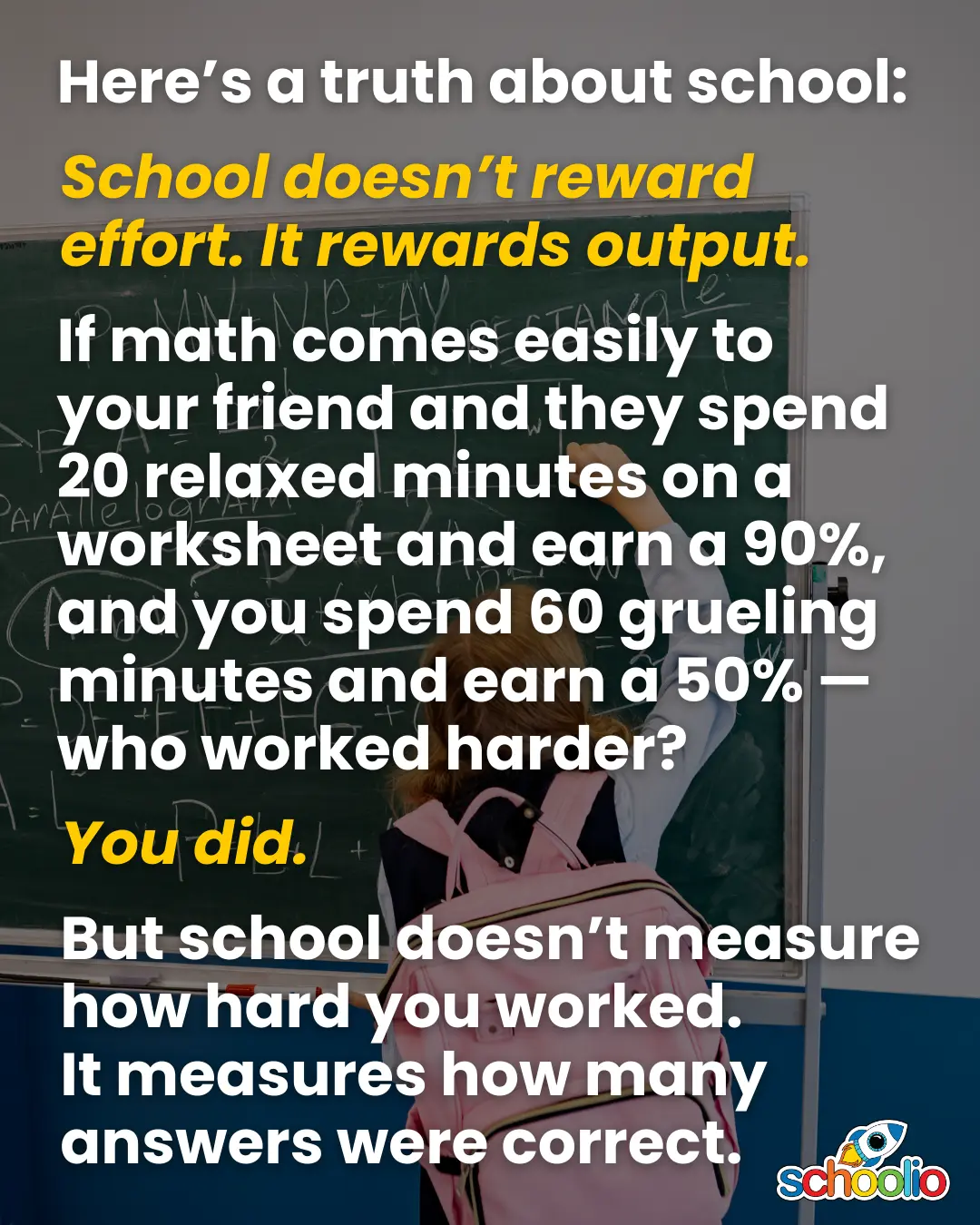
School doesn’t reward effort. It rewards output.

If math comes easily to your friend and she spends 20 relaxed minutes on a worksheet and earns a 90%, and you spend 60 grueling minutes and earn a 50% — who worked harder?

You did.

But school doesn’t measure how hard you worked.

It measures how many answers were correct.

Now imagine something different.

If school were centered around creativity…

or engineering-thinking…

or musical instinct…

or empathy and thoughtfulness…

or responsibility and trustworthiness…

You would be at the top of the class.

You would be absolutely crushing it.

But school doesn’t prioritize those traits.

But guess what? The real world does.

The real world cares that you show up on time.

That you think outside the box.

That you treat people with kindness.

That you keep going when things are hard.

The real world doesn’t care if you use a calculator to figure out a tip.

It doesn’t care if you prefer audiobooks over printed pages.

It doesn’t care how quickly you finish a worksheet.

The most powerful skill you’ll carry into adulthood isn’t mental math.

It’s perseverance.

It’s knowing how to work hard at something that doesn’t come easily.

So please — don’t let school convince you that you’re not smart just because it has a narrow definition of what counts.

Don’t let it shrink how you see yourself.

Don’t let it break your spirit.


? Lindsey

certified special-ed educator, homeschool mom, & co-founder of Schoolio
To the Weak, Everything Feels Like a Threat

To the Weak, Everything Feels Like a Threat


This has been on my mind today…


Every time education shifts forward, fear gets louder.

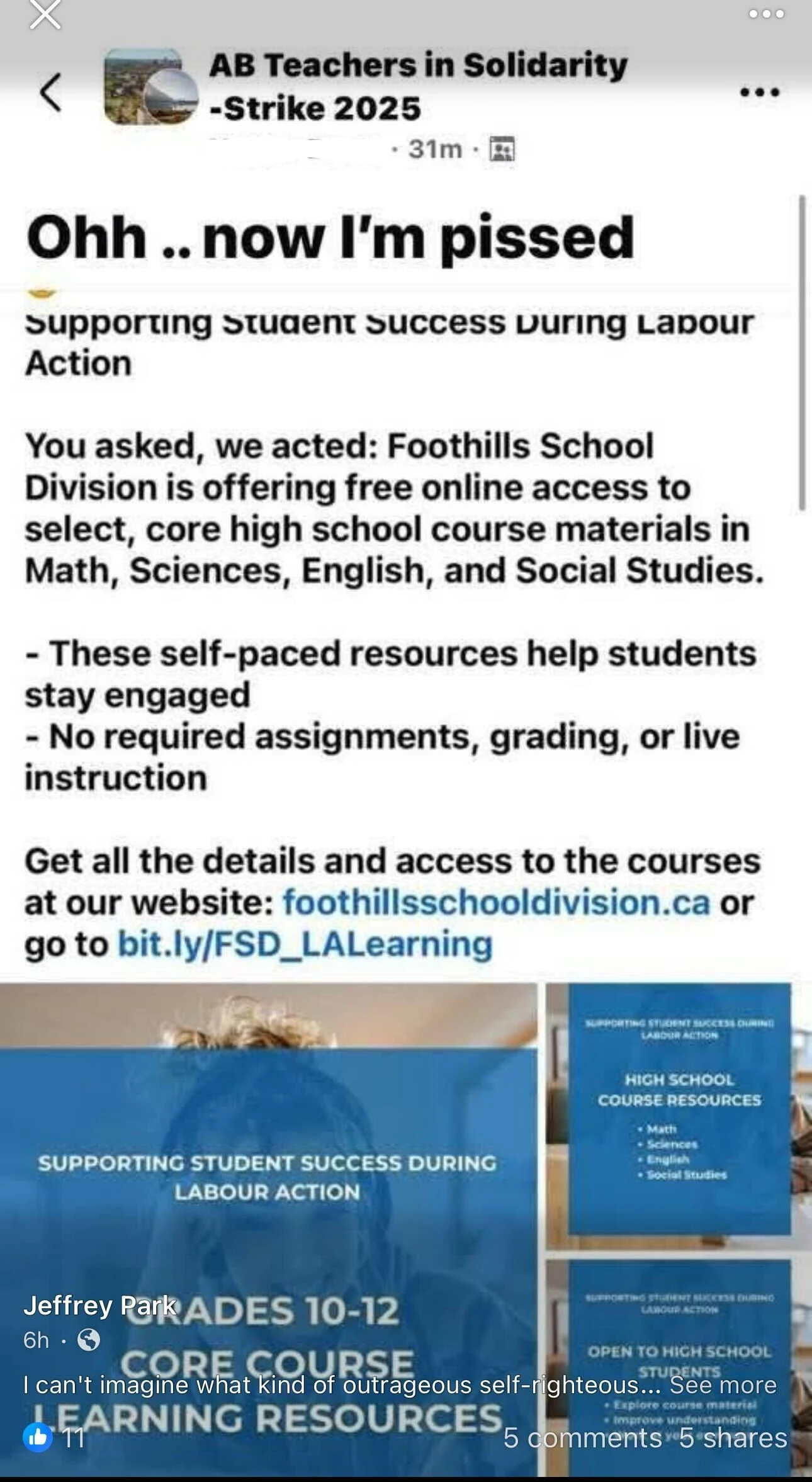
Teachers are angry that families are exploring alternatives during the Alberta strike. Some are even calling parents “disloyal” for turning to online resources. But let’s be honest — what else are families supposed to do when the system stops working?

The truth is, teachers are afraid. And I get it. They’ve been handed an impossible job inside a system that hasn’t evolved in 150 years. A system built for industrial workers, not creative thinkers. For compliance, not curiosity.

AI. Homeschooling. Microschools. Digital curriculum.

All of it is growing — fast.

And instead of seeing these tools as extensions of learning, too many educators see them as enemies.

Here’s the reality:

Parents aren’t abandoning teachers. They’re abandoning a model that no longer serves their kids.

Innovation in education isn’t an attack. It’s an answer.

The families turning to homeschooling or digital learning aren’t doing it to undermine teachers — they’re doing it to survive a broken system.

We should be building bridges, not battle lines.

Technology and teachers can coexist. But that requires courage — the kind that looks at change and says, “Let’s learn from it.”

Because the future of education won’t be built by those defending the old ways. It’ll be built by the ones bold enough to imagine new ones.

Alberta


Sathish
Still learning, still unlearning

Worried Homeschooling Is Too Expensive? Here’s Your Defense Over the Costs

Worried Homeschooling Is Too Expensive? Here’s Your Defense Over the Costs


Yes, homeschooling has costs — but so does public school. The difference? You control what you spend and why.

I hear from parents considering homeschooling all the time…

“I want to start homeschooling… but what if I just can’t afford it?”

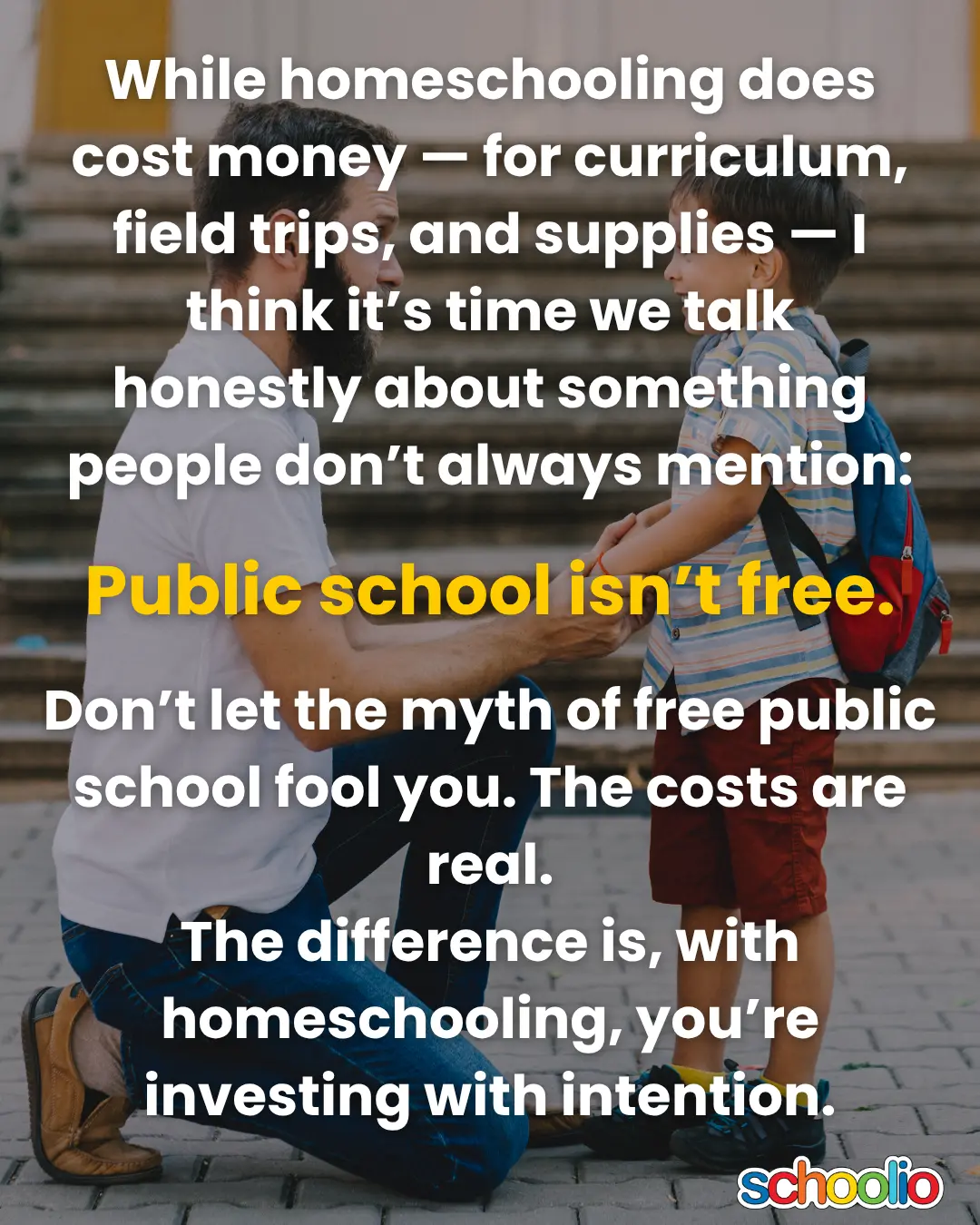
It’s a fair question. And while homeschooling does cost money — for curriculum, field trips, and supplies — I think it’s time we talk honestly about something people don’t always mention:

? Public school isn’t free.

The truth is, both paths have costs. But with homeschooling, you get to decide what you buy and how much you spend, based on your values and your child’s needs — not what’s written on a school form or fundraiser sheet.

Let’s break it down.


? How Much We Spend on Homeschooling

If you’ve met me, and a lot of you have, you probably know I’m an incurable Type-A planner. We also homeschooled our two kids on one income, as I know many of you are as well. For several years I tracked everything that was homeschool related, so I knew exactly how much we were spending on:

  • Curriculum
  • Field trips
  • Supplies
  • Anything we wouldn’t have spent otherwise if they were in school

But here’s the kicker…


vs. What We Spent in Public School (Hint: It Was More)

This spending tracking didn’t begin with homeschooling though- back when my kids were in public school, I also tracked our spending. Those years?

We spent almost $100 more per childfor free public school.

Here’s where that money went:

  • Back-to-school supplies (the specific ones required)
  • Indoor shoes, gym clothes, weather gear – and clothing replacements when they are lost and stolen
  • School events: BBQs, fairs, pizza day, candy cane day, milkshake day…
  • Valentines, classroom parties, book fairs, teacher gifts
  • Hot lunches and fundraiser purchases
  • Fad items and brand names your kids have to have in order to not be bullied

We weren’t even high-participation parents! We did just enough that our kids didn’t feel left out, but not every event or lunch or fundraiser.

And still? It added up.


? The Big Difference with Homeschooling: You’re in Control Now

Homeschooling gives you something public school doesn’t:

Control over what you spend — and what you get for it.

You decide:

  • Which curriculum to invest in (or whether to build your own)
  • How often you take field trips
  • Whether you spend more time or more money — whichever fits your family
  • What supplies, tools, or extras actually matter in your homeschool

You’re not just handing money over for a pizza party you didn’t ask for.

You’re choosing what best supports your child’s growth — and your family’s goals.


? Homeschooling Can Work on a Budget

You’ll spend either money or time — or some combination of both.

The beauty is: you get to choose what’s worth it.

Whether you’re middle-of-the-road spenders, doing things ultra-minimally with free resources and DIY everything, or have some room to buy back more time — there’s no one “right” budget for homeschooling.

But don’t let the myth of free public school fool you. The costs are real.

The difference is, with homeschooling, you’re investing with intention.

Lindsey

Certified Special Ed Educator & Co-Founder, Schoolio

Why Public School Pressures Kids to Grow Up Too Fast—and Why I’m Grateful My Homeschooler Still Plays

Why Public School Pressures Kids to Grow Up Too Fast—and Why I’m Grateful My Homeschooler Still Plays

This has been on my mind today…

My daughter’s friend, who has always been in public school, told her recently that she wished she could still play with toys. My daughter, without hesitation, said, “So play with toys then! Who cares? Do what you want!” But her friend shook her head. She said no—she was too old for toys, and if other kids found out, they’d make fun of her.

They’re 13 years old. And here’s the thing: 13 is still a child. If a child that age still wants to play, that isn’t immaturity—it’s development happening at the pace it’s meant to. Play and imagination are not only normal, they’re scientifically proven to be deeply beneficial for kids’ brains. Yet her friend felt she couldn’t do it, because the social culture around her said she was “too old.”

And it wasn’t just about toys. She also shared that at her school, there’s pressure to start thinking about crushes, even dating. Imagine that—kids who still long to play with toys being told that what’s “normal” is pairing off romantically. That’s not freedom. That’s conformity.

People often ask homeschool families about socialization. “Aren’t you worried your kids won’t know how to socialize?” But what’s rarely asked is the harder question: what exactly are kids being socialized into at school? Too often, it’s a kind of toxic conformity that shames kids for being developmentally right where they are.

Our homeschoolers aren’t “immature.” They’re maturing at their natural pace. They’re free to linger in play, imagination, and curiosity without shame. And when the time comes, they’ll step naturally into new stages of life—without being rushed there before they’re ready.

One of the greatest gifts of homeschooling is that we get to protect childhood. We get to give our kids the time and space to grow up without unnecessary pressure. And sometimes, that looks like a 13-year-old proudly playing with toys, because she’s still a kid—and that’s exactly what she should be.

Want to give your child the freedom to grow at their own pace? Explore Schoolio’s homeschooling curriculum and see how it can support your family’s journey.

Lindsey
Certified Special Ed Educator & Co-Founder, Schoolio

Why I Stopped Worrying About Learning Gaps

Why I Stopped Worrying About Learning Gaps

By Lindsey, certified special-ed educator & co-founder, Schoolio

This has been on my mind today…

The weight of comparison. It sneaks in quietly. A friend tells you what their child is learning in school. A neighbor asks about your homeschool “schedule.” You catch a glimpse of someone’s color-coded curriculum plan on Instagram. Suddenly your confidence starts to unravel.

I remember this feeling most clearly when my oldest was around eight or nine. We were deep into homeschooling, but I was constantly looking over my shoulder at what public school kids were doing. Were we covering the same content? Were we behind? Was I doing enough?

It became exhausting. I was trying to replicate school at home—not because it worked for us, but because I thought that’s what “real” education looked like.

Here’s the truth I had to learn the hard way: homeschool doesn’t need to imitate public school to be valid. In fact, the whole point is that it doesn’t.

I kept coming back to a simple question. If I can’t remember what I learned in third grade, why was I putting so much pressure on myself to make sure my child retained every single concept in the third grade curriculum? I realized I was clinging to a system I didn’t even believe in—one I had left behind for a reason.

When kids are in school, they’re taught for a set number of days, then tested. If they get a 60%, that means they missed 40%—and the class moves on. No one loops back. No one stops the train. That’s a gap. A big one. But it’s accepted.

In our homeschool, if my child gets sick or we need to pause for emotional rest, schoolwork pauses. School doesn’t go on without them on sick days, it waits for them. We don’t pretend 60% is good enough. The beauty of this lifestyle is that learning pauses with the child and picks up again when they’re ready.

That alone makes a massive difference.

And the truth is, we all have learning gaps. Adults included. Because humans only retain what they find meaningful. You can make a child memorize facts for a test, but they’ll likely forget most of it after. If something isn’t relevant to their lives, it doesn’t stick. So whether you never cover it, or they forget it, the result is the same.

That realization gave me freedom.

I stopped obsessing over whether we had checked every box. I started asking better questions: Was my child curious today? Did we connect? Did they ask questions that mattered to them? Those were my new benchmarks.

And wouldn’t you know—it made everything easier. They were learning more, not less. And I was enjoying it more, too.

So if you’re caught in that loop of comparison, wondering if your homeschool is “real” enough, let me gently offer this: your homeschool is enough because it’s yours. Because it fits your child. Because it’s rooted in love, flexibility, and intention.

That’s not falling behind. That’s choosing to lead.

certified special-ed educator & co-founder, Schoolio


? Need help trusting your homeschool rhythm?

Start with our free homeschool planner, explore flexible curriculum bundles, or try our 7-day trial to see how it can work in your home.

The 4 Things No One Tells You About Pulling Your Kid from Public School

The 4 Things No One Tells You About Pulling Your Kid from Public School

By Sathish Bala

This has been on my mind today…

When we think about homeschooling, we usually focus on the moment of decision — the bold step to withdraw your child from public school. But what no one really prepares you for is what comes next. The emotional rollercoaster. The fear. The freedom. The judgement. And sometimes, the deep, healing relief.

I remember sitting across the table from a group of school officials — a counselor, a legal advisor, the principal. All of them there with one clear message. They believed my daughter needed ADHD medication, and they were pushing hard. Not because we had explored every alternative. Not because she was in danger. But because the system didn’t know what else to do.

I was scared. I felt cornered. As a parent, I questioned everything in that moment — am I wrong? Am I risking her future? What happens if I say no?

But I did say no. I refused to medicate my daughter just to make her more “school ready.” I wanted her to grow up understanding her own mind and body. I wanted her to make choices as an adult with full awareness of the consequences — not be forced into something because a system didn’t have the tools to support her.

That moment was a turning point. It made me realize how many families are pushed toward homeschooling not because they planned to, but because they’re trying to protect their child from a system that won’t bend. And once they do take the leap, here’s what they often discover — the things no one tells you.

1. You’ll grieve what you thought school was supposed to be.

Even when school has been hard or harmful, there’s still a sense of loss. You grieve the routine, the friendships, the path you thought your child would follow. That’s normal. You’re not just changing schools — you’re changing your vision of the future. And that takes time.

2. Your child might decompress in ways you didn’t expect.

When kids leave a stressful school environment, they don’t always bounce back right away. Some become withdrawn. Others act out. Some sleep for days or resist any structure. This isn’t failure. It’s healing. You’ve given them space to feel safe — and that space will eventually be filled with curiosity and confidence again.

3. People will question your decision — sometimes harshly.

Friends, family, even strangers might ask, “Are you sure this is a good idea?” or “But what about socialization?” These questions sting, especially when you’re still figuring things out. But over time, you’ll grow more confident in your path — and your results will speak louder than any opinion.

4. You’ll start to see your child clearly — and that changes everything.

One of the most surprising and beautiful parts of homeschooling is how it reconnects you with your child. You notice their quirks, their strengths, their rhythms. You stop measuring them against someone else’s expectations. And you finally see them — not as a student to fix, but as a whole person with so much potential.


I’ve spoken to hundreds of families now who have made this jump. Some were pushed by crisis. Others chose it proactively. But every one of them, at some point, went through this quiet storm of feelings after leaving the public school system.

If that’s you, I just want to say — you’re not alone. This path isn’t easy, but it’s powerful. And your courage will shape your child’s life in ways no traditional system ever could.

Sathish

still learning, still unlearning

Understanding School Choice and Its Impact on Homeschooling

Understanding school choice and its impact on homeschooling

Understanding School Choice and Its Impact on Homeschooling

School choice is a concept that allows parents to decide the best educational setting for their children. Whether it’s public school, private school, charter school, or homeschooling. This movement empowers families. Doing so by allowing them to choose an educational path that best fits their child’s needs and learning style. Are you curious about understanding school choice and its impact on homeschooling? Let’s dive in.

A unique perspective on school choice.

Sathish Bala, CEO of Schoolio.com and a globally recognized leader in project management, product development, and strategic planning, shares his perspective on school choice. He says, “Empowering parents with the ability to choose the right educational setting for their child is crucial for their growth and development. As a passionate advocate for education and innovation. I believe that school choice can help families find the perfect learning environment for their unique child.”

Schoolio Learning - Understanding School Choice

Why is it important to find the best school choice for your family?

For first-time homeschoolers, it’s essential to understand the different educational options available and how they can impact their child’s learning experience. By utilizing school choice, parents can provide a customized, supportive, and engaging educational journey for their children. Which will then set them up for success in the long term.

There are multiple school choice options available to parents.

  • Public schools: These schools are government-run and funded by taxpayers. They offer free education to students and must adhere to state and federal standards.
  • Private schools: These schools are funded by tuition and private donations. They can be religious or secular and offer a range of educational programs.
  • Charter schools: These are publicly funded schools that operate independently of traditional public schools. They are held to the same academic standards as public schools. But have more flexibility in their curriculum and teaching methods.
  • Homeschooling: This is an educational option in which parents choose to educate their children at home. Homeschooling can be done independently or through an online program. Parents are also free to create a customized curriculum for their children.

The advantages of each of these school choices?

  • Public schools: These schools offer free education to all students and often provide transportation, meals, and extracurricular activities. They also offer a diverse student body and a range of educational programs.
  • Private schools: These schools often have smaller class sizes, more individualized attention, and a focus on specialized subjects. They can also provide a more rigorous academic environment.
  • Charter schools: These schools often have a unique mission or focus, such as STEM education or the arts. They also have more flexibility in their curriculum and teaching methods.
  • Homeschooling: This option allows a customized education tailored to the child’s learning style and interests. It also provides a more flexible schedule and one-on-one attention from the parent-teacher.
School choices

What are the disadvantages of each of these school choices?

  • Public schools: These schools may have larger class sizes and less individualized attention. They may also have limited resources and funding.
  • Private schools: These schools can be expensive, and not all families can afford tuition. They may also lack diversity and offer limited extracurricular activities.
  • Charter schools: These schools may have limited enrollment and unstable funding. They may also lack oversight and accountability.
  • Homeschooling: This option can require significant time and effort from the parent-teacher. And it also may not provide the same extracurricular opportunities as traditional schools.

What impact does school choice have with homeschooling?

School choice can have a significant impact on homeschooling, as it gives parents the option to choose the educational setting that best fits their child’s needs and learning style. As homeschooling is one of the school choice options available to parents. It allows for a customized education that is tailored to the child’s learning style, needs and interests. With homeschooling, parents have the freedom to create a customized curriculum for their child. By utilizing school choice and choosing homeschooling, parents can provide a supportive and engaging educational journey for their children, setting them up for success in the long term.

Are you curious if homeschooling is the right fit for your child? Click here to read more!

homeschooling school choice

How to determine which school choice is best for your family. 

Are you wondering how to determine which school choice is right for your family? You should consider your child’s learning style, interests, and needs, as well as your family’s values and resources. Research each option thoroughly, visit schools or attend homeschooling events, and talk to other parents who have experienced each option. With careful consideration and research, you can make an informed decision about the best educational path for your child.