When “Bad Teacher” Comedy Isn’t a Laughing Matter

When “Bad Teacher” Comedy Isn’t a Laughing Matter


My social media feeds are full of education-related content. Lately, I’ve noticed an increase in comedians like Gerry Dee (Mr. D)—alongside a growing wave of TikTok and Instagram “former teacher” creators—who are building successful careers around the idea that being a bad teacher is funny, relatable, and ultimately harmless.

But today’s Mr. D video in my TikTok feed hit differently, as I had just finished sitting next to my daughter in the kitchen for over an hour while she painfully cried her way through an essay that an apathetic teacher assigned at the last minute as a “punishment” to the class for not paying enough attention to him- without any instruction around the skills needed for this essay. For my autistic and dyslexic child, who takes every word literally and straight to heart, and has loads of anxiety around handing in her absolute best work, this pressure and lack of support sent her into meltdown mode.

There are several comedians who’ve built entire lanes around “I was bad at my old job / the system was a joke / authority doesn’t matter” humor. My issue isn’t with comedy about work in general. It’s with ex-teachers making light of how poorly they did their jobs—and how little they cared while doing them.

That kind of humor punches down.

It celebrates apathy.

And it shows a complete lack of concern for who was harmed in the making of that joke: the vulnerable children they were responsible for.

Yes, I understand why these jokes land.

Most of us have had that teacher.

The disorganized one.

The checked-out one.

The one who survived the school day purely on sarcasm and vibes.

We’re conditioned to laugh and say, “Yep. That’s just school.”

But here’s the part that never makes it into the punchline:

For some kids—and some families—that teacher isn’t a funny memory.

They’re the reason everything fell apart.


Why “Bad Teacher” Comedy Is a Unique Problem

This is the core issue these jokes orbit around, whether intentionally or not.

Teaching is one of the only professions where:

  • The audience (kids) can’t leave
  • The harm is delayed and largely invisible
  • The most vulnerable are affected first
  • And society shrugs and says, “That’s just school.”

For neurodivergent kids in particular:

  • There is no buffer
  • No “later we’ll laugh about this”
  • No neutral experience

A teacher who is unstructured, dismissive, or proudly unprepared isn’t quirky—they’re destabilizing.

A chaotic classroom isn’t funny when your nervous system relies on predictability to feel safe.

Sarcasm isn’t clever when language is processed literally.

“Figure it out” isn’t empowering when executive function is already a daily battle.

So when a comedian builds a career celebrating that archetype, it doesn’t land as satire.

It lands as dismissal.


“That’s Just School” Is Not a Neutral Statement

One of the most damaging parts of this genre of humor is how effectively it reinforces the idea that bad teaching is a harmless rite of passage.

We laugh.

We relate.

We normalize it.

And in doing so, we erase the kids who couldn’t survive that environment.

I work with—and parent alongside—families whose children didn’t just dislike school.

They burned out.

They shut down.

They developed anxiety so intense they couldn’t enter the building.

These families didn’t leave school because they were anti-education.

They left because continuing would have meant sacrificing their child’s mental health.

So when we laugh at jokes about incompetence in classrooms, we’re not just laughing at a system—we’re laughing past the kids who were harmed by it.


The Line Being Crossed

This is the distinction that matters:

Comedy about systems failing = fair

Comedy about authority over powerless kids = requires responsibility

This isn’t about being unable to take a joke.

And it’s not about policing comedy.

My frustration isn’t with humor.

It’s with who the joke protects.

When the punchline is “I was terrible at my job,” the unseen collateral damage is the children who never had the option to leave, opt out, or laugh it off later.


Why This Hits Different for Our Community

For neurodivergent kids, bad teaching isn’t character-building.

It’s often the start of years of self-doubt, resistance to learning, and internalized shame.

So no—this kind of humor doesn’t feel harmless from where we’re standing.

It feels like another reminder of why so many of us chose a different path.

Why homeschooling wasn’t a lifestyle choice, but a lifeline.

Why “relatable” stories about bad teachers land very differently when you’ve seen the damage up close.

Good teaching matters.

Competent teaching matters.

Neurodivergent-aware teaching matters most of all.

And for families like ours, that truth isn’t funny at all.


Lindsey Casselman

Certified Special Ed Educator & Co-Founder, Schoolio

After School Restraint Collapse

Does Your Kid Struggle with School? What Is After-School Restraint Collapse?


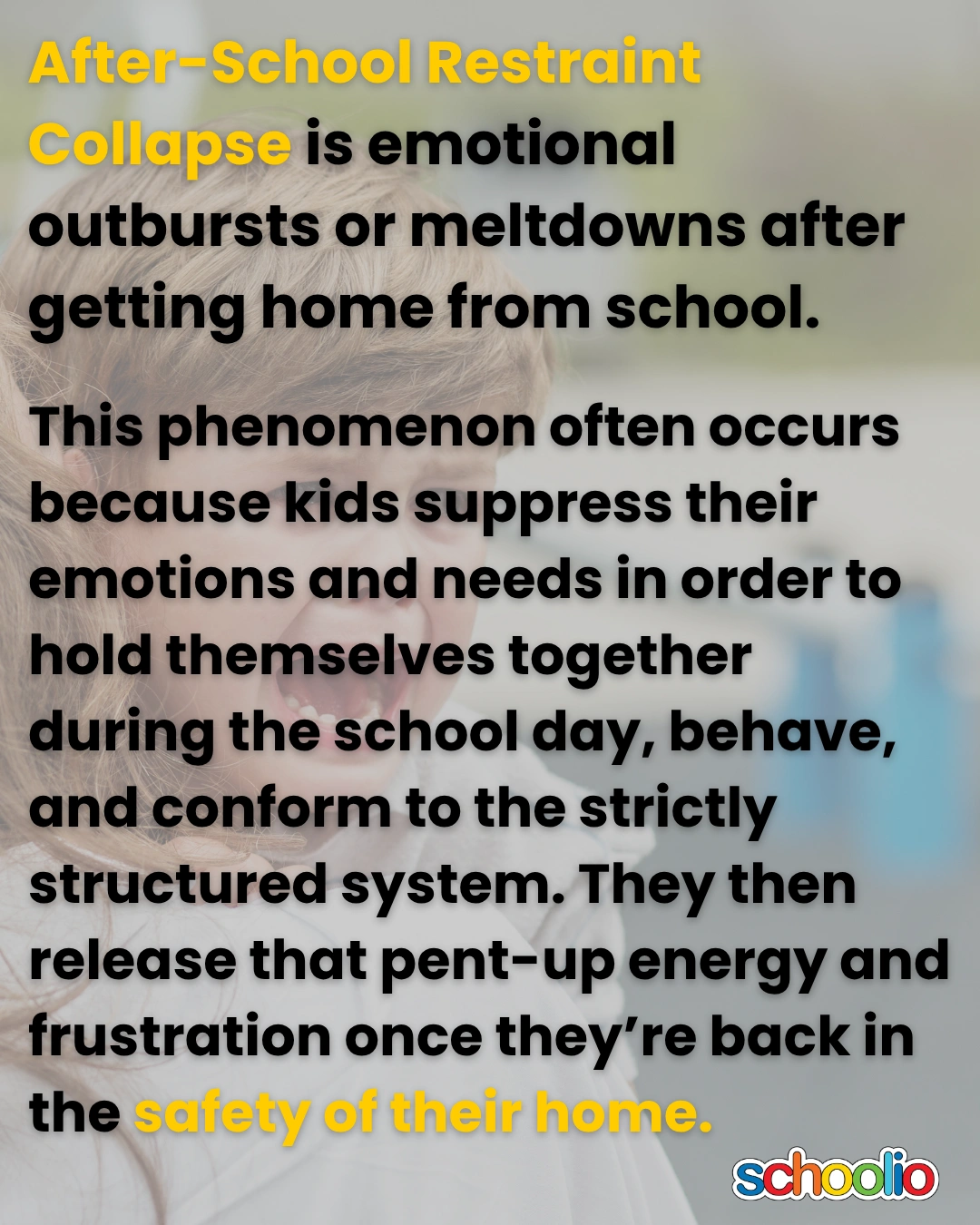
If your kid struggles with school, you may be familiar with After-School Restraint Collapse, even if you’ve never heard the term. Does your child have frequent emotional outbursts or meltdowns immediately or shortly after getting home from school? They may be experiencing [After-School Restraint Collapse](https://www.bbc.co.uk/bitesize/articles/z863cxs#:~:text=This type of behaviour is,to let it all out!). This phenomenon often occurs because kids suppress their emotions and needs in order to hold themselves together during the school day, behave, and conform to the strictly structured system. They then release that pent-up energy and frustration once they’re back in the safety of their home. After-School Restraint Collapse can happen to any child, but for kids who are ADHD, autistic, or have other neurodivergencies, it can be more frequent and more intense, because school is just that much harder for them to manage, and they are more easily overwhelmed or overstimulated. This intense emotional release can feel overwhelming for your child, and can be incredibly hard to witness as their parent.

Let’s talk about what After-School Restraint Collapse is, why it’s more common in neurodivergent kids, and then look at some practical ways to support your child. We’ll also talk about how homeschooling can be a viable option for families dealing with extreme school struggles.

What is After-School Restraint Collapse?

After-School Restraint Collapse is the emotional or physical meltdown that occurs when children who have been controlling their emotions all day at school finally feel safe enough to let go. This is especially common in kids struggling with school, where the effort to manage expectations and regulate their behavior leads to emotional exhaustion. After a day of staying relatively still and quiet, following directions, and meeting social expectations, they return home and can’t hold it together anymore.

For neurodivergent children—such as those who are ADHD, autistic, or have sensory processing disorders—this collapse can be even more intense. School environments can be highly demanding, with sensory overload, social complexities, and academic pressures draining their emotional and mental energy.

Why Does After-School Restraint Collapse Happen More Often in Neurodivergent Kids?

Many kids struggling with school are neurodivergent, such as those who are ADHD or autistic, and often face unique challenges that make the school day even more exhausting and overwhelming than for their neurotypical peers. Here are some of the reasons why your neurodivergent kiddo is more likely to experience After-School Restraint Collapse:

1. Sensory Overload

Neurodivergent children often have sensory sensitivities, which can make the school environment overwhelming. Loud classrooms, bright lights, crowded hallways, and constant stimuli can make it difficult for them to stay regulated. By the time they get home, they are overstimulated and emotionally exhausted, leading to a meltdown.

2. Social and Communication Pressures

For a lot of our neurodivergent kids, social communication is difficult or confusing, which makes the social aspect of school exhausting. Neurodivergent children often spend significant mental energy trying to fit in, understand social cues, and avoid conflicts with peers or teachers. This constant effort can lead to emotional exhaustion by the time they return home.

3. Executive Dysfunction

Many neurodivergent children struggle with executive dysfunction, which affects their ability to plan, organize, and manage tasks. The school day can be filled with tasks that require executive functioning, and the effort to stay on top of things like class transitions, homework, and listening to instructions can become overwhelming. In addition, they may hear a lot of negativity about their inability to self-manage the way their neurotypical peers can and wonder why they can’t keep up, leading to self esteem issues and more emotional exhaustion.

4. Emotional Regulation Difficulties

For children who are ADHD or autistic emotional regulation can be challenging. Our kids may suppress their emotions throughout the day to meet behavioral expectations, but once they are home, they release all the frustration and stress they’ve been holding in all day.

Ways to Support Your Child Through After-School Restraint Collapse

Understanding the causes of After-School Restraint Collapse is the first step toward supporting your child. There are several strategies that can help ease your child’s transition from school to home and reduce emotional overload. Drawing from expert advice, let’s look at some practical and concrete ways to support a kid struggling with school:

1. Create a Safe Space for Unwinding

Provide a quiet, calm space at home where your child can unwind after school. This space should be free of distractions and filled with comforting items, such as soft blankets, pillows, or their favorite sensory toys. Creating a sensory-friendly environment where your child can decompress will help reduce overstimulation and provide a sense of security.

2. Prioritize Downtime After School

Don’t jump straight into homework, chores, or structured activities when your child gets home. Limit demands and expectations no matter how small they may seem to you. Allow them to have downtime to relax and recharge. This might be free play, reading, or any activity they find soothing. Don’t try to ask them too many questions about their day or engage in conversation immediately if your child isn’t feeling it. Let them have quiet and their own space. and allow them to decide when they’re ready to start homework or other after-school activities. By reducing pressure and giving them control over their time, you give your child the freedom to decompress, which will help prevent emotional meltdowns.

3. Offer Physical Outlets

Some children find that engaging in physical activity helps release the built-up tension from the school day, especially those who are ADHD- Hyperactive Type. Whether it’s jumping on a trampoline, going for a walk, or engaging in a fun physical activity like dancing, movement can help reduce emotional overload and improve their mood.

4. Seek Support When Needed

If your child seems unusually upset after school, it might be because of an issue during the day that wasn’t fully addressed or resolved. After-school behavior could indicate that something challenging happened while they were at school.

It’s important to check in and find out if something during their school day is affecting them. Bullying is unfortunately extremely common for neurodivergent children, so you want to make sure your child isn’t being victimized at school. They are also more likely to have social struggles with peers, so fights and misunderstandings with friends can happen and leave your child feeling hurt and confused. Do your best to know what’s happening at school so you can address the issues at home and help guide your child through these altercations, as well as reach out to the school if needed.

5. Validate Their Feelings and Make Sure They Feel Heard

After a long day of masking their emotions, your child needs to feel heard and understood. Validate their emotions by acknowledging their feelings: “I know today was tough, and it’s okay to feel upset.” Listening without judgement helps your child feel supported and understood, which can lessen the intensity of their emotional outbursts.

6. Understand How Hard School Is For Some Children

Many children struggle with anxiety, separation, and security. Being away from the safety and connection of their parents all day is hard for these kids, especially our neurodivergent kiddos. All of this is in addition to having dealt with the day, peers, academics, and sensory stimulation. Reconnecting with you at the end of the day can bring a flood of emotions, from relief to frustration, all laddering up to a feeling of overwhelm.

Considering Homeschooling?

If your kid struggles with school to the point that After-School Restraint Collapse is becoming a daily occurrence, homeschooling may be an option worth considering. Homeschooling offers the flexibility to create an environment that’s specifically tailored to your child’s unique needs, making it a great alternative for neurodivergent kids who find the traditional school environment overwhelming.

How Homeschooling Can Support Neurodivergent Kids

  1. Flexible Learning Environment: Homeschooling allows you to customize your child’s learning environment to fit their sensory preferences. You can create a space that’s quiet and calm, free of the sensory triggers that may overwhelm them in a traditional classroom.
  2. Personalized Curriculum: Homeschooling offers the freedom to choose a curriculum that fits your child’s learning style and pace. You can select a curriculum like Schoolio that’s designed with neurodivergent learners in mind, offering bite-sized lessons, interest-based electives, and unique flexibility.
  3. Social Learning with Support: For neurodivergent children who struggle with social interactions, homeschooling provides an environment where they can engage with others at a frequency that doesn’t drain their social battery or create overwhelm.. Socialization can take place in smaller, more controlled settings, reducing the stress of large group dynamics. Not only that, but with your regular support they can learn emotional regulation and social skills in a healthy manner with guidance from an adult who has their best interests at heart.
  4. Emotional Support: Homeschooling gives you the chance to be present for your child throughout the day, offering emotional support as needed. This allows you to incorporate social-emotional learning into your daily routine, helping your child develop the emotional regulation skills they need to thrive.

The First 3 Steps to Get Started with Homeschooling

  1. Understand Your State Laws: Homeschooling laws vary by state, so it’s important to familiarize yourself with the specific regulations in your area. Some states require you to notify your local school district, while others have stricter guidelines around curriculum and testing.
  2. Choose a Curriculum: There are many homeschooling curricula available, but it’s important to find one that fits your child’s learning style. Schoolio is a great option for families starting out with homeschooling, as it offers all subjects in one place, flexibility and lots of support. It’s also designed to be accessible for neurodivergent learners, making your initial dive into homeschooling much easier and stress-free.
  3. Find Support: Look for local or online homeschooling communities where you can connect with other parents and seek advice and support. Joining a homeschooling co-op or an online group can provide much-needed support and confidence for both you and your child.

Conclusion

After-School Restraint Collapse is a common experience for lots of kids, and those of us with neurodivergent kids struggle in school even more. With the right support strategies, you can help your child manage their emotions and hopefully ease the transition from school to home. If school is simply not a fit for your child and likely never will be, don’t hesitate to consider homeschooling as a viable option. Your child’s emotional well-being should always be the top priority. If your kid struggles with school, it’s essential to listen to their needs.
What Dopamine Deficiency Looks Like in ADHD Kids

What Dopamine Deficiency Looks Like in ADHD Kids


Because ADHD brains don’t release or regulate dopamine effectively, kids often live in a state of chronic “dopamine hunger.” Just like being low on food makes you hungry, being low on dopamine makes the brain crave stimulation.

For ADHD kids, that deficiency can show up as:

  • Inattention: Struggling to stay engaged with boring or repetitive tasks.
  • Restlessness: Constantly moving, fidgeting, or seeking stimulation.
  • Mood swings: Irritability, frustration, or feeling flat when dopamine is low.
  • Low motivation: Finding it nearly impossible to start tasks without external stimulation.
  • Emotional sensitivity: Stronger reactions to rejection, failure, or disappointment.

For your child, it may feel like a constant itch they can’t scratch—an internal restlessness that only eases when something exciting, novel, or rewarding captures their attention.


Dopamine-Seeking Behavior: It’s Not Their Fault

When your child bounces from one activity to another, gets “hooked” on video games, or melts down when asked to do something boring, it’s easy to feel like they’re being defiant or careless. But here’s the truth: their brain is driving them to seek dopamine in the same way hunger drives you to eat.

This is why ADHD kids often:

  • Hyperfocus on video games or special interests.
  • Struggle to stop stimulating activities.
  • Seek out novelty and excitement.
  • Resist boring or repetitive tasks, no matter how important.

It’s not a lack of discipline—it’s survival. Their brain is looking for the fuel it needs.


How Dopamine Affects Learning and Behavior

Dopamine deficiency in ADHD can impact every part of your child’s life:

  • Attention: Without dopamine, focusing feels nearly impossible.
  • Behavior: Kids may act impulsively, even dangerously sometimes, always chasing the next burst of stimulation. Dopamine-seeking risky behaviors can be especially problematic for teenagers.
  • Learning: Learning is always harder when your body is lacking a needed brain chemical, just like with anxiety, depression, or trauma. A dysregulated brain cannot learn, so focus on mental and emotional stability first.
  • Emotions: Dopamine imbalance can make moods more volatile and rejection harder to handle.

When we frame these struggles as brain chemistry—not willpower—it changes everything.


Strategies for Supporting Your Child’s Dopamine Needs

The good news: there are ways to help regulate your child’s dopamine levels and create a homeschooling environment that works with their brain instead of against it.

1. Build in Small Rewards

Break tasks into smaller steps, and celebrate progress often. Rewards don’t have to be big—a sticker, praise, or a short break can be enough to trigger dopamine.

2. Backward Rewarding

“Backward rewarding” is a practice that works well for ADHD kids because it gives them the dopamine they require upfront. We typically reward for work well done- at the end of the task- but without dopamine, no amount of desire, will-power, or motivation will make your child capable of performing the task. For example, 30 minutes of video games before you start school, along with a 30 minute reward at the end, might have math going much more smoothly then with the end-reward only. (Make sure you make the time limit clear before they start, and set timers to remind of the end coming multiple times to make the transition happen.)

3. Use Movement

Physical activity boosts dopamine. Try starting the school day with a walk, dance break, or jumping jacks. Build movement into lessons whenever you can.

4. Lean Into Interests

Remember, interest = dopamine. Whenever possible, tie schoolwork to your child’s passions. If they love animals, use animal examples in math problems or writing prompts. Don’t be afraid to go “off-book” when pulling their interests into your learning. Remember when I turned our geography into dragons? That’s what we’re going for!

5. Add Novelty

Switch up routines occasionally—study in a new spot, use a different color pen, or bring in hands-on projects. Small changes can spark big dopamine boosts.

6. Prioritize Sleep and Nutrition

Dopamine regulation depends on healthy sleep cycles and steady nutrition. Work toward consistent bedtimes and balanced meals with protein to support brain chemistry.

7. Use Tech Wisely

Screen time provides big dopamine hits, which is why it can be so hard for ADHD kids to stop. Instead of banning screens completely, use them strategically—incorporate educational apps, set clear boundaries, and use them as short, structured rewards. Always give multiple warnings for transitions off screens


A Homeschooling Lens

Homeschooling gives you the freedom to design a learning environment that supports your child’s dopamine needs instead of punishing them for them. That means:

  • Flexible schedules to account for energy highs and lows.
  • Interest-driven projects that keep motivation high.
  • Frequent breaks for movement and stimulation.
  • Celebrating effort, not just outcomes, to give consistent dopamine boosts.

Your child doesn’t need to be “fixed.” They need understanding. When you see their restlessness, hyperfocus, or boredom through the lens of dopamine deficiency, it stops looking like defiance and starts looking like what it truly is: a brain craving balance.

With patience, creativity, and neurodiversity-affirming strategies, you can help your child feel less hungry for dopamine—and more successful in learning and in life.

Your Child Is Not Just an Adult-in-Training

Your Child Is Not Just an Adult-in-Training

This has been on my mind today…

There’s something powerful about watching your child learn for the joy of it — not just to check a box, meet a goal, or prepare for some vague “someday.”

When we started homeschooling, I fell into the trap of thinking every lesson had to lead to something measurable. Will this help on the SAT? Will they need this in college? What about job readiness?

I was measuring everything with the ruler of adulthood.

But one day, in the middle of a lesson on animal habitats, my daughter stopped and said, “I want to build one myself.” Not for a grade. Not because I asked. Just because she was curious. And I realized, right then, this is what learning is supposed to be.

Homeschooling gives us permission to see the child in front of us — not just a future applicant or employee.

When we say yes to homeschooling, we say yes to wonder. To creativity. To the kind of questions that don’t always have clear answers.

We say yes to building confidence and fostering curiosity, not just stuffing their heads with content.

Yes to letting a child love dinosaurs for two months straight or take longer on multiplication because their brain needs time.

That’s not wasted time. That’s real learning.

And the best part? When they feel seen and safe as children, they grow into adults who don’t have to heal from childhood.

So if you ever feel like you’re “not doing enough” because your homeschool day doesn’t look like school — remember this. You’re not raising a resume. You’re raising a whole human being.

And that matters more than any checklist ever could.

With love,

Lindsey

Certified Special Ed Educator & Co-Founder, Schoolio


Want to nurture who your child is now — not just who they’ll become? Start your free Schoolio trial and see what learning can feel like.

Strategies for Neurodivergent Learner Success in Schoolio

Strategies for Neurodivergent Learner Success in Schoolio

Strategies for Neurodivergent Learner Success in Schoolio

Are you worried about your Neurodivergent learner?

There’s a growing awareness of the diverse needs of learners. According to recent statistics, approximately 1 in 5 children have a variation in their brain development, such as ADHD or autism spectrum disorder. Traditional school systems often struggle to accommodate these learners effectively. Which then leads to feelings of frustration and inadequacy. However, homeschooling provides a unique opportunity for neurodiverse education at home tailored to meet individual needs. With the right strategies for neurodivergent learner success in Schoolio and resources. Neurodivergent learners can thrive in a supportive environment.

Understanding Neurodivergent Learning Needs

Neurodivergent learners encompass a wide range of abilities and challenges. Some may excel in certain subjects while struggling in others, while others may require alternative methods of instruction to grasp concepts effectively. Understanding your child’s unique learning profile is crucial in developing a successful homeschooling plan.

Schoolio Family Plan

Customizing Curriculum and Instruction

Good homeschool programs recognize the importance of flexibility in curriculum design. One effective strategy is to customize the full year homeschool curriculum to meet your child’s understanding. This may involve adjusting grade levels by subject. Or focusing on areas of strength while providing additional support in challenging subjects. Utilizing Adaptive learning for neurodivergent children allows for personalized instruction tailored to individual learning styles and pace.

Leveraging Online Learning Resources

In the age of technology, Online learning for kids offers a wealth of educational resources at your fingertips. Platforms like Schoolio Learning Platform provide a diverse range of lesson videos, assessments, and worksheets that can be tailored to accommodate different learning preferences. Additionally, Inclusive homeschool programs often incorporate multimedia elements and interactive activities to engage neurodivergent learners effectively.

Incorporating Hands-On Learning

For some neurodivergent learners, traditional worksheets and textbooks may not be the most effective learning tools. Ebook downloadable workbooks offer a more hands-on approach to writing and reading, allowing children to engage with material in a tangible way. Incorporating Educational resources for ADHD such as interactive games, manipulatives, and real-life simulations can enhance learning experiences and promote deeper understanding.

Schoolio e-books

Creating a Supportive Learning Environment

Inclusive learning environments are essential for neurodivergent learning support. Establishing a routine and clear expectations can help reduce anxiety and increase confidence in learning. Additionally, providing opportunities for breaks and movement can help neurodivergent learning support children with ADHD or sensory processing differences to stay focused and engaged.

Fostering Self-Advocacy and Independence

Empowering neurodivergent learners to advocate for their needs and preferences is crucial for long-term success. Encourage open communication and Supportive homeschool programs that prioritize self-awareness and self-regulation skills. Teaching organizational strategies and time management techniques can also help Neurodivergent learning support learners take ownership of their learning journey.

Collaborating with Professionals and Peers

Homeschooling does not mean learning in isolation. Seek out Inclusive learning for neurodivergent families communities and support groups where you can connect with other families facing similar challenges. Additionally, don’t hesitate to Homeschooling for neurodivergent kids consult with educational professionals, therapists, and specialists who can provide guidance and resources to support your child’s unique needs.

Adjusting Learning to Meet Your Child’s Needs

Homeschooling provides a unique opportunity to create a supportive and inclusive learning environment for neurodivergent learners. By adjusting the learning to meet your child’s needs and leveraging adaptive learning for neurodivergent children resources and strategies, you can help your child reach their full potential. Remember, every child is unique, and finding what works best for your family may require some experimentation and creativity. With patience, perseverance, and a commitment to neurodivergent learning support, you can help your child thrive academically and personally.

Schoolio Learning Resources

Click here to learn about recognizing and nurturing neurodivergent talents