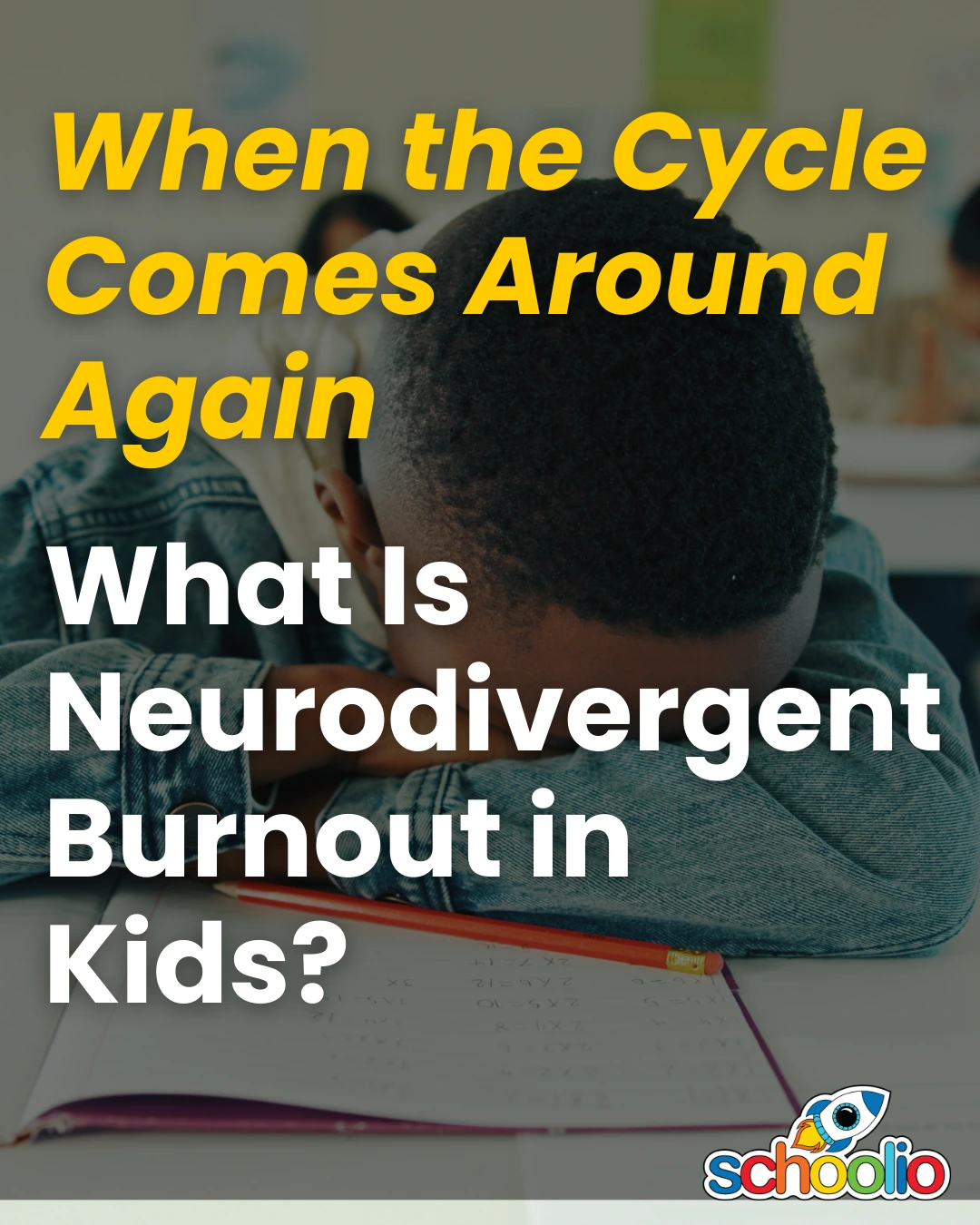
Neurodivergent Burnout in Kids: When the Cycle Comes Around Again

Neurodivergent Burnout in Kids: When the Cycle Comes Around Again


Do you ever notice a rhythm with your neurodivergent child?

I do.

About every six weeks — almost on cue — one of my autistic kids falls apart.

Not in a dramatic, explosive way.

In a quiet unraveling.

Tears they can’t explain.

Sleeping in my bed again.

Sleeping a lot.

Periods of going non-verbal.

Sensory tolerance dropping.

Everything suddenly feeling “too much.”

And around that same time, my ADHD child crashes too — but it looks completely different.

His room becomes unmanageable.

Schoolwork that was moving along suddenly stalls.

Routines unravel.

Motivation disappears.

Same timing.

Different presentation.

For a while, I wondered: Is this just my kids?

It turns out, no.

This is something many parents of neurodivergent kids quietly observe.


What Is Neurodivergent Burnout?

Burnout isn’t laziness.

It isn’t regression.

It isn’t defiance.

Burnout is nervous system exhaustion.

Neurodivergent kids use more energy than we often realize.

They work harder to:

  • manage sensory input
  • regulate emotions
  • navigate social expectations
  • initiate tasks
  • transition between activities
  • maintain routines
  • suppress stims
  • meet standards that weren’t designed for their brains

They can do it.

Until they can’t.

Burnout is what happens when output has exceeded capacity for too long.

And here’s what’s important:

This isn’t about homeschooling causing burnout.

This happens in public school too.

It happens in summer camps.

It happens in extracurricular seasons.

It happens during growth spurts and life transitions.

It’s not about where they learn.

It’s about how much energy their nervous system has been spending.


Why It Can Feel Cyclical

Many parents describe a pattern.

Four weeks.

Six weeks.

A school term.

A busy season.

It’s not that autistic or ADHD brains have a biological timer set to crash every 42 days.

It’s that effort accumulates.

Novelty fades.

Demands compound.

Sleep drifts slightly off.

Sensory load builds.

Emotional labor increases.

Neurodivergent kids often don’t feel the early signs of fatigue clearly — especially if they have interoceptive differences. They don’t always sense “I’m getting overwhelmed” until they are already there.

So they push.

And then something small tips the scale.

A math worksheet.

A sibling conflict.

A minor change in routine.

And it looks sudden.

But it was building.


Autistic Burnout vs ADHD Burnout

One reason burnout can feel confusing is that it doesn’t look the same in every child.

In autistic kids, burnout often looks like withdrawal.

Increased meltdowns or shutdowns.

More sensory sensitivity.

Needing more sleep.

Loss of words.

Reduced tolerance for social interaction.

Skill regression.

Autistic burnout tends to say, “I can’t.”

The nervous system is conserving energy.

ADHD burnout often looks more external.

Irritability.

Apathy.

Avoidance.

Impulsivity increasing.

Routines collapsing.

Motivation evaporating.

ADHD burnout often sounds like, “I don’t care.”

But underneath it is usually, “I don’t have the fuel.”

ADHD brains run heavily on dopamine. Sustained executive effort without enough reward can drain that system. When the dopamine well runs low, even things they normally enjoy can feel flat.

If your child is both autistic and ADHD, you may see both patterns layered together.

That can feel especially overwhelming as a parent.


It’s Not Regression. It’s Recovery Demanded.

Burnout can look like regression.

But often it’s a nervous system demanding recovery.

The tears that “don’t make sense.”

The need to sleep beside you again.

The messy room.

The missing assignments.

Those aren’t moral failings.

They’re signals.

And they don’t respond well to pressure.

Pushing harder during burnout usually deepens it.

What helps is tapering.

Reducing output.

Lowering expectations temporarily.

Increasing rest.

Adding sensory safety.

Prioritizing connection over correction.

Not forever.

Just long enough for the nervous system to reset.


The Homeschool Reframe

If anything, homeschooling gives you the flexibility to respond.

Instead of labeling a child as disruptive, behind, or unmotivated, you can say:

“I see the pattern.”

You can lighten the week.

Shift to audiobooks.

Move lessons outside.

Build instead of write.

Pause instead of push.

That’s not giving up.

That’s respecting capacity.

Burnout doesn’t mean your child can’t learn.

It means they’ve been working hard.

Often harder than we realized.


If You’re Seeing the Cycle

If you’re reading this and thinking, “Yes. This. Every few weeks,” you are not alone.

It’s not just your child.

It’s not bad parenting.

It’s not fragility.

It’s a nervous system rhythm.

The goal isn’t to eliminate the rhythm entirely.

It’s to start recognizing it earlier.

To build in rest before collapse.

To shift from:

Push → Crash → Panic

to

Build → Taper → Rest → Reset

Because when recovery becomes intentional instead of forced, the crashes get smaller.

And your child doesn’t have to fall quite so far.
Why the Current School System Wasn’t Built for Neurodivergent Kids

Why the Current School System Wasn’t Built for Neurodivergent Kids

By Sathish, Founder of Schoolio

This has been on my mind today…

When I was a kid growing up in Singapore, the classroom was a machine — neat rows, rigid structure, and one right way to behave, think, and perform. You either followed the rules or you were labeled. I was restless. I couldn’t sit still. My energy and curiosity didn’t have a place in that space, and there were no words for why I struggled. Neurodiversity wasn’t a concept we understood. You were either teachable or a problem.

That stayed with me.

Decades later, I see the same story playing out in schools across North America. Parents tell me how their kids are being flagged for behavior issues, attention problems, refusal to comply — all symptoms of being wired differently in a system built for uniformity.

Let’s be honest. The current school system wasn’t designed with neurodivergent learners in mind. It was built for efficiency, not flexibility. For order, not curiosity. And that mismatch is costing kids their confidence.

I’ve spoken with families whose children were once constantly in the principal’s office, overwhelmed by sensory overload, crushed by the pressure of timed tests, or made to feel like failures for not sitting quietly through long lessons. Many of these same kids began to thrive the moment they left the traditional classroom.

Homeschooling, for them, wasn’t a backup plan. It was freedom. It was healing. And for many, it was the first time learning felt possible.

At Schoolio, we don’t pretend to know everything about every child. But we do know that education should flex to fit the learner — not the other way around. Our online homeschool programs were built to allow pacing changes, subject switches, breaks when needed, and curriculum that doesn’t punish kids for needing to move, think differently, or question the process.

Is homeschooling effective for neurodivergent kids? I’ve seen it change lives, children regain their self-worth, and repair the relationship between learning and joy.

It’s not about perfect lessons or checking every box. It’s about giving kids the space to show us how they learn. Once we stop trying to fix them, we see there was nothing broken to begin with.

Sathish

still learning, still unlearning

Homeschooling Your Neurodivergent Child: A Comprehensive Guide

Homeschooling your neurodivergent child.

As a parent, homeschooling your neurodivergent child offers an opportunity to provide tailored education that meets their unique needs. Understanding your child’s strengths and challenges is essential in creating an inclusive and supportive homeschooling environment.

Challenges neurodivergent children face in traditional education.

Neurodivergent children often face unique challenges in traditional educational settings. These challenges can include difficulty with social interactions, sensory processing issues, executive functioning deficits, and learning differences. These challenges can make it difficult for neurodivergent children to succeed in traditional classrooms, leading to frustration and a sense of failure.

Learning with ADHD

Neurodivergent children often face unique challenges in traditional educational settings. These challenges can include difficulty with social interactions, sensory processing issues, executive functioning deficits, and learning differences. For example, a child with autism may struggle with social cues and communication, which can make it difficult to connect with peers and teachers.

A child with ADHD may struggle with executive functioning, such as organizing tasks and managing time, which can lead to academic struggles and frustration. A child with dyslexia may struggle with reading and writing, which can impact their ability to learn and succeed in traditional classrooms. These challenges can make it difficult for neurodivergent children to succeed in traditional classrooms, leading to frustration and a sense of failure. In contrast, homeschooling can offer a tailored learning experience that addresses the specific needs of neurodivergent children.

How homeschooling your neurodivergent child can be beneficial.

Homeschooling can offer a tailored learning experience that addresses the specific needs of neurodivergent children. By creating a supportive and inclusive learning environment, homeschooling parents can help their children thrive academically and personally. By embracing their strengths, understanding neurodiversity, and adapting teaching methods, homeschooling parents can create a nurturing and engaging learning experience that meets the unique needs of their neurodivergent child.

While homeschooling has its own challenges, such as creating structure and routine or finding resources and support, it can offer a more individualized and supportive approach to education for neurodivergent children. By prioritizing their child’s needs and focusing on their strengths, homeschooling parents can help their neurodivergent child achieve academic success and personal growth.

Here are some tips for homeschooling your neurodivergent child effectively:

1. Embrace strengths

Focus on your child’s interests and talents. Encourage them to explore their passions, boosting self-esteem and enhancing their homeschooling experience.

2. Understand neurodiversity

Educate yourself on your child’s neurodivergent traits to support their homeschooling journey. Research resources, consult professionals, and join online forums to gain insight into their learning differences.

3. Structure and routine

Establish a consistent homeschooling schedule accommodating your child’s needs. Routine and structure provide stability and help them manage expectations and transitions.

4. Adapt teaching methods

Use multisensory teaching techniques to cater to your child’s learning preferences. For example, incorporate visual aids, hands-on activities, or auditory cues to enhance their homeschooling experience.

homeschooling your neurodivergent child

5. Collaborate with educators

Seek guidance from educators and therapists to develop a tailored homeschooling curriculum for your neurodivergent child. Utilize their expertise to create an effective and engaging learning plan.

6. Develop social skills

Facilitate social interactions for your child by organizing playdates, joining homeschooling co-ops, or participating in community events. These experiences can help them build social skills and connections with their peers. 

7. Advocate for your child

Educate others about neurodiversity and promote understanding and acceptance in your homeschooling community. Advocate for your child’s needs and ensure they receive the support they require.

8. Foster independence

Encourage your neurodivergent child to take on age-appropriate responsibilities within their homeschooling routine. This can help build their confidence and self-reliance.

9. Seek support

Connect with other homeschooling parents of neurodivergent children to share experiences, resources, and advice. This support network can offer invaluable guidance and encouragement.

10. Patience and understanding

Be patient and understanding with your child and yourself during your homeschooling journey. Celebrate small victories and remember that progress may be slow but steady.

Homeschooling your neurodivergent child can be a rewarding and fulfilling experience, allowing them to thrive academically and personally. By implementing these tips, you can create a nurturing and tailored homeschooling environment that supports your child’s unique needs and helps them reach their full potential.