This has been on my mind today: redefining readiness for our children’s futures. We keep asking if kids are “future-ready,” and it’s the right question. But maybe we’re answering it wrong.
Future-ready, the way schools measure it, means: Can they pass the test? Can they get into the program? Can they perform on demand?
But look at the world they’re actually entering. The jobs that matter most require collaboration. The problems that need solving require resilience. The relationships that will sustain them require empathy. None of that is on the test.
A 40-year study of PhDs at UC Berkeley found that emotional intelligence was four times more powerful than IQ in predicting success. Daniel Goleman’s research, published in the Harvard Business Review, found that emotional intelligence accounts for nearly 90% of what moves people up the ladder — when IQ and technical skills are otherwise equal. We have decades of evidence telling us what actually matters. And we’re still spending most of the school day on everything else.
Redefining Readiness in Homeschooling
I watch homeschool parents build emotional intelligence every day. Not through a curriculum. Through the way they move through the world with their kids. Homeschooling offers a unique environment where children can develop these essential skills naturally.
Take, for example, a typical day in a homeschool setting. A child might start their morning with a science experiment that doesn’t go as planned. Instead of rushing to complete it for a grade, they have the time to explore why it didn’t work, fostering resilience and problem-solving skills. Later, during a family discussion about a history lesson, they learn to voice their opinions and listen to others, building empathy and communication skills.
A child who learns to sit with frustration instead of panic. A child who knows how to disagree respectfully because they’ve practiced it at the kitchen table. A child who has failed at something small and survived it — and knows they can survive it again.
Consider a scenario where a child is learning to play a musical instrument. They struggle with a difficult piece but are encouraged to keep trying. Over time, they not only master the piece but also learn patience and perseverance. These experiences teach them that setbacks are a part of learning and growth.
That is future-ready. Not a GPA. Not a trophy shelf. A human who knows how to keep going.
Building Skills That Matter
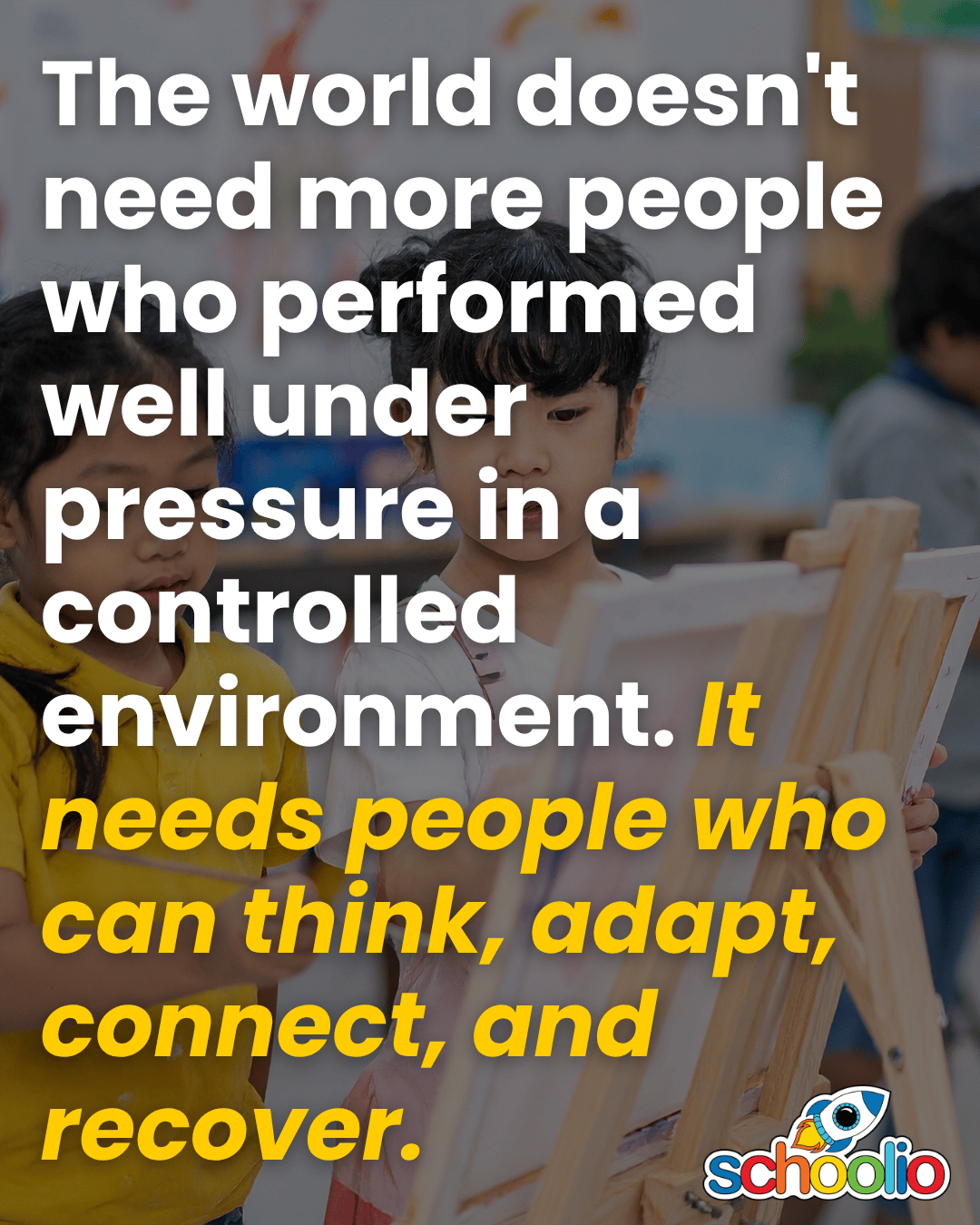
The world doesn’t need more people who performed well under pressure in a controlled environment. It needs people who can think, adapt, connect, and recover. Homeschooling provides the flexibility to focus on these skills. Parents can tailor their approach to each child’s needs, allowing for a more personalized and effective learning experience.
For instance, a homeschooling family might decide to spend a week focusing on community service projects. This not only teaches children about giving back but also helps them develop teamwork and leadership skills. Similarly, incorporating activities like debate clubs or theater can enhance public speaking and confidence.
We know how to build that. It starts at home. By redefining readiness, we prepare our children not just for tests, but for life. And isn’t that the ultimate goal of education?
Sathish
still learning, still unlearning